Tag Archives: Pirkei Avot

A Small Light Against the Darkness

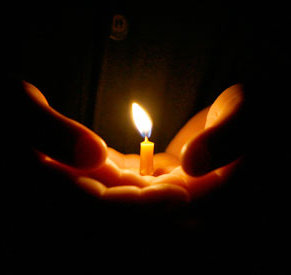
candleSome think life is all about doing good and keeping away from evil. To them, struggle has no purpose of its own — to have struggled is to have failed. Success, they imagine, is a sweet candy with no trace of bitterness.

They are wrong, very wrong. Struggle is an opportunity to reach the ultimate, when darkness itself becomes light. In the midst of struggle, an inner light is awakened. Light profound enough to overwhelm the darkness, encasing it and winning it over. But if darkness never fights back, how will it ever be conquered?

-Rabbi Tzvi Freeman
“Perpetual Struggle”
Based on letters and talks of the Rebbe
Rabbi M. M. Schneerson
Chabad.org

I watched an interview quite sometime ago with Oprah and actor Will Smith. He shared his insight about dealing with negative people. He asks this profoundly important question to himself on a frequent basis: “Is there someone in your life who is not contributing to your life and not helping you move forward?” If your answer to this question is a resounding: Yes! Then: “Why do you insist on allowing them to remain in your life?” A big A-ha moment for me! There must be some payoff for you if you continue allowing these negative influences in your life. When you know better you do better. If you want to change your life you have to also change the folks you chose to surround yourself with.

-Debra Moser
“What Are Your Personal Boundaries?”
MorningCoach.com

Oddly enough, I do read the occasional “inspirational” blog, though I don’t put a lot of stock in them. I find the advice they offer is often superficial and overly optimistic. Of course, the writers of such blogs have to keep the content short in order to hold the attention of their readers. Most people won’t read web content beyond a certain length, so if you want to get your point across, you have to make it short and sweet.

I can live with the short part, though it comes with liabilities, but sometimes such blogs are just a little too “sweet” for a middle-age “curmudgeon” like me.

I suppose that’s one of the reasons why I like reading the Bible (I know this will probably sound irreverent). It doesn’t soften the blow and it doesn’t pull any punches. In fact, I’ve heard some people say they aren’t religious just because some of the “advice” offered in the Bible is too harsh (see 2 Thessalonians 3:10 for example). On the other hand, there are times when the ancient sages and today’s “life-coaches” seem to be saying the same thing.

Nitai the Arbelite would say: Distance yourself from a bad neighbor, and do not cleave to a wicked person. -Ethics of our Fathers, 1:7

Debra Moser said something quite similar and, unlike Nitai the Arbelite, provides methods for “weeding out the negative nellies in her life”. Actually, that’s not fair. The commentary for Pirkei Avot 1:7 is just as illuminating as Moser and probably more so.

On the surface, Nitai the Arbelite appears to be conveying a simple, if redundant, message: Stay away from bad people. In truth, however, a much deeper lesson is implicit in his words. In fact, a close examination of his phraseology yields an altogether different sentiment.

What is the difference between a “bad neighbor” and a “wicked person”? And why must one go so far as to “distance oneself” from the former, while, concerning the latter it is enough to avoid “cleaving” to him?

A “bad neighbor” means just that: not a bad person, but one whose proximity to yourself is detrimental to you. It may be that he is a righteous person, and that his path in life is, for him, most suitable and desirable; but if for you it is wrong and destructive, keep your distance.

On the other hand, a “wicked person” is not necessarily a bad neighbor if he is not in the position to influence you. From him you need not, and must not, distance yourself: on the contrary, befriend him, draw him close and help him improve himself, all the while taking care not to cleave to him and emulate his ways.

In other words: The evil in another is never cause for your rejection of him—only your susceptibility to what is evil for you. On the contrary, the “wickedness” of your fellow it is all the more a reason to become involved with him, and prevail upon him to cleave to the positive in yourself.

I am always amazed at how the sages provide teachings so like the Master.

While Jesus was having dinner at Levi’s house, many tax collectors and sinners were eating with him and his disciples, for there were many who followed him. When the teachers of the law who were Pharisees saw him eating with the sinners and tax collectors, they asked his disciples: “Why does he eat with tax collectors and sinners?”

On hearing this, Jesus said to them, “It is not the healthy who need a doctor, but the sick. I have not come to call the righteous, but sinners.” –Mark 2:15-17

By comparison, Moser’s advice is something of a mixed bag. Of course, her goal isn’t to help her audience help others, it’s to help her audience enhance their own lives.

When you value and love yourself those loving and thoughtful people will come into your life. They are a direct reflection of how you see yourself. Be your own person and don’t allow others to define you. These positive people have your interests at heart and celebrate you with the world. There is no animosity and jealousy; just love and acceptance for the unique person you are. The people in my personal and professional life add to my life and that is a wonderful feeling.

against the darkThat’s a little too “warm and fuzzy” for me. But while there’s nothing wrong with that advice as far as it goes, the goal starts and stops with the individual: you. It has little to do with anyone else unless those other people in your world are only there to support and augment your “personal and professional life”. This is Madison Avenue marketing meets personal life development meets New Age “all-about-me-ism”. It’s certainly not the message the Master or Nitai the Arbelite are sending. Pirkei Avot advices that we distance ourselves from a bad neighbor, not because they’re a bad person, but because they can be a bad influence on us (and Debra Moser would agree with this part). However, we are not to avoid a “wicked person” because, as long as we don’t cleave to them and adopt their ways, we may become a positive influence on them, turning them away from sin.

As the Master taught, it “is not the healthy who need a doctor, but the sick.” Part of tikkun olam, repairing the world, isn’t keeping all of the “health” to yourself like some self-esteem King Midas, but giving it back to others and to “love your neighbor as yourself” (Lev. 19:18; Mark 12:31).

To be fair, Moser did very briefly touch upon the matter of influencing others, but immediately returned to her primary subject.

You do make a positive difference in someone’s life. Believe in yourself. When you’re not in a good mood STOP and get back to your positive mindset and look with gratitude around you and see what an incredible life you have. Living with gratitude and coming from a loving heart space attracts loving positive people into your life.

Again, to be fair, I expect that if I could give Debra Moser an opportunity for rebuttal, she could expand upon her viewpoint and I suspect provide added dimension to what she writes, including how to be a better support and influence on others who need the help.

One of the 613 commandments in Judaism is to “rebuke the sinner”, based on Leviticus 19:17. The deeper meaning of the commandment has little to do with chiding someone for their faults but instead, it’s more like saving someone’s life. If you see someone in moral and spiritual trouble, and if you have the opportunity and ability to help, you are obligated to help. A Jew must become involved rather than let a fellow Jew fall into or remain within their sins. If they fail to do so, the penalty their fellow will suffer for his sins will also fall upon the person who didn’t help.

Jesus seems to be communicating the same thing to his audience in both Mark 2 and Mark 12 (as well as in other scriptures). Of course there is always a danger involved. Like a lifeguard swimming against hazardous ocean currents to save a drowning person, there’s always the risk that you’ll be pulled under yourself, but its a risk you’ve accepted. A lifeguard accepts the risk by virtue of accepting the position of being a lifeguard. As disciples of Christ, we accept the risk by virtue of virtue; by the fact that we accepted the man with the cross and the God of Heaven.

It’s not easy. That’s what most advice blogs leave out of their content. It’s not a walk in the park. Like any discipline, it takes time and practice. You’ll make mistakes. Sometimes you’ll get hurt. With perseverance, you’ll get better at it. You’ll probably never be perfect. There will be days when you are magnificent and other days when you’ll want to stay in bed and hide. There are even days when you will feel like it’s not worth it and want to give up. But even when we don’t like hearing it, we were created for a very simple reason, to help God help the world. Rabbi Freeman interprets the Rebbe’s teaching on this topic thus:

For all that is, physical or spiritual or Divine, was only created to be part of the repair of this world of action. And once that repair is done, all that will be true are those things that made it happen.

In every thought, look for the power to change the world.

It’s the struggle that creates the light that holds back the dark abyss. Without our struggle, we are only silhouettes fading into the night.

We were so close there was no room
We bled inside each others wounds
We all had caught the same disease
and we all sang the songs of peace
Some came to sing, some came to pray
Some came to keep the dark away
So raise the candles high
’cause if you don’t we could stay
black against the sky
Oh oh raise them higher again
and if you do we could stay dry against the rain

-Melanie Safka
Candles in the Rain (1970)

The road

If life is a strugle, it doesn’t mean that you’ve failed. You only drown when you stop struggling against the waves.

The Words of His Image

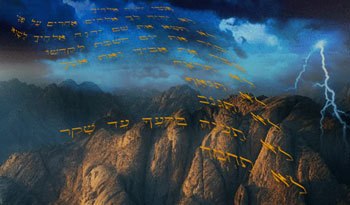
Hebrew FirePlants live in a world of earth, water, air and sunshine. Animals live in a world of the body and its senses. Human beings live within a world of their own words.

The sages called us “the speaking being,” saying that our soul is filled with words. When our words leave us, our very being goes out within them. We conquer with them. We declare our mastery over Creation with them. Our words tell us that we exist.

For us, nothing truly exists until we find a word for it. All our thoughts of every object and every event are thoughts of words. Our world is a world not of sensations and stimuli, but of words.

Build your world with precious words. Fill your days with words that live and give life.

Memorize words of Torah and of the sages. Have them ready for any break in your day. Wherever you go, provide that place an atmosphere of those powerful words.

-Rabbi Tzvi Freeman
“Life in Words”
Based on letters and talks of the Rebbe
Rabbi M. M. Schneerson
Chabad.org

All kinds of animals, birds, reptiles and sea creatures are being tamed and have been tamed by mankind, but no human being can tame the tongue. It is a restless evil, full of deadly poison.

With the tongue we praise our Lord and Father, and with it we curse human beings, who have been made in God’s likeness. Out of the same mouth come praise and cursing. My brothers and sisters, this should not be. Can both fresh water and salt water flow from the same spring? My brothers and sisters, can a fig tree bear olives, or a grapevine bear figs? Neither can a salt spring produce fresh water.James 3:7-12

People are very careless with their words. Even the best among us tends to slip in what we say from time to time. More often than not, these “slips” are an indication of the difference between how we publicly present ourselves and what we’re really thinking and feeling inside. In that, we use our words, not to represent the person we are, but the person we want others to believe we are.

We demolish arguments and every pretension that sets itself up against the knowledge of God, and we take captive every thought to make it obedient to Christ. –2 Corinthians 10:5

Yes, we are supposed to “take captive every thought”, but that’s easier said than done. As we see from both Rabbi Freeman and James, words are extremely powerful and have tremendous impact, for good or for ill. Words of Torah, kindness, and compassion are wonderful and can change the world around us for the better. But if we use the same mouth to utter words of praise to God, yet speak curses to men, what are we telling people about our inner being and what are our words allowing to become “real” in the world?

Taming the tongue and the mind that generates our words takes a lot of discipline. But there are rewards:

If you see someone’s faults hanging out and you truly want to help—whether it be a friend, a spouse, your child, or even your nemesis—don’t say a word about what you have found wrong.

Find something wondrous about that person, perhaps something that nobody ever mentions, and talk about it—to yourself, to those who will listen and sympathize.

In very little time, you will see such a new person, you will believe you are a maker of wonders.

Indeed, we all are.

-Rabbi Freeman
“Wonder Making”
Chabad.org

For God did not appoint us to suffer wrath but to receive salvation through our Lord Jesus Christ. He died for us so that, whether we are awake or asleep, we may live together with him. Therefore encourage one another and build each other up, just as in fact you are doing. –1 Thessalonians 5:9-11

Our words create wonders and even miracles in other people, if we choose them carefully. It’s amazing to think that something as simple as a word spoken by a single human being could be so powerful. Yet if our words can possess such might, remember that with a word, God created the universe:

In the beginning God created the heavens and the earth. Now the earth was formless and empty, darkness was over the surface of the deep, and the Spirit of God was hovering over the waters. And God said, “Let there be light,” and there was light. God saw that the light was good, and he separated the light from the darkness. –Genesis 1:1-4

By the word of the LORD the heavens were made,
their starry host by the breath of his mouth.
He gathers the waters of the sea into jars;
he puts the deep into storehouses.
Let all the earth fear the LORD;
let all the people of the world revere him.
For he spoke, and it came to be;
he commanded, and it stood firm. –Psalm 33:6-9

In the beginning was the Word, and the Word was with God, and the Word was God. He was with God in the beginning. Through him all things were made; without him nothing was made that has been made. –John 1:1-3

The words of God are immense, and when they reach the hearing of man, it is no small and simple thing:

When the people saw the thunder and lightning and heard the trumpet and saw the mountain in smoke, they trembled with fear. They stayed at a distance and said to Moses, “Speak to us yourself and we will listen. But do not have God speak to us or we will die.” –Exodus 20:18-19

Torah at SinaiAnd yet when God speaks, His words are always for our benefit. God gave the words of Torah at Sinai to the Children of Israel, and the Torah detailed every aspect of the Jewish lives as a unique community. But there are so many “words”:

But why so many mitzvos? Why so many dimensions to Torah? We have positive and negative commandments. The mitzvos also include logical laws, logic-defying laws, and everything in between. We have intellectual mitzvos, emotional mitzvos, agricultural mitzvos, business mitzvos, mitzvos dealing with food, dress, housing, and family life. The Torah include every medium of teaching known to man: stories, legal codes, numerological calculations, history, philosophy, ethics, poetry, metaphorical and mystical works.

Ethics of Our Fathers commentary
“Multiplicity”
Elul 22, 5771 * September 21, 2011
Chabad.org

It is said that God made man because He desired to dwell in “the world below”, in our world. To prepare the world, He gave the Torah to the Children of Israel, His “light to the world”. However, for God to truly inhabit our realm, “then the Divine presence must permeate its every aspect.” Man must be refined by the word of God “down to his every element and component” so that the human life will “become a vehicle for the fulfillment of the Divine will.”

While the Torah as given at Sinai was not expected to be placed upon the shoulders of the rest of humanity, not even the non-Jewish disciples of the Master (see Acts 15), we are not left wanting in this regard. That said, it isn’t always clear what are the specifics of Christian obligation to God. Put another way, if the Torah is the Word of God to the Children of Israel, is there a separate “Word” for Christianity?

The “official stance” of the church is that the Law (Torah) has been wholly replaced by the Grace of Christ for everyone (Jewish and Gentile Christians) and the Law is therefore irrelevant. The “One Law” branch of Messianic Judaism declares that Jewish and Gentile believers are equally obligated in lifestyle to all of the 613 commandments that typically believe constitutes the Torah. Jews (including many Messianic Jews) see Gentiles (Christians and otherwise) as being obligated to only those “words” spoken to Noah in Genesis 9, commonly referred to as the Seven Noahide Laws (although some in the Messianic community believe this is modified for Christians by the Acts 15 letter specifically and by the teachings in the Gospels and Epistles generally). Most people settle on “the system” that works for them. Some of us continue seeking His will daily.

(I previously examined the difference between Noahides or “God-fearers” and Gentile Christians in two blog posts: The Sons of Noah and Children of God)

Both Jews and Christians spend all their lives looking at the Bible, reading, studying, and gleaning insights from inspired teachers and Rabbis. We’re trying to understand who we are and who we are supposed to be in the eyes and words of God. What are the commandments of God for our lives? How are they different from person to person? How are they different from generation to generation? How are they different between Jew and Christian? How can we teach others what we are always trying to know in ourselves?

The Word of God and the words of men are tremendously important and powerful. But while God is not careless with His Words, men most certainly are. The Word of God is wielded with great care lest disaster should strike existence. If man would utilize an equal amount of care over his words, how blessed we would be, for in speaking kindness, charity, compassion, and words of Torah, we would re-make the world in His image.

So shall it be in the days of Messiah.

The Face in the Mirror

Mirror“Rabbi Mendel of Kotsk was told of a great saint who lived in his time who claimed that during the seven days of the Feast of Booths his eyes would see Abraham, Isaac, Jacob, Joseph, Moses, Aaron, and David come to the booth. Said Rabbi Mendel: “I do not see the heavenly guests; I only have faith that they are present in the booth, and to have faith is greater than to see.” (page 118)

-Abraham Joshua Heschel
God in Search of Man: A Philosophy of Judaism

Then Jesus told him, “Because you have seen me, you have believed; blessed are those who have not seen and yet have believed.”John 20:29

When Jesus heard this, he was amazed and said to those following him, “Truly I tell you, I have not found anyone in Israel with such great faith. I say to you that many will come from the east and the west, and will take their places at the feast with Abraham, Isaac and Jacob in the kingdom of heaven.”Matthew 8:10-11

In the early morning when I drive to the gym for my workout, the sun is not yet risen. There is no cold bite in the air, but I can still tell that the days of summer are all but exhausted and that autumn is finally approaching. We are in the month of Elul which precedes the High Holy Days and after Rosh Hashanah and Yom Kippur, comes Sukkot or the Festival of Booths.

Although I cherish all of God’s appointed times, I must confess that Sukkot is one of my favorites. I enjoy the process of building a temporary structure that can potentially shelter the guests of Heaven, but more tangibly, that will allow my family to pray, take meals, together, and celebrate God’s provision among us. It is a custom in Judaism to invite the poor to share a meal in your sukkah and in my imagination, I picture all of us, rich and poor, great and small, sitting and eating as the Master prophesied, with “Abraham, Isaac and Jacob in the kingdom of heaven” during Sukkot.

During Passover, it is customary to set a place at the meal for Elijah the Prophet and, at one point in the haggadah, a child is sent to the door to see if Elijah is there, for if he is, then the Messiah is coming. During Sukkot, we can set a place for anyone, “Abraham, Isaac, Jacob, Joseph, Moses, Aaron, and David”, both in the hope that they may come and share a meal with us, and in anticipation of the time when (again, as the Master teaches) we will all be together as a community of God, sharing and talking and eating and teaching, and everyone “will sit under their own vine and under their own fig tree, and no one will make them afraid…” (Micah 4:4).

However, before our eyes are allowed to witness such a wonderful and miraculous “Sukkot” feast, we must learn to see with the eyes of Rabbi Mendel and the eyes of the Baal Shem Tov.

Do not judge your fellow until you have stood in his place –Pirkei Avot 2:4

Rabbi Israel Baal Shem Tov (the “Besht,” founder of the chassidic movement) taught: “Your fellow is your mirror. If your own face is clean, the image you perceive will also be flawless. But should you look upon your fellow man and see a blemish, it is your own imperfection that you are encountering—you are being shown what it is that you must correct within yourself.”

Quoted from Ethics of Our Fathers commentary:
“The Mirror”
Elul 9, 5771 * September 8, 2011
Chabad.org

The eyes of faith see Abraham, Isaac, and Jacob sitting in our Sukkah sharing a meal with our family. How do the eyes of faith see your neighbors and friends? How do you see those people around you, particularly if you view them with annoyance or scorn?

A few days ago, I wrote a morning meditation about how our thoughts and words affect our relationship with other people and with God. I hadn’t really intended to write a “sequel”, but that’s how it worked out. But if we claim to see the wonders of God through the lens of faith, yet fail to use that same lens when looking at our fellow human being, what “faith” are we really professing?

With the tongue we praise our Lord and Father, and with it we curse human beings, who have been made in God’s likeness. Out of the same mouth come praise and cursing. My brothers and sisters, this should not be. Can both fresh water and salt water flow from the same spring? My brothers and sisters, can a fig tree bear olives, or a grapevine bear figs? Neither can a salt spring produce fresh water. –James 3:9-12

SuccothI could hardly write these words with any sort of sincerity if I continued to use my own eyes to view my brothers and sisters in a less than complementary light. We are completely perfect but made in God’s image. We are only mortal, but we are capable of touching the infinite. As Rabbi Heschel writes (page 118):

This, indeed, is the greatness of man; to be able to have faith. For faith is an act of freedom, of independence of our own limited faculties, whether of reason or sense-perception. It is an act of spiritual ecstasy, of rising above our own wisdom.

To have faith is not to capitulate but to rise to a higher plane of thinking. To have faith is not to defy human reason but rather to share divine wisdom…Lift up your eyes on high and see: Who created these.

And from the Psalms:

I lift up my eyes to the mountains—
where does my help come from?
My help comes from the LORD,
the Maker of heaven and earth. –Psalm 121:1-2

Heschel states that, “…our faith in Him conveys to us more understanding of Him than either reason or perception is able to grasp”, but what good does that do us if we refuse to even try to see people around us as God sees them; as God sees us all? We may believe we are adoring and serving God but we have failed Him completely if we cannot adore and serve people as well.

One of the teachers of the law came and heard them debating. Noticing that Jesus had given them a good answer, he asked him, “Of all the commandments, which is the most important?”

“The most important one,” answered Jesus, “is this: ‘Hear, O Israel: The Lord our God, the Lord is one. Love the Lord your God with all your heart and with all your soul and with all your mind and with all your strength.’ The second is this: ‘Love your neighbor as yourself.’ There is no commandment greater than these.”

“Well said, teacher,” the man replied. “You are right in saying that God is one and there is no other but him. To love him with all your heart, with all your understanding and with all your strength, and to love your neighbor as yourself is more important than all burnt offerings and sacrifices.”

When Jesus saw that he had answered wisely, he said to him, “You are not far from the kingdom of God.” –Mark 12:28-34

As the commentary on Pirkei Avot states:

Rabbi Israel Baal Shem Tov, taught: “Your fellow is your mirror. If your own face is clean, the image you encounter in your fellow will also be flawless. Should you gaze into this `mirror’ and see a blemish, it is your own imperfections that you are seeing.”

“Why do you look at the speck of sawdust in your brother’s eye and pay no attention to the plank in your own eye? How can you say to your brother, ‘Let me take the speck out of your eye,’ when all the time there is a plank in your own eye? You hypocrite, first take the plank out of your own eye, and then you will see clearly to remove the speck from your brother’s eye. –Matthew 7:3-5

If looking in the mirror which is your brother’s face, you see only imperfection and error, how will you ever see the face of Abraham or the face of Jesus in your Sukkah?

Who is the light in your reflection?

I’ll Get By With a Little Help

Praying with TefillinWelcome to today’s “bonus” meditation.

Teshuvas Torah L’Shmah was asked whether a person who would not be able to concentrate while davening (praying) should daven or not. Seemingly, if he will not be able to concentrate he should be exempt since sefarim write that davening without concentration is comparable to a body without a soul. Accordingly, if he is unable to concentrate he should not daven. He responded that one who is distracted and consequently incapable of davening with proper concentration should nevertheless daven since we do not push aside the mitzvah just because of his difficulty. He then adds that someone who does not know the inner meaning or kabbalistic intent that is supposed to accompany a mitzvah is not exempt from that mitzvah. A person is expected to do what he can and even without that additional intent the mitzvah is considered fulfilled without any defect whatsoever.

Even though the individual does not know how to properly focus his thoughts on davening, God will supplement what is lacking.

Daf Yomi Digest
Halacha Highlight
“Should a person daven if he cannot properly concentrate?”
Chullin 31

In his Tanya, Rabbi Schneur Zalman of Liadi sets down the fundamentals of the chabad-chassidic approach to life. On the cover page of this “bible of chabad-chassidism” he defines his work as follows:

“Based on the verse, `For it [the Torah and its precepts] is something that is very close to you, in your mouth, in your heart, that you may do it’ – it explains, with the help of G-d, how it is indeed exceedingly close, in a long and short way.”

Chabad Commentary on Chapter 2
The Ethics of Our Fathers
“The Long But Short Of It”
Tammuz 25, 5771 * July 27, 2011

If you are a person of faith, your highest desire is to draw closer to God and do to what will please Him. Any son or daughter wants to not only obey their father but to do what will make him happy. So it is between us and our Father in Heaven.

So what’s the problem? We are.

To continue from the Chabad commentary for Pirkei Avot Chapter 2:

The Torah and its mitzvos are the Creator’s blueprint for creation, detailing the manner in which He meant life to be lived and His purpose in creation to be fulfilled. But is a life that is ordered utterly by Torah indeed feasible? Can the ordinary “Everyman” be realistically expected to conduct his every act, word and thought in accordance with Torah’s most demanding directives?

…a person may argue: Why spend a lifetime pursuing this demanding regimen of mind and heart? Why must I toil to understand and feel? Why not take the direct approach–open the books and follow instructions? I’m a simple Jew, he may maintain, and the attainment of such lofty spiritual states as “comprehension of the Divine”, “love of G-d” and “awe of G-d” are way beyond my depth. I know the truth, I know what G-d wants of me—the Torah spells out the dos and don’ts of life quite clearly.

Despite the previous quote, sometimes we don’t really understand what God wants. Sometimes we don’t know how to pray. Sometimes we aren’t sure how to do our best. Sometimes we wonder, couldn’t God make loving Him “with all our heart, mind, and strength” just a little bit more straightforward? After all, I’m no saint or holy man. I’m just a regular person.

But God has an answer for that.

The Torah itself is quite clear on the matter: “For the mitzvah which I command you this day,” it states, “it is not beyond you nor is it remote from you. It is not in heaven… nor is it across the sea… Rather, it is something that is very close to you, in your mouth, in your heart, that you may do it.” (Deut. 30:11-14) Torah’s vision of life is not an abstract ideal, nor a point of reference to strive toward, but an achievable goal.

God does not expect more of us than we are capable of giving. Our problem is often we do not believe we are capable of what God expects. Some churches compound the problem by “dumbing-down” what God requires, using “grace” as the back door out of taking personal responsibility for our behavior. God does cut us some slack, but not by simply removing the mitzvot (commandments) we think are too difficult for us.

Like the person who cannot pray because he cannot concentrate, when we have truly made our best effort, God will “supplement what is lacking” in us. After all, He knows what we are lacking because He designed us. We also have this:

In the same way, the Spirit helps us in our weakness. We do not know what we ought to pray for, but the Spirit himself intercedes for us through wordless groans. And he who searches our hearts knows the mind of the Spirit, because the Spirit intercedes for God’s people in accordance with the will of God. –Romans 8:26-27

Therefore, since we have a great high priest who has ascended into heaven, Jesus the Son of God, let us hold firmly to the faith we profess. For we do not have a high priest who is unable to empathize with our weaknesses, but we have one who has been tempted in every way, just as we are – yet he did not sin. Let us then approach God’s throne of grace with confidence, so that we may receive mercy and find grace to help us in our time of need. –Hebrews 4:14-16

Praying ChildEven though we are lacking. Even though we can barely speak let alone pray, God has provided for our every need, even when we cannot see hope illuminating the darkness. Just have one simple desire as you turn to Him:

[Rabbon Gamliel the son of Rabbi Judah HaNassi] would say… Make that His will should be your will… –Ethics of the Fathers, 2:4

Jesus expressed the most important focus of our lives this way:

One of the teachers of the law came and heard them debating. Noticing that Jesus had given them a good answer, he asked him, “Of all the commandments, which is the most important?”

“The most important one,” answered Jesus, “is this: ‘Hear, O Israel: The Lord our God, the Lord is one. Love the Lord your God with all your heart and with all your soul and with all your mind and with all your strength.’ The second is this: ‘Love your neighbor as yourself.’ There is no commandment greater than these.”

“Well said, teacher,” the man replied. “You are right in saying that God is one and there is no other but him. To love him with all your heart, with all your understanding and with all your strength, and to love your neighbor as yourself is more important than all burnt offerings and sacrifices.” –Mark 12:28-33

Finally, when you pray, pray like this:

The ultimate prayer is the prayer of a small child.

You pray to some lofty concept of The Infinite Light or The Essence of Being or…

But the child doesn’t have any concept. Just G-d.

From the wisdom of the Rebbe
Menachem M. Schneerson
as compiled by Rabbi Tzvi Freeman in his book
Bringing Heaven Down to Earth

Good Shabbos.

Gateway to Eden

Gateway to EdenNow the serpent was more crafty than any of the wild animals the LORD God had made. He said to the woman, “Did God really say, ‘You must not eat from any tree in the garden’?”

The woman said to the serpent, “We may eat fruit from the trees in the garden, but God did say, ‘You must not eat fruit from the tree that is in the middle of the garden, and you must not touch it, or you will die.’”

“You will not certainly die,” the serpent said to the woman. “For God knows that when you eat from it your eyes will be opened, and you will be like God, knowing good and evil.”Genesis 3:1-4

We are all familiar with the story of Adam and Eve and their sin with the fruit of the Tree of Knowledge (Genesis 3). As the story goes, the Serpent, most “cunning” of all the animals, comes along and tempts Eve to taste of the fruit, promising that it would open the eyes of man, making her and Adam “as gods knowing good and evil” (v. 5). Eve decides that the Tree is tempting to behold and both eats of the fruit and gives her husband to eat.

This, however, presents a difficultly. If Adam and Eve themselves had no evil inclination, how could they have *wanted* to sin? How could they — entirely spiritual beings — desire anything other than goodness and closeness to G-d? Where could a desire to rebel against G-d stem from?

-Rabbi Dovid Rosenfeld
The Primordial Sin, Part I (2006)
Torah.org

Christianity and Judaism see “the Fall of Man” event in Genesis very differently, but there are obvious parallels. “In the beginning”, Adam and Eve are sinless beings, created by God and knowing an incredible intimacy with the Source as completely spiritual yet physical beings. In Judaism, people originally had no internal inclination toward evil but upon disobeying the one commandment given by God, the external temptation, represented by the Serpent, became internalized. Man separated himself from God and the nature of the world became broken.

Rabbi Rosenfeld goes on in Part III of the series to ask some difficult questions:

To this we explained that man sinned in order to make life more challenging. Before the Sin, man had only a single mitzvah (commandment) — not to partake of the fruit of the Tree. There was, it seemed, very little for him to accomplish. Now, as a physical being desiring evil, life would be so much more challenging. There would be so much more potential growth in store for man. Eventually mankind would require the rigorous and demanding 613 Commandments to curb the animal within and redirect him G-dward. Thus, man — *spiritual* man — *desired* the greater challenge that would now be in store for mankind.

This, however, still does not suffice. Why would man desire a greater challenge? So that he would have more opportunities for spiritual growth? But isn’t he basically just backing up in order to reach the same goal? The ultimate goal of life — self-evident to the spiritual person — is closeness to G-d. If man was created close to G-d, why not *stay* there — perform his single mitzvah and perfect himself? What was so enticing about making life more difficult?

From Christianity’s point of view, there was no justifiable reason for Adam and Eve to sin; to disobey God. It was a terrible, ghastly mistake that sent both humanity and the nature of Creation down a dark and dismal path, away from God and into the arms of darkness, requiring that God give “His one and only Son, that whoever believes in him shall not perish but have eternal life” (John 3:16).

Judaism says that, amidst what Christians can only view as a total spiritual disaster, there is something salvageable and even perhaps desirable to be gleaned:

The deepest, most profound desire a human soul has is to feel it exists — to feel it is not just a passive entity, acted upon and taken care of by others. A person needs to feel he is an independent being — what the Serpent called a “god” (and our mishna calls a “king”) — who can accomplish, grow and make a difference in the world. There is nothing more painful — *spiritually* painful — than feeling that one’s life makes no difference to anyone or anything, that he exists only as a person acted upon by others or by natural forces, and that he has done nothing to express his own existence.

This was man’s dilemma in the Garden of Eden. Man at first, as lofty as he was, was an almost entirely passive, “created” being. He was given existence by G-d. He was placed in the Garden of Eden with all his wants and needs satisfied and with only a single mitzvah to perform. Man wanted to feel he truly existed — that he was not just a plaything of the Almighty. He wanted to be a god himself. How could he do it? By forcing upon himself greater challenges. Adam and Eve would no longer be passive beings, practically created in G-d’s presence. They would now have to earn it. Spirituality would come only through the greatest of efforts — *their* efforts. It would be the challenge they would have to face to achieve their purpose — and in order to exist.

From what Rabbi Rosenfeld presents, man faced two options: live life close to God, obeying the single commandment provided by the Almighty, but never having the opportunity to truly carve out his own path and the ability to rise spiritually, or deliberately distancing himself from God, lowering his spiritual status, and then struggling back up the ladder, rung by rung, to drive himself ever closer to God and Eden.

I suppose a challenge like that would tempt the spiritual Sir Edmund Hillarys of the world, but for the rest of us, we see the “downside” to such a decision in terms of the pain, suffering, and anguished death of billions upon billions of human beings across the long march of millennia between the dawn of man and the current age.

And yet, here we are. “Our physical flesh (is) now a confused mixture of good and evil. We know the passing of the seasons as we age, and we know decay and death. We are separated from the infinite Spirit. The struggle against evil and the abyss is no longer an external enemy, but rather, it is part of who we are inside. Judaism longs for the coming of the Messiah and Tikkun Olam. Christianity looks to the day when Jesus will return and mankind will be redeemed from a fallen world.

But what if we don’t have to wait? Rabbi Yitzchak Ginsburgh says that we don’t:

After the primordial sin, Adam and Eve heard “the voice of God” walking through the garden. They heard God, He spoke to them, and they answered. This is the consciousness of “hearing,” the height of our consciousness of Godliness (God and His Divine Providence) is our lives subsequent to the primordial sin, the consciousness of the weekdays, the workdays (“By the sweat of your brow…”).

But on Shabbat we return to the pristine state of consciousness of God as it was prior to the primordial sin (and as it will be universally in the future). In the terminology of Kabbalah, during the weekdays our consciousness is at the level of understanding (“hearing” in Hebrew means also “understanding”) whereas on Shabbat our consciousness rises to the level of wisdom (direct insight into the mysteries of creation hidden within reality, and into the “mystery of mysteries,” the Creator of reality, the true and absolute Reality).

Throughout the week everything that happens around us, all that we see and hear, “tells” us about God and His Providence. On Shabbat we don’t have to be told about God, we experience Him directly.

ShabbatOne of the mistakes of the early (non-Jewish) Christian church was to casually discard the commandment, “Remember the Sabbath day by keeping it holy” (Exodus 20:8). The church alternately says that Jesus did away with Sabbath observance with the rest of the Law or that the “Sabbath” was mysteriously moved over one day, to coincide with the “Day of the Lord” and the resurrection of the Master. I personally think that the 2nd and 3rd century church found it necessary to separate themselves from anything “too Jewish” and simply shifted the “Holy Day” over by 24 hours to achieve this, and then used specific points of Scripture to justify the decision.

Today, Christians miss out on an opportunity, however limited, to return to Eden. For contained in the Shabbat isn’t just a day to go to church or synagogue, but in fact, we discover an opportunity to remove oneself from the other six days of the week, of the toil, of the work, of the worries, of the laboring, and to totally devote ourselves as spiritual and physical beings to the God of the Universe and the King of Righteousness, as in days of old.

Six days you shall labor and do all your work, but the seventh day is a sabbath to the LORD your God. On it you shall not do any work, neither you, nor your son or daughter, nor your male or female servant, nor your animals, nor any foreigner residing in your towns. For in six days the LORD made the heavens and the earth, the sea, and all that is in them, but he rested on the seventh day. Therefore the LORD blessed the Sabbath day and made it holy. –Exodus 20:9-11

Both Christians and Jews are going to disagree with me here, particularly since this mitzvot was directed at the Children of Israel, but I believe we Christians cheat ourselves terribly out of the experience to turn one-seventh of our lives into a time to walk personally with God. I think Rabbi Ginsburgh has a point to make, not only to Jews, but to Christians as well. But more gateways to Eden exist:

There are two exceptions to the above distinction between Shabbat and the weekdays, two times that we rise to the consciousness of Shabbat during the otherwise mundane time of the week. The Arizal teaches that our consciousness in the times of prayer, every day of the week three times a day, is at the level of Shabbat. The times of prayer, when we turn to God and address Him directly, are the Shabbat as its light shines into and permeates the week.

Also, a true Torah scholar is referred to in the Zohar as Shabbat. Continuously in communion with God through the means of His Torah (which ultimately in one with Himself) he experiences Shabbat-consciousness the entire week.

Whenever we immerse ourselves in the things of God, we are drawing closer. It happens when we pray, when we give to charity, when we help our neighbor with his yard work, when we hold a small child’s hand to cross the street, when we study the Bible, when we turn away from sin and turn, in obedience, to God.

While the mystic aspects of this process may be confusing or even a little frightening, it is clear that we are separated from God by the nature of humanity and the nature of the world, but we don’t have to be that way always. While waiting for the King of Kings to come to us, we do not have to wait helplessly. We can choose, whether commanded to or not, to observe a Shabbat where we are completely devoted to God. We can take one day of our week and separate it from the rest, separate it from the office, from phone calls, from the Internet, from worry, from work, from care. We can pray, study, speak of God and the Bible with others as we break bread together.

We can create isolated pockets of Eden in the Sabbath and even during the week when we pray and beg to come close to the Throne of Heaven. We can be like “little Messiahs”, helping to fix a broken world one dent and crack at a time by performing even one single act of kindness and humility.

Sin happened. Humanity fell. The world is a broken top spinning hopelessly off the table of existence. We can’t go back to fix it but we can choose to go forward toward God. We can choose to visit Eden on Shabbat. We can cross the threshold of the gates of Paradise every day, every time we pray. We can walk with God in the Garden every time we love our neighbor more than we love ourselves.

However you want to interpret these words, observe Shabbat, return to Eden, walk with God. You can never be lost as long as you are seeking God. You can never be lost as long as God wants you to find Him.

“Do not seek greatness for yourself and do not crave honor. Do more than you have studied and do not desire the ‘table’ of kings. For your table is greater than their table, and your crown is greater than their crown. And your Employer can be trusted to pay you the reward for your efforts.”
Pirkei Avot
Chapter 6, Mishna 5(a)

The Side of Merit

Judge NotJudge every man to the side of merit.

Ethics of our Fathers 1:6

On the most elementary level, this means that if you discern a negative trait in your fellow or you see him commit a negative act, do not judge him guilty in your heart. “Do not judge your fellow until you are in his place,” warns another of the Ethics’ sayings, and his place is one place where you will never be. You have no way of truly appreciating the manner in which his inborn nature, his background or the circumstances that hold sway over his life have influenced his character and behavior.

However, this only explains why you should not judge your fellow guilty. Yet our Mishnah goes further than this, enjoining us to “judge every man to the side of merit.” This implies that we should see our fellow’s deficiencies in a positive light. But what positive element is implied by a person’s shortcomings and misdeeds?

Commentary on Ethics of Our Fathers
“Double Standard”
Tammuz 18, 5771 * July 20, 2011
Chabad.org

The character traits of strength and firmness evoke mixed responses. On one hand, everyone admires personal fortitude, and respects an individual who has the courage to persevere in his convictions despite challenges. And yet a strong person can also be thought of as rigid and insensitive, clinging stubbornly to his own views without bending in consideration of others. Counseling against this tendency, our Sages commented, (Taanis 20a) “A person should always be pliant like a reed, and not hard like a cedar.”

Commentary on Torah Portion Matot
“True Strength”
-Rabbi Eli Touger

The world of religion is terribly judgmental. To be fair, this is a human trait and not just one seen among people of faith. While secular people tend to blame religion for all the world’s ills (war, racism, poverty, and so forth) is it rather our human nature and our tendency toward selfishness and evil that lets us corrupt the values of God into something that harms people.

In Christianity we are taught, “Judge not, that ye be not judged” (Matthew 7:1 [KJV]), but that certainly hasn’t stopped many in the church from judging others, both within the congregation and in the non-believing world. Is this any way to show the world the love of Jesus Christ?

Despite what I’ve quoted above, Judaism is also populated by human beings and thus, Jewish people aren’t perfect. They have a capacity equal to any Christian to judge others and to assign unfair blame and ridicule. Asher at the Lev Echad blog is on something of a mission to try and turn the hearts of Jews toward each other and to heal the differences between them. Recently, he published a plea asking Jews to not judge each other for their differences in religious practices and lifestyle but rather to guide “others into a life of serving God and His children in a way that best matches their individual personality”.

Asher’s words can easily be applied to the rest of us, both in their practicality and in their need.

Returning to the example of the Ethics of Our Fathers from which I quoted above, we see in the commentary that we must not only treat our fellows fairly and as we want to be treated, but we should extend ourselves to give others the benefit of the doubt, while at the same time, looking at our own deeds without compromise:

So judge every man to the side of merit—every man, that is, except yourself. For the attitude detailed above, while appropriate to adopt towards other human beings, would be nothing less than disastrous if applied to oneself.

“True, I have done nothing with my life,” the potential-looking individual will argue. “But look at what I am capable of! Look at the quality of my mind, the sensitivity of my feelings, the tremendous talents I possess. It’s all there within me, regardless of the fact that I have never bothered to realize any of it. This is the real me. The extent to which I actualize it is only of secondary importance.”

In our judgement of human life and achievement, we must adapt a double standard. Our assessment of a fellow human being must always look beyond the actual to the potential reality within. On the other hand, we must measure our own worth in terms of our real and concrete achievements, and view the potential in ourselves as merely the means to this end.

FriendsChristianity has parallel teachings to these Talmudic gems:

“Why do you look at the speck of sawdust in your brother’s eye and pay no attention to the plank in your own eye? How can you say to your brother, ‘Let me take the speck out of your eye,’ when all the time there is a plank in your own eye? You hypocrite, first take the plank out of your own eye, and then you will see clearly to remove the speck from your brother’s eye. –Matthew 7:3-5

Then Peter came to Jesus and asked, “Lord, how many times shall I forgive my brother or sister who sins against me? Up to seven times?” Jesus answered, “I tell you, not seven times, but seventy-seven times. –Matthew 18:21-22

At the core of all these lessons is the Torah itself and the Master’s commentary on the “Torah” that both Jews and Christians can embrace:

One of the teachers of the law came and heard them debating. Noticing that Jesus had given them a good answer, he asked him, “Of all the commandments, which is the most important?”

“The most important one,” answered Jesus, “is this: ‘Hear, O Israel: The Lord our God, the Lord is one. Love the Lord your God with all your heart and with all your soul and with all your mind and with all your strength.’ The second is this: ‘Love your neighbor as yourself.’ There is no commandment greater than these.” –Mark 12:28-31

I specifically say this is a “Torah”, because Jesus is quoting from both Deuteronomy 6:4-5 and Leviticus 19:18, so the heart of Christianity was born in Judaism and if we are wise, we will not separate the branches from the vine (see John 15:5 and Romans 11:11-24).

Rabbi Touger’s commentary on Matos describes two symbols of leadership over the twelve tribes of Israel. The authority of a tribal head is symbolized by both a staff and a rod. They sound the same but are wholly different from one another:

What is the difference between these two terms? A rod is supple, able to be bent, while a staff is firm and unyielding. For a rod is freshly cut or still connected to the tree from which it grew and is therefore pliant. A staff, by contrast, has been detached from its tree long ago, and over time has become dry, hard, and firm.

Both terms serve as analogies for different levels in the expression of our souls’ potential. (See Sefer Maamarei Admur HaZakein 5562, Vol. I, p. 237ff.) The term “rod” refers to the soul as it exists in the spiritual realms, where its connection to G-dliness is palpably appreciated. It shares an active bond with the lifegiving, spiritual nurture it receives. “Staff,” by contrast, refers to the soul as it exists in our material world, enclothed in a physical body. On the conscious level, it has been severed from its spiritual source, and its connection to G-dliness is no longer felt.

In this setting, there is the possibility for both the positive and the negative types of strength and hardness. There is a tendency towards spiritual insensitivity, a brittle lack of responsiveness to the G-dliness invested within creation.

Tree of LifeTying this back to the analysis of Pirkei Avot 1:6, we see that we should be a “rod” when dealing with others but a “staff” when judging ourselves.

A rod and a staff have a common source and the difference is how long each one has been separated from the tree. It is said that the Torah is a “tree of life for those who hold fast to her” (Ethics of Our Fathers 6:7). Given the Torah source of both Jewish and Christian commentaries on compassion toward others, not the least of which is the teaching of the Master, how can we not take hold of that tree and cling fast to her in our relationships with others and with God?

Rabbi Chananiah the son of Akashiah would say: G-d desired to merit the people of Israel; therefore, He gave them Torah and mitzvot in abundance. As is stated, “G-d desired, for sake of his righteousness, that Torah be magnified and made glorious.” –Makot, 3:16