Tag Archives: repentance

How Forgiving is Our Teacher?

teaching-childrenMy late teacher Rabbi Louis Finklestein used to say, “When I pray, I speak to God; when I study, God speaks to me.” In the words of our liturgy:

Blessed are You, Lord our God, Sovereign of the universe…who commanded us to study the words of Torah. May the words of Torah…be sweet in our mouths and in the mouths of all Your people so that we, our children, and all the children of the House of Israel may come to love You and to study Your Torah…Blessed are You, Lord, who teaches Torah to the House of Israel.

Note the tense of the verb: God “teaches,” not “has taught,” Torah to Israel. God, then, is a teacher not only at Sinai, in antiquity, but today as well, and not only today but also in the world to come. The souls of the righteous who have perished are described as having gone to “the yeshiva on high,” where God will be their teacher and will elucidate all the puzzles of the Torah that were never clarified while they lived on earth.

-Rabbi Neil Gilman
“Chapter 4: God is Nice (Sometimes),” pp 62-3
The Jewish Approach to God: A Brief Introduction for Christians

I’ve mentioned before that I think of God as a teacher, at least sometimes, a bringer of enlightenment and truth. There are also some in religious Judaism who believe that when Messiah comes (or comes back), he will teach Torah perfectly. I suppose this means he’ll teach the Gentiles as well as the Jews how Torah is to be correctly applied to our lives and all of the messy confusion we experience now will finally go away…as long as we choose to accept his teaching and incorporate them into our daily practice.

It seems amazing that we might not, but as I read the Bible, even after the second advent, there will be plenty of people who won’t recognize him as King, even as he sits on the Throne of David in Holy Jerusalem.

But then again, even when we acknowledge God, sometimes we can still be opposed to Him; we can still be angry with Him. But that may not be as strange as it seems:

Yet even then, their anger at God’s behavior was always expressed from within their long-standing relationship with God. They never allowed their sense of being mistreated by God to drive them out of the religious community and its belief structure.

-Rabbi Neil Gillman
“Chapter 5: God is Not Nice (Sometimes),” pg 65

I know the idea of being angry at God usually elicits a certain amount of “pushback” from some readers, but I maintain that it’s a common human response to God…we just don’t talk about it. But what is God’s response to us when we are angry at Him?

Job’s “comforters” arrive and evoke the classical Torah interpretation of suffering: Job must have sinned. But Job retorts that he has not sinned, or that he has not sinned nearly enough to justify this punishment. At the end of the book, God addresses Job in the speeches “out of the whirlwind.” These are a paean to God’s power and to the complexity of God’s creation. Their message is “Job, don’t try to understand Me. Don’t try to fit Me into your neat moral categories. I am God; you are a human being.” Surprisingly, Job acknowledges the difference:

I know You can do everything,
That nothing You propose is impossible for You…
I had heard You with my ears,
But now I see You with my eyes;
Therefore, I recant and relent,
Being but dust and ashes.

-Job 42:2, 5-6

This implies that Job has now achieved a clearer understanding of God’s ways and a measure of closure.

-Gillman, pg 69
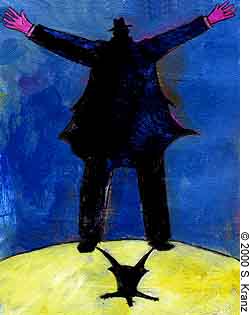
forgiveness_jayThis seems not unlike the article Jay Litvin wrote about his own need to attain closure or at least regain closeness with God, in Mr. Litvin’s case, by “forgiving” God for Litvin’s terminal illness. But Job’s and Litvin’s approaches are quite different. Whereas Job acknowledges God’s statement that he cannot understand the ways of God and thus should abandon any attempt to put God in a theological or doctrinal box, Litvin sets all this aside and treats God, not as understandable, but nevertheless, forgivable.

I suppose you could argue that having the temerity to “forgive” God might require that we would then need to be forgiven by God, that too is the act of a loving Father rather than a harsh and punitive Judge:

He will not always strive with us,
Nor will He keep His anger forever.
He has not dealt with us according to our sins,
Nor rewarded us according to our iniquities.
For as high as the heavens are above the earth,
So great is His lovingkindness toward those who fear Him.
As far as the east is from the west,
So far has He removed our transgressions from us.
Just as a father has compassion on his children,
So the Lord has compassion on those who fear Him.
For He Himself knows our frame;
He is mindful that we are but dust.

Psalm 103:9-14 (NASB)

Then comes the theological underpinnings for the power of repentance: “For He knows how we are formed; He is mindful that we are dust” (Psalm 103:14). God grants us the power of repentance because God knows how we were created: from the dust (Genesis 2:7).

-Gillman, “Chapter 6: God Can Change,” pg 91

In Rabbi Gilman describing the Jewish relationship to God for Christians, he says that God gives human beings the ability to repent because God knows how weak and frail we are (dust and ashes). Out of that knowledge, God desires to forgive us, which, of course, requires that we first repent.

Jonah chapter 3 tells the simple but powerful tale of Jonah prophesying to the great city of Nineveh that unless they repent of their sins, they will be destroyed by God. Amazingly, this Gentile and corrupt city, from the King to the lowest commoner, repent, and because of this, God relents and forgives.

There’s a certain irony, at least to me, in Rabbi Gillman final commentary in this chapter:

The poem then concluded with a theological justification for God’s compassion:

You are slow to anger and ready to forgive. You do not desire the death of the wicked but that we return from our evil ways and live. Even until our dying day, You wait for us, perhaps we will repent, and You will immediately receive us. Our origin is dust and we return to the dust. We earn our bread at the peril of our life. We are like a fragile potsherd, as the grass that withers, as the flower that fades, as a fleeting shadow, as a passing cloud, as the wind that blows, as the fleeting dust, and as a dream that vanishes. But You are ever our living God and sovereign.

The echo of Psalm 103:14…is unmistakable here. God must forgive because God above all knows what it means to be a human being and to live a human life (not because of Jesus, according to Jewish thought, but because God is the creator of all).

-ibid, pg 96

Jonah's KikayonAs a Reform Jewish Rabbi, Rabbi Gillman isn’t about to acknowledge the Christian view of Jesus, but comparisons between his closure to Chapter 6 and the following are unavoidable:

The Lord is not slow about His promise, as some count slowness, but is patient toward you, not wishing for any to perish but for all to come to repentance.

2 Peter 3:9 (NASB)

Therefore, since we have a great high priest who has ascended into heaven, Jesus the Son of God, let us hold firmly to the faith we profess. For we do not have a high priest who is unable to empathize with our weaknesses, but we have one who has been tempted in every way, just as we are—yet he did not sin. Let us then approach God’s throne of grace with confidence, so that we may receive mercy and find grace to help us in our time of need.

Hebrews 4:14-16 (NASB)

It’s not that God couldn’t feel compassion and empathy for human beings without experiencing a human life. What creator is unable to understand his creation? And yet, Jesus as both divine and human is uniquely positioned to understand human frailty and to act as intercessor between a fallen mankind and an ultimately Holy, Ein Sof God. Peter also echos Psalm 103 and “foreshadows” the Yom Kippur service in his words.

I sometimes wonder why we have a Christianity that is completely separate from Judaism. If modern religious Judaism is correct and the Gentiles are to come to God through Israel but without the Jesus of the Bible, then why isn’t modern Israel, the Jewish people, a light to the world, opening that door for the rest of humanity? I know the only “Jewish” requirement for Gentiles is our obedience to the Seven Noahide Laws, but without Jewish mentors and a Jewish understanding of this framework, non-Jewish humanity is without comprehension, let alone community (as far as I know, there are no exclusively Gentile Noahide “synagogues” or “churches”). Does modern Judaism truly believe that God left each generation of Gentiles without a means of redemption? It would seem so, since Judaism, for the most part, does not encourage “Noahidism” among the Gentiles.

Christianity was born of Judaism but we have been separated. Jewish people say the separation occurred when Paul developed an anti-Law religion for the Gentiles, effectively making Paul a Jewish traitor and perverter of Jewish teachings into a new Gentile religion. Christians say that Paul understood that the Law had been replaced by the grace of Christ and Torah entered into a period of obsolescence, making Paul the Jewish vanguard out of Judaism and into Christianity. Even my Pastor, who believes there will be a Third Temple and that there will be sacrifices again, tells me that the Torah was always intended to be temporary, and Paul was the instrument of closure for that part of Jewish existence.

I don’t accept either viewpoint. I can’t. One of the comments made on a recent blog post said in part:

In the case of the biblical literature, re-interpretation is a necessary part of such developments because many adherents to a given system are not native to the languages of the source literatures.

It may have become necessary for the form and structure of religious thought and practice to also have been reinterpreted because of the innate differences between Jewish and Gentile disciples of Messiah. Not only are the covenant structures different (or at least overlapping), but based on the much longer and unique Jewish history with God at the point of the apostolic period, how discipleship was transmitted by the Jewish apostles and received by the various Gentile populations in the then-civilized world, may have well required a sort of cultural “morphing,” even when Gentile Christianity and Jewish “Messianism” were still on speaking terms in the late Second Temple and early post-Temple time frame.

infinite_pathsGod is God of all and God desires to forgive all so that none should perish, but it seems apparent, given the wide variety of Jewish and Gentile approaches to God we’ve seen over the past two-thousand years, that God’s people have yet to come to any sort of consensus as to how that approach should look. Maybe this too is part of God’s gracious forgiveness, not locking human beings into a too tightly structured “approach pattern.”

I know that Jesus said that we only enter through the narrow gate (Matthew 7:13-14), but some Christians believe that gate is as narrow as a single denomination. Some Christians believe you are only “saved” is you are baptized in running water vs. a wading pool. As for observant Jews, how many believe other Jews who do not observe Shabbos will not merit a place in the world to come? How many Jews believe that only their branch of Judaism or only their Rebbe has the true teachings of Torah?

But if God is our teacher and perhaps ultimately, our only teacher, where can we go to learn from Him without having to endure endless layers of human filters? Ourselves and delving into the Bible by the power of the Holy Spirit you say? Many claim to possess the true Spirit and thus out of that (or their own imagination), possess the true teachings of Christ, but I still maintain that there is a lot more chaff than wheat in human understanding of God. I can only hope and pray that God is a lot more merciful and forgiving than some people of faith say He is, so that our honest but fumbling attempts to know Him aren’t in vain.

Yom Kippur: The Brokenhearted Offering

broken-heartedI hated Yom Kippur because it made me feel like a fraud. I would bang away at my chest all day, enumerating all my sins, promising I was repentant. But in my heart I knew that I would return to my mean self the moment the fast was over. I didn’t believe I could ever change, that I was really worthy of life and that I would ever be able to redeem myself. So I would go through the day anxious for it to be over, hating myself for being such a big, fat fraud.

-Eliana Cline
“Why I Hated Yom Kippur”
Aish.com

I’m writing this on Sunday, almost a full week before you’ll read it. Today, my Pastor’s sermon in church was on Yom Kippur. The timing was deliberate. Last week’s sermon, which I missed because I decided to skip church for the holiday weekend, was on Rosh Hashanah. It’s always interesting to hear a sermon in a Christian church about something that is so profoundly Jewish.

Aaron shall place lots upon the two he-goats: one lot “for Hashem” and one lot “for Azazel.” Aaron shall bring near the he-goat designated by lot for Hashem, and make it a sin offering. And the he-goat designated by lot for Azazel shall be stood alive before Hashem, to provide atonement through it, to send it to Azazel to the Wilderness.

Leviticus 16:8-10 (Stone Edition Chumash)

One of the things I’ve come to learn about Jewish holidays and festivals being preached in the church is that these Jewish events can never be allowed to just stand on their own. They always have to “point to Christ.” Otherwise, I guess, they just aren’t really worthy, God-given events all by themselves (that was a little sarcasm).

Anyway, it is Pastor’s opinion that each of these two goats represent the first and second coming of Christ. I have no idea where this idea comes from, but knowing Pastor, it comes from some Christian source or authority. Although I sometimes disagree with him, Pastor does his research and he hardly ever “shoots from the hip” in a sermon.

The analogy, which is how I think of it, falls apart when you realize the Azazel goat (Pastor called it by the more common name “scapegoat”) must bear the sins of Israel and be sent out into the Wilderness, presumably to die. One commentary in my Chumash on verse ten says:

Or HaChaim notes that the goat is referred to here and in verse 21, before the confession, as alive. After Aaron pronounces confession upon it, however, it is no longer called alive, even though it would be some time before it would go to its death. The confession had the effect of placing all of the people’s sins on the goat, which would then carry them off to the desolate Azazel. The presence of such contamination on the goat rendered it spiritually “dead;” thus it was called alive only before Aaron’s confession.

Even if you don’t quite buy what Or HaChaim says, the Azazel goat seems a poor symbol for the King of the Jews returning to redeem Israel in glory and power, leading an army of angelic beings.

But Pastor said a lot of really good things about Yom Kippur and how we Christians can learn from the Day of Atonement. Yes, he said our final atonement is Jesus Christ, who died on the cross for our sins and who was resurrected to give us the promise of eternal life through faith in him.

struggling_prayBut he also deconstructed the mechanism of teshuvah (though he didn’t call it that) as the observant Jewish world sees it, and said point-blank that simply answering an altar call or raising your hand at Christian camp professing belief in Jesus doesn’t automatically grant you the aforementioned eternal life. Seeking atonement of your sins requires much, much more, and we aren’t fully disciples of the Master and Children of God until we do. After that, we still need to have a life of continual repentance, since we sin every day.

Rabbi J. Immanuel Schochet wrote a rather lengthy article called The Dynamics of Teshuvah, which I won’t quote from here. I think it could be called “Everything You Always Wanted To Know About Teshuvah But Were Afraid To Ask.” If you want to know more, Rabbi Schochet’s article is a good source.

But the heart of teshuvah and atonement is contained in the more modest missive written by Rabbi Shlomo Yosef Zelvin called The Master Key:

One year, Rabbi Israel Baal Shem Tov said to Rabbi Ze’ev Kitzes, one of his senior disciples: “You will blow the shofar for us this Rosh Hashanah. I want you to study all the kavanot (Kabbalistic meditations) that pertain to the shofar, so that you should meditate upon them when you do the blowing.”

Rabbi Ze’ev applied himself to the task with joy and trepidation: joy over the great privilege that had been accorded him, and trepidation over the immensity of the responsibility. He studied the Kabbalistic writings that discuss the multifaceted significance of the shofar and what its sounds achieve on the various levels of reality and in the various chambers of the soul. He also prepared a sheet of paper on which he noted the main points of each kavanah, so that he could refer to them when he blew the shofar.

Finally, the great moment arrived. It was the morning of Rosh Hashanah, and Rabbi Ze’ev stood on the reading platform in the center of the Baal Shem Tov’s synagogue amidst the Torah scrolls, surrounded by a sea of tallit-draped bodies. At his table in the southeast corner of the room stood his master, the Baal Shem Tov, his face aflame. An awed silence filled the room in anticipation of the climax of the day—the piercing blasts and sobs of the shofar.

Rabbi Ze’ev reached into his pocket, and his heart froze: the paper had disappeared! He distinctly remembered placing it there that morning, but now it was gone. Furiously, he searched his memory for what he had learned, but his distress over the lost notes seemed to have incapacitated his brain: his mind was a total blank. Tears of frustration filled his eyes. He had disappointed his master, who had entrusted him with this most sacred task. Now he must blow the shofar like a simple horn, without any kavanot. With a despairing heart, Rabbi Ze’ev blew the litany of sounds required by law and, avoiding his master’s eye, resumed his place.

At the conclusion of the day’s prayers, the Baal Shem Tov made his way to the corner where Rabbi Ze’ev sat sobbing under his tallit. “Gut Yom Tov, Reb Ze’ev!” he called. “That was a most extraordinary shofar-blowing we heard today!”

“But Rebbe . . . I . . .”

“In the king’s palace,” said the Baal Shem Tov, “there are many gates and doors, leading to many halls and chambers. The palace-keepers have great rings holding many keys, each of which opens a different door. But there is one key that fits all the locks, a master key that opens all the doors.

“The kavanot are keys, each unlocking another door in our souls, each accessing another chamber in the supernal worlds. But there is one key that unlocks all doors, that opens up for us the innermost chambers of the divine palace. That master key is a broken heart.”

Eliana Cline’s article captured what it is for a Jewish person on Yom Kippur in a more modern setting:

This Yom Kippur, I can feel the pain of not being in a state of connection and own the consequences of my choices. I can say to God, “This is not me,” and mean it. I feel repentant, not from fear – but from a genuine desire for connection, love and transcendence. Getting in touch with my higher self that yearns to be good has enabled me to sense the sadness of my past choices.

The Talmud teaches that on Yom Kippur we are compared to angels. I never really got the comparison. Until now. On Yom Kippur all the daily responsibilities and tasks are removed; it’s a day we transcend the physical and live with total purpose. It’s a day with one sole mission, like an angel, to pray, to think and to connect – to God and to our inner soul.

PrayingWe can choose whether or not to truly repent of our sins and approach God. Most of us most of the time (am I being too cynical?) repent by saying “Sorry” to God, knowing full well, or at least suspecting it in the back of our minds, that we will be revisiting our same old sins again by the by. Repentance for the moment, sin for a lifetime. No wonder Cline felt like a fraud. Most of us should feel the same way.

But Christianity doesn’t have an event on its religious calendar that’s anything like Yom Kippur. Easter probably comes the closest, but that’s a holiday of victory over sin and death, not taking responsibility for sin and repairing relationships with people and with God.

Yom Kippur can seem incredibly depressing if you don’t come at it from the right direction. If you see it as having to wallow in your sins, feeling like a fraud, feeling like an abject failure, then yes, it’s really depressing. You afflict yourself, usually by a complete food and liquid fast for twenty-four hours and a bit more, and hope that’s enough to appease an angry God. But only pagan gods need to be appeased. You can’t “buy off” the One Living God with a sacrifice unless that sacrifice is you!

For You do not desire a sacrifice, else I would give it; a burnt-offering You do not want. The sacrifices God desires are a broken spirit; a heart broken and humbled, O God, You will not despise.

Psalm 51:18-19 (Stone Edition Tanakh)

And by “you,” I mean your broken, humble, and contrite heart.

Take words with you and return to Hashem; say to Him, ‘May you forgive all iniquity and accept good, and let our lips substitute for bulls.’

Hosea 14:3 (Stone Edition Tanakh, verse 2 in Christian Bibles)

Through Him then, let us continually offer up a sacrifice of praise to God, that is, the fruit of lips that give thanks to His name.

Hebrews 13:15 (NASB)

Whether you’re a Christian or a Jew, we all turn to the One God when we repent and ask for forgiveness, though we are unworthy. As Christians, we turn to God through our great intercessor Christ, and we pray that God reveals Himself and his compassion to us through him. I once heard a Jewish person tell me that no man stands between a Jew and his God. I can only ask, especially now, since as you read this, Yom Kippur is just a few hours away, that God reveals all truth, first to the Jews and then to the Gentiles.

Yom Kippur is a gift. It allows us to remove the barriers that separate us from a Holy God and to once again draw near to our Father in Heaven. The gift is offered by grace. All we have to do is accept it. The only cost to us, is to be sincerely brokenhearted.

Have an easy fast and may you be inscribed in the book of life.

12 days.


Rosh Hashanah: Playing the Shofar For Our Father

shofar-rosh-hashanahAnd so we plead on Rosh Hashanah, Avinu Malkenu—our Father, our King. We know who You are, behind that stern mask, feigning objective judgment upon Your throne. You are the Ruler of All That Is, but You are also our Father, and a compassionate loving Father at that. Come here with us, hold our hands, see everything from our view down here. Feel our troubles and the pangs of our hearts as only a father can do. And then get involved with Your world and bless us with a sweet and goodly year.

-Rabbi Tzvi Freeman
“I Don’t Like Rosh Hashanah”
Chabad.org

A few days ago, while I was doing some reading, I had an idea for a “Rosh Hashanah” themed blog post. But I got busy with other things and now that I have the time to write it, the idea is gone. I searched my various online inspirations in an attempt to recapture what I had previously thought of, but no go.

But yesterday (as I write this) I did read my four-and-a-half year old grandson a book, written by Sonia Levitin called A Sound to Remember. Unfortunately, it was a library book and since it was due, I had to return it, thus I no longer have it with me to quote from.

The book seemed a little long and a little dry for my young grandson but he still cuddled next to me and paid rapt attention as I read the story of a boy, just past Bar Mitzvah age, named Jacov, a child living in a 19th century European village. Jacov was described as a “slow boy” who stuttered and who generally was the joke of both children and adults in his small town. But his ally was his teacher and friend, the Rabbi of the local synagogue.

The story begins several weeks before the start of the High Holidays. At this time, someone is usually selected to blow the shofar at the Rosh Hashanah and Yom Kippur services (custom says that a single individual is chosen for both of these honors). However, instead of the Rabbi choosing one of the elders of the synagogue or another person of esteem, he chose Jacov.

No one could believe it. Everyone tried to talk the Rabbi out of it. But the decision was made.

Jacov was terrified. What if he made a mistake? How much worse would he seem in the eyes of his neighbors than he already was if he made a mess of blowing the Shofar on Rosh Hashanah?

The day came. Jacov’s parents beamed with pride as the young boy, shofar in hand, stood at the bemah ready to participate in the most important part of the service. The Rabbi called for the first blast. Jacov, who had been practicing diligently in preparation for this moment, blew with all his might, but almost no sound came out. The Rabbi called for the next blast. Jacov redoubled his efforts and the sound was a little better, but still hardly above a whisper. Jacov was red with embarrassment and trembling with shame. He just had to get the last call right.

The Rabbi shouted for the last blast but absolutely nothing was heard from the shofar. Jacov, in spite of all his efforts and determination, couldn’t make a sound.

The day was a disaster for both Jacov and everyone in the congregation. Angry faces “greeted” Jacov and his family as they left the synagogue that day. Jacov had no appetite for food and sat on his bed at home as that night’s darkness encroached, almost as dark as his depression at having utterly failed.

As I said, typically the person who blows the shofar at Rosh Hashanah also has the honor at Yom Kippur, but everyone in the village felt certain that the Rabbi would replace Jacov with a much more worthy individual. After all, who could be less worthy than Jacov?

But this was not the Rabbi’s choice. The Rabbi instead, made a secret agreement with Jacov and then took a quick trip to the city, which was unheard of for a Rabbi during the High Holidays.

Yom-Kippur-ShofarOn Yom Kippur, right before the blowing of the shofar, Rabbi made a statement that was the point of Levitin’s book and the text I wish I could quote.

He said that it is true that customarily, the shofar blasts on Rosh Hashanah should be loud and robust, but sometimes this is not what God wants to hear from us. Sometimes it is our whispers, our anguish, our small cries of the soul that honor God more. Who is to say that Jacov’s tiny and silent efforts weren’t as pleasing to God as another’s loud, clear shofar blasts? Rabbi was much more eloquent in his words than I am right now, and all of the people in the synagogue realized that at this time of atonement, they had failed their Rabbi, little Jacov and his family, and God by being so stern and unforgiving. To truly end the commemoration of this most holy day, they all had to seek forgiveness and make amends.

Then Rabbi revealed the reason for his trip and the purchase he made in the city: another shofar.

At the end of the service, both Rabbi and Jacov blew their shofars together, and no one could be certain which one (or was it both) was making the loud, clear sounds to remember.

Rabbi Freeman in his Rosh Hashanah commentary, tells a story of a Jewish farmer who had hired a teacher to live in his home with his family. In exchange for room and board, the teacher was to provide instruction for his children. However, with the approach of Rosh Hashanah, the teacher went into town to stay for the holidays so he could be close to the local synagogue. This left it to the father to “home school” his children for several weeks.

The father, usually such as “softie” with his children, found that he had to be overly firm to keep his children from taking advantage of him while he was teaching them their lessons.

Finally, on only day three of this exercise, one small child broke down in tears. Father may have played a good part as stern teacher, but he was still father at heart. He couldn’t bear to look at one of his smallest children crying. Looking down at the table to conceal his chagrin, he brusquely called the child over.

“Why are you crying?” he asked.

Between his sobs, the child answered, “I want to ask my daddy…”

“Yes?”

“I mean my teacher…”

“Yes?”

“…so I can ask my daddy…”

“Right.”

“…that my daddy should ask the teacher…”

“So what is it?!”

“…that my teacher shouldn’t be so hard with us any more!!”

teaching-childrenThe story of the beginning of the New Year and the Day of Atonement is the story of our Teacher, our Master, and our Father and who we are as His children. Although most Christians probably don’t think there’s much for us to learn, since we accept that Jesus is our final atonement, there is a great deal we should pay attention to.

We are like Jacov, not very “quick on the draw,” so to speak. Earnest but immature. Eager to learn, but stumbling over the details. We know we are criticized and often deserve it, but we also can’t always control our natures and we make a lot of mistakes. If only our stern taskmaster, who asks so very much of us, would also be our loving Father, who can forgive abundantly.

We assume that once forgiven, we can do whatever we want. That we cannot fall from the hands of our loving Father. We often abuse the privilege of being “saved.” But what did Paul say?

What shall we say then? Are we to continue in sin so that grace may increase? May it never be! How shall we who died to sin still live in it?

Romans 6:1-2 (NASB)

I recently heard it said that as Christians we should live lives of continual repentance before God. That doesn’t mean we repent once, declare our faith in Jesus as Lord and Savior, and then we’re covered forevermore, regardless of our behavior. It means we must be continually aware of our sins and our failures, continually confess them before the Father, continually regret our willful disobedience, continually make life changes designed to never again commit the sins we have repented of, and relocate our steps so we are walking on the path that God has set before us.

Even if we did that only once a year, say during the High Holidays, it would be a better effort at repentance than many Christians make.

Then, maybe we would appreciate that the harshness of our teacher is only a mask concealing the kindness and forgiveness of our loving Father, who is in Heaven.

If you are still asking yourself what possible relevance can the commemoration of Jewish festivals have for Christians, since this is all commanded in the Law (Torah), consider the following:

Question: Why do the Jewish people needs a covenant/Brit with G-d. Why do we have to be commanded to follow his Mitzvos? Why is the commitment necessary? Please let me know if you have any suggestions on further readings as well.

Answer: The Talmud asks your question, in a way. First, note that the Torah gives commandments to Gentiles as well, so evidently it is the Torah view that all humans need these. In fact, Adam, the first man, was commanded.

-from “Ask the Rabbi”
“Commandments and Covenants”
JewishAnswers.com

Without the basis of Torah, we Christians have no moral or ethical elements in our lives. This is no directive for Christians to behave like religious Jewish people, but God’s covenant with Abraham is our linkage to Christian covenant relationship with God. A significant subset of Torah is intended for the people of the nations who are called by His Name. Certainly the commandment to repent is not lost on us…or at least it shouldn’t be.

Wishing you a good and sweet new year.

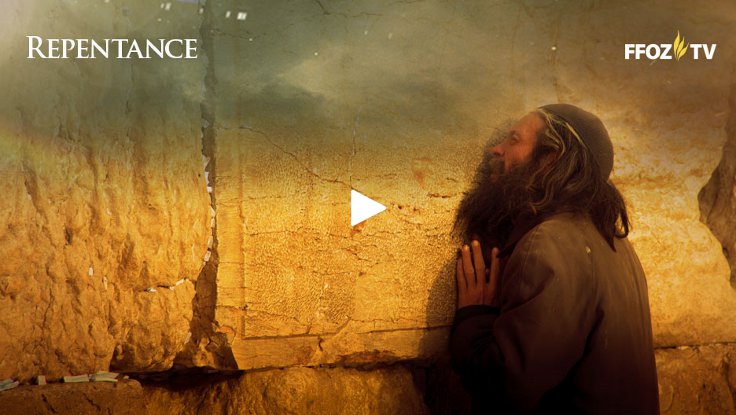
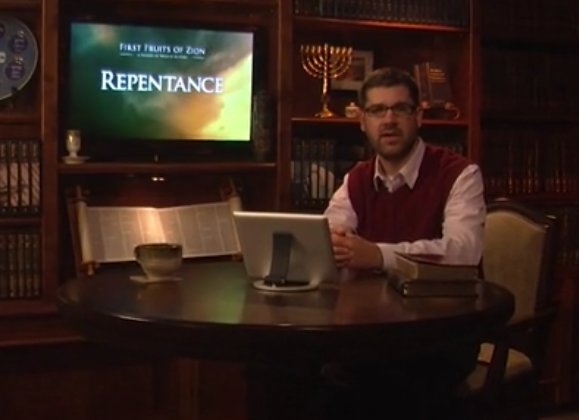
FFOZ TV Review: Repentance

tv_ffoz9_1Episode 09: Jesus did not tell his disciples “Believe in me, the kingdom of heaven is at hand” but rather “Repent, the kingdom of heaven is at hand.” In this episode viewers will discover the direct connection between the kingdom of heaven and repentance. Since throughout the Bible sin leads to exile, it is also true that repentance leads to redemption. Followers of Jesus can help prepare the way for Messiah’s final redemption by walking in a life of repentance now.

-from the Introduction to FFOZ TV: The Promise of What is to Come
Episode 9: Repentance

The Lesson: The Mystery of Repentance

You wouldn’t think there’d be much of a mystery about repentance, but as this episode unfolds, a lot of details are unpackaged that I don’t think most Christians are conscious of. Today’s episode, “Repentance,” is a direct sequel of last week’s episode, The Gospel Message. It is a refactoring of the understanding of the desires of God and the work of Jesus Christ from a wholly Jewish point of view, and strives to communicate that the “good news” isn’t just about “me and my personal redemption.” Christianity seems to focus on “me and Jesus,” while Judaism, and specifically Messianic Judaism for our purposes, has a wider field of view.

From this time on, Yeshua began calling out to proclaim and say, “Repent, for the kingdom of Heaven is on the brink of arrival.”

Matthew 4:17 (DHE Gospels)

This was Messiah’s message to the Jewish people and the nation of Israel, but why didn’t he say “believe in me” rather than “repent?” FFOZ Author and Teacher Toby Janicki calls us to start thinking outside the box of “me and my personal salvation.” Repentance and Kingdom are national concepts, not just personal directives. We’re talking about a message relevant to the entire nation of Israel and the whole of the Jewish people. I know that probably makes Gentile Christians feel a little insecure, but there’s more that we need to understand about who Jesus is and exactly the function of his mission.

Toby says that Jesus did NOT say “believe in me for the kingdom of Heaven is at hand.” He said “repent.” So did someone else:

Now in those days John the Baptist came, preaching in the wilderness of Judea, saying, “Repent, for the kingdom of heaven is at hand.”

Matthew 3:1-2 (NASB)

The following scripture adds more detail:

Now after John had been taken into custody, Jesus came into Galilee, preaching the gospel of God, and saying, “The time is fulfilled, and the kingdom of God is at hand; repent and believe in the gospel.”

Mark 1:14-15 (NASB)

This breaks down into three points:

  • The Kingdom of God is at hand.
  • Repent.
  • Believe in the gospel.

This is all very similar to the content of last week’s episode, and Toby makes the point that belief goes hand in hand with repentance. As he was speaking, I recalled that there are certain teachings in Judaism that say if all of Israel were to repent at the same moment, it would summon the coming of the Messiah. There are also contradictory teachings but the gist is that Jewish faith and repentance have a direct connection to when the Messianic Era, that is, the Kingdom of God arrives.

This is radically different from what most Christians believe, since we have been taught the return of Jesus will be on some fixed but unknown date on the calendar. We can neither make it come sooner or delay it from happening.

Here comes the first clue to solving our mystery:

Clue 1: The gospel message carries the imperative message, “repent for the Kingdom of God is at hand.”

It’s a call to action. We must do something, that is repent, because the Messianic Era is on the verge of arriving.

tv_ffoz9_aaronBut what is it to repent? Toby tells us that if we believe the gospel message, we will change…not like changing our minds, but changing our lives. My Pastor calls it living a transformed life. Toby says that repentance is a return to God’s Law, the Torah.

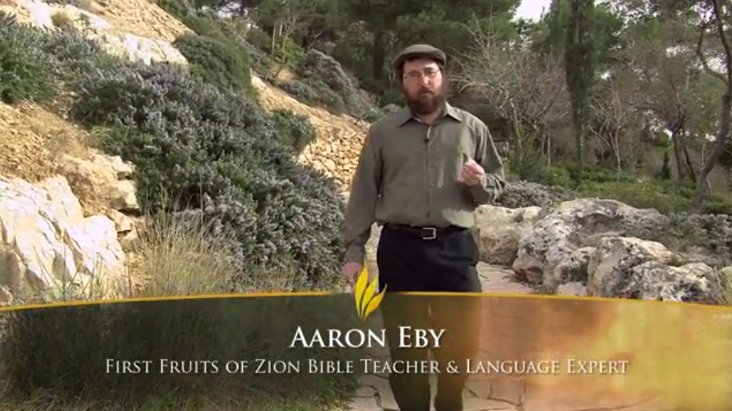
The scene shifts to Israel where FFOZ Teacher and Translator Aaron Eby explains the Hebrew word “Teshuvah” to the audience. He tells us the word gives the meaning of turning around and returning. It’s as if God’s desire for people is for us to walk in His ways, literally, walking God’s path. Sinning is like straying off the path and repentance is turning back or returning to the path.

So you shall observe to do just as the Lord your God has commanded you; you shall not turn aside to the right or to the left. You shall walk in all the way which the Lord your God has commanded you, that you may live and that it may be well with you, and that you may prolong your days in the land which you will possess.

Deuteronomy 5:32-33 (NASB)

The timing of this review couldn’t have been better, since not only are we about to enter the High Holy Days on the Jewish calendar which emphasize repentance and return for the Jewish people, but last week’s Torah portion included the following passage:

“So it shall be when all of these things have come upon you, the blessing and the curse which I have set before you, and you call them to mind in all nations where the Lord your God has banished you, and you return to the Lord your God and obey Him with all your heart and soul according to all that I command you today, you and your sons, then the Lord your God will restore you from captivity, and have compassion on you, and will gather you again from all the peoples where the Lord your God has scattered you.”

Deuteronomy 30:1-3 (NASB)

The “mechanics” of repentance involves a literal ceasing of a specific sin, a deep regret for ever having sinned, verbal confession to God, and making life changes, such as repairing the damage you did to others by sinning, and even giving to charity as a way to compensate for any inability to pay back what you took or heal the hurts you caused. Returning to God’s path.

But this also illustrates that, for the Jewish people, and remember Christ’s primary audience were (and are) Jews and Israel, the only way to repent was (and is) to return to the ways of Torah. If the message of Jesus is as true today as it was nearly two-thousand years ago, then we cannot ask Jewish believers to stop observing the Torah mitzvot, nor can we in the church say that the Torah was meant to be temporary. To do so would be to deny the Jewish people any ability to obey God and repent of their sins. We’d be condemning them to permanent exile, and condemning ourselves to living outside of God’s will for the Gentiles.

Toby gives us the second clue:

Clue 2: Repentance is turning away from sin and towards God’s Law.

The rest of the mystery involves the linkage between repentance and redemption. As mentioned above, when Israel sins, she is exiled from her Land, but Moses in Deuteronomy 30:1-3 also promises that whenever Israel repents, she is redeemed and returned to the Land of Israel. This is the original template for what all of the subsequent prophets in Israel would say, not only about the historic exiles and returns, but the final redemption in the Messianic age.

…and My people who are called by My name humble themselves and pray and seek My face and turn from their wicked ways, then I will hear from heaven, will forgive their sin and will heal their land.

2 Chronicles 7:14 (NASB)

Toby rightly mentions that typically, we’ve heard sermon after sermon applying this verse to Christians in whatever nation we happen to be living in, which in my case, is America. But taken in context, this was being addressed to King Solomon and to Israel. This is not about Christianity and “saving America” as a “Christian nation,” but about the central message of every Jewish prophet in the Old Testament. God intends to heal Israel. Christians can’t afford to be so self-focused that we miss what the Bible is really saying. It’s not all about us and Jesus, it’s about the intent of God toward Israel. It’s about the redemption of national Israel, not individual Gentile souls.

Clue 3: Repentance is a prerequisite to redemption.

It’s almost like Toby is saying that if we all really repent, only then will Messiah return…or is he saying only if Israel repents…?

tv_ffoz9_tobyBut what about us? What about Christians. Does this television episode write us out of the plan of God and the salvation of Christ? Not at all.

Toby says we can be a part of the redemption by living lives of continual redemption. Living such a life is like being part of a sort of “mini-Messianic age.” We experience a foretaste of what is to come when Jesus returns, the time when all of Israel will repent and the Messiah will come in power and glory, bringing redemption to the Jewish people and the world. But none of this happens for Gentile Christians unless Israel repents and is redeemed, so it is in our best interests to support and encourage Jewish observance of Torah.

This lesson has at least strongly implied if not boldly declared that Israel can’t repent unless they return to the specific behavioral path God has provided for them, the Torah. We in the church dare not inhibit this, for Israel’s sake and for our own.

What Did I Learn?

I learned that the timing of the return of Jesus is variable. It isn’t a fixed date on the calendar. According to something FFOZ President and Founder Boaz Michael said at the close of this episode, if Israel had repented at the first coming of Messiah, the Kingdom of God would have been established at that moment.

That’s a rather radical thought, because I always believed that the final redemption was “delayed” to allow time for the gospel message to be transmitted to all the nations of the Earth, to all of the Gentiles. If Israel had repented immediately after the resurrection and the Messianic Era was then established, the vast majority of the world would never have heard of Israel, of Messiah, and they certainly wouldn’t have had a clue that Israel was supposed to be the head of the nations and Israel’s King was the King of the entire planet.

After two-thousand years, if Messiah should return at this very moment, even though many would still disagree with who he is and what he is supposed to do, almost none of us could say that we never heard of Jesus, Israel, the Bible, and what Christians and Jews believe it all means.

Did Jesus truly expect for Israel to have repented long, long ago?

He who testifies to these things says, “Yes, I am coming quickly.” Amen. Come, Lord Jesus.

Revelation 22:20 (NASB)

John wrote these words near the close of the first century CE and it certainly seems as if he expected the return of Messiah soon, perhaps within his own lifetime (and he was quite elderly when he penned this part of our Bible). Is it humanity’s fault that he hasn’t come yet? Is our lack of repentance and hardness of heart to blame?

It’s the mystery for next week.

Devarim: Lessons in Teshuvah

devout_jewish_prayerThe Torah portion begins with the words:

“These are the things which Moses spoke to all of Israel” (Deut. 1:1).

The Torah then enumerates what is seemingly a list of places the Jewish people had traveled. The Siphre elucidates that out of respect for the Jewish people, Moses alluded to their transgressions by the name of each place, without being explicit. What can we learn from this?

Rabbi Yehuda Leib Chasman of the famed Hebron Yeshiva comments that a person who is sincerely interested in self-improvement and growth only needs a slight hint that he has done something wrong in order to realize that he needs to improve. Such a person looks for opportunities to make positive changes in himself and uses his own ability to think to fill in the details when someone gives him a hint that he has made a mistake. The Jewish people only needed a hint.

The goal of life is to improve and to be the best that you can be. Just like a person interested in becoming rich will use any tip if he thinks it will be of financial benefit, so should we look for messages which will help us improve. Rabbi Yisroel Salanter once asked a shoemaker why he was working so late and with an almost extinguished candle. Replied the shoemaker, “As long as the candle is still burning it is possible to accomplish and mend.” From this Rabbi Salanter understood that “as long as the light of the soul is still going, we must make every effort to accomplish and to mend.”

-Rabbi Kalman Packouz
Dvar Torah based on Growth Through Torah by Rabbi Zelig Pliskin
Commentary on Torah Portion Devarim
Aish.com

Easier said than done.

On the other hand, it seems to be God’s expectation that we should all strive to improve, to make amends, to become better.

When describing Tisha B’Av, Rabbi Packouz says:

Tisha B’Av is a fast day (like Yom Kippur, from sunset one evening until the stars come out the next evening) which culminates a three week mourning period by the Jewish people. One is forbidden to eat or drink, bathe, use moisturizing creams or oils, wear leather shoes or have marital relations. The idea is to minimize pleasure and to let the body feel the distress the soul should feel over these tragedies. Like all fast days, the object is introspection, making a spiritual accounting and correcting our ways — what in Hebrew is called Teshuva — returning to the path of good and righteousness, to the ways of the Torah.

Teshuva is a four part process: 1) We must recognize what we have done wrong and regret it 2) We must stop doing the transgression and correct whatever damage that we can, including asking forgiveness from those whom we have hurt — and making restitution, if due 3) We must accept upon ourselves not to do it again 4) We must verbally ask the Almighty to forgive us.

despairThat sounds a lot more complicated than how most Christians just shoot a quick “forgive me” prayer up to God before continuing on with their business. OK, maybe that was really cynical, but I wonder if a lot of Christians have a concept of repentance the way we see described above.

I hope so. It’s not easy. Maybe if we appreciated from the start how much work it is to repent, how much strife and anguish our mistakes make, the enormous effort that goes into a repair of damaged relationships and of damaged people that will never quite be enough, maybe we’d put more effort into not sinning in the first place.

The goal of life is to improve and to be the best that you can be.

That may be true. But there’s a long, hard distance between the goal and where most of us are on the journey.

According to Rabbi Packouz:

Learning Torah is the heart, soul and lifeblood of the Jewish people. It is the secret of our survival. Learning leads to understanding and understanding leads to doing. One cannot love what he does not know. Learning Torah gives a great joy of understanding life. On Tisha B’Av we are forbidden to learn Torah except those parts dealing with the calamities which the Jewish people have suffered. We must stop, reflect and make changes. Only then will we be able to improve ourselves and make a better world.

In an ideal sense, this is how Jewish people are to approach and immerse themselves in the experience of Tisha B’Av. It is said that the Temple was destroyed because of the lack of love the Jewish people had for one another. This is part of the reason why there is such intense mourning in Jewish communities at this time of year. This is why there is such an emphasis toward teshuvah.

Only when true repentance has been made can the Jewish person move forward and begin the process of self-improvement.

What should the rest of us learn from this? Is our candle still burning?

For a different perspective on this portion of the Sidra, visit Rabbi Yitzchak Ginsburgh’s blog.

Good Shabbos.

75 days.

Yom HaShoah: A Day to Remember

Rav Moshe Teitelbaum, zt”l, the previous Rebbe of Satmar, went through the living inferno that those who survived the Holocaust endured. After some time in Auschwitz, he was moved to Tröglitz, a camp in Rehmsdorf. Despite the danger, the inmates of the camp arranged to pray kol nidrei and they invited the rebbe to lead the prayers.

Of course, it was unthinkable to eat on Yom Kippur. But since the meager evening meal was served after nightfall, it at first appeared as though those who wished to fast would have to go without food before the fast as well. After much wrangling, the head of their block, Dr. Kizaelnik—who had been the rosh kahal in Sighet before the war—finally managed to arrange with the kitchen staff that the evening meal would be served before nightfall.

An eyewitness later recounted, “Before kol nidrei we went back into the block and fell onto our beds, crying bitter tears the likes of which I hope I never hear again. Then the good doctor announced that kol nidrei would soon begin and that any who wished could join the minyan. Still weeping, we went to the part of the room set aside for davening, and the rebbe began to speak.

“The rebbe commenced, ‘Rabbi Akiva said: Ashreichem Yisrael! Before Whom are you purified, and Who purifies you? Just as a mikveh purifies the defiled, God purifies Yisrael. We must recall that Rabbi Akiva was one of the ten martyrs—killed for sins he did not commit. He saw all the terrible travail which would befall Yisrael. Yet he chose to give a message of chizzuk to us for all generations. Although a mikveh literally alludes to a ritual pool, it can also allude to the word tikvah, hope. This
teaches that when we hope to Hashem, and do teshuvah—even if we are in the worst situation—God will uplift us. Even from this present darkness, which no nation has ever experienced, such bitterness and cruelty, God will deliver us. Amen.'”

Daf Yomi Digest
Stories Off the Daf
“The Hope of Yisrael”
Kereisos 23

Originally posted on April 18th, 2012 with some adaptations.

Holocaust Remembrance Day or Yom HaShoah begins in the evening of Sunday, April 7, 2013, and ends in the evening of Monday, April 8, 2013. Do not forget. Do not let your children forget. As long as we remember and repent, there lies our hope in God.

As I edit this blog post, it’s early Sunday afternoon before Yom HaShoah. At Sunday school class earlier, when the teacher asked for prayer requests, an older gentleman named Charlie told us all that tonight at sundown, Holocaust Remembrance Day begins and encouraged us all to pray for Israel and the safety of the Jewish people. I believe it is the duty and honor of all Christians to continually pray for Israel and especially at this time, that never again will the Jews be rounded up and slaughtered like cattle. Pray for King Messiah’s return and for the shalom of all Jews everywhere.

(Click the image below to see a larger version)

According to Dr. Michael Schiffman’s blog, “over 50,000 elderly Holocaust survivors living in Israel, and many thousands of holocaust survivors living in the former Soviet Union (are) living in abject poverty right now.” You can help make a difference. Learn how at Dr. Schiffmans’ blog and then make a donation at chevrahumanitarian.org.

There’s always hope, as long as you repent, remember, and then act out of kindness and compassion.