Tag Archives: Romans

Reflections on Romans 3

For indeed circumcision is of value if you practice the Law; but if you are a transgressor of the Law, your circumcision has become uncircumcision. So if the uncircumcised man keeps the requirements of the Law, will not his uncircumcision be regarded as circumcision? And he who is physically uncircumcised, if he keeps the Law, will he not judge you who though having the letter of the Law and circumcision are a transgressor of the Law? For he is not a Jew who is one outwardly, nor is circumcision that which is outward in the flesh. But he is a Jew who is one inwardly; and circumcision is that which is of the heart, by the Spirit, not by the letter; and his praise is not from men, but from God.

Romans 2:25-29 (NASB)

Pour yourself a big cup of coffee and relax. This one is long.

It may seem a little odd to start a commentary on Romans 3 by quoting from Romans 2, but remember that I previously stated that my “reflections” on Romans series was an attempt to describe my impressions of this epistle as a complete unit, that is, a letter intended to be read all at once, rather than slicing and dicing it up into little sound bytes. The context of what Paul writes in the third chapter of this book (and remember, for Paul, this wasn’t a “book” nor did he actually divide his letter into chapters) spills over from what has come before it.

As a refresher, here’s how I ended my commentary on Romans 2:

If a Jew fails to perform a mitzvah, does he stop being a Jew? Does he become “uncircumcised?” This used to puzzle me. The whole “For he is not a Jew who is one outwardly, nor is circumcision that which is outward in the flesh” thing has been used to justify calling Christians “spiritual Jews” and to support the old, tired theology of supersessionism. But I don’t think that’s what Paul is saying.

Paul is trying to inspire zeal for the Torah and for faith in Messiah in his non-believing Jewish brothers in Rome. How would he do that by insulting them and rejecting them? Worse, how would he do that by denigrating the Torah? He couldn’t.

But he could be saying that a Jew is justified before God if he is outwardly a Jew, that is, if he is obedient to the commandments, and if he is inwardly a Jew, that is, if he has faith in God and that faith is the motivation for obedience. The two go together…faith and works.

Paul, in my opinion, is saying that a Jewish person devoted to Hashem must be a Jew in his or her inward faith and also outwardly a Jew in behavior, in performance of the mitzvot. The two are inseparable to a complete Jewish identity.

And, if the Jewish person is boasting based on ethnicity and being a recipient of the promises but not also living a life of faith and obedience to God, then…

So if the uncircumcised man keeps the requirements of the Law, will not his uncircumcision be regarded as circumcision? And he who is physically uncircumcised, if he keeps the Law, will he not judge you who though having the letter of the Law and circumcision are a transgressor of the Law?

Romans 2:26-27 (NASB)

So if a Gentile who is not circumcised, that is, who is not a Jew, nevertheless behaves as if he has a circumcised heart, that is, is obedient to God through faith in Messiah, then sees a Jewish person who is hypocritical, boasting in their ethnic identity but not “walking the walk,” so to speak, won’t that Gentile be justified in “pushing back” when the less-than-faithful Jew attempts to assert some sort of religious superiority over the Gentile based just on being ethnically Jewish?

And that’s where we start chapter 3:

Then what advantage has the Jew? Or what is the benefit of circumcision? Great in every respect. First of all, that they were entrusted with the oracles of God. What then? If some did not believe, their unbelief will not nullify the faithfulness of God, will it? May it never be! Rather, let God be found true, though every man be found a liar, as it is written,

“That You may be justified in Your words,
And prevail when You are judged.”

Romans 3:1-4 quoting Psalm 51:4 (NASB)

PaulRemember, Paul created no chapter divisions, so he’s simply continuing his point from the previous portion of his letter.

So is Paul saying that being ethnically Jewish in and of itself meaningless? Are people who are ethnically Jewish but not obedient to the mitzvot or even imperfect in their attempts to be observant cut off from God? What advantage is there in being (just) ethnically Jewish, simply born into a covenant relationship with God?

“Great in every respect.”

In other words, being born into a covenant relationship with God all by itself still has great advantages and still orients the Jewish person, regardless of their behavior, to God, both as the focus of His love and, if they are disobedient, the focus of His discipline as outlined in the conditions (listed in the Torah) of the Sinai covenant.

Then Paul lists one of the advantages: “entrusted with the oracles of God.” That word “oracles” is also translated as “words,” “revelation,” “utterances,” and “truth”. This means (to me) that at a time when the entire world was worshiping idols of wood and stone and passing their infants through fire as some sort of fertility rite, only the Israelites were trusted to possess and commit themselves to the words of God, which we can interpret as the Torah, Prophets and the Writings, the Tanakh or the entire canonized Bible as it existed when Paul was writing to the Romans.

The Bible records many periods when Israel was faithful to God and many periods when she wasn’t. And yet, through it all, God was faithful and the Israelites remained His people, entrusted with his statues and ordinances.

Then Paul says, “So what if some Jewish people are unfaithful? Do you think that means God is going to stop being faithful to the Jews and abrogate his covenant promises? Absolutely not!”

So even if “every human being [is] a liar, God it true.” Then Paul quotes from Psalm 51:4, which is King David’s famous confession and plea to God after his sin with Batsheva. This is David’s admission of sinning against God alone and because he has sinned, David knows God is justified in judging him and God’s verdict against David is true.

To me, this says a couple of things. The first is that, because God and Israel are in a covenant relationship with each other, and that covenant relationship lists consequences if Israel, or any individual Jew such as David is faithless, then God is justified in disciplining the nation or the individual based on that relationship. This is what happened to David and I believe Paul is saying that individual Jews in his time would also receive consequences from God for faithlessness and sin specifically because they are in a covenant relationship with God.

JudaismIn other words, just because God disciplines individual Jews or the entire nation of Israel doesn’t mean God has abandoned them and ended His covenant with them. Quite the opposite. It means that God is fully engaged with national Israel right down to the lives and behavior of each individual Jewish person. We Gentiles (Christians) have no right at all to say that God abandoned Israel in favor of “the Church.” Too bad “the Church” hasn’t read this passage of Romans in that particular light over the past nearly two-thousand years.

Was Paul concerned that Jesus-believing Gentiles were somehow “lording it over” Jews who were less than faithful or less than observant? According to Mark Nanos in his book The Mystery of Romans, Paul was admonishing the Jesus-believing Gentiles for parading their “freedom” (being “grafted in” to the blessings of the New Covenant promises without the requirement of undergoing the proselyte rite and being obligated to the full yoke of the Torah mitzvot) in front of the non-believing Jews with whom they were associating (along with Jesus-believing Jews) in a common synagogue setting and/or a common Jewish community context.

It may be (and this is just my “reflection”) that the Gentiles were encountering some Jewish non-believers who, not at all happy that Gentiles were being afforded equal social status and inclusion in Jewish community without converting to Judaism, were being boastful that they were ethnically Jewish, possessors of the “oracles of God,” and thus were to be accorded a superior status. The Gentiles to whom Paul is addressing may have been rather vocally stating that these Jews were indeed Jews “in the flesh” but their behavior in Torah observance and obedience to God was (in the Gentiles’ opinion) coming up short.

Paul then is telling these Gentiles not to be “knuckleheads” and “so what” if these Jewish non-believers aren’t perfect. They still have many advantages. Don’t rub their noses in the fact that Gentiles in Messiah are considered (at least by Paul) as equal co-participants in the covenant blessings and in Jewish worship and communal space.

But if our unrighteousness demonstrates the righteousness of God, what shall we say? The God who inflicts wrath is not unrighteous, is He? (I am speaking in human terms.) May it never be! For otherwise, how will God judge the world? But if through my lie the truth of God abounded to His glory, why am I also still being judged as a sinner? And why not say (as we are slanderously reported and as some claim that we say), “Let us do evil that good may come”? Their condemnation is just.

Romans 3:5-8 (NASB)

I may not be getting everything Paul is trying to communicate here, but my sense is that Paul is saying, even though the Jews have many advantages just by being born Jewish, God is still justified in judging unrighteousness among them, even as He promised He would in the Torah. God “inflicting wrath” does not mean He’s unrighteous, that is, does not mean (as I said before) that God is abandoning His relationship with Israel. When any one in Israel is judged by God to have sinned, God is justified in inflicting discipline.

In verse 9, Paul says that relative to judgment for sin, the Jews do not have an advantage over the Gentiles due to their covenant relationship with God, because God is justified in condemning anyone who sins. No one is perfect. Everyone sins. Everyone can be under the “power of sin” (Romans 3:9 NIV).

In Romans 3:10-18, Paul weaves a number of different scriptures into his “none are righteous” part of the chapter, including Psalms 14:1-3; 53:1-3; Eccles. 7:20; Psalm 5:9; Psalm 140:3; Psalm 10:7 (see Septuagint); Isaiah 59:7,8 and Psalm 36:1.

Now we know that whatever the Law says, it speaks to those who are under the Law, so that every mouth may be closed and all the world may become accountable to God; because by the works of the Law no flesh will be justified in His sight; for through the Law comes the knowledge of sin.

Romans 3:19-20 (NASB)

This continues Paul’s point that even if Jews are obedient to the mitzvot, obedience without faith does not justify one before God. Only faith and obedience. The whole world is accountable to God. Does that mean the whole world is obligated to the Torah mitzvot in the manner of the Jews? Some might conclude that we are based in this single verse. On the other hand, taking the larger Biblical narrative into account, we know that Israel was to be a light to the world, and up to the time of Messiah’s first advent, that light hadn’t been producing a lot of illumination.
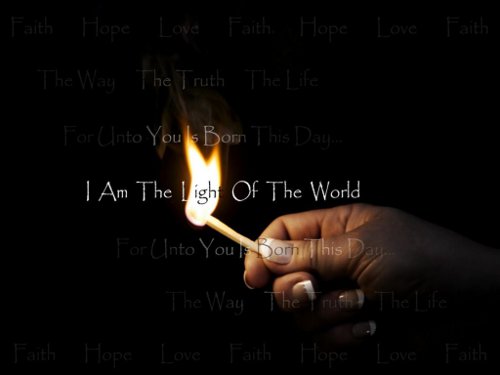
light-of-the-worldBut it’s by Israel’s light that the world was intended to be informed of God and His blessings, as well as be informed of what constituted both righteousness and sin. The Torah, among its many other purposes, defines what it is to disobey God and thus be condemned. But even an awareness of the Law and being behaviorally compliant is insufficient if there is no Kavanah or intension, sometimes expressed as “direction of the heart”.

Although Jews and the Gentiles in Messiah had different (overlapping) behavioral obligations, they were all judged based, not necessarily on the perfection of their performance, but on the presence or absence of faith, devotion, and motivation. All have sinned and fallen short of God’s expectations, but if a man like King David who sinned greatly with the affair and impregnation of the married woman Batsheva, the murder of her husband Uriah, and attempting to cover it all up by quickly marrying Batsheva after the mourning period for her husband’s death had passed, could still repent and be considered “a man after God’s own heart” (1 Samuel 13:14) specifically because of the quality of David’s kavanah, then so could the less than perfect Jews Paul was referencing in his letter.

But now apart from the Law the righteousness of God has been manifested, being witnessed by the Law and the Prophets, even the righteousness of God through faith in Jesus Christ for all those who believe; for there is no distinction; for all have sinned and fall short of the glory of God, being justified as a gift by His grace through the redemption which is in Christ Jesus; whom God displayed publicly as a propitiation in His blood through faith. This was to demonstrate His righteousness, because in the forbearance of God He passed over the sins previously committed; for the demonstration, I say, of His righteousness at the present time, so that He would be just and the justifier of the one who has faith in Jesus.

Romans 3:21-26 (NASB)

We might condense the above-quoted statement to say something like, “But now apart from the Law the righteousness of God has been manifested through faith in Jesus Christ.” That makes it seem as if faith in Christ has replaced the Law (Torah observance) as a means of being considered righteousness. Except that Torah observance was never considered a means of righteousness. Only faith.

Then he believed in the LORD; and He reckoned it to him as righteousness.

Genesis 15:6 (NASB)

Abraham was considered righteous by God because of his faith, long before the Torah was given at Sinai and even before the commandment of circumcision as a sign of God’s covenant with Abraham. Thus it is faith that is the common denominator across all populations, Jewish and Gentile, that reckons anyone as righteous before a Holy God.

That seems to explain part of what Paul is saying in Romans 3:21-26, but what about faith in Jesus Christ, in Yeshua HaMashiach? Up until now, faith in Hashem, God of the Heavens was required. What changed?

The second elementary teaching of the Messiah in Hebrews 6:12 is called “faith toward God,” but how is this distinct from other first-century sects of Judaism? Even the Sadducees believed in God. Find out how Yeshua transformed the faith of his followers, and get a fresh handle on what it means to “believe in Jesus” and to be “born again.”

-D. Thomas Lancaster
Sermon Twenty: Faith Toward God
Originally presented on June 15, 2013
from the Holy Epistle to the Hebrews sermon series

That is exactly the question D.T. Lancaster answers in the above-quoted sermon in his “Hebrews” series, which I reviewed a number of weeks ago. I also mentioned this topic in a related blog post called Why No One Comes To The Father Except Through The Son.

What changed? Why was devotion solely to Hashem no longer the target to be aimed at for a devout Jew? Actually, that’s not what changed. As mentioned in both of my commentaries on Lancaster, the Jesus-believing Jews of “the Way” and the Pharisees had almost exactly the same set of beliefs about God. There was only a slight variance between them and you could almost call Paul and the other Jesus-believing Jews “Pharisees with a Messianic twist.”
AbrahamYou might say that God’s plan for the ultimate redemption of Israel had been progressing forward in time since Abraham. If you look at the pattern of the covenants, you’ll see God building, step by step, on His plan, establishing the promises with Abraham, carrying them out through Isaac, and Jacob, the exile of Jacob’s family to Egypt where they grew into a great multitude, the raising up of Moses and Aaron, leading them out of Egyptian slavery and on their many journeys, and culminating at Sinai with the establishing of the Mosaic covenant and the giving of the Torah, forming the nation of Israel as the light to the world.

But it didn’t end there. Even after possessing the Land, national Israel struggled. Their history is clear. Did God’s plan fail? Did Israel fail? No. The plan was incomplete. It was never meant to encompass just Israel, but the whole world through Israel.

That’s why the New Covenant was prophesied through Jeremiah, Ezekiel, Isaiah, and many other prophets. The New Covenant would be written, not on scrolls or tablets, but on the Jewish heart, so that Israel could finally perfectly observe the mitzvot with absolute kavanah and without sin.

Messiah, among other things, was the herald of the New Covenant. He brought the beginning of the inauguration of that Covenant with his birth into the world, receiving the Holy Spirit, his ability to heal, his correct teachings, his death and resurrection, and his promise to return.

He was the messenger of the next logical, Biblical, evolutionary step in God’s redemptive plan, his Good News to the nation of Israel, and through Israel’s redemption, the salvation of the world as well.

At each step in the plan, the Jewish people could continue to have faith in God or not. Many did. Some didn’t. The Bible records their fate. Messiah came not to say “believe in me instead of God” but “believe in me because of God for I am His messenger and through my message you can come fully and completely, in a way never before realized by any living Jew, to God the Father, Master of Legions, Author of Life.”

Another step and a really big one in God’s plan. Accept or reject. Faith or faithlessness. You choose.

new heartThe choice was given to Gentiles for the first time since the establishment of the Israelite nation. No longer would a non-Jew have to undergo the proselyte ritual and convert to Judaism. No longer would a Gentile be required to affiliate with a tribe or clan of Israel (as they did in the days of Moses). Now, because of the New Covenant promises and how they include the Abrahamic blessings to the nations, all people of every nation, tribe, and tongue can, through Messiah, come alongside Israel, just as it was prophesied, and take part in the covenant blessings of God by being grafted into the root.

Where then is boasting? It is excluded. By what kind of law? Of works? No, but by a law of faith. For we maintain that a man is justified by faith apart from works of the Law. Or is God the God of Jews only? Is He not the God of Gentiles also? Yes, of Gentiles also, since indeed God who will justify the circumcised by faith and the uncircumcised through faith is one.

Romans 3:27-30 (NASB)

Paul might be saying, so, having said all that, do Jews get to brag that they are justified and made righteous by being born Jews or even by observance of the mitzvot? No. Yes, being born Jewish and having the Torah has terrific advantages as I said, but ultimately, no one is justified by being born a Jew or by being physically circumcised. Justification, for a Jew or Gentile, comes only through a faith like Abraham’s.

I can see Paul really needing to make this point to the Gentile Jesus-believers reading the letter. I can see how they could be really confused in the face of non-believing Jews telling them that justification and righteousness comes only through being Jewish. Paul needed to set them straight and orient them and their Jewish counterparts, to the reality of the “law of faith”. God is a God of the Jews and a God to the Gentiles so both the Jews and Gentiles have their hope in Him through Messiah’s Good News.

But Paul has to be particularly careful. In emphasizing faith, he can’t be seen to diminish the reality and the vital importance of the Torah or of Jewish identity. Remember, the Jews still have many great advantages over the Gentiles (sorry, but it’s true) as possessors of the words of God. Israel was the original recipient of Torah, and is the total and complete object of the Abrahamic, Mosaic, and New Covenants. It’s only through Israel that the rest of us have any hope of salvation at all, so let’s not get cocky.

That explains the last verse in the chapter:

Do we then nullify the Law through faith? May it never be! On the contrary, we establish the Law.

Romans 3:31 (NASB)

Especially according to the entire context of the letter as it has been presented so far, Paul’s statement couldn’t be plainer. Faith does not nullify, do away with, fulfill (in the sense of abolish), abolish, replace, or complete (in the sense of abolish) the Law. Faith establishes the Law!

That is, through a completeness of Jewish faith, in this context, in God through Messiah, the Law is established, fully founded in a way never conceived or before or if conceived of, never accomplished before in Jewish lives.

Remember, we have to view all of this through the New Covenant. Jesus was bringing the New Covenant into our world. The evidence was the fact that even the Gentiles were receiving the Holy Spirit (see Acts 10) just as the Jews had (Acts 2). The New Covenant was going to radically change the relationship between the Jewish people, the Holy Spirit, and observance of the mitzvot:

“But this is the covenant which I will make with the house of Israel after those days,” declares the Lord, “I will put My law within them and on their heart I will write it; and I will be their God, and they shall be My people. They will not teach again, each man his neighbor and each man his brother, saying, ‘Know the Lord,’ for they will all know Me, from the least of them to the greatest of them,” declares the Lord, “for I will forgive their iniquity, and their sin I will remember no more.”

Jeremiah 31:33-34 (NASB)

Moreover, I will give you a new heart and put a new spirit within you; and I will remove the heart of stone from your flesh and give you a heart of flesh. I will put My Spirit within you and cause you to walk in My statutes, and you will be careful to observe My ordinances.

Ezekiel 36:26-27 (NASB)

When the New Covenant reaches fruition, God will write the Torah on the heart, and each Jewish person (and ultimately the rest of us) will have an apprehension of God that is so complete, that they/we will know God, as the prophets knew Him, as Moses knew Him, with complete intimacy, and all Israel’s sins (and the Gentiles’ attached to Israel through Messiah) will be forgiven.
the-divine-torahFurther, a completeness of the Holy Spirit will be poured out so that it will be possible for Israel to totally observe all of the Torah ordinances perfectly and without sin.

This is what it means when Paul says, Do we then nullify the Law through faith? May it never be! On the contrary, we establish the Law.

The Torah will be established in the New Covenant era in a way that it never could have been at any other time in history, for the conditions of God’s covenant with Israel will no longer be limited to being recorded on scrolls but will, in some mysterious manner, be written on the Jewish heart and soul, and Israel will be enabled by the Holy Spirit to finally, perfectly be in obedience to God as God requires through the Torah.

And we Gentiles who come to faith in the God of Israel through Messiah will be grafted in and be sharers of the covenant blessings, living in the resurrection under the reign of King Messiah in perfect peace and knowledge of Israel’s God.

“Run to pursue even a minor mitzvah and flee from a transgression.”

-Ben Azzai, Pirkei Avot 5:2

Next up: Reflections on Romans 4.

Shabbat Shalom.

Reflections on Romans 1 and 2

For I am not ashamed of the gospel, for it is the power of God for salvation to everyone who believes, to the Jew first and also to the Greek. For in it the righteousness of God is revealed from faith to faith; as it is written, “But the righteous man shall live by faith.”

Romans 1:16-17 (NASB)

When I was preparing for last week’s Sunday school class for the study on Romans 10:1-13, I decided to read the entire Epistle to the Romans. I’ve studied Romans before, principally using the Mark Nanos book The Mystery of Romans, but there’s something to be said for just reading the Bible and letting it speak to you.

I prefer, when I can, to read entire books in the Bible rather than just a few verses at a time. Imagine reading your favorite novel three or four sentences at a time, then putting the book down for four days, picking it up and reading another few sentences.

First of all, it would take you forever to get through the novel and secondly, you probably would have a tough time keeping the book’s overarching narrative in your mind as a complete story.

But we think nothing of treating the Bible or any of the books it contains as if it were a large collection of “sound bytes”.

Paul wrote each of his letters to be read as a whole, including Romans. Why don’t we read them that way? The impression we get of the epistle (or any other single book in the Bible) will probably be different and perhaps yield a more complete impression in the mind of the reader.

Alas, I can’t review the whole epistle to the Romans in a single blog post, so I’ll have to break my own rule. But I can use a series of blog posts to communicate my overall impression of Romans a few chapters at a time? Hopefully, that will be sufficient.

None of this is scientific or scholarly. I don’t read Biblical Greek and I didn’t use any references or other study aids while reading Romans. I just read Romans and took notes on the margins of the pages as I was reading. That’s what I’m going to share with you.

Oh, these are just impressions. Little bits and pieces that I picked up in my overall read of the letter. I’m not going to comment on all the verses in each chapter. Just what prompted me to write a note down.

Take it for what it’s worth.

The first thing I noted in my reading of Romans was the above-quoted verses. Paul was not ashamed of the Good News of Messiah. That good news is the “power of God for salvation to everyone who believes, to the Jew first and also to the Greek.”

What is “salvation?” We like to think that it’s as simple as being saved from the consequences of our sins and being reconciled to God, but remember, for Jesus and for Paul, based on the New Covenant promises, having your sins forgiven is only the first step.

The New Covenant promises are aimed solely at the Jewish people and the nation of Israel, and include restoring national Israel to its former glory and elevating her as the head of all the nations of the world. It’s the promise that Israel’s Messiah King will rule with justice and mercy, not over just Israel, but the nations of the Earth. It’s the promise that Messiah will completely end the Jewish exile and return all Jews to their nation. It’s the promise to rebuild the Temple and to restore the sacrificial system in accordance to the commandments. It’s the promise to defeat all of Israel’s enemies and bring them (us) under subjugation. It’s the promise to establish a reign of worldwide peace and tranquility. It’s the promise of the resurrection for the just, that they (hopefully, we) will live in the resurrection under Messiah’s reign, for that is the hope of our faith. It is the promise…

You get the idea.

So when Paul says something as simple as “power of God for salvation to everyone who believes, to the Jew first and also to the Greek,” he’s really saying all of the stuff I put into the previous, large paragraph. That’s why it’s first to the Jew. Because promises were made to the Jewish people. Gentiles, by God’s mercy and favor, get to come along for the ride…but I’ll get to that in a subsequent blog post.

For even though they knew God, they did not honor Him as God or give thanks, but they became futile in their speculations, and their foolish heart was darkened.

Romans 1:21 (NASB)

balaam_israelI read this the same weekend I read Torah Portion Pinchas and hopefully you’ll see the connection. After Israel was spared being cursed and was in fact blessed by the Gentile prophet Balaam, Balaam had the “brilliant” suggestion to have Moabite and Midianite women seduce the men of Israel sexually to incite them to worship their (foreign) gods.

It worked. If not for the zeal of the Kohen Pinchas (Phinehas), the plague of Hashem might have consumed the whole nation:

The Lord spoke to Moses, saying, “Phinehas, son of Eleazar son of Aaron the priest, has turned back My wrath from the Israelites by displaying among them his passion for Me, so that I did not wipe out the Israelite people in My passion. Say, therefore, ‘I grant him My pact of friendship. It shall be for him and his descendants after him a pact of priesthood for all time, because he took impassioned action for his God, thus making expiation for the Israelites.'”

The name of the Israelite who was killed, the one who was killed with the Midianite woman, was Zimri son of Salu, chieftain of a Simeonite ancestral house. The name of the Midianite woman who was killed was Cozbi daughter of Zur; he was the tribal head of an ancestral house in Midian.

The Lord spoke to Moses, saying, “Assail the Midianites and defeat them—for they assailed you by the trickery they practiced against you—because of the affair of Peor and because of the affair of their kinswoman Cozbi, daughter of the Midianite chieftain, who was killed at the time of the plague on account of Peor.”

When the plague was over…

Numbers 25:10-19 (JPS Tanakh)

The Israelites knew God but they did not honor Him.

There’s also the corresponding Psalm for this Torah Portion:

But to the wicked God says,
“What right have you to tell of My statutes
And to take My covenant in your mouth?
“For you hate discipline,
And you cast My words behind you.
“When you see a thief, you are pleased with him,
And you associate with adulterers.
“You let your mouth loose in evil
And your tongue frames deceit.
“You sit and speak against your brother;
You slander your own mother’s son.
“These things you have done and I kept silence;
You thought that I was just like you;
I will reprove you and state the case in order before your eyes.
“Now consider this, you who forget God,
Or I will tear you in pieces, and there will be none to deliver.
“He who offers a sacrifice of thanksgiving honors Me;
And to him who orders his way aright
I shall show the salvation of God.”

Psalm 50:16-23 (NASB)

Even in the condemnation of the faithless and the wicked, God still offers a path back to salvation and redemption.

Or not…

And just as they did not see fit to acknowledge God any longer, God gave them over to a depraved mind, to do those things which are not proper, being filled with all unrighteousness, wickedness, greed, evil; full of envy, murder, strife, deceit, malice; they are gossips, slanderers, haters of God, insolent, arrogant, boastful, inventors of evil, disobedient to parents, without understanding, untrustworthy, unloving, unmerciful; and although they know the ordinance of God, that those who practice such things are worthy of death, they not only do the same, but also give hearty approval to those who practice them.

Romans 1:28-32 (NASB)

teshuvahGod always offers a way back, but you have to be willing to take it. You can only access the path of teshuvah and return to God if you repent of your sins. If you don’t, if you are guilty of what the above-quoted verses state, if you fail to acknowledge God, then God, according to how I read Paul, will give you enough rope to hang yourself with.

Or do you think lightly of the riches of His kindness and tolerance and patience, not knowing that the kindness of God leads you to repentance?

Romans 2:4 (NASB)

God doesn’t always “drop the hammer” the minute we stray from the path of light and into darkness. In fact, often he just lets us do what we want to do, and it’s easy to take that as a sign that God doesn’t seem to mind. No, that’s not it. He’s giving us the rope with which to hang ourselves, but he’s also giving us time to realize how badly we’ve messed up. He’s giving us time to repent. For when our time is up, then and only then will it be too late.

He thereupon says to them, “Permit me to go repent!” And they answer him and say, “You fool! Do you know that this world is like the Sabbath and the world whence you have come is like the eve of the Sabbath? If a man does not prepare his meal on the eve of the Sabbath, what shall he eat on the Sabbath?”

-from Ruth Rabbah 3:3
quoted by Young in
Chapter 15: Death and Eschatology: The Theology of Imminence, pp 281-2
The Parables: Jewish Tradition and Christian Interpretation

I quoted this yesterday and for the same reason. To illustrate that we have lots and lots of time, at least as humans measure time (but maybe not as much time as we think), but in the end, God’s justice prevails. Don’t take God’s patience lightly.

There will be tribulation and distress for every soul of man who does evil, of the Jew first and also of the Greek, but glory and honor and peace to everyone who does good, to the Jew first and also to the Greek. For there is no partiality with God.

Romans 2:9-11 (NASB)

I found this rather sobering. God puts the Jew first in both good and evil. If the blessings of the New Covenant come to the Jew first, so does tribulation and distress. There’s a definitely negative aspect to being at the center of God’s attention. I read “no partiality” both as God delivering consequences equally upon the Jew and Greek and as God not being partial to Israel giving her only good but not evil.

For all who have sinned without the Law will also perish without the Law, and all who have sinned under the Law will be judged by the Law…

Romans 2:12 (NASB)

under-law-torahIt seems that Jews will be held to a higher standard than Gentiles. But was Paul writing to believing and unbelieving Jews and to pagan Gentiles when he said “under the Law” and “not under the Law”? Paul was writing to the “church” in Rome, which Nanos said was more likely to the believing and non-believing Jews and the believing Gentiles in the synagogue. Paul had no audience with the pagans and his letter wasn’t addressed to them. So who is under the Law and not under the Law? Were the believing Gentiles under the Law?

…for it is not the hearers of the Law who are just before God, but the doers of the Law will be justified. For when Gentiles who do not have the Law do instinctively the things of the Law, these, not having the Law, are a law to themselves, in that they show the work of the Law written in their hearts, their conscience bearing witness and their thoughts alternately accusing or else defending them, on the day when, according to my gospel, God will judge the secrets of men through Christ Jesus.

Romans 2:13-16 (NASB)

This is getting very close to something like having the law “written on hearts,” for how would Gentiles who were not given the Law at Sinai “instinctively” know to do the things of the Law? And what did they do? Did Gentiles “instinctively” put tzitzit on their garments and lay tefillin? Did they “instinctively” start observing the Shabbat and keeping kosher? Or is being kind, gracious, and compassionate a more “instinctive” response in doing the Law?

If Paul is talking about Gentiles who are already disciples of Jesus, then they would possess the Holy Spirit and the finger of God would be just beginning to write the Law upon their hearts.

But the Jewish believers (and non-believers) already had the Law.

But if you bear the name “Jew” and rely upon the Law and boast in God, and know His will and approve the things that are essential, being instructed out of the Law, and are confident that you yourself are a guide to the blind, a light to those who are in darkness, a corrector of the foolish, a teacher of the immature, having in the Law the embodiment of knowledge and of the truth, you, therefore, who teach another, do you not teach yourself?

Romans 2:17-21 (NASB)

Is it possible to take a gift for granted. Were there Jews who relied on outward behavior alone to justify them before God. Yes, it is the “doer” of the Law who is made righteous, but only by faith. Performing the mitzvot without faith is not effective. See Psalm 50 above if you don’t believe me.

Hopefully, a believing Jew would not take the Torah for granted, but if Nanos is right, Paul was also writing to Jews who were not believers in Jesus as the Messiah, and some of them may have strayed from their faith, relying on behavior and ethnic identity alone to justify them before Hashem. This is Paul’s dire warning to his brothers.

…you, therefore, who teach another, do you not teach yourself? You who preach that one shall not steal, do you steal? You who say that one should not commit adultery, do you commit adultery? You who abhor idols, do you rob temples? You who boast in the Law, through your breaking the Law, do you dishonor God? For “the name of God is blasphemed among the Gentiles because of you,” just as it is written.

Romans 2:21-24 (NASB)

Hypocrisy? Jesus accused his brothers among the Pharisees of hypocrisy more times than I can count.

Then Jesus spoke to the crowds and to His disciples, saying: “The scribes and the Pharisees have seated themselves in the chair of Moses; therefore all that they tell you, do and observe, but do not do according to their deeds; for they say things and do not do them.”

Matthew 23:1-3 (NASB)

PhariseesI’ve quoted Noel S. Rabbinowitz’s paper Matthew 23:2-4: Does Jesus Recognize the Authority of the Pharisees and Does He Endorse Their Halakhah (PDF) more than once to illustrate while Jesus accused at least some of the Pharisees of not practicing what they taught, he confirmed that what they taught was correct, and that they had the proper authority to be teachers in Israel.

Applying that forward to Paul, he may well have accused some of the Jews in the Roman synagogues of hypocrisy but at the same time acknowledged what they taught was correct and that they had the authority to teach in the synagogues. Thus, Paul was criticizing the hypocritical practices of some of his audience, not their validity as Jews nor the validity of the Torah as a continued covenant obligation for Jews.

But someone may well say, “You have faith and I have works; show me your faith without the works, and I will show you my faith by my works.” You believe that God is one. You do well; the demons also believe, and shudder. But are you willing to recognize, you foolish fellow, that faith without works is useless? Was not Abraham our father justified by works when he offered up Isaac his son on the altar? You see that faith was working with his works, and as a result of the works, faith was perfected; and the Scripture was fulfilled which says, “And Abraham believed God, and it was reckoned to him as righteousness,” and he was called the friend of God.

James 2:18-23 (NASB)

Faith and works are required. They come as a set. You cannot properly separate them. Faith without works is dead but so is works without faith.

Make no mistake though. God fully intended (intends) for Jews to observe the mitzvot.

“For this commandment which I command you today is not too difficult for you, nor is it out of reach. It is not in heaven, that you should say, ‘Who will go up to heaven for us to get it for us and make us hear it, that we may observe it?’ Nor is it beyond the sea, that you should say, ‘Who will cross the sea for us to get it for us and make us hear it, that we may observe it?’ But the word is very near you, in your mouth and in your heart, that you may observe it.

Deuteronomy 30:11-14 (NASB)

That completely shoots down any Christian argument that God gave the Jews the Law to prove how impossible it would be to keep, thus showing them that they could only be “saved” by faith and grace alone, apart from the Torah.

For indeed circumcision is of value if you practice the Law; but if you are a transgressor of the Law, your circumcision has become uncircumcision. So if the uncircumcised man keeps the requirements of the Law, will not his uncircumcision be regarded as circumcision? And he who is physically uncircumcised, if he keeps the Law, will he not judge you who though having the letter of the Law and circumcision are a transgressor of the Law? For he is not a Jew who is one outwardly, nor is circumcision that which is outward in the flesh. But he is a Jew who is one inwardly; and circumcision is that which is of the heart, by the Spirit, not by the letter; and his praise is not from men, but from God.

Romans 2:25-29 (NASB)

If a Jew fails to perform a mitzvah, does he stop being a Jew? Does he become “uncircumcised?” This used to puzzle me. The whole “For he is not a Jew who is one outwardly, nor is circumcision that which is outward in the flesh” thing has been used to justify calling Christians “spiritual Jews” and to support the old, tired theology of supersessionism. But I don’t think that’s what Paul is saying.

Paul is trying to inspire zeal for the Torah and for faith in Messiah in his non-believing Jewish brothers in Rome. How would he do that by insulting them and rejecting them? Worse, how would he do that by denigrating the Torah? He couldn’t.

JewishBut he could be saying that a Jew is justified before God if he is outwardly a Jew, that is, if he is obedient to the commandments, and if he is inwardly a Jew, that is, if he has faith in God and that faith is the motivation for obedience. The two go together…faith and works.

I had intended to cover Chapter 3 as well in this first “reflection” but I can see this “meditation” is long enough as it is.

This is an experiment of sorts, so let me know what you think. Should I continue writing my reflections of Romans for the entire epistle?

Next up: Reflections on Romans 3.

Nanos, Paul, and the Consequences of Jewish Identity in Messiah

PaulFor we hold that a person is justified by faith apart from works prescribed by the law. Or is God the God of Jews only? Is he not the God of Gentiles also? Yes, of Gentiles also, since God is one; and he will justify the circumcised on the ground of faith and the uncircumcised through that same faith. Do we then overthrow the law by this faith? By no means! On the contrary, we uphold the law.

Romans 3:28-31

The discovery of the Shema Israel as central to Paul’s theology was a profound moment for me, and has shaped my reading of him ever since. If I was writing a theology of Paul, it would be the center around which all other topics turned. Here we see it employed clearly and in a pivotal point in his argument in Romans for why non-Jewish believers in Christ must remain non-Jews and not become proselytes, and by the implication of his logic, why Jews remain Jews after faith in Christ: “since [if indeed] God is one.” Paul’s language here, and throughout Romans and Galatians, calls to mind the central prayer of Judaism, repeated twice daily, and the last words a pious Jew hopes to pass his or her lips, which begins: “Hear [shema] Israel, the Lord is our God, the Lord is one.”

-Mark D. Nanos
“A Torah Observant Paul?: What Difference Could it Make for Christian/Jewish Relations Today?” (pg 45)
May 9, 2005 (PDF Version Sent – Endnote Formatted)
marknanos.com

Since I completed my final summary of the classic Mark Nanos book The Mystery of Romans: The Jewish Context of Paul’s Letters, I’ve been wondering how Nanos’ research into and perspectives on Paul have progressed. After all, the “Romans” book was published in 1996, almost two decades ago. What’s Nanos been up to since then?

The paper I’m quoting from gives a compressed answer, though it is still almost nine years old. I find the same voice and the same perspectives in the “Torah Observant Paul” paper as I do in “Romans,” with just a hint of additional development. The paper, as a whole, addresses the more “troublesome” passages in Paul’s epistles as they appear to conflict with the life of a Torah-observant Jew in the late Second Temple period. Nanos points out the overwhelming body of Christian scholarship that paints Paul as a traitor to his own people and the “inventor” of Christianity, and seeks to refactor the Biblical record by deliberately viewing Paul as a devout Jew with a life-long devotion to Hashem, the Temple, the Torah, and Judaism.

I’m not going to review the entirety of this lengthy paper right now. I’m focusing only on a small portion of it so I can extend the Nanos commentary on Paul’s letter to the Romans, gleaning additional insights and sparkling bits of wisdom as they are scattered ahead of me on my path of faith.

In the “Romans” book, Nanos also mentions the Shema as the central element required in understanding the Jewish apostle’s message to the non-Jewish believers in Rome. Built on his commentary on Romans and Galatians, Nanos, in addressing Jewish and Gentile identity in Messiah, believes Paul is not only discouraging Gentiles from converting to Judaism as a means of justification before God, he’s forbidding its as contrary to prophesy and to the “oneness” testified to by the Shema.

Likewise, somewhere halfway between Paul’s time and our own Rashi wrote, to explain the repetition of the Name (Hashem, the Name, a rabbinic circumlocution for YHWH/Lord) in the Shema:

“The Lord who is our God now, but not (yet) the God of the (other) nations, is destined to be the One Lord, as it is said, ‘For then will I give to the peoples a pure language, that they may all call upon the name of the Lord, to serve Him with one consent’ (Zeph 3:9). And (likewise) it is said, ‘And the Lord shall be king over all the earth; on that day shall the Lord be One and His name One’ (Zech 14:9).”

Paul’s argument is that the God who now righteouses (sic) Israel is the same God who now righteouses (sic) non-Israelites who turn to Israel’s God in Jesus Christ as the Lord of all the Nations too. He is the one whom both the members of Israel and of the other nations within the Christ-groups choose—like the special one that someone falls in love with like no other, thereafter the only one for themselves. For Paul, if non-Jews in-Christ become Jewish proselytes, and thereby Israelites, they do not bear witness to the arrival of the day when representatives from all of the nations turn from idols to the worship of the One God, but simply to the truth that in the present age Israel represents the righteous ones of God, members of which they become by proselyte conversion. That identity transformation for non-Jews is available apart from the confession of faith in Jesus Christ in most other Jewish groups of the time, which provide for proselyte conversion to join the family of Abraham, of God, within the present age, and await with Israel the hope of the age of reconciliation of the nations, when the wolf (such as is Rome) will lie down with the lamb (Israel), without devouring her.

Nanos, pp 46-7

Mark NanosFor Nanos as well as for Paul, it was not a matter of Gentiles having the option to convert to Judaism within Yeshua-faith, it was strictly forbidden, for prophesy tells of both Jews and Gentiles worshiping alongside each other, Israel expressing devotion to Hashem beside all the other nations (i.e. non-Jewish people) of the Earth, acknowledging that God is One and His Name is One. Even if a Gentile converted, not for the purpose of justification (for only faith justifies) but for some other reason (the desire to take on the full beauty of the Torah, an intermarriage of a Gentile with a Jew), it contradicts God’s Word and intent for both Jewish and non-Jewish humanity.

Once again I testify to every man who lets himself be circumcised that he is obligated to obey the entire law.

Galatians 5:3

Many seek to phrase the issue of proselyte conversion for non-Jewish Christ-believers from Paul’s point of view thus: Paul sought to communicate that one did not “have to” become a Jew in order to become a Christian, or if a Christian, in order to be a good one, or some such thing. Paul in Galatians, especially 5:2-6, makes it plain that a non-Jewish Christ-believer “cannot” become a proselyte.

-Nanos, pg 30

Cannot? Why not? Or have I already tipped my hand?

However that may be, let each of you lead the life that the Lord has assigned, to which God called you. This is my rule in all the churches. Was anyone at the time of his call already circumcised? Let him not seek to remove the marks of circumcision. Was anyone at the time of his call uncircumcised? Let him not seek circumcision. Circumcision is nothing, and uncircumcision is nothing; but obeying the commandments of God is everything. Let each of you remain in the condition in which you were called.

1 Corinthians 7:17-20

The point Paul drives home is that regardless of which state one was in when called, their present state requires attending to obedience to God’s commandments—even guarding the interests of these commandments rather than the interests of identity as Jew or non-Jew. The noun (in Greek) can be translated as “keep,” or “obey,” and carries the sense of “guard” or “watch over.” There is no shadow of concern with works-righteousness, but rather, with failure to behave appropriate to the state of Christ-believingness…

Paul’s language here brings up a point that corresponds to several points in the previous discussion of Gal 5:3. In Paul’s propositional arrangement, a Jew — such as he was — remained in-Christ a Jew, and thus obligated to observe Torah. However, a non-Jew in-Christ remained a non-Jew, and thus not obligated to observe Torah on the same terms as a Jew, since not a Torah-person. Nevertheless, a non-Jew was now obligated to turn from slavery to sin to slavery to righteousness, which was defined in terms that embody an essentially Torah-observant life (cf. Rom 6:14-23; 13:8-14; Gal 5:6-6:10), the lifestyle incumbent upon a so-called righteous non-Jew (something of an oxymoron).

Nanos, pp 32-3

The ProphetNanos not only emphasizes that Paul forbids a Gentile in Yeshua faith from converting to Judaism as a contradiction to the prophets, but he sees the co-participation of righteous Jews and Gentiles in Messiah expressed relative to identity issues, with Jews who came to Christ as Jews remaining Jewish with continuing Jewish obligations to Torah observance, and Gentiles who came to Christ as Gentiles not assuming a Jewish obligation to Torah but nevertheless, requiring a behavioral as well as “heart change” relative to lifestyle (probably as defined, at least in part, by the Acts 15 letter to the Gentile believers).

All this certainly reiterates my own opinion that Gentiles coming to faith within the ancient (or modern) Jewish religious stream of “the Way” (or its modern expression, Christianity, including within the such groups as Hebrew Roots and Messianic Judaism and their variations) that we (Gentiles) are not obligated to the Torah of Moses, at least not in the manner of observant Jews (Messianic or otherwise).

Many ancient prophesies cite how the nations (i.e. non-Jewish people) in Messianic days will take hold of the tzitzit of a Jewish man (Zechariah 8:23) and go up to the Mountain of the God of Jacob (Isaiah 2:3) to worship, because the House of God, the Temple, is a House of prayer for all people (Isaiah 56:7). In Nanos’ opinion, how did Paul see this, since he was living out the first fruits of those prophesies?

At issue is not that most other Jewish groups would likely disagree with Paul’s proposition that such reconciliation will occur when that day arrives, so that members of other nations do not then join Israel to join with her in worship of the One Creator God of all humankind. Some may believe that day will be accompanied by the conversion of the nations, in the sense of proselyte conversion to Israel; others might await the destruction of those of the other nations as foremost in their hopes. These expectations and others can be gleaned from the Scriptures and other writings of Paul’s time.

But even those who hope for reconciliation with the nations and expect them to remain not-Israel would not agree with Paul that this moment had arrived in the resurrection of Jesus Christ, or even just begun to arrive and be witnessed in the life of the communities of believers in that proposition—unless sharing Paul’s faith in Christ. In their groups the distinction and membership that follows from it remains between Gentiles, however welcome as friends and guests, and Jews or Israelites, a category that includes (albeit with some variety among groups) proselytes, those who have turned from idolatry to worship the One God and have completed the rite of conversion signaling that they have joined the people of that God in full membership, so that they are no longer regarded as mere guests.

-Nanos, pg 47

Nanos continues with this point:

I do not agree with the view of many interpreters of Paul—Jewish as well as Christian—that Paul taught the dissolution of differences, that there were no longer Jews and Gentiles in Christ, but a kind of new, third race, as some have phrased it. I grant that he does sometimes write that there is neither this nor that. But it cannot be so. There remain fundamental biological differences between women and men, for example, and the male penis has either been circumcised or remains in its foreskinned state. Recognition of this reality is witnessed in his arguments, including about just this matter, and in his continued employment of this distinction to address and explain the composition of the world from an Israelite-based conceptualization of reality: he does not address anyone as “Christian,” but as Jew or non-Jew, circumcised or foreskinned, and within those categories, as having faith in/of Jesus Christ (Messiah), or not.

-Nanos, pg 48

Reading of the Torah at Beth ImmanuelEqual co-participation in the Messiah did not include obliteration of identity. Jews remained Jews and Gentiles remained Gentiles, with one primary indicator of distinction being relationship with Torah obligation. This did not, in Nanos’ opinion, inherently create class differentiations between Jews and Gentiles. Salvation, justification, intimacy, accessibility to God were all equally within the apprehension of Jewish and non-Jewish Yeshua-believers, but none of this required Jews to abandon Judaism and become Gentiles, nor Gentiles to convert to Judaism (or conversely not convert) and take on the Jewish obligatory observance of the Torah mitzvot.

In fact doing so, in Paul’s opinion (according to Nanos) would be an affront to God and a violation of the ancient prophesies of the Tanakh (Old Testament).

Today’s commentary is a mere subset of the Nanos paper and I hope you click the link to read the full contents of what he wrote. For me, this information is an affirmation of the original intent of God for both the Jewish people and the nations of the world, that He desires all to be reconciled before Him, and that the flow of prophesy from the earliest books of the Bible through the apostolic writings, proceed in a comprehensive, consistent, and additive manner, painting a unified portrait of the people of God moving forward through history, rather than a cosmic “bait-and-switch” whereby God attracts Israel to Himself, and then in the final act of his drama, summarily abandons his bride for a more “youthful” partner, as traditional Christian doctrine demands.

Nanos applies his research to the last part of his paper, suggesting what Christians and Jews can and should take away from this information and how it facilitates modern Christian/Jewish dialogue. Perhaps I’ll address this important issue at some future time. However, I do want to mention one important point:

In a slightly different direction, Michael Wyschogrod suggests that Christians should change the church policy that holds Jews to be no longer Jews upon becoming Christians, so that after baptism they cannot observe Torah, or if they do, that it cannot be respected as an act of faith, so that the difference between Jews and non-Jews in church is erased in the direction of Gentile-only identity. This posture infers that the election of Israel is superseded by that of the church and that the covenant with the Jewish people is regarded to be over. In other words, not urging Jews in Christ to remain Jews betrays disrespect for the place of empirical Israel.

-Nanos, pg 55

Even in churches that generally support the Jewish people and Israel, in expecting the “Jewish Christians” within their own walls to not have a continued obligation to the Torah is, in and of itself, “cryptosupersessionism” (a term I attribute to Rabbi Dr. Stuart Dauermann), which is a tragic consequence of nearly twenty centuries of anti-Jewish theology in the Church.

The irony of all this is that, from Nanos’ perspective (and mine), it may well be discovered that it is the duty of the Church to encourage its Jewish members, who have abandoned Jewish practice and assimilated within Gentile Christianity, to re-engage Judaism and Torah observance as an act of “Christian” faith.

The Mystery of Romans: Apostolic Decree and the Obedience of Faith

Apostolic DecreeIt is important to note that the major tenets of the decree were practiced by the early Christian gentiles for several centuries, although this fact is not considered by most scholars to demonstrate that Paul accepted or taught it in his gentile mission. Somehow it is assumed that Paul was generally unaware of the decree, or that if he was aware of it he did not accept it. Why has Christianity so overlooked this feature of Paul’s missionary teaching?

-Mark Nanos
“Chapter 4: The Apostolic Decree and the ‘Obedience of Faith,'” pp 201-2
The Mystery of Romans: The Jewish Context of Paul’s Letters

I’m finally able to get back to my series of reviews on this landmark book of Nanos’. I’m not going to pick through the entire chapter, but the section of Chapter 4 called “The Apostolic Decree and the Message of Romans” caught my attention. I’m rather interested in the legal decision of the Council of Apostles and Elders in Jerusalem (Acts 15) that established binding halachah on the Gentile disciples of the Jewish religious stream known as “the Way.” My opinion is that Paul very much had to know about this decree and certainly, if he considered himself under the authority of the Council, an authority established by Messiah, then agree or not, Paul had to accept it and even teach it.

And how could Paul not be aware of this decree?

Some men came down from Judea and began teaching the brethren, “Unless you are circumcised according to the custom of Moses, you cannot be saved.” And when Paul and Barnabas had great dissension and debate with them, the brethren determined that Paul and Barnabas and some others of them should go up to Jerusalem to the apostles and elders concerning this issue.

Acts 15:1-2 (NASB)

So Paul, Barnabas, and their Jewish opponents traveled to Jerusalem together to seek out the Council’s authority on the matter in dispute (whether or not Gentiles had to convert to Judaism and take on the full yoke of Torah as an obligation in order to enter into the Messianic religious order), which would include giving testimony and being present for the final verdict. I have no idea how any New Testament scholar could miss so obvious a passage of scripture.

As I did previously, I’m going to review my notes and “brain dump” the data here with just a bit of polishing. Hopefully, this will carry the meaning of this section of the chapter and my impressions of the information presented.

In stark contrast to this consensus, however, I see the apostolic decree operating in the background of Paul’s bold “reminder” to Rome. In addition to his clear agenda to explain the new status of the gentile believing in Jesus Christ as equal, though governed by the principles of behavior outlined for the “righteous gentile” in the Council’s apostolic decree, several specific references suggest that his addressees share with Paul the knowledge of the decree in its original, though certainly fluid format. We have seen how central the issue of accommodating the dietary concerns of the “weak” were in order to win them to faith in Christ. Further, I find traces in the formal feature of the opening and closing of the letter, in the rhetorical structure, and in several key phrases and concepts that Romans is actually Paul’s exposition, by way of reminder, of the apostolic decree in view of his intended visit, and yet necessary delay.

-Nanos, pp 206-7

My commentary on Chapter 3 mentioned that the “reminder” was Paul to the Gentile believers in Rome, reasserting the form and function of the Gentile’s role in “the Way” in relation to the Jewish believers in specific and Jewish people in general. The “weak” were not the Jewish believers who felt they had to continue observing the Torah mitzvoth as opposed to accepting the grace of Christ, but rather the Jewish non-believers who were struggling with accepting faith in Yeshua as Messiah. A large part of the apostolic decree was designed to allow a basic relationship between the believing Gentiles and Jewish people. The so-called “strong” were over-emphasizing their “freedom” from Torah at the expense of the Jewish non-believers they associated with in the synagogue, damaging the reputation of Messiah and “the Way” as a Judaism.

King Priest TorahWe see from the general message in Galatians that Paul did not support Gentile conversion to Judaism as a requirement for justification before God, and that he stated point-blank that if the Gentiles were to allow themselves to be circumcised and convert, they would be obligated to the full yoke of the Torah, and the sacrifice of Messiah would become useless (Galatians 5:1-2). Applying that to Romans, Paul knew that the Gentiles were not obligated to the Torah in the manner of the Jews and also knew that the apostolic decree established an alternate set of behavioral constraints and requirements that defined the role of the Gentile disciple, not only in relation to God, but to the Jewish people as well.

He is responsible for the “obedience of the Gentiles” that results from his apostolic preaching of the gospel (15:18-19, 20ff.) and he will not be satisfied with the situation in Rome until he has arrived to fulfill this obligation (1:14-15)…

Within this context, Paul is expecting the “obedience of the Gentiles” to conform to the apostolic decree for the sake of the unbelieving Jews that they may not be further alienated from Messiah, but drawn nearer. It was within the power of the Gentiles in Rome to “thumb their noses” as it were to the Jewish people, but that would result in pushing Jews who were already doubtful that the crucified Rabbi from Nazareth was the Messiah into complete rejection.

The key statement in this part of Chapter 4 is this:

It is Paul’s hope that the Romans will receive him and his message of their obligations with respect to the decree in the same positive way as we find Luke describes (Acts 15:30-31) Paul’s earlier missionary reception. For the decree was not an unwelcome burden, but a powerful declaration of the inclusion of gentiles as equals, by faith and without becoming Jews, in the people of God. It was a sign of the fulfillment of the eschatological promise of the blessings for all the world in Israel’s Christ. And it was understood to be a minimal demonstration of appropriate purity behavior for association with the Jewish community (Israel, the historical people of God), on the part of the gentiles who maintained they had become equal coparticipants in the promised blessings. Indeed, it bore witness to their indebtedness to Israel for her present suffering on their behalf.

-Nanos, pg 211

The apostolic decree was the minimum set of standards required of the Gentiles to honor their indebtedness to the Jewish people and Israel as a whole for the realized blessings that resulted in Gentiles being equal coparticipants in salvation and reconciliation with God without having to be circumcised (convert) and be obligated to the full Torah.

My understanding is that the Gentiles could accept more than the minimum requirements up to and including the full “yoke of the Lord,” but this was entirely voluntary. In Paul’s letter to the Romans, we see the opposite happening. The Gentile believers in Paul’s readership were not even achieving the minimums set out in the apostolic decree and failing to acknowledge the Jewish people as the source of the blessings they were so comfortably operating within.

Gentile obedience to the decrees of the Council would result in the proper display of the relationship between non-Jewish believers and the general Jewish community, and disobedience sacrifices the “weak” among the Jews in the Roman synagogue to a failure of faith in Messiah.

I find an interesting parallel in Paul’s writing in how the Church approaches the Jewish people today. Christianity in the modern era also flaunts its “freedom” to the Jews and conversely denigrates the Torah, claiming that Jews are now “free from the Law” as if that would be some great relief to Jewish people. Gentile Christians would blithely eliminate the Torah from the lives of Jewish converts to Christianity, ignoring the destruction of Jewish identity and ultimately the Jewish people as a separated and called out nation before God.

Today, we “gentilize” the Jews as well as the modern incarnation of Jewish religion of “the Way” (i.e. “the Church) in the same manner as the Gentiles Paul was addressing in Rome. We in the Church are just as disobedient to the binding decrees of those whom Jesus assigned authority to as were the Roman Christians in Paul’s letter. Granted, much has changed since the apostolic era, and the body of Christ is totally separated from its “Jewish roots,” but that condition is not permanent.

The programmatic “obedience of faith” echoes the spirit of the Jerusalem Council’s intentions in setting forth the need for the Christian gentiles of Rome to obey the particulars outlined in the apostolic decree. Paul was concerned to remind them boldly of proper monotheistic behavior for “righteous gentiles” in their association with non-Christian Jews, and specifically halakhic matters of dietary and sexual conduct (12:1-15:3).

…Whatever grammatical construct one might prefer, the “obedience of faith” articulated Paul’s uncompromising commitment to the deeper intentions of the Shema, embracing both the election of Israel and the inclusion of gentiles equally — for God is One! The contours of Paul’s argument have been overlooked because interpreters have misunderstood his focus on gentile inclusion through faith alone, ostensibly dismissing Torah obedience as obsolete. However, if we recognize that Paul was addressing Christian gentiles tempted to consider themselves as having supplanted Israel and thus no longer obligated to obey “the teaching” of the apostolic decree (for why would they need to be concerned with the “acceptance” of the “stumbling” of Israel and their “opinions” of the proper purity behavior for “righteous gentiles”; if Israel had been cut off they are free to eat all things!), then we can readily follow Paul’s nuanced discussion of circumcision and Torah.

-Nanos, pp 237-8

going-to-church-sketchesGentiles who consider themselves as having supplanted the Jewish people in the blessings of God due to their faith in Messiah do not enhance Jewish desire to approach Messiah-faith, but inhibit it. By considering the apostolic authority to bind the Gentile disciples to a set of principles as obsolete, along with the Torah, these Roman Gentile Christians were sowing the first seeds of dissention that would eventually lead to complete restructuring of “the Way” from one Jewish religious stream among several in the late Second Temple period, to a completely separate Gentile religion in the first decades of the common era, totally divorced from its origins and its apostolic Jewish mentors.

And “the Church” hasn’t stopped being disobedient yet. In fact, we’ve compounded the problem by insisting that the only proper response to the Jewish Messiah for a Jew is to abandon the Torah, abandon Judaism, and abandon being a Jew, convert to being a Gentile, and to also thumb their noses at the eternal relationship between God and Israel.

The Children of Israel shall observe the Sabbath, to make the Sabbath an eternal covenant for their generations. Between Me and the Children of Israel it is a sign forever that in a six-day period Hashem made heaven and earth, and on the seventh day He rested and was refreshed.

Exodus 31:16-17 (Stone Edition Tanakh)

Thus says the Lord,
Who gives the sun for light by day
And the fixed order of the moon and the stars for light by night,
Who stirs up the sea so that its waves roar;
The Lord of hosts is His name:

“If this fixed order departs
From before Me,” declares the Lord,
“Then the offspring of Israel also will cease
From being a nation before Me forever.”

Thus says the Lord,

“If the heavens above can be measured
And the foundations of the earth searched out below,
Then I will also cast off all the offspring of Israel
For all that they have done,” declares the Lord

Jeremiah 31:35-37 (NASB)

No amount of exegetical “tweaking” of the Bible can delete God’s promises of an eternal relationship with Israel, the Jewish people. Reading Paul as is done traditionally in Christianity requires a great deal of “retrofitting” of the older texts to somehow make God seem to be saying the exact opposite of what we read in Exodus 31 and Jeremiah 31. Mark Nanos and other New Testament scholars like him are boldly forging ahead into territory that restores the “Judaism” back to the Jewish text of the Bible. Paul is not praising the Gentiles for their “lawlessness” and castigating the believing Jews for their continued “addiction” to the Torah. Quite the opposite.

In this chapter, we see Paul continuing to urge the Gentile believers to cleave to the “obedience of faith,” the standards established by the Council in Jerusalem, for the sake of the Jewish people, particularly those Paul was desperate to have come to faith in Messiah.

Mark NanosI can only hope that books like The Mystery of Romans and ministries such as First Fruits of Zion (FFOZ) will eventually, and by the will and grace of God, restore the balance, even as Paul was attempting to restore the balance between the Gentile believers and the Jews in Rome. Paul’s efforts ultimately failed, as I think he suspected they would, but as the time of the Messiah’s return approaches, the Spirit is helping us to get out the message of restoration and renewal as God originally planned. Much has been lost to the believers in Jesus over these last twenty centuries. I believe that the time has come for us to take it back.

I hope to continue with my review of the Nanos book soon.

The Mystery of Romans: A Review of Chapter One

The Mystery of RomansMoreover, Paul does not seem to be confronting an inflated view of the Torah in Rome among the Christian gentiles (“judaizing”) as is often assumed. Instead, he confronts the failure of the Christian gentiles in Rome to respect the role of Torah in the life of Israel as God’s special gift; in fact, he emphatically elevates the status of the Torah. Note, for example, the great advantage of the Jewish people is “that they were entrusted with the oracles of God” (3:2), and elsewhere in the litany of Jewish privileges he includes “the giving of the Law” (9:4); that the “Law is spiritual” (7:14) and again, “the Law is holy, and the commandment is holy and righteous and good” (7:12); and further that “the gifts [which clearly included as central the Law; cf. 9:4] and the calling [Israel’s election] of God are irrevocable” (11:29). Paul refers to the “Law of faith (3:27) and asserts that he is not teaching that faith nullifies the Law: “Christ is the end [goal] of the Law” (10:4). In fact, he even regards the “love” he is calling for among his Christian gentile readers “the fulfillment of the law” (13:8-10; cf. 8:4), not a demonstration of its failure but the embodiment of its true aims.

-Mark D. Nanos
“Chapter 1: To the Jew First and Also to the Greek,” pg 22
The Mystery of Romans: The Jewish Context of Paul’s Letter

No, I haven’t given up on my serial review of the articles in First Fruits of Zion’s (FFOZ) periodical Messiah Journal issue 114, but I’m also reading the Nanos “Romans” book (his book on Galatians is waiting in the wings) and I want to discuss my impressions so far (just gotten through Chapter 1 at this point).

As I read, I usually keep some post-it notes and a pen handy to take notes and stick on the appropriate pages for later reference (beats marking up the inside of the book with my poor handwriting). All I’m going to do here is review my notes and do a “data dump” into this blog post, along with a few of my thoughts on the matters brought up. To start off, I can certainly see why Nanos is considered “Messianic Judaism-friendly”.

For instance, in footnote 5 on page 23:

I don’t mean to suggest the doing of the Law was an “entrance requirement” for salvation, but rather the application of the Law and Jewish customs to the lifestyle of those believing in Jesus as the Christ; for the Jew believing in Christ Jesus would continue to be a Jew and thus obey the Law, and the gentile believing in Christ Jesus would continue to be a gentile and thus not under the Law, however, the gentile would now through Christ Jesus have a new relationship with Israel that made it necessary to respect the “rules of behavior” that had been developed in Judaism to define the minimal requirements of Law and custom for the “God-fearing” gentile wishing to associate with God and his people. Thus the phrase “Law-respectful gospel” is offered here to contrast with the “Law-free gospel” usually assumed to represent Paul and Pauline Christianity, incorrectly in my opinion.

A lot is packed into that one short paragraph regarding Nanos and his opinions on the relationship Jews and Gentiles in Messiah have with Torah, the Gospel, and each other. He is definite that the “Messianic Jew” remains a Jew and thus fully bound to the Torah of Moses, while the Gentile is bound, not to Torah as such, but to the essentials of the Acts 15 legal ruling that authoritatively established the halachah for Gentile admission into “the Way.”

Nanos, in my opinion, is also correct in saying that much of Christianity believes that Paul established a “law-free gospel” for both Gentiles and Jews in Christ and that the Church’s viewpoint has largely ignored what Paul was really saying. The quote from page 22 of the Nanos book above shows multiple examples of how Paul had a high view of Torah for the Jewish people in Messiah (and all of Israel). We also see from the “footnote 5” quote that Gentiles were admitted into the community of Messiah but with a different legal status than the Jews, one that did not make them “Israel” but that affirmed the Jewish people as “Israel” and “God’s people”. Gentiles are “associating” with God and Israel within the Messianic body.

That’s disturbing language for some Christians and Hebrew Roots adherents as it appears to develop “classes” within the body of Messiah, with the Jews in the ascendant position and the Gentiles being subordinate to them. My Pastor is an example of a Christian who believes Jews and Gentiles are totally uniform in identity and status based on the absence of the Law, while many in Hebrew Roots believe in the same uniformity, but based on an identical binding of Jew and Gentile to Torah.

Nanos also associates “Law-respecting lifestyle” for the Gentile with the concept of halachah, which literally means “walking” and denotes rules of behavior, usually as legally defined within a Rabbinic Jewish court system. As Nanos says, “it denotes rules of behavior…and is a frequent idiom in the Bible as well for discussing proper behavior” (pg 22, footnote 6). This again harkens back to the Acts 15 decision for Gentile disciples, which Paul appears to be upholding in his letter to the Romans (chapters 5-16, according to Nanos, and particularly chapter 14).

Upon his arrival he would execute his customary two-step pattern to ensure the restoration of the dispersed of Israel in the synagogues of Rome first, thereafter bringing the good news to the gentiles also, which was, surprisingly, a necessary part of the process of Israel’s restoration, a “mystery” in which those addressed shared an extremely significant role.

-Nanos, pg 26

everlastingI’ve been writing about the “extremely significant role” of gentile Christians as “a necessary part of the process of Israel’s restoration” ever since I attended my first FFOZ Shavuot conference in May of 2012. I often include a link to my blog post Provoking Zealousness as an illustration of this principle. I originally wondered where Boaz Michael came up with such a concept, and I can see now that in part, it must have come from the research and writing of Mark Nanos.

In May 2012, this whole idea of the Gentiles exalted role in relation to Israel was as clear as “Mississippi mud” to me, but I chose to struggle with it rather than discarding it out of hand. I’m glad I did. Things are much clearer for me now.

Paul’s concerns are those of a Jewish missionary, and his message and framework of thinking are those of one who considers himself working within the historical expectations of Israel — the Savior of Israel has come to Zion to rebuild the tabernacle of David and to bring light to all the nations — for the One God of Israel is the One God of the whole world.

-ibid, pp 26-7

I don’t know if Boaz Michael was thinking of Nanos when he conceived of and authored his book Tent of David: Healing the Vision of the Messianic Gentile, but the connection seems very apparent, and dovetails well with Boaz’s message to the “Messianic Gentile” audience of the book in how we have a critical role in restoring Israel that must be communicated to our traditionally Christian brothers and sisters in the Church.

Notwithstanding the many historical concerns associated with harmonizing the Paul of Romans with the Paul of Luke-Acts (note the conclusion of Beker, “Luke’s Paul as the Legacy of Paul,” p. 511: “The history of research has made it abundantly clear that the attempt to harmonize the historical Paul with the Paul of Luke-Acts has come to a radical end”), features of Luke’s presentation of Paul’s view of Law-respectful behavior and his two-step missionary pattern are to be noted in the Paul we meet in the text of Romans (see particularly chapters 4 and 5 herein). Note the challenge of Jervell, “Retrospect and Prospect in Luke-Acts Interpretation,” on p. 403: “What made the Lucan Paul possible? We have at least three different Pauls: The Paul of the Pauline letters, the Paul of Acts, and the Paul of the deuteropauline letters and Pastorals…”

-ibid, pg 28, footnote 13

I include this note here to illustrate that the confusing image I get of Paul in different parts of the New Testament isn’t some failing on my part. New Testament scholars experience Paul this way too, and struggle to make sense of how one man can present himself or be presented in such contradictory ways. Just who the heck is Paul, anyway? If we are to accept that the New Testament is the inspired Word of God and therefore “profitable for teaching, for reproof, for correction, for training in righteousness,” (2 Timothy 3:16) then we must believe that all that we read of Paul and about Paul is correct and consistent with a single man, who himself was consistent in regard to his faith in Messiah and his approach to the Jewish people, the Torah, and God.

So if the fault in understanding Paul isn’t to be found in an inconsistent and flawed New Testament record, it must be found in ourselves and how we are reading that inspired record. Where is the Holy Spirit when we need Him the most?

These observations challenge the prevailing views of Paul’s purpose for writing to Rome and, necessarily, the hermeneutical assumptions that lie behind the interpretation of Romans. Was Paul opposed to the practice of the Law and Jewish customs in the church in Rome? Did he believe that the church needed to sever ties with Judaic notions of righteous behavior? Was legalism his central concern, that is, faith versus works or grace versus the law? Was the church a completely separate institution from the synagogue that must seek to assert a Law-free interpretation of salvation and Christian behavior over against Judaism?

-ibid, pp 28-9

My Pastor would probably say “yes” to answer all those questions and then move on as if nothing were wrong, but I can’t do that. Nanos can’t either.

This reading of Romans suggests that the traditional answers to these questions are inadequate and that the historical situation addressed in Romans should be approached in a vastly different light than it has been in the past. For example, the message derived from Paul’s letter to Galatia should not be allowed, as it has so often in the past, to dictate the probable interpretation of Paul’s intentions toward Rome. The implied audience and the circumstances are quite different, including the important fact that Paul had an instrumental role in the development of the community he wrote to in Galatia while he had never been to Rome. Galatians was written to confront Christian gentiles attempting to “judaize,” and thus, in the opinion of Paul, to compromise the universal application of the promised salvation to all people equally through faith in Jesus Christ, whether Jew or gentile, for Paul emphatically argued that the One God of Israel was also the One God of the nations equally accessible to gentiles through faith in Jesus Christ.

ibid, pg 29

Mark NanosTraditional answers are inadequate and we cannot apply the situation and circumstances that inspired Galatians to what we see in Romans. We cannot ignore the context of each letter, the period of time in which each one was written (in all likelihood, Galatians was written before the Acts 15 decision and Romans afterward), Paul’s intent, his state of mind, the identity of his audience, and how they likely would receive and comprehend Paul’s words within their historic, cultural, linguistic, educational, and national context…a context which we either largely lack or ignore in favor of our historical, cultural, and traditional interpretation of Paul within the Christian Protestant church.

Nanos goes on to give a smart summary of why Paul wrote Galatians and how his motivation was different in writing Romans based on different circumstances. The Gentiles in the Galatian churches were somehow led to believe that only by converting to Judaism and observing all of the Torah mitzvot in the manner of the Jews could they be justified before God. This may have been driven by Jewish ethnocentrism or the belief that the Jews and only the Jews had the inside track with God, the Messianic Gospel notwithstanding.

In Romans, the problem seemed to be the opposite among the Gentiles. They believed that the grace of Jesus Christ diminished if not extinguished the binding of the Jewish believers and non-believers to Torah and even watered down any Gentile sensibilities required for Gentile/Jewish fellowship within the synagogue. There seems to have been a dynamic play between the Gentile position and the Jewish “pushback”, with each population asserting that they had the upper hand, the Gentiles because of grace and the Jews because of the Law. Paul was trying to “balance both sides of the equation,” so to speak. No easy task as anyone from the modern Messianic Jewish movement has discovered in speaking with our more traditional Christian brothers in the Church.

These traces have survived in the texts of Romans and the Apostolic Fathers in spite of Roman Christianity’s later disregard for these Jewish roots as it developed into the thoroughly gentile organization (the “gentilization” of the church).

-ibid, pp 32-3

It wasn’t that long ago that I had my own gentilization experience in my Sunday school class, and I can tell you it was disturbing. According to Nanos, we see the first, encroaching shadows of this behavior among the Gentile disciples in the synagogue in Rome, and it has been “snowballing” ever since.

Nanos repeatedly declares in this chapter of his book that Paul’s letter to the Romans was a reminder to the church in Rome, a large group of Gentiles associating with Jews under the authority of the synagogue, “of the importance of their ‘obedience of faith’…to clarify just how important the halakhah that had been developed in the synagogues of the Diaspora to define the behavior incumbant upon righteous gentiles really was now for redefining the Christian gentiles…” (ibid, pg 34).

In modern Judaism, there is also the concept of righteous Gentiles usually associated with those non-Jews who served some role in rescuing Jewish victims of the Nazi Holocaust, but a Gentile can be considered righteous as a Noahide as well. I find it rather illuminating to classify the status of the early Gentile believers in Jesus the Messiah as “righteous Gentiles” seeing that no one, Jewish or Gentile, has any righteous standing before God apart from faith in Messiah.

On page 37, Nanos states that the Gentile believers were “equal coparticipants in the blessings of God through faith without the need to become Jews.” He goes on to say that the Gentile “coparticipants” possessed an “explicit obligation…to serve non-Christian Jews in love by subordinating themselves to the authority of the synagogue…” inserting the idea that the problem with the Jewish/Gentile relationship in the synagogue did not only involve believing Jews. Was this the first recorded occasion of (Gentile) Christians playing the “grace” and “salvation” card in a game with the Jewish people, asserting superiority over the ancient people of God? Many Christians have historically played that card and many Churches today continue to do so, much to their shame.

However, Romans includes the unmistakable caveat that while Israel’s historical place is preeminent it is not exclusive, and while Christian gentiles must practice the intentions of the apostolic decree they must not misunderstand this and assume, as some were being tempted to assume in Galatia, that they are thereby in need of placing themselves fully under the Law…in order to be equal coparticipants in the blessings God promised to Abraham and revealed in Jesus Christ for all who believe in Him.

-ibid, pp 38-9

returning-the-torahI know I continue to repeat myself, but how like the current difficulties we experience in the Messianic movement were the struggles of Paul and the “church” in Rome. Paul could see clearly their dilemma and ours, but in the final chapter of his life, he was helpless to stop the rift between Gentiles and Jews from forming and ultimately dividing them and us. The question is, can we succeed where Paul (apparently) failed? Paul knew the answers we struggle so hard to acquire and yet he still couldn’t stop destiny’s cruel hand. On the last page of this chapter (40), Nanos reiterates what he said before about the true role of the Gentile in the Jewish community of “the Way”:

…Paul’s intended trip to Rome to bring about in Rome the beginning of the “fulness of the Gentiles.” This procedure would mark, paradoxically, the end of the suffering of the part of Israel presently hardened as it triggered the saving jealousy of “some of them,” resulting in the eschatological restoration of “all” of Israel — for of at least one mystery Paul was certain: “all Israel will be saved.”

The only hope Christianity and the Messianic Jewish movement has of coming to terms and then to unity is in the realization of Paul’s goal for the Romans, the proper orientation of the Gentile believers, not only to Messianic Jews, but to Israel as a whole, and that by provoking Jewish “zealousness” to repentance and Torah, we will not only help in sealing that ancient and bleeding wound, but summon the coming of Messiah, Son of David, may he come soon and in our day.

If this is what only one chapter of the Nanos “Romans” book holds, I’m looking forward to reading (and reviewing) the rest of it.

As They Were Ministering To The Lord

prayingWhile they were worshiping the Lord and fasting, the Holy Spirit said, “Set apart for me Barnabas and Saul for the work to which I have called them.”

Acts 13:2 (NRSV)

Last Sunday, I was wondering how Pastor Randy was going to preach for an entire hour on just three verses from the Bible. He told me there was a lot packed in those three verses (Acts 13:1-3) and he was right. However, his explanation of the Greek word translated as “worshiping” in the above quoted verse was especially interesting.

According to TheFreeDictionary.com, the word “leitourgia” (which is rendered as “worshiping” above) is related to the English word “liturgy:”

  1. A prescribed form or set of forms for public religious worship.
  2. often Liturgy Christianity The sacrament of the Eucharist.

[Late Latin ltrgia, from Greek leitourgi, public service, from leitourgos, public servant, from earlier litourgos : liton, town hall (from los, dialectal variant of los, people) + ergon, work; see werg- in Indo-European roots.]

That’s a lot to pack into the word “worshiping” and reading that verse in English totally obscures the meaning of what’s being said. It might have made more sense to translate the word as “ministered” (which the King James Version actually does) in order to render the meaning more accurately.

According to Pastor Randy, the sense of the word can refer to the duty of the Levitical Priests in the Temple in Jerusalem and as the dictionary definition states above, addresses the discharge of a public office.

But what was that about liturgy again?

Pastor Randy didn’t touch on this, but what may also have been communicated by Luke when he used the word “leitourgia” was that the worshiping of God was being performed using liturgical prayer, or more specifically, a Jewish prayer service.

This isn’t beyond the realm of possibility if we consider that the “church” in Syrian Antioch was actually a synagogue servicing believing Jews and Gentiles. What other model for worship of the Jewish Messiah would they have?

The other day I wrote a blog post citing New Testament scholars Larry Hurtado and Paul Trebilco on the topic of “Early Christian Identity.” That source, along with many others I’ve quoted from over the many months I’ve been writing this blog, continued to confirm that the early Jewish believers in the Jewish Messiah unquestionably identified themselves as Jews worshiping (ministering, praying liturgically, providing a service to God) within a wholly Jewish context.

The Huffington Post recently published an article called The Apostle Paul Lived and Died as a Dedicated Jew written by psychologist, college professor, and journalist Bernard Starr, who expands greatly on this topic in his book Jesus Uncensored: Restoring the Authentic Jew

PaulMost Christians and Jews don’t have a problem with the idea that Jesus was a Jew and lived a completely Jewish lifestyle, but when Paul comes up in conversation, most folks aren’t really sure who he was or what he was up to. Actually, I’m being generous. Most Christians and Jews actually believe Paul took the Jewish teachings of Jesus and made up a new religion called “Christianity.”

In the article I mentioned above, Starr writes:

It’s widely acknowledged that Jesus was a thoroughly practicing Jew throughout his life. Anglican Priest Bruce Chilton expressed that conclusion explicitly and concisely in his book “Rabbi Jesus”: “It became clear to me that everything Jesus did was as a Jew, for Jews, and about Jews.”

But what about Paul, the Apostle to the Gentiles? It’s generally accepted that Paul was the true founder of a new religion called Christianity. Biblical scholar Gerd Ludemann, author of several books about Jesus and Paul including “Paul: Founder of Christianity,” affirms that “Without Paul there would be no church and no Christianity.” Ludemann adds, “He’s the most decisive person that shaped Christianity as it developed. Without Paul we would have had reformed Judaism … but no Christianity.”

Paul converted Jews and then Gentiles to Jewish Christianity, basing these conversions on his belief in the teachings, resurrection and divinity of Jesus. But powerful evidence within “Acts of the Apostles,” the book of the New Testament that chronicles Paul’s mission, reveals that Paul, like Jesus, remained a dedicated Jew until his execution. In fact, if Paul had simply stated that he was no longer a Jew but the leader of a new religion, he would not have been imprisoned or executed.

Actually, that last part is probably not true. It was a crime in the Roman empire to promote an illegal religion. If Paul was spreading the “good news” about a form of Judaism, as attorney and Bible scholar John Mauck asserts in his book Paul on Trial: The Book of Acts as a Defense of Christianity, then he was innocent of the charge of “atheism”. If, on the other hand, he really had “converted” from Judaism to Christianity and was promoting a brand new religion to Jews and Gentiles, he was guilty and would have deserved to be sentenced to a harsh punishment by the Roman court up to and including death, according to Roman law.

However, both Starr and Mauck emphasize the same thing: That Paul, as the Apostle to the Gentiles, lived a lifestyle completely consistent with that of an observant Jew and even died as a Jew. He didn’t “convert” in the sense that he left Judaism for a new religious form. He did “convert” in the sense that he recognized that Yeshua (Jesus) was indeed the prophesied Messiah, and from that Jewish platform and the mission given to him by Messiah in visions, he proceeded with unabashed courage to take the Gospel of Messiah “first to the Jews and also to the Gentiles,” in order to fulfill the command Jesus uttered in Matthew 28:19-20:

Go therefore and make disciples of all nations, baptizing them in the name of the Father and of the Son and of the Holy Spirit, and teaching them to obey everything that I have commanded you. And remember, I am with you always, to the end of the age.”

Paul didn’t create a new religion and he didn’t abandon being Jewish or “morph” the Jewish “Way” into something alien to the Jewish disciples.

According to Starr:

Still, Paul said nothing about a new religion. On the contrary, he presented himself to the Roman Jewish community as a loyal Jew who was being persecuted for his revisionist views. Since the Romans had no quarrel with him, as a Roman citizen, and with the Sanhedrin a continent away, there would be no viable case against Paul — if he had denounced his affiliation to Judaism and declared a new religion. At this point in his life, facing trial and execution for blasphemy against Judaism, didn’t Paul have every reason to sever his tie to Judaism? The Sanhedrin, representing traditional Judaism, sent a clear message by their action against Paul: “We will not accept your beliefs and teachings about Jesus.” Despite this definitive rejection, Paul didn’t choose the obvious way out of the clutches of the Sanhedrin: declaration of a new religion. This strategy never even showed up for discussion. Paul chose to go to his death as a Jew. Why?

Paul’s vision was to make his brand of Judaism — with the recognition of Jesus as the Jewish Messiah — a world religion easily accessible to everyone. He never surrendered that passion. But after his death the accelerating conversion of Gentiles to a movement that began as Jewish Christianity became increasingly distanced from Judaism — and a new religion was launched.

derek-lemanLast week, Derek Leman published a blog post called Jewish “Unbelief,” Romans 11, Isaiah in which he supported (rightly in my opinion) the position that “Jewish unbelief” in Jesus as Messiah was a temporary state and initiated by God for the sake of the Gentiles. God never intended to abandon His people Israel and in the end, “all of Israel will be saved.”

Derek is supporting the same points I am; that the Jewish believers remained Jewish and maintained normative Jewish religious practices as disciples of Messiah. He also soundly (again) refutes traditional replacement theology (supersessionism). The Gentile Christians did not replace the Jews in the covenant promises and God’s love for Israel and His devotion to them has never wavered.

I was so impressed with this particular blog post of Derek’s that I sent the link to Pastor Randy last Wednesday morning. During my Wednesday evening conversation with Pastor, I found that he had printed the blog post. He agreed with everything Derek wrote up until this point:

  • Unbelief in Torah and Yeshua.
  • Unbelief in Yeshua; belief in Torah.
  • Unbelief in Torah; belief in Yeshua.
  • Belief in both Torah and Yeshua.

The core of the disagreement is the word “Torah.” He and I still haven’t settled upon a mutual definition of the word (it’s not all that easy to define) and our conversations about Torah tend to get a little “slippery” in how we apply it in the days of Paul vs. modern times. Pastor isn’t convinced that Jesus ever intended for the Jewish disciples to conform to the Torah mitzvot much beyond the lifetime of Paul and certainly not after the New Testament canon was closed.

But what about the Torah in the days of Paul?

You see, brother, how many thousands of believers there are among the Jews, and they are all zealous for the law.

Acts 21:20 (NRSV)

I quote from this verse fairly often. Thousands of Jewish believers all zealous for the Torah. I think Pastor can accept this because, after all, it’s right there in scripture.

So Paul lived and died fully and completely as an observant Jew and, based on what I read in the New Testament record as well as what I’ve written, including my conclusions on Acts 15 taken from Mauck’s Paul on Trial book, Paul never taught the Jewish believers to set aside Torah, nor did he teach the Gentile believers they had to keep Torah in an identical manner to the Jews.

The part I emphasized is important to note (especially for my critics) since I don’t say that Torah doesn’t apply to Gentile believers at all. In fact, we see that Christians are often better at performing some of the weightier matters of the Torah than much of Messianic Judaism and (as far as I can tell since they don’t blog, write, or teach about this aspect of Torah), just about all of the Hebrew Roots movement.

praying_jewWhat can we say then? Paul was born, lived, and died a Jew. Even after his encounter with the Messiah and being commissioned as an Apostle to the Gentiles, he remained completely Jewish, taught other Jewish believers to maintain the Torah mitzvot, and defended himself by stating that he never committed the crimes against the Jewish people and against the Temple of which he was accused. He was a Pharisee of Pharisees.

And, to return to the beginning of this missive, just before he and Barnabas were sent out by the congregation at Syrian Antioch on what has been called “Paul’s first missionary journey,” he and the other Messianic Jews and Gentiles were “praying, prophesying, teaching, fasting, working, and ministering/worshiping/praying liturgically in the manner of the Jews” together.

At the end of his article, Starr tells us:

Nevertheless, an understanding of the deep connection to Judaism held by the founders of Christianity should highlight the common ground of Judaism and Christianity and pave the way to reconciliation between the two faiths.

I’m convinced that in the coming days of the Messiah, he will teach us that there is only one faith; faith in the God of Israel. Right now, two peoples are contained in two separate religious expressions: Judaism and Christianity. One day, Moshiach will reconcile us as two peoples, Israel and the people of the nations called by His Name, occupying a single body: the body of Messiah.

May he come soon and in our day.

The Tzemach Tzedek once told his son, my grandfather, an incident in his experience, and concluded: For helping someone in his livelihood, even to earn just 70 kopeks (a small, low-value Russian coin) on a calf, all the gates to the Heavenly Chambers are open for him.

Years later my grandfather told this to my father and added: One should really know the route to the Heavenly Chambers, but actually it is not crucial. You only need the main thing – to help another wholeheartedly, with sensitivity, to take pleasure in doing a kindness to another.

“Today’s Day”
Thursday, Sivan 28, 5708
Compiled by the Lubavitcher Rebbe; Translated by Yitschak Meir Kagan
Chabad.org

108 days.