Tag Archives: sabbath

FFOZ TV Review: What Day is the Sabbath?

FFOZ TV episode 20Episode 20: It is often thought that somewhere in the New Testament the Sabbath was changed from Saturday to Sunday. But did the unchangeable God really change the day of rest? In episode twenty viewers will learn that not only has the Sabbath day not changed but Jesus himself was faithful to keep it and taught about it. The Sabbath is an eternal covenantal sign between Israel and God. Thus, while Gentiles are not required to keep it, they are welcomed to do so throughout the Scriptures.

-from the Introduction to FFOZ TV: The Promise of What is to Come
Episode 20: What Day is the Sabbath? (click this link to watch video, not the image above)

The Lesson: The Mystery of the Sabbath

I thought this episode would just be a “rehash” of material I already knew about the Sabbath. To some degree it was, but First Fruits of Zion (FFOZ) teachers Toby Janicki and Aaron Eby managed to flesh out the meaning of the Shabbat for the nation of Israel and to some degree, Christianity as well. Since this show primarily is addressed to traditional Gentile believers, no doubt some of the material came as a bit of a surprise.

Toby starts out relating his Sunday school experience as a child when he was required to memorize the Ten Commandments. This, of course, includes the fourth commandment to observe the Sabbath. Many Christians believe that the Ten Commandments are still in effect for the Church, but either disregard the Sabbath entirely, or believe it was changed from Saturday to Sunday, and that all of the Torah restrictions involving work on the (Sunday) Sabbath were eliminated by Jesus.

Toby asks the questions, “Why don’t Christians keep the Sabbath,” “Was the Sabbath changed from Saturday to Sunday,” and “Is the Sabbath even valid anymore?”

And he said to them, “Shabbat was given for the sake of man, and not man for the sake of the Shabbat. Therefore, the son of man is master even of the Shabbat.”

Mark 2:27-28 (DHE Gospels)

According to Toby, Christians typically use these verses to support the position that Jesus teaches man no longer has to keep the Sabbath since “Shabbat was given for the sake of man.” But Jesus also said that he didn’t come to abolish the Torah, which by definition, would have to include the Torah commandments related to the Sabbath:

Do not imagine that I have come to violate the Torah or the words of the prophets. I have not come to violate but to fulfill. For, amen, I say to you, until heaven and earth pass away, not one yod or one thorn will pass away from the Torah until all has been established.

Matthew 5:17-18 (DHE Gospels)

If you haven’t done so already, or you just don’t believe Jesus didn’t cancel the Torah, please view the FFOZ TV episode The Torah is Not Canceled, which I reviewed several weeks ago. It provides necessary background for what Toby and Aaron are teaching in the current episode of this series.

To understand how Jesus approached the Sabbath, we have to understand the larger context of what he means by “the Shabbat being made for man rather than man for the Shabbat.”

And it happened that He was passing through the grainfields on the Sabbath, and His disciples began to make their way along while picking the heads of grain. The Pharisees were saying to Him, “Look, why are they doing what is not lawful on the Sabbath?” And He said to them, “Have you never read what David did when he was in need and he and his companions became hungry; how he entered the house of God in the time of Abiathar the high priest, and ate the consecrated bread, which is not lawful for anyone to eat except the priests, and he also gave it to those who were with him?” Jesus said to them, “The Sabbath was made for man, and not man for the Sabbath. So the Son of Man is Lord even of the Sabbath.”

Mark 2:23-28 (NASB)

Toby JanickiToby brings up an important point that Jesus is debating with the Pharisees about what is and is not permitted to do on the Sabbath, not whether or not the Sabbath remains valid. Neither side in this argument is invalidating the Sabbath, merely dialoguing about what constitutes “work” on this holy day. Rabbis have been having similar debates for hundreds and even thousands of years. The Talmud is replete with Rabbinic discussions and disagreements over what is permitted to do on Shabbat and a wide variety of other matters related to the Torah mitzvot. The discussion recorded in Mark 2:23-28 is no different, and yet Christianity, not seeing this transaction from a Jewish perspective, universally fails to comprehend its meaning.

In the specific example above, Jesus is citing a portion of the Bible when David and his men ate bread permitted only to the Levitical priests. They did so because they were starving and had no where else to turn for food. Jesus is saying that the Shabbat is a gift, not a straitjacket, and the specifics of performing a type of work that is normally forbidden on Shabbat must not overrule the higher principle of preserving human life, well-being, and dignity.

Jesus had a number of similar debates with the Pharisees on this topic, including whether it was permitted to heal a non-life threatening disability on Shabbat (Matthew 12:9-14).

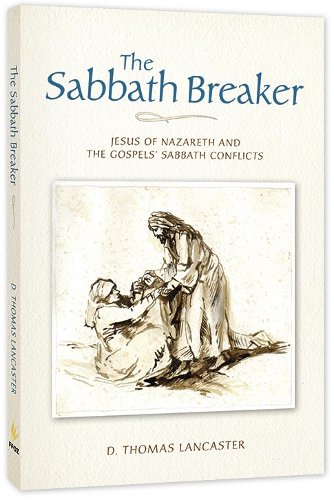
For more context on the debates Jesus had with the Pharisees on the Shabbat, see my review of D. Thomas Lancaster’s book The Sabbath Breaker: Jesus of Nazareth and The Gospels’ Sabbath Conflicts, also published by First Fruits of Zion.

At this point in his presentation, Toby said something I didn’t expect. We generally consider the phrase “Son of Man” as Jesus used it, to refer to himself, the Messiah, however, Toby applied it differently in the context of Mark 2:23-28. He suggested that “Son of Man” is an equivalent term for all humankind. Thus, he presents the words of Jesus as saying that the Sabbath was created as a gift for all people and that all people everywhere are “Lord of the Sabbath.”

For me, this creates certain problems, since, as I said before, the “Son of Man” is generally considered as a title for Messiah, and Toby’s interpretation seems to create a separate meaning for only this situation. It also may contradict what he establishes later in this episode, since if the Sabbath is created for everyone, Jew and non-Jew, and we are all “lords” of the Sabbath, what does that mean for Gentile Shabbat observance today?

More on that in a bit.

Toby drew a parallel between the Master’s words above and an ancient Jewish commentary on the book of Exodus called Mechilta, and quotes part of it which states:

Shabbat is delivered to you, not you to the Shabbat.

This echos the meaning of the Master that man is not to surrender himself to the Shabbat but quite the opposite. If the laws of the Sabbath were entirely rigid and immutable, they might require that observant people be subject to hardship and even death in obedience of such laws. Even the most stringent Jewish interpretation of the laws of Shabbat allow for lifesaving efforts to be expended on Shabbat, but what about people who are suffering but who will live for another day? What if the dilemma isn’t life and death, but life and dignity?

I’ve come the long way around to the first clue in solving our mystery, but it has finally arrived:

Clue 1: Jesus argued about what things were permissible to do on the Sabbath.

And this, as I previously pointed out, is a debate that has been taking place in Judaism for a very long time.

The scene shifts to Aaron Eby in Israel for a word study on the Hebrew word “Shabbat.”

Aaron starts by quoting Exodus 20:8-9, 11 which I render from the Stone Edition of the Tanakh:

Remember the Sabbath day to sanctify it. Six days shall you work and accomplish all your work…for in six days Hashem made the earth, the sea and all that is in them, and He rested on the seventh day. Therefore, Hashem blessed the Sabbath day and sanctified it.

Aaron EbyAaron points out that the Sabbath has a universal application and far pre-dates the giving of the commandments of the Sabbath at Sinai.

The literal meaning of the word “Shabbat” is “resting” and “stopping” and implies an “active” form of “resting” and “refraining,” not just kicking back and relaxing. To me, this speaks of a specificity of types of activity and inactivity, a mindfulness that Shabbat is not just relaxing in front of the T.V., but directing mind, spirit, and heart away from our immediate human activities and toward God.

Aaron cites something I consider very important in the following:

The Children of Israel shall observe the Sabbath, to make the Sabbath an eternal covenant for their generations. Between Me and the Children of Israel it is a sign forever that in a six-day period Hashem made heaven and earth, and on the seventh day He rested and was refreshed. (emph. mine)

Exodus 31:16-17 (Stone Edition Tanakh)

There are two exceptionally important points to get from this. When Israel or any individual Jewish person keeps the Shabbat, they:

  1. Testify to the eternal covenant between God and all Jewish people, the nation of Israel.
  2. Testify to God’s sovereignty as Creator of the Universe.

In the quote from Exodus 31:16-17, I emphasized words that testify to the eternal nature of the Shabbat as a covenant sign between God and the Jewish people. This also, by implication, testifies to the eternal nature of the Mosaic covenant with the Jewish people, and the Torah as the conditions of that covenant. When Christians say that the Shabbat no longer applies to the Jewish people (or anyone else) and especially that the Torah is now irrelevant to the Jewish people, I want to scream, “What part of eternal don’t you understand?”

But I digress.

Formally, in Judaism, a “day” lasts from sundown to sundown, not from sunrise to sunrise or midnight to midnight. That means that the seventh day Shabbat begins at sundown on Friday and ends at sundown on Saturday (in Rabbinic custom, the Shabbat actually begins slightly before sundown on Friday and ends about 45 minutes after sundown on Saturday as a “hedge,” to avoid “cutting it too close,” so to speak, in beginning and ending Shabbat observance).

Aaron also pointed out that generally, Jewish (and Christian) authorities all agree on which day is the “seventh day,” and that Biblically, it can’t be just any day at all.

I wish Aaron or Toby had addressed the following, though:

One person regards one day above another, another regards every day alike. Each person must be fully convinced in his own mind. He who observes the day, observes it for the Lord…

Romans 14:5-6 (NASB)

Therefore no one is to act as your judge in regard to food or drink or in respect to a festival or a new moon or a Sabbath day—things which are a mere shadow of what is to come; but the substance belongs to Christ. Let no one keep defrauding you of your prize by delighting in self-abasement and the worship of the angels, taking his stand on visions he has seen, inflated without cause by his fleshly mind, and not holding fast to the head, from whom the entire body, being supplied and held together by the joints and ligaments, grows with a growth which is from God.

Colossians 2:16-19 (NASB)

Mark NanosIn Paul’s letter to the Romans addressing “the weak and the strong” (which I’m about to get to in the Mark Nanos book The Mystery of Romans), most people take from these words to mean that one day is as good as another as far as observing a “Sabbath” is concerned, and that believers need not be concerned about strictly observing a Saturday Shabbat. The scripture from Colossians tells a similar tale in the eyes of the Church, and yet both of these interpretations directly contradict earlier scriptures. Since as believers, we cannot understand that the Bible is internally contradictory, we must conclude then that our interpretations are flawed. How can Jewish Shabbat observance be eternal and yet Paul say that it simply doesn’t matter because of Jesus? Jesus himself affirmed the Shabbat, not eliminated it.

Aaron’s segment of this program has him also affirming the current requirement for Israel to observe the Shabbat, but he also asks the question, “What does the Shabbat mean to Gentile believers?”

Back in the studio with Toby, we find our second clue:

Clue 2: Sabbath is from sunset Friday until sunset Saturday.

Two or three clues really don’t do it for the mystery of Shabbat in my opinion. This particular television episode brought up a dense set of meanings for me.

While earlier portions of the episode spoke of the “universality” of the Shabbat as a testimony of all mankind that God is the sovereign Creator, Toby shifts into the specifics of Shabbat and Judaism. While we see the sanctity of the Shabbat being set in place in Genesis 2, Toby points out that the specific commandments of Shabbat observance were not given in any recorded fashion to Adam and his sons or to Noah and his sons. It is only after God redeems the Children of Israel from Egypt and they are standing “as one man” at Sinai before Hashem their God, that Shabbat is formally established and its observance defined in Torah. It is also given as a specific sign of the Mosaic covenant between God and Israel, only Israel, forever. No other people group or nation has ever received this sign obligation to God.

Hashem said to Moses, saying: “Now you speak to the Children of Israel, saying: ‘However, you must observe my Sabbaths, for it is a sign between Me and you for your generations, to know that I am Hashem, Who makes you holy.'”

Exodus 31:12-13 (Stone Edition Tanakh)

Toby doesn’t mention this, but the above verses establish that not only is the Saturday Sabbath considered an eternal sign of the covenant between God and Israel, but so are all of the “Sabbaths,” that is, all of the moadim, God’s appointed times, the festivals identified and defined in Torah, such as Passover, Shavuot, Sukkot, Rosh Hashanah, and Yom Kippur. Each and every one of these Sabbaths must be observed by all of Israel for all time; for after all, that’s what “eternal” means.

I’ve heard it said in the Church that Jews should observe the moadim as “national holidays” the way Americans “observe” the Fourth of July or Thanksgiving. I consider that not only misleading and Biblically inaccurate, but potentially demeaning. It reduces the eternal covenant signs between God and Israel to how Americans “observe” barbecues, fireworks, eating turkey, and watching football. The very best you can say about American national holidays is that they represent who we are and how we relate to our history as Americans, a relationship between citizens and our country. The moadim, the weekly Sabbath, Passover, Shavuot, Sukkot, and the other special Sabbaths are far, far more than that, and indeed, define the relationship between Israel and her citizens, the Jewish people, and the God of Everything!

That’s somewhat more significant than mere American “national holidays,” wouldn’t you say?

This is another long way around to reaching the third and final clue in solving today’s mystery:

Clue 3: The Bible requires only the Jewish people to keep the Sabbath.

That’s going to make some people I know, non-Jewish people, very unhappy, but hold on there. Toby goes on to say that there’s nothing stopping any non-Jewish believer from also observing the Shabbat in some manner. We may not be commanded to do so, but we might as well “get used to it,” for someday, all of humanity will indeed observe the seventh day Shabbat.

And the foreigners who join themselves to Hashem to serve Him and to love the Name of Hashem to become servants unto Him, all who guard the Sabbath against desecration, and grasp My covenant tightly — I will bring them to My holy mountain, and I will gladden them in My house of prayer; their elevation-offerings and their feast-offerings will find favor on My Altar, for my House will be called a house of prayer for all peoples.

Isaiah 56:6-7 (Stone Edition Tanakh)

It shall be that at every New Moon and on every Sabbath all mankind will come to prostrate themselves before Me, says Hashem.

Isaiah 66:23 (Stone Edition Tanakh)

Boaz MichaelIf I’m reading this right (and I think I am), then not only will everyone observe a weekly Sabbath, the seventh day Sabbath, in the Messianic Age, but we will observe the New Moons and all of the Sabbaths and Festivals of God, all of the moadim listed in the Torah.

I don’t know how any later or subsequent revelation in the Apostolic scriptures (New Testament) can alter or undo the meaning of this text.

What Did I Learn?

I learned some things about the Sabbath, but I learned more about myself. I learned that I want to scream when I hear good, intelligent, and passionate Christians, men and women who I deeply respect, saying things about the Bible that seem completely contrary to the Bible. To my way of thinking, Toby and Aaron provided their audience with an air-tight case that Sabbath keeping is completely Jewish and remains an obligation for the Jewish people as a response to their covenant obligations to God. To deny this is (forgive me) to deny the evidence of the Bible. Toby and Aaron “quoted chapter and verse,” so to speak, illustrating the path from Genesis, to Sinai, to the present age, and into the Messianic Era, that the seventh day Sabbath is an eternal sign of the (eternal) covenant between God and Israel.

I also learned to “tighten up” the scriptures defining when all of humanity, in addition to Israel, will be obligated to observe the Shabbat, which is in the Messianic Era. There is no current obligation for Christians, or anyone else who isn’t Jewish, to observe Shabbat, but there will be in the future age when Messiah returns and establishes his Kingdom of peace over all the Earth. While Gentiles don’t have to observe Shabbat now, we can choose to, in some fashion, to honor God as Creator and to summon for ourselves a taste of the future Messianic Kingdom.

I found myself thinking of my Jewish wife and children. None of them observe the Shabbat in any real sense. For awhile, when our daughter was in Israel, my wife was lighting the Shabbos candles, but she stopped soon after our daughter returned. It breaks my heart, but I have to remind myself that some traditional Jews believe that in the age right before the coming of Messiah…

There is a tradition that people will begin to despise the values of their religion in the generations preceding the coming of the Messiah. Since in a period of such accelerated change, parents and children will grow up in literally different worlds, and traditions handed down from father to son will be among the major casualties.

Our sages thus teach us that neither parents nor the aged will be respected, the old will have to seek favors from the young, and a man’s household will be become his enemies. Insolence will increase, people will no longer have respect, and none will offer correction. Religious studies will be despised and used by non-believers to strengthen their own claims; the government will become godless, academies places of immorality, and the pious denigrated…

Perhaps it is darkest before the dawn.

At the very end of the episode, as always, FFOZ Founder and President Boaz Michael appeared on camera to summarize this episode and to mention that next week’s show will continue to discuss the Shabbat. He also said, and this is very important to me, that studying the Bible, all of it, from a Jewish cultural, national, historical, ethnic, and traditional perspective “makes our Bibles consistent and upholds the Biblical truth that God doesn’t change.”

At the beginning of some of these shows, Toby refers to himself as “a Gentile who studies Messianic Judaism.” I’m a Gentile Christian who studies Messianic Judaism but who also attends a Christian church and, as part of that experience, studies Christianity from a fundamentalist and Reformed theology perspective.

So far, after a year of being back in church, the Messianic learning framework still makes a great deal more sense to me as a Biblical guide to Biblical truth than the platform used by fundamentalists. And this should be strange, since being a fundamentalist Christian simply means adhering to the core fundamentals of faith in Jesus Christ.

ShabbatBut maybe that’s the problem. Those fundamentals are based on (please pardon me again) a “fundamental” set of assumptions and traditional interpretations of what the Bible is saying. While those fundamentals attempt to take into account, not only the meaning of the Bible in its original languages, but the cultural and historic context of the Biblical authors and their audiences, they just do not escape the filter of two-thousand years of Christian interpretive history as well as Christian/Jewish enmity, all of which, after Christianity broke from its Jewish origins, must by definition, deny the Torah and deny continuing Jewish obligation to the Torah, including the seventh day Sabbath, as an eternal sign of the covenant between Jewish Israel and God.

How long will I be able to straddle the line with each foot planted on opposite sides of the street? You’ll find out in tomorrow’s “morning meditation.”
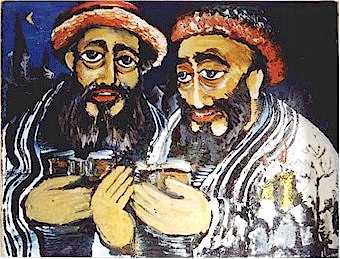
Being Kept By Shabbos

hillel_shammaiYou shall honor it [Shabbos] by refraining from your usual weekday practices, nor pursuing your business, nor speaking thereof.

Isaiah 58:13

The observance of Shabbos and the festivals is characterized by not only abstinence from work, but also from all types of “weekday” activities, including even how one converses.

“Your conversation on Shabbos should not be similar to your weekday conversation”

-Shabbos 113b

A personal incident illustrates that by properly honoring the Shabbos and festivals, one achieves the respect of others.

As a resident in psychiatric training, I explained to the program director that I was unable to work on the festival days, and that these should be considered vacation days and deducted from my allotted vacation time.

The director shook his head. “No need for that,” he said. “Non-Jewish people can do anything they wish on their holidays. If they can wash the car, paint the garage, or go to the theater, then they can just as well come to work. In your case, you are not permitted to do anything, so obviously you cannot come to work, and this need not affect your vacation time.”

It has been said, “Even more than Israel has kept the Shabbos, the Shabbos has kept Israel.” If we honor the Shabbos properly, the Shabbos will honor us.

Today I shall…

…dedicate myself to a full observance of Shabbos and the festivals.

-Rabbi Abraham J. Twerski
“Growing Each Day – Tammuz 24”
Aish.com

This, as much as anything, illustrates the difference between the Jewish Shabbat and the Christian Sunday or “Lord’s Day.” I don’t doubt that the very first non-Jewish disciples of the Jewish Messiah observed a Shabbat in the same or similar manner as the Jewish disciples. Frankly, they wouldn’t have known any better, and a Sunday “Lord’s Day” probably wouldn’t even have occurred to them. Why would it?

Shifting the primary day to gather for worship from Saturday (Friday night to Saturday night, actually) to Sunday was most likely one of those acts designed to create a definition between Judaism and a Gentile Christianity. I can understand, to some degree, the desire to honor the day of Messiah’s rising from the tomb (although in Jewish reckoning, Jesus rising on the first day of the week could have happened anytime after sundown on Saturday), there’s nothing clear cut in the New Testament that says it was God’s intent.

However, there are just tons of references in the Tanakh (Old Testament) that speak of the Shabbat being observed on the seventh day, and as I said, the fact that Messiah came, taught, died, resurrected, and ascended never caused a ripple in Jewish Shabbat observance, just as it never caused a ripple in Jewish observance of any other part of the Torah or the normative halachah of the day.

But even if Gentile Christianity intended to lift Shabbat as a unit and move it over by about twenty-four hours, that wasn’t the end result. As Rabbi Twersky’s commentary tells us, an observant Jew’s response to Shabbat is quite a bit different than how a Christian spends his or her time on Sunday.

According to Chabad.org, there are thirty-nine melachot or forms of work that are prohibited to a Jewish person on Shabbos. Besides just the raw list presented at that site, how they are interpreted adds to the understanding of what must be avoided. From a Christian point of view, it all seems terribly restrictive and burdensome, and most Gentile believers having read such a list no doubt would rejoice in their “freedom in Christ.”

shabbat-candle-lightingBut our “holy day” isn’t all that holy if we don’t actually set it apart by behaving and even speaking differently.

I’ve discussed this with my Pastor and he believes the Ten Commandments, which includes the commandment to observe Shabbat, have universal applications. However, he does not believe that the day of the week is strictly fixed. I’m not sure what his rationale is for such a belief. He is usually very exact in his thinking and his attitude about Shabbat seems a little “fluid.”

I know that most Jewish people would deny that there is any direct command from God to the Gentile believers to observe Shabbos, especially in the manner of the Jewish people. There are some Gentiles who believe they are commanded and, in some manner or fashion, they do observe Shabbat. I don’t believe there are many who do so exactly like a modern, Orthodox Jew, and I’ve had a conversation with one Gentile believer who observes the Shabbat but who told me he retains the right to not make it burdensome (for instance, he feels free to turn light switches on and off, drive his car, use elevators, and so forth).

I used to keep a “sort of” Shabbat, but it was nowhere near the level of observance of most religious Jews. My wife is Jewish and, sad to say, not particularly observant (for the moment…I’m hoping that will change), and so in our household we don’t have much of a Shabbat. If I have the opportunity, I try to spend most of my day reading the Bible or related texts but if the situation calls for it (including the “honey-do list” situation), I can be found violating quite a few of the melachot.

But I think there is something special about setting aside one day of the week as Holy to God and dedicating ourselves to observing that day, to using the time to draw closer to God and to withdraw somewhat from the world around us.

I can’t imagine the Messianic age not including a Shabbat observance for all of the disciples of Messiah. It would seem strange at that point to segregate such observance by Jewish and Gentile populations and, after all, even the Gentile nations will be commanded to observe Sukkot and to send representatives to Jerusalem.

Then it will come about that any who are left of all the nations that went against Jerusalem will go up from year to year to worship the King, the Lord of hosts, and to celebrate Sukkot. And it will be that whichever of the families of the earth does not go up to Jerusalem to worship the King, the Lord of hosts, there will be no rain on them. If the family of Egypt does not go up or enter, then no rain will fall on them; it will be the plague with which the Lord smites the nations who do not go up to celebrate Sukkot. This will be the punishment of Egypt, and the punishment of all the nations who do not go up to celebrate Sukkot.

Zechariah 14:16-19 (NASB)

I replaced the phrase “the Festival of Booths” with “Sukkot” in the above-quoted passage to emphasize the nature of what is being commemorated. “Festival of Booths” somehow puts a “Christian spin” on what is quite obviously Jewish.

And yet, the nations are commanded to commemorate Sukkot in Messianic Days. So too the Shabbat?

“Also the foreigners who join themselves to the Lord,
To minister to Him, and to love the name of the Lord,
To be His servants, every one who keeps from profaning the sabbath
And holds fast My covenant;
Even those I will bring to My holy mountain
And make them joyful in My house of prayer.
Their burnt offerings and their sacrifices will be acceptable on My altar;
For My house will be called a house of prayer for all the peoples.”
The Lord God, who gathers the dispersed of Israel, declares,
“Yet others I will gather to them, to those already gathered.”

Isaiah 56:6-8 (NASB)

Shabbat candlesIt would certainly seem, based on this passage, that the nations (foreigners) who are joined to God not only will be required to observe Shabbat, but will also be allowed to pray in the Temple and to even bring sacrifices.

I’m certainly in no position to go around pointing fingers at Christians about what they do with their time on Saturday or Sunday, but I do want to suggest that some day, our rather casual attitude about Shabbat will have to change. There are many passages in the New Testament telling us that the Master will return “like a thief in the night” and that we will have no idea the day or hour of his coming back to us. We are told to be constantly be prepared and ready, day and night, for the bridegroom’s return.

“Even more than Israel has kept the Shabbos, the Shabbos has kept Israel.”

If the Master’s return comes that suddenly and unexpectedly, then our only hope of being ready is to always be ready. Maybe it wouldn’t hurt for us to practice a more focused Shabbat or two before he gets here.

The Sabbath Breaker: A Book Review

Teaching of the TzadikimOnce it happened that the Master and his disciples walked in the holy city of Jerusalem on the Sabbath day when they encountered a man blind from birth. Our Master spat on the ground, made clay of the spittle, and applied the clay to the man’s eyes. Then he told the man, “Go, wash in the pool of Siloam.” The man went and immersed, and miraculously, he could see.

To heal the man, Jesus spat on the ground and made clay of the spittle. Mixing two substances to form a third is a form of work that Jewish law prohibits on the Sabbath day. Jesus smeared the mud on the man’s eyes. Applying a salve or medicine by means of smearing is also considered a form of work prohibited on the Sabbath day. It is a violation of the Sabbath. He sent the man to immerse himself. At least by conventional definition in traditional, Jewish interpretation, immersions are not done on the Sabbath. This single healing incident from the Gospels potentially involves three Sabbath violations.

The Pharisees claimed, “This man is not from God, for he does not keep the Sabbath” (John 9:16). Vocal critics of the Master insisted, “He is a Sabbath breaker.”

Do we appreciate the gravity of this allegation?

-D. Thomas Lancaster
from “Introduction: This Man Breaks the Sabbath” (pg 7)
The Sabbath Breaker: Jesus of Nazareth and The Gospels’ Sabbath Conflicts

This is Lancaster’s latest book published by First Fruits of Zion (FFOZ) and, like a number of Lancaster’s books, leverages material previously published in volumes of the Torah Club and issues of Messiah Journal. A great deal of valuable information on topics of intense interest to Christians both in the church and within the Messianic community, is “buried” within much larger documents. In order to make this information more readily accessible, FFOZ is taking material on specific subjects from these “tomes” and refactoring it into several smaller, self-contained books. Lancaster’s The Sabbath Breaker is one such book.

The focus of Lancaster’s book is rather narrow, so don’t imagine it will answer questions such as “Was Sabbath changed from Saturday to Sunday,” “Should Gentile Christians keep the ‘Jewish’ Sabbath and if so, how,” or “Should Messianic Jews keep the Sabbath in the same way as non-Messianic Jews.” The book’s entire focus is to address whether or not Jesus broke the Sabbath and if he didn’t, then how can we explain why he was criticized by the Jewish religious authorities for healing on Shabbat, gleaning with his disciples on Shabbat, and telling other people who were not his disciples to carry and to immerse on Shabbat?

Christianity tends to believe that Jesus did break the Shabbat in order to show us that he had cancelled all of the Shabbat restrictions and Shabbat itself, as part of his “nailing the Law to the cross,” setting us free from the Law and putting us under the Law of Grace.

As you might imagine, Lancaster dismisses the traditional Christian interpretation out of hand and frankly, so do I. But then how can this be explained? Was Jesus “cancelling” the halachah of the Pharisees? Was it indeed permissible Biblically to glean on Shabbat, to heal on Shabbat, to carry on Shabbat, and to immerse on Shabbat? Were the Pharisees adding unreasonable man-made burdens and was Jesus correcting them and rebuking the Pharisees? Or was it more a matter that the Pharisees thought they were upholding the Biblical way to keep Shabbat (and after all, they wanted to kill Jesus for healing on Shabbat, so they were obviously sincere), and Jesus was just interpreting the Bible better?

How about none of the above:

For many Bible readers, this distinction may be too obscure, but if missed, the reader also misses the message of all the Sabbath stories in the Gospels. The essential message is not that Jesus has cancelled the Sabbath or that the rabbinic interpretation of Sabbath is illegitimate. The Sabbath-conflict stories instead communicate that acts of compassion and mercy performed to alleviate human suffering take precedence over the ritual taboo. The miraculous power by which Jesus performs the healings only serves to add God’s endorsement to Jesus’ halachic, legal rationale.

Did Jesus’ disciples break the Sabbath in the grain fields? Yes. But they were justified in doing so because their need took precedence over the Temple service, and the Temple service took precedence over the Sabbath. Therefore Jesus declared them guiltless and told the Pharisees, “If you had known what this means, ‘I desire mercy, and not sacrifice,’ you would not have condemned the guiltless” (Matthew 12:7).

Did the Master break the Sabbath when he healed on the Sabbath day? Yes. Would fixing a car break the Sabbath? Of course it would, and by the same standard so does fixing a human body. Nevertheless, the Master justified doing so because compassion for his fellow man took precedence over the Sabbath.

-Lancaster, pg 61
“Chapter Seven: At Dinner with the Sages”

blind2That’s a more or less “in a nutshell” explanation of how Jesus did break the Sabbath, but at the same time, each event of Sabbath breaking was justified because of a higher halachic standard.

That’s not the full description of course, and you’ll have to read Lancaster’s book to get all the answers. Not including the footnotes, the book is about 135 pages long, so you should be able to get through it pretty quickly.

The book is divided into three sections:

  1. Sabbath Conflicts in the Synoptic Gospels
  2. Sabbath Conflicts in the Gospel of John
  3. The Thirty-Nine Prohibited Forms of Work

The first two sections focus on different explanations (or the lack thereof in the case of John’s Gospel) for Jesus’s apparent “Sabbath breaking” activities. The quote from Lancaster above is a nice summary of the first section. The second one presents some problems, which Lancaster readily admits, such as Jesus telling the man he healed in John 5 to “take up your bed and walk.” (John 5:8). While the content of the book up to this point (pg 65) confirms that Jesus did break the Sabbath by healing but that chesed (lovingkindness or compassion) takes precedence over Shabbat (it’s more involved than that, but you’ll have to read the book to get all the details), carrying is considered a form of Melachah, or a type of work that involves creation and mastery over our environment (a concept that has to be understood to grasp Lancaster’s major points in his book), and this is forbidden on Shabbat, at least in modern times in Orthodox Judaism.

That brings up the issue of whether or not the Thirty-Nine Prohibited Forms of Work can reasonably be applied to First-Century normative forms of Judaism, and that’s a big if. Lancaster addresses this question in his book and seems convinced that an earlier, less formalized version of this halachah was in existence in the day of Jesus’s ministry on earth. The reader will have to decide if this is credible from their own understanding, but capable arguments can be made either way.

Part two which reviews the healings of Jesus in the Gospel of John departs from the legal and even mechanical explanation of his Sabbath breaking activities and the fact that he told a man to do something that also breaks the Sabbath remains a mystery. It is interesting though that after initially criticizing the man for carrying on Shabbat, once they find out that a healing was done on Shabbat also, the Pharisees lose all interest in the man carrying and seek out the healer instead.

Part three is Lancaster’s description, in some detail, of the thirty-nine melachot or types of work that are forbidden on Shabbat. This may be the part of the book most readers will blow past as irrelevant, even if they are Messianic Jews or non-Jews who observe some form of Shabbat, but I think that would be a mistake.

Protestant Christianity does not consider Sabbath a concept worth consideration or if they do, they simply believe that going to church on Sunday fulfills the fourth commandment out of the ten. Grace makes all things permitted on the “Sabbath” so no one has to struggle to confine their behavior, separating the mundane from the sacred on one day of the week.

Christians who are Sabbatarians including those who are involved in the Hebrew Roots or Messianic Jewish movements, for the most part, tend to create their own “halachah” or methods of Shabbat observance, either as individuals or as individual congregations. I would be willing to wager that there are few if any standards for Sabbath observance that encompass large collections of congregations, unless those groups adhere to a set of halachot established by an umbrella group that has adopted Shabbat observance behaviors from another, normative form of Judaism.

sabbath-breaker-lancasterWe all want to believe that Jesus can be our guide to correct Shabbat observance (assuming we value Shabbat observance) and that God has an objective set of standards for how Shabbat is to be kept (and like Lancaster, I’m not going to get into who should keep Shabbat). However the Melachot were derived from Torah (Lancaster’s book provides those specifics as well) so they weren’t just dreamed up out of someone’s imagination. If you believe in an objectively established Sabbath and (again, assuming you believe you are either required to keep the Sabbath or voluntarily choose to do so out of personal conviction or for other reasons) that there are objective standards for keeping Sabbath, then the third part of Lancaster’s book, if you can believe it is reasonably connected back to the first two parts, may actually be your roadmap for how a Jesus-following Sabbath keeper should keep Sabbath.

In The Sabbath Breaker, Lancaster takes a decidedly different approach to looking at Jesus and his “sabbath breaking” behaviors, acknowledging that he did break the Sabbath, not to cancel it, but to uphold it and to illustrate that there are circumstances wherein it is permissible to break the Sabbath for a higher purpose. Jesus himself, according to Lancaster, is not the higher purpose: human beings are. After all, “Sabbath was made for man, not man for the Sabbath” (Mark 2:27).

146 days.

Longing for Yom Kippur

Because the day has passed, shield us by the merit of [the Patriarch Abraham] who sat [at the door of his tent] in the heat of the day [to welcome wayfarers].

Genesis 18:1 (Ne’ilah prayer)

Just prior to Ne’ilah (the concluding service of Yom Kippur), one of the Chassidic masters ascended the bimah (platform) and said tearfully, “My dear brothers and sisters! God in His infinite mercy gave us the entire month of Elul to repent, but we failed to take advantage of it. He gave us the awesome days of Rosh Hashanah, when our standing in judgment before the heavenly tribunal should have stimulated us to repent, but we neglected that opportunity. He gave us the special grace of the Ten Days of Penitence, but we let these pass too. All we have left now are a few precious moments that are propitious for forgiveness.

“The Sages of the Talmud tell us that if a person enters a marriage contract on the condition that he is a perfect tzaddik, then it is binding even if he is known to be a complete rasha (wicked person). Why? Because he may have had one moment of sincere contrition that transformed him from a complete rasha to a perfect tzaddik. “Do you hear that, my dear brothers and sisters? All it takes one brief moment of sincere contrition! We have the opportunity of that moment now. In just one moment we can emerge totally cleansed of all our sins, in a state of perfection akin to that of Adam in the Garden of Eden.”

The rabbi wept profusely and uncontrollably. “Could we be so foolish as to overlook such a rare opportunity? Let us assist one another and join in achieving sincere repentance!”

Today I shall…

…take advantage of the Divine gift of forgiveness, and make my resolutions of repentance sincere, so that the new person that emerges will be unencumbered by the burdens of the past.

-Rabbi Abraham J. Twerski
“Growing Each Day, Tishrei 10”
Aish.com

I’m not going to be fasting for Yom Kippur this year. I’ve fasted in the past. Further in the past, I’ve fasted and attended religious worship, although only elements of the Yom Kippur service were involved. A Jewish friend emailed me last night and asked if I were going to fast in solidarity with the Jewish people. I had thought about it, but I know that my family won’t be fasting and it seemed a little presumptive for me to fast, since I’m the only non-Jewish member of my immediate family.

I suppose you could say that if I fasted, I would be leading by example, but it could also boomerang back and make me look like I’m being critical of them and taking on a “holier than thou” attitude. I’m not taking the day off of work, either. I think my family will be working tomorrow as well. I suppose this is a problem, since they are Jewish and choosing not to observe the Yom Kippur fast nor going to shul to repent with the community of Israel.

Last spring, I wrote an article called “Redeeming the Heart of Israel” (Part 1 and Part 2) in which I defined the Christian relationship to the Jewish people as one of encouragement and support for Jews to return to Torah and to the ways of their fathers. That’s easier said than done when it’s your own family.

Oh, I’ve dropped subtle and not-so-subtle hints, but ultimately, the choice isn’t mine to make. It’s theirs. Each individual, Jew, Christian or anyone else, negotiates their own relationship with God. For me, my atonement is in Jesus Christ. Frankly, I believe that’s true of everyone, but not everyone perceives that truth in their lives. There are elements of both the Abrahamic and New Covenant that link both Jews and Christians, through the Messiah, to God, so Messiah is the hope for all of us.

But since I am not Jewish, the particulars of the Sinai covenant do not have blessings for me. Without a Jewish “lived” experience, I’m unsure how to encourage my family to be who they are and maybe it’s not my place to try. But then, when you love someone, you want what’s best for them; you want what will make them happy.

God opens His Hand and satisfies the desires of every living thing (Psalm 145:16). My desire is for my family to return to the mitzvot; return more fully to the Torah, and to be the people God made them to be; Jewish people. I apologize and regret anything I may have said or done that has been to the contrary. I pray to God that in the coming year, He may help turn the hearts of all His Jewish children back to Him and help we Christians be more compassionate of His Chosen People, that we may stand at their side and together, all acknowledge that God is One. On that day, may all Christians fast on Yom Kippur in solidarity with their Jewish friends and family.

May the Messiah come soon and in our days, and may you be sealed for a good year in the book of life.

To honor the most Holy day for the Jewish people, I will not present a “morning meditation” on Wednesday which is Yom Kippur (begins at sundown on Tuesday). My next blog post will be Thursday morning.

Naso: Bridegroom of the Sabbath

The Torah portion of Naso discusses the law of Sotah: (Bamidbar 5:11-31) When a husband warns his wife not to be alone with a certain man and she disobeys him, then even if she did not sin with that man, the very fact that she was alone with him causes her to become a sotah — a woman “straying from the path of modesty.” (Rashi, ibid., verse 12.)

The relationship between husband and wife in this world is analogous to the relationship between the A-lmighty and the Jewish people, who are deemed “husband and wife.” (See Likkutei Sichos , Vol. III, p. 984.) Thus all the laws of sotah apply to the relationship between G-d and the Jews.

The “warning” that G-d issues to the Jewish people is the command: “You shall have no other gods before Me.” (Shmos 20:3.) This is similar to the warning: “do not conceal yourself with a certain man.”

The Chassidic Dimension
Commentary on Torah Portion Naso
Based on Likkutei Sichos, Vol. IV, pp. 1032-1034
and the teachings of the Lubavitcher Rebbe
Rabbi Menachem M. Schneerson
Chabad.org

The Bible is replete with marriage metaphors, usually contrasting God and Israel as husband and wife. We also have a great deal of similar imagery in the Apostolic Scriptures depicting Jesus as husband and the church as his bride.

Wives, submit to your own husbands, as to the Lord. For the husband is the head of the wife even as Christ is the head of the church, his body, and is himself its Savior. Now as the church submits to Christ, so also wives should submit in everything to their husbands.

Husbands, love your wives, as Christ loved the church and gave himself up for her, that he might sanctify her, having cleansed her by the washing of water with the word, so that he might present the church to himself in splendor, without spot or wrinkle or any such thing, that she might be holy and without blemish. –Ephesians 5:22-27 (ESV)

Many Christian women take great comfort in these metaphors but more than a few men struggle with the role of “bride” relative to the Messiah. But let’s not be incredibly literal, since the Bible writers are using metaphors to describe a level of close intimacy between the Messiah and his disciples that can only be likened with the closeness and love experienced by two people who are intertwined by devotion. But Israel and the church aren’t the only “bride” metaphors we know of.

The chorus of the classic Sabbath hymn Lekhah Dodi states in part:

Let’s go, my beloved, to meet the bride,
and let us welcome the presence of Shabbat.

But in this instance, if the Shabbat is the bride, who is the bridegroom? The traditional Jewish tradition casts God in that role, but we also have this:

Or have you not read in the Law how on the Sabbath the priests in the temple profane the Sabbath and are guiltless? I tell you, something greater than the temple is here. And if you had known what this means, ‘I desire mercy, and not sacrifice,’ you would not have condemned the guiltless. For the Son of Man is lord of the Sabbath.” –Matthew 12:5-8 (ESV)

The oldest text we have for this passage is in Greek, but if we try to “retrofit” these verses back into the Hebrew thoughts of the Jewish writer of Matthew, when he says “the Son of Man is lord of the Sabbath,” what word did he use for “lord?”

“Adon” seems to be fitting under the circumstances, but a week ago, I heard a different interpretation by a young Jewish scholar (yes, I’m “borrowing” this from you, Nick) who offered a sort of midrash on this topic.

The word Baal is derived from the common Hebrew verb (ba’al), own, rule, possess. The verb is even used to indicate the husband’s relationship to his wife (Deuteronomy 24:1) and is applied to the relationship between God and man, “For your husband (ba’al) is your Maker…” (Isaiah 54:5).

-quoted from the
abarim-publications.com website

ShabbatBaal can mean both “lord” and “husband” but by deliberately applying the latter meaning, we can discover something about the relationship between Messiah and the Shabbat as well as something about the Messiah and us.

When we read the passage as “‘lord’ of the Shabbat”, we think of someone in charge or in command or with authority. These are very powerful images, but they don’t fit very well with how a loving groom should be approaching his bride. However, if we say, “‘husband’ of the Shabbat,” we completely change the meaning. Suddenly, we have an intimate, warm, caring interaction between the Messiah and the Shabbat.

Some Jewish sages state that the Shabbat is actually a small taste of the life in the world to come; Paradise, if you will. Creating the picture of a husband, the Messiah, welcoming his beloved bride, the Shabbat, into his arms, we can see something of the peace we will experience when he finally returns and fixes our broken world and our broken hearts.

He will wipe away every tear from their eyes, and death shall be no more, neither shall there be mourning, nor crying, nor pain anymore. –Revelation 21:4 (ESV)

This also fits very well back into what we saw in Ephesians 5 in comparing Jesus and the church with a husband and wife.

I know I’m being more than a little poetic here, but I take a certain amount of comfort in applying the lessons of both this week’s Torah Portion and the Shabbat to my walk of faith, and realize that Shabbat is not only a way for God to comfort us in the midst of our weekly trials, but His promise that He will always love us and, through the Messiah, grant us eternal peace.

Why should we stray after others to be alone with them when we can be the bride of the Moshiach and receive boundless intimacy with our bridegroom.

Good Shabbos.


Slaves of Grace

On today’s amud we find that one should enter and leave shul in a manner that demonstrates that he cherishes his time there.

Once there was an extremely wealthy man who lived quite close to his synagogue. Although he could have easily walked the short distance, he would choose to ride on his very expensive mount to the Beit Knesset, since he felt it befitted his distinguished stature. Someone pointed out to this man that it may be preferable to walk the distance. The wealthy man enjoyed riding to synagogue but he wanted to go the best way according to halachah, so he consulted with the Ben Ish Chai, zt”l.

“It is better to go on foot,” the Ben Ish Chai ruled. “We see this in Sotah 22. The gemara there recounts that a certain widow used to pray in Rav Yochanan’s beis medrash even though she lived closer to a different beis medrash. When Rav Yochanan asked her why she went out of her way to come to her shul, she replied, ‘I come here to receive reward for each step!’ This implies that the reward for going out of one’s way is only if one troubles himself to walk on his own two feet, not if one rides!

The Ben Ish Chai continued, “We see this in Chagigah as well. A small child is not obligated to be olah l’regel because he can’t walk to the Beis Hamikdash himself. Beis Hillel rule that a child is not obligated until he is old enough to hold his father’s hand and walk on his own two feet from Yerushalayim to Har Habayis. Although those who were very distant from Yerushalayim would surely ride, clearly one should walk as much as possible, as implied on Chagigah 3… For the above reasons, you should walk to synagogue on your own two feet, regardless of your honor and status!”

Mishna Berura Yomi Digest
Stories to Share
“Reward for Every Step”
Shulcham Aruch Siman 151 Seif 5

Although the vast majority of Christians worship on Sunday, it isn’t really a “Sabbath” in the Jewish sense of the term. We don’t really rest because of the “freedom of Christ.” Grace not only allows us to mow the lawn, shop for groceries, pay the bills, and watch the news on Sunday, it fairly demands that we do, in order to “prove” that we’re not “under the Law.” Saturday, for most Christians, has nothing to do with God. Neither does Friday night. There is no candle lighting just before sundown. There are no hymns or prayers sung to welcome God into our homes on this special, holy day. We do not allow ourselves to rest from the mundane chores of life while partaking of an extra portion of the holiness in the Almighty. The church acts as one body for maybe a couple of hours on Sunday morning, but that’s about it for most of us. Then it’s business as usual.

But we’re free, unlike those poor Jewish people who can’t do hardly anything from Friday night until Saturday night. Poor people who are under the Law.

I say all of this with a sense of irony of course, because I believe it’s not the Jews who should be pitied in this instance, but the Christians. We have allowed ourselves to be robbed of one day of peace out of seven, where we can actually permit ourselves to stop in our wild pursuit of the “rat race,” crawl out of our mazes, and actually enjoy the freedom of worshiping God, not only in church, but in our homes, on our streets, in our parks, anywhere we are. But we don’t do that because we are “free.” We don’t do that because only those people who are “enslaved” to the Torah allow themselves to be confined with God within the walls of His holiness for a full 24+ hours.

Oh how awful for them.

I’m sure you see where I’m going with this. According to the sages, a non-Jew is forbidden from observing the Shabbat in the manner of the Jews. Part of this has to do with something I read just last Shabbat.

Remember the sabbath day and keep it holy. Six days you shall labor and do all your work, but the seventh day is a sabbath of the Lord your God: you shall not do any work — you, your son or daughter, your male or female slave, or your cattle, or the stranger who is within your settlements. For in six days the Lord made heaven and earth and sea, and all that is in them, and He rested on the seventh day; therefore the Lord blessed the sabbath day and hallowed it. –Exodus 20:8-11 (JPS Tanakh)

The Shabbat is considered a special commemoration of the deliverance of the Children of Israel from slavery in Egypt…something we non-Jews did not experience. It’s a special part of the Sinai covenant relationship between God and the Jews, even to this day. Yet, I “miss” it, not that I have ever fully been able to rest on the Shabbat. Even at my very best, there was always a number of ways I could have rested better. I rationalized my behavior saying that I had to drive to my place of worship, heat my coffee in the morning, edit the lesson I was going to teach, check my email in case someone needed some help with something right before services. It’s the diaspora, not Israel.

But then, I’m not Jewish, so maybe it doesn’t matter.

But I wonder. If resting and honoring God for a full day is good for Jews, why isn’t it good for Christians? If we are forbidden by the Rabbis from remembering and observing the Shabbat in a traditionally Jewish manner (not that most Christians acknowledge any authority of the Rabbinic sages over the life of a believer), can we not choose to still offer our rest and our worship in some manner or fashion? The Shabbat not only commemorates the freedom Jews enjoy from the bondage of Egypt, it acknowledges that God is Creator over all.

On the seventh day God finished the work that He had been doing, and He ceased on the seventh day from all the work that He had done. And God blessed the seventh day and declared it holy, because on it God ceased from all the work of creation that He had done. –Genesis 2:2-3 (JPS Tanakh)

It is said that a Jew who does not observe the Shabbat is denying God’s sovereign claim over Creation. But Creation exists for the Gentile and the Jew. The sun shines as much on us as it does them. The rain waters our fields as well as a Jew’s fields. The breeze cools both Jew and Gentile in the summer, and we both  experience heat, and cold, and wind, and all the manifestations of Creation. The stars look just as beautiful to us, and the moon rises and sets for us, too. Can the Gentile not acknowledge Creator and Creation along with the Jew? Should not the Gentile also acknowledge Creator and Creation along with the Jew?

Shabbat candlesI’m not suggesting that Christians everywhere should suddenly start donning kippot and singing in Hebrew every Friday night as they light Shabbos candles, but I am suggesting that some sort of observance wouldn’t be out of line, either. Why were we in the church taught that it’s a bad thing to give honor to God because He created the Universe? I know the answer, of course. But the answer isn’t a valid one. In separating ourselves from Judaism early in the history of the church, we didn’t just hurt our Jewish mentors, ignore the Jewish Apostles, and dishonor our Jewish Jesus, we hurt and dishonored ourselves. The Jews rest on Shabbat and are free to honor God. We work, both on the Christian “Shabbat” and on the Jewish Shabbos and we call ourselves free. Then we work Monday through Friday as well. So who’s free and who’s a slave?

We’ve come to expect instant results. Perhaps the speed of today’s latest “on demand” technology or the abundance of resources in our global community have trained us to feel this way, but it’s become natural to assume that most problems will be solved within 24 hours or less. This expectation obviously leads to disappointments, and we’re forced to learn the art of patience even when the answers seem but a click away.

One of the laws in the construction of the Holy Temple’s altar is that the ascent to the top must be upon a ramp and not a staircase “so that your nakedness will not be revealed on it” (Exodus 20:23). Unlike a staircase, a ramp’s incline is small and gradual, forcing a more gentle ascent for the Temple priest.

Personal growth follows the same pattern. When we’re inspired to change, we might expect a decision to change to be instantly transformational. Taking leaps and bounds towards the new behavior, we seem like new men. Then the “nakedness” is “revealed,” the surprising reality that change is not overnight, and we’re often discouraged and revert to the old habits. Often the result is that we become more deeply entrenched in our destructive patterns.

Inspiration to grow, to ascend the altar, is what starts the engine, but when going forward — beware of your speed limit!

Rabbi Mordechai Dixler
“Watch Your Speed Limit”
ProjectGenesis.org

Would it be such a bad thing for a Christian to slow down once a week and learn to really appreciate what God has done for us?