Tag Archives: shabbat

The Candles in My Heart

Chanukah MenorayThat the spark of G-d within us will ponder G-d, what is the surprise?

But when the animal within us lifts its eyes to the heavens, when the dark side of a human creature lets in a little light, that is truly wondrous. How can darkness know light? How can earth know heaven?

Only with the power of He who is beyond heaven and earth, and so too is neither darkness nor light.

-Rabbi Tzvi Freeman
“Dark Knowing Light”
Based on letters and talks of the Rebbe,
Rabbi M.M. Schneerson
Chabad.org

The Candles in My Heart: An Unusual Chanukah Story

I think there must be something wrong with me. I don’t know what it is exactly, except I keep getting that square peg in round hole feeling. It happened last night, the first night of Chanukah (it’s early on Thanksgiving morning as I’m writing this), when I realized that my wife had lit the first candle in the menorah and hadn’t called me in to watch. Actually, I was a little surprised.

She was supposed to be back from work by mid-afternoon Wednesday night, but didn’t make it home until nearly sunset. I thought about getting out the menorah and setting everything up, but lately, she’s gotten a tad annoyed when I’ve intervened in “Jewish” matters around the house. So I let it be. I saw that she had bought candles but wasn’t sure if she’d light the menorah on the first night since she was late.

But she did and I missed it…

…and I miss it.

That’s what I mean about being strange or out-of-place. I, a Christian, going to a Baptist church, meeting with my Pastor for private talks every week about Christianity, and I still miss seeing the menorah being lit on the first night of Chanukah.

It’s almost like I’m this person (although, of course, I’m not Jewish).

Two years ago I was in Baltimore on business, and happened to pass by the public menorah in front of Johns Hopkins University just as the first light was being lit. My eyes welled with tears. Although I was raised a secular Jew, my family has always celebrated Chanukah. To be away from my family that first night of the holiday felt cold and lonely. Now, seeing the lights of the first night’s flames of that big menorah, my heart lit up also, and I felt the warmth of my people all around me.

-Laura P. Schulman
“The Menorah That Lit Up My Life”
Chabad.org

The story goes on about how the next day, Ms. Schulman was approached by a Jewish “young man in a black hat” and asked, “Excuse me, are you Jewish?” The transaction between them, as well as the gift of a “Chanukah kit,” complete with menorah, candles, and instructions, sent Schulman on a journey to rekindle the Jewishness of her soul and the unique covenant connection she has with God.

And she’s not the only one:

We talked about friends we had or hadn’t kept in touch with from high school. “You know, I talked to Artie right before my trip,” I told him. “He says he went to Hebrew school, already knows all about Judaism, thinks you’re flipping out, thinks I’m wasting my time. But you can’t believe how much I’ve learned in the last couple of months that he has no clue about – about Jewish law, and philosophy, and the meaning of historical events, and the return to the Land, and all that. He thinks because he knows something, he knows everything – and he knows practically nothing!”

Then Jake said, “That’s what I think about you!”

-Eric Brand
“When God Sends You a Message…”
Aish.com

jewish-handsIn this article, Brand talks of reuniting with an old friend after a lengthy separation, and discovering his friend had moved to Israel and “become religious”. His friend Jake, or rather Yerachmiel now, was thought to be crazy, even by his own mother. Brand thought so too for a while, only to realize that at a critical moment in the conversation over pizza, Yerachmiel was just a messenger. God was talking and calling Eric back to Him.

I think God calls to all of us, Jewish or not, to come to Him, but for Jewish people, it’s especially unique because Israel was called out of the nations to be a treasured people to Him first. I can see it in my wife. It’s like God flipped a switch and sent a signal to a homing beacon in her soul and she had to return to Him.

Granted, it comes in stages, as it does with the rest of us, so I can only hope and pray that as time goes on, she’ll move more in the direction God wants her to go.

Sometimes, because I’m not Jewish and particularly because I am a Christian, I think I get in the way of how far she could go, the distance that people like Laura Schulman and Eric Brand have traveled.

But then, if Jesus is indeed the Jewish Messiah, then ultimately, he’s the King to both of us, as he is to everyone. Ultimately, there will be no dissonance, even though, in the present age, the disconnect is huge.

An Israeli immigration judge has ordered the deportation of a Messianic Jewish man from England who was arrested last week for taking part in an evangelistic event in southern Israel.

Barry Barnett, 50, a worker with Jews for Jesus UK, was ordered on Sunday (Nov. 24) to leave the country by Dec. 3. Barnett, who is based in England, was volunteering at the Jews for Jesus “Behold your God Israel” campaign around the city of Be’er Shiva when he was arrested Wednesday (Nov. 20) at about 4 p.m.

According to his wife, Alison Barnett, six immigration control officers took him from Be’er Shiva, 125 kilometers (78 miles) south of Jerusalem, to an immigration office in Omer, just outside of the city. He was held there for several hours without charge, then transferred to an immigration-holding unit of a prison in Ramle, near Tel Aviv. He spent four days in jail before his court hearing.

-from “Israel Orders Deportation of Jews for Jesus Missionary”
Christianity Today

The thing is, Barnett hadn’t done anything illegal. According to the article:

…the ultra-Orthodox, anti-Christian group Yad L’Achim had followed the Jews for Jesus teams to their campaign sites in Israel since the event started. Yad L’Achim has a long-standing history of links with sympathetic government officials who issue legal actions on their behalf.

In the past, I’ve written quite a lot about Christian supersessionism or the theology that “the Church” has replaced Israel in all of God’s covenant promises. This is a reprehensible artifact of Church history and I deplore its continued expression in any sense in the community of Jesus.

But there’s a flip side to all of this. It’s an understandable flip side given the history of enmity between Christianity and Judaism, but it results in such actions as Barry Barnett’s illegal arrest and detainment without charges in Israel because he represents Jews for Jesus.

I even read a comment on the blog commentary for this story published at rosh pina project where a Jewish gentleman called Barnett a “murderer.”

So I suppose, putting things into context, me being not invited to the lighting of the menorah on the first night of Chanukah in my own home isn’t so bad.

candleBut I still miss it.

I find reading “testimonials” like those written by Ms. Schulman and Mr. Brand heartwarming; Jews being called back to Judaism and to God. Why don’t I have the same sort of feelings about people being called into the Church and to Christ?

It’s not as if I’m opposed to my own faith, but the cultural context gets in the way. No, it’s not like I’m in any way “culturally Jewish.” I’m about as white-bread American non-ethnic anything as it gets.

But I’d rather spend the festival of Sukkot once a year in a place like Beth Immanuel Sabbath Fellowship than all the Sundays there are in a traditional church setting. No, I don’t disdain worshiping with other Christians in the body of believers, but the music, the patterns of worship, the traditions, the prayers, the Torah readings, all call to me in a way that Christian hymns seem to lack.

I know I sound ungrateful. I’m not, really. I appreciate the opportunity God has afforded me to be with my fellow believers, to hear my Pastor preach each Sunday morning, to participate in Bible study after services in Sunday school, to meet and speak with people far closer to God than I.

But I’ve called myself a Gentile who studies Messianic Judaism for a reason.

I don’t know why, but when God set off my own “homing signal,” it called me in an unanticipated direction and that direction continues to pull at me. No matter where I am or whoever I’m with, I cannot be diverted from that path. Even if I never see another Shabbat candle lit, never hear another Hillel in Hebrew, never am present when a Torah scroll being removed from the arc, I cannot become that which I am not.

I’m not Jewish. I’m not Israel. I completely understand that. My wife once called me a “Jewish wannabe” and although that still stings a little, I can’t completely deny the validity of that statement. I just don’t know why it’s true of me.

I also can’t be a “traditional Christian,” although I think it would make my Pastor’s life a little easier if I’d just give in and assimilate theologically and culturally into the church environment as it exists in our little corner of Southwest Idaho.

I may never be invited to see the Chanukah menorah lit in my home or even the Shabbos candles, but I am not in darkness. God lights them in my heart and it’s by their illumination that I am guided to Messiah, particularly during this season.

For how do you know, O wife, whether you will save your husband? Or how do you know, O husband, whether you will save your wife?

1 Corinthians 7:16 (NASB)

And then, last Thursday evening, amid the frenzied activity of getting Thanksgiving dinner ready (and it was a wonderful repast), everything stopped as we all gathered around the menorah and my daughter said the blessings and lit the second light of Chanukah. And we, as a family, were blessed. May the lights of Chanukah and the light of God illuminate you.

FFOZ TV Review: Foretaste of the Kingdom

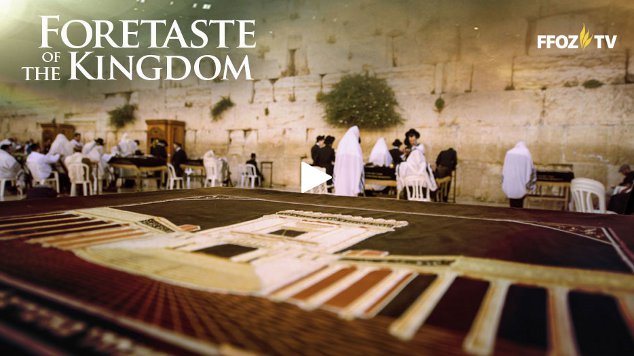
FFOZ TV episode 21Episode 21: The Apostle Paul calls the Sabbath a “shadow of things to come.” Most people usually think of it as a shadow of things from the past. However, viewers will learn in episode twenty-one that the Sabbath is a foreshadow of things still yet to come. Jesus and the Sabbath both provide rest and the Sabbath rest is a taste of the final rest we will have in the Messianic Era when Messiah returns to set up his kingdom. Thus for those who still observe the Sabbath today, it is a promise of what is to come, the Messianic Age.

-from the Introduction to FFOZ TV: The Promise of What is to Come
Episode 21: Foretaste of the Kingdom (click this link to watch video, not the image above)

The Lesson: The Mystery of the Sabbath Rest

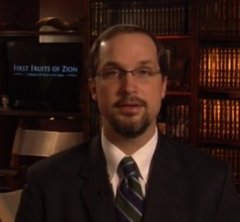
First Fruits of Zion (FFOZ) teacher and author Toby Janicki starts out the exploration of this mystery with what most of us consider to be a familiar lesson from Jesus:

Turn to me, all who labor and are burdened, and I will cause you to rest. Accept upon yourself my yoke and learn from me, for I am humble and lowly in spirit, and you will find a resting place for your souls. For my yoke is pleasant and my burden light.

Matthew 11:28-29 (DHE Gospels)

There’s a lot we think we know about this teaching. We think we know that Jesus wants us to believe in him so that becoming a Christian will provide our souls rest. We think he means that his yoke, his grace, is a pleasant and light “burden” when compared to the Law of Moses. We think that Jesus is always humble and lowly rather than being like the vengeful God of the Old Testament.

But we’re probably not correct, at least not entirely. One of the points Toby made (and he’s made it before, is that when we use improper Biblical exegesis, we often come up with incorrect theology. That statement most likely won’t make some Christian readers happy since once taught, the traditional theology is the Church is set in stone. But sometimes examining a familiar view from an unfamiliar perspective yields new insights.

So too with this continuation of the investigation of the Sabbath, which was begun in the previous episode which I reviewed last week.

So if what we typically understand about the “rest” being described by Jesus isn’t correct, then, from a Messianic Jewish perspective, what is it?

So there remains a Sabbath rest for the people of God. For the one who has entered His rest has himself also rested from his works, as God did from His. Therefore let us be diligent to enter that rest, so that no one will fall, through following the same example of disobedience.

Hebrews 4:9-11 (NASB)

Toby says that there’s a link between Matthew 11:28-29 and Hebrews 4:9-11. They both talk about a “rest,” though in the case of the writer of Hebrews, it’s specifically a Shabbat rest. Toby leads his audience through a small Bible study on Hebrews 4:

Therefore, let us fear if, while a promise remains of entering His rest, any one of you may seem to have come short of it. For indeed we have had good news preached to us, just as they also; but the word they heard did not profit them, because it was not united by faith in those who heard.

Hebrews 4:1-2 (NASB)

Toby JanickiAccording to Toby, the writer of the book of Hebrews is referring to that first generation of Israelites who left Egypt and died in the wilderness.

They too had a rest they could have entered, the rest of the Promised Land, Israel. But they did not due to lack of faith. Toby next presents verses 3 and 4 as connecting this rest to the Sabbath:

For we who have believed enter that rest, just as He has said,

“As I swore in My wrath,
They shall not enter My rest,”

although His works were finished from the foundation of the world. For He has said somewhere concerning the seventh day: “And God rested on the seventh day from all His works”

The writer of Hebrews is actually quoting Exodus 20:11 which is the commandment of observing the Sabbath. But verses 9 through 11 are not specifically referring to the seventh day Sabbath or the rest represented by entering the Land of Israel. Verse 9 says “there remains a Sabbath rest for the people of God.” What rest is that?

According to Toby, these passages are sometimes used by Christians to “prove” that Jesus is our spiritual rest so we don’t need to observe an actual, physical day of rest, neither Gentile Christians nor any Jewish person. But the writer of Hebrews is clearly referring to something in the future, not something that’s already happened. If Hebrews 4 links back to the “rest” which Jesus was teaching about in Matthew 11, then we have reached our first clue.

Clue 1: The rest that Jesus offers us is something that is in the future.

Verses 10 and 11 in Hebrews 4 is a warning not to be disobedient to God as were the first generation of Israelites who disobeyed by refusing to enter the Land of Promise. Obedience of the people of God is required for them…for us to be able to enter into that future rest of Jesus. But again, what rest is that? To us, this represents a Biblical mystery, but to the original audience listening to Jesus or the original Jewish readers of Matthew’s gospel, it was probably self-evident. How would they have understood the word “rest,” which in Hebrew is “Menuchah?”

To answer that question, the scene shifts to FFOZ teacher and translator Aaron Eby in Israel. Aaron first reads from a portion of the Siddur (Jewish prayer-book) which describes the Shabbat as a rest of “love, willingness, truth, faith, peace, tranquility, stillness, trust,” and “a complete rest in which you find favor.”

Clearly, the concept of Shabbat is more than just relaxing in front of the tube or playing a few rounds of golf.

ffoz_tv21_aaronRest is used in a somewhat different context in the Bible. Aaron quoted from Deuteronomy 12:19 referring to Israel, 1 Chronicles 22:9 which refers to Solomon as “a man of rest” and a King who will reign over a nation experiencing rest, peace, and quiet, and 1 Kings 8:56 which is part of Solomon’s dedication of the Temple. These images represent the age of Messianic redemption and the Temple is a portrait of the fulfillment of all the Messianic promises. Aaron also links this to the poetic language of the Rabbis who consider the weekly Shabbat to be a tiny fraction of what will be experienced in the age to come…a forestate of the Kingdom of God.

Back in the studio with Toby, we receive the next clue:

Clue 2: The Sabbath rest is a foretaste of the rest in the Messianic Era.

I can certainly see why the seventh-day Sabbath rest is considered a blessing of both physical and spiritual rest for observant Jews. Not only is it a day to rest in the holiness and peace of God in our age, but it is a miniature representation of the full and complete rest that will be experienced when Messiah reigns in Jerusalem and over all the world, an age of total, worldwide peace.

But in traditional Christian interpretation, we encounter a problem:

Therefore no one is to act as your judge in regard to food or drink or in respect to a festival or a new moon or a Sabbath day—things which are a mere shadow of what is to come; but the substance belongs to Christ.

Colossians 2:16-17 (NASB)

I mentioned these verses among others in my review last week as the “Christian defense” against acknowledging an ongoing Shabbat observance or any such keeping of a Sabbath in the future. When I typically hear language like “type and shadow” in a Christian context, it usually means that such “shadows” came to point us to Jesus, but now that he’s come, the shadows are no longer necessary. However, that interpretation is filtered through a great deal of Protestant tradition and ignores what Paul is actually saying.

Paul said that the Sabbath is a “mere shadow of what is to come,” not what has already come. If, at his first coming, Jesus “fulfilled” the requirement of the Shabbat, then why does Paul refer to the future?

Also, and I’d like to thank Toby for bringing this up, let’s talk about this “shadow” thing. Again, the typical Church teaching on a “shadow” is that it’s basically something of limited usefulness and utility, and was only a poor imitation of something that the Jewish people had to make do with until Christ. Once Christ came, the shadows were eliminated by the “light of the world” and what was temporary then passed away.

Shabbat candlesWhat is a shadow? In a common context, it’s just an area where light is being blocked by an object in between a light source and whatever the light happens to be shining at. A shadow generally renders the shape of the object blocking the light. If Jesus is the “substance” or body of the shadow, then, to extend the metaphor, the Sabbath is “Jesus-shaped.”

If we put all this together, then the Sabbath day is a “shape” or “outline” of something with more substance that will occur in the future and has something to do with the “body” of Messiah. Since that future event has yet to occur, we still exist in the shadow or rather, the seventh-day Shabbat still has purpose and meaning as an image of something even greater and more peaceful to come. Jesus has not replaced the Sabbath and perhaps he never will. In the future, he will fill to complete fullness what we only have a taste of in the current age.

Toby related a number of Talmudic references I’ll pass over (please view the actual episode to get those details) but concludes, using Rabbinic and poetic language, that such concepts link both to 2 Peter 3:8 and Revelation 20:1-6 in describing the thousand-year Messianic reign of Jesus. This is the third and final clue:

Clue 3: The Sabbath foreshadows the coming thousand-year reign of the Kingdom of Heaven.

The rest Jesus was talking about is the Messianic Era, and all who are devoted disciples of Messiah and worshipers of the God of Israel will enter that promised rest when Messiah returns to take up his throne. But we must remain faithful to the end in order to enter that rest.

What Did I Learn?

Something rather poignant. There are a couple of sequences in every episode of the FFOZ TV show that describe the learning materials and other products available through First Fruits of Zion. One of the things this show is supposed to inspire is a desire in the viewers to want to learn more, which can be accomplished through the many fine resources provided by FFOZ.

But in one of these sequences, the voice over said that a “prophetic restoration is sweeping through the Christian world.” I don’t see anything like that “sweeping” through my little corner of the Christian world. I’m glad it’s happening to someone somewhere.

I was also reminded of last Erev Shabbat. My wife made several loaves of Challah and she once again brought out the Shabbos candles…but she was late. My little reminder in Google calendar said that candle lighting began at 4:56 p.m. and at that time, the candles still hadn’t been ignited. I casually mentioned this to her and received a surprisingly sharp rebuke in return. Why should I, a Gentile Christian (she didn’t actually call me that), be keeping track of when Shabbat candle lighting is? She had abruptly (and not for the first time) put up a “Keep Out” sign over the entryway to Shabbat in our home.

She subsequently lit the candles but did not invite me to be present.

“Do not think that I came to bring peace on the earth; I did not come to bring peace, but a sword. For I came to set a man against his father, and a daughter against her mother, and a daughter-in-law against her mother-in-law; and a man’s enemies will be the members of his household.”

Matthew 10:34-36 (NASB)

But a husband against a wife, Master?

“So they are no longer two, but one flesh. What therefore God has joined together, let no man separate.”

Matthew 19:6 (NASB)

I should say that in every other area, the missus and I get along and address a wide range of concerns and shared experiences. It’s just this one place, this religious place, where we are segregated and our worlds keep us apart. I know that, for a variety of reasons, she has good cause to be defensive, but I can’t say that it doesn’t still sting a bit for me to be relegated to one world where our faith is concerned, while my wife inhabits another.

Boaz in ChinaSo it is for many other Christians and Jews in the present age, when many Jewish people see Shabbat as a blessing exclusively for the Jews and to be jealously guarded against outsiders (even if they’re in the same home), and most Christians have no desire to participate in a “shadow” that has long since been replaced by Jesus on the cross.

An “exploration of the Christian faith from a Jewish perspective,” Boaz Michael said at the end of the episode. It’s what I’ve recently dedicated myself to, but it seems a journey I am destined to take alone, and a territory I’m trespassing in as an uninvited foreigner.

If I am to believe prophesy, then I am assured that one day, I will become a welcome stranger in that strange land, but in the current age, the citizens of that country, at least the “citizen” I am closest to, does not permit my entry, nor do my own “countrymen,” the people of the Church, believe my travel plans are valid. I can only trust that one day my determination will be justified. Otherwise, I must accept that my role is to escort the Jewish exiles back to their Land and their heritage, to the foot of the Throne of Messiah, and then I must turn around as the celebration begins, and retreat to where my Master would have me go.

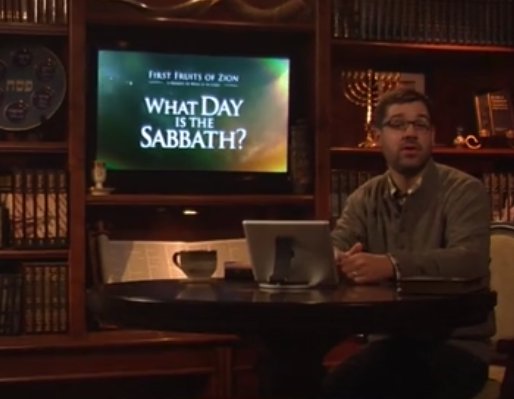
FFOZ TV Review: What Day is the Sabbath?

FFOZ TV episode 20Episode 20: It is often thought that somewhere in the New Testament the Sabbath was changed from Saturday to Sunday. But did the unchangeable God really change the day of rest? In episode twenty viewers will learn that not only has the Sabbath day not changed but Jesus himself was faithful to keep it and taught about it. The Sabbath is an eternal covenantal sign between Israel and God. Thus, while Gentiles are not required to keep it, they are welcomed to do so throughout the Scriptures.

-from the Introduction to FFOZ TV: The Promise of What is to Come
Episode 20: What Day is the Sabbath? (click this link to watch video, not the image above)

The Lesson: The Mystery of the Sabbath

I thought this episode would just be a “rehash” of material I already knew about the Sabbath. To some degree it was, but First Fruits of Zion (FFOZ) teachers Toby Janicki and Aaron Eby managed to flesh out the meaning of the Shabbat for the nation of Israel and to some degree, Christianity as well. Since this show primarily is addressed to traditional Gentile believers, no doubt some of the material came as a bit of a surprise.

Toby starts out relating his Sunday school experience as a child when he was required to memorize the Ten Commandments. This, of course, includes the fourth commandment to observe the Sabbath. Many Christians believe that the Ten Commandments are still in effect for the Church, but either disregard the Sabbath entirely, or believe it was changed from Saturday to Sunday, and that all of the Torah restrictions involving work on the (Sunday) Sabbath were eliminated by Jesus.

Toby asks the questions, “Why don’t Christians keep the Sabbath,” “Was the Sabbath changed from Saturday to Sunday,” and “Is the Sabbath even valid anymore?”

And he said to them, “Shabbat was given for the sake of man, and not man for the sake of the Shabbat. Therefore, the son of man is master even of the Shabbat.”

Mark 2:27-28 (DHE Gospels)

According to Toby, Christians typically use these verses to support the position that Jesus teaches man no longer has to keep the Sabbath since “Shabbat was given for the sake of man.” But Jesus also said that he didn’t come to abolish the Torah, which by definition, would have to include the Torah commandments related to the Sabbath:

Do not imagine that I have come to violate the Torah or the words of the prophets. I have not come to violate but to fulfill. For, amen, I say to you, until heaven and earth pass away, not one yod or one thorn will pass away from the Torah until all has been established.

Matthew 5:17-18 (DHE Gospels)

If you haven’t done so already, or you just don’t believe Jesus didn’t cancel the Torah, please view the FFOZ TV episode The Torah is Not Canceled, which I reviewed several weeks ago. It provides necessary background for what Toby and Aaron are teaching in the current episode of this series.

To understand how Jesus approached the Sabbath, we have to understand the larger context of what he means by “the Shabbat being made for man rather than man for the Shabbat.”

And it happened that He was passing through the grainfields on the Sabbath, and His disciples began to make their way along while picking the heads of grain. The Pharisees were saying to Him, “Look, why are they doing what is not lawful on the Sabbath?” And He said to them, “Have you never read what David did when he was in need and he and his companions became hungry; how he entered the house of God in the time of Abiathar the high priest, and ate the consecrated bread, which is not lawful for anyone to eat except the priests, and he also gave it to those who were with him?” Jesus said to them, “The Sabbath was made for man, and not man for the Sabbath. So the Son of Man is Lord even of the Sabbath.”

Mark 2:23-28 (NASB)

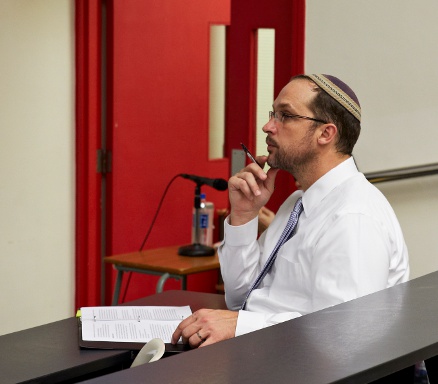
Toby JanickiToby brings up an important point that Jesus is debating with the Pharisees about what is and is not permitted to do on the Sabbath, not whether or not the Sabbath remains valid. Neither side in this argument is invalidating the Sabbath, merely dialoguing about what constitutes “work” on this holy day. Rabbis have been having similar debates for hundreds and even thousands of years. The Talmud is replete with Rabbinic discussions and disagreements over what is permitted to do on Shabbat and a wide variety of other matters related to the Torah mitzvot. The discussion recorded in Mark 2:23-28 is no different, and yet Christianity, not seeing this transaction from a Jewish perspective, universally fails to comprehend its meaning.

In the specific example above, Jesus is citing a portion of the Bible when David and his men ate bread permitted only to the Levitical priests. They did so because they were starving and had no where else to turn for food. Jesus is saying that the Shabbat is a gift, not a straitjacket, and the specifics of performing a type of work that is normally forbidden on Shabbat must not overrule the higher principle of preserving human life, well-being, and dignity.

Jesus had a number of similar debates with the Pharisees on this topic, including whether it was permitted to heal a non-life threatening disability on Shabbat (Matthew 12:9-14).

For more context on the debates Jesus had with the Pharisees on the Shabbat, see my review of D. Thomas Lancaster’s book The Sabbath Breaker: Jesus of Nazareth and The Gospels’ Sabbath Conflicts, also published by First Fruits of Zion.

At this point in his presentation, Toby said something I didn’t expect. We generally consider the phrase “Son of Man” as Jesus used it, to refer to himself, the Messiah, however, Toby applied it differently in the context of Mark 2:23-28. He suggested that “Son of Man” is an equivalent term for all humankind. Thus, he presents the words of Jesus as saying that the Sabbath was created as a gift for all people and that all people everywhere are “Lord of the Sabbath.”

For me, this creates certain problems, since, as I said before, the “Son of Man” is generally considered as a title for Messiah, and Toby’s interpretation seems to create a separate meaning for only this situation. It also may contradict what he establishes later in this episode, since if the Sabbath is created for everyone, Jew and non-Jew, and we are all “lords” of the Sabbath, what does that mean for Gentile Shabbat observance today?

More on that in a bit.

Toby drew a parallel between the Master’s words above and an ancient Jewish commentary on the book of Exodus called Mechilta, and quotes part of it which states:

Shabbat is delivered to you, not you to the Shabbat.

This echos the meaning of the Master that man is not to surrender himself to the Shabbat but quite the opposite. If the laws of the Sabbath were entirely rigid and immutable, they might require that observant people be subject to hardship and even death in obedience of such laws. Even the most stringent Jewish interpretation of the laws of Shabbat allow for lifesaving efforts to be expended on Shabbat, but what about people who are suffering but who will live for another day? What if the dilemma isn’t life and death, but life and dignity?

I’ve come the long way around to the first clue in solving our mystery, but it has finally arrived:

Clue 1: Jesus argued about what things were permissible to do on the Sabbath.

And this, as I previously pointed out, is a debate that has been taking place in Judaism for a very long time.

The scene shifts to Aaron Eby in Israel for a word study on the Hebrew word “Shabbat.”

Aaron starts by quoting Exodus 20:8-9, 11 which I render from the Stone Edition of the Tanakh:

Remember the Sabbath day to sanctify it. Six days shall you work and accomplish all your work…for in six days Hashem made the earth, the sea and all that is in them, and He rested on the seventh day. Therefore, Hashem blessed the Sabbath day and sanctified it.
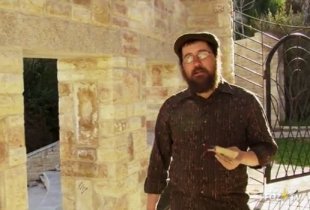
Aaron EbyAaron points out that the Sabbath has a universal application and far pre-dates the giving of the commandments of the Sabbath at Sinai.

The literal meaning of the word “Shabbat” is “resting” and “stopping” and implies an “active” form of “resting” and “refraining,” not just kicking back and relaxing. To me, this speaks of a specificity of types of activity and inactivity, a mindfulness that Shabbat is not just relaxing in front of the T.V., but directing mind, spirit, and heart away from our immediate human activities and toward God.

Aaron cites something I consider very important in the following:

The Children of Israel shall observe the Sabbath, to make the Sabbath an eternal covenant for their generations. Between Me and the Children of Israel it is a sign forever that in a six-day period Hashem made heaven and earth, and on the seventh day He rested and was refreshed. (emph. mine)

Exodus 31:16-17 (Stone Edition Tanakh)

There are two exceptionally important points to get from this. When Israel or any individual Jewish person keeps the Shabbat, they:

  1. Testify to the eternal covenant between God and all Jewish people, the nation of Israel.
  2. Testify to God’s sovereignty as Creator of the Universe.

In the quote from Exodus 31:16-17, I emphasized words that testify to the eternal nature of the Shabbat as a covenant sign between God and the Jewish people. This also, by implication, testifies to the eternal nature of the Mosaic covenant with the Jewish people, and the Torah as the conditions of that covenant. When Christians say that the Shabbat no longer applies to the Jewish people (or anyone else) and especially that the Torah is now irrelevant to the Jewish people, I want to scream, “What part of eternal don’t you understand?”

But I digress.

Formally, in Judaism, a “day” lasts from sundown to sundown, not from sunrise to sunrise or midnight to midnight. That means that the seventh day Shabbat begins at sundown on Friday and ends at sundown on Saturday (in Rabbinic custom, the Shabbat actually begins slightly before sundown on Friday and ends about 45 minutes after sundown on Saturday as a “hedge,” to avoid “cutting it too close,” so to speak, in beginning and ending Shabbat observance).

Aaron also pointed out that generally, Jewish (and Christian) authorities all agree on which day is the “seventh day,” and that Biblically, it can’t be just any day at all.

I wish Aaron or Toby had addressed the following, though:

One person regards one day above another, another regards every day alike. Each person must be fully convinced in his own mind. He who observes the day, observes it for the Lord…

Romans 14:5-6 (NASB)

Therefore no one is to act as your judge in regard to food or drink or in respect to a festival or a new moon or a Sabbath day—things which are a mere shadow of what is to come; but the substance belongs to Christ. Let no one keep defrauding you of your prize by delighting in self-abasement and the worship of the angels, taking his stand on visions he has seen, inflated without cause by his fleshly mind, and not holding fast to the head, from whom the entire body, being supplied and held together by the joints and ligaments, grows with a growth which is from God.

Colossians 2:16-19 (NASB)

Mark NanosIn Paul’s letter to the Romans addressing “the weak and the strong” (which I’m about to get to in the Mark Nanos book The Mystery of Romans), most people take from these words to mean that one day is as good as another as far as observing a “Sabbath” is concerned, and that believers need not be concerned about strictly observing a Saturday Shabbat. The scripture from Colossians tells a similar tale in the eyes of the Church, and yet both of these interpretations directly contradict earlier scriptures. Since as believers, we cannot understand that the Bible is internally contradictory, we must conclude then that our interpretations are flawed. How can Jewish Shabbat observance be eternal and yet Paul say that it simply doesn’t matter because of Jesus? Jesus himself affirmed the Shabbat, not eliminated it.

Aaron’s segment of this program has him also affirming the current requirement for Israel to observe the Shabbat, but he also asks the question, “What does the Shabbat mean to Gentile believers?”

Back in the studio with Toby, we find our second clue:

Clue 2: Sabbath is from sunset Friday until sunset Saturday.

Two or three clues really don’t do it for the mystery of Shabbat in my opinion. This particular television episode brought up a dense set of meanings for me.

While earlier portions of the episode spoke of the “universality” of the Shabbat as a testimony of all mankind that God is the sovereign Creator, Toby shifts into the specifics of Shabbat and Judaism. While we see the sanctity of the Shabbat being set in place in Genesis 2, Toby points out that the specific commandments of Shabbat observance were not given in any recorded fashion to Adam and his sons or to Noah and his sons. It is only after God redeems the Children of Israel from Egypt and they are standing “as one man” at Sinai before Hashem their God, that Shabbat is formally established and its observance defined in Torah. It is also given as a specific sign of the Mosaic covenant between God and Israel, only Israel, forever. No other people group or nation has ever received this sign obligation to God.

Hashem said to Moses, saying: “Now you speak to the Children of Israel, saying: ‘However, you must observe my Sabbaths, for it is a sign between Me and you for your generations, to know that I am Hashem, Who makes you holy.'”

Exodus 31:12-13 (Stone Edition Tanakh)

Toby doesn’t mention this, but the above verses establish that not only is the Saturday Sabbath considered an eternal sign of the covenant between God and Israel, but so are all of the “Sabbaths,” that is, all of the moadim, God’s appointed times, the festivals identified and defined in Torah, such as Passover, Shavuot, Sukkot, Rosh Hashanah, and Yom Kippur. Each and every one of these Sabbaths must be observed by all of Israel for all time; for after all, that’s what “eternal” means.

I’ve heard it said in the Church that Jews should observe the moadim as “national holidays” the way Americans “observe” the Fourth of July or Thanksgiving. I consider that not only misleading and Biblically inaccurate, but potentially demeaning. It reduces the eternal covenant signs between God and Israel to how Americans “observe” barbecues, fireworks, eating turkey, and watching football. The very best you can say about American national holidays is that they represent who we are and how we relate to our history as Americans, a relationship between citizens and our country. The moadim, the weekly Sabbath, Passover, Shavuot, Sukkot, and the other special Sabbaths are far, far more than that, and indeed, define the relationship between Israel and her citizens, the Jewish people, and the God of Everything!

That’s somewhat more significant than mere American “national holidays,” wouldn’t you say?

This is another long way around to reaching the third and final clue in solving today’s mystery:

Clue 3: The Bible requires only the Jewish people to keep the Sabbath.

That’s going to make some people I know, non-Jewish people, very unhappy, but hold on there. Toby goes on to say that there’s nothing stopping any non-Jewish believer from also observing the Shabbat in some manner. We may not be commanded to do so, but we might as well “get used to it,” for someday, all of humanity will indeed observe the seventh day Shabbat.

And the foreigners who join themselves to Hashem to serve Him and to love the Name of Hashem to become servants unto Him, all who guard the Sabbath against desecration, and grasp My covenant tightly — I will bring them to My holy mountain, and I will gladden them in My house of prayer; their elevation-offerings and their feast-offerings will find favor on My Altar, for my House will be called a house of prayer for all peoples.

Isaiah 56:6-7 (Stone Edition Tanakh)

It shall be that at every New Moon and on every Sabbath all mankind will come to prostrate themselves before Me, says Hashem.

Isaiah 66:23 (Stone Edition Tanakh)

Boaz MichaelIf I’m reading this right (and I think I am), then not only will everyone observe a weekly Sabbath, the seventh day Sabbath, in the Messianic Age, but we will observe the New Moons and all of the Sabbaths and Festivals of God, all of the moadim listed in the Torah.

I don’t know how any later or subsequent revelation in the Apostolic scriptures (New Testament) can alter or undo the meaning of this text.

What Did I Learn?

I learned some things about the Sabbath, but I learned more about myself. I learned that I want to scream when I hear good, intelligent, and passionate Christians, men and women who I deeply respect, saying things about the Bible that seem completely contrary to the Bible. To my way of thinking, Toby and Aaron provided their audience with an air-tight case that Sabbath keeping is completely Jewish and remains an obligation for the Jewish people as a response to their covenant obligations to God. To deny this is (forgive me) to deny the evidence of the Bible. Toby and Aaron “quoted chapter and verse,” so to speak, illustrating the path from Genesis, to Sinai, to the present age, and into the Messianic Era, that the seventh day Sabbath is an eternal sign of the (eternal) covenant between God and Israel.

I also learned to “tighten up” the scriptures defining when all of humanity, in addition to Israel, will be obligated to observe the Shabbat, which is in the Messianic Era. There is no current obligation for Christians, or anyone else who isn’t Jewish, to observe Shabbat, but there will be in the future age when Messiah returns and establishes his Kingdom of peace over all the Earth. While Gentiles don’t have to observe Shabbat now, we can choose to, in some fashion, to honor God as Creator and to summon for ourselves a taste of the future Messianic Kingdom.

I found myself thinking of my Jewish wife and children. None of them observe the Shabbat in any real sense. For awhile, when our daughter was in Israel, my wife was lighting the Shabbos candles, but she stopped soon after our daughter returned. It breaks my heart, but I have to remind myself that some traditional Jews believe that in the age right before the coming of Messiah…

There is a tradition that people will begin to despise the values of their religion in the generations preceding the coming of the Messiah. Since in a period of such accelerated change, parents and children will grow up in literally different worlds, and traditions handed down from father to son will be among the major casualties.

Our sages thus teach us that neither parents nor the aged will be respected, the old will have to seek favors from the young, and a man’s household will be become his enemies. Insolence will increase, people will no longer have respect, and none will offer correction. Religious studies will be despised and used by non-believers to strengthen their own claims; the government will become godless, academies places of immorality, and the pious denigrated…

Perhaps it is darkest before the dawn.

At the very end of the episode, as always, FFOZ Founder and President Boaz Michael appeared on camera to summarize this episode and to mention that next week’s show will continue to discuss the Shabbat. He also said, and this is very important to me, that studying the Bible, all of it, from a Jewish cultural, national, historical, ethnic, and traditional perspective “makes our Bibles consistent and upholds the Biblical truth that God doesn’t change.”

At the beginning of some of these shows, Toby refers to himself as “a Gentile who studies Messianic Judaism.” I’m a Gentile Christian who studies Messianic Judaism but who also attends a Christian church and, as part of that experience, studies Christianity from a fundamentalist and Reformed theology perspective.

So far, after a year of being back in church, the Messianic learning framework still makes a great deal more sense to me as a Biblical guide to Biblical truth than the platform used by fundamentalists. And this should be strange, since being a fundamentalist Christian simply means adhering to the core fundamentals of faith in Jesus Christ.

ShabbatBut maybe that’s the problem. Those fundamentals are based on (please pardon me again) a “fundamental” set of assumptions and traditional interpretations of what the Bible is saying. While those fundamentals attempt to take into account, not only the meaning of the Bible in its original languages, but the cultural and historic context of the Biblical authors and their audiences, they just do not escape the filter of two-thousand years of Christian interpretive history as well as Christian/Jewish enmity, all of which, after Christianity broke from its Jewish origins, must by definition, deny the Torah and deny continuing Jewish obligation to the Torah, including the seventh day Sabbath, as an eternal sign of the covenant between Jewish Israel and God.

How long will I be able to straddle the line with each foot planted on opposite sides of the street? You’ll find out in tomorrow’s “morning meditation.”

Overcoming with Good

negativeThe Almighty’s perspective is the ultimate perspective. It is the basis of reality. The real question we need to ask ourselves is, “What does the Almighty consider my true value to be?”

From the Almighty’s viewpoint, the answer is, “You are My child and you are precious. You are created in My image. In essence you are a Divine Soul. I have created the world for you. Your entire being and your value is a gift from Me. When you see yourself from My perspective, you know that you have infinite value. Your intrinsic worth is greater than anything that can be measured materially.”

Rabbi Zelig Pliskin
Daily Lift #984
“Almighty’s Perspective on Your True Value”
Aish.com

Just to let you know, this has nothing to do with my recent commentary on John MacArthur and his Strange Fire conference.

However, I recently have become aware of a resurgence of poor attitudes among believers in the blogosphere and the wider realm of the Internet. I guess it’s easier for these sentiments to be expressed in a semi-anonymous environment where accountability doesn’t appear to be an issue.

I’m not here to add to that negativity. Believe me, resisting this temptation is difficult, but in the end, if I didn’t, I would be no better than those I find who have betrayed friendship and trust.

There is always injustice in the world. Just as the Master said to his disciples that “you always have the poor with you,” it’s sad to say that we always have the unjust with us as well. Jesus went on to say “and whenever you wish you can do good to them,” reminding his listeners (and us) that poverty is an opportunity for us to help others and to do the right thing in his name. What can we say of the unjust? What opportunity do they present?

I could say they offer us the opportunity to be just and humane as they are unjust and inhumane, but the mistake here would be in attempting to confront others who, in their own “wisdom” and self-service, see themselves as upholding the cause of right.

No, confrontation and the continuation of angry words profits no one and does not serve man or God.

But there is another opportunity here. The opportunity is to uplift and uphold those who have been trampled on under the muddy and self-righteous boot. The opportunity is to offer healing words, an olive branch of peace, friendship, and hope.

unpopularRabbi Pliskin wrote the words I quoted above probably with the idea that he was addressing a primarily Jewish audience, but his words are true for everyone. We were all made in the image of God. To denigrate any human being is to lower that Godly image and even to drag it into the gutter. When people do this in believing they are serving God, it is a sad and miserable thing. It’s especially poignant that the instigators are woefully unaware of what they are doing and who they are hurting.

“Then He will also say to those on His left, ‘Depart from Me, accursed ones, into the eternal fire which has been prepared for the devil and his angels; for I was hungry, and you gave Me nothing to eat; I was thirsty, and you gave Me nothing to drink; I was a stranger, and you did not invite Me in; naked, and you did not clothe Me; sick, and in prison, and you did not visit Me.’ Then they themselves also will answer, ‘Lord, when did we see You hungry, or thirsty, or a stranger, or naked, or sick, or in prison, and did not take care of You?’ Then He will answer them, ‘Truly I say to you, to the extent that you did not do it to one of the least of these, you did not do it to Me.’ These will go away into eternal punishment, but the righteous into eternal life.”

Matthew 25:41-46 (NASB)

…it would be better for him to have a heavy millstone hung around his neck, and to be drowned in the depth of the sea.

Matthew 18:6 (NASB)

I know that some in the Christian world feel they just have to “call out” people and behaviors, even to the point of betraying a trust to do so, but if you feel there is a conflict or you feel you have been hurt, there is a better way.

“But if your enemy is hungry, feed him, and if he is thirsty, give him a drink; for in so doing you will heap burning coals on his head.” Do not be overcome by evil, but overcome evil with good.

Romans 12:20-21 (NASB)

I encourage you all and especially my brothers and sisters in the faith, if you feel anger within you for another, if they are within the faith or not, consider the words of Paul. And please, please, consider the consequences for failure as spoken by our Master.

So you shall not wrong one another, but you shall fear your God; for I am the Lord your God.

Leviticus 25:17 (NASB)

For those among the believing community who purport to observe the Torah, this verse is the basis for one of the 613 commandments to not wrong someone in speech, which I would extend to wronging someone in the blogosphere or other text-based environment.

Standing before GodA large number of the mitzvot that are specific to “love and brotherhood” are found in Leviticus 19, such as “not to carry tales” (Lev. 19:16), “not to cherish hatred in one’s heart” (Lev. 19:17), “not to take revenge” (Lev. 19:18), “not to put anyone to shame” (Lev. 19:17), and “not to curse any other person (implying Jewish person)” (Lev. 19:14).

The core of these commandments is that all human beings are created in the image of God. To deliberately attempt to damage or cause harm to another person, regardless of the provocation, is to also deliberately attempt to damage or cause harm to God’s image.

Saying that you love God while trying to hurt another person is kind of crazy-making.

And He said to him, “‘You shall love the Lord your God with all your heart, and with all your soul, and with all your mind.’ This is the great and foremost commandment. The second is like it, ‘You shall love your neighbor as yourself.’ On these two commandments depend the whole Law and the Prophets.”

Matthew 22:37-40 (NASB)

Love of God and love of your fellow human being, regardless of who they are, even if they are not like you, even if they have different beliefs, even if they have a different outlook, are two acts that are inseparable. A man who says he loves God but hates or denigrates another person, plunging their name into the mud publicly, is a liar.

The image posted at the top of this blog post was the inspiration for today’s “extra meditation.”

Any negativity that comes to you today should be returned to the sender.

That is my only response to the negativity I’ve been addressing. There is no one to fight. There is no one to hate. Anger solves nothing and only robs the person giving into anger of his peace. I choose peace.

Today, any negativity I discover in the blogosphere or any other environment I encounter will be promptly returned to the sender. My peace will be preserved. This is also my gift to any friends who have been victims of negativity, hostility, or any other ungodly attitude.

open-your-handAnd in the end, the real victims of negativity are those who nurture it in their own hearts and attempt to send it out to others.

It is said that Shabbos is a small foretaste of the peace of the Messianic Era. The Queen arrives within just a few short hours. In the tiny march of time left until we light the candles, I implore anyone reading these words to set your house in order, and by the time the sun dips below the western horizon, please be ready to invite peace into your home, and into your heart. But of course, you will need to repent and ask God for forgiveness. And if you’ve hurt another human being, before God will forgive, you must repent and ask forgiveness from those you have hurt.

He who conceals a transgression seeks love,
But he who repeats a matter separates intimate friends.

Proverbs 17:9 (NASB)

Good Shabbos.

Finishing Off Shabbat

extinguished_candleIn Judaism, Shabbos is a time to be especially careful not to become angry or to become involved in a quarrel. Quarrels spread like fire and destroy everything that is precious. The sanctity of Shabbos, if it is observed properly, enables people to feel a sense of unity. It promotes love and brotherhood. The sanctity of Shabbos can spread and enter the hearts of each individual and everyone can become as one.

-Rabbi Zelig Pliskin
“The Sanctity of Shabbos”
Aish.com

I’ve been trying to write a commentary for Torah Portion Re’eh (the reading for this coming Shabbat) but it’s not coming. I actually did write something, but I didn’t like it, so I deleted it (a rare thing for me). I know I’m forcing stuff into the text rather than just letting it flow. That’s not typical of how I write but then, it’s still Monday and maybe I’m just too far away from Shabbos mentally and spiritually.

Rabbi Pliskin says that we should not become angry or quarrel on Shabbos. It destroys peace. It’s destroys sanctity, not just the sanctity of the Shabbat, but the sanctity among God’s people (if we can call ourselves God’s people).

Here’s an example of Shabbos as described by Derek Leman in his blog post The Jewish Experience at UMJC 2013:

The highlight of the conference for me came in the Shabbat Shacharit service. While our crowd of 600 people that morning may not have been the largest crowd I have ever been in, it was the largest crowd of Jewishly knowledgeable and intensely spiritual people I have ever been in. I have worshipped in a stadium with 50,000 Christians before and found it to be powerful. But to be in ballroom meant for 474 people that has 600 Jews packed in with tallitot and kippot, all of whom know the calls and responses of the Hebrew liturgy, was something powerful on a level I can hardly explain.

Before reciting the Shema we sang a song about the Shema. It began with a haunting melody that we called out for several minutes just to the sound “oo.” Kavanah, they say, is the Hebrew word for inner intent, devotion and concentration upon an idea. I have never felt kavanah like that before.

When the Torah scrolls were being paraded around the ballroom, paraded throughout a dense crowd, standing room only, aisles packed, and being paraded slowly so all could touch their tallitot or books to it and bring the word to their lips, we recited the “Niggun Neshama,” by Neshama Carlebach. It must have taken at least ten minutes to complete the Torah parade, with the crowd facing it wherever it was in the room and a spirit of intensity of devotion on every face and joy that was overwhelming.

I truly experienced what God said about Shabbat, “It is a sign between you and me forever” (Exod 31:13).

I have to admit to being a little envious (sorry, Derek) at reading his description, but then again, even if I had the bucks to spend on going to a conference in Los Angeles, Derek did say it was “600 Jews packed in with tallitot and kippot,” so it’s not an experience that would be open to (Gentile) Christians.

no_kvetchingNo, I’m not kvetching. I understand and support worship venues that are specific to Jewish people in the Messiah. I realize I’m not part of the community of Messianic Jews (and I’ve calmed down since I wrote that last blog post). Last May, I expressed some concerns about worshiping in a Messianic Jewish context, based on my “transition” into a Christian religious space, but after about nine months in church, as much as I enjoy certain aspects of being in church, if I had my “druthers,” I’d probably worship at some place like Beth Immanuel.

But for lots and lots of reasons, I don’t have my “druthers” and probably never will. Frankly, I don’t think it’s about me getting my way. I think it’s about me being where I am and doing what God wants me to do. Anyway…

But as much as Derek enjoyed his time at the Union of Messianic Jewish Congregations (UMJC) conference, there are others who didn’t think it was so hot. I was going to quote from a certain Hebrew Roots blogger or one of the commenters on his blog as an example of their criticism, but after reading through the material, I just didn’t have the heart. It’s not Shabbos, but really, the words have been put online once. I don’t need to repeat them. Suffice it to say, there are those who find that the UMJC is disingenuous, or non-Biblical, or too Talmudic, or not enough apostolic scriptures, or whatever.

I’ve complained about religious people on more than one occasion. Really, it takes a lot of effort sometimes to remain religious, at least publicly, given the way some people express themselves, supposedly for the sake of Heaven.

From there they sailed to Antioch, from which they had been commended to the grace of God for the work that they had accomplished.

Acts 14:26 (NASB)

Last Sunday, my Pastor preached on Acts 14:21-28 in his sermon, “What Makes a Good Missionary (Part 3)?” I’ll write more about it on Thursday, but as part of his description of the end of “Paul’s first missionary journey,” he said that Paul and Barnabas reported back to their “home church” at Syrian Antioch (I’m more inclined to believe it was a synagogue that included Jewish and non-Jewish disciples of Messiah) about everything they had accomplished. Reminded me of this:

The essence of Shabbos is peace of mind. Our attitude on Shabbos should be as if all the work we need to do has already been completed. If you need to travel or do any kind of work, on Shabbos you should try to feel as if you have reached your destination and every single job you have to take care of has already been completed.

All the laws of Shabbos serve as a recipe for attaining peace of mind. Not only are we to refrain from doing any form of work, but we are enjoined not to even discuss anything that has a connection with work.

-Rabbi Zelig Pliskin
“Let Shabbos Finish Your Work”
Aish.com

Absence of quarreling and peace of mind at the week’s work having been accomplished. Sounds good, but my view of the world of which I’m a part doesn’t provide for peace.

Derek ended his blog post this way:

I am encouraged. I am strengthened. I pray you, Jewish or non-Jewish reader, find your heart warmed as well. May God, as Solomon prayed, hear in heaven and forgive the sins of our people and bring them again to the land which was given to the Jewish people as an inheritance.

up_to_jerusalemThe Jewish people have a right to pray for the God of Israel to forgive their sins and to return them to their Land which was given to them as an eternal inheritance. If we Gentile believers can’t be a part of the solution, then we should at least get out of their way (and out of God’s way…not that we could ever inhibit His will). My generation used to have a saying: “If you aren’t part of the solution, then you’re part of the problem.”

We Gentile believers, whether we call ourselves “Christians,” “Hebrew Roots,” or anything else, need or consider our position and make a few adjustments. The fact that we are disciples of the Jewish Messiah does not give us vast authority to run roughshod over those people who were uniquely chosen by God at Sinai. If there was no Israel, there would be no method of attaching a Gentile through covenant to God. We vilify the Jewish people at our own peril. We should be wise. A blessing and a curse lay before us as well.

I’ve been writing about the Shabbat which I currently have no way to enjoy. I suppose that’s my fault for a lot of reasons, but it is no longer in my control. However there is an eternal Shabbat promised to all the faithful, if we can just maintain our strength until it comes. But in denigrating the Jewish people including Jews in Messiah (no, we don’t have to agree with all Messianic Jewish organizations about everything) are we unknowingly throwing away our place within that Shabbat? Are we in the process of finishing our work as the crown jewels of the nations or are we simply ending our opportunity for the final Shabbat rest because of our hostility and disrespect?

Sorry for another in a long line of “why can’t we play nice together” blog posts. I really wish the lot of us would take the advice of Thumper’s father (brief video) and just hush up and worry about perfecting our own spirituality. Let other people including Derek Leman and the various attendees of the UMJC conference attend to their own relationship with the Almighty.

Being Kept By Shabbos

hillel_shammaiYou shall honor it [Shabbos] by refraining from your usual weekday practices, nor pursuing your business, nor speaking thereof.

Isaiah 58:13

The observance of Shabbos and the festivals is characterized by not only abstinence from work, but also from all types of “weekday” activities, including even how one converses.

“Your conversation on Shabbos should not be similar to your weekday conversation”

-Shabbos 113b

A personal incident illustrates that by properly honoring the Shabbos and festivals, one achieves the respect of others.

As a resident in psychiatric training, I explained to the program director that I was unable to work on the festival days, and that these should be considered vacation days and deducted from my allotted vacation time.

The director shook his head. “No need for that,” he said. “Non-Jewish people can do anything they wish on their holidays. If they can wash the car, paint the garage, or go to the theater, then they can just as well come to work. In your case, you are not permitted to do anything, so obviously you cannot come to work, and this need not affect your vacation time.”

It has been said, “Even more than Israel has kept the Shabbos, the Shabbos has kept Israel.” If we honor the Shabbos properly, the Shabbos will honor us.

Today I shall…

…dedicate myself to a full observance of Shabbos and the festivals.

-Rabbi Abraham J. Twerski
“Growing Each Day – Tammuz 24”
Aish.com

This, as much as anything, illustrates the difference between the Jewish Shabbat and the Christian Sunday or “Lord’s Day.” I don’t doubt that the very first non-Jewish disciples of the Jewish Messiah observed a Shabbat in the same or similar manner as the Jewish disciples. Frankly, they wouldn’t have known any better, and a Sunday “Lord’s Day” probably wouldn’t even have occurred to them. Why would it?

Shifting the primary day to gather for worship from Saturday (Friday night to Saturday night, actually) to Sunday was most likely one of those acts designed to create a definition between Judaism and a Gentile Christianity. I can understand, to some degree, the desire to honor the day of Messiah’s rising from the tomb (although in Jewish reckoning, Jesus rising on the first day of the week could have happened anytime after sundown on Saturday), there’s nothing clear cut in the New Testament that says it was God’s intent.

However, there are just tons of references in the Tanakh (Old Testament) that speak of the Shabbat being observed on the seventh day, and as I said, the fact that Messiah came, taught, died, resurrected, and ascended never caused a ripple in Jewish Shabbat observance, just as it never caused a ripple in Jewish observance of any other part of the Torah or the normative halachah of the day.

But even if Gentile Christianity intended to lift Shabbat as a unit and move it over by about twenty-four hours, that wasn’t the end result. As Rabbi Twersky’s commentary tells us, an observant Jew’s response to Shabbat is quite a bit different than how a Christian spends his or her time on Sunday.

According to Chabad.org, there are thirty-nine melachot or forms of work that are prohibited to a Jewish person on Shabbos. Besides just the raw list presented at that site, how they are interpreted adds to the understanding of what must be avoided. From a Christian point of view, it all seems terribly restrictive and burdensome, and most Gentile believers having read such a list no doubt would rejoice in their “freedom in Christ.”

shabbat-candle-lightingBut our “holy day” isn’t all that holy if we don’t actually set it apart by behaving and even speaking differently.

I’ve discussed this with my Pastor and he believes the Ten Commandments, which includes the commandment to observe Shabbat, have universal applications. However, he does not believe that the day of the week is strictly fixed. I’m not sure what his rationale is for such a belief. He is usually very exact in his thinking and his attitude about Shabbat seems a little “fluid.”

I know that most Jewish people would deny that there is any direct command from God to the Gentile believers to observe Shabbos, especially in the manner of the Jewish people. There are some Gentiles who believe they are commanded and, in some manner or fashion, they do observe Shabbat. I don’t believe there are many who do so exactly like a modern, Orthodox Jew, and I’ve had a conversation with one Gentile believer who observes the Shabbat but who told me he retains the right to not make it burdensome (for instance, he feels free to turn light switches on and off, drive his car, use elevators, and so forth).

I used to keep a “sort of” Shabbat, but it was nowhere near the level of observance of most religious Jews. My wife is Jewish and, sad to say, not particularly observant (for the moment…I’m hoping that will change), and so in our household we don’t have much of a Shabbat. If I have the opportunity, I try to spend most of my day reading the Bible or related texts but if the situation calls for it (including the “honey-do list” situation), I can be found violating quite a few of the melachot.

But I think there is something special about setting aside one day of the week as Holy to God and dedicating ourselves to observing that day, to using the time to draw closer to God and to withdraw somewhat from the world around us.

I can’t imagine the Messianic age not including a Shabbat observance for all of the disciples of Messiah. It would seem strange at that point to segregate such observance by Jewish and Gentile populations and, after all, even the Gentile nations will be commanded to observe Sukkot and to send representatives to Jerusalem.

Then it will come about that any who are left of all the nations that went against Jerusalem will go up from year to year to worship the King, the Lord of hosts, and to celebrate Sukkot. And it will be that whichever of the families of the earth does not go up to Jerusalem to worship the King, the Lord of hosts, there will be no rain on them. If the family of Egypt does not go up or enter, then no rain will fall on them; it will be the plague with which the Lord smites the nations who do not go up to celebrate Sukkot. This will be the punishment of Egypt, and the punishment of all the nations who do not go up to celebrate Sukkot.

Zechariah 14:16-19 (NASB)

I replaced the phrase “the Festival of Booths” with “Sukkot” in the above-quoted passage to emphasize the nature of what is being commemorated. “Festival of Booths” somehow puts a “Christian spin” on what is quite obviously Jewish.

And yet, the nations are commanded to commemorate Sukkot in Messianic Days. So too the Shabbat?

“Also the foreigners who join themselves to the Lord,
To minister to Him, and to love the name of the Lord,
To be His servants, every one who keeps from profaning the sabbath
And holds fast My covenant;
Even those I will bring to My holy mountain
And make them joyful in My house of prayer.
Their burnt offerings and their sacrifices will be acceptable on My altar;
For My house will be called a house of prayer for all the peoples.”
The Lord God, who gathers the dispersed of Israel, declares,
“Yet others I will gather to them, to those already gathered.”

Isaiah 56:6-8 (NASB)

Shabbat candlesIt would certainly seem, based on this passage, that the nations (foreigners) who are joined to God not only will be required to observe Shabbat, but will also be allowed to pray in the Temple and to even bring sacrifices.

I’m certainly in no position to go around pointing fingers at Christians about what they do with their time on Saturday or Sunday, but I do want to suggest that some day, our rather casual attitude about Shabbat will have to change. There are many passages in the New Testament telling us that the Master will return “like a thief in the night” and that we will have no idea the day or hour of his coming back to us. We are told to be constantly be prepared and ready, day and night, for the bridegroom’s return.

“Even more than Israel has kept the Shabbos, the Shabbos has kept Israel.”

If the Master’s return comes that suddenly and unexpectedly, then our only hope of being ready is to always be ready. Maybe it wouldn’t hurt for us to practice a more focused Shabbat or two before he gets here.