Tag Archives: shabbat

The Sabbath Breaker: A Book Review

Teaching of the TzadikimOnce it happened that the Master and his disciples walked in the holy city of Jerusalem on the Sabbath day when they encountered a man blind from birth. Our Master spat on the ground, made clay of the spittle, and applied the clay to the man’s eyes. Then he told the man, “Go, wash in the pool of Siloam.” The man went and immersed, and miraculously, he could see.

To heal the man, Jesus spat on the ground and made clay of the spittle. Mixing two substances to form a third is a form of work that Jewish law prohibits on the Sabbath day. Jesus smeared the mud on the man’s eyes. Applying a salve or medicine by means of smearing is also considered a form of work prohibited on the Sabbath day. It is a violation of the Sabbath. He sent the man to immerse himself. At least by conventional definition in traditional, Jewish interpretation, immersions are not done on the Sabbath. This single healing incident from the Gospels potentially involves three Sabbath violations.

The Pharisees claimed, “This man is not from God, for he does not keep the Sabbath” (John 9:16). Vocal critics of the Master insisted, “He is a Sabbath breaker.”

Do we appreciate the gravity of this allegation?

-D. Thomas Lancaster
from “Introduction: This Man Breaks the Sabbath” (pg 7)
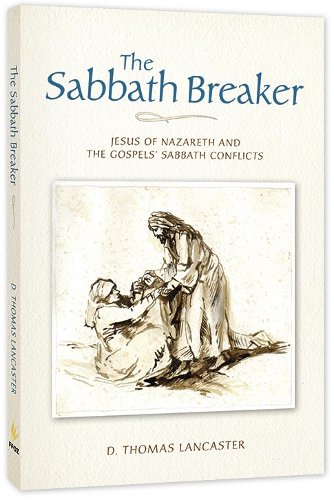
The Sabbath Breaker: Jesus of Nazareth and The Gospels’ Sabbath Conflicts

This is Lancaster’s latest book published by First Fruits of Zion (FFOZ) and, like a number of Lancaster’s books, leverages material previously published in volumes of the Torah Club and issues of Messiah Journal. A great deal of valuable information on topics of intense interest to Christians both in the church and within the Messianic community, is “buried” within much larger documents. In order to make this information more readily accessible, FFOZ is taking material on specific subjects from these “tomes” and refactoring it into several smaller, self-contained books. Lancaster’s The Sabbath Breaker is one such book.

The focus of Lancaster’s book is rather narrow, so don’t imagine it will answer questions such as “Was Sabbath changed from Saturday to Sunday,” “Should Gentile Christians keep the ‘Jewish’ Sabbath and if so, how,” or “Should Messianic Jews keep the Sabbath in the same way as non-Messianic Jews.” The book’s entire focus is to address whether or not Jesus broke the Sabbath and if he didn’t, then how can we explain why he was criticized by the Jewish religious authorities for healing on Shabbat, gleaning with his disciples on Shabbat, and telling other people who were not his disciples to carry and to immerse on Shabbat?

Christianity tends to believe that Jesus did break the Shabbat in order to show us that he had cancelled all of the Shabbat restrictions and Shabbat itself, as part of his “nailing the Law to the cross,” setting us free from the Law and putting us under the Law of Grace.

As you might imagine, Lancaster dismisses the traditional Christian interpretation out of hand and frankly, so do I. But then how can this be explained? Was Jesus “cancelling” the halachah of the Pharisees? Was it indeed permissible Biblically to glean on Shabbat, to heal on Shabbat, to carry on Shabbat, and to immerse on Shabbat? Were the Pharisees adding unreasonable man-made burdens and was Jesus correcting them and rebuking the Pharisees? Or was it more a matter that the Pharisees thought they were upholding the Biblical way to keep Shabbat (and after all, they wanted to kill Jesus for healing on Shabbat, so they were obviously sincere), and Jesus was just interpreting the Bible better?

How about none of the above:

For many Bible readers, this distinction may be too obscure, but if missed, the reader also misses the message of all the Sabbath stories in the Gospels. The essential message is not that Jesus has cancelled the Sabbath or that the rabbinic interpretation of Sabbath is illegitimate. The Sabbath-conflict stories instead communicate that acts of compassion and mercy performed to alleviate human suffering take precedence over the ritual taboo. The miraculous power by which Jesus performs the healings only serves to add God’s endorsement to Jesus’ halachic, legal rationale.

Did Jesus’ disciples break the Sabbath in the grain fields? Yes. But they were justified in doing so because their need took precedence over the Temple service, and the Temple service took precedence over the Sabbath. Therefore Jesus declared them guiltless and told the Pharisees, “If you had known what this means, ‘I desire mercy, and not sacrifice,’ you would not have condemned the guiltless” (Matthew 12:7).

Did the Master break the Sabbath when he healed on the Sabbath day? Yes. Would fixing a car break the Sabbath? Of course it would, and by the same standard so does fixing a human body. Nevertheless, the Master justified doing so because compassion for his fellow man took precedence over the Sabbath.

-Lancaster, pg 61
“Chapter Seven: At Dinner with the Sages”

blind2That’s a more or less “in a nutshell” explanation of how Jesus did break the Sabbath, but at the same time, each event of Sabbath breaking was justified because of a higher halachic standard.

That’s not the full description of course, and you’ll have to read Lancaster’s book to get all the answers. Not including the footnotes, the book is about 135 pages long, so you should be able to get through it pretty quickly.

The book is divided into three sections:

  1. Sabbath Conflicts in the Synoptic Gospels
  2. Sabbath Conflicts in the Gospel of John
  3. The Thirty-Nine Prohibited Forms of Work

The first two sections focus on different explanations (or the lack thereof in the case of John’s Gospel) for Jesus’s apparent “Sabbath breaking” activities. The quote from Lancaster above is a nice summary of the first section. The second one presents some problems, which Lancaster readily admits, such as Jesus telling the man he healed in John 5 to “take up your bed and walk.” (John 5:8). While the content of the book up to this point (pg 65) confirms that Jesus did break the Sabbath by healing but that chesed (lovingkindness or compassion) takes precedence over Shabbat (it’s more involved than that, but you’ll have to read the book to get all the details), carrying is considered a form of Melachah, or a type of work that involves creation and mastery over our environment (a concept that has to be understood to grasp Lancaster’s major points in his book), and this is forbidden on Shabbat, at least in modern times in Orthodox Judaism.

That brings up the issue of whether or not the Thirty-Nine Prohibited Forms of Work can reasonably be applied to First-Century normative forms of Judaism, and that’s a big if. Lancaster addresses this question in his book and seems convinced that an earlier, less formalized version of this halachah was in existence in the day of Jesus’s ministry on earth. The reader will have to decide if this is credible from their own understanding, but capable arguments can be made either way.

Part two which reviews the healings of Jesus in the Gospel of John departs from the legal and even mechanical explanation of his Sabbath breaking activities and the fact that he told a man to do something that also breaks the Sabbath remains a mystery. It is interesting though that after initially criticizing the man for carrying on Shabbat, once they find out that a healing was done on Shabbat also, the Pharisees lose all interest in the man carrying and seek out the healer instead.

Part three is Lancaster’s description, in some detail, of the thirty-nine melachot or types of work that are forbidden on Shabbat. This may be the part of the book most readers will blow past as irrelevant, even if they are Messianic Jews or non-Jews who observe some form of Shabbat, but I think that would be a mistake.

Protestant Christianity does not consider Sabbath a concept worth consideration or if they do, they simply believe that going to church on Sunday fulfills the fourth commandment out of the ten. Grace makes all things permitted on the “Sabbath” so no one has to struggle to confine their behavior, separating the mundane from the sacred on one day of the week.

Christians who are Sabbatarians including those who are involved in the Hebrew Roots or Messianic Jewish movements, for the most part, tend to create their own “halachah” or methods of Shabbat observance, either as individuals or as individual congregations. I would be willing to wager that there are few if any standards for Sabbath observance that encompass large collections of congregations, unless those groups adhere to a set of halachot established by an umbrella group that has adopted Shabbat observance behaviors from another, normative form of Judaism.
sabbath-breaker-lancasterWe all want to believe that Jesus can be our guide to correct Shabbat observance (assuming we value Shabbat observance) and that God has an objective set of standards for how Shabbat is to be kept (and like Lancaster, I’m not going to get into who should keep Shabbat). However the Melachot were derived from Torah (Lancaster’s book provides those specifics as well) so they weren’t just dreamed up out of someone’s imagination. If you believe in an objectively established Sabbath and (again, assuming you believe you are either required to keep the Sabbath or voluntarily choose to do so out of personal conviction or for other reasons) that there are objective standards for keeping Sabbath, then the third part of Lancaster’s book, if you can believe it is reasonably connected back to the first two parts, may actually be your roadmap for how a Jesus-following Sabbath keeper should keep Sabbath.

In The Sabbath Breaker, Lancaster takes a decidedly different approach to looking at Jesus and his “sabbath breaking” behaviors, acknowledging that he did break the Sabbath, not to cancel it, but to uphold it and to illustrate that there are circumstances wherein it is permissible to break the Sabbath for a higher purpose. Jesus himself, according to Lancaster, is not the higher purpose: human beings are. After all, “Sabbath was made for man, not man for the Sabbath” (Mark 2:27).

146 days.

Where Do We Go From Here?

jewish-family-lifeQuestion: I need a good book on Judaism. My wife is Jewish and I recently found out that I am, too! We want to raise our kids Jewish. I have read extensively on the subjects of philosophy, religion and psychology. I need something with some real meat, not a yawn intro book.

The Aish Rabbi Replies: The first place to start, of course, is with the all-time bestseller, the Bible. It is not a yawn! I recommend the “Stone Chumash” (artscroll.com), because it will give you a proper Jewish translation plus extensive commentary.

Jewish life is based largely around the calendar year. “The Book of Our Heritage” by Rabbi Eliyahu Kitov (feldheim.com) is a classic work, featuring a lively and scholarly explanation of all the laws and customs of the Jewish holidays.

An understanding of history is also integral. Rabbi Ken Spiro has written an excellent book filled with facts and anecdotes – “Crash Course in Jewish History” explores the 4,000 years of Jewish existence from Abraham to Zionism, while answering the great questions: Why have the Jewish people been so unique, so impactful, yet so hated and so relentlessly persecuted?

Finally, I suggest you start in earnest by attending a Discovery seminar. It provides an excellent overview of Jewish history, philosophy, and literature. The seminar is given in hundreds of cities throughout the world. For a current schedule, visit http://www.aish.com/dis/

May the Almighty guide you and your family on the path to Jewish fulfillment.

“Home Study”
From the “Ask the Rabbi” archives
Aish.com

Seems pretty straightforward, necessary, and praiseworthy. A gentleman who has recently discovered he is halachically Jewish and who is married to a Jewish wife wants to establish a Jewish family life. While the person in question wasn’t raised in a Jewish household and apparently spent most of his life believing he wasn’t Jewish, the fact that he married a Jewish woman and then recently discovered he is a Jew has had a profound affect on him. He desires to integrate himself into Judaism and ultimately the Jewish community. What could be wrong with that?

Problem (no, not with the guy who wrote “Ask the Rabbi”):

More than a few non-Jewish Christians also express more than a passing curiosity about Judaism and their (our) faith’s “Jewish roots.”

Why is this a problem? Because once you’re drawn to Jewish practices, Jewish philosophy, and Jewish literature, what do you do with that knowledge and those desires?

There are numerous answers, some relatively benign and some highly controversial. I didn’t want this morning’s “meditation” to be controversial but either God or the defective wiring in my brain had other ideas.

Those non-Jews who began in 1960s America to seek the roots of the faith that trusts Rav Yeshua for the redemption of mankind were attracted to the budding MJ movement precisely because it seemed to be seeking the same thing. I sometimes suspect that the resulting fusion between Evangelicalism and MJ has produced the kind of Christian-Jewish religious result they were seeking, though it is currently mislabelled as MJ (while the real essence of MJ has been inhibited because it must pursue more authentic halakhic Jewish praxis that is not suited to non-Jews and is not always appreciated by assimilated American Jews who have lost touch with comprehensive genuine Jewis praxis and perspective). If we could effect the necessary separation that sets MJ free to become itself (i.e., a truly and thoroughly Jewish messianism), while the Jewish Roots of Christianity folks satisfy themselves with the semi-Jewish style of religious praxis developed together with MJs so far, perhaps we would end with a pair of related religions resembling the first-century vision. And if we do it now, maybe we’ll be better prepared for the physical establishment of the messianic kingdom in Jerusalem ‘ere long.

ProclaimLiberty
Comment on Shammai, Peter, and Cornelius

two-roads-joinThat’s a very generous and informed perspective from a Jewish point of view, although I don’t doubt that a number of people will disagree with this statement. It necessitates two separate religious paths or conduits in the worship of the God of Israel through the Messiah, one for Jews in the Messiah and one for Christians. Coming alongside does not require any overlap and I know more than a few Jewish believers who would prefer that non-Jewish Christians (or “Messianic Gentiles” as the case may be) not “overlap” into their world at all.

My personal belief is that at some point, most likely in the Messianic age, non-Jews will enter into some parts of a space that was previously reserved for Jewish people in terms of the Shabbat, perhaps some manner of keeping kosher (if for no other reason than to maintain table fellowship with Jews), visiting Jerusalem at least once for Sukkot, and generally attempting to reconcile with Judaism after Christianity’s long separation from its “root faith.”

This isn’t to say that I support Christians attempting to mimic the totality of Jewish identity and lifestyle under the mistaken belief that Paul or James commanded them to, but if what we see in many of Paul’s epistles is any example, the very early Gentile believers (and I’ve said this more than once before) had lived experiences that were far more “Jewish” than what Christians are accustomed to today.

Can we use something of what we see in the apostolic scriptures as a sort of “model” for “trying on” a variant method of worship and observance on a voluntary basis?

Maybe not.

Derek said: If you are not Jewish, but keep Sabbath with the Jewish people, don’t forget you are doing it with Israel, not in place of Israel.

But one day, all will keep Sabbath in the interim age and in the final age, all will be Sabbath. Jews who keep Sabbath now are forerunners, proclaiming by our peculiarity that God is Lord of Time, the bringer of the Time to Come.

James said: I’m sure someone’s going to mention Isaiah 56:1-8 to you at some point, so it might as well be me. I don’t really have a problem with what you’re saying since you aren’t taking that stand that non-Jewish believers are wholly forbidden to observe some sort of Shabbat rest. Certainly those of us who are intermarried would have a tough time avoiding Shabbat if our spouse chose to observe it (or other mitzvot such as kosher food in the home).

It seems clear that in the Messianic age, everyone will be keeping Shabbat and I don’t see why, given the parameters you’ve presented, Gentiles who choose to do so shouldn’t get a head start.

Derek said: Isaiah 56. Two interpretations. (1) This is the Age to Come and reflects what the law for the nations will be then. Many believe this. I prefer: (2) This was about the Persian period (539-334 BCE) when Isaiah 56 was written and was about the situation of Gentiles in Jerusalem at that time.

As to the idea, “Since Sabbath will be universal in the Age to Come, therefore why not keep it now?” let me say a few things. This is a valid choice, not obligation. Those who make this choice are not holier than those who don’t. And the best reason Messianic Gentiles have for doing this is to join with Israel in foreshadowing the Age to Come. It is not to replace Israel’s calling as the forerunners. Gentiles are not commanded to be forerunners in this matter. To choose to do so should go along with a right understanding of Israel’s priestly calling.

James said: I never said I was claiming obligation, Derek.

Derek said: James, I know that because I know you and what you believe. I was giving my perspective on your question for the benefit of all readers. Many would see your words “I don’t see why . . . Gentiles who choose to do so shouldn’t get a head start” as an argument for “I must keep Sabbath as a headstart” or “it is better to keep it now even if we don’t have to.” There are many worthy callings in the world and foreshadowing the world to come by resting in the seventh day is only one of them. Differing ways of holiness are lesser or greater based on deeds of lovingkindness and not based on ritual holiness statutes.

From Derek Leman’s blog post
The Sabbath is Between God and the Jewish People

Shabbat-Made-Easy-paintingSorry for that rather lengthy copy and paste of our conversation, but I wanted to illustrate that even between two people who hold relatively the same perspective on Shabbat, there can still be room for a “dynamic” exchange of viewpoints.

I resigned from the vast, vast majority of anything “Messianic” nearly two years ago when I launched this “morning meditations” blog. I made that decision for a wide variety of reasons that are too lengthy to recount here. However, one such reason was to become part of the solution by ceasing to be part of the problem. If the issue is an objection to Gentile Christians assuming Jewish identity, even superficially, my response was to stop assuming any aspect of Jewish identity. It’s easier to talk with people if they don’t perceive you as a threat.

It’s also why I started publicly identifying myself as a Christian, in order to make my “voice” available to a wider audience. Messianic Jewish and Hebrew Roots writers and teachers tend to end up speaking to a rather limited audience in most cases. However, some of what we talk about is really important and I believe should be consumed by a wider audience. If I can talk to more people and a broader spectrum of populations, maybe the dialog can be expanded and maybe it will actually do some good for a change.

Anyway, I can hope.

But on mornings like this one, I wonder if hope is enough. All of these religious factions and their variants continually butt heads against one another and periodically, I get tired of fighting the turf wars. If you want something, take it. If you think I’m “playing with your toys” and you want them back, here they are. If you want me out of your yard, I’ll go home.

But then, one of the imperatives of some areas of Messianic Judaism is to carry a unique message back into the church. That’s kind of hard to do if there is no dialog between Jewish and non-Jewish believing communities and no overlap in perspectives and practices. I can’t always say what you say without also doing what you do, at least in some minimalist fashion.

Did Paul kick all the God-fearing Gentiles out of the synagogues because they were associating with Jews in a Jewish space on the Jewish Shabbat? Did Peter refuse to enter the home of Cornelius because he was a God-fearing Gentile and Jews were forbidden to enter into Gentile homes? Did James and the Council of Apostles rule that the Gentiles had no share in the Messiah or the world to come and that they should return to their pagan practices rather than turning to God (or did he say that the Gentiles should turn to God, but by way of inventing a totally new religious system totally divorced from Judaism)? For that matter, and to play the other side of the coin, Did James, Paul, or any other apostle absolutely demand that the Gentiles must conform  to the Torah and even (eventually) to become circumcised?

I can see why some Christians might become so exhausted by all of this wrangling that they’d (we’d) just finish the job, retreat into church, and never look at anything Jewish or Hebrew Roots again. You guys all want your various turfs? They’re yours. Have fun.

I know that’s not what the vast majority of believing Jews are saying, but in Messianic Jews defining their exclusive space, is there a space for interaction with Christians? There is going to be another Shavuot conference given by First Fruits of Zion (FFOZ) and hosted at Beth Immanuel Sabbath Fellowship in Hudson, Wisconsin in a few months. There will be Jews and Christians in attendance. There will be some overlap of practice between the two populations. Jews and Christians will be having (kosher) meals together, praying together, listening to teachers together. They’ll be breathing the same air together.

I know that given the real and perceived threats (and some of them are pretty darn real) to Jewish identity specifically within the Messianic Jewish realm, it’s important to make sure there are firm definitions for what is exclusively Jewish about Messianic Judaism as one of the Judaisms in our world, but just once it would be nice to see someone go out of their way and say what believing Jews and Gentiles have in common and on what platform we can both stand.

where-do-we-go-from-hereI believe my basic perspective and the direction from which I’m coming has merit and value. Not that I can’t be wrong and not that I haven’t made mistakes (and I’m sure I’ll make them again), but I think that part of what the Messiah will do when he returns is find a way to bring peace between Jews and Gentiles who are in him. I believe it’s possible to be different and still to co-exist and even to be friends. I believe that when you have something special, you can share it, even though it still belongs to you.

I don’t want to be Jewish. God made the person He wants me to be and I have no right to change that. If I did want to be Jewish, then I’d convert (though that would be problematic since I’d have to surrender my faith in Messiah in the process, which is completely unacceptable). But being married to a Jewish wife, having three Jewish children, and having something of a passion for reading Jewish literature, philosophy, and theological studies, I find myself drawn in a certain direction. If I have violated your “keep off the grass” sign, I’m sorry.

Two-thousand years ago or so, the Gentile believers decided to walk away from their Jewish neighbors. We left their house and taking a few of the “toys” with us, moved in next door and set up a completely different place to live, with a Messiah who didn’t look even remotely Jewish. Now a few of us realize that was a big “oops.” The problem is, even trying to repair the damage that was done is enormously difficult. The rift is huge, the pain runs deep, and the blood still pours out like a river.

I don’t know what to do about it. I don’t want to be an antagonist and I certainly don’t want to claim an identity that I have no right to, but the Jewish pain at the presence of Gentile Christians (including Hebrew Roots) may just be too great for any extension of olive branches to cover. But I keep getting these mixed messages that say “approach,” “retreat,” “approach,” “retreat.”

Where do we go from here? I’ll continue discussing this theme from a different direction in tomorrow’s morning meditation.

The Unintentional Shabbos Christian

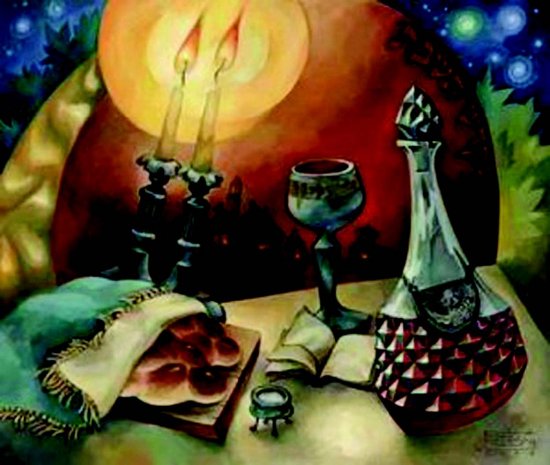
Shabbat candlesIf a non-Jew lit a candle [for himself], a Jew may also benefit from it. If the non-Jew lit it for the Jew, this is prohibited.

-Shabbos 122a

The Mishnah discusses the case where a gentile lit a candle on Shabbos. If he lit it for himself, the Jew may sit in that illuminated area and benefit from the light. However, if the gentile lit the light for the sake of the Jew, the Jew may not benefit from the light.

There is a variance among the Rishonim in explaining the reason why it is prohibited for a Jew to benefit from labor which a gentile performed (on his own) on Shabbos for the sake of the Jew. Tosafos ( ד”ה ואם ) and Rambam (6:18) explain that if a Jew would be allowed to have this labor done for him, we are concerned that the Jew would then give outright instructions to the gentile to do the labor for him. Rashi and Ran (Beitza 24b) write that it is simply prohibited for the Jew to benefit from labor done for him on Shabbos.

Ritva writes that according to the understanding of Rambam and Tosafos, it might seem that we have arranged a rabbinic precaution (not to benefit from labor done by a gentile) to safeguard another rabbinic injunction (lest we come to give instructions to a gentile outright). This seems to be in violation of the general rule that we do not establish גזירה לגזירה . Nevertheless, the correct explanation is that this is simply a one-staged enactment. The sages set into motion protective measures to ensure that the Shabbos remain special. In order to set it aside and different from the other days of the week, it was necessary to disallow benefiting from the labor performed by a gentile, either when he does it for us by himself without being asked, or whether he does it when asked to do so. These guidelines are all part of the same approach to preserve the sanctity of Shabbos.

Daf Yomi Digest
Distinctive Insight
“Preserving the sanctity of Shabbos – through speech”
Commetary on Shabbos 122a

It’s been a particularly cold and icy winter here in Southwest Idaho. Fortunately, it’s warmed up some lately to near normal temperatures for this time of year, but in the past two weeks, lows have been in the single digits and into negative numbers while highs never got anywhere near above freezing. Ice on the roads and sidewalks has been particularly hazardous, and I know of many people, including several in my family, who have fallen and become injured.

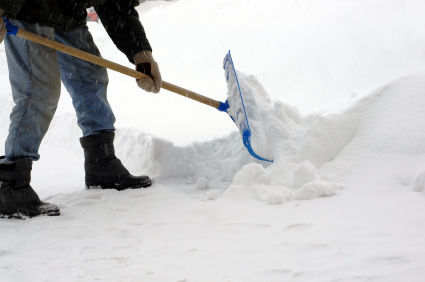
But most winters, it’s just the typical matter of shoveling snow off the driveway and sidewalks and being cautious when driving to and from work. I was remembering a typical “snow shoveling” winter of a few years ago that was like the one I just described while reading the above-quoted commentary. It was on a Sunday morning (before I went back to church) and I had some time on my hands. I had finished shoveling the snow off of my own drive and sidewalks, but on Sunday, it can be a chore for some of my “church-going” neighbors to shovel and get ready to go to services. So I decided to just keep going and to clear the driveways and sidewalks of a couple of other houses near me. I know one neighbor in particular whose family goes to church early and generally has a full day of it. I shoveled off their drive and walk while they were gone.

One of the things about me doing such things is that I don’t like to be noticed (kind of hard when you’re standing in the middle of someone’s driveway with a big, orange snow shovel, I must admit). But I thought I’d gotten away with it. I thought no one would figure out it was me. That is, until my neighbor came over later that afternoon to say “thanks.” He was appreciative because Sunday is indeed a very busy day for him and he didn’t know when he’d be able to get around to shoveling his snow. It was a big help.

I don’t say all this to make myself sound like a big deal, though, but I do have a point. Be patient.

Now imagine my neighbor is an Orthodox Jew and all this is happening on Saturday instead of Sunday. Further imagine that my neighborhood is within walking distance of an Orthodox synagogue (it’s not, but let’s pretend). Now let’s say I know my neighbor and his family are Jewish and I know that they walk to shul on Saturday morning. They’ve probably already left for services and I know they won’t be shoveling snow on Shabbos. As a Christian, it would be a nice thing for me to help them out and shovel their driveway and sidewalk.

But will they see it that way? Sure, they didn’t ask me to do it for them (which would be forbidden), but technically, they can’t benefit from my labor if I did it to benefit them. Could they even walk on the sidewalk and the driveway I shoveled for them upon their return from shul? Frankly, I don’t know, but in my eagerness to be “a good Christian neighbor,” I may have actually caused more of a problem than a help.

Why am I saying all this?

shoveling-snowLast week, I wrote a large number of “meditations” that addressed how Jews who are Messianic may view a life of halachah in relation to their discipleship under Messiah Yeshua, Christ Jesus. It’s a controversial topic, certainly for Christians and even for a number of Jewish people, but it’s one that needs to be discussed. In reading the commentary on Shabbos 122a just a few days ago, I started to wonder how “Christian generosity” and Jewish observance of Shabbos could unexpectedly collide, producing undesirable results. Granted, the Christian in my imagination was just trying to be a good neighbor and lend a hand, but especially an Orthodox Jewish neighbor might have a fundamentally different way of looking at such “help.” This is what happens when we don’t understand each other.

Granted, in this day and age, people who live in the suburbs next to each other or across the street from each other, don’t get to be friends or acquaintances the way we did when I was a child. Often people don’t even wave “hi” to each other when they are both out in their front yard or passing each other on the street.

But if part of being a Christian is loving your neighbor as yourself, and chances are you know a little bit about yourself, how can you be sensitive to your neighbor’s needs if you don’t know what those needs they are. Snow on a driveway and a sidewalk may seem to tell you want your neighbor requires, but you can’t really go by superficial appearances. Who is your neighbor? How can you help him?

If you, as a Christian, have a Jewish neighbor, and you want to be a good neighbor, it might help if you got to know him a little bit. However, we Christians have other Jewish “neighbors” who may not live near us, but who are connected because our “salvation comes from the Jews.” (John 4:22). Whether your Jewish neighbor is someone who lives near you or, in a more expansive sense, is your “neighbor” because he is a child of God like you, how can you become aware of his needs, and of Israel’s needs, if you don’t know what those needs are?

Addressing my last question, Boaz Michael recently posted a new blog article called Three Kinds of Churches pt.2. It includes a section called “Churches that align with Israel” and the description of such churches (and Christian people) may well be part of the answer we need.

Do not judge your fellow until you have stood in his place.

-Pirkei Avot 2:5

Adapting Hillel’s famous statement, we also can’t be a good neighbor, until he have stood in his place, or perhaps just started a conversation with him.

An Opinion of a Shabbos Goy

grandma-wheelchairQuestion: My granddaughter is becoming bat mitzvah, and my 92-year-old mom is saying she will not be able to go because she cannot drive on Shabbat. But is it allowable—for this special occasion—for her to violate Shabbat just this once? The way I see it, this is a once-in-a-lifetime situation, making it quite okay to drive. This is her first great-granddaughter to reach bat mitzvah, and unfortunately she probably will not be around to celebrate this milestone with any of her other great-grandchildren.

Answer: This is an important question, for it leads us to a central theme in Judaism.

It’s easy to relate to a mitzvah as tradition or symbolism. Perhaps, taking it one step further, a mitzvah is divine advice on how to live the best life possible—the most meaningful, the most blessed.

If we would accept either of those definitions, we would have to agree that fulfilling mitzvot depends on the situation. We would say that yes, tradition is important, living a meaningful life is important, but in this situation there is something else more traditional and more meaningful—so we would use our judgment as to what takes precedence.

But that isn’t so. A mitzvah is precious not just because it is a tradition and has meaning to us. A mitzvah is G‑d’s own will and infinite wisdom. If so, a mitzvah’s incredible power and the blessing it brings is infinite in nature. It’s a connection to an infinite G‑d, way beyond our own understanding. It goes beyond the benefits and meaning we sense—though that’s important as well—for it is part of the divine. And a G‑dly formula for living is not subject to man deciding whether it is or isn’t relevant in a particular situation. (It is only when the Torah itself instructs us to put aside Shabbat, as in to save a life, that Shabbat laws should be disregarded.)

We might feel that a hike to the top of a mountain will be a more spiritual experience than a trip to the synagogue. Or that the pastrami from the new “kosher style” delicatessen will make the bat mitzvah a more joyous experience. Or, in a far more subtle manner, the situation here: that a great-grandmother being at the family celebration outweighs the prohibition of driving. And that’s when we remember that a G‑dly mitzvah is eternal, and extends far, far past the benefits we happen to sense . . .

Your grandmother should most certainly be at this bat mitzvah. It is only that you will need to find a way for this to happen in a permissible manner. Have you looked into her staying within walking distance from the synagogue? If this is not a possibility, you can speak to the rabbi about having a non-Jew wheel her to the synagogue (a subject beyond the scope of this e‑mail).

Mazel tov, and may you have much nachas from the entire family!

-Rabbi Yisroel Cotlar
“Can We Drive Grandma on Shabbat?”
Chabad.org

I suppose, even if I were currently tempted to convert to Judaism, this is one of the reasons I could never be a Jew. I understand, at least to a degree, the principle that Rabbi Cotlar is trying to communicate, but from my point of view, human compassion has to take a back seat to obedience to the mitzvot regarding not driving on Shabbos (maybe saying that makes me a bad person, I don’t know). Worse than that, I don’t understand the Rabbi’s advice about having a non-Jew wheel her to the synagogue (if it would help and if this were happening now in my community, I’d be more than willing…but there seems to be a problem).

It is forbidden for us to tell a gentile to perform work on the Sabbath on our behalf, although they are not commanded [to observe] the Sabbath. [This applies] even when the instructions were conveyed to them before the Sabbath and we do not require [the products of] their work until after the Sabbath.

The above is forbidden as a Rabbinical prohibition to prevent the people from regarding the Sabbath lightly, lest they perform [forbidden] labor themselves.

On the other hand…

[The following rules apply] when a gentile performs a [forbidden] labor on the Sabbath on his own accord: If he performed it on behalf of a Jew, it is forbidden to benefit from that labor until one waits the amount of time necessary to perform the labor on Saturday night.

[The latter leniency is granted] provided the matter is not public notice – i.e., everyone knows that a particular task is being performed for a person on the Sabbath.

If [the gentile] performed [the labor] for his own sake alone, it is permitted to benefit from it on the Sabbath.

Halacha 1 and Halacha 2 from
Chapter six of Mishnah Torah, Sefer Zemanim, Shabbos
Translated by Rabbi Eliyahu Touger
Chabad.org

Shabbat candlesLacking the educational background (as well as an ethnic, cultural, and lived Jewish experience), I admit that I can’t really interpret what is being said here and whether or not a non-Jew would really be permitted to “wheel grandma” to the synagogue on Shabbos if asked by her Jewish relatives. It seems a little dodgy to me, but then again, admittedly the nuances of interpreting Mishnah Torah escape me.

On the other hand, what should we say…that man was made for the Shabbat rather than the Shabbat being made for man?

One Sabbath he was going through the grainfields, and as they made their way, his disciples began to pluck heads of grain. And the Pharisees were saying to him, “Look, why are they doing what is not lawful on the Sabbath?” And he said to them, “Have you never read what David did, when he was in need and was hungry, he and those who were with him: how he entered the house of God, in the time of Abiathar the high priest, and ate the bread of the Presence, which it is not lawful for any but the priests to eat, and also gave it to those who were with him?” And he said to them, “The Sabbath was made for man, not man for the Sabbath. So the Son of Man is lord even of the Sabbath.”

Mark 2:23-27 (ESV)

I included the entire section of scripture relevant to this situation rather than just quoting verse 27 because I’m aware that the circumstances Jesus was describing may not be directly associated with “driving grandma to synagogue.”

If grandma could stay Friday night within walking distance of the synagogue (assuming she can walk adequately at age 92), then I understand that would be acceptable. If grandma could stay the night within walking distance of the synagogue but could not walk, while I am “unclear” of the legitimacy of asking a “Shabbos Goy” to wheel her to shul, I’d accept that as an alternative from my Christian perspective. But if no halachically acceptable alternative were available, and grandma really, really wanted to attend her great-granddaughter’s bat mitzvah (and/or great-granddaughter really, really wanted great-grandma to be there for this once-in-a-lifetime event), then I’d drive grandma to shul (I know…she would be violating Shabbos by even accepting the ride).

I know this isn’t a life or death situation but I can’t set aside the feelings of the great-grandmother in question or her great-granddaughter either. Besides, according to one person’s comment on the matter, there is precedent for an alternative:

I think of the Rev that chopped wood and made soup for a helpless woman in her bed on Yom Kippur -she had just given birth) Sometimes it is necessary to hurt ourselves spiritually in order that another rmay grow or even live. However, I am loving ths suggestion of staying with her family for the entirety of Shabbat or the motor home. How important will the young ladies’ Bat Mitzvah be to her without Grandma there? How will that affect her walk with Hashem? We will never know. Some souls are mighty sensitive. Will this suck out all of the girl’s joy, what a sin that would be. Have her expectations been considered?

-Emily

I remember reading of this “Chasidic tale” so I think there is a value in Judaism that would allow an individual to violate Shabbos for the sake of another, even when their life is not at risk.

Here are a few more comments:

I proposed some questions to Rabbi Manis Friedman years ago relating to the halachot of shabbos. His answer? Shabbos is shabbos. End of story.

-Anonymous

I wasn’t raised Orthodox and don’t have a full understanding of this. But my argument would be that just because rabbis declared that driving, or even riding in a car, violates the Sabbath, doesn’t make it so. I don’t know, but my guess is that at the time, there were probably arguments going both ways.

-R. Baron

i’m a committed but not orthodox Jew and am fascinated by the question and your response.

The alternatives you gave were good; you may want to consider a nearby hotel for Friday night also. But to the heart of the matter, you mentioned consideration of what is ‘most meaningful, etc.’

I believe keeping the great-grandmother away from attending and participating would be cruel. since the question comes up –and Chabad is consulted –it implies she has done a great job in raising a Jewish family.

shabbat_walkI do not believe the divine would want her to miss it and this is not a question of climbing a mountain on shabbat or going to a ‘kosher style deli.’

-Oppie

Apparently, this isn’t a clear-cut issue for at least some Jewish people, either. I know. I’m probably going to “catch heck” from my Jewish friends who read this blog and maybe a few “Judaically-aware” Christians as well. I know that if someone who is shomer Shabbos is lenient on a rare occasion, it may lead to greater lenience and finally to habitually “cheating” on the Shabbat, but on the other hand, isn’t it possible to be too rigid? If a “hedge” is placed around the mitzvot to prevent a Jew from even coming near to violating Shabbos, isn’t it possible the hedge can become too extreme?

My perspective can be easily dismissed with a “you aren’t Jewish and so you don’t understand,” but as I mentioned (and demonstrated) above, even other Jewish people have a hard time with this one. My response (and this is quite a counterpoint to my Shabbat commentary from the other day), all other reasonable alternatives failing, is that I’d find a way to get grandma to shul for the bat mitzvah. I don’t think God would really mind, but then again, how am I to tell?

Tasting Chicken Soup

chicken-soup-with-matzah-ballsPicture the scene: Dead, feathered birds are lying on the kitchen counter; a bag of flour has spilled onto the floor, along with a orange juice—and so, the two-year-old is having a lovely time creating edible mud pies from the mix. From upstairs, a scream shakes the house—it’s the little one furious at the big one for making her bathtub too hot. Meanwhile, the big one is kvetching at the top of her voice because “there’s nothing for me to wear.” The father of the house is hiding somewhere, in full knowledge that if he shows his head, he’ll be sent out again on another urgent, last-minute errand.

At this point, the doorbell rings. It’s the nudnik guest, delivering his gift bottle of wine in advance, certain that the lady of the house has nothing better to do this afternoon than stand at the door and chat. She is careful to open the door only a slight 20 degrees, wedging herself into the space—first, so that the guest won’t see the state of affairs within; but also to prevent the little one who has just escaped from his hot tub from running out naked into the street.

The guest sniffs the air, and sighs, “Ahhh . . . Shabbos!”

Shabbos? Shabbos is a day of rest! Of peace! Of harmony! This is a total disaster zone!

But the guest smells what is coming. And the inhabitants of this house know as well. They know the dead birds will become a sumptuous chicken soup, the remainder of the flour will become fresh-baked challah, the children will be neatly dressed in their finest clothes, the father will turn up again, and they will all sit together at the table, singing in harmony and telling the stories and words of Torah they learned in school that week.

When you know the story, the scene becomes a different scene. The gadget in your pocket, the news on the tab before this one, the financial chaos and the promises of technological breakthrough, the void of leadership and the medical miracles that keep failing to come—think of those as the dead, feathered birds on the kitchen counter, soon to become a sumptuous chicken soup.

Science has opened our eyes to the awesome harmony of our world. The Kabbalah of the Ari, explained in the language of Chabad, can open anyone’s eyes to the G‑dliness behind that harmony. Shortly, we will sit at the Shabbos table with Moshiach, who will show how the earthly wisdom and the heavenly wisdom complement one another. While we are yearning for that knowledge, what is stopping us from tasting a spoonful of the soup right now?

-Rabbi Tzvi Freeman
“The Last Day of History”
Chabad.org

This is the climax to a rather lengthy and challenging article my wife shared with me the other day. I must admit to having skimmed over much of the content, but this portion is not only straightforward but rather the point of it all. I don’t mean that it’s the point of the article, although I suppose it is, I mean that it’s the point of everything.

For we who have believed enter that rest…

Hebrews 4:3 (ESV)

The writer of Hebrews and Rabbi Freeman seem to be drawing their respective audiences to the same point: that we will one day enter into that final rest with the Messiah. What is especially attractive about Rabbi Freeman’s perspective is that a foretaste of that rest exists right now. Jews experience a small sampling from the “menu” of the Messiah’s table every Shabbat. Some Christians who are attached to the traditional Jewish community, Messianic Judaism, or Hebrew Roots, also have the opportunity to experience that “rest” and sample from the “menu” to varying degrees.

As far as I can tell, most Christians don’t.

Shabbat-Made-Easy-paintingI think that “Christ’s rest” is something that is more conceptual within Christianity. Most Christians anticipate being “raptured” and going up to Heaven of course, but there’s no idea that you can get a preview of the event before the event, at least not very frequently. There’s no manner of experiencing such an event in the material world because the “Messiah’s rest” is thought to be wholly spiritual.

More’s the pity.

I miss even the tiniest sliver of Shabbos observance in which my family used to participate. Hopefully, by God’s mercy, my wife will desire to observe the Shabbat again as her life calms down, and our home will be illuminated and warmed by the Shabbos candles once more.

I’m sure what I’m saying seems totally alien to most Christians. How can we experience the return of Jesus Christ before he returns? It must seem ridiculous.

But think about it.

In the U.S., we’ve recently celebrated Thanksgiving and most Christians are anticipating Christmas in just a few weeks. One of my favorite parts of Thanksgiving is the aroma of delicious foods in the kitchen. I traditionally barbecue the turkey in a Weber on the back patio, so in tending to it, I get to enjoy the smells of the slowly roasting bird as the smoke curls into the air. These smells all by themselves are highly pleasurable and also herald the grand feast that is to come.

And that is Shabbat. We know the feast will come but we also have a role in preparing for the feast. How many “feast” metaphors did Jesus use to describe the preparations for his own return and King and Bridegroom? Here’s just one of them.

“Then the kingdom of heaven will be like ten virgins who took their lamps and went to meet the bridegroom. Five of them were foolish, and five were wise. For when the foolish took their lamps, they took no oil with them, but the wise took flasks of oil with their lamps. As the bridegroom was delayed, they all became drowsy and slept. But at midnight there was a cry, ‘Here is the bridegroom! Come out to meet him.’ Then all those virgins rose and trimmed their lamps. And the foolish said to the wise, ‘Give us some of your oil, for our lamps are going out.’ But the wise answered, saying, ‘Since there will not be enough for us and for you, go rather to the dealers and buy for yourselves.’ And while they were going to buy, the bridegroom came, and those who were ready went in with him to the marriage feast, and the door was shut. Afterward the other virgins came also, saying, ‘Lord, lord, open to us.’ But he answered, ‘Truly, I say to you, I do not know you.’ Watch therefore, for you know neither the day nor the hour.

Matthew 25:1-14 (ESV)

There’s preparation. There’s work to be done. There’s waiting. And then finally, sometimes unexpectedly, the Prince arrives and the feast begins.

But in cooking a meal, how many chefs manage to taste a bit here and a bit there, making sure the seasoning is just right, adding a spice or an herb to enhance the flavor?

I suppose that’s what Christmas is to most Christians…celebrating the birth of Jesus and his first entry into the world in anticipation of the second. That’s probably why Easter is also observed with such zeal (and a meal), to rejoice over the risen Jesus and to pray that he returns soon.

But while Judaism also has its great festivals, they also have Shabbos, the weekly reminder. Going to church on Sunday just doesn’t compare.

challahFor a Jew, six days of the week are spent in pursuit of the mundane, taking care of business, and sometimes letting life take over or overwhelm. Shabbos is bringing order to chaos and peace to turmoil. Even the preparations for Shabbos can seem maddening, much like life itself, but the result is wonderful, much like Messiah’s coming.

In God’s wisdom, He gave the Shabbat to the Jewish people as a sign of His covenant with them. Alas, it did not transfer to we Christians when we were brought into the fold. But sometimes you need rest and refreshment in order to summon courage for what is to come and to lay down the burden of what’s already happened. I don’t observe Shabbat these days, but I hope I will again. You may not observe Shabbat either, but it’s something you can access if you choose.

Messiah may come today, tomorrow, next year, or a thousand years hence. But Shabbos comes every week. Why wait? The Challah is rising in the oven and pots are steaming and bubbling on the stove. Have a taste of chicken soup now. It’s delicious.

70 Days: The Lost Shabbat

Shabbat candlesWhen Lemech named his new son (at the end of last week’s reading, Gen. 5:29), he called the boy “Noach”, saying “this shall comfort us (yeNaCHameinu) from our work and the difficult labor of our hands.” But the name Noach was prophetic in a different vein, as the name also means to be at rest (“NaCH”). The Zohar, the fundamental work of the Kabbalah, of Jewish mysticism, says that “Noach” is thus a hint to the Sabbath, the day of rest. “Shabbos” is derived from the word “SHeVeS,” which also means to be at rest: “for in [the seventh day] He rested (“SHaVaS”) from all His work.” [Gen. 2:3]

In this week’s reading, Noach is commanded to make sure there is a light in the Ark, using the unusual word “Tzohar” (found nowhere else in the Bible) to indicate brightness like midday (“Tzaharayim”). The Avnei Azel writes that when we combine the numerical value of “Tzohar” with that of the Ark, “Tayvah,” the sum is the value of “Shabbos.” The Sabbath encapsulates both the Ark, the shelter from the flood, and the brightness within it.

We live throughout the week with work and other responsibilities, building up (and sometimes crashing down) around us. Shabbos is quite literally a shelter from the storm, and opportunity to withdraw from all the distractions and focus upon what is truly important. It is the busiest executives who, when they decide to fully observe the Sabbath, and stop using all electronic devices and not do business on that day, frequently remark that they don’t know how they survived without it.

Viewed correctly, the Sabbath isn’t about restrictions, but is the opportunity to focus upon the light within.

-Rabbi Yaakov Menken
“The Light Within”
Commentary on Torah Portion Noah
ProjectGenesis.org

I usually “get in trouble” when I post anything mentioning mysticism or Kabbalah, and I want to assure you that I tend to see mystic writings metaphorically, since I am nowhere near being any sort of “mystic” myself. But in reading Rabbi Menken’s commentary on last week’s Torah portion, I can’t help but once again be captured by the “magic” of the Shabbat. I don’t think it’s so much the mechanics of the seventh day, but the idea that God has provided the Jews with a way to wrap themselves inside a comforting blanket of sorts, that provides peace and a special closeness with God for one day a week. It’s as if the week is a cold, winter’s day with an icy wind blowing, freezing you to the marrow as you make your way about your tasks, and Shabbat is staying in bed late in the morning, toasty warm and pleasantly relaxed inside and under your comforter, while that self-same icy wind blows impotently outside.

I have been told more than once that the Shabbat is the sign of the Mosaic covenant with the Children of Israel and as such, is not “transferable” to the rest of the world, but of all the blessings that God provided the Jewish people, I must admit, I continue to “covet” only this one. I find it a particular disappointment that when Jesus made it possible, through certain blessings of the Abrahamic and New covenants, and through his broken body and blood, for we non-Jews to also enter into covenant relationship with God as his disciples, he didn’t make it possible for us to also enter into a weekly Shabbat as well.

More’s the pity.

But then again, early Christianity, when it threw off its Jewish mentors and guides like old rags and “reinvented” itself in the centuries after the destruction of the Temple by the Romans in Holy Jerusalem, set aside many of the “Jewish” aspects of its own Messianic worship, including meeting with other like-minded Gentiles and Jews in the synagogue to daven on Shabbos. We abandoned the potential for such a “rest” in both God the Father and in Christ. We did it to ourselves.

I say all of this because I’ve contacted a Pastor and set up an appointment to meet with him in a little less than two weeks to discuss my “situation.” As I’ve said in other Days blogs, I pretty much have to “fish or cut bait.” I can try to sit on the edge of a razor blade forever, or pick a side and jump off into whatever awaits me below. So I picked a side and jumped. Now, I’ll be in free fall for the next week and a half or so, and then I’ll arrive at ground level and make the first “bounce” in my landing. Believe me, I’ll make sure you hear it when I go “thump.”

But the closer I move toward Christianity and the church, the further I feel I am distancing myself from Judaism and, in some aspects, particularly from my Jewish wife. And as I said, of all the Jewish practices and values I have been exposed to, the Shabbat is the one closest to my heart. Even though the Shabbos candles are no longer lit in my home on Friday evening, I do not abandon it in my heart. But with my body and everything else, having chosen a “course correction” for myself which is designed to increase my trust in God, what am I leaving behind?

In describing the Shabbos, the verse in Bereshis (2:3) writes: “For on it [the seventh day] Hashem rested from all His work which He created לעשות —to do.” This final word in the verse…does not complete the thought of the verse the thought of the verse smoothly, and it seems to even be an extra word altogether.

A cursory observation of the world indicates that Hashem continues to sustain the world on Shabbos just as on every other day. Plants grow and creatures thrive on Shabbos, with the ongoing providence of Hashem overlooking every detail just as on the weekdays. In what manner, then, is the seventh day a day of rest for Hashem?

The Bnei Yisasschar explains that when the world was created, it was set into place with the potential it needed to continue, and for nature to take its course. Creatures were given the instincts necessary to procreate, and plants were placed into their environment for survival and in order to prosper. As the world continues to exist on Shabbos, it is within the realm of work that was put into place before Shabbos, and the work takes place on Shabbos automatically without further input.

The verse tells that Hashem created the world “to be done.” Hashem continually renews the world every moment. Yet, from the day of creation and onward, this supervision of Hashem is manifest in a manner as if the world is set and conducts itself naturally.

Daf Yomi Digest
Gemara Gem
“A World Set in Motion”
Commentary on Shabbos 17

I’ve sometimes wondered about Creation, the Seventh Day, and entropy, that property of all systems including the universe, to go from a more to a less organized state, very slowly running down like an old clock worked by a mainspring (if you’re old enough to remember such clocks and watches). When God “rested” and He built-in to His Creation the ability to continually move forward under its own “momentum,” so to speak, is what we see of the universe’s expansion, and the general long-term decay of systems (including human being “systems”) part of His “rest?”

Jewish philosophy sometimes states that God is continually renewing the universe and if He was to cease, even for the briefest of moments, existence itself would fly apart. But I seem to notice (and I believe the scientific world will agree with me here) that the universe is rather very slowly, ponderously, “flying apart” anyway. Sort of a disturbing counterpart to the “warm, comforting blanket Shabbat’s rest” I described above.

FallingApartBut if God’s rest isn’t a literal, one-to-one model of Shabbat between Creator and creation, then perhaps it is a twist on the metaphor that we should regularly rest in Him, or otherwise “fly apart” for lack of any rest in God at all. However, I understand that we can also consider the Shabbat as a hint or foretaste of the Messianic era to come, when all of our current concerns and labors will come to an end and we will all perpetually rest with Him.

The Jewish people are compared to the stars twinkling in the high heavens. By their light, even he who walks in the darkness of night shall not blunder.

Every Jew, man or woman, possesses enough moral and spiritual strength to influence friends and acquaintances, and bring them into the light.

“Today’s Day”
Wednesday, Cheshvan 5, 5704
Compiled by the Lubavitcher Rebbe
Translated by Yitschak Meir Kagan
Chabad.org

God gave a good many gifts to the Jewish people, not the least of which is the Shabbat. Although both Judaism and Christianity tend to agree that we non-Jews don’t enter into a weekly Shabbat’s rest (no Christian ever treats Sunday like an observant Jew treats the Shabbat, so no, Sunday is not the “Christian Shabbat”), it is much to our own regret that we fail to do so. For we have robbed ourselves of not only a weekly renewal in God, but of a preview of what life will be like when the Jewish King and Lord will take possession of his kingdom, and rule the world in true justice and in peace.

And yet today and in the weeks ahead, I find myself deliberately walking on a path that leads away from that peace. I hope this is me trusting in God rather than me just being foolish.