
 Maimonidies explains our midrash by reference to the related instance of rabbinic religious psychology: “God’s presence is never felt in a state of sadness or lethargy or levity or conversation or distractedness, but only amid the joy of performing a mitzvah.”
-Ismar Schorsch
quoting Bavli Shabbat 30b.
“The Seedbed of Prophecy,” pg 165 (December 21, 1996)
Commentary on Torah Portion Vayigash
Canon Without Closure: Torah Commentaries
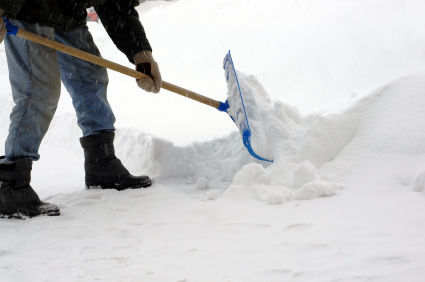
I read this on Shabbat after shoveling snow off of my driveway and sidewalk. Actually, I also shoveled the snow off of the sidewalks of my two next door neighbors. It was a mitzvah of a sort. I try to do a little more than required because I know it’s the right thing to do. I think it’s something God built into me for some reason.
But I was performing one mitzvah (I don’t think the Bible says to specifically shovel your neighbor’s sidewalk, but it does say to love your neighbor, so I figure helping them with shoveling snow qualifies as “love”) but I was breaking another, well, sort of. It depends on whether or not you believe that non-Jewish believers are obligated to observe Shabbos in the manner of the Jews. I know that the Didache, an early document dated to the second or even first centuries and purportedly used to train new Gentile disciples of the Jewish Messiah entering the Jewish religious stream of “the Way,” states that even a Gentile may keep the entire “yoke of the Lord” (i.e. Torah commandments) if they (we) are able, but if not, to keep what we can, so keeping the Sabbath in some manner is on my radar screen as an option.
On the other hand, the two Jewish members of my household (and the other two Jewish family members who have their own households) don’t observe Shabbos, though I believe they are obligated to do so.
But I’m not the religious police. Each person must negotiate their own relationship with God. Past efforts of mine suggesting to my family that they take a more observant path have resulted in a rebuke and a reminder that they themselves must make those sorts of decisions.
And so they must. My remaining option for the sake of peace in the family is to pray and to rely on God to lead His own back to Him, even as Messiah will lead all the Jewish exiles back to redemption in the Land of Israel.
In reading the quote from Schorsch (and Maimonidies), I tried to recall if I felt joy when shoveling snow and if I felt the Presence of God. I have to admit that I didn’t experience either state. There was a sense of satisfaction at the realization that I was exceeding my property lines and doing what wasn’t expected of me, but I can’t say I had any sort of religious revelation. I don’t think living a life before God or doing the right thing is magic. I think it’s just what we’re supposed to do.
I also believe that no one “does it” perfectly, and I’m a living example of that.
If anything, I have a greater sense of the presence of God when I reading the Bible, when I’m studying the Torah Portion, when I’m contemplating a Psalm, even when I’m writing a blog post about God and the mitzvot.
I know people (online) who do a much better job at observing Shabbos. Some of them live in places like Colorado and Wisconsin, places that get a lot of snow. What do they do on the Shabbat when it’s snowing, just let it sit on their driveways and sidewalks?
I live in a suburban neighborhood that has a homeowner’s association (whether I like it or not) and the association has a covenant which states that each homeowner is responsible for keeping the sidewalks in front of their homes free (reasonably) of snow. We are also legally responsible if we fail to do so and a pedestrian falls and is injured as a result. So I have a duty to protect my neighbors by keeping my sidewalks clean, even on the Shabbat.
I know some people who would be rather rigid and dictatorial about such a suggestion, saying God’s commandment to observe Shabbat trumps any law or other responsibility assigned by human beings, but let’s look at that. I have a duty to love my neighbors which could be interpreted as protecting them from harm. I know there’s a Torah commandment that specifies if you see someone drowning in a body of water and you do nothing to help save their life, you have sinned against that person and against God (Rabbinic interpretation does say however, that if you are a poor swimmer and would be likely to drown too, you are absolved of this responsibility).
So what’s the higher duty, to perform an act on the Shabbat that at least in potential, could prevent a neighbor from being harmed, or to observe the Shabbat and ignore my neighbors by playing the “I’m keeping the Shabbat, look at how holy I am” card?
It’s an interesting question.
Of course, returning to my lack of actual obligation to observe a strict Shabbat, at least in the present age, I am not in quite the same bind as a Jewish person. I also believe the commandment to love one’s neighbor is universal, particularly since we see it occurring not only in Leviticus 19:18, but issuing from the mouth of Jesus (see Matthew 22:39, Mark 12:31).
I know there is a part of Shabbat observance that is also universal, since such observance acknowledges God’s Creative Sovereignty, but I will have to be satisfied with acknowledging God’s creation of human beings by doing something, even on Shabbat, that is of service to some of those “creations.”
I try to spend most of my Saturdays in prayer, in study, in recording my contemplations on God, but it’s not perfect. In fact, it’s very far from perfect. But what I desire and am unable to accomplish today, may God grant me a life in the world to come where I may observe His peace and His perfection.
And as I write this, it’s still snowing outside.
 Morning Meditations