Tag Archives: sunday school

The Christianization of Acts 15

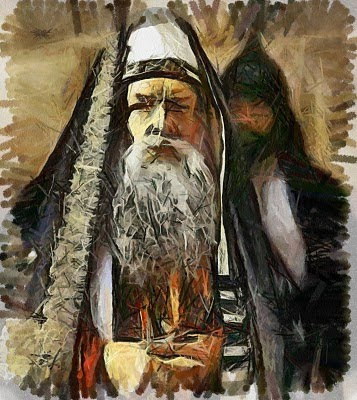
phariseesSome men came down from Judea and began teaching the brethren, “Unless you are circumcised according to the custom of Moses, you cannot be saved.”

Acts 15:1 (NASB)

In Acts 15:1-2 and 15:24, Now with what Satanically-inspired and dogmatic false teaching did these “certain men from Judaea” try to infect the church at Antioch, and why according to Galatians 2:4-5? (emph. mine)

-From the notes for Sunday School class on Acts 15:1-21
For September 29, 2013

Part of the Return to the Tent of David Series

This past Sunday, Pastor’s sermon was on Acts 15:1-21. I knew from our conversations that I was going to disagree on some of his points, and I knew by “doing my homework” for Sunday school class, that I was going to disagree with my teacher.

I’m making this part of my Returning to the Tent of David series, since it chronicles how I’m doing in my church after nearly a year. I can’t say that in last week’s Sunday school experience, I covered myself in glory.

I know my teacher tends to be rather dogmatic and inflexible on his points, but I felt he was so far off base with his “Satanically-inspired” comment directed to “the men from Judea” we find in Acts 15:1, that I had to speak up. I’ve expressed opinions that conflicted with his in the past, but usually they’re easily set aside, however there was real tension in the air as we had our exchange of words this time. I promised that this issue would be the only one I’d argue with him about and kept silent for the rest of class. Boy, was that a challenge.

There was another fellow there who is older, both chronologically and as a believer, and wiser, who also took our teacher to task about certain of his assumptions. Because this gentleman has been a long-time church member and is well-respected, I think he was tolerated more easily than I am.

Which brings me to a point that I struggled with when I first returned to church. Just how long would it be before I’m accepted within the ranks of the church as a “regular?” The answer may be “never.” Yes, most Wednesday evenings find me in Pastor’s office for a one-on-one discussion on the book of Galatians and the interface between fundamental Christianity and my understanding of Messianic Judaism, but that doesn’t necessarily add to my “cred” with the congregation as a whole.

Every time I open my mouth, I risk alienating someone. I know my teacher struggled with my idea that the “men from Judea” not only weren’t “Satanically-inspired” but had a legitimate theological concern, but who knows how many other people in that class were equally put out by my comments? No one else said a word.

There is such a misconceptualization about what happened in Acts 15 and the relationship between Torah (law) and saving grace that it’s hard to get enough information expressed to correct the errors. The basic argument is that you are only saved by grace and not through obedience to the Torah, which is true, but since the Law doesn’t save, the assumption is that it is of no use at all and thus is bad, wrong, awful, and aren’t we glad James and the boys made the decision to get rid of it once and for all. Most Christians can’t see that for a Jewish believer, yes faith saves, but this doesn’t annul the Sinai covenant and the command to live a certain lifestyle in obedience to God.

My frustration in this situation was compounded by the Bible Study Fellowship (BSF) model of teaching being used by my instructor. It emphasizes getting the maximum amount of class notes presented with a minimum of questions and interactions between teacher and student. Sure, teacher asks if we have any questions, but the class has about sixty seconds to respond before being shut down and the next point in the notes being addressed. Any serious attempt at debate over a questionable item in the teaching gets almost no “air time.”

ancient_beit_dinNot only did I press my point that the men from Judea had good reason to make the statements they did (yes, they were wrong, but it was going to be an uphill battle to convince most first century Jewish authorities that Gentiles didn’t have to be circumcised and convert to Judaism in order to have a saving relationship with God), but that the “private meeting” (Acts 15:6-11) involving the apostles and elders was actually a judicial body attempting to make a legal decision (akin to the function of a Beit Din) about how to admit Gentiles into a wholly Jewish religious stream as equal members and not require conversion.

How do you see Peter’s wisdom as he waited God’s timing before speaking?

-Class notes referring to Acts 15:7-11

If this was a legal proceeding, which makes a lot of sense to me, then Peter’s wisdom and God’s timing had less influence than the idea of a series of witnesses each giving testimony one at a time. It just happened to be Peter’s turn to testify. If there was any cross talk or overlapping discussions, they were probably analogous to how spectators in a modern courtroom can sometimes get out of hand and start talking. At that point, the Judge has to regain order.

I won’t quote from all of the notes for this class but they are a testimony to the “Christianization” of the Bible and in this particular case, Acts 15. This is not unlike what I previously said about the Rabbinization of Abraham, where the Jewish sages anachronistically apply Rabbinic concepts to the lives of Abraham and the other patriarchs. It’s also akin to what my teacher was speaking against, the “Judaizing” of the Gentile believers.

In each episode of FFOZ TV: A Promise of What is to Come, First Fruits of Zion teacher Toby Janicki strongly emphasizes the absolute necessity of reading the Jewish Biblical texts from the Jewish perspective of the original writers and audience. While Christians may not realize it on the surface, the New Testament texts are Jewish. Reading them through “Christian-colored lens” will produce a false effect, and lead to lots of misunderstanding.

But some of the sect of the Pharisees who had believed stood up, saying, “It is necessary to circumcise them and to direct them to observe the Law of Moses.”

Acts 15:5 (NASB)

In his sermon, Pastor said that the Pharisees were the “fundamentalists” of their day and he further said that if we lived in those days (and were Jewish), we, that is, the people in his church, would be Pharisees. He said that Jesus had issues with those Pharisees who started making up their own extra-Biblical rules, but Pastor praised the Pharisees as the movement in first century Judaism that supported using the Bible (Torah) as the guide to righteous living.

My Sunday school teacher uses the works of Pastor and theologian John MacArthur as the main source material for his classes. I praise MacArthur for his efforts to direct Christians back to reading the Bible, but in many other ways, he drives me nuts. According to my teacher, he said the “men from Judea” we find in Acts 15:1 and the believing Pharisees we see in Acts 15:5 are two separate groups with two separate perspectives and agendas.

I, on the other hand, believe they may have been the same or similar enough to have identical concerns and the legitimate question of what to do with the Gentiles pouring into the Jewish religious movement of “the Way.”

bang-head-hereAfter almost a year of being back in church, last Sunday’s “Tent of David” experience for me was one of almost beating my head against a brick wall. It’s frustrating to see things so clearly from a particular perspective, and yet to be shut down so abruptly and completely by an alternate perspective that is greatly divorced from the ancient Jewish context of the ancient Jewish text.

I may be in a position to be making my voice heard, and I may even be gingerly choosing my moments and words in expressing my opinion, but will that ever result in people hearing and actually considering that opinion, or am I always going to on the outs with my “fellow Christians?”

Now, having said all that, there is a flip side to the coin, which I’ll present in an extra meditation later today.

That Square Peg in a World of Round Holes Feeling

Worker Hammering Square Peg into Round HoleAccording to Ezekiel chapters 40-48, the millennial age will feature a magnificent temple (much larger than any historic temple of Israel) that will serve as the center for the priestly rituals and offerings. In attempting to explain the sacrifices of this temple, the thought is not that the death of Christ is insufficient but rather that the sacrifices are a memorial of Christ’s sacrifice on Calvary, much as those in the Old Testament looked forward to the fulfillment in Christ’s death. (emph. mine)

-John F. Walvoord from his book
Major Bible Prophecies
as quoted in my Sunday School class notes for Sept. 22nd

I’ve got material in my head for three, maybe four blog posts, but I’ve only got time to write one. So which one shall I write?

In going over my notes of Pastor’s sermon on Sukkot, I could make a blog post out of it, but I really think Pastor did a very good job on this topic. Nothing he said particularly surprised me and I don’t have hardly anything to disagree with him on (except maybe to say that while the future of Sukkot is the “meat” on his plate, we don’t have as much linkage into the future of “the feast” without a present, lived experience).

I have somethings I want to say about reading the last entry in the First Fruits of Zion (FFOZ) Torah Club and ending my year-long study of Volume 6, Chronicles of the Apostles, but I think I’ll save that for another later this week.

Especially as the Torah cycle is ending and about to begin again, which marks the approach of the first anniversary of my return to church, I want to write an update to my review of Boaz Michael’s book Tent of David, describing my own experience, but I’ll need more time to re-acquaint myself with the book’s material and view it through fresh eyes.

But I do want to comment on my experience in the Christian church through the lens of today’s Sunday school class. Notice in the above quoted passage from Walvoord’s book, I emphasized text that threw me for a loop. Am I reading this wrong, or is Walvoord (and by inference, my Sunday school teacher), saying that the Israelites of old while making offerings to God realized that somehow this was all deficient and they looked forward to their fulfillment in Christ’s death? Of course, after reading the sentence a few dozen times, I realize Walvoord may not have meant that the ancient Israelites thought this way, but that the Temple sacrifices “looked forward” to a time when they would be fulfilled (ended) by the crucifixion.

Either way though, the anachronism is blatant.

jerusalem_templeFrom the context of the Israelites at the time of the Tabernacle, and later, Solomon’s Temple, the sacrifices were korban, a way of drawing closer to God, by removing barriers and obeying the God who gave them the Torah through Moses at Sinai. I seriously doubt that most of them considered a future time when the Temple would not exist and certainly they never would have imagined that Messiah, hung on a tree to die, would kill the sacrificial system. Sure, from a traditional Christian perspective, we’ve been taught to believe such things, but that means we become incapable of putting ourselves in the shoes of a Jewish person of old and comprehending his or her lived experience and how wonderful they thought the Torah mitzvot were (and modern religious Jews continue to see the Torah as a joy). Read Psalm 19 and Psalm 119 for examples of what I mean.

How about this?

Then it will come about that any who are left of all the nations that went against Jerusalem will go up from year to year to worship the King, the Lord of hosts, and to celebrate the Feast of Booths.

Zechariah 14:16 (NASB)

It shall be that all who are left over from all the nations who had invaded Jerusalem will come up every year to worship the King Hashem, Master of Legions, and to celebrate the festival of Succos.

Zechariah 14:16 (Stone Edition Tanakh)

Now, here’s one of the questions in my Sunday school notes regarding this verse:

In verse 16, what will the unsaved Gentiles in the Millennium be required to do each year? (emph. mine)

Excuse me? Unsaved Gentiles? Where does it say that in the verse? Actually, the answer has to do with my teacher’s perspective on “the end times” and the “Millennial reign of Christ” based on very traditionally Christian sources. I actually challenged him, saying that the term “saved” was being anachronistically inserted into the Jewish text. It just says that each of the nations that went to war against Israel will be responsible for sending representatives to Jerusalem at Sukkot to pay homage to the Jewish Messiah King and to celebrate the festival. There’s no implication regarding their spiritual state.

(For an alternate commentary on this passage, see Toby Janicki’s blog post God-Fearers: Zechariah 14, Sukkot, and Anti-Semitism.)

churchesBut then I realized that he believes (or could believe) that all of the “saved Gentiles” were living with the “saved Jews” in Israel and only “unsaved Gentiles” lived in the other nations of the world. Of course, that implies that somehow we believing Gentiles are given a portion of the Land, of Israel, during Messiah’s reign. I’m not sure how or if that sort of thing works out and I’m inclined to believe it doesn’t.

Pastor preached on this when he said that once the Church is “raptured” (in his view, up to Heaven) with Christ, they (we) will return to Earth with him with special jobs to do, especially during Sukkot. This is very confusing because it seems as if there aren’t very many believing Gentiles and Jews around if we can all fit in a country about the size of New Jersey. It’s also rather strange if only we believers live in Israel and the rest of the world are “Goyishe sinners” living in all of the other countries on the planet…and yet somehow, they acknowledge that they are ruled by the Jewish King from the Jewish Kingdom of Israel.

I guess the idea is all of those “unsaved Gentiles” will use the time and opportunity to become “saved,” but then, as my Sunday school teacher asked, will they receive “glorified bodies” instantly or will only their children get those? My question is, when a Gentile is “saved” during the “Millennial reign,” do they immediately “make aliyah” to Israel?

I’m putting a lot of words and phrases in quotes because most of them are Christian anachronisms and theological concepts being forced into the Jewish text (and let’s keep in mind that the New Testament is also a Jewish text). I think I’m getting a headache.

Here’s something else from my class notes. I’m not sure if it’s from Walvoord since the citation seems a little confused:

Note: The battle of God and Magog here (after the Millennium) is totally different from that in Ezekiel chapters 38 & 39 (during the Tribulation) -Walvoord. There, Israel is attacked (while her “friends” watch) by a coalition of Russian and Muslim nations from the north at a time when Israel is at peace. (emph. mine)

Not that it couldn’t happen this way, but how can the author possibly know with such certainty exactly which nations/powers are involved? Couldn’t some European (or other) nations also be attackers (and the way the EU and especially the French have been treating Israel lately, I wouldn’t be surprised)?

In discussing Revelation 20:11-15, the class notes ask the question, When they face Jesus Christ as their Judge (II Tim. 4:1, Phil. 2:9-11), what 66 “books” will He open to judge “their works”? In class, the teacher said he supposed other books could be involved besides the Bible, but even putting such a detail in these notes assumes quite a bit about what we think we know.

The last such “interesting” bit of wording I’ll insert comes from the notes for next Sunday’s class on Acts 15:1-21 (one of my favorite themes):

In Acts 15:1-2 and 15:24, Now with what Satanically inspired and dogmatic false teaching did these “certain men from Judaea” try to infect the church at Antioch, and why according to Galatians 2:4-5? (emph. mine)

Apostle-Paul-Preaches“Satanically inspired” teaching? Since when is discussing opposing theological viewpoints considered Satanic. Most Wednesday evenings, I meet with my Pastor to discuss similar topics and we don’t always agree with each other. Is that disagreement “Satanic?” Am I being “Satanic” when I disagree with my Pastor, since he represents a more mainstream Christian theological perspective?

I know it seems I’m really bashing my Sunday school teacher. Actually, he’s a great guy and I like him. He teaches a lot of the retired guys in the church on Wednesday mornings, which I consider a mitzvah. He obviously loves his wife and she loves him. He has a heart for Christ and is enthusiastic about the Master’s return and the restoration of Israel and the world.

But there are just some times I get that “square peg in a world of round holes” feeling, particularly in Sunday school.

Addendum: See an extension to this “meditation” by reading The Obscured Messiah in the Bible.

My Chumash Visits Sunday School

Path of TorahSome people believe the 4 spring holidays (Passover, Unleavened Bread, Firstfruits, and Feast of Weeks/Pentecost) were fulfilled in Messiah’s 1st coming and that the 3 autumn holidays (Feast of Trumpets, Day of Atonement, and Feast of Booths/Tabernacles) will be fulfilled at his 2nd coming.

-from Sunday School study notes
for August 4th, “Leviticus 23, Feasts of Israel: God’s Picture of Things to Come”

Addendum, August 8, 2013: Derek Leman wrote an excellent blog post building on my theme called Jesus Did Not Fulfill the Feasts. Have a look.

I first talked about anticipating this lesson last week, and confessed feeling somewhat unsettled about facing the sermon and especially Sunday school. As it turned out, there was a mirror operating between Pastor Randy’s sermon and the Sunday School class I attended a few days ago. Both of them provided an image of Jesus “fulfilling” Passover, Unleavened Bread, and First Fruits during his first coming, Pentecost between his comings by the giving of the Holy Spirit, and “fulfilling” the Feast of Trumpets, the Day of Atonement, and Tabernacles when he returns (I’m using the more “Christianized” terms for the appointed times recorded in Leviticus 23).

But in Christian parlance, “fulfilling” something is just another way of saying “terminating.” I came to church on Sunday with my Christian Bible, my Chumash, my Siddur, and a notebook full of paper. In other words, I was “loaded for bear.” I didn’t know exactly what to expect from the sermon, but I was a little surprised to find Pastor Randy taking the “fulfilling” route, although he did stop short of saying that “fulfilling” meant “permanently doing away with.” I was also surprised, given that Pastor lived in Israel for fifteen years, that he used the term “Yahweh” as a substitute for the Tetragrammaton, the four letters in the Hebrew language that represent the most Holy Name of God (which is usually translated in Christian Bibles as “The Lord.”).

Frankly, I’m just stunned that the theology presented by the image I’ve posted titled “Biblical Holidays” (see the chart below) even exists (the chart in this blog post is almost identical to the one in Pastor’s study notes for last Sunday’s sermon). No one seems to be able to tell me where this chart and this doctrine comes from but it obviously is common. I don’t agree with it at all. It reduces the moedim to a set of bookmarks in the Bible that have no intrinsic value of their own but that simply exist to “point to Jesus,” and once they do, they’re history.

Actually, Pastor spent most of his sermon focused on Shabbat and only mentioned the rest of the moedim (eight in all if you include Shabbat) to provide some background. He again emphasized the necessity of a Shabbat (he spoke about Shabbat last week, too) but said that it didn’t really matter what day of the week it is. His Shabbat happens to be on Monday. He also emphasized that it’s the Biblical pattern for providing rest and relaxation, but he didn’t mention that at least for non-Jews, it is also a way to acknowledge God as sovereign Creator (Genesis 2:2, Exodus 20:11).

Certainly Jews take an additional meaning from Shabbat as a sign commandment related to their liberation from slavery in Egypt (Deuteronomy 5:15). While relative to the Ten Commandments, I don’t think Christians are obligated to keep a Saturday Shabbat, there’s nothing really preventing us from doing so (and I can see many advantages for us if we did), but I don’t think it’s just a day of kicking back. Jewish observance of Shabbat emphasizes focus on and devotion to God. While Pastor doesn’t believe that Sunday could ever be his day of rest because it’s the day when he works the hardest, I have to wonder how Rabbis experience Shabbos, since they too are working but don’t have the luxury of assigning Shabbat to a different day of the week.

Don’t get me wrong. I think my Pastor is a terrific guy. He’s intelligent, well-read, well-educated, and a man of God. However, we do have points of disagreement.

After I was done twisting in my seat during the sermon, I confronted something similar in Sunday school. Fortunately, I had the opportunity to talk with the teacher before class began and to express my concerns. That “defused” me enough to reduce all of my questions and comments to just a few. I discovered that no one in class knew that Jews commemorate Shavuot (Pentecost) as the anniversary of the giving of the Torah at Sinai. The linkage between God’s revelation to the Jewish people through giving the Torah at Sinai, and then again much later in history, God’s revelation through the giving of the Holy Spirit, was really new.

I also managed to ask why Christians don’t Count the Omer (Leviticus 23:15-16) and forgot that no one there probably knew anything about it, even though it’s right in the text for the section of Leviticus we’re studying.

Jesus-Jewish-Feasts-FulfilledI keep forgetting just how different of a Christian I really am.

But actually the best part of the class happened after class. I got to talking to a few folks who were interested in this line of discussion and all of the pent-up “me” that I’d been holding back was able to be unleashed for twenty minutes or so. We finally had to leave when we realized that the lights in the church were being turned out (the place really empties out once classes are over).

I’m still trying to figure out where this theology of Jesus fulfilling certain “feasts” during his first coming and then fulfilling the rest at his second comes from. I found charts similar to the one I posted above only at three websites, none of which seem to be exactly “Christian kosher:”

Pastor is pretty conservative so I’d expect him to rely on conservative Christian sources for his information and graphics, but this one is throwing me for a loop. Where does it come from, who conjured it up, and how did anyone arrive at this “pattern?”

I thought I heard someone say that we get the list of festivals the first coming fulfilled by what Jesus quoted of Isaiah 61 in Luke 4 and the list of festivals his second coming will fulfill by the portions of Isaiah 61 he didn’t recite on that occasion. But does that make sense?

And the book of the prophet Isaiah was handed to Him. And He opened the book and found the place where it was written,

“The Spirit of the Lord is upon Me,
Because He anointed Me to preach the gospel to the poor.
He has sent Me to proclaim release to the captives,
And recovery of sight to the blind,
To set free those who are oppressed,
To proclaim the favorable year of the Lord.”

And He closed the book, gave it back to the attendant and sat down; and the eyes of all in the synagogue were fixed on Him. And He began to say to them, “Today this Scripture has been fulfilled in your hearing.”

Luke 4:17-21 (NASB)

I must be mistaken though, because I don’t see the mapping between the Luke 4 passages and the three festivals cited in the diagram. Here’s the larger section of Isaiah 61:

The Spirit of the Lord God is upon me, Because the Lord has anointed me To bring good news to the afflicted; He has sent me to bind up the brokenhearted, To proclaim liberty to captives And freedom to prisoners; To proclaim the favorable year of the Lord And the day of vengeance of our God; To comfort all who mourn, To grant those who mourn in Zion, Giving them a garland instead of ashes, The oil of gladness instead of mourning, The mantle of praise instead of a spirit of fainting. So they will be called oaks of righteousness, The planting of the Lord, that He may be glorified.

Then they will rebuild the ancient ruins, They will raise up the former devastations; And they will repair the ruined cities, The desolations of many generations. Strangers will stand and pasture your flocks, And foreigners will be your farmers and your vinedressers. But you will be called the priests of the Lord; You will be spoken of as ministers of our God. You will eat the wealth of nations, And in their riches you will boast. Instead of your shame you will have a double portion, And instead of humiliation they will shout for joy over their portion. Therefore they will possess a double portion in their land, Everlasting joy will be theirs. For I, the Lord, love justice, I hate robbery in the burnt offering; And I will faithfully give them their recompense And make an everlasting covenant with them. Then their offspring will be known among the nations, And their descendants in the midst of the peoples. All who see them will recognize them Because they are the offspring whom the Lord has blessed.

Isaiah 61:1-9 (NASB)

I stopped copying and pasting after nine verses because I can’t see the mapping. I wanted to be thorough, but I can’t see a connection between this and the various “feasts” that are supposed to be fulfilled.

moshiach-ben-yosefMy Sunday school teacher offered a more simple explanation. Christ was crucified on Passover, was buried during the Unleavened Bread festival (which may not be true since he was buried before sunset…if he died on Pesach, it was still Pesach when he was buried), and rose as First Fruits from the dead. I’m sorry, but that seems like a pretty thin set of connections upon which to build an entire doctrine. Did I mention that the Feast of Trumpets is supposed to symbolize the Rapture, the Day of Atonement is supposed to symbolize the Return and Final Redemption, and Tabernacles is the Millennial Reign of Christ?

I can sort of see how some Christians might make those kinds of associations, but I have never, ever read any Jewish commentary that said the Messiah’s coming somehow “fulfills” any of those things. From a Jewish point of view, the Messiah comes, defeats Israel’s enemies, returns the exiles to their Land, restores Israel as the head of nations, rebuilds Jerusalem and the Temple, re-institutes the Temple service with Levitical Priests, and rules over Israel and the rest of the nations as King, establishing world-wide peace and tranquility.

It’s all pretty straightforward really with no theological hoops to jump through. Messiah does what he was expected to do back in Acts 1:6 and what Jewish people throughout history have been waiting for Messiah to come and do for thousands of years.

This week was the first of an eight-week series of sermons on Leviticus 23 that Pastor will be giving. Sunday school will be taking a different direction during those weeks, but I have a feeling I’ll be challenged at church for the next couple of months between how Pastor sees the function of the moedim and how I do. Fortunately, as I mentioned before, this did inspire an interesting conversation after class. I’m hoping that I’ll be able to share a little more about who I am and how I see things, not because I think I’m such a big deal, but because I just can’t help but believe there is a lot more to the Bible than what many Christians get out of it. I’d like the opportunity to offer a different perspective and ideally, a paradigm shift.

We’ll see how things go.

A Christian Brings a Tanakh to Sunday School

jerusalem_templeSome people believe the 4 spring holidays (Passover, Unleavened Bread, Firstfruits, and Feast of Weeks/Pentacost) were fulfilled in Messiah’s 1st coming and that the 3 autumn holidays (Feast of Trumpets, Day of Atonement, and Feast of Booths/Tabernacles) will be fulfilled at his 2nd coming.

-from Sunday School study notes
for August 4th, “Leviticus 23, Feasts of Israel: God’s Picture of Things to Come”

Help.

I knew Pastor Randy was going to start giving a series of sermons on the Festivals to better educate folks about their past and future (and hopefully their present) meaning. I forgot that meant my Sunday School class would be teaching on them too, since my class “mirrors” the Pastor’s sermons.

I like my Sunday School teacher but in many ways he has a very “basic” approach to the Bible, that is to say, very basically Christian. I’ve had to bite my tongue on a few occasions during a study rather than open a can of worms that would not easily be closed again.

To his credit, the teacher came up to me before the start of class today and said he expected I’d have a lot to say about next week’s lesson. That’s something of an understatement. I plan to really do my homework this weekend, come prepared with a lot of notes, and bring my Stone Edition Tanakh for good measure.

What’s kind of scary is that the Festivals won’t be approached based on their own merit, but on their “symbolic meaning” relative to Jesus and all that “fulfilling” stuff.

Really, Passover has been “fulfilled?” I’m not sure what that’s even supposed to mean. Does that mean it’s over. No more Pesach seders? Then why did Jesus say “do this in remembrance of Me” (Luke 22:19)? Oh. Am I supposed to believe that the sacrament of communion replaced Passover? What happens when the Temple is rebuilt? Will there be no Pesach sacrifices because Jesus “fulfilled” Passover?

Actually, I told my teacher that I do sometimes keep my mouth shut and my opinions to myself in his class on various occasions. Our conversation was light-hearted but I know I’m going to have concerns over the next two months. I won’t be as quiet as I have been in the past. I can’t be.

Actually, in preaching on Acts 14:21-28, I encountered my Pastor’s opinion on Shabbat as applied to Christians. This section of Acts addresses the end of Paul’s “first missionary trip” and his return to Syrian Antioch. Although the text doesn’t actually say Paul and his team rested, it’s assumed that once they returned to their “home church,” they may have taken it easy for a bit.

Both Pastor and my Sunday School teacher emphasized the importance of taking a break from our duties to recharge our “spiritual batteries,” so to speak. Pastor went so far as to mention the Shabbat, “but not in a legalistic sense” (Oy). He did say that he felt it was important to take one day out of the week as a day of total rest. That day can’t be Sunday for him since it’s his busiest day, but every Monday, he and his wife spend the day at their cabin. No phone and no Internet. Just taking it easy and pursuing some personal activities and projects.

From the way he’s described it to me, it doesn’t sound like a “Jewish” Shabbat as such, but it is a day of rest. However, Pastor says we can choose whatever day we want. I don’t see that in the Bible, but then, he’s not going to be preaching a Saturday Shabbat to his congregation, either.

levites-aaronic-blessingAs an aside, in ancient times, the Kohenim (Levitical Priesthood) also worked on Shabbat and yet were held blameless (Matthew 12:5). I wonder when they rested? Of course, in the days of Jesus, the Priests worked on a rotational basis, so maybe it wasn’t as bad as all that. However, what about Rabbis working on Shabbat? But I digress.

I wonder if Pastor or anyone else at church would consider actually observing a Saturday Shabbat as “legalistic,” particularly if observed from sunset Friday to sunset Saturday and abstaining from some form of the Melachot or the thirty-nine types of work traditionally forbidden on Shabbos? Would it be legalistic to observe Shabbat because it honors God as the Creator rather than just because we need a rest?

Christianity didn’t switch Shabbat from Saturday to Sunday, they eliminated it altogether. Few Christians treat Sunday the way a religious Jew observes Shabbat, not even close. I think the church surrendering the Sabbath and its traditional observance was like Christianity shooting itself in the foot. Could you imagine the enormous relief and freedom we could experience if we didn’t choose to treat Sunday pretty much like any other day of the week?

That’s pretty much what I’m going to be addressing at church for the next two months. I’m actually kind of excited to hear what Pastor is going to say about the Festivals, but I’m also kind of dreading how it’s going to play in Sunday School. I’m going to go. In some ways, I really want to go. And I’m going to give input. People have become aware of my basic leanings and seem to be OK with it, but this will be the real test.

People are going to find out that in my own small way, I do observe the Festivals. My wife and kids being Jewish, we have a family seder each spring and I build a sukkah in our backyard each fall. I eat matzah instead of leavened products for the eight days of unleavened bread. And although I don’t always fast on Yom Kippur, I have done so periodically in solidarity with the Jewish people.

Too bad this didn’t come up before Tisha B’Av.

I’m sure I’ll have more to say after next Sunday’s message and Bible school study. This is where my real life experience and the mission illustrated in Boaz Michael’s book Tent of David intersect, hopefully not to forcefully, though.


Sunday School Homework: Acts 9:1-31

paul-on-the-road-to-damascusBut Saul, still breathing threats and murder against the disciples of the Lord, went to the high priest and asked him for letters to the synagogues at Damascus, so that if he found any belonging to the Way, men or women, he might bring them bound to Jerusalem. Now as he went on his way, he approached Damascus, and suddenly a light from heaven shone around him. And falling to the ground he heard a voice saying to him, “Saul, Saul, why are you persecuting me?” And he said, “Who are you, Lord?” And he said, “I am Jesus, whom you are persecuting. But rise and enter the city, and you will be told what you are to do.” The men who were traveling with him stood speechless, hearing the voice but seeing no one. Saul rose from the ground, and although his eyes were opened, he saw nothing. So they led him by the hand and brought him into Damascus. And for three days he was without sight, and neither ate nor drank.

Acts 9:1-9 (ESV)

This is part of the book of Acts generally referred to as “the Conversion of Saul,” and from a traditional Christian point of view, records the event of the Jewish Pharisee Saul, hater of all Christians and followers of Jesus, converting and becoming Paul the Christian, and Apostle to the Gentiles in the diaspora.

If you’ve been reading my blog for very long, you know that I’m not likely to accept the exact understanding most Christians have of this event, but I must say things have been illuminating. A new teacher is taking over the Sunday school class I’m attending and he’s coming in with a different style. It’s not particularly unusual, though. He assigns “homework” for the upcoming Sunday school class, in this case on the aforementioned Acts 9, and presents a series of questions that we students are supposed to research (he provides the relevant scriptures) and answer, and then bring our answers to the next class, which for me, is later today.

I debated within myself (and with God) whether or not I should even write about my Sunday school assignment. After all, my first impression upon receiving my assignment by mail several days ago and taking a look at it, was that it’s rather traditional Christian fare in terms of its content and perspective. I was wondering if there was anything I could learn from it (I know that sounds arrogant on my part, but I’m pretty familiar with how Christian tradition views Saul/Paul). I was also wondering what the rest of the class could learn, since the lesson seems relatively elementary, and I recently discovered that several members of the class are on the church’s board of elders, and thus are likely long-term Christians, well established in their faith and knowledge of the Bible.

I can’t speak for them of course, but I learned a few things.

I tend to think and write thematically, and while I am detail oriented, some of the finer points of scripture escape me at times, or at least don’t make it from short-term to long-term memory. According to Galatians 1:16-19, after Paul’s “conversion,” having his sight restored, and his escape from Damascus (Acts 9:23-25), Paul spent three years in Arabia (presumably it was Arabia) before going to Jerusalem. According to Galatians 1:18-19, once Paul returned from Arabia and journeyed to Jerusalem, he spent fifteen days in the Holy City (Acts 9:26-30) before leaving again (apparently in haste to escape the “Greek-speaking Jews” who were trying to kill him).

paul-damascus-basketI’m not sure those details are important, but they were recorded by Luke and Paul so I suppose I should acknowledge them.

I did find it ironic that Paul most likely discovered that the shoe was on the other foot as he found himself being lowered in a basket, through an opening in the exterior wall of Damascus to escape those trying to kill him.

For some days he was with the disciples at Damascus. And immediately he proclaimed Jesus in the synagogues, saying, “He is the Son of God.” And all who heard him were amazed and said, “Is not this the man who made havoc in Jerusalem of those who called upon this name? And has he not come here for this purpose, to bring them bound before the chief priests?” But Saul increased all the more in strength, and confounded the Jews who lived in Damascus by proving that Jesus was the Christ.

When many days had passed, the Jews plotted to kill him, but their plot became known to Saul. They were watching the gates day and night in order to kill him, but his disciples took him by night and let him down through an opening in the wall, lowering him in a basket.

Acts 9:19-25 (ESV)

Compare that to what we read here:

But Saul, still breathing threats and murder against the disciples of the Lord, went to the high priest and asked him for letters to the synagogues at Damascus, so that if he found any belonging to the Way, men or women, he might bring them bound to Jerusalem.

Acts 1:1-2 (ESV)

In Acts 9:23, when it says the Jews plotted to kill him, the word translated into English as “Jews” is the Greek word “Ioudaioi,” which specifically refers to the Jewish religious leaders and their supporters, not all Jewish people in general. Paul was a representative of the Jewish authorities in Jerusalem, and only a short time before, he was the one who was seeking to imprison and kill the Jewish believers belonging to “the Way.” Now, he was in the exact position of those he formerly sought to harm, and his opponents were the ones who only a tiny march of days before, would have been his allies. It must have been like facing a reflection of his former self as he was before encountering the Master on the road to Damascus. His “Damascus experience” had changed and completely reversed itself from what he thought it was to be when he originally left Jerusalem.

Jesus, it seems, is not without a sense of irony.

And when he had come to Jerusalem, he attempted to join the disciples. And they were all afraid of him, for they did not believe that he was a disciple. But Barnabas took him and brought him to the apostles and declared to them how on the road he had seen the Lord, who spoke to him, and how at Damascus he had preached boldly in the name of Jesus. So he went in and out among them at Jerusalem, preaching boldly in the name of the Lord. And he spoke and disputed against the Hellenists. But they were seeking to kill him. And when the brothers learned this, they brought him down to Caesarea and sent him off to Tarsus.

Acts 9:26-30

OK, let me get this straight. After an absence “off the grid” of three years, Paul returns to Jerusalem and attempts to make contact with the Apostles. They are naturally dubious, since the last time they heard about Paul, he was an enemy of the Way and had made it his “mission” to persecute the movement and eradicate its followers. Now he’s claiming to be one of them, to have had a vision of the Master himself, and that Jesus had given Paul a completely different mission, one of announcing the good news of Messiah to the Gentiles of the nations. It sounds like a bad joke.

PaulFortunately, Barnabas was there to back Paul up and to verify everything Paul was saying. Scripture doesn’t record how the Apostles reacted, but I guess it was favorably enough to allow Paul to go “in and out among them at Jerusalem” and to preach “boldly in the name of the Lord.” However, for whatever reason, Paul found it necessary to speak and dispute against the Hellenists (Greek-speaking Jews) in Jerusalem, which resulted in said-Hellenists wanting to kill him. Again, we don’t have the details, but commentary suggests that these Hellenistic Jews were not believers (as were the “Hellenists” we find in Acts 6:1), however, they may have been some of these guys.

And Stephen, full of grace and power, was doing great wonders and signs among the people. Then some of those who belonged to the synagogue of the Freedmen (as it was called), and of the Cyrenians, and of the Alexandrians, and of those from Cilicia and Asia, rose up and disputed with Stephen. But they could not withstand the wisdom and the Spirit with which he was speaking. Then they secretly instigated men who said, “We have heard him speak blasphemous words against Moses and God.” And they stirred up the people and the elders and the scribes, and they came upon him and seized him and brought him before the council, and they set up false witnesses who said, “This man never ceases to speak words against this holy place and the law, for we have heard him say that this Jesus of Nazareth will destroy this place and will change the customs that Moses delivered to us.”

Acts 6:8-14 (ESV)

That’s just speculation and the interpretation I found in my ESV Bible, but it’s as good as anything, lacking further information. All this does suggest something though.

The main understanding I’ve gained here is that not all Jews were against Paul, against following Jesus as the Messiah, or against the Way. There were obviously believers in Damascus, and Ananias, who was directed by Jesus to restore Paul’s sight (Acts 9:10-16) is thought by Christian tradition to have been the leader of the Jewish believers in that city. It is in the same city after his sight was restored, that Paul (amazingly, given who he was just a few days before) began to proclaim the Master in the local synagogues (Acts 9:19-22) and he did so for “many days” (v 23), and only when the non-believing Jewish religious leaders (as opposed to the Damascus Jews in general) tried to kill Paul (presumably for reasons similar to why Stephen was stoned in Acts 6), that he had to leave in secret.

Similarly, after his three-year absence, Paul returned to Jerusalem to find Jews who were Apostles and followers of Jesus and Jews who were not. The believing Jewish Apostles cautiously supported him (small wonder, given his former reputation) while other Jews, because he spoke against them (the reasons aren’t clear), opposed him and wanted to kill him (a recurring theme in Paul’s life).

prince-of-peaceThe upshot is that “the Jews” as a people and a nation, did not “reject Jesus.” Opinions between Jewish sects varied widely on theological grounds, but the most likely reason why the “official” (that is, established and supported by Rome) Jewish religious leaders wanted to kill Paul (and other members of the Way) was because they were rocking the political boat and upsetting the status quo of a corrupt and invalid leadership that was firmly in Rome’s back pocket.

Even studying for Sunday school, using a traditional Christian Bible and only consulting accepted Christian commentary, I still find that many, many Jews, including one of the (former) chief opponents of the Way, firmly accepted the Gospel message and were loyal and devoted disciples and Apostles of Jesus Christ of Nazareth. Yes, other Jewish sects had reasons not only to disbelieve Jesus was Messiah but to passionately oppose the Jewish sect of the Way, but they didn’t represent all Jews everywhere. Paul spent “many days” in Damascus preaching the message of Messiah among all of the local synagogues (not just those belonging to Christ’s Jewish followers), so obviously he had a Jewish audience who wanted to repeatedly hear what he had to say (we see this again in the latter part of Acts 13 which I’ll introduce tomorrow).

Paul only spent fifteen days in Jerusalem before some of the Jewish believers heard of the plot to kill Paul and helped him escape (Acts 9:30), but he continued to speak boldly in the Master’s name. And even after leaving Jerusalem, we can see the effect of his subsequent journey.

So the church throughout all Judea and Galilee and Samaria had peace and was being built up. And walking in the fear of the Lord and in the comfort of the Holy Spirit, it multiplied.

Acts 9:31 (ESV)

While this translation of the Bible speaks of “the church” throughout all Judea and the Galilee and Samaria, who were the believers living in those regions? Jews and Samaritans. Probably lots of Jews and Samaritans. The first Gentile we know who became a disciple of Jesus was Cornelius, and Peter had yet to encounter him (see Acts 10). The Jews and Samaritans were not Christ’s enemies, at least not all of them. Many desired to hear the message of hope and they believed. Luke’s chronicle in the early chapters of Acts records this clearly. Those Christians who doubt this because of our own traditions may want to re-examine the scriptures with open eyes and see what is actually there.

christian-coffee-cultureJesus said, “salvation is from the Jews.” (John 4:22 ESV). Paul said, “first for the Jew, then for the Gentile.” (Romans 1:16, 2:10 ESV). If we in the church ignore or worse, cut off our root, we separate ourselves from the only source of our faith, our hope, and our salvation.

Oh, one more thing.

And falling to the ground he heard a voice saying to him, “Saul, Saul, why are you persecuting me?” And he said, “Who are you, Lord?” And he said, “I am Jesus, whom you are persecuting.

Acts 9:4-5 (ESV)

I knew of the extremely close association between Jesus and his people Israel and particularly his Jewish disciples, but I didn’t know it was also revealed here. Jesus didn’t ask, “Why are you persecuting my people” or “my disciples” but “Why are you persecuting me.” The better part of a year ago, I painted similar portraits of the Master as the Son of Israel in Minister of Peace and Gift of the Firstborn of Israel. Jesus revealed this part of his nature to Paul as well, and I hadn’t even realized it.

Now I wonder how much of this I should share in Sunday school?

Articulating an Encounter with God

saul-on-the-roadNow there was a disciple at Damascus named Ananias. The Lord said to him in a vision, “Ananias.” And he said, “Here I am, Lord.” And the Lord said to him, “Rise and go to the street called Straight, and at the house of Judas look for a man of Tarsus named Saul, for behold, he is praying, and he has seen in a vision a man named Ananias come in and lay his hands on him so that he might regain his sight.” But Ananias answered, “Lord, I have heard from many about this man, how much evil he has done to your saints at Jerusalem. And here he has authority from the chief priests to bind all who call on your name.” But the Lord said to him, “Go, for he is a chosen instrument of mine to carry my name before the Gentiles and kings and the children of Israel.

Acts 9:10-15 (ESV)

This is part of the section of Acts 9 Christians typically call “the Conversion of Saul” (Acts 9:1-19). It is what Pastor Randy’s message was about during last Sunday’s sermon, and it is what Charlie taught to the Sunday school class I attended after the worship service.

There’s just tons and tons and tons I could comment on, especially regarding the material and discussion in Charlie’s class, but I’m going to address almost none of it in this week’s “church report.” If I did, I’d probably start more of a messy debate than I really want to deal with. But rather than talk about the things I don’t always agree with the church about, I want to talk about something that actually “clicked” for me.

In fact, when I heard some of the folks in class mention this, I practically wanted to jump for joy. I’d never heard Christians talk like this before. It was as if they were reading my mind.

Let me explain.

Have you ever heard any Christian say something like, “And then the Lord told me to do such-and-thus?” How about this one: “I felt that it was a calling from the Lord for me to do such-and-thus?”

I’ve heard those phrases from time to time and I’ve always wondered about how those Christians could know that what they were experiencing was from God vs. a “message” they were telling themselves based on what they wanted to hear from God. When I’ve made such a statement before, I’ve usually been criticized for not understanding how the Holy Spirit moves in people’s lives. But get this…the members of my class who were vocal about it agreed with my assessment. One gentleman even said it gives him goosebumps in a “creepy” way when people talk like that.

Wow!

I even felt comfortable enough to weigh in with my own opinion.

Now just to be clear, no one was saying that God doesn’t work in our lives, direct us in our actions, and require that we serve Him.

It’s just not based on a “calling” such as we see in Paul’s encounter with Jesus in Acts 9. An interesting opinion that’s been coming out of the church I attend for the past several weeks is that Acts is a “transitional” book and doesn’t describe what we can typically expect in a Christian life. We can’t expect to have a “Paul on the road to Damascus” encounter with Christ. We aren’t going to (probably) see a blinding white light or hear a Bat Kol from Heaven. And we aren’t going to receive an amazingly clear-cut calling to perform a specific set of actions from Jesus the way Paul received it.

Or for that matter, we won’t have an experience like this one, either.

Now there was a disciple at Damascus named Ananias. The Lord said to him in a vision, “Ananias.” And he said, “Here I am, Lord.” And the Lord said to him, “Rise and go to the street called Straight, and at the house of Judas look for a man of Tarsus named Saul, for behold, he is praying, and he has seen in a vision a man named Ananias come in and lay his hands on him so that he might regain his sight.” But Ananias answered, “Lord, I have heard from many about this man, how much evil he has done to your saints at Jerusalem. And here he has authority from the chief priests to bind all who call on your name.” But the Lord said to him, “Go, for he is a chosen instrument of mine to carry my name before the Gentiles and kings and the children of Israel. For I will show him how much he must suffer for the sake of my name.” So Ananias departed and entered the house. And laying his hands on him he said, “Brother Saul, the Lord Jesus who appeared to you on the road by which you came has sent me so that you may regain your sight and be filled with the Holy Spirit.” And immediately something like scales fell from his eyes, and he regained his sight. Then he rose and was baptized; and taking food, he was strengthened.

Acts 9:10-19 (ESV)

covering-eyesDon’t get me wrong. It would be great for Christ to talk to us and we could talk back, just like the conversation Ananias had with the Master, but such is not to be (to the best of my knowledge). It would be great if we could receive such specific information and even better if, like Ananias in verses 13 and 14, we could respond back, even questioning our instructions. Of course, that sort of communication presupposes that, again like Ananias, we would then respond in obedience, even if it was against our better (human) judgment, and do what we were told to do, That sort of communication presupposes that we would even act in obedience to restore the sight of someone who, up until a few days ago, had been a bitter enemy bent on imprisoning us and even killing us. It would mean we would have to obey the Lord and learn to address our enemy sincerely and with compassion as “brother.”

That doesn’t happen too often.

It must have been a difficult thing for Ananias to do, but he did it because he was a Jew and a disciple of the Master who was obedient to God.

But that doesn’t particularly mean what Paul and Ananias experienced transfers in any way to what we experience. Paul heard a voice from Heaven. When a modern-day Christian says, “the Lord spoke to me,” what do they “hear” if anything at all? We are not Paul. We are not Ananias. There’s no real evidence in New Testament scripture of Christians receiving a “calling” as many believers use the expression. I think the best we can hope for is this.

Now there are varieties of gifts, but the same Spirit; and there are varieties of service, but the same Lord; and there are varieties of activities, but it is the same God who empowers them all in everyone. To each is given the manifestation of the Spirit for the common good. For to one is given through the Spirit the utterance of wisdom, and to another the utterance of knowledge according to the same Spirit, to another faith by the same Spirit, to another gifts of healing by the one Spirit, to another the working of miracles, to another prophecy, to another the ability to distinguish between spirits, to another various kinds of tongues, to another the interpretation of tongues. All these are empowered by one and the same Spirit, who apportions to each one individually as he wills.

1 Corinthians 12:1-11 (ESV)

The entire chapter of 1 Corinthians 12 describes how we are all different and all possess varying skill sets within the body of believers, but our gifts originate from a single Spirit and we serve One God.

I’m sure you have noticed what you’re good at and what you’re not so good at. I’m sure you have been in situations where what you’re good at can (and hopefully has) been applied to serving other people and serving God. Beyond specific skills, anyone can donate a can of food to their local foodbank. Anyone can visit a sick friend in the hospital. Anyone can listen to a friend who is going through a tough time tell you their troubles for an hour or so just because you don’t want them to feel alone.

But it doesn’t mean that God has “called” you to do this or that or such or thus.

So the question came up, how do you know you are where you are and doing what God wants you to do?

That’s a tough one. It really is. We tossed that one around in class for a bit. Some folks think that if they’re in a situation and there’s no adversity, then that’s where God wants them to be. Problem is, sometimes God puts you in a spot where you’re going to experience adversity, such as what Christian missionaries face in certain African countries. Just because there are problems doesn’t mean you’re in the wrong place to serve God.

My own litmus test (and this is just me) is that when I find myself doing something I never would have chosen for myself in a million years and it is something that is helping other people and serving God, then that’s where God wants me to be.

walking-side-by-sideNo, it’s not like God always puts me in uncomfortable and even miserable situations. In fact, on Saturday, I had a meeting with Pastor Randy to discuss some work I wanted to do for the congregation (yes, I met with him on Shabbos…if that bothers you, then you’re going to have to get past it). We ended up talking about a great many topics near and dear to my heart. I discovered that we have many attitudes and opinions in common and I even managed to bring up subjects with him that I thought might be premature, given how little time we’ve had to get to know one another.

I’ve had my doubts in the recent past that this church was where God wanted me to be. No, I haven’t heard even a single audible word from God for or against my being at this church, but the way things seem to be presenting themselves, I can see that there’s a fit between this church and me (no one was more surprised than I was).

Am I being “called?” Nah, probably not. But God does work in our lives in ways we can’t always explain or even understand. Beyond what I’m saying in today’s “church report,” I can’t really articulate the experience. I just know that like my bi-monthly coffee companion said not to long ago, I have encountered God in church.

Imagine that.