Tag Archives: Talmud

Jesus, the Oral Law, and the Talmud

Moses at SinaiIf a man will have a wayward son, who does not hearken to the voice of his father and the voice of his mother, and they discipline him, but he does not hearken to them; then his father and mother shall grasp him and take him out to the elders of his city and the gates of his place. They shall say to the elders of his city, “This son of ours is wayward and rebellious; he does not hearken to our voice; he is a glutton and a drunkard.” All the men of his city shall pelt him with stones and he shall die; and you shall remove the evil from your midst; and all Israel shall hear and they shall fear.Deuteronomy 21:18-21 (The Stone Edition Chumash)

This commandment, from yesterday’s Torah Reading Ki Tetzei, is very difficult for us to understand. It’s one of the examples that Christians traditionally point to in explaining why God has removed the law and replaced it with grace. It’s one of the commandments the secular world uses to illustrate the “evil” religion represents and how much better humanistic and “progressive” atheism is in terms of compassion for others, including children and “wayward teens”.

This is also an example of how you can’t just read the Bible, any part of it, without employing some modifying information to help understand what is being taught. After all, even if your son is a total rebel, drunken, disobedient, even a criminal, what mother and father could simply hand him over to the court and, without a trial or any due process, watch him be stoned to death at the gates of their city?

But then, if the Torah as we have the document in our hands today doesn’t present the whole story, and if it didn’t fully explain commandments like this one when they were given in the day of Moses, how can we possibly understand the Bible? Let’s take another example.

He returned and began to teach by the seashore, and a great crowd of people was assembled to him. He went down and sat in a boat in the sea, and all the people stood on the seaside on dry land. He taught them many things with parables, and he said to them as he taught them:

Listen closely: The sower went out to sow seed. As he sowed, some of the seed fell by the road, and the birds of heaven came and ate it. There was some that fell on a rocky place where there was not much soil, and it sprouted quickly because it did not have deep soil. When the sun shone, it was scorched and dried up because it had no root. There was some that fell among thorns, and the thorns came up and crowded it out, and it did not bear fruit. There was some that fell on the good soil, and it bore fruit, coming up and growing. One made thirty times, another sixty, and another a hundred. –Mark 4:1-8 (DHE Gospels)

This is the entire text of the parable that Jesus taught to those listening to him at the lake. In verse 9, we read Jesus saying, “Whoever has ears to hear, let him hear.” If Mark had ended his narrative there and we had no other way to interpret the words of the Master, we might be just as puzzled as Christ’s audience. Even the Master’s closest inner circle of disciples had no idea what he was saying. Sure, you know what Jesus meant when he told the parable, but only because you’ve read his explanation as he related it to his most intimate of disciples:

When he was alone, the men that were with him approached with the twelve and they asked him about the parable. And he said to them:

To you it is given to know the secret of the kingdom of God, but to those outside, everything is in parables, so that they may look closely, but they will not know. They will listen well, but they will not understand, or else they may repent and be forgiven for their sins.

And he said to them:

Do you not know this parable? How will you understand any of the parables? The sower sows the word. Beside the road, these are those in whom the word is sown, but when they hear it, the satan immediately comes and picks up the word that is planted in their heart. Likewise, the ones sown on the rocky places are those who hear the word and they quickly receive it joyfully. But they have no root in them, and they only stand for an hour. After that, when trouble and persecution come on account of the word, they quickly stumble. And these are those sown among the thorns: They are those who hear the word, but the worries of this age and the guile of wealth and other cravings come and crowd out the word, and it does not have fruit. But these are those sown on the good soil: They are those who hear the word and receive it, and they produce fruit. One produced thirty times, another sixty, and another a hundred. –Mark 4:10-20 (DHE Gospels)

I want to emphasize my point here so I’ll quote verse 10 again: “the Twelve and the others around him asked him about the parables.” Even those who walked and talked with Jesus daily had no idea what he meant when he taught in parables. Only those closest to him were able to ask what he meant and hear his more straightforward explanation. We have the parable and the explanation together only because Mark and the other Gospel writers documented them together decades after these lessons were originally spoken. It would be many centuries before everything was put together as one “New Testament” and centuries more before the Bible was mass-produced and accessible to anyone who wanted to read it (Gutenberg didn’t invent the printing press until around 1440). We take reading the Bible as a unified document for granted today, but in times past, information like parables and their explanations weren’t always available in one book or scroll.

Now let’s get back to the example of the wayward son and his rather ghastly death sentence. If we, like the audience of Jesus, can’t get the full explanation from one place, where else can we go?

The Torah tells us that the Ben Sorer U’Moreh [Wayward and Rebellious Son] is brought to Beis Din [Jewish Court]. If the evidence is upheld, he is put to death, based on the principle “better he should die innocent now, than have to be executed as a guilty party somewhere down the road.”

The rules and circumstances for a Ben Sorer U’Moreh are so complex, specific and narrow that the Talmud in the eighth chapter of Sanhedrin says that there has never been and will never be a Ben Sorer U’Moreh. So then why, in fact, was the entire section written? The Talmud answers that the section was written in order that we might “expound it and receive reward”. In other words, this section was written for the sake of the lessons inherent in it.

The lessons that the Torah wants us to derive from this section are lessons about raising children. The Torah wants to teach us how we should and should not raise a child. It is likely that some grievous mistakes were made in the raising of the Wayward and Rebellious son. The Torah is providing us with clues of what to do and what not to do when raising our sons and daughters.

-Rabbi Yissocher Frand
“Rabbi Frand on Parshas Ki Seitzei”
Torah.org

This may make the Torah seem even more difficult to comprehend. Why would there be a commandment documented by the hand of Moses for the Children of Israel that they were never expected to obey?” Rabbi Frand tells us the commandment had a much deeper intent regarding parenting but where was this intent to be discovered?

He references the Talmud and particularly tractate Sanhedrin 8, but the Talmud didn’t exist in the time of Moses and wouldn’t be recorded in any written form until after the time of Jesus.

But is that exactly true?
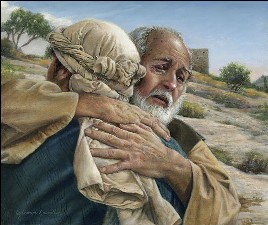
Wayward SonAccording to classic Jewish thought, when Moses was on Sinai with God for forty days and forty nights (Exodus 24:18), in addition to imparting the instructions for building the Mishkan (Tabernacle) and its various elements, God also gave Moses the Oral Law or the means by which to interpret the directives listed in the written document, such as the aforementioned commandment regarding wayward sons. However, no list of commandments, written or oral, could possibly cover all contingencies and circumstances as they would arise in the following years and centuries, so God also commanded that a group of Judges be assembled to hear the various cases and complaints as they arose (Numbers 11:24-30). Authority was given to this system of Judges, originally the Sanhedrin but in modern times, the rabbinic Beit Din, to make rulings and judgments regarding the practical application of the written and oral Torah we have with us today.

So in the case of the wayward son, for an ancient Israelite, it wasn’t enough to know the written Torah on how best to deal with the situation. You had to learn and understand its intent via the Oral Law given to Moses at Sinai and interpreted by the ancient Israeli judicial system which also was established by God. Add to this that, as you grew up and were taught the elements of Torah by your parents, teachers, and priests, you would learn that the commandment of wayward children was meant not as a harsh punishment to use against your son should he become a drunken thug, but a lesson in how to parent your children so that they would “hearken” to your voice.

All that is fine and well for the Israelites, but you’re probably asking yourself what all this has to do with Jesus and his parables. What if I were to tell you that Jesus did the same thing: took the Torah and interpreted it? Christians believe he did so, but only in the very limited scope of doing away with the Torah, but I believe that, like Moses, like the Sanhedrin, like the lesser courts there were appointed in the various towns in Israel, and like the individual judges, Jesus also gave oral rulings, laws, and interpretations by the authority given to him by God the Father, the great Ayn Sof, the infinite, unknowable, ultimate, and unique One God.

Now look at this. We have a written Bible, for Jews, the Tanakh, what Christians call the Old Testament. It isn’t sufficient as a guide to provide a means by which Jews can apply the will of God in every possible situation they may encounter in their lives (and by inference, it means Christians may not have all the information we need just by reading the Bible). There are many questions Jews encounter as to how a commandment may or may not fit something that happens to them, such as a son coming home late and drunk. In fact, since situations and interpretations change across the scope of time, the Torah couldn’t possibly tell a 21st century Jewish parent how to deal with this situation in a way that would also meet the needs of a 12th century Jewish parent under similar circumstances. Both the Talmudic rulings and probably the advice of a Rabbi or a Beit Din might be needed.

Jesus did the same thing in the New Testament. The most famous example of him doing so is in the “Sermon on the Mount” (see Matthew 5) but keep in mind, Jesus wasn’t undoing the Torah commandments or giving a radical and “unJewish” meaning to them. If he had done that, he would have completely lost his Jewish audience including all of his closest disciples. The reason anyone in ancient Roman Judea listened to Jesus and followed him; the reason even the Pharisees could not discredit anything he taught, was because everything he taught and interpreted was completely consistent with the Torah of Moses and the intent of God at Sinai.

There’s no way that we can simply toss the Oral tradition, the Talmud, and the rabbinic rulings out the window and proceed as if the Bible were a completely self-sufficient document. The Bible is the firm foundation of the Word of God and the Rock on which we all stand. But it is not like a latest best-selling novel that we can read and digest all by itself without studying and relying on authoritative interpretations. Jesus is the living expression of that Rock (“the Word became flesh”John 1:14). However, Jesus himself must have followed the halakhah or the traditional rulings of Torah observance as understood during the Second Temple period (if he didn’t, all of his followers, including Peter, would have walked away from him, branding him a heretic). Those places where we see him apparently disregarding halakhah, are those points where his authority is giving a better ruling; one more consistent with the original intent of God at Sinai.

Just as Moses, the Sanhedrin, the lesser courts, and the judges and priests of Israel were given authority on earth to interpret Torah and to make rulings and judgments for the people, Jesus was given that authority and more as the Son of God. If we understand Mark 12:28-44 correctly, none of his rulings, judgments, and interpretations contradicted the Torah in any way, although as I mentioned, some of his rulings weren’t entirely consistent with the understanding of the Pharisees and Sadducees. In Jesus, we have a living example of how there can be a written Torah and a set of oral interpretations. This supports the ancient and modern Jewish tradition of having a written Torah, an oral interpretation, as well as later rabbinic rulings which were recorded in the Talmud, and a rabbinic court to interpret Torah and Talmud in individual cases.

Given everything I’ve just said, I’m not supporting that Christians suddenly start trying to live their lives by Jewish standards. Most of what is written in the Torah and Talmud applies only to Jews, but if you’ve been reading this blog for any length of time, you know that I believe Christians can learn much about God, the teachings of Jesus, and the meaning of our lives as disciples of the Master by studying the Jewish texts. If Jesus, in a sense, taught like Moses, like a Judge, like a Priest, and like a Rabbi, then only by learning about and trying to understand the complete system of Jewish teachings and judgments can we even begin to understand the Savior and Messiah we follow and adore.

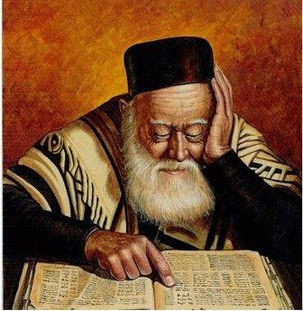
Talmud StudyLike the ancient Israelite and the commandment of the wayward son, we don’t have all the information we need just by reading a few paragraphs in the Bible. Like the inner disciples of Jesus, we don’t understand the parables of the Master given to the masses without his interpretation of them. As modern Christians, we can’t always know the underlying meaning of the teachings of Christ (even though we currently have a record of his parables and their explanations) without digging a little deeper into how Jesus taught like a Maggid.

Christian, I’m not saying that we must take on board the full yoke of Torah including Talmud and halakhah. Far from it. However, I am saying that while it is not required of us, we can still learn a great deal about Jesus by the study of Judaism, for it is from Judaism that our faith has emerged and it is within Judaism that the heart of the Messiah beats for his people, both those who are the natural branches and those of us who have been grafted in (Romans 11).

As believers, we have no right to judge the Jewish people for following the halakhah, from studying Talmud, from living by the rulings of the sages, and from obedience to the Torah of Moses as understood and interpreted by oral tradition and rabbinic judgments. These rules are not binding on us, but the Jewish people were given a more comprehensive yoke than what has been asked of the Gentile disciples (Acts 15). Yet, as implied by James and the Jerusalem Council, there is still value in learning the Torah among the Gentile disciples because it is that Torah, those Judges, those Prophets, those Disciples of the God of Israel that are the core of Christ’s message and the foundation of who we are as believers in Jesus.

You have heard it said, but there is more than that. A great deal more. Let’s continue to study together and to allow both Christian and Jew to take their specific paths to the gates of God’s Temple.

Note: Quotes from the Gospel of Mark were taken from the Delitzsch Hebrew Gospels, Hebrew/English translation adapted and published by Vine of David from the original 1890 text that was produced by Franz Delitzch and supervised of Gustav Dalman.

A Christian at the Gates of the Temple of God

Toward the light“Yes, religion consoles us for our fate, but it also moves us to believe that with God’s help, we can change it. Hence the Christians, Jews and others who fought to abolish slavery then, global poverty now.”

Rabbi Jonathan Sacks
from “When People Lose Faith in God, They Lose Faith in Humanity Also”

“To the Jewish mind, the understanding of God is not achieved by referring in a Greek way to timeless qualities fo a Supreme Being, to ideas of goodness or perfection, but rather by sensing the living acts of His concern, to His dynamic attentiveness to man.

Abraham Joshua Heschel
God in Search of Man: A Philosophy of Judaism

“Why would the Jewish people ask for G-d’s name?”

from the Rohr Jewish Learning Institute lesson book
Toward a Meaningful Life

This is the last in my series of blogs based on this Rohr JLI course but probably not the last thing I’ll write about the significance of people and how we can have a relationship with God, which after all, are rather universal questions. Also, the question I’m asking today is really at the heart of just about every article I’ve written on this blog: “Can I apply Jewish wisdom, teachings, mysticism, and folk tales to Christians and our relationship with God through Jesus Christ?”

Gee, that’s quite a mouthful. Here’s what I mean.

Take another look at the link to the Toward a Meaningful Life course work. Notice the title of the course says, “Toward A Meaningful Life: A Soul-searching Journey for Every Jew”, That’s “for every Jew”. Does that mean I’ve been wasting my time going over this material because I’m not Jewish? Has it been written and presented in such as way that it cannot apply in any aspect to a person who isn’t a Jew and specifically can’t apply to a person who is a Christian?

Just about every quote I borrowed from the material I’ve been reading, when it refers to people at all, refers to people; human beings, not necessarily just Jews. Here are a few examples:

The Holy One, Blessed be He, has any number of names. All of these names, however, designate only various aspects of divine manifestation in the world, in particular as these are made known to human beings.

-Rabbi Adin Steinsaltz
“Divine Manifestation”

A human being should feel the same sense of warmth and security when he or she comes home.

-Simon Jacobson
“Why is Home Life So Important?”

The Biblical view of marriage is unique among the many extant religious, philosophical and sociological views. The Bible sees a married couple as two people who have made a contractual agreement…

-Rabbi Pinchas Stolper
“The Man-Woman Dynamic of Ha-Adam: A Jewish Paradigm of Marriage”

Every one of these references can easily be applied to people in general and not just Jews specifically, so it seems as if this material can have meaning for a wider audience. Of course, it is marketed to a Jewish groups rather than to churches, mosques, and corporate management seminars, so I may be wrong in my assumptions here. Also, looking at the quote from Rabbi Stolper’s article, even the title says, “A Jewish Paradigm of Marriage” and he points to the “Biblical view of marriage” being different than other religious perspectives (presumably including Christian perspectives) on the topic, so again, I may be reading too much into his content.

I’m not picking on any of these teaching materials or the contributing authors, but I do want to examine just how far we can generalize concepts and teachings that were originally written for Jewish people living in a completely Jewish ethnic, cultural, and religious context into a much broader population. OK, this material is also for Jews who are not well connected to religious Judaism and designed to help re-connect them to who they are, but that doesn’t necessarily mean we can extend all this to the rest of us, does it?

I spend a lot of thing wondering if I’m taking everything I’m reading too far. I can read something by a Jewish author and see how it might connect to something in a Christian context (at least “Christian” as I understand the term), but that doesn’t mean there’s anything causal going on. To put it another way, just because Rambam wrote something in the 12th century that seems to connect to how I understand the words of Jesus doesn’t necessarily mean the two are related in any sense. It certainly doesn’t mean that the source of what Rambam wrote in any way shape or form, can be traced back to any of Christ’s teachings.

I can’t explain why Jewish teaching materials, commentaries, and lessons call to me in a way that Christian books and blogs never do. Derek Leman recently published a blog post called The Message of Jesus via Scot McKnight (Leman is something of a “fan” of Scot McKnight), After scanning Leman’s blog post, I found that I didn’t have a great deal of interest in what McKnight had to say at the moment. Some of the quotes from McKnight’s materials posted in the comments of Leman’s blog seemed to confirm that McKnight’s opinion of Jews, in relation to the church, weren’t any different than many other Christians: that the Jews are “done” as far as God is concerned, and it’s now all about the church and Jesus. Here’s an example:

“The book stands on four arguments: that the gospel is defined by the apostles in 1 Corinthians 15 as the completion of the Story of Israel in the saving Story of Jesus; that the gospel is found in the Four Gospels; that the gospel was preached by Jesus; and that the sermons in the Book of Acts are the best example of gospeling in the New Testament.”

“The completion of the Story of Israel”? Guess the fat lady has sung.

I suppose I’m being unfair and maybe I should spend some time on McKnight’s blog to see more of what he’s all about, but I really, really get tired of “big shot” Christians saying, “we Christians are so cool and the Jews are toast”. On top of that, Antwuan Malone mirrored a lot of my frustrations with the church in his recent blog post 7 Things Getting Old in the Church…Fast!

I feel like I’m caught between two worlds but I don’t belong in either of them. I don’t belong in a church because of how commercialized and secular most of them have become and frankly, because my perspectives are just too “un-Christian” (if you can’t tell that from reading my blog, you haven’t been paying attention). I don’t belong in the synagogue because, frankly, I’m not Jewish. That is, I’m not connected culturally and ethnically to the Jewish community. I wouldn’t fit in. I’d be too “Christian”.

River of LifeWhere do I go from here?

I’ve just spent the past week or two spewing my angst on whether I can have a relationship with the Creator of the Universe all over the Internet, so that’s the only place I know where to go. Even then, my relationship with God is far from perfect. I struggle every day with the simplest of ideas, concepts, feelings, or efforts to make the most ephemeral of connections.

Can I apply Jewish themes to a Christian life? I don’t know, but in my case, I’ll probably keep doing it anyway, just because nothing else makes sense to me. Do Jews intend for their themes to be applied to a Christian life? Probably not.

Rabbi Yosef Yitzchok of Lubavitch was famed for both his selfless devotion to the needs of every Jew and for his steadfast stand on the integrity of the Torah. The Rebbe maintained that to deal with the growing danger of assimilation and Jewish rootlessness by compromising on the Torah’s principles will only serve to repel those whom one is seeking to “accommodate”. Deep down, said the Rebbe, the Jew wants the truth; offer him a watered-down quasi-truth and you will drive him even further away from his identity.

Once, Rabbi Yosef Yitzchok was asked: “True, under ideal conditions, one wants his water to be pure. But when a fire rages, is this the time to be particular? The fire must be put out by any and all means at one’s disposal, including polluted or tainted water. The current crisis of identity among the Jewish people is threatening our very existence. Surely it is a time to be more flexible and accommodating.”

Replied the Rebbe: “What you say is true, so long as one battles fire with water. But if one rushes to pour any liquid on the flames, without realizing that his bucket contains say, benzene instead of water, the result is the exact opposite of what one is seeking to accomplish.”

-Rabbi Yanki Tauber
“The Accommodating Firefighter”
Once Upon a Chasid: Parshah Re’eh
Chabad.org

What did Rabbi Tauber’s commentary say? “The current crisis of identity among the Jewish people is threatening our very existence. Surely it is a time to be more flexible and accommodating.” Here’s Rabbi Yitzchok’s response to that suggestion: “What you say is true, so long as one battles fire with water. But if one rushes to pour any liquid on the flames, without realizing that his bucket contains say, benzene instead of water, the result is the exact opposite of what one is seeking to accomplish.”

Expanding that to the current conversation, Judaism can’t extend itself very far outside its own sphere without risking the danger of losing its identity and cultural integrity. Trying to “marry” traditional Jewish and Christian viewpoints and concepts will either water things down too much or, like tossing benzine on a fire, cause an explosion.

Yet, there’s a certain beauty in many of these things I read and then write about, that provides me with a unique way to approach God that wouldn’t be available to me any other way. Even if I’m climbing the proverbial “wrong tree” from everyone else’s point of view, it still seems like the “right tree” to me. It’s the tree that, in the climbing of it, seems to lead to God more than any of the others in the forest.

I came across something at AskNoah.org a few weeks back that I’ve wanted to share: Will Gentiles be permitted to worship at the Third Temple in Jerusalem? When I first read the title, I really wanted the answer to be “yes”. The article answers the question in part, quoting from Isaiah 2:2-3:

“And it will come to pass at the end of days that the mountain of G-d’s House will be firmly established, even higher than the peaks, and all the peoples will flow toward it as a river. And many nations will go and will cry, ‘Let us go up toward the mountain of G-d’s House, to the House of the L-rd of Jacob, and we will learn from His ways and walk in His paths, for out of Zion goes forth Torah and the word of G-d from Jerusalem.’ “

That sounds very much like this:

Then the angel showed me the river of the water of life, as clear as crystal, flowing from the throne of God and of the Lamb down the middle of the great street of the city. On each side of the river stood the tree of life, bearing twelve crops of fruit, yielding its fruit every month. And the leaves of the tree are for the healing of the nations. No longer will there be any curse. The throne of God and of the Lamb will be in the city, and his servants will serve him. They will see his face, and his name will be on their foreheads. There will be no more night. They will not need the light of a lamp or the light of the sun, for the Lord God will give them light. And they will reign for ever and ever. –Revelation 22:1-5

I doubt that I’ve answered my own question. I don’t feel very satisfied with my answer. I feel like I’ve just asked more questions, but right now, this is the path that’s calling me, so this is the path I will walk. A year from now, I can’t say where I’ll be or what I’ll be doing, but with God’s providence and grace, I’ll be where He wants me to be. Someday, Jews and Gentiles will sit down together at the feast of Abraham, Isaac, and Jacob (Matthew 8:11) and all of these questions will be answered. Until then, it’s the questions, not the answers, that drive me.

“If a foreigner who is not of Your people Israel comes from a distant land for the sake of Your name – for they shall hear about Your great name and Your mighty hand and Your outstretched arm – when he comes to pray toward this House, oh, hear in Your heavenly abode and grant all that the foreigner asks You for. Thus all the peoples of the earth will know Your name and revere You, as does Your people Israel; and they will recognize that Your name is attached to this House that I have built.” –I Kings 8:41-43

The road

The road is long and often, we travel in the dark.

The Primordial Serpent

SerpentWhen people saw the snake, they understood that in order to elicit this transcendent divinity and be healed, they had to transform their own, inner “snake” – their evil inclination – into a force of good…The evil inclination impels us to sin for comfort, pleasure, or excitement. When we convince it that the truest comfort, pleasure, and excitement lie in holiness, it plunges headlong into fulfilling G-d’s purpose on earth, endowing our drive toward divinity with much greater power than it could have had otherwise. Thus, the initially evil inclination becomes the source of merit and goodness. The snake is transformed from the source of death to the agent of life.

From the teachings of the Lubavitcher Rebbe;
adapted by Rabbi Moshe Yaakov Wisnefsky
“Transforming the Primordial Snake”
[Based on Likutei Sichot vol. 13, pp. 75-77]
Kabbalah Online

This also alludes to the [Primordial] Snake. Originally, he was the tail and Adam was the head, but [because of the Primordial Sin] this was inverted and the snake became the head and Adam the tail.

From the teachings of Rabbi Yitzchak Luria
adapted by Rabbi Moshe Yaakov Wisnefsky
“The Snake at the Sea’s End”
Chabad.org

This is Part 2 in a 3-part series. Before reading this, see Part 1: Overcoming Evil.

The serpent of Eden isn’t quite what you expect him to be when you encounter him in Judaism, and particularly within the realm of Kabbalah. While not an entirely pleasant fellow, he doesn’t seem to be quite as bad as Christianity paints him. The “Transforming the Primordial Snake” article quoted above tells us that the serpent; the evil inclination within us, “impels us to sin for comfort, pleasure, or excitement”. The commentary goes on to explain that we can “convince” the evil inclination that the best way to meet its goal is to meet our goal of a life of holiness. Once the “serpent” is sold on this idea, the “snake is transformed from the source of death to the agent of life”.

Makes the snake sound almost reasonable, doesn’t it? However, the teachings of Rabbi Yitzchak Luria paint a darker portrait:

In the Zohar, the imagery of the snake putting its tail in its mouth is used to illustrate the sin of “the evil tongue”, i.e. slander, a gross misuse of the power of speech. (Zohar III:205b) People commit this sin when material consciousness gets the better of them. As is explained in the Tanya (ch. 32), those who give their bodies preeminence over their souls see only the outer shell of their fellow man, which differentiates between people, and are oblivious to the inner souls. They thus fall into the sin of hatred, which leads to slander.

Rabbi Luria makes slander sound awful, but how bad can it be? I mean, it’s not as bad as say, murder, is it?

“You have heard that it was said to the people long ago, ‘You shall not murder, and anyone who murders will be subject to judgment.’ But I tell you that anyone who is angry with a brother or sister will be subject to judgment. Again, anyone who says to a brother or sister, ‘Raca,’ is answerable to the court. And anyone who says, ‘You fool!’ will be in danger of the fire of gehinnom. –Matthew 5:21-22

I guess it is that bad.

But who is the serpent? Is it some sort of talking animal, like Balaam’s donkey or is this Satan, the Adversary, in disguise? Let’s cut to the chase and look at him from a traditional Jewish perspective:

Satan in Judaism is a very different beast than satan in popular culture (pun intended)

The snake in the garden of Eden is identified as the personification of the “Yetzerh Harah” (Bad/evil will/desires/inclination) by the midrashim.

The Talmud also states that the Yetzer Harah, Satan, and the angel of death are one. (Some might understand this to mean that they are ‘bad things’ which really are good, and necessary.

In Judaism, the Satan is an angel commanded by Gd to accuse human beings of wrong things. In modern terms, you might call satan the heavenly prosecutor, who seeks to bring all people to court.

-from the Jewish Life and Learning discussion board

Eve and the SerpentThat would seem to mesh somewhat with the Christian interpretation, however, the person who made this post offered a follow up:

A strict reading of the bible would tell you just a snake, and nothing else. An interpreted reading of the bible based on Jewish sources would tell you its the Evil Inclination. An interpreted reading of the interpretation based on Jewish sources would tell you that the snake represents three things. (Which, could be seen as a reason for only the serpent to be mentioned in the first place)

This is consistent with other Jewish sources which state that Adam personified the Good Inclination while the serpent was the embodiment of the Evil Inclination. In Kabbalistic thought, the serpent wasn’t so much a personality as a force of nature, or at least a representation of other forces. The serpent was the external manifestation of the evil inclination which, once Adam and Eve sinned, became man’s internal inclination for evil.

However, as I’ve heard it said just recently, “let Scripture interpret Scripture”:

The great dragon was hurled down – that ancient serpent called the devil, or Satan, who leads the whole world astray. He was hurled to the earth, and his angels with him. –Revelation 12:9

And I saw an angel coming down out of heaven, having the key to the Abyss and holding in his hand a great chain. He seized the dragon, that ancient serpent, who is the devil, or Satan, and bound him for a thousand years. –Revelation 20:1-2

Now we have to assume that the “ancient serpent” being referred to in these verses is the same one we see tempting Eve in the Garden, but that’s an assumption Christianity takes for granted. It’s not one that Judaism would make for obvious reasons.

A recent CNN news story, which was critical of the ability of many Christians to read and remember the Bible correctly (that part seems sadly true) suggested that the serpent was just a serpent (albeit an intelligent and talking one) and that the Adversary (HaSatan) was never mentioned. While it is true, Genesis doesn’t go out of its way to say, “Hey! The snake is the devil!”, the passages from Revelation seem to be a “smoking gun”.

Judah Himango started a conversation about this topic on his Kineti L’Tziyon blog the other day, and from his point of view, the matter is settled. Still, looking at the serpent through the lens of Jewish mysticism, there’s more to his story than meets the eye. Part 3 of this series, Healing the Wounded, will cover that tale in the next “morning meditation”.

Asking Questions

The RabbiBut of course, it is not advisable for one to pasken for himself by extrapolating from a case discussed in the Mishnah Berurah since he may not discern a simple difference between the cases. He therefore asked (Rav Yosef Shalom Eliyashiv, shlit”a) whether an ill man who must eat on Tisha B’Av must eat less than a k’zayis within the shiur of time.

Daf Yomi Digest
Stories Off the Daf
“A Small Distinction”
Chullin 35

Without going into great detail, this quote comes from a commentary describing a sick man who is trying to see if he must fast on Tisha B’Av. In studying the relevant halachos on the matter, he was surprised to find that an ill person should eat no more “than a k’zayis in the time it takes to eat half a loaf of bread.” He extrapolated this judgment based on what the Beiur Halachah writes on how people ate on Tisha B’Av to avoid becoming ill during a typhus epidemic.

On the one hand, this man was chronically ill and fasting was dangerous for him. On the other hand, as a devout Jew, he was decidedly uncomfortable with eating on Tisha B’Av and wanted to understand the correct halacha. When he encountered a ruling he did not expect, he could have chosen to let his own interpretation guide him but, as we discover, “it is not advisable for one to pasken for himself by extrapolating from a case discussed in the Mishnah Berurah since he may not discern a simple difference between the cases”.

How does this work in Christianity? A Christian wants to make sure he understands what he should do in a certain situation and reads the appropriate Bible verses. He comes across Scripture that surprises him, at least as far as the plain meaning of the text is concerned, or even two Scriptures that seem to contradict one another. Should he rely on his own understanding, pray to the Holy Spirit for guidance, or immediately consult with his Pastor or Bible teacher?

I think a lot of Christians would pray for guidance from the Spirit, which is quite appropriate, but assuming the person felt he had received such supernatural guidance, his inquiry could stop right there. After all, what could a Pastor or a Bible teacher tell him that the Spirit couldn’t? Effectively, depending on your point of view, the Christian may well end up relying completely on his own personal interpretation of the Scriptures in question. This becomes a problem as you’ll see in a few paragraphs.

Sure, I’m oversimplifying the situation, but I think that’s how it plays out for some believers. When I used to worship in a church, there were plenty of times I’d ask a fellow student in a Bible study, a teacher, or one of the Pastors what something in the Bible meant. When praying, I didn’t always get a feeling or an indication that an answer to one of my questions about the Bible was forthcoming and asking another person, at least as a new Christian with a lifetime of secular thinking behind me, was just easier.

As I’ve grown spiritually and in my studies, I’ve come to know that there are many New Testament scholars out there who continually study, do research, and publish new findings. Bible interpretation is hardly a settled matter in the community of Bible scholars and this is an indication that our understanding of the Bible is far from complete or comprehensive. I wonder if most “average Christians” realize this?

The Phantom BibleI just read a story at CNN called Actually, That’s Not in the Bible which illustrates my point, particularly on, Christian self-reliance on Bible interpretation and how people can make mistakes, sometimes critical mistakes:

Others blame the spread of phantom biblical verses on Martin Luther, the German monk who ignited the Protestant Reformation, the massive “protest” against the excesses of the Roman Catholic Church that led to the formation of Protestant church denominations.

“It is a great Protestant tradition for anyone – milkmaid, cobbler, or innkeeper – to be able to pick up the Bible and read for herself. No need for a highly trained scholar or cleric to walk a lay person through the text,” says Craig Hazen, director of the Christian Apologetics program at Biola University in Southern California.

But often the milkmaid, the cobbler – and the NFL coach – start creating biblical passages without the guidance of biblical experts, he says.

“You can see this manifest today in living room Bible studies across North America where lovely Christian people, with no training whatsoever, drink decaf, eat brownies and ask each other, ‘What does this text mean to you?’’’ Hazen says.

“Not only do they get the interpretation wrong, but very often end up quoting verses that really aren’t there.”

It’s been a long time since I’ve worshiped at a church and I don’t think I ever developed a “traditional Christian mindset” about a lot of this. I’m blogging my “extra meditation” today, more in the way of asking a question. What do you think? Is the example I quoted from the Daf Yomi Digest above bizarre and alien to Christianity, or do we also have a tradition of going to reliable authorities when we have something we need to understand from the Bible? If we don’t have this tradition, as the CNN article seems to suggest, should we?

Gracious feedback is welcome here. Standing by to receive.

Oh, our chronically ill man did get an answer to his question:

When these questions reached RavYosef Shalom Eliyashiv, shlit”a, he ruled that a sick person does not have to worry about this. “One who is ill should eat what he needs and no more. But he is not obligated to eat less than a shiur. The Beiur Halacha discusses one who eats to avoid getting ill. Such a person should wait to eat as late as possible and also eat less than a shiur. But one who is sick does not have to follow these restrictions on Tisha B’Av at all.”

Broken

Broken FaithA certain man was profoundly depressed. He perceived his many flaws and failings and they pained him, but he did not feel confident that he could atone for them. How could he possibly rectify such serious wrongs?

When Rav Yissachar Dov of Belz, zt”l, was asked what someone in this state of mind should do, he offered powerful words of encouragement. “You must understand that God never rejects the Jewish community, as we find in Chullin 29. The halachah is that if an individual is defiled within the community, he can bring his korban Pesach along with them. His personal sacrifice is not rejected because he is part of the community.

“By the same token, someone who takes stock of himself and finds himself riddled with faults should not give up. Although his feelings of inadequacy push him to abandon his efforts to serve God altogether, God forbid, he must take heart and do what he can. It is true that he is defiled, but if he becomes one with the Jewish community, God will enable him to rectify his many transgressions.”

The Ohr HaChaim HaKadosh, zt”l, offered different advice to help fight feelings of spiritual inadequacy, however. “A person may contemplate the many mitzvos in the Torah and say, ‘How can I possibly fulfill them as required?’ Similarly, someone who has transgressed many sins should beware of what his yetzer haram (evil inclination) will surely claim: ‘How can you rectify so many evil deeds?’

“It is for this person that Moshe warns us, ‘And you should know today.’ He was alluding to Shabbos, regarding which the verse states, ‘Today is Shabbos.’ Moshe was telling us to how to answer such discouraging claims. We must say in our hearts: ‘Our sages explain that keeping Shabbos is likened to fulfilling the entire Torah. Through learning the laws of Shabbos and keeping them carefully, week after week, God will help me rectify my spiritual failings.’”

Daf Yomi Digest
Stories Off the Daf
“Joining the Community”
Chullin 29

If you’re a Christian, you may find several things about this commentary that trouble you. For one, it’s addressed to the Jewish people, so how can it apply to you? It also talks about a Jewish person’s difficulty in fulfilling all of the Torah commandments, which doubtlessly, you believe don’t apply to you. Also, the vast majority of Christians either don’t see the relevance of keeping the Shabbat as Jews do, or they believe that going to church on Sunday and then doing “whatever” afterward, fulfills this requirement.

Take a closer look.

While I agree that the commentary was written specifically to apply to Jews and that the 613 commandments Jews believe they are obligated to fulfill do not apply to non-Jewish Christians (or the vast majority of them, anyway), there is a lesson to be learned here. Despite being “saved” by Jesus Christ, a Christian still can feel as if he or she is spiritually deficient. It’s not like it’s impossible for a Christian to sin or even impossible for a Christian to suffer under multiple, habitual sins. It’s hardly impossible or a Christian to feel terrible guilt over having committed many sins and to experience a profound distance from God.

Some Christians in this situation simply give up their faith and surrender to their sins and the values of a fallen world.

The message of the esteemed Ravs we see quoted above is a message of hope that we Christians can look to as well. We are grafted in to the “cultivated olive tree” and “if the root is holy, so are the branches” (Romans 11:16). But while Rav Yissachar Dov suggests that a Jew can draw strength from the larger Jewish community, and the Ohr HaChaim HaKadosh states that when a Jew observes the mitzvot applying to the Shabbat, it’s as if he fulfilled all of the Torah commandments, where does that leave us? How can a Christian overcome a profound sense of guilt over committing not just a few, but many sins across a long time period while professing faith in Christ?

The answer really isn’t that different. One of the reasons we gather in groups and worship communally is to gather strength and encouragement from each other:

Therefore encourage one another and build each other up, just as in fact you are doing. –1 Thessalonians 5:11

But encourage one another daily, as long as it is called Today, so that none of you may be hardened by sin’s deceitfulness. –Hebrews 3:13

SorrowYou may not want to open up and expose the full truth of your being to your entire congregation or Sunday school class, but you can find someone on the Pastoral staff whom you feel you can trust, a compassionate Bible teacher, or a close Christian friend, and ask them for help. Yes, turn to God in prayer, repent in the name of Jesus, ask for forgiveness and the strength to stand tall under temptation, but don’t forget the kindness, grace, and support you can receive from a believing neighbor or friend. God provides us human comforters for a reason.

The other point also applies, though it may be more difficult to see.

In yesterday’s morning meditation, I suggested that it is appropriate and even beneficial for Christians to observe and keep the Shabbat in a manner similar to the Jewish people. That is, to keep an entire 24-hour period of time devoted to drawing nearer to God and to separating from the routine and stress of day-to-day life. Christians tend to see keeping a Sabbath in this manner as a list of what they can’t do (can’t go shopping, can’t go out to lunch, can’t mow the lawn), but it’s more about freedom than about restriction. It’s the freedom to put down the load you carry the other six-days of the week and to spend time focusing who you are; putting all of your attention on God, on prayer, on Bible study, on discussing the teachings of Jesus with others.

Christianity doesn’t have a tradition that says fulfilling one set of holy acts somehow fulfills all of them, but we don’t generally look at things that way. We know that Jesus atoned for our sins, so we don’t concern ourselves with all of the separate actions we would have to take to atone for all of the different sins we committed. We aren’t responsible for making the atonement ourselves, only for accepting the fact that Jesus is our atonement.

Still, as Christians, we can be overwhelmed by the amount and the depth of our sins and how we can ever manage to break the cycle of our disobedience. How can we remove all of the darkness from our souls and know that we are clean after leading sinful lives for months or even years? Wouldn’t a lifetime of sin and hypocrisy as a Christian take a lifetime to undo? How can we be forgiven if we still sin? Rather than trying to see the end result, we can take the “a journey of a thousand miles” point of view on the matter. We can start by focusing on just the first step.

Here’s the deal. Your life is a mess. You’ve really screwed up and you’ve been screwing up for a long time. Maybe your married life is worse than Arnold Schwarzenegger’s or you’ve severely “abused” Google’s image search feature on your computer to view women “inappropriately”. Perhaps your business dealings have been less than “open and above board” or you’ve been putting your hand in the boss’s till rather than helping your employer earn a profit.

Maybe you’ve been calling yourself a “Christian” and going to church on Sunday, but behaving no differently than the atheists and agnostics that populate your community, your workplace, and your neighborhood.

There’s hope. There’s always hope. You can turn it around. It won’t be easy and it won’t be quick. I know you’d like it to be. I know it might seem easier to just give up, but that only puts more distance between you and God and trust me, you’ll regret it in the long run. God said, “”Turn to me and be saved, all you ends of the earth; for I am God, and there is no other” (Isaiah 45:22) and please notice that He is addressing “all you ends of the earth” and not the Children of Israel exclusively.

Faith and belief in Jesus isn’t enough to help you. Knowing God exists and leaving it at that isn’t the answer. James, the brother of the Master, said that we must have faith and deeds (James 2:14-24). We must trust that when we turn from sin to God and desire return, that God will be there with open arms waiting for us, like the Father of the prodigal son (Luke 15:11-32). We must not only believe God will accept our repentance, we must actually take the “risk” of returning and abandoning the sins that keep us from Him.

The only mistake you can make that is absolutely fatal is to walk away from God and never look back. Short of that, while you’re alive, you have hope. The world may be broken, but God can heal your brokenness.

There’s no such thing as defeat. There’s always another chance. To believe in defeat is to believe that there is something, a certain point in time that did not come from Above.

Know that G-d doesn’t have failures. If things appear to worsen, it is only as part of them getting better. We only fall down in order to bounce back even higher.

From the wisdom of the Rebbe
Menachem M. Schneerson
as compiled by Rabbi Tzvi Freeman in his book
Bringing Heaven Down to Earth

Gateway to Eden

Gateway to EdenNow the serpent was more crafty than any of the wild animals the LORD God had made. He said to the woman, “Did God really say, ‘You must not eat from any tree in the garden’?”

The woman said to the serpent, “We may eat fruit from the trees in the garden, but God did say, ‘You must not eat fruit from the tree that is in the middle of the garden, and you must not touch it, or you will die.’”

“You will not certainly die,” the serpent said to the woman. “For God knows that when you eat from it your eyes will be opened, and you will be like God, knowing good and evil.”Genesis 3:1-4

We are all familiar with the story of Adam and Eve and their sin with the fruit of the Tree of Knowledge (Genesis 3). As the story goes, the Serpent, most “cunning” of all the animals, comes along and tempts Eve to taste of the fruit, promising that it would open the eyes of man, making her and Adam “as gods knowing good and evil” (v. 5). Eve decides that the Tree is tempting to behold and both eats of the fruit and gives her husband to eat.

This, however, presents a difficultly. If Adam and Eve themselves had no evil inclination, how could they have *wanted* to sin? How could they — entirely spiritual beings — desire anything other than goodness and closeness to G-d? Where could a desire to rebel against G-d stem from?

-Rabbi Dovid Rosenfeld
The Primordial Sin, Part I (2006)
Torah.org

Christianity and Judaism see “the Fall of Man” event in Genesis very differently, but there are obvious parallels. “In the beginning”, Adam and Eve are sinless beings, created by God and knowing an incredible intimacy with the Source as completely spiritual yet physical beings. In Judaism, people originally had no internal inclination toward evil but upon disobeying the one commandment given by God, the external temptation, represented by the Serpent, became internalized. Man separated himself from God and the nature of the world became broken.

Rabbi Rosenfeld goes on in Part III of the series to ask some difficult questions:

To this we explained that man sinned in order to make life more challenging. Before the Sin, man had only a single mitzvah (commandment) — not to partake of the fruit of the Tree. There was, it seemed, very little for him to accomplish. Now, as a physical being desiring evil, life would be so much more challenging. There would be so much more potential growth in store for man. Eventually mankind would require the rigorous and demanding 613 Commandments to curb the animal within and redirect him G-dward. Thus, man — *spiritual* man — *desired* the greater challenge that would now be in store for mankind.

This, however, still does not suffice. Why would man desire a greater challenge? So that he would have more opportunities for spiritual growth? But isn’t he basically just backing up in order to reach the same goal? The ultimate goal of life — self-evident to the spiritual person — is closeness to G-d. If man was created close to G-d, why not *stay* there — perform his single mitzvah and perfect himself? What was so enticing about making life more difficult?

From Christianity’s point of view, there was no justifiable reason for Adam and Eve to sin; to disobey God. It was a terrible, ghastly mistake that sent both humanity and the nature of Creation down a dark and dismal path, away from God and into the arms of darkness, requiring that God give “His one and only Son, that whoever believes in him shall not perish but have eternal life” (John 3:16).

Judaism says that, amidst what Christians can only view as a total spiritual disaster, there is something salvageable and even perhaps desirable to be gleaned:

The deepest, most profound desire a human soul has is to feel it exists — to feel it is not just a passive entity, acted upon and taken care of by others. A person needs to feel he is an independent being — what the Serpent called a “god” (and our mishna calls a “king”) — who can accomplish, grow and make a difference in the world. There is nothing more painful — *spiritually* painful — than feeling that one’s life makes no difference to anyone or anything, that he exists only as a person acted upon by others or by natural forces, and that he has done nothing to express his own existence.

This was man’s dilemma in the Garden of Eden. Man at first, as lofty as he was, was an almost entirely passive, “created” being. He was given existence by G-d. He was placed in the Garden of Eden with all his wants and needs satisfied and with only a single mitzvah to perform. Man wanted to feel he truly existed — that he was not just a plaything of the Almighty. He wanted to be a god himself. How could he do it? By forcing upon himself greater challenges. Adam and Eve would no longer be passive beings, practically created in G-d’s presence. They would now have to earn it. Spirituality would come only through the greatest of efforts — *their* efforts. It would be the challenge they would have to face to achieve their purpose — and in order to exist.

From what Rabbi Rosenfeld presents, man faced two options: live life close to God, obeying the single commandment provided by the Almighty, but never having the opportunity to truly carve out his own path and the ability to rise spiritually, or deliberately distancing himself from God, lowering his spiritual status, and then struggling back up the ladder, rung by rung, to drive himself ever closer to God and Eden.

I suppose a challenge like that would tempt the spiritual Sir Edmund Hillarys of the world, but for the rest of us, we see the “downside” to such a decision in terms of the pain, suffering, and anguished death of billions upon billions of human beings across the long march of millennia between the dawn of man and the current age.

And yet, here we are. “Our physical flesh (is) now a confused mixture of good and evil. We know the passing of the seasons as we age, and we know decay and death. We are separated from the infinite Spirit. The struggle against evil and the abyss is no longer an external enemy, but rather, it is part of who we are inside. Judaism longs for the coming of the Messiah and Tikkun Olam. Christianity looks to the day when Jesus will return and mankind will be redeemed from a fallen world.

But what if we don’t have to wait? Rabbi Yitzchak Ginsburgh says that we don’t:

After the primordial sin, Adam and Eve heard “the voice of God” walking through the garden. They heard God, He spoke to them, and they answered. This is the consciousness of “hearing,” the height of our consciousness of Godliness (God and His Divine Providence) is our lives subsequent to the primordial sin, the consciousness of the weekdays, the workdays (“By the sweat of your brow…”).

But on Shabbat we return to the pristine state of consciousness of God as it was prior to the primordial sin (and as it will be universally in the future). In the terminology of Kabbalah, during the weekdays our consciousness is at the level of understanding (“hearing” in Hebrew means also “understanding”) whereas on Shabbat our consciousness rises to the level of wisdom (direct insight into the mysteries of creation hidden within reality, and into the “mystery of mysteries,” the Creator of reality, the true and absolute Reality).

Throughout the week everything that happens around us, all that we see and hear, “tells” us about God and His Providence. On Shabbat we don’t have to be told about God, we experience Him directly.

ShabbatOne of the mistakes of the early (non-Jewish) Christian church was to casually discard the commandment, “Remember the Sabbath day by keeping it holy” (Exodus 20:8). The church alternately says that Jesus did away with Sabbath observance with the rest of the Law or that the “Sabbath” was mysteriously moved over one day, to coincide with the “Day of the Lord” and the resurrection of the Master. I personally think that the 2nd and 3rd century church found it necessary to separate themselves from anything “too Jewish” and simply shifted the “Holy Day” over by 24 hours to achieve this, and then used specific points of Scripture to justify the decision.

Today, Christians miss out on an opportunity, however limited, to return to Eden. For contained in the Shabbat isn’t just a day to go to church or synagogue, but in fact, we discover an opportunity to remove oneself from the other six days of the week, of the toil, of the work, of the worries, of the laboring, and to totally devote ourselves as spiritual and physical beings to the God of the Universe and the King of Righteousness, as in days of old.

Six days you shall labor and do all your work, but the seventh day is a sabbath to the LORD your God. On it you shall not do any work, neither you, nor your son or daughter, nor your male or female servant, nor your animals, nor any foreigner residing in your towns. For in six days the LORD made the heavens and the earth, the sea, and all that is in them, but he rested on the seventh day. Therefore the LORD blessed the Sabbath day and made it holy. –Exodus 20:9-11

Both Christians and Jews are going to disagree with me here, particularly since this mitzvot was directed at the Children of Israel, but I believe we Christians cheat ourselves terribly out of the experience to turn one-seventh of our lives into a time to walk personally with God. I think Rabbi Ginsburgh has a point to make, not only to Jews, but to Christians as well. But more gateways to Eden exist:

There are two exceptions to the above distinction between Shabbat and the weekdays, two times that we rise to the consciousness of Shabbat during the otherwise mundane time of the week. The Arizal teaches that our consciousness in the times of prayer, every day of the week three times a day, is at the level of Shabbat. The times of prayer, when we turn to God and address Him directly, are the Shabbat as its light shines into and permeates the week.

Also, a true Torah scholar is referred to in the Zohar as Shabbat. Continuously in communion with God through the means of His Torah (which ultimately in one with Himself) he experiences Shabbat-consciousness the entire week.

Whenever we immerse ourselves in the things of God, we are drawing closer. It happens when we pray, when we give to charity, when we help our neighbor with his yard work, when we hold a small child’s hand to cross the street, when we study the Bible, when we turn away from sin and turn, in obedience, to God.

While the mystic aspects of this process may be confusing or even a little frightening, it is clear that we are separated from God by the nature of humanity and the nature of the world, but we don’t have to be that way always. While waiting for the King of Kings to come to us, we do not have to wait helplessly. We can choose, whether commanded to or not, to observe a Shabbat where we are completely devoted to God. We can take one day of our week and separate it from the rest, separate it from the office, from phone calls, from the Internet, from worry, from work, from care. We can pray, study, speak of God and the Bible with others as we break bread together.

We can create isolated pockets of Eden in the Sabbath and even during the week when we pray and beg to come close to the Throne of Heaven. We can be like “little Messiahs”, helping to fix a broken world one dent and crack at a time by performing even one single act of kindness and humility.

Sin happened. Humanity fell. The world is a broken top spinning hopelessly off the table of existence. We can’t go back to fix it but we can choose to go forward toward God. We can choose to visit Eden on Shabbat. We can cross the threshold of the gates of Paradise every day, every time we pray. We can walk with God in the Garden every time we love our neighbor more than we love ourselves.

However you want to interpret these words, observe Shabbat, return to Eden, walk with God. You can never be lost as long as you are seeking God. You can never be lost as long as God wants you to find Him.

“Do not seek greatness for yourself and do not crave honor. Do more than you have studied and do not desire the ‘table’ of kings. For your table is greater than their table, and your crown is greater than their crown. And your Employer can be trusted to pay you the reward for your efforts.”
Pirkei Avot
Chapter 6, Mishna 5(a)