Tag Archives: Torah

Chol HaMo’ed Pesach: Writing on Flesh

When Moses descended, he carried the Word of God—not the Word made flesh, but the word made stone upon the two tablets of the covenant.

“The Word from Heaven Was Broken”
Commentary on Chol HaMo’ed Pesach
First Fruits of Zion (FFOZ)

The obvious image those words should invoke is this:

And the Word became flesh, and dwelt among us, and we saw His glory, glory as of the only begotten from the Father, full of grace and truth.

John1:14 (NASB)

The Old Covenant was established with the Children of Israel at Mount Sinai and the conditions of that covenant, the Torah, were given on stone tablets.

The mediator of the New Covenant entered our world as “the Word made flesh” and the conditions of that covenant were in every spoken word and action of that “Word,” in the person of Yeshua (Jesus) of Nazareth, HaMaschiach (the Messiah). But of course, the conditions previously established didn’t change, and everything taught by the Rav from Nazareth was Torah.

“Do not think that I came to abolish the Law or the Prophets; I did not come to abolish but to fulfill. For truly I say to you, until heaven and earth pass away, not the smallest letter or stroke shall pass from the Law until all is accomplished.”

Matthew 5:17-18 (NASB)

The conditions of the Old Covenant were written on stone tablets. Exodus 32:16 says the finger of God wrote on the first set of tablets before the sin of the Golden Calf, before Moses broke them.

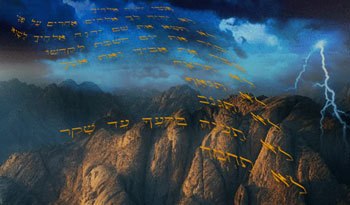
The FFOZ commentary tells us that according to midrash, the tablets that descended from Mount Sinai can be compared to a human body, and when Moses broke that “body,” because of the sin of Israel, the letters on the tablets flew off the stone and returned to their Source in Heaven.

When Messiah Yeshua’s body was broken due to the sin of Israel, his spirit left him and returned to its Source.

letters-on-stoneAfter the sin of the Golden Calf, Moses returned to the mountain and to God to plead for Israel and to renew the covenant (Exodus 34). This began a long and cyclical pattern of sin and repentance for Israel.

After the death of the Master, he was resurrected three days later and thus was completed the inauguration or the very starting of the New Covenant, a process that will not reach fruition until the Master’s return, for he ascended to Heaven and sits on the right hand of the Father, our High Priest in the Heavenly Court, who makes final atonement for the sins of humanity, who is the mediator of better promises. But get this:

“Moreover, I will give you a new heart and put a new spirit within you; and I will remove the heart of stone from your flesh and give you a heart of flesh. I will put My Spirit within you and cause you to walk in My statutes, and you will be careful to observe My ordinances.” (emph. mine)

Ezekiel 36:26-27 (NASB)

“But this is the covenant which I will make with the house of Israel after those days,” declares the Lord, “I will put My law within them and on their heart I will write it; and I will be their God, and they shall be My people. They will not teach again, each man his neighbor and each man his brother, saying, ‘Know the Lord,’ for they will all know Me, from the least of them to the greatest of them,” declares the Lord, “for I will forgive their iniquity, and their sin I will remember no more.” (emph. mine)

Jeremiah 31:33-34 (NASB)

The conditions of the Old Covenant were written on stone tablets and on scrolls, objects that are inanimate and external to human beings. If we want to know about God and if we want to “know God,” we must study and practice, and yet Biblical and human history is all too clear that even the best of us fail, no matter how great our desire to serve God.

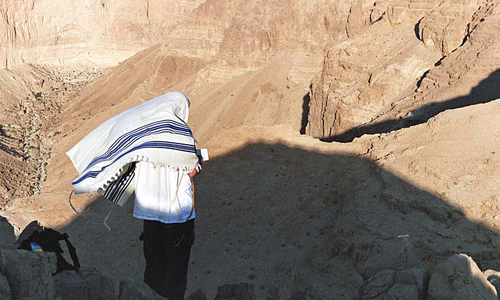
praying_at_masadaYeshua came as the “Word made flesh,” the living embodiment of the Torah, the walking, talking, flesh and blood, human expression of the will and wonder of God, all contained within a human body. He was the perfect image of what we strive for, the Word written on flesh.

There’s a difference. John’s Gospel says that Yeshua was the Word made flesh, while we get from Ezekiel and Jeremiah that the Word will be written on our fleshy hearts. We don’t literally become the Word as a human being, we “merely” have it wholly integrated into our being.

But here’s the result.

Amen, I say to you, none among those born of a woman has arisen greater than Yochanan the Immerser; yet the smallest in the kingdom of Heaven will be greater than he.

Matthew 11:11 (DHE Gospels)

I mentioned above the concepts of knowing about God vs. knowing God. I don’t doubt that there are people today, great tzaddikim or saints who know God, at least to the current extent of human ability, but the Bible records that Moses spoke with God “face to face” (Exodus 33:11). That’s pretty hard for me to imagine, especially since God is considered Spirit and without physical form (the third of the Rambam’s Thirteen Principles of Faith).

But the Master prophesied that when the New Covenant is fully enacted, then the finger of God will have finished writing His Word on our hearts of flesh and, like Moses and the Prophets of Old, including John the Baptizer, we will all know God, God’s Spirit will be poured out on all flesh (Joel 2:28, Acts 2:17), and everyone, from the least to the greatest, will have a full knowledge and intimate relationship with God. We won’t just know about Him, we will know Him.

Jesus, when the Spirit was poured out on him at his immersion (Matthew 3:16) became the forerunner, the first fruits of New Covenant human beings. He was still fully human, but with the Spirit poured out on him as it will be someday in the Messianic Era, a human being who could be tempted but still not sin. He’s the living promise that we will be perfected even as he was perfected.

It’s exciting to watch God’s plan open up in the pages of the Bible. The progression from the tablets and scrolls to the first fruits of the New Covenant, Messiah, coming as the “Word made flesh,” and then anticipating the day when that Word will be written on our flesh as well.

Right now, we experience just the leading edge of that New Covenant as we continue to live in the Old Covenant era, the Spirit was given as a pledge and a promise of what is yet to come (2 Corinthians 1:22). We aren’t there yet, but God has given His Spirit to us as His bond that what He has promised will indeed occur.

But there’s a catch.

For I am already being poured out as a drink offering, and the time of my departure has come. I have fought the good fight, I have finished the course, I have kept the faith; in the future there is laid up for me the crown of righteousness, which the Lord, the righteous Judge, will award to me on that day; and not only to me, but also to all who have loved His appearing.

2 Timothy 4:6-8 (NASB)

PrayingThis doesn’t just happen.

Yes, God promised it and it will happen, but it won’t just happen to us without an effort on our part. It isn’t just an intellectual and emotional acceptance we make that Jesus is Lord and then suddenly we’re in. As we see from Paul’s example, we only get to the finish line after running the race, after exerting ourselves, after keeping the faith and holding fast to our confession (Hebrews 4:11, 14).

Recently, I wrote of some of this as applied to me personally in For Redemption is Not Yet Complete and next week’s review of D. Thomas Lancaster’s Epistle to the Hebrews sermon The Source of Eternal Salvation will speak strongly to who we are in Messiah and our role in the process of repentance and salvation.

Each day, we struggle to reaffirm our faith. Each day we must repent anew, plead for the forgiveness of our sins, and turn to Yeshua as our atonement. The finger of God is moving and writing, but only if we are willing participants in allowing our stony heart to be transformed, only if we surrender ourselves as the material upon which (upon whom) God may write His Torah.

And we do that only by recognizing the one who came from God and who returned to God and who will come again. The one who arrived as a flesh and blood man and who was (and is) also the Word. For only through him can we find the Word within us as we are within Him.

Review of “What About the New Covenant,” Part 5

Session Five: From Glory to Glory

“Behold, days are coming,” declares the Lord, “when I will make a new covenant with the house of Israel and with the house of Judah, not like the covenant which I made with their fathers in the day I took them by the hand to bring them out of the land of Egypt, My covenant which they broke, although I was a husband to them,” declares the Lord.

Jeremiah 31:31-32 (NASB)

This is the fifth and final lecture in the series What About the New Covenant presented by D. Thomas Lancaster and produced by First Fruits of Zion (FFOZ). This sermon is the one that wraps everything up, at least hopefully. We’ve gone through the other four lectures and I’ve offered my thoughts and opinions. Let’s see how everything ends.

Lancaster says the above-quoted text from the New Covenant language in Jeremiah reminds him of the incident with the Golden Calf (Exodus 32). Moses smashed the first set of tablets, symbolizing how Israel broke the covenant, rebuked the people, then went back up the mountain to make atonement. He came back down with another set of tablets, symbolizing the renewal of the covenant.

It came about when Moses was coming down from Mount Sinai (and the two tablets of the testimony were in Moses’ hand as he was coming down from the mountain), that Moses did not know that the skin of his face shone because of his speaking with Him. So when Aaron and all the sons of Israel saw Moses, behold, the skin of his face shone, and they were afraid to come near him. Then Moses called to them, and Aaron and all the rulers in the congregation returned to him; and Moses spoke to them. Afterward all the sons of Israel came near, and he commanded them to do everything that the Lord had spoken to him on Mount Sinai. When Moses had finished speaking with them, he put a veil over his face. But whenever Moses went in before the Lord to speak with Him, he would take off the veil until he came out; and whenever he came out and spoke to the sons of Israel what he had been commanded, the sons of Israel would see the face of Moses, that the skin of Moses’ face shone. So Moses would replace the veil over his face until he went in to speak with Him.

Exodus 34:29-35 (NASB)

There’s a lot going on in this paragraph in the Torah. The only time I’ve heard this passage explained before was on Christian radio, and the Pastor doing the teaching (I can’t recall who it was) used it as some sort of evidence to how bad the law was. I can’t remember his arguments, but it seemed more than a little allegorical and was yet another shot by the Church from its Replacement Theology arsenal. Lancaster gives this portion of scripture a fresh look.

When Moses was in the presence of God, his face took on the “radiance of the Divine Presence” but it eventually faded. The people were initially afraid of seeing the light of God’s Glory shining on Moses’ face but he called them back to him. When he was around people, he veiled his face, maybe to keep from scaring people, but maybe to keep them from realizing that the light eventually faded. Only when he was with God did he unveil his face and the shining glory returned to him. almost like Moses was being “recharged.”

This will all become important shortly as we get into Lancaster’s commentary on Paul’s midrash:

For we are not like many, peddling the word of God, but as from sincerity, but as from God, we speak in Christ in the sight of God.

2 Corinthians 2:17 (NASB)

Lancaster and the rest of the FFOZ staff typically default to the ESV Bible when writing or teaching, but this time Lancaster switched to the NASB, explaining that the ESV Bible does a poor job at translating the verses he’s going to teach from. This matches what Pastor Randy told me one time, saying that he found the ESV Bible in general to give a certain amount of support to Replacement Theology by how it translates the original languages.
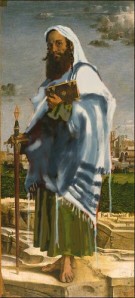
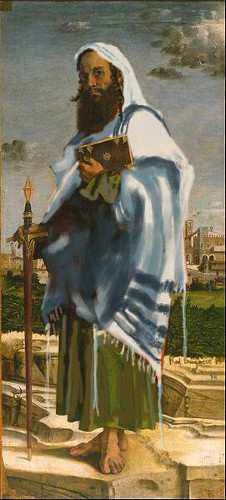
The Jewish PaulWe start with Paul defending himself from allegations that he is not really an apostle because he was not commissioned as were the other apostles, by Yeshua (Jesus) during the Messiah’s “earthly ministry.” Paul explains that he did not come “peddling the word of God,” that is, asking for money, but he worked to support himself. He also said “we speak Christ in the sight of God,” explaining that he and his companions were commissioned by God as it were.

Then Paul got a little sarcastic (an attitude New Testament scholar Mark Nanos called “an ironic rebuke” in his book The Irony of Galatians: Paul’s Letter in First-Century Context).

Are we beginning to commend ourselves again? Or do we need, as some, letters of commendation to you or from you? You are our letter, written in our hearts, known and read by all men; being manifested that you are a letter of Christ, cared for by us, written not with ink but with the Spirit of the living God, not on tablets of stone but on tablets of human hearts.

2 Corinthians 3:1-3 (NASB)

Without stealing Lancaster’s thunder by explaining everything, he describes Paul as sarcastically asking if his Master or the Council of Apostles in Jerusalem, should have sent him out with a letter or recommendation, sort of like asking, “Should I have brought a note from my Mother?”

But he also says something interesting. He says “you,” his audience, “are our letter of recommendation,” indicating that their behavior, their lives changed by the knowledge of and faith in Messiah, are what establishes Paul’s “cred” as an apostle. But a letter written on hearts by the Spirit of God? Where have we heard that before?

And I will give them one heart, and put a new spirit within them. And I will take the heart of stone out of their flesh and give them a heart of flesh, that they may walk in My statutes and keep My ordinances and do them. Then they will be My people, and I shall be their God.

Ezekiel 11:19-20 (NASB)

“But this is the covenant which I will make with the house of Israel after those days,” declares the Lord, “I will put My law within them and on their heart I will write it; and I will be their God, and they shall be My people.

Jeremiah 31:33 (NASB)

TorahLancaster says that Paul took those two passages, both of which end with the same declaration of Israel being His people and He being Israel’s God in New Covenant language, and leveraged them in this 2 Corinthians 3:1-3 commentary. Paul is continuing to establish himself as an apostle and emissary of the New Covenant, contrasting the Old Covenant and New Covenant, not that the conditions are different, because the Torah as the conditions, are the same between one covenant to the other, but that those conditions, written on stone tablets in the Old Covenant, are written on hearts by the Spirit of God in the New Covenant.

Such confidence we have through Christ toward God. Not that we are adequate in ourselves to consider anything as coming from ourselves, but our adequacy is from God, who also made us adequate as servants of a new covenant, not of the letter but of the Spirit; for the letter kills, but the Spirit gives life.

But if the ministry of death, in letters engraved on stones, came with glory, so that the sons of Israel could not look intently at the face of Moses because of the glory of his face, fading as it was, how will the ministry of the Spirit fail to be even more with glory? For if the ministry of condemnation has glory, much more does the ministry of righteousness abound in glory. For indeed what had glory, in this case has no glory because of the glory that surpasses it. For if that which fades away was with glory, much more that which remains is in glory.

2 Corinthians 3:4-11 (NASB)

Especially starting at verse 7, these scriptures are used by many Christian teachers and Pastors to substantiate the allegation that the Torah was “bad” and killed, and that it was replaced by the grace of Jesus which is “good” and gave life. I have to admit, if you had no context for interpreting Paul’s meaning, then “the ministry of death, in letters engraved on stones” sounds pretty grim. The Torah brings death, the ministry of Moses was (and is) deadly, he seems to say. But look at the full message from the point of view of a val chomer or from lighter to heavier argument. I’ll paraphrase somewhat:

But if the ministry of death, in letters engraved on stones, came with glory, so that the sons of Israel could not look intently at the face of Moses because of the glory of his face, fading as it was, how will the ministry of the Spirit fail to be even more with glory?

I guess this “ministry of death” thing needs some explanation. What brings death, obeying the Torah? That hardly seems likely since God gave Israel the Torah as the conditions of the Old Covenant at Sinai and, as we’ve seen these past several weeks, the Torah represents the conditions of the New Covenant as well. So how can the Old Covenant and the Torah be a “ministry of death?” What’s the difference between the Old and New Covenants?

Under the Old Covenant, if you disobey the conditions, thereby disobeying God, the consequences were exile and death. The wages of sin is death (Romans 6:23). It’s not the Torah that brings death, and it is not fidelity to the Torah and to God that brings death, the ministry of death is disobedience and sin, the consequences for which, under the Old Covenant, bring death.
gloryBut as we’ve previously seen, under the New Covenant, the Torah or the conditions don’t change, it’s the people who change. It becomes possible for people to not sin at all thanks to what God does in the New Covenant, writing the Torah on people’s hearts so obedience to God becomes part of human nature. It is the ministry of righteousness because the people become righteous.

Paul is saying something like:

If you thought the Old Covenant came in tremendous glory, just you wait. The New Covenant comes with even much more glory, so much in fact that, by comparison, the shining of the New Covenant will make the light and glory of the Old Covenant seem like a dim night-light!

Paul isn’t saying that the Old Covenant had no glory, only that by comparison, the New Covenant, because it makes it basically impossible for people to sin, will seem so much more glorious. In a val chomer argument, the second condition cannot be true unless the first condition is true, so if the New Covenant has tremendous glory, the Old Covenant is glorious as well (present tense), just not quite so much.

Like the glow on Moses’ face, it was brilliant in its illumination, but it had a tendency to fade and needed to be renewed. Something like the pattern of Israel under the glorious Old Covenant. Israel’s faith tended to fade and they sinned, requiring repeated renewal efforts. Christianity has a similar problem but then, we’re still living in Old Covenant times, too. We do however have a pledge of the coming New Covenant, just as all believers do, Jew and Gentile alike.

Lancaster previously talked about a Heavenly Torah that, in order to be understood and accessed by man, had to be “clothed” so to speak, to “translate” from Heaven to Earth. The Torah of the Lord is perfect, restoring the soul (Psalm 19:7), but since it exists in our world, it is also temporal. Basically, it’s glory “fades.” The Torah of Messiah in the New Covenant is the Supernal Torah and will never fade but instead, Messiah will reveal what is now concealed in the Torah, removing the veil, as it were, from the Torah and from in front of our eyes, so we can see the full glory, just as Moses saw God’s glory on the mountain.

Do not think that I came to abolish the Law or the Prophets; I did not come to abolish but to fulfill. For truly I say to you, until heaven and earth pass away, not the smallest letter or stroke shall pass from the Law until all is accomplished.

Matthew 5:17-18 (NASB)

heaven and earthThe Old Covenant does not change at all while Heaven and Earth are still here, but eventually, we get a New Heaven and New Earth, so the Old Covenant will eventually cease. Actually I had a problem with this example of Lancaster’s because what I see Yeshua (Jesus) saying is that the Torah, the conditions of the Old and New Covenants, don’t change as long as Heaven and Earth exist, so it seems that the conditions of even the New Covenant will change once we get a New Heaven and a New Earth. Of course, until then, we are living in Old Covenant times, holding only a pledge of the New Covenant through receiving the Holy Spirit, so the conditions are still with us under the Old Covenant and the emerging New Covenant.

When He said, “A new covenant,” He has made the first obsolete. But whatever is becoming obsolete and growing old is ready to disappear.

Hebrews 8:13 (NASB)

Sure, the Old Covenant is becoming obsolete, but that’s a long, drawn out process, and it won’t disappear until Messiah returns bringing the fully realized New Covenant with him.

Let’s finish up with chapter three of 2 Corinthians:

Therefore having such a hope, we use great boldness in our speech, and are not like Moses, who used to put a veil over his face so that the sons of Israel would not look intently at the end of what was fading away. But their minds were hardened; for until this very day at the reading of the old covenant the same veil remains unlifted, because it is removed in Christ. But to this day whenever Moses is read, a veil lies over their heart; but whenever a person turns to the Lord, the veil is taken away. Now the Lord is the Spirit, and where the Spirit of the Lord is, there is liberty. But we all, with unveiled face, beholding as in a mirror the glory of the Lord, are being transformed into the same image from glory to glory, just as from the Lord, the Spirit.

2 Corinthians 3:12-18 (NASB)

Lancaster goes through this line by line, but what I found important was how his interpretation of Paul redeemed Paul from the criticism of many Jewish people or for that matter, the mistaken understanding of many Christians, who saw Paul as anti-Torah and Law-free, and was teaching Jews and Gentiles to also forsake Torah and to believe the Torah was a “ministry of death”.

Lancaster describes why the Jewish people couldn’t simply obey the Torah as they had always done and have that be enough. It’s why there aren’t two paths to salvation, Moses for the Jews and Jesus for the Gentiles. Hear me out. I think this explanation makes sense.

Under the Old Covenant, as hard as a Jewish person might strive, being only human, sooner or later he would sin and require atonement under the conditions of that Covenant, that is, the Torah. When Israel sinned greatly and did not repent, the conditions of the Old Covenant required exile and death. Nothing in that Covenant made Jewish people “sin proof,” so to speak.

Look at Israel’s history. It’s glorious but it’s also terrible. How many exiles have there been? How many times has Jerusalem been destroyed? How many times has God (temporarily) withdrawn His presence from among Israel due to their “hearts of stone?”

tallit_templeBut under the New Covenant, God makes it possible for Israel not to sin at all and further, God promises to forgive all of Israel’s sins past and present. Apprehending the first fruits of the New Covenant through faithfulness to Yeshua HaMashiach, the conditions of the Old Covenant and New Covenant, that is, the Torah, don’t change, so Jews are still required to perform the mitzvot, but God starts writing on their hearts, starts softening hearts, begins to lead His people Israel into the better promises of the New Covenant.

The veil is lifted and the concealed Torah is revealed. Israel is liberated, not from the Torah but liberated from sin.

What does from glory to glory mean?

From the glory of the Old Covenant, which was and is glorious indeed, but to the greater glory of the New Covenant, which will be eternal and in which all men will know God face to face, the way Moses knows God, not dimly through a mirror, as we know God now.

The glory of the Old Covenant forgives sin but does not make people sinless. The glorious New Covenant forgives all sins past and present, and then makes it possible for people to naturally obey God so that we will never again sin. The Old Covenant was and is good, but the New Covenant really is the better deal. It’s incredibly fabulous.

I’m kind of sad to see this study end. I was really enjoying it. Of course, I’ve got about a year’s worth of Lancaster’s Epistle to the Hebrews study to still work through, so it’s not like I’m out of material to review.

I deliberately left out quite a bit of detail from my reviews, so if these “meditations” have piqued your interest, I’d recommend you order the full five-disc set of audio CDs What About the New Covenant. May you be as illuminated as I have been.

Sermon Review of the Holy Epistle to the Hebrews: The Book and the Sword

Hebrews 4:11-16 speaks of a fearsome sword that divides soul and spirit, joint and marrow, and reveals the inner intentions of the heart. Discover the edenic background to the double-edged sword of the book of Hebrews and the Way to the tree of life.

-D. Thomas Lancaster
Sermon Twelve: The Book and the Sword
Originally presented on April 6, 2013
from the Holy Epistle to the Hebrews sermon series

Let us therefore make every effort to enter that rest, so that no one may fall through such disobedience as theirs.

Indeed, the word of God is living and active, sharper than any two-edged sword, piercing until it divides soul from spirit, joints from marrow; it is able to judge the thoughts and intentions of the heart. And before him no creature is hidden, but all are naked and laid bare to the eyes of the one to whom we must render an account.

Since, then, we have a great high priest who has passed through the heavens, Jesus, the Son of God, let us hold fast to our confession. For we do not have a high priest who is unable to sympathize with our weaknesses, but we have one who in every respect has been tested as we are, yet without sin. Let us therefore approach the throne of grace with boldness, so that we may receive mercy and find grace to help in time of need.

Hebrews 4:11-16 (NRSV)

D. Thomas Lancaster started this week’s sermon by going over the sense of distance we sometimes (often?) perceive exists between us and God. I’ve experienced that distance more than once. I’ve attributed that distance to my own faults and failures. After all, what else could it be?

Lancaster went through the ancient, traditional approach that people took to “access” God. As I’ve always surmised, why should an infinite, omnipotent, God want or have to listen to one tiny mortal human being? Who do we think we are, anyway that God should be mindful of us?

So usually ancient man had to go to a god’s temple, bring an appropriate sacrifice, and allow the priest of the temple to offer the sacrifice on our behalf. They needed a priest.

I can already see where Lancaster is going and the expected Christian response that, as believers, we are now our own priests (1 Peter 2:5) and don’t need an intercessor. God removed the veil separating man from the most holy place (Matthew 27:51, Mark 15:38).

But let’s wait and see how far and in what direction Lancaster takes this sermon.

Lancaster says the requirement of a priest did not always exist. Adam and Eve walked with God in the garden, in Gan Eden, in paradise and there was nothing between them and Him.

But that didn’t last too long.

Then the Lord God said, “See, the man has become like one of us, knowing good and evil; and now, he might reach out his hand and take also from the tree of life, and eat, and live forever” — therefore the Lord God sent him forth from the garden of Eden, to till the ground from which he was taken. He drove out the man; and at the east of the garden of Eden he placed the cherubim, and a sword flaming and turning to guard the way to the tree of life.

Genesis 3:22-24 (NRSV)

Leaving EdenNo, the cherubim are not cute, little, baby-like angels. The keruvim are big, dangerous, fierce angelic beings with a flaming sword, no less, turning in each direction to bar the way to the tree of life.

And human beings walked out of Eden and have been in exile ever since, trying to find a way back, trying to return to paradise, and even we, who have put our faith and devotion in Messiah, are still separated from God, still in exile, still on the outside looking in, some of us more than others, it seems.

He slaughtered the ox and the ram as a sacrifice of well-being for the people. Aaron’s sons brought him the blood, which he dashed against all sides of the altar, and the fat of the ox and of the ram—the broad tail, the fat that covers the entrails, the two kidneys and the fat on them, and the appendage of the liver. They first laid the fat on the breasts, and the fat was turned into smoke on the altar; and the breasts and the right thigh Aaron raised as an elevation offering before the Lord, as Moses had commanded.

Aaron lifted his hands toward the people and blessed them; and he came down after sacrificing the sin offering, the burnt offering, and the offering of well-being. Moses and Aaron entered the tent of meeting, and then came out and blessed the people; and the glory of the Lord appeared to all the people. Fire came out from the Lord and consumed the burnt offering and the fat on the altar; and when all the people saw it, they shouted and fell on their faces.

Leviticus 9:18-24 (NRSV)

Lancaster showed us in the verses above, the inaugeration of the duty of the Levitical priesthood. So now only priests can enter into the presence of the Lord and only after making extensive preparations on their own behalf as well as on the behalf of those they represent.

Again, I know what you’re thinking, Christians. Hang on. The answer is coming.

burning-bushIs there a way back to Eden, a way back to the level of intimacy that Adam and Eve (or Chava, actually) enjoyed with Hashem? Is there a way past the keruvim and the flaming sword?

Lancaster took a look at the sword through the lens of rabbinic commentary, principally Genesis Rabbah, and came up with different opinions about the sword. Some say it is angels, and others flaming Gehenna. One Rabbi said circumcision. The final opinion is that the sword is Torah, for as it says:

Let the high praises of God be in their throats and two-edged swords in their hands, to execute vengeance on the nations and punishment on the peoples…

Psalm 149:6-7 (NRSV)

Lancaster then took his audience over some previous territory:

For if the message declared through angels was valid, and every transgression or disobedience received a just penalty…

Hebrews 2:2 (NRSV)

The word “message” in Greek is “logos” or “word” and is representative of the Torah, and it contains judgment for disobedience of transgressions, just as the sword was God’s response for disobedience at Eden.

The sword is logos, Torah, God’s standard, God’s instruction. How can we get past God’s judgment, past the sword, is there a way back to Eden?

Jesus said to him, “I am the way, and the truth, and the life. No one comes to the Father except through me.

John 14:6 (NRSV)

It’s no coincidence that the ancient name for the Jewish worship stream devoted to Yeshua (Jesus) was called “the Way.” Genesis 3:24 says the sword guarded the way to the tree of life” (emph. mine). Just like Israel in the days of the Tabernacle, in the days of the Temple, the writer of Hebrews is telling his Jewish readers that they need a priest to help them draw nearer to God, but even though they had priests to intercede and offer sacrifices in Herod’s temple, there was an even greater priest in an even greater, heavenly Temple, and only through him could they, can we approach any level of intimacy with God.

But this is no easy thing. One does not simply declare that they “believe in Jesus” and suddenly it’s alright and everything’s groovy. In Rabbinic interpretation, the Torah was given with a sword so that if Israel obeyed God, the Torah would save them from the sword, and if Israel did not obey God, the sword would mete out judgment, which as we see many times in the record of the Tanakh (Old Testament), that is exactly what happened.

Contemplate three things, and you will not come to the hands of transgression: Know what is above from you: a seeing eye, a listening ear, and all your deeds being inscribed in a book.

-Pirkei Avot 2:1

All of us like sheep have gone astray, Each of us has turned to his own way; But the LORD has caused the iniquity of us all To fall on Him.

Isaiah 53:6 (NASB)

There is none righteous, not even one…

Romans 3:10 (NASB)

lightEven the mere thought of entering into the presence of God should send us into fear and trembling, for who is without sin, and who has not disobeyed the most powerful, almighty, infinite God? It is a terrible thing to fall into the hands of the living God (Hebrews 10:31).

The sword, the Torah, is God’s standard of righteousness and it judges us. In and of ourselves, we cannot pass by the flaming sword and enter into God’s presence in paradise.

But there is some good news:

Since, then, we have a great high priest who has passed through the heavens, Jesus, the Son of God, let us hold fast to our confession. For we do not have a high priest who is unable to sympathize with our weaknesses, but we have one who in every respect has been tested as we are, yet without sin. Let us therefore approach the throne of grace with boldness, so that we may receive mercy and find grace to help in time of need.

Hebrews 4:14-16 (NRSV)

Once a year in the days of the Temple in Jerusalem, the High Priest would go through a special set purification rites and sacrifices for himself simply to prepare to enter into the Holy of Holies on the Day of Atonement, on Yom Kippur, to present the annual offerings to atone for the sins of the nation.

But he had to do this once a year, and he had to offer many sacrifices just to atone for his own sins first, so he could be in such a state of purity in order to be acceptable enough to enter into the Most Holy Place in the earthly Temple.

This was an effective system but it had limits. The writer of the Book of Hebrews says there is one even more righteous than the High Priest of the line of Aaron. This priest is without sin, a tzadik who is completely Holy unto God. It is he who is our hope, not of entering the earthly Temple (as it will one day exist again) to make offerings, but to enter past the keruvim, past the flaming sword, past the desperate hazard of God’s judgment and the threat of burning eternally in Gehinnom, so that we may rest in God’s mercy in paradise.

What Did I Learn?

I particularly appreciated the word play associated with “the way” as illustrated in Genesis 3:24 and John 14:6, and how that “way” allows us to return from the exile humanity experienced as a result of the failure at Eden. It puts me one step closer to understanding why we all need a “Savior,” and why prayer and repentance to Hashem is “not enough,” a question that has plagued me for quite some time.

But it also brings up a question or rather, it reminds me of an unanswered question I typically ignore except at times like these when I can’t avoid it.

For we do not have a high priest who is unable to sympathize with our weaknesses, but we have one who in every respect has been tested as we are, yet without sin.

Hebrews 4:15 (NRSV)

There seems to be a disconnect between this verse and the one that follows, and even between one part of this verse and another.

Yeshua (Jesus) lived a perfectly human and yet a perfectly sinless life for thirty some odd years. I probably can’t avoid an act of disobedience for thirty some odd minutes (or even thirty seconds, sometimes). So Jesus can sympathize with us when we are tempted and tested because he knows the difficulty and suffering of testing as well. Lancaster says it wasn’t just the three trials of the tempter he had to endure (Matthew 4:1-11), but living a human life, he endured human temptations.

So he can sympathize with me when I am tested in the manner of humans, just as he was tested in all human frailty…

…but he did not sin…ever.

unworthySo our high priest can sympathize with our trials, just like the Aaronic High Priests as human beings could sympathize, but an Aaronic High Priest could also sympathize with failure and having sinned because they weren’t perfect…they sinned.

Jesus never sinned, which is what qualifies him to enter into the Heavenly Holy of Holies on our behalf, but how can he possibly sympathize with human failure when he never failed?

Recently, Derek Leman wrote a very good piece on the meaning of grace that transcends the traditional Christian interpretation and adds a great deal of depth to God’s divine kindness and mercy and His undeserved gifts to human beings.

On that level, I can understand why Jesus the High Priest would intercede for us before the Father, and I can imagine that he might feel merciful and even experience pity for we pathetic human beings (I may not be apprehending Derek’s point as much as I need to here), but sympathy or rather empathy because our experience is his experience? I don’t think so. I can’t see how you can understand failure unless you’ve failed. Since Jesus never failed, how can he, or God the Father, the infinite and unknowable Ein Sof, possibly understand us? How can Jesus ever understand me when I fail?

Review of “What About the New Covenant,” Part 3

Session Three: The Inner Torah

Lancaster began this lecture by recalling a time when he was teaching a Torah class at a large, Charismatic church. One of his students really loved the class and decided to bring her husband. The husband was less enthusiastic and told Lancaster after the lesson was over, “This sounds like the oldness of the letter, not the newness of the spirit.”

It’s the contrast between these two ideas and the traditional Christian misinterpretation of these concepts, that Lancaster presents through out this forty-three minute sermon.

Lancaster followed up with a fictional story about him running a stop sign while driving and being pulled over by a police officer. In this made up scenario, Lancaster told the officer, I know the letter of the law said “stop” but as long as I didn’t hit anyone or cause an accident, I obeyed the spirit of the law.

In real life, that wouldn’t work out very well.

Let’s take another example from the lecture.

When you build a new house, you shall make a parapet for your roof; otherwise you might have bloodguilt on your house, if anyone should fall from it.

Deuteronomy 22:8 (NRSV)

This is included as one of the 613 mitzvot or commandments in Judaism. The letter of the law is that, assuming you have a flat roof on your house where people can stand, you shall build a barrier around the roof to keep people from falling off. The spirit of the law, that is the intent, and in this case, it’s God’s intent, is that you should locate and remediate any dangerous hazard on your property.

The spirit of the law doesn’t abrogate or somehow cancel the letter, the spirit is simply the intent behind the actual law.

But in Christianity, the letter of the law and the spirit of the law are placed in direct opposition to one another. The letter usually means the Torah or the “Old Covenant” conditions, while the spirit usually means the grace of Christ or the New Covenant. The spirit is an easier law, one people are more capable of obeying than the letter.

However, Christians are somewhat justified in their assumption which they get from Paul:

But now we are discharged from the law, dead to that which held us captive, so that we are slaves not under the old written code but in the new life of the Spirit.

Romans 7:6 (NRSV)

Not that we are competent of ourselves to claim anything as coming from us; our competence is from God, who has made us competent to be ministers of a new covenant, not of letter but of spirit; for the letter kills, but the Spirit gives life.

2 Corinthians 3:5-6 (NRSV)

I can see why some people want to get rid of Paul, especially when many of us are trying to interpret Paul as pro-Torah, not anti-Law.

But what did Paul mean? The peshat or plain meaning of Paul’s words seems to indicate that he is contrasting the law with the spirit, the Torah with Jesus. Is this the way we should read Paul? Is there another “plain” and more accurate way to understand what he’s saying?

That requires a little background, perhaps the very background possessed by his original audience.

According to Jeremiah 31:34, we know the New Covenant language declares that in the future, Messianic Era, there will be a universal revelation of God. Everyone will know God. We will have an apprehension of God that will be greater than that of John the Baptist, all of Israel will be saved, because the Torah will be written on the hearts of Judah and Israel.

Hear, O Israel: The Lord is our God, the Lord alone. You shall love the Lord your God with all your heart, and with all your soul, and with all your might. Keep these words that I am commanding you today in your heart.

Deuteronomy 6:4-6 (emph. mine)

ShemaHey, wait! That’s the Shema. That was given way back in the days of the ancient Israelites. But the Torah of God isn’t written on our hearts yet. What gives?

I’ll get to that.

We know that God will give Israel a new spirit and new heart, and God will put the new spirit into the hearts of the Jewish people (Ezekiel 36:26-27) so it will be possible for people, Israel and the people of the nations who join them through faith in Messiah, to obey God, not just the list of mitzvot, but the intent behind them, not out of fear or obligation, but because we want to and fully understand why we should do good. I know Gentiles are included because God’s Spirit will be poured out on all flesh (Joel 2:28-29) and that our evil natures will be bound and unable to sway us (Revelation 20:1-2).

But we aren’t there yet, are we? That’s what Lancaster said in session two. So what do we have?

Now He who prepared us for this very purpose is God, who gave to us the Spirit as a pledge.

2 Corinthians 5:5 (NRSV)

So God gave believers His Holy Spirit as a pledge or down payment. Against what? According to Lancaster, against the promise of the coming Messianic Age which was inaugurated and started beginning to arrive with the death and resurrection of Jesus, but will not fully arrive until the return of Messiah.

Until then, we know what we want and what we should do (such as stopping at a stop sign) but we don’t always do what we know is right because of our human nature or what is called in Judaism the evil inclination.

For we know that the Law is spiritual, but I am of flesh, sold into bondage to sin. For what I am doing, I do not understand; for I am not practicing what I would like to do, but I am doing the very thing I hate. But if I do the very thing I do not want to do, I agree with the Law, confessing that the Law is good. So now, no longer am I the one doing it, but sin which dwells in me. For I know that nothing good dwells in me, that is, in my flesh; for the willing is present in me, but the doing of the good is not. For the good that I want, I do not do, but I practice the very evil that I do not want. But if I am doing the very thing I do not want, I am no longer the one doing it, but sin which dwells in me.

Romans 7:14-20 (NRSV)

My brilliant light of selfA person who has received the “down payment” of the Spirit knows what is right and what pleases God. God has just started writing the Torah on that person’s heart. But they still possess their will to be disobedient, and so two natures war within the person, and they always will be until the resurrection. We can live in the flesh, that is, in our human nature, but then we don’t even desire to please God. We can live by the letter of the law, attempting to please God, but only with our human strength. Or we can live in the spirit, desiring to please God and relying on the Spirit of God to help us obey him, even though we know we will continually be in a battle with our human nature.

This isn’t a battle between the Torah and grace, but between the Holy Spirit within us and our human nature.

To some degree, this makes it seem as if we’re off the hook, since being evil, even possessing the Spirit, the best we can do is try to do good but continue to sin.

Lancaster says Paul doesn’t make it that easy.

So then, brethren, we are under obligation, not to the flesh, to live according to the flesh — for if you are living according to the flesh, you must die; but if by the Spirit you are putting to death the deeds of the body, you will live.

Romans 8:12-13 (NRSV)

Once we receive the Spirit, God expects us to live as if the Messianic Age has already fully arrived, not to just blow off God’s desires.

What then? Shall we sin because we are not under law but under grace? May it never be!

Romans 6:15 (NRSV)

By the way, that “law” Paul mentions is not the Torah. You’ll have listen to the entire recording of the lecture to get the full argument, but the “law of sin and death” (Romans 8:2) means the wages or consequences of sin is death (Romans 6:23). If we give in to the temptation to sin and don’t even resist the evil inclination within us, then the result is death. We must keep fighting, the old man against the new man, wrestling like Jacob and Esau in their mother’s womb (Hosea 12:3).

I’m reminded of the sermon and subsequent Sunday School lesson I heard last week in church. The message was on the perseverance of Paul in the face of almost certain death.

But I do not consider my life of any account as dear to myself, so that I may finish my course and the ministry which I received from the Lord Jesus, to testify solemnly of the gospel of the grace of God.

Acts 20:24 (NRSV)

PaulWe know, based on what Paul said in Romans, that he continued to struggle with his human nature and disobeyed God, but we also know that he “fought the good fight…finished the race…kept the faith” (2 Timothy 4:7), remaining obedient and faithful to God and his mission to the Gentiles, never teaching against the Torah or against the Jewish people (Acts 28:17-20).

So it’s possible in this life with the current troubles we face (and how many of us have ever had the struggles Paul had to deal with?) to obey God and to commit our lives to our Master, with the old nature and new creation within each of us struggling “like two immortals locked in an epic battle until Judgment Day and trumpets sound” (quoting from this movie) at the return of the King.

I wouldn’t be giving a complete review of “The Inner Torah” unless I talked some about the Rabbinic perspective on the Messiah and the Messianic Age. Lancaster says that according to the Sages (he didn’t provide a specific reference), Messiah will teach the Torah, correcting all of the misinterpretations, and he will even bring a new Torah, the Torah of Messiah. This is somewhat misleading since the Torah of Messiah is the Torah of Moses, but…

…it’s thought that there is a perfect, heavenly Torah, which is God’s wisdom, will, and intent. To make it accessible to people, the Torah was “clothed,” so to speak, so that it could take on physical properties and be given to our world. That is the Torah we have as represented by scrolls in arks in synagogues and by books of the Bible we carry with us. But you can only include so much of Heaven in an object meant to exist on Earth. Messiah will be able to “unlock” the greater mysteries of the Torah, the heavenly essence, so to speak, and teach that Torah. It’s still the same Torah, but it contains so much more than we can currently perceive.

This is the inner Torah, the same Torah that was given at Sinai, but fully “unclothed” and fully written within us, so that we will not only know all good and everything that pleases God, but we will have a total desire to do all that is good and we will understand why each thing God wills is good and perfect, because it will be written within our natures. There will be no more fighting inside of us. The old creation is dead and the new creation lives on victorious (2 Corinthians 5:17).

The messianic age will be characterized by the peaceful co-existence of all people (Isaiah 2,4). Hatred, intolerance, and war will cease to exist. Some authorities suggest that the laws of nature will change, so that predatory beasts will no longer seek prey and agriculture will bring forth supernatural abundance (Isaiah 11,6-9); others like Maimonides, however, say that these statements are merely an allegory for peace and prosperity. What is agreed on by all is a very optimistic picture of what real people can be like in this real world, the like of which has never been seen before.

All of the Jewish people will return from their exile among the nations to their home in Israel (Isaiah 11,11-12; Jeremiah 23,8; 30,3; Hosea 3,4-5), and the law of the Jubilee as well as the rest of the special agricultural laws in the Torah will be reinstated.

In the messianic age, the whole world will recognize YHWH, the LORD God of Israel, as the only true God, and the Torah will be seen as the only true religion (Isaiah 2,3; 11,10; Micah 4,2-3; Zechariah 14,9). There will be no more murder, robbery, competition, or jealousy.

-Mashiach: The Messiah
mechon-mamre.org

heart in the sandNear the end of the lecture, Lancaster briefly mentioned that the Torah written on our hearts doesn’t mean that Gentiles become Jews or that Gentiles and Jews all wear tzitzit, lay tefillin, and wear payot. How the Torah is applied varies between Jews and Gentiles. I want to add that people struggle hard enough with our human natures and our sins. It’s not like wearing a tallit will cancel being stingy, or repeatedly losing our temper, or other sins of which we’re guilty.

As Lancaster interprets Paul and presents in his lecture, we may still struggle between righteousness and sin, but we are also responsible for continuing the fight. Paul kept the faith all his life and he’d have lived a longer life if he wasn’t obedient to God. But the Master taught, “Those who find their life will lose it, and those who lose their life for my sake will find it.” The New Covenant is only beginning. We are still at war within ourselves. But as we battle, the finger of God slowly is writing His Torah on our hearts and the King is coming. We must continue in his will and grace, be obedient, and prove ourselves as worthy servants until his return.

Addendum: I just read a commentary on New Testament scholar Larry Hurtado’s blog on N.T. Wright’s new book (tome) Paul and the Faithfulness of God. This is the last of a series of reviews Hurtado has written, and I found the following quote appropriate to the current discussion:

We do have Wright emphasizing correctly that for Paul God’s eschatological programme had already begun in Jesus, especially in Jesus’ death and resurrection. So, to use terms familiar in the history of NT scholarship, Paul held an “inaugurated eschatology,” the final events already underway, the programme to be consummated at Jesus’ parousia (return). (I still like Oscar Cullmann’s analogy: For Paul, Jesus’ death and resurrection was D-Day, and his parousia V-Day, and Paul thinks he is living in the exciting time between these two events: Christ and Time, pp. 144-74, esp 145. )

Also, Wright links (again correctly) the Spirit with eschatology, and so the presence and experience of the Spirit in early Christian circles was for Paul evidence of the new age underway, the Spirit raising new possibilities, new energies for obedience to God, even among former pagans.

For the full content of Hurtado’s commentary, please read Paul’s Eschatology: Further Comments on Wright’s New Opus.

Review of “What About the New Covenant,” Part 2

Session Two: The Breit Chadashah

D. Thomas Lancaster started this second lecture in the series by taking me more than a few years back into my own history in the Hebrew Roots movement. He said that when he first became involved in Messianic Judaism, even though most people in his group didn’t know Hebrew, there were a few “Hebrewisms” that everyone was expected to observe.

Never say “Jesus”. Always say “Yeshua”. Say “Messiah” instead of “Christ”. Say “Torah” instead of “Law”. Really remember to say “Rav Shaul” rather than “Paul.” Also, say “Breit Chadashah” instead of “New Testament.”

Although some of my readers are scrupulous to use these “Hebrewisms” when emailing me or commenting, even though they may not be well-versed in Hebrew (though a few are quite proficient), some of them probably feel they have to follow this sort of “Messianic Political Correctness speak” in order to be acceptable or perhaps they feel they’re correcting past wrongs and, after all, Messianic Gentiles and Hebrew Roots Christians don’t want to sound too “church-y”.

But there’s a fundamental misunderstanding that most people in the Church and many in the Hebrew Roots and Messianic movements have, that the “New Testament,” that is the books in our Bibles that start with Matthew and end with Revelation, is the same thing as the “New Covenant.”

It’s not.

But to understand that point, we have to understand what the Old Covenant is and that the Old Covenant is not the same as the Torah or what Christians call “the Law.”

I covered some of this territory in last week’s review but Lancaster adds more detail in today’s sermon.

Now therefore, if you obey my voice and keep my covenant, you shall be my treasured possession out of all the peoples. Indeed, the whole earth is mine, but you shall be for me a priestly kingdom and a holy nation. These are the words that you shall speak to the Israelites.”

So Moses came, summoned the elders of the people, and set before them all these words that the Lord had commanded him. The people all answered as one: “Everything that the Lord has spoken we will do.” Moses reported the words of the people to the Lord.

Exodus 19:5-8 (NRSV)

This is the Old Covenant in a nutshell. It’s an agreement and a rather simple one at that. God says, if you, Israel, obey me, then I, God, will make you a ”priestly kingdom and a holy nation.” More simply put, God agrees that if Israel obeys Him ”Then I will take you for My people, and I will be your God.” (Exodus 6:7)

Once the people agreed to the Covenant, then Moses initiated it.

Moses came and told the people all the words of the Lord and all the ordinances; and all the people answered with one voice, and said, “All the words that the Lord has spoken we will do.” And Moses wrote down all the words of the Lord. He rose early in the morning, and built an altar at the foot of the mountain, and set up twelve pillars, corresponding to the twelve tribes of Israel. He sent young men of the people of Israel, who offered burnt offerings and sacrificed oxen as offerings of well-being to the Lord. Moses took half of the blood and put it in basins, and half of the blood he dashed against the altar. Then he took the book of the covenant, and read it in the hearing of the people; and they said, “All that the Lord has spoken we will do, and we will be obedient.” Moses took the blood and dashed it on the people, and said, “See the blood of the covenant that the Lord has made with you in accordance with all these words.”

Exodus 24:3-8 (NRSV)

Moses at NeboThis formally sealed the Covenant relationship between Israel and God. If you look at verses 9 through 11, you’ll see representatives of Israel having a meal in the presence of God since, in last week’s lecture, Lancaster said it was traditional behavior among two human parties, such as a great King and a vassal nation, to share a meal after a treaty had been settled.

The actual Covenant was the agreement between God and Israel, and Israel, for their part, were responsible to obey God in order to hold up their end of the bargain. But how? That’s where the Torah comes in. It defines the specific conditions and stipulations that Israel must obey.

However, there’s a problem. Israel’s obedience was rather poor. In fact, the first time they disobeyed was very soon after their initial agreement by building the Golden Calf (see Exodus 32). After that, the Covenant had to be renewed and it was renewed many times. But Israel, sadly, fell into a pattern of disobedience and sin. As part of the Covenant conditions, if the people obeyed, then God would be their God and they would be His people, but when they disobeyed, He ceased to be their God and they ceased to be His people. Then God sent an army and great destruction usually happened, sometimes with the people going into exile. Once they cried out to God and repented, God would send a rescuer, defeat Israel’s enemies, and restore the people to their Land.

And this happened over and over again. The Book of Judges is a good chronicle of this but the pattern is recorded in much of the Tanakh (Old Testament).

I mentioned that a lot of New Covenant language is found in Jeremiah 31 and Lancaster said that we need to understand the context of Jeremiah to get this.

In Jeremiah 3:1-5 we see Israel depicted as an unfaithful wife, and in spite of many calls to repentance, such as in verses 6 though 25, Israel remains uncaring and God sends the armies of Babylon to destroy Jerusalem.

But amid this tragic tale, Jeremiah introduces hope in the form of a future redemption, but one like Israel had never seen before.

The days are surely coming, says the Lord, when I will make a new covenant with the house of Israel and the house of Judah. It will not be like the covenant that I made with their ancestors when I took them by the hand to bring them out of the land of Egypt—a covenant that they broke, though I was their husband, says the Lord. But this is the covenant that I will make with the house of Israel after those days, says the Lord: I will put my law within them, and I will write it on their hearts; and I will be their God, and they shall be my people. No longer shall they teach one another, or say to each other, “Know the Lord,” for they shall all know me, from the least of them to the greatest, says the Lord; for I will forgive their iniquity, and remember their sin no more.

Jeremiah 31:31-34 (NRSV)

Now remember, the conditions of the Covenant are not the Covenant itself. The conditions of the Old Covenant are the Torah, but Jeremiah isn’t saying that the conditions are what’s new, it’s the Covenant that’s new.

Sofer-Sefer-TorahWhat’s so new in the New Covenant?

In the Old Covenant, God spoke the words of the Covenant to Moses who spoke them to Israel. Israel agreed and everything was written down on scrolls or tablets and the people were to refer to those conditions to, first understand what they had agreed to, and then to actually do what they’d agreed to do by performing the mitzvot.

In the New Covenant, instead of doing all that, God writes the conditions of the Covenant on the hearts and puts them in the minds of the people of Israel and then it becomes second nature for them to obey. The Torah conditions are internalized rather than being externally referenced.

The Old Covenant was written on scrolls and the New Covenant will be, or is in the process of being, written on human hearts and human natures.

But the conditions are the same.

I know what you’re thinking. You’re thinking if Gentiles are also benefiting to the New Covenant through faith in Jesus (Yeshua), then are those same conditions being written on our hearts as well?

Yes and no.

In the Torah is there a condition for Gentiles to circumcise their males on the eighth day of life? No, that requirement is only for the physical descendants of Abraham, Isaac, and Jacob. Gentiles are exempt. I’ve said before that the Acts 15 decision formally spelled out the conditions that Gentiles are responsible for carrying out, and it’s only through the blessings of one part of the Abrahamic covenant that the nations are attached to the New Covenant at all. Jews already knew the conditions that applied to them because they were the same ones established by the Sinai (Old) Covenant and they never changed.

But what about this?

But Jesus has now obtained a more excellent ministry, and to that degree he is the mediator of a better covenant, which has been enacted through better promises. For if that first covenant had been faultless, there would have been no need to look for a second one.

God finds fault with them when he says: “The days are surely coming, says the Lord, when I will establish a new covenant with the house of Israel and with the house of Judah…

Hebrews 8:6-8 (NRSV)

Torah at SinaiIt’s scriptures such as this that Christians use to prove that the Old Covenant was replaced by the New, but look at what the writer of Hebrews is actually saying. As he is about to quote from Jeremiah 31, he says, ”God finds fault with them (emph. mine)…” He doesn’t say God found fault with it, that is, the Old Covenant, but with them, with Israel, with the people, because they didn’t obey the conditions of the Covenant because of sin.

The solution wasn’t to change the Covenant but instead, to change the people, so it would be possible to fulfill the conditions of the Old Covenant originally spelled out at Sinai. The New Covenant (and not renewed) is a new method of delivery and institution so Israel will be obedient by design.

So how did we get into the mess we’re in as Christians today? How did this get screwed up?

According to Lancaster, the Church Fathers in the second and third centuries CE knew that they didn’t have to keep the conditions of the Old Covenant as did the Jews but they didn’t know why. The Apostles taught that Gentiles had a different (and somewhat overlapping) set of conditions but once the last of the Apostles died, the Gentiles made a few assumptions (or perhaps a few deliberate errors to serve a specific purpose, but that’s my opinion). Lancaster said these Gentile Christians assumed that everyone, Jew and Gentile in Jesus, kept the Gentile standards of obedience, and the Gentile Christians actually criticized (and later persecuted) Jews for not abandoning the “Old Covenant” conditions.

The other shocker for some Christians is that we aren’t really living in New Covenant times right now. Sure, the death and resurrection of Jesus started a process by which the New Covenant era began to arrive but it’s not fully with us yet. Otherwise, we wouldn’t sin. Otherwise the conditions of the New Covenant would be written on our hearts rather than in the Bible and we would all just naturally obey God.

Sadly, I must confess that I do not naturally obey God. I have to struggle with obedience. Chances are, you do, too. It will only be when the New Covenant Era fully arrives that we really will be “new creatures” and “new creations”. We aren’t there yet. We’re a work in progress.

That doesn’t stop you and me from repenting now. Why wait? Messiah is coming.

If my reviews are piquing your interest, you can find the complete, five-disc set of Lancaster’s New Covenant lectures at First Fruits of Zion. I’ll review the third lecture next week.

For more on this topic and how historical and modern Christianity has misunderstood the New Covenant, see my blog post The Two-Thousand Year Old Christian Mistake.

Kareth and Messianic Judaism

At the core of the pluralism issue is the debate over whether there’s “More than one way to be a good Jew.” Indeed, there have always been divergent streams of observance – like Chassidic, Sefardic vs. Ashkenazic, and even the Talmudic arguments between the Talmudic academies of Shammai and Hillel.

And yet, historic precedents show that there are limits to pluralism, beyond which a group is schismatic to the point where it is no longer considered Jewish. For example, everyone considers Jews for Jesus as outside of the legitimate Jewish sphere. The disagreement, then, lies in defining exactly what are the acceptable limits of divergence.

-from “Ask the Rabbi”
Aish.com

I’m continuing my email conversation with my Jewish friend as I described in yesterday’s meditation, and this “Ask the Rabbi” column seemed to fit right in. As you just read, there are a whole bunch of divergent streams of Judaism, but how far can you diverge and still be Jewish? According to the Aish Rabbi, being “Jews for Jesus” is going too far.

I should say at this point that “Jews for Jesus” is how most Jews see Messianic Judaism, thus Messianic Judaism isn’t viewed as a “Judaism” at all. One problem is, as a private communication revealed to me just recently, even many staunch Jewish disciples of Messiah aren’t all that observant. For instance, one Messianic Jewish conference (I’m deliberately concealing identifying information for obvious reasons) was scheduled during a major Jewish fast day. At another conference, the conference leaders ate the local hotel (non-Kosher) fare, and the very few Jewish attendees who kept kosher were forced to have catered kosher meals brought in or to drive some distance to a kosher eating establishment. And driving on Shabbat for the Jewish conference organizers and attendees wasn’t considered a big deal at all.

Why do I say all this?

Historically, any Jewish group which denied the basic principles of Jewish tradition – Torah and mitzvah-observance – ultimately ceased to be part of the Jewish people. The Sadducees and the Karites, for instance, refused to accept certain parts of the Oral Law, and soon after broke away completely as part of the Jewish People. The Hellenists, secularists during the Second Temple period, also soon became regarded as no longer “Jewish.” Eventually, these groups vanished completely.

-the Aish Rabbi

One of the big issues that may inhibit halachically, culturally, and religiously observant Jews from recognizing Messianic Judaism as a Judaism is, based on the quote above, the lack of consistent Jewish observance in Messianic Judaism. Except for in a few small corners of the movement (at least from an Orthodox Jewish perspective), Messianic Judaism presents the appearance of being not a Judaism (there are many other issues, such as the deification of Jesus and the supposed worship of a man, but I’m choosing to focus on the matter of community and observance right now).

tallit-prayerIt’s a terrible thing for a Jew to be cut off from his or her people.

For those of you who don’t know, the concept of Kareth or “cutting off” is a consequence of a Jew committing certain offenses, such as having a forbidden sexual relationship or worshiping a deity other than Hashem (known as Avodah Zarah). Messianic author and teacher Derek Leman even wrote an article on the topic a few years back.

Should a Jew in Messianic Judaism feel cut off from larger Judaism? Is that a consequence of being a Messianic Jew? Not according to Rabbi Stuart Dauermann in his article “The Jewish People are Us – Not Them,” which he wrote for the Fall 2013 issue of Messiah Journal (and which I reviewed), however, R. Dauermann admits that this has been a consequence of Messianic Judaism historically due to its associations with Evangelical Christianity. Evangelicals believe that once a Jew becomes a disciple of Messiah through the Messianic movement (or by converting to Christianity), they have more in common with Gentile Christians than non-Messianic Jews.

That’s a terrible burden to lay on any Jew’s shoulders.

But does it really have to be that way? Has it always been that way?

Early Christians were the original “Jews for Jesus.” They accepted the Divine revelation of the Torah, but not the eternal, binding nature of the commandments. Initially, these Jews were reliable in their kashrut, and counted in a minyan. But the turning point came when Paul, realizing that Jews wouldn’t accept the concept of a dead Messiah, opened up membership to non-Jews. At that point, these “Jews” experienced a total severing of Jewish identity.

Now that’s a glaring assumption by the Aish Rabbi. Let’s look at that again:

But the turning point came when Paul, realizing that Jews wouldn’t accept the concept of a dead Messiah, opened up membership to non-Jews. At that point, these “Jews” experienced a total severing of Jewish identity.

Ending MacArthur seriesEvangelical Christianity believes that Paul broke with Jewish identity shortly after he encountered Jesus on the road to Damascus (see Acts 9) and that the extinguishment of Jewish identity in Messiah was by design. The Aish Rabbi says Paul may not have originally intended to break with Judaism and tradition, but when he couldn’t convince other Jews to “worship a dead Messiah,” Paul switched the object of his proselytizing from Jewish to Gentile populations and cut loose anything Jewish from devotion to Jesus.

No wonder so many Jewish people really hate Paul.

As Paul and Barnabas were going out, the people urged them to speak about these things again the next sabbath. When the meeting of the synagogue broke up, many Jews and devout converts to Judaism followed Paul and Barnabas, who spoke to them and urged them to continue in the grace of God.

Acts 13:42-43 (NRSV)

I invite you to read the larger context which is captured in Acts 13:13-52, but basically, after Paul’s discourse in the synagogue at Pisidian Antioch, on how Jesus was indeed the Messiah, his Jewish audience was extremely eager for him to return next Shabbat to say more. Apparently the issue of a “dead Messiah” wasn’t a problem. The problem was this:

The next sabbath almost the whole city gathered to hear the word of the Lord. But when the Jews saw the crowds, they were filled with jealousy; and blaspheming, they contradicted what was spoken by Paul.

Acts 13:44-45 (NRSV)

A certain number of God-fearing Gentiles generally attended this synagogue on a regular basis, so the huge crowds of non-Jews who showed up for the subsequent Shabbat to hear Paul must have been the result of word getting out and large crowds of idol-worshiping pagan Gentiles entering the Jewish community space.

The Jewish PaulSo like I said, the “dead Messiah,” at least in this case, didn’t seem to be the problem, nor, as we know from many of Paul’s other letters as well as the record in Luke’s Acts, did Paul totally abandon his people or Jewish practice in order to invent a new, Law-free, religion exclusively for the Gentiles. As the Aish Rabbi himself stated, the early Jewish disciples ”accepted the Divine revelation of the Torah” and ”these Jews were reliable in their kashrut, and counted in a minyan.” I do not believe that ”these Jews” denied ”the eternal, binding nature of the commandments” nor that Paul taught Jews to neglect the Torah.

Paul said in his defense, “I have in no way committed an offense against the law of the Jews, or against the temple, or against the emperor.”

Acts 25:8 (NRSV)

Paul continued to deny that he had committed any offense against the Torah or against Roman law for the rest of his life and unless we want to believe he was just lying to try to save his skin (didn’t do him very much good if that was his ploy), then we have to consider that the Aish Rabbi, representing the general Jewish view of Paul, and Evangelical Christianity, are both wrong about the Apostle to the Gentiles.

So we have some history that tells us the very first Jews who belonged to the Messianic stream of Judaism called “the Way” continued to be observant Jews and continued to be considered Jewish by the other branches of Judaism in the late Second Temple period.

But why can’t we have that now? Why can’t Messianic Jews be considered Jewish, even within Messianic Judaism? Why should a Jew in Messianic Judaism be considered cut off from his or her people in larger Judaism?

The Aish Rabbi ends his article this way:

I can’t predict what will happen to the various streams within Judaism today, but I do believe that the best bet for a strong Jewish future is to remain loyal to our faith and traditions.

I promise that the Rabbi was not considering Messianic Judaism in this opinion but I believe we should. What that means, is the Jewish people in Messianic Judaism, in order to ensure a strong Jewish future, must too remain loyal to Jewish faith and traditions. That’s why I wrote the blog post The Necessity of Messianic Jewish Community. That’s exactly why Messianic Jewish community is necessary, important, vital, critical.

There’s a lot more I could say about this, but for the sake of length, I’ll back off for now. It will probably be fuel for another blog post fairly soon. I don’t see this issue going away.

synagogue_arkI know it’s odd for me, a non-Jewish person studying within the context of Messianic Judaism, to be so passionate about Jewish identity for Jews in Messiah. I suppose it all comes back to my own (Jewish) family who aren’t Messianic but who I believe really need to be even better at connecting with Jewish community. There’s a huge danger as each generation passes, of Jewish people simply fading away, not assimilating into Christianity necessarily, but just drifting into secular oblivion.

Within Messianic Judaism, many of the leading Jewish teachers and promoters are themselves intermarried, and if the mothers of their children aren’t Jewish, then neither are their offspring.  If, as I stated above, there is a “crisis” of minimal or inconsistent observance of the mitzvot which further weakens the Jewish nature of Messianic Judaism and thus any connection with larger Jewry, will Jews be found within Messianic Judaism in twenty or thirty years?