Tag Archives: Torah

Imperfect and Perfect

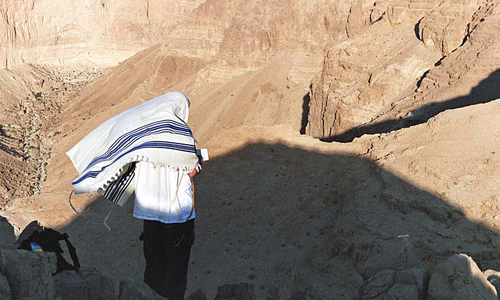
praying_at_masadaGod appeared to Abram and said to him, “I am Almighty God. Walk before Me and be perfect.”

Genesis 17:1

If a human being cannot be perfect, why did God demand perfection of Abraham?

The entire context of the verse indicates both the definition of this perfection and the way in which it can be achieved. It is obvious that no human being can aspire to equal God’s degree of perfection. What man can achieve is to live according to God’s teachings and thereby live up to his own human potential; more than man’s personal maximum is not possible or expected. Thus, God did not say simply, “Be perfect”; He said, “Walk before Me + and thereby you will be perfect.” When a person tries to live according to the Divine teachings, that constitutes human perfection, although one is technically never perfect.

Rabbi Samson Raphael Hirsch notes that the Hebrew word for “walk” in the above verse is not telech but heshalech which implies, “Go your way in spite of opposition, not making your progress dependent on external circumstances, but being led from within yourself: Let your movement proceed from your own free-willed decisions.”

The picture is now complete; human perfection can be achieved by making a free-willed choice to live according to the Divine teaching.

Today I shall…

…try to realize that although I cannot be absolutely without flaw, I can be perfect if I make free-will decisions to obey the Divine will.

-Rabbi Abraham J. Twerski
“Growing Each Day – Cheshvan 6”
Aish.com

This brings to mind something my Pastor and I periodically discuss. Perhaps I’d better preface this with scripture:

For whoever keeps the whole law and yet stumbles in one point, he has become guilty of all.

James 2:10 (NASB)

No one keeps the Law (Torah) perfectly. No one can. So when I insist that Jewish people, including Messianic Jewish people, remain obligated to the mitzvot, he counters with James 2:10. No one can keep the law perfectly, therefore, no one can keep the law. It’s like he’s saying, “if no one can keep the law perfectly, why bother trying to keep it at all?”

Jesus once said that if a man looks at a woman with lust in his heart, it’s as if he had physically committed adultery with her (Matthew 5:28). And yet, probably most men at one time or another in their lives have found themselves looking at a beautiful woman and having lustful thoughts, even momentarily. Does that mean such men, having failed once (or more than once), should throw their marriage vows to the winds and start having physical “relations” with every woman who strikes their fancy?

praying-apostleI should hope not. As people of faith, we should strive to live out our lives in as close an approximation to the perfection of our Master as we can, all the while knowing we will never behave in a perfect manner. We try to better ourselves, we pray for God’s help in bettering us, but even if we come closer to our Master’s example, we’ll never match it.

Remember the word that I said to you, ‘A slave is not greater than his master.’

John 15:20 (NASB)

I don’t think “perfection” is what Jesus had in mind when he made that statement, but it seems to fit today’s example. Just because we can’t be perfect like our Master doesn’t mean we should stop trying.

Putting all this back into the original context, and summoning Rabbi Twerski’s example, just because an observant Jewish person cannot perform all of the mitzvot perfectly (and may not perform some of the mitzvot at all) doesn’t mean that they should abandon their obligation to the Torah of Moses as a way to draw closer to God, or to surrender the lifestyle God gave to the Jewish people which uniquely identifies them as Jewish.

My understanding of one of the purposes of performing the mitzvot is to help a Jewish person continually be reminded that they are Jewish. You wouldn’t think remembering this would be much of a chore, but consider how rampant assimilation of Jews is in our society today. The mainstream culture works very hard at getting everyone to fit in, blend in, assimilate to the will of the world’s “marketing department,” and never, ever to be different or distinct in any way whatsoever.

So being an observant Jew is a lot of work. It would be much easier to assimilate. It would be much easier to be able to go to any restaurant in town and to order anything on the menu. It would be much easier to drive, cook, shop, play golf, and surf the Internet on Shabbat. It would be much easier not to have to study Torah, study Mishnah, study Hebrew (and in some cases Yiddish). It would be much easier to set aside the fixed times of prayer every day, easier to not don tzitzit, easier to not lay tefillin.

But being born into the covenant as all Jewish people are, it is incumbent upon each Jew to live as a Jew. God gave people, including Jewish people, free will, so a Jewish person can choose to observe the mitzvot or not (or choose which of the mitzvot to observe and which ones to ignore), but sooner or later, God will get around to reminding each Jewish person that they are indeed Jewish. The reminders are not always pleasant or easy to endure.

rabbi-prayingI’ve said before that only faith justifies one before God, not observing the mitzvot. It’s not what we do but why we do it and who we do it for that matters. If our thoughts and behavior are not focused on God and responding to God’s will, no matter how well we do something and no matter who we may show kindness to, it begins and ends with us. There is no connection to eternity.

But faith and justification are only the beginning of the journey. Once we have grasped onto “God’s fringes” tightly, we must respond to grace and faith by living life as God wills. For a Jew, that means Torah observance. How to observe the Torah, which of the mitzvot to start with, which tradition to employ in the observance (for instance, there’s more than one way to lay tefillin and to tie tzitzit) is a question and I don’t have the answer. But that doesn’t mean the Jewish person ceases in being obligated to try. Who is to say that the Ashkenazi way to tie tzitzit is any better or worse than the Sephardic tradition? Perhaps both are pleasing to God.

If a Jewish person were to wait around for iron-clad confirmation of exactly which way to do a particular mitzvah, they could wait around until Messiah comes (or returns).

It’s like my current frustration with the politicians in Washington over their lack of action in solving the debt ceiling crisis. I want to scream at them, “Just do something!” The Nike company’s well-known slogan of “Just Do It!” comes to mind.

Rabbi Twerski said that even though he knows he cannot be without flaw, still he does his best to walk in the way of his fathers and of God. He also said something peculiar:

Although I cannot be absolutely without flaw, I can be perfect if I make free-will decisions to obey the Divine will.

How can performing the mitzvot make one perfect simply by exercising free-will in obeying God?

Therefore you are to be perfect, as your heavenly Father is perfect.

Matthew 5:48 (NASB)

Jesus can’t possibly expect literal perfection from his disciples since none of us are perfect. Nothing we can do will ever be perfect. No thought we possess, even our faith is never perfect, so where does this expectation come from?

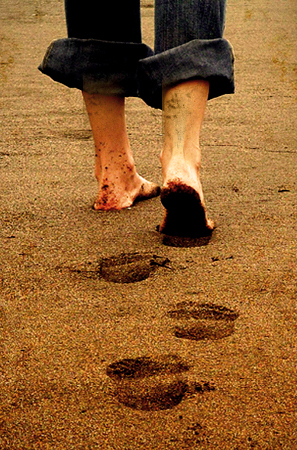
The road to perfection is infinitely long, and no matter how far we walk down that road, we are always at the starting line. God has to reach out to us to cover the distance we are incapable of traveling. All we can do is to turn to God in teshuvah and to do our best (which will never be good enough) in faith and love, and let God’s grace bridge the gap between lowly man and a Heavenly God.

In the performance of the Torah mitzvot, all a Jewish person can do is that…turn to God in faith and love, imperfectly attempting to do His will by living as a Jew, and letting God’s grace make the imperfect into the perfect.

jews_praying_togetherThe blood of goats and bulls never saved, but faith and grace saved. Davening Shacharit while wearing a tallit katan and laying tefillin doesn’t save, but faith and grace will save. However, in ancient times, God required (not requested, required) the Israelites to sacrifice goats and bulls, and even to this day, God requires (not requests, requires) Jewish people to observe the mitzvot, which includes davening Shacharit while wearing a tallit katan and laying tefillin.

It doesn’t save. It never did. And Jewish people won’t be perfect at all of the mitzvot all of the time. But they are still obeying the will of God in the best way they know how…just like the rest of us, just like Christians in the Church. We’re all doing what we can do. God will take care of what we can’t do. We just need to realize that when we’re tempted to judge others.

People who live in glass houses shouldn’t throw stones.

-Popular idiom

“Do not judge so that you will not be judged. For in the way you judge, you will be judged; and by your standard of measure, it will be measured to you. Why do you look at the speck that is in your brother’s eye, but do not notice the log that is in your own eye? Or how can you say to your brother, ‘Let me take the speck out of your eye,’ and behold, the log is in your own eye? You hypocrite, first take the log out of your own eye, and then you will see clearly to take the speck out of your brother’s eye.

Matthew 7:1-5 (NASB)

It does not become a Christian to criticize a Jew for not being perfect in the performance of the Torah mitzvot when there is no Christian, even under the full grace of Jesus, who lives a perfect life in Christ.

By the way, this is my one thousandth “morning meditation.”

Lech Lecha: Did You Hear the One About the Jewish Student and the Priest?

strangers-in-israelThe Lord said to Abram, Go forth from your native land and from your father’s house to the land that I will show you.

I will make of you a great nation, And I will bless you; I will make your name great, And you shall be a blessing. I will bless those who bless you And curse him that curses you; And all the families of the earth shall bless themselves by you.”

Abram went forth as the Lord had commanded him, and Lot went with him. Abram was seventy-five years old when he left Haran. Abram took his wife Sarai and his brother’s son Lot, and all the wealth that they had amassed, and the persons that they had acquired in Haran; and they set out for the land of Canaan. When they arrived in the land of Canaan, Abram passed through the land as far as the site of Shechem, at the terebinth of Moreh. The Canaanites were then in the land.

Genesis 12:1-6 (JPS Tanakh)

Thus Abraham took his first steps on a journey that would result in the vast and astonishing progression of the Jewish people across the grand panorama of human history. Abraham the Hebrew “crossed over” not just a geographical boundary, but a spiritual one.

I’ve said on a number of occasions that I thought one of the missions of the Christian church was to provoke zealousness among the Jewish people, to inspire Jews to return to Torah, return to Judaism, return to being who God made them to be.

Although I don’t believe God would allow it, there is a tremendous and ongoing concern, especially in America, that the Jewish population will continually assimilate, and ultimately vanish from our national landscape. And while many Christians believe that the only hope for the Jewish people is to convert to Christianity no matter what, there are some Jewish believers who insist that only when the Jewish people repent and return to Torah that the Messiah will finally return, and all of God’s promises to Israel and the people of the nations who are called by His Name (Amos 9:11-12) will finally come to pass.

In this week’s Torah portion, Avraham (Abraham) makes his way to the land of Israel and begins the journey of the Jewish people through history. Along that path we have seen nations rise and fall and have survived them, even through massive persecution. There were 2 million Jews during the Roman Empire 2,000 years ago. Demographers state that though there are approximately 14 million Jews identified worldwide, there are possibly 400 million halachic Jews (Jews whose mother’s were Jewish or converted according to Jewish law). Many Jews have fallen by the wayside of history. This week I share with you a story of one Jew who made his way back to identifying with the Almighty, the Jewish people and the Torah … albeit in a rather unusual way.

-Rabbi Kalman Packouz
“Shabbat Shalom Weekly”
Commentary on Torah Portion Lech Lecha
Aish.com

orthodox-talmud-studyRabbi Packouz goes on to tell the story of “Lance,” a young Jewish fellow who came from a family so assimilated that they sent him to a Catholic school to get the “best education.” One of Lance’s instructors, a Priest, found out that Lance was Jewish only by accident. Lance chose to write an essay about Rabbi Akiva for an assignment in the Priest’s class. Curious, the Priest asked Lance why he chose a great Jewish sage as the topic and Lance answered, “Because I’m Jewish.” This simple statement launched another journey into Judaism with some surprising twists:

The priest was surprised that he had a Jewish pupil and asked Lance if he had ever studied the Five Books of Moses with Rashi, the great commentator, or if he had ever learned the Mishna, part of the Talmud. When Lance told him “No,” the priest offered to teach him. For an hour a day after school, they learned together.

One day it occurred to Lance that Judaic studies were not the usual curriculum for the priesthood, so he asked his mentor, “How did you become so knowledgeable in Torah?”

The priest replied, “Before I entered the seminary, I traveled to Israel. While visiting the Western Wall a man asked me if I was Jewish. Curious as to why he asked, I answered ‘Yes.’ The man then asked me if I was interested in learning about my heritage. I figured it would be interesting, so I said, ‘Sure.’ He took me to a yeshiva in the Old City of Jerusalem and I was so impressed that I stayed for close to a year, never revealing that I wasn’t Jewish. I considered converting, but decided that it would be too difficult and too much of a shock to my family, so here I am.”

One Jewish young man who had grown up never knowing what it is to be Jewish and a Catholic priest who nearly converted to Judaism. What strange partners of God. A Priest encouraged his Jewish student, not to convert to Catholicism, but to become knowledgable in Torah and Mishnah. He encouraged “zealousness.”

Protestantism struggles with how to support the Jewish people but gets hung up on Jews who are not in the Church. They can’t always see that we can also “provoke zealousness” and that Messianic Judaism is the most likely vehicle for doing so. If Jesus is Jewish and the Messiah, then his Jewish followers will not abandon being Jewish and will not neglect Torah as his disciples.

Abraham took all that he had and, at the command of God, went to the Land of Promise in obedience. God put Lance and a Priest together and using a highly unlikely set of circumstances, sent one lost Jewish person on the correct path as well. According to Rabbi Packouz, Lance continued pursuing his Jewish studies and presumably became observant.

If you are a Christian, what does this tell you about what God wants you to do? If you are Jewish, where should you be going?

Good Shabbos.

Noah: Reminder of the Rainbow

rainbow-israelThe story of one righteous man in an evil generation. The Almighty commands Noah to build the ark on a hill far from the water. He built it over a period of 120 years. People deride Noah and ask him, “Why are you building a boat on a hill?” Noah explains that there will be a flood if people do not correct their ways (according to the comedian Bill Cosby, Noah would ask “How long can you tread water?”). We see from this the patience of the Almighty for people to correct their ways and the genius of arousing people’s curiosity so that they will ask a question and, hopefully, hear the answer.

The generation does not do Teshuva, returning from their evil ways, and God brings a flood for 40 days. ah leave the ark 365 days later when the earth has once again become habitable. The Almighty makes a covenant and makes the rainbow the sign of the covenant that He will never destroy all of life again by water (hence, James Baldwin’s book, The Fire Next Time). When one sees a rainbow it is an omen to do Teshuva — to recognize the mistakes you are making in life, regret them, correct them/make restitution, and ask for forgiveness from anyone you have wronged as well as from the Almighty.

-Rabbi Kalman Packouz
Torah Portion of the Week
Noah, Genesis 6:9-11:32
Aish.com

The rainbow is a sign to do teshuvah. I’d never heard of that before or, if I had, it leaked out of my memory somewhere along the way.

The Jewish world has just completed the period of the High Holidays including Yom Kippur, the Day of Atonement, the most Holy and solemn day on the Jewish religious calendar, a day when every observant Jew seeks to repent and to beg God’s forgiveness and the forgiveness of others. The rest of the world, including most Christians, don’t have much regard for Jewish holidays, but for Christians, you’d think we might take a cue from the rainbow.

Of course, since we have the blood of Jesus covering our sins and we’ve been washed white as snow, most Christians don’t give a great deal of thought to ongoing repentance, forgiveness, and atonement. More’s the pity.

But this is about me, not you. No, I’m not writing this as an exercise in narcissism, but rather as my effort to continue to turn toward God and to seek His face.

The heart of those that seek God shall rejoice. Seek God and His might, constantly seek His countenance

Psalms 105:3-4

As I write this, I didn’t sleep well last night. I thought about seeking God, about recounting His wonders, about remembering His marvels and judgments, but my mind was too clouded and distracted. Reading the Bible while fighting fatigue was unproductive. All I could do was to try to cling to God and pray that He would grant me at least a little bit of rest.

I’ve resolved to meditate on and even to memorize His Word (some of it, anyway) as a way to keep Him and His teachings close to my heart. Last night wasn’t a good time to do that and it reminded me of just how far a journey I must yet travel.

sandy-little-ferry-flooding-hmed-4a_photoblog500If I had known last night what I know this morning, I might have meditated on a rainbow.

Rabbi Yirmiyahu Ullman says that the rainbow is both a curse and a blessing. It’s a curse because it is a reminder that the world deserves to be destroyed for its sins, but that God has promised by covenant not to do so by flooding. Such a grim reminder of destruction that, in slightly smaller ways, we still suffer from today. But then, what else can we say about the rainbow? Rabbi Ullman states this:

The generation of the flood indulged in this worldliness to the point of perversion. Their wanton obsession with variety and variation resulted in their abusing the full gamut of their G-d given powers for the purpose of impurity. The flood purged the world of this impurity and the rainbow was given as a sign and reminder of what results from inundating the world with indulgence. However, the same rainbow simultaneously reminds us to repent from the relentless pursuit of multiplicity drawing us away from G-d. It urges us to direct the full spectrum of our powers and interests over the rainbow to the One on High.

In this way the rainbow is at once both curse and blessing; transgression and repentance; seductively appealing and pristinely beautiful. It depends on what you’re looking for in life. And perhaps that’s why, although it’s forbidden to indulge in the rainbow’s beauty, one may gaze at it – for the purpose of doing teshuva and directing one’s pluralities to G-d — in order to make the blessing.

I think the rainbow is visually appealing so that it will draw our gaze and having done that, remind us that we must continually seek to repent, to do teshuvah, to be reminded that we have a purpose in this world that goes beyond pursuing our individual desires.

I’ll never look at a rainbow the same way again.

One of the fundamental differences in Jewish Law and Noahide Law is that, Jews do not actively pursue Jewish converts, among non-Jewish nations.

The B’nai Noah are already under the Seven Laws, and have been permanently warned concerning their observance, so it is not a matter of trying to “convert” someone, from one religion to another; for the Noahide Code is not a “religion;” and all organized “religions,” are prohibited for the Noahide.

For the Noahide, it is a matter of Teshuva (return to G-d), not proselytization. Similarly a Jew who grew up atheist or agnostic, or who had strayed from the Torah and converted to an idolatrous religion; when he realizes his mistake and returns to Judaism, he does not “convert” back to Judaism; it is a matter of Teshuva, or returning.

It is the same for a Noahide. Others proselytize, Noahides return.

-Shlomo
“The Noahide Teshuva”
Gateway to Heaven

I include this quote because it suggests a very interesting idea. Jewish people are born into a covenant relationship with God whether they want to be or not. When a Jew leads a wholly secular life and later wants to return to God, as “Shlomo” says, that person doesn’t have to “convert” to Judaism, since they’re already Jewish and in relation to God. However, they do have to return to God, to do teshuvah, to repair the damage done in that relationship (I’ll argue that a Messianic Jewish person has not converted to Christianity but rather, made an even more complete return to God by becoming a disciple of Moshiach).

Blessed by GodMost Jewish people don’t recognize the Christian connection to God or that we are the beneficiaries of the blessings of the covenant God made with Abraham. However, they are quite willing to say, as “Shlomo” did above, that all non-Jews already have a covenant relationship with God through Noah. So, from that perspective, a Gentile does not have to “convert” to Judaism or anything else. The Gentile, like the Jew, is born already having a covenant relationship with God and on that basis, must return to God.

And in you all the families of the earth will be blessed.

Genesis 12:3 (NASB)

Now the promises were spoken to Abraham and to his seed. He does not say, “And to seeds,” as referring to many, but rather to one, “And to your seed,” that is, Christ.

Galatians 3:16 (NASB)

Christianity is something else. No one is born a Christian. Even if you are born to parents who are believers, you are not automatically a believer. Each person negotiates their own relationship with God. On the other hand, the covenant God made with Abraham is very old and spans across human history just waiting for any and all of us to grasp it and experience the blessings of the seed, of Messiah. In that sense, are we converting to Christianity or returning to something God intended for us all along?

The Lord is not slow about His promise, as some count slowness, but is patient toward you, not wishing for any to perish but for all to come to repentance.

2 Peter 3:9 (NASB)

Not that all of us will, of course. But we each have a responsibility to turn…to return to Him. It is not a casual act and it’s not something you do once and then it’s done forever. I neglect my relationship with God at my own peril. God created each of us in His own image, and endowed us with free will and a desire to seek Him. Many of us twist or distort those gifts and either go our own merry way in chasing our pleasures, or in seeking “something” we can’t define, become lost in the maze of religions and philosophies, imagining we are wise by worshiping what isn’t alive or even real.

Another Shabbos approaches. Another opportunity to welcome the Lord of the Sabbath (Matthew 12:1-8) beckons. Will the glow of the candles symbolize the warmth of God in my home and my heart? Will I fill in the “missing rainbow colors” in that glow and see the reminder to repent and return?

“A different world cannot be built by indifferent people.”

-Peter Marshall

Good Shabbos.

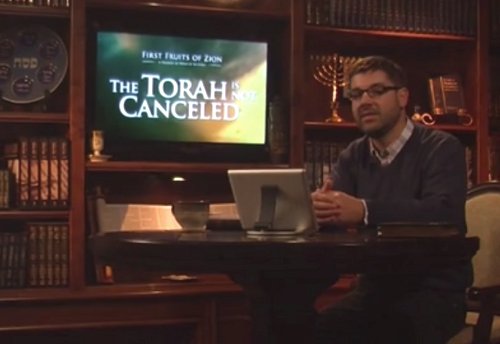
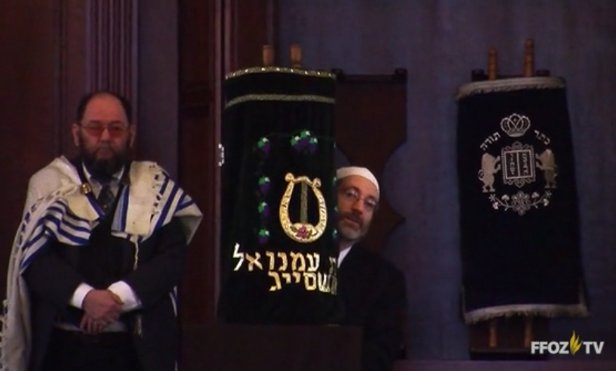
FFOZ TV Review: The Torah Is Not Canceled

ffoz_tv13_mainEpisode 13: It is commonly taught that Jesus came to cancel the law but Jesus tells his disciples “I did not come to abolish the law.” Episode thirteen will revolutionize the viewer’s understanding of the law by learning that the law was given for Godly instruction. They will discover that not only has the law of God not been done away with but the prophets tell us that it will be observed even in the Messianic Era. It will also be taught that the law has different applications for different people, with some commandments only being applicable to Jewish people.

-from the Introduction to FFOZ TV: The Promise of What is to Come
Episode 13: The Torah Is Not Canceled

The Lesson: The Mystery of Jesus and the Torah

In this episode, First Fruits of Zion (FFOZ) teachers Toby Janicki and Aaron Eby take on one of the major misconceptions of Christian doctrine, that the death of Jesus canceled the Torah and invalidated the Law. Toby calls this “The Mystery of the Torah is not Canceled,” but I prefer the other expression he used: “The Mystery of Jesus and the Torah.”

The core to this episode is a scripture that practically everyone in the Hebrew Roots and Messianic Jewish movements is keenly aware of:

Do not imagine that I have come to violate the Torah or the words of the prophets. I have not come to violate but to fulfill. For, amen, I say to you, until heaven and earth pass away, not one yod or one thorn will pass away from the Torah until all has been established.

Matthew 5:17-18 (DHE Gospels)

These verses are part of what is called the Sermon on the Mount, which is thought of in Christianity as the core of Jesus’s moral teachings.

Toby tells his audience that a closer analysis of Matthew 5:17 will help us get to our first clue in solving today’s mystery.

Do not think that I came to abolish the Law or the Prophets; I did not come to abolish but to fulfill.

Matthew 5:17 (NASB)

According to Toby, Jesus had been criticized by the Jewish religious authorities, saying that he was not teaching and living by the Torah correctly. Jesus was taking this opportunity to explain his intent as a teacher. The phrase “I have come” has the sense in the Hebrew of purpose and intention. Toby tells us that in this section of his sermon, Jesus isn’t explaining his role as Messiah in relationship to the Torah, but his intention and purpose in teaching the Torah. He wants to clear up any misunderstanding about what he’s teaching, not explain how he is going to impact Torah obedience in Israel as the coming Messiah.

ffoz_tv13_tobyBut we have to have a proper understanding of the terms “abolish” and “fulfill” in order to understand Jesus’s words. While Christians have to take at face value the verse saying that Jesus didn’t come to “abolish” the Law, that is, to destroy, discard, overturn, or annul, they often interpret “fulfill” as abolish, since the net effect in Christian thinking is that Jesus “nailed the Law to the cross.”

But within a first century Jewish Rabbinic context, how are the words “abolish” and “fulfill” understood?

Rabbi Jonathan would say: Whoever fulfills the Torah in poverty, will ultimately fulfill it in wealth; and whoever abolishes the Torah in wealth, will ultimately abolish it in poverty. (emph. mine)

-Pirkei Avot 4:9

Pirkei Avot is also called Ethics of Our Fathers, and is a collection of ancient Rabbinic teachings compiled from 200 years before Jesus’s birth until 200 years after his resurrection.

Here we see how the early Sages defined the use of fulfill and abolish in relation to the Torah (the word “neglect” was in place of the word “abolish” in the quote of Pirkei Avot 4:9 I copied from a Chabad email newsletter). I bolded some of the words in the above quoted phrase so you could better see Toby’s point.

To “abolish” in this context, means to disobey Torah.
To “fulfill” in this context, means to obey Torah.

Jesus is saying that in his teaching and his life, he did not come, that is, it was not his intention and purpose as a teacher, to disobey the Torah, but rather, to obey the Torah. Let’s look at Matthew 5:17 again but in a modified form.

Do not think that I came to disobey the Law or the Prophets; I did not come to disobey but to obey. (emph. mine)

A rather startling change of meaning, don’t you think? Now we have the first clue we need to solve the mystery:

Clue 1: Jesus came to obey and teach the Law.

But exactly what is “the Law” and why does Christianity see it so negatively? To get the answer, the scene shifts to FFOZ teacher and translator Aaron Eby in Israel.

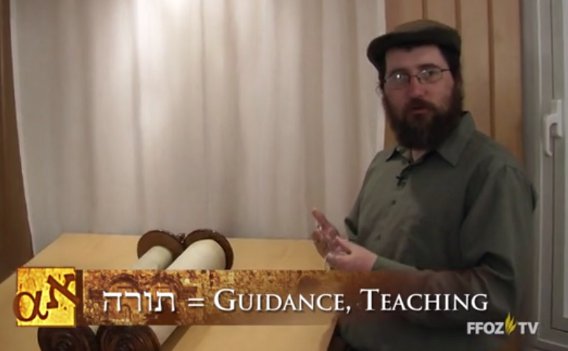
ffoz_tv13_aaronWhat is the Torah? Most often, we think of it as the first five books of the Bible: Genesis, Exodus, Leviticus, Numbers, and Deuteronomy. And while the Torah does contain many laws for Jews living in the Land of Israel and diaspora, as well as Jewish ethical and moral conduct, it also contains the story of Creation, the calling of Abraham, Isaac, and Jacob, and the astonishing redemption of the Israelites from slavery in Egypt.

Aaron teaches us that Torah means something like “guidance,” “teaching,” or “instruction.” The root word in Hebrew is an archery term implying something that is cast, thrown, or shot with aiming or guidance, like one might shoot an arrow at a target. In this sense the Torah can be any spiritual or Biblical teaching directing someone toward righteousness. To differentiate this broader meaning from the first five books of the Bible, we call those five books the Torah of Moses.

The main point of Aaron’s teaching is rather straightforward. Torah doesn’t mean “law,” it means teaching, instruction, and guidance, in a spiritual or moral sense. It doesn’t have to refer only to the “mechanics” of the legal parts of the Torah of Moses. He also explains what a “jot” and a “tittle” or “thorn” is which illuminates how Jesus used those terms in Matthew 5:18. Jesus was saying that he did not intend to abolish or disobey even the smallest detail of the Torah until heaven and earth passed away.

Returning to Toby, we have our second clue:

Clue 2: Torah is God’s Instruction.

Toby takes the lesson one step further and describes the future role and function of the Torah in the Messianic Era. To understand how this works, we must turn to Jeremiah 31:31-34

“Behold, days are coming,” declares the Lord, “when I will make a new covenant with the house of Israel and with the house of Judah, not like the covenant which I made with their fathers in the day I took them by the hand to bring them out of the land of Egypt, My covenant which they broke, although I was a husband to them,” declares the Lord. “But this is the covenant which I will make with the house of Israel after those days,” declares the Lord, “I will put My law within them and on their heart I will write it; and I will be their God, and they shall be My people. They will not teach again, each man his neighbor and each man his brother, saying, ‘Know the Lord,’ for they will all know Me, from the least of them to the greatest of them,” declares the Lord, “for I will forgive their iniquity, and their sin I will remember no more.”

Here, Toby interprets this scripture about the New Covenant in the same way I’ve been doing on this blog for quite some time. On the surface, the prophet is saying that there will be a new covenant and that it will be different from the old covenant, but what exactly will be different. Grace instead of Law? That’s not what scripture says. Let’s drill down into verse 33:

I will put My Torah within them and on their heart I will write it; and I will be their God, and they shall be My people. (emph. mine)

ffoz_tv13_torah_bethemmanuelI substituted the word “Torah” for “Law” since that’s how it’s rendered in the Hebrew. Remember, the New Covenant is made with Judah and Israel, not with the church or the nations. God still expects the Jewish people to obey the Torah, His guidance and instruction, but it will be written internally and will be part of the fiber of their being, rather than being written externally. My understanding is that it will be second nature for the Jewish people to live a lifestyle in obedience to God, rather than struggling between the good and evil inclinations.

We saw in the FFOZ TV show None Greater Than John that verse 34 refers to the state of the people of God during the Messianic Era. We will all know God, from the greatest to the least of us, as prophets, with an overabundance of the Spirit of God upon us.

This is the Messianic Era, when the Jewish exiles are returned to their Land, the Land of Israel, all of Israel’s enemies are finally defeated forever, and King Messiah establishes world peace. In those days, all Jews will obey Torah and even the Gentiles of the nations will go up to Jerusalem to learn:

And many peoples will come and say,
“Come, let us go up to the mountain of the Lord,
To the house of the God of Jacob;
That He may teach us concerning His ways
And that we may walk in His paths.”
For the law will go forth from Zion
And the word of the Lord from Jerusalem.

Isaiah 2:3 (NASB)

Here we have the third and final clue:

Clue 3: The Torah will be obeyed in the Messianic Era

But this brings up the subject about the relationship of the Torah to the non-Jewish people. I thought that the topic would be ignored as in past episodes, but Toby briefly touches on it by saying that the Torah has different applications to Jewish and non-Jewish people. Most (non-Messianic) Jews would probably say the Torah has little to no application to the goyim at all, but Messianic Judaism sometimes has a unique perspective regarding non-Jews and particularly Christians.

At the end of the episode, FFOZ Founder and President Boaz Michael comes on camera and refers to the Torah as “God’s loving instruction.” He says that both Jews and Gentiles need to study the Torah and discover how it applies to our lives, also implying that there are different applications of the Torah to Jewish and non-Jewish people.

What Did I Learn?

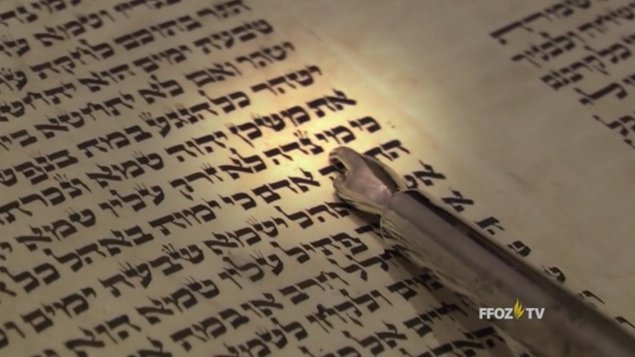
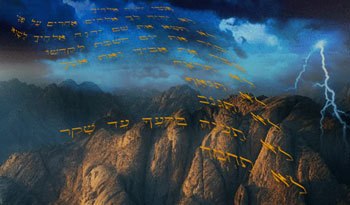
ffoz_tv13_torah_lettersI gained a greater appreciation of the Rabbinic use of the terms “fulfill” and “abolish,” although I’d heard something similar in the past. I was also reminded of a discussion I had with my Pastor last week on this very topic: will there be distinctions between Jews and Gentiles in the Messianic Era and will there be any such thing as “Torah” in those days? He says “no” and I say “yes.” I don’t think the Torah ceases as we understand it today until “all is accomplished” (Matthew 5:18). The question is, when is everything that must be accomplished actually accomplished? If not even the smallest detail of the Torah pass away until heaven and earth pass away, then the only possible answer is that the Torah passes away only when there is a new heaven and earth.

Then I saw a new heaven and a new earth; for the first heaven and the first earth passed away, and there is no longer any sea. And I saw the holy city, new Jerusalem, coming down out of heaven from God, made ready as a bride adorned for her husband. And I heard a loud voice from the throne, saying, “Behold, the tabernacle of God is among men, and He will dwell among them, and they shall be His people, and God Himself will be among them…

Revelation 21:1-3 (NASB)

When the Messianic Age is established, the Torah will still be in effect upon Israel, that is the Jewish people. There will be some applications for non-Jewish believers, but Toby was deliberately vague in this area. Only after everything has been accomplished, evil has finally been defeated, and a new heaven and earth have been established, that the Torah, as we understand it, will pass away.

But as I was watching this episode and reflecting on my conversation with Pastor last week, I was reminded of a question he asked me. There are several Jewish people who attend my church. None of them are “Messianic,” and would be better called “Hebrew Christians,” people of Jewish ethnic and family lineage but those who practice a traditional Christianity. In other words, they likely believe the law is abolished in the sense of being permanently destroyed.

Pastor asked me if I thought they are obligated to the Torah. My principles say “yes,” but I was suddenly confronted with the reality of my words. Could I go up to any of these individuals unbidden, and tell them to their face that they should be performing the mitzvot, not as a matter of salvation or justification, but out of covenant obedience? Probably not (not unless they asked, of course…). It would be like going up to a Jewish person driving to shul on Shabbos and telling them they shouldn’t drive but walk instead. Who am I, the religious police? On the other hand, if the Torah is incumbent upon all the Jewish people now and will be even into the Messianic Age…what are the consequences to a Jew for abandoning the Torah, even at the behest of the Christian church?

Whoever then annuls one of the least of these commandments, and teaches others to do the same, shall be called least in the kingdom of heaven; but whoever keeps and teaches them, he shall be called great in the kingdom of heaven.

Matthew 5:19 (NASB)

prophetic_return1I believe that Jewish people are currently obligated to perform the mitzvot, but that doesn’t mean I must forcibly impose my beliefs upon them. Every person negotiates their own relationship with God. Every Jew must discover who they are as a Jew in relation to Hashem. I can only pray that all Jewish people everywhere return to the Torah and thus bring the Messiah that much closer to bringing his rule and reign fully into our world. For when he returns, as Toby and Aaron teach, the Torah will be established in Israel and will go forth into the nations from Zion.

When G‑d made the world He gave each creature, each nation and each individual a role and a meaning.
When each plays its part there is harmony.
When the lines become too blurred, there is acrimony.

-Rabbi Tzvi Freeman
“Distinctions”
Based on letters and talks of the Rebbe, Rabbi M. M. Schneerson
Chabad.org

I will review another episode next week.

Genesis: Searching for the Self-Evident God

Simchat Torah

By contrast, on Simchat Torah we do not celebrate our national receiving of the Torah; we celebrate our personal one. God gave us the Second Tablets because He deemed us worthy of receiving them. He had just forgiven us on Yom Kippur and decided to take us anew. And we celebrate by each of us holding close that Torah God entrusted us with and dancing with it. And likewise every single member of the synagogue is called up to the Torah for the reading of a section.
-Rabbi Dovid Rosenfeld
“Simchat Torah: Just You and Me”
Aish.com

As you read this, it is Simchat Torah, the celebration of the end of one Torah cycle and the beginning of another. Yesterday was Shemini Atzeret which is considered the last day of Sukkot but in fact is a separate festival, the eighth day of assembly. Of course, sundown tonight begins the weekly Shabbat, and tomorrow in synagogues all over the world, the very first words of Genesis will be read again.

A lot is going on and almost all of it exclusively has to do with the Jewish people. Let me explain.

The seven days of Sukkot have a great deal of meaning, not the least of which is an invitation for guests to join a Jewish family in their sukkah. Some synagogues have congregational sukkot (plural of sukkah) and will invite in anyone who desires to enter. Especially the Chabad will invite non-religious Jews in order to reacquaint them with the Torah and Jewish religious practice, but it’s not unheard of for non-Jews to also join in on the fun.

But that’s for seven days. While Shemini Atzeret is considered an eighth day of Sukkot, it is not the same as the other days of the festival. I once heard a commentary stating that while guests are invited on the seven days of Sukkot and that everyone is engaged with each other and with God, the eighth day is more intimate, more of a personal encounter, a private exchange between the Jewish people and their loving Father. It’s like having a houseful of family and friends in your home for a seven-day party, but on the eighth day, the guests all go back to their homes, and the family spends one special day of closeness with their Father.

Doesn’t sound very flattering if you’re a guest but we understand that family is special and they need the time to be together as family.

But what if you’re a Christian? Aren’t you family? In terms of traditional Judaism, no (for the most part, Messianic Judaism would have a different take). It’s not that God isn’t the Creator of Jews and Gentiles, but Shemini Atzeret commemorates the unique relationship God has with the Jewish people and, as Rabbi Rosenfeld suggests relative to Simchat Torah, God commemorates His relationship on this day with each, individual Jew.

clinging_to_torahSimchat Torah celebrates the special relationship of the Jewish people and the Torah. While Shavuot (Pentecost) observes the anniversary of the giving of the Torah to the Jewish people at Sinai, Simchat Torah is the celebration of the unbroken joy of ending one cycle of readings and beginning another, dancing with the Torah and with God on the very final day of the holiday season, for tomorrow the Torah readings begin again.

And there’s something else.

“He stared at me for a moment seeming very moved by the idea that this Torah would help people come closer to Judaism. All of a sudden, he started crying — I mean really crying with tears streaming down his face. I was trying to get him to talk, but he literally couldn’t get any words out. Finally, he explained. He had drifted away from Judaism and married a Buddhist woman. This Torah scroll was his only connection, and at this point, he felt so cut off that he thought he might as well sell it. But when he found out that this Torah would help reconnect people to Judaism, he wanted to give it to me as a gift. In this way, he felt he would perhaps have the merit to be reconnected too and find his way home at last.

“I didn’t know what to say, but I certainly appreciated his incredible gift. I realized that this was a Torah that had been basically homeless for the past 50 years. There was no one to read it, hold it or keep it properly, and now God gave the Torah a home, and would hopefully bring this lonely Jew back in the near future as well.

“Now, what about an ark? That’s a story of its own. I found an online ad for an old Jewish artifact, a Jewish chest. The sellers weren’t Jewish, but they had bought it from a priest who told them it was of Jewish origin.

“When I opened the online pictures of the chest, I saw before me what seemed to be a beautifully crafted ark. It was small, so it wouldn’t be able to hold a regular sized Torah, but would be perfect for the Torah we had. But when I viewed a picture of the top of the ark, I almost fainted. There was a large cross attached to it.”

-Rabbi Binyomin Pruzansky
“The Lost Torah Scroll: Bringing Torah Home”
Aish.com

simhat-torahI’ve read Rabbi Pruzansky’s story in years past, and it’s a good one. He relates how he habitually held Shabbos meals in his home for 30 or 40 young Jewish people, Jews who for one reason or another, don’t feel comfortable entering a synagogue. In a more home-like setting, the Rabbi wanted to give these young Jews the opportunity to eat a kosher meal and even to have an aliyah, to be called up to read the Torah from a kosher scroll.

As you read, he had some difficulties acquiring a proper scroll for a reasonable cost and an authentic Jewish ark for the scroll. In different ways, the scroll and the ark had “strayed from the path,” so to speak, with the scroll all but neglected and the ark having been in possession of a Christian Priest.

“My dear friends, look at what we have here. A Torah that was neglected for so many years was finally given a home in an ark that had been used by a priest. Yet the message was clear that God would never give up on them. He had not forgotten about this lost ark and Torah scroll, and finally the two of them were brought together and can now be used to bring young men and woman back to their Father in Heaven as well.

“This Torah has not been danced with for over 50 years, and now we have the chance to welcome it home. Let’s give it the welcome it deserves.”

I know Gentile followers of Jesus who steadfastly maintain that the Torah belongs to both Jewish people and Gentile believers in exactly the same way, but I consider this not only to be untrue, but to be incredibly insensitive to the connection between the Jewish people and God. It’s not that I don’t believe God loves those of us from the nations who are called by His Name (Amos 9:11-12), but I do draw a distinction between the nature and character of God’s relationship with and purpose for the Jewish people and how God relates to the rest of us (yes, even the rest of us who are in Christ).

Yes, I firmly believe Christians have a special role and purpose that God has assigned us and that only we can accomplish and fulfill. Yes, I do believe that God loves us as much as He loves the Jewish people and that we are not second class citizens in the Kingdom of Heaven. But I also believe that the Jewish people are unique to God and have a place that is especially near to His heart. They are His treasured splendorous people (Exodus 19:5). I can hardly begrudge God and the Jewish people special times in which they meet just between the two of them to acknowledge, celebrate, and experience what is uniquely between God and the Jews.

Torah at SinaiWe need to acknowledge the complexity of human relationships with God, what makes the connection especially precious regarding the Jewish people, and what we all can share together as human beings who live in a universe authored by the Creator.

“In the beginning of God’s creating the heavens and the earth” “… God blessed the seventh day and sanctified it because on it He abstained from all His work which God created to make”.

Genesis 1:1, 2:3

These two verses encompass all of Creation. The opening three words end in the Hebrew letters taf, aleph, mem which comprise “emet” (truth), and the closing three words end in aleph, mem, taf which spells “emet”. Reb Simcha Bunim of P’shis’che cites the Talmudic statement, “The seal of God is emet” and comments, “It is customary for an author to place his name in the opening of his book. God placed His Name, emet, in the opening chapter of the Torah. Emet thus envelops all of creation, a testimony to God as the Creator.”

Divrei Shaul notes that all traits can be a matter of degree. There can be greater beauty and lesser beauty, greater wisdom and lesser wisdom, greater strength and lesser strength. Only one trait cannot be more or less: truth. Something is either true or it is not true.

God is identified with truth. Just as truth can never be altered, because altered truth is no longer truth, there can be no change in God (Malachi 2:6).

The Talmud says that emet is broad-based, consisting of the first letter of the alphabet, aleph, the middle letter, mem and the last letter, taf (Shabbos 55a). Truth, therefore, has stability and durability. Falsehood, on the other hand is the Hebrew word sheker, consisting of three letters near the end of the alphabet. Sheker is top-heavy and cannot endure.

To the extent that a person lives with truth is the extent one identifies with God. Any falsehood distances a person from God.

Dvar Torah for Beresheet
Based on Twerski on Chumash by Rabbi Abraham J. Twerski
as quoted by Rabbi Kalman Packouz
“Shabbat Shalom Weekly: V’Zot HaBracha-Bereishit”
Aish.com

seek-truthOne of the things we all have in common if we have any sort of relationship with God at all is that we are all truth seekers. If we can see God’s “signature” on His Creation and know that it is truth, then we will seek out that truth. We will discover God’s truth, and in order to foster closeness between us and God, we will increase the truth in us and remove the falsehood.

All truth passes through three stages. First, it is ridiculed. Second, it is violently opposed. Third, it is accepted as being self-evident.

-Arthur Schopenhauer, German philosopher (1788 – 1860)

Once we accept the truth, God’s love and grace will be self-evident in all of our lives, Jewish and Gentile alike.

“I do not ask on behalf of these alone, but for those also who believe in Me through their word; that they may all be one; even as You, Father, are in Me and I in You, that they also may be in Us, so that the world may believe that You sent Me. The glory which You have given Me I have given to them, that they may be one, just as We are one; I in them and You in Me, that they may be perfected in unity, so that the world may know that You sent Me, and loved them, even as You have loved Me.”

John 17:20-23 (NASB)

Good Shabbos.

Christianity Today and Why Paul is Not Anti-Judaism

paul-on-the-road-to-damascusThe misconception about Paul with the longest historical pedigree is that he was anti-Jewish. Many imagine that after his Damascus Road experience, Paul immediately rejected Judaism and embraced Christianity. They assume that in the first century these were two clearly distinguishable religions. Before his encounter with Christ, the thinking goes, Paul was wrapped up in a legalistic pursuit of salvation and was teaching others a similar philosophy. So great was his passion that he persecuted the Christians who taught salvation by grace through faith. After his conversion, everything changed. He embraced God’s gracious salvation by faith in Christ and rejected the system of dead rituals bound up in Judaism. Paul left Judaism, therefore, and turned to Christianity.

-Timothy Gombis
“The Paul We Think We Know” (originally published 7-22-2011)
Christianity Today

Someone posted this on Facebook today and as I was reading it, I wanted to jump up out of my chair and scream YES! YES! Someone finally GETS IT!

OK, I’m not really that emphatic in my behavior but it does excite me that someone writing for a traditional Christian publication understands what I understand and what I’ve been trying to communicate in the church I attend for nearly a year.

Let’s cut to the chase. What does Gombis really think about Paul and more importantly, Paul’s struggle to integrate non-Jewish disciples into a Jewish religious stream?

The problem in the early church, therefore, was not the temptation toward legalistic works righteousness. They faced the communal challenge of incorporating non-Jewish converts into the historically Jewish people of God. First-century Judaism didn’t have a legalism problem; it had an ethnocentrism problem. The first followers of Jesus were all Jewish, and had difficulty imagining that the God of Israel who sent Jesus Christ as their Savior could possibly save non-Jews without requiring them to convert to Judaism. This is the issue in Acts 15, when Christian Jews from Judea urged the Gentiles in Antioch, “Unless you are circumcised, according to the custom taught by Moses, you cannot be saved” (Acts 15:1).

While the early church leaders decided in theory that non-Jewish believers in Jesus were not required to become Jews (Acts 15:13-21), many churches struggled with the practical challenges of becoming healthy multiethnic communities. Paul, as pastor and theologian, addresses these challenges by claiming that “no one will be declared righteous in God’s sight by the works of the law” (Rom. 3:20). This is not a condemnation of Judaism as inherently legalistic, but an affirmation that God does not justify a person merely because he is ethnically Jewish. Jews and non-Jews approach God on equal terms when it comes to salvation (emph. mine). All have sinned and all stand in need of God’s redeeming grace in Christ (Rom. 3:23-24). Therefore all who are in Christ are equal siblings in God’s new family (Gal. 3:26-28).

The “in theory” comment seems to relate to the ongoing struggle to integrate, with anything approaching seamlessness, Jewish and Gentile disciples within a single religious and social framework, but I’ll return to that issue in a moment. The main point here is that Paul did not reject Judaism for Christianity, supported continued Judaism and Torah observance for Jews, and identified the primary problem among Jewish believers and their difficulty in accepting Gentle disciples not as legalism but ethnocentrism. Many of the believing and non-believing Jews could not accept Gentiles as equal participants of a Jewish religious branch without requiring that they convert to Judaism. After all, whoever heard of Jews and Goyim being equal in the sight of God? Gombis already quoted this verse, but it should be repeated.

Some men came down from Judea and began teaching the brethren, “Unless you are circumcised according to the custom of Moses, you cannot be saved.”

Acts 15:1 (NASB)

PaulThis was the core problem Paul faced in his mission to the Gentiles and it would always haunt him. It was the cause of most of his major problems with the various Jewish communities in Israel and the diaspora. He would never see a day when this conflict was ultimately resolved and the echo of his struggle still rings in our ears. That is, if we’ll actually let ourselves listen.

But what about Paul, Judaism, and his relationship with Jewish disciples?

A second reason why we cannot envision Paul as anti-Jewish is that even after his conversion, Paul remained a Jew. He did not imagine that he was inventing a new religion, nor did he leave Judaism to join the Christian church. At the end of his third missionary journey, Paul arrived in Jerusalem and, at the suggestion of James, went through purification rituals at the temple (Acts 21:23-26). Paul saw no contradiction at all between his commitment to Christ and his faithful participation in Jewish practices. Explaining his ministry before a variety of audiences, Paul emphasized his Jewish identity and claimed to be acting in faithfulness to the God of Israel. Before the Jewish Council in Jerusalem, he declared, “My brothers, I am a Pharisee, descended from Pharisees. I stand on trial because of the hope of the resurrection of the dead!” (Acts 23:6, emphasis added). And to King Agrippa, he again claims to be a Pharisee whose hope is in the promises of God to Israel (Acts 26:4-6).

Third, Paul never calls upon Jews to reject Judaism. Instead, he exhorts them to recognize Jesus as their Messiah and welcome his non-Jewish followers as siblings in God’s new family. We get a glimpse of his preaching to Jews in Acts 17:1-3: “When Paul and his companions had passed through Amphipolis and Apollonia, they came to Thessalonica, where there was a Jewish synagogue. As was his custom, Paul went into the synagogue, and on three Sabbath days he reasoned with them from the Scriptures, explaining and proving that the Messiah had to suffer and rise from the dead. ‘This Jesus I am proclaiming to you is the Messiah,’ he said.”

The Paul of the New Testament, therefore, is not anti-Jewish. He was faithful both to the Scriptures and to his Jewish heritage. He preached Jesus as the promised Messiah of Israel, but was insistent that salvation in Christ was not limited to ethnic Jews. According to his gospel, all Jews needed to receive Jesus as Messiah, and all followers of Jesus—Jewish and non-Jewish—needed to embrace one another as siblings in God’s global family in Christ.

I’m stunned that this is being published in an online Christian venue. I’m absolutely shocked. I’m pleased beyond wonder. Paul never stopped being a Jew, never stopped Jewish observances, and absolutely never, ever encouraged any Jew to abandon Jewish practice, lifestyle, and faith. Turning to Messiah is a completely Jewish act and does not require the slightest deviation from Jewish Torah observance.

But what about “in theory?”

Gombis isn’t suggesting that in theory, the Gentiles became Jews either by formal conversation (which Paul opposed) or in action but not name by observing the mitzvot in a manner identical to the Jewish disciples. The author is only acknowledging what I have been saying all along: that in principle, the requirement was to unite Jewish and Gentile disciples of the Master within a multiethnic, multinational framework where all could share in the grace and salvation of God without anyone being compelled to surrender their unique and individual national and ethnic identity.  In practice, this was never accomplished and ultimately, both populations pursued wildly different trajectories. Their struggles are what we see in the Messianic Jewish and Hebrew Roots movements today.

walking_discipleEarlier, I posted my review of the First Fruits of Zion television series episode Raising Disciples. This is particularly relevant to today’s “extra meditation” because we encounter the topic of disciples as imitators. What did Paul say to the Gentile disciples he was raising up about imitating their Master?

In 1 Corinthians 11:1, he told them to “be imitators of me, just as I also am of Christ.” but we don’t know what they are supposed to imitate. My suggestion is that the manner of Jewish and Gentile imitation is not identical across the board, since it would obliterate Jewish and Gentile distinction in the body of disciples and thus eliminate the problem of Gentile integration. If Jewish and Gentile disciples were identical and homogenous, the basis for schism would have been severely blunted if not done away with entirely.

However, it was a given that Jewish disciples were intended to continue Jewish practice according to Gombis and the legal decision rendered by James and the Council was that the Gentiles had no identical obligation. By common association, the Gentile disciples might have acted very similarly to their Jewish counterparts, at least to an outside observer, but there remained a difference in obligation between the Jewish and non-Jewish disciples within the body of Messiah.

That probably isn’t a very satisfying answer, but I’m still thrilled that a Christian online magazine is promoting a view of Paul that is so close to my own. Now if I could just send this link to every church Pastor in the country with a note saying “READ THIS!” and if they’d keep an open mind while doing so, I’d consider it a step forward.

Interestingly enough, today is Hoshana Rabbah, the traditional day of judgment for the nations of the world. How will God and Israel judge us if we do not learn to see Paul and the Messiah in the manner Timothy Gombis suggests?