Tag Archives: Torah

The New Testament is Not in Heaven

It is taught: On that day R. Eliezer brought forward every imaginable argument, but the Sages did not accept any of them. Finally he said to them: “If the Halakhah (religious law) is in accordance with me, let this carob tree prove it!” Sure enough the carob tree immediately uprooted itself and moved one hundred cubits, and some say 400 cubits, from its place. “No proof can be brought from a carob tree,” they retorted.

And again he said to them “If the Halakhah agrees with me, let the channel of water prove it!” Sure enough, the channel of water flowed backward. “No proof can be brought from a channel of water,” they rejoined.

Again he urged, “If the Halakhah agrees with me, let the walls of the house of study prove it!” Sure enough, the walls tilted as if to fall. But R. Joshua, rebuked the walls, saying, “When disciples of the wise are engaged in a halakhic dispute, what right have you to interfere?” Hence in deference to R. Joshua they did not fall and in deference to R. Eliezer they did not resume their upright position; they are still standing aslant.

Again R. Eliezer then said to the Sages, “If the Halakhah agrees with me, let it be proved from heaven.” Sure enough, a divine voice cried out, “Why do you dispute with R. Eliezer, with whom the Halakhah always agrees?” R. Joshua stood up and protested: “The Torah is not in heaven!” (Deut. 30:12). We pay no attention to a divine voice because long ago at Mount Sinai You wrote in your Torah at Mount Sinai, `After the majority must one incline’. (Ex. 23:2)”

R. Nathan met [the prophet] Elijah and asked him, “What did the Holy One do at that moment?” Elijah: “He laughed [with joy], saying, ‘My children have defeated Me, My children have defeated Me.'”

Baba Tetzia 59b as quoted at jhom.com

If you’re not an observant Jew or otherwise don’t have the benefit of a classic Jewish religious education, the comments I’ve just quoted may seem completely alien to you. If you are a Christian and understand the implications of what is being said, you are probably offended right now. Why would you be offended? Because this teaching from the Talmud justifies the Rabbinic authority to interpret Torah. “The Torah is not in Heaven” means that the Torah was revealed but not interpreted by the Prophets or even by God and His miracles, but by learned study, decision-making, and legal rulings.

Within this context, that seems to mean that man’s word trumps God’s authority. What a shocking thing to say, but it explains much about Judaism and why the Jewish understanding of God and the Bible is fundamentally different than Christianity.

Is this just some colossal conceit on the part of Judaism to dare override the word of God and to impose man’s wisdom and authority over the Creator? From a superficial point of view, I’m sure it seems that way. And yet, though Christianity, including many factions of the “Messianic” movement, believe they are following the pure and uninfluenced “Word of God” and the teachings of Jesus Christ by shunning Talmudic principals, in fact, the vast majority of what Christians consider God’s unalterable truth was established by the so-called “church Fathers” in the first three centuries of the Common Era. Unfortunately, this coincides with the rejection of Jewish leadership from the early church and the ghastly birth of supersessionist theology, with the non-Jewish believers commandeering all of God’s covenant promises to the Jewish people for the church alone.

If God spoke from heaven (Bat Kol) to the Christian church, explained to us that our treatment of the Jewish people has been terribly wrong during the past 2,000 years, and demanded that we make immediate reparations to His chosen people, would not the church respond with its own version of “the New Testament is not in Heaven?” Would we not say that, according to our own interpretation of the Bible and the rulings of our “judges and fathers” that how we Christians have persecuted and maligned the Jews throughout the history of the church has been correct? Would we attempt to “defeat” God in that manner? In fact, that’s exactly what Christianity has done.

In this instance, I’m not so much arguing for Rabbinic authority as against Christian hypocracy. We Christians say that the Jews have no right or authority to interpret God’s Torah as they do and yet the church does exactly the same thing. We just dress it up differently and pretend we’re obeying the Word of God rather than our own willful judgments. We quote scripture to back up our claims, all the while knowing that even the Adversary has done this to justify his causes (see Matthew 4:1-11).

An anonymous person on Judah Himango’s blog was deriding the celebration of Christmas by believers recently and said the following:

It’s not about what I think or you think as mush [sic] as it is about what YHWH’s word says and what Yeshua did. Yeshua is the Living Word, it is in His Way we want to follow…

The fallacy expressed here is that the commenter believes he or she doesn’t interpret the Bible but literally follows its instructions. I’ve already written my Christmas blog (OK, I wrote it twice), so I’m not going to debate that whole thing again, but I want to make the point that we all interpret the Bible and that (in my humble opinion) no one has the inside track and the complete lock on what the Bible does and doesn’t say to Judaism, Christianity, and mankind. We’re all dancing madly on the head of a pin trying not to fall off or get skewered. We read the Bible, we study, we pray, we go to classes, we search the Internet, we attempt to glean wisdom and understanding, but in the end, even within the church, we are hopelessly fragmented about the overarching message of the scriptures. We Christians don’t even realize that, when we incorporated the Jewish Tanakh into our Holy Book as the “Old Testament”, we accepted the placement of sentences, capitalization, punctuation, and for the most part, organization of chapters and verses, and all of that was not determined in the original scrolls but by Jewish Rabbinic tradition!

At some point, just because we don’t want to go insane or leave our faith in disgust and dispair, we make a decision based on tradition, what our family did, what our family didn’t do, or the passion we see in a particular branch of one religion or another, and we say to ourselves, “this is it!” We say, “this is what God wants me to do!” Of course, that’s what everyone tells themselves when they make a spiritual decision, regardless of what denomination of Christianity they settle into, or into what branch of Judaism they subscribe.

I remember reading somewhere that when the Third Temple (see the Book of Ezekiel) is built, God will build it Himself and then deliver it to the Temple Mount in Jerusalem from Heaven (not unlike Revelation 21:1-3)…all except the doors. I read somewhere that in ancient times, hanging the doors on a structure was a legal act and determined ownership of the place. Hanging the doors was usually the last act in construction and even if a person built an entire house by himself, if someone came in the night and hung the doors, that person owned the house, not the builder.

I can’t remember where I read all this but bear with me. This is important.

When God delivers the New Temple from Heaven (I know this is midrash and events may not actually happen this way, but let’s go with it for now), it will be complete, except the doors will be missing. Why will the doors be missing? Because God will require man to hang the doors. Man must take ownership of his relationship with God and his duties to God as expressed in the Temple. If humanity, with the Jewish people administering Temple worship “as in days of old and as in former years” (Malachi 3:4) don’t take ownership of their relationship with God, then we have no relationship with God. We’re just wind-up toy soldiers playing a part in some lifeless version of The Nutcracker Suite (which by the way, my wife and daughter saw again just the other night and adored); robots acting out the will of God but taking no “partnership” role in that will.

I’m not talking about rebelling against God or attempting to override His authority or sovereign will, but behaving as participating junior members of Creation with God. I’ve mentioned the principle of tikkun olam (repairing the world) many times before and in order to fulfill this mandate, we have to take an active role with God in this work. To do that, we must take a form of ownership over our role as agents of God and over our understanding of His Word to us. That means taking the risk of being wrong, but doing our best anyway, to understand the infinite and unique One God, and to proceed with faith and courage.

If we are honest with ourselves and God, we should have already admitted that we’ve gotten something wrong and misunderstood God’s intent in many areas of our lives. That shouldn’t stop us from doing our best to live as holy people, but it should stop us from judging others. It should also absolutely stop us from believing that our particular brand of religion has it right while everyone else has it wrong.

It is said that God has two attributes: the attribute of Justice and the attribute of Mercy. If God created the world with more Justice than Mercy, no one would survive since no one is righteous (Romans 3:10). If God created the world with more Mercy than Justice, then we would all literally get away with murder and there would be no Judge. If He created the world with absolutely equal parts, we would all have only one chance to “get it right” the first time and then no more. God’s solution was to create the world with just a tiny bit more Mercy than Justice and that’s the world we live in today (though we’ve managed to break it since Creation). There will be a final judgment in the end, but God also allows us to make foolish mistakes, as a patient father allows a small child to stumble while trying to walk. He doesn’t expect perfection and knows we are far from capable of achieving His perfect expectations, but He does desire that we struggle with the questions about our relationship with the Divine that are always on the verge of driving us mad.

But if He is so merciful to us, why do we dare judge our fellows so harshly against our own limited and miserly standards (and make no mistake, when we judge others by our interpretation of the Bible, we are almost always using our standards and not God’s)? Have we not heard that He will forgive our transgressions in the same manner as we have forgiven those who have transgressed against us (Matthew 6:12)? Do we not believe that if God were to judge us the way we judge others, we would all be lost forever? Have we not asked ourselves “when the Son of Man returns will he find faith (Luke 18:8)?”

And yet some of us choose to employ the celebration of Christmas by others as a iron rod to beat our fellow brothers and sisters in Christ into a bloody pulp. Even if God were to judge those who adhere to the celebration of the birth of the Savior as “wrong”, it is His right to do so, not ours. Even if God were to judge those Jews who adhere to the rulings of the Rabbnic sages as “wrong”, it is His right to do so, not ours. If God has truly ruled that the Torah (and the New Testament) is not in Heaven, but was given to man to administer, then what we loose here on Earth is also loosed in Heaven (Matthew 18:18). In this, we are doing our imperfect best to join with God in being good stewards of Creation by influencing, with God, both Heaven and Earth.

If you get nothing else from this morning’s meditation, please, please take a pair of tweezers, go to your bathroom mirror, and practice pulling that huge piece of lumber out of your eye, before attempting to perform major optical surgery to remove the virtually microscopic speck in your neighbor’s eye.

Wisdom’s Mystery

The author of the Likutei Yehudah, zt”l, recounted an inspiring Torah he heard from his grandfather, the illustrious Chidushei Harim, zt”l, “Every person has something special which finds favor in God’s eyes. In the merit of this singular aspect we are afforded life and vitality from the Source of all life. But what we naturally believe gives God pleasure is often not the correct attribute. With our limited understanding, how can we possibly know what is truly important on high?

Daf Yomi Digest
Stories Off the Daf
“The Importance of Appreciation”
Bechoros 21

The mind that demands all things enter its realm will contain nothing. The mind that allows for knowledge beyond mind will contain everything.

Every theory has a premise, every explanation an assumption. Every wise person prefaces his pursuit of wisdom by acknowledging, “This I will not be able to explain. This will remain in wonder.”

-Rabbi Tzvi Freeman
“Conquest Through Surrender”
Based on letters and talks of the Rebbe
Rabbi M. M. Schneerson
Chabad.org

We strive to know God for in knowing God, we also know ourselves. To look into the mirror and to see our reflection as God sees us is beautiful and startling. A word of caution though: it is also dismaying, because as accomplished and learned as we may believe we are, in fact, we are “but dust and ashes.” (Genesis 18:27). We know nothing. Realizing this puts us one step closer to the truth about ourselves and about us in God but there is another truth that we find in both the Daf for Bechoros 21 and in Rabbi Freeman’s teaching. We find that we do not even know what truth is important and what knowledge to pursue. What we consider vital in our lives may, from a Heavenly perspective, be trivial, ridiculous, or even completely forbidden for us.

The Chofetz Chaim, zt”l, found his son, Reb Leib, zt”l, learning Moreh Nevuchim a number of times, and on each occasion he reprimanded him. When the Chofetz Chaim eventually took the sefer away, Reb Leib protested. “But I don’t understand what the problem is! Don’t chazal tell us that Avraham Avinu came to belief in God through philosophical speculation?”

The Chofetz Chaim replied, “You cannot use Avraham Avinu as proof since he lived in a generation of idolaters and had to find his own way to true emunah. Rambam wrote his book for those already influenced by the non-Jewish philosophers. This is the reason for the name of the work, the Moreh Nevuchim—it is a guide for those who are already confused!”

Daf Yomi Digest
Stories Off the Daf
“One Type Finds its Match”
Bechoros 22

Here we discover that some sources of learned wisdom do not apply to everyone who wishes to gain knowledge of God. The experiences of Abraham for example, aren’t always appropriate for all other people because the circumstances are different. As Derek Leman points out on his blog:

The Torah contains a mixed set of laws dealing with different spheres of life. Some Torah laws were not perfect, they were accommodations to the broken world in which God called Israel…

Torah is interpreted in Judaism differently for the needs of each generation and even within a single generation, it is interpreted differently depending on the Jewish individual, their class, their responsibilities, and even where in the world they live. When applied outside of the Jewish context, Torah wisdom is substantially more difficult to comprehend and sometimes impossible to apply.

There is knowledge and then there is wisdom. Studying will provide knowledge and knowledge, in and of itself, isn’t always “good” or “bad”, but sometimes it is “relevant” and “irrelevant”. Wisdom tells us how or if that knowledge can be applied to us. The “path of wonder the Torah takes to come into our world” is not a path that Christians can readily follow and even if somehow we can, it’s not a path we are always called to walk. As Rabbi Freeman points out, “Every wise person prefaces his pursuit of wisdom by acknowledging, ‘This I will not be able to explain. This will remain in wonder.'” Since I seem to exist in a dual world, my “wisdom” is challenged daily in my attempt to know what is knowledge I can achieve and apply to my life, and what will always remain shrouded in mystery behind the veil of wonder. Whatever God does grant that I understand, arrives through that part of me that is open to Him.

Bet is the second letter of the Hebrew alphabet. It’s literal meaning in Hebrew is “house.” It is the feminine aspect, as compared to aleph, which is male. Bet is the first letter of the first word in the Torah – Bereshit. (In the beginning…) Notice the shape, which is like a house. Meditate on its meaning. Imagine the world is a house.

Hebrew FireNotice that one side is open to G-d, and the remaining three are closed. In the same way, knowledge of the beginning is closed to us – it is unknowable. Bet is the second letter, corresponding to the second day of creation, when G-d divided the waters into two realms. Think about the two realms of consciousness – higher and lower.

-Rabbi Laibl Wolf
“Meditation on the Letter Bet” (pg 97)
Practical Kabbalah: A Guide to Jewish Wisdom for Everyday Life

As human beings, we are encompassed by our mortal lives with only limited access to the infinite. Depending on who we are within the human realm and who we perceive ourselves to be, we limit ourselves even more. God provided a window in our otherwise closed and locked house through which we can see Him. Whatever He wants us to see is waiting for us when we are ready to look outside. The rest is in the mystery of the Ein Sof.

Dayenu

When Ephraim spoke piety, He was exalted in Israel; But he incurred guilt through Baal, And so he died. And now they go on sinning; They have made them molten images, Idols, by their skill, from their silver, Wholly the work of craftsmen. Yet for these they appoint men to sacrifice; They are wont to kiss calves!

Assuredly, They shall be like morning clouds, Like dew so early gone; Like chaff whirled away from the threshing floor. And like smoke from a lattice. Only I the Lord have been your God Ever since the land of Egypt; You have never known a [true] God but Me, You have never had a helper other than Me. I looked after you in the desert, In a thirsty land. When they grazed, they were sated; When they were sated, they grew haughty; And so they forgot Me. So I am become like a lion to them, Like a leopard I lurk on the way; Like a bear robbed of her young I attack them And rip open the casing of their hearts; I will devour them there like a lion, The beasts of the field shall mangle them.

You are undone, O Israel! You had no help but Me.Hosea 13:1-9 (JPS Tanakh)

I was reading the haftarah portion for Vayeitzei on Shabbat and realized something about the Jewish people and the rest of us. I think many Christians but particularly those who have attached themselves to some portions of the “Messianic” movement, feel a little bit envious of all the blessings God has bestowed upon Israel. I think this is one of the reasons why the early Church chose to apply a supersessionist theology, stating that Gentile Christianity has replaced the Jews in all of God’s covenant promises. We just can’t stand the idea that “salvation comes from the Jews” (John 4:22) so we must find a way to steal what the Jews have and pretend it belongs only to us.

I’ve probably always known this, but when reading the above-quoted passages from Hosea 13, it came into absolute clarity within me that as much as God has blessed the Jewish people, He has also designed ghastly curses for them in times of disobediance and rebellion, much more than we can see for people who are not Jewish, including Christians. I’m not saying that Christians haven’t been persecuted for their faith over the course of the past 2,000 years, but as we see in many of the exclamations of the ancient prophets, God is exceedingly determined to hold Israel accountable for any failure to the covenant they have with Him.

Christianity sometimes mistakes the level of accountability to which God holds the Jews as an eternal curse upon Israel, but even as God curses, so in the next moment, He blesses them abundantly.

Return, O Israel, to the Lord your God, For you have fallen because of your sin. Take words with you And return to the Lord. Say to Him: “Forgive all guilt And accept what is good; Instead of bulls we will pay [The offering of] our lips. Assyria shall not save us, No more will we ride on steeds; Nor ever again will we call Our handiwork our god, Since in You alone orphans find pity!”

I will heal their affliction, Generously will I take them back in love; For My anger has turned away from them. I will be to Israel like dew; He shall blossom like the lily, He shall strike root like a Lebanon tree. His boughs shall spread out far, His beauty shall be like the olive tree’s, His fragrance like that of Lebanon. They who sit in his shade shall be revived: They shall bring to life new grain, They shall blossom like the vine; His scent shall be like the wine of Lebanon. Ephraim [shall say]: “What more have I to do with idols? When I respond and look to Him, I become like a verdant cypress.” Your fruit is provided by Me. –Hosea 14:2-9 (JPS Tanakh)

Dancing with GodIsrael’s special place in the heart of God is undeniable, but our God is a jealous God. As much as He loves, He also chastises. As much as He has compassion, He also gives discipline. It is a terrible thing to fall into the hands of the living God (Hebrews 10:31).

I realized with great certainty when reading the words of the prophet Hosea that in many ways, we non-Jews are “blessed” that we don’t carry the responsibilities of our Jewish brothers. Some of us would be more than willing to bear the full burden of the mitzvot but many, many of us do not realize the dread consequences of that desire. This is one of the reasons that Judaism is reluctant to allow Gentiles to convert; out of the fear that once faced with everything it is to be a Jew, for good and for ill, that some of the converts would abandon the God of Abraham, Isaac, and Jacob as well as the people of the Book.

There isn’t always a consistent interpretation of the meaning of the “Jerusalem letter” issued by the Council of Apostles and Elders as recorded in Acts 15. Some say it limits the “Torah responsibility” of Gentile Christians to just those restrictions literally recorded, while others say it is merely a starting point for non-Jews who have come to the faith to begin learning the full ways of the Torah. Yet we see that upon receipt of the letter, the non-Jewish disciples were “strengthened in the faith, and were increasing in number daily” (Acts 16:5 – NASB), indicating that there was some expression of relief and even joy that the non-Jews would not be expected to take on the full yoke of Torah. Paul’s letter to the Galatians also makes it quite clear not only that the non-Jewish disciples weren’t expected to take on all of the Torah mitzvot unless they converted to Judaism, but that the duties expected of them if they converted would be far and above what was (and is) required of a Gentile follower of the Messiah.

While Christians and Jews continue to debate the exact blessings and responsibilities assigned by God to each covenant group, it is readily apparent that Christians are not simply “Jews without the Talmud”. We are attached to God by the Messianic covenant and not only are we not obligated to the Mosaic covenant, we probably should be glad we do not carry upon ourselves the Torah of Moses. For with all the special attention and devotion God lavishes upon the descendents of the Children of Israel, they also embrace a tremendous responsibility with consequences to freeze the blood. Like Peter when he swore to follow the Master, even unto death, we should not be so quick to make oaths that we are not be able to keep, and as the Master urges us, we should let our “yes” to him be just “yes” and our “no” to him (if such be the case) be just “no”. We have been given a extraordinarily special gift as the result of the death and subsequent life of the Messiah. This must be sufficient for us without coveting what belongs to our Jewish neighbors (Exodus 20:17). Is not the love of God through Jesus Christ enough for any of us? Do we tempt God and throw the blood of Christ back in the Master’s face by wanting more?

And He has said to me, “My grace is sufficient for you, for power is perfected in weakness.” Most gladly, therefore, I will rather boast about my weaknesses, so that the power of Christ may dwell in me. –2 Corinthians 12:9 (NASB)

One of my favorite Passover songs is Dayenu, which seems an appropriate title given the theme of this wee missive.

Dayenu is a song that is part of the Jewish holiday of Passover. The word “Dayenu” means approximately, “it would have been enough for us”, “it would have been sufficient”, or “it would have sufficed.” –Wikipedia

Of the various lyrics to this song, the following stands out as particularly relevant here.

If He had brought us before Mount Sinai, and had not given us the Torah – Dayenu, it would have sufficed us!

Adapted for we Christians, I think it should go more like this:

If He had given us His only begotten Son so that the world might be saved, and had not given us the Torah – Dayenu, it would have sufficed us!

It has sufficed us. By Christ, we are “more than conquerors” (Romans 8:37) of the sins in our hearts. We don’t need to be more than this. As Christians, we are sufficient in His love. We are good enough.

Vayetze: The Shabbat Heritage

In the Torah portion Vayeitzei , G-d blesses Yaakov, declaring to him: (Bereishis 28:14) “You shall spread out to the west, to the east, to the north and to the south.” The Gemara comments: (Shabbos 118a) “Whoever delights in the Shabbos receives an unlimited heritage, as is written: (Yeshayahu 58:14) ‘Then you shall delight in G-d… and I will nourish you with the heritage of Yaakov,’ of whom it is written: ‘You shall spread out to the west, to the east….’ ”

The reward for the performance of a mitzvah is, of course, measure for measure. (See Sotah 8b, 9b. See also Tanya ch. 39) What aspect of the mitzvah of Shabbos causes its reward to be “an unlimited heritage”?

Shabbos differs from all other mitzvos in that the performance of other mitzvos is achieved through labor and action. There are thus differences between the manner in which a very righteous individual will perform a mitzvah and the manner in which it will be performed by a simple person.

Observing Shabbos, however, consists of a cessation from labor. With regard to “not doing,” all Jews can be equal.

“Shabbos – An Unlimited Heritage”
Commentary on Torah Portion Vayeitzei
Based on Likkutei Sichos , Vol. XV, pp. 226-229
and the teachings of the Lubavitcher Rebbe
Rabbi Menachem M. Schneerson
Chabad.org

I know a discussion of Shabbat observance seems pretty far afield in relation to a plain reading of this week’s Torah Portion, but this is the association I found in the Chassidic Dimension’s commentary. Christianity has difficulty with some of the “linkage” offered by the Rabbis between specific events described in the Torah (the blessing God gives to Jacob in Genesis 28:14) and much larger and seemingly unrelated topics, but if you choose to look at them as metaphor, it’s a little bit easier to comprehend.

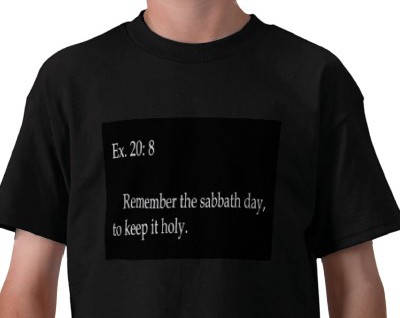
I’ve always had issues with reserving Shabbat to just the Jewish people. There are plenty of other commandments and blessings that I have no problem with being uniquely Jewish, but a weekly Shabbat rest in order to devote our thoughts and prayers to God? Why should only Jews do this? God sanctified the day at the end of Creation.

And God blessed the seventh day and declared it holy, because on it God ceased from all the work of creation that He had done. –Genesis 2:3 (JPS Tanakh)

OK, I’m not that naive. God also directly associated the Shabbat with the Exodus from Egypt, thus:

Remember that you were slaves in Egypt and that the LORD your God brought you out of there with a mighty hand and an outstretched arm. Therefore the LORD your God has commanded you to observe the Sabbath day. –Deuteronomy 5:15

In doing my research for this morning’s “meditation”, I came along an interesting forum discussion on the topic of Shabbat and the Exodus at judaism.stackexchange.com where a similar question was raised by one man’s four year old son:

Why do you say “Mitzrayim” in Kiddush every week? “Mitzrayim” is a Pesach word!

Minus the Hebrew (which I can’t reproduce here), the father added a follow up question:

Tack-on question: Once you’ve established that Shabbat is linked both to Creation and to the Exodus, why is the terminology in Kiddush for these links slightly different? Shabbat is called – “a memorial to the deed of Creation” and – “commemorating the Exodus from Egypt” (translations from Wikipedia; emphases mine).

You can go to judaism.stackexchange.com and read the entire thread. I can certainly see how the Shabbat is inexorably linked to the Jewish liberation from slavery in Egypt and how saying the kiddush on every Erev Shabbat commemorates the Exodus event for the Children of Israel.

But must the Shabbat observance be exclusively for the Jews?

The reason why all Jews are entirely equal with regard to the mitzvah of cessation of labor on Shabbos stems from the fact that the mitzvah of Shabbos touches the essence of the Jewish soul. Differences between one Jew and another exist only on an external level; with regard to their essence, they are all equal.

The Chabad commentary describes why all Jews are equal on the Shabbat, regardless of social status or other apparent divisions, because of their Jewish souls, but the Shabbat also separates Jews and Gentiles. Is the “essence” between Jewish and Gentile souls so incredibly different that we non-Jews cannot also connect to the Shabbat?

Some non-Jews, such as those associated with the “Messianic” movement, chafe when told by some Jews that the Gentiles, Christians or otherwise, are not commanded to observe the Shabbat and there is no penalty for a Gentile who fails to observe a Shabbat rest in the manner commanded for Jews. OK, I’ll buy that part, but what about Gentiles observing the Shabbat as a moral conviction and in acknowledgment of God’s creative sovereignty over the universe? We all live in Creation and God made the Gentile as He made the Jew. Is it so bad if a Christian were to rest on the Shabbat as “a memorial to the deed of Creation?”

Being married to a Jew, I have sort of a built-in reason for observing Shabbat, though my wife and I don’t do this as well as we would like. Christianity cast off the Jewish form of Shabbat observance and worship along with anything else in Christian practice that could even remotely be considered Jewish thanks to the birth and expansion of Supersessionist theology in the 2nd and 3rd centuries CE, but this has been more harm to us than to the Jews.

Rabbi Shmuley Boteach has, on various occasions, suggested that Jewish values, including the Shabbat, should be disseminated to the nations, at least in some fashion, which never fails to cause a stir, both in Jewish and in Christian circles. But while the Chabad commentary says that the Jewish people enjoy an “unlimited heritage” due to their Shabbos observance, can not the rest of us choose to at least honor God’s absolute rule of Creation by honoring the Shabbat? Do we dilute Jewish uniqueness if we quietly light the candles on Friday night as well, praising and thanking our King and our God?

There’s nothing higher than finding truth on your own.

All worlds were made, all barriers put in place, every veil over G-dliness hung, and the soul plummeted from its pristine height into the confusion of this harsh world—

—all for this one thing alone: That you should uncover truth on your own.

-Rabbi Tzvi Freeman
“The Highest High”
Based on letters and talks of the Rebbe
Rabbi M. M. Schneerson
Chabad.org

In spirit and in truth I wish you all Good Shabbos.

Where Will We Find the Root of David?

lion-of-judahThere is another familiar case in which adjectives may cause more confusion than clarification: the misleading labels of “Orthodox”, “Conservative”, “Reform”, “Reconstructionist”, “Unaffiliated”, “Ashkenazic”, “Sephardic”, etc. It’s important to ask whether or not these words have anything to do with who we are in our kishkas (insides)! If we were able to perform a Litmus Test on our souls – or perhaps a “Litmus Configuration” on our souls, for “Midnight Run” fans who are more familiar with the Grodin/DeNiro technique for counterfeit money inspection – would we actually expect to find any trace of these labels? Do we really think that just as there are various blood types, a litmus test would reveal various “soul types”, such as AJ (Ashkenazic Jew), OJ (Orthodox Jew), UJ (Unaffiliated Jew), etc.? Do these labels somehow exist as “spiritual-chemical” elements on some kind of “Spiriodic Table”?

It’s crucial to keep in mind that the essential soul of a Jew has no such adjectives! A Jew is a Jew is a Jew. And the more we learn to focus on our shared essence, the more we can appreciate the splendor of our true unity! May G-d grant us the wisdom to continually discern the differences between external adjectives and essential nouns!

-Jon Erlbaum
“Birthright Battles & Material Worlds”
Insights from Torah Portion Toldos
Torah.org

It’s unfair to characterize a uniform Jewish view on just about any topic. As soon as you start talking about different periods [in history], it’s almost impossible to answer any question unless you specify what Jews, where and when. Essentially, uniformity of Jewish thought is impossible to find.

-Alan Cooper
Provost of the Jewish Theological Seminary in New York
as quoted by jweekly.com

Seems confusing, doesn’t it? We have Erlbaum saying that regardless of the various differences between Jews, in fact, a “Jew is a Jew is a Jew.” We also have Cooper saying that it’s “unfair to characterize a uniform Jewish view on just about any topic.” Which view of Jewish people is correct? Probably both. Is this a problem?

Nope. Well, maybe.

A large part of this blog is devoted to trying to gather some sort of understanding about the Jewish classic religious texts and, in my case, attempting to apply that knowledge and insight to the faith of one, lone Christian. Me. If anyone else finds something of value here, then I am honored to have recorded it. But given Erlbaum and Cooper, it seems as if my search for knowledge will not be an easy one. There is not one “Judaism” that exists immutable and unchangeable across time from Moses and Sinai to the twenty-first century that we can point to and say, “that’s what it means to be Jewish” or “that’s the sum of the Torah.” If that’s the case, then what am I looking for?

Hillel told a would-be convert this:

“A gentile once came to convert to Judaism, on the condition that he could learn the whole Torah while standing on one foot. He approached Shammai, who rejected him, so he went to Hillel, who taught him: “’That which you dislike don’t do to your fellow: That’s the basis of Torah. The rest is commentary; go learn!” –Shabbos 31

A generation later, quoting Deuteronomy 6:5 and Leviticus 19:18, Jesus said something similar:

“Teacher, which is the greatest commandment in the Law?”

Jesus replied: “‘Love the Lord your God with all your heart and with all your soul and with all your mind.’ This is the first and greatest commandment. And the second is like it: ‘Love your neighbor as yourself.’ All the Law and the Prophets hang on these two commandments.” –Matthew 22:36-40

This past week on my blog, I’ve been drawing a sharp contrast between religion and faith as well as between Judaism and Christianity. It seems as if these two poles at each end of the religious spectrum keep getting in each other’s way. It’s easy to see why most Jews don’t want to even touch the New Testament and why most Christians are relieved when their Pastors tell them that the Law is dead. It’s much less confusing to believe that one religion has nothing to do with the other and that Jews and Christians can remain self-contained within their own “silos” and not wonder or worry about what’s going on elsewhere.

Of course, to do this, Jews must come to the final conclusion that Jesus could never have been the person he claimed to be and that even if he was a good Jewish teacher, Paul twisted those teachings into a very Torah-bereft religion for the Gentiles. Christians, for their part, must believe that Jesus, born of a Jewish mother and of the line of David, did a very “unJewish” thing. They must believe that he lived a life in complete contradiction to everyone around him, somehow managing to gain a large following of Jewish disciples by preaching the Gospel of freedom from the Law and nailing the Torah to the cross. That last part is especially hard to believe. It would be like Joel Osteen visiting the biggest Orthodox synagogue in Houston, Texas during a Shabbat service and expecting to gain a large following of the Jews by taking their Torah scroll and lighting it on fire.

the-teacherYou can only believe all of that if you choose to remain in your silos, both in community and in mind, and refuse to consider the alternative. You also will be unable to explain men like Rabbi Isaac Lichtenstein, Chief Rabbi in the Northern District of Hungry, Rabbi Daniel Zion, Chief Rabbi of Bulgaria, Rabbi Israel Zolli, Chief Rabbi of Rome, and scores of other Jewish people (see Rabbi Joshua Brumbach’s Yinon blog for more information) who amazingly found the Jewish Messiah in the person of Jesus Christ, the man, prophet, and Messiah who neither denied the Torah nor abandoned his people, the Jews. They found that there is no inconsistency between being Jewish and discovering their Moshiach in the pages of the New Testament.

But these people are exceedingly rare among both Jews and Christians. 2,000 years of heinous persecution of the Jewish people by Christians explains why the vast majority of Jews are extremely hesitant (to put it mildly) to consider the validity of Christianity, but what makes Christians so adamant about rejecting the Judaism of Jesus?

To be perfectly blunt: I must say the Christians have robbed the Jews! And perhaps what is worse is that this thievery has been encouraged by theologians, pastors, and even Sunday School teachers, where small children are taught to sing the song, “Every promise in the book is mine, every chapter, every verse, every line.”

Every promise in Scripture in some way benefits Christians, but it is not all promised to Christians. Sometimes the thievery has been inadvertent and unintentional. It’s like thinking that the raincoat hanging in the office closet is yours for wearing home because of unexpected showers. Hopefully, you will discover the raincoat belongs to a fellow worker and you will restore it. It is not as if Christians do not have the greatest promise of God, which is 1 John 2:25: “And this is the promise that He hath promised us, even eternal life.”

-Moishe Rosen
as quoted from the Foreword of Pastor Barry E. Horner’s book
Future Israel: Why Christian Anti-Judaism Must Be Challenged

This isn’t happening in just the traditional church setting, either.

One of the consequences is that many Jews are starting to feel like the “other” in what we thought was a Jewish movement. IMO, limitations on Gentile involvement – some of which are legitimate, in my view – arise in large part from a sense of that a majority of our movement no longer feels that it is essential or even important for us to remain demographically Jewish. This isn’t just a feeling on my part: it comes from numerous conversations with Gentiles and Jews in our movement. I routinely ask, “Do you think we need a majority of Jews in the movement to legitimately call ourselves ‘Jewish’?” Apart from obnoxious Jews like myself (and a smaller number of Gentiles), the answer is almost universally “no.” The discomfort increases when the percentage is lowered: 40%? 25%? 10% – “Ten percent – a tithe. That sounds right!” How about less 5%?” It turns out that it’s very difficult for these otherwise reasonable folks to assign any bottom limit to the percentage of Jews necessary to call our movement, or a congregation, Jewish.

-Rabbi Carl Kinbar
Messianic Jewish Rabbinical Council
as quoted in the comments section of
Morning Meditations

Sometimes I say to myself as a kind of joke that, “if God hadn’t replaced the Jews with the Christians, then the Christians would have done it themselves.” It’s a personal “joke”, though a very sad one, because that’s exactly what Christianity did: decide to replace the Jews in the covenant promises of God, all of them, with Christians. Small wonder that Jews don’t want to anything to do with Christianity and that attempting to convert a Jew to become a Christian is considered deeply insulting by Jews. Christians believe that in order for a Jew to come to faith in the “Jewish” (I put the word in quotes because from the church’s point of view, the “Jewishness” of Jesus was undone on the cross) Messiah, he or she must completely deconstruct their own Jewish identity and remake themselves as a Christian goy. Yeah, like Jesus, Peter, and Paul did that to themselves, right?

Supersessionism isn’t just an artifact of the past but a lived reality of the present. Many churches still comfortably believe that Judaism is a “dead religion”, that Jesus did away with the law, that God changed His infinite mind about choosing Israel, played a game of bait and switch with the Israelites, ripped the covenant promises to Abraham, Isaac, and Jacob away from the Jews, and devoted His love, compassion, and mercy exclusively to Christianity.

Ironically, as Rabbi Kinbar points out, a form of supersessionism also seems to have invaded the one religious movement that exists to allow a Jew to live and worship as a Jew and yet be a disciple of Yeshua (Jesus) as Messiah and Savior. It’s like Gentile Christians just can’t stand the idea that “salvation is from the Jews” (John 4:22). We know from examples we read about in Acts 10 and Acts 15 that the Jewish disciples were responsible for carrying the Word of salvation to the Gentiles and administering how it was to be interpreted, but at the point where Gentiles began to outnumber Jews in the “Nazerene” faith, we also began to rewrite the rules and scriptural interpretations. We stacked the deck in our favor and loaded the dice so the Jews didn’t even have a chance. We invented a system whereby the Jews lost all control and involvement in their own Messiah and we would only let them back in if they agreed to stop being Jewish and to turn into us.

Fat chance. Why should they?

Tree of LifeWe’ve gotten it all backward. We’ve put the cart before the horse. We’ve elevated ourselves to place God never intended us to be. Romans 11:17-20 is Paul’s cautionary tale to the Gentiles about becoming arrogant with being grafted in at the expense of the natural branches. The Tanakh is replete with examples of God restoring those branches and when He does, what will become of us and our so-called “replacement” of the Jews? How will the grafted in answer for the insult to the natural branch of the vine?

More than anything, as frustrating and aggravating as it can be sometimes to struggle with the Jewish perspective on Torah and Talmud, we must look to ancient and modern Judaism if we ever expect to understand our Savior and our faith. We Gentile Christians embrace our comforting supersessionist “teddy bears” at great peril. I know Christianity is afraid of Christ’s Jewishness because we’re afraid of having to play “second fiddle” to the Jewish people and we hate the idea that not all of the promises belong to us. We hate the idea that our easy-going lives of faith and grace, with virtually no behavioral expectations of us by God, are somehow in contrast to the rich and beautiful morning prayers of Judaism, the holiness of the Shema, the Psalms of the Priests in the Temple, the night blessings at bedtime. It all seems so alien, so…Jewish.

But so is Jesus. Not “was”; “is”:

Then one of the elders said to me, “Do not weep! See, the Lion of the tribe of Judah, the Root of David, has triumphed. He is able to open the scroll and its seven seals.” –Revelation 5:5

“The Lion of the Tribe of Judah” and “the Root of David”. Verse 13 of the same chapter of Revelation says “To him who sits on the throne and to the Lamb be praise and honor and glory and power, for ever and ever!” Why do Gentile Christians have such a difficult time giving honor and glory to the Jewish “the Root of David”, or have I already answered that question?

Almost a month ago, I wrote another small article called In Search of the Jewish Voice of Jesus. If you’re a Christian who wants to find out about the Jesus no one talks about in church, you can discover him in that blog post.

Toldot: The Servant and the Coachman

studying-talmudIt was a hot July day during the summer of 1866. The children of Rabbi Shmuel of Lubavitch, five-year-old Sholom DovBer and his brother Zalman Aharon, had just come home from cheder and were playing in the garden which adjoined their home.

In the garden stood a trellis overgrown with vines and greenery which offered protection from the heat of the sun. It was set up as a study, with a place for books etc., and Rabbi Shmuel would sit there on the hot summer days.

The children were debating the difference between a Jew and a non-Jew. Zalman Aharon, the elder by a year and four months, argued that the Jews are a “wise and understanding people”who could, and do, study lots of Torah, both its ‘revealed part’ and its mystical secrets, and pray with devotion and ‘d’vaikus’, attachment to G-d.

Said the young Sholom DovBer: But this is true only of those Jews who learn and pray. What of Jews who are unable to study and who do not pray with d’vaikus? What is their specialness over a non-Jew?

Zalman Aharon did not know what to reply.

The children’s sister, Devorah Leah, ran to tell their father of their argument. Rabbi Shmuel called them to the trellis, and sent the young Sholom DovBer to summon Ben-Zion, a servant in the Rebbe’s home.

Ben-Zion was a simple Jew who read Hebrew with many mispronunciations and barely understood the easy words of the prayers. Every day he would recite the entire book of Psalms, pray with the congregation, and make sure to be present in the synagogue when Ein Yaakov was studied.

When the servant arrived, the Rebbe asked him: “Ben-Zion, did you eat?”

Ben-Zion: “Yes”.

The Rebbe: “Did you eat well?”

Ben-Zion: “What’s well? Thank G-d, I was sated.”

The Rebbe: “And why do you eat?”

Ben-Zion: “So that I may live”

The Rebbe: “But why live?”

Ben-Zion: “To be a Jew and do what G-d wants.” The servant sighed.

The Rebbe: “You may go. Send me Ivan the coachman.”

Ivan was a gentile who had grown up among Jews from early childhood and spoke a perfect Yiddish.

When the coachman arrived, the Rebbe asked him: “Did you eat today?”

“Yes”.

“Did you eat well?”

“Yes”

“And why do you eat?”

“So that I may live”

“But why live?”

“To take a swig of vodka and have a bite to eat,” replied the coachman.

“You may go,” said the Rebbe.

-Rabbi Yanki Tauber
“The Difference”
Commentary on Torah Portion Toldot
Chabad.org

Not a very flattering comparison between Jews and Gentiles, is it? Of course, the coachman, though he had “grown up among Jews from early childhood” obviously had not spent any time considering how the teachings of the Jewish people could apply to him. More’s the pity. He didn’t consider the example of Abraham and his household and how Abraham taught his non-Hebrew servants of the One God.

We know from last week’s Torah Portion that Abraham sent his most trusted servant to find a bride for Isaac from the land of Abraham’s father. We know that this non-Hebrew servant had learned the lessons of Abraham’s God well, as evidenced by his impassioned prayer.

And he said, “O Lord, God of my master Abraham, grant me good fortune this day, and deal graciously with my master Abraham: Here I stand by the spring as the daughters of the townsmen come out to draw water; let the maiden to whom I say, ‘Please, lower your jar that I may drink,’ and who replies, ‘Drink, and I will also water your camels’-let her be the one whom You have decreed for Your servant Isaac. Thereby shall I know that You have dealt graciously with my master.” –Genesis 24:12-14

The result of the servant’s life of faith depended on Abraham teaching him, and all of the non-Hebrew household, of the God who created us all in His image. Rabbi Eli Touger also speaks to this point in his Torah commentary for Toldot.

Our Sages relate (Shabbos 89b) that in the Era of the Redemption, Jews will praise Yitzchak, telling him: “You are our Patriarch.” For in that era, the inward thrust of Yitzchak will permeate all existence. “The occupation of the entire world will be solely to know G-d. The Jews will be great sages and will know the hidden matters, attaining an understanding of their Creator to the [full] extent of mortal expression.”(Rambam, Mishneh Torah, Hilchos Melachim 12:5).

Although all Jews will then live in Eretz Yisrael, they will as their ancestor Yitzchak did influence mankind as a whole, motivating all to seek G-dly knowledge. “And it shall come to pass in the end of days that the mountain of G-d’s house will be established on the top of the mountains…. and all the nations shall flow unto it. Many people shall say: ‘Come let us ascend the mountain of G-d… and He will teach us of His ways.’ ” (Isaiah 2:2-3) May this take place in the immediate future.

So what happened to Ivan the coachman? Did the Rebbe fail to teach him the same lessons or to live out the same holy life as an example to Ivan as he did to Ben-Zion? Is Rabbi Tauber simply telling us that Jews “naturally” seek the things of God while Gentiles only seek the temporal pleasures of the world? I can’t speak to Rabbi Tauber’s intent, but let’s compare Ivan to Eliezer (assuming Eliezer is “the servant” in the tale of Rivkah). What is the difference between these two men? They both spent many years in the household of a man of God. Did the Rebbe fail where Abraham succeeded or did Eliezer see and hear something in Abraham and in what he taught that Ivan chose to ignore in the Rebbe’s household?

Regardless of opportunity, the path of faith is walked by the individual. We are not old-fashioned wind up toy soldiers that are primed, set on the floor, pointed in a direction, and then set off to march. We make choices. We cannot blame others if our faith is weak or even if it’s non-existent. Ivan chose to consider the purpose of life as taking a “swig of vodka and having a bite to eat” while Eliezer chose to drink deep from the wells of salvation (John 4:13-14).

The path has been set before us. All we need to do is choose to face it, set our foot upon it, and take the first step…or to turn away and follow another trail through the wilderness. Our choice. But like the Samaritan woman at the well, we have already been talking to the one we seek.

“Woman,” Jesus replied, “believe me, a time is coming when you will worship the Father neither on this mountain nor in Jerusalem. You Samaritans worship what you do not know; we worship what we do know, for salvation is from the Jews. Yet a time is coming and has now come when the true worshipers will worship the Father in the Spirit and in truth, for they are the kind of worshipers the Father seeks. God is spirit, and his worshipers must worship in the Spirit and in truth.”

The woman said, “I know that Messiah” (called Christ) “is coming. When he comes, he will explain everything to us.”

Then Jesus declared, “I, the one speaking to you—I am he.” –John 4:21-26

Who are the sons of God? Israel is the obvious heir based on the promises of the Almighty to Abraham, Isaac, and Jacob, but then why were the Jewish people expected to teach the rest of the world about God? If we are not heirs, who are we and what do we matter except maybe as “slaves” or “dogs”? Paul offers us hope. Paul said that we can be grafted in (Romans 11) to “sonship” through faith such as what Abraham had (Romans 4). He also wrote something else encouraging.

So in Christ Jesus you are all children of God through faith, for all of you who were baptized into Christ have clothed yourselves with Christ. There is neither Jew nor Gentile, neither slave nor free, nor is there male and female, for you are all one in Christ Jesus. If you belong to Christ, then you are Abraham’s seed, and heirs according to the promise. –Galatians 3:26-28

The Jews are the sons of the Mosaic promise yet we Gentiles, through faith in the Messianic promises, will also be sitting with Abraham, Isaac, and Jacob at the feast in the Kingdom of Heaven (Matthew 8:11). God be willing and merciful to us all.