Tag Archives: Yeshua

Repentance and Resolution

The Torah teaches us that it is never too late to change.

Changing for the better is called doing teshuva. The Hebrew word teshuva, which is often translated as repentance, actually means to “return.” Return to God. Return to our pure self.

How do people become interested in self-improvement?

People have faults. The faults they have cause them to suffer in some way or another. This suffering limits an individual’s freedom and is often painful. Hence, people want to change… to improve. To be free once again.

How does one change for the better? How does one do teshuva?

There are four steps of teshuva.

-Rabbi Mordechai Rottman
“Four Steps to Change”
Aish.com

Resolution for the Future

There isn’t much to Rabbi Rottman’s last step in making teshuva, but I think it’s deceptively simple:

Make a firm decision not to repeat the negative behavior.
This step can be compared to stepping on the gas! Once you make this resolution, you’re really starting to move! Every minute that passes puts miles behind you and the negativity.

You’re on your way to becoming the “new you!”

After all of the regret, the struggle with negativity from yourself and others around you, and your agonizing confession to God and perhaps even to the people you have hurt, you come to this. You’ve gotten past the tough parts. You’re standing at the trailhead. The new journey is about to start, and it takes you in a different direction than you have previously traveled. The adventure begins.

But the spectre of sin is always following behind, perhaps at a great distance, perhaps right behind your shoulder.

I mean, it’s not like you’re never going to sin again, right?

We’ve been talking about teshuva or repenting of a single, habitual sin. This is something that’s been going on for years and that has consumed your life, made you a slave, and completely disrupted your relationship with God and with other people.

Now you’ve gone through three out of four steps of making teshuva and you stand at the threshold of that fourth step into freedom. Resolve not to return to the sins you have left behind.

walkingAlthough I’m a linear person (most guys are), I can still see or rather hear the echoes of the other steps, especially the negative self-talk. It may not be very strong at this stage, but I can’t say it’s completely absent, either. What if you move forward only to stumble again? What if you backslide? What if you make a mistake? What does that make you? If you screw this up after all you’ve gone through, does that mean all your work was for nothing?

Remember, we’re looking at sin and repentance from a fundamentally Jewish perspective.

Worse yet, biblical translation promotes misconceptions. For example, you’ll read a translation and come across the word “sin.” Uh-oh. Sin, evil, punishment. But the Hebrew word Chet does not mean sin at all. Chet appears in the Bible in reference to an arrow which missed the target. There is nothing inherently “bad” about the arrow (or the archer). Rather, a mistake was made – due to a lack of focus, concentration or skill.

From here we learn that human beings are essentially good. Nobody wants to sin. We may occasionally make a mistake, lose focus, and miss the target. But in essence we want to do good. This is a great lesson in self-esteem. Simply adjust your aim and try again!

-Rabbi Noah Weinberg
Written Instructions for Living
from the 48 Ways to Wisdom series

This certainly flies in the face of what we believe in Christianity; that human beings are essentially evil. But Rabbi Weinberg follows up with this statement:

In translation, the message is lost. In fact, entire religions have arose based on mistranslations. So get it straight. Learn Hebrew.

From a Jewish point of view, Christianity’s understanding of sin and evil is based on a misunderstanding of Hebrew.

In Christianity, guilt and sin define your identity before repentance. This is who you are. You are dead in your sins, lost, hopelessly separated from God.

And you were dead in your trespasses and sins, in which you formerly walked according to the course of this world, according to the prince of the power of the air, of the spirit that is now working in the sons of disobedience. Among them we too all formerly lived in the lusts of our flesh, indulging the desires of the flesh and of the mind, and were by nature children of wrath, even as the rest.

Ephesians 2:1-3 (NASB)

This is Paul’s description of pagan Gentiles before they became disciples of the Jewish Messiah and began to worship the God of Israel. Once they (we) make the transition, though:

But now in Christ Jesus you who formerly were far off have been brought near by the blood of Christ.

So then you are no longer strangers and aliens, but you are fellow citizens with the saints, and are of God’s household, having been built on the foundation of the apostles and prophets, Christ Jesus Himself being the corner stone, in whom the whole building, being fitted together, is growing into a holy temple in the Lord, in whom you also are being built together into a dwelling of God in the Spirit.

Ephesians 2:13, 19-22 (NASB)

newI’m deliberately leaving out the “one new man” language and the text that is commonly misinterpreted as Paul’s commentary on the Law being “nailed to the cross with Jesus” because it is not relevant here (and I’ll deal with those misunderstandings another time).

I’m quoting these verses to show that non-Jews can be grafted in and access the blessings of the covenants made between God and Israel, though of course, this doesn’t make us Israel. Paul was describing what we were before and who we are now.

But the writer of the Epistle to the Hebrews delivers a dire warning.

For in the case of those who have once been enlightened and have tasted of the heavenly gift and have been made partakers of the Holy Spirit, and have tasted the good word of God and the powers of the age to come, and then have fallen away, it is impossible to renew them again to repentance, since they again crucify to themselves the Son of God and put Him to open shame. For ground that drinks the rain which often falls on it and brings forth vegetation useful to those for whose sake it is also tilled, receives a blessing from God; but if it yields thorns and thistles, it is worthless and close to being cursed, and it ends up being burned.

Hebrews 6:4-8 (NASB)

You should recognize this if you’ve read my most recent review of D. Thomas Lancaster’s Hebrews sermon series Things that Belong to Salvation. If you haven’t read it, I highly recommend that you do, because Lancaster explains that this passage of scripture, while a critical warning against apostasy, is not an automatic “go to jail (hell) forever” card.

What happens when we come to faith as a Christian and continue to sin? If your faith hasn’t transformed your life at all, then it’s time to question whether you have any faith in God. If your life has changed for the better spiritually and morally, but you still struggle with sin, welcome to the club. I don’t know a single disciple of the Master, no matter how spiritually elevated, who has completely conquered sin.

In fact, we will continue to struggle between our old and new natures all of our human lives, until the Messiah comes, until the resurrection, until the Spirit is poured out on all flesh (Joel 2:28, Acts 2:17). The Acts 2 (for Jews) and Acts 10 (for Gentiles) events were only a down-payment, a guarantee that the promises of the future Messianic Age and that the coming of the Kingdom of God will indeed arrive.

WrestlingUntil then, we struggle with our humanity. Sin is what we do, not who we are. Sin is the influence of the world around us and of the spiritual world. Sin is a disturbance in our relationship with God, like a pool of water can be disturbed by dropping a stone into it.

Make no mistake. Disobedience and willfully defying God comes with horrible consequences. But God isn’t standing over us ready to drop the hammer at the first sign of a mistake. He wants us to succeed. He wants us to draw close to Him. He is our ultimate supporter, He’s always in our corner, cheering us on, calling us to run just a little harder, just a little faster, so we can get to the finish line and receive the trophies He has waiting.

For many of us, life is a very long and difficult road. We can let the hardships defeat us and permanently separate us from God, or we can expect to fall down periodically, so that we can learn to pick ourselves up. Don’t worry. Whether you realize it or not, God is there to lend a supportive hand and help us get back on our feet.

Some falls are worse than others. Sometimes the injuries are severe and leave scars and a limp. But God will not allow you or me to be completely broken and unable to continue the journey. That’s something only you can do to yourself by denying Him and failing to ask for His help.

The first sentence a Jewish child is taught is “Torah tziva lanu Moshe, morasha kehilat Yaakov” – “Torah was commanded to us through Moses and is the inheritance of every Jew.” Torah was meant for everybody. It is not the exclusive domain of some priestly class. Rather, it is a living, breathing document – the lifeblood of our Jewish nation. We are required at all times to involve ourselves in its study and practice. As it says, “You shall think about it day and night” (Joshua 1:8).

-Rabbi Noah Weinberg
Written Instructions for Living
from the 48 Ways to Wisdom series

Although the Torah in its fullness is the inheritance of every Jew, Rabbi Weinberg said it is also meant for everybody (not every Jewish person). I’ve said before that all believers, including Gentiles, have an obligation to the Torah of Moses as part of being a disciples of Jesus (Yeshua), and I’ve even revisited this opinion.

visualize successFor believers, not only is the Torah the written instructions for living, but so are all the scriptures, including the apostolic writings. The Torah is called a tree of life. Don’t just study the Bible, integrate its lessons into your entire lived experience. It’s never too late to begin studying the Bible, just as it’s never too late to make teshuva and return to God.

Visualize Your Success. Then Go And Do It.

-Arnold Schwarzenegger

Resolving not to return to sin is resolving to move toward God. Repent daily. Walk the path daily. Seek an encounter with God daily. Rabbi Zelig Pliskin has said that ”Whatever you focus your attention on, you increase.” Concentrate on the Spirit of God within yourself, focus on the Word of God, and God will increase within you and expand into the world around you.

Gifted souls enter this world and shine. All that surround them bathe in their light and their beauty. And when they are gone, their light is missed.

Challenged souls enter, stumble and fall. They pick themselves up and fall again. Eventually, they climb to a higher tier, where more stumbling blocks await them. Their accomplishments often go unnoticed—although their stumbling is obvious to all.

But by the time they leave, new paths have been forged, obstacles leveled, and life itself has gained a new clarity for all those yet to enter.

Both are pure souls, G‑dly in essence. But while the gifted shine their light from Above, the challenged meet the enemy on its own ground. Any real change in this world is only on their account.

-Rabbi Tzvi Freeman
“Gifted and Challenged”
Based on the letters and talks of the Rebbe, Rabbi M. M. Schneerson
Chabad.org

Blessings.

Zetterholm, Ancient Antioch, and Today’s Messianic Judaism

It is a sad fact that our knowledge of the Judaism of the first century CE is rather limited. It is true that we know quite a lot about the ideology of different Jewish groups. The pioneering works of C.G. Montefiore, G.F. Moore, R.T. Herford, J. Parkes, and W.D. Davies, for instance, culminating in that of E.P. Sanders, have been of tremendous importance in showing that ancient Judaism was not a legalistic religion in which salvation was earned by merit, but a living religion of grace and forgiveness.

-Magnus Zetterholm
Chapter 3: “The Cultural and Religious Differentiation,” pg 53
The Formation of Christianity in Antioch: A Social-Scientific Approach to the Separation between Judaism and Christianity

I wish Pastors preached sermons based on the latest research performed by New Testament theologians and historians. What we hear from the pulpit, more often than not, is doctrine that is decades if not centuries (or longer) old, the same standard preaching that declares Judaism of ancient and modern times as a “religion of dead works.” Even in the church I attend, which has a very pro-Jewish perspective, Jewish people and national Israel are loved, but the Christians are very happy that the old Law is dead and replaced by grace. Jews are loved but Judaism is not, even the (Pharisaic) Judaism practiced by Paul and by Jesus and by all the apostles.

Zetterholm’s book seeks to understand and explain the early schism between the Judaism once called “the Way” and the emergent religious form adopted by Gentile believers known as “Christianity” from a sociological rather than a theological point of view. Of course, it’s impossible to keep theology completely at bay, but Zetterholm, who doubts the accuracy of certain sections of Luke’s Book of Acts and any part of the Bible that speaks of miracles, does his best.

That said, I find his research compelling because he doesn’t have a doctrinal ax to grind and he does establish and confirm certain things about Judaism as practiced by the believing Jews in first century CE Syrian Antioch.

It is generally accepted that the Judaism of the first century CE was not homogeneous but a complex, diversified phenomenon. At the same time these somewhat different realizations of Jewish life had something in common. E.P. Sanders has referred to what he calls “common Judaism” as “what the priest and the people agreed on.”

-ibid, pp 55-6

This isn’t the first time I’ve heard of this concept. Nearly a year ago, Rabbi Dr. Carl Kinbar had this to say in different comments on one of my blog posts:

The situation today is very different. There is no common Judaism or commitment to Torah that is shared by the streams of Judaism and, especially, by individual Jews. Second Temple Judaism varied from one form of Torah observance to another. Today’s diversity is from ultra-orthodoxy to atheism.

To avoid misunderstanding, let me put it this way: common Judaism had a core of practices that all communities of any size considered mandatory while also having a diversity of practice in other matters. Diversity does not mean that some Jews ate pork and did not daven.

That is, unless the Jerusalem leadership objected to the common Judaism of their time. If they did object, they may have engaged in the project of bringing about uniformity. Again, there’s no direct evidence one way or the other. However, there’s some indirect support that they did not teach or enforce uniformity — there is no record that they directed Paul (or anyone, for that matter) to teach or enforce uniformity of practice. There is also nothing in the apostolic letters to indicate that the Jerusalem leadership or other apostles mandated uniformity. If they practiced uniformly in Jerusalem, why would they be indifferent to the lack of uniformity elsewhere?

The Jewish people (in the Land of Israel in particular – I’m not as familiar with the rest) actually did quite well during the time of common Judaism (from late Second Temple times to at least 400 CE). (emph. mine)

In another portion of his book, Zetterholm explains that while each synagogue adhered to a core of common Judaism, they also diverged in meeting the various needs of their differing populations, as R. Kinbar described above.

Antioch was religiously a highly pluralistic milieu. Even though the “zeal for the law” also influenced the Jewish communities in the Diaspora, Judaism was but one of many religions practiced contemporaneously at Antioch.

-ibid, pg 65

.
The various Jewish communities in Antioch had to exist perhaps in some sort of “tension” between each other, depending of their differences, but they also had to exist in a wider environment of many other religious entities, many or most of which would have opposed monotheistic Judaism, which I can only believe was one of the core beliefs of the common Judaism these synagogues shared.

This speaks to me somewhat of the struggle of Messianic Judaism today. Messianic Judaism isn’t a single, monolithic unit that has a definition easily applied to all Messianic Jewish groups (and I define the different streams of Messianic Judaism as an overarching entity distinct from any of the expressions of Hebrew Roots, even though some [many…most] Hebrew Roots congregations define themselves as “Messianic Judaism”) and there is some variability between the different synagogues (in the U.S.) of which I am aware.

Messianic Judaism is trying to relate within it’s various groups as a Judaism as well as relating to the larger Jewish community (and the rest of the world) as a Judaism, all within a diaspora (again, I’m speaking of U.S. congregations) that is poly-religious and areligious.

Carl Kinbar
Rabbi Carl Kinbar

I say all this acknowledging Rabbi Kinbar’s statement above that the modern Judaisms of today cannot be directly compared to the Judaisms of the first century because they lack a commonly held core set of convictions related to Torah . Nevertheless, I can see connecting threads, especially between modern, western Messianic Judaism and the Judaisms in first century Antioch.

A number of critics of modern Messianic Judaism emphasizing itself as a Judaism, complain that this emphasis bumps Messiah Yeshua (Christ Jesus) to the back of the bus if not off the bus altogether. Normative Christianity stresses that Judaism was indeed (they claim) replaced by a more generalized and generic faith in Jesus without tradition or ritual, and modern Hebrew Roots proposes that modern Rabbinic Judaism is adopted by Messianic Judaism in place of “Biblical Judaism” which was (they claim) practiced by both Gentiles and Jews in the first century Messianic community.

Their sons will, furthermore, be subject to compulsive epispasm since they will be “cut by physicians to bring forward their foreskins.” In 1 Corinthians 7:18, Paul admonishes the circumcised Jesus-believing Jews against having this operation performed.

-ibid, pg 72

Zetterholm goes on in pages 76 through 79 to provide numerous examples of what we may not get from just reading the Bible…the fact that Jews in the diaspora, perhaps many, many Jews, struggled with or just plain left the Jewish community, attempted to cover up the signs of their Judaism (males), and assimilated socially and religiously into Greek culture.

Do we have that today?

How many Jews have converted to Christianity and exist and worship as “Hebrew Christians” within the Church, having abandoned any and all practices of Judaism and Jewish identity and adopted living as “Goyishe Christians?” Even the observant Jews within Messianic Judaism are considered by most other Jewish communities (i.e. not Messianic) as “Jews for Jesus,” as converts to Christianity who have abandoned their own people and left Israel. To resist this impression as well as to resist the draw from the Church that says if you believe in Jesus, even as a Jewish disciple of the Jewish Messiah, you are a Christian and are “free from the Law,” the Messianic Jew must strictly adhere to a Jewish lifestyle, including observance of the mitzvot and the traditions.

…that most Jews, in Palestine as well as in the Diaspora, worshiped daily and weekly, kept the Sabbath, circumcised their sons, observed certain purity regulations and supported the temple. Despite mixed opinions on how this obedience would be realized, we can safely assume that the majority of the Antiochean Jews intended to live their lives obeying the torah.

-ibid pg 80

The Jewish communities in the diaspora including Antioch were at risk of assimilation and absorption into the wider Greek culture and religious milieu. The barrier to stave off this threat for Jewish communities was Jewish observance and adherence to Jewish identity as distinct and unique among the myriad people groups and religions existing in the galut.

Magnus Zetterholm
Magnus Zetterholm

Zetterholm cited (pp 83-4) the practice of Jews in Antioch refusing to use Greek-produced oil, but believes that it was more an indication of Jewish identity rather than outright devotion to the Jerusalem Temple. Nevertheless, this still indicates that these diaspora Jews were highly aware of the necessity to keep separate from the surrounding culture, even to the point of being selective about which source of oil they used.

Further, Zetterholm citing Sanders says:

Antioch was thus located in an area almost regarded as part of the Land of Israel, and there is evidence of a particularly strong connection between some Antiochean Jews at least and the temple in Jerusalem.

-ibid, pg 85

Zetterholm’s opinion isn’t quite in line with Sanders’, though.

I would therefore conclude that we may cautiously assume the existence of a group more strongly committed to Jewish life than the main body of Antiochean Jews…

-ibid, pg 86

While Zetterholm doesn’t give much credence to the Book of Acts as an accurate model for Jewish/Gentile interactions of the first century Jewish history in Antioch, he nevertheless states:

…we may assume that there was no intermarriage between Jesus-believing Jews and Jesus-believing Gentiles, because the Jesus movement was a completely Jewish one with an unusual openness towards Gentiles.

-ibid, pg 89

And…

While Antiochus had clearly left Judaism, most Jews who were interested in Hellenism and wanted to create a Hellenistic Judaism were at the same time concerned with the preservation of a Jewish identity and had no intention of ceasing to be Jewish.

-ibid, pg 90

The Jewish PaulIf, as Zetterholm says, the first century “Church” was a wholly Jewish movement, albeit with a high tolerance for Gentiles in the community, then even if this represented a Judaism that was “open,” to some degree, to Hellenistic influences (though this is very dicey material to seriously consider), the “Jesus-movement” had no interest in abandoning Judaism and Jewish practice for something foreign to them or more in line with the religious practices of the Greeks. Paul, as we saw above, was not convincing Jews to give up Judaism. Quite the opposite. Zetterholm’s research and the sources he cites do not support at all the creation of an alien Gentile religion out of the teachings of a rural Jewish Rav who was known by his Jewish followers to be Moshiach.

Zetterholm covers the diversity of Antioch’s synagogues (pp 90-91), including (as I stated above) how they served diverse Jewish populations, and it seems likely that the synagogue Paul and his companions used as their “home church” throughout Paul’s three “missionary journeys” was one of the (perhaps) thirteen synagogues in Antioch. In fact, he says of the Jewish Jesus-believers:

…it is highly unlikely that the Jesus-believing Jews in Antioch were organized in any other way than the synagogue.

-ibid, pg 93

Zetterholm cites Mark Nanos (The Mystery of Romans: The Jewish Context of Paul’s Letters, pp 289-336) as well as a wide selection of scriptures from the Book of Acts, to support this position. This includes the most likely common usage of “ekklesia” to mean “synagogue.” Additionally, Zetterholm references James 2:2 and James 5:14 as evidence that James the Just, brother of the Master, considered the “assembly” and “community” of Jesus-believers to be the synagogue:

We can thus conclude that the terminology does not speak against the view that the Jesus movement in Antioch was originally a synagogue consisting of Jesus-believing Jews, and that the Jesus-believing Gentiles related to this synagogue as any Gentiles related to any Jewish community. (emph. mine)

-ibid, pg 94

What might we conclude from all of this?

Judaism in the first century CE (and in my opinion, much of Judaism today) was not a “works-based religion” but rather a vibrant, faith-based practice of devotion to God. While there were many variations of Judaism practiced in that day, there was a core or common Judaism that served to define and identify all communities of Jews as Jewish and those who worshiped the God of Israel. This would have included the Judaism then known as “the Way.”

Jewish identity, performance of the Torah mitzvot, and devotion to the Temple services were among the common qualities of the Jewish community, both in Roman-occupied Judah and in the diaspora. Jews in the diaspora were at risk of assimilation and absorption into Greek culture, even to the point of attempting to cover the marks of circumcision. There was likely little to no intermarriage between Jewish and Gentile believers and if intermarriage occurred, Jewish identity would be staunchly adhered to by the Jewish spouse. If not, it was more likely that the Jew would undergo apostasy and assimilate into Greek religious and social culture.

Paul was very much opposed to Jews in the community of believers undergoing the medical procedure to restore their foreskin (males) and continued to encourage and support the Torah observance of the Jewish believers. There is no evidence, based on Zetterholm’s research, that the combined community of Jewish and Gentile believers left the synagogue or that they left Jewish practice and formed a new religion that was opposed to the other Judaisms and core Jewish practice. The Way remained a Judaism that was distinguished only by its unusual acceptance of large numbers of Gentiles who were identified neither as proselytes or God-fearers but had a different legal status allowing them to remain Gentiles and equal co-participants in the community (It should be noted that the Way wasn’t the only Jewish community that has ever claimed to follow the Messiah, so Messianic claims are not all that distinguishing).

Many of these conclusions can be applied to Messianic Judaism (and to a degree, larger Judaism) today. My experience with Messianic Judaism is within the confines of the United States, so I’ll restrict my opinions to that population. Messianic Judaism, existing in the diaspora amid a nation of religious plurality including a strong emphasis of no religion at all, faces some of the same risks as its ancient counterpart in Antioch. There is a strong pull, especially for Jews who are believers in Jesus as the Messiah, to apostate from a Jewish faith in Moshiach and “convert” to Christianity, effectively becoming Gentile believers with Jewish DNA.

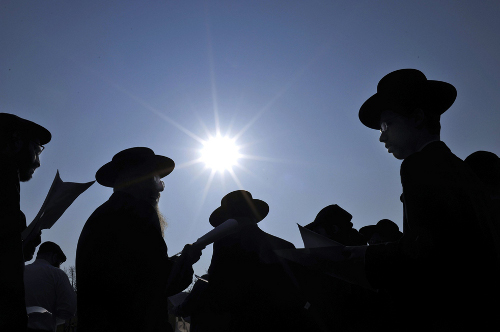
Orthodox JewsIntermarriage, although exceptionally common within Messianic Judaism and relatively rampant within all of the other Judaisms (with the likely exception of Orthodox Judaism) presents a risk or at least a challenge to the Messianic Jewish spouse to remain Messianic and Jewish in his/her observance of Torah and overall lifestyle. If this isn’t supported by the non-Jewish spouse, it could spell trouble for the marriage and/or the Jewish identity of the Jewish spouse. How the children are to be raised and their identity as Jewish vs. Gentile is also a serious consideration.

For these reasons, I reaffirm my previous assertion that a strong Messianic Jewish community be available, both for Jewish and for intermarried families who identify as Messianic. Furthermore, the Jewish Messianics should be allowed and encouraged to maintain and embrace a Jewish identity, and to consider themselves and the Messianic synagogues as part of larger Jewry. The continued effort by Messianic Gentiles and Hebrew Roots Gentiles (and some Hebrew Roots Jews), as well as the overall normative Christian community to demean any Jew in Messiah who continues to live a halachically Jewish life, and who further demands that Messianic Jews abandon Judaism as a practice, or observe some unobservable entity as “Biblical Judaism” vs “Rabbinic Judaism” must cease. Don’t argue.

It’s not our place as Gentiles within or outside the Messianic Jewish movement to dictate terms relative to how a Jew should or shouldn’t live as a Jew. A Jew’s relationship is and always has been with God.

No, I’m not throwing Jesus off the back of the bus and in fact, he’s at the center of all of this. Who lived a perfectly Jewish, halachically correct, completely Torah observant life as evidenced by the Gospels and the rest of the Biblical narrative? Only Yeshua Ben Yosef of Nazareth. Only he was born a Jew, of observant Jewish parents, within the borders of the Land of Promise, faithfully studying the scriptures and performing the mitzvot, and yet he was without sin and totally obedient to God.

What a role model for the apostles, all of the Jewish disciples, and for Messianic Jews today. Could anybody be more Jewish and live a more Jewish life than Messiah, Son of David? Will anyone live a more Jewish life in the Messianic Kingdom than the King of the Jews upon his return?

Zetterholm’s book has certainly confirmed a few things for me and opened up other doors. When next I revisit the pages of his book on this blog, I’ll further examine the relationship between Jews and Gentiles in the Messianic community in Syrian Antioch as Zetterholm’s research reveals it to us.

This series continues in my blog post Zetterholm, Ancient Antioch, and the Problem of the Gentiles.

Messianic Evangelism

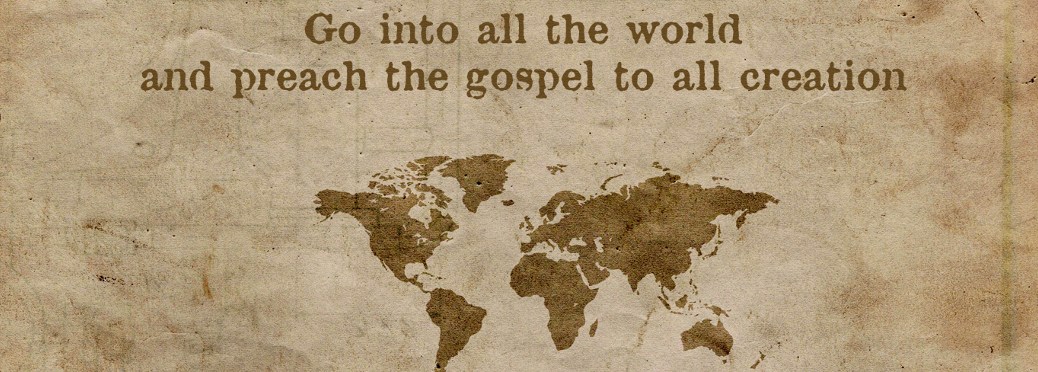
Some people object to this. When they see Messianic Jews declaring the Gospel to other Jewish People and to Gentiles, they say, “Why are you doing that? That’s not Jewish. We Jews are not a proselytizing faith.” Well, that may be a popular notion to many people, but it isn’t true. In Matthew 23:15, Yeshua says, “Woe to you, teachers of the Law and Pharisees. You hypocrites! You travel over land and sea to win a single convert and, when he becomes one, you make him twice as much a son of hell as you are.” Clearly, the Jewish leaders of Jesus’ day were proselytizing. They were telling people about God. They were winning converts, Yeshua says. So, sharing our faith is definitely Jewish. Not only was it true in the First Century, and before Messiah came, but it is also true today.

-Jonathan Bernis
“Good News for Israel”
Jewish Voice Ministries International

Last Sunday afternoon, I had my regular “coffee meeting” with a friend of mine. We meet every other week to talk about all sorts of things, but mainly to maintain relationship, friendship and community in Messiah. My friend is one of the few people in my life (face-to-face or online) who can really challenge me and present me with questions that make me stop and think. It’s not always comfortable but is it always inspiring.

Over lattes, he asked me how I’m personally sharing the good news of Messiah to the people around me as a Messianic Gentile. He didn’t word it exactly like that, but I have a reason for expressing the query this way.

Just about anyone I can think of who is involved in either Messianic Judaism or some aspect of the Hebrew Roots movement entered these movements by way of a Church experience. Before I entered Hebrew Roots and then became more Messianic in my practice and study, I came to faith in a Nazarene church here in Southwestern Idaho. Even the Jewish people I know, with rare exception, entered Messianic Judaism after coming to faith in Jesus (Yeshua) as Messiah within normative Christianity.

In other words, it wasn’t a Messianic Jewish or Messianic Gentile evangelist who shared the good news of Moshiach and the coming Kingdom of God with any of these folks. For me, a more traditional Christian evangelist (in my case, a youth Pastor and friend of my brother-in-law) asked me that standard question, “If you were to die tonight, do you know where your soul would go?”

share the gospelThat’s a horrible introductory line in my opinion, and the actual process of me coming to faith took a large number of specific steps and encounters over a six month to one year period of time. But in the end, I made the initial baby steps of coming to faith and then my life fell apart.

But how would a person with a Messianic Gentile perspective on the Bible come to evangelize, not Christians in the normative Church, which is what we’re used to doing, but atheists or even people from completely unrelated religious traditions, telling them of the plan of personal salvation through Christ?

It’s not an easy question to answer, because I believe the “good news” of Messiah is so much more than just a plan for personal salvation. Scot McKnight expanded on this idea in his book The King Jesus Gospel: The Original Good News Revisited and I agree that we (the Church) have reduced the actual gospel message down to a bullet list of talking points centered around individual salvation so that a person may be forgiven of their sins and go to Heaven when they die.

The gospel message of Jesus is often simplified down to believe in Christ and your sins will be forgiven and you will go to heaven when you die. In episode eight this common misconception will be challenged. Viewers will discover that the main message of the gospel is one of repentance and entering into the kingdom of heaven. The kingdom of heaven is not the place we go to when we die but rather God’s kingdom coming down here on earth. The gospel message is about preparation for the Messianic Age.

from the introduction to Episode 8
The Gospel Message
from the First Fruits of Zion television series
A Promise of What is to Come

The episode is only about thirty minutes long and free to view by clicking the link I provided. It offers a more expanded understanding of what the good news or gospel message of Messiah is really all about.

The Gospel MessageBut that story is aimed at people who already have faith in Christ and who are looking for a deeper understanding of what that faith actually means based on a Hebraic examination of the scriptures.

How do you introduce this sort of stuff to people who have no background in it at all? If I go up to someone, tell them I’m a Christian, and ask if they would like to talk about Jesus, they may say “yes” or they may say “no,” but they’ll at least have some idea of what I’m talking about. If I go up to that same person and tell them I’m a Messianic and ask if they would like to talk about the coming Kingdom of God and the blessings of the Messianic Age, they’d have no idea what I was saying and would probably think I’m some sort of religious cult nut.

The Sunday before Easter, one of the Pastors at church announced from the pulpit the opportunity for anyone who desired, to join with others on Good Friday to go door to door in the neighborhood offering to share the gospel message and to pray with people. For a brief instant, I imagined myself doing such a thing, but then all the questions about the true nature of the gospel I mentioned above came flooding in.

I want to share my faith, but it doesn’t always have a lot in common with the doctrinal position of Evangelicals, so how could I employ Evangelical religious tracts and Evangelical language and concepts in any program of sharing faith as I understand it?

Arguably, there are only two populations that Messianics attempt to engage: normative Judaism and the Church. Messianic Jews attempt to communicate to wider Judaism about the Moshiach, Yeshua HaNazir, and the New Covenant promise of a restored Israel and a reunited Jewish people as the head of all peoples and nations of the Earth. Messianic Gentiles and Hebrew Roots Gentiles tend to try to convince people in the Church or people who are disaffected and who have left the Church, that the Messianic and/or Hebrew Roots perspective on scripture tells a more authentic and accurate story about the relationship between God and humanity.

But how do we (or do we ever) communicate our message to people outside of those frameworks, people who don’t have the theological background we usually require of our audiences, and help them understand what it is to be a disciple of the Master?

I know of only one, single missionary effort currently operating, in this case in Uganda, that works to evangelize unbelieving populations directly from a Messianic perspective: Acts for Messiah. As the introductory text regarding their mission states:

ACTS for Messiah serves to follow in the footsteps of Yeshua and the apostles, providing for the needy, feeding the hungry, and providing a home for the children left in the streets. Our current area of operation is in Tororo, Uganda, where Emily Dywer brings ministry to small villages and runs an orphanage rescuing children from desperate and dangerous situations, giving them hope and a future…

That might be the answer or at least part of it. It’s not just what we say, but what we do and how we live. The answer may not be in the differences in perspective between Christians and Messianics (and of course, Messianics are Christians who simply view scripture from a different and more Hebraic perspective), but the similarities. At the end of the day, it’s all about humble obedience to the teachings of the Master, following the path, feeding the hungry, providing clothing, offering comfort, showing kindness, even to the unkind, for they are the ones who need kindness the most.

the missionary next doorI’m not a big fan of knocking on doors and offering to share the good news with strangers. I’ve been at the receiving end of door-to-door evangelists of one type or another and an unanticipated visit is usually an interruption. On the other hand, I am discounting the Holy Spirit and encounters previously arranged outside human awareness.

We have to start somewhere. We can’t just talk to ourselves about what we already know and we can’t just target limited populations if we really believe we have a good message that people need.

But where to begin? If you call yourself a Messianic anything, do you share your message with strangers or at least with atheists with whom you’re acquainted? How do you talk to someone about faith in a Jewish Messiah within the context of Messianic worship and faith?

The comments section is now open.

Sermon Review of the Holy Epistle to the Hebrews: The Messiah Psalm

Psalm 110 is the most frequently quoted text in the New Testament. Why? And what did Yeshua mean when he quoted it to challenge the concept of a Davidic Messiah?

Listen to a study of Hebrews 4:14-5:6 which unwraps Psalm 110 and introduces the priesthood of Messiah. “The Messiah Psalm” offers discussion about the Messianic interpretation of Psalm 110 as it appears in the teaching of Yeshua (Mark 12) and the Epistle of Hebrews.

-D. Thomas Lancaster
Sermon Thirteen: The Messiah Psalm
Originally presented on April 13, 2013
from the Holy Epistle to the Hebrews sermon series

Therefore, since we have a great high priest who has passed through the heavens, Jesus the Son of God, let us hold fast our confession. For we do not have a high priest who cannot sympathize with our weaknesses, but One who has been tempted in all things as we are, yet without sin. Therefore let us draw near with confidence to the throne of grace, so that we may receive mercy and find grace to help in time of need.

For every high priest taken from among men is appointed on behalf of men in things pertaining to God, in order to offer both gifts and sacrifices for sins; he can deal gently with the ignorant and misguided, since he himself also is beset with weakness; and because of it he is obligated to offer sacrifices for sins, as for the people, so also for himself. And no one takes the honor to himself, but receives it when he is called by God, even as Aaron was.

So also Christ did not glorify Himself so as to become a high priest, but He who said to Him,

“You are My Son,
Today I have begotten You”;
just as He says also in another passage,

“You are a priest forever
According to the order of Melchizedek.”

Hebrews 4:14-5:6 (NASB)

Lancaster teaches some really interesting things in this session, but we have to get there first.

As he often does, Lancaster begins by recapping his previous sermon, in this case by reminding us that we need a priest to approach God, to approach paradise, because we have big angels and a flaming sword keeping us out.

Lancaster also reminds us of who the original readership of the writer of the Hebrews epistle was, and it sure wasn’t us, that is, twenty-first century (Gentile) Christians. The original audience, from Lancaster’s point of view, were first century Hellenistic Jews living in Judea. They had just suffered the martyrdom of James the Just, brother of the Master, the head of the Apostolic Council, along with other important leaders, and they had either just been denied access to the Temple and Priesthood or they were about to be denied. The Sadducees, who controlled access to the Temple, never got along with the Master Yeshua (Jesus) because they deny the resurrection and the existence of the divine soul, both of which the Master taught.

PriestsFrom a Christian’s point of view, it’s very important to realize that the Jewish disciples of the Master did not have a problem with the Temple or the Priesthood at all. They only had a problem with the corruption of the Sadducees who at that point in history controlled access to the Priesthood and the Temple sacrifices. Most Christians read Hebrews as the anti-Levitical Priesthood and anti-Temple book in the Bible, so it’s important to point out these distinctions.

In the next part of the sermon, Lancaster takes us on a small but important detour away from Hebrews and into the Gospel of Mark:

They came again to Jerusalem. And as He was walking in the temple, the chief priests and the scribes and the elders came to Him, and began saying to Him, “By what authority are You doing these things, or who gave You this authority to do these things?”

Mark 11:27-28 (NASB)

Lancaster says that Yeshua evaded the question for about a chapter and then got down to the heart of the matter.

By chapter 12, verse 34, Jesus had so deftly responded to all of his challengers that no one dared to ask him anymore questions. Then Jesus had a question of his own:

And Jesus began to say, as He taught in the temple, “How is it that the scribes say that the Christ [Messiah] is the son of David?”

Mark 12:35 (NASB)

This is one of those questions that if we don’t consider the context of what was going on and we don’t apprehend the query in the manner of a first-century Jew, we’ll completely miss the meaning. Asking if the Messiah is the Son of David is like asking if the Pope is Catholic. Of course, he is! It’s incredibly obvious. So why did Jesus ask this question?

David himself said in the Holy Spirit,

‘The Lord said to my Lord,
“Sit at My right hand,
Until I put Your enemies beneath Your feet.”’

David himself calls Him ‘Lord’; so in what sense is He his son?” And the large crowd enjoyed listening to Him.

Mark 12:36-37 (NASB)

Jesus quotes from Psalm 110. It was common for him to refer to older scriptures, so on the surface, this doesn’t seem unusual. It was common for Paul and the other apostles to quote from previous scriptures, so again, it doesn’t seem to be an unusual event.

King DavidBut of all the Old Testament scriptures quoted in the New Testament, Psalm 110 is the one quoted most often, being cited a total of fifteen times, with nine of those mentions in the Epistle to the Hebrews. The apostles related to Psalm 110 as one of these most noteworthy Messianic prophesies (with Psalm 2 being the other). What was Jesus, and later the writer to the Hebrews, trying to say that we miss, especially in English?

Lancaster tells us that English language Bibles render Psalm 110 poorly because they generally translate the words “my Master” and “Hashem” both as “Lord”. This gives the impression that God is talking to Himself.

Lancaster reads the ESV translation of Psalm 110 but with some slight differences that render it more comprehensible. I’ll reproduce it here with those differences formatted in bold and underlined text.

Hashem says to my Master:
“Sit at my right hand,
until I make your enemies your footstool.”
Hashem sends forth from Zion
your mighty scepter.
Rule in the midst of your enemies!
Your people will offer themselves freely
on the day of your power,
in holy garments;
from the womb of the morning,
the dew of your youth will be yours.
Hashem has sworn
and will not change his mind,
“You are a priest forever
after the order of Melchizedek.”
The Master is at your right hand;
he will shatter kings on the day of his wrath.
He will execute judgment among the nations,
filling them with corpses;
he will shatter chiefs
over the wide earth.
He will drink from the brook by the way;
therefore he will lift up his head.

Psalm 110

The craziness of this Psalm is that David, under inspiration from the Holy Spirit, referred to his descendent, his “son” as it were, as his “Master.” No son is Master of his father. This was Yeshua’s point. The Messiah was surely the Son of David but Psalm 110 also understands that Messiah is more than the Son of David. If Messiah was only the Son of David, he would be seated at David’s right hand.

Licht senderSince Messiah is seated at God’s right hand, whose son does that make him (hint, hint)?

Lancaster read from a collection of traditional Jewish midrash which incredibly, has Abraham also asking why Messiah, Son of David, Son of Abraham ultimately, is seated at God’s right hand.

The Even Zohar, Rabbi Yeshiel Tzvi Lichtenstein in his commentary on Mark 12:25 states that Messiah was indeed the Son of David in the flesh and the Son of God in the Spirit.

Yeshua was confirming that he was the Messiah, Son of David and Son of God. Lancaster says it was Yeshua’s interpretation of Psalm 110 that resulted in his execution.

Again the high priest was questioning Him, and saying to Him, “Are You the Christ [Messiah], the Son of the Blessed One?” And Jesus said, “I am; and you shall see the Son of Man sitting at the right hand of Power, and coming with the clouds of heaven.” Tearing his clothes, the high priest said, “What further need do we have of witnesses? You have heard the blasphemy; how does it seem to you?” And they all condemned Him to be deserving of death.

Mark 14:61-64 (NASB)

If the high priest had just asked “are you the Messiah” and Jesus had said “yes,” maybe he could have been wrong but it wouldn’t be blasphemy. But the high priest asked if Jesus was Messiah and Son of God, and Jesus answered yes. That’s what caused the high priest to condemn Jesus to death.

Now back to Hebrews 4 and our need for a high priest.

Lancaster spent a fair amount of time stating that Jesus had to be fully a human being, not just God or an angel masquerading as a human being. When Jesus was tempted, it had to be completely possible for him to give in to temptation and sin. It’s not temptation if there isn’t a real risk of sinning and if it was actually impossible for Jesus to sin, then he wasn’t really tempted, and therefore, he wasn’t really human. It had to be very possible for Jesus to sin, just like the rest of us. The only difference is that unlike the rest of us, Jesus passed every test and never, ever sinned.

This is where I got stuck last week, since it seems like someone who passed every test still wouldn’t be able to empathize with all of humanity because only he passed all the tests. The rest of us fail.

The High PriestBut in his sermon, as Lancaster entered Hebrews 5, he said this was a very important point. When the writer of Hebrews describes the high priest in verses 1 and 2, he’s not thinking of the then corrupt Sadduceeian high priest, but the ideal among high priests, Aaron. Ironically, one of Aaron’s highest qualifications, according to Lancaster, for the high priesthood was his sin in the incident of the Golden Calf (Exodus 32). It was because Aaron sinned that he could empathize with the weakness of the Israelites and have compassion as he atoned for their sins.

But this presents a problem, at least in an eternal sense.

…he can deal gently with the ignorant and misguided, since he himself also is beset with weakness; and because of it he is obligated to offer sacrifices for sins, as for the people, so also for himself.

Hebrews 5:2-3 (NASB)

Aaron, or the idealized high priest, could “deal gently with the ignorant and misguided” but on the other hand, he still had to offer sacrifices for himself because he too sinned.

While Aaron was the greatest and most noble of the high priests, there was still one who had better qualifications, one who could also empathize and “deal gently with the ignorant and misguided” but ”One who has been tempted in all things as we are, yet without sin” (Hebrews 4:15).

Verse 5 quotes from Psalm 110 and verse 6 is the writer’s proof text:

“You are a priest forever
According to the order of Melchizedek.”

Lancaster leaves us hanging at the meaning of “priest forever according to the order of Melchizedek,” so I suppose we’ll have to wait until next week to get into what all that’s about.

What Did I Learn?

I liked the “straightening out” of Psalm 110 so that it becomes easier to tell “who’s who” in the text. Also, I found the emphasis of Lancaster (and the writer of Hebrews) on the humanity of Jesus compelling. I’ve heard Christians refer to Jesus again and again as a “man-god,” which makes him sound like something out of a science fiction or fantasy novel rather than who he was and is. It’s fascinating to consider Jesus, our high priest in the Heavenly Court, as fully a human being and out of that sinless humanity, he is able to empathize with flawed and failing people in his being the atonement for our sins. I still struggle with how one who has never failed, as Aaron failed, could ever really feel empathy and completely understand, not only real temptation and the risk of failure, which Jesus did experience, but also how we actually, miserably fail, which Jesus never experienced.

The Death of the MasterIf Jesus had failed, he’d understand us better, but if he failed, he would have been disqualified and never would have ascended to be seated at Hashem’s right hand as our Master.

I can imagine this interpretation presenting some difficulties for many Christians relative to the traditional understanding of the “Godhead” and Trinitarian doctrine. I don’t think Lancaster is challenging this necessarily, but he is forcing us (me, anyway) to view the nature and character of Messiah differently. He was, and arguably still is, fully and completely human and the Son of David according to the flesh, but also fully and completely the Son of God according to the Spirit. How this works, I don’t know. I’m not sure anyone really knows, although there are plenty of opinions to go around, including the denial of the Master’s divine nature completely.

I can only imagine that Lancaster in his analysis of the Book of Hebrews, may have taken this one on as his sermon series progressed. Right now, at the end of sermon thirteen, we’re hanging at the priesthood of Melchizedek. Next week, Hashem be willing, we’ll learn more.

For Redemption is Not Yet Complete

But I have been persuaded by Professor Edward Greenstein to read this story existentially rather than critically. The death of Aaron’s sons was not the result of a miscue in the prescribed choreography of the Tabernacle. Their fate conveys the far deeper and more unsettling truth that no amount of elaborate, awesome, and precisely executed ritual should ever leave us with the illusion that we have brought God under human control. The very moment the Tabernacle comes into service, Israel is taught the sober lesson that God’s will remains free and inscrutable, God’s wisdom unfathomable. The religion of the Torah is not a set of magical techniques to get God to do our bidding, but rather a quest to invest our lives with meaning. To rein in the erratic and destructive passions of the earth’s most intelligent animal, that is the Torah’s desperate mission.

-Ismar Schorsch
“Enduring Life’s Setbacks,” pg 411
Commentary on Torah Commentary Aharei Mot
Canon Without Closure: Torah Commentaries

So it came about in the course of time that Cain brought an offering to the Lord of the fruit of the ground. Abel, on his part also brought of the firstlings of his flock and of their fat portions. And the Lord had regard for Abel and for his offering; but for Cain and for his offering He had no regard.

Genesis 4:3-5 (NASB)

I’ve read a couple of different commentaries on the death of Aaron’s sons Nadab and Abihu (Leviticus 10:1-3) recently. Both said that the “strange” or “alien fire” they offered was fire of their own making. These commentaries said that when God first ignited the fire upon the altar, only that fire was to be used in making offerings to God. A rather simple explanation for a question that has stumped scholars for thousands of years.

No, we can’t make a sacrifice to God of any sort that somehow brings Him under our control or provides Him with something He lacks. Nothing we make, say, or do will manipulate God into behaving or performing in a manner differently than is His intention.

Like prayer, we don’t turn to God with anything that will change Him. The purpose of the sacrifices, the mitzvot, and prayer is to change us.

Likewise the cup that was given to the world’s greatest tzaddik.

And He withdrew from them about a stone’s throw, and He knelt down and began to pray, saying, “Father, if You are willing, remove this cup from Me; yet not My will, but Yours be done.”

Luke 22:41-42 (NASB)

It was now about the sixth hour, and darkness fell over the whole land until the ninth hour, because the sun was obscured; and the veil of the temple was torn in two. And Jesus, crying out with a loud voice, said, “Father, into Your hands I commit My spirit.” Having said this, He breathed His last.

Luke 23:44-46 (NASB)

As I write this, I just read a commentary about Passover and atonement which said in part:

“Suffering and pain may be imposed on a tzaddik (righteous person) as an atonement for his entire generation. This tzaddik must then accept this suffering with love for the benefit of his generation, just as he accepts the suffering imposed upon him for his own sake. In doing so, he benefits his generation by atoning for it, and at the same time is himself elevated to a very great degree. Such suffering also includes cases where a tzaddik suffers because his entire generation deserves great punishments, bordering on annihilation, but is spared via the tzaddik’s suffering. In atoning for his generation through his suffering, this tzaddik saves these people in this world and also greatly benefits them in the World-to-Come. In addition, there is a special higher type of suffering that comes to a tzaddik who is even greater and more highly perfected than the ones discussed above. This suffering comes to provide the help necessary to bring about the chain of events leading to the ultimate perfection of mankind as a whole. … Beyond that, the merit and power of these tzaddikim is also increased because of such suffering, and this gives them even greater ability to rectify the damage of others. They can therefore not only rectify their own generation, but can also correct all the spiritual damage done FROM THE BEGINNING, FROM THE TIME OF THE VERY FIRST SINNERS.” (emphasis mine) .. (Derech Hashem, Rabbi Moshe Chaim Luzzatto, translation by Aryeh Kaplan Feldheim Publishers, Jerusalem, 1977, pp 123-125)

If you are a Christian and unfamiliar with Jewish texts, this may seem strange or even startling to you. If you are Jewish and not a believer, this will seem like a gross misappropriation of the writings of the sages, bent in an unintended direction for a mistaken purpose.

The Death of the MasterI’ve written about just such an interpretation before, both in The Death of the Tzaddik and The Sacrifice at Golgotha. God is not pleased by unauthorized offerings, strange fires, and certainly not by human sacrifice, which we Christians sometimes are mistakenly accused of condoning.

And yet, sometimes God does ask that we put our soul on the altar so to speak, not because human struggle and suffering is His desire, but because we need to learn that as servants of the Most High God, our lives are subject to Him, not to what we want. By offering sacrifices, whether it be a lamb, a prayer, or our time and energy in performing deeds of kindness and charity, we aren’t giving to God something that changes Him, but we are doing what changes us in the manner God desires us to change.

And even that desire of God’s is not for His sake but for our own.

At the last second, God terminated the Akedah or the Binding of Isaac (Genesis 22) to spare the life of Isaac and to spare Abraham the death of his only son, the son of inheritance, the son who would carry forward all of the promises God made to Abraham, so they might be sent into the future with Isaac’s son Jacob, with Jacob’s twelve sons, with the tribes they would found, and with all of Israel, today’s Jewish people.

And because God wasn’t asking Abraham for a human sacrifice on the altar by killing his son, He was changing Abraham and changing Isaac, and the result of those changes reverberate down through history in both Judaism and Christianity.

To rein in the erratic and destructive passions of the earth’s most intelligent animal, that is the Torah’s desperate mission.

-Ismar Schorsch

I might have worded that sentence a little differently, but it’s a sound statement. The Word of God exists to change us, mold us, refine us (like a precious metal in fire if necessary) so that we might become a more spiritually pure product over time.

Rabbi Kalman Packouz in his Passover commentary said the following:

The Midrash tells us that the Jewish people had the same problem in Egypt. Only 1/5 of the Jewish people were on a high enough spiritual level to leave Egypt — and they were on the 49th level of Tuma, spiritual degradation — and were within a hair’s breadth of being destroyed.

Yet, what is amazing is that in the next 49 days they raised themselves to the spiritual level to receive the Torah at Mt. Sinai! Each day we climbed one step higher in spirituality and holiness. Many people study one of the “48 Ways to Wisdom” (Ethics of the Fathers, 6:6 — found in the back of most siddurim, Jewish prayer books) each day in the Sephirat HaOmer period between Pesach and Shavuot — which will be explained below — as a means to personal and spiritual growth. This is a propitious time for perfecting one’s character!

PrayerSome of those terms may seem a little odd to some of you but the principle behind them should be clear. We want to change. We want to be a little better tomorrow than we were yesterday. But even as believers and devout disciples of the Master, that’s easier said than done, at least for me (especially for me). Rabbi Packouz suggests Rabbi Noah Weinberg’s series 48 Ways to Wisdom, working through one “way” each day between the start of Passover and the arrival of Shavuot.

Jesus didn’t die just to be a human sacrifice since God abhors the desecration of human life. But if a great tzaddik can atone for the sins of his generation, how much more does the death of the greatest of all tzaddikim atone for the sins of the world, across the vast panorama of human existence?

But there’s nothing we can offer God that changes God. Every sacrifice, every lamb, every bull, every prayer, every mitzvah, and the death of the tzaddik, the Master, exists to change each of us and to bring us a little closer to God. Empty sacrifices are less than useless however. What we do is important but why we do it is crucial. Simply giving a can of soup to a hungry person feeds that hungry person, which is good, and it may temporarily elevate ourselves, at least in our own eyes, which may not be bad either. But if the act doesn’t reveal a little bit more about God to us, and if we don’t become just a little more dedicated and compassionate as God’s servants because of it, then all we’ve done was given one small meal to one single person.

And they’ll be hungry again in a few hours. So much for our “sacrifice.”

It only really, really matters on a vast and even cosmic scale, if it brings us to a greater realization of who is above us:

“Consider three things and you will not come to sin: Know what is above you: an eye that sees and an ear that hears, and all your deeds are recorded in the Book.”

-Pirkei Avot 2:1

Jesus will have died for nothing if we don’t follow him as a result, if we aren’t changed by the crucifixion and resurrection, if his act of inaugurating the era of the New Covenant did not begin to turn our heart of stone into a heart of flesh.

Run to do good. Shun evil. Pray for God to soften you, to change you, to refine you.

Examine me, O Lord, and try me; test my mind and my heart.
For Your lovingkindness is before my eyes, And I have walked in Your truth.

Psalm 26:2-3 (NASB)

Be on guard for yourselves and for all the flock, among which the Holy Spirit has made you overseers, to shepherd the church of God which He purchased with His own blood.

Acts 20:28 (NASB)

Looking upPlease don’t think me vain if I start by praying for myself. It has been all too easy for me to rest for an extended period of time on a spiritual plateau and it’s all too difficult for me to overcome inertia and begin moving again. Going up means I have to overcome gravity, but going down is not the direction I want to take. Like a boat without oars in a river, standing still is just another way of going backward.

Our love of God is not to collapse even when our soul is shattered.

-Ismar Schorsch, pg 412

For redemption is not yet complete.

A Passover Haggadah, Ed. Herbert Bronstein, pg 34

The King is coming, but there’s still time for each of us, you and me.

“Life gets mighty precious when there’s less of it to waste.”

-Bonne Raitt

Review of “What About the New Covenant,” Part 2

Session Two: The Breit Chadashah

D. Thomas Lancaster started this second lecture in the series by taking me more than a few years back into my own history in the Hebrew Roots movement. He said that when he first became involved in Messianic Judaism, even though most people in his group didn’t know Hebrew, there were a few “Hebrewisms” that everyone was expected to observe.

Never say “Jesus”. Always say “Yeshua”. Say “Messiah” instead of “Christ”. Say “Torah” instead of “Law”. Really remember to say “Rav Shaul” rather than “Paul.” Also, say “Breit Chadashah” instead of “New Testament.”

Although some of my readers are scrupulous to use these “Hebrewisms” when emailing me or commenting, even though they may not be well-versed in Hebrew (though a few are quite proficient), some of them probably feel they have to follow this sort of “Messianic Political Correctness speak” in order to be acceptable or perhaps they feel they’re correcting past wrongs and, after all, Messianic Gentiles and Hebrew Roots Christians don’t want to sound too “church-y”.

But there’s a fundamental misunderstanding that most people in the Church and many in the Hebrew Roots and Messianic movements have, that the “New Testament,” that is the books in our Bibles that start with Matthew and end with Revelation, is the same thing as the “New Covenant.”

It’s not.

But to understand that point, we have to understand what the Old Covenant is and that the Old Covenant is not the same as the Torah or what Christians call “the Law.”

I covered some of this territory in last week’s review but Lancaster adds more detail in today’s sermon.

Now therefore, if you obey my voice and keep my covenant, you shall be my treasured possession out of all the peoples. Indeed, the whole earth is mine, but you shall be for me a priestly kingdom and a holy nation. These are the words that you shall speak to the Israelites.”

So Moses came, summoned the elders of the people, and set before them all these words that the Lord had commanded him. The people all answered as one: “Everything that the Lord has spoken we will do.” Moses reported the words of the people to the Lord.

Exodus 19:5-8 (NRSV)

This is the Old Covenant in a nutshell. It’s an agreement and a rather simple one at that. God says, if you, Israel, obey me, then I, God, will make you a ”priestly kingdom and a holy nation.” More simply put, God agrees that if Israel obeys Him ”Then I will take you for My people, and I will be your God.” (Exodus 6:7)

Once the people agreed to the Covenant, then Moses initiated it.

Moses came and told the people all the words of the Lord and all the ordinances; and all the people answered with one voice, and said, “All the words that the Lord has spoken we will do.” And Moses wrote down all the words of the Lord. He rose early in the morning, and built an altar at the foot of the mountain, and set up twelve pillars, corresponding to the twelve tribes of Israel. He sent young men of the people of Israel, who offered burnt offerings and sacrificed oxen as offerings of well-being to the Lord. Moses took half of the blood and put it in basins, and half of the blood he dashed against the altar. Then he took the book of the covenant, and read it in the hearing of the people; and they said, “All that the Lord has spoken we will do, and we will be obedient.” Moses took the blood and dashed it on the people, and said, “See the blood of the covenant that the Lord has made with you in accordance with all these words.”

Exodus 24:3-8 (NRSV)

Moses at NeboThis formally sealed the Covenant relationship between Israel and God. If you look at verses 9 through 11, you’ll see representatives of Israel having a meal in the presence of God since, in last week’s lecture, Lancaster said it was traditional behavior among two human parties, such as a great King and a vassal nation, to share a meal after a treaty had been settled.

The actual Covenant was the agreement between God and Israel, and Israel, for their part, were responsible to obey God in order to hold up their end of the bargain. But how? That’s where the Torah comes in. It defines the specific conditions and stipulations that Israel must obey.

However, there’s a problem. Israel’s obedience was rather poor. In fact, the first time they disobeyed was very soon after their initial agreement by building the Golden Calf (see Exodus 32). After that, the Covenant had to be renewed and it was renewed many times. But Israel, sadly, fell into a pattern of disobedience and sin. As part of the Covenant conditions, if the people obeyed, then God would be their God and they would be His people, but when they disobeyed, He ceased to be their God and they ceased to be His people. Then God sent an army and great destruction usually happened, sometimes with the people going into exile. Once they cried out to God and repented, God would send a rescuer, defeat Israel’s enemies, and restore the people to their Land.

And this happened over and over again. The Book of Judges is a good chronicle of this but the pattern is recorded in much of the Tanakh (Old Testament).

I mentioned that a lot of New Covenant language is found in Jeremiah 31 and Lancaster said that we need to understand the context of Jeremiah to get this.

In Jeremiah 3:1-5 we see Israel depicted as an unfaithful wife, and in spite of many calls to repentance, such as in verses 6 though 25, Israel remains uncaring and God sends the armies of Babylon to destroy Jerusalem.

But amid this tragic tale, Jeremiah introduces hope in the form of a future redemption, but one like Israel had never seen before.

The days are surely coming, says the Lord, when I will make a new covenant with the house of Israel and the house of Judah. It will not be like the covenant that I made with their ancestors when I took them by the hand to bring them out of the land of Egypt—a covenant that they broke, though I was their husband, says the Lord. But this is the covenant that I will make with the house of Israel after those days, says the Lord: I will put my law within them, and I will write it on their hearts; and I will be their God, and they shall be my people. No longer shall they teach one another, or say to each other, “Know the Lord,” for they shall all know me, from the least of them to the greatest, says the Lord; for I will forgive their iniquity, and remember their sin no more.

Jeremiah 31:31-34 (NRSV)

Now remember, the conditions of the Covenant are not the Covenant itself. The conditions of the Old Covenant are the Torah, but Jeremiah isn’t saying that the conditions are what’s new, it’s the Covenant that’s new.

Sofer-Sefer-TorahWhat’s so new in the New Covenant?

In the Old Covenant, God spoke the words of the Covenant to Moses who spoke them to Israel. Israel agreed and everything was written down on scrolls or tablets and the people were to refer to those conditions to, first understand what they had agreed to, and then to actually do what they’d agreed to do by performing the mitzvot.

In the New Covenant, instead of doing all that, God writes the conditions of the Covenant on the hearts and puts them in the minds of the people of Israel and then it becomes second nature for them to obey. The Torah conditions are internalized rather than being externally referenced.

The Old Covenant was written on scrolls and the New Covenant will be, or is in the process of being, written on human hearts and human natures.

But the conditions are the same.

I know what you’re thinking. You’re thinking if Gentiles are also benefiting to the New Covenant through faith in Jesus (Yeshua), then are those same conditions being written on our hearts as well?

Yes and no.

In the Torah is there a condition for Gentiles to circumcise their males on the eighth day of life? No, that requirement is only for the physical descendants of Abraham, Isaac, and Jacob. Gentiles are exempt. I’ve said before that the Acts 15 decision formally spelled out the conditions that Gentiles are responsible for carrying out, and it’s only through the blessings of one part of the Abrahamic covenant that the nations are attached to the New Covenant at all. Jews already knew the conditions that applied to them because they were the same ones established by the Sinai (Old) Covenant and they never changed.

But what about this?

But Jesus has now obtained a more excellent ministry, and to that degree he is the mediator of a better covenant, which has been enacted through better promises. For if that first covenant had been faultless, there would have been no need to look for a second one.

God finds fault with them when he says: “The days are surely coming, says the Lord, when I will establish a new covenant with the house of Israel and with the house of Judah…

Hebrews 8:6-8 (NRSV)

Torah at SinaiIt’s scriptures such as this that Christians use to prove that the Old Covenant was replaced by the New, but look at what the writer of Hebrews is actually saying. As he is about to quote from Jeremiah 31, he says, ”God finds fault with them (emph. mine)…” He doesn’t say God found fault with it, that is, the Old Covenant, but with them, with Israel, with the people, because they didn’t obey the conditions of the Covenant because of sin.

The solution wasn’t to change the Covenant but instead, to change the people, so it would be possible to fulfill the conditions of the Old Covenant originally spelled out at Sinai. The New Covenant (and not renewed) is a new method of delivery and institution so Israel will be obedient by design.

So how did we get into the mess we’re in as Christians today? How did this get screwed up?

According to Lancaster, the Church Fathers in the second and third centuries CE knew that they didn’t have to keep the conditions of the Old Covenant as did the Jews but they didn’t know why. The Apostles taught that Gentiles had a different (and somewhat overlapping) set of conditions but once the last of the Apostles died, the Gentiles made a few assumptions (or perhaps a few deliberate errors to serve a specific purpose, but that’s my opinion). Lancaster said these Gentile Christians assumed that everyone, Jew and Gentile in Jesus, kept the Gentile standards of obedience, and the Gentile Christians actually criticized (and later persecuted) Jews for not abandoning the “Old Covenant” conditions.

The other shocker for some Christians is that we aren’t really living in New Covenant times right now. Sure, the death and resurrection of Jesus started a process by which the New Covenant era began to arrive but it’s not fully with us yet. Otherwise, we wouldn’t sin. Otherwise the conditions of the New Covenant would be written on our hearts rather than in the Bible and we would all just naturally obey God.

Sadly, I must confess that I do not naturally obey God. I have to struggle with obedience. Chances are, you do, too. It will only be when the New Covenant Era fully arrives that we really will be “new creatures” and “new creations”. We aren’t there yet. We’re a work in progress.

That doesn’t stop you and me from repenting now. Why wait? Messiah is coming.

If my reviews are piquing your interest, you can find the complete, five-disc set of Lancaster’s New Covenant lectures at First Fruits of Zion. I’ll review the third lecture next week.

For more on this topic and how historical and modern Christianity has misunderstood the New Covenant, see my blog post The Two-Thousand Year Old Christian Mistake.