Tag Archives: Yom Kippur

A Plea Against the Custom of Kapparot

kapparotRabbi Yonah Bookstein, an Orthodox Rabbi in Los Angeles, pleads with the Jewish community to stop using chickens for the kapparot ritual. He says using chickens for kapparot violates four different Torah laws: tzaar ba’alei hayyim, creating nevailah, ba’al tashchit, and dina d’malchuta dina.

I know I’m probably going to offend some people, probably Jewish people, but when I saw this, I felt it necessary to make the information public on my blog. I generally support the right of the Jewish community to define and practice their own traditions, but as Rabbi Bookstein points out, not only does this practice directly contradict the Torah, but it is obviously cruel to the animals and has no hope of atoning for sins or benefiting the community in any way.

I had this conversation with my Pastor last week. He lived in Israel for fifteen years, so he’s witnessed this practice many times.

But if you are a Christian or are otherwise not familiar with this practice, you may be asking what Kapparot is and what’s the big deal. Jewish Virtual Library is just one place that provides the answer:

Kapparot is a custom in which the sins of a person are symbolically transferred to a fowl. It is practiced by some Jews shortly before Yom Kippur. First, selections from Isaiah 11:9, Psalms 107:10, 14, and 17-21, and Job 33:23-24 are recited; then a rooster (for a male) or a hen (for a female) is held above the person’s head and swung in a circle three times, while the following is spoken: “This is my exchange, my substitute, my atonement; this rooster (or hen) shall go to its death, but I shall go to a good, long life, and to peace.” The hope is that the fowl, which is then donated to the poor for food, will take on any misfortune that might otherwise occur to the one who has taken part in the ritual, in punishment for his or her sins.

You can click on the link and read more of the details, and it’s to the credit of the creators of this content on Jewish Virtual Library that they list the significant objections to this Yom Kippur tradition, which does not appear in either the Torah or the Talmud.

The following video is about four minutes long and I think Rabbi Yonah Bookstein makes his case well. Be warned that some of the images in the video are graphic.

Addendum: September 11, 2013: According to VirtualJerusalem.com, there is a small but growing movement among Orthodox Rabbis and others in the Jewish community protesting this practice:

Last week, the recently elected Ashkenazi chief rabbi of Israel, David Lau, warned kapparot organizers that the failure to treat animals decently is a violation of religious law.

And a number of other prominent rabbis have expressed concern that the ritual, in which chickens are hauled into dense urban centers by the truckload, makes it virtually impossible to adhere to the principle of “tzaar baalei chayim,” which prohibits inflicting suffering on animals.

Given that there are other appropriate methods of satisfying the kapparot requirement, such as waving money instead of chickens, it seems more reasonable and more in keeping with Jewish tradition to finally set aside the practice of using poultry.

Forgivable

Yom-KippurThese were the days before Yom Kippur. I was lonely and couldn’t figure out why. The loneliness had been there for months.

Things were good with my wife and kids. I’d been on the phone with my sisters and in close contact with my friends.

So, what was the source of this loneliness?

I was missing G-d.

-Jay Litvin
“Forgiveness”
Commentary on Yom Kippur
Chabad.org

We all miss God sometimes, if we choose to have an awareness of God at all. We’re all afraid of God sometimes, if we choose to be aware that God is a righteous judge. For many religious Jewish people at this special time of year, emotions can run high. Minds and hearts are turned toward God in a way that doesn’t have any sort of comparison in the Christian world.

Most Christians have little regard for Yom Kippur or the Day of Atonement. We’ve been taught that Jesus Christ atoned for our sins and we are free from sin and death through his grace.

Does that mean Christians never get lonely and miss God? Does that means Christians can’t get angry at God?

As Yom Kippur drew close, I continued to wonder what was taking place between G-d and me. I worried that this day of prayer and fasting would be void of the usual connection that Yom Kippur brings.

And then in a flash I realized that I was angry at G-d. And had been for some time. I was angry about my disease and I was angry that I was not yet healed. I was angry about my pain. And I was angry at the disruption to my life, the fear, the worry and anxiety that my disease was causing my family and those who loved and cared about me. I was angry about the whole thing, and He, being the boss of everything that happens in the world, was responsible and to blame.

And so, I entered Yom Kippur angry at G-d.

Actually, Jay Litvin had a lot of reasons, at least from a human perspective, to be angry at God. I won’t reveal more until the end of this missive, but think about it. Have you ever been angry at God? Have you ever thought God treated you unfairly?

Nevermind that you know God is perfect, and righteous, and without sin, and cannot make a mistake, and cannot be unfair. Even the best of Fathers sometimes seems unfair to his children. So it is between us and God.

I once knew an elderly Jewish gentleman who was angry at God. He blamed God for the Holocaust. He blamed God for the execution of six-million Jews and the incredible torture of so many more who had survived. He was already in his 90s when I knew him and he said that when he died, he was going to confront God and give God a piece of his mind.

I know. It sounds ridiculous. But it also sounds very human. If you felt as if God had done you some wrong, could you learn to forgive God?

Forgive God?

I prayed for G-d’s forgiveness, and in my prayer book I read the words that promised His forgiveness. He would forgive me, I read, because that was His nature. He is a forgiver. He loves me. He wants me to be close to Him. And so He forgives me not for any reason, not because I deserve it, but simply because that is who He is. He is merciful and forgives and wipes the slate clean so that we — He and I — can be close again for the coming year.

I read these words, nice words, yet my anger remained.

Then I again remembered the email. In his cynicism, my friend had hit the mark: I needed to forgive G-d. I needed to rid myself of my anger and blame for the sickness He had given me. I needed to wipe the slate clean so that He and I could be close once again.

But how? On what basis should I forgive Him? If He was human, I could forgive Him for His imperfections, His fallibility, His pettiness, His upbringing, His fragility and vulnerability. I could try to put myself in His shoes, to understand His position. But He is G-d, perfect and complete! Acting with wisdom and intention. How could I forgive Him?!

ForgivenessBut wouldn’t it be an affront to God to even consider that He needed our forgiveness, regardless of the circumstances of our lives, regardless of our hardships, regardless of how we have suffered and how those we love have suffered? Isn’t God, regardless of what has ever happened to us, immune from being forgiven because He is perfect and His will is perfect?

But maybe none of that really matters to those of us “on the ground,” so to speak. God certainly understands how faulty we are and how screwed up our thoughts and feelings can be, especially when we’re under a lot of stress, a lot of pain, a lot of anguish, and a lot of grief.

In the ten days between Rosh Hashanah and Yom Kippur, it is expected that Jewish people will pay tremendous attention to how they’ve lived during the past year, recount any incident where they may have injured or offended someone, and then make every effort to make amends to those people, if at all possible.

Sometimes the human need in us to forgive means when we feel hurt and there’s no one else to be angry at, we get angry at God, and in that anger, we need to forgive Him. Even though God doesn’t really need our forgiveness. Even though on a cosmic scale, we understand that He hasn’t done anything wrong and, being God, that He can’t do anything wrong.

It helps us to forgive. It helps us to heal inside. It helps to heal our relationship with God. And out of that, our relationships with everyone else heal, too.

And in the last minutes of Yom Kippur, out of my unbearable loneliness and separation from G-d, I found my ability to forgive. I forgave simply so that we — G-d and I — could be close again. So that we would return to the unity that is meant to be between us. Out my love for Him, my need of Him, my inability to carry on without Him I found the capacity somewhere in me. I reached out to Him in forgiveness and in that moment the pain and blame began to recede.

For me, Yom Kippur has not ended. This forgiveness business is not so easy as to be learned and actualized in a day. My anger and resentment, frustration and intolerance still flare, still cause damage. On my bad days it is hard for me to accept all that is happening, changing, challenging my life. But some new dynamic has entered the process. A softening. An acceptance. A letting go. A…. forgiveness.

For, you see, the last thing I want during the fragility of this time in my life is to be separate from G-d or from those whom I love or from the rising sun or a star-filled night.

Yom Kippur is a gift. It’s God giving us the opportunity to repair the gaps in our lives that stand between us and the people we love. Through forgiveness and asking for forgiveness, we can repair what we have broken in the past year (or anytime in the past). We don’t have to be alone. If we feel alone, much of the time, no one is to blame except us. If we feel the absence of God, it is definitely because we have separated ourselves from Him.

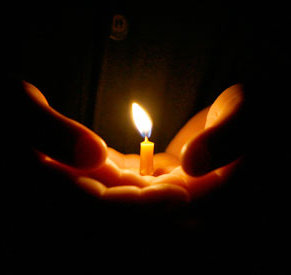
candleGod gave Jay Litvin the gift of forgiveness on Yom Kippur. He forgave God and he repaired the rift between them. God came close to Jay again. Love makes people unforgettable. Love makes God unforgettable. But until we forgive, we remember not the love, but its absence and the pain it causes. Yom Kippur is a reminder. We can forgive at any time. We can stop the loneliness and isolation at any time.

Thankfully, G-d has provided me with the capacity to forgive and, now, in these days since Yom Kippur, he has provided me with the opportunity to reveal that forgiveness. He knows that both He and I, and all those that He and I love, will eventually, continuously do unforgivable things to each other. And despite the pain we will cause each other, we will need to forgive each other.

To not forgive would be an unbearable breach of the unity of creation.

Jay’s article, like Yom Kippur, is a gift. I didn’t realize how dear and precious a gift until I read the very end.

Jay Litvin was born in Chicago in 1944. He moved to Israel in 1993 to serve as medical liaison for Chabad’s Children of Chernobyl program, and took a leading role in airlifting children from the areas contaminated by the Chernobyl nuclear disaster; he also founded and directed Chabad’s Terror Victims program in Israel. Jay passed away in April of 2004 after a valiant four-year battle with non-Hodgkin’s lymphoma, and is survived by his wife, Sharon, and their seven children.

This year, Yom Kippur begins at sundown on Friday, September the 13th, and ends at sundown on Saturday the 14th. As the sun descends toward the western horizon late Saturday evening, will you know that you have been forgiven and that you have forgiven all others, especially God, with all your heart?

Rosh Hashanah: Playing the Shofar For Our Father

shofar-rosh-hashanahAnd so we plead on Rosh Hashanah, Avinu Malkenu—our Father, our King. We know who You are, behind that stern mask, feigning objective judgment upon Your throne. You are the Ruler of All That Is, but You are also our Father, and a compassionate loving Father at that. Come here with us, hold our hands, see everything from our view down here. Feel our troubles and the pangs of our hearts as only a father can do. And then get involved with Your world and bless us with a sweet and goodly year.

-Rabbi Tzvi Freeman
“I Don’t Like Rosh Hashanah”
Chabad.org

A few days ago, while I was doing some reading, I had an idea for a “Rosh Hashanah” themed blog post. But I got busy with other things and now that I have the time to write it, the idea is gone. I searched my various online inspirations in an attempt to recapture what I had previously thought of, but no go.

But yesterday (as I write this) I did read my four-and-a-half year old grandson a book, written by Sonia Levitin called A Sound to Remember. Unfortunately, it was a library book and since it was due, I had to return it, thus I no longer have it with me to quote from.

The book seemed a little long and a little dry for my young grandson but he still cuddled next to me and paid rapt attention as I read the story of a boy, just past Bar Mitzvah age, named Jacov, a child living in a 19th century European village. Jacov was described as a “slow boy” who stuttered and who generally was the joke of both children and adults in his small town. But his ally was his teacher and friend, the Rabbi of the local synagogue.

The story begins several weeks before the start of the High Holidays. At this time, someone is usually selected to blow the shofar at the Rosh Hashanah and Yom Kippur services (custom says that a single individual is chosen for both of these honors). However, instead of the Rabbi choosing one of the elders of the synagogue or another person of esteem, he chose Jacov.

No one could believe it. Everyone tried to talk the Rabbi out of it. But the decision was made.

Jacov was terrified. What if he made a mistake? How much worse would he seem in the eyes of his neighbors than he already was if he made a mess of blowing the Shofar on Rosh Hashanah?

The day came. Jacov’s parents beamed with pride as the young boy, shofar in hand, stood at the bemah ready to participate in the most important part of the service. The Rabbi called for the first blast. Jacov, who had been practicing diligently in preparation for this moment, blew with all his might, but almost no sound came out. The Rabbi called for the next blast. Jacov redoubled his efforts and the sound was a little better, but still hardly above a whisper. Jacov was red with embarrassment and trembling with shame. He just had to get the last call right.

The Rabbi shouted for the last blast but absolutely nothing was heard from the shofar. Jacov, in spite of all his efforts and determination, couldn’t make a sound.

The day was a disaster for both Jacov and everyone in the congregation. Angry faces “greeted” Jacov and his family as they left the synagogue that day. Jacov had no appetite for food and sat on his bed at home as that night’s darkness encroached, almost as dark as his depression at having utterly failed.

As I said, typically the person who blows the shofar at Rosh Hashanah also has the honor at Yom Kippur, but everyone in the village felt certain that the Rabbi would replace Jacov with a much more worthy individual. After all, who could be less worthy than Jacov?

But this was not the Rabbi’s choice. The Rabbi instead, made a secret agreement with Jacov and then took a quick trip to the city, which was unheard of for a Rabbi during the High Holidays.
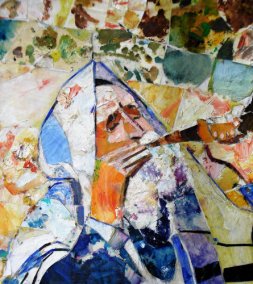
Yom-Kippur-ShofarOn Yom Kippur, right before the blowing of the shofar, Rabbi made a statement that was the point of Levitin’s book and the text I wish I could quote.

He said that it is true that customarily, the shofar blasts on Rosh Hashanah should be loud and robust, but sometimes this is not what God wants to hear from us. Sometimes it is our whispers, our anguish, our small cries of the soul that honor God more. Who is to say that Jacov’s tiny and silent efforts weren’t as pleasing to God as another’s loud, clear shofar blasts? Rabbi was much more eloquent in his words than I am right now, and all of the people in the synagogue realized that at this time of atonement, they had failed their Rabbi, little Jacov and his family, and God by being so stern and unforgiving. To truly end the commemoration of this most holy day, they all had to seek forgiveness and make amends.

Then Rabbi revealed the reason for his trip and the purchase he made in the city: another shofar.

At the end of the service, both Rabbi and Jacov blew their shofars together, and no one could be certain which one (or was it both) was making the loud, clear sounds to remember.

Rabbi Freeman in his Rosh Hashanah commentary, tells a story of a Jewish farmer who had hired a teacher to live in his home with his family. In exchange for room and board, the teacher was to provide instruction for his children. However, with the approach of Rosh Hashanah, the teacher went into town to stay for the holidays so he could be close to the local synagogue. This left it to the father to “home school” his children for several weeks.

The father, usually such as “softie” with his children, found that he had to be overly firm to keep his children from taking advantage of him while he was teaching them their lessons.

Finally, on only day three of this exercise, one small child broke down in tears. Father may have played a good part as stern teacher, but he was still father at heart. He couldn’t bear to look at one of his smallest children crying. Looking down at the table to conceal his chagrin, he brusquely called the child over.

“Why are you crying?” he asked.

Between his sobs, the child answered, “I want to ask my daddy…”

“Yes?”

“I mean my teacher…”

“Yes?”

“…so I can ask my daddy…”

“Right.”

“…that my daddy should ask the teacher…”

“So what is it?!”

“…that my teacher shouldn’t be so hard with us any more!!”
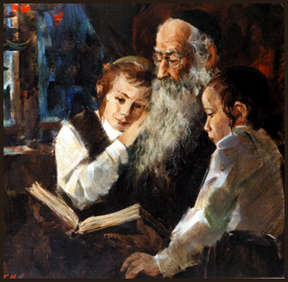
teaching-childrenThe story of the beginning of the New Year and the Day of Atonement is the story of our Teacher, our Master, and our Father and who we are as His children. Although most Christians probably don’t think there’s much for us to learn, since we accept that Jesus is our final atonement, there is a great deal we should pay attention to.

We are like Jacov, not very “quick on the draw,” so to speak. Earnest but immature. Eager to learn, but stumbling over the details. We know we are criticized and often deserve it, but we also can’t always control our natures and we make a lot of mistakes. If only our stern taskmaster, who asks so very much of us, would also be our loving Father, who can forgive abundantly.

We assume that once forgiven, we can do whatever we want. That we cannot fall from the hands of our loving Father. We often abuse the privilege of being “saved.” But what did Paul say?

What shall we say then? Are we to continue in sin so that grace may increase? May it never be! How shall we who died to sin still live in it?

Romans 6:1-2 (NASB)

I recently heard it said that as Christians we should live lives of continual repentance before God. That doesn’t mean we repent once, declare our faith in Jesus as Lord and Savior, and then we’re covered forevermore, regardless of our behavior. It means we must be continually aware of our sins and our failures, continually confess them before the Father, continually regret our willful disobedience, continually make life changes designed to never again commit the sins we have repented of, and relocate our steps so we are walking on the path that God has set before us.

Even if we did that only once a year, say during the High Holidays, it would be a better effort at repentance than many Christians make.

Then, maybe we would appreciate that the harshness of our teacher is only a mask concealing the kindness and forgiveness of our loving Father, who is in Heaven.

If you are still asking yourself what possible relevance can the commemoration of Jewish festivals have for Christians, since this is all commanded in the Law (Torah), consider the following:

Question: Why do the Jewish people needs a covenant/Brit with G-d. Why do we have to be commanded to follow his Mitzvos? Why is the commitment necessary? Please let me know if you have any suggestions on further readings as well.

Answer: The Talmud asks your question, in a way. First, note that the Torah gives commandments to Gentiles as well, so evidently it is the Torah view that all humans need these. In fact, Adam, the first man, was commanded.

-from “Ask the Rabbi”
“Commandments and Covenants”
JewishAnswers.com

Without the basis of Torah, we Christians have no moral or ethical elements in our lives. This is no directive for Christians to behave like religious Jewish people, but God’s covenant with Abraham is our linkage to Christian covenant relationship with God. A significant subset of Torah is intended for the people of the nations who are called by His Name. Certainly the commandment to repent is not lost on us…or at least it shouldn’t be.

Wishing you a good and sweet new year.

Joy

Do you remember the thrill of hitting a home run? Getting out on the last day of school? Riding your new bicycle? You jump with joy. Fantastic!

Joy gives you energy and makes you feel great. You can achieve all kinds of things that otherwise may seem too difficult to attempt. With joy, you’re not afraid to talk to the guy sitting next to you on the plane. No problem! You’ve got energy, buoyancy. You’re alive!

True joy comes from the pleasure of growth and self-actualization – when we conquer a difficult challenge, or experience a moment of clarity.

When your team wins the World Series, or when you win the lottery, the joy is a delusion. Why? Because you did not change or grow.

Joy cannot result from events, from “good things happening to you.” Joy is solely the result of your reaction to life, your commitment to turning every moment into a growth experience. A new baby means you have to extend yourself at all hours of the day and night. That’s not easy. But if you focus – even at 3 a.m. – you’ll recognize this as real joy.

Do significant things and you will have more joy. If you are fighting for a cause, you are making an impact on the world. You are heavy. You are eternal.

-Rabbi Noah Weinberg
“Way #8, Constant Joy”
48 Ways to Wisdom
Aish.com

“Oh well,” he said after a moment. “Then I’ll dance, boss. Sit further away, so I don’t barge into you.”

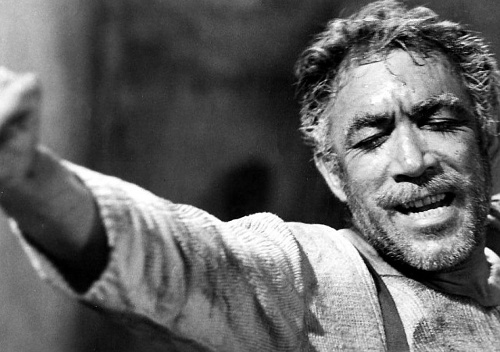
He made a leap, rushed out of the hut, cast off his shoes, his coat, his vest, rolled his trousers up to his knees, and started dancing. His face was still black with coal. The whites of his eyes gleamed.

He threw himself into the dance, clapping his hands, leaping and pirouetting in the air, falling on to his knees, leaping again with his legs tucked up – it was as if he were made of rubber. He suddenly made tremendous bounds in to the air, as if he wished to conquer the laws of nature and fly away. One felt that in this old body of his there was a soul struggling to carry away this flesh and cast itself like a meteor into the darkness. It shook the body which fell back to earth, since it could not stay very long in the air; it shot it again pitilessly, this time a little higher, but the poor body fell again, breathless.

-Nikos Kazantzakis
Zorba the Greek (1946)

Joy is usually an occasional or even rare event in our lives, not a constant companion. But then, how many of us could endure a constant state of joy, as if we were old Zorba, pushing our bodies to the limit, dancing and leaping and trying to defy gravity until we finally collapse on the ground exhausted?

Actually, this sounds like another “unlikely sage” I described last spring; Moshe the Shepherd, who also expressed unbounded joy with almost limitless energy.

Then he got up and said, “Master of the world, I’m just a simple shepherd; I don’t know any Torah, and I don’t know how to pray. What can I do for You? The only thing I know is to sing shepherds’ songs!” He then began to sing loudly and fervently with all his strength until, again, he fell to the earth, exhausted, without an ounce of energy.

-Yitzchak Buxbaum
“The Shepherd”
from his book, Light and Fire of the Baal Shem Tov
quoted from Chabad.org

It’s the day after Yom Kippur. Either you feel elated or depressed. Like Elaina Cline said, “I used to hate Yom Kippur. Every year, as we blew the shofar and rushed home to eat, I would secretly breathe a huge sigh of relief. It was finally over – all the misery, the moroseness, the fear – until next year.”

You can hate Yom Kippur. You can dread confronting the darkest side of your soul. Or you can take joy in the opportunity to realize that what is worst about you is not who you really are. You are really a soul full of joy, singing, leaping, striving to reach your Creator, and to dance with God.

God does not desire that we remain in our pit of mud, sorrow, and regret. He didn’t create us to simply suffer and cry. We must have joy; we must take joy in Him, in all that He’s done for us, for creating our life, for giving us ambition and purpose, for granting us wings so that we can fly.

What is G‑d’s ultimate delight?

That a human soul will build portals of light so that the Creator’s presence may shine into His creation.

That a breath from His essence will pull herself out from the mud and turn to Him in love.

That a child of His being, exiled to the shadows of a physical world, will discover that the darkness is nothing more than Father hiding, waiting for His child to discover Him there.

But none of these can reach to the essence of all delights, the origin of all things, the hidden pleasure beyond all pleasures: The delight that this breath, this soul, this child did it all on its own.

-Rabbi Tzvi Freeman
“The Ultimate Delight”
Based on letters and talks of the Rebbe
Rabbi M. M. Schneerson
Chabad.org

Sukkah in the rainSukkot is coming soon; a time to build and decorate, a time to eat, drink, and celebrate. Who better to invite to the party than God. How shall we call out to Him and express our joy?

“And my tongue will express Your charity. Your praise all day long.”

Psalms 35:28

The charity that King David was referring to was the kindness and charity that the Almighty bestowed on him. Out of gratitude and appreciation for this, King David would praise Hashem all day long.

Fulfillment of this one verse would guarantee a person a life of happiness and gratitude – an elevated and spiritual life.

-Rabbi Zelig Pliskin
“A Guarantee of Happiness”
Daily Lift #587
Aish.com

Oh come, let us sing to the Lord;
let us make a joyful noise to the rock of our salvation!
Let us come into his presence with thanksgiving;
let us make a joyful noise to him with songs of praise!
For the Lord is a great God,
and a great King above all gods.
In his hand are the depths of the earth;
the heights of the mountains are his also.
The sea is his, for he made it,
and his hands formed the dry land.
Oh come, let us worship and bow down;
let us kneel before the Lord, our Maker!

Psalm 95:1-6 (ESV)

Although life is no bed of roses and we face our burdens and struggles every day, God is with us. He cares about us, and makes the way clear for us to approach Him, from the greatest to the smallest, all of His creatures. Do not be afraid. Do not be discouraged. Even in the midst of your troubles, count it all joy.

Shavua Tov, chodesh tov, and shana tova!

Longing for Yom Kippur

Because the day has passed, shield us by the merit of [the Patriarch Abraham] who sat [at the door of his tent] in the heat of the day [to welcome wayfarers].

Genesis 18:1 (Ne’ilah prayer)

Just prior to Ne’ilah (the concluding service of Yom Kippur), one of the Chassidic masters ascended the bimah (platform) and said tearfully, “My dear brothers and sisters! God in His infinite mercy gave us the entire month of Elul to repent, but we failed to take advantage of it. He gave us the awesome days of Rosh Hashanah, when our standing in judgment before the heavenly tribunal should have stimulated us to repent, but we neglected that opportunity. He gave us the special grace of the Ten Days of Penitence, but we let these pass too. All we have left now are a few precious moments that are propitious for forgiveness.

“The Sages of the Talmud tell us that if a person enters a marriage contract on the condition that he is a perfect tzaddik, then it is binding even if he is known to be a complete rasha (wicked person). Why? Because he may have had one moment of sincere contrition that transformed him from a complete rasha to a perfect tzaddik. “Do you hear that, my dear brothers and sisters? All it takes one brief moment of sincere contrition! We have the opportunity of that moment now. In just one moment we can emerge totally cleansed of all our sins, in a state of perfection akin to that of Adam in the Garden of Eden.”

The rabbi wept profusely and uncontrollably. “Could we be so foolish as to overlook such a rare opportunity? Let us assist one another and join in achieving sincere repentance!”

Today I shall…

…take advantage of the Divine gift of forgiveness, and make my resolutions of repentance sincere, so that the new person that emerges will be unencumbered by the burdens of the past.

-Rabbi Abraham J. Twerski
“Growing Each Day, Tishrei 10”
Aish.com

I’m not going to be fasting for Yom Kippur this year. I’ve fasted in the past. Further in the past, I’ve fasted and attended religious worship, although only elements of the Yom Kippur service were involved. A Jewish friend emailed me last night and asked if I were going to fast in solidarity with the Jewish people. I had thought about it, but I know that my family won’t be fasting and it seemed a little presumptive for me to fast, since I’m the only non-Jewish member of my immediate family.

I suppose you could say that if I fasted, I would be leading by example, but it could also boomerang back and make me look like I’m being critical of them and taking on a “holier than thou” attitude. I’m not taking the day off of work, either. I think my family will be working tomorrow as well. I suppose this is a problem, since they are Jewish and choosing not to observe the Yom Kippur fast nor going to shul to repent with the community of Israel.

Last spring, I wrote an article called “Redeeming the Heart of Israel” (Part 1 and Part 2) in which I defined the Christian relationship to the Jewish people as one of encouragement and support for Jews to return to Torah and to the ways of their fathers. That’s easier said than done when it’s your own family.

Oh, I’ve dropped subtle and not-so-subtle hints, but ultimately, the choice isn’t mine to make. It’s theirs. Each individual, Jew, Christian or anyone else, negotiates their own relationship with God. For me, my atonement is in Jesus Christ. Frankly, I believe that’s true of everyone, but not everyone perceives that truth in their lives. There are elements of both the Abrahamic and New Covenant that link both Jews and Christians, through the Messiah, to God, so Messiah is the hope for all of us.

But since I am not Jewish, the particulars of the Sinai covenant do not have blessings for me. Without a Jewish “lived” experience, I’m unsure how to encourage my family to be who they are and maybe it’s not my place to try. But then, when you love someone, you want what’s best for them; you want what will make them happy.

God opens His Hand and satisfies the desires of every living thing (Psalm 145:16). My desire is for my family to return to the mitzvot; return more fully to the Torah, and to be the people God made them to be; Jewish people. I apologize and regret anything I may have said or done that has been to the contrary. I pray to God that in the coming year, He may help turn the hearts of all His Jewish children back to Him and help we Christians be more compassionate of His Chosen People, that we may stand at their side and together, all acknowledge that God is One. On that day, may all Christians fast on Yom Kippur in solidarity with their Jewish friends and family.

May the Messiah come soon and in our days, and may you be sealed for a good year in the book of life.

To honor the most Holy day for the Jewish people, I will not present a “morning meditation” on Wednesday which is Yom Kippur (begins at sundown on Tuesday). My next blog post will be Thursday morning.

Vayeilech and Yom Kippur: Seeking the Hidden God

I shall hide my face from them…

Deuteronomy 31:17

Rabbi Avraham ‘the Angel’ was the only son of Rabbi DovBer, the Maggid of Mezeritch. When Rabbi Avraham was a young child, he once came weeping to his father: He had been playing hide and seek with a friend, sobbed the child, but the friend had lost interest and had run off to some new amusement, leaving little Avraham all alone in his hiding place, waiting in vain to be searched out.

Rabbi DovBer lifted his eyes to heaven and cried: “You, too, have hidden Your face from us only because You want us to seek You. But Your children have tired of the game and have run off…”

-Rabbi Yanki Tauber
“The Cop-Out”
from the “Once Upon a Chasid” series
Commentary on Torah Portion Vayeilech
Chabad.org

This may seem a little obscure compared to my usual Torah Portion “meditation,” but bear with me. As we are deeply immersed in the days of repentance between Rosh Hashanah and Yom Kippur, the struggle between man and God is especially acute. While it is normal for observant Jews to seek particular closeness with Hashem at this time, I can only imagine that there’s some frustration going on, too.

I used to hate Yom Kippur. Every year, as we blew the shofar and rushed home to eat, I would secretly breathe a huge sigh of relief. It was finally over – all the misery, the moroseness, the fear – until next year. And as Passover would pass, I would start counting down to the dreaded day which was hovering just beyond the horizon.

I hated Yom Kippur because it made me feel like a fraud. I would bang away at my chest all day, enumerating all my sins, promising I was repentant. But in my heart I knew that I would return to my mean self the moment the fast was over. I didn’t believe I could ever change, that I was really worthy of life and that I would ever be able to redeem myself. So I would go through the day anxious for it to be over, hating myself for being such a big, fat fraud.

-Elaina Cline
“Why I Hated Yom Kippur”
Aish.com

I know exactly how she feels. This isn’t something most people admit to, but there’s this horrible fear that when I repent of something, it will come back to haunt me in the not-so-near or even the near future. When repentance is linked to a specific date on the calendar and for a month or more, you’ve been building up to an august, awesome, humbling, and overwhelming encounter with God, there’s this little voice in the back of your head (OK, in the back of my head) that says, “The balloon is going to pop as soon as the Yom Kippur fast is over, and you’re going to go back to business as usual.”

Yuk. What a horrible thought. What a depressing feeling.

Although this wasn’t the same matter that Moses was facing at the end of his life as recorded in this week’s Torah reading, I can see how he’d be just as depressed and even frustrated with God.

When Moses had put down in writing the words of this Teaching to the very end, Moses charged the Levites who carried the Ark of the Covenant of the Lord, saying: Take this book of Teaching and place it beside the Ark of the Covenant of the Lord your God, and let it remain there as a witness against you. Well I know how defiant and stiffnecked you are: even now, while I am still alive in your midst, you have been defiant toward the Lord; how much more, then, when I am dead! Gather to me all the elders of your tribes and your officials, that I may speak all these words to them and that I may call heaven and earth to witness against them. For I know that, when I am dead, you will act wickedly and turn away from the path that I enjoined upon you, and that in time to come misfortune will befall you for having done evil in the sight of the Lord and vexed Him by your deeds. –Deuteronomy 31:24-29 (JPS Tanakh)

It wasn’t a matter of if the Children of Israel would sin and rebel against God, only when. After forty years of struggling with two generations of Israelites, of struggling with God, of struggling with his own humanity, Moses’ life ends on a down note.

Kind of like how we might end Yom Kippur on a down note. The balloon pops. The piousness wears off. We dig into the first yummy meal after the long fast, and do whatever we were doing before the High Holidays for this year entered our spiritual awareness.

Christians out there might say that they’re immune to this sort of spiritual let down because they can repent anytime they (we) want to, but frankly, so can any Jewish person. Imagine though, how you might experience yourself one way as you are preparing to “cleanse your soul” before Easter, and then what you might think, feel, and do the Monday after it’s all over. I think that’s the closest we non-Jewish Christians can come to the sort of Yom Kippur letdown Cline was talking about.

Rabbi Tauber talked about this same sort of frustration in his commentary. God withdraws from us so that we might look for Him, but when we look and look and do not find, like the child in the story, we abandon out “playmate” and seek other games. I’ve been tempted to do that on more than one occasion, particularly at the frustration of seeking but not finding my way to the New Covenant connection between Christians and God.

Cline continues her analysis of Yom Kippur and her self-analysis:

And I have seen my smallness, too. I have seen my propensity to be critical, cold and judgmental. I have seen my ability to be harsh and cruel. And I have seen the pain I have inflicted on others and myself in these states – the sadness, the depression, the hostility. I have seen my lethargy, my disconnection and my self-pity.

But this year, my darkness is juxtaposed with my light. I realize that change is actually possible. I am not doomed to isolation, meanness and small mindedness.

This Yom Kippur, I can feel the pain of not being in a state of connection and own the consequences of my choices. I can say to God, “This is not me,” and mean it. I feel repentant, not from fear – but from a genuine desire for connection, love and transcendence. Getting in touch with my higher self that yearns to be good has enabled me to sense the sadness of my past choices.

What is frustration and a sense of separation from God juxtaposed with? Not necessarily satisfaction and closeness, but the realization is that a life of faith is not as hopeless as it sometimes seems. Neither is a human life, which is fraught with mistakes, carelessness, thoughtlessness, stumbling, and disappointment. Where is the path of devotion I’m supposed to be walking on?

Remember us for life, O King Who desires life, and inscribe us in the book of life, for Your sake, O living God.

-Amidah, Ten Days of Penitence

What is the meaning of “for Your sake?” How can the extension of life to a person be for the sake of God?

We might read the verse a bit differently. “Inscribe us into the book of a life that is lived for Your sake.” In other words, we pray not only for life, but for a quality of life that is meaningful and purposeful, one that will be lived for the greater glory of God.

Some people find life boring, and it is little wonder that such people seek escape from its boredom. Some turn to intoxicating chemicals, and others to a quest for thrills and entertaining pastimes which, while not destructive, have no purpose except an escape.

But why should there be a need to escape? Why should life ever be boring? A person whose goal is to amass great wealth never tires of adding more to his already sizable fortune. If we have the kind of goal in life that allows us to add to it continually, we will never be bored.

Of course, we wish to be inscribed in the book of life, but it should be a life that we wish to be in rather than one that we seek to escape from.

Today I shall…

try to enrich my life by living it according to the Divine will, bringing greater glory to His Name – and therefore greater meaning to my life.

-Rabbi Abraham J. Twerski
“Growing Each DAy, Tishrei 4”
Aish.com

Getting sick and tired and frustrated with God and toddling off to play with other toys is the same as trying to escape from our own lives. Our lives are lived, whether we choose to be aware of it or not, for the sake of God. He created us. He fashioned us in the “hidden places” of our mothers’ wombs. He molded us to fit the purpose of our lives. We will truly never discover who we are and what we’re doing here until we live our lives for the sake of our Creator.

Standing before GodYom Kippur isn’t just about repenting of sin and being inscribed in the Book of Life for another year. It’s about living a life that is realized in the existence of God. The day when we permanently stop seeking God’s hidden face, we stop seeking ourselves and we completely lose our way. Our true purpose becomes an unattainable goal, and frustration and futility become our constant companions.

When Moses died, the bitterness of knowing that the Children of Israel would reject the God of Sinai was balanced by the very Presence of God in his life and after his life. If the Jewish people failed, they also succeeded and even today, are with us in the world, continuing to point us to the path of devotion, particularly though Israel’s “first-born son,” Jesus Christ.

In frustration and even despair, we still can choose to fly with broken wings. Even bearing the weight of the chains of a thousand sins, by continuing to seek God and His purpose for our lives, we can soar with eagles.

Giving glory to the Name of God gives us the power to overcome and to stay the course. He is the path and He is our companion. Walk with Him. Take flight with Him. Even laugh with God on Yom Kippur.

One of my favorite stories is of the house painter who deeply regretted stealing from his clients by diluting the paint, but charging full price. He poured out his heart on Yom Kippur hoping for Divine direction. A booming voice comes from Heaven and decrees, “Repaint, repaint … and thin no more!” Yom Kippur begins Tuesday evening, September 25th.

Rabbi Kalman Packouz

Good Shabbos.