All posts by James Pyles

James Pyles is a published Science Fiction, Fantasy, and Horror author as well as the Technical Writer for a large, diversified business in the Northwest. He currently has over 30 short stories published in various anthologies and periodicals and has just sold his first novella. He won the 2021 Helicon Short Story Award for his science fiction tale "The Three Billion Year Love" which appears in the Tuscany Bay Press Planetary Anthology "Mars."

Sukkot: The Man Who Had No Coat

There was once a man, whom we will call Andy, who was diagnosed with a rare and severe illness. Unique conditions often call for unconventional treatments, and he was advised to try psycho-physical therapy: he was told to find someone who lives in complete joy with no worries, ask him for his coat, and wear that man’s coat for seven days. Hopeful that he would soon feel healthy again, Andy embarked on his mission to find such a person. He searched everywhere, asking everyone he met if they or someone they knew was completely happy without worries. Unfortunately, after many months he still hadn’t found anyone who fit the description.

Finally, with the debilitating illness still progressing, Andy was referred to a man named Sam who, he was told, was happy and had no worries at all. It was winter, yet Andy anxiously trudged through the snow to a park bench where he was told Sam could be found. Andy sat down next to Sam and began his inquiry.

“Are you Sam, the man they say is filled with joy, who has no worries?” Andy asked.

“Yes, indeed I am,” Sam replied with a smile.

“Wonderful! May I borrow your coat for seven days? It would really mean a lot to me.”

“Of course! I would love to lend you my coat, but there’s just one problem.”

“What’s that, Sam?”

“I have no coat.”

-Rabbi Mordechai Dixler
Program Director, Project Genesis/Torah.org
“The Party That Never Ends”
ProjectGenesis.org

This lesson from Rabbi Dixler somewhat reminds me of something that the Master taught:

“Do not lay up for yourselves treasures on earth, where moth and rust destroy and where thieves break in and steal, but lay up for yourselves treasures in heaven, where neither moth nor rust destroys and where thieves do not break in and steal. For where your treasure is, there your heart will be also. –Matthew 6:19-21 (ESV)

But what does all this have to do with Sukkot? Plenty.

As Rabbi Dixler points out in his commentary, during Yom Kippur, observant Jews immerse themselves in prayer and supplication before God, turning aside from physical pleasures and imploring their Creator to help them build a new future. Immediately after such a time of plunging into the intense personal and spiritual depths, emerging after the fast and knowing that Sukkot is immediately upon them, the soul rebounds and rises into great joy.

Interestingly enough, Jews are to leave their regular dwellings and reside in “simple huts with deliberately poor roofing” for this week-long holiday, entertaining their guests including, traditionally, Abraham, Isaac, Jacob, Joseph, Moses, Aaron, and David…a different guest each night. It would be like welcoming a different king on each successive night, and entertaining them in a makeshift lean-to. After the personal deprivation of Yom Kippur, why eat and drink and sleep in, what for some of us, might be a small, damp, cold, flimsy shelter?

I think the secret is in what we read from Matthew’s account of the teachings of Jesus. With the roof of the tent purposefully incomplete, allowing in rain and letting us see the stars above us at night, we are trading our physical, secular home for one which Rabbi Dixler calls a “new spiritual home” which “serves to inject the spiritual, genuine, joy experienced on Yom Kippur into common daily activities.”

But what about Andy and Sam?

One does not need a coat to be the happiest man alive. In fact, if we rely on non-spiritual pursuits for our joy, we’ll never be satisfied. As the Sages say, “a person does not leave this world with even half of what he wanted” (Koheles Raba, 1:34). Nothing in this world can live up to our dreams, and a non-spiritual focus ultimately ends in disappointment.

The answer is not asceticism. As one of my teachers, Rabbi Berel Wein, used to say in this context, “this is not a plea for poverty, my friends!” We do learn, however, that for any material pursuit or attainment to last, it must at least be rooted in spirituality. If we buy delicious food to share with others, buy a house to raise a family and welcome guests, or pursue a lucrative career to have money to help those in need, we’ll experience the spiritual joy along with the physical joy, and then it is guaranteed to last. (Based on Nesivos Shalom)

Under the sukkahI suspect that Andy was relieved of his disorder, not by wearing Sam’s non-existent coat for the next seven days, but by understanding why he didn’t have one. Although you and I might consider spending seven days and nights living, eating, and sleeping under the clouds and the sky as a bit uncomfortable (one or two nights might seem like a camp out), there is joy in relying on God. Our immediate surroundings may seem poor, but we are inundated by the boundless treasures of Heaven. By living in a flimsy structure and yet decorating it elaborately, often with lights, trinkets, pictures and such, and then, inviting guests, from the poorest to the richest, into our hovel, and feeding them abundant food and drink, we are experiencing the reality of our existence. We live on earth and are able to enjoy all that it has to offer, but we are also dependent on the blessings of Heaven above us to shelter our heads from the harsh elements of this life.

One can take pleasure in what the world has to offer and this, God approves of. But the world will not be our lasting joy. Only God can give that.

Sukkot begins tonight, September 30th, at sundown. Here’s an infographic that will tell you everything you ever wanted to know about Sukkot.

Chag Sameach and Good Sukkos.

Ha’azinu: Between Heaven and Earth

Why did Moshe address the earth as well as the heavens? And why did Yeshayahu address the heavens as well as the earth? Why did they not confine themselves to speaking to the realm closest to them?

The answer to these questions depends on a fundamental tenet of Judaism: we must relate to both earth and heaven. For material and spiritual reality are meant to be connected, instead of being left as skew lines. Judaism involves drawing down spiritual reality until it meshes with worldly experience (Moshe’s contribution), while elevating worldly experience until a bond with the spiritual is established (Yeshayahu’s contribution). (see Rambam, Commentary to the Mishnah (Sanhedrin 10:1), the seventh and eighth of the Thirteen Principles of Faith)

Indeed, the two initiatives can be seen as phases in a sequence. By revealing the Torah, Moshe endowed every individual with the potential to become “close to the heavens.” Yeshayahu developed the connection further, making it possible for a person to experience being “close to heavens” while “close to the earth” involved in the mundane details of material life.

-Rabbi Eli Touger
“Close To The Heavens”
From the “In the Garden of Torah” series
Commentary on Torah Portion Ha’azinu
Chabad.org

This is something like what I’ve been trying to say in my Jesus, Halakhah, and the Evolution of Judaism series. There is a dynamic tension in Judaism between Heaven and earth; between God and man, between the Spiritual ideal and the practicality of performing the mitzvot in the secular world. Heaven never changes, but the world in which we live in changes all the time. As we see from Rabbi Touger’s commentary on this week’s Torah portion, we might very well say that a Jew has one foot anchored in Heaven and the other planted firmly on earth.

The Master said it this way:

But now I am coming to you, and these things I speak in the world, that they may have my joy fulfilled in themselves. I have given them your word, and the world has hated them because they are not of the world, just as I am not of the world. I do not ask that you take them out of the world, but that you keep them from the evil one. They are not of the world, just as I am not of the world. Sanctify them in the truth; your word is truth. As you sent me into the world, so I have sent them into the world. And for their sake I consecrate myself, that they also may be sanctified in truth. –John 17:13-19 (ESV)

Just as Jesus was, at that time, in the world but not of the world, this is how he characterized his disciples, who were set apart; sanctified for holy service to God. This is also a good understanding of what I see in Rabbi Touger’s commentary on what the Song of Moses was and is trying to teach the descendents of Jacob and the children of Israel.

And as Christians, this is a lesson we must learn as well.

But it isn’t easy. There’s a very delicate balance going on here. It would be very simple to slip too far one way or the other. If we go too far into the spiritual realm, we might have to leave the world altogether. More often than not though, we would probably just lose our way, walking off of the true path and into realms that involve excessive, arcane spiritual and mystic philosophies that are often mistaken for “mysterious truths” by people who are never satisfied with what God has given them. To go too far in the opposite direction (and this is the mistake most of us make) is to become too much of the world, bending our theologies and philosophies to the demands of a politically correct western culture, and believing that God has not prepared for us His enduring principles and values.

But how do you know if you’re biased too far in one direction or another? How can you tell if you’ve struck the right balance between adhering to eternal truths and adapting your religious practice to the needs of the current generation?

You almost never can tell until you, or someone around you, has gone to one extreme or the other, and then it becomes all too obvious.

How do you steady yourself on the path? That’s not easy, either. But it’s done by surrounding yourself with stable companions in the faith; men and women who are “grounded in the Word” and who have spent much time with God, men and women of prayer, grace, compassion, and acts of charity and kindness. Think of them as there to assist you in the occasional “course correction” that must be made during your journey between birth and God.

Unfortunately, there are always wrong communities that will support and encourage problems:

For the time is coming when people will not endure sound teaching, but having itching ears they will accumulate for themselves teachers to suit their own passions, and will turn away from listening to the truth and wander off into myths. As for you, always be sober-minded, endure suffering, do the work of an evangelist, fulfill your ministry. –2 Timothy 4:3-5 (ESV)

This is a well used and well-abused set of verses because almost everyone in every type of Christian denomination, sect, and variant believes their group is the only one that possesses “sound teaching” and that everyone else who differs from them have “itching ears.” Indeed, the Messianic Jewish and Gentile Hebrew Roots movements are often characterized in the latter category by the mainstream Christian churches, since the focus on Hebraic and Jewish thought is contrary to what most churches teach.

So what do you do? How can you be so sure of yourself?

The scary answer is that, if you are at all honest with yourself and with God, you can’t be too sure. In fact, a little self-doubt is probably healthy. Taking other people’s criticisms to heart, at least temporarily, lets you look at yourself from a different point of view and ask the question, “what if I’m wrong?” I spent about a year on a different blog asking myself that question in many different ways, and my current perspective on this blog is the result. Just two weeks ago, I admitted I was wrong in response to a critic’s complaint, and I started a journey to investigate what the Bible really says about a Christian’s covenant connection to God.

If you assume that you’re never wrong, then you are almost certain to be walking away from God. I’ve met people like that, both in the blogosphere and face-to-face and believe me, they’re scary.

But what can we do when information overload hits, when the words and the texts and the spiritual pronouncements get to be too much? What do you do when you feel like you are about to fall off the tightrope, or that you are running on the edge of a razor blade, in imminent danger of being sliced to ribbons? As the saying goes, you need to “get back to basics.”

My soul thirsts for You; my flesh pines for You.

Psalms 63:2

One Yom Kippur, after the Maariv (evening) services that ended the 25-hour fast, Rabbi Levi Yitzchok of Berdichev exclaimed, “I am thirsty! I am thirsty!” Quickly someone brought him water, but the Rabbi said, “No! I am thirsty!” Hastily they boiled water and brought him coffee, but again he said, “No! No! I am thirsty!” His attendant then asked, “Just what is it you desire?”

“A tractate Succah (the volume of the Talmud dealing with the laws of the festival of Succos).” They brought the desired volume, and the Rabbi began to study the Talmud with great enthusiasm, ignoring the food and drink that were placed before him.

Only after several hours of intense study did the Rabbi breathe a sigh of relief and break his fast. The approaching festival of Succos with its many commandments – only five days after Yom Kippur – had aroused so intense a craving that it obscured the hunger and thirst of the fast.

It is also related that at the end of Succos and Pesach, festivals during which one does not put on tefillin, Rabbi Levi Yitzchok sat at the window, waiting for the first glimmer of dawn which would allow him to fulfill the mitzvah of tefillin after a respite of eight or nine days.

Today I shall…

try to realize that Torah and mitzvos are the nutrients of my life, so that I crave them just as I do food and water when I am hungry or thirsty.

-Rabbi Abraham J. Twerski
“Growing Each Day, Tishrei 11”
Aish.com

The “Torah and mitzvos;” Heaven and earth are the nutrients of life. We crave them like food and water. To extend the metaphor, we need a “balanced diet” to stay healthy. I adopted the name and philosophy for my blog from something written by Rabbi Tzvi Freeman that was based on the letters and talks of the Rebbe, Rabbi M. M. Schneerson:

When you get up in the morning, let the world wait. Defy it a little. First learn something to inspire you. Take a few moments to meditate upon it. And then you may plunge ahead into the darkness, full of light with which to illuminate it.

When you find yourself poised between Heaven and earth, try to balance yourself as much as possible, and then pick up a Bible or perhaps some text produced by a learned sage. Learn one thing that inspires you, that fills you with energy, and prompts you to seize the day…meditate upon it, question it, question your own understanding of it and of yourself for a time. Then start walking forward on your path toward the dawn and let yourself be the light that provides illumination.

I am gratified that this lesson has extended outward a little from my humble blog.

Good Shabbos.

Jesus, Halakhah, and the Evolution of Judaism, Part 5

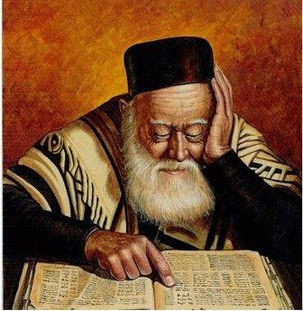
The RabbiIn addition to Tanakh, we as Messianic Jews have another authoritative source for the making of halakhic decisions: the Apostolic Writings. Yeshua himself did not act primarily as a Posek (Jewish legal authority) issuing halakhic rulings, but rather as a prophetic teacher who illumined the purpose of the Torah and the inner orientation we should have in fulfilling it. Nevertheless, his teaching about the Torah has a direct bearing on how we address particular halakhic questions. As followers of Messiah Yeshua, we look to him as the greatest Rabbi of all, and his example and his instruction are definitive for us in matters of Halakhah as in every other sphere.

In addition, the Book of Acts and the Apostolic Letters provide crucial halakhic
guidance for us in our lives as Messianic Jews. They are especially important in
showing us how the early Jewish believers in Yeshua combined a concern for
Israel’s distinctive calling according to the Torah with a recognition of the new
relationship with God and Israel available to Gentiles in the Messiah. They also
provide guidelines relevant to other areas of Messianic Jewish Halakhah, including
(but not restricted to) areas such as distinctive Messianic rites, household relationships,
and dealing with secular authorities.

-from “Standards of Observance”
Messianic Jewish Rabbinical Council (MJRC)
Section One: Halakhah and Messianic Judaism
1.1 Halakhah: Our Approach (pg. 2)
OurRabbis.org (PDF)

This series isn’t taking the direction that I thought it would. At the end of Part 4, I really thought I’d return to a high-level view of the evolution of Judaism, perhaps lightly going over the development of the Talmud. This would mean doing a bit of reading and probably delaying Part 5 (this part) of the series for a while.

Then, on a whim, I decided to read “Standards of Observance,” which is the MJRC’s treatment of “Messianic Jewish halakhah;” certainly a controversial subject given the responses I’ve been fielding in Part 3 and Part 4. Thus, another “meditation” was born.

As I’m writing this, I haven’t gotten past page 2 of the 39 page MJRC document, but when I read the portion that I quoted above, I got to thinking. I generally consider halakhah to be a matter of how Jewish people operationalize their observance of the 613 mitzvot, which is how contemporary Judaism codifies the commandments to Israel in the Torah. But if “the Book of Acts and the Apostolic Letters provide crucial halakhic guidance for…Messianic Jews,” by definition, it must also provide relevant halakhah for the non-Jewish believing community as well.

This is complicated by two potentially competing positions: the halakhah as it is presented in the New Testament (NT) Gospels, book of Acts, and Epistles, and how the MJRC chooses to conceptualize, organize, and apply that halakhah. Actually, even within the context of the New Testament, how we view the relative authority of this halakhah upon the daily lives of non-Jewish Christians depends on whether or not we see this NT halakhah as fixed, static, pronouncements that were intended to be inflexibly binding on all Christians everywhere across time, or whether at least some of this halakhah was specific to individual congregations, situations, and other contextual factors, and was meant to be adaptive across time, to the point in some cases, of not applying significantly or at all to Christianity in the 21st Century.

I’ll give you an example.

Every man who prays or prophesies with his head covered dishonors his head, but every wife who prays or prophesies with her head uncovered dishonors her head, since it is the same as if her head were shaven. For if a wife will not cover her head, then she should cut her hair short. But since it is disgraceful for a wife to cut off her hair or shave her head, let her cover her head. For a man ought not to cover his head, since he is the image and glory of God, but woman is the glory of man. –1 Corinthians 11:4-7 (ESV)

Taken literally and in its simplest form, Paul would seem to be saying that when men pray, our heads should not be covered, but when a woman prays, her head must be covered (presumably in a public setting such as communal worship). According to the notes for vv 5-13 at BibleGateway.com, “the Greek word gunē is translated wife in verses that deal with wearing a veil, a sign of being married in first-century culture.” This adds some context to what Paul is saying that we would miss by reading it in English. The head covering that is to be applied to women is specific to their marital status in specific cultures as they existed nearly 2,000  years ago. There are no immediately available notes for why a man’s head must be uncovered, but this would seem to go against the later tradition that men wear kippot when in the synagogue, although, of course, Paul is addressing non-Jewish believers in this case (keep in mind that any blanket declaration of halakhah forbidding men to cover their heads in prayer directly contradicts the modern practice of Gentile men in Messianic, One Law, and Two-House congregations to wear kippot).

My example seems to show us that it is certainly possible and likely that not every single pronouncement of halakhah that flowed from Paul’s pen was supposed to apply generally across all churches everywhere and “everywhen.” That is, we can believe that some “Messianic halakhah” as it applies to non-Jewish believers was never originally intended to be permanent, fixed, static standards of practice religious practice.

Which means we’re going to have an interesting time trying to figure out which portions of the halakhah in the NT continues to have force today and how we are to observe said-halakhah in our local communities in the present age.

I want to make certain that I communicate the following clearly. Whatever definitions that the MJRC has produced relative to “Messianic halakhah” can only apply to Messianic Jews who are members of congregations affiliated with the MJRC. This is certainly in keeping with halakhah in any other Jewish community, regardless of scope, since, for example, how halakhah is applied within the context of Chabad is most likely different from its application within Conservative or Reform Judaism. For all I know, there may be variations within specific local synagogues that are “contained” within the same sect of Judaism.

That means that not only does the MJRC understanding of halakhah not apply to wider Christianity (and you wouldn’t expect it to, since it seems to be written specifically for its Jewish members), but it doesn’t apply to any other organizations of Messianic Judaism and clearly not to any of the groups contained within “Hebrew Roots.”

(Arguably, and I haven’t read the entire MJRC document yet, any halakhah developed by the MJRC would have some sort of impact on the non-Jewish membership of each affiliated congregation, but I don’t know yet what the scope of that impact might be. However, if you are a non-Jewish believer and you choose to attend an MJRC affiliated congregation, you agree to become subject to their authority. Keep in mind that even in the most “Jewish” of Messianic Jewish congregations, the majority of members and perhaps a few folks in leadership, are non-Jews).

The next question is whether or not it is appropriate and desirable for groups of non-Jewish believers to also attempt to organize a sort of “Christian halakhah” from the NT that would apply to churches and Hebrew Roots groups.

I suppose Christians have been doing that ever since the invention of movable type and the first mass printing of the King James Version of the Bible (probably well before, but availability of the Bible prior to that time was severely limited, and the common man had no ready access to the written Word). In other words, developing “Christian halakhah” is an old story for Christianity, they (we) just don’t call it “halakhah.”

Of course, the result is what we see before us…about a billion (I’m grossly exaggerating) different Christian denominations covering the face of the earth, each with their own special take on what the Bible is trying to tell us, at least at the level of fine details of practice. Hebrew Roots organizations are no different, they just re-introduce the word “halakhah” into the mix. Viewed at in this light, it is understandable that the various Gentile expressions of Hebrew Roots including One Law/One Torah and Two-House, either formally or informally establish a set of accepted religious and lifestyle practices based on various parts of the Bible including the New Testament “halakhah.”

However, where it might get a little strange is when/if such Gentile organizations access the larger body of Jewish halakhah that extends well beyond the pages of the NT and into the writings of the Mishnaic Rabbis. While I can understand why organizations that are formed by Messianic Jews as a resource for Messianic Jews and Messianic Jewish congregations would want to delve into the accepted body of Talmudic thought, it’s puzzling why a Gentile would choose to do so. And yet, we see Gentile groups forming “Beit Dins,” wearing tzitzit and laying tefillin in accordance with traditionally accepted Jewish halakhah, and performing other Jewish religious practices that cannot be found in the NT and indeed, practices that weren’t codified (such as wearing kippot) until many centuries after the writers of the NT books and letters had died and their bones had turned to dust.

I made an observation in the previous part of this series that was never answered by any of the relevant parties:

My final note for this missive is one of irony. If written Torah, the Christian Bible, and Jesus are the only valid authorities for religious practice and lifestyle in the Hebrew Roots movement (including One Law/One Torah, and so on), then why do all of their groups and congregations follow a modern Jewish synagogue model when they worship? Why do all the men where kippot? Why do all the men wear tallit gadolim with tzitzit that are halalically correct? Why do they daven with modern Jewish siddurim? Why, in less than a week, will they construct their sukkot according to Rabbinically prescribed specifications?

It is completely understandable why any Christian church or congregation of Gentile believers in Jesus, regardless of their emphasis, should want to carefully study the NT documents and to derive whatever practical knowledge it contains for Christian religious practice in the modern era. On the other hand, it’s rather mysterious what some Hebrew Roots groups believe they will get out of studying the extra-Biblical Rabbinic texts and applying practices and concepts related to a Beit Din, Farbrengen, Ritual purity, Shmita, and so on.

If halakhah has the ability to evolve over time within the Jewish context, we can expect Jewish communities to practice one of the current forms within their local boundaries. The same can be said for Christian religious and lifestyle practice relative to the various Christian churches and denominations. I would never expect a Christian church to borrow significantly or at all from any Jewish halachic source in establishing accepted Christian religious behaviors. Why then, as I’ve asked before, should Gentile Hebrew Roots organizations desire to borrow heavily or almost exclusively from post-Biblical Jewish halachic practices, especially if said-groups only recognize the “written Torah” and New Testament as their only legitimate authoritative documents?

I know all this sounds like I’m trying to pick a fight, but given all of the “resistence” to the Talmud registered by Hebrew Roots people and how they say they don’t consider Talmud as an authoritative guide, the fact that virtually all such groups model their worship practices on modern Jewish synagogue services is truly baffling.

This series continues in the blog post: Messiah in the Jewish Writings, Part 1

Joy

Do you remember the thrill of hitting a home run? Getting out on the last day of school? Riding your new bicycle? You jump with joy. Fantastic!

Joy gives you energy and makes you feel great. You can achieve all kinds of things that otherwise may seem too difficult to attempt. With joy, you’re not afraid to talk to the guy sitting next to you on the plane. No problem! You’ve got energy, buoyancy. You’re alive!

True joy comes from the pleasure of growth and self-actualization – when we conquer a difficult challenge, or experience a moment of clarity.

When your team wins the World Series, or when you win the lottery, the joy is a delusion. Why? Because you did not change or grow.

Joy cannot result from events, from “good things happening to you.” Joy is solely the result of your reaction to life, your commitment to turning every moment into a growth experience. A new baby means you have to extend yourself at all hours of the day and night. That’s not easy. But if you focus – even at 3 a.m. – you’ll recognize this as real joy.

Do significant things and you will have more joy. If you are fighting for a cause, you are making an impact on the world. You are heavy. You are eternal.

-Rabbi Noah Weinberg
“Way #8, Constant Joy”
48 Ways to Wisdom
Aish.com

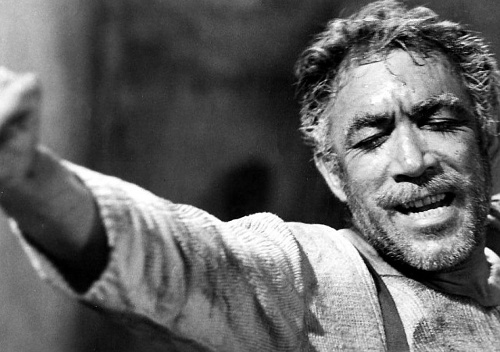
“Oh well,” he said after a moment. “Then I’ll dance, boss. Sit further away, so I don’t barge into you.”

He made a leap, rushed out of the hut, cast off his shoes, his coat, his vest, rolled his trousers up to his knees, and started dancing. His face was still black with coal. The whites of his eyes gleamed.

He threw himself into the dance, clapping his hands, leaping and pirouetting in the air, falling on to his knees, leaping again with his legs tucked up – it was as if he were made of rubber. He suddenly made tremendous bounds in to the air, as if he wished to conquer the laws of nature and fly away. One felt that in this old body of his there was a soul struggling to carry away this flesh and cast itself like a meteor into the darkness. It shook the body which fell back to earth, since it could not stay very long in the air; it shot it again pitilessly, this time a little higher, but the poor body fell again, breathless.

-Nikos Kazantzakis
Zorba the Greek (1946)

Joy is usually an occasional or even rare event in our lives, not a constant companion. But then, how many of us could endure a constant state of joy, as if we were old Zorba, pushing our bodies to the limit, dancing and leaping and trying to defy gravity until we finally collapse on the ground exhausted?

Actually, this sounds like another “unlikely sage” I described last spring; Moshe the Shepherd, who also expressed unbounded joy with almost limitless energy.

Then he got up and said, “Master of the world, I’m just a simple shepherd; I don’t know any Torah, and I don’t know how to pray. What can I do for You? The only thing I know is to sing shepherds’ songs!” He then began to sing loudly and fervently with all his strength until, again, he fell to the earth, exhausted, without an ounce of energy.

-Yitzchak Buxbaum
“The Shepherd”
from his book, Light and Fire of the Baal Shem Tov
quoted from Chabad.org

It’s the day after Yom Kippur. Either you feel elated or depressed. Like Elaina Cline said, “I used to hate Yom Kippur. Every year, as we blew the shofar and rushed home to eat, I would secretly breathe a huge sigh of relief. It was finally over – all the misery, the moroseness, the fear – until next year.”

You can hate Yom Kippur. You can dread confronting the darkest side of your soul. Or you can take joy in the opportunity to realize that what is worst about you is not who you really are. You are really a soul full of joy, singing, leaping, striving to reach your Creator, and to dance with God.

God does not desire that we remain in our pit of mud, sorrow, and regret. He didn’t create us to simply suffer and cry. We must have joy; we must take joy in Him, in all that He’s done for us, for creating our life, for giving us ambition and purpose, for granting us wings so that we can fly.

What is G‑d’s ultimate delight?

That a human soul will build portals of light so that the Creator’s presence may shine into His creation.

That a breath from His essence will pull herself out from the mud and turn to Him in love.

That a child of His being, exiled to the shadows of a physical world, will discover that the darkness is nothing more than Father hiding, waiting for His child to discover Him there.

But none of these can reach to the essence of all delights, the origin of all things, the hidden pleasure beyond all pleasures: The delight that this breath, this soul, this child did it all on its own.

-Rabbi Tzvi Freeman
“The Ultimate Delight”
Based on letters and talks of the Rebbe
Rabbi M. M. Schneerson
Chabad.org

Sukkah in the rainSukkot is coming soon; a time to build and decorate, a time to eat, drink, and celebrate. Who better to invite to the party than God. How shall we call out to Him and express our joy?

“And my tongue will express Your charity. Your praise all day long.”

Psalms 35:28

The charity that King David was referring to was the kindness and charity that the Almighty bestowed on him. Out of gratitude and appreciation for this, King David would praise Hashem all day long.

Fulfillment of this one verse would guarantee a person a life of happiness and gratitude – an elevated and spiritual life.

-Rabbi Zelig Pliskin
“A Guarantee of Happiness”
Daily Lift #587
Aish.com

Oh come, let us sing to the Lord;
let us make a joyful noise to the rock of our salvation!
Let us come into his presence with thanksgiving;
let us make a joyful noise to him with songs of praise!
For the Lord is a great God,
and a great King above all gods.
In his hand are the depths of the earth;
the heights of the mountains are his also.
The sea is his, for he made it,
and his hands formed the dry land.
Oh come, let us worship and bow down;
let us kneel before the Lord, our Maker!

Psalm 95:1-6 (ESV)

Although life is no bed of roses and we face our burdens and struggles every day, God is with us. He cares about us, and makes the way clear for us to approach Him, from the greatest to the smallest, all of His creatures. Do not be afraid. Do not be discouraged. Even in the midst of your troubles, count it all joy.

Shavua Tov, chodesh tov, and shana tova!

Longing for Yom Kippur

Because the day has passed, shield us by the merit of [the Patriarch Abraham] who sat [at the door of his tent] in the heat of the day [to welcome wayfarers].

Genesis 18:1 (Ne’ilah prayer)

Just prior to Ne’ilah (the concluding service of Yom Kippur), one of the Chassidic masters ascended the bimah (platform) and said tearfully, “My dear brothers and sisters! God in His infinite mercy gave us the entire month of Elul to repent, but we failed to take advantage of it. He gave us the awesome days of Rosh Hashanah, when our standing in judgment before the heavenly tribunal should have stimulated us to repent, but we neglected that opportunity. He gave us the special grace of the Ten Days of Penitence, but we let these pass too. All we have left now are a few precious moments that are propitious for forgiveness.

“The Sages of the Talmud tell us that if a person enters a marriage contract on the condition that he is a perfect tzaddik, then it is binding even if he is known to be a complete rasha (wicked person). Why? Because he may have had one moment of sincere contrition that transformed him from a complete rasha to a perfect tzaddik. “Do you hear that, my dear brothers and sisters? All it takes one brief moment of sincere contrition! We have the opportunity of that moment now. In just one moment we can emerge totally cleansed of all our sins, in a state of perfection akin to that of Adam in the Garden of Eden.”

The rabbi wept profusely and uncontrollably. “Could we be so foolish as to overlook such a rare opportunity? Let us assist one another and join in achieving sincere repentance!”

Today I shall…

…take advantage of the Divine gift of forgiveness, and make my resolutions of repentance sincere, so that the new person that emerges will be unencumbered by the burdens of the past.

-Rabbi Abraham J. Twerski
“Growing Each Day, Tishrei 10”
Aish.com

I’m not going to be fasting for Yom Kippur this year. I’ve fasted in the past. Further in the past, I’ve fasted and attended religious worship, although only elements of the Yom Kippur service were involved. A Jewish friend emailed me last night and asked if I were going to fast in solidarity with the Jewish people. I had thought about it, but I know that my family won’t be fasting and it seemed a little presumptive for me to fast, since I’m the only non-Jewish member of my immediate family.

I suppose you could say that if I fasted, I would be leading by example, but it could also boomerang back and make me look like I’m being critical of them and taking on a “holier than thou” attitude. I’m not taking the day off of work, either. I think my family will be working tomorrow as well. I suppose this is a problem, since they are Jewish and choosing not to observe the Yom Kippur fast nor going to shul to repent with the community of Israel.

Last spring, I wrote an article called “Redeeming the Heart of Israel” (Part 1 and Part 2) in which I defined the Christian relationship to the Jewish people as one of encouragement and support for Jews to return to Torah and to the ways of their fathers. That’s easier said than done when it’s your own family.

Oh, I’ve dropped subtle and not-so-subtle hints, but ultimately, the choice isn’t mine to make. It’s theirs. Each individual, Jew, Christian or anyone else, negotiates their own relationship with God. For me, my atonement is in Jesus Christ. Frankly, I believe that’s true of everyone, but not everyone perceives that truth in their lives. There are elements of both the Abrahamic and New Covenant that link both Jews and Christians, through the Messiah, to God, so Messiah is the hope for all of us.

But since I am not Jewish, the particulars of the Sinai covenant do not have blessings for me. Without a Jewish “lived” experience, I’m unsure how to encourage my family to be who they are and maybe it’s not my place to try. But then, when you love someone, you want what’s best for them; you want what will make them happy.

God opens His Hand and satisfies the desires of every living thing (Psalm 145:16). My desire is for my family to return to the mitzvot; return more fully to the Torah, and to be the people God made them to be; Jewish people. I apologize and regret anything I may have said or done that has been to the contrary. I pray to God that in the coming year, He may help turn the hearts of all His Jewish children back to Him and help we Christians be more compassionate of His Chosen People, that we may stand at their side and together, all acknowledge that God is One. On that day, may all Christians fast on Yom Kippur in solidarity with their Jewish friends and family.

May the Messiah come soon and in our days, and may you be sealed for a good year in the book of life.

To honor the most Holy day for the Jewish people, I will not present a “morning meditation” on Wednesday which is Yom Kippur (begins at sundown on Tuesday). My next blog post will be Thursday morning.

Jesus, Halakhah, and the Evolution of Judaism, Part 4

Her unifying thesis is that modern Jewish thinkers invented the notion that Judaism is a religion in response to the distinctive challenges of European modernity. In the pre-modern period, “it simply was not possible…to conceive Jewish religion, nationality, and what we call culture as distinct from one another.” This was because Jewish communities were corporate entities whose authority over their members was recognized by the state. The community collected taxes, adjudicated civil disputes through rabbinic courts, and enforced halakhic norms by punishing religious deviants through fines, corporal punishments, or excommunication.

-Michah Gottlieb
“Are We All Protestants Now?”
from his review of Leora Batnitzky’s book
How Judaism Became a Religion: An Introduction to Modern Jewish Thought
at Jewish Review of Books

Why Native American religions, when scholars acknowledge that Native American tribes do not traditionally distinguish between religion and the rest of life?

-William T. Cavanaugh
Chapter 1: “The Anatomy of the Myth”
The Myth of Religious Violence: Secular Ideology and the Roots of Modern Conflict

When I was reviewing Part 3 of this series, (which inspired a very spirited conversation) I realized that there were actually two overlapping topics involved. The first I’ve already attempted to address, which is whether or not Rabbinic authority is Divinely sanctioned or inspired. The second is implied but you have to be paying attention to see it. Is Judaism a “religion?”

Gottlieb’s review presents Batnitzky’s understanding of “the Protestant conception of religion” this way:

  1. “Religion denotes a sphere of life separate and distinct from all others” such as “politics, morality, science and economics.”
  2. Religion is a “largely private affair, not public.”
  3. Religion is “voluntary and not compulsory.”
  4. Religion is about “personal belief or faith,” which she contrasts with the view that religion is primarily about ritual practice or “performance.”

This very much reminds me of a significant point Cavanaugh made in his book about the problem in defining religion as a separate entity from other social, political, and cultural realms. Prior to the rise of the modern, western culture, it was impossible to separate religion (Christian, Jewish, Islam) from those other entities. More specifically, for the Jewish people historically, being “Jewish” wasn’t just a matter of what you believed but rather, it was an individual’s full, lived, experience and identity, biologically, culturally, ethnically, nationally, and communally.

The fact that Judaism has multiple expressions, both in ancient and modern times doesn’t change this understanding. Each community established and maintained its own local, internal standards across the boundaries of politics, social norms, morality, legality, spirituality, and more. Most likely, before a certain point in human history and development, so did Christianity, at least according to Cavanaugh.

While none of this speaks to the idea that the Rabbinic sages ever had “Divine authority” to establish binding halakhah for their communities, it does address strongly the right of Judaism to define itself biologically, conceptually, ethnically, culturally, educationally, communally, and behaviorally.

In Part 3 of this series, I presented a challenge to the Divine authority of the Rabbis as offered in a paper written by Tim Hegg: What Version of the Mishnah did Paul Read? (PDF). Hegg doesn’t specifically address the Jewish right to self-definition or self-government, but, for the Messianic Jewish believer, he does say that “there is no historical nor biblical case for accepting oral Torah as divinely sanctioned. Nevermind that all that encompasses the Talmud cannot simply be reduced down to the concept of “oral Torah,” as the initial writings of the Talmud (Babylonian and Jerusalem) and their subsequent commentaries, arguments, and judgments cross multiple expressions and sects of Judaism over nearly 2,000 years and are incredibly vast and complex. The question isn’t whether or not ancient oral Law is Mishnah. The question is whether or not the Mishnaic Rabbis have Divine authority to write Mishnah.

But setting aside the Biblical implications and matters of “Divine inspiration” for a moment, let’s take a look at Talmud in a different manner (I’m going to be compressing a lot of history into just a few sentences, so please be forgiving). After the destruction of the Second Temple and the exile of most (but not all) Jews from “Palestine,” Jews, as a people, were at dire risk of dissolving and assimilating into the surrounding cultures. The very heart of Judaism up to that point, the Temple in Holy Jerusalem, had been leveled and pillaged. The majority of the Jewish people had once again been exiled; barred from the Land that was the home and lifeblood of every Jew. What most defined Judaism and Jewish people was now gone and within a few generations, everything that history had once recognized as Jewish would follow.

The “salvation” of the Jewish people was that compilation of texts, wisdom, and rulings that we consider the Talmud. No, it was not an immediate “fix” and in fact, it would be centuries before the Talmud would become the central feature in Jewish life.

But it did become that central feature, replacing, in some manner, the Temple and the sacrifices with prayers and charity. Instead of Jews making the pilgrimage to Jerusalem for Passover or Sukkot, they fervently beseeched God to bring the Messiah and to restore all that was lost. Judaism was functionally reorganized to exist and in many instances, to thrive, as locally internal communities which both adapted to historical and environmental imperatives and preserved the essence of Judaism, the practice of the Torah and the mitzvot, and the worship of the God of Abraham, Isaac, and Jacob, both as individual and communal faith.

But as we’ve seen, it was impossible to separate the religion from the people. The definition for everything that was (and is) Jewish was (and is) encapsulated in that expansive collection of tomes known as the Talmud.

No one in their right mind is going to dispute the Jewish right to self-identification and self-definition. No Christian is simply going to walk into a synagogue and start lambasting the Rabbi, the Cantor, and the worshipers for following “man-made traditions” while ignoring the Bible.

However, the world of Messianic Judaism is unique. There are few halalaic Jews currently occupying Messianic Judaism, but their number is growing. Imagine being Jewish in that fully lived, experiential, educational, cultural, communal, ethnic (and so on) manner I previously described. Now imagine that fully lived Jew coming to faith in Jesus (Yeshua) as the one, true Messiah of God. This is not a Jew, like so many in the past, who has converted from Judaism to Christianity, leaving Mishnah and Torah in the dust. This is a Jew who has come to faith in the Jewish Messiah and who sees no dissonance in remaining fully and completely Jewish and acknowledging that the “Maggid of Natzaret” is the prophesied Moshiach.

Why can’t this Jew continue to live out the same Jewish experience he or she always has? Why can’t this person remain a Jew in every sense of the word, including all those words I used above to define a Jew? The Talmud, the historic and ancient Rabbis, the judgments, rulings, experiences, and everything else that is wrapped up in what is Jewish, cannot be separated out and compartmentalized for observant Jews (yes, different Jewish religious traditions do minimize certain aspects of that identity and Jews who are atheists may remove major portions of it altogether). For a Gentile and/or Christian individual or entity to demand that a Jew remove, discount, eliminate, or modify Talmud, halakhah, the mitzvot, and so on would result in removing Judaism from the observant Jew (Messianic or otherwise). What defines Judaism as Judaism would be gone.

Now, why in the world would Christians, including One Law, One Torah, and Hebrew Roots Christians, want to tell a Messianic Jew that, in order to be accepted by them and (in theory) by God, they had to do away with everything that made them Jewish?

If the Gentile Christians in these varied “Hebraic” Christian congregations and movements choose not to employ the Talmud or halakhah into their worship practices or lifestyles, it is probably for the best since they are not Jewish. But it is the height of presumptive arrogance to declare that any Jew who has faith in Yeshua as Messiah must dispense with the Talmud, and thus their Jewish identity, as well.

Whether the Talmud is an expression of the Divine will or not, it is illogical, unreasonable, and perhaps even a little cruel to demand that a Jew stop being a Jew in order to worship the Jewish Messiah. But by requiring that Messianic Jews devalue the Talmud, that’s exactly what many Gentile Christian pundits in the Hebrew Roots space are doing.

I’ve been accused of being overly concerned with the issue of Supersessionism, (I think “supersessionoia” was the term that was coined to describe me) but if you look at the dynamics I’ve been illustrating in this blog post, it seems rather plain that, even unintentionally, certain elements in the Hebrew Roots (One Law, One Torah, Two-house, etc…) movement are suggesting that the “Jewishness” of Jews in the Messianic movement be diminished in order to fulfill a Christian imperative.

My final note for this missive is one of irony. If written Torah, the Christian Bible, and Jesus are the only valid authorities for religious practice and lifestyle in the Hebrew Roots movement (including One Law/One Torah, and so on), then why do all of their groups and congregations follow a modern Jewish synagogue model when they worship? Why do all the men where kippot? Why do all the men wear tallit gadolim with tzitzit that are halalically correct? Why do they daven with modern Jewish siddurim? Why, in less than a week, will they construct their sukkot according to Rabbinically prescribed specifications?

In other words, why are you guys trying so hard to look and act Jewish when you’re not?

How can you disdain the authority of Jewish halakhah and Talmudic practice when virtually every religious act you diligently perform comes from the rulings and decisions of the Talmudic Rabbis?

Part 5 will continue with investigating the concept of “Messianic halakhah” and whether or not any of it apply to non-Jews within the various contexts of Messianic Judaism and Hebrew Roots.