All posts by James Pyles

James Pyles is a published Science Fiction, Fantasy, and Horror author as well as the Technical Writer for a large, diversified business in the Northwest. He currently has over 30 short stories published in various anthologies and periodicals and has just sold his first novella. He won the 2021 Helicon Short Story Award for his science fiction tale "The Three Billion Year Love" which appears in the Tuscany Bay Press Planetary Anthology "Mars."

Jesus, Halakhah, and the Evolution of Judaism, Part 1

The ever present studentMoses received the Torah from [G-d at] Sinai and gave it over to Joshua. Joshua gave it over to the Elders, the Elders to the Prophets, and the Prophets gave it over to the Men of the Great Assembly. They [the Men of the Great Assembly] would always say these three things: Be cautious in judgment. Establish many pupils. And make a safety fence around the Torah.

-Pirkei Avot (Ethics of Our Fathers) 1:1

Our first order of business must be to determine the meaning of the phrase “the Seat of Moses”… The precise meaning of the term remains a subject of much debate among scholars. Resolving this question is important, because it has direct bearing upon our understanding of the Pharisees authority and influence in Second Temple Judaism. If Jesus uses “the Seat of Moses” pejoratively, this weakens the argument that the Pharisees exercised any real, or at least any legitimate, authority within the religious and social life of Israel. If, however, he uses the term positively, or as a statement of fact, this strengthens our conviction that the Pharisees had become the authoritative interpreters of the Torah and that their halakhic decisions were accepted by most people within Israel.

-Noel S. Rabbinowitz
“Matthew 23:2-4: Does Jesus Recognize the Authority of the Pharisees
and Does He Endorse their Halakhah?”
Journal of the Evangelical Theological Society 46:3 (September 2003): 423-4 (PDF)

Yes, I know…another series. But this has been on my mind for awhile and during the Rosh Hashanah celebration, I decided to put it into words.

I’m hoping some of my loyal readers who are educationally equipped to examine this information will comment on this topic as it is quite complex and controvertial. Keep in mind, that’s not a promise that I’ll always accept whatever is posted as a response. Your priorities and perspectives may not agree with my own. For example, I reject the common Christian viewpoint that Jesus dismissed all Jewish oral tradition and halakhah of his day, as well as the Torah outright, and replaced it with grace. You’ll see support for my opinion in a minute.

This blog post quotes heavily from Noel Rabbinowitz’s paper “Matthew 23:2-4: Does Jesus Recognize the Authority of the Pharisees and Does He Endorse their Halakhah?” which was published in Journal of the Evangelical Theological Society 46:3 (September 2003): 423-47. I want to acknowledge that I first found this paper linked to the Rosh Pina Project blog post, “Did Jesus Recognize Halakhah?” Although I don’t frequently visit their site, Rosh Pina has a good reputation in the Messianic Jewish space and they’re considered a good and fair source of information.

Why am I writing this?

There have been numerous suggestions on the web that there is no validity in the authority of the Talmudic sages to establish halakhah that would apply to the Messianic Jewish community. By “Messianic Jewish,” I specifically mean a form of Judaism, in its ideal expression, that is wholly “owned and operated” by people who are halachically Jewish (having at least a mother who is Jewish) and (again, ideally) raised in a Jewish home, possessing of a Jewish education, and who are fully identified as ethnically, culturally, and religiously Jewish.

OK, that’s a tall order, since even in the most “Jewish” of Messianic Jewish congregations, the majority of members, and probably a good number of the leaders, are non-Jews. But the idea is that people who come from a very Jewish lived experience and who have come to faith in Yeshua (Jesus) as the Jewish Messiah King, must have a completely appropriate synagogue setting at which to worship, daven in a minyan, celebrate the holidays, and be part of a fully Jewish community that is dedicated to the Jewish Messiah.
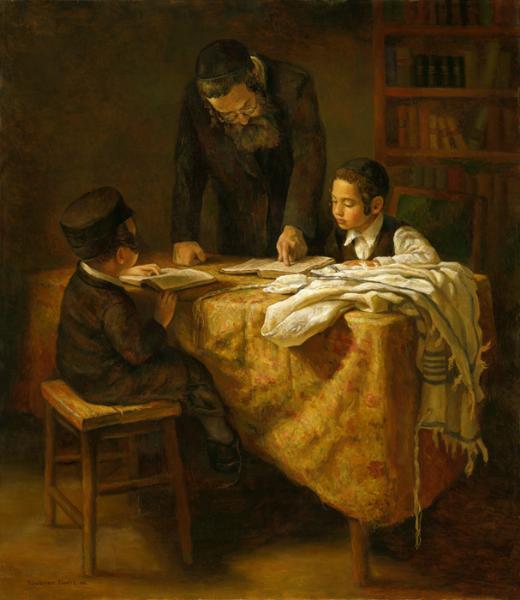
A Rabbi TeachingThe problem is that a significant number of non-Jews who are loosely associated with the Messianic Jewish movement via Hebrew Roots, One Law, and Two-House groups, mildly to vehemently oppose any authority outside of the written Torah, as having the ability to dictate religious and ritual practice. This sort of makes sense given the fact that all of the non-Jews and most of the Jews who make up any portion of Messianic Judaism and Hebrew Roots entered the movement through the church. There’s an enormous perceptual and conceptual hold over from the church in the minds of these folks that says Jesus replaced, if not the Law, halakhah and oral tradition with a type of “grace” and pure interpretation of the Torah that doesn’t require Rabbinic judgments or rulings.

But if you’re Jewish in a fully lived and experiential sense and it is your complete identity, then one does not simply do away with the Talmud with a bit of theological slight-of-hand. My dear wife keeps trying to tell me that it’s impossible to understand and interpret the Torah apart from the traditions. For a Jew, this is obvious. For a Christian (and I include Hebrew Roots in this category), it is practically heresy.

But to delete the Talmud or even to substantially alter it such that it becomes more palatable to Christian Gentile theology and doctrine (again, I’m including Hebrew Roots here), results in the deletion of anything “Jewish” in that theology and doctrine. Jews get a little nervous when someone comes along and tries to invalidate their entire religious and cultural lifestyle.

The detractors and “enemies” of Talmudic authority say that they only recognize Jesus Christ has having authority to interpret Torah and establish a type of “Messianic halakhah” for at least Gentiles and maybe Jews in the modern Messianic movement. But doing away with Jewish “Rabbinics” to define Jewish (including Messianic) practice means that these detractors must discover or recover a complete understanding of how the First Century CE church was organized and operated…

…and we don’t have that. Right from the start, recreating the Church as it actually was in the day of Peter, Paul, and James is doomed to fail.

But maybe it doesn’t matter. Maybe it’s OK for the Judaism and Christianity of today to not be exactly the same as it was 2,000 years ago. Maybe it’s even impossible to work from a twenty century old model of these ancient religious forms.

What if we don’t have to?

One of the problems with accepting modern Jewish halakhah as authoritative, is the question of whether or not Jesus even accepted the halakhah that existed in the Second Temple era. That’s where Rabbinowitz’s paper comes in. I intend to use his work to address the question of whether or not Jesus was likely to have accepted even some of the halakhah of his day. If he was, my next question (which will be the subject of a future “meditation”) will be whether or not, at his second coming (assuming it occurs within the reasonably forseeable future) he might accept modern Jewish halakhah. I know, that requires speculation and more guesswork than I probably should consider, but it’s a compelling question.

This also addresses a larger and related topic: Do religions evolve and is that acceptable to God? Yes, we know that Christianity today isn’t the same as it was when Paul was planting his first churches. Modern Judaism as well is, by requirement, practiced in a different manner than when the sacrifices could still be offered in the Temple of God.

But is “evolution” of religion reasonable, expected, and acceptable to God? I suppose there’s no way to know this in an absolute way, but we can take a stab at it. The first step is an examination of Rabbinowitz’s paper, “Matthew 23:2-4: Does Jesus Recognize the Authority of the Pharisees and Does He Endorse their Halakhah?”
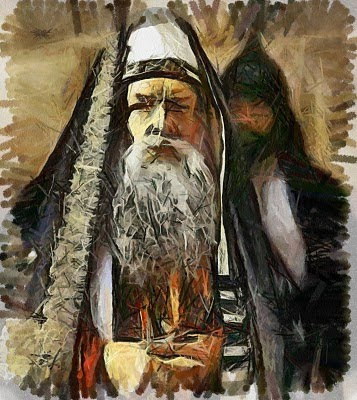
The first question we look at in the paper is whether or not Jesus accepted the scribes and the Pharisees legitimately possessing the authority to interpret the Torah for the Jewish population and to establish and enforce specific halakhah?

Rabbinowitz suggests (pp. 429-30) that “the scribes and Pharisees were the authorized and legitimate teachers of the Torah.”

But even if authorized, did Jesus endorse the Halakhah of the Pharisees? What did Jesus mean when he said, (Matthew 23:3 ESV) “…so practice and observe whatever they tell you—but not what they do.”

When Jesus said to practice what the Pharisees taught, did he say this in reference to their teachings regarding the Torah or was he referring to Pharisaic halakhah as well?

-Rabbinowitz (p. 435)

What’s really interesting, and perhaps exceptionally relevant to our conversation, is the footnote (62) for this text:

“It is unlikely that any group of early Christians ever acknowledged without further ado the authority of non-Christian teachers.” On the other hand, they insist that “the extra-canonical halakhah on tithing is neither dismissed nor belittled but affirmed” (Matthew 3.269–70, 295).

Further commentary adds illumination to whether or not it was even possible for Jesus to have separated Torah from halakhah.

Stein states that disciples were to practice what the Pharisees taught regarding the OT but not regarding their “oral traditions.” We must ask, however, is such a bifurcation possible? Can exegesis be so neatly separated from application and practice?

…Jesus’ own observance of oral tradition creates a very strong argument that “all things” includes at least some halakhic traditions. Even though Matthew is unrelenting in his criticism of the Pharisees, he nevertheless presents Jesus as adhering to the halakhah of his day. Contra Banks, Moo is most certainly correct when he states that “the verdict that there is no evidence that Jesus kept any of the oral law cannot be sustained.”

(pp. 435-6)

This is the same today in modern Judaism where one cannot properly read and interpret the Torah apart from halakhah and the traditions. Rejecting halakhah is only conceivable in religious groups existing wholly outside the ancient and modern structure of Judaism.

Rabbinowitz further nails his point home with the following:

The very fact that Jesus even engages Pharisaic halakhah implies that it possessed a certain legitimacy in contradistinction to other traditions. He acknowledges the authority of the Pharisees but rebukes them for violating the very law they claimed to protect (Matt 15:1–6). Jesus does not reject Pharisaic purity laws concerning the eating of food (Matt 15:10–11) or the washing of vessels (Matt 23:24–25), but he does excoriate the Pharisees for their moral and ethical failure to understand the Law’s true intent. Likewise, he upholds Pharisaic halakhah regarding the tithing of herbs but repudiates the Pharisees because they have stressed that point and neglected the Law’s emphasis upon justice, mercy, and faithfulness (Matt 23:23).

(p. 437)

According to Rabbiniowitz, Jesus didn’t have a problem with the fact that authority to interpret Torah was legitimately in the hands of the Pharisees, nor did he object to their halakhah, his problem was “for they do not practice what they preach.” (Matthew 23:3 NIV)

Interestingly enough, to those critics of Rabbinic Judaism who accuse the Talmudic scholars and judges of continuing to be afflicted with the “leaven of the Pharisees,” it should be noted that Rabbinic Judaism is also critical of the Pharisees.

Our final observation concerns rabbinic Judaism’s own critique of Pharisaic hypocrisy. Weinfeld demonstrates that Jesus’ accusations of Pharisaic hypocrisy are identical to charges of hypocrisy leveled against the Pharisees in the rabbinic material. To cite but one example, the rabbinic literature condemns the arrogant demonstration of piety by the Pharisees. Regarding the midrash on Eccl 4:1, we find the following condemnation of “Pharisaic pea-cockery”…

(p. 441)

The problem that most Christians (and probably some Jews) have with understanding Jesus upholding Pharisaic halakhah is encapsulated by Rabbinowitz:

To the modern reader, halakhic regulations regarding minute aspects of the Law may indeed seem legalistic and onerous. This perception, at least in part, arises out of the fact that the Torah is no longer the central structure around which we organize our daily lives. We no longer ask the all-important question, “How do I fulfill these commandments today?” But for the messianic Jews of Matthew’s Gospel, this was a very real and very practical question.

(p. 443)

Actually, in modern Judaism and especially among the Orthodox, this is a question that is very prominent, very real, and very practical today. Why shouldn’t it be a real and practical matter for some Messianic Jews as well?

Now that we’ve seen evidence that it is reasonable to believe Jesus could have accepted Pharisaic authority to establish ancient halakhah and that he not only upheld portions of that halakhah but practiced it as well, (see the full text of Rabbinowitz for details) Part 2 will examine the “reasonableness” of Christianity and Judaism evolving or developing from ancient to modern forms. After examining that point, we shall try to see if it is even possible for a returning Jewish Messiah King to accept the halakhah that will exist on the day of his return to Jerusalem.

Is the continuing authority of Talmud sustainable in 21st century Judaism? I’m not a Jew so I’m probably not qualified to respond, but maybe the following makes the most sense, given the context:

“We don’t see things as they are, we see them as we are.”

Anais Nin

My Strength

Do you want to enhance your life? Keep repeating throughout the day, “I love you, Hashem, my strength.” As you repeat this a number of times each day, you will feel yourself being strengthened spiritually and emotionally. You will be able to remember that Hashem is your Rock, your Fortress, and your Rescuer (Psalms 18:2,3). Hashem is the source of your strength. Recognizing this, gives you an inner strength that will sustain you on a high level each and every day.

-Rabbi Zelig Pliskin
“Sustaining Inner Strength, Daily Lift #581”
Aish.com

As I write this, it is the morning of the last day of Rosh Hashanah as it is traditionally celebrated. Yom Kippur is yet to come but it is fast approaching. Many Jews around the world are rapt in solemn awe of God and praying, repenting and seeking forgiveness and redemption for themselves, their loved ones, the state of world Jewry, and the state of the world.

I said not too long ago that it’s important to take care of yourself. Letting yourself get beaten up too much, even for the sake of Heaven, could inhibit you from performing those tasks that God set before you for the sake of Heaven. While it is important and sometimes even vital to “fight the good fight,” it is also said that you should “choose your battles.” Remember, especially in the blogosphere, there are many, many people who argue for the sake of arguing, though they will always tell you that they have a more noble point to make. I suppose it should be easy to pick out the toxic people who blog or worse, who are part of your face-to-face life, and then avoid them, but engaging such people and trying to “debate” them is like staring at the aftermath of a terrible auto accident. It’s horrible to watch, but you can’t turn away.

But that’s not the point of life nor is it the reason God caused each of us to come into existence.

As young boys, Abaye and Rava were sitting in front of Rabbah, when Rabbah asked them, “To whom do we speak when we are saying a brachah?”

-Berachos 48a

Abaye and Rava both said that it is to ‫ – רחמנא‬the Merciful One— that we daven. When Rabbah asked them where ‫ רחמנא‬is found, Rava pointed toward the beams of the roof, and Abaye walked outside and pointed to the sky. Rabbah declared, “You are both destined to be great Rabbis! This is what is meant when people say that large squash plants can be detected from when they are already just blossoming.”

We often find Hashem referred to as “‫ – רחמנא‬The Merciful One”. This is rooted in our belief that everything Hashem does is only for our benefit. Hashem is infinitely compassionate, and He is merciful and kind in all His ways. When we recite blessings before we eat, it is an expression of our belief in Hashem’s precise supervision and specific care of all aspects of the world. Our proclaiming a brachah inspires an influence of holiness upon the world, and all spiritual entities associated with this food and the process involved in its preparation are activated.

Daf Yomi Digest
Gemara Gem
“Making of a Gadol”
Berachos 48

That’s closer to the point. “This is rooted in our belief that everything Hashem does is only for our benefit. Hashem is infinitely compassionate, and He is merciful and kind in all His ways.”

For some people, the solemn, august ceremony of Yom Kippur may not particularly emphasize God’s compassion and mercy. Particularly for non-Jews or Jews who were not raised in a religious home, encountering Yom Kippur “abruptly” in the middle of your life may seem not just humbling, but humiliating. You have sinned. You have failed everyone who depends on you, and you have failed God. How is it possible to approach the Throne and beg for another chance, another year, another life? After all, you’ve failed so often and so severely. People don’t change. People can’t change (or can we?).

Last year at this time, I wrote a blog post called Dancing with God on Yom Kippur. Seems like a rather odd image, but actually, it’s more appropriate than you might imagine. God is all about second chances. God, of course, knows how frail and error-prone we human beings are, and how easily we are lead astray, most often by our own delusions and desires. We think God wants us to talk incessantly when He really wants us to be quiet. We think God wants us to be a warrior, battling everyone who has a different theological bent than we do, but He really just wants us to be lovers of peace.

All things being equal, human beings would mess up a free lunch. We are the only elements in all of God’s Creation who don’t understand how to fit in and live our lives purposefully.

It takes great strength to face the worst aspects of who you are. It takes enormous courage to say, “I’m wrong” and “Will you forgive me?” not just to God, but to other people you or I or anyone has hurt. Most people don’t have that kind of strength and courage without humbling themselves before God. Most people defend themselves by becoming defensive and never imagine that they have made mistakes. Well, perhaps in their heart of hearts they do, but they fear the sense of self-humiliation that they think will accompany apologizing and making amends. They think it will trap them in a downward spiral of depression but in fact, it is ultimately liberating.

Remember what Rabbi Pliskin advised: “Keep repeating throughout the day, ‘I love you, Hashem, my strength.’ As you repeat this a number of times each day, you will feel yourself being strengthened spiritually and emotionally.”

The Lord is my light and my salvation;
whom shall I fear?
The Lord is the stronghold of my life;
of whom shall I be afraid?

Psalm 27:1 (ESV)

It may seem like a strange paradox, but in order to gain the strength we need to serve God in the coming year, we must become the least of all people, humbling ourselves even though we are terrified of feeling humiliation. We must become the least of all creatures, smaller and more helpless than even an infant. In humility, as children of God, we have the right to ask for His mercy. It is in our weakness that we are strong.

And calling to him a child, he put him in the midst of them and said, “Truly, I say to you, unless you turn and become like children, you will never enter the kingdom of heaven. Whoever humbles himself like this child is the greatest in the kingdom of heaven. –Matthew 18:2-4 (ESV)

For the sake of Christ, then, I am content with weaknesses, insults, hardships, persecutions, and calamities. For when I am weak, then I am strong. –2 Corinthians 12:10 (ESV)

I love you, Hashem, my strength.

The Jesus Covenant, Part 4: Is There a New Covenant Connection?

My point is not to try and change the nomenclature of Jews, Christians, and everyone regarding the names of parts of the Bible. My point is to argue against a shallow equation of a collection of books with something the prophets of Israel promised. In the new covenant, human hearts will be circumcised (Deut 30:6), replaced from their stony nature with a softer one (Ezek 36:26), the spirit of people will be filled with the divine Spirit (Ezek 36:27), all people will know God (Jer 31:34), the commandments will be followed (Ezek 36:27), the commandments will be written on human hearts (Jer 31:33), Israel will be restored in the land (Jer 31:33; Ezek 36:28), and there will be forgiveness of sins (Ezek 36:25, 29; Jer 31:34).

-Derek Leman
“The New Testament is not the New Covenant”
Messianic Jewish Musings

As I mentioned in Part 3 of this series, I seem to be stuck. More specifically, I said:

But can the prophesies we read in Isaiah, Micah, and Zechariah be reasonably connected to the New Covenant from Jeremiah and Ezekiel and more importantly, can all this then be attached to what we read in the Gospels and Epistles. Can we attach these prophesies to the blessings of the New Covenant, and can they then be logically joined with the coming of the Jewish Messiah and his command to make disciples of all nations? (see Matthew 28:18-20)

Since writing Part 3, I’ve been searching for clues in an effort to solve this mystery (no mean feat for someone who isn’t a theologian). I didn’t intend to immediately return to Derek Leman as my source, but he did come up in a Google search. Since he first suggested to me that the New Covenant has blessings for the nations (something that is not apparent in the text of Jeremiah 31 or Ezekiel 36), then perhaps something he wrote could show me what I’m missing.

Let’s start with what I already quoted from Leman:

In the new covenant, human hearts will be circumcised (Deut 30:6), replaced from their stony nature with a softer one (Ezek 36:26), the spirit of people will be filled with the divine Spirit (Ezek 36:27), all people will know God (Jer 31:34), the commandments will be followed (Ezek 36:27), the commandments will be written on human hearts (Jer 31:33)

Leman specifically states “human hearts” and “all people”, rather than referring specifically to the Jewish people. He does say that ” Israel will be restored in the land (Jer 31:33; Ezek 36:28),” but for the most part, he seems to be discussing humanity in general and not the Jewish people specifically as the only people bound by the New Covenant.

A quick reading of Deut. 30:6 and its surrounding text reveals that God, through Moses, is addressing the Children of Israel and not people in general. Since we know from Part 1 of this series that there are no blessings in the Mosaic covenant (as defined in the Torah) that can be applied to the nations, and that the only people of this covenant are the Jewish people, we cannot reasonably apply this promise to any other people, including Christianity.

Ezekiel 36:23 (ESV) does say, “And I will vindicate the holiness of my great name, which has been profaned among the nations, and which you have profaned among them. And the nations will know that I am the Lord, declares the Lord God, when through you I vindicate my holiness before their eyes,” implying that the nations (the rest of us) will be impacted in some manner by the New Covenant, but only because we will see how God “vindicates the holiness of His Great Name” by taking the Jewish people “from the nations and gather(ing) them from all the countries and bring them into their own land.” That seems to put the context of his references to vv 26-27 squarely among the Jewish people with no involvement of anyone non-Jewish except as witnesses.

So, where’s the connection between the New Covenant and Christianity or even just the non-Jewish people?

We find the new covenant in two primary places. Jeremiah 31 and the Last Supper.

Really? That means we have to find someway of connecting Jeremiah 31 and “the Last Supper.” Is that possible?

As Jesus said, “This is my blood of the covenant which is poured out for many” (Mark 14:24) and “This cup that is poured out for you is the new covenant in my blood” (Luke 22:20).

OK, let’s take a look at those verses.

And as they were eating, he took bread, and after blessing it broke it and gave it to them, and said, “Take; this is my body.” And he took a cup, and when he had given thanks he gave it to them, and they all drank of it. And he said to them, “This is my blood of the (some manuscripts insert “new”) covenant, which is poured out for many. –Mark 14:22-24 (ESV)

And he took bread, and when he had given thanks, he broke it and gave it to them, saying, “This is my body, which is given for you. Do this in remembrance of me.” And likewise the cup after they had eaten, saying, “This cup that is poured out for you is the new covenant in my blood.(Some manuscripts omit, in whole or in part, verses 19b-20 [which is given… in my blood]) –Luke 22:19-20 (ESV)

This could present a problem since only some manuscripts of Mark 14 insert “new” as in “new covenant,” and some manuscripts of Luke 22 completely omit the text where Jesus refers to his blood as being poured out as the “new covenant.” So in Mark, the best we could say with some assurance is that his blood being poured out is a sign of some sort of covenant, but are we sure it ties back to older covenants and specifically the New Covenant of Jeremiah 31 as Leman suggests? Heck, Luke 22 may not refer to any covenant, new or otherwise, as relating to his blood or anything else.

Not only do we have the problem of finding a way to directly connect any sort of blessings of the New Covenant as recorded in Jer. 31 and Ezek. 36 to Christ’s statements in Mark 14 and Luke 22 about his blood and the New Covenant, we aren’t really sure if Jesus meant that his blood was specifically a sign of the New Covenant or any covenant at all because of variances in the manuscripts.

Setting all that aside for the moment, let’s look at the final relevant quote from Leman’s article:

As Jesus said, “This is my blood of the covenant which is poured out for many” (Mark 14:24) and “This cup that is poured out for you is the new covenant in my blood” (Luke 22:20). He meant that his death (the cup poured out) would inaugurate (but not complete) the new covenant. He meant that the beginning of the new covenant promises would arrive in his death. He meant that the new covenant was now and not yet. He meant the kingdom was now but that we would wait for it. He meant that light had dawned but day was not fully arrived. He did not mean, “from now on all that is old is obsolete.” He meant what was promised long ago is moving forward.

Leman states with some confidence that the death of Jesus began but did not complete the New Covenant. It started the ball rolling, so to speak, but that “ball” would not get to where it’s going until his return (“Truly, I say to you, I will not drink again of the fruit of the vine until that day when I drink it new in the kingdom of God.”Mark 14:25 (ESV)).

In his last statement, Leman is apparently referring to Hebrews 8:13 (ESV):

In speaking of a new covenant, he makes the first one obsolete. And what is becoming obsolete and growing old is ready to vanish away.

In verses 8-12 of this chapter of Hebrews, the author was apparently quoting from Jeremiah 31:31-34, so this is the first indication of a direct connection between the New Covenant of Jeremiah and something to do with Jesus Christ. Unfortunately, this part of Hebrews is also used by many in Christianity to say that the New Covenant (Christ’s grace) has replaced the Law of Moses:

But as it is, Christ (Greek: “he”) has obtained a ministry that is as much more excellent than the old as the covenant he mediates is better, since it is enacted on better promises. For if that first covenant had been faultless, there would have been no occasion to look for a second. –Hebrews 8:6-7 (ESV)

Of course, if we apply what we know about the New Covenant affirming and expanding upon the older covenants, specifically the Abrahamic and Mosaic, then nothing has been replaced at all. Leman’s interpretation of what we just read in Hebrews is, “He did not mean, ‘from now on all that is old is obsolete.’ He meant what was promised long ago is moving forward,” changing the standard interpretation of this set of verses to mean that the conditions of the New Covenant, affirming and expanding upon the older covenants, is proceeding forward in history as we approach the point when the Messiah will return.

I have to remind myself that Leman’s intent in writing this blog post was not to draw a map between the New Covenant described in Jer. 31 and Ezek 36, to Jesus, the Last Supper, and Hebrews, as much as he was trying to explain that the New Testament (Gospels, Epistles, Apocrypha) writings were not directly equivalent to the New Covenant. That is, the NT writings are not the text that defines the New Covenant nor does this entire section of the (Christian) Bible directly connect back to the aforementioned sections of the Old Testament or Tanakh (Jewish Bible) used to define the New Covenant.

One of the interesting things about Leman’s blog post is that I responded more than once in the comments section, yet at the time (just a few months ago), I didn’t make the connection to the “covenant dilemma” that I am now undergoing. However, there are a couple of comments (not mine) that add just slightly to this investigation.

Samuel: Great post. I find it odd that Christians spend so much time talking about the “New Covenant” when the “New Covenant” in the Old Testament is inseparably bound to Israel coming into her fullness and possessing the land and not God throwing away a broken “Old Covenant” so He could create a new one. Somehow when people preach on the “New Covenant” they never include the Biblical context where the land of Israel and the Messianic kingdom in Jerusalem are the primary features of the New Covenant.

I wonder theologically how we ever created a “New Covenant” when the the (sic) Scripture is very straightforward about it being the fulfillment of the covenant made with Abraham and Israel.

Derek: Thanks for commenting. I think the answer has to be the use of New Covenant language by Jesus at the Last Supper (see Luke’s version). And then it comes up in Hebrews. In my upcoming book, Yeshua Our Atonement, I explain in some depth the argument being made in Hebrews.

I wonder if this means that I’ll have to wait until Derek’s latest book is published and then buy a copy to get some answers to my questions?

So what do we have so far? Based on what I just wrote as well as Part 3, maybe not as much as I’d like. No matter where I look, at best, I can only find what amounts to hints that the New Covenant of Jer. 36 and Ezek 31 has any sort of blessings attached to them that could possibly be associated with Jesus, the Last Supper, and the coming of the next age (Mark 14, Luke 22, Hebrews 8). We know from various prophesies (Isaiah 56:1-8, Micah 4:1-5, Zechariah 8:20-23, among others) that the nations will also reap blessings and benefits from God in the Messianic age, but trying to draw an “A connects to B connects to C” map of how all this works with the New Covenant and Christ’s “Last Supper” statements remains maddeningly elusive. As far as the Old Testament is concerned, I’m convinced the New Covenant applies uniquely and exclusively to the Jewish people, but the prophesies of how the nations will benefit in the Messianic age could just as easily apply to Noahides as they could to Christians.

So far, either my investigation on the New Covenant has going completely bust, or I’ve discovered some tantalizing but inconclusive threads that are trying to pull things together, but in a wholly mysterious way.

I’ll say again that I am no expert in this field of study. I don’t even know what books to read to find what I’m looking for. I’m not a theologian, Bible scholar, or some other type of religious “big wig” who sees all and knows all regarding the arcane secrets of the Bible. I suppose someone with degrees and qualifications could some along and explain all this to me in spiritual and mystic terms, saying, “This means this and that means that, and if you take the numerical value of the Hebrew letters in Jeremiah 31, divide by zero, turn around three times and wave a Bible over your head, then the New Covenant means what Christianity or Derek Leman says it means.”

So far, my request for assistance from Part 3 has fallen on deaf ears, at least as far as I can tell from the lack of responses.

Either there is a yet undiscovered (by me) means of reasonably and rationally connecting the New Covenant we see in the Old Testament to the relevant sections of the New Testament, or the very, very best I can say is that only the blessings for the nations we find in the Abrahamic covenant attach the Christian to God.

But is the Abrahamic covenant enough?

I don’t know what comes next, but I hope for my sake and perhaps yours that I can find a way to write a Part 5 of The Jesus Covenant.

How to Get to Where We Belong

“You mean, Mr. Zacks, that there is this vast structure G-d has created of plants, animals, food chains, stars, and planets. And, that the only creature in all of creation that doesn’t understand how to fit in and live their life purposefully is the human?”

-Gordon Zacks quoting the Rebbe
“Where Change Begins”
Chabad.org

In reading Mr. Zacks’ article about his encounters with the Rebbe, I was captured by the statement I quoted above because I couldn’t agree more. Out of everything in God’s creation, only man has no idea where he fits into that creation. Even those of us who are “religious” struggle, and argue and, as we’ve seen in recent events, occasionally conduct world-wide riots, all for the sake of who we think God is and our belief about what He wants.

I recently had an email conversation with a gentleman about, among other things, the differences between Christianity and Judaism. One key difference we noticed is the need, or lack thereof depending on your religious tradition, for absolute certainty. In Christianity, all questions must be answered, all puzzles must be solved. Everything is either black or white. Doubt and uncertainty are not to be tolerated. A bad answer (or God forbid, a wrong answer) is better than no answer at all. When a Christian asks you to describe the details of Heaven and you answer, “I don’t know for sure,” it tends to frustrate the Christian.

By comparison, the name “Israel” is the very heart of struggling with God over every question, every puzzle, every elusive detail, with no guarantee at all that there even is an answer, or at least not one that we could understand. It’s not only tolerable to live at a particular level of uncertainly, it’s practically required in Judaism. Every question has a dozen potential answers, every person has an opinion, ideas and concepts critical to faith in God are bandied about, but no one truly get’s upset, dismayed, or hurt over agreements, disagreements, (although, I have written recently about how such debates typically go wrong in the “Hebrew Roots” arena) and the “I don’t know” statement of another human being.

When the Rebbe was addressing Mr. Zacks, (and I encourage you to read the entire article) it seemed as if the Rebbe knew where man fit and lived purposefully in God’s creation. Further, he expected others, including Mr. Zacks, to know as well. Such late night meetings with the Rebbe typically lasted between 30 seconds and one minute. In his initial meeting with the Rebbe, Mr. Zacks had a conversation with him for about an hour and a half. In that time, one of the things the Rebbe said was this:

He quoted Kazantzakis’ book Zorba the Greek to me during our conversation. “Do you remember the young man talking with Zorba on the beach, when Zorba asks what the purpose of life is? The young fellow admits he doesn’t know. And Zorba comments, ‘Well, all those damned books you read–what good are they? Why do you read them?’ Zorba’s friend says he doesn’t know. Zorba can see his friend doesn’t have an answer to the most fundamental question. That’s the trouble with you. ‘A man’s head is like a grocer,’ Zorba says, ‘it keeps accounts…. The head’s a careful little shopkeeper; it never risks all it has, always keeps something in reserve. It never breaks the string.’ Wise men and grocers weigh everything. They can never cut the cord and be free. Your problem, Mr. Zacks, is that you are trying to find G-d’s map through your head. You are unlikely to find it that way. You have to experience before you can truly feel and then be free to learn. Let me send a teacher to live with you for a year and teach you how to be Jewish. You will unleash a whole new dimension to your life. If you really want to change the world, change yourself! It’s like dropping a stone into a pool of water and watching the concentric circles radiate to the shore. You will influence all the people around you, and they will influence others in turn. That’s how you bring about improvement in the world.”

(Now I feel as if I should read Zorba the Greek)

The Rebbe’s solution to what he saw as Mr. Zacks’ “problem,” was to ask Mr. Zacks to accept a teacher, sent by the Rebbe, into the Zacks home for a year to teach him how to live as a Jew, how to be a Jew.

Understanding who you are, where you fit in, and how to live purposefully in God’s universe isn’t something you just study and understand. Unlike what we are often taught in the church, it’s not just something you cognitively believe or feel emotions about as you sit in a pew or pray in the night. It is something you do, it is a continual experience of life and living and being a child of God, made in His image.

At the Rebbe’s initial request to place a teacher in the Zacks home, Mr. Zacks said, “Rebbe, I’m not ready to do that.” Although through a series of letters, the Rebbe continued to make his request over the years, I don’t believe Mr. Zacks ever took him up on the offer.

While the “solution” to our fitting in and leading purposeful lives as Christians probably isn’t having a Chabad Rabbi live in our homes for a year (or for that matter, a Baptist Pastor), we do need to not just believe in God, but experience what it is to live out God’s purpose for the world and His purpose for our lives. What that is for me as an individual, alas, remains something of a mystery, in spite of everything I just wrote. On the other hand, and I’ve said this many times before, on a very basic level, it’s not that hard to understand and do, either.

He has told you, O man, what is good; and what does the LORD require of you but to do justice, and to love kindness, and to walk humbly with your God? –Micah 6:8 (ESV)

Then the King will say to those on his right, ‘Come, you who are blessed by my Father, inherit the kingdom prepared for you from the foundation of the world. For I was hungry and you gave me food, I was thirsty and you gave me drink, I was a stranger and you welcomed me, I was naked and you clothed me, I was sick and you visited me, I was in prison and you came to me.’ Then the righteous will answer him, saying, ‘Lord, when did we see you hungry and feed you, or thirsty and give you drink? And when did we see you a stranger and welcome you, or naked and clothe you? And when did we see you sick or in prison and visit you?’ And the King will answer them, ‘Truly, I say to you, as you did it to one of the least of these my brothers, you did it to me.’ –Matthew 25:34-40 (ESV)

As we begin a new year on the Jewish calendar with Yom Kippur still facing us, if you (or I) have no idea where God wants you to “fit in,” I suppose following the advice of the Master wouldn’t be a bad place to start.

“Don’t dream it, be it.”

-Richard O’Brien
from the song, “Don’t Dream It, Be It”
The Rocky Horror Picture Show soundtrack

Out of respect for the Jewish people and to honor Rosh Hashanah, which is considered a Shabbat and celebrated for two days starting today at sundown, my next “meditation” will be posted on Wednesday morning.

May you have a good and sweet year

שנה טובה ומתוקה

Shana Tova u’metuka

The Jesus Covenant, Part 3: The New Covenant

The New Covenant is a concept originally derived from the Hebrew Bible. The term “New Covenant” is used in the Bible (both in the Hebrew Bible and the Greek New Testament) to refer to an epochal relationship of restoration and peace following a period of trial and judgment. It is often thought of as an eschatological messianic age or world to come, and is related to the biblical concept of the kingdom of God. Generally, Christians believe that the epoch of the New Covenant began at the first coming of Jesus, who began his ministry saying “the time is fulfilled, and the kingdom of God is at hand; repent and believe in the gospel”. (Mark 1:15) They believe the New Covenant (along with the concept of the kingdom of God) defines and describes the ongoing relationship between Christian believers and God, and that it will be in full fruition after the second coming of Jesus; that is, it will not only be in full fruition in believing hearts, but in the external world as well. Christians believe that Jesus is the mediator of the New Covenant, and that his blood shed at the crucifixion is the required blood of the covenant. As with all covenants between God and man described in the Bible, the New Covenant is considered “a bond in blood sovereignly administered by God.” (from O. Palmer Robertson’s book “The Christ of the Covenants”) The connection between the blood of Jesus and the New Covenant is seen at the Last Supper where Jesus institutes the rite of Communion saying “this cup that is poured out for you is the new covenant in my blood”. (Luke 22:20)

-from New Covenant
Wikipedia.org

In Part 2 of this series, I addressed the blessings for the nations that we find in the Abrahamic Covenant. Now we progress to the New Covenant that we find in Jeremiah 31 and Ezekiel 36. Remember, I’m learning all this as I go, so I’m not acting as a teacher, but as a student.

Talking about the New Covenant is tricky because of all the covenants in the Bible, this one has been so intensely seized upon by Christianity and reworked as a substantial part of the church’s “replacement theology.” As you can see from the description above, the New Covenant as viewed by the church, has precious little to do with the Children of Israel and everything to do with Christianity. And yet, that’s not what the New Covenant actually says:

The days are coming,” declares the Lord, when I will make a new covenant with the people of Israel and with the people of Judah. –Jeremiah 31:31 (ESV)

Therefore say to the house of Israel, Thus says the Lord God: It is not for your sake, O house of Israel, that I am about to act, but for the sake of my holy name, which you have profaned among the nations to which you came. And I will vindicate the holiness of my great name, which has been profaned among the nations, and which you have profaned among them. And the nations will know that I am the Lord, declares the Lord God, when through you I vindicate my holiness before their eyes. –Ezekiel 36:22-23 (ESV)

The House of Israel and the House of Judah are the focus of the New Covenant. The people of this covenant, like the Abrahamic and Mosaic covenants, are the Jewish people, not the non-Jewish people of the world (i.e. Gentile Christians). As you may recall from Part 1 of this series, based on Derek Leman’s material, we know that, like the Abrahamic Covenant, the people of the New Covenant are the Jewish people, but this covenant also has blessings for the people of the nations.

However, because of the long history of supersessionism in the church, it’s more difficult to identify the New Covenant blessings for the nations while preserving the essential and primary promises for the Jewish people. When examining this covenant, it’s important for us to remember that once the Jewish people, or for that matter the Christian church, are called by God, His calling cannot be reversed: .

“The gifts and the calling of God are irrevocable ” (Romans 11:29). It is on this basis that we can declare today that unbelieving Jews are still God’s people, even though they have rejected the Messiah. In the same way, mainstream Christians are still God’s people, even if they have generally rejected the Jewish people as God’s continuing covenant people and the Torah as God’s blueprint of faith for the Jewish people .

-Boaz Michael

But to try to “balance” the scales somewhat between the Christian and Jewish viewpoint on this covenant, I have chosen what I consider to be a very Jewish perspective on the New Covenant, Jews for Judaism:

The term “new covenant” would be meaningless unless what Jeremiah meant by it was the renewing of the old covenant, which will thereby regain its full original vigor. The covenant of old is of eternal duration, never to be rescinded or to be superseded by a new covenant (Leviticus 26:44-45). The covenant between God and Israel is frequently referred to as everlasting (e.g., Genesis 17:7, 13, 19; Psalms 105:8, 10; 1 Chronicles 16:13-18).

The Christian position concerning Jeremiah’s covenant is the complete opposite of what the Jewish Scriptures teach. Hebrews 8:13 states: “In that he says, a new covenant, he has made the first obsolete. Now that which is being made obsolete and growing old is near to vanishing away.” In stark contrast to this statement, the Scriptures state: “The works of His hands are truth and justice; and His precepts are sure. They are established forever and ever, they are done in truth and uprightness” (Psalms 111:7-8); “The grass withers, the flower fades; but the word of our God shall stand forever” (Isaiah 40:8).

Since Jews for Judaism is an “anti-missionary” organization and thus, not exactly “friendly” towards Christianity, I can’t expect them to define how the nations are blessed by this covenant with the Jewish people, but they are very clear (and in my opinion, very correct) that the people of this New Covenant are the Jewish people. Further, they are correct that the New Covenant is actually a renewal of the covenants God previously made with the Jewish people and that nothing from the prior covenants was invalidated or eliminated.

A more benignly worded description of the Jewish view of the New Covenant is from Wikipedia:

The Jewish view of the mere wording “new covenant” is no more than a renewed national commitment to abide by God’s laws. In this view, the word new does not refer to commitment that replaces a previous one, but rather to an additional and greater level of commitment. (Jewish Encyclopedia: New Testament) Because Jews view the Mosaic covenant as applying only to Jews and any New Covenant merely a strengthening of the already existing one, Jews do not see this phrase as relevant in any way to non-Jews.

But having established that the New Covenant is directed at the Jewish people and renews and expands Israel’s national commitment to the Torah, where do we find that it has any blessings at all for the nations?

Perhaps part of the answer is here:

“Behold, the days are coming, declares the Lord, when I will fulfill the promise I made to the house of Israel and the house of Judah. In those days and at that time I will cause a righteous Branch to spring up for David, and he shall execute justice and righteousness in the land. In those days Judah will be saved, and Jerusalem will dwell securely. And this is the name by which it will be called: ‘The Lord is our righteousness.’” –Jeremiah 33:14-16 (ESV)

Here we have the Messianic promise, which is certainly a hope of the Christian church, but again, the complete focus of this promise is upon the Jewish people. This recalls the Davidic Covenant we see in 2 Samuel 7 but does nothing to illuminate the blessings to the Gentiles. About the only references I can find that even mention the non-Jewish peoples are those saying we will know that God is the Lord when we see a restored Israel (Ezekiel 36:37-38, 37:28).

Is the secret elsewhere or is traditional Judaism right in saying that the New Covenant is only for the Jews with no blessings for the Gentiles?

It seems that the next part of my journey takes me to other Prophets:

Thus says the Lord: “Keep justice, and do righteousness, for soon my salvation will come, and my righteousness be revealed. Blessed is the man who does this, and the son of man who holds it fast, who keeps the Sabbath, not profaning it, and keeps his hand from doing any evil.”

Let not the foreigner who has joined himself to the Lord say, “The Lord will surely separate me from his people”; and let not the eunuch say, “Behold, I am a dry tree.” For thus says the Lord: “To the eunuchs who keep my Sabbaths, who choose the things that please me and hold fast my covenant, I will give in my house and within my walls a monument and a name better than sons and that shall not be cut off.

“And the foreigners who join themselves to the Lord, to minister to him, to love the name of the Lord, and to be his servants, everyone who keeps the Sabbath and does not profane it, and holds fast my covenant— these I will bring to my holy mountain, and make them joyful in my house of prayer; their burnt offerings and their sacrifices will be accepted on my altar; for my house shall be called a house of prayer for all peoples.” The Lord God, who gathers the outcasts of Israel, declares, “I will gather yet others to him besides those already gathered.” –Isaiah 56:1-8 (ESV)

“Holds fast my covenant?” Which covenant and what part of it? And are these foreigners “converts” or people of the nations outside of Judaism?

We know that Jesus quoted the prophet Isaiah in Matthew 21:13 when he said, “My house will be called a house of prayer,” but he was addressing and rebuking the money changers in the Temple courts at the time. Regarding the prophet’s statement, “I will gather yet others to him besides those already gathered,” Jesus seems to have uttered something parallel.

I am the good shepherd. I know my own and my own know me, just as the Father knows me and I know the Father; and I lay down my life for the sheep. And I have other sheep that are not of this fold. I must bring them also, and they will listen to my voice. So there will be one flock, one shepherd. –John 10:14-16 (ESV)

We also have other Prophets who seem to describe blessings for the nations:

It shall come to pass in the latter days that the mountain of the house of the Lord shall be established as the highest of the mountains, and it shall be lifted up above the hills; and peoples shall flow to it, and many nations shall come, and say: “Come, let us go up to the mountain of the Lord, to the house of the God of Jacob, that he may teach us his ways and that we may walk in his paths.” For out of Zion shall go forth the law, and the word of the Lord from Jerusalem. He shall judge between many peoples, and shall decide for strong nations far away; and they shall beat their swords into plowshares, and their spears into pruning hooks; nation shall not lift up sword against nation, neither shall they learn war anymore; but they shall sit every man under his vine and under his fig tree, and no one shall make them afraid, for the mouth of the Lord of hosts has spoken. For all the peoples walk each in the name of its god, but we will walk in the name of the Lord our God forever and ever. –Micah 4:1-5 (ESV)

“Thus says the Lord of hosts: Peoples shall yet come, even the inhabitants of many cities. The inhabitants of one city shall go to another, saying, ‘Let us go at once to entreat the favor of the Lord and to seek the Lord of hosts; I myself am going.’ Many peoples and strong nations shall come to seek the Lord of hosts in Jerusalem and to entreat the favor of the Lord. Thus says the Lord of hosts: In those days ten men from the nations of every tongue shall take hold of the robe of a Jew, saying, ‘Let us go with you, for we have heard that God is with you.’” –Zechariah 8:20-23 (ESV)

Path of TorahThe problem with all this is that prophesies are not covenants, though I suppose they could be used to describe some of the blessings of covenants. When we examined the Abrahamic covenant, there seemed to be a very clear picture of the blessings it contained for the nations as well as those reserved for Israel, but in trying to examine the New Covenant, there seems to be no direct connection between the covenant with Israel and the blessings for the nations. It has to be inferred by reading from the other prophets.

Another problem is that what these prophets are saying all seems to be “future tense” even from our point of view in the 21st century. Virtually none of the events being described has happened yet, unless you want to count the existence of the modern state of Israel as the prophesied “in-gathering” of the Jewish people from exile. I suppose we could consider that the Torah has gone forth from Zion by way of the Christian church since even the Rambam once mentioned that Christianity and Islam has spread the knowledge of ethical monotheism to the four corners of the earth.

But can the prophesies we read in Isaiah, Micah, and Zechariah be reasonably connected to the New Covenant from Jeremiah and Ezekiel and more importantly, can all this then be attached to what we read in the Gospels and Epistles. Can we attach these prophesies to the blessings of the New Covenant, and can they then be logically joined with the coming of the Jewish Messiah and his command to make disciples of all nations? (see Matthew 28:18-20)

We’ll take a look at all that in Part 4 of The Jesus Covenant.

When I Was Foolish…

When I was young, and foolish I used to argue with Christian missionaries (I later graduated to arguing with OJ fundies, and have since realized that is foolish, too.)

-DovBear
“Matthew and midrash?”
dovbear.blogspot.com

Well, I’m not young but I guess I’m guilty of being foolish. I’ve been accused of being too “thin-skinned” before, but I seriously don’t believe that God intended our primary means of communication to be arguing and bickering. Recently, I was (again) told that I don’t understand the educational value of discussing disagreements. In fact, I do. I just don’t understand personalizing conflicts. I’ve recently dismissed the idea that we can engage in any sort of Chavruta debate on the web, and fortunately, since I wrote that blog post, no one has tried to challenge me on it…exactly.

I know that in the controversial world of religion, and particularly the variants of Christianity that we find in Hebrew Roots, there is a lot of disagreement. That’s not really a problem as such, but when people are called out by name in the title of blog posts, or “Anonymous” commenters feel free to use profanity in referring to a fellow brother in Christ, then there is a problem. The problem gets worse when blog owners are confronted and yet deny that there is any sort of difficulty with the management of their blog or with their own ideas about what constitutes treating a fellow believer (let alone, any human being) in a respectful and loving way.

Telling me, “I’m saying it all in love,” doesn’t really cut it, since anyone can scream, and carry on, and spout the most disagreeable accusations and assumptions about another’s character and then say, “but I’m saying it (sometimes “it” is in ALL CAPS, which is really screaming “it”) all in love.”

My calendar says it’s day 28 (out of 40) of repentance. Elul ends at sundown on Sunday, and I feel in no way ready to encounter God, Tishei, or Rosh Hashanah (and certainly not Yom Kippur). Not that I really have to I suppose, since of everything I just mentioned, only God appears on the typical Christian landscape, and the concepts of confession, repentance, and renewal aren’t (for the most part) tied to a particular time of year.

Nevertheless, the habit of considering the High Holidays and living with a Jewish wife make the days of repentance impossible to ignore, and if I feel the need to write a third “meditation” in one day, then obviously I’ve got some last-minute house cleaning to do.

I’m a really big fan of forgiveness, but I seem to have forgotten recently that one can forgive a difficult and unrepentant person and still not reconcile with them. I’ve been trying engage such a person, not with the idea of ever-changing what we disagree over, but with the hope of improving the process of our communication.

It didn’t work.

How can I maintain even a tenuous fellowship with someone who, although nowhere near perfect, continues to behave as if every conflict and disagreement they encounter is caused outside of themselves, and without recognizing that they too contribute to disagreement and discord?

I can’t. More to the point, I really don’t have the time or inclination to, in essence, beat my head against a stone wall. For the most part, I’ve already given up going to specific websites or blogs that I know will just raise my blood pressure and yield no positive fruit. I had hopes for one, but now I realize that seeking peace with God and with my fellow human being isn’t going to be accomplished by continuing to pursue what is, by definition, an individual with an adversarial (at least online) personality.

I’m not saying that people can’t post a comment on my blog and disagree with me. Far from it. I welcome differing points of view. I do draw the line at personalizing disagreements and certainly “name calling” is way over the line. However that doesn’t mean I have to go “looking for trouble” either. In Matthew 6:34, Jesus said, “Therefore do not be anxious about tomorrow, for tomorrow will be anxious for itself. Sufficient for the day is its own trouble.” I think I’m going to take the Master’s advice and let trouble take care of itself. It doesn’t need my help.

I’ll certainly continue to visit and comment on blogs that I find uplifting and informative, but there’s enough craziness that happens in life just because it happens without me pursuing it and letting it aggravate me over what one of my instructors in Graduate school used to call “OPPs” (other people’s priorities).

If the High Holidays are for repairing and renewing relationships with God and other people, one of those relationships has to be with me. I think I’ll feel better about living in my own skin and be a better companion with everyone I connect with, if I follow a couple of pieces of advice from a sage advisor:

Let no corrupting talk come out of your mouths, but only such as is good for building up, as fits the occasion, that it may give grace to those who hear. And do not grieve the Holy Spirit of God, by whom you were sealed for the day of redemption. Let all bitterness and wrath and anger and clamor and slander be put away from you, along with all malice. Be kind to one another, tenderhearted, forgiving one another, as God in Christ forgave you. –Ephesians 4:29-32 (ESV)

Finally, brothers, whatever is true, whatever is honorable, whatever is just, whatever is pure, whatever is lovely, whatever is commendable, if there is any excellence, if there is anything worthy of praise, think about these things. What you have learned and received and heard and seen in me—practice these things, and the God of peace will be with you. –Philippians 4:8-9 (ESV)

The phrase “Charity begins at home” originated with Sir Thomas Browne but has been echoed by many others, including John Wycliff and Charles Dickens. In the same vein, I think peace, and particularly peace of mind begins “at home.” Sorry if this sounds a tad self-serving, but I’m going to focus on my peace of mind by thinking about things and associating with people who are honorable, lovely, commendable, excellent, and worthy of praise.” I think I’ll be a nicer person and more like the person God wants me to be if I pursue that course.

As DovBear might say, “when I was young (though not actually young) and foolish, I used to argue with people who argued for its own sake.” By God’s grace, I’m not going to do that anymore.

Please feel free to visit my blog and if you disagree with me (and I don’t really mind), it’s OK to talk about it with me. Just keep personalities out of it. However, I’m no longer going to visit places in the blogosphere that forsake the ways of peace because they absolutely need to answer the clarion call, someone is wrong on the Internet.

Nitai the Arbelite would say: Distance yourself from a bad neighbor, and do not cleave to a wicked person.

– Ethics of our Fathers, 1:7

Peace.