All posts by James Pyles

James Pyles is a published Science Fiction, Fantasy, and Horror author as well as the Technical Writer for a large, diversified business in the Northwest. He currently has over 30 short stories published in various anthologies and periodicals and has just sold his first novella. He won the 2021 Helicon Short Story Award for his science fiction tale "The Three Billion Year Love" which appears in the Tuscany Bay Press Planetary Anthology "Mars."

Shavuot Fellowship in Wisconsin

Twenty-years ago the spirit of the Lord kindled something new, and the ministry of first fruits of Zion was born. With the teachings of First Fruits of Zion, Christians and Messianic Jews began to rediscover the Torah.

Two decades later, First Fruits of Zion and the Messianic Jewish movement still lives, breathes, and is ready to thrive. At Shavuot 2012, First Fruits of Zion breaks new ground as we present our game plan for the future of Messianic Judaism, for Jewish believers in Yeshua, and for Messianic Gentiles from all nations. Come and hear the vision, become a solid member for change—be inspired to kick-start a fresh revolution by learning practical ways to facilitate study groups, Torah studies, and other outreach efforts.

from the Shavuot Conference 2012 webpage
First Fruits of Zion (FFOZ)

I have to admit to being a little nervous about attending this conference. Oh, I’m also really excited. I’ll get to see some old friends that I don’t get “face time” with very often, and actually meet people I’ve only communicated with over the web. But like some “fine wines” (yeah, that’s a joke), I don’t really travel well, I like to get to bed early, and I don’t enjoy large crowds. I don’t really thrive in a large conference environment.

But more to the point, I haven’t been to anything like this for a number of years and as an “unaffiliated Christian” in a world of Messianic Jews, Messianic Gentiles, and others who don’t traditionally identify with the mainstream church, I’m not sure what to expect or how I’ll be viewed by everyone (not that I should care, I suppose).

For one thing, the tallit and tefillin are staying at home (I’ll still bring a kippah). When I backed away from the One Law position (the basic Idea that all of the 613 commandments or mitzvot that observant Jews believe apply to them also applies to all non-Jewish Christians by virtue of being “grafted in”), I backed away from just about everything that had an outward Jewish religious practice. I started to imagine (not that she’d say anything) what my (non-Messianic) Jewish wife might be thinking every time I put on a tallit and laid phylacteries to pray. For me, it was easier to come to peace with the direct interfaith part of our marriage if I didn’t try to “walk her side of the street” so to speak. I put most of the religious items I used in “Messianic worship” in a box and there they’ll stay until I have a good reason to bring them out again.

So I don’t consider myself “Messianic” in the sense that most (probably) of the attendees at the Shavuot conference consider themselves Messianic (the non-Jews, that is).
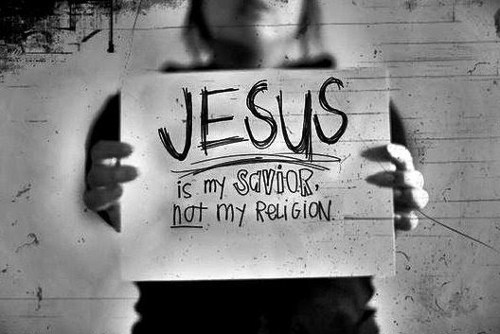
There’s another issue here though. This whole classification of Christian vs. Messianic among non-Jews is just a little crazy. I know that it’s meant to differentiate between traditional Sunday Christians and those who have become more aware of the Hebraic origins of our faith, but it’s gotten to the point where we’re almost acting like we have two different religions.

I’m not OK with this. If Jesus was and is King of the Jews for Messianics, then he was and is King of the Jews for more traditional Christians. Recognizing the Jewishness of Jesus and then encasing that fact with a Messianic “bubble” only isolates that information and the truths it contains from all other Christians everywhere. Rather than focusing on the differences between how many non-Jews in the Messianic movement see things and how most other Christians see things, maybe we need to spend more time paying attention to how we’re alike.

I know a number of non-Jews who self-identify as “Messianic” visit and read my blog posts. If that’s you, I want you to practice something in the privacy of your own homes when you’re all alone. I want you to say out loud, “I’m a Christian.” Repeat it a few times. C’mon, don’t whisper. Really belt it out. “I’m a Christian.”

“I’m a Christian.”

Was that awkward? For some of you, it probably was. No, I’m not making fun of you or trying to be mean. My point is that whether you consider yourself a “Messianic Gentile” and pray wearing tzitzit and tefillin or you think of yourself as a Christian and feel no need to adopt any Jewish customs or commandments in your prayer and worship life, God is One. He’s the same God. Jesus is Jesus. He’s the Messiah, the Lord, the Savior, the Christ.

He’s the same guy for Messianics and Christians. We just picture him differently.

But how does he picture himself?

We don’t really know, but it wouldn’t hurt to stretch ourselves a little and try to see Jesus from a Jewish point of view and within a functional Jewish context. That’s probably a picture closer to his reality than many in the mainstream church see him.

However, you may be very comfortable with the division between Messianics and Christians. You may be asking yourself why you’d want to go through all that trouble and mess up your comfort. Because he is the Christ and we are Christians. He is the Master and we are his disciples. Jesus didn’t ask us to stand apart from each other, he asked us to be a united body and to work together like the different parts in your body.

I’m not a typical Christian. I don’t go to church. I have particular standards regarding food items that most Christians don’t observe. I have certain other convictions and perspectives that you won’t find in most churches. But I’m still going to be a really different “breed of cat” than most of the other conference attendees when I get there in a few weeks. In some ways, I’ll be just as nervous attending the conference as I would be if I decided to visit a church next Sunday morning.

But the point is, I shouldn’t have to feel that way. I probably wouldn’t if I got my wish (and my prayer). My wish and my prayer is that all believers come together in unity and truth, regardless of how different we are, and recognize our mutual fellowship and discipleship as followers of the Messiah King, who came once for the salvation of souls and who will come again to repair the world.

My wish and my prayer is that we who are grafted in realize that we are all Christians.

When you think of yourself and what you believe and then think of other believers and how different they are from you, try to consider how much you have in common with each other. That’s what I’m going to be doing on May 24th at Beth Immanuel.

And if you happen to be planning on attending FFOZ’s Shavuot Conference 2012, post a comment and let me know. I’d love to meet you when we’re together in Hudson, Wisconsin…and meeting in spirit and in truth.

Blessings.

The Elusive Unchanging Dove

The Lord spoke to Moses, saying: Say to the Israelite people: On the fifteenth day of this seventh month there shall be the Feast of Booths to the Lord, [to last] seven days. The first day shall be a sacred occasion: you shall not work at your occupations; seven days you shall bring offerings by fire to the Lord. On the eighth day you shall observe a sacred occasion and bring an offering by fire to the Lord; it is a solemn gathering: you shall not work at your occupations.

Those are the set times of the Lord that you shall celebrate as sacred occasions, bringing offerings by fire to the Lord — burnt offerings, meal offerings, sacrifices, and libations, on each day what is proper to it — apart from the sabbaths of the Lord, and apart from your gifts and from all your votive offerings and from all your freewill offerings that you give to the Lord.

Mark, on the fifteenth day of the seventh month, when you have gathered in the yield of your land, you shall observe the festival of the Lord [to last] seven days: a complete rest on the first day, and a complete rest on the eighth day. On the first day you shall take the product of hadar trees, branches of palm trees, boughs of leafy trees, and willows of the brook, and you shall rejoice before the Lord your God seven days. You shall observe it as a festival of the Lord for seven days in the year; you shall observe it in the seventh month as a law for all time, throughout the ages. You shall live in booths seven days; all citizens in Israel shall live in booths, in order that future generations may know that I made the Israelite people live in booths when I brought them out of the land of Egypt, I the Lord your God.

So Moses declared to the Israelites the set times of the Lord.

Leviticus 23:33-44 (JPS Tanakh)

The Midrash teaches: “Just as a dove (yonah) is simple and accepts authority, the Jewish people accept God’s authority by ascending to Yerushalayim during the holiday. Just as a yonah is distinguished to its partner, who can tell it apart from other birds, Klal Yisrael are separated from the non-Jews by how they cut their hair, their fulfillment of milah and their care to wear tzitzis. The Jews comport themselves with modesty, like doves…Just as doves atone, Yisrael atones for the nations when they bring the sacrificial bulls for them during Sukkos.

Daf Yomi Digest
Stories Off the Daf
“The Dove”
Kinnim 23

Wait a minute. Besides the part where it said “Klal Yisrael are separated from the non-Jews,” what did that say?

Just as doves atone, Yisrael atones for the nations when they bring the sacrificial bulls for them during Sukkos.

Yes, that’s what I thought it said.

I was reading this passage this morning (as I write this) and tried to recall exactly where in the Bible it says that the sacrifices of Sukkot were intended to atone for the nations of the earth. Naturally, my middle-aged memory being what it is, I couldn’t pull up the data, so I turned to my favorite research tool: Google. Turns out that the plain meaning of the text in the Torah regarding the Sukkot sacrifices doesn’t talk about atonement for the nations. But there’s always this:

These seventy oxen correspond to the original seventy nations of the world enumerated in the Torah who descended from the sons of Noah, and are the ancestors of all of the nations till this day. Israel brought these sacrifices as atonement for the nations of the world, and in prayer for their well-being; as well as for universal peace and harmony between them.

Thus our Sages taught, “You find that during the Festival [Succot], Israel offers seventy oxen for the seventy nations. Israel says: Master of the Universe, behold we offer You seventy oxen in their behalf, and they should have loved us. Instead, in the place of my love, they hate me (Psalms 109).”

G-d appointed Israel a kingdom of priests to atone for all these nations, and appointed Jerusalem a house of prayer for all the peoples…

We pray for the day when Israel will be fully restored to its land, rebuild the Holy Temple in Jerusalem, and bring peace between G-d and man, and between all peoples. Amen.

-Rabbi Yirmiyahu Ullman
“The Significance of Succot Sacrifices”
15 October 2005/12 Tishri 5766
Ohr Somayach International

Here’s another look at the same picture:

The Talmud (BT Sukkah 55:B) teaches that the seventy bulls that were offered in the Holy Temple served as atonement for the seventy nations of the world. Truly, as the rabbis observed, “if the nations of the world had only known how much they needed the Temple, they would have surrounded it with armed fortresses to protect it” (Bamidbar Rabbah 1, 3).

-quoted from The Temple Institute website.

The irony involved in this commentary is that even though the nations hate Israel and destroyed her Holy Temple, still the Jewish people continue to pray for the peace and redemption of the nations.

Actually, we do find the number of bulls that are sacrificed during Sukkot is 70 in Numbers 29 starting at verse 12. There’s also another connection between the nations, Israel and celebration of the feast of Sukkot found in the books of the Prophets:

Then everyone who survives of all the nations that have come against Jerusalem shall go up year after year to worship the King, the Lord of hosts, and to keep the Feast of Booths. And if any of the families of the earth do not go up to Jerusalem to worship the King, the Lord of hosts, there will be no rain on them. And if the family of Egypt does not go up and present themselves, then on them there shall be no rain; there shall be the plague with which the Lord afflicts the nations that do not go up to keep the Feast of Booths. This shall be the punishment to Egypt and the punishment to all the nations that do not go up to keep the Feast of Booths.

And on that day there shall be inscribed on the bells of the horses, “Holy to the Lord.” And the pots in the house of the Lord shall be as the bowls before the altar. And every pot in Jerusalem and Judah shall be holy to the Lord of hosts, so that all who sacrifice may come and take of them and boil the meat of the sacrifice in them. And there shall no longer be a trader in the house of the Lord of hosts on that day. –Zechariah 14:16-21 (ESV)

Sukkot is the only festival of the Jews when representatives of the nations of the world will be actually commanded to appear in Jerusalem to celebrate and, as you see, God desires this so much, that there will actually be penalties for nations refusing to be represented at this event in the days of the Messiah.

The Hebrew4Christians site adds a little more information to confirm this:

Prophetically, Sukkot anticipates the coming kingdom of Yeshua the Messiah wherein all the nations shall come up to Jerusalem to worship the LORD during the festival.

But that’s all in the future. What about now and especially, what about in ancient times? Has Israel been atoning for us all along and have we disastrously ended our own atonement before God by destroying the Temple and scattering the Jewish people throughout the earth?

I don’t know, but pondering all these thoughts did bring the following to mind:

You worship what you do not know; we worship what we know, for salvation is from the Jews. But the hour is coming, and is now here, when the true worshipers will worship the Father in spirit and truth, for the Father is seeking such people to worship him. God is spirit, and those who worship him must worship in spirit and truth.” The woman said to him, “I know that Messiah is coming (he who is called Christ). When he comes, he will tell us all things.” Jesus said to her, “I who speak to you am he.” –John 4:22-26 (ESV)

I’m not necessarily drawing a direct connection between all of these points, but they are rather compelling. Consider this. In ancient times, during the Sukkot festival, it is thought that the Israelites sacrificed 70 bulls for the atonement of the nations of the world. In the Messianic Age to come, the nations are commanded to come up to Jerusalem to celebrate Sukkot with Israel. And in his Sukkot commentary, Rabbi Ullman alludes to not only Zechariah 14 but this other prophetic word:

“And the foreigners who join themselves to the Lord, to minister to him, to love the name of the Lord, and to be his servants, everyone who keeps the Sabbath and does not profane it, and holds fast my covenant—these I will bring to my holy mountain, and make them joyful in my house of prayer; their burnt offerings and their sacrifices will be accepted on my altar; for my house shall be called a house of prayer for all peoples.” –Isaiah 56:6-7 (ESV)

Salvation for the nations comes from the Jews. It seems like our atonement in ancient days came from Israel and for those of us who are Christians, it continues to come from Israel even though the Temple in Jerusalem currently does not exist.

“For God so loved the world, that he gave his only Son, that whoever believes in him should not perish but have eternal life. For God did not send his Son into the world to condemn the world, but in order that the world might be saved through him. –John 3:16-17 (ESV)

We from the nations cannot escape the great gift that Israel has continued to bestow upon us from days of old until this very time. God made Israel a light to the nations (Isaiah 49:6) and that light has been allowed be spread from Israel and the Torah to the rest of us (Isaiah 2:2-4) so that we too can illuminate the world with that light (Matthew 5:14). But this is only possible because God sent the Jewish Messiah and King, our Master, to all of us. And this is only possible because the Messiah and Savior was as obedient as a dove (Matthew 3:16) and as silent as a lamb led to the slaughter (Jeremiah 11:19).

The Christian church hasn’t replaced Israel and we certainly haven’t merged into her so that Israel has ceased to be a people before her God. We among the nations are Israel’s beneficiaries. May we continue to bless the heart of Zion and her first born son, Jesus Christ, our Savior, King of the Jews.

That which can be grasped will change. That which does not change cannot be grasped.

-Rabbi Tzvi Freeman
“Grasping Change”
Based on letters and talks of the Rebbe
Rabbi M. M. Schneerson
Chabad.org

Without mentioning it specifically, the Zohar sees great significance in the fact that the dove (and turtledove) is the only kind of bird permitted for sacrifice. In this way, the mysterious legendary dove with an olive leaf in its mouth becomes a representation of King Messiah…

-Tsvi Sadan
Yonah – Dove, pg 113
The Concealed Light: Names of Messiah in Jewish Sources

He is the elusive, unchanging dove.


Immersion

A chassid once approached his rebbe, Rav Yizchak of Vorke, in a very broken-hearted manner. He had a physical ailment that contact with water severely exacerbated. When he had been ill the doctor had declared with certainty that his illness was the result of contact with water. Not surprisingly, they absolutely forbade him from going to the mikveh even after he recovered. Chassidim are generally very careful to go the mikveh every day. Interestingly, many pre-chassidic sources mention that observing this takanah is essential for true spiritual development. Rav Chaim Kanievsky, shlit”a, brings a list of some of these luminaries, including the Arizal, the Beis Yosef’s Maggid, and the Reishis Chochmah.

With all these sources it is no wonder that the young man felt frustrated by his inability to maintain this practice. The Vorkever Rebbe turned to his young follower and said, “In Bava Kama 28 we find: ‘—The Merciful One absolves those constrained by mitigating circumstances.’ This seems superfluous. Why not just say that one who is constrained by mitigating circumstances is absolved? In addition, who cares if he is since he didn’t fulfill the mitzvah? The Rebbe answered his own question: “Hashem sees into a man’s heart. If a person yearns to do a mitzvah but truly cannot, it is as though the Torah itself fulfills the mitzvah for him!”

The chassid lingered in his rebbe’s presence, obviously unsatisfied with this response. He clearly was hoping to receive a blessing that he would, in fact, be able to immerse in the mikveh. The rebbe admonished him, “Why are you still standing here? Who will do the mitzvah better—you, or the Torah?”

Mishna Berura Yomi Digest
Stories to Share
“The Merciful One Absolves Him”
Shulchan Aruch Siman 161 Seif 1

All of this is probably hard for most Christians to understand. About the closest we might get to the idea of a mikvah is the concept of baptism, but that happens only once in a lifetime. We also might have a tough time with understanding how someone could suffer because they can’t perform a specific action that they believe God requires of them (namely, a daily immersion in a mikvah). For many Christians, the one time event of “being saved” pretty much sums up all of our requirements. If, for some reason, we were unable to physically perform some act of righteousness because of a medical condition, we would more or less assume God would be understanding.

However, observant Jews conceptualize their relationship with God in a fundamentally different way than Christians (and I’ve said this before). For a Christian, it’s all about what you believe. For a Jew, it’s all about what you do. And yet, whether or not the poor fellow in our “story to share” is able to enter a mikveh, does not particularly determine if he will merit a place in the world to come. Also, and this is important, the chassid’s merit in the world to come may not be the primary focus of his life.

Shocking, I know. For a Christian, “getting into Heaven” is pretty much what it’s all about. We are a very future-minded group of religious people. For a Jew, the main focus of a relationship with God isn’t what he’s going to do for us in the future, but what Jews can do for God right now through performing the mitzvot. The inability to obey God and to perform deeds of righteous and charity for the sake of Heaven is very painful for religious Jews. I don’t think we have this concept in the church, but maybe it wouldn’t be such a bad idea to cultivate it a little bit.

No, I’m not talking about turning Christians into Jews, having us wear tzitzit, immersing ourselves daily in a mikvah, and kashering our kitchens, but imagine what life as a Christian would be like if our overarching purpose in serving God were to actually serve God right here and right now.

I’m being unfair of course, because many Christians are extremely mindful of their duties to God and to human beings, and Christianity throughout the ages has carried the Torah out of Zion and the Word of God from Jerusalem (Micah 4:2):

Christianity has brought billions of people to Jesus, the Jewish Messiah and King of the Jews. This is a non-trivial accomplishment. Even some Jewish scholars have recognized the significance of this fact. In Hilkhot Melakhim 11:10-12, Maimonides credits Christianity with preparing the Gentile world for the arrival of King Messiah by spreading knowledge of the Bible far and wide. If even those who do not claim Jesus as Messiah can affirm the good that has come from Christianity, certainly believers should be able to as well.

-from an unpublished manuscript of a super-secret book I can’t talk about right now

But as James, the brother of the Messiah noted, “faith without works is dead” (James 2:17).

Christianity has helped uncountable numbers of poor, hungry, destitute, abandoned people. Myriads of counselees—drug abusers and alcoholics, victims of abuse, troubled spouses—have benefited from a pastor’s Biblical advice. From Carey and Wilberforce’s campaigns against satī in India to the modern phenomenon of “adopting” starving African children, Christians everywhere have expended their resources to help those less fortunate. Today, Christian orphanages in India take in abandoned children with nowhere else to turn, just as devout Christian George Müller did over a century ago in England.

-from the same super-secret book I still can’t talk about

As difficult as it may be to actually experience the concept, Christianity is an offshoot of ancient Judaism. We share the same foundation. We share the same God. The writers of the New Testament were almost assuredly all devout Jewish men and as such, they would have understood God, the Prophets, the Messiah, and the entire tapestry of the Creator’s continual interaction with humanity from a uniquely Jewish framework.

The Holy Scriptures the church has today were inspired by God and written by Jews. We Christians have done a good bit of “sanitizing” of these works over the past couple of thousand years, but if we choose to, we can try to recapture the good of both Christianity and Judaism as authored and willed by God.

Maybe someday, we in the church will understand why a young chassid would be so anguished to be forbidden to enter a mikvah. Maybe we’ll understand also how the unfulfilled desire to do so can be counted as if completed by the Torah. And maybe, just maybe, we’ll reclaim the ancient tradition and commandment to obey God in this world as our real reason for being here. The world to come will take care if itself.

Jesus fed the hungry, healed the sick, and comforted the mourning the very day all these events were happening. He didn’t wait for his death or resurrection and he didn’t wait for his second coming to start performing tikkun olam (though that won’t be completed until a future time). We don’t have to wait either.

It’s time to immerse ourselves not only in the Word and the Spirit, but into the action of obeying God and living like our Master.

Who is Worthy of God’s Word?

To some, G-d is great because He makes the wind blow.

For others, because He projects space and time out of the void.

The men of thought laugh and say He is far beyond any of this, for His Oneness remains unaltered even by the event of Creation.

We Jews, this is what we have always said:

G-d is so great, He stoops to listen to the prayer of a small child;

He paints the petals of each wildflower and awaits us there to catch Him doing so;

He plays with the rules of the world He has made to comfort the oppressed and support those who champion justice.

He transcends the bounds of higher and lower.

He transcends all bounds.

-Rabbi Tzvi Freeman
“Greatness Unlimited”
Based on letters and talks of the Rebbe
Rabbi M. M. Schneerson
Chabad.org

Indeed, the prayer of the community was born the very instant the prophetic community expired and, when it did come into the spiritual world of the Jew of old, it did not supersede the prophetic community but rather perpetuated it. Prayer is the continuation of prophecy, and the fellowship of prayerful men is ipso facto the fellowship of prophets.

-Rabbi Joseph B. Soloveitchik
from Chapter VII of his book
The Lonely Man of Faith

Rabbi Soloveitchik says a very interesting thing. He links the age of the prophets to the post-Second Temple world of Rabbinic Judaism. This may seem strange to most Christians, since we are taught a good many things passed away with the ascendency of Christ and the demise of the Holy Temple in Jerusalem. In fact, Christianity tends to discount the early Rabbinic period forward in the history of Judaism and “replace” it with the grace of Jesus Christ.

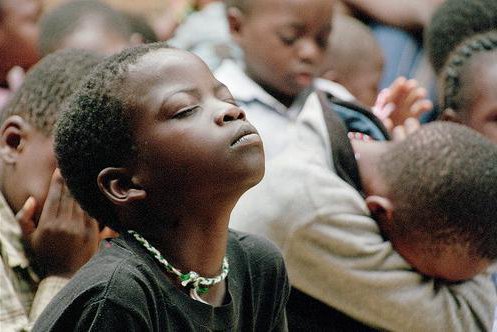
Of course Rabbi Soloveitchik as an Orthodox Jew, would not offer any sort of acknowledgement of Christ, but I think we can take his words, and those of Rabbi Freeman’s and try to apply them to the world of prayer among all men. While the prophets of old were unique and (as far as I can tell) no man has the “gift of prophesy” today as did Jewish men such as Isaiah, Jeremiah, or Ezekiel, we all have the capacity to engage God in the realm of prayer. This makes no man a prophet in the manner of those I have just mentioned, but the ability of humanity to connect, through faith, with God was not ended when the Second Temple was destroyed. Nor did it end with the life, death, life, and ascendency of Jesus. As Rabbi Freeman tells us, God is so great that “He stoops to listen to the prayer of a small child.”

And yet, from a Jewish point of view, prayer is not the exclusive property of the individual as Rabbi Soloveitchik notes:

No man, however great and noble, is worthy of God’s word if he fancies that the word is his private property not to be shared by others.

Judaism sees its relationship with God as largely corporate as indeed, is the Sinai covenant between God and the Israelites. Yet each Jew living today is also to consider himself as having stood personally at the foot of Mount Sinai as God gave the Torah through Moses. By comparison, Christianity, though the “body of Christ,” exists conceptually as a large collection of individuals, and each believer interacts as a unique personality, almost exclusively independent of the community of the church.

We see this most often in how we, as Christians, pray. It’s an almost irresistible temptation to pray about me, myself, and I, and Jesus did not prohibit this. And yet, he also told us to pray for others, even our enemies, and to petition God for the welfare of our leaders, our neighbors, and our oppressors. Rabbi Soloveitchik echos this when he writes “Man should avoid praying for himself alone…When disaster strikes, one must not be immersed completely in his own passional destiny, thinking exclusively for himself, being concerned only with himself, and petitioning God merely for himself.” To do so would be to imagine that God is little more than Aladdin’s genie and we alone are the one holding onto the lamp.

PrayingBut what is prayer and how is it somehow connected to perpetuating the continuation of prophecy?

Who is qualified to engage God in the prayer colloquy? Clearly, the person who is ready to cleanse himself of imperfection and evil. Any kind of injustice, corruption, cruelty, or the like desecrates the very essence of the prayer adventure, since it encases man in an ugly little world into which God is unwilling to enter. If man craves to meet God in prayer, then he must purge himself of all that separates him from God.

God hearkens to prayer if it rises from a contrite heart over a muddled and faulty life and from a resolute mind ready to redeem this life, In short, only the committed person is qualified to pray and to meet God. Prayer is always the harbinger of moral reformation.

So who can pray? On the one hand, it seems as if prayer is reserved for the person who is passionately dedicated to removing all sin and evil from his being and who longs to engage God in a realm of purity. On the other hand, what man, no matter what his condition, is completely clean and pure except that God has made him so?

Even an unbeliever can pray and be heard by God, otherwise no one could ever come to faith and be accepted by God. No one would ever be able to come to faith in God through Jesus Christ and be cleansed, healed, and reconciled with his Creator unless God was willing to hear the prayers of people covered in filth. It’s the desire to have the mantle of sin be removed from our shoulders, not the success of that removal whereby God is willing to hear us. In that sense, we do possess a “specialness” that was experienced by the prophets of old in that they too were willing, though still mortal and imperfect men.

And the foundations of the thresholds shook at the voice of him who called, and the house was filled with smoke. And I said: “Woe is me! For I am lost; for I am a man of unclean lips, and I dwell in the midst of a people of unclean lips; for my eyes have seen the King, the Lord of hosts!” –Isaiah 6:4-5 (ESV)

As I mentioned before, the prophets didn’t consider God’s revelations to them to be their exclusive property but rather, they shared God’s word with all, even as they were commanded to do. Should we, in our own human need, keep prayer just for us and not share it with all of God’s creations?

But since we are all imperfect and perhaps never, even for a moment, attain a purity that allows a true connection to God, how does God hear? What of the person so damaged and injured in his spirit, that he only knows to cry out but is unable to shed his “skin of evil?”

Likewise, we encourage the sinner to pray even though he is not ready yet for repentance and moral regeneration, because any mitzvah performance, be it prayer, be it another moral act, has a cleansing effect upon the doer and may influence his life and bring about a complete change in his personality.

It seems as if I’m wandering further and further away from the prophets or rather, Rabbi Soloveitchik did when he penned these words. On the other hand, the Rav seems to be saying what he did before; that prayer isn’t the exclusive property of the pious and the holy and the righteous. Even sinners can and absolutely need to connect to God. Jesus was criticized for eating with sinners, prostitutes, and tax collectors, yet he said this:

“Those who are well have no need of a physician, but those who are sick. I have not come to call the righteous but sinners to repentance.” –Luke 5:31-32 (ESV)

Thus access to the heart of God is available to all, not just to the perfect and those who sit in clean suits and dresses in pews on Sunday morning.

But going back to the very beginning of today’s “meditation,” we as Christians see that God is accessible not just to us and not just to “sinners,” but to all Jews everywhere, whether they are in the Messiah or not (and I am not lumping the Jewish people in with “sinners”).

I know it’s strange. Do I speak blasphemy? Do I ignore John 14:6? I suppose it looks that way. But I’m not willing to throw post-Jesus Jews under a bus because Christianity (and many in the Hebrew Roots movement) think “Rabbinic Judaism” is a dirty word.

I’ve sat in synagogues on Shabbat and during the Shema, have felt God enter as a tangible presence. I’ve sat in churches during prayer and singing and felt as if the room were completely empty. This is not to say that all synagogues possess God’s presence and all churches contain only God’s absence. Far from it. I am only saying that the 21st century church is not the only receptacle for the spirit of God. God is present where all men who desire Him are gathered, and resides in the heart of each individual, no matter who he is, who longs for the lover of his soul.

Who is qualified to engage God in the prayer colloquy? The person who is ready to cleanse himself certainly, but more than that, even the person who is at present unable or unwilling to be clean may still cry out. The very act of calling God’s Name may not “command” God to listen, but it may require the person praying to change his heart in acknowledgement of Him.

Thousands of years before the coming of Christ, while most of our non-Jewish ancestors (I’m speaking to Christians right now) were dancing around the pagan fires and worshiping “gods” of stone and wood, the Jewish people were turning their hearts to the One God. True, they also turned away many times, but God called them back and they returned. Otherwise, there would be no Christians today, for there would have been no Judaism by which the Messiah entered the world (and will enter it again).

Whoever you are reading this, know that God is not your exclusive property. God is a God to all or He is a God to none. While He has a special and unique relationship with the Jewish people which is perpetual and unable to be broken, He sent His only begotten Son for the rest of us, too. The rest of us just need to make sure that we don’t try to “take over” and restrict God to only ourselves.

The One Side of the Coin

As a matter of fact, at the level of his cosmic confrontation with God, man is faced with an exasperating paradox. On the one hand, he beholds God in every nook and corner of creation, in the flowering plant, in the rushing of the tide, and in the movement of his own muscle, as if God were at hand, close to and beside man, engaging him in a friendly dialogue. And yet the very moment man turns his face to God, he finds Him remote, un-approachable, enveloped in transcendence and mystery. Did not Isaiah behold God, exalted and enthroned above creation, and at the same time, the train of his skirts filling the Temple, the great universe, from the flying nebulae to one’s most intimate heartbeat? Did not the angels sing holy, holy, holy, transcendent, transcendent, transcendent, yet He is the Lord of hosts, who resides in every infinitesimal particle of creation and the whole universe is replete with His glory?

-Rabbi Joseph B. Soloveitchik
from Chapter VI of his book
The Lonely Man of Faith

Fusing the existential acuity of Kierkegaard with the wisdom of the Old Testament, Boston Orthodox rabbi Soloveitchik has produced a timeless spiritual guide for men and women of all religions. In this soaring, eloquent essay, first published in Tradition magazine in 1965, “The Rav,” as he is known to his followers worldwide, investigates the essential aloneness of the person of faith, whom he deems a misfit in our narcissistic, technologically oriented, utilitarian society. Using the story of Adam and Eve as a springboard, Soloveitchik explains prayer as “the harbinger of moral reformation” and probes the despair and exasperation of individuals who seek to redeem existence through direct knowledge of a God who seems remote and unapproachable. Although the faithful may become members of a “convenantal community,” their true home, he writes, is “the abode of loneliness” as they shuttle between the transcendent and the mundane. Sudden shafts of illumination confront the reader at every turn in this inspirational personal testament.

-from Publishers Weekly, 1992

Rabbi Soloveitchik uses the two descriptions of the creation of man from the first two chapters of Genesis to illustrate the two natures of humanity: the physical nature and the spiritual nature. I’m being very simplistic in this explanation, but as I read Soloveitchik, the basic conflict of any person of faith is in the dichotomy of the natural and supernatural human being. The first seeks significance and even triumph in domination over the created world, while the second sees transcendence beyond the world, to peek, as it were, under the hood, and to touch the very garment of the Creator.

Christianity’s response to this dilemma is to completely separate the physical and the spiritual, giving the latter ascendance and (ideally) priority over the former (it doesn’t often work out this way). This creates a barrier between the “two Adams” who, living in one flesh, travel in two apparently opposite directions. However, maybe Judaism has another approach:

Yula is an enlightened being. He spends his life in the wilderness, far from humanity, focusing his mind on the higher realms.

Harriet Goldberg is a schoolteacher. She spends her life cultivating small minds, hoping to give them a sense of wonder for the world they live in.

Who is closer to G-d?

That depends. Where is G-d?

If G‑d emanated a world spontaneously, dispassionately—just as the sun provides us light and warmth without any investment on its part—then G-d is found beyond this world, and Yula is closer.

But if G-d created a world deliberately, because that is what He desires and cares for, and so He invested Himself within that creation, so that His very essence and being can be found here, then Harriet is closer.

You choose.

-Rabbi Tzvi Freeman
“How to be Spiritual”
Based on letters and talks of the Rebbe
Rabbi M. M. Schneerson
Chabad.org

Then again, maybe not. But do we really have to make a choice between Yula and Harriet? Why must one be closer to God than the other? Isn’t there room in God’s throne room or His heart for both?

Rabbi Yosef Yitzchok of Lubavitch wrote:

When my grandmother, the Rebbetzin Rivkah, was eighteen years old she fell ill and the doctor ordered that she eat immediately upon waking. But grandmother, who did not wish to eat before prayer, would pray at an early hour and only afterwards eat her breakfast.

When her father-in-law, Rabbi Menachem Mendel of Lubavitch, heard of this, he said to her: “A Jew must be healthy and strong. Concerning the precepts of the Torah it is written “live in them”- one is to infuse life into the mitzvos; and in order to infuse life into the mitzvos, one must be fit and joyful.”

Concluded Rabbi Menachem Mendel: “Better to eat in order to pray, than to pray in order to eat.”

-Rabbi Yanki Tauber
Commentary on Torah Portion Acharei
Leviticus 21:1-24:23
Chabad.org

Here we see that the physical is ascendant over the spiritual, but only so the former can serve the latter’s purpose. However, Rabbi Freeman has another way of looking at the human condition:

There are crossroads where you choose not only your future, but your past as well.

Take one path, and your past becomes but a silly, useless dream that might as well never have happened.

Take another road, and your past becomes a magnificent frame for a glorious moment of life. The moment now. The moment for which your soul was formed.

—Padah B’shalom, 5738

Future and past, humanity and Divinity, secular and spiritual, each human being, perhaps even those who refuse to acknowledge the possibility of God, stands at the center of a room with two doors, each leading into two directions that are impossible to fuse into a single path.

But each of us is only a single being. While Rabbi Soloveitchik uses the two different descriptions of the creation of Adam to illustrate these separate paths, in fact, Adam was one man who was created into two worlds. He was commanded to dominate and rule over a physical Creation, but he was also directed to transcendently guard Creation for the sake of Heaven. When man fell, it did not destroy the “second Adam,” it just made it harder for the two paths to unite into a single journey.

Since the day when Adam and Eve were rejected by Eden, we have been trying to walk both east and west in search of God. Where might He be found; in the Heavens above, or in the earth below?

Ironically, we find Him at once in both, which is just plain confusing to most people. To solve the confusion, some men turn only to Heaven while others choose to observe Him only in how He manifests in nature. One extreme imprisons God in the realm of spirituality while the other traps Him on earth or worse, leads man to worship only the observable.

At the end of the book of Exodus, God dwelt among His people in the “form” of the Shekhinah, which indeed seemed to possess a heaviness and “substance” within the material world. But God did not cease to exist as the infinite and unknowable Ein Sof in His highest Heavens.

Is God found in the human heart and in the unattainable mystic domains beyond man’s ability to conceive? Most certainly. But where does that leave man? How can we find God when He exists in two impossibly incompatible realms?

I don’t know. I only know that the reason both “Adams” are lonely is not just because of their great difficulty in attaching to God, but because of the near impossibility in talking to each other. Two essences are trapped in one flesh, the first being completely at home there and the second being a complete foreigner.

But we can’t live, one without the other. The material man without the spiritual man, is just a machine who perceives only the world around him and is unable, by default, to understand anything else. God is lost to him or man himself becomes his own “god.” The spiritual man without the material man is at best, indifferent to the physical world and obsessed with ephemeral mysticism. At worst, he is just plain dead. In this extreme, if we refuse to eat and drink in order to “better” pray to God, we starve our bodies and deny our lives.

But God made us as both and for the length of our earthly existence, this is who we are. Man struggles to make his peace with God but in reality, we cannot be at peace with our Creator until we find peace within ourselves. The Adams must learn to live with each other and to appreciate and embrace both sets of priorities, not as incompatible opposites, but as two fused sides to a single coin.

God cannot be anything but the unique and radical One. We human beings, created in His image, are two, but as two we are incomplete. We must also be One, as He is One. That is the destination to which we are striving all our lives to attain.

Perhaps that’s the answer to how we must be holy as God is holy and how we must be perfect as our Father in Heaven is perfect. We must be One, as God is One.

In the end, the coin will only have one side.


The Chaotic Serene Garden

I have no problem-solving thoughts. I do not intend to suggest a new method of remedying the human situation which I am about to describe; neither do I believe that it can be remedied at all. The role of the man of faith, whose religious experience is fraught with inner conflicts and incongruities, who oscillates between ecstasy in God’s companionship and despair when he feels abandoned by God, and who is torn asunder by the heightened contrast between self-appreciation and abnegation, has been a difficult one since the times of Abraham and Moses. It would be presumptuous of me to attempt to convert the passional, antinomic faith-experience into a eudaemonic, harmonious one, while the Biblical knights of faith lived heroically with this very tragic and paradoxical experience.

All I want is to follow the advice given by Elihu, the son of Berachel of old, who said, “I will speak that I may find relief”; for there is a redemptive quality for an agitated mind in the spoken word, and a tormented soul finds peace in confessing.

-Joseph B. Soloveitchik
from the Foreword of his book
The Lonely Man of Faith

In many ways, reading the first part of Rabbi Soloveitchik’s book is like looking in a mirror. Well, not exactly. He was born over half a century before I was and after all, I’m not Jewish, let alone a Rabbi. Yet everything he says about his own experience and the experience of a man of faith completely reflects my own thoughts, feelings, and uneasy journey with God.

I’ve talked before about trying to find a storyteller who speaks in metaphors I can understand, and so far Rabbi Soloveitchik is one of those storytellers. I don’t think I’ll ever know why men like Rabbi Tzvi Freeman and even the Lubavitcher Rebbe, Rabbi Menachem Mendel Schneerson of righteous memory, use “my metaphors” so much more clearly than any Christian author I’ve ever read. It is true that Thomas Merton, a Trappist Monk, spoke very well and clearly to some parts of me in his book The Seven Storey Mountain, but that’s something of a rarity.

I’m not going to presume a Jewish soul, and in so many ways, I’m such a Goy (at least according to my Jewish wife), so I really don’t have an answer. But at least as far as my reading up to the end of Chapter 1 is concerned, Rabbi Soloveitchik is speaking in a language that could apply to people of many different faiths, not just to the Jew.

And he’s talking about exactly what I experience.

I have a confession to make. There were times when I thought I was going crazy. There were times when I thought I was just a bad Christian, a person with a bad or weak faith, someone who just didn’t “get” what it was to walk on a path that leads to God. And yet just look at how Rabbi Soloveitchik starts the first chapter of his book:

The nature of the dilemma can be stated in a three-word sentence. I am lonely. Let me emphasize, however, that by stating “I am lonely” I do not intend to convey to you that impression that I am alone. I, thank God, do enjoy the love and friendship of many. I meet people, talk, preach, argue, reason; I am surrounded by comrades and acquaintances. And yet, companionship and friendship do not alleviate the passional experience of loneliness which trails me constantly. I am lonely because at times I feel rejected and thrust away by everybody, not excluding my own intimate friends, and the words of the Psalmist, “My father and my mother have forsaken me,” ring quite often in my ears like the plaintive cooing of the turtledove. It is a strange, alas, absurd experience engendering sharp, enervating pain as well as stimulating, cathartic feeling. I despair because I am lonely and, hence feel frustrated. On the other hand, I also feel invigorated because this very experience of loneliness presses everything in me into the service of God.

While Rabbi Soloveitchik’s writing style is very different from mine, what he’s actually saying is just what I’ve been trying to say for a long as I have been blogging. Actually, it’s been a lot longer than that, but blogging has provided me with a unique outlet for my frustration and my need to “follow the advice given by Elihu, the son of Berachel of old” and to “speak that I may find relief.”

Joseph Ber Soloeitchik was born over a century ago, was an American Orthodox rabbi, Talmudist and modern Jewish philosopher, and a descendant of the Lithuanian Jewish Soloveitchik rabbinic dynasty. The words of his book first appeared in print over fifty years ago, when I was still in elementary school. He died at the age of 90 nearly twenty years ago and a continent away from where I was living at the moment his soul ascended to God. I don’t imagine that we would have had a lot in common had we ever met.

Except for how we experience our faith.

Maybe I’m not crazy after all. Maybe faith is designed to be lonely, inconsistent, and chaotic, like riding a roller coaster that alternately travels through a beautiful and serene Japanese garden and the fresh hell of a radioactive Chernobyl.

If I can take the beginning words of the Rav’s book at face value, I guess my journey of faith will never get any easier, and my only solace is in “confessing” my “tortured soul” (in my case, as a blogger on the web). And yet, it’s nice to find out that I’m not alone in feeling alone in my faith.

I’ll let you know how the rest of the book turns out.