All posts by James Pyles

James Pyles is a published Science Fiction, Fantasy, and Horror author as well as the Technical Writer for a large, diversified business in the Northwest. He currently has over 30 short stories published in various anthologies and periodicals and has just sold his first novella. He won the 2021 Helicon Short Story Award for his science fiction tale "The Three Billion Year Love" which appears in the Tuscany Bay Press Planetary Anthology "Mars."

Upon Reading a Rant About “Messianic Jewishism”

The Rav (Abraham Kook), zt”l, spoke about Knesset Yisrael as being endowed with two covenants, the covenant of Avot, which relates to the land of Israel, and the covenant of Sinai, which relates to the people of Israel.

-Rabbi Simcha Krauss
National President, Religious Zionists of America
from the Introductory Greetings (p.ix) to
Rabbi Moshe Avigdor Amiel’s English translation of
Jews, Judaism & Genesis: Living in His Image According to the Torah

So far I’m having a blast reading Rav Amiel’s book on Genesis, but that’s not why I’m writing this missive.

I came across something on Facebook written by Rabbi Stuart Dauermann that strongly echoes (though perhaps I am actually the “echo” to Rabbi Dauermann’s “voice” in this case) a topic I’ve written on many times before: the unique role of the Jewish person in Judaism and particularly in Messianic Judaism, a role that cannot be assumed by someone who is not Jewish.

I am going to copy and paste the entire body of text authored by R. Dauermann here, since as far as I know, the only place is exists online is on Facebook and depending on the privacy settings involved, it’s possible not everyone would be able to follow a link to its source. My commentary will follow:

We pause for a rant about what I term “Messianic Jewishism.”

If we ignore Paul’s teaching in Galatians and elsewhere we can get the Bible to say what we want. But no one seems to give a damn about how the privileges God gave to Israel are just being grabbed by others on their own terms, without so much as an “Excuse me.” Paul says this for example, “They are Israelites, and to them **belong** the adoption, the glory, the covenants, the giving of the law, the worship, and the promises. To them **belong** the patriarchs, and from their race, according to the flesh, is the Christ, who is God over all, blessed forever. Amen.” (Romans 9:3-5 ESV)

The religion we see developing in some corners of the MJ movement is NOT Messianic judaism because there is NO respect for the priority of the Jewish people in His covenantal purposes for Israel. What we have is a new religion which I call Messianic Jewishism. These are congregations that practice a kind of Judaism-lite, but by design, not really a Judaism, but a community with enough Jewish religious cultural flavoring for everyone in the fellowship to embrace it, enjoy it, practice it. It’s really Protestant Christianity with a tallis, and it is not Messianic JUDAISM but rather Messianic Jewishism. Messianic Judaism requires a deeper adherence to the communal boundaries and covenantal markers *given to* and *reserved for* the Jewish people. As I said, SOME people are grabbing whatever they can on their own terms using these things as they see fit, feeling absolutely entitled on the basis of their questionable interpretations of certain Bible verses, but with NO respect for the Jewish people who have given their blood for thousands of years to protect this patrimony given them by God.

If people wanted to convert, that would be something else. There is a responsible process whereby people can take on the covenantal calling of the Jewish people irrevocably and hook line and sinker. But this does NOT involve the kind of pirating of Jewish treasures which we see all around us, and the strange distortions of Jewish life, all done with a sense of entitlement because the people in question have a BIble verse that “entitles” them. And if you say “What do you think you are doing?” you will be accused of being a bigot and anti-gentile, neither of which is true. One can be pro-Jewish without being anti-gentile.

NO ONE IS SAYING that gentiles can’t touch, handle, taste Jewish things, But there is a conspicous failure to pay due respect to the fact that such are asking to handle Jewish treasures given to the JEWS by God.

I am NOT anti-gentile, but does ANYONE understand what I am saying?
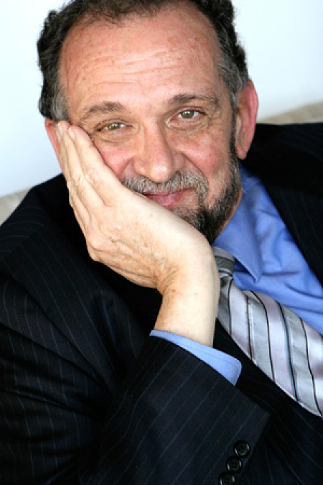
Stuart Dauermann
Rabbi Stuart Dauermann

There were a large number of responses by the time I came across these words and I didn’t have the time to read through more than a smattering, but it seemed that the people commenting generally agreed with and were supportive of R. Dauermann’s statement.

I know that a number of my regular readers (and likely some of those who happen to “surf in”) will object to what Dauermann wrote and will object to my supporting what he wrote. Doubtless, many “proof texts” could be produced in an attempt to refute the idea that Gentiles attempting to observe the entire body of Torah mitzvot in the manner of the Jews are merely engaging in what has been called Evangelical Jewish Cosplay.

I know a number of you reading this are very sincere, devoted, and dedicated disciples of the Messiah and truly, honestly believe that how you observe your faith is exactly what God not only desires, but demands of you (and by inference, all believing Jews and Gentiles everywhere). I’m sorry, because I know what R. Dauermann wrote and what I’ve written here will doubtless cause you pain as well as result in you feeling insulted and even angry. Certainly you will attempt to defend your beliefs and practices, which I completely understand.

But what if you’re wrong?

A few months back, I wrote a two-part review (which you can read in Part 1 and Part 2 of my article “Acting Jewishly But Not Jewish”) of Mark Nanos’ forthcoming paper, ‘Paul’s Non-Jews Do Not Become “Jews,” But Do They Become “Jewish”?: Reading Romans 2:25-29 Within Judaism, Alongside Josephus.’ The paper suggests that although the First Century CE Gentiles entering the Jewish religious community of “the Way,” while not actually “converting” to Judaism, nevertheless “converted” to a way of life that resulted in them acting “Jewishly”.

I received a certain amount of pushback from some Messianic Jewish people who, like R. Dauermann, sought to shield and protect the unique role and identity of Jews in Messiah. This is obviously a tender subject for many in our little corner of the religious world.

It’s apparent to me by the way Dauermann’s words are crafted (and he even said so himself) that he was “ranting,” so to speak. That is, he was speaking from the heart and quite passionately. I can almost hear a raised voice in the words, “I am NOT anti-gentile, but does ANYONE understand what I am saying?” I think he’s frustrated. I don’t blame him.

But by the same token, what am I to say for those certain numbers of Gentiles out there who choose to believe that God commanded them (you) to don a tallit, lay tefillin, and daven in Hebrew from a siddur? What am I to write about those Gentiles who say they are obligated to observe the 613 commandments of the Torah of Moses, apart from the Rabbinic interpretations and totally committed Jewish lifestyle associated with said-commandments?

The question is, if you choose just how you are supposed to observe these mitzvot, diminishing or disregarding the Jewish praxis involved as interpreted by the Rabbinic Sages over the last two-thousand years or so, is what you’re doing really a “Judaism?”

Probably not, although I suppose that conclusion rests on how you define Judaism.
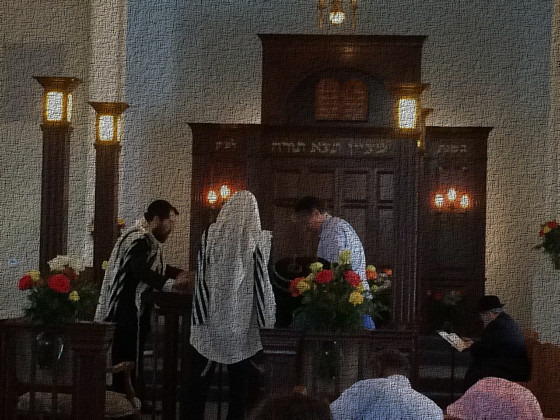
beth immanuel
Beth Immanuel Sabbath Fellowship

Even for those non-Jews who identify as Messianic Gentiles, who agree with the differentiation of roles between Jews and non-Jews in Messiah and who study and behave accordingly, it is arguable as to whether or not we are actually practicing a “Judaism,” even if we worship and fellowship alongside Messianic Jews in a Messianic Jewish synagogue (such as at Rabbi David Rudolph’s shul Tikvat Israel).

I’ve argued both sides of the issue (such as in Do Christians Practice Judaism? and Practicing Messianic What?) and the debate continues to rage.

In beginning to read Rabbi Moshe Avigdor Amiel’s book, from which I quoted above, I truly realize that he conceptualizes the Torah in general and Genesis (Beresheet) in particular, in a fundamentally different way than I do. Of course, he had the benefit of being born a Jew, being raised in a Jewish community, worshiping the God of his fathers as a Jew, being educated as a Jew, and speaking and writing fluent Hebrew (the book is actually two different versions between the covers, one in English and one in Hebrew) as a Jew.

This, and my many other explorations into various Jewish texts, show me that even though I can read them in English, they were written (at least the more scholarly ones) for Jewish people who conceptualize the Bible and associated interpretations in a very different manner than I do, and there are directions in which these texts travel that my thoughts are incapable of following. As I practice my faith, even though I study from a Messianic perspective, that hardly means I’m practicing any type of Judaism as such.

It stands to reason that I don’t consider myself Jewish or even practicing “Jewishly”.

There is, however, a necessity for me to “touch, handle, [and] taste Jewish things,” as R. Dauermann states, because of the intersection between my Messianic faith and Messianic Judaism as it exists within the overarching ekklesia of Messiah, but as I’ve said many, many times before, unity does not require uniformity. It doesn’t even always require being “separate but equal,” although I have also argued for the necessity of exclusive Messianic Jewish communities, at least for some MJ synagogues.

As Gentiles in Messiah who choose the path of studying the Bible and understanding the covenants from a Messianic point of view (and keeping in mind there probably isn’t any one single “Messianic point of view”), in my way of thinking, recognizing the covenant priority of the Jewish people in God’s redemptive plan for Israel is critical to how we not only see Jewish Messianics, but how we are to understand Gentile Messianics as well.

From a rant of my own written last February, I came down to saying don’t argue, though I realize that will always be taken as “let’s argue” by most humans, since we tend to be contrary by nature. But consider that in the long history of the Christian Church, any Jew who has come to faith in Jesus (Yeshua) as the long-awaited Messiah, has been without fail required to opt out of Yiddishkeit and effectively become a Gentile. Isn’t it understandable that Jews who enter the Messianic ekklesia would desire to rectify the insults and injuries of the past by preserving who they are as Jews?

I must admit that my own journey out of “One Law” was largely (but not exclusively) motivated by watching my Jewish wife’s involvement in Jewish community and my desire to cherish her Yiddisher Neshamah. Nothing quite teaches a Gentile about a Jew’s absolute need to be Jewish, to live Jewish, to be among Jewish community like being married to a Jewish spouse. Being married to the girl with the Jewish Soul has certain advantages that many others involved in “worshiping Jewishly” may lack in abundance.

Yesterday, I published a blog post that was highly critical of Christianity, accusing the early Church of virtually “kidnapping” the Jewish scriptures, particularly the Jewish Apostolic Scriptures, and I am sure I insulted many good Christian men and women in the process. I regret any pain I may have caused, but unfortunately, there was no other way to get my point across in the required manner.

But like it or not, the Church has committed many crimes against the Jewish people and their writings and we do so again by failing to acknowledge Jewish uniqueness in covenant connection with God, whether we call ourselves “Christian,” “Messianic,” or anything else.

I know I can’t cause even one single Gentile person to reconsider their commitment to the Torah as they see it, even as I at one time reconsidered my commitment and subsequently changed my direction. It’s possible that I’m totally unique in that regard, though the Gentiles involved in the educational ministry First Fruits of Zion must have faced a similar circumstance a number of years ago when they shifted their official position from One Law to a Differentiated model. And yet, I know it’s possible because I did it.

Orthodox Jewish manI inaugurated and celebrated that change almost three-and-a-half years ago when I wrote the first post for this blog called Abundant is Your Faithfulness.

Since that time, I’ve had many adventures, went back to church, left church…I’ve thought about giving up blogging and even “religion” a number of times, usually after encountering my own severe limitations as a human being or encountering the darker side of religious people.

We have just passed through the Days of Awe, exited Rosh Hashanah and Yom Kippur, and entered a new year. Erev Sukkot begins day after tomorrow at sundown and the year stretches out before us like a road paved in gemstones. Whatever our differences, we share one Messiah and one God. Would it really hurt we Gentiles to extend courtesy and honor to the Jewish people by recognizing that they are indeed unique and set apart by Hashem, their God and ours, as a people and a nation?

Oh, by the way, you won’t be able to engage Rabbi Dauermann by commenting on my blog since it’s quite likely he may not even read my “meditations” and certainly, he has never commented here. You can only “talk” to me.

One last thing. Although I don’t agree with everything Scot McKnight wrote in his article Does Personal Bible Reading Destroy the Church?, he does make a good point about everyone interpreting the Bible willy-nilly to come up with their own conclusions. We can’t all be right.

Addendum: Please keep in mind that there will always be rather negative influences who will read a blog post like this, draw the worst possible conclusions, and then post their opinions somewhere on the web, whether it be in my own comments section (no, not Cindy or Marleen) or on their own blog or website. I regret that I gave them more fuel to add to their “fire” but the only way I could possibly quench such “flaming” sentiments would be for me to cease to exist. Nevertheless, I apologize if my comments here have resulted in provoking anyone to slander (actually in writing, it’s libel) or otherwise making statements unbefitting a disciple of the Master and a child of God.

Mission to Rescue the Jewish Scriptures: The Story of the Kidnapped New Testament

He who reads through translation looks through a blurred pane, not experiencing the full flavor and the soul’s yearnings.

Chaim Nachman Bialik, “Nation & Language Part 1”
from the Translator’s Preface, p.xxvi
written by Rabbi Kadish Goldberg in
Rabbi Moshe Avigdor Amiel’s English translation of
Jews, Judaism & Genesis: Living in His Image According to the Torah

Sabrina Allen, who was abducted in 2002 at age 4 by her mother in a custody battle, has been found in a secret rescue mission near Mexico City and returned to the United States, the private investigator involved in the search said Wednesday.

Sabrina, now 17, was rescued in an operation conducted by the Mexican Federal Authority, FBI and U.S. Marshals in Estafeta Tlaxcala, about 60 miles southeast of Mexico City, according to Philip Klein, with KIC Investigations.

Klein told USA TODAY that Sabrina and her alleged abductor, Dara Llorens, were flown back to the U.S. on Tuesday night, arriving in Houston.

-Doug Stanglin – 1:27 p.m. EDT October 1, 2014
“Texas girl, missing for 12 years, rescued in Mexico”
USA Today

I insist on using evidence that is verifiable in cultural and documented substantiation to elucidate the information provided somewhat cursorily in the apostolic writings which themselves reflect earlier Jewish writing that begins in the Tenakh and continues with the apocryphal writings — and they are consistent even with later Jewish literature and archeological evidence discovered in such finds as the Dead Sea Scrolls (representing a variety of ancient Jewish literatures).

To put it another way, the apostolic writings are Jewish literature, and we’re taking them back from the non-Jews who have oh-so-lovingly preserved them and distorted their meaning by wrenching them out of their native context and reading them as if they were written in an antiseptic cultural vacuum — or worse: as if they were written in a pagan cultural milieu.

-ProclaimLiberty
from a comment on my blog post
The High Holy Days for the Rest of Us

When I was catching up on the numerous comments on my various blog posts, reading PL’s words, I immediately thought of the news story I’d read just a few minutes earlier about the rescue of Sabrina Allen.

Sabrina was (allegedly) kidnapped by her non-custodial mother at the end of a six-month period of court-supervised visitation in 2002. For the past twelve years, Sabrina had been living with her mother in a town sixty miles southeast of Mexico City.

I have a background in Social Work and Child Protection, and given that, I was imagining what this child had been through and now, at age 17, what she is facing. Probably most people reading the news story about her rescue breathed a sigh of relief and thought that she’s going to be OK now that she’s being returned to Dad.

Sabrina Allen
Sabrina Allen (Photo: Center for Exploited and Missing Children)

Problem is, she hasn’t seen Dad in twelve years and her entire world is built around Mom and living with her in Mexico. There’s a good chance that Mom told Sabrina a whole bunch of bad things about Dad, so this teenage girl may not be at all happy to see him. I’m betting she runs away the first chance she gets since right now, she’s feeling like a foreigner in an alien land, surrounded by a bunch of strangers.

Now imagine this.

Thirty-five hundred years or so ago, God gathered His people Israel to Him at Mt. Sinai. Through the prophet Moses, He gave Israel the Torah, the Holy Word of God, and commanded them to obey His Word as their part of the covenant He made with them.

Then, for the next fifteen-hundred years, more or less, Israel made a concerted effort to do just that, with the results being a sort of spiritual and experiential roller coaster ride, with some generations being obedient and some generations rebelling, suffering, and going into exile.

Now we arrive at the late-Second Temple period. A man named Yeshua was born, lived, taught Torah wisely, some thought he was Messiah, was betrayed and executed by the Romans, was believed by many to have been resurrected, and then witnesses said he ascended into Heaven with the promise of returning “at the end of the age.”

Through his apostles, many more disciples were drawn to his teachings, and particularly through one late arriving apostle named Paul, many non-Jews were brought into discipleship while not having to undergo the proselyte rite and take up the same obligations that were the conditions of the Sinai Covenant, since only Jews belong to that covenant.

The Gentile disciples, as part of their introduction and integration into “the Way” were taught the Jewish scriptures and received the teachings of their Master as well as other teachers through various means, including letters.

It must have been a challenge for these non-Jewish peoples representing many languages and cultures, to fully grasp the complex and nuanced meaning of thousands of years of Jewish holy literature, since the Jewish people teach, live, and think much differently than the world around them. Nevertheless, if a Gentile really wanted to be a disciple of the Jewish Messiah King, he had to take every opportunity to learn from  his/her Jewish teachers and fellow disciples to grasp a completely different cultural and educational matrix in order to fulfill his/her role to Israel and to God as a “crowning jewel of the nations” in fulfillment of the New Covenant prophecies.

kidnappingBut then, much like the Mother and Father of Sabrina Allen, the “couple” violently split, and the “non-custodial parent,” that is, the Gentiles, “kidnapped” the “child” the Jewish scriptures, took them to an “alien” place and changed their appearance (Sabrina’s Mom escaped detection in part, because she dyed Sabrina’s hair, making her look differently), so that they no longer resembled Jewish holy literature at all, but rather, took on the “mask” of the newly invented Gentile religion “Christianity.”

I know that all sounds harsh and highly critical of the early history of the Church, but in the Second and Third Centuries CE, that’s how it would have looked, especially to the remaining Gentile disciples of the Master who, right before their very eyes, saw the Word of God, which they cherished and were zealous for, transformed so that it would provide a completely alien understanding of what God wants and the nature and purposes of Yeshua…uh, excuse me, “Jesus Christ”.

The “child” is illegally spirited away from the “custodial parent” and taken to a foreign land, vanishing from sight for the next twelve years, or more accurately put, the next nearly two-thousand years. To be fair, the “child” has been seen innumerable times by Jewish people since then, but her “appearance” was so drastically altered, that she not only was completely unrecognizable by the custodial parent (the Jewish people), but she looked like a terrible enemy and a horrible threat to Jewish survival. The “parent” rejects and even shuns the child and the non-custodial parent, tries to pass off someone who looks like an obvious impostor as the Father’s child for the purposes (often unwittingly) of inducing the Father to accept someone who couldn’t possibly be his Jewish offspring.

Then, in more recent times, the child’s disguise is penetrated and a rescue mission planned. But at this point, there is so much confusion about who is who, that even taking back what was once theirs, the Jewish people, redeeming the Jewish Apostolic Scriptures and bringing them back home, draw great ire, not only from the non-custodial (Gentile) parent, but from most other Jews as well. How dare these few “Messianic Jews” bring a dangerous impostor into the fold and call her one of their own? It’s ridiculous. It’s heresy. What Jew could possibly love a Bible that has been used for centuries to justify murdering and maiming Jews, and incinerating Torah scrolls, volumes of Talmud, and synagogues.

But there’s a “father” out there who has finally, after so very long, recognized his only “daughter” underneath the cheap makeup that tried to turn a Jewish “child” into a “Goyishe” traitor. He loves her. He know she belongs with her “sisters” (the rest of the Jewish scriptures) and in a Jewish “home”. But even in successfully pulling her back from exile, the “father” is so alone, for most other Jews will not accept him as long as he claims these foreign books as his lost child.

The non-custodial parent (the Gentile Christians) for her/their part, demand that if the Jewish father really accepts the “alien” as his own, he should not attempt to change her back to her original (Jewish) form, but instead, the father must change to become, like his once kidnapped daughter, an “alien.”

No dice.

So not only is the “father” isolated from other Jews, he is cast out by the Gentiles as well. He is in-between and nowhere. All he wants to do is go home and take his rescued “daughter” with him.

sefer torahBut all “children” come from God, as did the Torah, the Prophets, and the Writings (which were distorted by the non-custodial parent along with the youngest “daughter,” the Apostolic Scriptures), and so too the kidnapped child who has now been brought back. God will find a way for everyone to see who this “little girl” really is and to bring her back into the “family” (the Bible) so that all of the “children” are unified with each other and look like one.

I know I’ve confused the imagery and the comparisons are less then perfect. It’s probably been difficult to follow this metaphorical essay and keep everything straight, but this is how I see the Apostolic Scriptures and how they are being reclaimed by Jews in Messiah (as opposed to Hebrew Christians). It’s not that Christians must convince Jews to accept the New Testament which looks and speaks with a foreign accent, it is we Gentile Christians who must get it through our heads that we have misappropriated Jewish holy books, changing their “face” in the process, so that they no longer look Jewish or speak to Jewish people. We have to give them back, not that they don’t mean something to us, for they mean everything to us, but we must let them be Jewish, to speak with a Jewish voice, to have the face of the Jewish authors and readers and students, just as in days of old.

Only then will they speak the truth to both Jewish and Gentile ears and only then will we see the face of the Jewish King in her pages.

Addendum: In case you’re interested, here’s an updated news story about how Sabrina is doing so far.

Does God Forgive Jewish Sins on Yom Kippur?

The Torah establishes no explicit association between Rosh Hashanah and Yom Kippur. The former is briefly described as “a day of blowing the horn” (Num. 29:1), while Yom Kippur is more elaborately defined as “a day of atonement, to make atonement for you before the Lord…and ye shall afflict your souls” (Lev. 23:28; 32).

-Max Arzt
“The Fundamental Concepts in the Yom Kippur Liturgy: An Introduction,” p.191
Justice and Mercy: Commentary on the Liturgy of the New Year and the Day of Atonement

Note: I wrote this blog post a number of days before listening to and reviewing yesterday’s Holy Epistle to the Hebrews sermon by D. Thomas Lancaster, which also addresses issues related to Yom Kippur and atonement.

I know I’ve asked a strange question in the title of this blog post from a Christian’s point of view. The Church teaches that sins are not forgiven unless we confess Jesus Christ as Lord and Savior over our lives and convert to Christianity. It doesn’t matter if you’re Jewish or any other sort of person. There is one standard of righteousness and one path to salvation, and that is through Jesus.

Jesus said to him, “I am the way, and the truth, and the life; no one comes to the Father but through Me.”

-John 14:6 (NASB)

Of course the Master also taught:

“No one can come to Me unless the Father who sent Me draws him; and I will raise him up on the last day.”

John 6:44

Effectively, this is saying that to come to faith in Messiah is impossible unless God draws that person to such faith, so the ultimate onus is upon God for our salvation, or so it would seem. I think a Calvinist would see it that way, interpreting the verse further to mean that God only draws certain people to Jesus and not others. However, it could also mean that God extends a universal invitation to such faith but that invitation does not automatically override human free will, thus some accept while others reject.

But that doesn’t answer the question I asked in the title of this blog post.

Who, O God, is like You. Who pardons iniquity and overlooks transgression for the remnant of His heritage? Who has not retained His wrath eternally, for He desires kindness! He will again be merciful to us; He will suppress our iniquities. And cast into the depths of the sea all their sins. Grant truth to Jacob, kindness to Abraham, as You swore to our forefathers from ancient times.

Micah 7:18-20 (Stone Edition Chumash)
from the Haftarah Portion of Torah Reading Haazinu
when Haazinu falls between Rosh Hashanah and Yom Kippur

This week’s Shabbat, coming as it does between Rosh Hashanah and Yom Kippur, bears the name Shabbat Shuvah, “the Sabbath of Returning.” The name derives from the opening words of the haftarah, “Return, O Israel, to the Lord your God…Say unto Him: give all guilt and accept what is good…Never again will we call our handiwork our god.” (Hosea 14:3-4) The passages from the prophets Hosea, Joel, and Micah, which are joined to make up our haftarah, breathe a worldview far less deterministic than the one that animates Ha’azinu. Without the possibility of righting our wrongs, who needs prophets? Their very mission is predicated on the promise of a second chance, if merited…

…By rejecting fatalism of any sort, Judaism gives us a measure of control over our lives. As we reach for self-improvement and not perfection during the High Holy Days, we find ourselves buoyed both by the prayers that envelop us and by the community that surrounds us. Our struggle ended, we leave the synagogue at peace, cleansed and transformed to start living afresh.

-Ismar Schorsch
“Teshuvah Makes Life Bearable,” pp.632-3
Commentary on Torah Portion Haazinu
Canon Without Closure: Torah Commentaries

yom kippurFar from what most Christians think about Yom Kippur, it is not a time of great tragedy among Jewish synagogues world-wide, but rather, a time of hope, when people can take hold of their responsibility to repent in the presence of God, and feel assured that they don’t have to be perfect in order for their sins to be atoned for, but rather dedicated to increased spiritual development, to owning up to their commitment to be better in the future than they have been in the past.

But does God honor that commitment year by year on Yom Kippur? Even if we believe that ultimate atonement and redemption is an effect of the New Covenant, since my understanding of the Sinai Covenant is that it was not designed to permanently redeem from sin, by faith in the accomplished work of the New Covenant mediator, Messiah, what about in the meantime? I firmly believe we continue to live in Old (Sinai) Covenant times, since the New Covenant only enters our world in full upon Messiah’s return and at the resurrection. Thus even though we are taught we must behave as if the New Covenant is completely present, even though it isn’t, then the Old Covenant for the Jewish people, even as many of us long for the New Covenant to be completed, remains fully applicable upon them, for if the New Covenant is not yet totally present, then the Old Covenant, by definition, must remain.

All that being true, and I believe it is, then it is not a vain thing for Jews, Messianic and otherwise, all over the world, to continue to uphold their covenant responsibilities to God under the Sinai Covenant.

For if it [the Torah] is not an empty thing. And if it is, the emptiness lies in you, because you have simply not exerted yourselves in the study of Torah.

-Yerushalmi Peah 1:1

To be counted as a Jew, one ought to have a link of some sort with the canon on which our covenant with God rests. it is a relationship, a measure of engagement that expresses membership. As long as the Torah draws us to explore its sacred contents, the possibility of God entering our lives still exists. A closed book signals the end of the relationship. That is why the Torah is chanted publicly in the synagogue each week, and when at Simhat Torah we have finished the final parasha, we hurry right back to the beginning without a break.

-Ismar Schorsch
“Survival Through Study,” p.635
Commentary on Torah Portion Haazinu
Canon Without Closure: Torah Commentaries

You might say to yourself that without the Temple, the Priesthood, the Sanhedrin, and the other institutions that makes Torah observance possible, including the commandments surrounding Rosh Hashanah and Yom Kippur, that there can be no atonement of sins for anyone, including the Jewish people, without faith in Christ. That would mean, for the past two-thousand years, all Jews who have not set aside their Jewish heritage and the Sinai Covenant along with it, and converted to Christianity (either voluntarily or by force), have died in their sins and are destined to burn for all eternity in Hell, regardless of their utter devotion to the God of their Fathers and their faithful attendance to the mitzvot as commanded by the Torah of Moses.

tallit-prayerYou see, from the point of view of these Jews, they don’t believe that God abrogated the promises of the past as found in the Torah and the Prophets, and replaced them with a Goyishe King who is to be worshiped and which for all the world feels like pagan idolatry and quite possibly polytheism.

Not that we Christians see it that way, but for the vast, vast majority of Church history, that’s exactly how we’ve been “selling” Christianity to the world, including and especially the Jewish world.

But without the Temple, how can Jews atone for sin? We forget that this isn’t the first time in Jewish history that there has been no Temple. Did God forsake the Jewish people and not forgive sin when they entered the Babylonian exile? Did the Prophets and the righteous among their generations, remain in their sins and die in iniquity? What of Daniel, Ezra, Nehemiah, and the others among the righteous of Israel? Did the lack of a Temple and the absence of a Messiah result in their damnation?

If not, then why do we automatically throw all of the Jewish people who have lived and died as faithful to Hashem, the God of their Fathers, under the proverbial bus now?

Oh, because in the meantime, Jesus was born, lived, died, was resurrected, and ascended. Something new indeed has been added. But maybe not to the result you’ve been taught to believe.

With the destruction of the Second Temple, its awesome Yom Kippur ritual became a liturgical memory preserved by the synagogue. The theme of owning up to our misdeeds remained central to the tenor of the day as shaped by the synagogue, but it now fell upon Jews to confess their sins themselves. The synagogue eliminated the priestly intermediary.

-Ismar Schorsch
“Assuming Responsibility for Our Actions,” p.670
Commentary on Yom Kippur
Canon Without Closure: Torah Commentaries

How heartbroken God must be when He encounters this realization among His people Israel, and that, for a time, the majority of the Jewish people will miss the message provided by the writer of the Holy Epistle to the Hebrews that even if they are (temporarily) without a Temple in Jerusalem and thus without an Aaronic priesthood, they still have access to the Heavenly Temple and a higher intermediary in Moshiach. But the day will come indeed when God will fulfill His promises and all Israel will be saved (Jeremiah 31:34; Romans 11:26-27).

What is striking about the confessions of Yom Kippur is that they are all formulated in the plural. By reciting them in unison as a faith community, we are spared individual humiliation. Yet for each of us, the words are highly personalized. In our private space, we confess to God alone. And what of the sins we did not commit? We assume a share of guilt, “for all Jews are responsible for each other.”

-Ismar Schorsch
“Assuming Responsibility for Our Actions,” p.671
Commentary on Yom Kippur
Canon Without Closure: Torah Commentaries

The Torah at SinaiAt Sinai, all of Israel answered God as one man (Exodus 19:8) that they would do everything God commanded in His Torah as their responsibility for upholding their covenant relationship with God. God (or Moses) didn’t approach each individual present at the foot of the mountain and ask for their personal acceptance or rejection of the covenant. God has always treated Israel as one, both in the blessings and the curses, regardless of the relative merits of each individual.

Thus if Israel, as a whole, the good and the bad among them, were all exiled, so will they all be redeemed, restored, and gathered back to their Land and their relationship to the Almighty.

How this will happen, I don’t know. I only know that if God doesn’t do it, then He violates His New Covenant promises to Israel that all of their sins will be forgiven.

But then there’s this:

Here, the efficacy of Yom Kippur is limited. Without seeking forgiveness from those we have hurt and without public confession, Yom Kippur offers us little relief or comfort. The ritual of fasting and praying on its own is not sufficient to remove the stain.

-Ismar Schorsch
“Assuming Responsibility for Our Actions,” p.672
Commentary on Yom Kippur
Canon Without Closure: Torah Commentaries

Here we see there are individual variables involved, and that man’s free will does play a part in God’s redemption of Israel. Specific Jewish people are indeed responsible. In this rendition, they are responsible to appeal both to God and to their fellow human beings who they have injured, perhaps, at least from my point of view, in response to the Master’s understanding of the essential essence of Torah:

“Teacher, which is the great commandment in the Law?” And He said to him, “‘You shall love the Lord your God with all your heart, and with all your soul, and with all your mind.’ This is the great and foremost commandment. The second is like it, ‘You shall love your neighbor as yourself.’ On these two commandments depend the whole Law and the Prophets.”

Matthew 22:36-40 (NASB)

And keeping the individual Jew among all Israel in mind:

Who, O God, is like You. Who pardons iniquity and overlooks transgression for the remnant of His heritage?

Micah 7:18 (Stone Edition Chumash)

How are we to resolve the apparent conflict between the language of Jeremiah 31:34 and Romans 11:26-27 which promises salvation for corporate Israel and the “remnant” spoken of in Micah 7:18?

I don’t know. One theory is that after the great wars, all of the unbelieving Jews will be killed and all of the Jewish survivors will be believers. That doesn’t sound quite right to me although I guess it fits the criteria. Another theory is that upon Messiah’s return, all of Israel living at that time will see him and acknowledge him and in that confession, will be saved. But that doesn’t address all of the Jewish souls who lived and died before the advent of Messiah, nor the Jews who have not accepted the revelation of his identity from that advent until now.

But I’m just guessing, of course. All I know for sure is that based on the aforementioned scriptures, God promised that Israel will be saved in the last days so I know He will do it, even if I don’t know how.

But what about the annual event of Yom Kippur? Are Jewish sins of the past year atoned for on that date without faith in Messiah? Isn’t faith in God (the Father) enough?

Yom Kippur prayers
Yom Kippur Prayers

I can’t see from God’s point of view and the Bible doesn’t specifically address this circumstance, but not being God, I’m willing to be compassionate with merely a human heart and believe that yes, God hears the prayers of the Jewish people, all Jewish people when they pray, when they repent, when they seek the forgiveness of those they have wronged in sincerity, even if some of what they may believe isn’t correct, even if they have not yet come to the realization of the revelation of the identity of Messiah, that God does not callously discard their prayers of repentance and that He does forgive provisionally and annually in the spirit of His future ultimate and eternal forgiveness under the New Covenant promises.

No, I can’t prove that, I can only believe by faith that God will and has continued to keep His promises that He has made in the Bible, that Israel will always be a nation, His nation, and will always be before Him as His special and beloved people.

Thus says the Lord,

“If the heavens above can be measured
And the foundations of the earth searched out below,
Then I will also cast off all the offspring of Israel
For all that they have done,” declares the Lord.

Jeremiah 31:37 (NASB)

Behold, I will gather them out of all the lands to which I have driven them in My anger, in My wrath and in great indignation; and I will bring them back to this place and make them dwell in safety. They shall be My people, and I will be their God; and I will give them one heart and one way, that they may fear Me always, for their own good and for the good of their children after them. I will make an everlasting covenant with them that I will not turn away from them, to do them good; and I will put the fear of Me in their hearts so that they will not turn away from Me. I will rejoice over them to do them good and will faithfully plant them in this land with all My heart and with all My soul.

Jeremiah 32:37-41 (NASB)

The word of the Lord came to Jeremiah, saying, “Thus says the Lord, ‘If you can break My covenant for the day and My covenant for the night, so that day and night will not be at their appointed time, then My covenant may also be broken with David My servant so that he will not have a son to reign on his throne, and with the Levitical priests, My ministers. As the host of heaven cannot be counted and the sand of the sea cannot be measured, so I will multiply the descendants of David My servant and the Levites who minister to Me.’”

Jeremiah 33:19-22 (NASB)

jewish-temple-messiahThus, on the basis of these “better promises,” I choose to believe that God still hears the voices of all of the Jewish people everywhere, as they pray, as they make teshuvah, as they call upon the Name of the Lord their God who made those promises. I choose to believe that their sins are forgiven for another year with the realization that a final judgment is yet to come. But even in that final judgment, God will still keep His Word that He gave in the Torah and the Prophets, and save Israel from her sins through the New Covenant He will make with them through its mediator Messiah, may he come soon and in our day.

If you want to believe I’m wrong, I understand. All I can do now is proceed with hope, for if God breaks His Word and His Covenants with Israel, then the rest of us are also utterly forsaken, and all humankind will perish forever.

One last question. If it is true that God forgives observant Jews of their sins on Yom Kippur based on the promises of the Sinai Covenant as the currently existing agreement between the Jewish people and God, will God forgive those Jews who we call “Hebrew Christians” who are in our churches and who have been taught to forsake the Sinai Covenant and set aside the Torah of Moses?

For another take on Yom Kippur, read the brief article Judgement Day presented by First Fruits of Zion.

Sermon Review of the Holy Epistle to the Hebrews: A Body You Have Prepared

Dive into Hebrews 10 with an entertaining, fast-paced discussion of an apostolic midrash on Psalm 40 and it’s appearance in the argument regarding the suffering of the Messiah as an atoning sacrifice for sin.

-D. Thomas Lancaster
Sermon Thirty-Seven: A Body You Have Prepared
Originally presented on January 4, 2014
from the Holy Epistle to the Hebrews sermon series

Lancaster touched on this in one of his previous sermons, but in today’s lecture on the Book of Hebrews, he goes into depth about why we can’t compare the Temple sacrifices to the death of Messiah, and also why the death and resurrection absolutely doesn’t cancel the Temple service…because it would be like saying apples cancel oranges (my metaphor, not Lancaster’s).

Lancaster, as he starts talking at the beginning of this recording, admits that his opinion of Hebrews chapters seven through ten, disagrees with all New Testament commentators everywhere. On the one hand, he says this probably makes him an unreliable source (and I know folks who would agree) since no other scholar corroborates his opinions. On the other hand, the traditional interpretations of Hebrews (and the rest of the Christian Bible) are fundamentally based on the theological necessity to remove the Torah and the Sinai Covenant post-crucifixion and replace it with New Testament (Gentile) grace. I’ve mentioned how more than once, Lancaster has pointed out how the theology of the Bible translators has been read back into the Bible such that they render the Greek incorrectly.

Here’s what I (and Lancaster) mean:

The old system under the law of Moses was only a shadow, a dim preview of the good things to come, not the good things themselves.

Hebrews 10:1 (NLT)

This is how the New Living Translation (or the “New Living Targum” as Lancaster quips) renders the first sentence of this verse. The word “only,” which I put in bold, doesn’t appear in the Greek, and the word “dim” is not indicated in the original text.

The NASB, which is the translation I most commonly use, isn’t much better.

For the Law, since it has only a shadow of the good things to come and not the very form of things, can never, by the same sacrifices which they offer continually year by year, make perfect those who draw near.

At least the words I’ve bolded above appear in italics in the online translation of this verse, but a casual reader might not realize something is amiss.

Lancaster then reads from Young’s Literal Translation which, while sounding awkward, renders the Greek text without attempting to interpret it.

For the law having a shadow of the coming good things — not the very image of the matters, every year, by the same sacrifices that they offer continually, is never able to make perfect those coming near…

“Coming near” is a technical term, but I’ll get to that in a minute.

What this sentence boils down to once you remove the translation bias, is to say:

The Torah is good because it contains a shadow of the coming good things.

No indication that those good things have already arrived (because they haven’t) or that anything has been done away with. Just a statement that the ceremonies of the Torah foreshadow the Messianic Age and beyond.

Period.

Lancaster explained his main point and I believe I got it, but it was hell trying to take notes so that point would be easy for me to explain. I’ll try to create a more straightforward statement than what I heard in the sermon, and then I’ll go back and cite some of Lancaster’s proofs.

The Sacrifice - detailThe sacrifices for sin listed in the Torah were never, ever meant to actually forgive intentional sin. In fact, there is no sacrifice for intentional sin in the Torah, only for unintentional sin.

So what happened when a Hebrew in the days of the Tabernacle or the Temples intentionally sinned? Or, for instance, what happened if a Jew lived in the diaspora, the lands other than Israel, far away from the Temple, and he sinned? Did he have to go all the way to Jerusalem to give a sacrifice? But I guess that wouldn’t matter. Even if the Jewish person lived in Jerusalem and committed an intentional sin, was that person destined to burn in Hell for eternity because there was no sacrifice for intentional sin?

For You do not delight in sacrifice, otherwise I would give it;
You are not pleased with burnt offering.
The sacrifices of God are a broken spirit;
A broken and a contrite heart, O God, You will not despise.

Psalm 51:16-17 (NASB)

This is David’s prayer to God after his sin with Bathsheva. He deliberately, purposefully, has an illicit affair with a married woman, impregnated her, tried to trick her husband to sleep with her by getting him drunk, and when that didn’t work, had her husband Uriah murdered, then quickly married Bathsheva so he could claim the child as his as a premature birth.

However, none of that was hidden from God and David’s sins were “outted” through the prophet Nathan.

But this was a series of premeditated and deliberate sins. How could David have possibly atoned for such sins since there is no sacrifice for them? Even David says that God would not be pleased with animal sacrifices. But he does say God would be pleased with a broken spirit and a contrite heart, or more accurately, that those sacrifices God “will not despise.”

Lancaster says that prayer and teshuvah (repentance) have always been effective for the atonement of deliberate sins.

But then, why did God command the sacrifices at all if they weren’t effective for the forgiveness of sins? Was it that they “covered” the sins whilst the death of Jesus finally, completely washed them away? Lancaster said that’s not it.

The sacrifices were never designed to atone for sins.

OK, wait a minute. What about Yom Kippur when the Aaronic High Priest would enter into the Holy of Holies once a year to make atonement for the sins of all Israel?

But in those sacrifices there is a reminder of sins year by year. For it is impossible for the blood of bulls and goats to take away sins.

Hebrews 10:3 (NASB)

If the Yom Kippur (“year by year”) sacrifice never took away sin and neither did the required sin offerings for even unintentional sin, what did they do? What was their purpose?

Remember, a Jew (anyone, actually) who sins intentionally or otherwise, can receive atonement for those sins through prayer and sincere repentance, so technically, there’s no real reason for making animal sacrifices, even when the Temple was standing, for the forgiveness of sins if you weren’t going to enter the Temple.

PriestsBut God commanded Temple services for all Israelites for a number of specific occasions such as Pesach, Shavuot, and Sukkot. Jews had to enter the Temple for those moadim and to commemorate a number of other events and acts as well, including offerings when an unintentional sin was discovered. But if a person sinned, even if spiritually he was forgiven, according to Lancaster, he still needed to enter the mikvah and perform the required sacrifices for the purity of the body, so that the person could draw physically near to God’s Divine Presence.

Even a woman who had recently given birth had to offer a sacrifice for sin, and even then, not until forty days after giving birth as commanded in the Torah. It wasn’t that giving birth was a sin. Far from it. But it’s a requirement for physical purification in order to draw near (the word translated “sacrifice” in English is “Korban” in Hebrew, meaning “to draw near”) to God’s Divine Presence. For imagine praying to God when His physical manifestation was only a few meters away. What an incredible experience to actually be commanded to enter into God’s Holy Presence at the Temple.

I have to admit, this one is hard for me to wrap my brain around, since so much of the Torah language does speak of atoning for sins and forgiveness. Even Lancaster says as much. And yet, if sin, even unintentional sin, defiles a person’s body, he or she cannot enter the Holiness of the Temple and draw near the presence of God without purification of the body which was defiled because of that sin. Even if the person was forgiven on a spiritual level through repentance, and remember, some events, such as giving birth, required a sin offering even when there was no sin, there still remained the need for physical cleansing.

That’s an especially important point because it means that Jesus (Yeshua) in his earthly existence, could still have been required to provide a sin offering at the Temple, even though he never sinned. He would just had to be in some state of ritual uncleanness (which is not a sin). That also means, certain prophesies about “the Prince” (Ezekiel 45:22) offering a sin sacrifice in the Messianic Age could indeed be about the sinless King Messiah. No supernatural hocus pocus required and no contradiction involved in a sinless person offering a sin sacrifice.

This also has the benefit of helping us realize that the death of Jesus on the cross didn’t have to cancel the sacrificial system, the Levitical priesthood, the Temple, and the Torah, since it didn’t replace the actual function of that system. Animal sacrifices didn’t take away sin and then have to be replaced by Jesus who did. Prayer to God and authentic repentance has always provided for atonement.

As far as Yom Kippur is concerned, the Aaronic Priest offered the required blood sacrifices and then he prayed for the forgiveness of his own sins and those of all of Israel.

So what is so much better about the sacrifice of Jesus? It inaugurates by the merit of his holiness and suffering, the New Covenant era which does provide for the permanent perfection of human beings to make them sinless.

What Did I Learn?

Lancaster compared Hebrews 10:5-8 with Psalm 40:1-9. Here are the relevant verses:

Therefore, when He comes into the world, He says,

“Sacrifice and offering You have not desired,
But a body You have prepared for Me;

In whole burnt offerings and sacrifices for sin You have taken no pleasure.

“Then I said, ‘Behold, I have come
(In the scroll of the book it is written of Me)
To do Your will, O God.’”

After saying above, “Sacrifices and offerings and whole burnt offerings and sacrifices for sin You have not desired, nor have You taken pleasure in them” (which are offered according to the Law), then He said, “Behold, I have come to do Your will.”

Hebrews 10:5-9 (NASB)

Sacrifice and meal offering You have not desired;
My ears You have opened;
Burnt offering and sin offering You have not required.

Then I said, “Behold, I come;
In the scroll of the book it is written of me.

I delight to do Your will, O my God;
Your Law is within my heart.”

Psalm 40:6-8 (NASB)

Levites singingThe writer of Hebrews, although apparently quoting Jesus, is actually putting the words of Psalm 40 in his mouth, so to speak, since it is a prophetic Psalm. Psalm 40 was one of the songs sung by the priests in the Temple, probably during a Thanksgiving Offering. David is giving thanks for being delivered from some difficulty.

Notice in verse six, he says that God “opened his ears” (in Hebrew, it literally says “dug out my ears”) meaning, according to Lancaster, that God enabled him to hear God in order for him to do God’s will.

But Hebrews 10:5 renders the quote of that verse as “a body you prepared for me.” What happened?

The writer of the Epistle to the Hebrews is likely a Greek-speaking Jew writing to Greek-speaking Jews and is using the Septuagint, the Greek Translation of the Tanakh, as a Biblical reference. Lancaster says a scribal error actually mistranslated the verse about “God opening ears” to “preparing a body” (you’ll have to listen to the recording to get the detailed explanation). However, the Hebrews letter writer makes good use of this error.

If you’ve read all of Psalm 40, you’ll have noticed that verse six also mentions God not wanting sacrifices. Again, this isn’t replacing sacrifices, since a few verses later, David says that he delights in doing God’s will and God’s Torah is in his heart. He is again saying that the sacrifices aren’t designed to forgive sins, though they certainly are a part of a Jew’s obedience to God.

By the way, the part of the verse in both Psalm 40 and Hebrews 10 that says “he was written about in the scroll of the book” is usually interpreted to mean Messiah, but Lancaster says it’s more likely that David meant the Torah speaks of anyone who does the will of God.

However, as far as the body being prepared, Lancaster does say that this is the sacrifice that actually does provide for the permanent atonement for Israel’s sins and perfects them such that they will sin no more in Messianic Days. It brings forth the question of whether or not anyone will have to offer a sin sacrifice in the Days of Messiah, but remember, there are other reasons for making those sacrifices that have nothing to do with actually sinning.

After saying above, “Sacrifices and offerings and whole burnt offerings and sacrifices for sin You have not desired, nor have You taken pleasure in them” (which are offered according to the Law), then He said, “Behold, I have come to do Your will.” He takes away the first in order to establish the second. By this will we have been sanctified through the offering of the body of Jesus Christ once for all.

Hebrews 10:8-10 (NASB)

OK, so the second replaced the first. Sure sounds like the sacrifice of Jesus replaced the Temple sacrifices but what are the “first” and “second?”

The first is that in order to draw near to God in the earthly Temple, the first system, the sacrificial system, was necessary, but this won’t work to draw near to God in the life of the world to come. The “second” speaks of a time past the Messianic Era when there will be no Temple.

I saw no temple in it, for the Lord God the Almighty and the Lamb are its temple

Revelation 21:22

In Messianic Days, there will still be a Temple because while the redeemed will be perfected, not everyone alive then will be among the redeemed. However, in the world to come, when all evil has been extinguished and God once again lives among His people, the Temple will no longer be needed, just as at the first, when Adam and Havah (Eve) dwelt sinless in the Garden.

Lancaster pointed out something interesting about Hebrews 10:9:

He takes away the first in order to establish the second…

The Greek verb translated above as “takes away,” also translated as “sets aside,” “cancels,” “does away with,” and “abolishes” is never, ever used in any other part of the New Testament or Septuagint to mean that. In any Greek lexicon, the word has two possible meanings:

  1. Kill or slay
  2. To take up, to lift up, to carry

It doesn’t make much sense to say:

He kills the first in order to establish the second…

Lancaster thinks the second meaning in my list, which Greek lexicons indicates is the most common usage, is the more likely meaning:

He takes up or lifts up the first in order to establish the second…

From Lancaster’s perspective, it’s high time that the Holy Epistle to the Hebrews receive a fresh translation into English to do away with centuries of mistaken translations and interpretations based on the errors required by Christian tradition.

praying_at_masadaMessiah came to do the will of his Father and by that will, we have been sanctified due to the offering of his body and the merit of his holiness.

I have only touched on some of the points Lancaster made. In the approximately forty minute lecture, he inserted a lot more detail. I hope I’ve been able to adequately summarize his sermon and make it understandable. For this one especially, I recommend listening to it yourself. Lancaster says, and I agree, that his interpretation is highly unorthodox, but it has the benefit of not throwing the baby out with the bath water, or in this case, extinguishing the Temple, the priesthood, the sacrifices, and the Torah in order to establish and lift up the Messiah as the mediator of the New Covenant, for in fact, the earlier must flow seamlessly into the latter for the Bible to make any cohesive sense at all.

Can You Help Us Find a Bible Study for the Coming Year?

The third month was chosen for the revelation because everything that is closely connected with the Torah and with Israel is triple in number. The Torah consists of three parts: The Pentateuch, The Prophets, and the Writings. The oral law consists of Midrash, Halakhah, and Haggadah… (Pesikta de Rav Kahana, ed. Buber pp. 186-187)

-quoted by Max Arzt in
Part 2: “The Day of Atonement (Yom Kippur),” p.285
Justice and Mercy: Commentary on the Liturgy of the New Year and the Day of Atonement

My friend Tom and I have been toying with the idea of studying Torah together for quite some time, but the recent events that have seen me leave (once again) church have added emphasis to the proposal. This past Sunday, Tom and I were talking over coffee and started to define some of the parameters for our study.

First of all, I’m not sure a study focused on Torah is the best way to go. Sure, the timing is right. We are very close to the end of the current Torah cycle, and the new cycle begins with Torah Portion Beresheet on October 18th, less than three weeks away.

But Tom said that he wants to have a study that specifically focuses on Messiah and what he means in our lives. I don’t know if I want to study the sidra for each Shabbat with the idea that I must find the Messiah within its pages. What if I don’t?

The second goal of our Torah study is that we might be able to see the Messiah clearly in its pages. Remember Luke 24. This chapter establishes for us one of the key hermeneutic principles of approaching Torah. Here Yeshua tells us specifically to look in the Torah in order to see Him. “And beginning with Moshe and with all the prophets, He explained to them the things concerning Himself in all the Scriptures” (Luke 24:27).

When we first started looking for Yeshua in every Torah Portion, we were concerned that we would not be able to find Yeshua anywhere. However, much to our surprise, after beginning the work we found it difficult to stop! We have discovered that the person and work of Messiah are evident in even the most technical sections of the Torah. And the more we see Him, the more we can worship Him.

-Ariel Berkowitz
“How to Study the Torah”
MessianicPublications

While I don’t always agree with everything presented at this website, I’ve found Berkowitz’s insights valuable in the past and, when I saw this link show up in my Facebook feed, I decided to have a go at it. Seems Berkowitz has no problem seeing the Messiah in the Torah, but maybe another approach would work better for Tom and me.

I started reading the Berkowitz article with an idea to base our Bible study upon its principles. I said I found Berkowitz valuable, but that doesn’t mean I always agree with him. In taking the text at face value (and not allegorizing), he says:

This also applies to what appear to be legal sections. If God said to put a fence around the top of our houses, for example, He does not mean to build fences to protect the Torah! Literally, what is being referred to is a protective enclosure being placed around the top of a house to prevent people from falling off. (In that part of the world, most dwellings had flat roofs, which facilitated people congregating on them.) We have no permission at this point to go beyond the literal face value of the text.

D. Thomas Lancaster
D. Thomas Lancaster

Well, yes and no. Yes, I can agree that it’s a bit of a stretch to create a midrash stating that the Torah commandment to build a fence around the edge of your flat roof also means building fences around the commandments, manufacturing additional barriers to keep the observant from getting too close to the “edge” of sin. I do however, think that we can take the particular commandment and infer a general principle from it (this isn’t my original idea, I got it from one of D. Thomas Lancaster’s Holy Epistle to the Hebrews sermons). I believe the specific commandment about building a fence around your roof can be expanded to the general principle of removing all physical hazards on your property that could potentially cause injury to family and guests. These would be acts of kindness and express concern over the well being of the people around you. I don’t think there’s too much of a stretch involved here, but it does require we think beyond the immediate situation described.

Berkowitz says:

Also associated with this principle is the necessity of determining the intended meaning of the passage. Since Moshe was the writer of the Torah, we must try to put ourselves in his shoes as he wrote it, even as we attempt to discern the Lord’s intent in giving each teaching. Moreover, we also need to put ourselves into the shoes of the people who first received the Scriptures and seek to know how they understood the text.

I agree with this wholeheartedly and I think many Bible students and scholars don’t take this far enough. Remember, almost without exception, all of the writers of the Bible are Jewish people and the Bible’s contents (with the exception of some of Paul’s letters and a few other portions) were intended to be read exclusively by Jews.

We have to at least attempt to understand what the writer was intending his readers to get out of the document, including any allusions, less than obvious references, traditions, and interpretive praxis that could be employed to derive meaning. The answers to all that are likely not easily gleaned from the plain meaning of the text and require some knowledge of the Judaism of the time period in which the document was authored.

A really good example of this is a lecture that Boaz Michael delivered some years ago called “Moses in Matthew”. I don’t think a recording of that teaching is available commercially, but I managed to get a copy of it and reviewed its contents in a blog post called “The Jewish Gospel”, Part 1 and Part 2. Rabbi Joshua Brumbach also reviewed it on his blog about three years ago.

Ariel Berkowitz
Ariel Berkowitz

I don’t want to attempt to reinvent the wheel, so to speak, so for the details, you can click on the links I’ve provided. In brief though, Boaz aptly illustrated that without understanding the highly specific mindset of Jews living in occupied Palestine in the late Second Temple period, we sometimes misunderstand (sometimes to a great degree) what Jesus (Yeshua) was teaching, leading us to a far less than perfect comprehension of the message of Messiah to his people Israel and, across history, to us.

Berkowitz continues in his article making statements I believe are in support of what I just said above:

For example, it makes a difference to our understanding of the Torah if we know that each of the ten plagues was brought against one of the gods of Egypt. It changes our perception of the book of Deuteronomy if we are aware that its format virtually follows that of other middle to late Bronze Age suzerainty treaties and covenants. Moreover, are we aware that our knowledge of ancient Mesopotamian clay tablets can help us understand the structure of Genesis, as well as why Rachel stole the family idols from Laban? Finally, what is meant by the designations “Way of the Philistines” and “King’s Highway?”

Closely connected with this rule is the principle of studying the Torah in Hebrew, its original language. There are sometimes words, thoughts, or concepts in the Hebrew of the Torah that are almost impossible to express in a translation. For example, it is helpful to know that the Hebrew word sometimes translated into English as “sacrifice” is the word korban (קָרְבָּן), which has the same root as the word meaning “to draw close.” Hence, a sacrifice is that which helps us draw close to God. In addition, there are virtually no English equivalents for the Hebrew words tahor (טָהוֹר) and tamei (טָמֵא) (often rendered pure and impure, or clean and unclean, respectively).

Again, and specifically speaking to the teachings of Jesus, Paul, and the Apostles, we would also have to know how other Jewish teachers of that time period wrote, what common allusions and references they shared, the midrashic associations the readers were supposed to make, and so on. Reading Jewish texts of any time period requires knowledge of not only the religious and cultural Judaism of that point in history, but what it was to live as a Jew listening to or reading the teachings of the Rabbis.

This isn’t information always available to us.

But if we don’t always have the past at our fingertips, we do that the present:

Jewish practice and interpretation of the Torah began centuries ago—in many cases even before the time of Yeshua. Although we do not believe in the authority of the oral law, it nevertheless contains much that is useful for us today (such as an incredibly insightful periodic interpretation of the Torah). It is helpful for us, therefore, to read some of the best of the modern Jewish commentators (at least those of both the Rishonim and Akharonim), because in them we may find accurate interpretations of the most difficult passages of the Torah. Moreover, it can also be helpful to examine some of the rabbinic applications of the Torah, as some of these halachic teachings might shed some light for us on a given passage.

Jewish Man PrayingChristians don’t always take me seriously when I say that in order to understand the Bible, including (especially) the teachings of Jesus, you have to understand something about Judaism. However, this is true. Christianity has its interpretive traditions which, from their earliest inception, were designed to minimize if not outright delete any “Jewishness” from the Jewish texts. And yet, as I’ve seen time and again, ignoring a Jewish interpretation of the Bible, including the Apostolic Scriptures, has led to tremendous errors in the development of Christian theology and its resultant doctrine. This isn’t to say that Christianity has completely missed the boat. The Church grasps the principles of loving God and doing good to other human beings very well. They just don’t know what to do with Jewish people as having a unique covenant relationship with God, and especially have not a clue how to understand the Judaism of Jews in Messiah.

Unfortunately, Berkowitz had to employ this rather reductive list of the three rules of interpretation, which I’ve previously encountered:

  • First ask, “What does the passage say?”
  • Next ask, “What does it mean?”
  • Finally, ask, “What does it mean to me?”

Not to say that this list is bad, but if you didn’t understand that it must be expanded to include what I’ve described previously about comprehending the entire historical, cultural, linguistic, midrashic, and every other area of context in which a particular text of the Bible was written and read, then you’ve going to miss a lot.

And in describing interpretation, Berkowitz doesn’t mention that interpretation begins at translation. He admits that most people don’t have a sufficient command of the Biblical languages to read them, and thus tend to rely on translations, but he doesn’t say that some translations do heinous violence to the text. The English Standard Version, for example, changes Greek verb tenses in some of Paul’s letters and in the Epistle to the Hebrews to make the scriptures read as if the Old (Sinai) Covenant has already completely passed away and that it has totally been replaced by the New Covenant. However, the verb tenses in the actual Greek indicate that the old is in the process of still passing away, and there is no indication in the originals that the New is even here yet.

Berkowitz does say that there are a number of good study aids available and I would add to that list a variety of different translations and a lexicon to help with some of the problems modern translators have introduced.

Berkowitz states that the number one requirement in Bible study is to “rely on the Spirit of God to be our teacher.” I can agree, but I’ve argued with a few people here on my blog that the Spirit doesn’t have to exist in isolation from other resources and that we don’t have to “check our brains at the door,” so to speak.

In addressing the use of commentaries, Berkowitz says:

Some people simply will not use commentaries or study aids when studying the Bible. They say they want God to teach them, not man. The problem with this statement is that God has specifically blessed certain people in the body of Messiah with the gift of teaching. We are not disputing the fact that people can discover wonderful things in the Torah by themselves. But God’s usual method is to gift certain people who can, in turn, teach others the truths of His Word. Hence, we all need to rely on the God-gifted Torah teachers whom the Holy One places in our path.

Furthermore, we must also realize that most commentaries were originally sermons or verbal teachings before they appeared in print. If we are willing to ask another person his or her opinion about a given passage in the Bible, we should be willing to consult a commentary. There is no difference, other than the fact that one is a verbal opinion about the Torah and the other is written.

We are not islands unto ourselves. We are members of the body of Messiah, each equipped with certain areas of understanding which, when combined, help bring to all of us a more complete understanding of the Bible. Thus, we should not throw away all the books and say “we will just study the Bible.” God never meant for His people to function like that. In the resources section of this Web site we provide a continually growing list of Bible study aids, such as commentaries, that we recommend. There will undoubtedly be others, especially in other languages. But this is a good beginning for those who are new at Torah study.

TanakhI’ve come the long way around to ask a simple question. Tom and I (and whoever decides to join us) need a structure and format for our studies. We could just shoot from the hip or talk off the tops of our heads, but that’s rather self-limiting.

We need a study that is focused on the Messiah. We’d like to not have the study devolve into a “what’s right” and “what’s wrong” about theology and doctrine, which, for example, so many of these religious blogs tend to do. We would like the study to be specifically Messianic rather than traditionally Christian. If at all possible, we’d like the study not to be too expensive. Unfortunately, a lot of good teaching material out there also costs a proverbial arm and leg.

I’m open to suggestion (without the obligation of having to take everyone’s suggestions). Any ideas?

In advance, thank you for your help and insight.

Oh, and by the “coming year,” I mean within the next few weeks to a month or so, not the beginning of 2015. Thanks.

The Tradition of Rosh Hashanah

And all believe that He is the faithful God.

-from the Machzor

This ninth-century, twofold alphabetical acrostic has been ascribed to Yohanan ha-Cohen, but M. Zulay says that Yannai (ca.550 C.E.) may have been it’s author. Declaring that God holds in His hand the scales of justice, the piyyut affirms that He is merciful even as He fathoms our secret devisings.

-Max Arzt
Chapter 2: “The New Year (Rosh Hashanah), pp 175-6
Justice and Mercy: Commentary on the Liturgy of the New Year and the Day of Atonement

This morning (as I write this), I listened to part of an audio teaching by Aaron Eby called “The Shofar and the Signs of the Times: A Lesson for Rosh Hashanah” as I commuted to work. Since I can’t take notes and drive at the same time (my wife says that men can’t multitask), I can’t reference large portions of the content, but one thing Aaron said has stayed with me. He said that the Bible teaches us almost nothing about how to celebrate or commemorate Rosh Hashanah, which is more accurately called “Yom Teruah” (which literally means in Hebrew “Day of Loud Noise”). Almost everything we know about celebrating Rosh Hashanah was developed much later by the various Rabbinic sages across Jewish history.

I find this rather telling and even amusing in a way, since most Christians (including Hebrew Roots Christians) tend to believe the Talmud or Oral Traditions are wholly manufactured by people and have nothing to do with the Bible. But while traditional (church going) Christians are highly unlikely to have anything to do with Jewish observance, including the commemoration of Rosh Hashanah, Hebrew Roots devotees this year almost certainly marked the occasion through a form of observance that attempted to mirror that of religious Jews in the synagogue.

The “disconnect” in the behavior of the latter group is that they not only tend to dismiss Rabbinic authority in establishing binding methods of worship, but they rather avidly declare that Hebrew Roots believers follow only the written Torah and not the Oral Law.

And yet, the Rosh Hashanah services many of them attended a few days ago were largely established, not in Biblical times (and remember, the Bible contains few if any instructions on how to commemorate Rosh Hashanah), but by the later Rabbinic Sages.

I’m not trying to start another in a long, long series of arguments relative to Messianic Judaism and Hebrew Roots, but I do want to point out something that I think we all need to “get”.

But the very notion that the whole people [who received the Torah at Mt. Sinai] was the vehicle of divine revelation saved Judaism from an arid, literal biblicism. It gave rise to the belief that the “oral law” is the authentic and living interpretation of the “written law,” so that Revelation came to be regarded as a continuing process. The Rabbis seem to have grasped intuitively an idea akin to the modern concept of historical evolution, when they asserted that at Sinai both the oral and the written laws were revealed.

-ibid, p. 186

Further…

What was implicit in the rabbinic expansion of the concept of revelation must become an explicit principle in our day, when Jewish tradition faces the challenge of new ideas and of discoveries of major proportions. As a viable religion, Judaism must continue to be a vehicle of God’s continuous Revelation to His people, for the voice that Israel heard at Sinai “did not cease” (Onkelos on Deut., 5:19).

-ibid, pp. 186-7

Torah at SinaiOK, that’s not going to sit well with a lot of people. These statements presuppose that either a written Torah was given to the Israelites at Sinai along with an oral set of instructions on how to interpret the written texts, or that God gave an ongoing authority to the Jewish teachers of each generation to make binding interpretations of how to operationalize the written Torah and apply that to the Jewish people. The problem is that for most of Israel’s history, there has been no one apparent standard of interpretation. In the time of the Apostle Paul, for example, there were numerous streams of Judaism in existence, most of which contracted one another.

But perceiving that one group were Sadducees and the other Pharisees, Paul began crying out in the Council, “Brethren, I am a Pharisee, a son of Pharisees; I am on trial for the hope and resurrection of the dead!” As he said this, there occurred a dissension between the Pharisees and Sadducees, and the assembly was divided. For the Sadducees say that there is no resurrection, nor an angel, nor a spirit, but the Pharisees acknowledge them all.

Acts 23:6-8 (NASB)

But then how can Jewish Rabbis and scholars say they have God-given authority to make binding halachah for the Jewish people when not only more than one standard exists, but these different standards are at odds with each other?

An even bolder extension of the idea of Revelation is implied in the statement that where scholars offer two mutually contradictory opinions on a legal problem or on the interpretation of a biblical verse, both opinions are considered to be “the words of the living God,” since both are equally the result of a reverent search for an understanding of the Torah (Erub. 13b).

-Artz, p. 186

Talmud Study by LamplightI have a tough time wrapping my brain around that one, but it does seem to be accepted in Judaism that the various sages and teachers for each community or stream of Judaism have the right to establish binding standards for their own groups.

This point is disputed, not only in traditional and Hebrew Roots Christianity, but in Messianic Judaism. In the comments section of this blog post which I quoted in part in the body of this article, such a debate between two Jewish men in Messiah is demonstrated.

Carl Kinbar said:

I would like to contend these thoughts, at least in the absolute way you have expressed them. You’ve drawn this from the story of Achnai’s Oven, in which God does miracles to support the opinion of Rabbi Eliezar over the opinion of the majority of rabbis. But they reject not only God’s miracles but his also voice, which declares “the halakhah is according to Rabbi Eliezer. The majority “defeated” Rabbi Eliezer and God by pointing out that the Torah is not in heaven but on earth. God’s opinion doesn’t matter. Then God laughs in delight that “my sons have defeated me.”

So, as a Jew, I can imagine myself standing before the majority of rabbis as a believer in Messiah Yeshua. God says, “Carl is right–Yeshua is the Messiah.” But the majority refuses to accept God’s voice and declares me a min (heretic). God then laughs, “My children have defeated me again!” God is pleased with them and displeased with me for rejecting the majority, even though he knows full well that Yeshua is his Messiah.

The identity of Messiah is just the beginning of areas in which the majority would overrule God. They do not recognize the Brit Hadashah and they do not recognize the joyous obligation of Jewish believers in Yeshua to love all our fellow Yeshua believers as Messiah has loved us. Should Jews accept the traditional majority in these matters, too?

Hopefully, one day I will find an opening to express the depth and beauty of my relationship with Torah and rabbinic tradition. For now, I just want to say that accepting the majority’s right to interpret and apply Torah is not absolute and God does not laugh when his voice is ignored.

ProclaimLiberty said:

I understand your contention and I share in your frustration with the unpleasant reality that the leaders of the Jewish people actually have the authority to be WRONG. However, for good or for ill, this is an irrevocable gift of authority, which only increases the responsibility borne by these authorities. I do not say that HaShem holds them guiltless for any divergence from His Torah in applying or interpreting the Torah. The episode of Aknai’s oven only underscores the degree of this awesome legal responsibility. It then becomes our responsibilty as Rav Yeshua’s hasidim to work toward opening the eyes of current authorities to the finer distinctions between the negative elements that previously were inveighed against with some statements, and the positive aspects of ourselves and Rav Yeshua’s approach to Torah.

Chazal reiterates some of Rav Yeshua’s Matt.23 criticism of the Pharisees (or a recognizably faulty subset of them), for example, illustrating that corrections and improvements are possible. I believe that the power lies within us (b’ezrat HaShem) to demonstrate that the modern MJ community is not defined by the characteristics that impelled earlier generations of rabbis to present a rejectionistic front. However, there is still much improvement required of the modern MJ community in the aggregate to support such a demonstration. Thus we should not wish for miraculous signs or voices from heaven to justify us in our appeal to these authorities. Rather, the miraculous signs should be evident in improving our behavior and our demeanor on earth as a community and as individuals, that we should be seen as walking examples of Torah whose positive contribution to the Jewish enterprise cannot be denied as sectarian or separatist.

debateI can’t pretend to have the ability to resolve this apparent dissonance within Messianic Judaism specifically and within larger religious Judaism as a whole, but as I said more recently, an adaptive dynamic to the interpretation of Torah for Jewish communities existing in different geolocations and across time is one of the requirements for the continuation of Judaism and the existence of the Jewish people. Without the ability of different streams of Judaism to be able to continually interpret their own scriptures, there either would be no Judaism at all or one that existed as a complete anachronism within the modern landscape, totally incapable of managing even the simplest elements of 21st Century life.

Interestingly enough, Christianity (and probably any other current religion with ancient origins based on ancient texts) engages in a similar dynamic. Imagine transporting a church leader or elder from some popular Christian community of five-hundred years ago into even the most conservative, Fundamentalist church in modern times. Would this person, even if they shared a common language with the modern believers he was placed among, understand what was going on around him? How would he view the modern attire being worn, especially of the women in the chapel? What would be his feelings about the music, about youth groups, about Sunday school, about all of those early 16th Century Christian practices and traditions he holds dear and true and Biblical that are likely not to be evident at all in any 21st Century church?

Christianity is as adaptive as Judaism. It has to be. If it wasn’t, if it took some ancient standard of practice and behavior and suspended it like a fly in amber, forever isolated, immobile, and ageless, its members most likely couldn’t manage modern life outside the church’s walls at all. The Church, as it were, operates with a sort of historically developmental “oral law” just as Judaism does. Only the “clothing” that process is dressed up in is different.

The Jewish people today could hardly be expected to know how to commemorate Rosh Hashanah and many other events and practices without its history of adaptive interpretation of the mitzvot. Whether an objectively existing Oral Law was given to Moses by God at Sinai, or whether it just became an accepted standard in Judaism that the Rabbis would be considered as having authority assigned them by God to make binding rulings, the effect is the same. Judaism has continued to exist for the past two-thousand years after the destruction of the Temple, the razing of Jerusalem, and the scattering of the Jewish people to the four corners of the Earth, because the Jewish people have allowed themselves the ability to progressively interpret Biblical canon as historic and geographic conditions have changed.

The secret to Rosh Hashanah isn’t in the Bible, it’s in Talmud.