If Yom Kippur can also be a time of repentance and mourning for non-Jewish disciples of Yeshua (Jesus), then I suppose I’m late.
On the other hand, as PL recently commented:
That having been said, Sukkot is coming up, and you should probably give some consideration to how much you are willing to pursue practical enactments of the anticipated messianic era in which Zachariah envisioned the requirement for gentiles to celebrate Sukkot and the aspects of it that imply redemption for the nations. The above essay seems to indicate that you’ve pulled away too far, and perhaps that you’ve begun to acknowledge it.
I heard somewhere (I can’t recall the source thanks to my leaky memory) that if Rosh Hashanah and Yom Kippur can mark a season of repentance and renewal for the Jewish people, then maybe Sukkot serves that purpose for the nations.
No, I’m not attempting to reintroduce myself into Jewish space, but I can’t ignore the (Biblical) fact that God also wants to include the Gentiles in the Kingdom of Heaven, that is, the Messianic Kingdom of redemption of the world. And while we are not nor shall we ever be Israel, there has to be a way to return to God that is appropriate for the non-Jew and that doesn’t involve directly (or maybe even indirectly, if such a thing is possible) using any form of Judaism as the Gentile’s conduit to repentance and reconciliation with God.
But where to begin?
Actually, I did begin and then stopped. I thought about looking at the practices of Yeshua and how he related to the Father as well as what Paul taught the Gentiles of his day, thinking this could provide some sort of baseline for the 21st century non-Jewish disciple of Rav Yeshua.
 But while more traditional Christians have no trouble conceptualizing how to follow in the footsteps of Jesus, the fact remains that the Master almost never interacted with non-Jews and when he did, he wasn’t always civil about it. Yeshua was (and is) a Jewish teacher who gathered a Jewish following in the first century of the common era, in the then Roman-occupied Holy Land. He came, at that place and time, for the lost sheep of Israel, not the lost sheep of the nations.
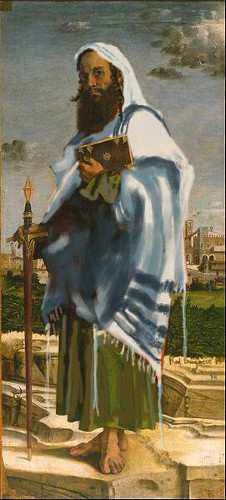
For the nations, Yeshua never came directly. For us, he sent Paul instead (Acts 9).
So what did Paul teach? The answer to that question would fill a book, probably many books, and many books have been written with Paul as their subject, some complementary (Christian) and some with disdain (Jewish). And almost certainly, the vast majority of those books got Paul and how he related to Jewish people, Judaism, and his Gentile pupils all wrong.
Probably one of the very few books that may have gotten Paul right, or at least come as close as we can given the Apostle lived and died nearly two-thousand years ago, was the Nanos and Zetterholm volume Paul Within Judaism (and I still owe Mark Nanos a book review on Amazon).
Don’t think that my returning here to write, even occasionally, means that I think myself worthy of being read. It absolutely doesn’t mean I think myself a teacher. But PL is right. In pulling away from the inevitable strife caused by the presence of a non-Jew (and particularly me) in Jewish space, specifically Messianic Jewish space, I’ve also pulled away from paying much attention to God.
In attempting to hack my 61-year-old body to perform younger at the gym and in more practical physical applications, I’ve used that effort to insulate me from “hacking” my relationship with God, particularly continual repentance and reconciliation.
At this late date in the Jewish High Holidays, there’s no way I can even beg the forgiveness of all those I’ve upset and offended online and in person, but I’ll take this opportunity to humble myself before all of you anyway.
I’m still covered in “filthy rags” as it were. Still in need of a lot of work. I’ve always known that, but the issues over a busted computer (long story) and various other stressors this weekend have brought that realization to the forefront.
I know now that as flawed and imperfect as I am, what kept me moving forward or at least prevented me from moving backward, was writing this blog. Even as I kept falling on my face time after time, each new blog post was my effort to pull myself back up and keep on running the race (with apologies to the writer of Hebrews 12:1-3).
 So I’m telling you that I’m not a better person, at least not better than I was a month, two months, or six months ago. I’ve taken some steps to cull a few of the more negative influences I’ve encountered in the blogosphere and in social media, if for no other reason, than to reduce the level of conflict I experience, but I don’t think I’ve benefited significantly from that as yet.
So where does that leave me?
Non-Jewish disciples of Jesus find their home (this is a generalization, not an absolute statement) in more or less one of two places: Most of them find a home in some sort of Christian church. No surprise there. A significant minority find their home in either an expression of Messianic Judaism or in some version of Hebrew Roots.
None of that helps me.
What’s left?
Well, even if I found myself on a deserted island somewhere thousands of miles from anyone else, there would still be God.
Assuming in a communal and spiritual sense, that’s actually my situation, what’s to be done?
The answer returns me to the Apostle Paul and what he taught. If Jewish avenues of connection aren’t available to me in forging a relationship with God, then Paul certainly must have taught his Gentile students how they could turn to Hashem.
How did they?
Here’s what little I have so far. I put this together a few months ago:
What Did Paul Teach?
What we do/don’t do:
- Gentiles weren’t to be circumcised.
- Gentiles weren’t to convert to Judaism.
- Cornelius prayed at the set times of prayer.
- Cornelius gave charity to the Jewish people.
- Paul preached that the Gentiles owed charity to the poor of Israel.
- Pray for Jerusalem.
 Examples 1 Cor 5:11 and 13. Purge evil from among you and no slander or backbiting.
- Practice repairing the world a little every day.
- Restore Jesus and Paul and their teachings to their original Jewish context.
- Teach the centrality of Israel in the restoration of the world.
Who we are:
- Gentiles can call Abraham their Father (Rom. 4:11).
- [Many of the contributors of the Nanos/Zetterholm volume say that Gentile believers had an “anomalous identity” and “occupied a social and religious no-man’s land”. Gentile identity defies classification.]
- Gentile believers are neither proselytes nor God-fearers.
- Like converts, we make an exclusive commitment to the God of Israel, but unlike converts, we do not take on Jewish ancestral practices (kosher food, shabbat, circumcision, and so on).
- While we retain our native ethnic identities, we no longer worship our native gods.
- Paul saw us as part of Abraham’s seed (Gen. 17:4-5, Gal. 3:29, Rom. 4:13-18), and yet Israel is also Abraham’s seed.
- Nanos says we are not guests nor proselytes but full members alongside the Jews (members in what…the Kingdom of Heaven probably).
All this is pretty disorganized and needs a lots of fleshing out.
While I’ve missed the boat as far as Rosh Hashanah and Yom Kippur are concerned, it’s still not too late to at least get back on the road in time for Sukkot (what most Christians think of as the “Festival of Booths”).
I apologize for involving Jewish online resources, but in a lot of cases, I have no choice since Paul operated on this calendar and, as PL pointed out in the above-quoted statement, even we Gentiles will be operating within such a calendar or observance in Messianic Days.
 Previously, I’ve drawn some ire, both in blog comments and via email, by citing or quoting from specific Messianic Jewish resources that were written for a non-Jewish audience in mind, so I’m going to do my best to avoid mentioning them as I chronicle my journey of return.
That’s regrettable, since a lot of how I understand my relationship with God, Paul, Yeshua, and the centrality of Israel (and not the Church) in national Israel’s redemption and the redemption of the world through her, is from those resources.
But one of my goals for this blog (it always has been actually) is to not promote conflict. Sometimes the only way to avoid conflict is to avoid interacting with some people and groups who, unfortunately, I have a tendency to irritate and provoke (and I apologize and ask forgiveness of all those folks too, but even if they forgive me, repentance and forgiveness don’t automatically mean reconciliation…sometimes, you just can’t go home).
I don’t want “morning meditations” to be like so many other blogs in the online religious space that go out of their way to generate conflict, disagreement, and even raw hostility.
I’m not teaching, declaring, or demanding. I’m just sharing my personal and spiritual experiences (such as they are) day by day (or perhaps more periodically).
What did Paul teach his Gentile disciples and how can I apply (if it’s possible) that to my own life? What can I learn from those few other non-Jews, such as Cornelius, who worshiped God outside of Judaism and within their own non-Jewish households?
Since the Jewish Messiah and becoming his disciple (through the teachings of Paul) is at the core of this exploration, I don’t know that any examples of non-Jews we see in the Tanakh (what Christians call the Old Testament) are relevant or even appropriate.
 One notable example might be Noah, since he preceded any notion of Judaism and was considered “a righteous man, blameless in his time,” and “Noah walked with God” (Genesis 6:9 NASB).
Noah prayed to God, God spoke with Noah, Noah obeyed God, and Noah sacrificed to God, so what he did (apart from building an Ark and gathering a bunch of animals together) isn’t entirely out of the ballpark.
But for the most part, I’ll be spending my time in the Apostolic Scriptures, hoping some vestige of these ancient trails can point me to my way home as well.


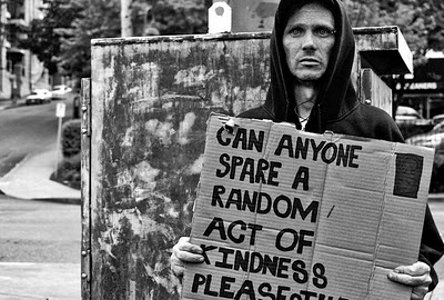 Really, if you can’t figure out what you can do to be a good person and a good servant to people in your family, people in your community, and a good servant to God, you haven’t been paying attention to your faith.
 In Sunday school or some other social gathering, be polite and friendly, but don’t offer any opinions or otherwise shoot your big mouth off (this is one of the reasons I don’t belong in community, because I can’t keep my mouth shut).







 Morning Meditations