Category Archives: Torah Portion

The Torah’s Great Principle

love-one-anotherRabbi Akiva said, “Love your fellow as yourself” is a great principle of the Torah. A similar principle is gleaned from the famous story of a proselyte who wished to convert to Judaism on condition that someone would teach him the entire Torah while standing on one foot. Hillel the Elder accepted his conversion and told him, “That which you hate, do not do to your friend [the negative picture of “love your fellow as yourself”]―that is all the Torah and all the rest is commentary. Go and study it.”

Obviously, the entire Torah is a true, God-given Torah, but Hillel the Elder and Rabbi Akiva teach us that there is room to meditate on the principle that is the Torah’s “great principle”; the signpost that puts us on the right track.

The need for such guiding lights is most necessary when an outsider wishes to approach the infinite sea of Torah and needs an anchor to show him where to begin.

-Rabbi Yitzchak Ginsburgh
“The Torah’s greatest principle”
Wonders From Your Torah

Our Master Yeshua (Jesus) taught something similar.

And he said to him, “You shall love the Lord your God with all your heart and with all your soul and with all your mind. This is the great and first commandment. And a second is like it: You shall love your neighbor as yourself. On these two commandments depend all the Law and the Prophets.”

Matthew 22:37-40

Referencing Rabbi Ginsburgh, I periodically write about non-Jewish people (including me) who are drawn to the larger body of Torah mitzvot and who find they have a desire to live a more “Jewish” lifestyle as a means of holiness. Essentially, there’s nothing wrong with this and indeed, the Torah was created not just for the Jewish people, but for humanity, as it is said:

For out of Zion shall go forth the Torah, and the word of the LORD from Jerusalem.

Micah 4:2

I substituted the word “Torah” for “Law” in the ESV translation for effect, but both terms are correct (although I’d argue that “Torah” is the more correct word to use here).

Again, as we see from Rabbi Ginsburgh’s commentary, the “outsider” (non-Jew or secular Jew) who desires to learn Torah has to start somewhere. Although as Rabbi Ginsburgh states, the entire Torah is true, it’s easy for a beginner (Rabbi Ginsburgh is talking about potential converts to Judaism but I’m applying his statements to the rest of us) to become lost, confused, discouraged or even “seduced” by the complexities of Torah and the vast span of mitzvot. I’ve seen non-Jewish people introduced to the concept of “complete Torah observance” or “obligation” who throw themselves headlong into what they imagine it is to lead a “Torah-submissive life” only to become enamored by “the stuff.”

tzitzit1I call “stuff” all the outward devices, objects, or activities that are typically associated with observant Judaism, such as donning a tallit gadol and tefillin when davening, wearing a tallit katan under one’s shirt daily, wearing a kippah in public daily, lacing their sentences with Hebrew or even Yiddish words, growing a long, furry beard (because they believe God wants this), and so on.

But what does Rabbi Ginsburgh, citing both Hillel the Elder and Rabbi Akiva suggest is the Torah’s “great principle?” What does the Master say is the greatest commandment?

None of those things I just mentioned. What is the anchor for “beginners” in the Torah? “You shall love your neighbor as yourself.”

This concept sheds light on the Jewish conception of holiness. The Hebrew word kedosh , meaning “holy,” implies separation; (See Tanya, ch. 46.) a distinction must be made between the Jewish approach and a secular approach to any particular matter, as is stated at the conclusion of our Torah reading: (Levitcus 20:26.) “You shall be holy unto Me, for I, G-d, am holy, and I have separated you from the nations to be Mine.”

Such a distinction is unnecessary with regard to the ritual dimensions of the Torah and its mitzvos. These are clearly distinct; there is no need for man to do anything further. Instead, the focus of our Torah reading is on concerns shared by all mortals. Thus the reading relates laws involving agriculture, human relations, business, and sexual morality. For it is in these “mundane” areas that the holiness of the Jewish people is expressed.

Judaism does not understand holiness to be synonymous with ascetic abstention. Instead, it demands that a person interact with his environment, and permeate it with holiness. (See Rambam, Mishneh Torah, Hilchos De’os 3:1.)

-Rabbi Eli Touger
“What Does Being Holy Mean?”
Adapted from
Likkutei Sichos, Vol. I, p. 254ff; Vol. XII, p. 91ff;
Sichos Shabbos Parshas Acharei-Kedoshim, 5745
Chabad.org

That might be a little “intense” or at least unfamiliar to most Christians. Here’s another way of saying it.

What good is it, my brothers, if someone says he has faith but does not have works? Can that faith save him? If a brother or sister is poorly clothed and lacking in daily food, and one of you says to them, “Go in peace, be warmed and filled,” without giving them the things needed for the body, what good is that? So also faith by itself, if it does not have works, is dead.

James 2:14-17

A life of faith and holiness cannot be lived apart from actually living life. Holiness is doing not just praying, meditating, studying, and contemplating. Holiness is an action. Go and do.

An emissary is one with his sender. This concept is similar to that of an angel acting as a Divine emissary, when he is actually called by G-d’s name. If this is so with an angel it is certainly true (See Iyar 6.) of the soul; in fact with the soul the quality of this oneness is of a higher order, as explained elsewhere. (See Tamuz 10.)

“Today’s Day”
Thursday, Iyar 8, 23rd day of the omer, 5703
Compiled by the Lubavitcher Rebbe;
Translated by Yitschak Meir Kagan
Chabad.org

Again, the Master taught something similar.

For I have given you an example, that you also should do just as I have done to you. Truly, truly, I say to you, a servant is not greater than his master, nor is a messenger greater than the one who sent him. If you know these things, blessed are you if you do them.

John 13:15-17

boston_marathon_terror_explosionWe are his servants and we are not greater than he is. He gave us an example of what to do by the living of his life and his teachings. He gave us an “anchor” in the Torah as to where we should begin and where we should stay centered: to love God with all of our being, and to love our neighbor (who is really everyone) as ourselves. And just recently, we’ve been reminded that there are opportunities to fulfill the Master’s mitzvot all around us.

The Mighty Rock, Whose deeds are perfect, because all His ways are good. He is a faithful God in Whom there is no iniquity.

Deuteronomy 32:4-5

These very sobering words are often invoked at moments of great personal distress to express our faith and trust in the Divine wisdom and justice.

People who have suffered deep personal losses, such as destruction of their home by fire or the premature death of a loved one, or who have observed the widespread suffering caused by a typhoon or an earthquake, may be shaken in their relationship with God. How could a loving, caring God mete out such enormous suffering?

It is futile to search for logical explanations, and even if there were any, they would accomplish little in relieving the suffering of the victims. This is the time when the true nature of faith emerges, a faith that is beyond logic, that is not subject to understanding.

The kaddish recited by mourners makes no reference to any memorial concept or prayer for the departed. The words of kaddish, “May the name of the Almighty be exalted and sanctified,” are simply a statement of reaffirmation, that in spite of the severe distress one has experienced, one does not deny the sovereignty and absolute justice of God.

Our language may be too poor in words and our thoughts lacking in concepts that can provide comfort when severe distress occurs, but the Jew accepts Divine justice even in the face of enormous pain.

Today I shall…

…reaffirm my trust and faith in the sovereignty and justice of God, even when I see inexplicable suffering.

-Rabbi Abraham J. Twerski
“Growing Each Day, Iyar 8”
Aish.com

Without trust and faith in God, it’s easy to lose faith in humanity and we are unable (or unwilling) to be the Master’s servant in this world and to do his will by loving and helping others in need.

In a commentary on this week’s Torah portion, we learn from the midrash that one of the reasons for the death of Aaron’s sons Nadab and Abihu was that they loved God “too much.” They came too near the Holy One and were consumed. This was a warning to Aaron that no matter how great his love for God was and the desire to draw near the Divine Presence in the Holy of Holies, he must restrain himself.

G-d knew that Aharon’s love for Him was so great that he would always desire to enter the Holy of Holies. However, by doing so, it could cause his soul to leave his body, as happened with his sons. G-d therefore informed told him of the need to keep his soul within his body so that he could fulfill his mission in this world — transforming it into a dwelling place for G-d.

The lesson we can learn from the command to Aharon is that every Jew has the capacity to love G-d, and indeed is commanded to do so, as the verse states: “You shall love your G-d with all your heart, soul and might.” (Devarim 6:5)

peace-of-mind1While midrash may not appeal to you in a literal sense, when viewed metaphorically or as a moral lesson, it teaches that human beings, out of our love for God, can achieve greater heights of holiness, drawing nearer to God, though we can never be “greater than our Master.” Yet as servants, we must always strive to become better than we are.

It’s not easy. God never gets tired, He never gets scared, He never gets discouraged, He never wants to “throw in the towel,” but we poor, pathetic human beings experience all those things.

People think that if they are not well, they must sacrifice all meaning in their life in order to take care of their physical situation.

In fact, the opposite is true: You cannot separate the healing of the body from the healing of the soul. As you treat the body, you must also increase in nourishing the soul.

-Rabbi Tzvi Freeman
“Soul Healing”
Based on letters and talks of the Rebbe, Rabbi M. M. Schneerson
Chabad.org

Just as we cannot separate healing of the body from healing of the soul, we cannot separate our personal need for healing from the needs of those around us. In fact, by acting for the benefit of others and serving their needs, we may discover that our own wounds are also being healed.

I have been guilty on many occasions of wanting to withdraw from humanity and particularly from the community of faith when it has hurt too much. God has shown me (again and again and again) that I’ve been going in the wrong direction.

When in doubt, I must return to the portion of Torah that is for all of us, Jew and Gentile alike, the anchor, the center, the love of God and humanity. Without that, nothing else we do means anything.

160 days.
Shemini: Chesed to the Stranger

acts-of-kindnessThe following you shall abominate among the birds — they shall not be eaten, they are an abomination: the eagle, the vulture, and the black vulture; the stork; herons of every variety; the hoopoe, and the bat.

Leviticus 11:13,19 (JPS Tanakh)

The Talmud (Chulin 63a) states that the Hebrew name for the white stork is chasida, because it acts with kindness, chesed, towards its friends.

The Ramban, Moshe Nachmanides, a great Torah scholar, writes that the birds enumerated in this portion are forbidden for consumption because of their cruelty. Why, then, should the stork be considered “detestable” and an “abomination”? It should be permissible since it does kindness!

The Chidushai Ha-Rim answers: The stork does favors only for its friends. Since it doesn’t do chesed for strangers, it is considered not kosher. Chesed, kindness, must be done for everyone, not only one’s friends!

-Rabbi Kalman Packouz
“Shabbat Shalom Weekly”
Commentary on Torah Portion Shemini
Aish.com

It seems strange that we could learn lessons about treating others with charity and lovingkindness from the Laws of Kashrut, but the esteemed sages have illustrated this passage thus. Perhaps you would like something more familiar.

Love your fellow as yourself: I am the Lord.

Leviticus 19:18 (JPS Tanakh)

And a second is like it: You shall love your neighbor as yourself.

Matthew 22:39

But as the famous question goes, who is our neighbor?

The Torah teaches us, “Love your fellow human being as yourself” (Leviticus 19:18). It is often translated as “Love your neighbor as yourself.” However, Rabbi Mordechai Gifter taught that while the words “neighbor” and “fellow human being” are often used synonymously, in everyday speech the word “neighbor” is used to denote someone living or located nearby, while the obligation of this commandment includes a complete stranger who lives far away.

The general rule for this commandment is that anything you would want others to do for you, you should do for others (Rambam, Hilchos Aivel 14:1). The great Hillel once taught a convert, “That which is hateful to you, do not do unto others. That is the basis of the Torah.” (Shabbos 31a). The Baal Shem Tov used to say, “Love your fellow man as yourself — though you have many faults, nevertheless, you still love yourself. That is how you should feel toward your friend. Despite his faults, love him.”

-Rabbi Packouz

Not just your neighbor who is close to you, and not just your fellow who is like you, but even people who are far away and who you do not know…even people you may not like.

“You have heard that it was said, ‘You shall love your neighbor and hate your enemy.’ But I say to you, Love your enemies and pray for those who persecute you, so that you may be sons of your Father who is in heaven. For he makes his sun rise on the evil and on the good, and sends rain on the just and on the unjust. For if you love those who love you, what reward do you have? Do not even the tax collectors do the same? And if you greet only your brothers, what more are you doing than others? Do not even the Gentiles do the same? You therefore must be perfect, as your heavenly Father is perfect.

Matthew 5:43-48

What is Chesed? What is truly giving kindness if not showing love and concern for another human being, even when they’re a stranger, or even when there has been bitterness and enmity between you?

One thing I can attest for is his integrity. He was one of the few who called me after my last surgery to find how I am despite our bitter feud. None of you did. Give the guy a break, we must not take love out of the equation.

Chesed is calling up a sick person and showing compassion, even though at all other times you bitterly argue with that person. Chesed is a love note placed in a bottle and tossed into the sea for anyone who may need love to find, no matter how far away they may be. Chesed is a can of soup donated to a food bank for any hungry person to eat. Chesed is smiling at a stranger you pass on the street.

More about chesed on The Transcendent Path.

Good Shabbos.

Shabbat Chol HaMoed Pesach: Mercy

hosea-and-gomerSo Moses cut two tablets of stone like the first. And he rose early in the morning and went up on Mount Sinai, as the Lord had commanded him, and took in his hand two tablets of stone. The Lord descended in the cloud and stood with him there, and proclaimed the name of the Lord. The Lord passed before him and proclaimed, “The Lord, the Lord, a God merciful and gracious, slow to anger, and abounding in steadfast love and faithfulness, keeping steadfast love for thousands, forgiving iniquity and transgression and sin, but who will by no means clear the guilty, visiting the iniquity of the fathers on the children and the children’s children, to the third and the fourth generation.” And Moses quickly bowed his head toward the earth and worshiped. And he said, “If now I have found favor in your sight, O Lord, please let the Lord go in the midst of us, for it is a stiff-necked people, and pardon our iniquity and our sin, and take us for your inheritance.”

Exodus 34:4-9

Moses pleads with the Almighty not to send an angel in His place, but to accompany the Jewish people Himself through the trek in the wilderness even though they had sinned with the Golden Calf. Moses asks the Almighty to reveal how He interacts with the universe (it is a mystical interchange). Then the Almighty commands Moses to carve two stone tablets and to ascend Mt. Sinai so that He can engrave the replacement tablets for the set that Moses broke at the transgression with the Golden Calf.

The Almighty reveals his Thirteen Attributes of Mercy (Exodus 34:5) which we repeat on Yom Kippur and other times of seeking the Almighty’s mercy. Moses asks the Almighty to forgive the Jewish people. The Almighty renews the Covenant with the Jewish people commanding us not to enter into a covenant with the inhabitants of the land, not make molten gods, to observe the Festival of Matzos, laws of first born issue, to keep the Shabbat, celebrate Shavuot and Sukkot and ends with assorted laws of offerings.

-Rabbi Kalman Packouz
“Shabbat Shalom Weekly”
Commentary on Shabbat Chol HaMoed Pesach
Aish.com

Based on yesterday’s extra meditation, I’m having second thoughts about God’s attribute of mercy. I realize that I’m still caught up in the dynamic interplay between the actual nature of God and what we draw from the Bible about Him. We can’t know God fully since He’s an infinite being. We can (sort of) know the Bible, since it is a finite document, though as I repeatedly discover, it’s a tough book to know.

There is so much that is beautiful in the Bible, so much mercy, so much grandeur, so much compassion from our infinite God.

And then there are some pretty difficult things to try to understand about God, at least based on how we understand the Bible.

But I should talk.

I keep trying to convince Christians that God didn’t cancel Torah observance for the Jewish people just because of Jesus. It’s an “unfortunate truth” of the Bible (well, not unfortunate for me) for many Christians, once they see it. So why am I complaining about Pastor Randy pointing to another “unfortunate truth” about the Bible that I don’t want to face. He doesn’t want to accept that Jewish believers in Jesus still wanted to keep the Torah and were still obligated to keep the Torah, even though the Gentile disciples had no such obligation. I don’t want to accept that God chooses which people are going to be saved and which ones aren’t going to be saved from before they were born.

shattered-glassYou either draw the winning lottery ticket and get saved or you don’t draw it and well…tough luck on you.

I have to write these “morning meditations” one day early so you’ll have them when you wake up each day. That means what you are reading for Friday, I’m writing on Thursday, when I’m still stinging about the whole “Divine Election” thing. I don’t really have a plan for this blog post, I just need to have something ready for Friday and I still need to let off steam. But I’m feeling a little shattered now and I need to hear something from God.

There will come a time, very soon, when we will be shown miracles so great, they will make the Ten Plagues and the splitting of the Red Sea appear as ordinary as nature itself.

So great, no mind can begin to fathom them;
so powerful, they will transform the very fabric of our world, elevating it in a way that the wonders of the Exodus never did.

For then, our eyes will be opened and granted the power to see the greatest of miracles: Those miracles that occur to us now, beneath our very noses, every day.

-Rabbi Tzvi Freeman
“Greater Miracles”
Based on letters and talks of the Rebbe
Rabbi M. M. Schneerson
Chabad.org

Before difficulties arise, think in advance about what could go wrong, and then try to work out potential solutions. By devising a variety of solutions, you will be prepared to cope in a productive manner with whatever contingency may arise.

Today, think of one potential difficulty that might arise in your life. Brainstorm with yourself and think of five possible solutions.

-Rabbi Zelig Pliskin
“Daily Lift #772, Plan for Difficulties”
Aish.com

The problem is, I never saw this one coming. I was completely blindsided. So here I sit, munching on a bit of matzoh and cream cheese (foregoing the morning bagel) and pondering God’s “mercy.”

Or man’s.

I have to remember that doctrine is what human beings come up with when they read the Bible (or any holy book, I suppose) and codify beliefs into a body of teachings or instructions that are then meant to be consumed and absorbed by the “faithful.”

Often doctrine specifically connotes a corpus of religious dogma as it is promulgated by a church, but not necessarily: doctrine is also used to refer to a principle of law, in the common law traditions, established through a history of past decisions, such as the doctrine of self-defense, or the principle of fair use, or the more narrowly applicable first-sale doctrine. In some organizations, doctrine is simply defined as “that which is taught”, in other words the basis for institutional teaching of its personnel internal ways of doing business.

Wikipedia

A little over a week ago, I said that the problem with religious people is that they all want you to believe what they believe. I guess that’s the problem with me too, since I keep sharing my point of view on both ancient and modern Jewish disciples of the Messiah, and how I believe that a Jew having faith in Jesus is not incompatible with a life of Torah observance for that Jewish person.

Yeah, I guess I can’t complain…but I’m going to, anyway.

Passover is supposed to be the commemoration of coming out of slavery and into redemption and freedom thanks to God. For a Christian, we can see a picture of our coming out of slavery to sin and into redemption and freedom by faith through the grace of Jesus Christ. I just need that to include all human beings everywhere, not that everyone will be saved, but everyone needs to have a chance. Otherwise, why did God create 99 percent of the human race?

But do not overlook this one fact, beloved, that with the Lord one day is as a thousand years, and a thousand years as one day. The Lord is not slow to fulfill his promise as some count slowness, but is patient toward you, not wishing that any should perish, but that all should reach repentance.

2 Peter 3:8-9

HopeThis gives me some small comfort. God, according to Peter, doesn’t desire that any should perish, but that all should reach repentance.

God desires that for us, but some small part of it has to be up to us. A free gift is only a gift if it is accepted. God holds a package calls “salvation” in his hand and offers it to us. The package is wrapped in pretty paper and has an attractive bow, but we can’t see inside the box. Some of us accept it and maybe more don’t. But everyone gets the opportunity to reach out, touch the hand of God, and take the gift.

If God only offers the package to those He knows will accept it and ignores the others, what does that make God?

I need to end this on a hopeful up note, not only for your sake, but for mine. Here goes.

Therefore, beloved, since you are waiting for these, be diligent to be found by him without spot or blemish, and at peace. And count the patience of our Lord as salvation, just as our beloved brother Paul also wrote to you according to the wisdom given him, as he does in all his letters when he speaks in them of these matters. There are some things in them that are hard to understand, which the ignorant and unstable twist to their own destruction, as they do the other Scriptures. You therefore, beloved, knowing this beforehand, take care that you are not carried away with the error of lawless people and lose your own stability. But grow in the grace and knowledge of our Lord and Savior Jesus Christ. To him be the glory both now and to the day of eternity. Amen.

2 Peter 3:14-18

But then, someone commented on yesterday’s “extra meditation” with this:

Does not Scripture teach that one’s final salvation depends on the state of the soul at death? As Yeshua himself tells us, “He who endures to the end will be saved” (Matt. 24:13; cf. 25:31–46). One who dies in the state of friendship with God (the state of grace) will go to heaven. The one who dies in a state of enmity and rebellion against God (the state of sin) will go to hell.

Did not Yeshua die on the cross freely for our sins….. and has He not returned to heaven to appear before God on our behalf? Has He, Himself, not provided for our salvation? (And while that does not mean there is no process by which this is applied to us as individuals, surely, we do have assurances.) And yet, while we, like Adam and Eve, can become unreconciled with God and need to come back and be reconciled again with HIM … is that not ALWAYS an option?

Maybe I’m not crazy after all for believing that God does love everyone and is not willing for anyone to be condemned without having a fair chance to get to know Him.

God please have more mercy than we think you do.

Good Shabbos.

Tzav: Ashes at Dawn

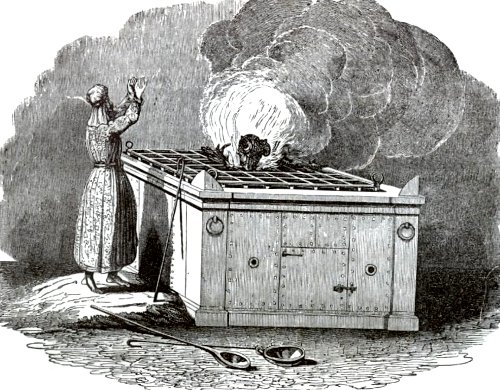
burnt-offering-altarHe shall then take off his vestments and put on other vestments, and carry the ashes outside the camp to a clean place.

Leviticus 6:4 (JPS Tanakh)

What lesson do we learn from the ceremonious taking out the ashes from the altar each morning?

Rabbi Samson Raphael Hirsch comments that the taking out of the ashes that remained on the altar from the previous day expresses the thought that with each new day, the Torah mission must be accomplished afresh, as if nothing had yet been accomplished. Every new day calls us to our mission with new devotion and sacrifice. The thought of what has already been accomplished can be the death of that which is still to be accomplished. Woe unto him who with smug self-complacency thinks he can rest on his laurels, on what he has already achieved, and who does not meet the task of every fresh day with full devotion as if it were the first day of his life’s work!

“Carry forth the ashes out of the camp.” Every trace of yesterday’s sacrifice is to be removed from the hearth on the Altar, so that the service of the new day can be started on completely fresh ground. Given these considerations, we can understand the law that prescribes the wearing of worn-out garments when one is occupied with the achievements of the previous day. The past is not to be forgotten. However, it is to be retired to the background, and is not to invest us with pride before the fresh task to which each new day calls us. (Rabbi Hirsch’s commentary)

-Rabbi Kalman Packouz
“Shabbat Shalom Weekly”
Commentary on Torah Portion Tzav
Aish.com

I have been accused of being a very simplistic, very lyrical player, and that’s okay. That just comes from the blues, which is my background. But every day you wake up and transcend. You can’t ever rest on your laurels.

Carlos Santana

I could probably find dozens of similar quotes to illustrate this single point. But it’s a difficult point. Rabbi Packouz uses this lesson to tell us that our past successes do not transfer into the present. No matter how well you’ve done in anything, even serving God, you are only as good as you are today. Serving God well yesterday and then not serving God today just means you’re not serving God. Your “laurels” are already wilting, so to speak.

Carlos Santana says that “every day you wake up and transcend.” The Rebbe, Rabbi M. M. Schneerson said this:

When you awake in the morning, learn something to inspire you and mediate upon it, then plunge forward full of light with which to illuminate the darkness.

Each day is a new opportunity to live, to serve God, to serve other people. Each day is a new opportunity to discover something new and exciting about yourself. It is why observant Jews recite the following blessing as their very first blessing to God, even before getting out of bed in the morning.

“I gratefully thank You, living and existing King
for restoring my soul to me with compassion.
Abundant is your faithfulness.”

But the sentiment works in another direction as well.

Success isn’t permanent and failure isn’t fatal.

-Mike Ditka
US football player and coach

failureI’ve noticed a good many people working in sales have that particular quote jotted on a sticky note or written on a white board in or around their work area. Success isn’t permanent. Rabbi Packouz and Carlos Santana both agree on that. But failure isn’t fatal, either. It only feels that way sometimes.

We were told to transcend limitations — but that doesn’t mean just jumping into the air with no idea of where you’re going to land!

-Rabbi Tzvi Freeman
Based on letters and talks of the Rebbe
Rabbi M. M. Schneerson
Said to one who fell into enormous debt trying to achieve miracles
Chabad.org

Adding all this up, you might say, success isn’t permanent, serve God today as well as yesterday. Failure isn’t fatal, but don’t do anything stupid that will likely result in you failing God.

And Jesus answered him, “It is said, ‘You shall not put the Lord your God to the test.’”

Luke 4:12 (ESV)

You may be eager to serve God but good intentions aside, eagerness is not enough. In fact misdirected, eagerness can get you in a lot of trouble. One horrible modern example is the “eagerness” of the Westboro Baptist Church which results only in demonstrations of bigotry and increasing the grief of the families of our fallen military personnel who gave their lives in the service of our nation.

Here’s another example of misguided eagerness and zealousness.

And there arose on that day a great persecution against the church in Jerusalem, and they were all scattered throughout the regions of Judea and Samaria, except the apostles. Devout men buried Stephen and made great lamentation over him. But Saul was ravaging the church, and entering house after house, he dragged off men and women and committed them to prison.

But Saul, still breathing threats and murder against the disciples of the Lord, went to the high priest and asked him for letters to the synagogues at Damascus, so that if he found any belonging to the Way, men or women, he might bring them bound to Jerusalem. Now as he went on his way, he approached Damascus, and suddenly a light from heaven shone around him. And falling to the ground he heard a voice saying to him, “Saul, Saul, why are you persecuting me?” And he said, “Who are you, Lord?” And he said, “I am Jesus, whom you are persecuting.

Acts 8:1-3, 9:1-5 (ESV)

Fortunately, Paul’s zealousness took a turn for the better, but he had to encounter the Master in a dramatic and startling way and be robbed of his sight before Paul could begin to see that he needed to travel in a different direction. Before that, he jumped into the air but didn’t realize where he was going to land.

Serving God is a partnership. It’s not just what you do and it’s not just what God does. We know we have a God who neither slumbers or sleeps (Psalm 121:4) and He is at work continually in the lives of human beings. But He requires that we work each day in His service, and that our work be considered and mindful, not random and reckless. This is why we not only read the Bible but study it. This is why we seek out fellowship with sober and mindful believers. This is why we pray for guidance and direction from the Holy Spirit. This is why we strive to do His will rather than our will.

“Father, if you are willing, remove this cup from me. Nevertheless, not my will, but yours, be done.”

Luke 22:42 (ESV)

Landron Paule_Histoire Sainte_Première Alliance_Droguet Ardant_Limoges 1991We don’t often think about the Master having a choice as to being crucified. It’s an uncomfortable thought that Jesus could have just said “no,” and escaped that night as he prayed in Gethsemane rather than surrender to God’s will and death.

But he had a choice. He could have said “no.” Instead, he said, “not my will, but yours, be done.”

Jesus had served God and human beings flawlessly for three years. He was without sin, so for his entire lifetime, we have to believe he never sinned. But it wasn’t about what he did yesterday. It was always about what he was going to do next with each coming dawn. So it should be with us.

Soon, Christians and believing Jews will mourn the loss of our Lamb and rejoice in the resurrection of our King. He teaches us that there are days when we dine on ashes, but then, the ashes of the offering are removed. Then it is time for us to rise from those ashes at dawn and to serve God anew. Some days we feel as if we have failed and have been burned out. But there is a new day coming, like the resurrection from the dead. If we fail to serve God today, it is as if we are still in the tomb. If we resolve to approach the service of the King as the dawning light of a new day, then we rise with him and in some small measure, share in his glory.

Remove the ashes of yesterday’s service for it is done. The sun has set and darkness is here. Then rise from the cold and dead ash and fly up like sparks into the flaming dawn. Today is bright and clear. It is life from the dead.

Good Shabbos.

Vayikra: Drawing Closer

eph-2-10-potter-clayThe Lord called to Moses and spoke to him from the Tent of Meeting, saying: Speak to the Israelite people, and say to them: When any of you presents an offering of cattle to the Lord, he shall choose his offering from the herd or from the flock.

Leviticus 1:1-2 (JPS Tanakh)

The book of Vayikra (Leviticus) primarily deals with what are commonly called “sacrifices” or “offerings.” According to Rabbi Samson Raphael Hirsch: a “sacrifice” implies giving up something that is of value to oneself for the benefit of another. An “offering” implies a gift which satisfies the receiver. The Almighty does not need our gifts. He has no needs or desires. The Hebrew word is korban, which is best translated as a means of bringing oneself into a closer relationship with the Almighty. The offering of korbanot was only for our benefit to come close to the Almighty.

-Rabbi Kalman Packouz
“Shabbat Shalom Weekly”
Commentary on Torah Portion Vayikra
Aish.com

Leviticus is one of the books of the Bible that many Christians can’t stand. It’s so boring. “Anyway,” we say to ourselves, “aren’t we done with all of those icky, bloody sacrifices?”

According to blogger and author Derek Leman, the sacrifices teach us a good many things about Jesus or Yeshua Our Atonement, as he titles his new book. No, I’ve not laid eyes on it yet but at some point, I’ll probably need to get a hold of a copy so I can review it. In the meantime, I’ll just have to offer what meager insights I have on this week’s Torah Portion and what it means for Christians.

The clue is in what Rabbi Packouz says about the nature of sacrifices or “korbanot” which has the meaning not so much of slaying an animal to appease God, but to bring an offering to God in order to draw closer to Him. Where else do we see this imagery?

I appeal to you therefore, brothers, by the mercies of God, to present your bodies as a living sacrifice, holy and acceptable to God, which is your spiritual worship. Do not be conformed to this world, but be transformed by the renewal of your mind, that by testing you may discern what is the will of God, what is good and acceptable and perfect.

Romans 12:1-2 (ESV)

As you come to him, a living stone rejected by men but in the sight of God chosen and precious, you yourselves like living stones are being built up as a spiritual house, to be a holy priesthood, to offer spiritual sacrifices acceptable to God through Jesus Christ.

1 Peter 2:4-5 (ESV)

Paul calls us to be living sacrifices and Peter says to offer God spiritual sacrifices. Obviously, in neither case are they suggesting that we bring animal sacrifices to the Temple or to offer (gulp) our own bodies as physical sacrifices on the pyre, though as I once mentioned, every soul can be considered to be on the altar of God.

Peasants-Carrying-Straw-MontfoucaultWhen we connect our lives to making a “sacrifice for God,” we usually think of depriving ourselves of something, doing without, even suffering pain and torture. I can’t say that’s not what God will ask of us. After all, in China and elsewhere in the world, Brother Yun and many others like him have suffered greatly and sacrificed much for the sake of the gospel of Jesus Christ.

But regardless of what God may ask of you or me, whatever it is, it’s not a matter of what we are doing without but what immeasurable treasures we gain, the greatest of which is the drawing closer to God.

Sometimes it’s not a matter of waiting around to see what God will ask. Sometimes it’s a matter of looking around and seeing what needs to be done.

Rabbi Moshe Leib of Sassov once came to the marketplace in Yaroslav. He was passing among the vendors, checking the quality of the straw and hay for sale, when he met his friend Rabbi Shimon of Yaroslav.

“Rebbe, what are you doing here?” R. Shimon asked in surprise.

“Leave out my ‘rebbe’ and your ‘rebbe,’ and come with me to carry a bale of hay to a poor widow who had no hay or straw upon which to lay her broken body,” the Sassover replied pungently.

The two holy leaders went together, hauling a bale of hay on their shoulders. Astonished bystanders stared in wonder and moved aside to make room for them to pass.

As they went, Rabbi Moshe Leib remarked, “Were the Holy Temple standing today, we would be bringing sacrifices and libations. Now we bring straw, and it is as though we have all the kavanot (spiritual intentions) that come with offering the minchah sacrifice.”

Rabbi Moshe Leib of Sassov’s father, R. Yaakov, would take a job before Passover grinding wheat at the mill—not for himself, though he was also a poor man, but for a widow and orphan who lived in his neighborhood. And he did this despite his great and abiding love for the Torah, which he learned constantly.

Moshe Leib, his son, followed in his father’s footsteps. Despite his greatness in Torah, he did not worry about his honor when it came to performing acts of kindness for his fellow Jew with his own hands, even if they were beneath his status in the eyes of others.

-Adapted by Yerachmiel Tilles
“In Place of a Temple Offering”
from Stories My Grandfather Told Me
quoted from Chabad.org

practicing_loveWe are the closest to God when we are the closest to other human beings, especially those who have needs far greater than our own. Here we see that two men, two Rebbes who normally did not carry their own straw much less carry straw for a poor widow drew closer to God by looking around, seeing a need, and responding unreservedly. Or as the Master taught:

The greatest among you shall be your servant. Whoever exalts himself will be humbled, and whoever humbles himself will be exalted.

Matthew 23:11-12 (ESV)

Drawing closer to God is inconsistent with claiming self-righteousness, self-exaltation, and self-privilege. Servitude, humility, kindness, and a spirit willing to help with no expectation of return draws Creator and creation into close proximity. Seeking who we are in God brings us closer to God. Seeking who and what somebody else is in God as if it were our own will only bring trouble.

This is the way of Torah: eat bread with salt, drink water by measure, and sleep on the earth.

-Ethics of the Fathers 6:4

Does observance of Torah require living a life of poverty and depriving ourselves of all the niceties of the world.

Certainly not. The Talmud is elaborating upon another Talmudic statement: “Who is wealthy? One who is content with his portion” (Ethics of the Fathers 4:1).

People who can be happy with the basics of life – food, clothing, and shelter – can truly enjoy the luxuries of life, because they can be happy even without them. Those whose happiness depends upon having luxuries are likely to be perennially dissatisfied, in constant need of more, and consequently unhappy, even if they have everything they desire.

A wise man once observed a display of various items in a store window. “I never knew there were so many things I can get along without,” he said.

If bread and water can satisfy us, then we can enjoy a steak. If we are not satisfied unless we have caviar, we will discover that even caviar is not enough.

Today I shall…

…try to be content with the essentials of life and consider everything else as optional.

-Rabbi Abraham J. Twerski
“Growing Each Day, Nisan 2”
Aish.com

open-your-handAs Rabbi Twerski says, this isn’t an invitation to pursue self-deprivation, to give all our belongings to the poor, and then move to India to work with lepers. It’s not even an invitation to abandon motivation and striving to better ourselves, our incomes, and our positions in life. It is, however, an invitation to consider that after we’ve done all we can in taking care of ourselves, our families, and our neighbors, to look around, take stock of our environment, and to realize that we should be satisfied with the gifts of God’s providence. It is from those gifts that we give back to others and give back to God, for everything belongs to Him anyway, and who we are and what we have only exists so that we may serve Him.

And by serving God and serving others, we serve ourselves, for what we then achieve is union and belonging and closeness to who and where we came from in the first place.

Good Shabbos.

Ki Tisa: The Doors of the Temple

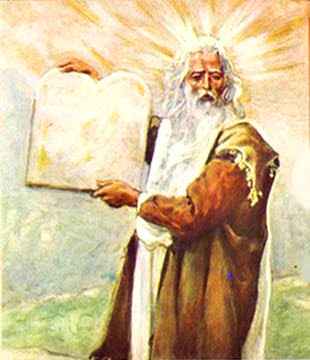
moses-and-the-tabletsFraming the epic events of this week’s sedra are two objects—the two sets of tablets, the first given before, the second after, the sin of the golden calf. Of the first, we read:

The tablets were the work of G‑d; the writing was the writing of G‑d, engraved on the tablets.

These were perhaps the holiest objects in history: from beginning to end, the work of G‑d. Yet within hours they lay shattered, broken by Moses when he saw the calf and the Israelites dancing around it.

The second tablets, brought down by Moses on the tenth of Tishri, were the result of his prolonged plea to G‑d to forgive the people. This is the historic event that lies behind Yom Kippur (the tenth of Tishri), the day marked in perpetuity as a time of favor, forgiveness and reconciliation between G‑d and the Jewish people. The second tablets were different in one respect. They were not wholly the work of G‑d:

Carve out two stone tablets like the first ones, and I will write on them the words that were on the first tablets, which you broke.

Hence the paradox: the first tablets, made by G‑d, did not remain intact. The second tablets, the joint work of G‑d and Moses, did.

-Rabbi Jonathan Sacks
“Two Types of Religious Encounter”
Commentary on Torah Portion Ki Tisa
Chabad.org

I don’t know if this seems so mysterious to me, even if I hadn’t read the rest of Rabbi Sacks’ article. I’ve always imagined that many of the acts of God were really committed through a “partnership” between Him and humanity. Certainly (in my opinion) the Bible is less of a document dictated by God into the ears of its passive writers and more of God stirring the spirit within each of the authors, allowing those people to pour out their witness, their drive, their passion onto the rest of us. God didn’t tell Paul word for word what to put in his letters, nor do I suspect that He personally crafted the Psalms or the Proverbs. Humanity must have a stake in what is holy or we can’t be part of it at all.

Hence Moses and God at Sinai with the tablets.

Hence Liu Zhenying, also known as Brother Yun, in China.

My mother had never learned to read or write, but she became the first preacher in our village. She led a small church in our house. Although my mum couldn’t remember much of God’s Word, she always exhorted us to focus on Jesus. As we cried out to him, Jesus helped us in his great mercy. As I look back on those early days, I’m amazed at how God used my mother despite her illiteracy and ignorance. The direction of her heart was totally surrendered to Jesus. Some of today’s great house church leaders in China first met the Lord through my mother’s ministry.

At first, I didn’t really know who Jesus was, but I’d seen him heal my father and liberate our family. I confidently committed myself to the God who had healed my father and saved us. During that time I frequently asked my mother who Jesus truly was. She told me, “Jesus is the Son of God who died on the cross for us, taking our sins and sicknesses. He recorded all his teachings in the Bible.”

I asked if there were any words of Jesus left that I could read for myself. She replied, “No. All his words are gone. There is nothing left of his teaching.” This was during the Cultural Revolution when Bibles could not be found.

-Brother Yun (with Paul Hattaway)
Chapter 2: A Hunger Fulfilled, pg 26
The Heavenly Man: The Remarkable True Story of Chinese Christian Brother Yun

brother-yunIt seems as if God leaves “gaps” in his plan for humanity that only human beings can fill. There would be no stone tablets without Moses, and there would not have been many of “today’s great house church leaders in China” without Brother Yun’s mother. Brother Yun first came to faith at the age of 16 in 1974. As mentioned above, this was during the Communist “Cultural Revolution” and Christianity was illegal in China. If a person were found to be a Christian and particularly to possess a Bible (they were almost non-existent in China in the 1970s), the Bible would be burned and the person imprisoned and tortured, the Government demanding that the Christian renounce his faith. Often prisoners died under torture or through some other means while in captivity. Nevertheless there were courageous souls in China, including in impoverished Henan Province, who knowing next to nothing of who Jesus is and anything that was written in the Bible, still believed, and prayed, and had faith.

I’ve only just started this book, but as I tore into the opening pages, I couldn’t help but be reminded of the early churches that Paul had started and nurtured. In one sense, having visits from Paul and reading his letters for support, the former pagan believers and God-fearers turned disciples seem much better off than 16-year-old Liu Zhenying and his family. His mother had come to faith as a young woman thanks to Christian missionaries, but this was before the Communists came to power. The Christian missionaries…all Christian missionaries had either been put in prison or forced out of China by 1950, so whatever faith and learning Brother Yun’s mother possessed, atrophied and finally died…or almost.

Still the “early church” in the first century may not have experienced too much more of an advantage than the church in China in the mid-1970s. If there was a Jewish synagogue in the community that welcomed or at least tolerated the Gentile disciples of “the Way,” they could sit and hear the Torah and the Prophets being read and taught, daven the traditional prayers, and share some fellowship with the Jewish community. If not, such as with Lydia and the devout women in Philippi (see Acts 16:11-15), the Gentile believers would have to meet together without such support or encouragement and carry on as best they could. Full knowledge of the scriptures would probably not be available, and worship of God would be a matter of what could be remembered from the synagogue. But worship would be much more about the faith and endurance each of the worshipers could summon by the grace and Spirit of God.

God and man in partnership, meeting somewhere in between life, death, and infinity, bringing the Kingdom of Heaven a little bit closer to earth one day at a time.

The Jewish mystics distinguished between two types of divine-human encounter. They called them it’aruta de-l’eyla and it’aruta de-l’tata, respectively “an awakening from above” and “an awakening from below.” The first is initiated by G‑d, the second by mankind. An “awakening from above” is spectacular, supernatural, an event that bursts through the chains of causality that at other times bind the natural world. An “awakening from below” has no such grandeur. It is a gesture that is human, all too human.

-Rabbi Sacks

On 1 September 1901, a large ship docked in Shanghai Port. A young single lady from Norway walked off the gangplank onto Chinese soil for the first time. Marie Morsen was one of a new wave of missionaries who, inspired by the martyrdoms of the previous year, had dedicated themselves to full-time missionary service in China.

Monsen stayed in China for more than thirty years. For a time she lived in my county, Nanyang, where she encouraged and trained a small group of Chinese believers that had sprung up.

Marie Monsen was different from most other missionaries. She didn’t seem to be too concerned with making a good impression on the Chinese church leaders. She often told them, “You are all hypocrites! You confess Jesus Christ with your lips while your hearts are not fully committed to him! Repent before it is too late to escape God’s judgment!” She brought fire from the altar of God.

-Yun/Hattaway, pg 19

christian-devotionI’ve spent a good deal of time on my blog lately talking about Jewish identity, Torah obligation, healing the rift between the different shredded bits of flesh that, if put back together, would become the body of Christ, but sometimes it’s just good to “get back to basics.” What if you didn’t know what you know? What if you had never even seen the Bible? What if you only knew just little bits and pieces about who Jesus is and what he’s supposed to mean in your life…and yet you still possessed a dynamic, consuming, passionate faith that could lead you anywhere God called you to go?

So far, that’s what I’m finding in Brother Yun’s book. Maybe that’s what was taking place in the lives of many of the former pagan Gentiles who had come to faith but who, unlike the God-fearing Gentiles, had never spent much time in a synagogue, never seen a Torah scroll, and who had only bits and pieces of information about the foreign “Messiah” who died, not just for the Jews, but for the Greeks, the Romans, and everyone else in the world.

Brother Yun’s story also reminded me of another prisoner.

“[A]fter all of these pressures, after all of the nails they have pressed against my hands and feet, they are only waiting for one thing…for me to deny Christ.”

Pastor Saeed Abedini
from a letter he wrote as a prisoner in Iran

People are put in prison for their faith and we believers on the blogosphere argue about theological minutiae. Men and women are beaten and tortured just because they’re Christians, and you and I complain at each other about whether or not a Gentile Christian should wear a kippah or pray with a siddur. What we consider “problems” and what we “whine” about on our blogs is nothing. There are real men and women of faith out there who know what it is to encounter God who really don’t care if they get a Shabbat rest as long as they are called to serve the Lord.

I’m not saying that many of the topics of our various debates are not worth the zeros and ones they’re printed with on the web, but I am saying that we tend to take those topics (and ourselves) way too seriously. Rabbi Sacks says:

An “awakening from above” may change nature, but it does not in and of itself change human nature. In it, no human effort has been expended. Those to whom it happens are passive. While it lasts, it is overwhelming; but only while it lasts. Thereafter, people revert to what they were. An “awakening from below,” by contrast, leaves a permanent mark.

temple-prayersEven if God chooses to “awaken us from above,” it probably wouldn’t last. I suspect that’s why we don’t see grand and astonishing miracles performed right before our amazed eyes. Miracles wouldn’t matter. In a day or a week, we’d be complaining about the same old stuff again. Only when we are open to being “awakened from below,” when we become willing partners with God, even a God we know almost nothing about, will we see miracles that will make a difference within us and more…miracles that will make a difference in the world. Am I being too dramatic?

About a week and a half ago, a friend of mine gave me Brother Yun’s book as a gift. In the western countries, we tend to take our faith for granted. We don’t have to fight for it. We’re not persecuted. Going to church isn’t a crime punishable by being sentenced to prison. Having a Bible and reading it in public won’t get us dragged off of the streets by the police and tortured in some government office.

God could accomplish everything He wants to do all by Himself. He needs nothing from us. But if He did it that way, we would have no ownership of Him, His plan, and His purpose in our lives. He acts only for our own sake, not for His. But we too must act, for a passive faith in a vain one. It is said that Messiah will build every part of the next Temple in Holy Jerusalem and construct it…all but the doors. It is said that one who puts up the doors of a house, even if he has built no other part of it, becomes owner of the house. We are expected to pull our weight, to take our part, to help repair our broken world. We are also expected to participate and be involved in what God is building, in raising David’s fallen sukkah.

We will put the doors on the Temple, and then it will be a house of prayer for all the peoples. If we didn’t, it would be God’s house, but we would be strangers in it. We are not called to be strangers, but sons and daughters of the Most High.

Everything can be done with joy. Even remorse can be with joy.

-Rabbi Tzvi Freeman
“Everything!”
Based on letters and talks of the Rebbe
Rabbi M. M. Schneerson
Chabad.org

Good Shabbos.