Category Archives: Uncategorized

Learning the Traditions of Our Fathers

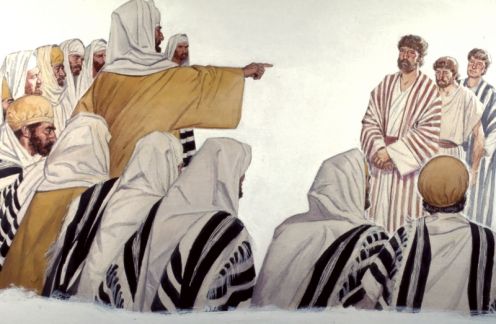
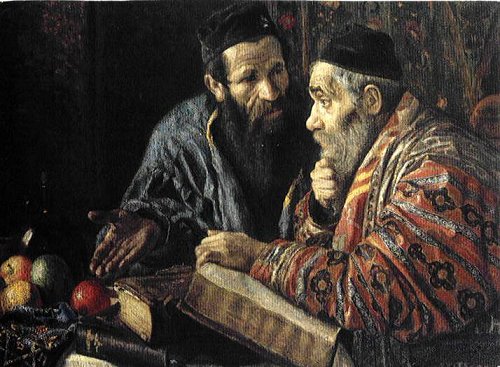
Talmudic Rabbis“We keep the customs of our forefathers.”

Shabbos 35b

The Gemara here notes that we keep the customs of our forefathers, even when the rationale behind the custom no longer applies. One such custom is the recitation of Kedushah in U’va LeTzion. Why do we repeat Kedushah if it has already been recited during Birkas Kri’as Shema and Chazaras HaShatz?

The origin of this recitation is recorded in Shibolei HaLeket (ch. 44). There was a time when the gentiles banned the Jews from reciting Kedushah and would send a representative to sit in shul through Chazaras HaShatz to guarantee that it was not recited. Once Chazaras HaShatz was completed, the representative felt confident that his job was finished and he would leave. Only later, when the gentiles left, were the Jews able to say Kedushah. They therefore inserted Kedushah into U’va Letzion, in Hebrew and Aramiac, to replace the two times they were not able to say Kedushah, in Birkas Kri’as Shema and Chazaras HaShatz. Although we are now able to say Kedushah without fear of being harmed by gentiles, we continue to recite Kedushah in U’va Letzion based upon the principle of “Minhag Avoseinu Biyadeinu” — “The custom of our forefathers remains in our hands.”

Daf Yomi Digest
Stories Off the Daf
“Keeping the customs of our fathers”
Commentary on Shabbos 35b

All denominations or sects of Christianity of which I’m aware have a problem with the relationship between religious Judaism and its traditions and customs. As we see from a Christian point of view, the function of traditions in Judaism seems to exceed what we would consider practical utility and common sense. Certainly all cultures and groups engage in various traditions and as such, there’s no problem in this, but why participate in a custom or tradition that has outlived its usefulness and may well (though not in this case) contradict the Word of God?

Christianity, and particularly the Protestant church, sees itself as relying solely on the Word of God as we have it in the Bible without the “traditions of men” getting in the way (Sola scriptura), while we tend to see Judaism as relying primarily on their traditions (which we see growing and growing, even when some of them have outlived their original purpose) as equal or even superior in authority to what God has said to Israel. But does that really reflect the reality of what we do (and you probably know where I’m going with this)?

To define sola scriptura without academic terminology might sound something like this: The Bible is the only authority in the believer’s life; it is never wrong about anything; it touches on every aspect of life; it needs no outside help to be correctly interpreted; it never disagrees with itself; it can be understood by anyone of average intelligence; and it applies to everyone in every situation.

I only use the example of translations to illustrate the fact that in a very practical sense, the Scriptures in their original languages are, for most Christians, not enough – tools such as translations, concordances, the Masoretic vowel points, and commentaries are required in order to understand the text. Of course, the goal is to understand the original text, which in itself is not an objection to the doctrine of sola scriptura – until one realizes that every translation, every commentary, and even the textual tradition itself are all based on traditions along with the divine written revelation. It is simply impossible to get away from these traditions and study the Bible in isolation.

-Jacob Fronczak
“The Five Solas: Sola Scriptura”
Messiah Journal, Issue 111 (pp 47, 52)

If you read my recent blog post, Chayei Sarah: Oil for the Lamp, you recognize the quotes from Pastor Fronczak. You also remember the meaning behind those words: that Catholic and Protestant Christianity does not understand what the Bible is saying apart from our own traditions. That is to say, no one of us has raw, unfiltered, unmediated, uncommentaried access to anything the Bible is telling us. We all read the Bible while wearing the moral and intellectual equivalent of “rose-colored glasses.”

Not only do we find that we must accept the wisdom of the “traditions of the Christian elders,” but we must also accept the wisdom of the “traditions of the Jewish elders.” Why?

Consider the Old Testament. About two-thirds of the Christian Bible is made up of the Old Testament. Who wrote the Old Testament? Jews (It’s important to realize that Jews also wrote the New Testament, but that’s a discussion for another time).

The organization of books, chapters, verses, and insertion of vowels and punctuation all come from Jewish sources, and have been altered very little if at all by Christian translators in most cases. Without realizing it, the vast majority of Christians, when reading nearly any part of the Old Testament, are tacitly accepting Jewish tradition in how it is translated and presented to us.

Right now, you might be saying, “So what. I still believe the Bible is the highest written authority and no Rabbi, Pastor, or scholar is going to have an opinion or judgment that overrides scripture.” Well, that’s not exactly true.

Translating dead languages (ancient Hebrew, Aramaic, and Greek are all dead languages and only somewhat associated with the modern-day “living” counterparts) into the land of the living so that English speakers (for example) can read the Bible is no small thing and it’s hardly an exact science. The art of Biblical analysis and translation is highly specialized and it’s not a matter of simply saying, Word A in Hebrew means word B in English.

Even with the Masoretic traditions, though, many English readings of the Scripture can be divined from a single Hebrew text. Translation committees have to pick one. Many times readings are chosen to emphasize some Messianic prophecy which appears to point to Jesus Christ, while a Jewish translation committee might choose a different readings for the exact opposite reason. Both readings might be technically correct. However doctrinal presuppositions dictate which reading is chosen. In effect, then, when Christians have only an English Bible and no other tools, they are completely unable to interact with the Scripture – the original Greek and Hebrew texts. They are completely dependent on the work of the translator.

-Fronczak (pg 52)

Let’s go through that again. Two separate translations of the Hebrew (or Greek) text can both be technically correct, but actually render opposite meanings, depending on the doctrinal presuppositions of the translation committees involved.

I’d love to just copy and paste the entire text of Fronczak’s article into this blog post because I think every Christian (and Jew) should read it, but that’s highly impractical. You’ll just have to purchase a copy of Messiah Journal to read all of his write up (and even if you disagree with Fronczak, you’ll still have to read the complete content in order to craft a rebuttal that contains any validity at all).

But beyond apparently trying to shoot down the doctrine of sola scriptura, why am I bothering to write this and why should you care?

The vast majority of Christians do not interact with the rabbinic tradition at all. As a consequence, it is poorly understood and even attacked. Modern Jews have not forgotten the Christians who burned copies of the Talmud in Europe. Even many in the Hebrew roots movement disparage the teachings of the rabbis and ancient sages, without realizing that in many ways, we rely on these very teachings in order to interpret the Bible.

First Fruits of Zion has been vehemently attacked for this very reason – we rely on rabbinic traditions and other extra-biblical literature to illuminate and explain the text of the Scripture. Like any reputable translation committee or research institution would do, we consider a lot of evidence before coming to a conclusion on what a Bible passage means. Unfortunately, people who do not understand the importance and usefulness of this literature continue to disparage the ministry of First Fruits of Zion, even though they, as explained above, are equally reliant on traditions and extra-biblical evidence for their own interpretations of the Scripture. The continuing attacks on traditional Jewish literature such as the Talmud and Zohar betray anti-Judaic and perhaps even an anti-Semitic spirit on the part of many of our detractors.

-Fronczak (pg 53)

The focus of my point for this blog post and for the existence of my blog in general, overlaps Fronczak’s and First Fruits of Zion’s (FFOZ’s) message, but my overall scope is beyond the confines of Messianic Judaism and Hebrew Roots (and all of the variants those two groups contain). This is a message that should concern every Christian and every church, regardless of denomination or affiliation. We all share a common Bible (relative to translation), a common Jesus, and a common God. The origin of the core faith in Christ of the church can be traced directly back to ancient Israel and the Second Temple period, and the origin of everything Jesus taught as we have it recorded in the New Testament, every bit of it, travels deeply back into the Old Testament, to David, to Moses, to Jacob, Issac, and Abraham, and indeed, back to before Adam and the creation of the world by God. Not one word of what Jesus said wasn’t Jewish, nor was any of it disconnected from the Jewish reality of the Bible.

Add to that the fact that we in the church rely just as much on our traditions (and some Jewish traditions) to understand all of what God is saying, and we have a very poor case for tearing apart Jewish reliance upon tradition to understand themselves and God.

It is really, really important to view the struggle of Christianity trying to comprehend Judaism as not a specialized or niche perspective or movement. It’s not just for those few people who are affiliated with those entities we call “Messianic Judaism” or “Hebrew Roots.” This is the struggle, the mission, the challenge for everyone who calls themselves a Christian.

If the church has any hope of understanding itself, it (we) must come to terms with not only where we came from, but the people and nation God granted the ability to give us life in Him, the Jews. We cannot afford to keep living in an isolated silo pretending that those connections are forever severed or relating to our “Jewish roots” as if the last 2,000 years of Jewish and Christian history, culture, custom, and tradition simply never happened.

Not long ago, I wrote another blog post called Intersection. There are a small group of Christians and Jews who are approaching a point of intersection where we going to realize we are, in some mysterious or even mystic way, interdependent on one another for the sake of the Kingdom of Heaven (which has nothing to do with “going to Heaven” and everything to do with enacting and progressing God’s plan for humanity on Earth). What may now appear as minority religious groups, variant Christian and Jewish sects, and even (Heaven forbid) cults, may well actually be part of the resurgence, the restoration, and the re-establishment of God’s intentions and design for His people Israel and the other nations of the Earth.

I believe when those Jewish and Christian people arrive at the intersection, this will happen.

“Thus says the Lord of hosts: Peoples shall yet come, even the inhabitants of many cities. The inhabitants of one city shall go to another, saying, ‘Let us go at once to entreat the favor of the Lord and to seek the Lord of hosts; I myself am going.’ Many peoples and strong nations shall come to seek the Lord of hosts in Jerusalem and to entreat the favor of the Lord. Thus says the Lord of hosts: In those days ten men from the nations of every tongue shall take hold of the robe of a Jew, saying, ‘Let us go with you, for we have heard that God is with you.’”

Zechariah 8:20-23

No, I don’t believe Christians will be turned into Jews or Jews will be turned into Christians (and a Jew being Messianic is not the same as being “Christian” as we comprehend the concepts and lifestyles), but we will all flow to “the mountain of the house of the Lord” and the people of many nations will say, “Come, let us go up to the mountain of the Lord, to the house of the God of Jacob, that he may teach us his ways and that we may walk in his paths.” (see Micah 4:1-2)

Many Christians, including those in the Hebrew Roots movement, are fond of quoting from Ephesians 2 (particularly verse 15) and saying that differences and distinctions between Jews and Christians were all obliterated (along with the Torah, Talmud, shabbat, Passover, and anything even remotely referring to a Jewish identity and life) in Christ, “nailed to the cross,” so to speak.

And yet the unity that we see described in Zechariah 8 and Micah 4 requires no melding into uniformity between Gentile and Jew in order to achieve the prophesied unity between Israel and the nations. What is required is a sense of humility and recognition, the humility to “take hold” of the tzitzit on the tallit of a Jew, and to ask him to guide us to the mountain of the house of the Lord, the holy Temple in Jerusalem (which apparently will exist again) so that even we non-Jewish disciples of the Jewish Messiah King may be taught his ways and walk in his paths. (Zechariah 8:23 “says take hold of the robe of a Jew.” Is that any Jew or only one, the firstborn son of Israel…Moshiach?)

We’re all doing our best right now to do that; to walk in his paths. But we can do better. We must do better. Let us hurry to the intersection and meet together, Christian and Jew, we who share the Messiah and honor the One God. Time is short. There’s a lot of work to be done, starting with learning how to listen to one another, and comprehend the wisdom of the customs of our fathers, both the Jewish and Christian fathers.

Long After the Storm

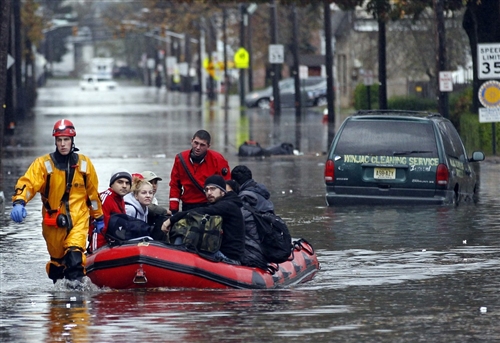
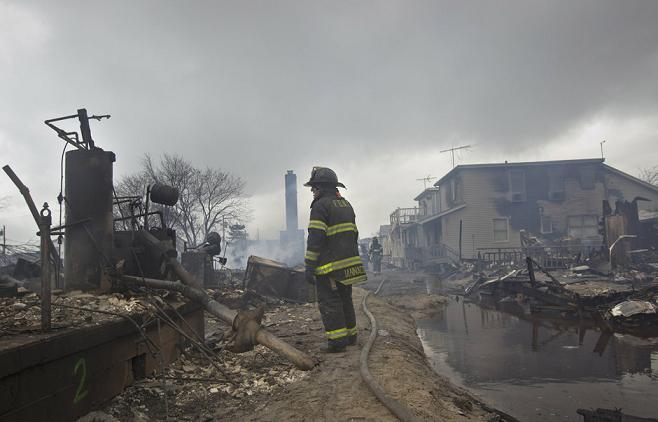
There are a plethora of websites, blogs, and news sites that have addressed the tragedy of the Sandy “superstorm” and the broken and struggling lives it has left behind in New York and New Jersey, so I didn’t intend on writing about it. I thought that I couldn’t say anything that hasn’t already been said and with far more eloquence and compassion by the many others who have already spoken.

But then I read “A Lesson From the Storm” on Shmarya Rosenberg’s blog FailedMessiah.com. I follow Rosenberg’s blog regularly but never comment and I am periodically dubious as to his bias against the Chabad community. Nevertheless, I couldn’t ignore the call for understanding and the challenge to extend myself beyond my usual limits.

One of the new facts of life in the aftermath of Hurricane Sandy is that tens of thousands of people are now reliant on some form of assistance, be that help from FEMA or the Red Cross or from smaller local organizations like churches and synagogues.

People who never before had to ask for or accept charity now are forced by circumstances to stand in lines at ad hoc soup kitchens and sleep at the homes of family, friends or even strangers or shelters while some form of temporary housing is found for them.

In some ways, they are now living the lives of America’s poorest citizens, never knowing if they will have a roof over their heads tomorrow or food to eat.

The very poor and homeless we are used to seeing are often mentally ill or drug addicted, and it is easy for us to blame their poverty on their own behavior or on being crazy.

But what we don’t see are the thousands of very poor Americans who have been priced out of the housing market and who sleep in shelters or on friends’ couches, go to work at low paying jobs with no benefits, and who rush back to those shelters before their early evening closing, often hungry, just so that they don’t get locked out.

We don’t see the very poor who became impoverished because of a severe illness, who had to choose between getting a very ill child to regular therapy appointments and their jobs.

We don’t see the families, ravaged by job loss, job erosion and by employers who cut or eliminate employee benefits, often by cutting employees’ hours to just below the full-time threshold, families whose regular dinners consist of ramen soup and whose breakfasts are often nonexistent.

As horrible as it is right now in some Jewish areas of New York City, just blocks away outside them it is often far worse, because these already poor communities lack the financial resources and fundraising expertise to supplement the assistance the government can give.

I’m politically and fiscally conservative and so I don’t believe that all social ills can be “solved” simply by creating a program and then throwing tax dollars at it. Also, having worked as a family counselor and social worker in both the San Francisco Bay Area and in Orange County (Calif.), I know about the struggles of the mentally ill and the limits of any social system in perfecting a “solution” for prejudice, homelessness, poverty, and the pull between the need for help and the illness that drives such a vulnerable population away from hope. In my time as a child abuse investigator for Child Protective Services in Southern Califonia, I met with many families on welfare (since they are disproportionately reported to “the system”), but in all that time, I found only one family who was using public funds as a temporary aid while they tried to remediate their circumstances. All of the others treated welfare like a multi-generational lifestyle and “worked” the system the way other people worked at jobs.

I say all of that to help you understand my perspective on the politics behind economic and social assistance programs and their relative effectiveness in changing “temporary” aid into a permanent institution. Often, those attitudes are in conflict with a greater imperative.

Then the King will say to those on his right, ‘Come, you who are blessed by my Father, inherit the kingdom prepared for you from the foundation of the world. For I was hungry and you gave me food, I was thirsty and you gave me drink, I was a stranger and you welcomed me, I was naked and you clothed me, I was sick and you visited me, I was in prison and you came to me.’ Then the righteous will answer him, saying, ‘Lord, when did we see you hungry and feed you, or thirsty and give you drink? And when did we see you a stranger and welcome you, or naked and clothe you? And when did we see you sick or in prison and visit you?’ And the King will answer them, ‘Truly, I say to you, as you did it to one of the least of these my brothers, you did it to me.’

Matthew 25:34-40 (ESV)

Decades ago, I read a statistic saying that most Americans are only one or two paychecks away from homelessness. Given the massive amount of debt most individuals carry, I don’t doubt the statement to be just as true today as it was back then. Probably more so.

I’m fortunate to have a job today. It has benefits including medical insurance. I live in a house with my family. I drive a car in good operating condition to and from work each day. I sleep in a comfortable bed and I don’t have to worry about not getting enough food, being too warm or too cold, or doing without all of the basic necessities and many of the comforts.

But I’ve also been unemployed. I’ve never been homeless, but I’ve been depressed, frustrated, angry, and desperate. I’ve worked low paying full-time jobs while going to school full-time just to support my family and try to rebuild my life. I’ve been hurt and sick with no medical benefits, so I just had to put up with being hurt and sick. There were months when I barely saw my family let alone talked to them. Sleep was all but an illusion. I was a middle-aged man burning the candle at both ends because I had to and there was no one to help me except me.

And God.

Which is why, in spite of the fact that I’m always dubious of a political solution to a human problem, I find that we must show compassion and render assistance to people who need assistance. If we are to err, let’s err on the side of generosity rather than stinginess. Consider the following, which is a comment made by a Katrina victim in response to Rosenberg’s blog post:

I can speak to this. One day I was comfortably (upper) middle class, living in a 2400 sq ft house filled with stuff, much of it of sentimental, as well as monetary, value: artwork, heirlooms, antiques, rare books, and so on. The next day I was homeless with only the clothes on my back and the contents of a small carry-on. Although I tried to, I got no help from the Federation or the Red Cross, and I did not get all that I was supposed to from FEMA. For months my job was wrangling on the phone with two insurance companies trying to get the reimbursements that my policies called for–with limited success. If I hadn’t worked in the insurance industry and didn’t know what my policies really provided, I would have gotten even less. Fortunately I had some assistance from my son (logistical, not financial) and some savings, or I do not know what would have become of me. With my own resources I was able to survive, have a roof over my head, food on the table and other necessities. In the general atmosphere of no help I do have to thank a group of Jewish volunteers from North Carolina who cleaned out the contents of my flooded house (a disgusting job) and another group of Southern Baptists who gutted my house–and the US tax code which allowed me to deduct portions of my $300,000 worth of uninsured losses. In addition I lost my whole circle of friends and acquaintances, health care providers, etc., etc. These social ties were extremely difficult, in some cases impossible, to reproduce in my new life.

In addition I have suffered psychological trauma that I don’t think will ever pass. A heavy rain (even here in the desert) makes me very nervous, and I am very distressed whenever there is a hurricane on the loose, although there are no hurricanes possible in Arizona. At an event marking the fifth anniversary of Katrina, I met a friend, neighbor, and colleague who also relocated to Arizona. She told me that she didn’t have enough clothes or furnishings because she was afraid that if she acquired anything, she would lose it. I told her that I have a ridiculously excessive wardrobe, because I am afraid of being left again with nothing but the clothes on my back. Eerily three weeks after this conversation, my friend’s new home was burned to the ground by an arsonist. One of my best friends was rescued by a Coast Guard helicopter just before a looter, carrying a gun, was about to enter her home. She continues to have post-traumatic emotional problems.

When we look at the news, we see unknown figures and hear nameless statistics. When we encounter the homeless and the mentally ill on our streets, we automatically think “bum,” or “panhandler,” “addict,” or “nutcase.” We don’t see the human faces. We don’t hear the human voices. But they’re there and they’re real. Like most of humanity, we tend not to care about a problem until it becomes our problem. It rarely has an emotional impact on us and even more rarely inspires us to offer assistance until it becomes personal; until it happens to us, or to a relative, or to a friend, or maybe because someone we care about also cares about the victims.

Five hundred years ago or so, a man named John Donne penned these words:

No man is an island,
Entire of itself.
Each is a piece of the continent,
A part of the main.
If a clod be washed away by the sea,
Europe is the less.
As well as if a promontory were.
As well as if a manor of thine own
Or of thine friend’s were.
Each man’s death diminishes me,
For I am involved in mankind.
Therefore, send not to know
For whom the bell tolls,
It tolls for thee.

No Man is an Island
MEDITATION XVII
Devotions upon Emergent Occasions
John Donne

If we are indeed “involved in mankind,” then whatever happens to another human being, happens to us. As Christ said, whenever we help the least of all human creatures, we have helped the author of our souls.

Most of all, and this is important, we don’t have to assume that once the initial crisis has passed that everyone is going to be fine and we can go about our usual lives. We don’t have to return to being unconcerned for those whose lives will take years to recover, if they ever will recover completely. Do you ever wonder about the victims of the earthquake in Haiti? Do you still recall those lives devastated by the earthquake and tsunami in Japan? Do you ever, ever wonder what all of those people are doing right now?

The victim of Katrina suffers years after the disaster. His heart, his feelings, his life is still being damaged by the storm. And yet, as painful as I can only imagine that might be, the greater injury is done by uncaring neighbors, by unfeeling humanity who asks “for whom the bell tolls,” and then not recognizing the name, shuts out the sound of a small shattered voice, softly crying in the background.

Only the hurricane has passed. The storm of anguish and need is still raging, its call, unanswered and unheeded.

EDIT: Unfortunately, the nor’easter that interrupted recovery efforts from Superstorm Sandy pulled away from New York and New Jersey Thursday morning, leaving a blanket of thick, wet snow, and triggering even more anxiety and despair among those people still in the first stages of trying to recover.

To help victims of Sandy, donations to the American Red Cross can be made by visiting Red Cross disaster relief, or you can text REDCROSS to 90999 to make a $10 donation.

Intersection

Due to the sin of murder the Beis HaMikdash was destroyed.

Shabbos 33a

Maharal points out that man is distinct and loftier than all other creations. Only man is infused with a heavenly spirit from above. Similarly, the Beis HaMikdash is on a separate plateau in function and purpose above all other places on Earth.

Furthermore, man himself functions as a type of Beis HaMikdash, in that he carries the shechinah with him, and he serves as a vehicle from which kedushah emanates and spreads throughout the world.

This is the underlying principle which our Gemara is presenting. The taking of human life, aside from the tragic aspect of the personal loss, also represents a destruction of a human Beis HaMikdash. A person, while he lives, has the ability to accomplish worlds of achievement in the realm of kedushah and in the service of Hashem. With the loss of this life, this person’s contribution to the world in this regard has been ended.

Daf Yomi Digest
Gemara Gem
“The holy human”
Commentary on Shabbos 33a

This is a rather remarkable Jewish commentary from a Christian point of view. We Christians tend to believe that only we possess the “indwelling of the Holy Spirit” as a consequence of our faith in Jesus Christ. We tend to believe that no other people group or religious tradition, especially Judaism, has this concept, let alone possesses this reality.

But what if we’re wrong?

Here we see that the Jewish sage writing this believes that “only man is infused with a heavenly spirit from above.” And just as Christians believe that each of us is a Temple housing the Spirit of God, (see 1 Corinthians 6:19 and 1 Peter 2:5) the Rabbinic commentator states, “man himself functions as a type of Beis HaMikdash, in that he carries the shechinah with him, and he serves as a vehicle.”

For those among you who may not know, the Beis HaMikdash can refer to the Temple in Jerusalem (which currently doesn’t exist) or the Heavenly Temple.  In the days of Solomon,  the Temple housed the shechinah or the Divine Presence, which Christian Bibles call “the glory of God” (this is also true of the Tabernacle in the days of Moses). While we can’t make a direct comparison between the shechinah and the Holy Spirit, we see that both Christian and Jewish concepts of how God “indwells” the faithful are all but identical.

Imagine that.

But why do I say such a thing and why should you care?

Shmuel only crossed a river on a bridge together with a gentile. He said that misfortune would not occur to two nations simultaneously.

Shabbos 32a

Shmuel crossed the river only on a ferry boat upon which gentiles were riding with him. He determined that the Destroyer cannot punish Jew and gentile together, so he would be safe and secure that the boat would not capsize.

-Daf Yomi Digest commentary

This is a less than complimentary Jewish commentary about we Gentiles, since it implies God will not visit a tragedy upon the Jew that is going to occur to the non-Jew for the sake of the holiness of the Jewish people. It elevates the Jewish people above the other peoples of the earth in a spiritual way due to the perception of a Jew’s higher awareness of God. Actually, the commentary may well be true of many non-Jewish nations and people who neither fear Hashem nor honor the God of Israel.

But what about Christians? Can’t we be said to have an awareness of God through our devotion to Jesus, the Jewish Messiah? I would say “yes,” but we must remember that said-awareness and devotion originated with the Jewish people, and did not spring forth fully grown among the Gentiles, independent of Israel.

Many Christians reading this may get the wrong idea about what I’m trying to say. Some may even feel threatened, as if I’m subordinating Christianity to Judaism in a manner that makes we non-Jewish believers into “second-class citizens” in the Kingdom of God.

I’m not saying that at all.

But I do want to say that the church has a tendency to reverse causality. We often view Jesus as wholly owned and operated by Gentile Christianity and completely divorced from (if he was ever “married” to) Judaism in any way or form. That’s pretty tough to do since Jesus was born to a Jewish mother, was circumcised on the eighth day, was raised as a Jew, was granted the power of the Spirit as the Jewish Messiah, walked like a Jew, talked like a Jew, only had Jewish disciples, ordered his Jewish disciples to only minister to the “lost sheep of Israel” in only Jewish communities, barely spoke to a Gentile, and after death and resurrection, promised to return to establish Jewish self-rule of Israel and over the nations.

Tsvi Sadan, who authored what I consider a landmark book, The Concealed Light: Names of Messiah in Jewish Sources, wrote an article recently published in Messiah Journal, issue 111 called “You Have Not Obeyed Me in Proclaiming Liberty.” It’s a unique article in that it takes to task the missionary efforts of the church to convert Jews to Christianity. But Sadan is a “Jewish believer.” More accurately, he’s a “Messianic Jew” living in Israel, and that makes all the difference in the world.

What I have described up to this point means that much of what calls itself Messianic Judaism is in fact an exotic Christian sect. One can argue until blue in the face that the Israeli Supreme Court was wrong when in 1989 it ruled that Messianic Jews are people who belong to “another religion.”

I imagine that there are more than a few Christians reading this who are quite puzzled. After all, isn’t Messianic Judaism just another form of Christianity? What’s wrong with Jews converting to Christianity? Jesus is “Jewish,” isn’t he?

Of course, when most Christians say that “Jesus is Jewish,” it’s like how they view the occasional Jewish Christian in their church…someone who is Jewish in name only and who, in terms of any identity markers, has surrendered cultural, ethnic, experiential, and halalaic Judaism for a completely Gentile Christian identity and lifestyle. This is what I mean by reversing causality. In the early days of the ministries of Peter and Paul, masses of non-Jewish people came to be reconciled with the God of Israel through the Jewish Messiah, embracing religious practices and concepts that were completely Jewish and totally foreign to them. Today, we in the church expect Jews to abandon all of their Judaism and to worship a Lord and Savior who, from our point of view, is totally foreign to Jews.

But Sadan has more to say:

Yet the judges were no fools. Long ago the Jewish people reached a firm decision to reject the kind of good news described above. The refused the gospel which in the name of Jesus called them to convert to another religion. They refused the gospel which in the name of Jesus called them to break their unique covenant with God. They refused the gospel which forced them to identify with the culture of their oppressors. They refused the gospel which called them to compromise Jewish monotheism and reject the Talmud, their tradition, and their cherished customs.

That’s got to be a tough paragraph for most Christians to read and accept, but remember that I’m pulling it out of the context of the entire article. Sadan is criticising what I call “reversing causality.” Why should Jews have to stop being Jewish and join “another religion” (other than Judaism) in order to become disciples of the Jewish Messiah and to worship the God of Israel; a God they have been worshiping since the days of Abraham, Isaac, Jacob, and Moses?

You’ll have to pick up a copy of Messiah Journal (and I highly encourage you to do so) and read Sadan’s entire write-up in order to fully comprehend where he’s coming from, but he does have a “happy ending” for how Jews can be authentically approached in order to be brought near to Moshiach and to return to the Torah.

For the sake of we Christian readers, he does quote from New Testament scholar Scot McKnight’s little-known book A New Vision for Israel (1999) in order to substantiate Sadan’s viewpoint from a Christian perspective.

The most important context in which modern interpreters should situate Jesus is that of ancient Jewish nationalism and Jesus’ conviction that Israel had to repent to avoid national disaster. Jesus’ hope was not so much the “Church” as the restoration of the twelve tribes…the fulfillment of the promises of Moses to national Israel, and the hope of God’s kingdom. (pg 10)

Definitely a book I need to read.

I don’t blame you if you think I’ve gone off the deep end or have lost my mind as a Christian. It’s taken me a very long time to see from this particular vantage point and it may take “the church” just as long or longer to reach the same spot. But I believe we’re all getting there. I know several Christian pastors who share my vision about the relationship between Jews and Christians. I believe that God is involved and guiding us along a series of paths on journeys that will finally intersect.

Jews and Christians have interactive purposes in relation to each other whereby, as children of God, we are interdependent. The Jewish role is to return to the Torah and to embrace the holiness of God and we in the church are responsible for standing alongside the Jew and supporting that…not “mission” but “keruv,” bringing Jews near “to God and to one another, first and foremost through familiarity with their own religion and tradition…the Jewish people, as taught be Jesus, cannot comprehend his message apart from Moses (John 5:46)…Keruv is all about reassuring the Jewish people that Jesus came to reinforce the hope for Jews as a people under a unique covenant.”

For hundreds of years, perhaps since the beginning of Creation, a piece of the world has been waiting for your soul to purify and repair it.

And your soul, from the time it was first emanated and conceived, waited above to descend to this world and carry out that mission.

And your footsteps were guided to reach that place.

And you are there now.

-Rabbi Tzvi Freeman
“Now”
Based on letters and talks of the Rebbe
Rabbi M. M. Schneerson
Chabad.org

The Christian “mission” isn’t just to “get saved” and then wait for the “bus to Heaven.” Although vitally important, it isn’t just spreading the Gospel of Jesus Christ to an unbelieving world, to give everyone, everywhere hope that God loves them and will never forsake them, even in the darkest nights of our souls. The Christian mission is also one of “keruv,” of bringing Jews to the Messiah in a way that is Jewish and in a way that would be completely recognizable to the apostles as they began their message to the Jewish people after the events recorded in Acts 2.

Keruv is probably not a task for all Christians. It’s probably not a task for me, at least not in a direct sense. But we can all participate by recognizing our role and the role of Israel and by welcoming and espousing the unique purpose, identity, and lives of Jewish Israel under their King and ours, Yeshua HaMashiach..Jesus the Christ.

For nearly twenty centuries, the people who Jesus drew to him, either directly or through the apostles, the Jewish people and the people of the nations, were first torn apart through much strife, and then continued to drift away from each other, one treating the other as strangers and aliens. While we may not experience it overtly today, the church and the synagogue in relation to each other are so wounded and isolated. Only by each one finding our true and unique purposes and roles in the kingdom of God can we both be healed, can we both be granted the gift of transmuting grief into joy, can we both have our loneliness be turned into joy and fellowship.

57 Days: The Lord has Promised Good to Me

Peace of mind is essential for obtaining many virtues. Its absence leads to all types of shortcomings. When you have peace of mind, you can use your mind constructively. Lack of peace of mind breeds anger and resentment.

The quality of one’s prayers and blessings is dependent on the mastery of one’s thoughts. Above all else, one’s ability to study Torah properly is based on having peace of mind.

-Rabbi Zelig Pliskin
“Daily Lift #628, Peace of Mind is Essential for Growth”
Aish.com

Every Sunday, my daughter has to be at work at 5 a.m. That means I need to wake up at four and get ready to drive her so she can be at work on time. After that, when I get back home, I can get in bed again if I want to.

And that’s just what I did. But church services start at 9:30, so I set the alarm for 6:30. Makes sense to me. Gives me time to wake up leisurely, read, study, check my blog, have breakfast, and figure out if I have any semi-dress clothes that will fit. Haven’t had to “dress up” in quite a while, but fortunately I know how to use an iron and I don’t clean up half bad.

Both my wife and daughter were already at work when I was ready to leave for church, so there was no one around to wish me luck.

Made it there about ten to fifteen minutes early, which is early enough (I figured) to find a parking spot, but not too early that I’d have to conspicuously hang around a bunch of people I don’t know. Found the men’s bathroom, which is an important task in attending any public social event. About four people greeted me and shook my hand before I even got to the entrance of the sanctuary. Saw Pastor Randy who also cleans up pretty good. He was encouraging as was everyone else I met. He sent around the teacher for the class my son and daughter-in-law attends at the church. B.J. just wanted to say “hi” because he knew I was David’s Dad.

Because I told Pastor Randy that my wife is Jewish, other people seemed to know. One woman introduced herself (I didn’t hear her name because of all the background noise hundreds of people make when they’re talking all at once) and told me she was a Jewish believer. More than a few people, including the Jewish woman, said they hoped my wife would come to church with me soon.

Which is kind of what I was dreading, and that will sound odd to most Christians, but let me explain.

My wife wouldn’t receive the kindness of Christian contact and an invitation to come to church as a particularly positive thing. While she’s been to church in the past, her Jewish identity as it currently exists, does not accommodate going to church or attending Christian functions, even though she also doesn’t attend many Jewish functions. I just hope no one tries to contact her independently (I haven’t written my address and phone number down on anything at church, but I’m not that hard to find, either). I tried to explain this to Pastor Randy yesterday, but I’m not sure how he received it.

OK, one issue to be concerned about, but hopefully I’m making it a bigger deal than it really is.

Everyone was very friendly. Lot’s of handshakes and “glad your here.” I know that the “corporate greet your neighbors” handshaking is a normal thing in churches, but I’m still shy enough for it to make me a tad nervous.

The order of service and music was about what I expected. In fact, I was surprised that I remembered the tunes so readily. Nothing mysterious or too difficult. Words were on the screen at the front of the sanctuary.

One Pastor read the text from Acts 7 and then Pastor Randy gave the lesson from that chapter (they’re going through the book of Acts right now, pretty much dissecting it, but the series is slightly ahead of where I am in my Torah Club study on Acts, so I couldn’t leverage Lancaster while listening to the sermon). The bulletin contained a sheet for taking notes about Stephen’s defense to the Sanhedrin, which I used. I was interested in how Pastor Randy would frame Stephen relative not just to the Sanhedrin, but to the rest of the Jewish people, and the nation of Israel as a whole.

He very much acknowledged that Stephen was a Jew, just as his “fathers and brothers” were (Acts 7:2). I won’t go through my notes on what Pastor preached about, but it didn’t reflect the traditional Christian view of Stephen rejecting the Temple, Law, or the customs of the Jewish people in favor of the grace of Jesus Christ. Stephen was portrayed as “convicting” the Sanhedrin of going against the Torah of Moses and being faithless to God, which is more consistent with how I’d read these verses. The sermon was worded to be more accessible to a Christian audience and there were a few times that I thought the message might have been “toned down” a bit for the sake of the people listening (but I can’t be really sure, of course).

The Pastor made good use of his knowledge of Biblical Hebrew and Greek, gently suggesting that the NIV translation may not be entirely accurate. He spent a lot of time on the Abrahamic covenant, a favorite topic of mine lately. He also backtracked into Acts 6 and illuminated “trust and obey” to all of us. How do we know we trust God? How do we know our faith is genuine? Because if it is, we obey God. But what do we obey?

This is the $64,000 question from my point of view, since traditional Christianity usually says that works is dead and all we have to do is believe, while in Judaism, performing the mitzvot has center stage in a Jew’s life. The answer from the Pastor was, “good works.” Our faith is genuine if it produces “good fruit” (he didn’t actually say “good fruit,” but I thought I’d insert it here).

Pastor leveraged the Akediah (he didn’t say “Akediah,” but with his knowledge of Hebrew and having lived fifteen years in Israel, he must have been thinking it) to show us how faith, trust, and obedience are married concepts for someone who is truly righteous (he might have said, “for a tzaddik”). In going back to the original command God gave Abraham to leave Haran (Genesis 12:1), Pastor took the principle of obedience a step further in telling a story about some early Christian missionaries in India.

These missionaries were continually debating how they were to start out on their task, anticipating what might happen if they took this step or that. Finally, one of the missionaries said something like the following:

A Christian doesn’t have the right to demand to know where he is going. He must walk by faith.

Given everything I’ve been going through in anticipating “church,” he might as well have been talking to me.

Even as I wrote down the quote, I couldn’t help but marvel at how much of last week’s Torah portion had been inserted into Pastor’s message on Acts 7. He also included portions of Genesis 45 and Genesis 50, as he followed Stephen’s defense, which included references to the Patriarchs and the people of Israel.

Overall, the message was not only one of hope for Christians, that God is faithful and gracious even while we may have troubles in our lives, but that God has always been faithful and gracious to Israel and the Jewish people, even in the midst of their trials and suffering. God remains the constant for both Christians and Jews, and Abraham is the father for both the Christians and the Jews (and Pastor was careful to say that the Abrahamic covenant does not make the Christian “Jewish”).

After the sermon and closing song and prayers ended, it was time for Sunday school. I had chosen a particular class to attend, and Pastor Randy let Charlie, the teacher, know I was coming. Several handshakes later (I don’t mean to belittle this and actually, everyone was very friendly, but it will take me awhile to get used to so much human attention compressed into such a small space and time), I found where I could get a cup of coffee before class. The coffee ran out just as I was about to get a cup, so I didn’t have that delay before finding my classroom.

Consequently, I was the first to arrive. People trickled in and introduced themselves. The teacher and class members were mostly my age or older (I think one couple was a bit younger).  The first person to come in after me was an older gentleman named Dick. We got to talking and at one point he said something like, “It can be hard to find a church that gives you what you need,” and went on to say how fortunate they were to have a Pastor who preached the whole Word, including the Old Testament. He pretty much summed things up for me.

Class wasn’t as organized as I would have expected. I was glad it wasn’t heavily scripted, because that tends to stifle individual or creative response, but I saw that people struggled to respond when Charlie threw a question out among us.

I really, really had intended to be quiet, and just to listen and observe. That didn’t last very long and all of my old “reflexes” in addressing classroom questions and answers, built up over the years in my previous congregational experience, immediately took over.

In fact, I realized at one point, that instead of answering a question, I expanded on it and turned the question back to the rest of the class.

Oops.

I tried to tone it down after that, but I may have come close to crossing the line when I suggested that no matter how much God has chastised Israel, He has always brought them back, and will continue to fulfill His promises to them by bringing them back (not by restoring only a tiny remnant, but by redeeming Israel) to Him.

After class was over, I apologized to the everyone and particularly to Charlie for my being such a chatterbox. Not many of the other class members talked much, although during one of my monologues, I entered a dialog with one of the other fellows. Everyone was gracious about it and I hope I didn’t offend anyone. I didn’t think I’d get this “interactive” for weeks, but the wheels kept spinning in my head and once I opened my mouth, words started zipping out.

I was kind of interesting that all of the other students there were married couples except for one woman whose husband was on some sort of business trip in Turkey. I can see it’s going to be awkward to be going “stag” to church every Sunday.

Oh, both in the service and during Sunday school, I liked how the Jews weren’t blamed for rejecting Jesus or being bad examples, and in fact, the teachings emphasized how we Christians were expected to live up to the teachings of our Master.

At one point, Charlie, in discussing how Jesus dealt with faith or its lack as recorded in Mark 9 and 10, said, “If Jesus attended this church, what issues would he have to address here?” A little later he asked, “What would Jesus have to say to me” (about my failings)?

The experience wasn’t perfect, but then I expected that I’d feel out of place in an unfamiliar social environment. It was very “Christian” in all the ways I thought it would be, except that Judaism was treated much better relative to the Jewish Messiah and the Gentile disciples than I had imagined. The music lacked a certain punch, but that’s not really an issue for me compared to the other matters I’ve discussed, although they did introduce a bit of an “experiment” by having band sing “Amazing Grace” to the tune of The House of the Rising Sun (originally recorded by the Animals in 1964). It totally rocked.

Yes, I’ll go back next week for a variety of reasons, not the least of which is that I’m curious as to how far I can enter Christian fellowship and how much I will be able to integrate and still keep the core of who I am as one of the world’s most unusual Christians. At this point, my only real reservation, as I said before, is how far some of the folks in the church will try to press me to bring my wife to services. I don’t think that part would go over well at all.

Guess I’ll see how it all works out week by week, day by day, by God’s grace.

The Lord has promised good to me…
His word my hope secures.
He will my shield and portion be…
as long as life endures.

-John Newton (1725-1807)
Amazing Grace


57 Days: Life is Burning with God’s Desire

Woman in fireFirst contact is a term describing the first meeting of two cultures previously unaware of one another. One notable example of first contact is that between the Spanish and the Arawak (and ultimately all of the Americas) in 1492.

Such contact is sometimes described later by one or both groups as a “discovery”, particularly by the more technologically developed society. In addition it is generally the more technologically complex society that is able to travel to a new geographic region to discover and make contact with the generally more isolated, less technologically developed society, leading to this frame of reference. However, some object to the application of such a word to human beings, which is why “first contact” is generally preferred. The use of the term “discovery” tends to occur more in reference to geography than cultures…

-quoted from “First contact (anthropology)”
Wikipedia.org

It’s both unfair and inaccurate to say that my meeting Saturday morning with Pastor Randy was a “first contact” situation, both because I have previous history in the Christian church and because having lived for fifteen years in Israel, Pastor Randy was more than familiar with anything I had to say about Jews and Judaism. That’s a severe abbreviation of why my nearly two-hour conversation with him wasn’t a “first contact,” and there are a great many reasons why our talk was both informative and illuminating, at least on my side of the equation.

I’m glad I went.

I had a feeling I would be. Not knowing what to expect as I walked into the church’s front door, I am comforted by what actually happened, though it wasn’t quite what I thought it would be.

If I had to sum up my response to my conversation with the Pastor, I’d have to say that I feel “understood” in terms of my concerns regarding my “cultural” re-entry into the church, as well as my personal and family issues associated with being intermarried.

But Pastor Randy also put on the spot a few times, although very gently, and I actually appreciate that he did, since who doesn’t want to be challenged in their (my?) faith community? For instance, something I think I’ve been missing in terms of “hearing” God is that I study the Bible a lot but don’t just read it enough. Does that sound confusing? It did to me, but then I thought about it for awhile and it started to make sense. I tend to read the Bible for the purpose of either studying something or doing research for a blog post, but I never really just immerse myself in scripture for its own sake, and to hear what God is trying to say to me. Maybe I can’t do that anymore without writing about it, but it certainly seems like it could be true. I used to do that; I used to just read the Bible, but somewhere along the way, I set that particular behavior aside, replacing it with studying to achieve some pre-set goal or lesson plan. I suppose it’s the difference between riding a bicycle to commute to and from work, or to lose an extra ten (or twenty, or more) pounds, as opposed to riding a bike along the greenbelt for the pure pleasure of taking in the glory of God’s autumn “artwork.”

I also realized, although Pastor Randy may not have intended to communicate this, that my talking to God “Tevye-like” in a continuing dialog, may have put my relationship with God in an unbalanced state, so to speak. I gave up more formal prayer when I gave up other traditionally “Jewish” religious practices, and I think now that I may have put my siddur away needlessly. No, a Baptist Pastor didn’t actually suggest that I pray from a siddur, but he did say that formal prayer is something that Christians could take as a benefit from Judaism. We don’t get a lot of practice appreciating the immense and august majesty and awe associated with anticipating our twice daily approach to the throne of the King.

I can’t recall everything that was said during our conversation, nor would it be beneficial to try to recount every detail here. I did come away with some realizations, information, and decisions. Here are a few of them.

I volunteered to do something for the church. I won’t say what it is right now, but the church’s need came up in conversation and it seemed to “fit” my interests and skill sets.

I seriously renewed my desire to visit Israel, not in just some dim “someday” future, but in less than a year as a potential goal.

I will be going to church and Sunday school tomorrow (this morning, as you read my “meditation”). No one was more surprised by this revelation than I.

I specifically asked about the level of supersessionism at this church, and according to the Pastor, on a scale of zero to one-hundred, it is set at a firm zero.

Given everything that I’ve just written and all that I recall about my conversation with Pastor Randy and its results, how much of all this did can I reasonably believe God arranged to happen?

Not only the pirouettes of a leaf as it falls off a tree, the quivering of a blade of grass in the wind, each and every detail of existence brought into being, given life and directed every moment from Above

—but beyond that:

Every nuance is an essential component of a grand and G-dly scheme, the gestalt of all those vital minutiae.

Every moment burns with the pulse of G-d’s desire.

Meditate on this. And then think:
How much more so the details of my daily life.

-Rabbi Tzvi Freeman
“Every Detail”
Based on the teachings of the Rebbe, Rabbi M. M. Schneerson
on the central teaching of the Baal Shem Tov
Chabad.org

Will You cause a driven leaf to tremble?

Job 13:25 (NASB)

While I sometimes feel as if I am a “driven leaf” trembling before the awesome winds of God’s will, in fact, I also believe that the nuance of “every moment burns with the pulse of G-d’s desire.” I suppose that’s a lot of meaning and expectation to pack into a meeting with one Pastor that lasted just under two hours, but that’s how I’m choosing to interpret it. This “morning meditation” is being written on Saturday and published early Sunday morning so further revelations are unrealized but soon to be experienced.

When my wife came home later in the day, she asked about how my meeting went, which in and of itself, surprised me. I wasn’t sure how “covert” she wanted me to keep this side of my life. I told her some of the things I’ve written above and others that I haven’t. She was a little surprised that there were a couple of people tangentially involved in the church that she knows. I think she’s more comfortable about me attending a church than any sort of “quasi-Jewish worship venue” as I had in the past. I definitely think she’s more comfortable in my attending a church than either of the local synagogues.

At this point, it’s like a new (or renewed) swimmer looking at a swimming pool and considering a return to swimming after an absence of many years. The first question is, where should I dive in; the deep end, the shallow end, or somewhere in the middle? Should I just jump off the side, use the high dive, or slowly walk down the stairs? Who knows? Not being sure of the best course, I’ve selected a likely point of entry and will “get my feet wet” tomorrow (today, as you read this). I’ll make adjustments as I experience the water. I think there’s a wise, though forgetful “sage” who has a relevant piece of advice for this occasion.

Just keep swimming. Just keep swimming. Just keep swimming, swimming, swimming. What do we do? We swim, swim.

-Dory (Ellen DeGeneres)
Finding Nemo (2003)

60 Days: There is Still a Light that Shines

Inner lightWhen you come to a place that seems outside of G‑d’s realm, too coarse for light to enter, and you want to run away—

Know that there is no place outside of G‑d, and rejoice in your task of uncovering Him there.

-Rabbi Tzvi Freeman
“Stay Put”
Based on letters and talks of the Rebbe
Rabbi M. M. Schneerson
Chabad.org

The soul above awaits the time it will be privileged to descend into a body. For the soul senses how much it can accomplish here below; it can attain the level of “delighting with G-d.” So what is everyone waiting for?

“Today’s Day”
Shabbat, Cheshvan 15, 5704
Compiled by the Lubavitcher Rebbe
Translated by Yitschak Meir Kagan
Chabad.org

Given what I’ve been writing about in these past few days, the quotes above seem rather fitting. There is no place we can go that God cannot enter with us, ironically including into the church.

I’ve been experiencing a little “push back” (no, not at home) about my decision to re-enter Christian fellowship, as if Christianity was a step backward and that some other philosophy or theology were more evolved for the non-Jewish believer. I can’t say that the path I’ve selected is for everyone, I can only say that it is right for me, at least the “me” who exists today and needs to face a certain set of challenges.

Jewish mysticism sees the soul in Heaven awaiting “assignment” to a physical body so it can enact the will of God in the world of human beings. In a sense, that’s sort of how I feel right now, waiting to enter into the world of the church to see if I have anything to contribute to the body of Christ. I also (and I’ve said this before) must be careful to communicate that I’m not entering the church with “ulterior motives” but rather, to add whatever uniqueness of expression and perspective God has gifted me with to the ekklesia of the Messiah as it exists in my own little corner of the planet.

One of the reasons some people choose to attend a particular church is that they are “fed” there. I’ve never been really sure of what that meant (I’m not very good at “Christianese”) but I suppose it has something to do with the teaching or the level of emotional or spiritual support provided by the Pastoral and teaching staff. I don’t think I’m going to church to be “fed” as such, but I do believe that Christian fellowship will give me something that I’ve been sorely lacking.

O, God, who will dwell in Your tabernacle, who will rest on Your holy mountain? … One who speaks the truth in his heart … who swears to his own hurt but will not retract.

Psalms 15:1-4

In their mind’s eye, people believe that they are acting as truthfully as possible. We all know, however, how easily we can deceive ourselves. Since truth may be elusive, how then can we know that we have the truth?

There is a useful litmus test. We can know that we have the truth when we have the courage to feel the pain of accepting the truth. People lie because they think the lie will be less painful or costly for them than the truth.

People often fail to grow because they are reluctant to face the painful truth that they have done wrong. We have an innate tendency to avoid pain, and therefore we are apt to conjure up rationalizations that justify our behavior. These rationalizations are nothing but lies ― sometimes clever and convincing, but lies nonetheless. Facing the truth and accepting the pain that comes with it requires courage.

People who “speak the truth in their heart,” says the Psalmist, do not retract their word even if it is to their own hurt. On the other hand, those who constantly seek to change everything to conform to their maximum comfort are only lying to themselves.

Today I shall…

try to be courageous and not automatically withdraw from everything that is painful. I shall try to examine my actions to make sure I am not sacrificing truth for comfort.

-Rabbi Abraham J. Twerski
“Growing Each Day, Cheshvan 13”
Aish.com

While I don’t experience the church or Christians as a “painful truth,” in fact, I most likely have been denying myself an experience that I need in order to grow spiritually. It’s easy to say that the church is “such-and-thus” in some negative sense, and to let that be the excuse to keep me away. It’s also easy (but not as easy) to visit a church, and to say to yourself (and others) that “these people aren’t me,” or “I can visit them, but I’m not one of them.” Playing the “superiority card” at the church is no way to contribute to the body of believers, even if you (or I) think that they are less than what they can be and should be.

In the “Today’s Day” lesson for Friday, Cheshvan 14, 5704, we find:

“From G-d are man’s steps established.” (Psalm 37:23) Every one of Israel has a spiritual mission in life – which is to occupy himself with the work of construction, to make a “dwelling-place” for G-d.

That statement doesn’t actually apply to the church or any body of worship so much as it does to the individual and how we establish a “dwelling place” for God within us and within the world, but it still fits. If the Messiah dwells among us when two or three are gathered in his name, (Matthew 18:20) then it behooves us…it behooves me to gather with others so that he may be with us…and with me. Serving God isn’t particularly being served by God, but serving others and summoning the Spirit so that it may dwell within those who need it. There are so many who would hoard the gifts of the Spirit for themselves, but that’s not what we were taught. We can only be who God made us to be by being together and by joining others.

“You are the light of the world. A city set on a hill cannot be hidden. Nor do people light a lamp and put it under a basket, but on a stand, and it gives light to all in the house. In the same way, let your light shine before others, so that they may see your good works and give glory to your Father who is in heaven.

Matthew 5:14-16 (ESV)

This teaching of the master is not unlike what we see presented from a more contemporary Jewish Rabbi.

G‑d did not give you light that you may hold it up in the middle of the day.

When you are given light it is in order to accomplish something, to do something difficult and novel.

Go take your light and transform the darkness that it may also shine!

It feels a little egotistical to say that I’m going to take my light and let it shine among my fellow Christians, but I feel as if the Master is commanding us to do just that; to share and to love and to be with each other. More than that, we are to place that light on a hill and let the rest of the world experience it as well. That’s pretty hard to do in isolation and I don’t think just “blogging light” cuts it. We have to uncover the light, we have to shine the light.

We have to be the light.

Let it be, let it be
Ah let it be, yeah let it be
Whisper words of wisdom, let it be
And when the night is cloudy
There is still a light that shines on me
Shine on until tomorrow, let it be…

-Paul McCartney
Let It Be (1970)

Let it be.