First, a quote: “The Church cannot indefinitely continue to believe about Jesus what he did not know to be true about himself,” J. W. Bowman, The Intention of Jesus (London: SCM, 1945), p. 108.
This is not really a historical claim but a theological one, and it reflects a common assumption: The assumption that the theological/religious validity of claims about Jesus rest upon what Jesus believed and taught about himself. In my book, Lord Jesus Christ (pp. 5-9), I’ve noted the irony of how this assumption has been shared by critics and advocates of Christian faith, and also how it has worked mischief in the historical investigation of Christian origins.
-Dr. Larry Hurtado
“Questioning a Common Assumption,” May 13, 2014 Larry Hurtado’s Blog
Dr. Larry Hurtado has been prolifically writing on something rather compelling over the past few days. Did Jesus know he was Divine during his “earthly ministry?” Did Jesus know he was to be an object of worship?
I think most Evangelicals would assume the answer to those questions is a resounding “yes,” but here we have one of the most preeminent New Testament scholars in the world drawing that assumption into question. I think Hurtado’s comments deserve further scrutiny.
(NOTE: I should mention here that I have no intention of matching my meager brain power and limited knowledge of New Testament scholarship with Dr. Hurtado’s. I merely want to bring this issue to my readership in order to explore what he presents on his own blog and to see what responses his viewpoints elicit here.)
Looking at the evidence in the New Testament, Hurtado concludes that the “high” view of Jesus as Divine Messiah didn’t emerge until what he calls “post-Easter.”
But I’d like to make two observations. First, the earliest extant Christian texts themselves make it perfectly clear that the “high” notions about Jesus sharing in divine glory, exalted to heavenly status, worthy of worship, etc., all erupted after Jesus’ ministry, not during it, and that the crucial impetus for these notions was what earliest believers saw as God’s actions, particularly their belief that God had raised Jesus from death to heavenly glory. (See, e.g., Philippians 2:9-11; Acts 2:36).
To underscore the point, the remarkable escalation in the status/significance of Jesus to the “right hand” of God, to sharing the divine name and glory, and to the central and programmatic place he held in earliest Christian devotional practice all rested on the fundamental conviction that God has exalted him and now required that Jesus’ exalted status be recognized, and that he should be reverenced accordingly.
My second observation is this: Why should this be taken as some kind of threat to the theological legitimacy of traditional Christian faith?
-Hurtado, ibid
Larry Hurtado
This sounds like it was only after the resurrection that it was known to anyone else including Jesus that he was indeed the Divine Son of God the Father.
I think a lot of people would find that startling, but as Hurtado says above, why should that be a threat? And yet on the aforementioned blog post and two others, many, many comments were generated, some of them rather “impassioned.”
Indeed, more explicitly than any of the other Gospels, GJohn makes it clear that the author saw and accepted a distinction between what he regarded as the level of understanding of Jesus among his followers during his earthly life and the subsequently enhanced level of understanding in the “post-Easter” period.
But my point here is that even GJohn doesn’t make the high Christological claims affirmed by the author rest simply (or even particularly) on demands and teaching of the earthly Jesus. Instead, the text fully affirms that the realization of Jesus’ glorified/glorious status came subsequently, through the revelations of the Spirit.
Hurtado wrote this as a follow-up to his prior missive, which continued to inspire passionate discourse, and based on those comments, he wrote a third blog post, Jesus, “Pre-existence,” etc: Responding to Questions on May 15th.
He breaks his response down into four points to which he comments on his blog at length:
His response to his emphasis that the NT makes God’s actions (esp. in raising Jesus from death and giving him glory) the basis for the “high” Christological claims and the remarkable devotional practice in which Jesus was included with God.
His position about texts such as John 1:1-2, where, of the “Logos” (here, the “pre-incarnate” identity/form of the incarnate Jesus), we read: “he was with God and he was God”.
What we are supposed to make of statements ascribing “pre-existence” to Jesus (to use the typical theological buzzword). If you entertain these, how could Jesus not have known this and spoken of it?
What about subsequent creedal controversies and formulations? E.g., the three “persons” (or “hypostases”) that comprise the “Trinity,” etc.?
I don’t want to re-create the full content from Hurtado’s blog and reader comments, but I do want to draw attention to one particular paragraph (for full context, please use the links I provided and read all three of Hurtado’s posts):
But I suspect that if Paul were asked whether Jesus was the “second person of the Trinity,” he would likely have responded with a quizzical look, and asked for some explanation of what it meant! Were the patristic texts and creedal statements saying something beyond or distinguishable from what the NT texts say? Certainly. Does that invalidate those later creedal discussions and formulations? Well, if you recognize the necessity of the continuing theological task (of intelligently attempting to articulate Christian faith meaningfully in terms appropriate and understandable in particular times and cultures), then probably you’ll see the classic creedal statements as an appropriate such effort. But that’s a historical judgement about that later period, and/or a theological judgement. And my emphasis is on the historical question of what the NT texts say and how to understand them in their own historical context.
-Hurtado, Jesus, “Pre-existence,” etc: Responding to Questions
This goes not only to what Jesus thought of himself prior to his crucifixion and resurrection, but what Paul and the Jesus-believing Jews (and Gentiles) believed about the nature of Christ relative to God during the Biblical period.
Did Paul believe in the Trinity? Again, an Evangelical wouldn’t miss a beat in saying, “Yes, of course,” but again, we have Hurtado, who we have every reason to believe is presenting a credible case from current NT research, saying that Paul wouldn’t have a clue about the Trinity.
I should mention that Derek Leman at Messianic Jewish Musings has been writing a great deal about the Divinity of Jesus lately, and a lot of his perspectives are based on Hurtado. His own research and conclusions will be presented in his forthcoming book Divine Messiah, which should be available for digital download from Amazon as early as May 23rd, so maybe Leman’s text will offer some insights.
By contrast, the early second century Epistle of Barnabas shows a distinctly gentile Christianity in its presentation of the Hebrew Bible as allegory instead of covenantal fact. The clearly divinized Jesus in this document is distanced from the Jewish Christians and the divide between the Christian communities continued to widen over time. Geza Vermes writes that after Hadrian’s suppression of the Second Jewish Revolt, the Jewish Christians quickly became a minority group in the newly established church. At this point we can see the origin of Christianity as a distinctly non-Jewish religion; late in the second century, the Jewish Christians either rejoined their Jewish peers or become part of the newly gentile Christian church.
-Wiener
The implication here, as I’m reading it, is that many of the Biblical truths we hold onto as Christians were conceptualized and codified after the Gentiles formed the Christian Church and left Jesus-worship within the Jewish context. In other words, the Jewish apostles and disciples wouldn’t have imagined many of the theologies developed later by the Gentiles in relation to their own understanding of scripture (the Tanakh/Old Testament) and of the teachings of Messiah. In fact, Jesus himself, even “post-Easter,” may not have seen/see himself as “the second person of the Trinity,” at least not using that particular language.
This isn’t to deny the Divine nature of Messiah, the profound mystery of him being “the visible image of the invisible God,” (Colossians 1:15) or his sitting at the right hand of the Father in all exalted honor and glory, but exactly how we see the nature of Jesus may be based more on Evangelical assumptions and long-cherished traditions than how the original authors of the Gospels and Epistles actually understood the nature and character of Messiah.
It seems clear then, that the origin and development of Christianity as a completely separate entity from the ekklesia we see recorded in the Bible, departed from the original theological and doctrinal template taught by the apostles, and I imagine Paul, witnessing the Evangelical Church of the twenty-first century CE, would find little if anything to relate to or even recognize as devotion to Messiah, Son of David.
Obviously, there are implications for the modern Church, but also I see how ancient and modern Judaism is significantly impacted, as are the Messianic Jewish and Hebrew Roots movements. I’ll take each one in turn.
Christianity
Based on what Zetterholm concluded regarding the forced separation of Gentiles and Jews in the Jesus-believing communities which resulted in Gentiles forming their (our) own brand new religion called “Christianity,” we can see that we weren’t kicked out of Jesus-believing Judaism. We rebelled like a petulant teenager and walked out the door. Certainly if Saint Ignatius of Antioch can make a statement such as, “[i]t is monstrous to talk of Jesus Christ and to practise Judaism” (Magn. 10:3 quoted by Zetterholm on pg 203), we aren’t talking about a “no-fault divorce.” The “Church Fathers” went out of their way to “demonize” Judaism and separate any “valid” worship of Jesus Christ from anything related at all to the Jews.
We noted above that Ignatius in Phld. 6:2 connected Judaism with the activities of “the prince of this world,” and that he in Magn. 8:1 probably used popular prejudice against the Jews in describing Judaism as being based on myths and fables.
It is well known that, in the decades after the death of Ignatius, Christian literature abounds in developing anti-Semitic themes.
-Zetterholm, pg 210
It is likely, as Schoedel states, that the identification of Christ as the word from silence refers to the supposed inability of the Jews to understand their own religious tradition: the appearance of Christ from silence brings the divine hidden purpose to light. The radical “Christianization” of the prophets is one indication of how profound this inability is, and how extensive the hostility is between Judaism and Christianity.
-ibid, pg 220
I know I’ve quoted these passages from Zetterholm’s book previously, but they’re important for context. As the history of the Church attests, these attitudes weren’t isolated to the first few centuries of the Common Era, they’ve echoed down the corridors of time from Ignatius of Antioch to the modern Christian Church with predictable results on Jews and Judaism. True, we no longer torture Jewish people in order to force them to convert or exile them from our nations, but we aren’t always “safe,” either.
Sarah (not her real name) is a young Jewish woman, an academic, raised in Orthodox Jewish life, who came to believe in Yeshua in a remarkable manner some years ago. Having been greatly sheltered in her upbringing, and knowing nothing about either Protestants or Messianic Jews, she wanted to serve Yeshua in an academic setting. She therefore joined the Dominicans, a teaching order of the Roman Catholic Church. She reasoned that they would allow her to teach freely in her field. In this she was right: as an excellent teacher, she was allowed to freely teach. She also assumed, on the basis of her limited knowledge of the early Yeshua movement, that she would be allowed to live as a Jew while she served Yeshua amongst the Dominicans. In this, she was wrong. Her superiors were at first amused at her adherence to Jewish life, then annoyed, and then intolerant. She was thrown out for her unacceptable adherence to Jewish life. This is a true story, and really, nothing new. It should not have surprised Sarah, but it did. And it shouldn’t surprise the rest of us either.
-Rabbi Dr. Stuart Dauerrman
“Signals: The Interfaithfulness Newsletter”
from May 12, 2014
Saint Dominic
I know Evangelicals are going to point out that Dominicans (Roman Catholics) were responsible for rejecting Sarah’s Jewish observance, but imagine how a Jewish believer would be received in a Protestant church if she were to continue significant Jewish observance such as kashut and Shabbat.
You might not think it would be an issue, but consider. Should “Sarah” show up at your church for a communal meal, how would you feel if she passed up the ham and took a salad instead? What if she kept an even more strict form of kosher and wouldn’t eat unless the meal had been prepared in a kosher kitchen (which church kitchens and Christian homes would not possess)? How would you feel if “Sarah” visited your home for a Bible study on Friday afternoon but after sunset, chose to walk back to her home and even refused a ride from you because it was Shabbat? You might be amused for a while but I suspect, like the Dominicans in the tale above, amusement would give way to annoyance and finally, intolerance. We haven’t come so far from the writings and attributes of Ignatius after all.
The Church has much to repent of.
Note: For those who feel I’m being overly hard on the Christian Church, especially the modern community of Christ, please continue to read. I’ll address this matter further at the end of today’s blog post.
Judaism
It is likely, as Schoedel states, that the identification of Christ as the word from silence refers to the supposed inability of the Jews to understand their own religious tradition: the appearance of Christ from silence brings the divine hidden purpose to light. The radical “Christianization” of the prophets is one indication of how profound this inability is, and how extensive the hostility is between Judaism and Christianity.
-Zetterholm, pg 220
Dovetailing on my previous statement, the modern Church still gives religious and even secular Jews reason to question their (our) motivation for any form of approach to them. My experience tells me that most often, Jews are politely cautious when a Christian enters Jewish religious or social space or conversely, invites them into our space. We speak of “interfaith relationships” or “interfaith events” but there really is no such thing as a “Judeo-Christian” shared experience. The minute those two concepts entered the world, they existed in opposition to one another.
Why should Jews trust Christians? Why shouldn’t organizations such as Jews for Judaism believe there is a (perceived) threat represented by the Christian Church, including organizations like Jews for Jesus? I’m not saying Jews for Jesus is a bad organization and that the Church is necessarily an active threat against Jewish faith and practice, but the best predictor of future behavior is past behavior. If you want to know how the Church is going to act toward Jews in the future, look at Church history.
I’m saying that Jewish people have a reason to be dubious about Christianity and that all began nearly two-thousand years ago. Sadly, Jews and Christians really do have a shared history but it’s not a positive one.
The Church has much to repent of.
Note: This doesn’t mean that Judaism in all its expressions is perfect or hasn’t made it’s mistakes, but rarely is Judaism in a position as an extreme minority in our world to “throw its weight around,” so to speak. Through the vast majority of the history of the Jewish people, they’ve been much too busy just trying to survive.
Hebrew Roots
This is an “umbrella category” designed to cover just about any Gentile Christian organization, small group, or fellowship that specifically identifies itself as seeking the “Hebrew roots” of the Christian faith and who adopt an altered theology, doctrine, and practice based on some sort of “Hebraic” perspective on the Bible.
It’s probably unfair of me to treat Hebrew Roots as a single entity given what I’ve just said, since it is comprised of so many divergent groups and attitudes, but then, that’s pretty much true of Christianity and Judaism as well.
One of the (more or less) commonalities within Hebrew Roots is the belief that Hebrew/Jewish practices are also incumbent upon any Gentile who is a believer in Jesus. This usually includes some sort of practice based on modern synagogue worship including praying with a siddur, donning of a tallit gadol (for men, usually), wearing a kippah (again, usually for men), and other acts that superficially create the impression that these Hebrew Roots practitioners may be Jewish.
We saw in Zetterholm’s book that Gentiles participating in the ancient Jewish synagogue of “the Way,” were sometimes mistaken as Jews due to their association with Jews and likely many of their practices and lifestyle behaviors, so it’s possible to extrapolate that situation into modern Hebrew Roots. But there’s a problem. In ancient times, Gentiles adopted some Jewish practices and behaviors because they were operating within a Jewish religious and social context and were being mentored by Jewish teachers and synagogue leaders. Hebrew Roots operates in total separation from Jewish community and often is denigrating of much of Rabbinic Judaism.
Hebrew Roots tends to believe they practice a form of “Biblical Judaism” as opposed to “Rabbinic Judaism,” and as a result, they reject many of the practices and conceptualizations that are associated with modern or historic Judaism. In this, they somewhat mirror the original Church Fathers who separated their own practice from Jewish authority and community, creating a self-sustaining entity that by necessity, operated in opposition to the normative Judaisms of its day.
Like many Evangelicals, many Hebrew Roots groups have sort of “love/hate” relationship with modern Judaism, mainly because of Rabbinic Judaism’s insistence that they have the right to make internally binding rulings and the ability to govern their own communities.
Note: Hebrew Roots has a lot of different expressions, some of which are truly serving God, helping others, and teaching the good news of Messiah. I worshipped with one such group for many years and my companions were Godly and humble people. But Hebrew Roots is kind of like the “wild west,” where anything can happen and where anyone with a kippah and a theological ax to grind can dub themselves a “Messianic Rabbi” and draw a following. Be cautious.
Messianic Judaism
Like the other groups I’ve discussed above, there is no single, monolithic organization called “Messianic Judaism”. All Messianic Jewish groups have certain things in common, but the details of their theology, doctrine, and practice are variable.
One thing all Messianic Jewish groups (at least in the U.S.) have in common is the majority of their members are not Jewish. The ancient Antiochian Synagogue of the Way, while “owned and operated” by a Jewish leadership and Jewish teachers, was also inclusive of Gentiles, though there’s no way to determine the ratio of Jews to Gentiles in their midst.
Messianic Judaism, for this reason, faces some or even most of the same challenges as did the apostle Paul’s mixed Jewish/Gentile Jesus-believing communities, principally the issue of integration. As my previous blog posts on Antioch, Zetterholm, and Nanos attest, the issue of integration was of paramount importance and at the same time, hotly contested (see Galatians 2 for example).
That the Gentile Jesus-believers were included in the New Covenant blessings and part of the soteriological system of Judaism was not in question, especially to Paul, but the nature of their role and participation in a Jewish community and religious stream was still problematic. The Acts 15 ruling aside, we don’t really know how day-to-day life in the Messianic synagogue among Jewish and Gentile co-participants was negotiated.
That’s a question Messianic Judaism is trying to answer today as well.
We see from Zetterholm that, given the right social and political pressures, this could all blow up in their (our) faces (again). It’s one of the arguments in support of a concept Rabbi Mark Kinzer introduced called Bilateral Ecclesiology. Zetterholm seems to believe that James the Just, the brother of Messiah and leader of the Council of Apostles and Elders in Jerusalem supported an ancient version of Bilateral Ecclesiology, the establishment and maintenance of separate communities of Jews and Gentiles in Messiah.
Ironically, that’s exactly what happened historically, but with disastrous results.
But that’s unfair and untrue. That’s not exactly what happened. Kinzer’s Bilateral Ecclesiology (and presumably James’) assumes that the separate Jewish and Gentile communities exist in a complementary fashion, sharing a common theology and doctrine (but not identical practice), maintaining a cordial but distant relationship with one another, while supporting the right of each group to maintain their own identity within an exclusive space. History has shown that the relationship between ancient Christianity and Messianic Judaism was anything but complementary and cordial, although distance was created, maintained, and expanded, usually due to animosity.
We noted above that Ignatius in Phld. 6:2 connected Judaism with the activities of “the prince of this world,” and that he in Magn. 8:1 probably used popular prejudice against the Jews in describing Judaism as being based on myths and fables.
It is well known that, in the decades after the death of Ignatius, Christian literature abounds in developing anti-Semitic themes.
-Zetterholm, pg 210
Zetterholm believes Paul opposed James’ view on separate Jewish and Gentile space in Messiah and that he believed in a shared community of Jewish and Gentile Jesus-believers. That said, shared space and social community doesn’t equal shared identity, role, and responsibility and that’s the rub. Did Paul have a clear vision of exactly how Jews and Gentiles were to exist in community with each other in all the details?
The Didache might be one possible answer to that question since one suggested origin for this teaching is with the apostles or those close to the apostles. The Didache may have started out as an oral teaching that accompanied the spread of the “Jerusalem letter” (Acts 15) among the diaspora Gentiles in community with Jesus-believing Jews.
Note: As I’ve mentioned above, Messianic Judaism includes a variety of different approaches to how a Jew may be a disciple of the Jewish Messiah and continue to be an observant Jew. In the days of Peter and Paul, this was a given. No one wondered how this was possible, it was simply understood. The problem was how to integrate Gentiles. That’s the problem today as well, and responses run the gamut from Jews-only Messianic groups to full social inclusion of Jews and Gentiles in the synagogue. I think of Messianic Judaism as a work in progress. Also, keep in mind that many Hebrew Roots groups call themselves “Messianic Judaism,” however once in, the distinction is obvious.
Conclusion
So here we are. The Church, if possessing any belief that it somehow has replaced the Jewish people and national Israel in the covenant promises, continues to have much to answer (to God) for. The Church has much to answer for if it continues to oppose Jews who have faith in Messiah and continue to observe the mitzvot of the Torah of Moses. Thankfully, an increasing number of churches are accepting Jesus-believing Jews who are Torah observant Jews, but we have a long way to go.
Hebrew Roots, while a noble effort to attempt to recapture what Jesus-believing Gentiles lost with the ascension of Gentile Christianity and the (ultimate) collapse of Jewish Jesus-faith, often chooses to throw the baby out with the bath water, so to speak. In trying to recapture and apprehend ancient Hebraic practices and implement them in the modern era, they many times utilize modern Rabbinic worship practices while rejecting historic and modern Rabbinic Jewish rulings and even fail to acknowledge the Jewish community’s right to self-govern and self-define. Gentile Christians seeking the Hebrew Roots of the faith might find a better model in those who have become known as Messianic Gentiles, but there are still many challenges involved when traveling that path, as I can personally attest.
Messianic Judaism continues to struggle forward toward not only its own identity, but the identity of the Gentiles in its midst and as the Apostolic record and Zetterholm’s research indicates, Messianic Judaism is characterized, in part, by the communal inclusion of the Gentiles. Perhaps they would have eventually developed a “bilateralness” in relationship with each other, but that doesn’t seem to have been what Paul was trying to create.
I offer no solutions to any of this, but if you think you have any, I invite you to comment. We may never know what would have happened if Paul’s vision of the mixed Jewish/Gentile ekklesia had been realized, but given our current situation, we’re obligated to take the next step forward, whatever that might be.
Notes on the Church
I know I’ve laid the lion share of the responsibility for the Jewish/Gentile split within the body of Jesus-believers at the feet of the then new religion called “Christianity.” Further, I continue to assign responsibility to the modern Church for its long history of abuses against Jewish people and Judaism. Am I being unfair? I suppose you could say so.
And yet, next Sunday at the church I attend, the Bible class being held after services will be teaching on Acts 21:15-26 and the class study notes pay special attention to the following verse:
You see, brother, how many thousands there are among the Jews of those who have believed, and they are all zealous for the Law… (emph. mine)
–Acts 21:20 (NASB)
To me, this speaks of the thousands of Jesus-believing Jews in Jerusalem who all gave glory to God and were zealous for the Torah of Moses. But my teacher quotes John MacArthur in saying:
“Nowhere in the New Testament are the Jewish believers condemned for observing them (the so-called “ceremonial” aspects of the law). Paul nowhere taught Jewish Christians to abandon their Jewish heritage. God Himself was tolerant during this period of transition, knowing how difficult it was for them to break with their past.”
It never occurs to MacArthur, or to any of the Evangelical church Pastors or their lay staff, or to the congregations of all those churches, that the reason they don’t see God being critical of Jewish Jesus-believers performing the Torah mitzvot wasn’t “tolerance.” It was because God expected Jewish Torah observance as a matter of covenant obedience. It wasn’t an aberration or some quaint set of customs that Jewish people had a tough time letting go of, it was their very lifeblood, the linkage between God and the Jewish people, more so than ever with the realization that the Messiah was the inauguration of the living fulfillment of all of God’s promises to Israel.
Even in the most Israel-friendly, Jewish people loving churches, this attitude still remains, in spite of a great deal of scholarly evidence to the contrary. This is what the Church yet has to repent of and so far, they don’t even see the problem.
More’s the pity.
If “Sarah” were to show up in my Bible class next Sunday and give her interpretation of Acts 21:20, how would she be received? I don’t know how far to push in class over the troubling interpretation of this single bit of scripture (and it’s wider implications), but how can I remain silent in the face of everything I’ve just written?
Addendum: And then there are rather disturbing current trends in Christianity, such as the one presented at the Rosh Pina Project about who is expected to speak at Bristol Baptist College.
Introduction to the Six Elementary Teachings of Messiah with a look at Evangelicalism and the Evangelical Gospel, citing Scot McKnight’s book The King Jesus Gospel.
Therefore let us leave the elementary doctrine of Christ and go on to maturity, not laying again a foundation of repentance from dead works and of faith toward God, and of instruction about washings, the laying on of hands, the resurrection of the dead, and eternal judgment. And this we will do if God permits.
–Hebrews 6:1-3
As Lancaster began talking about Shavuot, about Pentecost, about what the Evangelical Church calls “the birthday of the Church,” I wondered where his lectures on the Book of Hebrews went. I knew that he was going to spend some time on the six basic foundations of the faith, but I didn’t know this would entail exiting the Epistle to the Hebrews altogether.
He did quote the following Psalm, which is a Psalm about Shavuot, however:
The Lord announces the word, and the women who proclaim it are a mighty throng…
–Psalm 68:11 (NIV)
No, that doesn’t seem to have anything to do with Hebrews either, but we’ll get to that.
I attended the conference in 2013 and also went the previous year. I didn’t spend a lot of “face time” with Lancaster, usually because he’s pretty busy and in demand, but last year we talked for a bit and he recommended McKnight’s book. I formally reviewed the book as well as mentioned it elsewhere, and found it reassuring if not illuminating.
Like Lancaster, I didn’t agree with everything McKnight said, but it was refreshing to read an Evangelical teacher and author saying that Evangelical Christianity is serving up a hopelessly truncated gospel message.
I’ll skip over Lancaster’s history of the Evangelical Church but I will mention that Lancaster started out his ministry as an Evangelical Pastor and he’s the son of an Evangelical Pastor.
But as a teenager, Lancaster said he got so frustrated with trying to find the Evangelical Gospel message spoken by Jesus in the scriptures, that he threw his Bible across the room.
Here’s a summary of the Gospel message according to, not Matthew, Mark, Luke, or John, but according to Evangelicalism.
Imagine Jesus saying this:
Believe in me for the forgiveness of your sins so you can go to Heaven when you die.
That’s the Evangelical message of the Gospel in a nutshell but Jesus never said it…ever. For that matter, neither did Paul, Peter, James, or any of the other apostles.
In fact, Jesus rarely spoke of personal salvation and when he did, the teenage Lancaster thought it sounded…legalistic:
And someone came to Him and said, “Teacher, what good thing shall I do that I may obtain eternal life?” And He said to him, “Why are you asking Me about what is good? There is only One who is good; but if you wish to enter into life, keep the commandments.” Then he said to Him, “Which ones?” And Jesus said, “You shall not commit murder; You shall not commit adultery; You shall not steal; You shall not bear false witness; Honor your father and mother; and You shall love your neighbor as yourself.” The young man said to Him, “All these things I have kept; what am I still lacking?” Jesus said to him, “If you wish to be complete, go and sell your possessions and give to the poor, and you will have treasure in heaven; and come, follow Me.” But when the young man heard this statement, he went away grieving; for he was one who owned much property.
–Matthew 19:16-22 (NASB)
The traditional Evangelical interpretation is that Jesus was playing a little game with this fellow to help him realize that he needed to leave his wealth behind and learn to trust Jesus, but I don’t see how the fellow in question could come to that conclusion when Jesus was speaking of the commandments and merit, a very Jewish message.
But the Evangelical message of the plan of salvation, although it’s some part of the Gospel message, is not only a small part of that overall good news, it’s terrifically misleading. It only teaches that you have to confess Jesus as Savior and believe in him. That’s it. In fact, Lancaster says Evangelicals shouldn’t really be called Evangelicals but rather “Salvationists” because of the narrow focus of their message.
They’re not even replacement theologists but rather displacement theologists, because the plan of personal salvation, as the length, breadth, and depth of their doctrine, displaces all of the Old Testament, the resurrection, a literal Israel, and the establishment of the Kingdom of Messiah on Earth. Why would you need an Earthly Kingdom if you go to Heaven when you die to be with Jesus?
What was the central message of the Messiah?
From that time Jesus began to preach and say, “Repent, for the kingdom of heaven is at hand.”
–Matthew 4:17 (NASB)
The NIV and other translations use the word “near” rather than “at hand.” The Kingdom of God is near. How near is it? Lancaster says it’s so near that the Messiah has even been named. He’s Jesus of Nazareth. He’s teaching repent of your sins, return to God, be immersed in the name of Messiah for the forgiveness of sins (after you fully repent), then you will participate in the building of the Kingdom, the restoration of national Israel, the return of the Jewish exiles to their Land, the raising of Israel as the head of all the nations.
Lancaster spoke too quickly for me to capture all of his points, but at the end, he said Peter’s message in Acts 2:37-42 is a much better representation of the actual Biblical Gospel message than what Evangelicals preach.
And at the culmination of the Kingdom, all of humanity, each and every individual, will stand before the throne of judgment. The Evangelical message of salvation is only included in bits and pieces of the total Gospel, and it’s still an anti-Jewish people and anti-Judaism message if only because it wholly denies the centrality of Israel and the Jewish people in its own salvational plan.
It gets worse. Jesus preached:
And someone said to Him, “Lord, are there just a few who are being saved?” And He said to them, “Strive to enter through the narrow door; for many, I tell you, will seek to enter and will not be able.
–Luke 13:23-24 (NASB)
This is not what Evangelicals preach about salvation. For example, how can you “strive to enter the narrow door,” when there’s nothing you can do to merit salvation? Evangelicals say to “accept” and “make a decision for Christ” which are quite passive. Striving is active and implies you must do something to enter the narrow gate. Also, how can the gate be so narrow if whole stadiums and auditoriums of people are “getting saved” by some big name evangelist preacher at a huge revival?
That last part is a little tongue-in-cheek, but you get the idea. Jesus didn’t teach that the Gospel message or even the salvational part of it was “believe in me and be saved.” He taught, “repent, have faith, become a disciple, for there will be a resurrection of the dead, and the living and the resurrected will participate in final redemption.” Lancaster says the actual Gospel message isn’t news to Messianic Judaism but it must be quite a shock to most of the world’s 100 million Evangelical believers. Most Evangelicals don’t even know about the “milk” being taught in the Bible, let alone the “meat,” and this is where we re-engage the Book of Hebrews.
Therefore leaving the elementary teaching about the Christ, let us press on to maturity…
Lancaster wound down his sermon with another summary of the six foundations of the faith and said starting next week, he’s going into each of them in detail, with repentance being the very first step.
What Did I Learn?
As I mentioned, I’ve read and reviewed McKnight’s book last year, so this was more like a review than a revelation. I’ve also been going through my own study of repentance or teshuvah, so his comments on repentance operated in parallel to my own thoughts.
I don’t think that all Evangelicals have quite such a narrow view of the message of the Gospel, but I agree that even the most enlightened Evangelical is missing at least part of the picture. I know Evangelical Christians who strongly preach repentance of sins and who even lament there are many people in the pews on Sunday, who in all probability, are not saved because all they know is to passively believe.
I don’t doubt that some and hopefully many Evangelicals are indeed saved and are faithfully serving God, but it’s not my place to say who is and who isn’t. It’s my place first and foremost to care for my own relationship with God, for without love of God how can I love my fellow human being in the manner my Master commands?
Lancaster doesn’t recommend McKnight’s book to his congregation, probably because he believes they are more tuned in to the actual message of the Gospel because of their involvement in Messianic Judaism (and being consumers of Lancaster’s prolific teachings and writings). I do recommend McKnight’s book to Evangelical Christians as a means of understanding that what Lancaster is teaching isn’t “Evangelical bashing,” but rather a startling wake up call.
Do you really want to know what Jesus taught as the good news of Christ? You may not get the full message from your Pastor’s sermons or from popular books by Christian authors. You probably won’t even get it in Sunday school or at a Wednesday night Bible study. If you read McKnight’s book, please open your mind and heart and be prepared for a shock. If you survive the book intact and want to learn more, continue with Lancaster’s book and see where that takes you.
This chapter will present a suggestion as to how the theologically motivated social division between Jesus-believing Jews and Jesus-believing Gentiles, combined with socio-political circumstances, brought about a separation between the communities. It will be argued that this process, which eventually resulted in the emanation of a new religion, was the result of a conscious strategy that can be compared to other expressions of collective action, such as tax rebellions, political uprisings, revolutions or, in short, social movements.
This is the fourth but not quite the last installment in my investigation (see my ending comment below) of the schism between (Messianic) Judaism and Gentile Christianity based on the “Antioch Incident” (Galatians 2:11-21) and the general development of the “Synagogue of the Way,” which was characterized by a mixed Jewish/Gentile population of equal co-participants, in mid-first century CE Syrian Antioch.
The title of my (almost) final missive in this series seems whimsical and on one level, that’s intentional, but it also reflects the intensity of the relationship between Jewish and Gentile Jesus-believers in the Antiochian synagogue, both in intimate fidelity and in the excruciating agony of separation. Anyone who has experienced a “difficult” divorce or who has seen another couple go through one realizes that as much as the couple loved each other in the beginning, that is the same level of anger and even hate they experience at the end of their marriage.
But why the “divorce?”
Evangelical Christianity (and most likely all forms of the Christian faith) assume that Christianity naturally, intentionally evolved from (Messianic) Judaism. Popular Evangelical Preachers such as John MacArthur believe that Judaism as a religious practice was intended by God to be temporary and to be replaced by the Christian Church. Any indication that Paul or the other Jewish apostles and disciples continued in any of the Jewish practices is considered to represent a “transitional period,” where the last generation of Jewish Jesus-believers in Judaism gave way to the following generation of Jewish and Gentile Christians, all liberated from “the Law” and basking in the free gift of salvation by the grace of Jesus Christ.
Zetterholm approaches the issue from a completely different direction, one that takes into account socio-political motivations, more like the Boston Tea Party objecting to “taxation without representation” than a Divinely planned shift in theology that “jumps the track” from Judaism to Christianity.
Can we treat the relationship between the early Jesus-believing Jews and Gentiles as a human and social dynamic and conflict and still retain the involvement of God in human history? On the one hand, it seems almost “sacrilegious” to do so. On the other hand, none of the people in the Bible are mere pawns of God used in a game to illustrate grand principles and theologies so much as they are living human beings struggling to understand who they are in relation to each other and God. I think we can afford Paul, Peter, James and everyone else involved in Antioch the dignity of being treated as real people instead of “Bible characters.”
What we are considering is what sort of conflicts would have naturally led to such a Jewish/Gentile split in the Messianic community in Antioch and the other diaspora communities of the Way. One such conflict suggested by Zetterholm (pp 178-9) is legal. While Judaism was considered a legal religion in the Roman empire, did the empire consider Gentile involvement in Judaism, not as proselytes or even God-fearers, but as Gentile co-participants who were required to remain Gentile as a valid association?
Another issue to consider is that, as Judaism became less favorable in the eyes of the Empire and began to encounter persecution, what was the impact of Gentiles being swept along in the anti-Jewish fervor as were the Jews, or conversely, treated differently and maybe more positively than the Jews within the same Jewish space?
The war against Rome ended in catastrophe and with the fall of the temple in 70 CE it was essentially over.
The end of the war had, of course, drastic and immediate political consequences. The most important for the present analysis was the institution of the poll tax fiscus Judaicus, which was founded shortly after the end of the war by Vaspasian.
-Zetterholm, pg 185
In some ways, this tax very much identified one as a Jew since it was only imposed on Jewish populations. On the other hand, can we say the tax was also imposed on those who were Gentiles in the synagogue or those who “appeared” to be Jews due to their practices and affiliation with Jewish community, or were the Gentiles in the Jesus-believing synagogue (and Gentile God-fearers in all synagogues) spared because they were not ethnically Jewish?
Either way, and we can’t be certain which one was more likely to have occurred, we can see the potential for conflict. Should the former be true, the Gentiles might well resent it since after all, they not only aren’t Jewish but based on Paul’s letter the Galatians, they are at least highly discouraged if not absolutely forbidden to formally convert to Judaism via the proselyte rite. Why should they pay a tax if they weren’t ethnically Jewish?
On the other hand, if the Gentiles in Jewish community were not taxed because they were Gentiles (which only seems fair), would the Jews in the same synagogue resent them for their lack of solidarity with their teachers and mentors, the very people of which Jesus said “salvation comes from the Jews” (John 4:22)?
Zetterholm states (pp 188-9) that this period (and lots of subsequent historical periods) saw a general rise in anti-Semitism which likely spilled over onto the Gentiles who, by virtue of their association in the synagogue community, looked like Jews. This would have included Gentile God-fearers in the various diaspora synagogues and God-fearers, as previously stated, were thought to be polytheistic and continued to participate in the various pagan cults in Greek society for social and business (and perhaps personal) purposes. What of the recent “converts” of Gentiles from paganism to Jesus-faith? Could a surge in anti-Jewish sentiments result in them falling away or “cheating” by continuing to or reverting to pagan practices to “take the heat off” them?
M. Goodman, however, has argued that, in the period before the fiscus Judaicus was imposed, there existed a certain confusion about who was Jewish and who was Gentile, and that the fiscus Judacus promoted the development of a more stringent Jewish identity.
-ibid, pg 192
However…
…there was every reason to assume that the Jewish community knew exactly who was Jewish and who was not.
-ibid
So from an outsider’s point of view (Roman/Greek), it might be hard to tell sometimes who was Jewish and who wasn’t within the Jewish community, but of course, inside the community itself, everyone knew. The community of Messiah knew that they had a responsibility to separate itself from pagan society for the sake of God, but within that community, barriers were growing. In my previous missive on this topic, I presented the point of view of Nanos that Paul considered the Gentile Jesus-believers as equal co-participants in synagogue life, even to the level of community meals, as well as those who also received the covenant blessings of atonement and redemption in the same matter as the Jews.
And God, who knows the heart, testified to them giving them the Holy Spirit, just as He also did to us; and He made no distinction between us and them, cleansing their hearts by faith.
–Acts 15:8-9 (NASB)
However, thanks to outside pressure being brought to bear against all diaspora Jewish communities, that seems to have changed, at least potentially.
As a member of the Pauline Jewish community in Antioch, a Gentile was part of the soteriological system of Judaism to a degree never experienced before. Through Christ, Gentiles were incorporated into a covenantal system that provided salvation without prior conversion to Judaism. Non-conversion to Judaism was a necessary condition.
-ibid, pg 194
Magnus Zetterholm
While that seems like terrifically good news, it comes with a cost. According to Zetterholm, the halachah regarding Gentile involvement in the Jesus-believing synagogue was likely more strict upon the Gentiles than it was on Gentile God-fearers in other synagogues. While strict Torah observance in the manner of the Jews was not imposed, the Acts 15 legal edict applied to the Jesus-believing Gentiles went above and beyond the Noahide requirements observed by God-fearing Gentiles, so Gentiles in Messiah would be forbidden to participate in any other societal religious obligation by worshiping in the pagan temples.
Gentile Jesus-believers weren’t an island. Although the requirements of the Messianic community were to separate from the pagan nations (mirroring the “chosenness” of all Jewish communities vis a vis the nations of the world), they still would have had pagan family members, friends, business partners and associates, and so forth, who would or could be making life difficult for them.
There is also the issue of Gentile status within the Jesus-believing Jewish religious stream. As previously pointed out, there may have been a strong disagreement between Paul and James regarding the equality or inequality of Gentiles in the Way, with James representing the extreme opposite position of Paul by advocating for separate religious/social communities for Jews and Gentiles. Also, Zetterholm believes it was possible that, subsequent to the Antioch incident and Peter’s pulling away from the Gentiles, the non-Jews may have been “demoted” in terms of social status (but not necessarily ultimate soteriological destiny) to that of God-fearers.
…that Romans 13:1-7 refers to the subordination of the Jesus-believing Gentiles to the synagogue authorities and not, as usually assumed, to the civic Roman authorities. If he is correct, this was certainly motivated by theological considerations, but at the same time, Paul shows here awareness of the religious/political implications of theology that prevents Gentiles from participation in the official cult.
-ibid, pg 195
Also…
The Jesus-believing Gentiles were certainly considered to be embraced by the final salvation, through Christ, as Gentiles, but outside the covenant. This led not only to a theological distinction, but also to a social separation between Jesus-believing Jews and Jesus-believing Gentiles. The Jesus-believing Gentiles became reduced to the status of Jesus-believing God-fearers.
-ibid
The actual comprehension of the status of Jesus-believing Gentiles in Jewish community and in terms of “final salvation” is contingent upon a correct understanding of how Gentiles were (and are) involved and included in the blessings of the New Covenant, and coming to a correct understanding isn’t easy to do. Those details are beyond the scope of the current discussion, (See D.T. Lancaster’s What About the New Covenant lecture series, produced by First Fruits of Zion [FFOZ]).
I don’t necessarily believe that the Gentiles were reduced to a lesser status in the Messianic synagogue in Antioch or the diaspora based on the Galatians 2 encounter. Paul vehemently opposed Peter’s action and the other Jews who sided with his hypocrisy, and since the vast majority of diaspora Jesus-believing communities were established by and (presumably) answerable to Paul, it would seem like Paul’s authority and perspective would be “calling the shots.”
Mark Nanos
That said, if Nanos is indeed correct, then Paul’s perspective supported Gentile subordination to Jewish synagogue authority. Of course any member of a synagogue, Jewish or Gentile, would be expected to submit to the authority of the synagogue leaders, but the implication is that Gentiles may have had a “one down” role in terms of their Jesus-believing Jewish counterparts. Also, Nanos believes that the Roman synagogue(s) hosting Jesus-believing Gentiles contained Jews who were Jesus-believers and those who were not, adding additional pressure and a feeling of dissonance. It’s one thing to submit to Jesus-believing Jewish authorities, but why defer to authorities who denied the Lordship of Messiah Yeshua?
Thus, while Paul supported the Gentiles as equal co-participants in synagogue social interactions as well as the final salvation based on receiving New Covenant blessings, with Gentiles not having full membership in the Old or New Covenants as made by God with “the house of Isarel and the house of Judah” (Jeremiah 31:27), he likely considered it part of their “normal” legal status (see Acts 15) to subordinate in some sense, to Jewish authority in the Jewish community and religious setting, or as George Orwell famously wrote in his novel Animal Farm, “All animals are equal, but some animals are more equal than others.”
Jesus-believing Jews never imagined questioning their own relationship with God through the covenants and their participation socially, religiously, and in every other way in community and final salvation was assumed. Jesus-faith was simply the logical, natural extension of everything that had come before. Of course with the death and resurrection of Messiah, the New Covenant promises were inaugurated and though not yet fully realized, this was the good news the Jewish people and the nation of Israel was waiting for.
Gentiles, on the other hand, while also assumed to be included, both due to the revelations given Paul by Messiah and by the testimony of the Prophets of old, the mechanism by which this was to be accomplished wasn’t entirely clear (see all of the incidents of Jewish opposition to Paul’s message in the New Testament) and the exact role and status of Jesus-believing Gentiles in Jewish community always seems somewhat “up in the air.”
So on the one hand, Gentile involvement in Jewish community made Gentiles vulnerable to Greek and Roman anti-Semitism which could include financial burdens as well as physical violence because they were either mistaken for Jews or were seen as “collaborators” with the Jewish “enemy.” On the other hand, Gentiles in Jewish community, if they felt at all devalued or of a lesser social or even covenant status than the Jesus-believing Jews, could have felt resentment against their Jewish mentors and even against Jews in general. Either way (or both), the Gentiles may have increasingly felt as if they were stuck in the middle with no way out, unless they apostasized and left Jesus-faith. The opposite act of fully converting to Judaism was, as I said above, strongly discouraged if not forbidden, at least by Paul.
…if one embraced a theology that made Gentile identity a necessary condition for salvation, but at the same time required a Jewish definition in order for it to be maintained…
-ibid, pg 201
Zetterholm puts all this together and draws the conclusion that the Jesus-believing Gentiles, seeking a “rational” resolution to this increasing tension, decided they would…
…have to disassociate themselves from Jesus-believing Jewish community in order to acknowledge their true Gentile identity…
-ibid, pg 202
And from this follows…
that the parting of the ways in Antioch was primarily a separation — not between “Judaism” and “Christianity” — but between Jewish and Gentile adherents to the Jesus movement.
-ibid
This gives rise to the thought that in the late first century to the early second century, there were wholly separate communities of Gentiles and Jews who were both Jesus-believing, but each community possessed a very different theology and dogma relative to their belief and practice, positions that would be opposed to one another, setting each community ultimately against each other. That’s about as “bilateral” as you can get.
Ignatius of Antioch is one of the first authors within the Jesus movement who writes from a perspective clearly outside Judaism. In Ignatius’ world, the separation between Judaism and Christianity had to some extent already taken place. This is not to say that the separation process was completed, but, in the symbolic world of the bishop in Antioch, Christianity was, or at least should be, a non-Jewish movement.
-ibid, pg 202
It’s generally believed that Ignatius lived from 35 CE to 107 CE (See “Ignatius” in The Westminster Dictionary of Church History, ed. Jerald Brauer [Philadelphia: Westminster, 1971]) and that he was a disciple of the Apostle John (See “The Martyrdom of Ignatius” and “Synaxarium: The Martyrdom of St. Ignatius, Patriarch of Antioch”), which is a shocking revelation. How could a disciple of Christ’s beloved John turn his back on everything he had been taught, virtually spitting in his Master’s face? It would be like Titus or Timothy betraying Paul or Peter betraying Jesus (oh, wait). How sharper than a serpent’s tooth (see Shakespeare’s “King Lear”).
A mere eighty or ninety years after the death and resurrection of Christ, we see Ignatius all but throwing stones at the empty tomb and mocking the Messiah’s devotion to Israel, the Temple, and his dear “lost sheep of Israel,” the Jews.
Zetterholm quotes Ignatius (pg 203) from Magn. 10:3 stating that:
“[i]t is monstrous to talk of Jesus Christ and to practise Judaism.”
This created quite a problem among the Jesus-believing Gentiles (pg 205) according to Zetterholm, with some (many) defecting from Jewish to Gentile Jesus-believing communities while others remaining within Jewish community. For their own protection, both from the newly minted Gentile Christians and from participation in the official pagan cult, the Gentiles in Jewish community actively pretended to be Jewish and took on behavioral roles as Jews, donning a Jewish “disguise” as it were, with…
…no intention of leaving messianic Judaism for a Gentile religion stripped of almost every Jewish influence except the idea of Messiah and the Holy Scriptures of the Jews.
ibid, pp 205-6
Zetterholm identifies two major sources of conflict at this point in history (pg 207):
One in connection with separation from Jesus-believing Jewish community.
The other connected to the role of being a challenger and the efforts to get back into the polity, but on equal terms with the other members of the polity.
At the heart of the conflict was:
…the Gentile adherents’ frustration at being reduced to Gentile god-fearers and being trapped in the religious/political system without any possibility of expressing their true religious identity, that is, as covenantal partners, triggered the social movement of separation.
-ibid
This is where the “Honey, I want a divorce” part comes to full bloom. The Jesus-believing Gentiles not only separated from Jesus-believing Jewish community to form their (our) own communities, but they actively turned on their former hosts and benefactors, “demonizing” the Jewish people and Judaism, giving birth to the ugly “twins” of Christian supersessionism and Christian anti-Semitism that we continue to see in some churches today.
We noted above that Ignatius in Phld. 6:2 connected Judaism with the activities of “the prince of this world,” and that he in Magn. 8:1 probably used popular prejudice against the Jews in describing Judaism as being based on myths and fables.
It is well known that, in the decades after the death of Ignatius, Christian literature abounds in developing anti-Semitic themes.
-ibid, pg 210
Zetterholm provides evidence (pp 211-224) that Ignatius either used a proto-Mattean document or the actual gospel of Matthew against the Jesus-believing Jews and Jews in general, citing Matthew’s clear in group/out group” perspective (pg 212) as we find in Matthew 7:21-23 and13:47-52, also leveraging the (apparent) disdain Jesus had with the Pharisees to magnify Gentile Christian rejection of all Jews (Jesus-believing and non-believing Jews alike).
One theme that is specially developed in much Christian Adversus Iudaeos literature is that the Jews had misunderstood their own Holy Scriptures and as a result, had lost the right to them.
-ibid 220
And if that isn’t enough to make your blood boil…
It is likely, as Schoedel states, that the identification of Christ as the word from silence refers to the supposed inability of the Jews to understand their own religious tradition: the appearance of Christ from silence brings the divine hidden purpose to light. The radical “Christianization” of the prophets is one indication of how profound this inability is, and how extensive the hostility is between Judaism and Christianity.
-ibid
This is where we get the astounding departure in interpretation between normative Judaism and Christianity in our world today, based, as I’ve said, on a two-thousand year old mistake, except Zetterholm says it wasn’t a mistake and it wasn’t a misunderstanding. The schism was a calculated and deliberate set of acts designed to manufacture a new religion for the Jesus-believing Gentiles called “Christianity.” This new religion, by absolute necessity, was to be all but completely detached from its mother faith of Judaism and further, must establish itself as the “true Israel” of God, forcing an abandonment of the Jewish people, Judaism, and Israel by her own Creator in favor of the “Law-free” Gentiles.
As I said above, for a time, you would have had a world where separate Jesus-believing Christian Gentile and Jesus-believing Jewish communities would have operated in the same historical and geographical space. While Zetterholm feels some Hellenized Jews may have chosen to defect to Gentile Christianity, these would have been the Jews who, as were mentioned previously would have left ethnic and religious Judaism anyway.
There were likely Gentiles who hung on in the Jewish communities but as the decades passed, subsequent generations would have left Jewish community for either Gentile paganism or Gentile Christianity. Finally, the community of Jewish believers in Messiah would have dissolved as well if, for no other reason, than to avoid even the faintest association with the Gentile Christians who now actively disdained, despised, and “demonized” all Jews everywhere.
Since this blog post is exceptionally long, I’ll save the conclusion and implications of Zetterholm’s book on the modern Christian Church as well as the Messianic Judaism and Hebrew Roots movements for a later time.
My core argument is not simply that some Bible passages have been misinterpreted and others have been given undue weight. My larger argument is this: Christians who affirm the full authority of Scripture can also affirm committed, monogamous same-sex relationships. Instead of accepting the divide between moderate and progressive Christians who support marriage equality and conservative Christians who oppose it, this book envisions a future in which all Christians come to embrace and affirm their LGBT brothers and sisters — without undermining their commitment to the authority of the Bible.
Matthew Vines is an openly gay Christian speaker and LGBT activist, known for the viral video “The Gay Debate: The Bible and Homosexuality” on YouTube. Vines grew up in Wichita, Kansas, having interests in performing arts, speaking and writing.
Note: The featured image at the top of this blog post will make more sense when to get to the end to this article.
Vines is an Evangelical Christian who is seeking to not only establish that the Bible does not actively condemn loving, monogamous, homosexual relationships, but actually supports them, and he’s going to try and do that using a high view of the Bible.
I’ve seen other resources, primarily online, from various progressive churches that are inclusive of the LGBTQ community by taking a low view of the Bible, that is, by not accepting that the Bible is inerrant and ultimately the authoritative Word of God. It’s more of a set of “guidelines” and therefore, the sections of the Bible condemning homosexual behavior are not to be taken literally or, they were social norms that were once valid in ancient societies but have no application in the modern world of faith.
Vines, by contrast, embraces the full authority of the Bible but believes it has been misinterpreted and misapplied, resulting in the Evangelical Church’s long condemnation of homosexual behavior and of gay people, including the gay Christians in their (our) midst.
The approach Vines uses has an unanticipated parallel with what I’ve been trying to do. In my world (if you’ve been reading my blog for very long, you know what my perspectives are), I believe that the Evangelical Church has misinterpreted Scripture and mistakenly concluded that Jesus “nailed the Law to the cross,” rendering it obsolete for both Gentile and Jewish disciples of the Master, replacing Israel with the Church. My purpose has been to attempt to convince Evangelicals of this misinterpretation and to see that both ancient and modern Jesus-believing Jews were and are still in covenant relationship with God through the Sinai covenant as well as the emergent New Covenant (I should note that based on my reading of his book, Vines seems to be a classic supersessionist, but for the purposes of my review, I won’t hold that against him *wink*).
But the parallel in our attempts to convince Evangelicals to reconsider how they view the Bible breaks down almost immediately. I’ll explain why in a minute, but first, let’s take a look at the reasons Vines believes Evangelicals should re-evaluate how they read the Bible relative to LGBT Christians:
First, we saw that a categorical rejection of same-sex relationships has been deeply damaging to gay Christians.
…we saw that the concept of same-sex orientation did not exist in the ancient world. Prior to recent generations, same-sex behavior was widely understood to be the product of sexual excess, not the expression of sexual orientation.
…the church has an established tradition affirming that lifelong celibacy should be voluntarily chosen, not mandated. Maintaining a condemnation of same-sex relationships would require us to revise that teaching.
Since point two is most applicable to an actual examination of Scripture, I want to focus on why Vine believes (and I agree with his perspective here) those portions of the Bible condemning homosexuality do not address sexual orientation as we understand the concept today.
Vine says there are six major Bible verses used by Evangelicals to support the condemnation of Homosexual behavior: Genesis 19:5, Leviticus 18:22, Leviticus 20:13, Romans 1:26-27, 1 Corinthians 6:9, and 1 Timothy 1:10. One by one, Vines addresses each of these points but he might as well have saved himself the trouble because of a few details that make those arguments moot.
As we saw in Chapter 2, same-sex relations in the first century were not thought to be the expression of an exclusive sexual orientation. They were widely understood to be the product of excessive sexual desire in general. This understanding, I want to stress, cannot be reduced to a mere misconception. It was a reflection of widespread cultural practices that differ greatly from modern ones.
-Vines, pg 106
Vines expands on this matter greatly in Chapter 2: “Telescopes, Tradition, and Sexual Orientation.” Dating back to the days of Moses and extending up through the first century CE, the available Biblical and historical information indicates that any same-sex behavior we witness in these records was related to issues of ritual idolatry or status. Homosexual and heterosexual temple prostitutes were part of many pagan rites in the ancient near east and we can certainly see Leviticus 18:22 applied to that context, particularly since many of the prohibitions listed in the Torah have to do with warning the Israelites away from worshiping “foreign gods.”
Homosexual acts as sexual excess and establishing status relate specifically to anal penetration with the individual doing the penetrating having the higher status. Vine establishes, and again, I agree, that in each of these cases, the men and women involved in homosexual acts were also participating in heterosexual acts. This wasn’t a matter of sexual orientation whereby the homosexual person has no choice about being attracted to same-sex people. These were people who indulged in pleasurable sexual (and other) activities for the sake of pleasure and perhaps status (Master vs. slave, Older male vs. younger male), but who had heterosexual relationships/marriages for the purposes of procreation (see Prager’s article Judaism’s Sexual Revolution: Why Judaism (and then Christianity) Rejected Homosexuality).
So how did we get to where we are today? The modern understanding of homosexuality as a sexual orientation began to develop among an elite group of German psychiatrists in the late 19th century. Prior to 1869, the terms “homosexual” and “homosexuality didn’t exist…Even then, while some doctors began to think of same-sex attraction as an exclusive sexual orientation, that understanding didn’t begin to gain wide acceptance until the middle of the 20th century.
-ibid, pg 42
Matthew Vines
The heart of Vines’ argument is that none of the Bible passages in question could possibly have to do with sexual orientation or a “loving, committed, monogamous” same-sex relationship because, as such, the concept of sexual orientation didn’t then exist and was not the focus of the Biblical sexual prohibitions.
As far as that goes, Vines makes a good case, but the best he can say is that the Bible is silent on sexual orientation. Of course, we have no idea if human beings experienced homosexuality as an exclusive sexual orientation in ancient times. We only know that such experiences don’t exist in our historical record, nor do they seem to be presupposed by the Bible. Each and every marital relationship described within the context of the covenant people of God was heterosexual, that is, between a man and a woman (or between one man and several woman in the case of men like Abraham, Jacob, and David). There are no normative examples of romantic and marital relationships between two men or two women within the covenant community.
I stress that point because Vines not only wants to discredit the condemnation of homosexuality oriented people based on the Bible, he wants to establish that the Bible can be used to support marriage equality. While he does well in his first argument, he flounders in the second.
Addressing whether or not same-sex couples can become “one flesh,” Vines states:
In Ephesians 5:31-32, the phrase “one flesh” is said to be a mystery that relates to Christ and the church. The relationship between Christ and the church does not involve sexual union or anatomical difference…Not only does Ephesians 5 never mention gender-determined anatomical differences, it focuses instead on the fact that husbands and wives are part of the same body.
So according to Ephesians, gender difference is not necessary to become one flesh in the Bible’s understanding of those words. What is necessary is that two lives are joined as one in the context of a binding covenant.
-ibid, pg 149
In my opinion, Vines is playing fast and loose with his Biblical hermeneutics and sinking into eisegesis, or projecting what he wants to see in the lines between the Bible verses. Stepping back and taking a longer view, as I said above, the Bible never presupposes same-sex couples in a normalized marriage within the covenant community of Judaism or later, the early Christian ekklesia. The overarching template of sanctified marital relationships in the Bible is one man and one woman.
On the one hand, Vines says that the Bible’s prohibitions against homosexuality do not apply to sexual orientation and thus the validity of modern same-sex bonding, but on the other hand, he attempts to force the scriptures to sanction modern same-sex bonding based on how those scriptures define marriage, including Ephesians 5. I don’t think he can have his cake and eat it too.
What about Vines’ other two points?
In Chapter 3: “The Gift of Celibacy,” Vines challenges Evangelical Christianity’s “answer” to gays in the Church: life-long celibacy. Vines believes it is cruel to force a gay person who is devoted to Jesus Christ and who loves God to remain sexually unfulfilled for their entire lives, deprived of the same love and companionship that straight couples in the Church enjoy. He says that orientation is not a choice and Vines as well as all other gay people cannot simply change who he is/they are attracted to. Celibacy is unsustainable in a human existence, and Vines provided compassionate stories of gay Christians whose lives were tremendously and negatively impacted by attempting to follow this Church “policy.”
Vines correctly points out, using a number of heartrending examples, how Christian families have been torn apart by a gay child coming out, which has led to gay Christians leaving their churches and their faith, parting from their families, abusing drugs and alcohol, and even committing suicide. All this because the Church demands they either change something about themselves they find impossible to change or to deny that part of themselves by remaining celibate and alone forever.
But I think Vines’ argument comes down to the following:
Instead of asking whether it’s acceptable for the church to deny gay Christians the possibility of sexual fulfillment in marriage, we should ask a different question. Is it acceptable to deny gay Christians the opportunity to sanctify their sexual desires through a God-reflecting covenant?
-ibid, pg 161
Vines began his book by saying he intended to provide evidence to support the supposition that the Bible does not condemn homosexuality as an orientation and does not condemn loving, monogamous same-sex relationships, and I think, based on how we understand the history of homosexuality in the ancient world, he makes a good case. But his evidence for Biblical support of same-sex relationships based on sexual orientation up to and including marriage equality is much weaker and seems to come down to whether or not the Church thinks it’s being fair to gay Christians.
He cannot, in my opinion, make the Bible support same-sex marriages within the Church, but he can make a credible appeal for compassion and even mercy. I don’t deny his love for God, nor can I deny his experience, or the experience of myriads of other gay people who say that they have no choice in the matter, they are attracted sexually and romantically only to members of the same sex. Further, I can be compassionate about the struggles of forced celibacy (the New Testament generally treats celibacy as voluntary and even as a “spiritual gift”).
So, what’s the answer? I don’t have one. Relative to writing a book review, I don’t need to produce one. All I have to do is render an opinion whether or not the author successfully made his case. I must admit, I have been challenged in terms of the Biblical statements regarding homosexual behavior as addressing excesses in indulgence rather than orientation as such, but still see no active Biblical support for acceptance of marriage equality within the Christian Church.
Does that mean I’m being mean or cruel? Vines separates Christians into either those who affirm homosexuality or the non-affirming group. I guess I’m still in the latter category, which is too bad.
I have a confession to make. I was hoping Vines would deliver a devastating argument that I would find impossible to refute Biblically, a real “game-changer” that would permit me in all clear conscience based on sound scriptural exegesis to accept that homosexual orientation and monogamous same-sex bonding was sanctioned or at least permitted by God. It would resolve a great deal of dissonance between my current Biblical perspective and my desire to be compassionate and accepting.
So where does that leave me? Can I accept that a person can be gay and authentically a Christian, in “right relationship” with God through their faith in Jesus Christ? How can I hold a person accountable for something they experience as out of their control, as inseparable from their identity and personality? I don’t know. I don’t know if our understanding of homosexuality as a sexual orientation existed before the late 19th century. There’s no evidence it did, but who writes the history books?
On the other hand, who wrote the Bible? If God intended same-sex couples to be normalized within the covenant community, why isn’t there any indication in the Bible?
As far as my understanding of how Gentiles are included in the New Covenant and the continuance of the Torah mitzvot as an obligation for ancient and modern Jewish Jesus-believers, I find a great deal of Biblical and scholarly evidence as presented by many New Testament theologians. Vines has virtually no Biblical evidence of support for marriage equality, and his only scholarly source, and it’s a good one, is Dr. James Brownson. Dr. Brownson’s son came out as gay at the age of eighteen, resulting in Brownson authoring the book Bible, Gender, Sexuality: Reframing the Church’s Debate on Same-Sex Relationships.
I mentioned before that the best I can say about Vines’ book is that the Bible is silent about how it views same-sex attraction as an orientation, since the concept didn’t exist Biblically and historically. I don’t know what that means for gay Christians, but I think it’s premature to say that it is a “requirement of Christian faithfulness” for believers to “show that supporting LGBT people is not at odds with being a faithful Christian.” (pg 183)
…exists to train Christians to support and affirm lesbian, gay, bisexual, and transgender (LGBT) people. Through building a deep grassroots movement, we strive to create an environment in which Christian leaders will have the freedom to take the next steps toward affirming and including LGBT people in all aspects of church life.
One last thing. I purchased this book through AbeBooks.com but the actual seller was Housing Works. According to the bookmark included with my purchase:
Housing Works is a healing community of people living with and affected by HIV/AIDS. Our mission is to end the dual crises of homelessness and AIDS through relentless advocacy, the provision of lifesaving services, and entrepreneurial businesses that sustain our efforts.
While this doesn’t have a direct relationship with Vines’s book, it does serve as a reminder that there have always been disadvantaged, disenfranchised, and vulnerable populations among us that for one reason or another, we demonize, marginalize, or ignore. The Bible is God’s revelation to human beings in written form, a record of God’s interaction with His greatest creation: people. What it shouldn’t be is a straitjacket that binds us so tightly that we fail to act with compassion, kindness, and mercy. We all are, after all, created in the image of God.
God’s image does not have a sexuality or sexual orientation, but it does provide us with the ability to choose who we are in relationship to God and to each other. We can also choose to behave lovingly and with respect to all others who have the same image, including people who experience grave disadvantage, sometimes just because of how we choose to interpret the Bible.
So far, I know the Bible doesn’t automatically condemn LGBT people. Beyond that, I’m still learning. The one thing I do know though, is that it’s no sin to care about someone, even if they aren’t the same as you. If that’s a mistake, I’ll choose to err on the side of compassion.
The Torah teaches us that it is never too late to change.
Changing for the better is called doing teshuva. The Hebrew word teshuva, which is often translated as repentance, actually means to “return.” Return to God. Return to our pure self.
How do people become interested in self-improvement?
People have faults. The faults they have cause them to suffer in some way or another. This suffering limits an individual’s freedom and is often painful. Hence, people want to change… to improve. To be free once again.
How does one change for the better? How does one do teshuva?
There are four steps of teshuva.
-Rabbi Mordechai Rottman
“Four Steps to Change” Aish.com
Resolution for the Future
There isn’t much to Rabbi Rottman’s last step in making teshuva, but I think it’s deceptively simple:
Make a firm decision not to repeat the negative behavior.
This step can be compared to stepping on the gas! Once you make this resolution, you’re really starting to move! Every minute that passes puts miles behind you and the negativity.
You’re on your way to becoming the “new you!”
After all of the regret, the struggle with negativity from yourself and others around you, and your agonizing confession to God and perhaps even to the people you have hurt, you come to this. You’ve gotten past the tough parts. You’re standing at the trailhead. The new journey is about to start, and it takes you in a different direction than you have previously traveled. The adventure begins.
But the spectre of sin is always following behind, perhaps at a great distance, perhaps right behind your shoulder.
I mean, it’s not like you’re never going to sin again, right?
We’ve been talking about teshuva or repenting of a single, habitual sin. This is something that’s been going on for years and that has consumed your life, made you a slave, and completely disrupted your relationship with God and with other people.
Now you’ve gone through three out of four steps of making teshuva and you stand at the threshold of that fourth step into freedom. Resolve not to return to the sins you have left behind.
Although I’m a linear person (most guys are), I can still see or rather hear the echoes of the other steps, especially the negative self-talk. It may not be very strong at this stage, but I can’t say it’s completely absent, either. What if you move forward only to stumble again? What if you backslide? What if you make a mistake? What does that make you? If you screw this up after all you’ve gone through, does that mean all your work was for nothing?
Remember, we’re looking at sin and repentance from a fundamentally Jewish perspective.
Worse yet, biblical translation promotes misconceptions. For example, you’ll read a translation and come across the word “sin.” Uh-oh. Sin, evil, punishment. But the Hebrew word Chet does not mean sin at all. Chet appears in the Bible in reference to an arrow which missed the target. There is nothing inherently “bad” about the arrow (or the archer). Rather, a mistake was made – due to a lack of focus, concentration or skill.
From here we learn that human beings are essentially good. Nobody wants to sin. We may occasionally make a mistake, lose focus, and miss the target. But in essence we want to do good. This is a great lesson in self-esteem. Simply adjust your aim and try again!
This certainly flies in the face of what we believe in Christianity; that human beings are essentially evil. But Rabbi Weinberg follows up with this statement:
In translation, the message is lost. In fact, entire religions have arose based on mistranslations. So get it straight. Learn Hebrew.
From a Jewish point of view, Christianity’s understanding of sin and evil is based on a misunderstanding of Hebrew.
In Christianity, guilt and sin define your identity before repentance. This is who you are. You are dead in your sins, lost, hopelessly separated from God.
And you were dead in your trespasses and sins, in which you formerly walked according to the course of this world, according to the prince of the power of the air, of the spirit that is now working in the sons of disobedience. Among them we too all formerly lived in the lusts of our flesh, indulging the desires of the flesh and of the mind, and were by nature children of wrath, even as the rest.
–Ephesians 2:1-3 (NASB)
This is Paul’s description of pagan Gentiles before they became disciples of the Jewish Messiah and began to worship the God of Israel. Once they (we) make the transition, though:
But now in Christ Jesus you who formerly were far off have been brought near by the blood of Christ.
So then you are no longer strangers and aliens, but you are fellow citizens with the saints, and are of God’s household, having been built on the foundation of the apostles and prophets, Christ Jesus Himself being the corner stone, in whom the whole building, being fitted together, is growing into a holy temple in the Lord, in whom you also are being built together into a dwelling of God in the Spirit.
–Ephesians 2:13, 19-22 (NASB)
I’m deliberately leaving out the “one new man” language and the text that is commonly misinterpreted as Paul’s commentary on the Law being “nailed to the cross with Jesus” because it is not relevant here (and I’ll deal with those misunderstandings another time).
I’m quoting these verses to show that non-Jews can be grafted in and access the blessings of the covenants made between God and Israel, though of course, this doesn’t make us Israel. Paul was describing what we were before and who we are now.
But the writer of the Epistle to the Hebrews delivers a dire warning.
For in the case of those who have once been enlightened and have tasted of the heavenly gift and have been made partakers of the Holy Spirit, and have tasted the good word of God and the powers of the age to come, and then have fallen away, it is impossible to renew them again to repentance, since they again crucify to themselves the Son of God and put Him to open shame. For ground that drinks the rain which often falls on it and brings forth vegetation useful to those for whose sake it is also tilled, receives a blessing from God; but if it yields thorns and thistles, it is worthless and close to being cursed, and it ends up being burned.
–Hebrews 6:4-8 (NASB)
You should recognize this if you’ve read my most recent review of D. Thomas Lancaster’s Hebrews sermon series Things that Belong to Salvation. If you haven’t read it, I highly recommend that you do, because Lancaster explains that this passage of scripture, while a critical warning against apostasy, is not an automatic “go to jail (hell) forever” card.
What happens when we come to faith as a Christian and continue to sin? If your faith hasn’t transformed your life at all, then it’s time to question whether you have any faith in God. If your life has changed for the better spiritually and morally, but you still struggle with sin, welcome to the club. I don’t know a single disciple of the Master, no matter how spiritually elevated, who has completely conquered sin.
In fact, we will continue to struggle between our old and new natures all of our human lives, until the Messiah comes, until the resurrection, until the Spirit is poured out on all flesh (Joel 2:28, Acts 2:17). The Acts 2 (for Jews) and Acts 10 (for Gentiles) events were only a down-payment, a guarantee that the promises of the future Messianic Age and that the coming of the Kingdom of God will indeed arrive.
Until then, we struggle with our humanity. Sin is what we do, not who we are. Sin is the influence of the world around us and of the spiritual world. Sin is a disturbance in our relationship with God, like a pool of water can be disturbed by dropping a stone into it.
Make no mistake. Disobedience and willfully defying God comes with horrible consequences. But God isn’t standing over us ready to drop the hammer at the first sign of a mistake. He wants us to succeed. He wants us to draw close to Him. He is our ultimate supporter, He’s always in our corner, cheering us on, calling us to run just a little harder, just a little faster, so we can get to the finish line and receive the trophies He has waiting.
For many of us, life is a very long and difficult road. We can let the hardships defeat us and permanently separate us from God, or we can expect to fall down periodically, so that we can learn to pick ourselves up. Don’t worry. Whether you realize it or not, God is there to lend a supportive hand and help us get back on our feet.
Some falls are worse than others. Sometimes the injuries are severe and leave scars and a limp. But God will not allow you or me to be completely broken and unable to continue the journey. That’s something only you can do to yourself by denying Him and failing to ask for His help.
The first sentence a Jewish child is taught is “Torah tziva lanu Moshe, morasha kehilat Yaakov” – “Torah was commanded to us through Moses and is the inheritance of every Jew.” Torah was meant for everybody. It is not the exclusive domain of some priestly class. Rather, it is a living, breathing document – the lifeblood of our Jewish nation. We are required at all times to involve ourselves in its study and practice. As it says, “You shall think about it day and night” (Joshua 1:8).
Although the Torah in its fullness is the inheritance of every Jew, Rabbi Weinberg said it is also meant for everybody (not every Jewish person). I’ve said before that all believers, including Gentiles, have an obligation to the Torah of Moses as part of being a disciples of Jesus (Yeshua), and I’ve even revisited this opinion.
For believers, not only is the Torah the written instructions for living, but so are all the scriptures, including the apostolic writings. The Torah is called a tree of life. Don’t just study the Bible, integrate its lessons into your entire lived experience. It’s never too late to begin studying the Bible, just as it’s never too late to make teshuva and return to God.
Visualize Your Success. Then Go And Do It.
-Arnold Schwarzenegger
Resolving not to return to sin is resolving to move toward God. Repent daily. Walk the path daily. Seek an encounter with God daily. Rabbi Zelig Pliskin has said that ”Whatever you focus your attention on, you increase.” Concentrate on the Spirit of God within yourself, focus on the Word of God, and God will increase within you and expand into the world around you.
Gifted souls enter this world and shine. All that surround them bathe in their light and their beauty. And when they are gone, their light is missed.
Challenged souls enter, stumble and fall. They pick themselves up and fall again. Eventually, they climb to a higher tier, where more stumbling blocks await them. Their accomplishments often go unnoticed—although their stumbling is obvious to all.
But by the time they leave, new paths have been forged, obstacles leveled, and life itself has gained a new clarity for all those yet to enter.
Both are pure souls, G‑dly in essence. But while the gifted shine their light from Above, the challenged meet the enemy on its own ground. Any real change in this world is only on their account.
-Rabbi Tzvi Freeman
“Gifted and Challenged”
Based on the letters and talks of the Rebbe, Rabbi M. M. Schneerson Chabad.org
Blessings.
"When you awake in the morning, learn something to inspire you and mediate upon it, then plunge forward full of light with which to illuminate the darkness." -Rabbi Tzvi Freeman



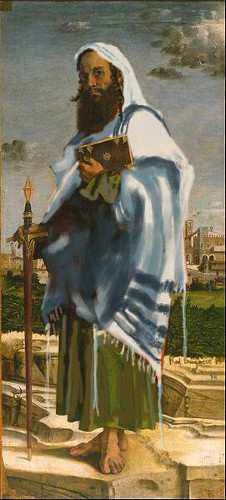 Did Paul believe in the Trinity? Again, an Evangelical wouldn’t miss a beat in saying, “Yes, of course,” but again, we have Hurtado, who we have every reason to believe is presenting a credible case from current NT research, saying that Paul wouldn’t have a clue about the Trinity.




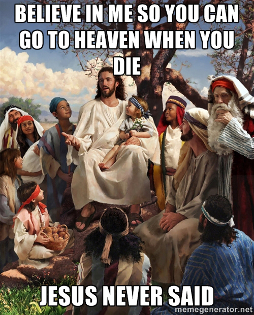







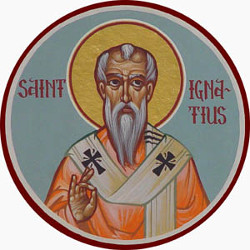






 Morning Meditations