A Christian Seeking Messiah ben David

Everyone agrees with all the wonderful advice and ethics written in the books of the sages. Everyone agrees that this is the way to run your life. The only issue each one of us has is whether those words are truly meant for me, or for someone else in some other time and place.

-Rabbi Tzvi Freeman
“For You”
Based on letters and talks of the Rebbe
Rabbi M. M. Schneerson
Chabad.org

In some strange way, these few sentences capture the struggle we encounter at the intersection of Christianity and Judaism. I know that many Christians and Jews don’t believe their two worlds intersect at all, but in spite of 2,000 years of “discomfort” between us, we just can’t seem to get away from each other.

The other day, on my commute home from work, I saw a car with a bumper sticker that said, “Judeo-Christian.” I wish I could have talked to the driver to find out what they were thinking when they put that on their car.

Let me explain.

Judeo-Christian is a term traditionally used to describe a specific set of ethical or moral values often associated with American historical and cultural beliefs. It artificially forces a connection between Christianity and Judaism that most Jews don’t appreciate. Christianity doesn’t mind so much because of the knowledge that we wouldn’t exist as a faith without Judaism, at least the ancient Judaism that ended (from the church’s point of view) with the destruction of the Second Temple.

When pushed, Jews and Christians will admit to sharing some common values and goals, such as feeding the hungry and and visiting the sick, but the foundations of how Judaism and Christianity view God, the world, and just about everything else are fundamentally and radically different from each other. In some sense, it’s amazing that Christians and Jews can have a meaningful conversation at all, at least on the topic of God (I’m sure there’d be no problem discussing the World Series or something like that).

As many of you know, I’ve recently been trying to describe the linked relationship between Christianity and Judaism as part of Israel’s national redemption. It’s slow going because the idea that God would actually intertwine the destinies of the Gentile church and the inheritors of Sinai is foreign to the two groups. Even within the realm of Messianic Judaism, which should be a friendly environment for both, the idea that Christ can only come back if Christians support and embrace Jewish return to Torah has met with significant resistence (Read Redeeming the Heart of Israel, Part 1 and Part 2, as well as Disconnect Reconnect Disconnect if you don’t believe me).

Paul in Romans 11 explains that it was necessary for there to be a separation between the Gentile believers and the Jews for the sake of the nations. But after so very long existing apart from each other, overcoming the walls we’ve built between us is no easy task.

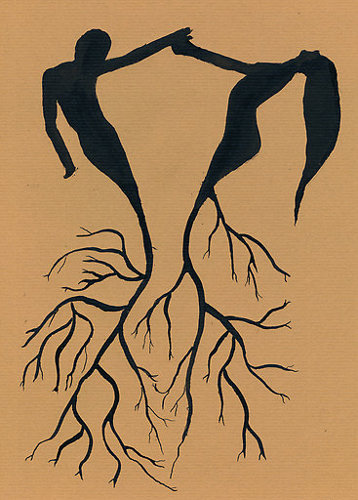
So how do we live together while maintaining our separate identities? How do two people who are married maintain their own lives and wills and uniqueness?

I don’t know, except to say that who we are is built into us. No matter how much you may love your spouse, that love doesn’t erode your personality so you stop being you and start being them.

Something does happen, though. You learn to set aside some of your personal desires and preferences and to act for the benefit of your beloved husband or wife because you want to do good for them.

Our Master did no less for us.

I am the good shepherd. The good shepherd lays down his life for the sheep. He who is a hired hand and not a shepherd, who does not own the sheep, sees the wolf coming and leaves the sheep and flees, and the wolf snatches them and scatters them. He flees because he is a hired hand and cares nothing for the sheep. I am the good shepherd. I know my own and my own know me, just as the Father knows me and I know the Father; and I lay down my life for the sheep. And I have other sheep that are not of this fold. I must bring them also, and they will listen to my voice. So there will be one flock, one shepherd. For this reason the Father loves me, because I lay down my life that I may take it up again. No one takes it from me, but I lay it down of my own accord. I have authority to lay it down, and I have authority to take it up again. This charge I have received from my Father.” –John 10:11-18 (ESV)

The difference between him and us is that Jesus is our Master and we are his disciples and servants. We are not greater than the one who sent us. But with our spouse, neither husband nor wife is elevated over the other.

For as many of you as were baptized into Christ have put on Christ. There is neither Jew nor Greek, there is neither slave nor free, there is no male and female, for you are all one in Christ Jesus. And if you are Christ’s, then you are Abraham’s offspring, heirs according to promise. –Galatians 3:27-29 (ESV)

But I’ve been wrong before.

It shall come to pass in the latter days
that the mountain of the house of the Lord
shall be established as the highest of the mountains,
and it shall be lifted up above the hills;
and peoples shall flow to it,
and many nations shall come, and say:
“Come, let us go up to the mountain of the Lord,
to the house of the God of Jacob,
that he may teach us his ways
and that we may walk in his paths.”
For out of Zion shall go forth the law,
and the word of the Lord from Jerusalem. –Micah 4:1-2 (ESV)

I was having coffee after work the other day with a friend and we were discussing this whole matter. We realized as we were talking that, after 2,000 years of ascendency; after 2,000 years of being the sole owners and arbiters of salvation through Jesus Christ, the Christian church might not want to acknowledge that “the mountain of the house of the Lord shall be established as the highest of the mountains.” They might not want to repeat the words of the Master when he said (John 4:22) “salvation is from the Jews.”

In other words, we Christians might not want to face the fact that when the Jewish King returns, he will restore Israel to its rightful place at the head of the nations, he will establish forever the full redemption of his Jewish people, and it is we from among the nations who will “flow” up to Jerusalem and the Temple Mount to honor the King of the Jews and to worship the God of Abraham, Isaac, and Jacob.

Rather than the church expecting it to be the other way around. Rather than the Jews “flowing up” to Christianity and abandoning Judaism, the Torah, and ultimately, the Jewish Messiah King.

Kind of humbling for we Christians, isn’t it?

I cheated a bit when I quoted Rabbi Freeman earlier. Here’s the full text of what he said:

Everyone agrees with all the wonderful advice and ethics written in the books of the sages. Everyone agrees that this is the way to run your life. The only issue each one of us has is whether those words are truly meant for me, or for someone else in some other time and place.

If it is truth, it is meant for you, now, here.

There is a truth about our existence in this world that we aren’t always aware of. Maybe we’ve never been aware of it, but it rests inside of us, like a cocoon which appears dormant or even lifeless, and yet contains the beginnings of what will become a spectacular butterfly.

Like a new life being nurtured in a mother’s womb, the will of God for each of us is embedded within our souls, waiting for the right moment to begin to stir. I believe that’s what is happening now in Christianity and Judaism. I believe this is part of what the Master called in Matthew 24:8 “the birth pangs” (please don’t overanalyze that metaphor and say he was really talking about wars and earthquakes…I think he was also talking about what I’m talking about).

Any woman who has ever given birth can tell you that it is a wonderful, and terrifying, and ecstatic, and agonizing experience. So too are the birth pangs we are approaching as Christianity and Judaism, divided for so many centuries, approaches an intersection that God saw and destined before He built the foundations of the Universe.

Our Lord, our Master, our Messiah is coming, but we all play a vital part in summoning his presence. We in the church must encourage the Jewish return to Torah and national redemption of Israel. Israel must be that light to the nations, drawing us all to God. Then the Moshiach will come, the Jewish King will ascend his throne, and the Temple of God will be called a house of prayer for all the nations.

For the children of Israel shall dwell many days without king or prince, without sacrifice or pillar, without ephod or household gods. Afterward the children of Israel shall return and seek the Lord their God, and David their king, and they shall come in fear to the Lord and to his goodness in the latter days. –Hosea 3:4-5 (ESV)

Blessed be the nation of Israel and may she return her heart to God and the Torah, that she may be redeemed and restored. And may the Messiah come soon and in our day.

Toby’s Story and Mine

I promise. I’m running out of Shavuot conference stories. It won’t be long now until I’m tapped out. Be patient.

I mentioned in my recent review of Toby Janicki’s book God-Fearers: Gentiles and the God of Israel that I was just a tad disappointed that he didn’t describe anything about his personal journey in transitioning away from One Law. I kind of expected that he would have included some of those details, because he told a lot of his personal story at the conference last week.

I promised to share one of those stories with you (I have Toby’s permission to do so). I don’t think I’ll be able to tell it as well as Toby did. Certainly, I’ve forgotten a lot of the little details by now. In fact, since I’m telling all of this from memory, doubtless my story will contain just a ton of errors. Hopefully, I’ll still be able to get the main point across. Then I’ll tell you a story of my own.

But Toby’s story first.

Toby talked about visiting what sounds like some sort of upscale food store in the Denver area several years ago. He was wearing a talit katan under his shirt with the four tzitzit extending out into public view. He apparently was very satisfied with the tzitzit being the correct halakhic length and with the proper blue for the techelet threads. His observance of the mitzvot of the tzitzit was just flawless.

As Toby was approaching the check out line, he heard a man’s voice from behind him, “Excuse me.”

Toby paused and turned as the man continued to speak.

“Are you Jewish?”

At this point in Toby’s story, I can imagine him freezing momentarily in a sort of “deer in the headlights” pose.

Toby said, “No.” This prompted the other fellow, who was Jewish, to ask Toby a number of questions. Why would someone who wasn’t Jewish wear tzitzit, and particularly pay such fine attention to the relevant halachah? Toby most likely answered each of this Jewish person’s questions and I don’t doubt it would have been a fascinating conversation to watch and hear. I somehow believe that the Jewish gentleman never quite understood the whole concept of “One Law” and why anyone who wasn’t Jewish would desire such an experience. On the other hand, he may full well have understood the implications of people who were not Jewish entering into behaviors that, on the surface, made them seem as if they were.

It’s what I would call an epiphany event for Toby. The light bulb went off over his head. He realized something that had never occurred to him before on a very fundamental level.

That’s the best I can do about Toby’s story but before getting to my own, I want to share another one I heard at the conference.

A non-Jewish fellow at the conference described how he once went into a church, not his home church by any means, wearing a kippah and carrying a talit gadol over his arm. He elicited a lot of questions from the other Christians there, particularly, “Are you Jewish?” Of course, the answer had to be no, but the fellow in question felt that dressing as he did would be a witness to the Christians and allow him to speak about the Jewishness of Jesus. Perhaps in that one church it did, but what does it say when someone who is not Jewish dresses in a manner that seems to say he is a Jew? Toby’s encounter was accidental. This other gentlemen deliberately presented a confusing message about his identity.

What are we really saying to the Jews and Christians around us when we create the impression that we are someone we really aren’t?

Praying with tefillinNow to my story. It’s not a single event, but I’ll pretend it is so this blog post won’t go on too long.

Like most people who live in a suburban home, my house’s master bedroom has a walk-in closet. It used to be my habit to pray in that closet in the mornings. I would take my siddur with me and reciting the proper blessings, don my talit and lay tefillin (I want to thank my friend Baruch Hopkins for teaching me the proper manner of laying tefillin, particularly since being left handed, my technique must be different from most other people). My Hebrew is terrible (as many people at the conference I recently attended can attest), but I prayed from my heart and my humble devotion to God. I believed that, imperfect though my prayers were, imperfect though my Hebrew was, and imperfect as my performance of the relevant halachah was, I was doing my best. I hoped God would understand.

And I didn’t want my Jewish wife to walk in on me during my prayers. I tried to time everything so she’d either be asleep or already gone to work when I’d pray. I know it may sound silly to you, but I had a couple of important reasons.

The first was that I wanted to be able to completely focus on my prayers. I didn’t want to be interrupted or to have to worry about being interrupted during prayer. I wanted and needed to have a private time when I could connect to God.

The second reason was that I was embarrassed. It wasn’t just that I have no command of Hebrew and that I don’t really know how to don a talit, although that’s embarassing, too. It’s that she’s Jewish and I’m not. Although she wasn’t raised in a Jewish home and for many years, did not have a lived cultural and religious experience, she has overcome many barriers and worked extremely hard to connect and integrate with the Jewish community. She has finally become a member of our local Jewish community and her habits, viewpoint, and even thought processes have become increasingly Jewish.

I certainly can’t say the same thing for me, and yet there I was, wearing a kippah, wearing tzitzit, binding tefillin on my arm and on my forehead, and trying to pray in bad Hebrew from a siddur.

When Toby was telling his story and how he felt when he was speaking with a Jewish man about why a Gentile Christian should be dressing like a Jew, I wondered if he felt even half as uncomfortable as I did when I just imagined how my wife pictured me. Toby’s encounter was with a stranger he probably never saw again. I had the same encounter but with my wife who I see all the time.

Toby’s encounter was probably only one of the steps he took on his journey which resulted in him re-evaluating his One Law beliefs. My “quasi-Jewish prayer life” was only one of the steps in my journey. But they’re both examples of our realizing that there is some part of the One Law assumption that just doesn’t “feel” right. When we put it into practice outside of our cloistered little groups, we have experiences that help us realize, however unintentionally, that we are putting on a mask when we wear tzitzit in public. As Gentiles, we are telling the world that we are a person who we really aren’t. Regardless of our intent, we are saying we’re Jewish when we know we’re not.

One SoulAnd when we do that, what do we do to the Jewish people around us? That’s a question I had to ask myself. What was I telling my wife about her Jewishness when I behaved in a manner that is unmistakably Jewish? What was I saying about how I viewed her unique choseness by the God of her fathers? Was I cheapening that specialness by adopting Jewish prayer behaviors? My prayers were in private. No strangers could have been offended. But if I don’t choose to respect my own Jewish wife and instead, I insist I have a right to wear tzitzit and tefillin, what commandments am I “obeying”…and which ones have I just shattered?

Therefore a man shall leave his father and his mother and hold fast to his wife, and they shall become one flesh. –Genesis 2:24 (ESV)

I’ve probably made a mess of Toby’s story and want to apologize to him and to everyone else for getting most of it wrong. However, I can tell you that I got my own story “spot on.” I’m not telling anyone out there what to do. I can only tell you why I stopped doing many things I still cherish and put away my tallit and tefillin. The siddur still sits on my night stand, but often it is abandoned. I still talk to God, but I’ve removed the “Jewish” elements.

When I was at the Shavuot conference, I arrived early on Friday morning. As I sat in the sanctuary, I heard the faint sound of praying from the direction of the library. I followed the sound and discovered that a number of men had met in an upper room for shacharit prayers. The Hebrew was beautiful, but it wasn’t just the language. Although Hebrew will always be a challenge for me and most likely beyond my grasp, these prayers speak to my heart in a way no other type of prayer can. I really miss it. I can’t explain why, but I really do.

In fiction, a story has a beginning, a middle, and an end. In real life, the story continues as long as we can draw a breath. My heart is still beating and my lungs still take in air, so my story is still moving forward. I still have no idea how it will end.

The only thing I can do is keep writing my story one blog post at a time and see what happens next.

God-Fearers: Gentiles and the God of Israel, A Book Review

When I first started writing this review, I couldn’t find anything about Toby Janicki’s new book, God-Fearers: Gentiles and the God of Israel either on First Fruits of Zion’s (FFOZ’s) website or through a general Google search. The book hadn’t been released for public sale when I got my advance copy at FFOZ’s recent Shavuot conference, but I didn’t realize it was so new that there was no advance publicity available. I emailed Boaz Michael and he asked me to hold off publishing my review for a few days. As a consequence, this review is a bit different than the one I originally created. Not too different though, and my conclusions are the same.

The question of when the book would become available for purchase was kept as an unexpected announcement for the Shavuot conference. Boaz and Daniel Lancaster wanted to surprise Toby by presenting him with a copy during one of Toby’s presentations. No one, including me, expected to be able to actually get their hands on “God-Fearers” as early as last week. Boaz gave me my personal copy at the conference so I’d be able to write a review soon after I returned home. I had it completely read by the time I had to board my flight at the Minneapolis-St. Paul airport to return to Boise last Monday night.

I have to admit that I was a little disappointed when I read the book and discovered that it didn’t contain the one piece of content I had anticipated. I think both Toby and Boaz mentioned at the conference that this book would describe Toby’s personal journey from a One Law position to his current theological stance, which I guess we now call (more or less) “divine invitation” (I put that in quotes because when you’re invited but not commanded to take on additional Torah mitzvot beyond what a Christian would consider obligation, the results from one person to the next can be variable). I was really hoping Toby would write what it was like from inside FFOZ as their formal policy and faith structure transitioned into its current form. I was hoping to be able to actually see Toby’s personal journey against the backdrop of FFOZ’s ethical, moral, and spiritual development from what it was originally to what it has become today. At the conference, Toby even shared a story (which I’ll write about in a later “meditation”) about an “epiphany event” in his life that dramatically illustrated for him the dissonance between a Gentile publicly practicing Jewish identity behaviors and how it actually looks to Jewish people. None of that kind of content actually made it into the book.

What did make it into the book is a worthy read, however there is a fair amount of repurposed materials from articles Toby wrote for Messiah Journal (MJ). Since I read MJ regularly, the vast majority of what Toby’s book contained was familiar to me. Of course, if you don’t subscribe to MJ or you want all of this information collected in one place, God-Fearers is definitely for you. The material is also “fleshed out” somewhat so that articles that were only loosely related and published across the span of many months, are integrated into a fairly seemless set of topics focusing on the history and evolution of the presence of Gentiles in the worship of the God of Abraham.

OK, what’s the book about? Toby researches and investigates the history and context of non-Jewish people who, across the long centuries from Sinai to the fall of the Second Temple, have attached themselves to the God of Abraham, Isaac, and Jacob, but without the benefit of a formal convenant relationship with that God being available (unless you count the Noahide covenant). Toby presents to his audience, a set of pictures of what Gentiles looked like as they became aware of the God of Israel, began to grasp the concept of ethical monotheism as opposed to pagan polytheism (which was universal among the non-Jewish nations throughout the vast majority of our history), and how we non-Jews began to enter, however hesitantly, into the presence of God through the “interface” of normative Judaism.

When Christians think about God-fearers, they tend to think of the Roman Centurion Cornelius in Acts 10, who Jews would tend to call “a righteous Gentile.”

Now while Peter was inwardly perplexed as to what the vision that he had seen might mean, behold, the men who were sent by Cornelius, having made inquiry for Simon’s house, stood at the gate and called out to ask whether Simon who was called Peter was lodging there. And while Peter was pondering the vision, the Spirit said to him, “Behold, three men are looking for you. Rise and go down and accompany them without hesitation, for I have sent them.” And Peter went down to the men and said, “I am the one you are looking for. What is the reason for your coming?” And they said, “Cornelius, a centurion, an upright and God-fearing man, who is well spoken of by the whole Jewish nation, was directed by a holy angel to send for you to come to his house and to hear what you have to say.” –Acts 10:17-22 (ESV)

Most Christians are familiar with these verses and based on this text, we imagine that God-fearers sprang abruptly into history as fully realized as Cornelius sometime in the late Second Temple period. But Toby shows us that the concept of God-fearers goes way, way back, possibly as early as the time of Moses and the Sinai covenant. His book presents Biblical evidence of God-fearers in the psalms, such as Psalms 115, 118, and 135. He also cites Midrashic references, such as Numbers Rabbah 8:2 and Genesis Rabbah 28:5 to show us that normative Judaism acknowledged the presence of God-fearing Gentiles within their midst across the span of Jewish history.

Conceptualizing the relationship between Gentile God-fearers and the Torah is complex. It can even be complex (depending on your point of view) for the Gentiles who have become disciples of the Jewish Messiah (i.e. “Christians”). We see the bare bones of the expectations for the non-Jews who wanted to enter the Messianic covenant in Acts 15, and the book reveals itself to be a commentary not only of God-fearers the way the church traditionally thinks of Cornelius, but of the Gentile who is on a journey of discovery from first becoming aware of the God of Israel, to attaching to that God, perhaps as a Noahide or something similar, and then finally being adopted as sons and daughters of the Most High when we confess the Jewish Messiah as Lord and Master, formally becoming disciples of Jesus and members of the Messianic covenant.

Additionally, Toby describes many of the detailed questions a lot of us have in terms of Gentiles and Jewish identity markers such as Shabbat, tzitzit, tefillin, the Festivals, and other examples of the mitzvot. Please keep in mind that in writing this review, I’m shooting through material that covers over 150 pages in barely 1600 words so I’m just hitting the high points. There’s a lot more elucidating information contained in Toby’s “God-Fearers” book which of course, you’re going to have to read for yourself.

god-fearers mosaicI can see “God-Fearers” being a really great resource either for a non-Jew just entering into the Messianic movement, or for someone who has been active in the movement for awhile but who experiences significant gaps in understanding the role of a non-Jewish disciple in a Messianic Jewish context (I met many people in both of these groups last week at the conference). For those of you who fear that FFOZ is using this book to say, “Gentiles can’t study and take on anything in the Torah,” this book will reassure you that nothing could be further from the truth. In fact, the book represents a great deal more flexibility as far as what Gentiles are allowed and even obligated to do under Torah than I originally anticipated (I discovered this when I read part of this material in Messiah Journal some months ago). If you keep an open mind and let the book tell its own story, I don’t think you’ll be disappointed as a non-Jewish person who feels “called” to some form of Torah mitzvot observance.

As I mentioned before, I really was hoping that at least the last chapter would have told something of Toby’s personal journey. It’s one thing to provide scholarly information about “generic” non-Jews and how we relate to the Torah and the Messianic movement, but I think the book would have really come alive if Toby had shared his personal thoughts and emotions as FFOZ and he both moved away from the One Law perspective. I got a sense in having talked with Toby for a bit at the conference (he was really busy for those four or five days so I didn’t get to spend any significant time with him) that there is a lot more for him to tell than what finally made it into God-Fearers.

Do I recommend Toby’s book? Absolutely. I think it’s an extremely valuable asset for the audience I described above. I hope if this book goes to a second printing or, if it be God’s will, a second edition, that Toby will include some of his lived, personal experience into the text. The intellectual, emotional, and spiritual value of God-Fearers: Gentiles and the God of Israel would increase immeasurably if he did. That said, if you get your hands on a first edition now, consider it a terrific resource and possibly even a collector’s item.

As I mentioned before, I have a story to tell about Toby (he knows I’m going to share it on my blog) and how it is part of my own.

Blessings.

Not Ashamed

Gentiles in Messiah have been transformed by Yeshua’s redeeming work and, as we shall see, are more than just mere Noachides or first-century God-fearers. Those of us from the nations should be proud of who God created us to be. We have an important opportunity to be a light for HaShem and his kingdom that only we can be. Together with our Jewish brothers and sisters in Messiah, we must work towards establishing Messiah’s kingdom and the rule of Torah, while at the same time accepting our own unique roles. At the same time, some may wonder whether it matters if a person is called a Jew or a Gentile.

Aren’t we all one new man in Messiah? Doesn’t the Torah say that there shall be one law for both the stranger and the native-born alike? In the next chapter, we will consider the context of those passages that seem to apply the same standard and obligation of Torah law to both Jews and Gentile believers.

-Toby Janicki
from his soon to be released book:
God-Fearers: Gentiles and the God of Israel
Chapter 1, pp 24-25

This book just became available from First Fruits of Zion (FFOZ) but I managed to get my hands on an advance copy last week at the FFOZ Shavuot conference, so I was able to read it several days ago. The first thing I thought of when I finished chapter one was the 1992 Newsboys pop song I’m Not Ashamed (boy, it was good to hear that song again). Of course the song focuses on Christians who are hesitant to share their faith in a world dominated by secular values, but I applied it to how a lot of non-Jews in the Messianic movement seem “ashamed” or “embarrassed” just to be Gentiles in a Jewish religious context. I’ve met more than a few non-Jews in the movement who somehow feel that being a Gentile just isn’t good enough. They seem to think that being Jewish is where the “action” is.

I’ve already written about the absolutely fabulous role that Gentiles play in God’s plan in the redemption of national Israel and the return of the Messiah (see Redeeming the Heart of Israel, Part 1 and Part 2). That means I certainly believe we have no reason whatsoever to be ashamed, embarrassed, or put off about not being Jewish and still worship and honor God in Messianic Judaism. Nevertheless, these emotions are ubiquitous among Gentiles in the various flavors of Messianic Judaism. I suspect this is the motivation, conscious or otherwise, for some Gentiles to be attracted to either the One Law or Two-House theologies (although I know this isn’t true of everyone in those two traditions), each of which require some “equalization” of Jews and Gentiles within Messianic Judaism though a process of homogenization of Jewish and Gentile distinction.

About the only other “cure” (besides just getting past this insecurity and being delighted in who God made you to be) for this condition among some (but far from all) Messianic Gentiles, is to leave the Messianic movement entirely, abandoning faith in the Jewish Messiah King and converting to some other form (usually Orthodox) of Judaism. This is pretty much “throwing out the baby with the bath water” and our movement has been torpedoed (yes, I said “our” since even though I’m a Christian, I can still embrace Jesus as the Jewish Messiah within his correct context) on multiple occasions by people who are struggling with personal faith and identity issues.

I must admit, I can hardly be critical of these folks since more than once I’ve been severely tempted to “throw in the towel” myself, not only in terms of the Messianic perspective, but as far as any faith tradition at all. This life can be miserably hard and lonely and it would be easier to follow the path of least resistance and to either join and blend into a traditional church or just forsake Jesus altogether and enter into the masses of the secular herd.

But I just can’t make myself do it. I can’t make myself walk away. Some incredible drive keeps pulling me back, like an enormous elastic band holding me to the center of God so that I can only run so far away from Him before being snapped back.

The marketing material for Toby’s book wasn’t available from FFOZ when I originally wrote this “meditation,” so my full review won’t appear for the next day or so. I will tell you though, that the direction this book takes dovetails quite nicely with FFOZ’s current and future vision and frankly, it works very well with my vision, too.

Like many Christians who have been involved in the Messianic movement for a while, I’ve gone through the “developmental phase” of almost hating being a Gentile and longing to discover some hidden “crypto-Jewishness” in my genealogy. I never found any, which is fortunate, because if I did, it would have robbed me of the opportunity to discover that God loves Gentile Christians, too and that He has a very specific and incredibly vital role in His plan just for us.

But the most important gift I received over the past week that I want to share with you, is that we don’t have to be ashamed or embarrassed because we’re not Jewish. We don’t have to be jealous of envious of Jews and their unique covenant relationship with God. We have something that is better even than sons and daughters. We have the right to be called God’s sons and daughters. We have the right to be the precious crown jewels among the nations.

I’m not ashamed. You don’t have to be either.

Addendum: I’ve been reminded recently that there are many congregations of non-Jews in Hebrew Roots who are not looking to create their own “Judaism.” Instead, they seek to express their worship and devotion to God in a manner that acknowledges the Jewishness of Jesus. If that’s you and you are perfectly fine being a Gentile Christian in a Messianic Jewish or Hebrew Roots congregation, then this blog post may not be speaking to you. That’s OK, too.

Naso: Bridegroom of the Sabbath

The Torah portion of Naso discusses the law of Sotah: (Bamidbar 5:11-31) When a husband warns his wife not to be alone with a certain man and she disobeys him, then even if she did not sin with that man, the very fact that she was alone with him causes her to become a sotah — a woman “straying from the path of modesty.” (Rashi, ibid., verse 12.)

The relationship between husband and wife in this world is analogous to the relationship between the A-lmighty and the Jewish people, who are deemed “husband and wife.” (See Likkutei Sichos , Vol. III, p. 984.) Thus all the laws of sotah apply to the relationship between G-d and the Jews.

The “warning” that G-d issues to the Jewish people is the command: “You shall have no other gods before Me.” (Shmos 20:3.) This is similar to the warning: “do not conceal yourself with a certain man.”

The Chassidic Dimension
Commentary on Torah Portion Naso
Based on Likkutei Sichos, Vol. IV, pp. 1032-1034
and the teachings of the Lubavitcher Rebbe
Rabbi Menachem M. Schneerson
Chabad.org

The Bible is replete with marriage metaphors, usually contrasting God and Israel as husband and wife. We also have a great deal of similar imagery in the Apostolic Scriptures depicting Jesus as husband and the church as his bride.

Wives, submit to your own husbands, as to the Lord. For the husband is the head of the wife even as Christ is the head of the church, his body, and is himself its Savior. Now as the church submits to Christ, so also wives should submit in everything to their husbands.

Husbands, love your wives, as Christ loved the church and gave himself up for her, that he might sanctify her, having cleansed her by the washing of water with the word, so that he might present the church to himself in splendor, without spot or wrinkle or any such thing, that she might be holy and without blemish. –Ephesians 5:22-27 (ESV)

Many Christian women take great comfort in these metaphors but more than a few men struggle with the role of “bride” relative to the Messiah. But let’s not be incredibly literal, since the Bible writers are using metaphors to describe a level of close intimacy between the Messiah and his disciples that can only be likened with the closeness and love experienced by two people who are intertwined by devotion. But Israel and the church aren’t the only “bride” metaphors we know of.

The chorus of the classic Sabbath hymn Lekhah Dodi states in part:

Let’s go, my beloved, to meet the bride,
and let us welcome the presence of Shabbat.

But in this instance, if the Shabbat is the bride, who is the bridegroom? The traditional Jewish tradition casts God in that role, but we also have this:

Or have you not read in the Law how on the Sabbath the priests in the temple profane the Sabbath and are guiltless? I tell you, something greater than the temple is here. And if you had known what this means, ‘I desire mercy, and not sacrifice,’ you would not have condemned the guiltless. For the Son of Man is lord of the Sabbath.” –Matthew 12:5-8 (ESV)

The oldest text we have for this passage is in Greek, but if we try to “retrofit” these verses back into the Hebrew thoughts of the Jewish writer of Matthew, when he says “the Son of Man is lord of the Sabbath,” what word did he use for “lord?”

“Adon” seems to be fitting under the circumstances, but a week ago, I heard a different interpretation by a young Jewish scholar (yes, I’m “borrowing” this from you, Nick) who offered a sort of midrash on this topic.

The word Baal is derived from the common Hebrew verb (ba’al), own, rule, possess. The verb is even used to indicate the husband’s relationship to his wife (Deuteronomy 24:1) and is applied to the relationship between God and man, “For your husband (ba’al) is your Maker…” (Isaiah 54:5).

-quoted from the
abarim-publications.com website

ShabbatBaal can mean both “lord” and “husband” but by deliberately applying the latter meaning, we can discover something about the relationship between Messiah and the Shabbat as well as something about the Messiah and us.

When we read the passage as “‘lord’ of the Shabbat”, we think of someone in charge or in command or with authority. These are very powerful images, but they don’t fit very well with how a loving groom should be approaching his bride. However, if we say, “‘husband’ of the Shabbat,” we completely change the meaning. Suddenly, we have an intimate, warm, caring interaction between the Messiah and the Shabbat.

Some Jewish sages state that the Shabbat is actually a small taste of the life in the world to come; Paradise, if you will. Creating the picture of a husband, the Messiah, welcoming his beloved bride, the Shabbat, into his arms, we can see something of the peace we will experience when he finally returns and fixes our broken world and our broken hearts.

He will wipe away every tear from their eyes, and death shall be no more, neither shall there be mourning, nor crying, nor pain anymore. –Revelation 21:4 (ESV)

This also fits very well back into what we saw in Ephesians 5 in comparing Jesus and the church with a husband and wife.

I know I’m being more than a little poetic here, but I take a certain amount of comfort in applying the lessons of both this week’s Torah Portion and the Shabbat to my walk of faith, and realize that Shabbat is not only a way for God to comfort us in the midst of our weekly trials, but His promise that He will always love us and, through the Messiah, grant us eternal peace.

Why should we stray after others to be alone with them when we can be the bride of the Moshiach and receive boundless intimacy with our bridegroom.

Good Shabbos.


Redeeming the Heart of Israel, Part 1

So when they had come together, they asked him, “Lord, will you at this time restore the kingdom to Israel?” He said to them, “It is not for you to know times or seasons that the Father has fixed by his own authority. But you will receive power when the Holy Spirit has come upon you, and you will be my witnesses in Jerusalem and in all Judea and Samaria, and to the end of the earth.”

–Acts 1:6-8 (ESV)

At present, however, I am going to Jerusalem bringing aid to the saints. For Macedonia and Achaia have been pleased to make some contribution for the poor among the saints at Jerusalem. For they were pleased to do it, and indeed they owe it to them. For if the Gentiles have come to share in their spiritual blessings, they ought also to be of service to them in material blessings. When therefore I have completed this and have delivered to them what has been collected, I will leave for Spain by way of you. I know that when I come to you I will come in the fullness of the blessing of Christ.

–Romans 15:25-29 (ESV)

It is believed by the sages that if all of Israel would observe a single Shabbat properly, the Messiah would immediately come, since obeying the Shabbat is equivalent to obeying the entire Torah. We could extend this idea to say that if all Jews were to perfectly observe all of the Torah mitzvot, the redemption of Israel would be at hand. Interestingly enough, the two portions of scripture I quoted above directly apply to this concept. Let me explain.

There is just so much I could say about the First Fruits of Zion Shavuot conference I attended a few days ago. In fact, over the next several days, I will blog almost exclusively on my different experiences at Beth Immanuel, however one particular presentation stands out. When I heard it on the evening of the last full day of the conference, I knew it would be the keystone to everything I took away from my trip and the centerpiece to everything I intend to write.

I’ll just tell you in advance that this is going to be challenging. Some people don’t like being challenged.

Boaz Michael, Founder and President of First Fruits of Zion (FFOZ) gave a presentation about, among other things, the redemption of Israel. But it’s not the sort of redemption that you are probably imagining. According to dictionary.reference.com, redemption, in a theological sense, can mean:

  1. deliverance from sin; salvation.
  2. atonement for guilt.

This falls in line with the traditional Christian understanding of the term “redemption” and often equates to “when I die, I’m going to heaven.” Being “saved” or “redeemed” is typically the single most important part of what happens to a Christian. Nothing else matters until you “confess Christ” and are “saved.” After that, you can live a life consistent with the teachings of Jesus knowing your eternal future in Heaven is secure.

But Jews think about meriting a place in the world to come quite a bit differently. The chief difference is that Jews aren’t really obsessed about being “saved” and “going to heaven.” While meriting a place in the world to come is certainly important, Religious Jews are far more concerned with obeying God in the here and now, and some even look for opportunities to perform a mitzvah that cannot often be accomplished. There is even a saying that the reward for a mitzvah is a mitzvah. This is actually a concept Christians should recognize:

For to everyone who has will more be given, and he will have an abundance. –Matthew 25:29 (ESV)

Jewish in JerusalemThis is the point of the “parable of the talents” as told by the Master. As in the wisdom from the Pirkei Avot (Ethics of Our Fathers), “the reward of a mitzvah is a mitzvah and the ‘reward’ of a sin is a sin,” we are “rewarded” for what we do, whether it is for the good or the bad. That reward can come either in this world or the next, according to Jewish thinking, but it’s directly tied to the sort of life a Jew lives right now. Jews have been commanded to obey all of the 613 commandments in the Torah but as you might imagine, being just as human as Christians or anyone else, they don’t do a perfect job. Unfortunately, God was very specific about the consequences to the Jewish people if, as a nation, they did not obey the commandments of Sinai.

The second Temple – when the Jews were involved in Torah, mitzvahs and acts of kindness – why was it destroyed? Because the Jews were guilty of harboring baseless hatred towards each other!”

-Rabbi Naftali Silberberg
-as quoted from askmoses.com

Most Christians believe that Herod’s Temple was destroyed in 70 CE and the Jews subsequently exiled from Israel because they did not accept Jesus as the Messiah. As you’ve just seen, this isn’t how Jews understand the cause for their exile and in fact, during the days of the Second Temple and when Jesus walked among his people, proper Jewish religious observance was rather high; much more so than in the days of the destruction of the First Temple.

However, the sin of baseless hatred of one Jew for another was very severe. Jesus especially pleaded with his people to repent of this sin.

“If your brother sins against you, go and tell him his fault, between you and him alone. If he listens to you, you have gained your brother. But if he does not listen, take one or two others along with you, that every charge may be established by the evidence of two or three witnesses. If he refuses to listen to them, tell it to the church. And if he refuses to listen even to the church, let him be to you as a Gentile and a tax collector. –Matthew 18:15-17 (ESV)

As recorded in Matthew 18:21-35, the Master illustrates how serious this sin is in the “parable of the unforgiving servant.” But sadly, tragically, Israel didn’t listen, resulting in dire consequences.

“O Jerusalem, Jerusalem, the city that kills the prophets and stones those who are sent to it! How often would I have gathered your children together as a hen gathers her brood under her wings, and you were not willing! See, your house is left to you desolate. For I tell you, you will not see me again, until you say, ‘Blessed is he who comes in the name of the Lord.’” –Matthew 23:37-39 (ESV)

Simchat TorahIt’s not as if every single Jew in Israel was guilty of this sin, but Israel is judged by God as a nation, not a collection of individuals. If the nation is in sin, every Jew suffers whether they commmitted the offense or not. To this day, the Jewish people are in exile, not because they failed to recognize Jesus as the Messiah, but because they refused to listen and obey his teaching to turn away from the sin of baseless hatred toward their brothers and to instead seek peace.

This has nothing to do with whether or not Jews merit a place in the world to come. God didn’t take away Jewish “salvation” as a result of this sin, He took away the posession of the Land of Israel from the Nation of Israel, and scattered them across the face of the earth. Redemption, for Israel, isn’t being saved so they can go to Heaven, it’s the restoration of the Jews to their Land and the ascension of Israel above all the peoples of the earth.

It shall come to pass in the latter days
that the mountain of the house of the Lord
shall be established as the highest of the mountains,
and it shall be lifted up above the hills;
and peoples shall flow to it,
and many nations shall come, and say:
“Come, let us go up to the mountain of the Lord,
to the house of the God of Jacob,
that he may teach us his ways
and that we may walk in his paths.”
For out of Zion shall go forth the law,
and the word of the Lord from Jerusalem –Micah 4:1-2 (ESV)

Connect that back to Acts 1:6-8 and you’ll see that Israel, as a nation, awaits final redemption so it can be restored to the place at the head of the nations as God has always intended.

But what does that have to do with you and me? Even if we accept that this is true for the Jewish people, what sort of role would Christians have in Israel’s redemption?

I’ll give you the answer to that in Part 2.

"When you awake in the morning, learn something to inspire you and mediate upon it, then plunge forward full of light with which to illuminate the darkness." -Rabbi Tzvi Freeman