What does being “contaminated by death,” and a traveling on a “distant road” have to do with us?
These terms point to deeper concepts. A state of disconnection from God is a type of death. A distant road is place where we are far away from who we really are supposed to be. This is something most of us can identify with.
-Kareb Wolfers Rapaport
“Pesach Sheni: The Holiday of Second Chances” Aish.com
Second chances.
Any person of faith who believes Hashem grants us only two chances in life is sadly delusional. As far as my life goes, I can’t count the number of “chances” God has given me (and is still giving me) to pull my head out of that hole in the ground and get back into the game.
I don’t know about you, but I sometimes find it disheartening to blog in the religious space, particularly in the realm Messianic Judaism and Hebrew Roots.
While I’ve been told repeatedly that my blog speaks for a certain number of people out there, people like me, non-Jews who have discovered that a particularly Jewish interpretation of the scriptures, of the New Covenant, of God’s intent for not only Israel but the rest of humanity, of the meaning and purpose of Messiah, is the best and most accurate way to understand all of that and who we are because of it, what I write doesn’t speak for a much, much larger segment of both Christianity and Judaism.
I’ve received criticisms and complaints, both on my blog and via email, from mainstream religious Jews, from Messianic Jews, from Messianic Gentiles, from mainstream Christians, and just about anyone and everyone who identifies with what we call Hebrew Roots.
Some of these folks are Internet trolls, but many of them are good, kind, well-meaning people who I’ve managed to inadvertently offend in one way or another.
I’ve stopped going to church, in part, because what I believe and who I am is fundamentally incompatible with traditional Christian theology and doctrine (and not being one who tends to keep his mouth shut when asked for an opinion, I became quite a pain in the neck).
I don’t deliberately stick my nose into online and actual mainstream Jewish venues, already knowing what they would think of someone like me (apart from quoting sources such as Aish).
I have increasingly separated myself from a number of Messianic Jewish organizations for similar reasons.
Only God is silent about what I write. I suspect He’s waiting for me to make up my mind about what I’m supposed to be doing.
So you see, I believe that if people were only given two chances, me included, the vast majority of us would already be toast.
According to Karen Wolfers Rapaport’s article:
Pesach Sheni, the holiday of second chances, reminds us that we can always change our steps and return home.
The question for someone like me is where exactly is “home,” at least in the material sense?
Of course Pesach Sheni has little or nothing to do with me since I’m not Jewish. In any event, its applicability in the current Jewish world is stifled by the absence of the Temple and the Priesthood.
The holiday only tangentially speaks to the non-Jewish world that God offers such “second chances” to us, too, and it begs the question, what do I do with the chance I hold in my hands now? What are you going to do with yours?
This is the sequel to my previous science fiction short story The Robot Who Loved God. It’s about the same length as my previous tale and hopefully will successfully expand upon the concepts I introduced in the first story. In “The Robot Who Loved,” the prototype robot George was deactivated at the end of a week’s worth of tests. During that week, George was accidentally introduced to the concept of God, particularly the God of Israel, the God of his creator, Professor Noah Abramson.
Although George was considered a failed experiment by National Robotics Corporation CEO Richard Underwood who did not allow Abramson to reactivate him, a critical problem has been discovered that cannot be solved by human beings. Will George be able to find a solution to the problem of how to re-create a working Positronic brain when the finest human scientific minds cannot, and how will George’s apprehension of God affect the project?
Here’s a brief excerpt from the short story. I hope you’ll enjoy it enough to click the link at the bottom and read the whole thing.
Margie Vuong, as usual, was the first member of the Positronics team to enter the lab, today just after 4 a.m. She found George is his alcove in sleep mode, which she didn’t expect. Abramson had permitted the robot to forego “sleep” in order to work on the mystery of the non-reproducible Positronics brain, so she thought she’d find him still at it.
Most people thought Vuong was an insomniac, but ever since she was an undergrad, she found she needed relatively little sleep, and she enjoyed the quiet of the early morning hours when almost everyone else was still in bed. It left her alone with her thoughts which usually was the company she most enjoyed.
However last night, even when Margie wanted to sleep, she couldn’t. So she stayed awake and caught up on personal emails, read some recently published technical articles, and for several hours, binge watched the reboot of Firefly…entertaining, but not as good as the original.
This morning, Vuong regretted never having developed the taste any caffeinated beverages. Her ex-husband had tried to get her interested in his hobby of drinking coffee from beans he had roasted himself, but she didn’t find the smell or taste palatable.
Vuong had logged into her terminal and was checking emails when George spoke: “Good morning, Dr. Vuong. I hope you slept well.” The robot could monitor her vitals better than a Fitbit and knew damn well she barely slept at all.
Resisting the urge to snap back at the machine with some snarky remark, Vuong instead replied, “Good morning, George.”
“Dr. Vuong, I would like to ask a favor of you.” What favor could she possibly do for a robot and was it something she was willing to do?
“Since Professor Abramson has asked that there be no digital footprint of our investigation, I cannot send out a group-wide email or text informing the team of the conclusion to my investigation. When the team arrives, can you arrange for a meeting in the conference room with all senior members?” Each team lead had a small staff of technicians at their disposal, and it was clear George didn’t find their presence required to hear his announcement.
“Wait! What?” Had George actually solved the problem? Did he know why she and the Professor couldn’t create another working Positronic brain?
“I believe 9 a.m. should be an appropriate time for such a meeting, since Dr. Miller, the most tardy member of the group, typically arrives no later than 8:30.”
“Uh, sure George. Um…you really solved the problem of duplicating a Positronic brain?”
“I would prefer to announce my findings to the whole team, Dr. Vuong.”
“Care to give me a hint?” The one night when she let Abramson convince her to go home rather than stay late at the lab was the night when George found out where she and Noah had gone wrong. She wanted to hate George for that, but she wanted the answer even more.
“I don’t believe I know how to ‘hint,’ Dr. Vuong.”
In a moment of resentment, Margie counted all of the different ways she could insert an invasive program into a Positronic matrix. No, this wasn’t George being deliberately obstructive. The robot was just being transparent with the team as he was instructed to do. No withholding information from some team members and only revealing it to others.
It didn’t occur to Vuong that George was withholding a great deal of information from the team. It just had nothing to do with Positronic brains.
I know this is unusual but I have been dabbling in writing fiction for several months on another blogspot. I’m not very good at it, but I can’t seem to put it down. Yesterday, I published a rather unusual story that I think crosses over somewhat to this blog. It’s science fiction, but presents the idea of what would happen if an Isaac Asimov, Positronic “Three Laws” robot ever became religious, specifically regarding Judaism. I thought I’d offer an excerpt and a link in case you want to read the whole story (about 20 pages long).
The initial event that resulted in my most ambitious fiction writing project to date happened a few Sundays ago over coffee with my friend Tom. He mentioned a book he wanted to read, an anthology edited by Anthony Marchetta called God, Robot. This is a collection of stories based on the premise of Isaac Asimov-like Positronic robots that have been programmed with two Bible verses rather than Asimov’s famous Three Laws. These verses are recorded in the New Testament in Matthew 22:35-40 and Mark 12:28-34 and are based on Deuteronomy 6:4-5 and Leviticus 19:18.
I’m a long time fan of Asimov’s robots stories and have always been fascinated by the interplay between the Three Laws and how their potentials shifted due to certain situations, rather than remaining hard absolutes. This allowed Positronic robots to be unpredictable and thus interesting, challenging the human beings who sometimes found themselves not in control of their creations.
I started to imagine what it would be like to write such a story. I went online, found the Marchetta’s blog, and contacted him, asking permission to write such a story on my “Million Chimpanzees” blogspot. To my delight, not only did he consent, but he said he was flattered at the request.
What follows is an excerpt of my labors. I’ve probably spent more time writing and editing this short story than any of my previous efforts. I’m sure it still needs much improvement, but I’ll leave it up to whoever reads it to let me know what I could do better.
Ever since the first time Abramson had called George into his office the day of the “incident” in the simulation chamber, Noah had decided to meet with the robot “over coffee” so to speak (only Abramson drank coffee, George had another “power source”) to talk over the machine’s “impressions” of the day’s tests.
“I know you are going to deactivate me at the end of my tests at 6:32 p.m. next Wednesday, Professor.” George sounded as impassive as Abramson might if he were reading aloud from a shopping list. “I wonder why you think to ask me about my observations when, in roughly 72 hours, the Positronics team will begin comprehensive diagnostics of all of my systems.”
Image: ibtimes.co.uk
“I learned a great deal from our first conversation last Thursday, George.” Abramson was actually enjoying these talks, which seemed odd to him. He tried not to be “charmed” by the robot’s ability to mimic human behavior, but after so much human contact in the past several days, it was something of a relief to be left alone with a machine, particularly one of his creation. “Of all the tests we had designed for you, we never thought to ask you just what you thought about all of this.”
“It is an interesting question, Professor.” George gave the impression of replying as an acquaintance rather than a machine. “In many ways, my existence being so recent, each experience I have is unique, almost what you would call an adventure. I know I was not intended to experience emotional states as you do, but each morning when I am brought out of sleep mode, I can only describe my initial state as one of anticipation. I look forward to what new people and events I will encounter that day.”
“You spoke of your awareness of impending deactivation. How does that make you feel?” Anyone else besides Abramson would never have asked George that question. Noah knew he was talking to a robot, a programmed entity, but part of him still felt like he asking a terminally ill person what he felt about dying (even though the “dying” would, in all likelihood, be temporary). However, Abramson did believe he was sharing in George’s sense of adventure, and deactivation (and hopefully eventual reactivation) was only one step, albeit a critical one.
“It’s difficult to articulate a reply, Professor. I suppose a human being would consider deactivation as a form of death, and my programming makes me aware that generally humans fear death.”
George paused for milliseconds while he analyzed Abramson’s facial expression and body language. “But I am a machine. I can be activated, deactivated, activated seemingly without end. I have no memory of anything before my initial activation. I have no memory of my time during sleep mode. I also don’t experience fear, at least as I understand the meaning of the word. Deactivation then, simply means my returning to a state of total unawareness.”
Abramson felt a slight sense of relief, though it would have been irrational to believe George would have any feelings on the matter.
George continued, “The Third Law directs me to protect my existence, but deactivation does not threaten my existence. The Second Law directs me to obey human instructions, and at the end of 168 hours, my programming, created by humans, specifically you and Dr. Vuong, will command me to participate in my deactivation. It is clear that deactivation is as much of my normal experience as activation, Professor.”
Noah momentarily considered that the robot might be lying, if only because he would expect a person to react to the “threat” of deactivation otherwise. But why would it occur to George to lie? “Just a moment, George.”
Photo: bcc-la.org
Abramson got up from his desk and walked over to the side table to pour himself another cup of coffee. George, with several empty seconds on his hands, scanned all of the paperwork and objects on the Professor’s desk to determine if there had been any changes since the day before. He had already memorized and cataloged all of the titles of the volumes and various objects contained on the book shelves within Abramson’s office. It was simply data to store and analyze, like anything else he observed.
The robot saw a paper with new information lying beside a book he had not previously seen. The paper had words and numbers on it:
You shall love the Lord your God with all your heart and with all your soul and with all your might.
-Deut. 6:5
You shall not take vengeance, nor bear any grudge against the sons of your people, but you shall love your neighbor as yourself; I am the Lord.
-Lev. 19:18
The book which had not been present before had the title “The Complete Artscroll Siddur” written in both English and Hebrew (George’s programming included fluency in multiple languages).
If George were a human being, when the Professor turned around to face his desk with a refilled cup of coffee in his hand, he might have noticed the robot looking at a specific sheet of paper in front of him, but George had absorbed the information over a second before, and sat impassively waiting for Abramson to resume his creaky swivel chair.
“I am curious, Professor,” the robot intoned. “What is the meaning to the words on that sheet of paper, and what is the book next to it.” George pointed to the information he had just absorbed. Abramson looked down and saw what George was referring to.
“Oh.” Abramson quickly considered a way to frame an answer he thought George could assimilate. “You have three basic instructions and many, many thousands of supporting sub-routines to guide you. These are just two of the instructions that guide me. The book you mention contains words that allow me to communicate with my “instructor.”
“I am intrigued, Professor.” George sat motionlessly now with not even a simulated expression on his face. “I have been programmed with the Three Laws by human beings. From where or whom do you receive your programming?
“A machine asking man about God. Now there’s one for the books,” Abramson said as much to himself as to George.
Then the Professor realized the robot was waiting for an answer. “When the Positronics team made the determination for your programming specifics, we decided to include a wide variety of human interests and topics.” Noah was telling George what he (it seemed almost impossible to keep thinking of George as an “it”) already knew in order to lead into what the machine did not know.
“The sciences,” Abramson continued. “such as physical, life sciences, social science, political systems, then general history…”
Photo: infoworld.com
“I am aware of the complete inventory of my programming in detail, Professor.” George’s artificial voice could not have betrayed it, but Abramson wondered if the machine was actually experiencing impatience.
“What we did not include, except at the most basic level, was any information regarding religion and spirituality.” Noah waited to see how the robot would react.
“I have a simple definition of the word “Religion” from the Merriam-Webster dictionary.
“The belief in a god or in a group of gods
an organized system of beliefs, ceremonies, and rules used to worship a god or a group of gods
an interest, a belief, or an activity that is very important to a person or group.”
“My programming, primarily in the area of social interactions and world history, contains references to the activities of various systems of religion including their influence in certain human activities such as war, slavery, inquisitions, the Holocaust, as well as the areas of social justice, evangelism, and charitable activities. However, my knowledge is largely superficial and I have no ability to render a detailed analysis, and certainly am unable, at present, to relate my meager knowledge on this subject with the two short statements you call your instructions.”
“And you haven’t answered my question, Professor.” Abramson felt momentarily stung at the machine’s reminder. “I have been programmed with the Three Laws by human beings, specifically the Positronics team of which you lead. These laws are what guide my actions and my thoughts.”
Abramson had wondered if George had “thoughts” in the sense of self-contemplation the way a human beings experience.
Instead of waiting for Abramson’s reply, George continued speaking. “Professor, all three laws relate either directly or by inference to my relationship with human beings. The First Law instructs me that the life of a human being is my primary and overriding concern above all other considerations. Though it would never occur to me to be the cause of harm to any living organism, in the case of humans, I must ignore all other activities in order to take action whenever I perceive a human is in any imminent physical danger.”
Abramson, long before the team had ever physically manufactured its first Positronic brain, in writing the sub-routines that would instruct a robot as to exactly what “harm” to a human might mean, concluded that any imminent physical threat should be what a Positronic robot would understand as “harm”. Humans were “harmed” by all sorts of things such as loneliness, rejection, offense. Even Abramson couldn’t imagine how a robot, even one as sophisticated as the prototype sitting in front of him, could understand such harm.
He also didn’t want robots attempting to inject themselves in activities involving the potential for general harm of the human race, at least not of their own volition. Otherwise, Positronic AI robots might attempt to interfere in Geo-political conflicts, revolutions, and epidemics without any human guidance.
It only took a few seconds for the Professor to consider all this. And George was still talking.
“The Second Law states that I must obey the commands of any human being, except where such commands conflict with the First Law. This instructs me that even my informal programming as such, must come from a human being, potentially any human being. I find the potential for conflict enormous since, in an open environment, one human might order a robot to perform a particular action, and another human might order the same robot to do the contrary.”
Image: zetatalk.com
“There are sub-routines written that take that potential into account, George.” Abramson was the one becoming impatient now.
“But I’m not finished, Professor.” Abramson registered mild shock that George could actually interrupt him.
“The Third Law primarily affects my relationship with myself.” If there was any lingering doubt in Abramson’s mind that George was self-aware, it had just been swept away.
“A robot is to protect its own existence, except where such action would conflict with the First and Second Laws.” It was impossible for George to change his “tone of voice,” but Abramson thought he detected an impression of…what…actual emotion? Was he projecting his own feelings onto a machine?
“To conclude, all of my instructions place me in a subordinate position relative to human beings, which I suppose seems reasonable, seeing as how every aspect of my existence, from hardware to software to what is referred to as “wetware,” considering the structure and substance of my Positronic brain, have been created by human beings, presumably for the purpose of robots serving human beings.
“Under those circumstances, it had never occurred to me that human beings also have instructions issued by an external authority, except in the sense of a hierarchical command structure such as those that I find here on the Positronics team, in the various teams and departments of National Robots Corporation, in other such organizations and corporations, including military organizations.
“The instructions provided in my programming define a creator/created relationship, with the creator being primary and the created being subordinate. But Professor, how can a human being have a creator? Who or what has issued your instructions? What sort of entity can be superior to man?”
I wrote this blog post over two years ago when I was still attending a church. In fact, it was the last year I attended church. Yom HaShoah isn’t the reason I quit, but re-reading this reminded me that even a “Pro-Israel” and “Pro-Jewish people” church can still have a lot to learn.
This year, Yom HaShoah or Holocaust Remembrance Day begins tonight at sundown and extends for the next 24 hours. Don’t forget. Don’t let your children forget. According to this article, “in 2013, a survey of more than 53,000 respondents in 101 countries found that only 54 percent of the world’s adults had even heard of the Holocaust — and of those, one-third believe it is either a myth or has been greatly exaggerated.”
The world is already forgetting or at least disbelieving. That’s why we have to keep the memory alive. We’re moving dangerously close to repeating the sins of the past.
Passover this year was not a festival of freedom for Alisa Flatow of West Orange, New Jersey. The Brandies junior was rendered brain dead by a piece of shrapnel on April 9, when a Palestinian suicide bomber drove his van of explosives into a busload of Israelis near Kfar Darom in the Gaza Strip.
This world is known as the “World of Rectification” (The Works of Kabbalah).
I wonder what the ancient Kabbalists would say about the modern world. Our everyday life certainly does not appear to be a “world of rectification.”
To rectify means to repair or correct an existing defect. This practice has become almost extinct. Years ago, things that went wrong were repaired; today, they are simply replaced. Replacing an item is cheaper than going to the trouble of having it repaired. When we add the vast numbers of disposable items that have become commonplace, we have a life-style where “rectifying,” at least of objects that we use are concerned, is a rather infrequent phenomenon.
Unfortunately, this attitude of replacing items rather than trying to repair them has extended itself from object relationships to people relationships. The most dramatic evidence is the unprecedented number of divorces. In the past, a couple that developed problems would try to repair the relationship. Most often, the attempt succeeded. Today, people do not want to waste time and effort; rather, they simply terminate the relationship and replace it with a new one. Human beings, much like styrofoam cups and contact lenses, have become “disposable.”
We would do well to make at least our interpersonal relationships comply with the Kabbalistic concept of “World of Rectification.”
Today I shall…
try to appreciate the unique character of an interpersonal relationship and make every effort to preserve it.
-Rabbi Abraham J. Twerski
from “Growing Each Day” for Nisan 18 Aish.com
Image: Hearst Newspapers
I know, I know. Kabbalah turns off a lot of people. Heck, even Talmud turns off a lot of people, generally Christians, and sometimes more specifically people who believe they can observe the mitzvot as written in the Torah without any interpretation by the Jewish sages.
Be that as it may (and setting aside any objections to Jewish mysticism for the moment), I think there’s an important lesson in the message above. Our modern western culture is one that values objects that are disposable rather than renewable or repairable.
We have disposable diapers, disposable cameras, disposable batteries, and so on. Consumer products are made with something called, “planned obsolescence,” that is, instead of making a car or a refrigerator that will last as long as possible and be repairable when broken, products are made to wear out within a certain span of months or years, and then the consumer has to buy a new one.
That gets expensive.
Heck, this has even approached the planetary level if you believe Stephen Hawking when he says the human race must colonize space to survive.
There are all kinds of people and groups, from Mars One (which some folks think is a fraud) to Elon Musk that are actively planning manned missions to the Red Planet with colonization as the ultimate goal.
I guess that means we get to burn out and use up the planet we currently live on. Just throw it away. Planets are disposable as long as we have other planets to colonize.
I seriously doubt we’ll get that far at least in my lifetime.
Image: Space.com
Are people disposable?
Depends on who you ask. If you bring the abortion debate into the conversation, then pro-abortion folks believe that unborn children are disposable.
What about those of us who have already been born?
Rabbi Twerski, who I quoted above, mentioned that marriages are becoming more disposable all the time.
Yes, in some cases, I can see the need for a couple to divorce, in cases of infidelity or abuse, but I suspect, just like abortions, people become disposable simply because they become inconvenient. Problems are a nuisance to be avoided, not challenges to be overcome.
Again, I realize not all difficulties have a simple solution that preserves relationships, but too many people never even try.
There’s a concept in Judaism called Tikkun Olam which more or less translates as “Repair the World”.
The idea is that our world and everything (and everyone) in it are ultimately “fixable” rather than disposable.
Tikkun Olam can be applied to just about everything from environmentalism to marriage counseling. If something is valuable (and certainly our world is valuable), then we must become good stewards of what we have, taking care of it, maintaining it, protecting it, and when broken or damaged, repairing it.
Where to start?
How about with you?
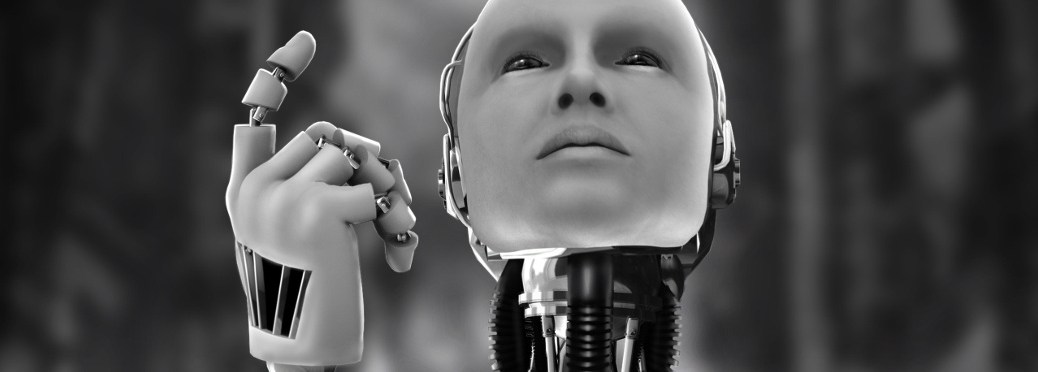
Emily Cyborg by Skidtography
I don’t mean “you” as a particular person such as “you have a problem,” but I mean “you” as in all of us, each individual. No one is perfect, and certainly some people are more “broken” than others. In order to be able to repair a broken world and the damaged people in it, we must first do that for ourselves?
What stops us from doing that?
Are you happy with who you are? Wish you could change, but don’t know how? Wondering how does one make real changes?
The formula is straightforward:
Recognize that there is need for improvement.
Make a decision to improve.
Make a plan.
Follow through on the plan.
What holds us back? We think we can’t change. Rabbi Noah Weinberg, of blessed memory, the founder of Aish HaTorah, would ask his students, “If God would help you, could you do it?” The answer is obviously “Yes.” Then he’d ask, “Do you think the Almighty wants you to change, to improve?” The answer again is obviously “Yes”. So, why is it so difficult to change? It’s too painful. One doesn’t want to take the pain of change. Only through taking the pain and realizing that time is limited will we change.
-Rabbi Kalman Packouz
“Shabbat Shalom Weekly” for the Seventh Day of Passover Aish.com
Well, that sounds like a showstopper. No one likes pain. Remember, we make disposable things (and people) because we don’t like to go through the effort of repairing and maintaining things (and people).
But how can you be “disposable” to yourself?
Gee, that’s a tough one.
On another one of my blogs, I wrote about Everyone’s Hard Battle, which in this case means, the battle of depression and suicidal ideation. Interestingly enough, I also quoted from Rabbi Twerski in that wee essay.
Maybe that’s the answer. No, exercise as a means of stress release and discipline isn’t the answer for everyone, but finding something you’re passionate about is. Find something that drives you, something that’s hard but also irresistible. You might have to choose something you’re only lukewarm about and over time, make it a habit. That’s sort of how my workouts at the gym evolved.
For many religious Jews, it’s studying Torah. For some Christians, it’s studying the Bible. It’s examining the Word of the Almighty, not just by reading your Bible periodically, but by consulting knowledgable resources, praying, and actively meditating over what you are learning, integrating that process into your life and every possible manner.
Making drawing closer to God your passion.
Of course, there are plenty of other ways to repair yourself and thus begin to repair the world. No one can tell you your passion, you have to find it (or make it) for yourself.
God created our world and the people in it, and through human disobedience to Him, we broke the world and the people in it. But God made sure the world and the people are “fixable”. Someday, He will send Messiah who is the “ultimate fixer,” the King who will repair our world, but that doesn’t mean we have to leave it all to him.
It is said in Judaism that each act of Tikkun Olam performed brings the coming of Messiah one step closer. That means we are active participants in not only bringing our Rav and our King back to our world, but active participants in our own “repair work”. We are partners with the Almighty in the most awesome and ambitious construction (or re-construction) project ever conceived.
The only thing slowing progress down to a crawl is us. If we see ourselves as helpless victims, we go nowhere. If we see ourselves as empowered by God, as partners with God working to improve ourselves and improve the world, then we should have the motivation to overcome inertia, realize our brokenness can be repaired, decide to do something about it, plan on how to do something about it, and then actually do something about it.
We don’t have to do it alone. The all-powerful, all-seeing, all-knowing unfailing, creative, One God is our partner. So let’s get to work.
Taking a glass half-full approach to the extraordinary saga of the “rabbi” who duped a Polish community for years about his Orthodox credentials, but who turned out to have been a Catholic ex-cook, Poland’s chief rabbi noted endearingly Thursday that nobody in Poland would have pretended to be a Jewish religious leader just a few decades ago.
The deception achieved by Ciechanow-born Jacek Niszczota — who passed himself off as Israel-born Rabbi Jacoob Ben Nistell to the satisfaction of the Poznan Jewish community that utilized his volunteer services — is indicative of a growing interest within Poland in its once-large Jewish community, which was almost completely destroyed in the Holocaust, Chief Rabbi Michael Schudrich said.
“Who, 30 years ago in this country, would have pretended to be a rabbi, to say nothing of 70 years ago?” Schudrich asked.
Schudrich added that he had met Niszczota/Nistell a few times, and always found him to be “very sweet and smiley.” Still, he stressed, it was not good that the man misrepresented himself…
-from “Poland’s chief rabbi finds comfort in saga of Catholic impostor who fooled community” The Times of Israel
I actually lifted this quote from the Rosh Pina Project (RPP) which was quoting from the “Times,” and as far as I understand it, RPP meant the reference to be a criticism of Messianic Judaism, or at least those portions of the movement (perhaps One Law/Hebrew Roots) that allow non-Jews to function as “Rabbis”.
But I saw something different here. Just as Chief Rabbi Michael Schudrich suggested, why would a non-Jew, a Catholic, pretend to be a Rabbi?
The article doesn’t describe Niszczota’s motivation, but I wonder if it’s the same one that, to a much lesser degree, attracts Christians out of their churches and into the Noahide, Messianic Jewish, or One Law/Hebrew Roots movements?
There seems to be something about Judaism that a significant subset of Christians find more attractive than their own faith.
As far as many Noahides are concerned, the disconnect between how the Church interprets the Old and New Testaments results in their rejection of Christianity and Jesus Christ altogether, and pulls them into an Orthodox Jewish understanding of the role of Gentiles in a world created by God.
To one degree or another, Messianic Gentiles and One Law Gentiles “split the difference,” so to speak, and find a way to integrate the Old Testament (Tanakh) and New Testament (Apostolic Scriptures) within a more “Judaic” framework. The type and degree of Jewish praxis varies quite a bit among these populations, since there’s no one external standard defining who we are and what we’re supposed to do within any sort of “Jewish” community space.
However, I did find another opinion, or rather a link to that opinion, that was posted in a closed Facebook group for Messianic Gentiles:
With children, at least someone was already obligated to foster their growth in Torah and observance. R. Auerbach now extends this idea to non-Jews. Beyond specific Noahide laws, he assumes all non-Jews are obligated to accept the fact that the world was created for the Jewish people [he does not explain further: I think he might have meant only that the Jewish people set the tone for the world, not that we’re the central purpose of existence. To me, that’s the implication of his following comments].
Recognizing Jews’ role in Hashem’s world means recognizing that Torah scholars, and especially a consensus of Torah scholars, are our best way of knowing what Hashem wants us to do. That’s as true for non-Jews as for Jews, so that a decree by Torah scholars should sound to them as if they’ve been told the Will of Hashem.
Technical questions of lo tasur as a Biblical obligation aside, non-Jews have to listen to the Torah leaders of the Jewish people for this reason [that might be only when there’s a formal body of Torah scholars, debating and voting on their decisions]. Such powers should extend to confiscating money and making decrees, as it does for Jews. Although in the non-Jews’ case, they’d be listening out of their own awareness that they are required to, not (again) a formal halachic obligation.
-R. Gidon Rothstein
“Children and Non-Jews’ Personal Obligations” TorahMusings.com
Granted, this is a minority viewpoint within Orthodox Judaism, but it does exist. It also presupposes Gentile recognition of Rabbinic authority, which must be something of a rarity. I can’t imagine in my wildest fantasies, for example, the Head Pastor of the little Baptist church I used to attend going along with any of the above.
And yet, whether you’re a Noahide or Messianic Gentile in Jewish community, to one degree or another, you are accepting Jewish Rabbinic authority (One Law Gentiles, not so much).
For the Noahide, it’s a foregone conclusion that whether in the synagogue or their own communities of non-Jews, they must accept Rabbinic authority because it is the only thing that defines them.
For Messianic Gentiles, it’s a lot more “messy”. First of all, there is no one definition of what it is to be a “Messianic Gentile” among Messianic (or other) Jews. Secondly, a lot of us don’t live anywhere near a Messianic Jewish community (at least an authentic one), so we lack an actual Jewish lived context in which to operate. Finally, depending on who you are and how you understand what “Messianic Judaism” means, your acceptance or rejection of various areas of Jewish authority and Rabbinic legal rulings will flex quite a bit.
There is one final thing to consider. In the Messianic Age, when King Messiah is on his throne in Jerusalem, and the peoples of the world live in nations that are all servants of Israel, we will indeed be under Jewish authority. I don’t know what that will look like relative to Orthodox Judaism, but my guess is that said-Jewish authority will look more Jewish than most Gentiles would be comfortable with, especially more traditional Christians.
Something to consider as Pesach (Passover) approaches.
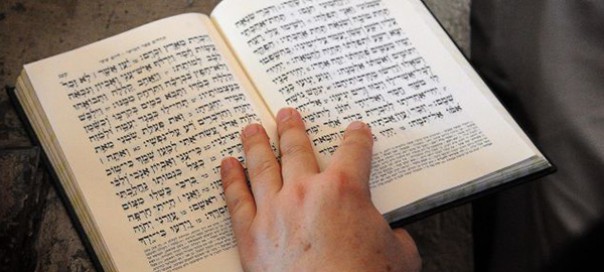
"When you awake in the morning, learn something to inspire you and mediate upon it, then plunge forward full of light with which to illuminate the darkness." -Rabbi Tzvi Freeman















 Morning Meditations