Why Does God Make Us Laugh?

OK, the better way to ask that question is, “why did God give us the ability to laugh?” I read a Calvin and Hobbes comic strip this morning (see below) and was struck by the absolute profound nature of the transaction between the two main characters. While Calvin remarks that it seems odd evolution should give us the ability to laugh at absurdity, my perspective allows me to attribute our ability to laugh to God.

Returning to Calvin’s’ question, why do we a laugh at the absurd? Why would God make us so that we would have such a strange physiological response to nonsense and further, why do we seem to enjoy it? It’s like watching an old Three Stooges or Laurel and Hardy short comedy film. I still love them, even though in many ways, they are hopelessly archaic…and incredibly silly. They make me laugh.

But while Calvin muses about the survival benefit of laughter in an evolutionary scheme of things, I ask the question of an intelligent and purposeful God. Why do we laugh at the absurdities of life? Directing the question to God makes Hobbes’ answer all the more frightening to me:

I suppose if we couldn’t laugh at things that don’t make sense, we couldn’t react to a lot of life.

That implies a couple of things. That a lot of what happens to us is nonsensical, absurd, or just plain crazy. And that if we couldn’t laugh at the strangeness of life, we wouldn’t have any other way of responding to it.

I’m not saying that life is endlessly funny. In many ways, life is almost endlessly tragic. Just turn on the local TV news or watch CNN for an hour and you’ll see what I mean. But then again, Calvin and Hobbes aren’t talking about humor, they’re talking about the strange, the bizarre, and probably the tragic and the hopeless. Not that we should laugh at the trouble and hardship of others, but often the only thing we can do when the bizarre little twists and turns of laugh overwhelm us and threaten to engulf us is to laugh.

My friend Joe Hendricks is a perfect example of what I mean. As he and his wife Heidi struggle in their continual wrestling match with cancer, the tool they most often use to combat despair and depression is humor. I’m not sure I’d find that many laughs if I were in their shoes (and I’m sure Heidi’s shoes wouldn’t even come close to fitting, anyway), but it works for them. Maybe it works for us to as we watch them…as I watch them, and feel utterly powerless to do anything to help them.

Is that why God gave us the ability to laugh? So we could also endure our own hideous hardships and the heartbreaking experiences of others without completely falling apart?

I’ve heard it said on many occasions that it’s faith that gets us through the tough times but I wonder if it’s really laughter? I wonder, when push comes to shove, if prayer is the most important way we can respond when faced with the horrible and insane events of our world?

How ironic if the sole purpose of having a sense of humor is to keep us from crying all the time when we’re alone and when we’re hurt and when we’re scared.

And when life makes absolutely no sense at all and we feel completely out of control.

Practicing Faith, Part 1

The essential thing, however, is the training to habituate one’s mind and thought continuously, so that it always remain imprinted in his heart and mind, that everything one sees with his eyes — the heavens and earth and all they contain — constitutes the outer garments of the king, the Holy One, blessed be He.

In this way he will constantly remember their inwardness and vitality, which is G-dliness.

This is also implicit in the word emunah (“faith”), which is a term indicating “training” to which a person habituates himself, like a craftsman who trains his hands, and so forth.

Today’s Tanya Lesson (Listen online)
Likutei Amarim, end of Chapter 42
By Rabbi Schneur Zalman of Liadi (1745-1812), founder of Chabad Chassidism
Elucidated by Rabbi Yosef Wineberg
Translated from Yiddish by Rabbi Levy Wineberg and Rabbi Sholom B. Wineberg
Edited by Uri Kaploun.

Now faith is the assurance of things hoped for, the conviction of things not seen. For by it the people of old received their commendation. By faith we understand that the universe was created by the word of God, so that what is seen was not made out of things that are visible.

–Hebrews 11:1-3 (ESV)

Um, what is “faith” again?

We tend to think of faith as something we either have or don’t have, kind of like the color of your eyes. You either have brown eyes or not. It’s not something that comes and goes in stages, exactly. You either have faith or you don’t. You either believe in God or you don’t.

But wait a minute. Faith and belief aren’t the same things, are they? The writer of Hebrews seems to say that faith is the mechanism by which we understand that everything was created by the word of God, even though there isn’t any obvious physical evidence to support that this must be so.

But the lesson from the Tanya says that faith (emunah) is something we can be trained in and that we learn to habituate. Faith is learned? You can train in faith?

Kind of an interesting concept, and if you think about it a minute, it makes a lot of sense.

And he said to them, “Why are you afraid, O you of little faith?” –Matthew 8:26 (ESV)

But Jesus, aware of this, said, “O you of little faith, why are you discussing among yourselves the fact that you have no bread?” –Matthew 16:8 (ESV)

Then Jesus said to her, “O woman, your faith is great; it shall be done for you as you wish.” And her daughter was healed at once. –Matthew 15:28 (ESV)

Here, we see that faith can be little or great. Presumably, faith can be anywhere between little and great, too. So there are degrees of faith. But where do these “degrees” come from? Is there anything we can do if we have little faith to make it great or at least bigger than it was before?

Jesus seemed to think so, otherwise he wouldn’t have criticized his disciples for having little faith. But how is this to be done? The commentary in the Tanya Lesson continues:

The Rebbe notes that “who trains his hands” means: “He is cognizant of the craft in his soul; he has a natural talent for it, but needs only to train his hands, so that it will find tangible expression in his actions (be it through art, or fashioning vessels, or the like).”

This is sort of like the old joke about a country fellow who decided to visit New York City. He went on a sightseeing tour of all the famous places in New York such as Times Square, Madison Square Garden, and the Empire State Building. He also bought a ticket to a Broadway play, but as the time of the performance was drawing near, he realized he didn’t know how to find the theatre.

The tourist stopped someone on the street who looked like a local and asked, “How do I get to Broadway?”

The New Yorker brusquely replied, “Practice.”

Can faith be practiced? Can we learn faith the same way we learn a skill, such as painting, molding clay, or replacing a light switch in the hallway of your home?

The Rebbe said something else though. He said that the soul “has a natural talent for it…” (faith) “…but needs only to train his hands, so that it will find tangible expression in his actions.”

So who has a natural talent in faith?

G-d speaks with us at every moment.
His words form the world we see about us.

A prophet is no more than one who catches those words before they congeal into space and time.

-Rabbi Tzvi Freeman
“Prophecy”
Based on letters and talks of the Rebbe
Rabbi M. M. Schneerson
Chabad.org
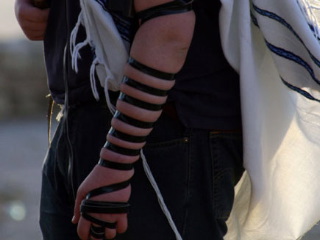
While the Rabbi is talking about prophecy and not faith, I think we can apply his lesson to our “meditation.” God speaks to everyone, not only by virtue of the universe continuing to exist, but in many other ways. We were all created in His image. We are all His children, whether we even acknowledge Him or not. That means, we all have the ability, if we choose to use it, to connect to Him using faith as our bridge. True, some folks seem to have a greater talent for faith than others, as the Prophets had a greater “talent” for “hearing” God and passing on His Words, but even as we all can “hear” the voice of God, we all have a native talent to respond with faith…and to strengthen that faith by practicing it.

So how to you practice the “skill” of faith?

Part of the answer is in the source of the question. You study. You also pray, meditate, seek reliable teachers, spend time with other people who are also learning faith, and you let your general, day-to-day behaviors reflect your practice. This goes back to things I’ve said before about donating food to the hungry and visiting sick people in the hospital. If you want to be a person of faith, you have to act like a person of faith.

We learn by doing.

But I’ve heard some Gentile Christians say that if we are attracted to “practicing” the Bible and particularly practicing what we consider the Torah, we are really “practicing spiritual Judaism.” But is that true?

Who Is A Jew?

This apparent dichotomy in the nature of relations between Jew and Jew also appears in the words of our sages which describe the very definition of Jewishness and a Jew’s relationship with G-d.

The Talmud states: “A Jew, although he has transgressed, is a Jew.” He may violate, G-d forbid, the entire Torah, yet his intrinsic bond with the Almighty is not affected. In the words of the Midrash, “Torah preceded the creation of the world… but the thought of Israel preceded all in the mind of G-d.”

Commentary on Ethics of Our Fathers, Chapter 1
“Ulterior Motive”
Nissan 28, 5772 * April 20, 2012
Chabad.org

Judaism, at least from the Chabad perspective, considers a Jew to be a Jew, even if he or she doesn’t “practice Judaism” at all. That can’t apply to we non-Jewish Christians if we must practice our faith to be disciples of the Master and are attached to the God of Israel by that practice. So it would seem that “spiritual Judaism” isn’t something that the goyim (non-Jews) can possess, even by diligent practice.

So what are we practicing when we who are not Jewish, practice faith? Christianity?

I’ll save the answer for Part 2.

The Sacred Robe

From a sicha of my father: Chassidus demands that one “…wash his flesh (Hebrew, et b’ssaro) with water, and clothe himself in them (the priestly robes).” The intellectual element of Chassidus must thoroughly cleanse the flesh and rinse away the habits of the flesh. The habits are alluded to by the word et (“and”) in the quoted verse, signifying “that which is incidental to the flesh,” the habits developed by the body. Only then can one clothe himself in the “sacred garments.”

Pondering Chassidus, discussing Chassidus, and the practice of Chassidim to meditate before davening – these are “sacred garments,” garments that were given from the heights of sanctity. But it is the person himself who must “wash his flesh with water…” The garments of the soul are given to the individual from On High. But washing away unwholesome “incidentals” that arise from bodily nature and making the body itself “flesh of sanctity,” this is achieved solely by man’s own efforts. This is what Chassidus demands; it is for this ideal that our great teacher (the Alter Rebbe) devoted himself totally and selflessly. He opened the channel of total devotion, sacrifice, for serving G-d through prayer, to be bound up with the Essence of the En Sof, infinite G-d. Chassidus places a chassid face to face with the Essence of the En Sof.

“Today’s Day” daily lesson
Chumash: Acharei mot, Shevi’i with Rashi.
Tehillim: 119, 97 to end.
Tanya: Ch. 43. Concerning (p. 227)…enlarged upon later. (p. 231).
Compiled and arranged by the Lubavitcher Rebbe
Rabbi Menachem Mendel Schneerson, of righteous memory, in 5703 (1943)
from the talks and letters of the sixth Chabad Rebbe
Rabbi Yosef Yitzchak Schneersohn, of righteous memory.

However, G-d provides creation with life in a different manner than the manner in which the soul provides life to the body. The soul must garb itself in the body in order to provide it with life. By doing so it is affected by the body (for “enclothing” implies that the clothed object undergoes a change). G-d, however, is of course not subject to change when He provides life to creation.

“Today’s Tanya Lesson” (Listen online)
Likutei Amarim, middle of Chapter 42
by Rabbi Schneur Zalman of Liadi (1745-1812), founder of Chabad Chassidism
Elucidated by Rabbi Yosef Wineberg
Translated from Yiddish by Rabbi Levy Wineberg and Rabbi Sholom B. Wineberg
Edited by Uri Kaploun

I’m sure you’ve heard it said that “the clothes make the man.” You’ve also heard it said that “you can’t judge a book by its cover.” Interesting and contradictory sayings and each in their own way is true.

We often judge human beings by their outward appearance, usually unfairly. We assume that someone who is well dressed and groomed is a upstanding and productive citizen, while someone who dresses poorly and who seems to take no pride in their appearance, we think of as “lesser.” Neither of these opinions takes into consideration what God sees or how He judges people by the heart and by actions.

On the other hand, the “clothes” I am talking about are more than “skin deep,” to mix a metaphor. How we appear physically is less important (though I won’t say that it’s not important at all) than how we choose to be “clothed” by God.

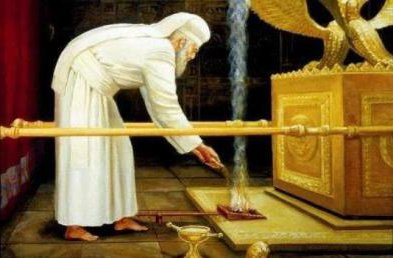
Whether you choose to consider the information I have quoted from mystical or metaphorical, in a sense, God does “clothe” us and most times, in accordance to our true wishes. If we desire to follow after Him and we pray and meditate and study and perform good deeds for His sake, then righteousness is our garment and our “robes” are as white as snow. It’s as if we have donned the robes and vestments of the High Priest in the Tabernacle (remember, I’m speaking metaphorically, not literally).

But this sort of clothing isn’t “one size fits all.” There is no “generic” righteousness, because while we have all been created in God’s image, we all were created as individuals, each with specific and unique gifts and purposes. One person He creates as a poet, another a brick layer, but both serve God. We may think the Pastor serves God more fully than the house painter, but you can’t tell just by looking.

I mentioned before that we must choose the sort of garment we will accept from God, but if that were completely true, we would all be wearing the Emperor’s New Clothes instead, believing we were dressed in lavish opulence when we’re actually completely naked.

God calls to us and we can choose to answer or not, but sometimes, God “loads the dice” in His favor and in ours.

The Alter of Kelm, zt”l, explains this in depth. “If one observes, he will find that emunah definitely never leaves a Jewish heart. Those who claim not to believe—or for some reason act like one who lacks belief—simply cannot focus on faith in an honest way due to the ulterior motives of their physical drives. The moment they are confronted with hardship, they naturally turn to God because the trial brings the emunah to the fore. Our job is to work to reveal the emunah from deep within, to recognize it and value it.”

Daf Yomi Digest
Stories Off the Daf
from “No Atheists in Foxholes”
Me’ila 3-1

To use another “gambling” metaphor, God “stacks the deck”, so that we have a “better than average chance” of calling out to Him, often from the depths of despair. We can still choose to ignore Him, but it’s more difficult than if our lives were completely comfortable and all our needs were met.

We are like a resistant and reluctant young women being pursued by a wealthy and handsome suitor. Our suitor has nothing but our best interests at heart and possesses many fine gifts, if only we’ll accept them. Yet for many reasons, we put Him off, thinking that He’s boring, oppressive, or even dangerous. When kindness and graciousness doesn’t work, He sometimes seeks to “conquer” us, which sounds harsh and hostile, but it’s more like an adult abruptly grabbing a three-year old’s arm to keep him from running out into traffic.

Show a mighty emperor the world and ask him where he most desires to conquer. He will spin the globe to the furthest peninsula of the most far-flung land, stab his finger upon it and declare, “This! When I have this, then I shall have greatness!”

So too, the Infinite Light. In those places most finite, where the light of day barely trickles in, there is found His greatest glory.

-Rabbi Tzvi Freeman
“Conquest”
Based on letters and talks of the Rebbe
Rabbi M. M. Schneerson
Chabad.org

Our “Conquering King” holds out a sacred robe of light to us. All we have to do is stand still, accept the gift, and put it on. Then we have to wear it well.

Shemini: Ordinary Miracles

These concepts are reflected in this week’s Torah reading, Parshas Shemini. Shemini means “the eighth.” It refers to the first of Nissan, the day on which the Sanctuary was established. It is called “the eighth day” because it was preceded by seven days of dedication, during which Moshe erected and took down the Sanctuary each day, and taught Aharon and his sons the order of sacrificial worship…The Torah relates (Leviticus 10:1-2) that they brought an unauthorized incense offering and as a result, “Fire came forth from G-d and consumed them.”

Many explanations are offered as to why the brothers were punished by death. From a mystical perspective, it is said (Or HaChayim, commenting on Leviticus 16:1) that they died because their souls soared to such heights that they could no longer remain in their bodies. Nevertheless, their conduct is judged unfavorably because their spiritual quest ran contrary to G-d’s intent in creation: the establishment of a dwelling for Himself amidst the day-to-day realities of our existence. (See Midrash Tanchuma, Parshas Bechukosai) Their deaths show that our spiritual quest should not be directed towards the attainment of lofty rapture, but instead should remain firmly grounded in our actual lives.

This theme is also reflected in the conclusion of the Torah reading, which focuses on kosher food. For the establishment of a dietary code indicates that Judaism’s conception of Divine service involves living within the world.

-Rabbi Eli Touger
“Transcendence and Immanence”
In the Garden of Torah”
Adapted from
Likkutei Sichos, Vol. III, p. 973ff;
Vol. XVII, p. 92ff;
Sefer HaSichos 5749, p. 475ff
Commentary on Torah Portion Shemini
Chabad.org

All that walk on four… (11:21)

When Rabbi Shmuel of Lubavitch was a child of seven, he asked his father: Why does man walk upright, while animals walk on all fours? Rabbi Menachem Mendel replied: “This is a kindness from G-d to man: although man treads upon the material earth, he sees the sublime heaven. Not so those that crawl on four, who see only the mundane.”

-Rabbi Yanki Tauber
“The Rebbe’s New Clothes”
Once Upon a Chasid
Commentary on Torah Portion Shemini
Chabad.org

I suppose I’m being unfair when I accuse Christianity of focusing on the Heavenly at the expense of the here-and-now. After all, Christians perform many wonderful services of charity and kindness to those around them and to those in far-flung corners of the world. But as I recall my past when I used to sit in a pew in a church sanctuary on Sunday morning, it seems as if a great deal of time was spent touting the advantages of a “personal relationship with Jesus Christ” and that it’s all about “me and Jesus.” How many prayers have I heard offered up to the ceiling of the Sunday school classroom, asking for “a closer walk with thee” and thanking Jesus for the personal gift of grace and salvation?

There’s nothing wrong with any of that, of course, but now that our “ticket to Heaven” has been “punched,” so to speak, what are we supposed to do with the rest of our lives?

The commentaries I quoted from above may seem alien to most of you, but they do aptly illustrate the necessity of balancing the secular with the Divine. So many of the commandments given to the Israelites at Sinai were related to the world in which we live. There are commandments about food, commandments about clothing, commandments about marriage, commandments about farming, commandments about helping your neighbor, even if you don’t like him very much, commandments about…well, you get the idea.

Sure, there are also a lot of commandments about God, services of holiness, and acts of the Spirit, but there is an inseperable link between loving God and loving human beings (See Matthew 22:36-40). As far as I can tell, most or all of the commandments we see in the Torah that have to do with visiting the sick and feeding the hungry apply just as much to the Christian as they do to the Jew. That’s what I see in the Master’s teachings, anyway.

But many Christians still have this funny idea that we are only really serving God if we have some sort of formal “ministry” within the church, even as a lay teacher. Yet we see countless examples in the Bible of ordinary people who were devoted to God and who lived day-to-day lives that included acts of kindness and compassion to whomever they encountered who needed it.

Giving a jump start to the car of a guy who’s late for a job interview is just as holy as helping to build a new church on a mission trip to a foreign country. Where did we get the idea that we had to do something unusual and extraordinary; something way outside the normal boundries of our lives, in order to serve God and to obey the teachings of Jesus? As an “ordinary” person, you may be capable of committing more acts of holiness than even the greatest televangelist or Pastor of a “megachurch” you see on TV ( I suppose I’m employing more than a little tongue-in-cheek here).

And perhaps you are capable of even much greater miracles than these.

“Truly, truly, I say to you, whoever believes in me will also do the works that I do; and greater works than these will he do… –John 14:12 (ESV)

Miracles, by the way, don’t always have to be violations of the laws of physics. Sometimes, offering a momentary smile to a person who looks sad, or helping a lost person find the right address can be a miracle as great as moving a mountain.

Reading the Bible, praying, meditating on the acts of God, and worshiping with your fellows are all absolutely necessary acts of holiness and they bring much joy to God and to your own heart. But they are no more or less vital than helping change a flat tire for someone, donating a can of soup to your local food bank, or spending time with a neighbor who is in the hospital after surgery.

Today (as I write this), I’m going to take my son to work, deliver a Bible and some other books to a Chaplin who is going to deliver them to a sick and elderly Jewish gentleman who has just discovered the Messiah in Yeshua, and spend some time over coffee studying the Word of God with a friend. I don’t say these things because I think it makes me a better or special person. I say them because I’m an ordinary person doing ordinary things. But the ordinary and the holy are all intermixed in everything we do. We have our feet on the ground, but our eyes turned to Heaven.

And of all the ordinary things you and I are going to do today, who knows which one of them is a miracle?

Whatever we “offer” to God and to human beings, let it be who we are and not some “strange fire” we think we need to burn with in our hearts. God made us perfect as the people we are meant to be.

Good Shabbos.

The Journey of God’s Image

If you were not you, if you saw yourself from the eyes of another, how would you see your journeys through life?

You would see how each journey leads away from home. Away from your birthplace, from those who nurtured you and that which made you what you are. Outwards, away from yourself in so many directions.

But you see your journey from within. From within, every journey leads in one direction: Towards within. Towards yourself. Closer and closer.

-Rabbi Tzvi Freeman
“Traveling to Yourself”
Based on letters and talks of the Rebbe
Rabbi M. M. Schneerson
Chabad.org

What a horrible thought. Imagine if you could see yourself the way others see you. I suppose if you look in the mirror, you may think you don’t look so bad, but when you see a photograph someone took of you, you think you look terrible. That’s the difference I experience between shaving while looking at my reflection in the morning and seeing a photo someone took of me.

Yuk. Put the camera away.

But what about who you are spiritually? This is something we see in ourselves one way and can be seen in an entirely different way from an outsider’s point of view. People may see what we do and judge us, for good or for ill, accordingly. You may see someone and by their deeds, believe they are a righteous person, but inside, who knows but God?

“Woe to you, scribes and Pharisees, hypocrites! For you clean the outside of the cup and the plate, but inside they are full of greed and self-indulgence. You blind Pharisee! First clean the inside of the cup and the plate, that the outside also may be clean.

“Woe to you, scribes and Pharisees, hypocrites! For you are like whitewashed tombs, which outwardly appear beautiful, but within are full of dead people’s bones and all uncleanness. So you also outwardly appear righteous to others, but within you are full of hypocrisy and lawlessness. –Matthew 23:25-28 (ESV)

What about, “Woe to you?” What about, “Woe to me?”

In the 2000 movie What Women Want, ad executive Nick Marshall (played by Mel Gibson), accidentally gains the ability to hear what women are thinking (but only women, not men). Since he’s the quintessential “male chauvinist pig,” after a period of disorientation, he turns this ability to his advantage in order to manipulate women.

You men out there who complain that you don’t understand women may think that the ability to hear a woman’s thoughts would be an extremely useful and helpful gift. Boy, are you wrong. How do you know what women think of you is at all complementary? Do you really want to be shaken out of your bliss of ignorance by finding out what your wife, your girlfriend, or your female co-workers really think of you?

What does God think of you?

Yes, I know…God is love, but He’s also a judge. You Christians may say that being covered by the “blood of Jesus,” God sees him instead of you, but let’s get real. If God is all-seeing and all-knowing, then He knows all about you with no illusions and no mystical blinders. You can’t control or limit the vision of God by “claiming the blood of Christ.”

I know I see my spiritual journey from only my own point of view. I have no capacity to see myself as God sees me or to judge my path as God judges it. I am trapped within my own perceptions, and no man can truly perceive God. So in traveling forward and seeking Him, how can I really know where I’m going or if I’m even headed in the right direction? I can’t depend on myself and I can’t imagine what God sees when He sees me.

Or can I?

We were created in G-d’s image. The image of His vision.

From a point before and beyond all things, G-d looked upon a moment in time to be, and saw there a soul, distant from Him in a turbulent world, yet yearning to return to Him and His oneness. And He saw the pleasure He would have from this union.

So He invested His infinite light into that finite image, and became one with that image, and in that image He created each one of us.

As for that moment He saw, that was the moment now.

-Rabbi Tzvi Freeman
“G-d’s Image”
Based on letters and talks of the Rebbe
Rabbi M. M. Schneerson
Chabad.org

This doesn’t tell me what God sees when He looks at me, but it does provide something of a clue. “…a soul, distant from Him in a turbulent world, yet yearning to return to Him…” That’s me. But here’s the really interesting part, though:

So He invested His infinite light into that finite image, and became one with that image, and in that image He created each one of us.

Remind you of anything?

In the beginning was the Word, and the Word was with God, and the Word was God. He was in the beginning with God. All things were made through him, and without him was not any thing made that was made. In him was life, and the life was the light of men. The light shines in the darkness, and the darkness has not overcome it.

The true light, which gives light to everyone, was coming into the world.

And the Word became flesh and dwelt among us, and we have seen his glory, glory as of the only Son from the Father, full of grace and truth. –John 1:1-5,9,14 (ESV)

I know that when Rabbi Freeman says, “He invested His infinite light into that finite image,” he is talking about God in relation to we human beings as created in His image, but the suggestion of God’s infinite light being expressed a “finite image” inevitably brings the first chapter of John’s Gospel to my mind. Also, when the Rabbi said “He saw the pleasure He would have from this union,” what I see is the joy God has when, through the covenant provided to the nations by the Master, we can also have union with God, even as the Master has such a union.

For as many of you as were baptized into Christ have put on Christ. There is neither Jew nor Greek, there is neither slave nor free, there is no male and female, for you are all one in Christ Jesus. And if you are Christ’s, then you are Abraham’s offspring, heirs according to promise. –Galatians 3:27-29 (ESV)

We cannot see God or experience Him in any direct manner, but the Master did say that “Whoever has seen me has seen the Father.” (John 14:9) That probably doesn’t mean that you are literally looking at God when you look at Jesus, but it does (probably) mean that something of God’s infinite and Divine “light” was imbued with the Master to give him a unique identity among men. Through our devotion to the Master, we can “see God,” but we can also see the best in ourselves. We can see a goal to shoot for, though not necessarily attain. We can see the endpoint of our process and the destination of our path.

We can’t see ourselves as God sees us (mercifully), but in keeping our eyes on the Master, we can see ourselves as we should be. We can see ourselves as the person we strive to be; as the person God made us to be.

For my part, I can either look at the photograph of myself and despair, or “look” at the “image” of the Messiah and try to overcome my darkness with his light. The spark within me that is fully realized within the existence of Messiah, longs to return to the Source, but is chained by flesh and blood down in the abyss. A purely human life is always chained in the darkness while longing for the light. A life of trust and faith may live in a world of darkness, but the soul can still fly free and know the day will come when true union with our Creator will be completed, as it is between the Master and God.

I and the Father are one. –John 10:30 (ESV)

Yom HaShoah: Remembrance and Hope

Rav Moshe Teitelbaum, zt”l, the previous Rebbe of Satmar, went through the living inferno that those who survived the Holocaust endured. After some time in Auschwitz, he was moved to Tröglitz, a camp in Rehmsdorf. Despite the danger, the inmates of the camp arranged to pray kol nidrei and they invited the rebbe to lead the prayers.

Of course, it was unthinkable to eat on Yom Kippur. But since the meager evening meal was served after nightfall, it at first appeared as though those who wished to fast would have to go without food before the fast as well. After much wrangling, the head of their block, Dr. Kizaelnik—who had been the rosh kahal in Sighet before the war—finally managed to arrange with the kitchen staff that the evening meal would be served before nightfall.

An eyewitness later recounted, “Before kol nidrei we went back into the block and fell onto our beds, crying bitter tears the likes of which I hope I never hear again. Then the good doctor announced that kol nidrei would soon begin and that any who wished could join the minyan. Still weeping, we went to the part of the room set aside for davening, and the rebbe began to speak.

“The rebbe commenced, ‘Rabbi Akiva said: Ashreichem Yisrael! Before Whom are you purified, and Who purifies you? Just as a mikveh purifies the defiled, God purifies Yisrael. We must recall that Rabbi Akiva was one of the ten martyrs—killed for sins he did not commit. He saw all the terrible travail which would befall Yisrael. Yet he chose to give a message of chizzuk to us for all generations. Although a mikveh literally alludes to a ritual pool, it can also allude to the word tikvah, hope. This
teaches that when we hope to Hashem, and do teshuvah—even if we are in the worst situation—God will uplift us. Even from this present darkness, which no nation has ever experienced, such bitterness and cruelty, God will deliver us. Amen.'”

Daf Yomi Digest
Stories Off the Daf
“The Hope of Yisrael”
Kereisos 23

Holocaust Remembrance Day orYom HaShoah begins in the evening of Wednesday, April 18, 2012, and ends in the evening of Thursday, April 19, 2012. Do not forget. Do not let your children forget. As long as we remember and repent, there lies our hope in God.

According to Dr. Michael Schiffman’s blog, “over 50,000 elderly Holocaust survivors living in Israel, and many thousands of holocaust survivors living in the former Soviet Union (are) living in abject poverty right now.” You can help make a difference. Learn how at Dr. Schiffmans’ blog and then make a donation at chevrahumanitarian.org.

There’s always hope, as long as you repent, remember, and then act out of kindness and compassion.

"When you awake in the morning, learn something to inspire you and mediate upon it, then plunge forward full of light with which to illuminate the darkness." -Rabbi Tzvi Freeman