The Meaning of Life for the Rest of Us

A few days ago, I published a blog post based on an article written by the late Rabbi Noah Weinberg. Since then, for some reason, I can’t get him off my mind, even though I know nothing about him.

So I decided to use Google to find out more about Rabbi Yisrael Noah Weinberg. I received an Amazon gift card recently and it’s been burning a hole in my pocket. I could use some new books.

Although R. Weinberg was not a prolific author of books, he did produce a lot of other material. The Meaning of Life got my attention.

Live For What You Are Willing To Die For

I once met a man who lived by this principle.

“Zev” lived in Israel when the British were still in power. He was a member of a Jewish underground movement which aimed to rout out the British by force.

During the four years that Zev was in the Jewish underground, he was completely cut off from his friends and family – forced to work as an itinerant laborer, with no place to call home. Every day he walked the streets, keeping a steady watch because the British were constantly stopping people and searching them. Any Jew found carrying a gun was guilty of a capital crime.

One day, the British made a sudden sweep, and Zev was arrested. The British realized he was from the Jewish underground and tortured him to obtain other names. Zev lost a leg from the maltreatment.

In 1948, when the British retreated, Zev was released. He went on to get married, build a business, and raise a large family.

He says:
“Looking back over my whole life, unquestionably the best period was being a member of the Jewish underground. True, much of it was a miserable existence. But every moment I was completely alive. I was living for something that I was willing to die for.”
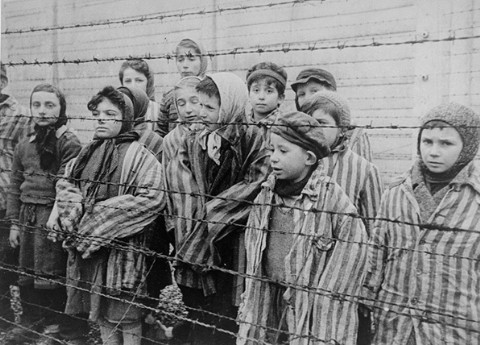
1389.4 Holocaust AThat seems pretty extreme, but then again, I’ve never lived what you’d call an “extreme” sort of life, certainly not one where my health, safety, and very life were constantly at risk.

But then again, R. Weinberg also wrote:

Over the past 2,000 years in the Diaspora, Jews have had many opportunities to display their courage to stand up for Jewish beliefs.

I’m not Jewish. I don’t live in Israel. There’s very little to threaten my life here in my little corner of Idaho, so I’m not continually being challenged with what I’m willing to die for.

Of course Christians all over the world are being persecuted for their faith, so you don’t have to be a Jew to know what you’d die for.

And as Naomi Ragen recently wrote, the majority of liberal Jews in the U.S. are more concerned about the latest liberal causes than they are about the well-being of the state of Israel or how Israeli Jews are living in constant mortal danger from Arab terrorists (not to mention harassment from the governments and news media of the west).

We live in relative comfort here in the U.S., so we have to work harder to get to a state where we know what we’re living for. Yes, many an American Christian says that they’re “living for Christ,” but how far would that living (or dying) go if they were abruptly imprisoned for their faith in a Muslim country?

Many of you may know that a number of political prisoners were recently released by Iran, including Pastor Saeed Abedini whose family lives here in Idaho.

Pastor Abedini was in prison for three-and-a-half years, and although he suffered greatly in Iranian hands, his difficulties, now that he’s free, are far from over. The various news outlets don’t tell the whole story (and rightly so), but it seems the Pastor’s marriage and family relations are under considerable strain.

I gather from some of the stories I’ve read that Pastor Saeed is far from a perfect person, let alone a perfect Christian Pastor, but he has suffered for his faith and he could have died for it. I can only hope and pray that now that he knows what he’s willing to die for, he also knows what (and who) he’s willing to live for.
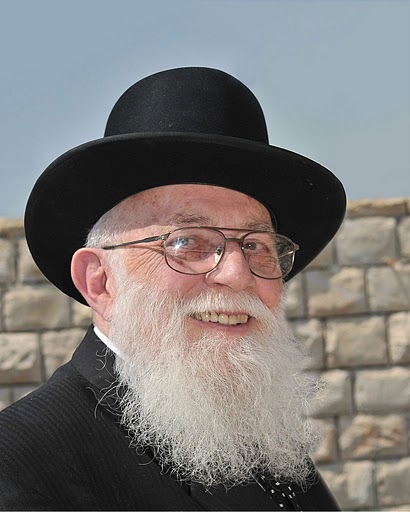
Rabbi Weinberg
Rabbi Noah Weinberg

But what about you and me?

The other day, I felt that another of Rabbi Weinberg’s articles could be adapted for service by Christians or those rarefied individuals I sometimes call Talmidei Yeshua. Is there something about dying and living for our faith we can learn from R. Weinberg as well?

Comfort is very nice, but it is not meaningful. An idiot is more than capable of leading a comfortable life. He doesn’t suffer much, he enjoys ice cream, insults fly right over his head, he always puts on a smile… The world is b-e-a-u-t-i-f-u-l.

But he doesn’t experience anything beyond his ice cream. He lacks the capacity to appreciate higher pleasures beyond the physical – relationships, meaning, and spirituality.

Living only for material pleasure and comfort is not really living. We also need to understand the deeper existential meaning of life. Sooner or later, every human being is faced with the cold, hard reality: “What’s my life all about?”

You might tend to see “comfort” and “pleasure” as being the same thing, but not so, says R. Weinberg. From a traditional observant Jew’s point of view, performing the mitzvot (commandments) is a pleasure given to them by God.

A fundamental of Judaism is that there is nothing a human being can do for God. God has no needs. Yet at the same time He gives us everything – air, water, food, sun. And He gave us the Torah as instructions for deriving maximum pleasure from this world.

In the Shema, the Jewish pledge of allegiance, we are commanded to love God B’chol Nafshecha – “with all your soul.” You have to be willing to sacrifice your life rather than deny God.

If mitzvot are for our pleasure… how does this give us pleasure?!

This is the pleasure of clarity and commitment. If you can perceive something as so important that you will sacrifice your own life for it, then your life has weight and purpose and direction. Because until you know what you are willing to die for, you have not yet begun to live.

charity-tzedakahWhat is so important about you being a Christian (or a Talmid Yeshua or whatever you call yourself)? If your pleasure is all about Sunday (or Saturday) services, “fellowshipping” with your congregational friends, maybe taking a class on Wednesday nights, and otherwise living an ordinary human life, you may be confusing your comforts with your pleasures.

If performing the mitzvot, charitable acts, acts of kindness and compassion, praying individually or with a group, living a lifestyle morning, noon, and evening when you are constantly blessing God for everything from your food to your spouse to your home and even your sleep, is considered pleasurable for an observant Jewish person, why isn’t this considered pleasurable for the rest of us?

I know I’m probably being unfair. After all, there are lots of Christians who do all of that (but not in the manner of a Jewish person, kosher, Shabbat, davening with a minyan and such). who give glory to God, and who are sources of much charity and kindness to their family, friends, and even strangers.

Unless you live in a war zone or some other place where you are in danger just by being who you are, you may not always be confronted by what you’d live and die for.

God has done everything for us and yet there is nothing we can do for Him. But there is something we can do for ourselves that will benefit others around us. We can take our “pleasures,” if you will, in doing justice, loving kindness, and walking humbly with our God (Micah 6:8).

R. Weinberg wrote this article for a Jewish audience to describe why the self-sacrifice of the Jewish people is of a higher status than other people or groups who have also been willing to die for a cause:

Throughout the ages, the destiny and mission of the Jewish nation has been to teach monotheism. Jews are dying not for their own sake, but for the sake of humanity. By transmitting the message of monotheism and Love Your Neighbor, we continue to be a “Light unto the Nations” and thereby preserve the hope of world peace.

But isn’t that our mission too?

“You are the light of the world. A city set on a hill cannot be hidden; nor does anyone light a lamp and put it under a basket, but on the lampstand, and it gives light to all who are in the house. Let your light shine before men in such a way that they may see your good works, and glorify your Father who is in heaven.”

Matthew 5:14-16 (NASB)

MessiahGranted, Rav Yeshua (Jesus) was also addressing a Jewish audience, so we can’t automatically assume his commandment can be expanded to the Gentile Talmidim who would one day desire to walk in his footsteps. After all, being a light to the world is a Jewish mission, so maybe the impetus remains with the Jewish people and we non-Jewish disciples are meant to be mere “consumers” of that light.

I don’t believe that’s true, though.

The short definition of a disciple (as opposed to a follower) is to imitate your Master, your Rav in every detail of living. This doesn’t mean that we non-Jews are supposed to play “dress up” and start wearing kippot and tallit gadolim (yarmulkes and prayer shawls). It does mean we are to imitate our Rav in the weightier matters of his teachings: justice and mercy and faithfulness (Matthew 23:23).

That’s what it is to be a light. If we profess a faith and then live that out in our daily lives, then we know what we are living for and what we are willing to die for.


How To Choose Life Over Death

The other day I read an article written by Rabbi Noah Weinberg of blessed memory called “Free Will – Our Greatest Power” originally published over 15 years ago at Aish.com. I only casually mentioned it on this blog post, and thought Rabbi Weinberg’s understanding of free will was worth sharing more in detail.

“How precious is man, created in the image of God.”

Talmud – Avot 3:18

What does it mean to be created in the image of God?

Unlike other creations, the human being has free will. Within this divine spark lies our potential to shape and change the world.

Proper use of free will beautifies and perfects. Misuse of free will plunders and destroys.

It is a uniquely human endeavor to learn how to use free will properly.

-Rabbi Weinberg

I know that R. Weinberg was writing for a Jewish publication, envisioning a primarily Jewish readership, and probably not considering non-Jewish readers at all, but it does say man (humanity) was created in God’s image, not just the Jewish people and not just Israel, so this should apply to the rest of us too, right?

Actually, according to the article, God did us two favors, not just one. He gave us free will and He told us what He did. That is, we are aware we have free will and can exercise it.

This is somewhat different from what you’ll hear in certain Christian circles, especially those that favor Calvinism (for the record, I don’t subscribe to either Calvinism or Arminianism, because I think this false dichotomy was constructed by people who didn’t interpret the Bible very well). Supposedly we have no free will or only a very limited form of it, because we cannot have consciously chosen God. Only God can choose us. If we had free will, say the Calvinists, it would undermine God’s total sovereignty over the entire universe.

Baloney.

So let’s cut to the chase. What is free will? R. Weinberg tells us:

It is a sweltering summer day. You trudge past the ice cream parlor. Wow – 10 new flavors! Special of the day! Frozen yogurt, too! You go inside and proclaim: “I’ll have double-fudge chocolate, please.”

Is picking chocolate over the vast array of other flavors a “free will choice?” No. It is simply the exercise of a preference, just as a cow chooses to eat hay instead of grass.

“Free will” refers to the type of decision which is uniquely human: a moral choice.

But don’t mistakenly think that morality is the choice between “good and evil.” Everyone chooses to be “good” – even the most evil, immoral people. Hitler rationalized that the Jews were the enemies of the world, so in his mind he justified that as doing “good.”

Rather, free will is the choice between life and death. As the Torah says: “I have put before you, life and death… Choose life so that you may live.” (Deut. 30:19)

Now before we go crazy making all kinds of assumptions, let’s take a look at Deuteronomy 30:19 in context.

“See, I have set before you today life and prosperity, and death and adversity; in that I command you today to love the Lord your God, to walk in His ways and to keep His commandments and His statutes and His judgments, that you may live and multiply, and that the Lord your God may bless you in the land where you are entering to possess it. But if your heart turns away and you will not obey, but are drawn away and worship other gods and serve them, I declare to you today that you shall surely perish. You will not prolong your days in the land where you are crossing the Jordan to enter and possess it. I call heaven and earth to witness against you today, that I have set before you life and death, the blessing and the curse. So choose life in order that you may live, you and your descendants, by loving the Lord your God, by obeying His voice, and by holding fast to Him; for this is your life and the length of your days, that you may live in the land which the Lord swore to your fathers, to Abraham, Isaac, and Jacob, to give them.”

Deuteronomy 30:15-20 (NASB)

So who’s speaking? Moses. Who’s he addressing? The Children of Israel. Is anyone else there? Arguably, there’s a mixed multitude of non-Israelites, Egyptians and people from other nations who left Egypt with Moses and the Children of Israel.

So, to whom do these verses apply? In their original context, they apply only to the people present and their descendants, but let’s drill down into that a little bit.

Some would argue that because of the (supposed) presence of a “mixed multitude” who had attached themselves to Israel, that the words of Moses, along with the Torah of Moses, is as appropriately accessed by the non-Jew as the Jew, particularly the non-Jew who is a disciple of Rav Yeshua (Jesus), that very specific population I sometimes call Talmidei Yeshua.

But is this so?

Probably not. Here’s why.

Whatever happened to the mixed multitude? If you clicked the link I posted above and read the blog post, you have your answer. It was always understood that the non-Israelites would fully assimilate into Israel by the third generation. The words of Moses applied to these non-Israelites because they had made a multi-generational commitment to attach to Israel and for their grandchildren and great-grandchildren to intermarry and become part of the tribes.

In other words, there were no Gentiles who intended for their descendants to remain Gentiles, though attached to Israel in some matter, resident aliens perhaps, who bore the same covenant obligations to Hashem as did the Children of Israel.

However, when Rav Weinberg cites Deut. 30:19 as the definition of free will, the choice between life and death, does that apply, not only to Jews, and not only to Christians, but to all human beings across time?

Everyone who has ever been born, lived, and died will one day stand before God to be judged. Both Christians and Jews believe this. So it would seem that all of us, each and every one, must have free will because we were all created in the image of God and because, based on the fact that we will one day be judged, we all have the ability to consciously choose between life and death.

Yes, the situation we see in Deut. 30 is a specific case and it attached highly specific covenant responsibilities onto Israel (or rather it re-states those commitments as they were originally given at Sinai), but in a much broader sense, Israel and the nations choose between life and death all the time.

Does anyone really choose death over life?!

We all want to be great. But achieving our goals takes a lot of effort. So we get distracted and take the easy route instead. The escape route.

I agree. No one would deliberately, meaningfully choose death instead of life. Rav Weinberg says that even Hitler believed in his own twisted mind that he was doing good and choosing life. He just (grossly) misunderstood what good and life happen to be.

So how do we choose death? Hint: we do it all the time, most of us, anyway.

It’s Sunday afternoon. You’re bored. You grab the remote and slump down into the couch. You could be using your time to learn and grow. But instead you choose the easier option of painlessly passing the afternoon… escaping into the world of TV.

Each day we are confronted with many escape routes. Daydreaming, drugs, checking our email for the seventh time this hour…

Killing time is suicide on the installment plan. And suicide is the most drastic and final form of escape.

Basically, any decision that takes us away from God and puts our personal desires ahead of Him is a form of choosing death, and as R. Weinberg put it, every time we choose death, we’re committing suicide an inch at a time.

Whenever we consider our pain or our desires or our cravings first and then act upon them, we are choosing death.

So just how does one live a life that is flawlessly pious? I mean, it sounds really difficult, and probably pretty boring, right?

R. Weinberg believed he had the answers in five stages.

Stage One: Self-Awareness

You aren’t going to be able to correctly choose life over death unless you start becoming aware of the decisions you’re making and why you’re making them. Choosing to watch a football game over studying the Bible isn’t an accident. It’s a decision. Start monitoring each decision you make. Start watching yourself exercise free will.

Stage Two: Be Your Own Person

What does that mean? I’m “me,” right? Well, maybe. R. Weinberg wrote:

Don’t accept society’s beliefs as your own unless you’ve thought them through and agree with them. Live for yourself, not for society.

Oh man, I could really go off here. I recently quoted Israeli writer Naomi Ragen when she said:

I suddenly remembered something my Harvard-educated son recently told me: “Many American Jews will blindly follow any agenda created by the Liberal establishment because it makes them feel virtuous and like part of the in-crowd.”

Also, in the past several months, the news and social media have been highlighting groups of college and university students who are apparently “majoring in the minors” by complaining about everything from the potential for offensive Halloween costumes to culturally insensitive food on campus.

As Dr. Everett Piper, President of Oklahoma Wesleyan University quipped, This is not a day care, it’s a university.

I know I’m hammering away pretty hard on political and social liberals, and especially very young ones, but I must admit that putting your own wants first isn’t just a liberal trait. It’s a human trait, and one we are all very capable of exercising, every single one of us.

I don’t object to someone being liberal, or conservative, or Christian, or an atheist, or any other alignment or orientation. I object to people selecting an orientation or alignment without thinking it through and making a conscious and informed decision.

So many people simply follow the herd because it’s the path of least resistance (and because they think it makes them virtuous, part of the in-crowd, and “cool”). I think that’s what R. Weinberg is talking about.

Check your assumptions and make sure that they are really yours and not someone else’s. Don’t be a puppet of society.

Stage Three: Distinguish Between Body and Soul

Weinberg calls this a “raging battle”:

BODY: Gravitates toward transitory comforts and sensual pleasures. Desires to quit, to dream, to drown in passions, to procrastinate. Says: “Give me some food, warmth, a pillow – and let me take life easy.” Looks for the escape of sleep… slipping away into death

SOUL: Seeks understanding, meaning, productivity, accomplishment, permanence, greatness. Confronts challenges. Embraces reality and truth.

Which plays out as:

Soul: “Let’s set some goals.”
Body: “Leave me alone, I’d rather sleep.”
Soul: “Come on, let’s be great!”
Body: “Relax, what’s the big deal if we wait til tomorrow?”

Do you ever feel like this? I do all the time. One example is when I realize I have to get up by 4 a.m. to make it to the gym when it opens at five so I can work out. This is the only time during the weekday I can do this, and I think particularly because it’s winter and cold and dark, I don’t want to do it.

I make myself but it’s never easy. Once I get to the gym and get moving, I’m OK, but that five or ten minutes when I first wake up, I’m arguing with myself about getting up vs. staying in bed and taking a “rest day”.

That plays into the next level.

Stage Four: Identify With Your Soul

This is sort of like saying I’m a soul that has a body rather than a body that has a soul. Instead of saying, “I’m hungry,” realize the soul means “My body needs food.” I know. It’s not that easy. That’s why using your free will to choose life takes discipline and practice, like learning to play a musical instrument (although this also takes innate talent) or working out at a gym.

In his article, R. Weinberg outlines specific strategies for how to train yourself to favor the viewpoint of the soul over the body and thus to more consistently choose life over death.

However, the final battle isn’t between your body and your soul.

Level Five: Make Your Will God’s Will

Weinberg wraps up his missive by stating:

The highest stage of free will is not when you ask yourself, “What does my soul want?” It’s when you ask yourself, “What does God want?” When that is your prime interest, you will have achieved the highest form of living. You are using your free will to merge with the most meaningful and powerful force in the universe: the transcendental.

Free will is the choice between life and death. Attach yourself to God and you will be attached to eternity – the ultimate form of life itself.

Make your will His will. If you do, you’ll be a little less than God Himself. Partners in changing the world.

The final battle is won (or continually being won) when you choose God’s will over your own day after day. As Weinberg said, it’s the highest form of exercising free will and choosing life. You are consciously, deliberately choosing God and life in abundance.

Once you embrace and fully integrate God’s will into your own, any concerns about life being difficult and boring seem rather silly.

Yes, and I will rejoice, for I know that this will turn out for my deliverance through your prayers and the provision of the Spirit of Jesus Christ, according to my earnest expectation and hope, that I will not be put to shame in anything, but that with all boldness, Christ will even now, as always, be exalted in my body, whether by life or by death.

For to me, to live is Christ and to die is gain.

Philippians 1:18-21

Non-Jews have no covenant standing before God, except perhaps the covenant God made with Moses. However, through the mediator of the New Covenant, through Rav Yeshua and through God’s infinite mercy and grace, we have been permitted to partake in the blessings of the New Covenant, even though only Judah and Israel are named participants.

Hence our devotion to our Rav.

Every Jewish person is born into a covenant relationship with God whether they want to be or not. Yet they all still have to make a conscious decision to choose life or death. No one else has ever been born into such a relationship with God, and yet we are still given the option to choose life over death by choosing to make God’s will our will.

It is said that no one comes to the Father except through the Son (which takes a bit of explaining which is why I’m linking to another blog post), and if we believe that, particularly as non-Jews, then choosing to become disciples of Rav Yeshua, whether you call that being a Christian or a Talmid Yeshua, is making that choice.

Every morning when we wake up, that choice is before us. “So choose life in order that you may live.”

When you awake in the morning, learn something to inspire you and mediate upon it, then plunge forward full of light with which to illuminate the darkness.

-Rabbi Tzvi Freeman

The Spiritual Responsibility of the Church to Israel

In a closed Facebook group, someone mentioned recently that the Noahide Siddur completely omits the Mussaf, probably because the wording is so closely associated with the exclusive relationship of the Jewish people to Hashem and the avodah of the Temple.

And while I’ve said in the past that Gentile Talmidei Yeshua are not Noahides (though I have been since corrected that a better title would be “more than a noahide”), this does bring up a boundary line between non-Jewish disciples of Rav Yeshua and the Jewish disciples (and Jewish people in general). There are just some things we can’t claim to share with Israel because they are the exclusive property of Israel.

Very recently, I wrote a blog post about a Christian’s duty to support and defend Israel and the Jewish people, even from the “war” being waged against them by our nation’s current administration.

It’s not always easy to do.

No, we’re not Israel. We’re not Jewish. But we still have a duty.

But what is the duty we Christians and/or Talmidei Yeshua have relative to the Jewish nation and her people?

The Jewish people are considered as one “organism.” What happens to one limb affects the entire body.

Every Jew recognizes that all the Jewish People are bound together. When there’s a terrorist attack in Israel, we all feel it. The Talmud says “Kol Yisrael areivim zeh la-zeh” – Every Jew is responsible one for another.

The story is told of the religious man who died and went to heaven. There, he appeared before the Heavenly Tribunal to hear a listing of his good deeds and bad. The man was quite satisfied to hear of all his mitzvahs. But he was shocked to have included amongst his transgressions the prohibition of eating pork.

“What?!” the man protested, “but I never once ate pork!”

“True,” spoke the Tribunal, “but for 20 years you lived next door to a man who ate pork, and you never made an effort to discuss it with him. For that, you are responsible.”

from the article “Responsible One for Another”
posted in the “Ask the Rabbi” column at
Aish.com

OK, that’s the responsibility of one Jew for another, but what about the rest of us?

“Then the King will say to those on His right, ‘Come, you who are blessed of My Father, inherit the kingdom prepared for you from the foundation of the world. For I was hungry, and you gave Me something to eat; I was thirsty, and you gave Me something to drink; I was a stranger, and you invited Me in; naked, and you clothed Me; I was sick, and you visited Me; I was in prison, and you came to Me.’ Then the righteous will answer Him, ‘Lord, when did we see You hungry, and feed You, or thirsty, and give You something to drink? And when did we see You a stranger, and invite You in, or naked, and clothe You? When did we see You sick, or in prison, and come to You?’ The King will answer and say to them, ‘Truly I say to you, to the extent that you did it to one of these brothers of Mine, even the least of them, you did it to Me.’”

Matthew 25:34-40 (NASB)

MessiahI once knew a Christian who had a unique interpretation of these verses. While on the surface, it seems as if the disciples of Yeshua (Jesus) are commanded to provide assistance for people who are hungry, thirsty, without clothing, or who are otherwise in distress or disadvantaged, this older Christian gentlemen (and one of the most steadfast doers of what Jesus commanded that I ever met) said he believed that we merit the reward spoken of by our Rav (he didn’t word it this way, of course) when we provide this sort of care specifically to the Jewish people, not just to people in general.

I’m not sure that’s likely, considering that Yeshua’s audience consisted of Jewish people and that Matthew’s Gospel is widely considered to have been written specifically to Jews, but on the other hand, it makes a sort of sense.

The Rav himself said that “salvation comes from the Jews” (John 4:22), and if Israel can be said, particularly through our Rav, to be a light to the nations (Isaiah 49:6), then we owe that light a great debt.

The Apostle Paul (Rav Shaul) believed that there were many advantages to being a Jew, as he chronicled in his Epistle to the Romans (Romans 3:1-2). Paul also commended the largely non-Jewish communities (“churches” if you will) in the diaspora for donating charity (tzedakah) to the Holy Ones in Jerusalem (see 1 Corinthians 16 and 2 Corinthians 8 for examples), as if the Gentiles owed it to the impoverished Jews in the Holy City.

Of course, there are other reasons we owe the Jewish people a debt:

On this day in 1601, Hebrew books that had been confiscated by Church authorities were burned in Rome. This was an unfortunate theme throughout the Middle Ages: In 1592, Pope Clement VIII had condemned the Talmud and other Hebrew writings as “obscene,” “blasphemous” and “abominable” — and ordered them all seized and burned. Centuries earlier, Pope Gregory IX persuaded French King Louis IX to burn some 10,000 copies of the Talmud (24 wagon loads) in Paris. As late as 1553, Cardinal Peter Caraffa (the future Pope Paul IV) ordered copies of the Talmud burned in the Papal States and across Italy. Yet despite all attempts to extinguish our faith, the light of Torah shines brightly till today.

from “This Day in Jewish History”
for Shevat 11
Aish.com

OK, you might say that you’re not Catholic or that this happened a long time ago and we don’t do this to Jewish people anymore, but the inherit memory of the Jewish people and the history of the Church’s “relationship” with the Jews is very long lived.

And sadly, even to this day, we can often find the spirit of Haman in the Church.

It’s so easy to wallow in the mud, to get tangled up in Israel’s final redemption and the current political landscape. It’s easy for non-Jews in Yeshua to experience jealousy over the advantage of the Jews (Romans 3:1-2), which I suppose is why Christianity developed the doctrine of supersessionism (or cryptosupersessionism as the case may be).

Rabbi Noah Weinberg of blessed memory wrote an article over 15 years ago called Free Will – Our Greatest Power. It’s somewhat lengthy, but here’s a summary of his five main points:

  • Level One: Don’t be a sleepwalker. Make decisions actively.
  • Level Two: Don’t be a puppet of society’s goals, or a slave to your old decisions.
  • Level Three: Be aware of the conflict between the cravings of your body and the aspirations of your soul.
  • Level Four: Identify with your soul, not your body.
  • Level Five: Make your will God’s will.
Rabbi Weinberg
Rabbi Noah Weinberg

If you read the entire missive, you’ll see that having free will and making Hashem’s will our will results in an intersection between the mundane and the Divine. We learn to see past the physical reality of our world and the things (and people and nations) we often fight against, and perceive them (things, people, nations) through a spiritual lens.

By the way, this isn’t an either-or affair:

Given that we live in a physical world, much of the goal of Judaism is to infuse the physicality with holiness. We say a blessing before eating our special kosher food, we have a framework for sanctifying our marital relations, etc.

from the article “What is Holiness?”
posted in the “Ask the Rabbi” column
Aish.com

In the western mindset, we tend to think of things in binary terms. Something is either this or that, we turn left or right, we can choose this one or that one. But that mindset, including within the Christian Church, is based on ancient Greek philosophy.

Judaism and Hebrew thought is much more comfortable with dynamic contradictions in which seeming opposites can live together, if not at peace, then at least under a flag of truce.

Observant Jews don’t choose between the material and spiritual worlds, they infuse the physical with the spiritual. In my own dim little way, I can see Israel as both the present political reality and the Holy Nation of God given to the Jewish people as their perpetual heritage.

I think if we choose to put on that pair of lenses and see the many aspects of our world, and particularly Israel and the Jewish people, the way God sees them, we would have no doubt in our minds (or hearts) at all that we should be doing all we can to assist an Israel under siege, or at the very least, not to get in Israel’s way.

I said that the physical and the spiritual can co-exist in dynamic tension, but looking at Level Four of Rav Weinberg’s summary, it seems like that co-existence isn’t exactly 50/50. If we can perfect our vision, it means being biased somewhat toward the spiritual side of our sight. In this context, that means seeing more of Israel’s spiritual reality than her current physical and political reality. It means seeing Israel more as what she’ll be when her full redemption arrives.

For when Israel’s redemption arrives, ours will arrive with him.

If your bread fell out of heaven, you might be afraid to make a diet of it. Sure, it’s convenient, but most people would rather sink their teeth into a steak, or at least a potato—something that feels like a part of their world.

That’s also the way many people feel about any topic that touches on the spiritual. It is the unknowableness of it—that you can’t grasp it in your hand or tally it up with your assets—that causes people to shun it, to run from it, to even deny it exists.

These people are running from who they are. Far more than we are a body with a bank account, we are spiritual beings. Without nourishment for our souls, we are plagued by insatiable cravings—like a body lacking essential nutrients.

For the human being, inner peace is achieved by first surrendering to the unknown.

-Rabbi Tzvi Freeman
“Grasping Bread from Heaven”
Chabad.org

If we don’t feed ourselves with “bread from Heaven,” not only will our spiritual self be starved, we won’t be able to recognize what is truly, spiritually real, and then act upon it in the present world.

What Would You Do To Fight Against America’s War on Israel?

I don’t usually get political on this blogspot, but sometimes things just build up.

The trigger was my reading two articles. The first was written by Caroline Glick and called The Obama Administration’s Most Covert War, which I found on Facebook. The second was written by Naomi Ragen and titled Israeli and American Jews: The Grand Canyon. That one was sent to me via email by my wife.

From Glick’s article:

Over the past several weeks, we have learned that the Obama administration believes it is at war with Israel. The war is not a shooting war, but a political war. Its goal is to bring the government to its knees to the point where Prime Minister Benjamin Netanyahu loses power or begs Obama and his advisers to shepherd Israel through a “peace process” in which Israel will renounce its rights to Jerusalem, Judea and Samaria.

This pretty much makes my blood boil. Anyone who knows me knows I’m not any sort of Obama fan, but the fact that he’s playing political games to establish his so-called legacy by risking the lives of every Israeli Jewish man, woman, and child is reprehensible and vile.

obama
President Obama

Naomi Ragan wrote about her encounter with a liberal Jewish woman during a short car ride here in America to highlight the chasm existing between Israeli and American Jews.

She was silent for a moment, then shook her head. “He [Netanyahu] shouldn’t have come to America. He shouldn’t have addressed Congress. It polarized American Jews, politicizing the support for Israel,” she said emphatically.

“I think it’s been politicized for a long time,” I answered drily. “Democrats voted for Obama. Republicans didn’t.”

That seemed to surprise her. “So, Israelis don’t like Obama?”

“They hate his guts.”

She shrugged. “Yes, I can understand that. What do you think happened to him?” She seemed honestly bewildered.

“Nothing happened to him. Anyone who did the slightest bit of research understood that he had been a member of an anti-Semitic church for twenty-five years; a church that gave an award to Louis Farrakhan.”

Ragen pulls no punches and takes no prisoners. It also seems quite true that Israeli Jews have a lived experience many American Jews (or Americans period) are clueless about.

The Ragen article continued:

If I’d had any doubts, her reaction put them to rest. She had been one of the 70 percent of American Jews to vote Democrat and elect Obama. Twice.

“You know, American Jews vote for the things that are important to them. Those are not always the same things that are important to Israelis.”

I looked surreptitiously at my watch, calculating how much more time we would be locked into this conversation. Too long to say nothing. So I ventured mildly: “What is important to you?”

“Well, women’s rights, reproductive rights. The environment. And fighting the evangelicals.”

I suddenly remembered something my Harvard-educated son recently told me: “Many American Jews will blindly follow any agenda created by the Liberal establishment because it makes them feel virtuous and like part of the in-crowd.”

“So,” I said unwisely, my temperature rising, “let me get this straight. You’re worried about abortions, climate change and being converted to Christianity?” I didn’t let her answer. “And those things are more vital, more important to you, than whether Israel’s greatest enemy gets an atom bomb to blow the next six million Jews off the face of the earth?”

ragen
Naomi Ragen

And the article ended…

Just at that moment, the hotel loomed into view. I thanked her for the ride, opening the door and stepping out as swiftly as possible. Before I closed the door, I turned back and looked at her.

“Please,” I begged her. “Don’t vote for Hillary.”

It was the last straw. “She’s better than Trump!”

“I don’t think so,” I told her with full confidence.

She rolled her eyes. I rolled mine.

And then the door slammed shut, and she disappeared in one direction, and I in another.

But then, why should you care about all this?

Here’s why.

The question shouldn’t be “Why are you, a Christian, here in a death camp, condemned for trying to save Jews?” The real question is “Why aren’t all the Christians here?”

-Joel C. Rosenberg, The Auschwitz Escape

I’m going to assume that the majority of people reading this blog aren’t Jewish but rather, American Christians or perhaps what I call Gentile Talmidei Yeshua, non-Jewish disciples of Rav Yeshua (Jesus).

My experience in various Messianic Jewish and (largely Gentile) Hebrew Roots groups is that their members, Jewish or Gentile, tend to be pro-Israel politically. Of course, I live in Idaho, which is a pretty “red” state, so folks here are generally conservative about a lot of things.

I have to believe that when Ragen says Israelis hate President Obama’s guts, it’s because they see Obama all but handing Muslim Iran the keys to a nuclear arsenal and showing them how to aim it at Israel.

glick
Caroline Glick

Caroline Glick’s article outlined the nuts and bolts of Obama’s (not-so) covert war against Israel in less passionate but no less disturbing terms. The country we’re citizens of (I’m assuming most of you live in the U.S.) is deliberately acting against the Israeli people, putting all their lives in jeopardy. It’s terrifying to think that the other people I share this nation with voted to elect a man into the office as President twice who is capable of such heinous acts.

Naomi Ragen complains about the liberal Jews who are more worried about “abortions, climate change and being converted to Christianity” than “whether Israel’s greatest enemy gets an atom bomb to blow the next six million Jews off the face of the earth.”

What about the rest of us?

If you’re religious and you’re a political conservative, you’re probably pro-Israel and in some fashion, oppositional to abortions and the idea of human created climate change. You may indeed want to “share the Gospel” with Jewish people, but if you’re Gentile Talmidei Yeshua, that might seem a somewhat different process to you than how Evangelicals might approach it.

Whoever you are, if you say you are pro-Israel, how far does that go?

I learned from this Aish article about Swedish journalist Petter Ljungggren, who tested anti-Semitism in his own country by putting on a kippah (he’s not Jewish) and letting himself be publicly cursed at, threatened, and harassed.

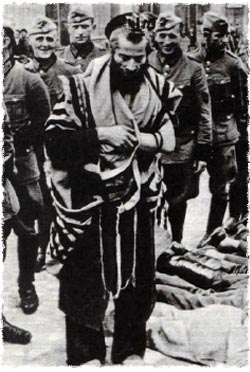
holocaustI’m not a big fan of non-Jews wearing traditionally Jewish apparel, but in this case, Ljungggren had a good reason. It makes me wonder if we all shouldn’t start donning kippot, not to imitate Jews but to stand in solidarity with them and with Israel.

Maybe we’d just feel social pressure like this young fellow, or maybe we’d experience a whole lot more.

Millions of human lives are at stake. Millions of Jewish Israeli lives are at stake. We happen to be living in a nation that’s at least contributed to if not acted as the direct cause of the danger to Israel.

If the Jews were once again rounded up and sent to the camps tomorrow would we Gentile disciples of Rav Yeshua (or just regular Christians) go with them?

The Blessings of Living in Israel are for the Jews

The Jewish people, the Almighty, the Torah and Eretz Yisroel (The Land of Israel). For more than 3,300 years we’ve been bound together. Did you ever wonder what the Sages taught us about how special is the Land of Israel? Here is a compilation from The Mitzvah to Live in Eretz Israel:

“There is no love like the love for the Land of Israel” — Bamidbar Rabba 23:7.

“There is no Torah like the Torah of the Land of Israel” — Bereshit Rabba 16,7.

“The air of the Land of Israel makes one wise” — Talmud, Bava Batra 158b.

“There are 10 portions of Torah in the world: 9 in the Land of Israel and 1 in the rest of the world” — Esther Rabba 1.

“If you desire to see the Shechina (Divine Presence) in this world, study Torah in the Land of Israel” — Midrash Tehillim 105.

“Living in the Land of Israel is the equivalent to all the mitzvot (commandments) in the Torah” — Sifrei, Parshat Re’eh, Tosefta Avoda Zara 5).

The Ramban, Nachmanides, writes that “We are commanded to take possession of the Land God gave to our forefathers, Avraham, Yitzchak and Ya’akov (Abraham, Isaac and Jacob). We must not leave it to others or in desolation, as God told them, ‘And you will take possession of the land, for I gave the Land to you to possess and you will settle the Land which I promised to your fathers’ (Deut. 17:14, 26:1).”

Israel is far more than just a country or a refuge for the Jewish people — it is an integral part of our spiritual destiny!

-Rabbi Kalman Packouz
Shabbat Shalom Weekly commentary for Torah Portion Bo (Exodus 10:1-13:16)
Aish.com

It’s quite clear Rabbi Packouz is addressing a Jewish audience. After all, what other people have ever been commanded to take possession of and live in the Land of Israel? Only the Jews, the modern descendants of the ancient Hebrews, the Israelites who wandered the desert for forty years prior to coming into their inheritance.

But I know more than a few non-Jewish Talmidei Yeshua who are envious and also desire the blessings listed above (I only quoted part of Rabbi Packouz’s article, so please click the link I provided above to read the full write-up).

I suppose we should be a little envious. After all there are tremendous blessings accorded the Jewish people for living in Israel that cannot be apprehended by anyone who isn’t Jewish. Further, except for maybe some exceptional cases, in Messianic Days, Israel will be filled with all or most of the world’s Jewish population. Imagine the prophesies finally being fulfilled.

“For I am the Lord your God,
The Holy One of Israel, your Savior;
I have given Egypt as your ransom,
Cush and Seba in your place.
“Since you are precious in My sight,
Since you are honored and I love you,
I will give other men in your place and other peoples in exchange for your life.
“Do not fear, for I am with you;
I will bring your offspring from the east,
And gather you from the west.
“I will say to the north, ‘Give them up!’
And to the south, ‘Do not hold them back.’
Bring My sons from afar
And My daughters from the ends of the earth,
Everyone who is called by My name,
And whom I have created for My glory,
Whom I have formed, even whom I have made.”

Isaiah 43:3-7 (NASB)

MessiahAccording to Judaism 101:

The mashiach will bring about the political and spiritual redemption of the Jewish people by bringing us back to Israel and restoring Jerusalem (Isaiah 11:11-12; Jeremiah 23:8; 30:3; Hosea 3:4-5). He will establish a government in Israel that will be the center of all world government, both for Jews and gentiles (Isaiah 2:2-4; 11:10; 42:1). He will rebuild the Temple and re-establish its worship (Jeremiah 33:18). He will restore the religious court system of Israel and establish Jewish law as the law of the land (Jeremiah 33:15).

All of this is part of the Jewish argument that Jesus (Yeshua) couldn’t possibly be the Messiah because during his earthly life in the late Second Temple period, he did none of these things and then he died.

Christians believe that he was resurrected, ascended into Heaven, is our High Priest in the Heavenly Court, and in due time, will return.

Most Christians don’t believe Jesus will politically and spiritually redeem the Jewish people upon his return, although they probably would agree that if Jews converted to Christianity, they would receive spiritual redemption (I don’t think the Church would go for the idea of Israel being an actual political entity under Jesus, let alone the Kingdom that would rule all the other nations of the world, even though the Bible states this).

I know a lot of Christians who would vehemently oppose any idea that Jesus would rebuild the Temple and re-establish the Levitical priesthood and sacrifices, let alone restore the Sanhedrin court system.

But if we set aside Christianity’s traditions as they steer the Church’s doctrinal teachings, and if we accept the fact that non-Jews do not have a portion in the Land of Israel, just what do we Goyim have as far as Israel goes?

Thus says the Lord God,

“Behold, I will lift up My hand to the nations
And set up My standard to the peoples;
And they will bring your sons in their bosom,
And your daughters will be carried on their shoulders.
“Kings will be your guardians,
And their princesses your nurses.
They will bow down to you with their faces to the earth
And lick the dust of your feet;
And you will know that I am the Lord;
Those who hopefully wait for Me will not be put to shame.”

Isaiah 49:22-23

“Arise, shine; for your light has come,
And the glory of the Lord has risen upon you.
“For behold, darkness will cover the earth
And deep darkness the peoples;
But the Lord will rise upon you
And His glory will appear upon you.
“Nations will come to your light,
And kings to the brightness of your rising.
“Lift up your eyes round about and see;
They all gather together, they come to you.
Your sons will come from afar,
And your daughters will be carried in the arms.

Isaiah 60:1-4

New arrivals at Ben Gurion airport

It seems our job is to facilitate the return of the Jewish people to Israel, to not just “surrender” them from our lands, but to take an active part in the Messiah’s mission to return each and every Jewish man, woman, and child to the bosom of their nation Israel, for the Jews are the nation of Israel. I’ve tried looking for information regarding what, if any, inheritance Gentiles may expect regarding Israel, but there’s nothing clearcut.

But something called ElijahNet.net suggests that the Gentiles who join themselves to Israel will indeed have a portion:

Will the Gentiles who have joined themselves to the Lord be separate from His people? The God of Israel says, “No. They will be part of My household, My family.” Will the Gentiles who join themselves to the Lord be excluded from the holy place and service of the Lord? God says, “No. They will worship Me in My house, along with those of the dispersed of Israel whom I have gathered. They will be gathered to the remnant of Israel.”

“In the last days, the mountain of the house of the Lord will be established as the chief of the mountains, and will be raised above the hills: and all the goyim will stream to it. And many peoples will come and say, ‘Come, let us go up to the mountain of the Lord, to the house of the God of Jacob; that He may teach us concerning His ways, and that we may walk in His paths, for the law [Torah] will go forth from Zion, and the word of the Lord from Jerusalem.’ And He will judge between the goyim, and will render decisions for many peoples; and they will hammer their swords into plowshares, nation will not lift up sword against nation, and never again will they learn war.” (Is. 2:2-3, Mic. 4:1-3)

God gave Ezekiel visions of a time to come when living, healing water would flow out of Jerusalem. (Ezek. 47:1-12) The Lord told Ezekiel that the alien in the midst of Israel will be allotted an inheritance among the tribes of Israel. (Ezek. 47:21-23)

I should point out that from a Jewish point of view, Ezekiel 47:21-23 isn’t about giving Gentiles part of the Land of Israel.

A more apparently Christian source has this to say:

Question: Are we as “gentile Christians” part of Israel (Rom 11:17)? Do any of the promises made to Israel as a nation apply to us, for example Deuteronomy 28 (I’ve often heard this one used by prosperity teachers although they never read past the fourteenth verse).

Answer (in part): Regarding your first question, I would say that “no” we are not “part of Israel” as gentile Christians. Both Jewish and Gentile Christians today make up the “Church” the “body of Christ” or “one new man” which Paul discusses in Ephesians 2. We, as Gentiles, were aliens from the commonwealth of Israel and strangers from the covenants of promise (Eph. 2:12), but now we have been brought near through Christ. But notice that we are not said to be “part of Israel” or a “new Israel.” Instead, both Jews and Gentiles are said to be joined into a new spiritual body, the one new man (Eph. 2:15). Another evidence that we are not “part of Israel” is found by carefully examining Paul’s use of the term “Israel” in Romans 9-11, and especially chapter 11. There, it will be found that “Israel” still refers to Jews.

Regarding your second question, “Do any of the promises made to Israel as a nation apply to us, for example Deuteronomy 28 . . .”

Moses at SinaiWhile there are principles in Deu. 28 which apply in general (e.g., God will bless a nation which is devoted to Him and follows His will, He will turn away from a nation—such as ours—which forsakes Him), the context of the passage is very clearly specific to the nation Israel. It includes curses which make absolutely no sense when applied to Gentiles (believers or otherwise). For example, the promise of worldwide scattering in judgment of disbelief: yet Gentiles (non-Jews) have always been scattered all over the world.

Whereas all scripture is written for our learning (Rom. 15:4), it is not all written specifically to us—and this is the case in Deuteronomy 28. Both the blessings and curses stated there apply to Israel, as the phrase “wandering Jew” and history abundantly prove.

Concerning the blessings which come to believing Gentiles, this is best understood by studying the relationship between the New Covenant (given to Israel in Jeremiah 31) and the Church.

Of course, there are a seemingly endless collection of Jewish and Christian information sources on the web, so this is only a very tiny sampling.

I couldn’t find anything at AskNoah.org about what sort of connection there could possibly be between a righteous Gentile and the Land of Israel.

I did find something on their view of the New Covenant in Jeremiah 31, as well as whether or not Noahides will worship at the Third Temple. From the latter article:

Gentiles were welcomed to bring their sacrificial offerings for G-d to the First and Second Temples in Jerusalem, and they will participate even more at the Third Temple – especially during the festival of Sukkot (Zechariah 14:16).

Also…

In his commentary on the Torah section beginning with Genesis 12:1, Ramban (Nachmanides) wrote:

“Even in the time of Joshua, … the Gentiles knew that this place was the most august of all, that it was at the center of the inhabited world; and [Torah] Tradition had taught them that it corresponds in this world to the celestial Temple where Divine Majesty, called (righteousness), resides.”

And…

When the First Temple was inaugurated by King Solomon, he beseeched G-d with an eloquent prayer that included the following words (Kings I, 8:41-43) (which show that in the past, Gentiles were welcomed to the First and Second Temples, and that they will participate even more in the Third Temple)…

And finally, the article quotes from Isaiah 2:2-3 regarding the participation of Gentiles in the Temple:

“And it will come to pass at the end of days that the mountain of G-d’s House will be firmly established, even higher than the peaks, and all the peoples will flow toward it as a river. And many nations will go and will cry, ‘Let us go up toward the mountain of G-d’s House, to the House of the L-rd of Jacob, and we will learn from His ways and walk in His paths, for out of Zion goes forth Torah and the word of G-d from Jerusalem.’ “

Of course, participation in the Temple rites is not the same as having any portion in the Land. Isaiah 56 aside, I can’t find a legitimate Jewish commentary saying that any Gentiles will have a permanent home in the Land of Israel at all. It seems that we can certainly visit, and if intermarried, the Gentile would probably live in Israel with the Jewish spouse, but that’s about it.

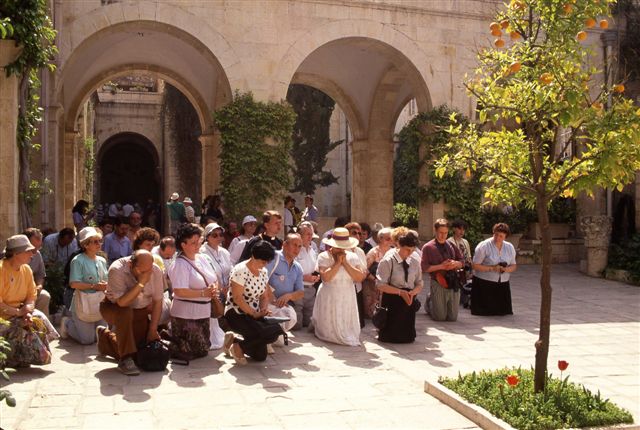
christian-tourists-in-israel
Christian tourists in Israel

Is that such a bad thing? I know some people who operate in the Hebrew Roots space who most likely would think so. I think some of those non-Jews somehow believe they have “rights” not only to the Land of Israel, but to the Torah mitzvot as well. It’s been a long-standing argument. The relationship between Gentiles and the Land of Israel is probably something like how Jews traditionally accept Gentiles visiting the synagogue:

Non-Jews are always welcome to attend services in a synagogue, so long as they behave as proper guests. Proselytizing and “witnessing” to the congregation are not proper guest behavior.

When going to a synagogue, you should dress as you would for church: nicely, formally, and modestly. A man should wear a yarmulke (skullcap) if Jewish men in the congregation do so; yarmulkes are available at the entrance for those who do not have one. In some synagogues, married women should also wear a head covering. A piece of lace sometimes called a “chapel hat” is generally provided for this purpose in synagogues where this is required. Non-Jews should not, however, wear a tallit (prayer shawl) or tefillin, because these items are signs of our obligation to observe Jewish law.

During services, non-Jews can follow along with the English, which is normally printed side-by-side with the Hebrew in the prayerbook. You may join in with as much or as little of the prayer service as you feel comfortable participating in. You may wish to review Jewish Liturgy before attending the service, to gain a better understanding of what is going on.

Non-Jews should stand whenever the Ark is open and when the Torah is carried to or from the Ark, as a sign of respect for the Torah and for G-d. At any other time where worshippers stand, non-Jews may stand or sit.

When we non-Jews are in Israel, we are guests and we are expected to treat our hosts with proper respect, just as if we were visiting someone else’s house. You wouldn’t go into someone else’s home and act as if you lived there, would you?

In Rabbi Moshe Weiner’s Passover message to all Noahides, he states:

One of the wonders of the future redemption is the revelation of the Divine light that will shine onto the whole world, to all humanity (Isaiah 60:3). From the power of this light, all people will recognize the true existence of the Master of the world, Who fills the whole world, as stated by the prophet Isaiah (52:8-10): “with their own eyes they will see that G-d returns to Zion. Burst out, sing glad song in unison, O ruins of Jerusalem together, for G-d will have comforted His people; He will have redeemed Jerusalem. G-d has bared His holy arm before the eyes of all the nations; all ends of the earth will see the salvation of our G-d.”

Just as Moses our teacher at Mount Sinai began to repair the world, including all the Children of Noah by giving the Seven Commandments that were commanded to them, so too, the Messiah will teach and show the world (but in a more wondrous manner) the same recognition in the truth of the Creator of the universe which began to be revealed by Moses.

It is a great merit for each and every one of us to bring himself and his community to the faith and anticipation of this future freedom for the whole world. This will be freedom from evil and falsehood, and a redemption by which we will merit to go out from darkness to a great and true light.

Toward the lightCertainly it seems, the righteous Gentiles are included in many of the blessings of Messiah and that both Jew and Gentile will “go out from darkness to a great and true light.”

But that’s as far as I can understand it. All of those blessings Rabbi Packouz mentions that are received by those living in the Land of Israel are only received by the Jews living in the Land of Israel. For the Gentiles, not so much.

I can only imagine that Gentiles are still blessed in some manner when they/we visit Israel, but we’re visitors and guests, not residents. We may be associated with Israel as citizens of the vassal nations, subservient to our King, and we may have been brought near to her (see Ephesians 2:13) so that there is to be peace between Israel and we people of the nations (although I suspect that peace won’t be truly realized until the Messiah establishes his reign as King in Israel over the world), but none of that means that we are Israel, nor that we have rights to any of her real estate (at least as far as I can discover).

I guess in the resurrection, just like right now, I’ll have to be satisfied with my own little corner of Idaho.

My (Jewish) wife did surprise me again the other day. Out of a proverbial “clear blue sky,” she asked me if I’d given up on any plans to visit Israel. I didn’t know what to say. One circumstance or the other has gotten in the way and I haven’t even been thinking of it lately. I also am concerned about expenses for a number of complicated (and private) reasons, so thought maybe my long-suffering wife would appreciate it if I didn’t spend thousands of dollars playing tourist in the middle east.

I don’t know.

Blogger Ro Pinto wrote multiple blog posts about her recent trip to Israel including this summary, and it is abundantly obvious that she has a tremendous love of and devotion to the God of Israel, His people, and their Land. Some of her spiritual insights border on spectacular, which is a realm that has always eluded me.

Compared to how she related to Israel during her trip, I can’t imagine achieving anywhere near such experiences and insights. I think a visit to Israel is supposed to be as much about what you bring to the table spiritually as what you expect to receive.

Visiting Israel as a Gentile is not like traveling to any other nation on Earth. Jerusalem is the only city on the planet where God has put His Holy Name. Every time I seriously think of traveling to the Holy Land, I feel humbled and chagrined. Who am I compared the men and women of the Bible who trod that ancient Land, the Prophets, the Kings, the warriors, the scholars?

Every time I read or hear from some non-Jewish person who lays claim to Israel or the Torah, I’m astonished at the “Obama-like” audacity they exhibit. The feeling of being able to do anything you want, regardless of the (in this case Biblical) Law, without so much as a “by your leave”. You can’t bypass the God of Israel with a pen and a phone.

Who among the Gentile Talmidei Yeshua hasn’t felt the call of Israel at one point of another in our lives? Who hasn’t, at some time in our existence, wanted to bathe in the glow of the blessings Rabbi Packouz outlined in his “Shabbat Shalom Weekly” article?

Up to JerusalemBut it’s like being a kid and watching the boy or girl next door receive a shiny new bicycle for their birthday. Just because you want to ride on that bike too, doesn’t mean it belongs to you.

The Lessons of Failure

Few of us like tests. However, what if your child comes home from school and tells you that he has the greatest science teacher this year — he’s too busy to grade tests, so there won’t be any tests the whole year! Likely, you’d be heading for the phone to call the principal. Why? Tests ensure that your child pays attention to the material, does the assignments and achieves the ultimate that he can achieve in the subject. No tests, the child will likely slack off and learn little.

However, when WE get a test in life — be it health, economic, interpersonal — we ask “Why is this happening to me?” Why does the Almighty send us a test? Because He loves us and He wants us to get the most out of life, to develop ourselves and our character, to have the greatest life possible and to achieve our potential. The Talmud tells us that the Almighty does not send us a test that we cannot handle.

-Rabbi Kalman Packouz
from the Shabbat Shalom Weekly commentary on Torah Portion Ve’eira (Exodus 6:2-9:35)
Aish.com

So the Talmud says that the Almighty does not send a test the person being tested cannot handle. I’ve heard something similar in Christian circles and I’m not sure I agree with either source. I think there are plenty of Christians and Jews (and lots of others) who have encountered horrifying experiences that completely overwhelmed them.

How many Jews didn’t survive the Holocaust, and even of those who lived, how many did not survive with their emotional and physical health intact?

While I don’t believe Christians are persecuted in the United States, there are plenty in other countries run by oppressive and anti-Christian regimes where Christians are beaten, tortured, raped, and murdered for their faith. Sure, just like in examples of Holocaust survivors, we hear miraculous testimonies from Christians who have been terrifically brutalized, but who endured nonetheless with their faith and other facilities remaining whole.

But what about the stories we’ll never hear because they’re unpopular, of Jews and Christians who were totally broken by these tests and trials, those who never recovered, those who lost faith?

What about things that we don’t see as persecution? What of the Christian father who loses his five-year old little girl in a car accident and turns to alcohol instead of God? What about the Jewish mother whose baby boy dies of SIDS and she responds by ceasing to ever again speak to Hashem in prayer?

God provides the tests, but their’s no guarantee we’ll pass.

failureWhat happens when we fail? I don’t think Rabbi Packouz’s commentary is very helpful here:

How do you know it’s a test? If it’s hard. Test are tailored made for each individual. It may be hard for one person, but not for another. Know that the choice you make will determine whether you get closer to reaching your potential or further away. Think back to a difficult situation. Beforehand you might have thought that you couldn’t handle it, yet you did — and you grew tremendously from it. We only grow from that which is difficult and challenging. We draw upon something inside of us that we didn’t know we had.

That’s assuming we have whatever it takes inside in the first place. But then there’s this:

People think that they are being punished with bad things. The Torah teaches us that ultimate reward and punishment are not in this world, but in the next world, the World to Come (Mesilat Yesharim, Path of the Just, ch.1). In this world, it is not punishment; He’s teaching you a lesson, giving you a message. If you gave tzedakah (charity) and your stocks went up — it’s not a reward, but a message that you are using your money properly and here’s more to use wisely. Likewise, if you misused your wealth and your stocks declined.

It is important to understand that what happens to you may be bitter, painful, but it is not necessarily bad. It depends on how you view what happens and how you respond to it. Bad is what takes you away from a connection with the Almighty.

The flip side is what happens when something good happens to us, something really good? Imagine you win the lottery and win big. Suddenly, you’re set for life. You now can devote much more time and resources to charity, prayer, and Bible study because you don’t have to work, you can hire others to clean your house and take care of your yard, and free you from all the “ordinary” tasks in life.

Just like “bad” tests, “good” tests don’t always have the desired result.

“But Jeshurun grew fat and kicked—
You are grown fat, thick, and sleek—
Then he forsook God who made him,
And scorned the Rock of his salvation.

“They made Him jealous with strange gods;
With abominations they provoked Him to anger.

“They sacrificed to demons who were not God,
To gods whom they have not known,
New gods who came lately,
Whom your fathers did not dread.

“You neglected the Rock who begot you,
And forgot the God who gave you birth.”

Deuteronomy 32:15-18 (NASB)

moses mount neboJust as in difficult tests, there’s no promise we will respond as God desires when He makes life easier for us, there’s no guarantee we’ll come closer to Him either.

I hate tests. I’m not very good at them, at least the ones Hashem provides. It’s disappointing. I sometimes wish for things that would make my life easier, at least from my point of view, rather than having to endure all of God’s “tests.” All this occurred to me again as I was pouring a cup of coffee this morning in an effort to wake up my brain.

It also occurred to me that, just like the test a young student has to take in school, what I receive or don’t receive from God is for my own (ultimate) good, even if I don’t see it that way. If I don’t win the lottery, for example, while that means I still have to work and struggle to save for an eventual retirement, there is something “good” about that. I don’t know what it is, but God must.

And of all the tests Hashem puts in my path that I find uncomfortable or even downright painful, even though I don’t see the “good” in them, it must be there. I have to believe that if I have faith and trust in God. Otherwise, life is just random and meaningless and we have no support from God when we suffer…we simply suffer.

How empty and vain a life is that?

But it’s not easy. Rabbi Packouz teaches us what we learn when we pass a test, but what do we learn when we fail?

Every adversity, every failure, every heartache carries with it the seed of an equal or greater benefit.

-Napoleon Hill

Our best successes often come after our greatest disappointments.

-Henry Ward Beecher

Far better is it to dare mighty things, to win glorious triumphs, even though checkered by failure… than to rank with those poor spirits who neither enjoy nor suffer much, because they live in a gray twilight that knows not victory nor defeat.

-Theodore Roosevelt

You can Google “failure quotes” and find a seemingly endless supply of inspirational statements about learning from failure. Of course, the quotes of famous people don’t necessarily reflect the viewpoint of God on the matter.

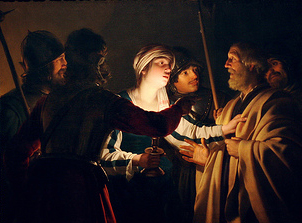
Having arrested Him, they led Him away and brought Him to the house of the high priest; but Peter was following at a distance. After they had kindled a fire in the middle of the courtyard and had sat down together, Peter was sitting among them. And a servant-girl, seeing him as he sat in the firelight and looking intently at him, said, “This man was with Him too.” But he denied it, saying, “Woman, I do not know Him.” A little later, another saw him and said, “You are one of them too!” But Peter said, “Man, I am not!” After about an hour had passed, another man began to insist, saying, “Certainly this man also was with Him, for he is a Galilean too.” But Peter said, “Man, I do not know what you are talking about.” Immediately, while he was still speaking, a rooster crowed. The Lord turned and looked at Peter. And Peter remembered the word of the Lord, how He had told him, “Before a rooster crows today, you will deny Me three times.” And he went out and wept bitterly.

Luke 22:54-62

peters-denialPeter’s failure. But it wasn’t the end, even though the failure was great.

So when they had finished breakfast, Jesus said to Simon Peter, “Simon, son of John, do you love Me more than these?” He said to Him, “Yes, Lord; You know that I love You.” He said to him, “Tend My lambs.”  He said to him again a second time, “Simon, son of John, do you love Me?” He said to Him, “Yes, Lord; You know that I love You.” He said to him, “Shepherd My sheep.” He said to him the third time, “Simon, son of John, do you love Me?” Peter was grieved because He said to him the third time, “Do you love Me?” And he said to Him, “Lord, You know all things; You know that I love You.” Jesus said to him, “Tend My sheep.

John 21:15-17

Rav Yeshua gave Peter (Kefa) another chance to show how he loved his Master. Peter recovered from his failure and recovered well.

But Peter, along with John, fixed his gaze on him and said, “Look at us!” And he began to give them his attention, expecting to receive something from them. But Peter said, “I do not possess silver and gold, but what I do have I give to you: In the name of Jesus Christ the Nazarene—walk!” And seizing him by the right hand, he raised him up; and immediately his feet and his ankles were strengthened. With a leap he stood upright and began to walk; and he entered the temple with them, walking and leaping and praising God. And all the people saw him walking and praising God; and they were taking note of him as being the one who used to sit at the Beautiful Gate of the temple to beg alms, and they were filled with wonder and amazement at what had happened to him.

Acts 3:4-10

This is just one small example of Peter the empowered Apostle and the result of his recovery from failure. He’d never be perfect and sometimes he’d make mistakes, but he never denied his Master again.

But what about us? We could attribute Peter’s boldness to his having received the Holy Spirit in the Acts 2 as opposed to his deliberately choosing to pass God’s tests rather than fail them. He was an Apostle full of the Holy Spirit of God. What about us? What about we poor, dim, ordinary human beings?

As Acts 10 attests, we Gentile Yeshua Talmidei are also supposed to possess the Spirit of the Almighty. Where is our greatness? Why aren’t we like the Apostles? What’s the difference between them and us?

Why do we continue to fail, what does that mean, and what do we learn, if anything at all?

The Torah states:

“And Pharaoh sent word and summoned Moses and Aaron. He said to them, ‘I have sinned this time. The Almighty is righteous. I and my people are wicked! … I will let you leave. You will not be delayed again.’ ”

Shortly thereafter, Pharaoh refused to let them leave.

Why did Pharaoh change his mind once the pressure of the plague was removed? Rabbi Noson Tzvi Finkel of the Mir Yeshiva explained that Pharaoh viewed suffering as a punishment. That is why he said, “The Almighty is a righteous judge and His punishment is fair because I have done evil.”

The reality is that there is a strong element of kindness in the suffering that the Almighty sends to us. In part, it is a divine message that we have something to improve. The goal of suffering is to motivate a person to improve his behavior. Pharaoh viewed suffering only as a punishment. Therefore, as soon as the punishment was over, he changed his mind and refused to let them leave.

Our lesson: View suffering as a means to elevate yourself and you will find meaning in your suffering. Try to accept it with love and appreciation. Even though there is still pain involved, it is much easier to cope. Whenever you find yourself suffering, ask yourself, “How can I use this as a tool for self-improvement?”

-Rabbi Zelig Pliskin
Commentary on Torah Portion Va’eira
from Growth Through Torah

runI think that’s what we learn from failure. If we see our failures as a punishment from God or some sort of inherent quality in ourselves we can never overcome, we will continue to fail. If, however, we choose to consider our failures as tests, they point to the areas in our lives where we need to improve. They show us a target to aim at, a goal to achieve, they illuminate a sort of “finish line” in a race.

Therefore, since we have so great a cloud of witnesses surrounding us, let us also lay aside every encumbrance and the sin which so easily entangles us, and let us run with endurance the race that is set before us, fixing our eyes on Jesus, the author and perfecter of faith, who for the joy set before Him endured the cross, despising the shame, and has sat down at the right hand of the throne of God.

For consider Him who has endured such hostility by sinners against Himself, so that you will not grow weary and lose heart.

Hebrews 12:1-3

We fail, but as long as we persevere and do not give up, we will never be defeated.

I know, easier said than done, but as people of faith, every time we are knocked down, we must either get up again, dust ourselves off, and keep moving forward, or we surrender our faith, give up on God, and go off in our own direction, becoming truly lost.

Passing God’s tests strengthens us, brings us closer to God, and shows us that God has built within us more persistence and empowerment than we realized we had. In fact, without tests, we’d never know just who God has made us to be. Even if we fail and fail often, as long as we keep trying, we never lose our way or step off the path God has placed before us.

Even in abject failure, abandoned by everyone we ever thought loved us, we are never alone.

When you have nothing left but God, you become aware that God is enough.

―A. Maude Royden

May this always be true of each of us.

"When you awake in the morning, learn something to inspire you and mediate upon it, then plunge forward full of light with which to illuminate the darkness." -Rabbi Tzvi Freeman