Gentiles Behind the Mechitza

I was behind the mechitza. I did not like it.

How could it possibly happen, that I, a regular shulgoer in the Orthodox world, would find myself behind the mechitza at a Shabbat service?

I was invited to the bat mitzvah of the daughter of a friend — but it was a bat mitzvah with a twist: the event, to be held in an Orthodox synagogue, was to feature a Shabbat morning women’s service. Nine men, period, were invited to participate (were there 10 men in the room, the service would, in accordance with the Orthodox rite, become the regular service, of men), and nine there were, including me.

-Jerome A. Chanes
“I Was Behind the Mechitza”
Special to The Jewish Week

A mechitza (Hebrew: מחיצה, partition or division, pl.: מחיצות, mechitzot) in Jewish Halakha is a partition, particularly one that is used to separate men and women. The rationale for a partition dividing men and women is given in the Babylonian Talmud (Sukkah 51b, 52a).

Wikipedia.org

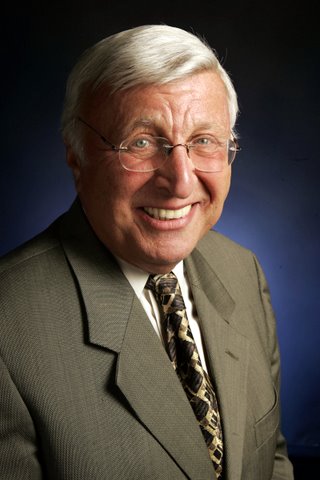
chanes
Jerome A. Chanes

This article won’t make a lot of people happy and may even draw some ire from a few folks, but the question just popped into my head while I was reading Chanes’ article. You can click the links I’ve provided to find out more about the mechitza in general and why Chanes was behind the mechitza at an Orthodox synagogue in particular. In fact, I encourage you to do so.

Men and women are separated during services in Orthodox synagogues as a matter of modesty. A person commenting anonymously on Chanes’ article explained it this way:

Why deny men the right not to be distracted by women when they are praying? Hashem will not accept prayer from a man who is distracted by a woman.

The mechitza preserves the purity and sincerity of prayer to save us from our foes generation after generation. Also, the men are also separated from the women by the mechitza – it is 50/50.

Someone commenting on Facebook described it this way:

The idea of mechitza is not about denigrating women, it’s about separation. The synagogue is a place where we need to focus in G-d. Men and women sitting together is a distraction. There is also the Halacha of Kol Isha which would prohibit men from hearing women sing/lead services. Regarding the issue if women being called to the Torah, there is more a halachic reason to allow this than anything else the author brought up.

The reason women are not called up is because there was a time when it was denigrating to men if a woman was literate and able to say the brachot and a man was illiterate. In today’s world (IMHO) there’s more of a reason to allow women to the Torah than getting rid if the mechitza.

Then the justification for separating men and women is so they don’t distract one another during their prayers.

Many of you may disagree with this, but that’s the halachah in an Orthodox shul. It should be noted that not everyone likes this practice. For instance, one woman commenting on the article said:

The notion that if you care about prayer, the mechitza is a positive is absurd. I care about prayer and find it distracting to be behind the mechitza where my view is obstructed of the shaliach tzibur and in some cases, I have limited hearing of the prayers. The notion the idea that I am distracting some man from praying, so I need to be treated as a second-class citizen is patronizing. If some man can’t concentrate because there is a woman nearby than he needs to grow-up. Obviously, you have never had the ‘joy’ of being behind a mechitza where you can barely see and hear what is occurring.

However, another man commented:

Two years ago, I attended a similar service. As one of those nine men, I was also behind the mechitza and was shuffled in and out of the service to allow other men to participate, not allowing us to form a traditional minyan. It was certainly a different experience, but unlike the author, I left with a greater respect for the mechitza and had no issue whatsoever. I do not believe the Bat Mitzvah service would have been as meaningful for young woman and her guests with men intermingled. That would have been a “normal” Shabbat davening. This was truly unique and I was able to be happy for the family – from the back of the room with eight other men behind a partition.

I can only assume that under such circumstances in a synagogue, if a non-Jewish man was present, he would sit with the Jewish men and if a non-Jewish woman were present, she would sit with the Jewish women.

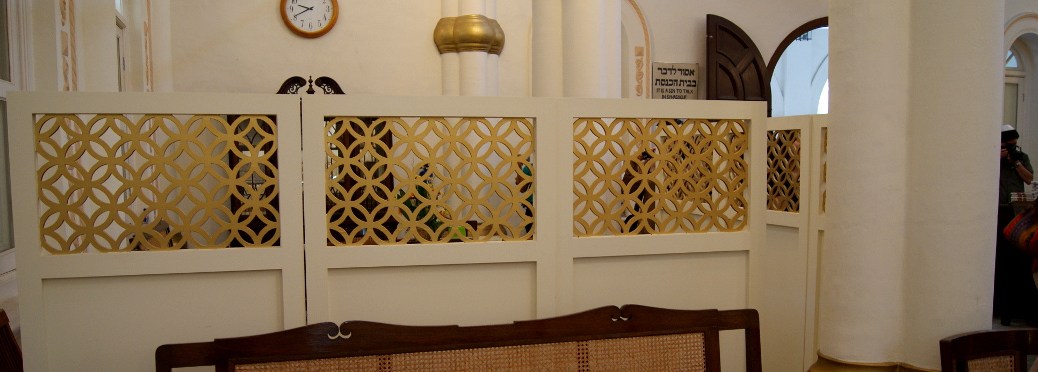
mechitza-kotel
Credit: Lilith.org

But what about when large numbers of non-Jews are present in a Messianic Jewish synagogue that is styled on Orthodox praxis? Messianic Judaism tends to be egalitarian but not absolutely so. And in an effort to create a more us not them relationship between Messianic Judaism and the normative Judaisms, including the Orthodox, I can see some justification for at least a few Messianic Jewish synagogues following the halachah of mechitza.

But it also occurs to me that, given the differences in status and role between Jews and Gentiles in a Jewish communal and worship space, would there be some justification from putting non-Jews behind their/our own mechitza too (I told you that you wouldn’t like this)? I suppose for this to work, there’s really have to be four separated areas:

  • Jewish men
  • Jewish women
  • Gentile men
  • Gentile women

That’s a complicated pattern of division for a single room and I’m not sure how it could be accomplished. It doesn’t seem very practical.

There’s no indication one way or the other to say that Gentiles were or weren’t separated from Jews during worship in the congregations Paul created. In fact we do know that Paul publicly opposed Peter for refusing to eat with Gentiles (see Galatians 2:11-14), so this could suggest that the Apostle to the Goyim expected mixed worship as well.

In his article, Chanes states that there is no mention of the use of a mechitza to separate men and women in Biblical and early Rabbinic literature, so it’s possible that Jewish men and women prayed and worshiped together in ancient (Biblical) times. This perhaps could bolster the idea that when non-Jews were admitted into ancient (Messianic) Jewish space, they also “mixed in” or at least took the last three (or so) rows of seats in the back of the synagogue, but not behind a barrier.

Then again, in the days of Herod’s Temple, there was a court for the (Jewish) women and a court of the Gentiles, and non-Jews were forbidden to go beyond the Soreg.

But those barriers were put in place to preserve the sanctity of the Temple and to ensure ritual purity. Those practices may not, at least back then, have been also transferred to the synagogue.

But that was then and this is now. Twenty centuries or so of halachah have been developed and we have a very different Jewish praxis today, especially relative to different branches of Judaism (and even Messianic Judaism has numerous different expressions within it). We can’t really ignore that body of history or practice, and I think it behooves us to at least consider it’s impact on the praxis of the Messianic Jewish community, one that is “Orthodox” and also accepts non-Jews as associate members.

I realize that I’m making a much bigger deal of this than it actually is. To the best of my knowledge, no synagogue or congregation that calls itself Messianic practices separation of Jew and Gentile. I’m not even sure that there are any Messianic shuls that make use of the mechitza and separate men and women, though, of course, my knowledge of such communities is very limited.

mechitza
Credit: pardes.org

I’m throwing this out there more as food for thought and I’m not representing any definite position about the use or non-use of the mechitza as applied to women or to non-Jews.

However, if Messianic Judaism’s practice and halachah continues to transition more toward normative, 21st century Judaism, we have to consider how such practices and traditions will be applied in a form of Judaism which (potentially) has rather liberal policies regarding Gentile admission.

Oh, just for context, I thought I’d include a link to a small satirical article called Open orthodox Shul allows frummies to sit behind second taller mechitza. As you’ll see when you read it, there’s quite a bit of variance to be found in how the mechitza should be applied, depending on who you are.

Where Would Noahides Go If There Were No Synagogues?

Messiah’s community is a single community expressed in diverse forms within the Jewish community and among the nations. All are called to a dedicated life of worship, neighborly service, and public testimony to Yeshua. Unity and love throughout the entire community confirm Yeshua’s role, as the One sent by the Father, and God’s purpose in Messiah for Israel and the Nations. (John 17:20-21; Acts 21:20; Gal. 2:7-8)

-from the Union of Messianic Jewish Congregations (UMJC) Statement of Faith

I came across this link somewhat at random, and it reminded me of a question I wanted to ask the Internet.

Typically non-Jewish believers in Rav Yeshua (i.e. Christians) become aware of movements such as Messianic Judaism or Hebrew Roots through a sense of dissatisfaction with the Church, the feeling that something is missing. I remember having that sense early on in my “Christian walk”. My wife, who is Jewish, also felt something was lacking in our church experience, and when we encountered a local Hebrew Roots group (this was many years ago), she was immediately “hooked”.

It took me longer to get onboard, but eventually, as I started learning more, I began to realize that what the Bible actually said about the Jewish people, Judaism, and Israel wasn’t what was being preached and taught in most churches.

two pathsMy wife and I have since journeyed on separate trajectories relative to our faith and I respect her decision. She’s Jewish and she needs to be in Jewish community and to embrace Jewish identity.

My identity is less traditional and I’ve gone through a sometimes convoluted developmental process, finally arriving where I am today (though I don’t think God is finished with me yet).

Someone recently said (Don’t make me regret posting this link, Peter) that “Judaism is a communal faith and not designed to be practiced in isolation.” So is Christianity. The ideal is to find a like-minded community of fellow believers and to “fellowship” with them.

Over the years, I’ve transitioned between numerous communities, starting with a Nazarene church, then a Hebrew Roots/One Law congregation, then to a Bible study/home fellowship, then (eventually) back to Hebrew Roots, and most recently, I attended a Baptist Church for two years (and have since left). There were times in that history when our family was just alone in our faith, and times, including the present, when I am alone as an individual.

No, I’m not revisiting the idea of community for myself. As nearly as I can tell, that door is closed for more reasons than I can list in this brief blog post. However, it did occur to me that there are very few paths to community for someone, particularly a non-Jew, who generally believes in the tenets of faith as described by the UMJC (no, I’m not affiliated with them, and no I’m not specifically advocating for them — they just happen to be a handy example).

Even if there were a Messianic Jewish community in my area, and even if I felt I’d be welcome there, I probably wouldn’t attend out of respect for my wife’s sensitivities on the matter.

But what about other non-Jews who have my point of view?

cross and menorahThere are plenty of Gentile-only Hebrew Roots One Law/One Torah congregations out there of various sizes and configurations. Some have a few Jewish worshipers, but they almost always were not raised in a Jewish home nor had the benefit of growing up in Jewish social and religious community. Those Hebrew Roots groups are also almost always run by non-Jews, although their leaders may wear a tallit and kippah and even call themselves “Rabbi”.

But there are also a number of non-Jews who have a more “Messianic Jewish-like” perspective on the Bible, the centrality of Israel, the primacy of the Jewish Messiah King, and how all that relates to the people of the nations. A view I advocate here on my blog.

If they don’t live within reasonable distance of a Messianic Jewish congregation established and operated by Jews as a Jewish community which graciously also admits non-Jews, where do they go?

It would be like being a traditional Noahide and not having a nearby Jewish synagogue to attend. I know of intermarried couples who attend both our local Chabad and the Conservative/Reform group here in my area, and the non-Jewish spouses are Noahides in Jewish community, not unlike how I think of non-Jews in Messianic Jewish community.

But what if there were a group of Noahides who lived nowhere near a synagogue? What if they weren’t intermarried to Jewish spouses, but through some other process, came to the realization that being a Noahide was what the Bible required of them in order to worship Hashem?

Apply those questions to those of us who are “Judaicly-aware” non-Jewish disciples of Rav Yeshua. Where would such a group of Gentiles go to find worship and community? Could a group of Gentiles band together to practice something analogous to “Messianic Judaism?” What would you call it, “Messianic Gentilism?”

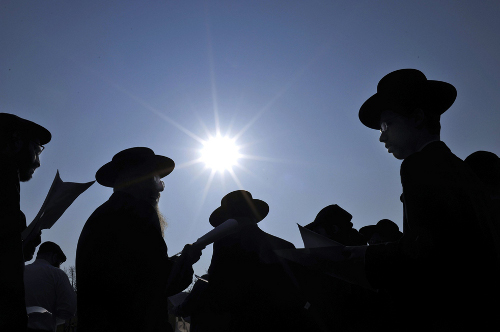
Orthodox JewsI was wondering if those organizations that generally call themselves “Messianic Judaism” (such as the aforementioned UMJC) have established any guidelines for non-Jews who want to come alongside them but who geographically are too far away from a Messianic Jewish congregation to attend. For that matter, that group of Gentiles may not even have a skilled teacher or leader among them. They probably could use a lot of assistance and guidance.

Although the community in ancient Antioch (Acts 13:1; 15:1-2), to the best of my understanding, had both Jewish and non-Jewish members, the Apostle Paul (Rav Sh’aul) also founded many Gentile-only communities, the one described in his epistle to the Galatians being the one that immediately comes to mind. Paul “kept tabs” on these various groups, when he couldn’t visit them, through his correspondence, but the vast majority of the time, for day-to-day operations, they were run by the local members.

What did a Gentile-only “Messianic” community look like in those days? We don’t really know. Probably they looked at least somewhat “Jewish,” if for no other reason than because that was the only communal model available to them.

But this is nearly two-thousand years later and a lot has changed. Yes, ultimately the Gentiles broke away from their Jewish base and invented Gentile-only (unless a Jew wanted to leave Judaism and convert) Christianity, which almost completely rewrote how the Bible was to be understood.

Judaism too has gone through a great deal of development, and what we think of as Rabbinic Judaism today (which, in my opinion, includes at least some Messianic Jewish groups) is not the same as the Judaism(s) practiced during the late Second Temple period.

rainbowSo theoretically, if a collection of “Noahide” Judaicly-aware non-Jews wanted to pursue a community consistent with how we think of Gentiles coming alongside their Messianic Jewish counterparts, is there anything or anyone they could contact to help them? What resources should they consult so they wouldn’t just be “shooting from the hip?”

And no, I’m not thinking of starting such a community here, but I’m thinking that this is an area where others like me in the world are underserved and, left on their own, are perhaps forming groups and fellowships that might be less than optimal. I think they could use some help. I’m just wondering if such help exists and if it is even possible to create viable, sustainable congregations of Gentiles who worship and live consistently with how Messianic Judaism envisions Gentiles in Messiah.

How Is The World Blessed By The Offspring of Abraham?

I was sitting in the airport in Dallas reading my daily page of the Talmud when an elderly priest, readily identifiable by his collar, stopped by my seat and asked me a question. “I hope you don’t mind my interrupting you. I see you are reading a Hebrew book and you are wearing a hat. Are you by any chance a Rabbi?”

When I responded that indeed I am, he continued, “I hope you don’t think I’m out of place but all my life I’ve been hoping that someday I might meet a Rabbi. You see, although I’m a priest I’ve always felt that Jews are the people of The Book and enjoy an especially close relationship with God. You are God’s chosen people and as a Rabbi you are one of their spiritual leaders. I’ve always wanted to ask a Rabbi for a blessing. Would it be possible now for me to ask that you honor me with that favor?”

I cannot convey in words how moved I was by that request. I gave him the priestly benediction from the Torah and recited it to him in the original Hebrew. He was moved to tears. In all humility, I understood that for him I was the link to the original Torah. Whatever theological beliefs might separate us – and there are surely many – he clearly recognized the unique role of Judaism, in the words of Isaiah, to serve as “a light unto the nations.” Jews are the direct descendants of Abraham, Isaac and Jacob, the nation that stood at the foot of Mount Sinai and received the Torah to transmit from generation to generation. Jews were “chosen” not to claim superiority but to accept the responsibility to convey God’s messages to the rest of mankind.

-Rabbi Benjamin Blech
“5 Greatest Gifts of Being a Jew”
Aish.com

birchas-kohanimThere may be some of you when reading the paragraphs above who will be taken aback by a Catholic Priest (or any Christian clergy) asking a Rabbi for a blessing. There may be others among you who will cringe at the idea that Rabbi Blech not only responded to the request by conferring a blessing, but that he used the Birkat Kohanim, the priestly blessing.

Historically, Judaism and Christianity have had a somewhat “uncomfortable” relationship (I say that using tremendous understatement) and at least vestiges of that remain in the modern era.

But I found the transaction between R. Blech and the Priest to be rather heartwarming. Nearly twenty centuries of enmity between Christians and Jews was simply swept aside, a Christian (a Catholic Priest no less) openly recognized the special and unique relationship a Jew has with God, and a Jew (a Rabbi no less) blessed not just a Goy, and not just a Christian, but a Catholic Priest, and was happy to do so.

In your seed all the nations of the earth shall be blessed, because you have obeyed My voice.

Genesis 22:18 (NASB)

Indeed, the offspring of Abraham, Isaac, and Jacob are to be a blessing to the people of the nations, and in R. Blech’s case, it became both fact and truth.

But then again, we have this:

Now the promises were spoken to Abraham and to his seed. He does not say, “And to seeds,” as referring to many, but rather to one, “And to your seed,” that is, Christ.

Galatians 3:16

From a Christian point of view, that blessing from the offspring (“seed”) of Abraham could be considered specifically issuing from one Jew, our Rav Yeshua (Jesus), as opposed to Jewish people in general. However, I don’t have a problem assigning multiple meanings and applications to the aforementioned blessing.

Rabbi Benjamin Blech

Drilling down into R. Blech’s quote, let’s take a look at the following:

Whatever theological beliefs might separate us – and there are surely many – he clearly recognized the unique role of Judaism, in the words of Isaiah, to serve as “a light unto the nations.” (emph mine)

A Catholic Priest, who, by definition, believes that Jesus Christ is the Jewish Messiah King who will redeem the world, also recognized that modern Jewish people, including and especially Rabbis, have a unique role to play relative to God and to humanity.

How much more should we “Judaicly-aware” disciples of our Rav also recognize that unique role of Jews in general and Jews who share our understanding of the revelation of Rav Yeshua in particular, whether we choose to call ourselves members of Hebrew Roots, “Messianic Gentiles,” or anything else?

In his article, R. Blech listed the 5 greatest gifts of being a Jew as:

  1. Our Unique Mission
  2. The Torah
  3. Progress
  4. Optimism
  5. The Gift of Others

Although the Torah does not apply to the rest of mankind, even the Gentile disciples of our Rav, in the same way it applies to Jewish people, it does define a general pattern of ethical and moral behavior along with the establishment of monotheism, the realization of One God, Hashem, Creator of Existence. Without the Jewish people and the Torah, there would not be such revelations, and certainly, there would be no plan of redemption for our world.

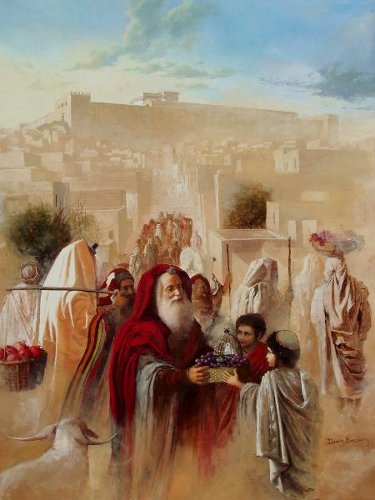
JerusalemUnder “Progress,” R. Blech cites Irishman Thomas Cahill’s book The Gifts of the Jews: How a Tribe of Desert Nomads Changed the Way Everyone Thinks and Feels to illustrate the impact of Jews and Judaism on the entire planet.

In it he credits the Jews not only for monotheism and the idea of a personal relationship with God; it is these concepts, he reminds us, that led us to the understanding that we have a personal responsibility for ourselves and our relations with our neighbors, as well as to our respect for history itself.

While the Church likes to think history began with the birth of Christ, in fact, while the coming of Rav Yeshua certainly was and is an apex in human history, everything in the Torah, the Prophets and the Writings had to occur to set the stage for our Rav’s entry, including the existence of Israel and the Jewish people.

Under “Optimism,” Blech states:

To be a Jew is to know that the world has not yet reached its divinely ordained end. God has a plan for us and eventually it will be fulfilled. No matter how long it takes, Jews remain the eternal optimists.

Golda Meir put it this way: “Jews cannot afford the luxury of pessimism.” Ben Gurion reminded us that in Israel “In order to be a realist, you must believe in miracles.” And Maimonides included the belief in messianic redemption at the end of days as one of the thirteen Cardinal principles of our faith.

jerusalem dayWe non-Jewish devotees also wait for the Messiah, though some of us have a radically different idea of what that means than most Jews. Social media has made it easy to complain about practically everything, and conservative Christians complain about everything from A to Z, which is why it would be helpful if we would learn optimism as Blech describes it.

Finally, under “The Gift of Others,” while R. Blech is describing the relationship Jews have with each other, we “Judaicly-aware” Goyim might want to set aside any “Torah-envy” we may experience ,and approach our Jewish brethren in Yeshua (as well as Jewish people in general) in the same manner as the Priest who approached Rabbi Blech in a Dallas airport as described at the top of this article.

At the very start of his write-up, R. Blech said:

Albert Einstein once startled an audience when he announced, “I’m sorry I was born a Jew.” The people were shocked. How could this great man make such an outlandish statement? With a smile, Einstein then impishly continued, “Because it deprived me of the privilege of choosing to be a Jew.”

As a tenth generation Rabbi, I did not choose to become a Jew; it was my natural birthright. But with the wisdom of age and the perspective of worldly experience I have come to recognize that my identity conferred precious divine gifts that we should never take for granted.

MessiahJews, whether religious or secular, are the only people who are born into a covenant relationship with God. The rest of us have to choose to become associated with God and arguably, we have no covenant relationship (long story…start reading this five-part review for the answer, or if you’re pressed for time, this short summary) apart from the Noahide Covenant God made with all living things in Genesis 9.

But we are allowed and even encouraged to choose God. We just need to remember that it was through the Jewish people, the nation of Israel, and the (Jewish) Moshiach that we are redeemed, not through the power of our choosing alone.

“You worship what you do not know; we worship what we know, for salvation is from the Jews.”

John 4:22

Everybody Complains

Everything is problematic, including this post.

And it’s about fking time you all realized it.

I give the transgression of everything being problematic four problematics. Now we can start making change happen.

-Delilah S. Dawson
Everything’s A Problem

Little Red Riding Hood and the Big Bad Wolf made an appearance on evangelist Paula White’s Instagram, much to the chagrin of her followers.

“Little Red Riding Hood with the Big Bad Wolf (emojis)️ #love #marriage #life #fun #makingmemories” the newlywed posted.

The post has more than 1,500 likes and hundreds of comments.

“By dressing up for Satan’s holiday, you are praising him. This is righteous judgment, not pointing a finger. The enemy needs to be exposed openly,” one commenter posted.

Another wrote: “Dressing Up in a Costume…(Costume Parties-Fall Festival-Family Day,…) There is NOTHING WRONG with that…”

The back-and-forth is similar to conversations Christians have had in recent weeks regarding celebrating Halloween.

-Jessilyn Justice
“Paula White Halloween Photo Stirs Religious Controversy”
CharismaNews.com

This morning (Friday as I write this), on our commute into work together, I was talking with my son about how news and social media has seemingly lost their collective minds. It’s like people take offense at just about anything anymore. Further, it looks like our universities are actively teaching young people when, how, and by what they should be offended.

We’re raising a nation of complainers and victims.

paula white
Paula White and Jonathan Cain

I usually leave these sorts of rants to Facebook and for the most part, they go little to nowhere, but then I saw something in my twitter feed, a link to Everything’s A Problem. The specific comment on twitter was that all the members of Monty Python are white and male. I couldn’t find the specific complaint on the “Everything’s” blog, but I found plenty else that sounded just as silly.

At first, I thought it was all parody, but the little articles seemed to lack that kind of “eye twinkle” that tells the reader “I’m being ridiculous to illustrate how complaining about these things is ridiculous” (such as the film The Martian promoting, among other things, colonialism). The Tumblr site appears to be an extreme example of how a certain social and political perspective has turned “majoring in the minors” into a fine and highly prolific art.

But then, I also saw the CharismaNews.com article about Paula White (I had to “Google” her to find out she’s a Christian televangelist) dressing up as Little Red Riding Hood and her husband donning a Wolf costume so they could pose for a photo together and then post it to instagram.

Going back to “Everything’s” for a bit, here are some sample “problematic” complaints.

About Colonizing Mars

Short answer: without a rigorous regimen of social justice, they can’t. Space will be white and male and sexist and probably cisnorm and filled with aliens attempting to gain “dubious consent” (i.e., space rape culture). SMDH [Shaking My Damn Head].

I have to be honest, the most horrifying aspect of this whole Mars obsession is the glorification of colonization. I was “lucky” enough to attend an early screening of “The Martian,” and there’s a minutes-long monologue in which Matt Damon (who is terribly problematic already) goes on and on about how one is technically a “colonizer” after one successfully plants a crop.

AYFKM? This is a good thing? Did Hollywood even think about how this speech would trigger colonized peoples? Does no one out there read Aura Bogado? What is this, the 16th century? Why not just release this movie on Columbus Day while punching an indigenous person in the face? I can’t. I just can’t.

Oh yeah. I forgot about triggers. I had to “Google” Aura Bogado, to find out who she is, although it seems that Bogado can also be problematic from time to time.

the martian

About the film “The Martian”

This is so nuts. Some might think it’s silly to suggest that a tossed off line in a novel about the activities of two kids represents massive levels of sexism in society. These people don’t understand that everything must be examined with a critical lens. Problems must be denounced, and harshly.

It’s bad enough that The Martian praises colonialism like it’s a great thing and stars an actor who has Bad Thoughts on diversity and said that it’s hard in Hollywood for gay actors. That it is also an actively sexist production that has no love for lady-geeks is the hardest blow of all. SMDH, The Martian. SMDH. And SMDH at all you lady-nerds who thought this movie was okay after seeing it this weekend. You know who you are.

I give the transgression of having female characters but not having them be female enough or something except when they’re being too female or whatever four problematics.

About Spooning

Some people think it’s cute when people lay in bed with their loved ones, holding each other in their arms. This act is commonly referred to as “spooning.”

Other people—enlightened people—realize that spooning is a deeply problematic way that power structures propagate themselves. Fortunately, such enlightened people are dominant in the media and can explain to us how we should be Good

Now for the other side of the coin, so to speak. What did some of the readers over at CharismaNews.com have to say about Paula White and her husband?

David K

Umm… Dressing up for Halloween is the least of Paula’s problems. Discerning Christians have seen through Ms. White’s brand of heresy for years now.

I think what is really sad is that there are “Christians” who actually can’t see through her. The lady is not a Christian, folks. Wake up and measure her actions according God’s word. While we are not to judge the world, we are absolutely mean’t to measure those who claim to be one of us by the word of God, and Paula White fails the test (John 10:10-13).

cross pumpkinWanda K

WWJD????? Would JESUS celebrate this worldly pagan holiday? Should Christians celebrate it? It has NOTHING to do with JESUS, nothing do with Christianity. What do right and wrong have in common? What do the saved and the unsaved have in common? Is there anything GODLY about Halloween? What about ghosts, goblins, graveyards, bats, witches and brooms, plus skeletons and tombstones, have to do with anything Christian? GO figure that one out? It’s not just innocent fun. I’m sure many of her supporters are disappointed. The word of GOD says in the last days there will be many false prophets.
Christians (real ones that is) are to be children of the light, and not the dark. There is no light in Halloween. It’s all dark like a chamber, or a dungeon, just dark and black and dreary…
JESUS was the light of the world and we were to imitate JESUS, and not satan.

Phil H

Some people have no problem with adultery and false teaching. But put on a costume on Halloween, and they go bonkers

And the beat goes on.

I’m not attempting to defend or criticize White and her husband Jonathan Cain, nor making a commentary on Halloween in specific or secular and religious holidays in general (so please don’t start).

I am saying that we’re a complaining lot and being able to blog or comment on news and social media so easily has just made things worse. It used to take some effort to type a Letter to the Editor and then mail it to the local newspaper in the hopes it might actually be printed, but now, anyone can say anything and gain an instant audience.

I did find something enlightening on the web that I’d like to pass along (with the knowledge that I’m obviously not following its sage advice).

“Silence is a fence around wisdom.”

-Talmud

I don’t expect the secular media or those who communicate through it to acknowledge that bit of wisdom, but those of us who call ourselves disciples of Rav Yeshua (Jesus) should hold ourselves to a higher standard. I really don’t care if Paula White or whoever dresses up as a fairy tale character for Halloween or any other day of the year (I wonder what the folks commenting at Charisma News would think of Jewish kids in Israel dressing up in costume and going door-to-door on Purim?).

click baitI did give into temptation and made my own comment in response to the White article:

I never comment here since these discussions are rarely productive, and I had to Google “Paula White” to find out who she is, but with all of the real woes in this world, all of the unanswered prayers that we, as believers, could answer and fulfill (feeding the poor, visiting the sick, pick a need…there are plenty out there), why is Paula White and her husband choosing to dress up in costume an issue? I know I’ll probably get blasted for even asking, but it seems that we Christians are just as guilty of complaining on social media over the tiniest things we find offensive as our atheist counterparts. Perhaps someone should tell us to “get a (Christian) life” and then *do* our faith.

So far, no one has “flamed” me, but I believe it’ll happen fairly soon. Religious people can be a mouthy bunch, and those (including me, alas) who responded to that bit of cheap click bait aren’t living up to the highest standards of our teacher and King.

What Can Non-Jews Learn From Jewish Shabbos Observance?

Shabbat is a time to re-connect with family and friends, a time to bring sanctity and peace into our lives. But the real secret of Shabbat is that we can bring its gifts into the rest of the week. Here are seven lessons Shabbat can teach us that have the power to transform our weekdays.

-Sara Debbie Gutfreund
“No More Monday Blues”
Aish.com

mondayLike a lot of people who have a traditional Monday through Friday work week, I dislike Mondays. It’s tough readjusting from being able to sleep in and having a more relaxed day on Saturday and Sunday to waking up and driving to work while it’s still dark out. So I was intrigued when I read the title of Gutfreund’s article.

Then when I started reading the content, I was confused. How can you leverage Shabbat, a unique day in the Jewish seven-day week, to do away not only with “Monday blues,” but the frustrations of all of the days of the typical work week?

After all, observant Jews refrain from many activities on Shabbat that they freely partake of the other six days of the week. You can’t have Shabbat for the full seven days, can you?

You can click the link above to read Gutfreund’s short article and see how (or if) she makes her point, but the general idea is to take elements or principles from Shabbat observance and apply them to your day-to-day life (well, Jewish day-to-day life since she’s writing to a Jewish audience).

And while we non-Jews don’t have a specific commandment to observe Shabbat (at least in the manner of Jews, depending on how you interpret certain portions of Scripture), it may not be too much of a stretch to say that some of what Gutfreund’s article suggests might have more universal applications.

First things first: If Shabbat is a time to draw closer to our family and to God, we can still do that during the rest of the week, at least at specific moments. Even if we are too busy (travel for work for example), we can still keep the importance of family and God close to our hearts and realize they are the priority…they are why we are working in the first place, so we can devote our resources to them.

Elevate the physical: This is a rather contra-Christian perspective since the Church emphasizes the Spiritual and tends to minimize the physical. On the other hand, we live in a physical world and everything we need in a material sense, comes from the hand of God. We can choose to recognize the presence and provision of God in everything around us any day of the week.

shabbosShare with others: I suppose this should be a no-brainer and certainly not limited to a single day of the week.

Be in the moment: Pay attention to what’s really important in your environment on a moment-by-moment basis. This is pretty hard to do since, during work, you have responsibilities, some important, but others you just think are important. However, we can still take breaks in our routine to re-connect with the presence of God.

Gratitude: Again, this should be a no-brainer and it goes back to the realization that everything we have at any moment issues from the Almighty. How can we not be grateful daily?

Learning: While an observant Jew may have more time for Torah study during Shabbat, many Jews study on a daily basis, when they first get up, on their lunch hour, or in the evening. Since many Christians also understand the value of daily devotionals, this shouldn’t be difficult for religious non-Jews to grasp.

Unity: Of course Gutfreund means Jewish unity, which, as non-Jews, does not include us, but we can take these principles and apply them to a sense of unity we have with all disciples of Yeshua (Jesus). We can also recognize that we can stand in solidarity with Israel and the Jewish people, and particularly Messianic Jews, since we not only share these general principles with them, but also recognize the living revelation of our Rav and anticipate the return of Moshiach.

Some non-Jews in Messiah choose to observe or guard a Saturday Shabbat in one manner or another. While we, by definition, cannot actually fulfill the mitzvah of observing Shabbos the way a Jewish person can, it is still possible to perform many of the practices associated with Shabbat and allow a measure of rest and reconnection to penetrate our lives as well.

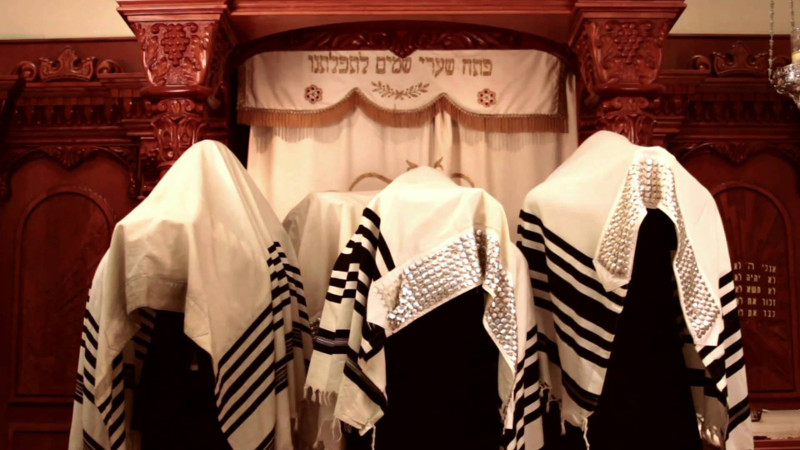
jewish prayer shabbosIf my wife observed Shabbat in a more traditional manner in our home, then I would as well, but as the Jewish member of our marriage, she would need to take the lead. I’m very pleased that on most Saturdays, she goes to shul, even though that’s not something she chooses to share with me. I’ve said before that one of the roles of non-Jews is to assist Jewish people in performing greater levels of observance. If my not sharing her worship with her frees her to have more affiliation with local Jewish community and to draw nearer to Hashem on Shabbos, then perhaps that’s a mitzvah that I, as a non-Jew, can uniquely fulfill.

Recently, the discussion on this blog post focused on methods of deriving mitzvot for non-Jews from the Apostolic Scriptures. I don’t know if we could find a commandment directing Gentiles to facilitate greater Torah observance in Jewish friends and family members, but I’m satisfied that I am performing a duty for my spouse in accordance with Hashem’s wishes for Jews to worship on Shabbos.

"When you awake in the morning, learn something to inspire you and mediate upon it, then plunge forward full of light with which to illuminate the darkness." -Rabbi Tzvi Freeman