Tag Archives: boaz michael

Returning to the Tent of David: Notes from an Emissary

notes-in-the-darkMany Christians have chosen the path of the Messianic Gentile. They have seen their lives changed for the better as a result of the strides they have taken towards an understanding of their Jewish roots. They have studied, learned, and grown. At a certain point in this process of growth, though, it is not always obvious what to do next. I am frequently contacted by Messianic Gentiles who are debating what do to with their new understanding. I have connected with many communities in which this is a serious problem.

For the most part, Messianic Gentiles want to share the Messianic renewal with other believers. Grasping hold of one’s Jewish roots is a wonderful thing. It is a beautiful feeling to learn about the biblical feasts, the Sabbath, and other Jewish practices which our Master embraced and taught. Our love for Yeshua makes these things precious to us. For disciples of Yeshua, finding our Jewish roots is like discovering a beautiful, long-lost treasure.

-Boaz Michael
“Introduction,” pg 18
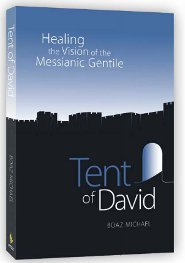
Tent of David: Healing the Vision of the Messianic Gentile

Part of the Returning to the Tent of David series

Here is where I come in. I should say that I’m not really a typical “Messianic Gentile.” I think the model may have been more appropriate back in the day, but not so much anymore, primarily because I’m a believer going to a church, and the missus is Jewish and not a believer. Furthermore, as Boaz says several times in his book, a “Messianic Gentile” is indeed a “Christian.” I’ve adopted the latter “title” to clarify my vision: that there’s nothing about a Messianic perspective on Messiah and the Bible that should be considered separate or apart from Christians and the Church (big “C”).

The other reason I don’t call myself a “Messianic Gentile” is that I don’t “keep Torah” in many of the ways someone on a Messianic community might. Even at the height of my so-called “observance,” I still drove on Shabbat, cooked on Shabbat, ate what you might call “Kosher-style” rather than what my local Chabad Rabbi would consider kosher, used the Siddur poorly, had (and still have) by and large no command of Hebrew at all, and so forth. I was a lousy “Messianic Gentile” in my practice. But the study and the information flow was and is fabulous.

Among the many things our Master taught us was the command to love each other as he loved us (John 13:34).

-ibid

This is a core of the message and the vision. If we don’t do these “Tent of David” experiences out of love rather than some other motivation, we lose and the Church loses.

And that’s not easy.

What is easy is to get involved in theological and doctrinal debates trying to show who is wrong and who is right. That’s no different from the typical “dust ups” we have in the religious blogosphere, and I’ve been critical of those before.

Becoming a living and active part of the church community isn’t always easy. I go to services, attend Sunday school, visit weekly with the Pastor, but that’s about it. Oh, I’ve taken on a special project that has required I work with one of the Associate Pastors and some of the staff, but I don’t know if that qualifies me as part of the community. Maybe it just takes more time or maybe I’m holding back.

Can one live as a Messianic Gentile among Christians who don’t yet embrace his lifestyle or viewpoint?

-ibid, pg 19
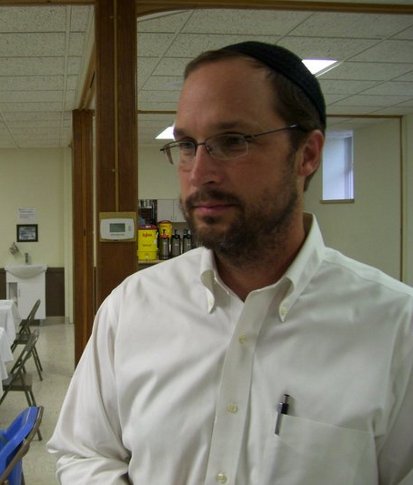
boaz-michael-beth-immanuelAs Boaz says on the previous page, “Yet this is not always easy. Churches can be resistant to the message of the Messianic Gentile.” But is my mission and purpose to go into church with the idea of changing people? This is one of the most difficult parts of the “TOD” experience. The vision is vast and glorious, but living it out day by day is difficult, especially when I’m not a gifted teacher, theologian, and publisher, but rather, just a guy “on the ground,” so to speak.

I don’t really try to live my life as a “Messianic Gentile” in the church. I just try to be me, which I suppose is both my greatest strength and my staggering weakness.

And why should the church listen to the rather odd sounding message of the “Messianic Gentile?” I mean, it’s their home ground. They hold all the keys that open all of the doors in their realm. They are comfortable with what they are being taught and what they believe fundamentalist and evangelical Pastors and their books and sermons tell them. Saying something like the Torah is not canceled is not just different or new information, it’s radical and potentially “dangerous”. It flies in the face of everything the average Christian in the pew has ever been taught.

The Gentile believers, as part of the commonwealth, had a unique and vital role in the process of building the Tent of David, using their numbers and resources to empower and bless the Jewish community and spread the message of the kingdom in their own culture. In this way, the apostles envisioned the imminent restoration of the Tent of David and the establishment of Yeshua’s hegemony over the entire world…It would hardly be an overstatement to say that this apostolic vision is Christianity’s raison d’être, its reason for existing.

-ibid, pg 22

That’s only vaguely how most Christians and most Christian churches see themselves. Frankly, it took me awhile to even see this aspect of my “reason for existing” and even longer to get comfortable with it. A tremendous amount of internal struggle along with lots of prayer and studying had to take place before I was able to put together all the pieces of the puzzle and to recognize that the completed picture was “me.” I’ve spent many months trying to communicate on this blog what I see and while the people who already share that vision are enthusiastic, those who don’t are going to be just as blind to it as I was.

As disciples of the Messiah, Messianic Gentiles must live out by personal example the teachings of Yeshua…

-ibid, pg 24

I read this sentence and immediately thought about Sukkot. I happened to mention to my Sunday school teacher that I built a sukkah in my backyard, as I do every year, and a little bit about the customs around Sukkot. He seemed interested and enthusiastic, but not in the way I anticipated. It was more like a novelty item to him…something interesting and curious to look at but nothing that had to do with him and his lived experience. The idea of him building a sukkah would be seen in the same way as the idea of living in a Buddhist monastery in Tibet for a year. A fascinating thought but in no way connected to his experiential reality.

Who will show the institutional church its blind spot?

-ibid, pg 26

Who says they want to see it? The most interesting part of this experience is not the response, but the silence. I recently had a bit of a disagreement with my Sunday school teacher over the meaning of Acts 15:1-2. He says that the Jewish people who stated that Gentiles needed to be circumcised were “Satanically-inspired” and I said that they were Jewish people who had a legitimate theological question that needed to be resolved.

hereticBut we were the only two engaged on this issue. Everyone else in the room was silent. What were they thinking? Did they imagine I’d flipped out or was I just a heretic? OK, probably nothing that strong, but I really don’t think most of the Christians in that room had a clue how to deal with the idea that first century Jews requiring Gentiles to covert to Judaism as the only way to be saved were at all people expressing a valid concern, as opposed to a bunch of trouble makers and Judaizers.

“The church desperately needs creative heretics. A “creative heretic,” an independent thinker, is an example of the “unbalanced” force to which Newton refers in his first law of motion. Only the person who breaks with tradition can change the direction of an institution. A heretic is not an enemy of God but one who is more interested in truth than in tradition.”

-John Sloat, A Handbook for Heretics

Imparting the vision of the “Messianic Gentile” within a church setting requires a great deal of tact. I’ve tried as best I can to restrain myself. I almost always pick just one question (out of the many I could cite) to ask in Sunday school so as not to appear like I’m trying to argue. I can be candid with my Pastor but that’s part of our relationship, and all of those conversations only involve the two of us.

This can only happen, though, if those Christians who understand their Jewish roots choose to remain in their churches as faithful congregants.

-Boaz, pg 26

I’ve had this discussion before about whether or not the “Messianic Gentile,” that is, “me,” should join the church as an official member. My good friend with whom I have coffee every other Sunday afternoon says absolutely “yes.” I must join the church as a full member in order to be accepted and integrated into the body.

But I don’t know if I’d ever by a good Baptist when their’s so much about the theology involved with which I don’t agree. If being a good Calvinist is required, then it’s a “showstopper.”

Which brings me to the question of who changes? Boaz mentioned previously in his Introduction about the challenges of living as a Messianic Gentile in the Christian church. Part of the difficulty as I see it is that the church is exerting an effort to change the Messianic Gentile even as the Messianic Gentile is making the same effort to change the church. Boaz says that all committed Christians want to know Jesus better, and while I believe that’s true, they also anticipate that Jesus won’t look too “Jewish” as they draw nearer to him. The portrait of Moshiach I have to paint is far more semitic than any Jesus they’ve ever seen or want to see.

darkmirrorThe Tent of David book is designed to reach out to a vast population of Messianic Gentile and Hebrew Roots Gentile people in our country and either support them in the churches they already attend, or encourage some of them, like me, to return to the church as emissaries of the Messianic viewpoint on the Jewish Messiah. We’re not “secret agents” on a covert mission, we’re representatives of an idea and a perspective that isn’t common in the church. We’re part of Boaz’s vision of reaching the church with a new (or renewed) way of conceptualizing the Jewish Jesus. And we are only one stream among several they are trying to produce, another such stream being their A Promise of What is to Come television series (available for free over the Internet), which is designed to impart much of this information at a very accessible level for most Christians.

You are not required to complete the task, you are not free to withdraw from it … but be aware that the reward of the righteous will be given in the World to Come.

-Pirkei Avot 2:21

That sounds incredibly noble, but I’ve always had a tough time seeing myself as incredibly noble. I know too much about myself to see the reflection of a hero in the mirror when I shave in the morning.

So after nearly a year, who do I see when I look at my reflection? Most mornings, it’s easy to ignore the question. I’m getting ready to go to work or if it’s Saturday, I’m mulling over my “honey do” list for the day. If it’s Sunday, then I’m anticipating Pastor’s sermon and considering what I’m going to say in Sunday school, and then thinking about what the rest of the day will bring.

But this blog post series (assuming I write future entries) is about stopping and taking the time to look at the scruffy older guy in the mirror. Am I living up to my mission as an emissary to the church, as it were? Have I been successful in delivering my message and more importantly, in living it out?

I can’t say I’ve been wildly successful. A few people have expressed an interest in what I have to say, but they seem to only just get started on the trail and then stop. I have had conversations with one of the older Associate Pastors who is interested in Hebrew Roots but when I directed him to the First Fruits of Zion website to access some resources, I got the impression that he was quite overwhelmed.

I think there is a desire to learn more about the Jewish Jesus in the church, but there are two issues of concern. The first has to do with what Christians expect to learn. They expect that the Jewish Jesus will look and act just as they imagine him to be. They think the “Messianic Gentile” will teach them “more of the same” but maybe with some interesting but minor details. What they don’t expect is to learn anything different and especially anything challenging. The second issue comes out of the first: getting people to think outside the box without feeling like they’re being heretics or, heaven forbid, being brought “under the Law.”

That second part is really important, because if people aren’t willing to even consider a paradigm shift to a new perspective, they’ll never accept what the “Messianic Gentile” has to offer beyond the superficial.

thinking-inside-the-boxMy impression is that the mission of the Messianic Gentile in the church is a lengthy if not life long process. It also requires a great deal of commitment, not only to the church, but to God. My Crossing the Ford of the Jabbok blog post illustrates how I see what I need to do, not only for the sake of the mission but for the sake of my relationship with God. I do no one any good if I neglect dedication and devotion to Hashem, Master of Legions, Lord of Creation, while otherwise beating my brains out against the stucco walls of the church (or in the blogosphere).

If I am ever to be successful in showing the Christian world around me a true portrait of the Moshiach, the Jewish Messiah King who has come once and who will come again, then I must spend every possible moment at his feet studying, learning from his wise teachings, and becoming an ever more dedicated disciple of my Master.

Addendum: It has come to my attention that I need to be spending a lot more time sitting at the feet of my great Teacher than doing many other things. I’ll speak more on this in tomorrow’s “morning meditation,” but things are going to change.
The Christianization of Acts 15

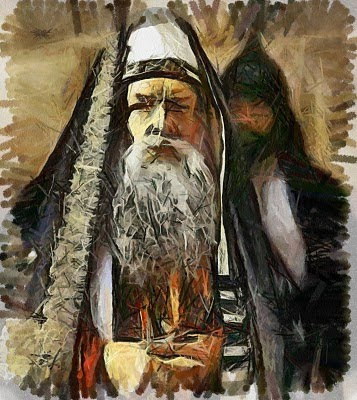
phariseesSome men came down from Judea and began teaching the brethren, “Unless you are circumcised according to the custom of Moses, you cannot be saved.”

Acts 15:1 (NASB)

In Acts 15:1-2 and 15:24, Now with what Satanically-inspired and dogmatic false teaching did these “certain men from Judaea” try to infect the church at Antioch, and why according to Galatians 2:4-5? (emph. mine)

-From the notes for Sunday School class on Acts 15:1-21
For September 29, 2013

Part of the Return to the Tent of David Series

This past Sunday, Pastor’s sermon was on Acts 15:1-21. I knew from our conversations that I was going to disagree on some of his points, and I knew by “doing my homework” for Sunday school class, that I was going to disagree with my teacher.

I’m making this part of my Returning to the Tent of David series, since it chronicles how I’m doing in my church after nearly a year. I can’t say that in last week’s Sunday school experience, I covered myself in glory.

I know my teacher tends to be rather dogmatic and inflexible on his points, but I felt he was so far off base with his “Satanically-inspired” comment directed to “the men from Judea” we find in Acts 15:1, that I had to speak up. I’ve expressed opinions that conflicted with his in the past, but usually they’re easily set aside, however there was real tension in the air as we had our exchange of words this time. I promised that this issue would be the only one I’d argue with him about and kept silent for the rest of class. Boy, was that a challenge.

There was another fellow there who is older, both chronologically and as a believer, and wiser, who also took our teacher to task about certain of his assumptions. Because this gentleman has been a long-time church member and is well-respected, I think he was tolerated more easily than I am.

Which brings me to a point that I struggled with when I first returned to church. Just how long would it be before I’m accepted within the ranks of the church as a “regular?” The answer may be “never.” Yes, most Wednesday evenings find me in Pastor’s office for a one-on-one discussion on the book of Galatians and the interface between fundamental Christianity and my understanding of Messianic Judaism, but that doesn’t necessarily add to my “cred” with the congregation as a whole.

Every time I open my mouth, I risk alienating someone. I know my teacher struggled with my idea that the “men from Judea” not only weren’t “Satanically-inspired” but had a legitimate theological concern, but who knows how many other people in that class were equally put out by my comments? No one else said a word.

There is such a misconceptualization about what happened in Acts 15 and the relationship between Torah (law) and saving grace that it’s hard to get enough information expressed to correct the errors. The basic argument is that you are only saved by grace and not through obedience to the Torah, which is true, but since the Law doesn’t save, the assumption is that it is of no use at all and thus is bad, wrong, awful, and aren’t we glad James and the boys made the decision to get rid of it once and for all. Most Christians can’t see that for a Jewish believer, yes faith saves, but this doesn’t annul the Sinai covenant and the command to live a certain lifestyle in obedience to God.

My frustration in this situation was compounded by the Bible Study Fellowship (BSF) model of teaching being used by my instructor. It emphasizes getting the maximum amount of class notes presented with a minimum of questions and interactions between teacher and student. Sure, teacher asks if we have any questions, but the class has about sixty seconds to respond before being shut down and the next point in the notes being addressed. Any serious attempt at debate over a questionable item in the teaching gets almost no “air time.”

ancient_beit_dinNot only did I press my point that the men from Judea had good reason to make the statements they did (yes, they were wrong, but it was going to be an uphill battle to convince most first century Jewish authorities that Gentiles didn’t have to be circumcised and convert to Judaism in order to have a saving relationship with God), but that the “private meeting” (Acts 15:6-11) involving the apostles and elders was actually a judicial body attempting to make a legal decision (akin to the function of a Beit Din) about how to admit Gentiles into a wholly Jewish religious stream as equal members and not require conversion.

How do you see Peter’s wisdom as he waited God’s timing before speaking?

-Class notes referring to Acts 15:7-11

If this was a legal proceeding, which makes a lot of sense to me, then Peter’s wisdom and God’s timing had less influence than the idea of a series of witnesses each giving testimony one at a time. It just happened to be Peter’s turn to testify. If there was any cross talk or overlapping discussions, they were probably analogous to how spectators in a modern courtroom can sometimes get out of hand and start talking. At that point, the Judge has to regain order.

I won’t quote from all of the notes for this class but they are a testimony to the “Christianization” of the Bible and in this particular case, Acts 15. This is not unlike what I previously said about the Rabbinization of Abraham, where the Jewish sages anachronistically apply Rabbinic concepts to the lives of Abraham and the other patriarchs. It’s also akin to what my teacher was speaking against, the “Judaizing” of the Gentile believers.

In each episode of FFOZ TV: A Promise of What is to Come, First Fruits of Zion teacher Toby Janicki strongly emphasizes the absolute necessity of reading the Jewish Biblical texts from the Jewish perspective of the original writers and audience. While Christians may not realize it on the surface, the New Testament texts are Jewish. Reading them through “Christian-colored lens” will produce a false effect, and lead to lots of misunderstanding.

But some of the sect of the Pharisees who had believed stood up, saying, “It is necessary to circumcise them and to direct them to observe the Law of Moses.”

Acts 15:5 (NASB)

In his sermon, Pastor said that the Pharisees were the “fundamentalists” of their day and he further said that if we lived in those days (and were Jewish), we, that is, the people in his church, would be Pharisees. He said that Jesus had issues with those Pharisees who started making up their own extra-Biblical rules, but Pastor praised the Pharisees as the movement in first century Judaism that supported using the Bible (Torah) as the guide to righteous living.

My Sunday school teacher uses the works of Pastor and theologian John MacArthur as the main source material for his classes. I praise MacArthur for his efforts to direct Christians back to reading the Bible, but in many other ways, he drives me nuts. According to my teacher, he said the “men from Judea” we find in Acts 15:1 and the believing Pharisees we see in Acts 15:5 are two separate groups with two separate perspectives and agendas.

I, on the other hand, believe they may have been the same or similar enough to have identical concerns and the legitimate question of what to do with the Gentiles pouring into the Jewish religious movement of “the Way.”

bang-head-hereAfter almost a year of being back in church, last Sunday’s “Tent of David” experience for me was one of almost beating my head against a brick wall. It’s frustrating to see things so clearly from a particular perspective, and yet to be shut down so abruptly and completely by an alternate perspective that is greatly divorced from the ancient Jewish context of the ancient Jewish text.

I may be in a position to be making my voice heard, and I may even be gingerly choosing my moments and words in expressing my opinion, but will that ever result in people hearing and actually considering that opinion, or am I always going to on the outs with my “fellow Christians?”

Now, having said all that, there is a flip side to the coin, which I’ll present in an extra meditation later today.

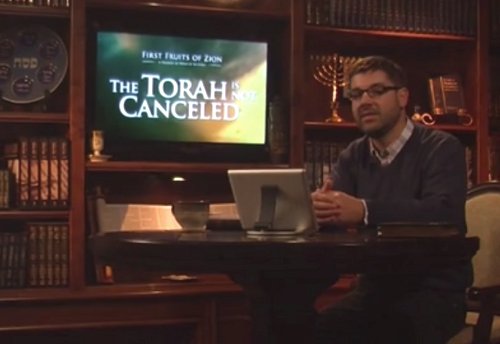
FFOZ TV Review: The Torah Is Not Canceled

ffoz_tv13_mainEpisode 13: It is commonly taught that Jesus came to cancel the law but Jesus tells his disciples “I did not come to abolish the law.” Episode thirteen will revolutionize the viewer’s understanding of the law by learning that the law was given for Godly instruction. They will discover that not only has the law of God not been done away with but the prophets tell us that it will be observed even in the Messianic Era. It will also be taught that the law has different applications for different people, with some commandments only being applicable to Jewish people.

-from the Introduction to FFOZ TV: The Promise of What is to Come
Episode 13: The Torah Is Not Canceled

The Lesson: The Mystery of Jesus and the Torah

In this episode, First Fruits of Zion (FFOZ) teachers Toby Janicki and Aaron Eby take on one of the major misconceptions of Christian doctrine, that the death of Jesus canceled the Torah and invalidated the Law. Toby calls this “The Mystery of the Torah is not Canceled,” but I prefer the other expression he used: “The Mystery of Jesus and the Torah.”

The core to this episode is a scripture that practically everyone in the Hebrew Roots and Messianic Jewish movements is keenly aware of:

Do not imagine that I have come to violate the Torah or the words of the prophets. I have not come to violate but to fulfill. For, amen, I say to you, until heaven and earth pass away, not one yod or one thorn will pass away from the Torah until all has been established.

Matthew 5:17-18 (DHE Gospels)

These verses are part of what is called the Sermon on the Mount, which is thought of in Christianity as the core of Jesus’s moral teachings.

Toby tells his audience that a closer analysis of Matthew 5:17 will help us get to our first clue in solving today’s mystery.

Do not think that I came to abolish the Law or the Prophets; I did not come to abolish but to fulfill.

Matthew 5:17 (NASB)

According to Toby, Jesus had been criticized by the Jewish religious authorities, saying that he was not teaching and living by the Torah correctly. Jesus was taking this opportunity to explain his intent as a teacher. The phrase “I have come” has the sense in the Hebrew of purpose and intention. Toby tells us that in this section of his sermon, Jesus isn’t explaining his role as Messiah in relationship to the Torah, but his intention and purpose in teaching the Torah. He wants to clear up any misunderstanding about what he’s teaching, not explain how he is going to impact Torah obedience in Israel as the coming Messiah.

ffoz_tv13_tobyBut we have to have a proper understanding of the terms “abolish” and “fulfill” in order to understand Jesus’s words. While Christians have to take at face value the verse saying that Jesus didn’t come to “abolish” the Law, that is, to destroy, discard, overturn, or annul, they often interpret “fulfill” as abolish, since the net effect in Christian thinking is that Jesus “nailed the Law to the cross.”

But within a first century Jewish Rabbinic context, how are the words “abolish” and “fulfill” understood?

Rabbi Jonathan would say: Whoever fulfills the Torah in poverty, will ultimately fulfill it in wealth; and whoever abolishes the Torah in wealth, will ultimately abolish it in poverty. (emph. mine)

-Pirkei Avot 4:9

Pirkei Avot is also called Ethics of Our Fathers, and is a collection of ancient Rabbinic teachings compiled from 200 years before Jesus’s birth until 200 years after his resurrection.

Here we see how the early Sages defined the use of fulfill and abolish in relation to the Torah (the word “neglect” was in place of the word “abolish” in the quote of Pirkei Avot 4:9 I copied from a Chabad email newsletter). I bolded some of the words in the above quoted phrase so you could better see Toby’s point.

To “abolish” in this context, means to disobey Torah.
To “fulfill” in this context, means to obey Torah.

Jesus is saying that in his teaching and his life, he did not come, that is, it was not his intention and purpose as a teacher, to disobey the Torah, but rather, to obey the Torah. Let’s look at Matthew 5:17 again but in a modified form.

Do not think that I came to disobey the Law or the Prophets; I did not come to disobey but to obey. (emph. mine)

A rather startling change of meaning, don’t you think? Now we have the first clue we need to solve the mystery:

Clue 1: Jesus came to obey and teach the Law.

But exactly what is “the Law” and why does Christianity see it so negatively? To get the answer, the scene shifts to FFOZ teacher and translator Aaron Eby in Israel.

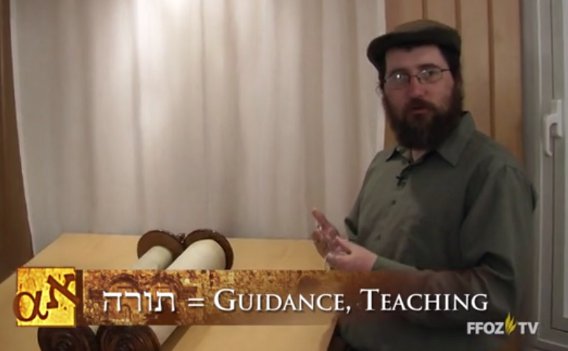
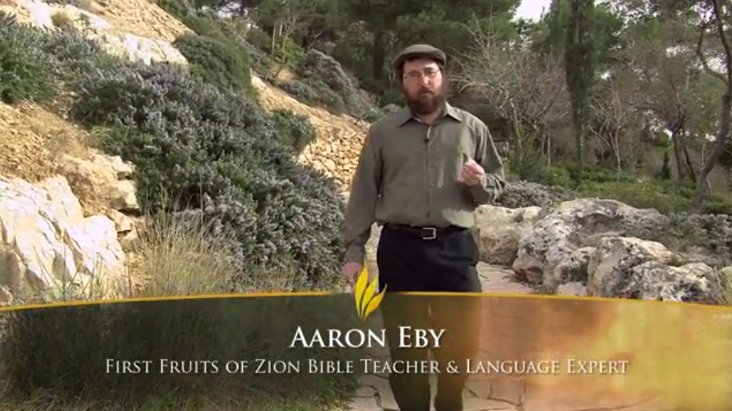
ffoz_tv13_aaronWhat is the Torah? Most often, we think of it as the first five books of the Bible: Genesis, Exodus, Leviticus, Numbers, and Deuteronomy. And while the Torah does contain many laws for Jews living in the Land of Israel and diaspora, as well as Jewish ethical and moral conduct, it also contains the story of Creation, the calling of Abraham, Isaac, and Jacob, and the astonishing redemption of the Israelites from slavery in Egypt.

Aaron teaches us that Torah means something like “guidance,” “teaching,” or “instruction.” The root word in Hebrew is an archery term implying something that is cast, thrown, or shot with aiming or guidance, like one might shoot an arrow at a target. In this sense the Torah can be any spiritual or Biblical teaching directing someone toward righteousness. To differentiate this broader meaning from the first five books of the Bible, we call those five books the Torah of Moses.

The main point of Aaron’s teaching is rather straightforward. Torah doesn’t mean “law,” it means teaching, instruction, and guidance, in a spiritual or moral sense. It doesn’t have to refer only to the “mechanics” of the legal parts of the Torah of Moses. He also explains what a “jot” and a “tittle” or “thorn” is which illuminates how Jesus used those terms in Matthew 5:18. Jesus was saying that he did not intend to abolish or disobey even the smallest detail of the Torah until heaven and earth passed away.

Returning to Toby, we have our second clue:

Clue 2: Torah is God’s Instruction.

Toby takes the lesson one step further and describes the future role and function of the Torah in the Messianic Era. To understand how this works, we must turn to Jeremiah 31:31-34

“Behold, days are coming,” declares the Lord, “when I will make a new covenant with the house of Israel and with the house of Judah, not like the covenant which I made with their fathers in the day I took them by the hand to bring them out of the land of Egypt, My covenant which they broke, although I was a husband to them,” declares the Lord. “But this is the covenant which I will make with the house of Israel after those days,” declares the Lord, “I will put My law within them and on their heart I will write it; and I will be their God, and they shall be My people. They will not teach again, each man his neighbor and each man his brother, saying, ‘Know the Lord,’ for they will all know Me, from the least of them to the greatest of them,” declares the Lord, “for I will forgive their iniquity, and their sin I will remember no more.”

Here, Toby interprets this scripture about the New Covenant in the same way I’ve been doing on this blog for quite some time. On the surface, the prophet is saying that there will be a new covenant and that it will be different from the old covenant, but what exactly will be different. Grace instead of Law? That’s not what scripture says. Let’s drill down into verse 33:

I will put My Torah within them and on their heart I will write it; and I will be their God, and they shall be My people. (emph. mine)

ffoz_tv13_torah_bethemmanuelI substituted the word “Torah” for “Law” since that’s how it’s rendered in the Hebrew. Remember, the New Covenant is made with Judah and Israel, not with the church or the nations. God still expects the Jewish people to obey the Torah, His guidance and instruction, but it will be written internally and will be part of the fiber of their being, rather than being written externally. My understanding is that it will be second nature for the Jewish people to live a lifestyle in obedience to God, rather than struggling between the good and evil inclinations.

We saw in the FFOZ TV show None Greater Than John that verse 34 refers to the state of the people of God during the Messianic Era. We will all know God, from the greatest to the least of us, as prophets, with an overabundance of the Spirit of God upon us.

This is the Messianic Era, when the Jewish exiles are returned to their Land, the Land of Israel, all of Israel’s enemies are finally defeated forever, and King Messiah establishes world peace. In those days, all Jews will obey Torah and even the Gentiles of the nations will go up to Jerusalem to learn:

And many peoples will come and say,
“Come, let us go up to the mountain of the Lord,
To the house of the God of Jacob;
That He may teach us concerning His ways
And that we may walk in His paths.”
For the law will go forth from Zion
And the word of the Lord from Jerusalem.

Isaiah 2:3 (NASB)

Here we have the third and final clue:

Clue 3: The Torah will be obeyed in the Messianic Era

But this brings up the subject about the relationship of the Torah to the non-Jewish people. I thought that the topic would be ignored as in past episodes, but Toby briefly touches on it by saying that the Torah has different applications to Jewish and non-Jewish people. Most (non-Messianic) Jews would probably say the Torah has little to no application to the goyim at all, but Messianic Judaism sometimes has a unique perspective regarding non-Jews and particularly Christians.

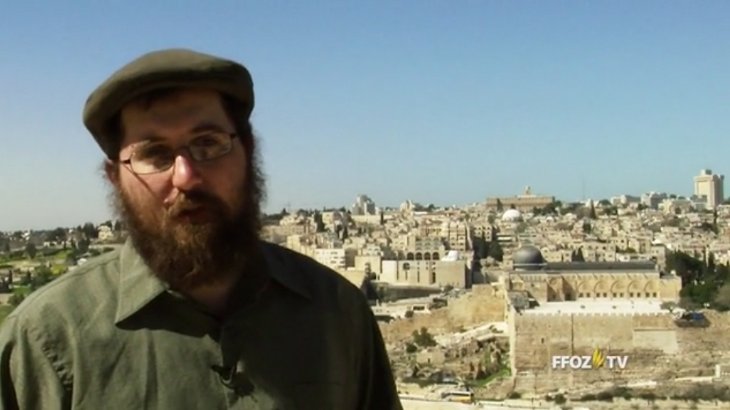
At the end of the episode, FFOZ Founder and President Boaz Michael comes on camera and refers to the Torah as “God’s loving instruction.” He says that both Jews and Gentiles need to study the Torah and discover how it applies to our lives, also implying that there are different applications of the Torah to Jewish and non-Jewish people.

What Did I Learn?

ffoz_tv13_torah_lettersI gained a greater appreciation of the Rabbinic use of the terms “fulfill” and “abolish,” although I’d heard something similar in the past. I was also reminded of a discussion I had with my Pastor last week on this very topic: will there be distinctions between Jews and Gentiles in the Messianic Era and will there be any such thing as “Torah” in those days? He says “no” and I say “yes.” I don’t think the Torah ceases as we understand it today until “all is accomplished” (Matthew 5:18). The question is, when is everything that must be accomplished actually accomplished? If not even the smallest detail of the Torah pass away until heaven and earth pass away, then the only possible answer is that the Torah passes away only when there is a new heaven and earth.

Then I saw a new heaven and a new earth; for the first heaven and the first earth passed away, and there is no longer any sea. And I saw the holy city, new Jerusalem, coming down out of heaven from God, made ready as a bride adorned for her husband. And I heard a loud voice from the throne, saying, “Behold, the tabernacle of God is among men, and He will dwell among them, and they shall be His people, and God Himself will be among them…

Revelation 21:1-3 (NASB)

When the Messianic Age is established, the Torah will still be in effect upon Israel, that is the Jewish people. There will be some applications for non-Jewish believers, but Toby was deliberately vague in this area. Only after everything has been accomplished, evil has finally been defeated, and a new heaven and earth have been established, that the Torah, as we understand it, will pass away.

But as I was watching this episode and reflecting on my conversation with Pastor last week, I was reminded of a question he asked me. There are several Jewish people who attend my church. None of them are “Messianic,” and would be better called “Hebrew Christians,” people of Jewish ethnic and family lineage but those who practice a traditional Christianity. In other words, they likely believe the law is abolished in the sense of being permanently destroyed.

Pastor asked me if I thought they are obligated to the Torah. My principles say “yes,” but I was suddenly confronted with the reality of my words. Could I go up to any of these individuals unbidden, and tell them to their face that they should be performing the mitzvot, not as a matter of salvation or justification, but out of covenant obedience? Probably not (not unless they asked, of course…). It would be like going up to a Jewish person driving to shul on Shabbos and telling them they shouldn’t drive but walk instead. Who am I, the religious police? On the other hand, if the Torah is incumbent upon all the Jewish people now and will be even into the Messianic Age…what are the consequences to a Jew for abandoning the Torah, even at the behest of the Christian church?

Whoever then annuls one of the least of these commandments, and teaches others to do the same, shall be called least in the kingdom of heaven; but whoever keeps and teaches them, he shall be called great in the kingdom of heaven.

Matthew 5:19 (NASB)

prophetic_return1I believe that Jewish people are currently obligated to perform the mitzvot, but that doesn’t mean I must forcibly impose my beliefs upon them. Every person negotiates their own relationship with God. Every Jew must discover who they are as a Jew in relation to Hashem. I can only pray that all Jewish people everywhere return to the Torah and thus bring the Messiah that much closer to bringing his rule and reign fully into our world. For when he returns, as Toby and Aaron teach, the Torah will be established in Israel and will go forth into the nations from Zion.

When G‑d made the world He gave each creature, each nation and each individual a role and a meaning.
When each plays its part there is harmony.
When the lines become too blurred, there is acrimony.

-Rabbi Tzvi Freeman
“Distinctions”
Based on letters and talks of the Rebbe, Rabbi M. M. Schneerson
Chabad.org

I will review another episode next week.

Returning to the Tent of David: An Introduction

serpentThe serpent enticed Chavah by predicting beneficial outcomes. “Your eyes will be opened… The fruit will awaken a new desire and appreciation for the pleasures around you. It will be a source of intellectual benefit.”

Chavah longed for this new knowledge and exciting awakening, and she ate the forbidden fruit. She then used her persuasive powers to convince her husband to eat it as well.

Chavah’s downfall began when she expanded upon and distorted G-d’s command, which she did not personally hear.

-Chana Weisberg
“Woman and the Forbidden Fruit”
Chabad.org

Beginning the Returning to the Tent of David series

This depiction of Chavah (Eve) and her interaction with the serpent casts her in a more favorable light than we typically see her by in Christianity. Rather than being disobedient and rebellious, she is either a bold explorer of new knowledge, or an innocent dupe of the serpent who physically pushed her in to the tree of the knowledge of good and evil and after all, it’s not her fault because God did not tell Chavah directly not to touch the tree or to eat from it.

Chavah added the prohibition of touching the Tree of Knowledge. The serpent then forcibly pushed Chavah against the tree, and victoriously claimed, “See, just as death did not ensue from touching, so it will not follow from eating.”

In this way, the serpent introduced doubt into Chavah’s mind. It now became easier to dare Chavah to taste the forbidden fruit. He convinced her that G-d did not actually intend to kill her and Adam, but merely threatened them to intimidate them.

I know, I know. The Torah reading for Beresheet (Genesis) is behind us. Why do I continue to write about it now? Shouldn’t I be preparing my commentary on Noah? Be patient. There’s a reason.

That’s my ministry in a nutshell; it’s a not-so-interesting and rather Baptist-intensive story. I am eternally grateful for my family and for my Baptist heritage. God has used both to lead me to commit my life to Christ, to follow him with my life and to serve him through the church. However, the past eighteen months have opened up for me a more complete picture of who I am and where I came from. Through a series of circumstances, curiosity, and new friendships, I am being exposed to my Jewish roots. I have no doubt that all of these circumstances and friendships, and even my own curiosity that opened me up to the Jewish roots movement, are all God-ordained.

-Durwin Kicker
Senior Pastor at Marshfield First Baptist
From the Foreword (pg 10) of Boaz Michael’s book
Tent of David: Healing the Vision of the Messianic Gentile

tent-of-davidYou may think it’s terrifically unfair of me to compare Chavah’s situation to Pastor Kicker’s. I’m not really, but it occurs to me that, at least in midrash, we all have something in common with the wife of the first man. When exposed to be brand-new world with seemingly endless possibilities, we want to explore. However, like Chavah, we may also have reservations, since some of the things that we are tempted to explore may not be what God wants us to investigate, even when we get a “helpful” shove.

God has used Boaz Michael and the ministry of First Fruits of Zion to impact my life in a profound way in a very short amount of time. It is my great honor and privilege to call Boaz my friend. His passion and love for Messiah and his gentle spirit have struck a chord in our church family which has served to open many of our people to our Jewish roots, God’s everlasting covenants with his people, and our place as Gentiles in God’s family through our Jewish Messiah.

Boaz’s desire is that this kind of loving impact will be repeated over and over again in church after church. I join with Boaz in saying, the church needs you! The church is good, yet the church needs to change. Each individual who comes to know our Jewish Messiah in his Jewish context can play a part in lovingly and patiently helping brothers and sisters in Messiah come to know him in this way as well.

-Kicker, pg 12

I reviewed Boaz’s book about nine months ago in several blog posts, the two most notable being Return of the Christian and Returning to Faith. I had read an advanced copy of the book months previously, and it was instrumental in overcoming my inertia and inspiring my own return to a local church.

And now it’s been nearly a year later. The progression through the Jewish holiday season and the beginning of a new Torah cycle seem a very good time to review my own “Tent of David” experience and to see how things actually have ended up (not that anything has really ended yet).

Pastor Kicker seems enthusiastic about pursuing the vision of the “Messianic Gentile” in the church by way of his friendship with Boaz but of course, he’s been in the church for quite some time and as Pastor, he is a fully integrated unit within that cultural, social, and theological construct. In other words, he “fits.” Boaz’s book speaks of “Healing the Vision of the Messianic Gentile.” For me as a recent “returnee,” what has been healed, if anything?

My perception of Boaz’s book (I can’t speak directly to his intent, nor would I ever try…this is my own opinion) is that there are two kinds of healing going on, at least in theory.

There’s the healing of the “Messianic Gentile,” the Christian (non-Jewish disciple of Jesus Christ) who often has left the church because of some emotional or spiritual injury or hurt (real or perceived) caused somehow by the Christian church or some of its members. Many people in Hebrew or Jewish roots congregations believe they have sought refuge in a “safe place” outside of “the Church” and continue to view church and people who identify as Christians as adversaries. Finding a mechanism to have the Hebrew/Jewish roots Gentile return to church in a safe manner and to share who they are with their fellow Christians certainly opens the avenue for healing between the parties involved.

Then there’s the more historic healing between the traditional church of Jesus Christ and the historic and Biblical Jewish Jesus and the Jewish and Gentile body of Messiah. A great deal of damage has been done to Jewish and Christian hearts, and that has sustained the separate trajectories believing Gentiles and the Jewish community (including Messianic Jews) have been traveling for twenty centuries.

church-and-crossA non-Jewish believer possessing a Hebraic view and even a passion for the “Jewishness” of Jesus, and one willing to communicate that with his or her Christian counterparts in a church community could facilitate a great deal of healing, ultimately between Christianity and Judaism. Certainly, great strides have already been made in this area between some churches and various expressions of Messianic Judaism, although a lot of work still needs to be done.

But what about me and what I’m doing in the small church I attend? I’d like to completely re-read Boaz’s book before venturing to answer that question in full, but I did want to keep my promise and at least introduce the journey I’m taking in returning to the Tent of David and Boaz’s vision of the healing of Christian and Jewish communities. His book speaks on a larger scope by necessity, but nearly a year down the road,  how has Boaz’s vision worked “on the ground,” so to speak. I can only lend my own single, small voice and my individual experience. As this series progresses, I’ll share my insights with you. Perhaps you will return the favor.

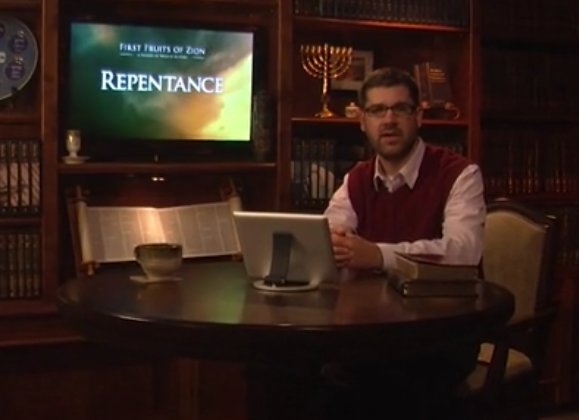
FFOZ TV Review: Repentance

tv_ffoz9_1Episode 09: Jesus did not tell his disciples “Believe in me, the kingdom of heaven is at hand” but rather “Repent, the kingdom of heaven is at hand.” In this episode viewers will discover the direct connection between the kingdom of heaven and repentance. Since throughout the Bible sin leads to exile, it is also true that repentance leads to redemption. Followers of Jesus can help prepare the way for Messiah’s final redemption by walking in a life of repentance now.

-from the Introduction to FFOZ TV: The Promise of What is to Come
Episode 9: Repentance

The Lesson: The Mystery of Repentance

You wouldn’t think there’d be much of a mystery about repentance, but as this episode unfolds, a lot of details are unpackaged that I don’t think most Christians are conscious of. Today’s episode, “Repentance,” is a direct sequel of last week’s episode, The Gospel Message. It is a refactoring of the understanding of the desires of God and the work of Jesus Christ from a wholly Jewish point of view, and strives to communicate that the “good news” isn’t just about “me and my personal redemption.” Christianity seems to focus on “me and Jesus,” while Judaism, and specifically Messianic Judaism for our purposes, has a wider field of view.

From this time on, Yeshua began calling out to proclaim and say, “Repent, for the kingdom of Heaven is on the brink of arrival.”

Matthew 4:17 (DHE Gospels)

This was Messiah’s message to the Jewish people and the nation of Israel, but why didn’t he say “believe in me” rather than “repent?” FFOZ Author and Teacher Toby Janicki calls us to start thinking outside the box of “me and my personal salvation.” Repentance and Kingdom are national concepts, not just personal directives. We’re talking about a message relevant to the entire nation of Israel and the whole of the Jewish people. I know that probably makes Gentile Christians feel a little insecure, but there’s more that we need to understand about who Jesus is and exactly the function of his mission.

Toby says that Jesus did NOT say “believe in me for the kingdom of Heaven is at hand.” He said “repent.” So did someone else:

Now in those days John the Baptist came, preaching in the wilderness of Judea, saying, “Repent, for the kingdom of heaven is at hand.”

Matthew 3:1-2 (NASB)

The following scripture adds more detail:

Now after John had been taken into custody, Jesus came into Galilee, preaching the gospel of God, and saying, “The time is fulfilled, and the kingdom of God is at hand; repent and believe in the gospel.”

Mark 1:14-15 (NASB)

This breaks down into three points:

  • The Kingdom of God is at hand.
  • Repent.
  • Believe in the gospel.

This is all very similar to the content of last week’s episode, and Toby makes the point that belief goes hand in hand with repentance. As he was speaking, I recalled that there are certain teachings in Judaism that say if all of Israel were to repent at the same moment, it would summon the coming of the Messiah. There are also contradictory teachings but the gist is that Jewish faith and repentance have a direct connection to when the Messianic Era, that is, the Kingdom of God arrives.

This is radically different from what most Christians believe, since we have been taught the return of Jesus will be on some fixed but unknown date on the calendar. We can neither make it come sooner or delay it from happening.

Here comes the first clue to solving our mystery:

Clue 1: The gospel message carries the imperative message, “repent for the Kingdom of God is at hand.”

It’s a call to action. We must do something, that is repent, because the Messianic Era is on the verge of arriving.

tv_ffoz9_aaronBut what is it to repent? Toby tells us that if we believe the gospel message, we will change…not like changing our minds, but changing our lives. My Pastor calls it living a transformed life. Toby says that repentance is a return to God’s Law, the Torah.

The scene shifts to Israel where FFOZ Teacher and Translator Aaron Eby explains the Hebrew word “Teshuvah” to the audience. He tells us the word gives the meaning of turning around and returning. It’s as if God’s desire for people is for us to walk in His ways, literally, walking God’s path. Sinning is like straying off the path and repentance is turning back or returning to the path.

So you shall observe to do just as the Lord your God has commanded you; you shall not turn aside to the right or to the left. You shall walk in all the way which the Lord your God has commanded you, that you may live and that it may be well with you, and that you may prolong your days in the land which you will possess.

Deuteronomy 5:32-33 (NASB)

The timing of this review couldn’t have been better, since not only are we about to enter the High Holy Days on the Jewish calendar which emphasize repentance and return for the Jewish people, but last week’s Torah portion included the following passage:

“So it shall be when all of these things have come upon you, the blessing and the curse which I have set before you, and you call them to mind in all nations where the Lord your God has banished you, and you return to the Lord your God and obey Him with all your heart and soul according to all that I command you today, you and your sons, then the Lord your God will restore you from captivity, and have compassion on you, and will gather you again from all the peoples where the Lord your God has scattered you.”

Deuteronomy 30:1-3 (NASB)

The “mechanics” of repentance involves a literal ceasing of a specific sin, a deep regret for ever having sinned, verbal confession to God, and making life changes, such as repairing the damage you did to others by sinning, and even giving to charity as a way to compensate for any inability to pay back what you took or heal the hurts you caused. Returning to God’s path.

But this also illustrates that, for the Jewish people, and remember Christ’s primary audience were (and are) Jews and Israel, the only way to repent was (and is) to return to the ways of Torah. If the message of Jesus is as true today as it was nearly two-thousand years ago, then we cannot ask Jewish believers to stop observing the Torah mitzvot, nor can we in the church say that the Torah was meant to be temporary. To do so would be to deny the Jewish people any ability to obey God and repent of their sins. We’d be condemning them to permanent exile, and condemning ourselves to living outside of God’s will for the Gentiles.

Toby gives us the second clue:

Clue 2: Repentance is turning away from sin and towards God’s Law.

The rest of the mystery involves the linkage between repentance and redemption. As mentioned above, when Israel sins, she is exiled from her Land, but Moses in Deuteronomy 30:1-3 also promises that whenever Israel repents, she is redeemed and returned to the Land of Israel. This is the original template for what all of the subsequent prophets in Israel would say, not only about the historic exiles and returns, but the final redemption in the Messianic age.

…and My people who are called by My name humble themselves and pray and seek My face and turn from their wicked ways, then I will hear from heaven, will forgive their sin and will heal their land.

2 Chronicles 7:14 (NASB)

Toby rightly mentions that typically, we’ve heard sermon after sermon applying this verse to Christians in whatever nation we happen to be living in, which in my case, is America. But taken in context, this was being addressed to King Solomon and to Israel. This is not about Christianity and “saving America” as a “Christian nation,” but about the central message of every Jewish prophet in the Old Testament. God intends to heal Israel. Christians can’t afford to be so self-focused that we miss what the Bible is really saying. It’s not all about us and Jesus, it’s about the intent of God toward Israel. It’s about the redemption of national Israel, not individual Gentile souls.

Clue 3: Repentance is a prerequisite to redemption.

It’s almost like Toby is saying that if we all really repent, only then will Messiah return…or is he saying only if Israel repents…?

tv_ffoz9_tobyBut what about us? What about Christians. Does this television episode write us out of the plan of God and the salvation of Christ? Not at all.

Toby says we can be a part of the redemption by living lives of continual redemption. Living such a life is like being part of a sort of “mini-Messianic age.” We experience a foretaste of what is to come when Jesus returns, the time when all of Israel will repent and the Messiah will come in power and glory, bringing redemption to the Jewish people and the world. But none of this happens for Gentile Christians unless Israel repents and is redeemed, so it is in our best interests to support and encourage Jewish observance of Torah.

This lesson has at least strongly implied if not boldly declared that Israel can’t repent unless they return to the specific behavioral path God has provided for them, the Torah. We in the church dare not inhibit this, for Israel’s sake and for our own.

What Did I Learn?

I learned that the timing of the return of Jesus is variable. It isn’t a fixed date on the calendar. According to something FFOZ President and Founder Boaz Michael said at the close of this episode, if Israel had repented at the first coming of Messiah, the Kingdom of God would have been established at that moment.

That’s a rather radical thought, because I always believed that the final redemption was “delayed” to allow time for the gospel message to be transmitted to all the nations of the Earth, to all of the Gentiles. If Israel had repented immediately after the resurrection and the Messianic Era was then established, the vast majority of the world would never have heard of Israel, of Messiah, and they certainly wouldn’t have had a clue that Israel was supposed to be the head of the nations and Israel’s King was the King of the entire planet.

After two-thousand years, if Messiah should return at this very moment, even though many would still disagree with who he is and what he is supposed to do, almost none of us could say that we never heard of Jesus, Israel, the Bible, and what Christians and Jews believe it all means.

Did Jesus truly expect for Israel to have repented long, long ago?

He who testifies to these things says, “Yes, I am coming quickly.” Amen. Come, Lord Jesus.

Revelation 22:20 (NASB)

John wrote these words near the close of the first century CE and it certainly seems as if he expected the return of Messiah soon, perhaps within his own lifetime (and he was quite elderly when he penned this part of our Bible). Is it humanity’s fault that he hasn’t come yet? Is our lack of repentance and hardness of heart to blame?

It’s the mystery for next week.

FFOZ TV Review: The Gospel Message

tv_ffoz8_1Episode 08: The gospel message of Jesus is often simplified down to believe in Christ and your sins will be forgiven and you will go to heaven when you die. In episode eight this common misconception will be challenged. Viewers will discover that the main message of the gospel is one of repentance and entering into the kingdom of heaven. The kingdom of heaven is not the place we go to when we die but rather God’s kingdom coming down here on earth. The gospel message is about preparation for the Messianic Age.

-from the Introduction to FFOZ TV: The Promise of What is to Come
Episode 8: The Gospel Message

The Lesson: The Mystery of the Gospel

This episode seemed to cover a lot of previous material, not in the details, but in the theme. It is most closely related with Episode 1: The Good News since gospel means good news. There’s also a close link to Episode 7: Exile and Redemption and Episode 8: Ingathering of Israel. The television series now seems to be stringing individual episodes together to paint a much larger panoramic picture of the prophecies about and the coming of the Messianic Era.

Of course, probably all Christians think they know what the good news or the gospel message is: Jesus died for our sins and if we believe in him, we go to Heaven when we die. And while that’s good news, as previous episodes have told us, that’s not the extent of the gospel message. In fact, most Christians have been given a truncated gospel or an incomplete idea of that the good news really means. To get the whole picture, you have to look at what the gospel message means through a Jewish lens.

The definition of the gospel message of Jesus is actually really easy to find:

After Yochanan was arrested, Yeshua came to the Galil and proclaimed the good news of the kingdom of God. He said, “The time is fulfilled, and the kingdom of God has drawn near. Repent and believe the good news.”

Mark 1:14-15 (DHE Gospels)

FFOZ Author and Teacher Toby Janicki tells us that Jesus was just beginning his ministry at this point and that these verses provide us with the first clue in solving the Mystery of the Gospel:

Clue 1: The Gospel Message means we should repent for the kingdom of Heaven is at hand.

But what does that mean exactly? What is the “Kingdom of Heaven” and what is “at hand?” The phrase “at hand” is sometimes also translated as “near”. Jesus was saying to his listeners that they should repent because the Kingdom of God or the Kingdom of Heaven was really close and about to happen or occur.

Jewish people in the late Second Temple period, particularly because their nation was occupied by the Roman Empire, were especially waiting for the Kingdom of Heaven to arrive and to their ears, it certainly was good news or the gospel message that Jesus was preaching. It was a message that we find repeatedly in the Gospels.

Now in those days John the Baptist came, preaching in the wilderness of Judea, saying, “Repent, for the kingdom of heaven is at hand.”

Matthew 3:1-2 (NASB)

We also find examples of this message in Matthew 4:17 and Matthew 10:7. But we also find that the good news is sometimes referred to as the “Kingdom of God” while other times, it’s the “Kingdom of Heaven.” Toby tells us that the term “Kingdom of Heaven” is closer to the correct phrase in Hebrew. The word translated as “Heaven” is the Hebrew word “Shamayim.” Does that mean that Jesus was talking about Heaven, where God is and where we’re going to go when we die?

Not according to the Jewish understanding. That’s not how Jesus’s disciples and listeners would have interpreted his message.

The scene shifts to FFOZ Teacher and Translator Aaron Eby in Israel for a better understanding of “Kingdom of Heaven” or in Hebrew, “Malkut Shamayim.”

“Shamayim” can mean just “sky” in Hebrew, but that’s not how it’s understood in the phrase “Malkut Shamayim.” Aaron explains the concept of circumlocution, or avoiding using the Tetragrammaton, the most Holy and personal name for God, the name God revealed to Moses at the burning bush. Jewish people use many other names for God to avoid the offense of taking His most holy name lightly. Names such as “Hashem,” “Holy One,” “Creator,” or “Our Father.”

Another circumlocution for God’s most holy name is “Shamayim” or “Heaven.” You see it often in Talmudic writings, but it’s even in the Bible.

And in that it was commanded to leave the stump with the roots of the tree, your kingdom will be assured to you after you recognize that it is Heaven that rules (emph. mine).

Daniel 4:26 (NASB)

Daniel, using the Aramaic equivalent of “Shamayim,” is not saying that literally Heaven, a place, rules, but that God rules. He was merely using a circumlocution for God’s most holy name.

tv_ffoz8_aaronAaron tells us that the phrase “Kingdom of Heaven” isn’t God’s Kingdom that is located in a place called Heaven, but it actually means the rule and dominion of God on Earth.

Why do we then sometimes see this phrase rendered “Kingdom of God?” In the thoughts of the gospel writers in Hebrew, they would have used “Malkut Shamayim,” but then translating that phrase into Greek, what words should they have used? Matthew, who was writing primarily to a Hebrew speaking Jewish audience, chose to translate the Hebrew phrase literally as “Kingdom of Heaven.” However, Mark and Luke, who were writing primarily for Greek speaking Jews and non-Jews, translated the phrase idiomatically as “Kingdom of God.” Either way, they were saying the same thing.

Back to Toby and the studio, we have our second clue.

Clue 2: Kingdom of Heaven is not Heaven in the sky but God’s rule and reign on Earth.

Look up the Lord’s prayer and you’ll even find it in how Jesus taught his disciples to pray.

What is God’s rule on Earth? The Messianic Era. The time when Jesus will return and establish his rule as King in Jerusalem, establishing an age of peace, not just in Israel but in the entire world.

Toby solved most of the mystery, but one more clue is needed to answer a final question. Why is the Messianic Era good news?

Isaiah 11:1-4 tells of the prophesy that King Messiah will indeed rule Israel and the world from his throne in Jerusalem. Isaiah 11:6-8, 10 further tells us that Messiah’s reign will be one of complete and total peace. The portrait of such peaceful animals is poetic language describing such a peace. Complete tranquility and bliss, such as was experienced in Eden, long before there was any such thing as war and strife among human beings.

And when such peace comes upon all the earth from Israel, the Gentiles in the nations of the world will see and they will repent and turn to God, inaugurating an age of total, worldwide revival.

But it won’t be totally peaceful:

Then it will happen on that day that the Lord will again recover the second time with His hand the remnant of His people, who will remain, from Assyria, Egypt, Pathros, Cush, Elam, Shinar, Hamath, and from the islands of the sea. And He will lift up a standard for the nations and assemble the banished ones of Israel, and will gather the dispersed of Judah from the four corners of the earth.

They will swoop down on the slopes of the Philistines on the west; together they will plunder the sons of the east; they will possess Edom and Moab, and the sons of Ammon will be subject to them.

Isaiah 11:11-12, 14 (NASB)

We see that Messiah ingathers the exiles of the Jewish people from all the nations of the world and returns them to live in complete peace in their Land, in Israel. God Himself delivers justice to all the nations who have been enemies of Israel, vanquishing them, thus insuring Israel’s continual peace.

Now we have the final clue:

Clue 3: Kingdom of Heaven is about Messiah’s reign on Earth.

Toby recaps the lesson, summing up the three clues and solving the mystery. He describes a time when the Jewish people will live under their King in peace and return to the Torah, the law of God. I can only hope that future episodes will flesh out how this actually works relative to both Jewish and non-Jewish people, but that wasn’t the point of the episode.

What Did I Learn?

As I mentioned before, a lot of this material was addressed from other perspectives in previous episodes and I’ve learned about it from other sources as well. What Toby didn’t mention was that, by Jesus teaching that he was the fulfillment of Messianic prophecy and calling the Jewish people to repentance as preparation for the soon to arrive Kingdom of Heaven, it explains why the apostles and his disciples were so incredibly devastated when he was crucified. All of them were expecting that he was going to overthrow the Romans at any minute and assume the Throne of Israel as the promised Messianic King.

tv_ffoz8_tobyWhen he died, it must have seemed as if they were completely mistaken about him, that he couldn’t have been the Messiah, that he must have been just another of a long line of pretenders to the throne who came before him. It’s how most Jews see Jesus today, another would-be Messiah among the many who have since come and gone in Jewish history.

But then, when he was resurrected, so was hope, only there’s a problem of sorts:

So when they had come together, they were asking Him, saying, “Lord, is it at this time You are restoring the kingdom to Israel?” He said to them, “It is not for you to know times or epochs which the Father has fixed by His own authority; but you will receive power when the Holy Spirit has come upon you; and you shall be My witnesses both in Jerusalem, and in all Judea and Samaria, and even to the remotest part of the earth.”

Acts 1:6-8 (NASB)

Given that Jesus had said, “The Kingdom of Heaven is at hand” or “near,” once he was resurrected, it made perfect sense to his disciples that he was now ready to ascend the throne. Except he didn’t. He left instead and the disciples waited.

“Truly I say to you, there are some of those who are standing here who will not taste death until they see the Son of Man coming in His kingdom.”

Matthew 16:28 (NASB)

Many believed, based on these words of the Master, that although Jesus wasn’t going to immediately establish his kingdom, it would be within a human lifetime, just a matter of decades. But when the last apostle, John, died of extreme old age, sometime in the last years of the first century CE, the disciples must have felt a keen disappointment again. Messiah had not come to restore his kingdom. Where is he? How long, O’ Lord, how long?

I generally don’t mention this in my reviews, but at the very end of each episode FFOZ President and Founder, Boaz Michael appears on camera to give the audience a brief peek at the next episode. At the end of this episode, Boaz explained that the next episode would pick up the same theme and describe more in detail the process of repenting to prepare for the kingdom and to believe. But Jesus didn’t say “believe in me” he said “believe in the gospel.” What does that mean?

It’s the mystery for next week.