Tag Archives: boaz michael

Gifts of the Spirit: For the Common Good

kinbar“Everyone knew I was Jewish. It just didn’t mean anything.”

-Rabbi Carl Kinbar

I will feed you with the heritage of Jacob your father, for the mouth of the Lord has spoken.

Isaiah 58:14

Rabbi Kinbar gave his first presentation called For the Common Good last week on Wednesday morning during the First Fruits of Zion Shavuot conference at Beth Immanuel Sabbath Fellowship in Hudson, Wisconsin. He told a story about himself that most of the audience, including me, probably didn’t know. Rabbi Kinbar was a Pastor for many years before he entered into Messianic Judaism and eventually became a Rabbi.

I won’t go into all of the details (I didn’t chronicle all of them in my notes of his presentation) but I wanted you to get that the vast, vast majority of Jewish people I know who are active and teaching in Messianic Judaism came to the movement by way of the church. Many of them were Pastors and teachers. But something called to them.

In Rabbi Kinbar’s case, Isaiah 58:14 called to him…literally.

He recalls a time (again, no specific details) when his eyes were closed and he was enjoying the presence of God in his life. At that moment, he felt a hand touch his shoulder and someone said, “I will feed you with the heritage of Jacob your father.”

Rabbi Kinbar didn’t know what it meant at the time, although he wondered if it was about his father since he actually is named Jacob. As it turns out, this experience (Rabbi Kinbar never saw the person who touched him) spoke both about his father and about the patriarch, his father Jacob.

The general theme of the conference was the gifts of the spirit and you may be wondering what the above story has to do with the Holy Spirit of God. For me, it seems clear, since by God’s Spirit, Rabbi Kinbar was drawn toward a different path than the one he was traveling and by the Spirit, we are each drawn to the path that God would have us walk.

Why?

On an individual level, the answer is so we can be who God designed us to be. It would be tragic if God designed you to write grand symphonies but you were stuck putting together widgets on an assembly line. It would be equally tragic if you were trying to learn medicine, but God designed you to be a Forest Ranger.

But that’s not the kind of design I’m talking about.

I’m talking about how we know and serve God and how we know and serve each other, and that is a large part of the point Rabbi Kinbar was making and the point of the conference as well.

When we think of spirituality or the gifts of the spirit, most Christians think of the Pentecostals and Charismatics, but what about Judaism and particularly Messianic Judaism and its traditions? Spirituality in modern Judaism, Messianic or otherwise, may seem absent or at best disguised, but it’s quite clear in ancient Messianic Judaism as illustrated in the letters of Paul.

In many ways, we mirror the problems Paul was attempting to deal with in his day.

I give thanks to my God always for you because of the grace of God that was given you in Christ Jesus, that in every way you were enriched in him in all speech and all knowledge—even as the testimony about Christ was confirmed among you—so that you are not lacking in any gift, as you wait for the revealing of our Lord Jesus Christ, who will sustain you to the end, guiltless in the day of our Lord Jesus Christ. God is faithful, by whom you were called into the fellowship of his Son, Jesus Christ our Lord.

I appeal to you, brothers, by the name of our Lord Jesus Christ, that all of you agree, and that there be no divisions among you, but that you be united in the same mind and the same judgment. For it has been reported to me by Chloe’s people that there is quarreling among you, my brothers.

1 Corinthians 1:4-11

Rabbi Kinbar states that they really did lack nothing in terms of the gifts of the Spirit, but they did lack unity. Although all of the teachers and participants at the conference were well unified, though from widely different backgrounds, the larger Messianic Jewish and Hebrew Roots movements do suffer from lack of unity in many things, as does larger, mainstream Christianity.

But what does this have to do with the “path” and “identity” issues I mentioned at the beginning of this article?

For though I am free from all, I have made myself a servant to all, that I might win more of them. To the Jews I became as a Jew, in order to win Jews. To those under the law I became as one under the law (though not being myself under the law) that I might win those under the law. To those outside the law I became as one outside the law (not being outside the law of God but under the law of Christ) that I might win those outside the law. To the weak I became weak, that I might win the weak. I have become all things to all people, that by all means I might save some. I do it all for the sake of the gospel, that I may share with them in its blessings.

1 Corinthians 9:19-23

pathPaul isn’t saying that he was some sort of chameleon, shifting practices from Jewish to Gentile, from weak to strong, and that his own Jewishness had no meaning to him. He was dealing (as we saw above) with a fractured population or at least a diverse one. He became a Jew to the Jew and not a Jew to the Gentile because he didn’t teach Torah to the Gentile. The one under the law is probably a Gentile convert to Judaism, and Paul learned to speak to these proselytes from the same position and set of concerns they were experiencing. It’s interesting to speak of a fractured population because Rabbi Kinbar said that if Paul had chosen to introduce the Jewish observance of Torah to all populations uniformly, he would have actually fractured them further rather than setting each group on their correct and individual paths, Jew, convert, and Gentile alike.

But Paul had to speak to each of these populations within the context of who they were in order to win more of them to the Gospel message of Messiah; so they could repent, for the Kingdom of Heaven is near.

In listening to Rabbi Kinbar’s message, I thought of the different populations I encounter. I thought of how I could present something like this to Pastor Randy, who doesn’t believe the Jewish disciples of Messiah were to continue to observe the Torah mitzvot, and to the Hebrew Roots people who occasionally read my blog, who believe that everyone is meant to observe the Torah mitzvot identically.

Rabbi Kinbar’s own encounter with the Spirit set him on a particular path because he is Jewish. He was and is supposed to be fed with the heritage of his father Jacob, the Jewish patriarch. But this isn’t just a message of distinctions but of distinctions drawn into unity.

Let’s see if you can spot what’s missing in the following passage:

For just as the body is one and has many members, and all the members of the body, though many, are one body, so it is with Christ. For in one Spirit we were all baptized into one body—Jews or Greeks, slaves or free—and all were made to drink of one Spirit.

For the body does not consist of one member but of many. If the foot should say, “Because I am not a hand, I do not belong to the body,” that would not make it any less a part of the body.

1 Corinthians 12:12-15

I didn’t see it either, but in fact, there is no mention of Torah in this portion of Paul’s letter. For we were all baptized into one body—Jews or Greeks. Does that mean we are all supposed to obey the Torah in an identical fashion, Jews and Greeks, or all of us are supposed to discard the Torah?

Not at all, because we are united in the Spirit, not in the Torah. Many good things are said of the Torah, but it is applied differently to different populations within the unity of the Spirit, hence Paul’s statement in 1 Corinthians 9:19-23.

Two paths, two peoples, one body, one Spirit, one Messiah.

There shall come forth a shoot from the stump of Jesse, and a branch from his roots shall bear fruit. And the Spirit of the Lord shall rest upon him, the Spirit of wisdom and understanding, the Spirit of counsel and might, the Spirit of knowledge and the fear of the Lord.

Isaiah 11:1-2

Now when all the people were baptized, and when Jesus also had been baptized and was praying, the heavens were opened, and the Holy Spirit descended on him in bodily form, like a dove; and a voice came from heaven, “You are my beloved Son; with you I am well pleased.”

Luke 3:21-22

For Jews demand signs and Greeks seek wisdom, but we preach Christ crucified, a stumbling block to Jews and folly to Gentiles, but to those who are called, both Jews and Greeks, Christ the power of God and the wisdom of God. For the foolishness of God is wiser than men, and the weakness of God is stronger than men.

1 Corinthians 1:22-24

And I, when I came to you, brothers, did not come proclaiming to you the testimony of God with lofty speech or wisdom. For I decided to know nothing among you except Jesus Christ and him crucified.

1 Corinthians 2:1-2

dove-peaceThe wisdom of God rests upon the Messiah in the full measure of the Spirit and in him, we are united if we accept this or torn apart if we do not. The Messiah crucified is the wisdom of God.

That last part is important, because Rabbi Kinbar isn’t talking about Jesus as he was before the crucifixion, for his death was necessary so we could all be reborn in him and indeed, so we could all be in him. For in him, both Jew and Gentile are one, not meaning identical behavior or identity, but one in purpose and in spirit.

I mentioned in a previous blog post that the Gospel message isn’t simply the individual accepting Jesus Christ as Lord and being saved. The Gospel message for Jews and Gentiles is “Repent for the Kingdom of Heaven is at hand.” It’s a message of unity in the Kingdom. Our salvation, our purpose, our unity in the Spirit is to be for the common good of all, not just the personal benefit you and I might derive from being a disciple of the Master.

But to be of any use to the common good, we must consider other people first rather than ourselves. Especially in America, we tend to be individualists, and in the worst possible expression, we tend to pursue “me first, because it’s a dog eat dog world.” But that’s not Messiah’s message and it’s not Paul’s message. You aren’t unified with the body through the Spirit and you aren’t serving your neighbor as yourself if all you think about is yourself and your so-called “rights.”

I was talking to a gentleman named Kevin while we were waiting in line for one of the meals at the conference. He regularly attends Beth Immanuel and he mentioned a certain event that occurred some years ago. When First Fruits of Zion moved away from a “One Law” position to one that reflected the reality of Jews and Gentiles as differing populations within a single Messianic body, a lot of people became upset. This was also reflected in the membership at Beth Immanuel and Kevin pointed out something I hadn’t really noticed.

Except for two or three non-Jews, the only people wearing tallitot during the prayer and Torah services were Jewish men. If any non-Jewish men were wearing a tallit katan, the tzitzit were tucked into their trousers so as not to be visible.

Apparently the shift in perspective at Beth Immanuel had two general reactions among the non-Jewish membership. One was what I just described, Gentiles who adjusted their outward appearance so that they could not be mistaken for Jews (although I must say that during the Torah services at Beth Immanuel, many non-Jews were called up for an aliyah). The other was a group of non-Jews who sought formal conversion to Judaism, usually within an Orthodox synagogue. They could not give up “Judaism,” so they surrendered the Messiah instead.

Rabbi Kinbar heard a voice telling him to feed from the inheritance of his father Jacob and he began a long journey in order to fulfill that mission for his life, and ultimately for the common good within Messianic Judaism. His being Jewish used to not mean anything when he was in a group where everyone was supposed to be inclusive, uniform, and the same, but God was not going to allow that. God wanted Rabbi Kinbar to not only be Jewish as a string of DNA or a piece of intellectual information, but to be Jewish and to live a fully realized Jewish life as a disciple of the Messiah.

Others among the Gentiles received a similar message and were obedient to the Spirit of God. Some Gentiles, however, could not operate for the common good and sought their own path instead, setting the Master and the will of God aside.

One who focuses on and romanticizes Judaism is focusing on the hammer and not the house it is intended to build.

-Troy Mitchell as related by Boaz Michael

Don’t seek Christianity and don’t seek Judaism, but seek an encounter with God.

-Tom

I mentioned previously that Troy’s “midrash” (Boaz didn’t get the quote quite right, but Troy sent me the correction which I’ll publish in tomorrow’s “meditation”) could be adjusted in a number of useful ways. Here’s one of them: One who focuses on and romanticizes the Torah is focusing on the hammer and not the house it is intended to build.

Boaz, Troy, Rabbi Kinbar, and my friend Tom are all delivering the same message from differing viewpoints. Seek first the Kingdom of God and not the various tools and materials we are trying to use to build the kingdom.

As with my previous blog posts about lessons I heard at the conference, I’ve departed from a simple chronicle of the message and allowed this teaching to take me down personal roads that have meaning to me. I realize that after I absorb and process everything I learned, my next task is much more difficult.

Everything I saw and heard was shown to me from a different perspective and can only be understood from that perspective. If I’m supposed to pass this along to others, including my Pastor, I must find a way to help him…to help anyone who is interested, to see the same information, the same Bible, the same God, the same Messiah, from a different point of view. I’m not changing anything about what the Bible says or what the Spirit says. I’m only trying to change the person receiving those statements by changing their perspective.

grand-canyonThe Grand Canyon can be seen from a number of perspectives…from the north rim, the south rim, riding a donkey down narrow trails to the bottom, riding a raft on the Colorado river inside the canyon, flying over the canyon in a helicopter, and probably in other ways as well.

Depending on which perspective you choose, you will be looking at a different landscape, as if it were a different canyon. But the Grand Canyon isn’t changing (well, yes it is, albeit very, very slowly). What is changing is how you look at it.

The same God, the same Messiah, the same Bible, but different perspectives. But there is one overriding message to get from all this. I want you to at least try to temporarily change your perspective (yes, I know it’s difficult and can even feel threatening) to get the message I believe God is trying to tell each and every one of us. The Gospel message is for us to repent and seek first the common good of the Kingdom of God. In the Messianic Era, we will be united in Messiah and every knee will bow to the King.

In the present age, it is not so, but we can strive toward that goal. To do that, we must love God with all of our being and we must love our neighbors…all of them…as ourselves. The common good. The unity of the Messiah. Being connected through the Spirit that dwells within each of us.

Let us consume and be consumed by the Spirit of God for in doing so, while remaining man and woman, slave and free, Jew and Greek, we are all one in the Messiah and we are all servants to the King and to each other. The greatest will become the least and the least will become the greatest. Seek to be a servant and seek the path God has drawn you to and you will be among those who are called His sons and daughters.

I want to apologize for all of the errors that probably crept in as I was writing this “meditation.” My notes are pretty messy as I was working with a lot of loose pieces of paper. I neglected to pack a notebook for the trip. I especially apologize to Rabbi Carl Kinbar for any portion of his presentation I messed up. I do hope that my rather large missive really does serve the common good for all who read it.

Blessings.

125 days.


Gifts of the Spirit: Don’t Change a Thing

baal-shem-tov2“Therefore do not worry, saying, ‘What will we eat?’ or ‘What will we drink?’ or ‘What will we wear?’ For it is the Gentiles who strive for all these things; and indeed your heavenly Father knows that you need all these things. But strive first for the kingdom of God and his righteousness, and all these things will be given to you as well.

“So do not worry about tomorrow, for tomorrow will bring worries of its own. Today’s trouble is enough for today.”

Matthew 6:31-34 (NRSV)

Where do I begin? As I write this it’s Sunday afternoon. I’ve been back home for a few hours having returned from the First Fruits of Zion (FFOZ) annual Shavuot conference. This year’s theme was Gifts of the Spirit and the event, which was held in Hudson, Wisconsin from last Tuesday through last Saturday, was emotionally, spiritually, and educationally dense with content and meaning.

I’ve got enough material in my notes to blog for the next week or two, but not having gotten a lot of sleep last night, where do I begin so there’s a “morning mediation” for Monday? How about beginning at the end?

The very last presentation on Saturday, which was given by Boaz Michael, included a summary of the entire conference including an extensive question and answer series. We were all rather tired by that point, and I think it helped to generate some recall of the main points that were presented by all of the esteemed speakers. Here are just a few of the things that I recall at the moment. My notes are kind of “scribbly” and my thoughts are rather “fuzzy” right now, so I can’t promise that my quotes are exactly word for word.

One who focuses on and romanticizes Judaism is focusing on the hammer and not the house it is intended to build.

-Troy Mitchell as related by Boaz Michael

I’ll revisit Troy’s “midrash” in subsequent blog posts because there are so many applications for this piece of wisdom that could be useful. This connects to something Boaz presented about our faith in general, whether we call it Christianity, Messianic Judaism, Hebrew Roots or anything else. Most believing communities tend to focus primarily on one of three things, usually at the cost of the other two:

  1. The Gospel Message/Gospel of the Kingdom
  2. The Torah/Bible
  3. The Holy Spirit/Spiritual Gifts

I know that many churches emphasize the Gospel of Jesus Christ, which isn’t such a bad thing, but they usually miss what the Gospel really means (I’ll get to that in a later blog post). I know that my own church tends to be Bible-based, which again, isn’t such a bad thing, but then we tend to not rely so much on the movement of the Spirit of God. Also, both Messianic Judaism and Hebrew Roots have focused heavily on the Torah, sometimes all but ignoring the Messiah and certainly the Gospel message of the Kingdom and the Holy Spirit. Charismatic/Pentecostal churches (which were discussed at length, and often in a complimentary fashion…I’ll get to that too in another blog post) have a main emphasis on “gifts of the Spirit,” often at the expense of the Bible and much of what Jesus actually taught.

Now imagine these three elements are each a leg on a three-legged stool and they are all that is holding up your faith and your congregation. If you have only one or at best two legs, you’re not going to be “on the level,” so to speak. If you try to rest your faith (or your tuchas) on it, you’ll fall to the floor.

My good friend Tom once told me, “Don’t seek Christianity and don’t seek Judaism, but seek an encounter with God.” He probably got the point of the conference long before the conference was ever held. We can all have our pet emphasis within the faith and be so involved in what we think is so important that we miss what God thinks is so important.

I want to tell a really long story. I’m doing this from memory and I don’t know the original source. This wasn’t even part of the “official” conference. It’s a story told by a guy named Yoshi one evening after one of the meals.

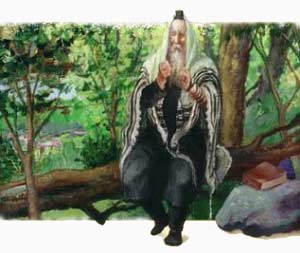
As it turns out, Shavuot is the yahrzeit of the Baal Shem Tov. There have been many “interesting” and inspiring Hasidic Tales about the Baal Shem Tov.

There was once a very simple but honorable and devout Jew who lived in a small town in central Europe. He desired to pray sincerely and fervently to God but did not know how to use his siddur. During prayers at his synagogue, he only knew how to pray starting at the front of the siddur and working his way, page by page, all the way to the back.

As you might imagine, this took a great deal of time.

He appealed to other Jews in his community but either they knew little more about the matter than he did or they didn’t seem to have the time to help him.

This left this devout Jewish man very frustrated.

Then one day, the Baal Shem Tov visited his community. The man thought to himself:

Surely the Baal Shem Tov can teach me to pray.

The man appealed to the Baal Shem Tov to help him understand how to pray using his siddur. Having pity on the man and seeing how sincere his desire to honor God was, the Baal Shem Tov placed many notes and bookmarks in the siddur, designed to guide the man on how to perform the different daily prayers as well as festival prayers and prayers for other occasions.

The man thanked the Baal Shem Tov profusely and began to daven to God with all his heart, using the sequence of prayer marked out in his siddur by the Baal Shem Tov.

A few months passed by and the simple and devout Jew was so happy that he was honoring God by properly praying from his siddur in a manner correct for each of the daily prayers and prayers for special occasions.

During one prayer service, the man accidentally dropped his siddur and all of the loose bookmarks and notes fell out.

The poor man was devastated. He had no idea how to arrange the notes and bookmarks back into their proper order. Sad but determined, the man did the only thing he knew how to do…start praying from the beginning of his siddur, and work his way, page by page, to the end of the siddur.

baal-shem-tov3As he was davening, he noticed that the Baal Shem Tov was visiting his shul again. Everyone else had finished praying, but he was still in the middle of his prayers and in the middle of his siddur. The man thought that as soon as he finished his prayers…and the siddur…he could ask the Baal Shem Tov to put all of the notes and bookmarks back into his siddur again.

But before he was finished praying, the Baal Shem Tov left the synagogue. The man was frantic, but he couldn’t go after the Baal Shem Tov until he finished praying.

He prayed and prayed and prayed as fast as he could and finally finished.

He rushed out of the synagogue, but the Baal Shem Tov was nowhere to be seen. He asked different people he encountered if they’d seen which way the Baal Shem Tov went. One man had seen him take the south road out of the town on foot. The man thought if he ran fast enough, he could catch up and ask the Baal Shem Tov to replace the notes and bookmarks into his siddur.

He ran and ran and finally saw the Baal Shem Tov in the distance at the edge of a river. There was no bridge at that place, so the man thought he could surely catch up to the Baal Shem Tov. But before this could happen, he saw the Baal Shem Tov take a handkerchief out of his pocket and spread it out on the river. The handkerchief grew and grew and grew until it became big enough to make a bridge across the river. The Baal Shem Tov walked across, then picked up his handkerchief, which shrank back to normal size, and then proceeded on his way.

The man got to the river and was frantic. He just had to find the Baal Shem Tov. Then he remembered that he too had a handkerchief. Taking it from his pocket he thought:

If it worked for the Baal Shem Tov, it should work for me.

The man opened the handkerchief, which immediately expanded across the river, just as the Baal Shem Tov’s handkerchief had done. The man walked across, picked up his handkerchief, and then continued to run after the Baal Shem Tov.

As the man was catching up to him, in the distance, he saw that the Baal Shem Tov had come to the edge of a large canyon. There was no bridge across the canyon at that spot, so the man thought he could surely catch up to the Baal Shem Tov this time.

But this was not to be. Once again, the Baal Shem Tov took his handkerchief, spread it out across the canyon, and walked across.

By the time the man got to the edge of the canyon, the Baal Shem Tov was gone again. Remembering his own handkerchief and his experience at the river, the man thought:

If it worked for the Baal Shem Tov, it should work for me.

He spread out his handkerchief, just as the Baal Shem Tov had done, and it expanded to form a bridge across the canyon. The man ran across, retrieved his handkerchief, and ran after the Baal Shem Tov once again.

He finally saw that the Baal Shem Tov was climbing a steep mountain trail. The Baal Shem Tov was no longer a young man and was proceeding rather slowly. This gave the heroic young Jewish man the time he needed to catch up to him.

Out of breath and barely able to speak, the man gasped out his story to the Baal Shem Tov about how he had dropped his siddur causing all of the notes and bookmarks placed there by the Baal Shem Tov to fall out. The man went to his knees and begged the Baal Shem Tov to replace them.

But the Baal Shem Tov was puzzled:

When you were following me, did you not see me at the river?

The man replied:

Yes, Baal Shem Tov.

The Sage asked:

Then how did you cross the river to follow me?

The man answered:

I did what you did, placing my handkerchief over the river so I could walk across.

The Baal Shem Tov pondered for a moment and then asked:

Did you not see me at the edge of the canyon?

The man replied in the affirmative, and the Baal Shem Tov asked how he managed to cross the canyon.

The man said:

I did what you did, placing my handkerchief over the canyon so I could walk across.

The man again pleaded with the Baal Shem Tov to teach him how to pray by replacing all of the notes and bookmarks he had originally created.

The Baal Shem Tov placed his hand on the young man’s shoulder and replied:

You do not need me to teach you how to pray. Just keep doing what you’re doing. You’ll be fine.

The Ba'al Shem TovI know that was a very lengthy tale, but it speaks to what you read earlier, both from Matthew 6 and from Troy’s “midrash.”

It matters less how you pray or what sort of rituals you use than the state of your heart when you are seeking God. Even the simplest of men can do great miracles and draw close to God if he seeks first to build the Kingdom of God by the Spirit rather than just focusing on and romanticizing the hammer.

I’ll present a more organized series of reports about the FFOZ Shavuot conference after a good night’s sleep and further reflection.

128 days.

Do Messianic Jews Hate Christians?

fire-breathingThat’s a rather inflammatory title and it doesn’t really communicate everything I’m about to say, but I had to start somewhere.

Please, brothers and sisters, do not listen to the false teachings of “First Fruit of Zion” and Boaz Michael or anyone from the Union of Messianic Jewish Congregations. You are NOT meant to stay in church on a permanent basis. You know this: doesn’t your spirit grieve there? I know that it does! Because my spirit grieves there too!

The Prophetic Expectation is that Non-Jews will grab hold of a Jew (in a nice way of course) and start down a path to learning the Torah of Moses (Acts 15:21).

I want to help the Christians in churches but my spirit cannot take it there much longer. And I’ll not have my daughter identifying with those who hate our Judaic heritage. May Heaven protect her from the spirit of lawlessness! And may G-d protect her bashert!

-Peter
“The Prophets vs. Boaz Michael: A Brief Look at the Prophetic Expectation for Non-Jews in the “Day” of the New Covenant Age”
orthodoxmessianic.blogspot.com/

I’m doing this against my better judgment. I know I could be letting myself be baited by someone you could think of as a troll. On the other hand, it disturbs me that so much disinformation is being spread, not only regarding the Messianic Jewish movement, Jewish people, and Judaism, but about a specific individual, namely Boaz Michael, and the organization which he founded and leads, First Fruits of Zion (FFOZ).

I know, this is a heck of a thing for me to post right before Shabbos and just days before I travel to Hudson, WI to attend the FFOZ Shavuot conference. The thing is though, I have a problem when I encounter what I believe to be injustice. I really don’t like bullies (though on occasion I feel sorry for some of them). But they need to be confronted. This has to stop.

What’s interesting about the blog owner I quote above and a number of the people who support his ideas, is that they not only appear to oppose the Messianic Jewish movement but the Christian church as well. That doesn’t leave many places left to look for believers.

As you can see from Peter’s words above, it’s as if Christians and the Protestant church are at least inferior to him/them if not down right opposed to the Word and will of God. On top of that, the very idea that the Jewish people within the Messianic Jewish movement might want to actually retain their own Jewish identity and uniqueness seems an undesirable outcome to them.

Do Messianic Jews Reject Christians?

There is a concern that, in order to be viewed as a legitimate branch of modern Judaism within the larger normative Jewish community, Messianic Jewish synagogues must expel all non-Jewish members and attendees. That seems odd, since most of the authentic Messianic groups of which I’m aware have a majority membership of non-Jewish worshipers. Furthermore if David Rudolph’s and Joel Willitts’ landmark book Introduction to Messianic Judaism (IMJ) can be taken at face value, then not only are Christians welcome within the ranks of Messianic Judaism, Christians and non-Jewish members of Messianic synagogues are absolutely required for the health of the body of Messiah!

Don’t believe me? I wrote eleven extensive reviews of different articles (the book has twenty-six different Jewish and Christian contributors) presented in the book which are collected on my blogspot. That single link leads to a page where you can review any or all of them.

On top of that, Pastor Jacob Fronczak, who periodically blogs for FFOZ, wrote an excellent review of the book, which takes much less time to read than my eleven missives. The upshot of all of those reviews and my experience in reading the book, not to mention my experience interacting with Messianic Jews, is that I am, as a church going Christian, not being set to one side as if I’m the left-handed, red-headed, foster child in the family. The fact that I’ve been invited for a second time to FFOZ’s Shavuot conference seems to indicate that I am welcome within their ranks.

If Messianic Jews were uncomfortable about the message having Christians attending their services and conferences is going to send to the other Judaisms in the world, you’d never know it by how many Christians actually attend their services and conferences.

No, I don’t feel rejected by Messianic Judaism, nor do I feel like a second-class citizen in Messianic Jewish groups or when I attend my local church. I don’t feel like Boaz Michael is treating me poorly by suggesting, both in his book Tent of David and personally as my friend, that I explore a church worship experience. After all, he and his wife Amber regularly attend a Baptist church in their own community when Boaz isn’t traveling. IMJ author and editor Joel Willitts regularly attends a Christian church in Chicago. And yet he is also close friends with IMJ co-editor David Rudolph and if they experience any dissonance in their personal and professional relationship, I couldn’t tell by reading their book.

churchesI doubt Messianic Judaism as an overarching concept and organization is perfect. I doubt each individual synagogue or all of the individual people who attend said-synagogues are perfect.

There probably are some Messianic Jews who have “issues” with large numbers of Gentile attendees in their synagogues. There are probably some who prefer a largely Jewish community rather than a largely Gentile community. I don’t blame them. Traditionally, any Jew who has publicly professed Jesus as Savior, Lord, and Messiah has been labeled a “Christian” by Jewish community and family and typically ostracized.

Also historically, the Christian church has typically required any Jew who “professes Christ” to surrender all Jewish worship and lifestyle practices and essentially to become a “goy.” If I were Jewish, I wouldn’t like that either (and having been married to a Jewish wife for 31 years, I have a little insight into that world).

So I, a Christian who goes to a small Baptist church in a suburban community in Southwestern Idaho, don’t feel rejected or pushed away by Messianic Judaism, nor have I ever gotten the impression that Messianic Judaism disdains the other Judaisms or Christianity.

Do Hebrew Roots Groups Hate Messianic Jews and Christians?

But what about Hebrew Roots or the subgroup in which Peter (and I really dislike calling out individuals for a “spitting contest” but sometimes enough is enough) purports to represent? How do they feel about Jews and how do they feel about “Christians?”

To be fair, every Hebrew Roots person I’ve ever met says they love Jews and they love Israel. I don’t doubt it. However, whenever Jews in the Messianic movement register distress at Hebrew Roots Christians mimicking Jewish religious and identity behaviors, typically Hebrew Roots people accuse the Jewish people of racism and exclusionism and other unpleasant things, seizing the “right,” based on various scriptures, to move into the Jewish space and claim everything in that space for Gentile use as “sharers” of all the “stuff.” It’s kind of like having your neighbors burst through your front door, raid your fridge for a beer, say that they’re moving in, and you have to “share” your stuff (food, bed, clothes, toothbrush) with them forever…and you don’t have a say in the matter.

Doesn’t sound very loving.

Actually, I’m more concerned about Hebrew Roots attitudes towards Christians and Christian churches. Granted, “the church” in all its iterations across history, has a rather poor track record in terms of supersessionism, pogroms, inquisitions and the like relative to the Jewish people, but that is slowly changing. However, regardless of how you feel about Christianity, no other group has kept the teachings of Jesus and his apostles and disciples intact for the past twenty centuries, just as the Jews have kept the Shabbat, the Torah, the Prophets, and the teachings of the sages for the sake of Israel and Hashem for as long and longer (much longer).

Most “Messianic Gentiles” I know in the Hebrew Roots movement go to church, at least occasionally. Most Hebrew Roots people who are Jewish (with either a Jewish mother, Jewish father, or both), are intermarried and some of their spouses self-identify as Christian and at least occasionally go to church. Many of the Hebrew Roots Jews and Gentiles have Christian family members and Christian in-laws, so it’s not like they are isolated entirely from Christian influences.

But when Hebrew Roots people characterize the Church as “Babylon” (which I’ve personally heard some of them say) or claim Christians are “lawless” or say they hate the “Judaic heritage” of Christianity, I take offense. Of all the non-Jews who claim to “keep the Torah,” the fact remains that probably over ninety percent of Gentiles who keep the weightier matters of the Law are church going Christians. Church going Christians donate food to the hungry, donate time in homeless shelters, donate time in food banks, visit the sick in hospitals, participate in prison ministries, mow the lawns of disabled people, shovel snow off the drives and sidewalks of the infirm and elderly in the winter, comfort the grief-stricken person whose spouse has just died of cancer.

I know Christian people who perform each of the mitzvot I’ve just listed and I’ve performed at least some myself as a “church going Christian.” If that’s not Torah, what is?

I have complained about my church experience in the past and I probably will in the future. It’s tough to get used to a new “culture” and the different ways people think about and do things within that culture. I also have been significantly challenged as far as my beliefs and my knowledge, particularly by the head Pastor of my church, who is highly intelligent, extremely well-read, who is fluent in Biblical Greek and Biblical and modern Hebrew (and other languages), who has lived in Israel for fifteen years, who maintains close friendships with Israeli Jews (believers and non-believers), and who vehemently opposes supersessionism and anti-Semitism in all their forms.

No, we don’t agree on everything, but I have to say that even when going “toe-to-toe” on some issue, I always encounter great integrity and respect in our transactions and never, ever have I been insulted, slighted, or treated poorly even to the smallest degree.

I can’t always say the same for many of my internet dialogues with “fellow brothers in Messiah.”

changing-courseI’m not writing this to change anyone’s mind. I know that’s probably useless. I’m saying this to show those people who think like me that you’re not alone. I’m saying that it’s possible to be a Christian, go to church, and still have close associations and friendships with Jews, both those who are Messianic and those who aren’t. I’m trying to see the best in people. That’s a Jewish and a Christian value. If that’s not your value, then maybe you need to re-evaluate what you believe and why? If you don’t love someone because they belong to a particular religious group, then maybe you need to reconsider whose teachings you’re actually following.

Dear Peter

You won’t like this, but I feel deeply sorry for you, Peter. I think sometimes you see yourself as the victim of both Messianic Jewish people and Christian people. I know you want to be accepted for the person you are and you really need to be right and to have others agree that you’re right.

You were right about one thing. You challenged me (on Gene’s blog I think) to get off the fence and go back to church. After all, you were attending a church and it was (I guess it’s not anymore) working for you and your family. You were right. I went back to church and it was the right thing to do. After a number of “settling in” struggles, I’m beginning to find my legs, so to speak. The transition period isn’t over yet, but I feel myself integrating into the community somewhat. I’m learning a lot of new things. My Pastor, as I said above, is a great person to talk to and he asks questions that aren’t always easy to answer. Those are really great questions.

And he’s willing listen and consider my point of view about the Messianic Jewish movement and how the modern movement connects back to the New Testament Jewish believers. If I had stayed in Hebrew Roots, as comfortable as it was and as much as I still love the people I fellowshiped with, I wouldn’t have learned any more than what I knew back then. Change is growth and I’ve changed and grown a lot. I’m not done yet.

So thank you for that.

One thing that is absolutely required in order to understand someone, in order to talk with someone, in order to learn from every person you meet, no matter who they are, is that you can’t continually feel like you are someone’s victim. When you always expect to be victimized, whether by Jewish people who are Messianics or non-Jewish people who go to church, the only response you can have is to become defensive and then to attack in order to protect yourself. No one learns a thing from someone if they are afraid of being attacked and are responding in kind.

The only reason I’m engaging you is that I see potential in you. I know, based on what you’ve blogged, that you have had some rough experiences in your life and you feel as if you’ve been treated unfairly. Most of what you blog about is a response from that position. If I thought you were just a jerk, you’d never hear from me again. I don’t think you’re a jerk but most of the time, it’s hard to tell the difference between a hurt and angry person and a bully. Because of that, I urge you to reconsider what you’re doing. It can’t turn out well. It never turns out well. It doesn’t communicate love for Jewish people and for Israel. It doesn’t communicate love for your brothers and sisters in the church, particularly those who are in the church you currently attend.

I don’t know what else to say to you, Peter. I don’t know what else to say to the thousands upon thousands of people out there like you who feel like you do…who feel like the church is their enemy…who feel like the church lied to them…betrayed them…kept the truth from them…people who feel like their Pastor or their friends in the church hurt them.

held-in-gods-handsMisunderstandings are only corrected through relationship and dialogue, but those conversations absolutely cannot be based on hostility, competition, or the desire to defeat or destroy the person you are speaking with. Until you reach the point where you can talk to people who you disagree with and not see it as a battle, you will never go any further in your path of faith or your walk with Messiah than the spot where you’re standing right now.

I know this won’t change you. As I write it, I hope it changes me so that I can be as compassionate as I want to be toward you and toward those who criticize me and disagree with me. I know God doesn’t love one of us and hate the other. Otherwise, why send Messiah to die for the whole world?

I don’t hate Jews. I don’t hate Christians. I don’t hate Hebrew Roots people (One Law, Two House, or anyone else). How could I when I know that even when I was Messiah’s enemy, he died for me? He displayed a love for an unbelieving and hostile humanity that he was willing to die for. Shouldn’t we try to live up to that, at least a little bit? We don’t have to die for each other (although we may be called to one day), but we can try to put down the boxing gloves, knives, and machine guns (all metaphors for our online arguments) and just talk.

Tuesday afternoon, I’m going to be showing up at Beth Immanuel Sabbath Fellowship in Hudson. There’s going to be a lot of people there. Some will be Christians. Some will be Jews. A lot will call themselves by different labels and titles. We probably won’t agree about everything we talk about. But we all have Messiah in common. That’s a start.

“Optimism is essential to achievement and it is also the foundation of courage and true progress.”

-Nicholas Murray Butler, American diplomat and educator

138 days.

Introduction to Messianic Judaism: The Last and Greatest King

messiah-prayerThe Messiah precedes creation, precedes the nations, precedes the election of Israel, precedes the historical reality of the Jewish people. Apart from the Messiah these other realities would not be. They are because the Messiah first is, and because the Father wills them to be through the Messiah. The Messiah who is himself the gospel is before all. When he is born in the flesh as Jesus of Nazareth, and is “apocalypsed” in Israel, he comes to “his own” people (John 1:11). Before he belongs to this people, they belong to him. Because the messianic gospel is prior to all, the apostle Paul can declare that this gospel was announced beforehand (proeuengelisato) to Abraham (Gal 3:8) and that its content — blessing to the nations and resurrection from the dead (Rom 4) — was the same in the time of Abraham as it is in the time after the Messiah’s historical arrival, for the Messiah himself is that content.

-Douglas Harink
“Chapter 26: Jewish Priority, Election, and the Gospel” (pp 273-4)
Introduction to Messianic Judaism: Its Ecclesial Context and Biblical Foundations

Like yesterday’s morning meditation, I’m not sure I’m receiving this essay in the way the author intended. For much of the past week in the comments section of my blog posts, I’ve been trying to defend the primacy of the Messiah, of Jesus, above all things. If not for the coming of Jesus and his presence both in our world and in the Court of Heaven at the Father’s right hand, we non-Jewish believers would have no relationship with God at all, and certainly no avenue to salvation and the life of the world to come. We would still be “alienated from the commonwealth of Israel and strangers to the covenants of promise, having no hope and without God in the world. But now in Christ Jesus you who once were far off have been brought near by the blood of Christ. For he himself is our peace… (Ephesians 2:12-13)

In debating Messiah with my friends and associates in the Hebrew Roots movement, we have been debating the avenues by which Gentiles are brought near to God. In the ancient days of Moses, a Gentile could become a resident alien among Israel but not a tribal member. They were aliens and foreigners, with no more rights than the widow or orphan. Only by intermarrying with a tribal member and having offspring would the third generation of their union be considered “Israel.”

But then, the Gentile distinctiveness of their line would vanish, fully assimilated and absorbed into Israel.

If that was the fullness of God’s plan, then all Gentiles who desired to join in the blessings of the covenants God made with Israel would have to join with Israel in the way of the Ger and their family line as people from the nations would cease to exist. There would be no way for the people of the nations to come and worship God and remain as people from among the nations. Only Israel would have the privilege. The rest of the world would be shut out.

But that was not God’s plan.

…hear in heaven your dwelling place and do according to all for which the foreigner calls to you, in order that all the peoples of the earth may know your name and fear you, as do your people Israel, and that they may know that this house that I have built is called by your name.

1 Kings 8:43

…and many nations shall come, and say: “Come, let us go up to the mountain of the LORD, to the house of the God of Jacob, that he may teach us his ways and that we may walk in his paths.” For out of Zion shall go forth the law, and the word of the LORD from Jerusalem.

Micah 4:2

“Thus says the Lord of hosts: Peoples shall yet come, even the inhabitants of many cities. The inhabitants of one city shall go to another, saying, ‘Let us go at once to entreat the favor of the Lord and to seek the Lord of hosts; I myself am going.’ Many peoples and strong nations shall come to seek the Lord of hosts in Jerusalem and to entreat the favor of the Lord. Thus says the Lord of hosts: In those days ten men from the nations of every tongue shall take hold of the robe of a Jew, saying, ‘Let us go with you, for we have heard that God is with you.’”

Zechariah 8:20-23

I know you’ve read all that before and quite recently, but it bears repeating, if only to drive the point home that God has always had a plan for the Gentile to bow to Him and worship Him without becoming a citizen of national Israel.

The problem is, in Hebrew Roots, the Torah tends to precede the dominance and Kingship of Messiah. For many in Hebrew Roots, the Torah has become so central, so important, so vital in their practice, particularly the ceremonial portions of Torah, (wearing tzitzit, laying tefillin, keeping kosher, observing Shabbos), that Messiah has become eclipsed and overshadowed.
Simchat TorahTorah is the foundation of scripture to be sure, but is it greater than the living Word? In Jewish mysticism, the Torah was at creation and was required for creation, but we know, as Dr. Harink wrote, that Messiah preceded everything and is over everything including the Torah.

The priority of the gospel — that is, the priority of the Messiah — is also declared in the New Testament in respect to Israel’s Torah. In the Gospels Jesus displays an authority over the Torah that is noticed by all those who see his deeds and hear his words. That authority is nowhere more evident than in the familiar section of the Sermon on the Mount (Matt 5:21-48) where Jesus says, “You have heard that it was said…but I tell you…” The point here, as Jesus himself makes crystal clear, is not that his authority cancels (katalusai) the Torah and the Prophets; rather, Jesus by his own authority fulfills (plerosai) the Torah and Prophets (Matt 5:17). By his authority he authorizes their ongoing authority in Israel until “all is accomplished” (Matt 5:18), that is, until the messianic age arrives in fullness. But it is just as clear in the Gospels that the authority of the torah and the Prophets is subordinate to and dependent upon the authority of the Messiah as the Lord, and that their authority consists in their being read in the light of, and as witness to, the singular, normative messianity that is enacted by Jesus of Nazareth in his life, death, and resurrection.

-Harick, pg 274

When I was in the Hebrew Roots movement, I was taught that the Torah was the written Word while the Messiah was the living Word. They were interchangeable and basically equal to one another. The human life of Messiah was the personification of Torah in the flesh.

However, as we see from Harick, the Messiah must be in harmony with the Torah but ultimately, the Messiah must be King over all, including the Torah. We must worship Messiah, not Torah. We must bow to the King, not his scrolls.

This is not to say that the Torah becomes meaningless for Israel. Quite the contrary.

To observe Torah, then, is not primarily or essentially to “obey the rules”; it is, rather, to participate through concrete bodily practices in the very goodness and order and beauty of creation brought about by God through preexistent Wisdom and revealed to Israel in Torah.

-ibid, pg 275

We all observe Torah and participate in goodness, order, and beauty, Jew and Gentile believers alike, however, we do so in ways that illuminate and distinguish the Israel of God and the people of the nations who are called by God’s Name. Really, only a tiny fraction of the mitzvot are reserved to Israel alone. In most circumstances, Jewish and Gentile believers share equal responsibilities to feed the hungry, clothe the naked, comfort the widow, and to honor God in worship and prayer.

Woman in the darkBut above all the mitzvot is the one who is greater than the mitzvot, that is, King Messiah, Son of David. If he had not come and done a new thing in the world, we among the nations would be left out in the dark, locked out of the Kingdom, gnashing our teeth, shivering in the cold, and awaiting certain destruction.

We elevate Torah over the King at our own peril and we all should know that the Torah has never been greater than Messiah, for only faith in Messiah can save. Only the Messiah can reunify what has been separated, and only he can bring final peace in the world.

His messianic mission to the nations is for the sake of Israel; his solidarity with Israel is for the sake of the nations (Rom 11:11-12). The mystery of the gospel is messianic peace between Israel and the nations, a peace that is even now, in the single messianic “day” that reaches from the Messiah’s arrival in suffering to his arrival in glory…

…Jews and Gentiles together in the messianic theopolitical reality called the ekkesia — where Jews as Jews practice Torah, the telos of which is given in the Messiah, and Gentiles as Gentiles work out their own salvation in fear and trembling in the Messiah…

-ibid, pg 279

I suppose it’s only fitting that I end the last review at the end of the David Rudolph and Joel Willitts book with the conclusion written by Joel Willitts. We saw how David Rudolph began the book with is personal story and an exercise in wholeness, as I called it.

Willitts describes himself as an “outsider” to the Messianic Jewish movement while also maintaining close ties to this community, especially through his close friendship with David Rudolph, forged in their days as doctorate students at Cambridge.

It is because of our friendship and my continued interest in the Jewish context of the New Testament that the present book has emerged. It’s two parts neatly paralleled my relationship with David and his community on the one hand, and my passion for reading the New Testament and its message in more thoroughly Jewish ways on the other.

-Joel Willitts
“Conclusion” (pg 316)

Christians typically have no problem keeping Christ as the head of everything, the King above all Kings, and conversely subordinating the Torah way too far below where it needs to be and Israel along with it. In some ways, it’s Gentile Christians like Dr. Willitts who are the bridge between two worlds. As Messianic Judaism is the linkage between Messiah and the larger Jewish community, Gentile Christians with a passion for the “Jewish New Testament” connect that passion back into the church.

Mark is an intelligent guy without formal theological training. He is a mature Christian and intellectually curious. Mark asked me what I was writing and I mentioned this book. He had heard of Messianic Judaism before, but like most Gentile Christians he knew nothing about it. So I began to describe what the book was about. After giving Mark the big picture, he asked the million-dollar question, “So what is its significance to our church?” Mark’s “our church” is my church; it is a larger seeker-sensitive suburban Chicago upper-middle-class church full of Gentile Christians…What a great question.

-ibid, pg 317

It is a great question. It’s a terrific question.

unityAs I imagined Willitts and his friend Mark talking about “Introduction to Messianic Judaism” at their church and discussing what it all means to their church, I thought back to my weekly conversations with Pastor Randy in his office and the significance of those talks to our church. I also thought back to Boaz Michael’s book Tent of David, and I saw that the latter part of the Rudolph/Willitts book (part 1, Chapters 1-12, was written largely by Jewish authors and Part 2, chapters 13 through the end, was written by mostly Christian scholars) and the focus of Michael’s TOD book were virtually the same.

“So what is its significance to our church?”

I don’t want to simply replicate all of the answers Willitts provides, but as you might imagine, the purpose of Introduction for Christians is to do what it has done for me. It informs its Christian audience of what Messianic Judaism looks like on the inside, letting us hear the voices of Messianic Jews tell their story and how they understand the Bible.

It also opens the doorway to a post-supersessionist church, a topic near and dear to my heart, whereby Christians can see and enter into a world of believing Jews and Gentiles who work together, worship together, and love God together, without either side having to surrender the specialness and unique calling God has provided for each branch within the ekklesia of Messiah.

Willitts also discusses the reimaging of church planting and missions using an Israel-centered interpretation of the New Testament, reminds Gentile Christians that we are the branch, not the root, and makes us aware of our responsibilities to the individual and communal requirements of the needy, the poor, the sick and injured among Messiah’s people Israel, and particularly among those who are disciples of Christ.

Willitts ends the book with his personal translation of Galatians 6:16:

Peace on them, and mercy also on the Israel of God.

I hope this series of reviews of David Rudolph’s and Joel Willitts’ book “Introduction to Messianic Judaism” has spoken to you on some level, whether you are Jewish or Gentile. I hope that you can see their intent was to build a bridge between our different worlds. For nearly two thousand years, the Jewish people and Gentile Christianity have traced divergent trajectories across the plane of human history, but God has always planned to bring all people to Him through Messiah Yeshua, Christ Jesus.

This can and will be done without requiring the Jewish people to surrender their Torah, their Talmud, their lifestyles and their shalom as Jews. This can and will be done without requiring all of the people from all of the other nations of the earth to acquire a lifestyle, a culture, a language that is Jewish, without converting to Judaism, and without being told that not being Jewish and not living the lifestyle and observing the mitzvot of the Jewish people somehow makes them…makes us second-class citizens in the Kingdom of God and in the world to come.

We can all be exactly who God created us to be and we can all be delighted that God made us the way He did. The Jewish person is no more loved by God than the Gentile Christian and the Gentile Christian is no more loved by God than the Jewish person. We are all one in Messiah, two unique streams of people within a single Messianic body, bringing infinite diversity in infinite combinations to the “feast with Abraham, Isaac and Jacob in the kingdom of heaven” (Matt 8:11) with the King of Israel as the King over all.

Deeper than the wisdom to create is the wisdom to repair. And so, G‑d built failure into His world, so that He could give Man His deepest wisdom: The wisdom to repair.

-Rabbi Tzvi Freeman
“Repair”
Based on letters and talks of the Rebbe, Rabbi M. M. Schneerson
Chabad.org

Blessings.

149 days.

Introduction to Messianic Judaism: Interdependence or Collapse

communityPaul’s letter to the Romans offers us a vision and model for Jewish-Gentile reconciliation. This is because Paul deals with the division between Jesus-believing Jews and Gentiles in his own day. Though Gentile believers were probably a majority in the church in Rome, they were theologically marginalized. For most of history that situation has been reversed, yet part of Romans addresses in advance even that problem.

-Craig Keener
“Chapter 17: Interdependence and Mutual Blessing in the Church” (pg 187)
Introduction to Messianic Judaism: Its Ecclesial Context and Biblical Foundations

In some ways, the problem briefly defined by Dr. Keener is one that hovers around the fringes of the Christian Hebrew Roots movement today. For the better part of two weeks, I’ve been writing a series of “mini-reviews” on the different chapters of Rudolph’s and Willitts’ book which address interrelated themes within larger Messianic Judaism. They have been received positively and even enthusiastically by most of my vocal readers but a few have perceived the information in a negative light. Accusations of inequality and even racism between Jews and Gentiles have been raised periodically, and I believe part of the underlying problem is a covert or even unconscious fear among these Gentile disciples of Jesus that Messianic Judaism seeks to “theologically marginalize” non-Jewish participants in the Messianic Jewish movement, which spills over into Hebrew Roots, since many of those who are involved also identify themselves as “Messianic Judaism.”

Is the Messianic Jewish movement seeking to marginalize and even to eliminate the Gentile Christian (Hebrew Roots) believers from their ranks and from coveted access to the Torah mitzvot? A casual observer (or one with a specific bias) might say “yes,” but let’s consider what we can learn from different analyses of Paul’s letter to the Romans.

In addition to Keener, Dr. William Campbell and Dr. Scott Hafemann also present their viewpoints on Romans to support the concept of interdependence between believing Jews and Gentiles. The ekklesia doesn’t function correctly and perhaps doesn’t even exist at all without the co-inhabitance and cooperation of both Jews and Gentiles in the body of Messiah. Perhaps that’s why, over the past two-thousand years or so, we haven’t been doing so well in certain areas, because Christianity historically has marginalized Jews theologically (and in just about every other way). It’s time to restore the balance.

Campbell, in “Chapter 18: The Relationship between Israel and the Church”, believes that Paul addressed his Roman letter only to the Gentiles and was speaking about Jews but not to Jews, which seems to be a minority opinion. Keener, on the other hand, presents the main focus of Paul’s letter as being on both Jews and Gentiles:

Although scholars have offered other reasonable proposals, the most widely accepted background for Paul’s letter to believers in Rome involves disagreement between Jesus-believing Jews and Gentiles regarding Jewish customs.

-Keener, pg 187

Apparently, when the Jewish population in the Messianic community in Rome began to dwindle, thanks to the emperor Claudius expelling some or most of the Jews (Acts 18:2), Gentiles began neglecting some or all of the Jewish religious customs they had been taught in relation to the worship of the God of Israel. This rather begs the question of just how much Torah did the Gentiles keep in those days, but does confirm that, for the most part, Gentiles weren’t very driven to Torah observance in the manner of their Jewish mentors (Acts 15:30-31).

For Keener, the primary message of Paul to the Jews and Gentiles in Rome was unity:

Unity was a frequent topic of exhortation in antiquity, and it is central to Paul’s plea for Jewish-Gentile reconciliation in Romans. This is clear and not least because he climaxes his larger argument by inviting unity (Romans 15:5-6) and inviting believers to welcome each other (Romans 15:7). He underscores this point by showing from Scripture that God’s plan includes faithful Gentiles (Romans 15:8-12). The letter’s final exhortation includes a warning against those who sow division (Romans 16:17).

-ibid, pg 188

PaulPaul issues warnings specifically to the Gentiles against fomenting division between them and the Jews and expresses his dismay that the Gentiles have neglected his warnings.

Relative to interdependence, Keener stresses that the Gentiles have a special role to play in relation to Israel to “provoke jealousy” because of the temporary state of Israel’s non-acceptance of the Gospels.

In Romans 11, however, we learn another divine strategy in Paul’s mission to the Gentiles. Gentiles received mercy through Israel’s failure to embrace the gospel; now Gentiles would become a divine vehicle of bringing Jewish people to Christ. What did this reversal involve? Scripture promised that God would restore and exalt his people in the time of their ultimate repentance (e.g., Amos 9:7-15; Hosea 14:4-7).

They (Gentiles) would in turn help the Jewish people by provoking repentance.

-ibid, pp 190-1

Keener also emphasizes what he is not saying:

I am also not urging all Gentile Christians to join Messianic Jewish congregations. First, they would numerically overwhelm those congregations and their cultural identity. Second, Paul is clear that while Gentile believers in Jesus are spiritual proselytes to Judaism, they are responsible only for the moral heart of the law and not for Israel-distinctive elements.

-ibid, pg 191

(It should be noted that, at least in the United States, all of the Messianic Jewish congregations of which I’m aware, do have a majority membership of Gentiles, but are still designed and administrated as a Jewish religious and community space)

There’s a sort of balancing act involved in Gentiles pursuing their (our) mission of provoking Jewish people to repentance and not overly involving ourselves in Jewish communities to the point of overwriting Jewish identity. Also, Keener says that by over-emphasizing Gentile presence within the Messianic Jewish community for the sake of Jewish repentance, we would likely inhibit part of the Messianic Jewish mission, which is to act as a bridge into the larger Jewish world community.

Messianic Jews, in Keener’s view, depend on their Gentile counterparts to provide resources for the support of the Messianic Jewish community. This isn’t always by sending donations, as Paul did by taking up a collection among the Gentiles to carry to Jerusalem (although it can be), but to, in a larger sense, continue to acknowledge our kinship to our Jewish brothers in Messiah, and even humble ourselves by remembering that salvation comes from the Jews (John 4:22) and that “the people whose heritage we share and from whom our faith springs (Romans 9:4-5), may help us surmount the past barriers of Gentile Christian anti-Semitism.” (idid, pg 193)

But while Keener addressed primarily how the Jews depend on the Gentile believers, Campbell, in Chapter 18, takes a different approach.

Their gentile arrogance is based on mistaken assumptions, and Paul gives no allowance to such misunderstandings of God’s purpose according to election (Romans 9:11). It is no accident that in Romans Paul stresses the order of priority, “to the Jew first, and also to the Gentile” (Romans 2:10 KJV; cf. 1:16). This points to the identity of gentile Christ-followers not as an independent entity, but as interdependent on the call and identity of Israel, to whom as Ephesians 2:13 asserts they “have been brought near.” As Ian Rock asserts, “to affirm the lordship of Christ is to simultaneously recognize the preference of Israel. But to recognize the primacy of Israel is also to accept the importance of the Jews.

Campbell, pp 202-3

jewish-prayer_daveningThe flow of dependence is reversed. In addition to Jews depending on Gentiles to support their repentance and uphold their identity, it is the Gentiles who, without the Jews, are also without the promises, and thus have no independent connection to salvation or covenant with God. The covenants are through Israel and we Gentiles are able to enjoy the blessings only because of Israel.

They (Gentiles) could not really share if they had taken over Israel’s inheritance, as they would then be the sole inheritors. So Paul reminds the gentile Christ-followers, “Do not boast over the branches…remember it is not you that support the root, but the root that supports you” (Romans 11:18 RSV).

-ibid, pg 203

Campbell concludes his chapter with an illuminating chronological construction of Romans 15:9b-13 which seems to say it all.

Because David’s past vindication establishes God’s promise to David’s seed (v.9b), therefore the Gentiles should not give up hope, but learn from the experience of disobedient Israel to rejoice in God alone (in the midst of the false security that comes from the nations’ current reign in the world) (v. 10);

specifically, the Gentiles should not give up hope, but learn from the experience of the faithful remnant to praise God for his truthfulness and mercy (in the midst of the adversity that comes from being part of God’s elect in the world) (v. 11),

because the future vindication of David’s seed in fulfillment of God’s promise is the hope of the nations (v. 12).

-ibid, pg 212

In “Chapter 19: The Redemption of Israel for the Sake of the Gentiles,” Dr. Hafemann returns to the Gentile’s dependence on Jewish Israel.

As Paul argues in Romans 15:7-13, God’s commitment to Israel for the sake of the nations forms the bedrock of the Church’s hope. Viewed from this perspective, Messianic Judaism reminds us not only of God’s faithfulness, demonstrated in Israel’s history, and of his grace, now magnified in the Messiah, but also of his promises for the future of his people, to be fulfilled in the final redemption of Jews and Gentiles.

-Hafemann, pg 206

So we see that God has been historically faithful to Israel for her own sake, but also for the sake of the Gentiles who will be saved through His promises to Israel. Again, we see that without Israel, the Gentile believers have no leg to stand on, so to speak, and that any covenant connection we have with God through Messiah vanishes like a morning mist under the summer sun if we dispense with Israel and the Jewish people. Not only must Israel continue but it must continue as the head of the nations as a wholly Jewish nation, unique and distinct from the people of the nations, we Gentiles, who need them for our hope in salvation.

The linkage is through Abraham, as I’m sure you realize by now:

Since God is the God of both Jews and Gentiles, both the “circumcised” and the “uncircumcised” will be justified “through [the] same faith” (3:29-30), the faith of Abraham, for “he is the father of us all” (4:16).

-ibid

By Gentiles desiring to supersede the Jews in the promises or to fuse our identity with theirs, creating a single Israel and eliminating our identity as the people of the nations called by God’s Name, we are disconnecting ourselves from the very salvation that we desire to claim only for ourselves. There is a wonderful eschatological promise for the Christian church, but only if there is a wonderful eschatological promise for the future of Israel as well.

Hafemann continues:

Paul’s chain of Scripture will therefore focus on the purpose of Israel’s redemptive history with regard to the Gentiles, rather than referring merely in a general sense to the inclusion of Jews and Gentiles within the church. The Gentiles are to glorify God for what he has promised to do for Israel (Romans 15:9a) since the future redemption of the nations, including the resurrection from the dead and redemption of the world (cf. Romans 5:17; 8:19-22, 31-39), is tied to the rescue of Israel (Romans 5:18; cf. 11:15). The current experience of Jews and Gentiles as distinct but equal identities within the Church therefore takes on significance precisely because it is a foretaste of the consummation yet to come for both Israel and the nations.

-ibid, pp 207-8

destruction_of_the_templeThis is something that Boaz Michael of First Fruits of Zion (FFOZ) was trying to say during last year’s Sukkot conference. I wrote about it in a series of blog posts, including Redeeming the Heart of Israel, Part 1 and Part 2, but I was never clear on how this interdependence was rooted in scripture until this time. I see now, more clearly than ever, that any form of supersessionism damages not only Israel, but the hope of the nations for salvation and redemption, since our hope only comes from the Jews.

When the Church tries to replace Israel in the covenant promises or mistakenly chooses to believe they (we) are Israel, it is like a man who decides to cut off his legs in order to stand taller and straighter. Instead, he only causes great pain and permanently cripples himself.

It is said that in ancient days during Sukkot, Israel offered sacrifices at the Temple for the sake of the nations to atone for their (our) sins. When the Romans destroyed the Temple in 70 CE, they also stopped those sacrifices and thus the atonement Israel provided for the nations of the world. Basically, the Romans cut off their own legs when they destroyed the Temple, ravaged Jerusalem, and scattered the vast majority of the Jewish people to the four corners of the earth.

As Christians, when we dismiss Israel from the covenants and in one way or another, try to take their place, we are doing exactly the same thing. As it takes two healthy legs to support the body of a man, so the ekklesia requires the one “leg” of Messianic Judaism and the other “leg” of Gentile Christians. If we cut off the Jewish leg or if we try to fuse the Gentile leg and the Jewish leg into a single mutilated limb, the best the body can do is to hop around impotently. More likely, the ekklesia will just fall down and break apart.

We depend on each other, but we can only support the body of Christ by being two limbs of the body standing side by side, walking together.

154 days.

Reviewing FFOZ.TV: A Promise of What is to Come

ffoz-tvThe First Fruits of Zion television program delivers a high-energy, professional presentation of the prophetic aspects of the Gospel message from a Messianic Jewish perspective. Every episode opens new insights into the teaching of Jesus of Nazareth with end-times implications. Kingdom-focused and Jesus-centered, this is Messianic Jewish teaching at its best. It will encourage Christians to go deeper in their personal relationship with the Jewish Messiah.

The program tagline, “A Promise of What is to Come,” acknowledges that there is something greater taking place than just learning and understanding the bible in a new way.

We are part of a restoration and a return predicted by Moses, the prophets, Yeshua (Jesus) and the apostles. The modern state of Israel and the messianic Jewish revival we see today is only the first blossoming of the great, final redemption, which will usher in the kingdom of messiah.

-from “Welcome to FFOZ TV”
tv.ffoz.org

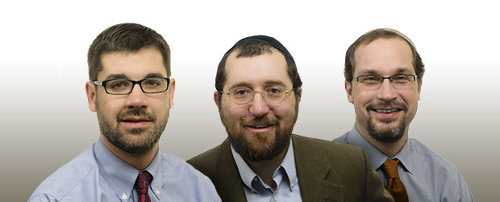
Messianic Jewish educational ministry First Fruits of Zion (FFOZ) launched its own television series earlier this year with an eye on reaching Christian television networks and reaching Christians. Boaz Michael and Toby Janicki were recently interviewed by God’s Learning Channel (GLC) about FFOZ.tv, and GLC is the first Christian TV network to begin broadcasting the FFOZ TV series. My understanding is that FFOZ.tv is currently targeting other Christian television venues for their program in order to “spread the word.”

But what about their program?

Boaz Michael, Founder and President of FFOZ asked me to review the program on my blog. I’ve been aware of FFOZ.tv for about a year now, having viewed an early version of the first episode at last year’s FFOZ Shavuot conference. I’ve seen a few clips of the show since then, but I’m not a big television watcher, so I didn’t go out of my way to take a look at the finished product.

Overview

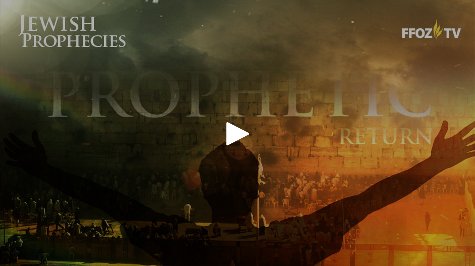
For my review, I chose to sample two episodes: episode 4, Jewish Prophesies, originally aired on March 17, and episode 5, Son of David, originally aired on March 24 (the full episode list is available for those shows that have already aired and they can be viewed freely online).

Structure and Format

Each show is approximately thirty minutes long and follows a standard format. Toby Janicki is the primary host of the program, presenting the issue to be examined during the broadcast, taking the audience through the scriptures to examine the topic, say Messianic prophesies, and then breaking the information down into three major “talking points.” Mid-show, the scene shifts to FFOZ teacher Aaron Eby speaking from Israel and explaining aspects of Judaism and the Hebrew language as they apply to the subject being discussed. The scene then shifts back to Toby in the studio, where he brings the program and the topic to a conclusion. At the very end, Boaz Michael makes a brief appearance, wrapping up the broadcast and introducing the topic for next time.

Content

The show is written for a Christian audience that knows little or nothing about Messianic Judaism and Judaism in general. For those of us who are familiar with the subjects involved, the content seems elementary most of the time, though therewere “tidbits” of information I found new or at least that were clarified for me. The show is definitely designed to be “Messianic Judaism 101” and its most obvious purpose is to gently bring mainstream Christians into a beginning familiarity with the Jewishness of Jesus, the continued meaning of the Jewish people and the nation of Israel in the present world and the Kingdom of God, and how the future of Christianity must always look to Jewish redemption for the people and nation of Israel as the goal.

ffoz-teaching-teamThere are twenty-six episodes “in the can” for the first season of the FFOZ.tv series. Each episode builds upon one another, so while each individual broadcast is a self-contained show, the audience won’t gain access to the complete Gospel message being presented from a Messianic Jewish perspective unless they view all of the episodes. Presumably, if the series is successful, the first twenty-six episodes will only be the beginning.

In the two shows I viewed, Toby regularly introduces himself as a Gentile who “practices Messianic Judaism.” This appears to be included to re-enforce Toby’s connection with his Gentile Christian audience but also connect him back to Messianic Judaism as a practitioner and teacher. Aaron’s portion, by contrast, is set in Israel, with his interviews being done “on the streets” to give a definite “Jewishness” to his content.

Look and Feel

Production values for the show are high and are at or near the levels of commercial television programs. The primary studio presents a “den” or “office” setting in rich earth tones, low lighting, and with numerous Jewish artifacts in the background to communicate warmth, approachability, and of course, Judaism. The music seems a little dramatic at times and for a couple of moments (during the HaYesod ad I think…I’m getting to that), I felt like I was getting ready to blast off into space. However, I noticed the tendency toward dramatic music and imagery on GLC when I watched the introduction to the Michael/Janicki interview, so maybe it’s an expected element of Christian television.

As I mentioned, Aaron’s part of the program is always filmed “on the streets of Israel” (presumably Jerusalem) so that the background views are universally recognizable as Jewish and Israeli. Aaron’s portions seem to create a bridge between the audience and Israel, supporting the overarching message of FFOZ.tv that Christianity is Jewish and irrevocably tied to Israel and Judaism.

Marketing

FFOZ is a non-profit organization and their primary “product” is the educational materials they produce. The purpose of FFOZ is to create and disseminate specific data to both Christian and Jewish audiences (see Vine of David for a list of materials specifically designed for Jewish people). The real “product” of FFOZ then is information which is packaged in a variety of forms including books, magazines, programs such as HaYesod and Torah Club, and of course, television.

However, in order to inform potential audiences of the material that is available, you have to market it. That’s another component of FFOZ.tv. The very first scripture that Toby reads in any program (of the two I viewed, anyway), is from the Delitzsch Hebrew Gospels. The rest of the time, he uses the ESV Bible. As Toby is reading from the Delitzsch version, a phone number and website URL appear at the bottom of the screen telling the audience how to purchase a copy.

About half to three-quarters of the way through the broadcast, the program content breaks for an ad about HaYesod, featuring mostly the FFOZ teaching staff presenting information on this learning program (which seems to have evolved quite a bit since I sat in a HaYesod class a decade or so ago).

Near the end of the broadcast, another commercial came on, this time describing the FFOZ Friends program, which allows people who subscribe to donate monthly to the ministry and describes, depending on which tier they choose, which products and services they’ll receive.

On the one hand, this all seemed a little distracting to me, but on the other hand, since at my “day job,” I directly report to the Vice President of Marketing, I have a deep understanding of the necessity and purpose of marketing any product that is for public consumption. You can’t buy and learn from something if you don’t know it exists.

Conclusion

resources-studyFFOZ.tv is made to introduce Christian audiences to Messianic Judaism, Judaism, and Israel. Although the Christian faith has its origins in first century Judaism and the Jewish Messiah, we have diverged from them significantly in the past twenty centuries, until the “Jewishness of Jesus” and the Hebraic beginnings of our faith are only a dim memory. FFOZ.tv is attempting to gently guide its Christian audience in a friendly and approachable atmosphere, back to some of the key concepts that define Messianic Judaism in order to realign Christian thoughts and feelings back toward our “Jewish roots.” The television program is also a “jumping off” platform for the audience to use in acquiring and exploring other FFOZ products, which will then (ideally) re-enforce and deepen the information base of Christians on Messianic Judaism, the absolute requirement of Israel’s national redemption in the Kingdom of God, and the vital role of the church in bringing about Jewish primacy and restoring Israel to its former glory, all in anticipation of the return of King Messiah.

If one picture is worth a thousand words, then what is television? In this case, television is entrance for any believer who watches Christian television or who is most likely to accept information in a video format, to the message of the Gospels from the perspective of Messianic Judaism. It provides and easy to access and easy to absorb doorway for the Christian to begin to encounter the Jewish Messiah King and the promise of what is to come.

Please visit First Fruits of Zion: A Promise of What is to Come and view any or all of the episodes available (seven as I write this but more are coming). Watching a single episode will only take thirty minutes of your time and you can judge for yourself whether or not if FFOZ.tv has a message that is speaking to you.