Tag Archives: Christian

Shopping for a Christian Church

Likewise, Gentile Christians are in brotherhood with Jewish Christians, reckoned as spiritually circumcised in heart (Rom 2:26) and thus joined to Abraham through faith (Gal 3:29). Here then is racial diversity within spiritual unity, in the same way as a Christian man and wife are diverse in their spiritual unity (Gal 3:28). This same diversity in unity is strongly intimated in Rom 15:8-9 since “Christ has become a servant of the circumcised on behalf of the truth of God, to confirm the promises to the fathers, and so that Gentiles may glorify God for His mercy” because of their inclusion as Gentiles with the fathers.

-Pastor Barry E. Horner
“Chapter 10: Israel and a Romans 11 Synthesis” (pg 278)
Future Israel: Why Christian Anti-Judaism Must Be Challenged

Hoch also quoted A.T. Hanson on this issue. While explaining that the prevailing interpretation of Phil 3:3 identifies the “we” as all true Christians, Hanson nevertheless declared that this understanding…

…seems quite foreign to Paul’s thought and means actually reading into Philippians ideas which seem to have originated at the time of the Reformation…The Philippians, being Gentiles, would have no reason to boast in the flesh anyway. Paul goes on to describe what he means by this phrase in the ensuing verses: it is plain that he means boasting of the national and spiritual privileges peculiar to the Jews. This the Philippians could not do…It is simpler to take “we” here as “we believing Jews”, or even “we, Paul and Timothy”, in whose name the letter is written. We know that Timothy was circumcised. So there is no good reason for maintaining that the use of “the circumcision” here suggests that Paul could apply the name Israel to Gentiles.

-A.T. Hanson, The Pioneer Ministry (London: SCM, 1961), 35
as quoted in Horner, pg 277

There’s really a lot going on in this chapter of Horner’s book, but space won’t allow me to insert all of the relevant quotes. If I tried, I might as well just copy and paste the chapter in verbatim. Actually, I’m not just writing another anti-supersessionism rant. I have a different, but related purpose for this “extra meditation” today.

I don’t agree with everything each of these gentlemen says in their respective books, but they are still refreshing to me. I tend to read mostly Jewish commentaries, but I’ve been reading Horner as part of my research into superessionism relative to my ongoing series on that topic in FFOZ’s Messiah Journal. What’s really exciting is that I’m reading the works of Christian authors and Pastors who actually agree that the church has not replaced the Jews in the covenant promises. I know they’re out there somewhere. Now if only I could find them.

Let me explain.

Not long ago, I discovered that “plan A” wasn’t going to work. Plan A was my separating from active participation in Messianic Jewish worship (One Law, anyway) for the purpose (well, it’s one of the reasons) of joining my wife in classes and services at our local Reform and Chabad synagogues. It took awhile, but I eventually discovered that it wasn’t just my former association with Messianic Judaism that made my wife hesitant to include me in that part of her life. It is my active and continuing faith as a Christian.

That’s not something I’m going to walk away from, even for the slim chance that my wife would feel more comfortable including me in her Jewish communities (and I don’t think it would do any good anyway). So plan A is shot to heck. Now I can either exist in isolation as a person of faith, or I can attempt to find some sort of community in which to participate as a Christian. But that presents a problem.

I previously wrote at length regarding all the roadblocks that stand in the way of my attending a church. On the other hand, there must be some churches that aren’t dripping with supersessionist rhetoric, aren’t there? I decided to look for one by querying a Christian Discussion Group several days ago. As the saying goes, except for one person trying to convince me that the church has replaced the Jews, the silence has been deafening (a second, more helpful person, responded while I was composing this blog).

But then, you have these Christian authors that make such encouraging statements. I mean, do these guys worship in heavily anti-Jewish churches and just keep their mouths shut, or are there actual havens of sanity and brotherhood under the sign of the cross? You couldn’t prove the latter by me, but since I’m facing a move to “plan B” now, I need to start somewhere.

I haven’t the faintest idea how to “shop” for a church.

I’ve occasionally talked to people who have been around churches for decades and can go into a church and assess its theology and how it operates almost immediately. They tell me what they see and hear that convinces them that the church is this and that, but I haven’t the faintest idea what they’re talking about. I went to a Lutheran church as a kid and then, decades later, I “came to the Lord” (I hate to say it, but “Christianese” still makes me crazy) in a Nazarene church (which ultimately turned out to be a bad experience, with a few bright spots mixed in), but that’s it. I don’t know from larger “organized Christianity”. The church, as in “all churches everywhere,” is a mystery to me. Actually, given my general outlook, the idea of “church shopping” makes me nervous.

But I’m getting a little tired of only being able to talk about what I think, feel, and believe in a virtual environment. It would be nice to occasionally address human beings face to face. However, I don’t want to get into a verbal “knock down-drag out” in a church because I don’t comfortably blend in to the homogenous Christian scenery, relative to Judaism. If I encounter a supersessionist attitude or worse, an anti-Semitic one, I’m liable to take it personally since my wife and kids are Jewish.

Does anyone have any ideas as to how to proceed? I’m not necessarily in a rush, and in fact, I’d like to plot, plan, and scheme, so to speak, about my next move. I have to admit, the thought of walking into a church again is intimidating. I call myself a Christian but socially, (which is a lot of what going to church is about) I’m anything but.

If you aren’t a regular visitor on this blog, you’ll need to get some idea of who I am and where I’m coming from. Since I more or less wear my heart on my sleeve when I write, just read four or five of my blog posts (the most recent, or pick some at random), and you’ll get a pretty good idea about how I see things.

Oh, I live near Boise, Idaho if that helps any.

Thanks.

Love and Divorce, Part 2

Although the Sichos HaRan, zt”l, writes that, in general, one should not divorce his wife unless compelled to by the halachah, there are certainly exceptions to this rule. Some people—even those with experience working with couples—believe that every rift in a marriage can be healed. According to that view, if a couple did not make their marriage work it must have been that one or both were unwilling to work hard enough to build their relationship. Although this is true in the vast majority of cases, there are times when the best option does seem to be divorce.

Daf Yomi Digest
Stories Off the Daf
“The Parshah of Gittin”
Temurah 5-1

But you say, “Why does he not?” Because the Lord was witness between you and the wife of your youth, to whom you have been faithless, though she is your companion and your wife by covenant. Did he not make them one, with a portion of the Spirit in their union? And what was the one God seeking? Godly offspring. So guard yourselves in your spirit, and let none of you be faithless to the wife of your youth. “For the man who does not love his wife but divorces her, says the Lord, the God of Israel, covers his garment with violence, says the Lord of hosts. So guard yourselves in your spirit, and do not be faithless.”Malachi 2:14-16 (ESV)

So they are no longer two but one flesh. What therefore God has joined together, let not man separate.”Matthew 19:6 (ESV)

In yesterday’s morning meditation, I asked “is it ever acceptable to get a divorce?” According to a strict New Testament interpretation, there is only one acceptable reason:

And I say to you: whoever divorces his wife, except for sexual immorality, and marries another, commits adultery.” –Matthew 19:9 (ESV)

That seems pretty plain. Unless sexual immorality is involved, there is no Biblical grounds for divorce. That tends to be translated as one spouse “cheating” on another. So does that mean a man can beat his wife and children, abuse drugs and alcohol, refuse to work and support his family, or emotionally terrorize his family, all for the purpose of supporting his own emotional desires? Common sense would say “no”, but what about the Bible?

Actually, read Matthew 19:9 again. It doesn’t say you can’t divorce for other reasons, it just says that you can’t remarry. The footnotes for this verse state “some manuscripts add and whoever marries a divorced woman commits adultery; other manuscripts except for sexual immorality, makes her commit adultery, and whoever marries a divorced woman commits adultery.”

That still seems a little harsh. If a woman divorces a man who is physically abusive to her and the children but where no sexual immorality is involved, she is right to divorce him but can never be remarried?

Let’s take a wider view of the issue of divorce:

“When a man takes a wife and marries her, if then she finds no favor in his eyes because he has found some indecency in her, and he writes her a certificate of divorce and puts it in her hand and sends her out of his house, and she departs out of his house, and if she goes and becomes another man’s wife, and the latter man hates her and writes her a certificate of divorce and puts it in her hand and sends her out of his house, or if the latter man dies, who took her to be his wife, then her former husband, who sent her away, may not take her again to be his wife, after she has been defiled, for that is an abomination before the Lord. And you shall not bring sin upon the land that the Lord your God is giving you for an inheritance. –Deuteronomy 24:1-4 (ESV)

In Matthew 19, Jesus was talking about how Moses permitted divorce but it was not God’s intention to permit it for reasons of hard heartedness. In Malachi 2, the prophet says that God hates divorce, but seems to lay the responsibility for the matter at the feet of the faithless husband. Neither of these verses seem to forbid divorce out of hand or specify only the issue of sexual immorality, but rather, they state that God seems to hate divorces that are seemingly frivolous or merely for the purpose of finding “greener pastures”. Maybe I’m reading more into the scriptures than is really there, but I don’t think I can accept that God would force a person to remain in a marriage that was completely intolerable due to emotional and/or physical abuse by the other party. In the above-referenced section of Deuteronomy, the matter of sin seems to come up when you divorce a woman, she remarries another man, divorces him, and then remarries her original husband. I see this as being tied to sending her away. Once done, it cannot be undone if she subsequently “becomes one flesh” with another man.

I’ve been participating in a discussion related to this topic in a private forum. One of the members, who is well educated in Torah and the Apostolic Scriptures said this:

It depends upon what you call “Grounds.” If “grounds” requires a proof text, then perhaps not. But when you are in real ministry, with real people, things get interesting. When a woman is married to a man who beats her, or a man who pulled a gun on her during sex, is that still a marriage? Are there not behaviors that are so out of bounds that they void the marriage? And is it “Righteous” to tell such a woman, “Look Norma dear (not a real name), you married him in the sight of God, and you must remain in the marriage to please the Lord.” That kind of stuff doesn’t work for me, proof text or no proof text. In other words, when does a marriage stop being a marriage, and when it has stopped being a marriage and cannot or will not be reversed, is there virtue in keeping up appearances, and evil in naming the marriage a dead?

I don’t know if there’s a direct proof text about not being able to leave an abusive or toxic marriage, but then again, there’s no proof text that directly says you must stay, either. Perhaps the “clue” is in the a scripture I quoted yesterday:

Husbands, love your wives, as Christ loved the church and gave himself up for her, that he might sanctify her, having cleansed her by the washing of water with the word, so that he might present the church to himself in splendor, without spot or wrinkle or any such thing, that she might be holy and without blemish. In the same way husbands should love their wives as their own bodies. He who loves his wife loves himself. For no one ever hated his own flesh, but nourishes and cherishes it, just as Christ does the church, because we are members of his body. –Ephesians 5:25-30(ESV)

I also said this:

Husbands, if you are supposed to be loving your wife like Christ loves the church, consider for a minute just what the love of Jesus Christ means. The number one way we know that Jesus loves us is because he voluntarily surrendered his life for the sake of our eternal relationship with God. Not only that, but it was completely unfair in that he did not deserve to die at all. Add to that the fact that it was a long, lingering, painful, and shameful death. If you Christian husbands love your wives in the same way, I suppose you should be putting up with a lot from her, even the stuff you don’t deserve.

If a husband’s love for his wife is supposed to closely mirror the love of the Master for the community of faith, then perhaps we can infer a few things. Was the Master abusive or toxic toward the church? Did he put his needs or wants ahead of others? Did he physically, emotionally, or spiritually harm those who followed him? I don’t believe so. The only thing you could say is that he put his foot down, on occasion, to demand moral and right behavior from his followers, but he never, ever hurt them and he was never ever selfish. In fact, he was obedient, “even unto death” for the sake of those who professed him as Lord then and everyone who has done so since.

I suppose that may not be satisfying for some people reading this blog post, especially if you are a very literal person (I tend to be, at times), but in this matter, if I’m going to make a mistake, I’d prefer to err on the side of compassion. I don’t think divorce is justified because you want a younger, prettier wife, or because your husband never ended up making a million dollars a year, but there are times, beyond sexual misconduct, when it is justified to leave your spouse and end your marital relationship. If marriage is sanctified by God, how holy is a union where the man beats his wife and puts his children in the hospital because he can’t control his temper? How holy is a marriage where the wife habitually abuses drugs and leaves her young children alone when her husband is working, so she can get loaded or sleep off her high?

I’m probably not going to hear any complements about this particular “morning meditation”, but my conscious won’t let me write anything else. Like the Chofetz Chaim, I believe there are times when the only way to bring peace to a couple “is to allow them to divorce and go their separate ways!”

Love and Divorce, Part 1

Today’s daf discusses a case of one who is forbidden to divorce his wife.

Sh’lom bayis is a very complex area which requires much finesse and understanding. One must be very deft with a couple facing challenges in their marriage. Teaching each spouse to understand the other’s point of view and how to explain his or her own perspective without making judgments is essential when trying to establish good sh’lom bayis.

Although the Sichos HaRan, zt”l, writes that, in general, one should not divorce his wife unless compelled to by the halachah, there are certainly exceptions to this rule. Some people—even those with experience working with couples—believe that every rift in a marriage can be healed. According to that view, if a couple did not make their marriage work it must have been that one or both were unwilling to work hard enough to build their relationship. Although this is true in the vast majority of cases, there are times when the best option does seem to be divorce.

A certain ben Torah worked with a husband and wife who had many areas of conflict, and tried his best to heal their relationship. When his efforts turned out to be of no avail, he brought them to the Chofetz Chaim, zt”l, for assistance. After they had explained all of their many issues, the Chofetz Chaim suggested that they get a divorce. The astounded ben Torah could not contain himself. “How could it be that you won’t even try to make peace between them?”

The Chofetz Chaim explained. “If you are correct that in every situation divorce is avoidable, why did God give the parshah of voluntary divorce in the Torah? Clearly the Torah provided the halachos of gittin because sometimes the only way to bring peace to this couple is to allow them to divorce and go their separate ways!”

Daf Yomi Digest
Stories Off the Daf
“The Parshah of Gittin”
Temurah 5-1

The subject of divorce can be pretty touchy in the community of Christ. On the one hand, it is generally believed that there is no valid reason for divorce except for adultery. On the other hand, the available statistics seem to indicate that the rate of divorce in the church is no different than in the secular world, with about 50% of all marriages breaking up resulting in shattered hearts and devastated families. But before proceeding, let’s review the scripture you are all probably thinking about right now.

And Pharisees came up to him and tested him by asking, “Is it lawful to divorce one’s wife for any cause?” He answered, “Have you not read that he who created them from the beginning made them male and female, and said, ‘Therefore a man shall leave his father and his mother and hold fast to his wife, and the two shall become one flesh’? So they are no longer two but one flesh. What therefore God has joined together, let not man separate.” They said to him, “Why then did Moses command one to give a certificate of divorce and to send her away?” He said to them, “Because of your hardness of heart Moses allowed you to divorce your wives, but from the beginning it was not so. And I say to you: whoever divorces his wife, except for sexual immorality, and marries another, commits adultery.” –Matthew 19:3-9 (ESV)

This teaching of the Master is sometimes used to give Jews a hard time regarding divorce, but as we see from the daf, the desire to make peace among a feuding husband and wife is extremely strong in Judaism. In fact, our example showed us how the ben Torah working with the couple in dispute was shocked when the Chofetz Chaim actually recommended that the couple divorce as the only way to bring peace between them. Also, as I mentioned before, since the divorce rate in the church mirrors the secular divorce rate, we don’t have a lot of room to criticize Judaism, either in ancient or modern times, for allowing divorces.

But what’s wrong? As Christians, on our wedding day, we take a vow before God to love, honor, and cherish our spouse under all circumstances. It’s virtually the only vow the church maintains formally in the 21st century, especially given the Master’s teaching about not taking vows in Matthew 5:36-37. Why do we divorce so much?

I suppose I should say at this point that I am not literally including myself in “we” since my wife and I have been married for almost 30 years. My parents have been married for almost 60 years. I can’t speak for my parents, but I do know my own marriage hasn’t been without without it’s “rocks in the road” and I claim no special abilities on my part that resulted in my wife and I remaining united. I think marriage is always difficult at times and perhaps many “happily married” couples have considered divorce at one point or another. Troubles in the marriage are to be expected. It’s how you react that makes the difference.

But I’m not here to lecture and I’m certainly not here to hold myself up as some sort of example (if I tried that, my wife could easily chime in and lay out all of the details regarding my many faults). I’m here to talk about the humanity of marriage and divorce. Sometimes break ups are necessary…they just shouldn’t be so common.

Wives, submit to your own husbands, as to the Lord. For the husband is the head of the wife even as Christ is the head of the church, his body, and is himself its Savior. Now as the church submits to Christ, so also wives should submit in everything to their husbands. –Ephesians 5:22-24 (ESV)

I’m sure you’ve heard examples of how certain “primitive” Christian (so called) men have used this passage to justify making their wives jump through all sorts of hoops because God told her to “submit”. I’m no Bible expert and I don’t read the New Testament in Greek, but I’m still going to say, “Oh brother” to these fellows. Remember that the Bible also says this.

Husbands, love your wives, as Christ loved the church and gave himself up for her, that he might sanctify her, having cleansed her by the washing of water with the word, so that he might present the church to himself in splendor, without spot or wrinkle or any such thing, that she might be holy and without blemish. In the same way husbands should love their wives as their own bodies. He who loves his wife loves himself. For no one ever hated his own flesh, but nourishes and cherishes it, just as Christ does the church, because we are members of his body. –Ephesians 5:25-30(ESV)

Husbands, if you are supposed to be loving your wife like Christ loves the church, consider for a minute just what the love of Jesus Christ means. The number one way we know that Jesus loves us is because he voluntarily surrendered his life for the sake of our eternal relationship with God. Not only that, but it was completely unfair in that he did not deserve to die at all. Add to that the fact that it was a long, lingering, painful, and shameful death. If you Christian husbands love your wives in the same way, I suppose you should be putting up with a lot from her, even the stuff you don’t deserve. Remember, Christ died for us while we were still his “enemies” (Romans 5:8). He didn’t wait until we turned to him in love in order to die. If he had, we’d have no chance at redemption or salvation at all.

I could go on and on, but I want you guys to savor the example Christ gave to us as husbands (I’ve never been a wife, so I’m not going to try and speak from that perspective). The next time you get angry at your wife, feel annoyed because she makes some unreasonable request, or otherwise contemplate how much easier your existence would be if she weren’t around, think about Jesus and what he did for us. Imagine how much we sin, even after we have accepted Christ as Lord and Savior. Don’t you think he should have the right to be annoyed with us for our “unfaithfulness?” Yet he hasn’t abandoned us, though he probably should in some cases. Where do we get off abandoning our wives either physically or emotionally when the going gets tough?

So is it ever acceptable to get a divorce? I’ll express my opinions on that next time in Love and Divorce, Part 2.

“Education is the ability to listen to almost anything without losing your temper or your self-confidence.”

-Robert Frost, American poet

To Desecrate What is Holy

Chasam Sofer also writes that it is obvious that one does not violate the prohibition against saying God’s Name in vain unless he pronounces the Name but writing God’s Name does not violate a prohibition. He adds that if one examines our Gemara carefully he will realize that the prohibition against cursing someone with the Name of God and the prohibition against taking a false oath with the Name of God are subsets of the prohibition of saying God’s Name in vain.

Daf Yomi Digest
Halacha Highlight
“Writing God’s Name in vain”
Temurah 4

What is the purpose?

The One Above desires to dwell in things below.

Meaning that a breath of G-dly life descends below and dresses itself in a body and human person, and this body and person negate and conceal the light of this G-dly soul…yet nevertheless, the soul purifies and elevates the body, the person and even her share of the world.

And what is the reason behind this purpose?

There is none.

It transcends reason; it is the place from which all reason is born.

And so it is unbounded and all-consuming. For it is a desire of the Essence.

-Rabbi Tzvi Freeman
“Entrance”
—from the Rebbe’s discussions of his father-in-law’s last discourse.
Chabad.org

The concepts of holiness and respect for God vary between Christian and Jewish thought. When I used to attend a church, I heard God referred to in the most casual and intimate manner, as if God were nothing more than a super-amplified grandfather. People, admittedly in need of comfort, described themselves as if they were sitting on God’s lap and cuddling up with Him. Even as a brand new Christian all those years ago, I found myself uncomfortable with the image.

Now I know why.

I’m sure some of you reading my quote from the daf on Temurah 4 probably think the Jewish people overdo this “respect” thing a little, and yet, if we could have stood at the foot of Mt. Sinai on that day when the thunder of His voice shook the ground, and if we could have seen the fire and the smoke, and trembled at the sound of the great shofar, would we still think of God as a “cuddly grandfather?”

I’m not saying we should not take comfort in God, but only that we should remember that He is not a man, not even a great man, and we cannot treat Him as such.

The comfort we can take is that, as Rabbi Freeman cites of the Rebbe’s discourse, the “One Above desires to dwell in things below.” From this, we who are Christians see God’s desire to dwell in things below” ultimately expressed here:

The word was made flesh and dwelled in our midst. We have beheld his glory, like the glory of a father’s only son, great in kindness and truth. –John 1:14 (DHE Gospels)

This is our greatest comfort, that in some mysterious and mystic way, an aspect of the One, has been able to dwell among men, as the Divine Presence dwelled within the Mishkan and among the Children of Israel. A tent is not God cannot contain God anymore than the body of a man is God can contain the infinite Essence, and yet in some inexplicable fashion, “we have beheld his glory.”

We also learn why the Jewish people revere the Torah, not merely as a scroll or a holy icon, but as the One, who again has dwelled “in things below.”

When God began to create heaven and earth – the earth being unformed and void, with darkness over the surface of the deep and a wind from God sweeping over the water –Genesis 1:1-2 (JPS Tanakh)

In the beginning was the word, and the word was with God, and the word was God. –John 1:1 (DHE Gospels)

But God’s holiness is not limited, and just as Judaism believes that each Jew is a receptacle for the Divine Presence and just as Christianity embraces the fact that all believers have received the Holy Spirit within us, so we understand together, the words of the Rebbe “that a breath of G-dly life descends below and dresses itself in a body and human person.”

That means each one of us is holy and sacred. This lesson is understood, in some manner, even among secular people, and even in the realm of fiction, where perhaps it’s easier for a worldly and progressive humanity to express such spiritual thoughts.

Lakanta: What do you think is sacred to us here?
Wesley Crusher: Maybe the necklace you’re wearing? The designs on the walls?
Lakanta: Everything is sacred to us – the buildings, the food, the sky, the dirt beneath your feet – and you. Whether you believe in your spirit or not, we believe in it. You are a sacred person here, Wesley.
Wesley Crusher: I think that’s the first time anyone’s used that particular word to describe me.
Lakanta: You must treat yourself with respect. To do otherwise is to desecrate something that is holy.
Wesley Crusher: Is that what you think I’ve been doing?
Lakanta: Only you can decide that.
Wesley Crusher: I guess I haven’t had a lot of respect for myself lately.

-from the Star Trek: The Next Generation episode
Journey’s End

Not only do I think it has become common among the people of faith to treat God all too casually and without respect, I think we also have gotten into the habit of treating each other and ourselves in the same way. And as we see from this important lesson from a rather unusual source, if we don’t treat each other and ourselves with respect, just as we don’t treat God with respect, how much more so do we desecrate something and someone that is holy?

Kosher Jesus, A Book Review

In my neighborhood, we did not even mention his name. We said “Yoshke,” a Hebrew play on his name, or some children learned to say “cheese and crust” in place of “Jesus Christ.” In a synagogue sermon, rabbis might refer to Jesus – exceedingly rarely – by saying “the founder of Christianity.”

Fundamentally, we understood Jesus as a foreign deity, a man worshipped by people. The Torah instructs us never to mention the names of other gods, as no other god exists except God. We also understood Jesus to be as anti-Jewish as his followers. Was he not the Jew who had rebelled against his people? Was he not the one who instructed his followers to hate the Jews as he did, instigating countless cruelties against those with whom God had established an everlasting covenant? Was he not also the man who had abrogated the Law and said that the Torah is now mostly abolished?

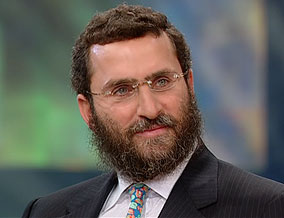
So begins Rabbi Shmuley Boteach’s narrative in the Preface to his latest (and perhaps most controversial) book Kosher Jesus. Rabbi Boteach paints for us, a typical picture of how an Orthodox Jewish boy growing up in an Orthodox Jewish neighborhood understands the Christian Jesus.

The picture isn’t very flattering to Christians.

You might be wondering why Rabbi Boteach would choose to write a book about Jesus. After all, most Jewish people are, at best, neutral about the existence of the itinerant Jewish rabbi who wandered the through the countryside and towns of Roman occupied Judea in the First Century of the Common Era. Why would an Orthodox Jewish rabbi draw attention to Jesus in anyway? If you’ve been reading the media stories about the sort of attention this book has been receiving, you already know it’s been less than complimentary, both from Christian sources and the Orthodox Jewish community. This book seems to please no one.

So why did Rabbi Boteach write it?

Kosher Jesus sets the stage for Jews and Christians to bridge their differences and come together for the first time through the personality of Jesus himself – the hero, martyr, and teacher that they both share.

This paragraph, taken from the cover flap of the book, provides an “in a nutshell” summary of Boteach’s reasons for creating this much-talked-about work, and it provides us with his goal: to create a connection between Judaism and Christianity across the back of the Jewish Jesus.

Was he successful in achieving his goal?

Not as far as I can tell today, at least on the surface. Of course, it may take months, or even years, to determine the larger impact on the Jewish and Christians communities. One immediate effect we can see is that just about every one with a vested interest in the “reputation” of Jesus is talking about this book. A number of Orthodox Rabbis have outright forbidden their communities to even read the Boteach book (and nothing makes a book more irresistible than when it has been censored) and I can only imagine what (if anything) Christian Pastors are telling their flocks about “Kosher Jesus” from the pulpit.

If Rabbi Boteach had the goal of drawing attention to his book and himself, he has certainly succeeded. He has been known as “the media Rabbi” and has attracted criticism more than once in the past for his statements and associations (particularly with the late Michael Jackson). If his goal was to start a great deal of dialog (polite and otherwise) around the subject of his book, the Jewish Jesus Christ, he has succeeded in this as well, at least in the short term. But is he going to be able to inspire Jewish and Christian audiences to find something in common by “sharing” Jesus?

As I’ve been reading this book, I’ve shared a few of my own insights in various blog posts. I focused on how the Christian community might see the book in my prior write up, Kosher Jesus: The Undivine Savior. In order to emphasize the “Jewishness” of Jesus and make him even somewhat attractive to other Jews, Boteach had to completely deconstruct traditional Christian theology about the “Lord and Savior,” transforming him from the Son of God and prophesied Messiah, to a man born of two Jewish parents, a carpenter turned Rabbi, who fancied himself a would-be Messiah (in Judaism, the Messiah is not expected to be supernatural and particularly not expected to be divine), and ultimately, a man who died as a noble but failed political dissident.

Not exactly the typical Christian view of Jesus.

Scholars who have reviewed this book (and I’m no scholar) have criticized Boteach for his heavy usage of material created by Hyam Maccoby regarding Jesus. In fact, Maccoby’s own views on Jesus have been characterized: Maccoby’s thesis as “perverse misreading” and concluded “Thus I must conclude that Maccoby’s book is not good history, not even history at all.” (Steven T. Katz The Holocaust in Historical Context: The holocaust and mass death before the modern age 1994 “Maccoby’s last work has been devastatingly reviewed, and quite properly so, by John Gager, “Maccoby’s The Mythmaker,” JQR 79.2-3 [October–January 1989], 248-250; to which Maccoby replied, “Paul and Circumcision: A Rejoinder,” JQR). So to use the vernacular, Boteach may have “shot himself in the foot” when he decided to base his depiction of Jesus almost completely on Maccoby’s work.

Since I can’t speak from a Jewish point of view, I must wonder from a Christian perspective, how Rabbi Boteach expects to unite Jews and Christians around their “commonality” in a Jesus Christ who is so unlike the Jesus most Christians find in church? Also, in answering the Christian question, “Why the Jews Cannot Accept Jesus” (Part IV of the book), Boteach creates a Jesus who absolutely must be rejected by Judaism as Messiah, and he describes any person or group who worships a man as if he is a god as idolatrous. Christianity’s insistence on a “three-in-one” God adds polytheism to the mix, and both idolatry and polytheism are anathema to the staunchly monotheistic Jewish people. Rabbi Boteach depicts a church that has to be hopelessly confused to believe Jesus is God, yet Boteach also says this:

I say this not to offend Christian believers, nor to dissuade adherents from living a Christian life. (pg 149)

But if, by definition, Christians are deluded by a terrible misunderstanding of the New Testament text, heavily biased editing of the original teachings of Jesus, and the traitorous actions of the Apostle Paul, to believe that a young Jewish rabbi and revolutionary is actually God incarnate, how can Rabbi Boteach not dissuade believers “from living a Christian life?” He’s just spent the first two-thirds of his book explaining why Christianity has everything completely wrong about who Jesus was, what he saw as his purpose in life, and especially the fact that he has no power to forgive sins and save souls. If anything, Boteach seems to have pounded home the final wedge that will forever separate Christians and Jews.

God is the one great truth. Judaism, Christianity, and Islam are paths that bring us to Him. One finds God through personal discovery usually directed by the faith in which one is reared, practiced by one’s ancestors. The merit of any religion is established not by a test of its theological claims but by the goodness of its followers. Therefore, any religion that leads to a good and Godly life has authenticity and truth, even if we cannot embrace all of its theological claims. (pp 149-50)

That probably seems like an insane statement to most Christians. We are taught that no one comes to the Father except through Jesus (John 14:6), so either you’re in or out. We are taught that the only way to God is to “Believe in the Lord Jesus, and you will be saved.” (Acts 16:31). There are no other options, according to traditional Christianity. There is only one doorway to salvation and it’s not through anything we can do. Our only participation in our own salvation is belief and faith in Jesus Christ.

But in Judaism, it isn’t what you believe, it’s what you do that matters. If, in the name of your religion, you feed the hungry, visit the sick, build an orphanage for homeless and abandoned children, or act as a peacemaker between a feuding husband and wife, then that is how you will be judged. You could be a Jew or a Christian or a Muslim and it’s all the same. That seems to be what Rabbi Boteach is saying, and that is the basis on which he expects his readers to build the bridge between Judaism and Christianity, using the Jesus we see in his book.

In real life, it doesn’t work out that way. Judaism, unlike Christianity, doesn’t believe there is a single path to God, but it does believe there are specific paths. If you’re a Jew, your path is the Torah, living a life of righteous acts, prayer, and ritual worship. If you are any other people group or religion, your path is in obedience to the Seven Noahide Laws. If you are compliant to these seven basic requirements, (these laws are deceptively simple, since they can be subdivided into almost a hundred “sub-laws”) you merit a place in the world to come and are considered by the Jews as a righteous Gentile.

But by definition, a typical Christian cannot be considered a righteous Gentile because, in believing Jesus is God, the believer violates the prohibition against Idolatry. There have been exceptions, such as those Christians who, during the Holocaust, made great efforts to protect the Jews from the Nazis and who rescued Jewish people from being sent to the death camps, but those exceptions are few and far between. It is also true that the Talmud has much to say about Jews maintaining good relations with everyone, including idol worshipers, for the ways of peace:

“They said of Rabbi Yochanan ben Zakai that no man ever greeted him first, even idol worshippers in the market” [i.e., Rabbi Yochanan ben Zakai was the first to greet every person, even idol worshippers] (Berachot 17). At the same location the sage Abaye advocated soft speech and words of peace to everyone, especially including idol worshippers.

“[it is proper to] support the idol worshippers during the sabbatical year… and to inquire after their welfare [commentators: even on the days of the holidays of their idols, even if they do not keep the seven Noahide commandments] because of the ways of peace.” (Shevi’it 4,3)

The rabbis taught: ‘We support poor Gentiles with the poor people of Israel, and we visit sick Gentiles as well as the sick of Israel and we bury the dead of the Gentiles as well as the dead of Israel, because of the ways of peace.” (Gitin 61a)

Nevertheless, the Tanya, an early work of Hasidic philosophy used heavily in Kabbalah, has less complementary things to say about all non-Jews:

The souls of the nations of the world, however, emanate from the other, unclean kelipot which contain no good whatever, as is written in Etz Chayim, Portal 49, ch. 3, that all the good that the nations do, is done out of selfish motives. So the Gemara comments on the verse, “The kindness of the nations is sin” — that all the charity and kindness done by the nations of the world is only for their self-glorification…

as quoted from
“Lessons in Tanya”
Chabad.org

I know I’m throwing a huge monkey wrench into the machine, but it’s important to define the barriers to Rabbi Boteach’s stated goals, both from the Christian and Jewish perspectives. All I’m saying is that nearly 2,000 years of strife between Christians and Jews will not be repaired for the sake of a single book which depicts the historical Jesus in a manner that most Christians and Jews will not be able to accept.

So what’s good about this book? More than you might think, given everything I’ve just written. Actually, I think Christians can benefit from quite a few things Boteach has to say about Jesus, not in terms of historical accuracy, but in introducing the believer to the Jewish Jesus. There is no doubt that Jesus was (and is) a Jewish man and rabbi who taught lessons that were completely consistent with the Law of Moses, who did not break the Shabbat or any of the other mitzvot as Christianity imagines, and who did not expect even the tiniest portions of the Torah to be extinguished until Heaven and Earth themselves were extinguished (Matthew 5:18).
Christian supersessionism is responsible for the legacy of crimes against the Jewish people which the church suffers from even today. It is also the source of a terrible misconception about who Christ was and is, both in relation to the descendents of Jacob and to the non-Jewish disciples of Jesus. If we can absorb some sort of understanding of the Jewish identity of Jesus into the theology and doctrine of the modern church, perhaps we can be instrumental in building a better bridge between us and the Jewish people. We might also (and this is probably an unintended effect by Rabbi Boteach, but it fits so well) find a way, as Christians, to understand those Jews who have faith in Jesus as the Jewish Messiah and who also continue to live a completely Jewish ethnic, cultural, and religious life.

Rabbi Shmuley Boteach’s book Kosher Jesus is both deeply flawed and irresistibly compelling. For many, it will be “the book you love to hate” but it is also a window, albeit a shaded and distorted one, into the Jewish perspective on the Jewish Jesus. If you are a Christian who cannot tolerate any portrait of your Savior besides the one you encounter in the pew of your church on Sunday morning, then this book will seem horrifying. However, if you are a little adventurous and want to seek out the portions of wheat this book offers among the chaff, then Kosher Jesus may be worth your while. I don’t agree with a great deal that Rabbi Boteach had to say about Jesus, but I also learned a few things. I don’t regret reading his book.


Kosher Jesus: The Undivine Savior

It’s important to acknowledge the obvious. I have called into question the veracity of much that is contained in the holy Gospels. I’ve cast doubt on some of the essential elements of the story of Jesus as they have been handed down by generations of Christians. Obviously, my Christian readers are going to feel somewhat confused or, worse still, offended – which is, of course, not my intention.

-Rabbi Shmuley Boteach
Chapter 19: Jesus, Lover of Israel (pp 136-7)
Part III: What Christians Have to Learn from the Jewish Jesus
Kosher Jesus

That’s an understatement. OK, to be fair, I’m hardly surprised or dismayed at Rabbi Boteach’s illustration of Jesus, Paul, the early church, and Christianity in general. And while I will be writing a full review of this book right after I finish it, I wanted to address this particular aspect of the Rabbi’s writing right now, since it’s been pretty much what I’ve been thinking about for the last 150 pages or so.

I’ve been thinking about what would happen if a Christian actually took everything in this book at face value. I’ve been thinking about what would happen if a Christian reading Kosher Jesus were to get to this point and say to himself, “Oh wow, he’s right.” If Rabbi Boteach wants Christians to “learn from the Jewish Jesus,” what exactly does he expect them (us) to learn?

Paul’s claims about who Jesus was and what he preached are made more tenuous by the sheer scope of his deviations from the lessons of Jesus’ own followers. The leaders of the Jerusalem Church, Peter and James, insisted that Jesus’ message was for the Jews and was dedicated to preserving Jewish law and observance. Paul transformed that message completely.

Paul claimed to know better what Jesus intended than the disciples whom Jesus taught directly – even though Paul never even met Jesus. He said that Jesus meant to abolish Jewish law, that faith is more important than works, and that the sole criteria for salvation is faith in Christ. Not only that, Paul added that Jesus was not mortal, and his claim to be the messiah meant that he was the divine son of God. Finally, Paul, a self-declared Roman citizen, shifts the developing faith of Jesus, Christianity, to be pro-Roman and anti-Jewish. Paul attacks Judaism as antiquated and obsolete, and to cap it all off, he accuses the Jews of killing Jesus, also claiming they attacked him personally on many occasions.

-Boteach, pg 121

Interestingly enough, most Christians reading the paragraph I just quoted, would probably nod their heads in agreement to all of those statements saying that indeed, Jesus really did all of those things…except Rabbi Boteach says they are all patently false. He says that while Jesus may have honestly believed he was the Messiah and desired to free his people from Roman tyranny, he could not have believed he was also God or intended for anyone to worship him, least of all Gentiles. While Boteach paints a picture of Peter as a coward and a hypocrite, the real “villain” of his piece is Paul, who may not even have been a born Jew, and who took the teachings of an innocent Rabbi and would-be revolutionary Messiah, and turned them into the basis for a Gentile religion that was bent on placating idolatrous Rome while “demonizing” Judaism and the Jewish people.

In order to make his points regarding the Jewish identity of Jesus credible, Rabbi Boteach has to deconstruct every single major tenet of the Christian church. Jesus was a man and not God incarnate. He thought he was the Messiah (which is not a crime in Judaism) but obviously he wasn’t since he died rather than successfully establishing Israel’s self-rule. He was not born of a virgin, he did not speak against the Law, he lead a lifestyle that was completely Jewish and totally consistent with the Law of the Jews, and he didn’t want to have anything to do with the non-Jewish peoples. He hated Rome and he loved his people and wanted to free them from their cruel oppressors. Period.

While I agree there is much to learn by rediscovering the Jewish Jesus, I’m not sure what Rabbi Boteach wants his Christian readers to do about it. If a Christian were to read all of this and take every word at face value, questioning nothing, he’d have to conclude that his Christian faith is a sham. He’d have to conclude that everything he had been taught by the church about Jesus and faith and salvation was at best, an elaborate fantasy, and at worst, the most heinous of lies.

I really don’t think most Christians will be taking this part of the book to such extremes. Yes, they may be confused. Yes, they may certainly feel offended. But since Rabbi Boteach says it is not his intent to confuse or offend his Christian readers, how does he expect them to reconcile their faith with his book short of tossing it into the trash can?

In reading this book, I ask my Christian readers not to discard but to expand their existing ideas about who Jesus really was. But what is the impact in doing so? Does this mean we can’t trust the New Testament? Does this mean we’re tinkering with a divine document? Again the answer is no. The writers of the New Testament indeed may have drawn from divine inspiration.

-Boteach, pg 144

If Rabbi Boteach really believes that it’s possible the content of the New Testament was divinely inspired, I can understand why a good many Orthodox Jewish Rabbis are upset with him right now. Also, if he really believes that statement, how can he use the New Testament content to acknowledge his viewpoint of Jesus the Rabbi and political dissident while denying Jesus the Messiah, Prophet, and Savior from God? He can’t have it both ways, or can he?

I believe the Lucan editors made their changes for the reasons enumerated and to hide the subversive details of the revolutionary nature of Jesus. But the changes they made were not total. They didn’t erase the entire original meanings; messages may actually have been intentionally encoded into the Gospels…

This isn’t without precedent. There are plenty of examples of this phenomenon in the Hebrew Bible. In order to comprehend God’s true meaning, we sort through four levels of interpretation…peshat, remez, drush, and sod: peshat being the simple, straightforward meaning; remez, the alluded to meaning of the text; drush, the homiletic meaning of the text; and finally sod, the esoteric meaning of the text.

Beyond the simplest reading of the New Testament, just as in the Hebrew Bible, there remain layers and layers hidden from view.

-Boteach, pg 145

broken-crossIt sounds like, in order to encourage his Christian readers to not “discard but to expand their existing ideas about who Jesus really was,” Rabbi Boteach is encouraging them (us) to still consider the New Testament text as divinely inspired and containing hidden messages, just as the Tanakh (Old Testament; Hebrew Bible) does, from a Jewish point of view.

In making this statement (and I have to be really careful here), Rabbi Boteach does not sound unlike some of those Jews who really do believe Jesus was the Messiah King and who accept that the New Testament has as much validity as a holy book of the Jews as does the Tanakh.

No, I don’t think Rabbi Boteach is some sort of “crypto-Messianic Jew,” but some of what he writes intersects with what the ethnically, culturally, and religiously Jewish people who have faith in Jesus as Messiah and Savior believe.

Rabbi Boteach walks a very fine line here. He must communicate that he, as a Jew, does not believe for a split second that Jesus was of divine origin or any of the supernatural claims about him that are typically made in Christianity, but at the same time, he must convince his Christian readers that he does not think they are a bunch of fools or lunatics for believing everything the church believes about Christ.

I don’t think that’s possible or at least, I don’t think that Rabbi Boteach actually pulled it off. Either Jesus is the Christ as the church says he is, divine in origin, having a place of extremely high merit in the Heavenly court, and is much more than just one of the myriad tzadikim in Jewish history…or he was a great Rabbi, a passionate leader of his people, a revolutionary who desired to free Israel from Rome…and he was a man who died fighting for a worthy cause. It may be possible to overlap those roles and to distill out of them, a portrait of the Jewish Jesus who was Messiah, Prophet, miracle worker; who died and was resurrected but never ever abandoned his people or taught against the Law, but you can’t delete so much of the Christian faith from the Jewish Jesus and have him remain the resurrected King who will return on the clouds to free not only Israel, but the world.

Either Christians, mistaken though they may be in not recognizing the true Jewishness of Jesus, can have faith in their Savior or they can’t. Rabbi Boteach may intrigue his Christian readers, and he may get some of them to consider a somewhat more Jewish perspective on the heretofore Gentile Jesus, but he will never sell the Christians that Jesus had no power to save their souls, and never even wanted to. Any Christian who would choose to completely embrace Rabbi Boteach’s reconstruction of Jesus would be a person completely broken in their faith; crushed under the burden of a salvation lost and a King who never cared about all the Gentiles in need of a Savior.