Tag Archives: Christianity

Vayishlah: Crossing the River

crossing-the-riverMany people are discouraged from even beginning a spiritual journey because they think it needs that huge leap of faith. They cannot see themselves reaching a degree of religious commitment which to them seems otherworldly.

-Rabbi Yossy Goldman
“A Ladder to Heaven”

Worshipping G-d in a foreign land is apparently very difficult. “Whoever lives outside the land it is as if they are worshipping idols” (Ketuvot 110b).

-Rabbi Jay Kelman
“Vayeze: Searching for G-d”
both articles found at
Hasidic Waves blogspot

That same night he arose, and taking his two wives, his two maidservants, and his eleven children, he crossed the ford of the Jabbok. After taking them across the stream, he sent across all his possessions. Jacob was left alone.

Genesis 32:23-25 (JPS Tanakh)

I actually hadn’t planned to write a commentary on this week’s Torah Portion Vayishlah but apparently my intentions don’t always dictate what I end up doing. Actually, the first two commentaries I quoted above are more related to the previous week’s Torah reading where Jacob leaves Canaan to escape his brother Esau and becomes an indentured servant to Laban, all for the sake of winning Rachel for a wife.

But if worshiping God in an alien land is like worshiping idols, what is it like to forsake that foreign land and return to the Land of Promise; the Land God was to give to the descendants of Jacob generations hence?

What is it like to return to community with God’s people in the church?

It ain’t easy.

No, it’s not like I’ve been “worshiping idols” in a “foreign land,” but we all cross thresholds and transverse boundaries.

“For you have wrestled with G-d and man, and have prevailed.”

Genesis 32:29

In ancient Near Eastern understanding, the crossing of a river was a symbol of new beginnings and a new start – a sort of rebirth. That is why there is a purposeful connection with the name of the river (Yabok) and the word vaye’avek – to wrestle/struggle. It was here, at the river of a new beginning in Jacob’s life that he also received a new name – and a new identity – Israel.

-Rabbi Joshua Brumbach
“Wrestling with the Divine”
Yinon Blog

I suppose moving an unmovable rock could be considered a “new beginning” but in reality, it’s just one step in a process. Sort of like how Rabbi Goldman describes it:

There is a ladder, a spiritual route clearly mapped out for us; a route that needs to be traversed step-by-step, one rung at a time. The pathway to Heaven is gradual, methodical and eminently manageable.

Many people are discouraged from even beginning a spiritual journey because they think it needs that huge leap of faith. They cannot see themselves reaching a degree of religious commitment which to them seems otherworldly. And yet, with the gradual step-by-step approach, one finds that the journey can be embarked upon and that the destination aspired to is actually not in outer space.

One way some Jewish sages look at Jacob’s Ladder is as the process of prayer. I’ve also mentioned prayer recently, and all of this seems to fit together. Learning to pray is a process but it is also part of a larger process of learning to draw closer to God. A relationship with God, in some ways, is like any other relationship in that its development is not linear. There are closer times and farther apart times. There are sudden rushes of heat and long periods of icy cold. Then there is just tons and tons of lukewarm.

Jacob's-Ladder1Jacob was terrified of the changes he would have to undergo and for good reason, both in leaving Canaan and in returning. In each case, he was facing the unknown. He left Canaan with nothing, and returned with a fortune and a family. Then, he had a personal encounter with God and did not escape it unscathed. As Derek Leman said recently, “The unthinkable can happen. The faith of God’s people will not prevent hard times.” Just because you’re doing God’s will or believe you are, doesn’t mean bad stuff isn’t going to happen.

Where did we get the idea that a life of holiness was also a life of safety?

And yet a life of faith isn’t always immediately fatal, either. Jacob lived to a good old age and died in comfort after blessing his sons, though he died in an alien land, so perhaps worshiping God there was as “dimmed” for him in Egypt as it was in Haran (although God did promise He would go down into Egypt with Jacob – Gen. 46:1-4).

In returning to church, some might say I have returned to the “Holy Land” and others would say I was “worshiping idols.” I suppose both opinions are extreme and reality is somewhere in the middle. But in the middle (and everywhere else), there is God.

Do not forsake me. I am crossing a river. I am wrestling with I don’t know what. I am carrying that which belongs to me. I can’t see what is up ahead.

What do you think is a rabbi’s fantasy? A guy walking into my office and saying, “Rabbi, I want to become ‘frum’ (fully observant), now tell me what I must do”?

Is that what I lie awake dreaming of? And if it did happen, do you think I would throw the book at him and insist he did every single mitzvah from that moment on? Never!

Why not? Because a commitment like that is usually here today and gone tomorrow. Like the popular saying goes, “Easy come, easy go.” I’m afraid I haven’t had such wonderful experiences with the “instant Jew” types.

The correct and most successful method of achieving our Jewish objectives is the slow and steady approach. Gradual, yet consistent. As soon as one has become comfortable with one mitzvah, it is time to start on the next, and so on and so forth.

Then, through constant growth, slowly but surely we become more knowledgeable, committed, fulfilled and happy in our faith.

-Rabbi Goldman

yeshiva1While this commentary is directed as Jews, with just a few adjustments, it can fit the rest of us as well. In pursuing any endeavor, there’s a desire to jump from “A” to “Z” as quickly as possible, but even if it can be done, this quick hop, skip, and jump method might not be the best. Getting there too quickly doesn’t allow us to experience what we need to learn along the way by taking each step slowly and deliberately. Of course, there’s also a matter of direction as Rabbi Goldman tells us.

When my father was in yeshiva, his teacher once asked the following question: “If two people are on a ladder, one at the top and one on the bottom, who is higher?” The class thought it was a pretty dumb question — until the wise teacher explained that they were not really capable of judging who was higher or lower until they first ascertained in which direction each was headed.

If the fellow on top was going down, but the guy on the bottom was going up, then conceptually, the one on the bottom was actually higher.

And so my friends, it doesn’t really matter what your starting point is or where you are at on the ladder of religious life. As long as you are moving in the right direction, as long as you are going up, you will, please G-d, succeed in climbing the heavenly heights.

Like Jacob’s ladder, it is not only important to make sure that we carefully place our hands and feet upon every rung, but that we verify we are traveling in the direction that will lead us higher. Like “Jacob’s river,” we must know when in our “new beginning,” we are leaving God’s desired place for us, and when we’re returning, for God sometimes sends us in either direction. How much we have, what we’ve accomplished, and what hardships we must endure after the crossing won’t always tell us where we are and where we’re going. We can only know by keeping our eye on the path…and the goal.

Divergent Trajectories

I have recently been involved in a discussion online with Christian pastors who argue that the “Law” is passed, or fulfilled and therefore they believe Judaism is religion of works righteousness. I told them that is not Judaism, and the Law is not passed, but is part of living a godly life. It highlights for me why Messianic Judaism is not Christianity. We do follow the same Messiah, but the idea of how we are to live is vastly different. Does following Yeshua make one a Christian, or do you think we are something different? Outside of Yeshua, I see nothing in common with them.

-Rabbi Dr Michael Schiffman
from his Facebook comment

Rabbi Dr Schiffman made this comment in a closed Facebook group to which I belong, so I can’t post a link to the entire conversation. I do want to insert a few of the responding comments, but I will disguise the identity of the responders:

RG: we have nothing in common with them…at least I don’t have…G_d’s Covenant with Abraham is an Eternal Covenant for all the ages, as is the Covenant of Circumcision…Forever means ’til revisionists decide to jettison it…?

KS: If I may interject, it’s not that our brethren that don’t see Messianic Judaism as a doctrinally pure way to live feel you can do anything you want. Rather they recoil at the idea that God would expect you to do anything for Him. He is “love” and our greatest and in their mind only commandment is love. But what is the standard. How do I know what love is? Their concept of the Gospel is very subjective. If you engage many christians in dialogue the only firm thing they believe is that you should not follow the “Old Testament” because that is “law”. Unfortunately they then are like the blindfolded men who come across the elephant and one thinks he’s a trunk, another a big foot, a third thinks he is this little tail. We need to walk in the light and then we will see. The light is what David describes in the Psalms: “Torah” is a lamp for my feet and light for my path”. If you reject His written Word how can you hear clearly the Living Word?

YL: So far it seems the conversation is focusing on Christians whose theology is supersessionist, and speaking of those Christians as if they represent the whole. But there are also Christians who have rejected supercessionism and are working to repair its horrible effects on Christian theology and Christian/Jewish relations. If the primary thing that defines Messianic Judaism as a different religion than Christianity is supercessionism and anti-Judaism, then what about those Christians who affirm the Jewish people’s ongoing covenantal relationship with Hashem via the Torah?

Rabbi Dr Schiffman: There is always some overlap among different groups, just as there are differences between Messianics. While there are some post-supersessionist Christians, the majority are supersessionist, and as they find dispensationalism wanting, many have turned toward tradiitional supersessionist theology. Hopefully this will change in the future, but if we are really in a “post-Supersessionist” era, why do we have so many supersessionists around? I guess it hasn’t trickled down yet.

YL: Agreed. So what, if anything, can we do to help make the vision of post-supercessionist Christianity a reality? And are there things we need to avoid as MJs because they subtly undermine that vision?

SB: If a Gentile respected Torah, he (she) would follow the Noakhide instructions. They were given to all mankind. This respect for Torah, I think, is something that should be spread.

I’m sorry for posting such a lengthy transaction but keep in mind this is only a fraction of the responses I’ve reviewed in the conversation as I write this “meditation.” You may be wondering why I’m bothering with all this, but the question of the relationship between Christianity and Messianic Judaism (and I’m deliberately setting aside the Hebrew Roots variants including One Law and Two-House) has been a problem, at least once it came to light that Messianic Judaism must be a Judaism in order to function and be a valid religious and cultural expression of faith in Yeshua for halakhic Jews.

Nearly two months ago, Rabbi Dr. Schiffman wrote a blog post called Messianic Judaism and Christianity: Two Religions With The Same Messiah which more formally presents his ideas on this matter. It is very much in line with what you’ll find in Mark Kinzer’s book, Postmissionary Messianic Judaism: Redefining Christian Engagement with the Jewish People

To distill all of this down into a single sentence, necessarily compressing many complex details, what is being suggested is that Christianity and Messianic Judaism are mutually exclusive religious expressions that, although they share the same God and the same Messiah, otherwise service wholly different populations. Granted, that’s a gross oversimplification, but I believe it captures the essence of what Kinzer and Schiffman are trying to communicate to the rest of us…that is, Christians.

At one point a few years back, this idea bothered me so much that I created an entire blog and series of blog posts, starting with something called Fractured Fellowship.

So where does that leave us. YL provided the most hopeful suggestion in the above-quoted conversation, with the idea that there are “post-supersessionist” Christians who “are working to repair its horrible effects on Christian theology and Christian/Jewish relations” and “who affirm the Jewish people’s ongoing covenantal relationship with Hashem via the Torah.”

I’m not sure YL’s comments were all that well received, especially with the follow-up query about whether or not post-supersessionist Christians should follow the Seven Noahide Laws (and to my understanding, by definition, Christians should already be obeying them).

I must admit to a bit of confusion. I was invited to this Facebook group with the knowledge that I’m not Jewish, so there is some idea that it’s “OK” for Christians and Messianic Jews to occupy the same space, or at least the same virtual space in Facebook. I also have a few Messianic Jews who I feel are my friends and who I have worshipped with fairly recently. Others have invited me to worship and associate with them should we ever overcome the geographic barriers that keep us apart.

This isn’t the only conversation on the web discussing this topic. Both Derek Leman and Gene Shlomovich have written recent blog posts contrasting Christianity and Messianic Judaism. For my own part, I too have have discussed early Christian and Jewish relations as they affect the interaction and fellowship between believing Jews and Christians today.

Yet in reading many of the comments in the Facebook conversation, it is as if fellowship between Messianic Jews and Christians on many levels is undesired and unwelcome.

I wonder if this was built into the original design?

They will fall by the edge of the sword and be led captive among all nations, and Jerusalem will be trampled underfoot by the Gentiles, until the times of the Gentiles are fulfilled.

Luke 21:24 (ESV)

Lest you be wise in your own sight, I do not want you to be unaware of this mystery, brothers: a partial hardening has come upon Israel, until the fullness of the Gentiles has come in.

Romans 11:25 (ESV)

It would seem that not only have (most of) the Jewish people been temporarily blinded to the identity of the Messiah for the sake of the Gentiles, but until the time when Jewish eyes will be reopened, there will be enmity between the Jew and the Gentile (Christian). This somewhat flies in the face of the following:

But now in Christ Jesus you who once were far off have been brought near by the blood of Christ. For he himself is our peace, who has made us both one and has broken down in his flesh the dividing wall of hostility by abolishing the law of commandments expressed in ordinances, that he might create in himself one new man in place of the two, so making peace, and might reconcile us both to God in one body through the cross, thereby killing the hostility.

Ephesians 2:13-16 (ESV)

However, if you add the passages from Luke and Romans to my analysis of Cohen from his book From the Maccabees to the Mishnah, you start seeing a picture of a less than rosy relationship between the first Jewish disciples of the Messiah and the first Gentile disciples right from the start.

Gene Shlomovich confirms this in a comment on his blog:

To begin with, it took nearly 20 years since the all Jewish Messianic community was founded around 30 CE to make first Gentile converts. So, only around year 50 CE we have first Gentile believers coming unto the scene. Even then it wasn’t all flowers between the two groups. I think the example of Peter being afraid to be seen with Gentiles shows that the two groups had an uneasy social relationship from the get go, which hardly meshes with your statement of “unprecedented level of social cohesion” and supposedly fully integrated messianic synagogues. (While you read this, keep in mind that Romans destroyed Jerusalem and led Jews away in chains mere 20 years later, in 70 CE).

Secondly, almost immediately after the first converts among the Gentiles were made, there was a rise in Roman antisemitism. We read that already in Acts 18:2 that Roman Emperor Claudius threw out all Jews from Rome (around 50 CE). This had effectively ended whatever the Jewish presence that existed among the Roman Christians, who were probably the biggest single group of Gentile believers at the time. Secondly and some say as a result of that expulsion, we see an undercurrent of pride and anti-Judaism beginning to appear among Gentile believers – and we have Paul warning (some say around year 56 CE) Gentiles under his care about it. (Romans 11:18) And just 16 years later, Jerusalem and the Temple was destroyed, effectively ending the Messianic Jewish presence in the land, along with whatever communities and synagogues that had existed at the time.

Fortunately, he followed up with another comment:

I have no problem fellowship and worshiping with Gentile believers. In fact, the goal of this blog, as it says in the head, is ” Jewish-Gentile Reconciliation”. What I take issue with is the Supersessionism found within some Hebrew Roots circles, the appropriation of Judaism and misuse of Jewish sancta, anti-Judaism, and misleading Christians (Gentiles) to force them to do things that G-d never intended them to do by making them feel that they are sinning if they do not eat up the One Law agenda.

So what we have, at least from Gene’s perspective, is not a requirement for absolute separation between Messianic Jews and Christians in our individual silos, but a clear definition of relationships and roles within any mutual fellowship context.

Of course, you’ll find variation among believing Jews, with some advocating for total or at least significant inclusion of Gentiles within a Jewish worship and cultural lifestyle, and others advocating for the polar opposite and requiring that non-Jews be excluded from any Messianic Jewish community (which will be pretty tough, since to the best of my awareness, there currently is no Messianic Jewish synagogue, congregation, or community composed of exclusively Jews or even of a majority of Jews).

But then what do we do with the following passages?

Let not the foreigner who has joined himself to the Lord say,
“The Lord will surely separate me from his people”;
and let not the eunuch say,
“Behold, I am a dry tree.”
For thus says the Lord:
“To the eunuchs who keep my Sabbaths,
who choose the things that please me
and hold fast my covenant,
I will give in my house and within my walls
a monument and a name
better than sons and daughters;
I will give them an everlasting name
that shall not be cut off.
“And the foreigners who join themselves to the Lord,
to minister to him, to love the name of the Lord,
and to be his servants,
everyone who keeps the Sabbath and does not profane it,
and holds fast my covenant—
these I will bring to my holy mountain,
and make them joyful in my house of prayer;
their burnt offerings and their sacrifices
will be accepted on my altar;
for my house shall be called a house of prayer
for all peoples.”
The Lord God,
who gathers the outcasts of Israel, declares,
“I will gather yet others to him
besides those already gathered.”

Isaiah 56:3-8 (ESV)

Thus says the LORD of hosts: In those days ten men from the nations of every tongue shall take hold of the robe of a Jew, saying, ‘Let us go with you, for we have heard that God is with you.’”

Zechariah 8:23 (ESV)

While the Matthew 28:18-20 imperative is the command of Jesus to his Jewish disciples to also make disciples of the nations, it doesn’t necessarily pre-suppose a lasting relationship and a fused corporate identity between said-Jewish and Gentile disciples. Certainly there is ample evidence to support how the Jewish and Gentile disciples of the Master almost immediately developed separate communities, probably within a few decades of the first Gentile being brought into worship of the God of Israel through the Jewish Messiah.

And yet Isaiah and Zechariah suggest that we Gentiles (Christians?) may have a closer relationship to the Jews and the Temple than what modern-day Messianics such as Schiffman and Kinzer would necessarily support. It has been suggested that in the future Temple, even Gentiles (Christians?) will be allowed to serve as Priests, but this is disputed by Gene Shlomovich in another of his recent blog posts:

Will the reign of Yeshua as Messiah mean that anyone who truly worships G-d, Jew or Gentile, could finally just waltz into the sanctuary of G-d in the new Temple, have the unfettered access anywhere, even if they are not priests? Does this mean, as some teach, the Gentiles will be selected to work as priests in the new Temple? Not at all!

They [that is “priests, who are Levites and descendants of Zadok” Ezekiel 44:14] alone are to enter my sanctuary; they alone are to come near my table to minister before me and perform my service. (Ezekiel 44:15)

Gene also quotes scripture that supports the idea of Gentiles continuing to be restricted to the outer courts of the future Temple in Messianic times.

Go and measure the Temple of G-d and the altar, with its worshipers. But exclude the outer court; do not measure it, because it has been given to the Gentiles. (Revelation 11:2)

His final comment on the matter is this:

The Temple will be a place where both Jews and Gentiles could worship the G-d of Israel, both together and in unique ways. All nations will come to learn from Israel because they will all know that G-d is with the Jewish people:

This is what the L-rd Almighty says: “In those days ten people from all languages and nations will take firm hold of one Jew by the hem of his robe and say, ‘Let us go with you, because we have heard that G-d is with you.’” (Zechariah 8:23)

The bottom line seems to be that Messianic Jews and Gentile Christians may have started out at a single point in history but once we began to diverge on separate trajectories, those separate and distinct paths forever defined our destiny in terms of a relationship with each other (Jews and Christians) and our separate relationships with God (relative to differences in application of Torah upon Jews and Christians).

Boaz Michael’s new book Tent of David: Healing the Vision of the Messianic Gentile will become available in January 2013 and defines the Gentile mission in the community of the church as one of healing between Christian and Jew. There is also an educational group open to Jews and (Gentile) Christians called MJ Studies that bills itself as “a gateway to post-supersessionist New Testament scholarship”. This group presumably would allow Christians to participate with Jews in mutual study and fellowship (at least virtually) so Jewish/Christian relationships don’t have to be totally severed for the sake of the modern Jewish disciples of Messiah.

There’s a part of me screaming in my ear that the easiest method of satisfying Messianic Jewish requirements is just to let them be. If the integration or even occasional inclusion of the Gentile Christian into a Messianic Jewish context is a great a difficulty, I can solve the problem by having nothing to do with Messianic Judaism. I can exist in a wholly separate and sealed conduit containing only Gentile Christians or, if that’s not to my taste, I can form a “community of one,” but in either case, I can allow Messianic Judaism to develop and grow without injecting my presence into their awareness. Of course, that’s an extremist solution, but it’s the easiest one to implement.

But while some Messianic Jews (and many Jews in general) see Christians as “the enemy,” largely due to the centuries of crime, hostility, rejection, and murder we’ve committed against Jews and Jewish communities, all fueled by our supersessionistic theologies, there are a few voices out there (including a few Jewish voices) that express the hope that some in the church actually support the Jewish right to define Judaism, including the Jewish worship of the Messiah Yeshua. If that is true, there may be hope for future dialog between our two groups. Perhaps that will lead to healing.

I want you to know that I support Jewish uniqueness both generally and as it applies to the Messianic movement. For my part and with that in mind, if someone invites me into their house, I will enter. If they have a “keep out” sign in their yard, I’ll pass by their house and keep on walking.

As for unity in the body of Messiah…as far as I can see, based on everything I’ve just said, that is yet to come.

I know that on Fridays I typically post a commentary on the week’s Torah Portion, (this week it is Vayishlach) but the current topic captured my thoughts and I found I had lost all enthusiasm for that other endeavor. Besides, with images such as “warring” brothers, and man wrestling with God, maybe the theme of Christian vs. Messianic Jew isn’t so off base after all.

32 Days: The Rock Moved

One night, a man was sleeping in his cabin when suddenly his room was filled with the light and the Creator appeared.

The Creator told the man he had work for him to do, and showed him a large rock in front of his cabin. The Creator explained that the man was to push against the rock with all his might.

The man did the same, day after day. For many years he toiled from sun up to sun down, his shoulders set squarely against the cold, massive surface of the unmoving rock, pushing with all his might. Each night the man returned to his cabin sore, and worn out, feeling that his whole day had been spent in vain…

Since the man was showing signs of discouragement, the Adversary decided to enter the picture by placing thoughts into the man’s weary mind:

“You have been pushing against that rock for a long time, and it hasn’t budged. Why kill yourself over this? You can never move it,” thus, giving the man the impression that the task was impossible and that he was a failure. These thoughts discouraged and disheartened the man. “Why kill myself over this?” he thought. “I’ll just put in my time, giving just the minimum effort; and that will be good enough.” And that is what he planned to do, until one day he decided to make it a matter of prayer and take his troubled thoughts to the Creator. “Creator,” he said, “I have labored long and hard in your service, putting all my strength to do that which you have asked. Yet, after all this time, I have not even budged that rock by half a millimeter. What is wrong? Why am I failing?”

The Creator responded compassionately, “My friend, when I asked you to serve me and you accepted, I told you that your task was to push against the rock with all your strength, which you have done. Never once did I mention to you that I expected you to move it. Your task was to push.” “Now you come to me with your strength spent, thinking that you have failed. But is that really so?

Look at yourself. Your arms are strong and muscled, your back is sinewy and brown, your hands are callused from constant pressure, and your legs have become massive and hard. Through opposition you have grown much, and your abilities now surpass that which you used to have. Yet you haven’t moved the rock. But your calling was to be obedient and to push and to exercise your faith in My wisdom. This you have done. I, my friend, will now move the rock.” At times, when we hear a word from the Creator, we tend to use our own intellect to decipher what He wants, when actually what the Creator wants is just obedience and faith in Him…. By all means, exercise the faith that moves mountains, but know that it is still the Creator who moves the mountains.

“Push”
Story found at
Morning Story and Dilbert

The end of the story reminds everyone to “push” or to “pray-until-something-happens” as an act of faith, but frankly, that seemed a little too “cute” the way it was expressed, so I truncated the original text into the quote above.

That said, I know exactly how it feels like to push and push against an immovable object and see absolutely no result. I have often felt as if making a difference is impossible and that my life is a failure.

Just watching the latest situation in Israel and how the world press and most of the nations on our planet are castigating Israel for defending itself against bloodthirsty terrorists…um, excuse me, “courageous freedom fighters battling their oppressors,” is enormously frustrating. And yet there’s not one single thing I can do about it. Every time I speak out, usually in some social networking venue, in support of Israel, only a few like-minded “religious nuts” are supportive. The rest of the world is either strangely silent or venomously outspoken against Israel and against anyone who would support her and the Jewish people.

It’s the same in so many other areas of my life. As a self-avowed Christian, I’m used to taking plenty of “heat” from atheists who believe all manner of terrible things about me because of my faith. However, I also recently witnessed an online conversation taking Christians to task for our history of supersessionism against Jews. Granted, this is a valid observation, but to the speaker, it didn’t seem to make a difference who the Christian was or if they had renounced supersessionism. Further, the Jewish person in question is “Messianic” or a believer in Jesus (Yeshua) as the Messiah. While most Messianic Jews I know are friendly toward “Judaically-aware” Christians or “Post-supersessionistic” Christians, apparently there are some who aren’t particularly tolerant of anyone who is a non-Jewish believer.

There’s not a darn thing I can do about that, either.

I skipped going to church last Sunday for a number of reasons not the least of which was my concern over how I would be received again at Sunday school class given my being particularly outspoken (and embarrassing myself in the process) the previous week. It’s now Thursday and Sunday morning is just a few days away. In trying to project myself into the weeks and months ahead, unless something dramatic happens one way or the other, I don’t know that there’s anything I can do to “install” myself as an accepted participant in church, either.

The rock is the rock, after all. It’s big and it’s heavy, and in all the time I’ve been pushing against it…years and years and years, it hasn’t budged an inch.

But according to the anonymous storyteller, it doesn’t have to. My job is to push, or rather, to pray, without necessarily expecting or receiving a response or a result. The “push” acronym says “pray until something happens.” But what if nothing happens?

OK, clearly something recently happened but I wasn’t particularly praying about it or even thinking in that direction. It was just one of those “out of a clear blue sky” events. On the other hand, I’ve also recently said that there are miracles that only happen when we cooperate with God and actively participate in the miracle. That means do something. It also means that one day, I may push against the rock and feel it miraculously move!

Frankly, that kind of scares me. I live in a world of expectations. I expect the Sun to rise in the east and set in the west. I expect to go to sleep at night and wake up in the morning. I expect a particular routine for my days. Pushing the rock and not having it move, frustrating as it may be, is also expected. If it moves, suddenly, I’m out of control and off-balance; likely to fall on my face (not like that hasn’t happened before). I don’t know what to pray for more, that the rock moves or that it doesn’t move.

Strange, I know, but remember, I don’t like change…even when it’s beneficial and necessary.

But God makes changes according to His will and not my will and my only job is to push against the rock. If it doesn’t move, I push at the start of the day and stop at the end. The rock is just the rock and it doesn’t move. If I push and it does move, then it moves, I lose my balance and fall on my face. Embarrassing to be sure, but assuming it doesn’t hurt too much, the worse that happens is that my face gets dirty and I have to get up again and figure out what happened. What did God change and why? What do I have to do with it and what should I do now? Once I figure out what I’m supposed to do, will I have the courage to do it?

Strange, I know, but remember, I don’t like change.

Even when I ask for it.

He is my God, my living redeemer.
Rock of my affliction in time of trouble…

-from Adon Olam

So the rock has moved. I need to move too.


The Miracles You Make

There are two types of miracles: Those beyond nature and those clothed within it. The water of the Nile turning into blood was beyond nature. The victory of the Maccabees over the Greek army came dressed as a natural occurence—they had to fight to win.

Both types of miracles are necessary.

If we would see only miracles beyond nature, we would know that G‑d can do whatever He likes—but we might think He must break the rules to do so. We would know a G‑d who is beyond nature, but not within it.

If we would see only miracles that are clothed within nature, we would know a G‑d that is Master of all that happens within nature.

But we might think He is limited within it.

Now we know a G‑d that is at once both beyond all things and within them. In truth, there is nothing else but Him.

-Rabbi Tzvi Freeman
“Stereo Miracles”
Based on letters and talks of the Rebbe
Rabbi M. M. Schneerson
Chabad.org

Take note of any positive occurrence that happens to you and give thanks to the Almighty for it.

Some common examples: your eyeglasses fall to the ground and do not break, or you find something you’d been missing.

-Rabbi Zelig Pliskin
“Daily Lift #652: Watch for Positive Occurrences”
Aish.com

When most of us think about miracles, we think of those that wildly violate the laws of physics…the Sun standing still in the sky and that sort of thing. But as Rabbi Freeman points out, there are miracles that we must participate in for them to occur. The Maccabees wouldn’t have won over the Greek army if they didn’t fight. The Reed Sea wouldn’t have parted (according to midrash) if Moses and the Children of Israel hadn’t first stepped into the water. The woman with the issue of blood (Mark 5:25-34) would not have been cured if she had not believed in the power of Jesus to heal and then touched his garment.

These were all supernatural events, but they required the very natural and real participation of the human beings involved. Otherwise, they would never have occurred.

I guess that’s what faith and trust is. You know you have to do something. You believe God has told you to do something that is very difficult or, by your own estimation, impossible. And so you must do it or at least try.

But according to Jewish belief, we are not to depend upon miracles. That is, we’re not to get ourselves into a bad situation and then expect God to bail us out with a miracle.

Then the devil took him to the holy city and set him on the pinnacle of the temple and said to him, “If you are the Son of God, throw yourself down, for it is written,

“‘He will command his angels concerning you,’

and

“‘On their hands they will bear you up, lest you strike your foot against a stone.’”

Jesus said to him, “Again it is written, ‘You shall not put the Lord your God to the test.’”

Matthew 4:5-8 (ESV)

Even Jesus didn’t depend on God’s miracles when he was being tested and tormented. He just remembered God, remembered the Words of God, and had faith.

And at times when anything good does happen to us, whether it is an “obvious” miracle or not, Rabbi Pliskin says we are to give thanks. Sounds very similar to another good piece of advice:

Rejoice always, pray without ceasing, give thanks in all circumstances; for this is the will of God in Christ Jesus for you.

1 Thessalonians 5:16-18 (ESV)

Rejoice always, pray always, and thank God in every circumstance. Watch for positive occurrences because they indicate the presence of God. Rabbi Freeman also said:

There are open miracles that break the laws of nature as though they were meaningless—miracles any fool can perceive.

Then there are miracles that take some thought to realize that yes, something out of the ordinary occurred here.

And then there are miracles so great, so wondrous, that no one but G‑d Himself is cognizant of them. They are the miracles that occur continuously, at every moment.

Beyond the supernatural, laws of physics violating miracles, and the ones that happen when we cooperate with God, there are those that happen all of the time and exist beyond our awareness. Or perhaps these are the miracles that happen all the time and we’re just not paying attention. Miracles like a baby being born. Miracles like your heart continuing to beat in your chest. Miracles like the ability to take in a deep breath of air. Miracles like watching the first rays of the Sun shine over the dark horizon.

Miracles like just being alive. This is why observant Jews say upon awakening:

I gratefully thank you, living and existing King for returning my soul to me with compassion. Abundant is Your faithfulness.

Of prayer and miracles, it is also said:

We pray and He answers with blessings. But we ask, “If you are already giving us blessings, why in such clumsy packages with so many strings attached?”

And He answers, “If you are giving me your innermost heart in prayer, why in such thick layers of ego? Why with such cold words? Why do you hold back your tears?”

“I’ll make you a deal,” He says. “You bare your souls from their wrappings, and I will bare My blessings of their clouds.”

-Rabbi Tzvi Freeman
“Unwrapping”
Based on letters and talks of the Rebbe
Rabbi M. M. Schneerson
Chabad.org

May blessings and miracles continue in your life.

Experiencing Prayer

Rabbi DovBer, the Maggid of Mezeritch, used to pray at great length. Sometimes his prayers would take hours. Near Mezeritch there lived a learned man who, like the Maggid, also used to pray according to the kavanot (mystical intentions) taught by the holy Ari (Rabbi Yitzchak Luria) of Safed, but whose prayers did not take so long. When he heard about how much time the Maggid spent, he was perplexed, and wanted to know the reason. He decided to ask the Maggid himself.

Once a year this learned man, who also happened to be quite wealthy, would travel to the great fair in Leipzig. There he would invest some of his capital in merchandise, which he would then sell in his hometown upon his return at a good profit. He was able to live off the proceeds from these transactions for the rest of the year, while he devoted his time to Torah study and prayer. On his next such business trip, he made a point to pass through Mezeritch and stop there.

Witnessing for himself the Maggid’s lengthy prayers, he was amazed. At his first opportunity to speak privately to the Maggid, the wealthy scholar said, “I also pray according to the special mystical intentions taught by the holy Ari, yet I don’t find the necessity to extend my prayers for so long.”

Instead of answering directly, the Maggid expressed interest in how his guest made a living. The man explained how it was enough for him to travel once a year to Leipzig to invest in merchandise, which he then sold for a good profit in the area where he lived.

“But how do you know that you have made a profit?” inquired the Maggid.

“Simple. I enter all my capital expenditures and traveling expenses in my ledger, and subtract their sum from the total amount of income from sales. The remainder is my profit,” replied the merchant, wondering why the rebbe was so interested in the details of his business.

“But why,” the Maggid asked innocently, “do you waste all that time and money traveling to Leipzig and back? Why don’t you just write all the credit and debit figures down in your ledger and calculate your profits that way, without fuss?”

“Ha, ha, ha!” laughed the merchant. “Is it possible to think that from writing numbers can come a profit without bothering to do anything else? Ha, ha, ha. Of course, you have to travel and buy and sell before the profit can be real, not just theoretical.”

“Well,” said the Maggid, “the kavanot are like merchandise: if they are not fully possessed in your mind and heart as if you were ‘there,’ it is like writing profit figures on a piece of paper without doing the business work. On the other hand, if you are firmly attached ‘there,’ you can then acquire some excellent ‘merchandise’ and make a handsome profit with the kavanot.

“But that,” concluded the Maggid to his astonished visitor, “requires extended time and investment in prayer.”

Translated/retold from Reshimas Devarim, vol. 4.
“The Prayer Business”
-Rabbi Yerachmiel Tilles
Chabad.org

Man should ponder thoughtfully how great are the kindnesses of the Creator: Such a puny insignificant being, Man, can bring great delight to the “Greatest of all great”‘ of Whom it is written, “There is no delving into His greatness.” (Psalm 145:1) Man ought therefore always be inspired, and perform his avoda with an eager heart and spirit.

“Today’s Day”
Sunday, Kislev 8, 5704
Compiled by the Lubavitcher Rebbe
Translated by Yitschak Meir Kagan
Chabad.org

I’m not really a “mystic” sort of guy. I enjoy reading (I don’t seriously study mysticism) mystic commentaries and texts because I find they work wonderfully as metaphors of moral and spiritual concepts and ideas. Mysticism is a very good way to tell stories about people and God, which is why I’m fond of the writings of the Chassidim and Chabad.

So try not to take the commentary about prayer I quoted above as if I think this is a literal truth, although for some, I imagine it is. I latched onto it mainly because it makes me think about prayer and what it’s supposed to mean. Hopefully, it’ll make you think more about prayer, too.

DaveningIn yesterday’s morning meditation, I spoke a bit about my use of the Modeh Ani and Bedtime Shema blessings in my own life. Prayer is difficult for me, at least lengthy prayer, because I find that so many random thoughts and emotions creep in when I’m trying to talk (and listen) to God. Since the Modeh Ani is fairly short and I recite it from memory, there isn’t time for anything else to interfere, and since I recite the ending portion of the Bedtime Shema from my siddur, the fact that I’m reading from text helps focus my thoughts and my intention.

I actually have been thinking more about prayer since I read a friend’s commentary on his own experiences recently:

Early this morning before my flight had left the gate, I was quietly (and discreetly) praying Birchot Hashachar (morning blessings) from my pocket siddur when suddenly the woman sitting next to me asked me, “What language is that?” “Hebrew,” I replied. “Oh, I thought it was Greek,” she said.

“Well, I actually know that, too,” I said, which then led into an extensive conversation that unfortunately I was too tired to engage in and, B”H, managed to escape shortly after takeoff by falling asleep for the duration of the flight. (A window seat and foam earplugs are always my best friends on a flight.) Then after landing, I went to the airport chapel to pray Shacharit. I must have prayed Shacharit there countless times while travelling, and I usually have the chapel all to myself. Sometimes other people enter the chapel for some quiet moments while I’m there and they see me wearing my tallit and tefillin, which I can only imagine how that might look to them if they’re unfamiliar with Judaism. Usually they only stay for 30 seconds—one minute at most—and then they promptly leave. (I can always sense their feelings of uncomfortability and awkwardness.)

However, this morning while I was donning my tefillin, a clean cut, black gentleman dressed in a suit and tie entered the chapel and sat down a few seats behind me. I politely said “Good morning” to him, then began quietly praying Pesukei d’Zimra and continued with my usual morning prayer routine as quietly and discreetly as possible. Amazingly, however, he actually stayed. A few minutes later, when I was between the Shma and Amidah, he began walking toward the exit, but then quickly turned around, boldly approached me, and asked me forthright, “Do you believe in Jesus Christ?” I was a bit taken aback by his question and it took me a few seconds to process it. “Yes, I do,” I responded, although somewhat apprehensively. “Oh, praise the L-RD,” he said, and reached out to shake my hand. “Something in my heart told me to ask you that. I’ve heard of you guys. Yeshua Ha-ma-shee-ah?” “Yeshua Hamashiach,” I affirmed. And then he suddenly walked out with this big smile on his face while I was left there wondering what that was all about.

Depending on who you are and how and where you pray, you aren’t always praying alone and your prayer life may have some sort of impact on others. Of course, even when I prayed with a siddur, I rarely prayed in public (unless it was at a worship service where everyone was using a siddur), so I never had these sorts of encounters. But in reading the comments of my friend about his own experiences, I was reminded of the beauty of the Jewish prayers and how the early Jewish believers gathered daily to recite the prayers at Solomon’s colonnade at the Temple in Jerusalem.

I’ve probably mentioned this before, but last spring, when I was attending the First Fruits of Zion Shavuot Conference at Beth Immanuel Shabbath Fellowship in Hudson, Wisconsin, I had a wonderful experience. One morning, I arrived at the congregation early and was sitting in the main sanctuary waiting for services to begin. In the distance, I heard men davening Shacharit in Hebrew. I followed the sound into the library and discovered the men were praying together in an upper room. Not wishing to disturb them (and my Hebrew is more than abysmal), I chose to stand underneath the room and just listen.

If you’ve ever heard men praying the Hebrew prayers before, you know it is a beautiful sound and even without understanding all of the words (I’ve been around the prayers enough to be able to generally follow them), I felt myself transported in a sense, lifted up into the spirit of the prayer, and found myself drawing closer to God.

I don’t think you have to pray in Hebrew to draw closer to God, but there’s something about a minyan davening (not that I can qualify to pray with a minyan) that brings me into communion with God in a way I’ve never found when praying or singing hymns in a church.

Be that as it may, we are each responsible for our own prayer life and thus our relationship with God. And yet for me, prayer is one of the most difficult parts of my relationship with God. I receive great joy in reading the Bible and various commentaries and studies, but spending time alone with God is so difficult, again because my brain keeps getting in the way. I think that’s why I like praying with a siddur because it helps me focus my intention upon God and praising His Name. Praying “alone,” that is, without a siddur, allows the noise and static of my own thoughts to completely take over, and I find myself drowning in the sound that my brain generates rather than rising above my own existence and approaching the Creator.

When I go to church, we pray, but it somehow isn’t the same. When I go to Sunday school, we pray, but it’s not like we’re praying together. This too I think is one of the “weaknesses” of Protestantism.

I don’t really have an answer to my conundrum, but I think Rabbi DovBer has an answer that works, at least for some Jewish people (or people of faith), in that you have to invest in your prayers rather than just use praying as a “remote control” method of communication. Prayer requires time, discipline, and an investment of purpose. I haven’t attempted such a thing for a very long time. For me, Modeh Ani and the Bedtime Shema are a beginning, but unlike my friend, I haven’t extended myself to pray at set times, and particularly wouldn’t do so if I was in a public place such as an airport (and I didn’t even know airports had chapels).

Is my experience common or am I an oddball in his area of faith as well? What are your experiences like? Is anyone willing to share?

The Early Christian According to Cohen

In order to maintain their distinctiveness and identity, most Jews of the ancient world sought to separate themselves from their gentile neighbors. In the cities of the East, they formed their own autonomous ethnic communities, each with its own officers, institutions, and regulations. Some cities, notably Alexandria and Rome, had neighborhoods inhabited mostly by Jews. (These were not “ghettos” but “ethnic neighborhoods.”) Following the lead of Ezra, the Jews of the Second Temple period grew more and more intolerant of marriages with foreigners.

Shaye J.D. Cohen
Chapter 2: Jews and Gentiles
Social: Jews and Gentiles, pg 37
from the book
From the Maccabees to the Mishnah, 2nd Ed

I quoted this portion of Cohen’s book in a recent extra meditation and I want to continue discussing the theme of early Jewish and Christian (and Gentile) identity as we can apply it to today’s community of Jewish and Gentile believers. As I also mentioned in my previous missive, there is a group within Hebrew Roots that is invested in believing that for a time, both the Jewish disciples of the Messiah and the non-Jewish disciples brought into the faith, primarily by Paul, were completely of one accord and shared a completely uniform identity as “Messianics,” being “neither Jew nor Greek” (Galatians 3:28), but rather “one new man” (Ephesians 2:15) in Christ, with all distinctions of cultural, ethnic, national, and covenant identity as established by God, completely obliterated.

In traditional (supersessionist) Christianity, this takes on the form of Jews no longer being Jews but rather, “converting” to Christianity. Anyone who has read this blog for any length of time knows that I reject this suggestion and I do not believe it can be sustained from even a casual reading of the Bible. The chronicles of the Jewish disciples recorded in the early chapters of the book of Acts clearly shows them continuing to live lifestyles completely consistent with the other Judaisms of their day. There is nothing to say that Peter, James, or Paul ever surrendered being Jewish and while the Temple stood, ever forsake the festivals or the sacrifices.

However, the aforementioned movement within Hebrew Roots, sometimes referred to as “One Law” takes the same approach from the opposite end of the spectrum. Instead of demanding that Jews stop being Jews, they demand that Gentiles have the right and obligation to be “Jews” in all but name (sometimes referring to themselves as “Israel” or “Spiritual Judaism”). They cite a number of passages in the Bible to support their claim, primarily the “one law for the Jew and the Stranger” in various parts of the Torah (for example, see Leviticus 24:22, Numbers 15:16, and Numbers 15:29) as well as Acts 15:21 to establish the suggestion that God and the Jerusalem Council required the Gentile disciples to more or less “convert” to a form of Judaism without actually converting to Judaism. Further, assuming these suppositions are correct, they state that this practice must be carried forward and established among Gentile Christians today, using the modern synagogue worship model as the template for Gentile practice of what they refer to as “Messianic Judaism.”

In reading Cohen, I’ve become more convinced than ever that the foundation upon which One Law is built is a soggy sandcastle rather than a rock. One Law, by definition, must require the ancient Israelite to share national and tribal identity with the (non-Israelite) “ger” (stranger, alien, sometimes convert) among them and also, that the Second Temple era Jews must surrender their halakhic, ethnic, cultural, national, and covenant identity to the Gentile disciple due to their grafted in (see Romans 11) status. In both cases, the unique people group established by God must become “un-unique.” For this to be true, it must mean that God lied to the Jewish people when He established them as His splendorous treasured people (Exodus 19:5) among all the nations of the earth.

I know there’s a danger is relying on a single source of information (Cohen) for doing any sort of research, so I’ll say right now that my conclusions can’t be considered definitive. On the other hand, I think Cohen’s work does indicate that a number of historical factors related to the ancient Israelites and the Second Temple era Jews have been ignored by One Law proponents and I’d like to briefly bring some of those factors into the forefront.

Let’s take ancient Israel and the status of the “ger” first. According to One Law supporters, the various “one law for the native, etc…” passages indicate that God originally intended for Israelites and non-Israelites (who have attached themselves to the God of Abraham) to operate identically in terms of covenant and identity.

When discussing Conversation to Judaism in Chapter 2 of his book, Cohen states:

In preexilic times, conversion to Judaism did not yet exist because birth is immutable. An Ammonite or an Aramean could no more become an Israelite in preexilic times than an American can become a citizen of Liechtenstein in our own. Mere residency in the land does not confer citizenship, and a social system that defines a citizen solely as a child of a citizen has no legal mechanism by which to assimilate a foreigner.

This seems to support the general supposition of One Law, that Gentiles did not “convert” to Judaism in preexilic times (before the Babylonian exile), and if taken out of context, may be construed as meaning that Gentiles who lived in the land would be under the same law (Torah) and have the same legal status as the native of the land…even though they didn’t have citizenship. But does that make sense?

Biblical law frequently refers to the “resident alien” (ger in Hebrew) who is grouped with the widow, the orphan, and the Levite. All of these are landless and powerless, and all are the potential victims of abuse. (An American analogy to the ger is the Chicano (specifically, undocumented alien) farmworker; a European analogy is the Turkish laborer in Germany.) The Bible nowhere states how a ger might ameliorate his status and become equal to the native born, because there was no legal institution by which a foreigner could be absorbed by a tribal society living on its ancestral land. Resident aliens in the cities of pre-Hellenistic Greece fared no better.

Cohen soundly torpedoes the suggestion that “one law” gerim were equal to the native Israelites in the Land in all aspects of Torah and other covenant status. There was no legal avenue that would allow a non-member of an Israelite tribe to enter into a tribal society that was established by heredity and covenant. There was no way for the ger to become equal to the Israelite in terms of the Mosaic covenant, at least according to Cohen. Any legal requirement for the ger to become circumcised or to not eat from an animal killed by a wild creature was not an indication that the ger was in anyway equal to the native of the land in covenant status, anymore than an undocumented immigrant in the U.S. shares equal status to  U.S citizens.

After the exile of 587 BCE, the Israelite tribal structure was eliminated and the Jews who returned to Judea from Babylon were organized as clans, according to Cohen, not tribes. The ritual organization was specifically “Priest,” “Levite,” and “Israelite.” Further, it became possible to consider the idea that foreigners could somehow be “joined” to Israel and to God. Cohen continues:

But these centuries saw the creation of an institutionalized method for the admixture of gentiles. Ezra was still unfamiliar with the notion of “conversion,” but some of his contemporaries were discussing the idea. One prophet assured the “foreigners who join themselves to the LORD, to minister to him, to love the name of the LORD, and to be his servants” that they would not be excluded from the rebuilt temple but would be gathered to God’s people (Isa. 56:6-8). Several prophets predicted that in the end of days foreigners would join in the worship of the true God in Jerusalem, either as servants of the Israelites or as independent worshipers.”

The mechanism by which all this would occur was not spelled out as far as Cohen is concerned, but Christians believe that it is through our being brought into the New Covenant through faith in the Messiah, Jesus Christ, that we are joined to the God of Israel. Of course, that still doesn’t mean we become identical to the Jewish people in every conceivable detail, particularly if, as we’ve already seen, Gentile residents of ancient, tribal Israel were not included equally in citizenship or covenant, but rather, relegated to the status of alien residents with few, if any rights.

However, as the history of Israel progressed, the concept of conversation to Judaism for the Gentile began to become more formalized. Cohen cites three essential elements of conversion to Judaism: belief in God, circumcision, and joining the house of Israel. Again, this is a definition of a convert to Judaism, not conditions required for the Gentile to join “the Way” as disciples of Christ. Cohen even references the difference:

For Paul, circumcision represents subjugation to the demands of the Torah (Gal. 3-5).

In other words, while Paul did not see circumcision and thus full obedience to the mitzvot as a requirement for the Gentile Christians, he did see it as a necessary step for full conversion to Judaism. The natural conclusion then is that a Gentile becoming a disciple of the Jewish Messiah in the time of Paul was not the same as a Gentile converting to Judaism.

If we take the message of the Book of Galatians as a unit, then we must conclude that Paul is arguing for the sufficiency of faith in Christ for the Gentile. The non-Jew does not have to convert to Judaism in order to be justified before God.

We tend to take the concept of God-fearers as they existed in the late Second Temple era as a sort of stepping stone between Gentile paganism and Christianity, but according to Cohen, these Gentiles were just as likely to be attracted to another form of Judaism (one without the involvement of the Messiah) and perhaps to even convert to one of the many Judaisms of the day.

Even more numerous, however, were those gentiles who accepted certain aspects of Judaism but did not convert to it. In polytheistic fashion, they added the God of Israel to their pantheon and did not deny the pagan gods…In the city of Rome, many gentiles observed the Sabbath, the fasts, and the food laws; in Asia Minor, many gentiles attended synagogue on the Sabbath. Although these gentiles observed any number of Jewish practices and venerated in one form or another the God of the Jews, they did not see themselves as Jews and were not seen by others as Jews.

Cohen does not specifically state that any of these God-fearers were associated with “the Way” nor do we have any indication that the Gentile God-fearers saw themselves as obligated to the Torah or having “rights” of observance. Just as they would have observed any number of other religious practices associated with other “gods,” these God-fearers also observed a number of religious practices associated with the God of Israel. Cohen goes on:

They resemble the polytheists of the preexilic period who feared the Lord but who never changed their identity.

For One Law proponents, the good news is that there is a record of early first century C.E. gentiles observing some of the mitzvot. The bad news is that they were polytheists who did not truly “convert” to any form of Judaism (or necessarily what we now think of as “early Christianity”) nor did they forsake polytheism, which is in direct opposition to fiercely monotheistic Judaism.

Cohen does reference the New Testament (specifically sections of Acts) in further describing these God-fearers.

The book of Acts calls these people “those who fear” (phoboumenoi) or “those who venerate” (sebomenoi) the Lord (Acts 13:16, 26; 16:14; 17:4, 17; 18:7). Modern scholars call them “sympathizers” or “semi-proselytes,” but these terms lack ancient attestation…After all, how can a gentile become a “little bit Jewish?” And why would he want to?

The explanation goes back to Cohen’s description of God-fearers as polytheists who considered the God of Israel as “just another god.” But there may have been other reasons.

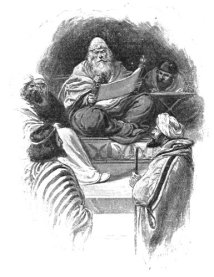
Rather than look upon God-fearers as gentiles interested in Judaism, perhaps we should see in the phenomenon the contribution of Judaism to the cultural mix we call Hellenistic. Greco-Roman culture provides various analogies to Jewish ideas and practices.
In other words, gentile interest in Judaism was not for Judaism’s sake per se, but for the sake of multi-culturalism within Greek society, the way that many different religious and cultural practices are integrated into modern Japanese life. My daughter lived in Japan for almost a year with a Japanese family. At one point, she attended the wedding of a Japanese couple who practiced Buddhism but who were married by a Swedish Catholic Priest. When my daughter tried to find out the reason for such an interesting mix, about the best answer she could get was, “In Japan, it’s all good.” Maybe that was also true in some corners of Greek society.

Continuing to read Cohen, I began to wonder if, from the Gentile point of view, converting to Christianity was viewed in the same light as how Gentiles were converting to other forms of Judaism.

Josephus insists that Judaism has no mysteries, no secrets that it keeps hidden from curious observers. This claim may not be entirely true (note, for example, how secretive Jesus is according to the Gospel of Mark), but it is essentially correct. Some Jews even engaged in missionary work. The Pharisees travel about land and the sea in order to make even one proselyte (the Greek word for convert to Judaism; Matt. 23:15). Josephus narrates that in the middle of the first century CE, the royal house of the kingdom of Adiabene became Jewish under the tutelage of itinerant Jewish merchants…

Some scholars have suggested that much of the Jewish literature written in Greek had as its goal the propagation of Judaism among the gentiles, since the literature often emphasizes those elements of Judaism that would make it attractive to outsiders.

Seen from this perspective, Paul and his mission to convert the Gentiles to faith in the Jewish Messiah may have well been just one Jew among many who were attempting to mine the same population of Gentiles and convert them to one of the various forms of Judaism that existed in that era. So it wouldn’t be unusual at all for “Christian” Gentiles to practice various Jewish religious and cultural behaviors in the same manner as other “converts” to Judaism, although as I previously stated, a Gentile converting to Christianity was not converting to Judaism. But at that point in history, the “Judaism” we consider “early Christianity” was considered a Judaism and it had not yet adopted a trajectory that caused it to deviate from Jewish practice and finally to not be considered a Judaism at all.

Apparently that took some time.

Many Christians, generally called “Judaizers” by modern scholarship, were drawn to Jewish practices. For some of these Christians, Judaism was attractive because of Christianity. Through Christianity they learned the Jewish scriptures and became familiar with Jewish observances. Many Christian groups, for example, insisted that Easter must coincide with the Jewish Passover and that it be celebrated with rites similar to those of the Jewish Passover.

It’s interesting that Cohen, although acknowledging a close Christian association with Judaism, continues to differentiate between the Gentile Christians and the Jewish people, presumably even those Jews who followed Jesus as Messiah. Note that early on, the concept of Easter was born and was to be treated in a similar manner to the Passover, but not as if they were the exact same festival or celebration. Nevertheless, according to Cohen, the Jewish-Christian connection endured for a number of centuries, even through the schism began most likely within the lifetime of Paul and John.

In Antioch in the late fourth century, John Chrysostom was shocked that many Christians were doing what pagan God-fearers had been doing in other parts of the empire three centuries previously: they were attending synagogues and observing the Jewish festivals.

It seems as though Christianity and Judaism maintained a “mix” for hundreds of years after the fall of Jerusalem but were never quite “in synch,” making Christianity a unique experience for the Gentile disciples, since they never adopted an actual Jewish identity the way that other proselytes did when they completed an actual conversion to one of the other Judaisms. This seems to indicate a bond between Gentile and Jewish disciples of the Master but not a fused cultural, national, or ethnic identity.

What may have driven a further wedge between Gentile Christianity and the Jewish “Messiah” movement was this:

What did change after 70 CE was that Jews, or at least the rabbis, were no longer as eager to sell their spiritual wares to the gentiles.

There is also some indication that post-Second Temple, Gentile Christianity began to gain some traction independent of the other Judaisms, possibly including the Judaism of “the Way.”

Perhaps (and this is the common explanation) the rabbis saw the growing power of Christianity and decided not to try to compete with it. Outside of rabbinic circles, perhaps some Jews still actively attempted to interest gentiles, especially Christians, in Judaism, but the evidence for this activity is minimal.

The picture Cohen paints of Gentiles in relation to the Judaism most of us call “Christianity” is incomplete, but we can draw some conclusions. First, the historical figure of the “ger” in ancient, preexilic times, is not a model for modern One Law Christians in adopting equality with Messianic (or any other sort of) Jews. The ger’s observance of Torah was for the purpose of having them obey “the law of the land” the way that even an undocumented alien worker would obey some or most of the laws in the U.S., but it didn’t make them citizens of a tribal nation nor did it confer anything even approaching equality between the gerim and the native-born Israelite. There were laws to protect the gerim in the manner of widows or orphans, but they were most definitely “second-class inhabitants” in Israel. The final blow to the “gerim” argument of One Law is that in post-exilic times, the status of the ger ceased to exist because Israel had shifted from a tribal-driven to a clan-driven society.

We see that in the time of Jesus and following, God-fearers were in evidence and they did practice synagogue worship and a number of the other mitzvot but primarily in the manner of polytheists who practiced the religions of multiple Gods. They did not forsake all other gods for the sake of the One God or become equal to the Jewish people in any covenant sense. As far as a Gentile converting to “Christianity” goes, they were not actually converts to Judaism in that they did not enjoy the full covenant benefits of converts to the other Judaisms and full obligation to Torah (which required circumcision as a covenant sign). It is acknowledged that the Gentile disciples of the Way did practice many of the Jewish religious customs including Shabbat and the festivals, even into the fourth century C.E., but the Roman authority never recognized these “Christians” as having legitimate legal rights to these observances the way that the Jews did and Cohen indicates that Gentile observance, particularly of Easter, was similar to but not identical with Passover.

And as the centuries passed, the trajectories of Christianity and Judaism continued to diverge until any “quasi-Jewish” observance by Gentile Christians simply ceased to exist.

Today, Christianity can be said to have its origins in Judaism but it has not been even remotely associated with Judaism for nearly 2,000 years.

I am not saying that there are not Christians today who maintain an attraction to Jewish practices, theology, and philosophy, but there is nothing that we can pull forward across from the time of Paul, and absolutely nothing we can draw forth from the time of Moses, that would suggest that a Gentile Christian today has any right or obligation whatsoever to observance of any aspect of the Jewish Torah mitzvot, except perhaps those that are common with kindness, compassion, and decency toward other human beings (feeding the hungry, and so forth).

While Cohen cannot be considered the final word in the history of Gentiles in the early movement of “the Way,” he certainly gives us a perspective we must pay attention to, and he helps us to realize that whatever the early Christians were in the days of Peter, Paul, and John, we are not the same as they were. They never were Jewish and neither are we.