Tag Archives: communication

What Christians See When Looking At Messianic Jews

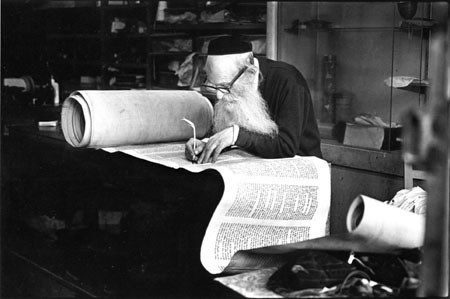
sefer-torahFor every complex question, as H.L. Mencken once put, there is usually an answer that is “clear, simple and wrong.” His observation rings true when it comes to a question I get at least once a week. What do Jews believe about Jesus?

Jews as a group rarely agree on matters of Jewish belief. How could we agree on the essence of another? Yet, we ignore the question at our own peril.

-Rabbi Evan Moffic
“5 Rabbis Explain Jesus”
Huffington Post

An MJ friend wrote me describing the resistance he has been encountering from other Messianic Jews about Torah. He gets it. Mount Sinai is an eternal covenant between God and Jewish people.

-Derek Leman
“Do Messianic Jews Really Need to Keep Torah?”
Messianic Jewish Musings

And meanwhile, the Bible from cover to cover is about God’s-plan-through-Israel-to-the-world and yet the “through Israel” part is forgotten by most. Deuteronomy 4:6 is in the Bible. Verify this for yourself.

-Derek Leman
“Why Don’t Christians Believe Deuteronomy 4:6?”
Messianic Jewish Musings

“What is the Torah?”

I’ve been blogging and blogging and reading and reading trying to come up with an answer that will work between my Pastor and me during our usual Wednesday night discussions. Pastor Randy is away for several weeks in association with his doctorate studies, but I sent him a link to Derek Leman’s blog post Do Messianic Jews Really Need to Keep Torah, since it addresses the heart of our conversations. Pastor has no spare time for a long blog post, but he did send me a brief email saying that he believes the Abrahamic covenant is eternal, but the Mosaic covenant is not.

I suppose I should have expected that response, and it surprisingly hit me in a tender spot. So when Derek wrote Why Don’t Christians Believe Deuteronomy 4:6, it did absolutely nothing to improve my disposition.

Really, is there any hope for communication across the aisle, so to speak, or are we doomed to endless discussion and endless disagreements with no middle ground between any of us?

Do I really want to live a life of faith like this, at least communal faith?

But Rabbi Moffic said that “Jews as a group rarely agree on matters of Jewish belief.” Ever since Sinai, the Jewish people have been chosen and called out to be different from all of the other peoples and nations of the Earth, but how do they stand all of the internal dissonance? My guess is that, at some core level, no matter what other disputes and disagreements one Jew has with another, at the end of the day, a Jew is always a Jew.

iron-sharpens-iron-hotOK, I know there are problems with that statement and there are all kinds of disputes between different sectors of Judaism, but when “they” come for you because you’re a Jew, those disputes vanish like a snow cone in a blast furnace. Beyond a certain point, we can even grasp hope based on a Jewish Cantor welcoming even Messianic Jews on Tisha B’Av.

But that doesn’t translate very well if at all to differing groups of Christians.

John the Baptist described himself as “the voice of one crying in the wilderness” (John 1:23), and that worked pretty well for him up until his beheading, but I’m not sure how well it’s working for me.

Iron sharpens iron, so one man sharpens another.

Proverbs 27:17 (NASB)

OK, I get that. The constant “head-banging” is supposed to sharpen us, but it also can be painful, and frankly, I’m getting a headache.

I know, “if you can’t stand the heat…” Maybe I should get out of the kitchen.

But that’s where the food is.

For everyone who partakes only of milk is not accustomed to the word of righteousness, for he is an infant. But solid food is for the mature, who because of practice have their senses trained to discern good and evil.

Hebrews 5:13-14 (NASB)

At the end of the day, a Jew is a Jew and like it or not, all Jewish people have been bonded together since Sinai and probably before that. Does that work for Christians, though? Are we bound together so that, when adversity strikes, we’ll join with each other based on our common identity as disciples of Christ?

I’d like to think so, but I don’t know. Jews are bound not just based on belief and theology, but by 3500 years of common experience and even down to the level of DNA. Although Jews don’t think of themselves in terms of being “tribal” anymore, it’s still there beneath the surface. Tribes and clans and families are bonded beyond any unbonding, and God drew all Jewish people to Him under the chuppah of cloud and fire at Sinai and sealed the covenant with Torah.

The Birthright program exists to encourage young Jewish people who have little or no attachment to the Land and to the Torah to experience Israel. I hear there’s something about standing on the ground and breathing the air in Israel that has an effect on Jewish people (and perhaps a few Christians as well). I can’t say from experience, but for the sake of my Jewish children, I hope so.

I can only say that for Christians, a common faith in Jesus is the lynchpin that holds us together, at least in theory. But while it is presupposed that Jews will argue with Jews as an expected behavior, how am I as a Christian supposed to explain to another Christian that being Jewish and the existence of the Torah are inexorably linked and cannot be unlinked. Even an atheist Jew will one day confront the meaning of being Jewish beyond the mere ethnic and genetic identity.

jewish-davening-by-waterI recently wrote about Jews encountering themselves through the mitzvot and some Rabbis hope that encouraging a Jewish person to experience even a single mitzvah will make a difference. At the time, I applied that hope to Christians as well, but we must face the facts that Christians don’t think of themselves in the same way as Jewish think of themselves.

No wonder that we can’t get Christians to see Jews as they want to be seen.

There are days when I just want to scream to the Church, “Just let Jews be Jews! We don’t have to agree with them! They don’t need our permission!” But I suppose that wouldn’t go over very well.

Jews rarely agree with each other on matters of belief. Christians are expected to agree with each other on matters of belief. If they don’t, then it usually means some group will split off from their church to form a different church. That’s how Christians manage the dissonance of disagreement.

I have what I think of as a unique relationship with my Pastor in that we can regularly meet every week, disagree on fundamental issues, and still be friends. Pastor lived in Israel for fifteen years and is intimately acquainted with Jewish life in Israel, so on that basis, he knows what it is like to live among lots of Jewish people. And yet, every week when we meet, I still feel like I’m facing some sort of battle for the rights of Jewish people to define their own identity as Jewish based on the Torah, especially Jews who are disciples of Messiah.

I keep thinking of the venerable 19th century Rabbi Isaac Lichtenstein who became a devotee of Yeshua past the age of sixty and yet remained wholly Jewish in his practice, observance, identity, and discipleship. His life as a devout Jew and a Messianic disciple seems so open and clear. Reading The Everlasting Jew showed me how his life made so much sense the way he lived it.

I don’t see a dissonance between what R. Lichtenstein believed and how he lived and the Biblical life of Jesus, Peter, and Paul. I just wish everyone could see what I see, not because I’m so smart, but because I believe I’m seeing what God wants all Christians to see when we look at Messianic Jews.

Why is communicating that vision so hard?
Considering Replies

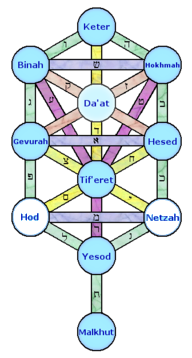
Hod is the counterpoint to Netzach. While Netzach strives to connect, Hod ensures that the power and energy in that striving is appropriate and acceptable. As we said earlier, it makes no sense to impress a student if the information is just too much to assimilate. Hod assembles the information to match the capacity of the receiver.

Hod tempers the force of Netzach, which, unchecked, can create distance rather than closeness. We have all experienced the colleague who is so effusive about his proposal that people simply stop listening. We have seen good ideas go ignored because an empathetic heart did not balance the Netzach exuberance. Empathy lies at the core of a caring relationship.

-Rabbi Laibl Wolf
“Hod: Creating Empathy” (pg 181)
Practical Kabbalah: A Guide to Jewish Wisdom for Everyday Life

If you’ve been reading my blog for the past week or so, you’ll know that I’ve been participating in an ongoing dialogue on the issue of Christmas trees and pagan practices in a number of online venues including Boaz Michael’s Facebook page, Jacob Fronczak’s Hope Abbey blog, and Judah Himango’s blog Kineti L’Tziyon. While the content on the blog pages themselves is reasonable (regardless of whether or not you or I may agree with that content), some of the comments made in response were not. I felt they represented an attack on Christianity or at least on those Christians who choose to put a Christmas tree in their homes, decorate it with tinsel, ornaments, and lights, and put gifts under it.

But I did’t write this “extra meditation” to talk about that again. I’m pretty much “talked out” as far as “Christmasphobia” is concerned and would just end up repeating myself if I tried to blog on it one more time. Instead, I’m here to talk about the communication dynamics I saw in those conversations and more in general, how methods of communication sell or sink our message as believers.

Most of the people who regularly read this blog probably aren’t interested in Kabbalah and some of you may be strongly opposed to its study, but in reading Rabbi Wolf’s discussion of Hod and Netzach, I recognized some of the common issues we all have when we want to get out point across.

Christians generally believe we have received a mandate from Jesus in what is called “the Great Commission.”

And you, go to all the nations. Make disciples; immerse them for the name of the Father, and the Son, and the Holy Spirit, and teach them to keep all that I have commanded you. And see, I am with you all the days until the end of the age. Amen. –Matthew 28:19-20 (DHE Gospels)

For nearly 2,000 years, Christians have, in one form or another, been attempting to tell the world about the Good News of Jesus Christ and the promise of salvation. We haven’t always done a good job at it, though. I’d say the various Crusades, Inquisitions, and Pogroms the church has lead can be described as a dismal failure of our evangelical directive. Even today, many non-believers cringe when a Christian asks them questions such as, “If you were to die tonight, do you know where your soul would go?” We are often depicted as judgmental, rigid, sexist, backward, superstitious “Bible-thumpers” and that description isn’t always particularly inaccurate.

It’s not so much the message we are trying to deliver that communicates such a dismal picture of the church, but how that message is transmitted. Christians really can be judgmental, inflexible, and insensitive to the needs of others, particularly of how people need to hear what we have to say (whether they choose to agree with us or not). We’ve gotten to the point where some folks want to run away when they think we’re about to try to convert them.

If you re-read the quotes I presented above, I’m sure you can immediately recognize that when we people of faith get such responses, we are likely leading with Netzach at the expense of Hod. This can especially be a problem with “text-only” communications on the Internet, such as in Facebook and blog comments, because most of what we use to communicate (body language, vocal tone and inflection) is completely absent. All we have is plain text and without anything to modify it, what we think we’re saying clearly can be terribly misunderstood. A message we think we’ve said with warmth and compassion can come across at hostile and uncaring. When confronted with such a message, it’s very easy to get worked up and fire back a response that is actually angry. The web conversation goes downhill from there, and I’m as guilty of such a transgression as anyone else.

Modeh AniWhat’s missing is illustrated by Rabbi Wolf in how he explains the Modeh Ani blessing which is recited by every observant Jew at the very moment when they realize they’re awake each morning.

The Kabbalah explains that this morning affirmation, known as Modeh Ani, provides the space to enter into the magical moments characterized by the transition from the unconsciousness of sleep into the light of day. The term Modah Ani is enunciated first thing in the morning. It means “I accept,” “I surrender,” or “I acknowledge,” or “I bow in front of you.” It is linked etymologically to the word for “thank you” in Hebrew (Todah)…

When we say “thank you” we are withdrawing and creating a comfort zone for another person. We touch their essence and draw it toward us. “Thank you” is a verbalization of the Hod flow. That is why it is so important to teach youngsters to say “thank you,” even if the deeper import is not yet fully understood. It trains children to express humility and an acknowledgment of others.

People who show humility invite more relationships into their lives.

-Rabbi Wolf (pp 185-7)

Putting Kabbalah and even the Modeh Ani aside, pay attention to the key phrase in Rabbi Wolf’s narrative: “we are withdrawing and creating a comfort zone for another person.” If we want someone else to hear us, regardless of our message, we must create a “comfort zone” for them, not for us. Yet we often do the exact opposite, creating a comfort zone for us and putting the listener on the defensive. This is especially easy to do on the Internet, even if it’s not our intent, because most of the elements of complete communication are not available. On top of that, we sometimes “pull rank” by explaining our abundant qualifications to be able to transmit our message. I don’t mind learned people and even “experts” in a particular field who have something to say, but a person who repeatedly has to outline their “quals” while making their point is an immediate turn off to me. The more you have to tell people, “I’m important and a big deal”, the more most people (me included) will believe that you’re not.

In one of the conversations I mentioned, one fellow responded like this:

I am a Hebrew. I am a Messianic Jew. A Kohen Levi. I am not one of the lost 12 tribes, nor do I believe in it.
My credentials…

I have no doubt all that is true for this person and you might say something like, “What’s wrong with what he said if it’s true? Is there a problem telling the truth?”

My answer: yes and no.

I don’t know how many conversations, both online and in person, I’ve been involved in (and where I was being put on the defensive) where the person talking to me responded to my resistence by saying, “well, it’s the truth!” Truth though it may be, if you can’t tell me the truth in a way that doesn’t drag me or other people through the mud (whether you really are or it just sounds that way), am I likely to listen? I’m not saying that you will or won’t convince me of your point of view, but there’s more than one way to present it. If you shove pure “Netzach” in my face while “Hod” has been left ten miles behind in the conversation, doesn’t this create a problem? It doesn’t matter what your family or cultural lineage is, how learned you are, how many languages you speak, and how much of a “Torah expert” you happen to be, if your message is delivered with all the tact of a barbarian horde riding madly across the seven hills of Rome, bent on the destruction, mayhem, and looting. No, I’m not saying that your intent is bad, just your delivery (OK, for some people, the intent is bad too, but it’s almost impossible to separate intent from inadequate communication over the web).

You Christians trying to fulfill your responsibility to share the Gospel with unbelievers, you are no different. Zeal is one thing and frankly, it is very important, but if you don’t create a space in the relationship where the person you’re talking to can feel comfortable, or at least a space where they don’t feel like they’re about to be spiritually jumped on and beaten up, you won’t “win a soul for Christ” (and I really hate the implications of that statement) or even convince the other person that you’re a half-way nice human being.

Being too empathetic makes you look wishy-washy and your message becomes completely ineffective. Being too zealous makes you look like a judgmental crusader out to bash someone’s head in with a Bible and your message becomes immediately disgarded by your audience.

Remember what I said a few days ago about being out of balance?

I’m not trying to bash anyone reading this or anyone who posted a comment in Facebook or on the blogs I mentioned. I’m imploring you to please, please look at the state of your intent and the balance of your Netzach and Hod. It doesn’t matter if you don’t use those terms. I doesn’t matter if you’ve never heard of Kabbalah or don’t like what you’ve heard about it. Take the labels off everything I’ve said and look at the dynamics of communication under the hood. That’s what matters. It matters a lot because we’re supposed to be God’s representatives in the here and now. I’ve already mentioned how it really matters what we “loose on earth” because it is also “loosed in heaven” (Matthew 18:18). Being careless about what we say and how we say it when presenting ourselves as people of faith, can elicit not only a poor response in the immediate circumstance, but create a long-term and even potentially eternal problem in the much larger spiritual realm.

One of the exercises Rabbi Wolf suggests in his book to help people develop Hod, is to participate in conversations where you wait three to five seconds to respond after your conversational partner says something. The exercise directs you to use the time to consider what to say and how to say it. Use the time to consider the impact of your response on your partner. What would happen if we did that all of the time? What would happen if we cared enough about other people to create a comfort zone for them in our conversations, if we listened to what they had to say, and if we stopped and considered their feelings and understanding before launching into our reply?

This probably isn’t true, but imagine this is the reason why God rarely answers our prayers immediately. Maybe He’s waiting until we are in our comfort zone with Him. Maybe He’s considerate enough to carefully craft His reply to us so it will be the most useful reply possible. Maybe God loves us that much. Imagine if we loved each other that much.