Tag Archives: compassion

The Challies Chronicles: John MacArthur and Joni Eareckson Tada

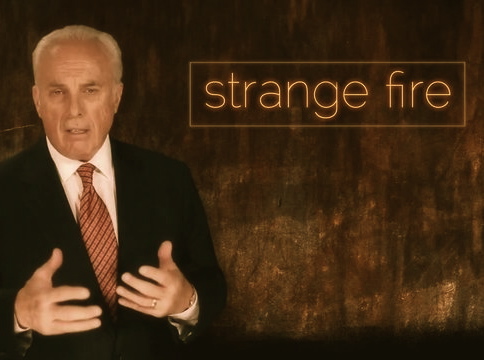
macarthur-strangefire-confJohn MacArthur opened the Strange Fire conference, and then, for the second session introduced Joni Eareckson Tada as a friend and former member of his church. She was at the conference to share her testimony of living as a quadriplegic who has prayed for, but not received, a miraculous healing. As MacArthur said in his closing comments, if anyone has the faith to be healed, it must be her. In a sweet and spontaneous moment, Joni called MacArthur to the stage and, hand-in-hand, the two sang a couple of stanzas of “O Worship the King” together. I have been to a lot of different conferences, but that will now rank as one of my all-time favorite moments.

-Pastor Tim Challies
“Strange Fire Conference: Joni Eareckson Tada,” October 16, 2013
Challies.com

This is the second part of my Challies Chronicles series, an analysis of Pastor John MacArthur’s Strange Fire conference as “live blogged” by Pastor Challies.

I’m also more or less “live blogging,” in that I’m writing as I’m reading, giving you my impressions as they occur. I want to be fair to MacArthur and I feel that, using Tim Challies as my source, someone who, as far as I know, should be sympathetic and supportive of MacArthur’s views, I am avoiding those bloggers and other pundits who tend to be “anti-MacArthur” to accomplish the purposes of this project.

All that said, being fair doesn’t mean I always have to agree with MacArthur or the other presenters at Strange Fire.

Joni Eareckson Tada

I assume that by having Ms. Tada present her testimony that MacArthur was attempting to refute faith healing in the present age. While I agree that there are just a boatload of charlatans out there who claim “the healing power of Jesus,” and who say they can cure anything from acne to brain tumors by the laying on of hands (and giving a bunch of money as a “love offering”), there seems to be more to Tada’s story:

Even today she often has well-meaning charismatics who come up to her and pray for her healing. Though she never says no, she does always ask them to pray for specific things and then highlights character issues. Will you pray for my bad attitude? Will you pray for my grumbling? She means to show them that she is far more concerned with indwelling, remaining sin than chronic pain and legs that do not work.

She went on to describe a trip to Jerusalem and going to the very place where Jesus had healed that paralyzed man so many years ago. And there, in a moment alone, she found herself praying to God to thank him for not healing her, because a “no” answer to her requests for physical healing had purged so much sin, selfishness, and bitterness. That “no” answer left her depending more on God’s grace, has given her greater compassion for others, has reduced complaining, has increased her faith, has given her greater hope of heaven, and has caused her to love the Lord so much more. She sees the joy of sharing in his suffering and would not trade it for any amount of walking.

What do we really want to be healed of, our physical problems or our spiritual problems? Do we need to be healed of cancer or given the “medical procedure” of a circumcised heart?

And they brought to Him a paralytic lying on a bed. Seeing their faith, Jesus said to the paralytic, “Take courage, son; your sins are forgiven.” And some of the scribes said to themselves, “This fellow blasphemes.” And Jesus knowing their thoughts said, “Why are you thinking evil in your hearts? Which is easier, to say, ‘Your sins are forgiven,’ or to say, ‘Get up, and walk’? But so that you may know that the Son of Man has authority on earth to forgive sins”—then He said to the paralytic, “Get up, pick up your bed and go home.” And he got up and went home. But when the crowds saw this, they were awestruck, and glorified God, who had given such authority to men.

Matthew 9:2-8 (NASB)

struggling_prayOnly God forgives sins and so I also believe only God can miraculously heal. Even if we say, as I can only believe MacArthur says, that the age of miraculous healing is done and that God does not heal anymore in a supernatural sense, I have a question. Why do we pray for people when they are hurt or sick?

Actually, I have no idea if MacArthur prays for the sick, although I certainly hope he visits them because I don’t think that type of kindness we see in the Bible was ended when New Testament canon closed.

I go to a fundamentalist Baptist church. I imagine MacArthur would be comfortable worshiping there. And yet, in the bulletin they pass out to me as I enter the doors of the church for services every Sunday morning, there is a multi-page paper containing many, many prayer requests.

At the top of the list, we are to pray for our President, our other Government representatives and so on. Then there’s a list of missionaries we should pray for. After that, there are multitudes of requests from people in the church about others in the church, family members, friends, and so on, most of whom suffer from terrible medical situations.

When I go to Sunday school after services, the teacher begins class by asking for prayer requests. Again, usually people’s medical problems are brought up, people facing surgery, people with chronic illnesses, people who are dying.

Why do we pray for them if we don’t, on some level, want God to heal them? Sure, sometimes we pray for someone’s salvation. Sometimes we pray for someone who is in a spiritual crisis of one kind or another, but most of the time, we pray for people who are sick.

I know from my own experience, that most if not all of the terminally ill people I have prayed for have died. I know that’s cruel to say, but that’s my experience. Why did I pray for them? What was the point?

I can see how the whole “faith healing” process has been hijacked and abused and I most certainly don’t advocate for frauds and hucksters who prey upon the illness and weakness of others for financial gain, but I do take exception to the idea that we aren’t supposed to pray for people who are hurt (and I’m not quite sure MacArthur would actually advocate that position). I also take exception to the idea that God can’t or won’t heal someone supernaturally.

I don’t say these healings occur regularly or we can predict when they will happen. If they happen at all, they probably do so infrequently and without any way to know when a person will or won’t be healed. And yet we hope. And yet we pray. And yet we rely on God to have mercy, and beg Him to heal, if not the loved one who we know is about to perish, but our grieving soul when we are left behind and alone.

Yes, as we read Matthew 9:2-8, above all, God desires to heal the soul, to forgive sin, to bring about redemption, to circumcise the heart of stone and give the sinner a heart of flesh.

None of that means we like to see our loved ones suffer physically. None of that means we aren’t compelled to pray for them, to ask and even to beg God to cure a four-year old little girl of leukemia or some other horrible, life-threatening ailment.

Then his servants said to him, “What is this thing that you have done? While the child was alive, you fasted and wept; but when the child died, you arose and ate food.” He said, “While the child was still alive, I fasted and wept; for I said, ‘Who knows, the Lord may be gracious to me, that the child may live.’ But now he has died; why should I fast? Can I bring him back again? I will go to him, but he will not return to me.”

2 Samuel 12:21-23 (NASB)

plead1It’s a terrible thing to think that God would cause a newborn baby to die because of the sins of his father. I’m not sure how else we can interpret the events about the child David and Bathsheba conceived together in the shadow of adultery and murder. But while the child was alive, David prayed and fasted and wept, but the child died anyway.

The Lord gave and the Lord has taken away, blessed by the name of the Lord.

Job 1:21

That has to be one of the most bitter prayers recorded in the Bible, and yet it is reflected in the grief of David and in the grief of anyone who has lost a loved one.

How can I not pray from the “brokenness” of my heart?

I think Ms Tada’s point was well made. I know that living with a long-term and severe medical problem can actually bring a person closer to God, can make the relationship stronger and more intimate. I’ve seen such a thing happen to a man I know. But it’s still a bittersweet thing. That doesn’t mean God doesn’t want to heal the injured or comfort the grieving. That doesn’t mean that sometimes, in accordance with His will, God doesn’t provide us with what we need, and even what we ask for out of His abundant grace, power, compassion, and pity.

I don’t know what MacArthur was trying to accomplish by presenting Ms. Tada on stage at his conference. What he accomplished, at least for me, is to remind me of how fragile life is and how we all rely on God to help us when our problems are so much bigger than we are. If MacArthur meant to indict the Pentecostal church for false advertising, I missed that part of the message.


Apostasy, Pentecostalism, and Other Things That Go “Bump” in the Night

Witch huntApostasy is not new or shocking to me; years ago, my younger brother Aaron gave up faith in Yeshua and converted to Orthodox Judaism. My cousin Anthony went from Christianity to Messianic Judaism to atheism. A family friend, Alice, got involved in Karaite Judaism and lost faith in Messiah. There was a time in my own life where I considered agnosticism.

I grok doubt and sympathize with people going through it.

And in my 10 years writing this blog, I’ve seen several other Messianic bloggers lose faith…

-Judah Gabriel Himango
“The 3 signs of apostasy, and how to deal with doubt in your life”
Kineti L’Tziyon

And despite this, Evangelicalism has thrown open its arms and welcomed this Trojan Horse, allowing an idol in the city of God. This idol has fast taken over.

MacArthur then contrasted Reformed theology with the charismatic movement and said that Reformed theology is not a haven for false teachers. It is not where false teachers reside or where greedy deceivers and liars end up.

-Pastor John MacArthur
as quoted by Tim Challies
Challies.com

I didn’t want to do this. I didn’t want to enter into this conversation. I see some good points made by these men, but I wonder if it’s really worth the cost.

Let me explain.

As you probably know, I’ve already expressed some criticism of Pastor John MacArthur and his recent Strange Fire conference, which strongly addressed problems with the Pentecostal church and the Charismatic movement in Christianity. I’m planning on using the record of the conference presentations on the blog of Pastor and well-known Christian blogger Tim Challies to do a more detailed (and hopefully fair) examination of MacArthur, his information, and most importantly his intentions, in holding his conference and publicly “calling out” the Charismatic movement and its followers.

However, well-known Messianic/Hebrew Roots blogger Judah Himango seemed to mirror MacArthur in drawing attention to another six ton elephant in the room, apostasy from Christianity (or in this case, the Messianic Jewish and/or Hebrew Roots movement, which could be considered a form of Christianity).

Pentecostalism and Messianic Judaism/Hebrew Roots are different in that the Pentecostal church has hundreds of millions of followers worldwide, while Messianic Judaism and Hebrew Roots are (so far) rather minimally attended (I don’t have any specific figures on the population of either group). Other than that though, from a traditional, fundamentalist Christian viewpoint, both movements can be considered the same “strange fire,” that is, both are outside of what might be considered acceptable and “normative” Christianity relative to how Reformed theologians such as MacArthur might see them.

I’m not going to address the actual content presented by MacArthur and Himango. Both have a good deal to say about their relative subjects and in sampling both, they also have a great deal of good information to present, information that should be considered, information that is very likely useful and beneficial.

But at what cost?

In order for both of these gentlemen to do what they’ve done, make public significant difficulties among specific movements and specific individuals, they have to objectify those movements and particularly the individuals involved. To one degree or another, they have to set aside any concern for how the subjects of their criticism will be impacted by what they are saying and publishing.

After the Strange Fire conference (or actually even before it), there was a power surge of criticism against MacArthur for being insensitive, for being hurtful, for being damaging to millions upon millions of fellow Christian brothers of sisters. Being right was more important than how MacArthur’s being right would injure all these people, many, perhaps most of whom, sincerely believe they are serving God and following Christ.

Judah Gabriel HimangoTo read Himango’s blog post on apostasy, as well as another Messianic blogger’s kudos to Himango, you’d think that this young man wrote the most beneficial religious commentary in the past century.

I won’t deny that Himango had a number of good points and I don’t doubt his intensions are sincere, but in order to make them, he had to…no, let me change that, he chose to name names. He started with his family and moved on to others, some that I am familiar with and at least one who I’ve known quite well.

Did Himango or anyone else ask them if they wanted to be “outed” like this?

When you have been a member of the Christian faith and you leave, that usually provokes a lot of strong feelings in those believers you’ve left behind. Those strong feelings are almost never pleasant, and it’s never pleasant to be on the receiving end when they are expressed.

I recently had to create a comments policy on my blog in order to contain some otherwise negative statements being made. As part of my policy, I issued the following statement:

In Jewish religious tradition, Leviticus 25:17 which states “You will not wrong one another,” is interpreted as wronging someone in speech. This includes any statement that will embarrass, insult, or deceive a person or cause that person emotional pain and distress. Even statements believed to be true and factual but that cause another harm are considered wrongful speech.

Of course, there’s a problem. Sometimes it really is the right thing to discuss problems in the faith, difficult issues, and even “difficult people,” so how to you balance that against the principle of harmful speech, and avoid damaging any other human being by what you say, even if what you’re saying is factual and truthful?

I wish I knew. I only know that in order for good people to hurt other good people, you have to do something to your “target” in your head. You have to objectify them. You have to make them, in some way, less than human. Otherwise, if you have even the tiniest bit of compassion and pity in your soul, you couldn’t bear to put someone you love or once loved through pain and torture by putting them in the spotlight and pointing a harsh finger at them, even if you think you’re doing it for the right reasons.

So how do you do it?

I’m going to present a couple of really extreme examples.

Look at how we convinced American military personal to kill Nazis and Japanese during World War II. Look at how we convinced the American public to support a World War, condone the bombing of millions, endure severe shortages of goods and services so they could be diverted to the war effort. How did we do it? By making Germans and Japanese less than human. That’s also how we herded masses of Japanese living in America into prison camps, men, women, and children, even as the Nazis were herding millions of Jews and other “undesirables” into prison camps, men, women, and children.

World War 2 posterHow have we aborted untold millions of unborn children in our nation since 1973? How have we made abortion a wildly successful financial effort? How have we sold abortion as “women’s reproductive services” to an entire nation, and completely ignored the fact that the only difference between a fetus being aborted and an unborn baby who is already loved by mother and father is that one is unwanted and the other is wanted?

By turning an unborn human being into a “fetus,” a “thing.” Yes, the term “fetus” is technically accurate, but shifting the emotional context from baby to thing is what’s required to eliminate a thing. Then it’s not killing a baby. Then we can live with ourselves and get to sleep at night…most of us.

That’s also how to kill an enemy in war. To one degree or another, it’s how you attack another human being in speech, a person who was created just as much in the image of God as you were. By “objectifying” them.

I told you these were extreme examples. Imagine though, that we can still do others some measure of harm, even when we’re not being “extreme.”

If we remember that someone who worships God in a Pentecostal church is a person, just like we are, someone who is a parent, a child, someone who goes to work, who goes to the movies, someone who loves, cries, becomes afraid, is capable of compassion, just like we are, then it’s not quite as easy to say that everything they experience in their worship of God is really a product of the Adversary and grieves the heart of God.

Maybe all that is true, but it’s how we say it and with what intent that makes the difference.

We can also “out” and disdain people, human beings just like us, if we don’t think of them as people just like us but rather as “apostates.” An apostate is a special class of being who has done the unthinkable, he has, in the context of my message as well as Himango’s blog post, rejected Jesus Christ of Nazareth. Or in more Judaic terms, rejected Yeshua HaHashiach, the Son of David, King of Yisra’el.

Regardless of how apostasy within the Church affects you, can you say that because a person leaves the faith, all bets are off and you can treat them anyway you want?

Maybe. After all, the Master said this:

“If your brother sins, go and show him his fault in private; if he listens to you, you have won your brother. But if he does not listen to you, take one or two more with you, so that by the mouth of two or three witnesses every fact may be confirmed. If he refuses to listen to them, tell it to the church; and if he refuses to listen even to the church, let him be to you as a Gentile and a tax collector.

Matthew 18:15-17 (NASB)

If someone continually refuses to repent of their sin, Jesus says they are to be treated as a Gentile and a tax collector,” not really desirable companions in that place and time. But notice that Jesus began by saying “show him his fault in private” and continues with “if he listens to you, you have won your brother.”

Talk to him in private avoids embarrassing him unnecessarily. Your goal is to win your brother, and in this context, the converse must be true. It must be possible to “lose” your brother, with the understanding that on some level, this person is still your brother, though you may have to ask him to be removed from the community of faith until he repents.

When MacArthur accused Charismatic people of offering “strange fire” to God, he was massively criticized on the web. There was and is a lot of debate about whether MacArthur was right in his message and right in his method. I don’t really need to speak of MacArthur or defend Charismatics, since that’s already been done in abundance. But in our little corner of the Messianic and Hebrew Roots blogosphere, who takes a hard look at the methods by which some writers are addressing those who have left our ranks, either to become atheists or to pursue more traditional (non-believing) Judaism as converts or people who are halachically Jewish?

nadab-abihu-fireI’m not defending leaving the faith, but is the only response to that act to revile and assault those who have? I have very personal reasons for not dragging Jewish non-believers through the mud, but I won’t “name names” or specifics on my blog so I can avoid creating “targets.” Can’t we instead respond to this tragedy with compassion, mercy, and even pity? Can’t we leave the door to friendship open? Is there no room for Christians and Jews to associate and even be friends, or does that constitute a “yoking” problem?

What is God’s point of view on all this? I can only infer it from the Bible. Certainly, God has been capable of more than a little wrath. MacArthur’s invocation of “strange fire” is a prime example of that, relative to Aaron’s sons Nadav and Abihu and their horrible, fiery end.

But God is also a God of compassion, mercy, pity, and love.

The thirteen attributes of God are captured for us in the following:

Merciful God, merciful God, powerful God, compassionate and gracious, slow to anger, and abundant in kindness and truth. Preserver of kindness for thousands of generations, forgiver of iniquity, willful sin and error, and Who cleanses.

Exodus 34:6-7

The Master’s own compassion for an unrepentant Jerusalem is the echo of Moshe’s encounter with Hashem:

Yerushalayim, Yerushalayim, who kills the prophets and stones those who are sent to her! How many times I have desired to gather your sons like a hen gathers her chicks under her wings, but you were unwilling! Listen: your house will be abandoned for you, desolate. For I say to you, from now on you will not see me until you say, “Blessed is the one who comes in the name of Hashem!”

Matthew 23:37-39 (DHE Gospels)

Compassion, even in the face of a very hard truth.

In his blog post, Himango says that Heresy hunting is a problem. What about Apostate hunting? We don’t burn “witches” anymore, we just embarrass them on the Internet. I must say that Himango was rather measured and even considerate in his write up, in spite of the fact that he listed names and biographies for those on his “apostate list,” but the person who started the ball rolling, so to speak, was much less merciful, and all the more harsh, and in fact, betrayed a personal trust based on friendship in “exposing” another person’s very difficult choice to leave the body of Yeshua.

Never take your own revenge, beloved, but leave room for the wrath of God, for it is written, “Vengeance is Mine, I will repay,” says the Lord. “But if your enemy is hungry, feed him, and if he is thirsty, give him a drink; for in so doing you will heap burning coals on his head.” Do not be overcome by evil, but overcome evil with good.

Romans 12:19-21

Jesus showed pity and regret to Jerusalem and even asked the Father to forgive his executioners (Luke 23:34). Paul quotes the Torah in imploring the Romans (and us) to not respond to hurt with revenge, but to only show compassion, charity, and mercy.

13 Attributes of MercyAre we to answer someone else’s “strange fire” by incinerating them in speech or in writing, or can we emulate, Jesus, Paul, and God, by being “compassionate and gracious, slow to anger, and abundant in kindness?”

Is the fault in any problem always in someone else? Is it never in who we are and what we do, even in the name of Christ?

A final note. I’m less than pond scum algae to men like John MacArthur, so I doubt he’ll ever be aware of my existence, let alone my blog, but Judah Himango and I have exchanged a number of comments over the past few years, so I don’t doubt that when he finds out I wrote this (and to be fair, I’ll let him know before I click the “Publish” button), he’ll have something to say about it, probably something not very complementary. Unfortunately, you can’t write something like this without becoming a target.

Again, I don’t doubt that Judah had good intensions in writing his blog post and he did make many good points. I believe he sincerely wants to support and encourage people, especially those associated with the Hebrew Roots and Messianic Jewish movements, in staying the course and continuing in the faith.

But there’s a price to be paid, a cost to be exacted from those people we put under our microscope. Is it worth it?

I didn’t want to write this. But I had to write it.

Praying for Oklahoma

oklahomaA mammoth tornado carved a trail of destruction through the Oklahoma City metropolitan area, killing at least 51 people, including some children, and ripping apart two elementary schools today, local authorities said.

“It is absolutely devastating, this is horrific,” Oklahoma Lt. Gov Todd Lamb said. “We’re going to have fatalities. … We’re going to have significant injuries. … We just don’t know what those numbers are. Schools have been hit, a hospital has been hit, businesses have been flattened, neighborhoods have been wiped away — we don’t have the numbers in yet but it is going to be significant and it is going to be horrific.”

-Lauren Effron and Dean Schabner
“Oklahoma Tornado: At Least 51 Dead, ‘Horrific’ Damage”
ABC News

One word meditations:

Pray. Donate. Give. Care. Love.

The Problem with Religious People, Part 2

rick-warrenIn the aftermath of the tragic suicide of Rick and Kay Warren’s son Matthew, another tragedy is occurring: So-called followers of Jesus are using Matthew’s death as an occasion to attack Pastor Warren. This is sick, ugly, and sadly, indicative of the state of the body today.

It’s one thing for non-believers to make ridiculous statements like, “your son died due to your anti-gay hate toward gay people including your son” (as if there was even evidence that Matthew was gay, or as if he was not greatly loved by his mother and father, which he clearly was). It’s another thing when believers take this occasion to bash Rick Warren’s supposed theological errors, as if this was some kind of divine payback for his alleged sins. What kind of garbage is this?

-Dr. Michael L. Brown
“Enough with the Mean-Spirited Words Against Rick Warren (And Others)!”
CharismaNews.com

Yesterday, I read about the tragic suicide of well-known author and Pastor Rick Warren’s son Matthew. I have three adult children about the same age as Matthew and I can’t imagine any pain worse than facing the death of any of my children. Words cannot express the agony that Rick and Kay Warren must be enduring at this time, especially because they are people who are in the public eye. Whatever they experience, including heartrending grief, the world media watches them.

Imagine my surprise at reading Michael Brown’s article (I don’t usually read the source website, but I followed the link from Facebook), from which I quoted above, about how not only secular people are mistreating the Warren’s over the death of their son, but other Christians as well.

Really?

I know that Pastor Warren is a target for a number of reasons. Sometimes all it takes is just saying “I’m a Christian” in public. Some people, including many Christians, are critical of MegaChurches. Others, mainly secular folks, are critical of Warren for what they perceive as his “anti-gay” stance. Some of his critics have gone so far as to claim that Pastor Warren’s son Matthew was gay (which has not been substantiated to the best of my knowledge) and that it was Rick Warren’s disapproval of that “fact” which resulted in Matthew’s suicide.

To give you some context, I followed a link from Brown’s article to twitchy.com, which collected a number of “tweets” people made on twitter regarding Matthew Warren’s suicide:

@GayPatriot: I would imagine. But if you’re gay and your dad is the biggest preacher in the country it could lead to mental health problems.

@boymv18: your son died due to your anti-gay hate toward gay people including your son..

@TheReallyRick: Son of Saddleback Church pastor Rick Warren has committed suicide. Place your bets on when its discovered he was gay. #ReligionKills

@BlazePhoenix_: Trust me, I AM being as charitable as I can be about hateful bigoted Pastor Rick Warren’s obvious failure with his own son!

The beat goes on and you can visit the “twitchy” website to read the rest of the “commentary.” It’s not pretty. I periodically encounter atheists on the web and their usual stance is to accuse me of moral failings because I “need religion to be a good person.” The assumption is that it’s better to be a good person based on who you are rather than who you serve.

Uh huh. Color me unconvinced.

michael-brownAnyway, what about Christians criticizing Warren? Brown’s article didn’t quote any Christian criticism nor provide links to websites or blogs taking Pastor Warren to task, so I (briefly) tried to find a few. I didn’t do well at all. The two primary Christian sites I found writing on the topic were Christianity Today and Christian News. Both sites presented straightforward news articles without editorializing excessively, especially in any negative light. I looked at the comments on each site in response, and found that they were universally kind and compassionate.

From the Christianity Today blog:

Loretta: I am so very sad for this family and their great loss. The enemy of God’s people attacks us where he can hurt us the worst, in our families. I will pray for your family’s healing from the Lord. I trust that this young man knew the Lord as his personal Savior and that knowing that will bring the Warren family hope and comfort.

Barbara: I am so sorry, I know the battle, my daughter suffers from depression for many years and she has just turned 27yrs old. I pray everyday for her and others. why do they have to go through this, I am so sorry, I belive Jesus has him now and now he can work on him and bring him to the promise land, May Jesus bless you all .Barbara a mom.

Paul: This is very sad indeed. May the Warrens at this time experience abundant comfort and peace from our God and Father. And may the young man’s soul rest in peace. Amen!

The comments at Christian News were similar:

I am so sorry for your loss. My father committed suicide when I was 3 years old, I will spend my life wanting to help the broken hearted and show them our heavenly fathers love! My prayers are with the Warren family and friends. I pray the do not “what if” but say “what now God!” I love the Warrens for all that they as a pastor and family have given to us. I pray all of our words spoken to this family are filled with love and grace. We all mean well, listen and pray for them! Praying now!!
Mary Ann Moore, Sebastopol, CA

Linda Long: We are so sorry for the loss of your son. We also lost our son to suicide. It’s a Pain that never goes away, but we have an amazing God that will give you all the strength you need to get through this difficult time. Our prayers and thoughts are with you and family. God bless you!

If there is Christian criticism against the Warrens in relation to the death of their son, I can’t find any. That’s probably good, because I periodically have problems with religious people and even sometimes lose my faith in religious people ever having the ability to truly follow the will of God.

Atheists are expected to be mean-spirited and cruel (not that all of them are) but Christians are to aspire to a higher standard. More’s the pity when we don’t.

However, Brown’s focus wasn’t on Rick Warren who, as I said before, is an easy target for a variety of reasons. His focus was on mean-spirited Christians and how we are exceptionally poor witnesses to the world around us when we are unkind and inconsiderate.

Interestingly enough, in Bible study last Sunday, we studied 1 Peter 2 which includes instructions on how to be good examples and good witnesses for Christ in a pagan world:

Beloved, I urge you as sojourners and exiles to abstain from the passions of the flesh, which wage war against your soul. Keep your conduct among the Gentiles honorable, so that when they speak against you as evildoers, they may see your good deeds and glorify God on the day of visitation.

1 Peter 2:11-12

failureIf there are Christians who are publicly criticizing Pastor Rick Warren and his wife Kay for any reason at this difficult time in their lives, you should be ashamed of yourselves. If there are Christians specifically criticizing the Warrens for somehow participating or causing their son’s suicide, again, you should be ashamed. Whatever differences you may think you have with the Warrens or however you may feel about Pastor Warren’s theology, doctrine, or the nature and character of his church, does any of that really matter right now? If someone is grieving…if anyone is grieving, isn’t it our responsibility to show comfort and compassion in the name of Christ?

A new commandment I give to you, that you love one another: just as I have loved you, you also are to love one another.

John 13:34

The implication is that we should love each other, not just in a “warm and fuzzy feeling” way, but with the same sort of love that Messiah loves us…love that’s self-sacrificing…loving someone enough that you would die for them if you had to.

Brown finishes his article with this:

Sadly, it is not just active Christians who frequent Christian websites. There are plenty of former-believers and outright non-believers who visit them too, and all too often, our inability to be civil in the midst of our disagreements, our extreme willingness to identify fellow-believers as false prophets and false teachers, our self-assumed right to judge the motivation of people’s hearts, and our utter violation of Jesus’ command to love one another as he loved us simply demonstrates to the world that our gospel is not true.

May this be the day we search our hearts, determining to watch our words, repent of our sins, and glorify the Lord with everything we write and say. Surely he deserves nothing less than this.

And remember: The world is watching.

The world is watching. We can choose to either sanctify the Name of God or desecrate it. Our choice, and by our choice, people will make decisions for or against God.

And also remember it’s not just people who are watching. God watches as well.

Shabbat Chol HaMoed Pesach: Mercy

hosea-and-gomerSo Moses cut two tablets of stone like the first. And he rose early in the morning and went up on Mount Sinai, as the Lord had commanded him, and took in his hand two tablets of stone. The Lord descended in the cloud and stood with him there, and proclaimed the name of the Lord. The Lord passed before him and proclaimed, “The Lord, the Lord, a God merciful and gracious, slow to anger, and abounding in steadfast love and faithfulness, keeping steadfast love for thousands, forgiving iniquity and transgression and sin, but who will by no means clear the guilty, visiting the iniquity of the fathers on the children and the children’s children, to the third and the fourth generation.” And Moses quickly bowed his head toward the earth and worshiped. And he said, “If now I have found favor in your sight, O Lord, please let the Lord go in the midst of us, for it is a stiff-necked people, and pardon our iniquity and our sin, and take us for your inheritance.”

Exodus 34:4-9

Moses pleads with the Almighty not to send an angel in His place, but to accompany the Jewish people Himself through the trek in the wilderness even though they had sinned with the Golden Calf. Moses asks the Almighty to reveal how He interacts with the universe (it is a mystical interchange). Then the Almighty commands Moses to carve two stone tablets and to ascend Mt. Sinai so that He can engrave the replacement tablets for the set that Moses broke at the transgression with the Golden Calf.

The Almighty reveals his Thirteen Attributes of Mercy (Exodus 34:5) which we repeat on Yom Kippur and other times of seeking the Almighty’s mercy. Moses asks the Almighty to forgive the Jewish people. The Almighty renews the Covenant with the Jewish people commanding us not to enter into a covenant with the inhabitants of the land, not make molten gods, to observe the Festival of Matzos, laws of first born issue, to keep the Shabbat, celebrate Shavuot and Sukkot and ends with assorted laws of offerings.

-Rabbi Kalman Packouz
“Shabbat Shalom Weekly”
Commentary on Shabbat Chol HaMoed Pesach
Aish.com

Based on yesterday’s extra meditation, I’m having second thoughts about God’s attribute of mercy. I realize that I’m still caught up in the dynamic interplay between the actual nature of God and what we draw from the Bible about Him. We can’t know God fully since He’s an infinite being. We can (sort of) know the Bible, since it is a finite document, though as I repeatedly discover, it’s a tough book to know.

There is so much that is beautiful in the Bible, so much mercy, so much grandeur, so much compassion from our infinite God.

And then there are some pretty difficult things to try to understand about God, at least based on how we understand the Bible.

But I should talk.

I keep trying to convince Christians that God didn’t cancel Torah observance for the Jewish people just because of Jesus. It’s an “unfortunate truth” of the Bible (well, not unfortunate for me) for many Christians, once they see it. So why am I complaining about Pastor Randy pointing to another “unfortunate truth” about the Bible that I don’t want to face. He doesn’t want to accept that Jewish believers in Jesus still wanted to keep the Torah and were still obligated to keep the Torah, even though the Gentile disciples had no such obligation. I don’t want to accept that God chooses which people are going to be saved and which ones aren’t going to be saved from before they were born.

shattered-glassYou either draw the winning lottery ticket and get saved or you don’t draw it and well…tough luck on you.

I have to write these “morning meditations” one day early so you’ll have them when you wake up each day. That means what you are reading for Friday, I’m writing on Thursday, when I’m still stinging about the whole “Divine Election” thing. I don’t really have a plan for this blog post, I just need to have something ready for Friday and I still need to let off steam. But I’m feeling a little shattered now and I need to hear something from God.

There will come a time, very soon, when we will be shown miracles so great, they will make the Ten Plagues and the splitting of the Red Sea appear as ordinary as nature itself.

So great, no mind can begin to fathom them;
so powerful, they will transform the very fabric of our world, elevating it in a way that the wonders of the Exodus never did.

For then, our eyes will be opened and granted the power to see the greatest of miracles: Those miracles that occur to us now, beneath our very noses, every day.

-Rabbi Tzvi Freeman
“Greater Miracles”
Based on letters and talks of the Rebbe
Rabbi M. M. Schneerson
Chabad.org

Before difficulties arise, think in advance about what could go wrong, and then try to work out potential solutions. By devising a variety of solutions, you will be prepared to cope in a productive manner with whatever contingency may arise.

Today, think of one potential difficulty that might arise in your life. Brainstorm with yourself and think of five possible solutions.

-Rabbi Zelig Pliskin
“Daily Lift #772, Plan for Difficulties”
Aish.com

The problem is, I never saw this one coming. I was completely blindsided. So here I sit, munching on a bit of matzoh and cream cheese (foregoing the morning bagel) and pondering God’s “mercy.”

Or man’s.

I have to remember that doctrine is what human beings come up with when they read the Bible (or any holy book, I suppose) and codify beliefs into a body of teachings or instructions that are then meant to be consumed and absorbed by the “faithful.”

Often doctrine specifically connotes a corpus of religious dogma as it is promulgated by a church, but not necessarily: doctrine is also used to refer to a principle of law, in the common law traditions, established through a history of past decisions, such as the doctrine of self-defense, or the principle of fair use, or the more narrowly applicable first-sale doctrine. In some organizations, doctrine is simply defined as “that which is taught”, in other words the basis for institutional teaching of its personnel internal ways of doing business.

Wikipedia

A little over a week ago, I said that the problem with religious people is that they all want you to believe what they believe. I guess that’s the problem with me too, since I keep sharing my point of view on both ancient and modern Jewish disciples of the Messiah, and how I believe that a Jew having faith in Jesus is not incompatible with a life of Torah observance for that Jewish person.

Yeah, I guess I can’t complain…but I’m going to, anyway.

Passover is supposed to be the commemoration of coming out of slavery and into redemption and freedom thanks to God. For a Christian, we can see a picture of our coming out of slavery to sin and into redemption and freedom by faith through the grace of Jesus Christ. I just need that to include all human beings everywhere, not that everyone will be saved, but everyone needs to have a chance. Otherwise, why did God create 99 percent of the human race?

But do not overlook this one fact, beloved, that with the Lord one day is as a thousand years, and a thousand years as one day. The Lord is not slow to fulfill his promise as some count slowness, but is patient toward you, not wishing that any should perish, but that all should reach repentance.

2 Peter 3:8-9

HopeThis gives me some small comfort. God, according to Peter, doesn’t desire that any should perish, but that all should reach repentance.

God desires that for us, but some small part of it has to be up to us. A free gift is only a gift if it is accepted. God holds a package calls “salvation” in his hand and offers it to us. The package is wrapped in pretty paper and has an attractive bow, but we can’t see inside the box. Some of us accept it and maybe more don’t. But everyone gets the opportunity to reach out, touch the hand of God, and take the gift.

If God only offers the package to those He knows will accept it and ignores the others, what does that make God?

I need to end this on a hopeful up note, not only for your sake, but for mine. Here goes.

Therefore, beloved, since you are waiting for these, be diligent to be found by him without spot or blemish, and at peace. And count the patience of our Lord as salvation, just as our beloved brother Paul also wrote to you according to the wisdom given him, as he does in all his letters when he speaks in them of these matters. There are some things in them that are hard to understand, which the ignorant and unstable twist to their own destruction, as they do the other Scriptures. You therefore, beloved, knowing this beforehand, take care that you are not carried away with the error of lawless people and lose your own stability. But grow in the grace and knowledge of our Lord and Savior Jesus Christ. To him be the glory both now and to the day of eternity. Amen.

2 Peter 3:14-18

But then, someone commented on yesterday’s “extra meditation” with this:

Does not Scripture teach that one’s final salvation depends on the state of the soul at death? As Yeshua himself tells us, “He who endures to the end will be saved” (Matt. 24:13; cf. 25:31–46). One who dies in the state of friendship with God (the state of grace) will go to heaven. The one who dies in a state of enmity and rebellion against God (the state of sin) will go to hell.

Did not Yeshua die on the cross freely for our sins….. and has He not returned to heaven to appear before God on our behalf? Has He, Himself, not provided for our salvation? (And while that does not mean there is no process by which this is applied to us as individuals, surely, we do have assurances.) And yet, while we, like Adam and Eve, can become unreconciled with God and need to come back and be reconciled again with HIM … is that not ALWAYS an option?

Maybe I’m not crazy after all for believing that God does love everyone and is not willing for anyone to be condemned without having a fair chance to get to know Him.

God please have more mercy than we think you do.

Good Shabbos.

Doing Love

unworthyAaron was ashamed [and was reluctant to assume the position of High Priest] because of his role in the Golden Calf episode, and Moses said, “This is why you were selected.”

-Rashi, Leviticus 9:7

I was once asked to see a student nurse who was beside herself because she had made an error in medication. While this particular error was harmless, she felt that she lacked the competency to be a nurse, because she saw that she was capable of making even more serious errors.

I told the young woman that I did not know of anyone who can go through life without making any errors. Perfection belongs to God alone. If all nurses who became so upset because of a medication error would leave the field, the only ones who would remain would be those indifferent to making errors, and that would be the worst disservice to mankind.

We must try to do our very best at everything we do, particularly when it concerns others’ welfare. We must not be lax, negligent, nor reckless. We should of course be reasonably upset upon making a mistake and learn from such experiences how we might avoid repeating them. However, if in spite of our best efforts we commit errors as a result of our human fallibility, we should not give up. Allowing a mistake to totally shatter us would result in our not doing anything in order to avoid mistakes. This non-action would constitute the greatest mistake of all.

Today I shall…

…try to realize that the distress I feel upon making a mistake is a constructive feeling that can help me improve myself.

-Rabbi Abraham J Twerski
“Growing Each Day, Shevat 12”
Aish.com

No one wants to make a mistake. Certainly we all want to “get it right” the first time, whatever “it” happens to be. And when you are a person of faith, you particularly want to get moral and ethical stuff right all of the time.

It’s rather humbling when we do not. More than that, the rest of the world, both religious and non-religious people, seems to be just waiting for us to slip up so they can criticize us.

I suppose religious people are used to being put down by atheists because we’re “superstitious” or “irrational” or we’re “non-inclusive bigots” or something. However, some people of faith are no better, and tend to jump on other believers who have opinions and convictions that don’t line up with their own. You see this most often within Christianity from “Evangelical Fundamentalists” or whatever label is appropriate to use here…people who are uncompromising on matters of abortion or gay marriage (for example) and who only see the black-and-white of the issues and not the human beings involved. Christians say “love the sinner but hate the sin,” but truth be told, some Christian human beings often don’t know how to tell the difference so they hate them both.

If only we realized that we are just as capable of making mistakes as anyone else. It’s worse for us though, since we know that we are accountable to God for every word and deed we commit in our lives. One day, we’ll have to make an accounting. One day, we’ll have to face God! What the heck is wrong with us? Don’t we get it?

Rabbi Eliezer said: “Repent one day before your death.” His disciples asked him, “Does then one know on what day he will die?” “All the more reason he should repent today, lest he die tomorrow.”

-Shabbat 153a

But what is it to repent?

“It is told that once there was a wicked man who committed all kinds of sins. One day he asked a wise man to teach him an easy way to repent, and the latter said to him: ‘Refrain from telling lies.’ He went forth happily, thinking that he could follow the wise man’s advice, and still go on as before. When he decided to steal, as had been his custom, he reflected: ‘What will I do in case somebody asks me, “Where are you going?” If I tell the truth, “To steal,” I shall be arrested. If I tell a lie, I shall be violating the command of this wise man.’ In the same manner he reflected on all other sins, until he repented with a perfect repentance.”

-Rabbi Judah ben Asher, fourteenth century

love-in-lightsIs making a mistake the same as sinning? Sometimes I suppose, but as we saw in the example of the student nurse above, sometimes we just make mistakes. Even when someone gets hurt, it’s still a mistake and not a sin. But mistakes and sins have a few things in common. If we are morally adequate people, they both make us feel guilty and they both show us that we need to improve and change our ways.

Sin and repentance have been written about endlessly by people far wiser and more worthy than I, so what’s the point of me putting in my two cents? Nothing, I suppose, except for timing. There are times when we need to say such things and times when we need to hear them as well. We may not realize that it’s time and we may not seek out the information which would then inspire us to be convicted and (hopefully) to then transform. So I offer this to you just in case it’s your time. And if we are, as Rabbi Eliezer suggests, to repent today (lest we die tomorrow), then every day is our time.

There are parallel guidelines which are set to direct us in our life goals. On the one hand, we are encouraged and even obligated to state, “When will my actions be as those of our patriarchs?” In this regard we should feel that we can achieve the same levels as our ancestors. On the other hand, we must recognize that we are worlds apart from the lofty levels of our forefathers. In fact, it would be highly presumptuous to even think that we have the ability to match their accomplishments, as our Gemara reports. Even the greatest among us must acknowledge that compared to the personalities of the Torah, who were giants in character and sainted servants of Hashem, we are as mere humans as compared to angels. How are we to balance the approach we are to take in setting our goals and aspirations?

Daf Yomi Digest
Gemara Gem
“Great Asperations”
from the Commentary on Shabbos 112

We may never achieve a state of spirituality and holiness like those people we see in the Bible or those people of faith who we admire, but we can continue to seek God, and to seek His will, and to live the life he created us to live. At a very basic level, it’s really quite simple.

To love is to sigh at another’s sorrow, to rejoice at another’s good fortune. To love is the deepest of all pleasures.

-Rabbi Tzvi Freeman
“To Love”
Based on letters and talks of the Rebbe
Rabbi M. M. Schneerson
Chabad.org

Sometimes after a mistake or failure, the first person we need to learn to love is ourselves. That isn’t easy but we do have someone who can teach us. He’s the lover of our souls, and if anyone can see something inside of each of us that is worthy of love, it’s Him.

Go do like He does. Love who you are, then go love others for who they are.