Tag Archives: compassion

On the 40th Anniversary of Roe vs. Wade

unborn-babyI was still an atheist and a liberal when my wife became pregnant with our twin sons (now 26 years old). That’s when I started questioning my assumptions about abortion. From the start, my wife and I started relating emotionally to our child (we didn’t know she was having twins until about twenty weeks gestation) as a personality. I started bonding and loving long, long before they were born. I just couldn’t imagine in my wildest dreams ending their lives at any stage, including before birth. How could I do that?

I know that, in theory, the pro-abortion advocates are supporting “pro-choice.” That is, when a woman becomes pregnant, she can choose to go through being pregnant and give birth, or she can choose to have her unborn child medically “terminated.” But let’s look at this. My guess is that most people who are pro-choice are either parents or will be parents someday. They don’t hate children and they don’t hate people who love their own children. They see their position as one where they want to have control of when they become parents.

But let’s say that the first time a woman becomes pregnant, for whatever reason, she doesn’t want to have the child (financial difficulties, under-age, unmarried…) and has an abortion. In order to be able to successfully have an abortion, she cannot relate to her unborn child as a child. She has to relate to it as a “thing.” Otherwise, how could she go through with it?

So she has the abortion. A few years later, she purposefully becomes pregnant and begins bonding with her child from the first moment she discovers she’s pregnant, probably within just a few weeks of conception. How can she decide to love one child from the very beginning but totally emotionally and physically disregard the other child? The abortion industry has been very successful in selling this strange dichotomy and mindset, but to me, it is so completely alien.

What’s the difference between a precious unborn baby and a fetus (a term which is used as a synonym for “thing”)? The only difference is that the first is wanted and the second is not. No quality the unborn child possesses makes it more or less worthy of life in the mother’s eyes or in any pro-choice advocate’s eyes. More’s the pity.

I wrote the above commentary on Facebook after reading a New York Times blog post on the topic. In consulting the blog again, I ran across this comment:

We fought and (thought we had) won the war against compulsory childbearing decades ago, so that our daughters would have agency over their own bodies and the ability to make decisions about their health care without government interference. Just as we fought for our daughters’ right to apply to medical school, and law school, and to compete fairly for jobs in any number of professions. We fought for our own and our daughters’ right to own real estate, to buy and own stocks and have bank accounts and credit in their own name, to be free of groping and sexual demands on the job, or to keep a job.

These battles were won within my adult lifetime. And our daughters don’t know a time when they couldn’t not open a bank account, buy a home, attend the medical school of their choice, be a bartender or carpenter or police officer as well as a barmaid.

I think we who fought the battles got complacent, or just plain tired. Maybe the neanderthal right has done us a favor this past election season, reminding us and our daughters and granddaughters that freedom and liberty must be constantly nurtured and protected like a perfect rose.

The phrase “compulsory childbearing” in the above empassioned declaration caught my attention, as if people or organizations outside of the woman’s control were somehow forcing them to engage in sex, become pregnant, and have children against their will. I could go on and I know this is a complex subject, so I won’t say too much more. Some believers treat all this as black-and-white without seeing the anguish many women go through when facing the decision of whether or not to abort their children. A woman having an abortion isn’t a terrible or bad person, she’s someone facing a very difficult choice, and one that is not as simple and clear cut as either the pro-abortion or the pro-life movements make it out to be.

I used to work at a Suicide Prevention hotline in Berkeley in the late 1970s and early 1980s. I typically worked midnight until 8 a.m., so I spoke with many people who felt all alone in the night. Sometimes, I would end up talking to a woman who would be crying inconsolably (there were more than just a few of them) because she had just done the unthinkable sometime yesterday…killed her unborn child.

Nat'l Organization For Women Marks Roe V. Wade Anniversary At Supreme CourtThis is the side of Roe vs. Wade that the media, the abortion industry, and the “pro-choice” political advocates never talk about. What it does to a woman after the abortion is over. What is it like when you have exercised what you’ve been told are your “reproductive rights,” taken control of your own body and your own destiny, done what fifty plus years of modern feminism have told you that you must do when you are pregnant and you don’t want to be, and had an abortion? What is it like after it’s all over, the “medical procedure” was successfully performed, you’ve gone back to your home, and you have time to realize what just happened? You’re alone now. It’s the middle of the night, but you can’t sleep. You always imagined having children someday and you know someday you will. But there is one little cry in the night you’ll never hear, one voice you’ll never respond to, one baby you will never feed and comfort. There is one child you’ll never nurture, support, love, hug, kiss, cherish, and help grow and thrive.

What about him? What about her? Your baby wasn’t an “it.” Your baby was a little boy or a little girl. What would you have named him? What would you have called her?

“Happy Anniversary,” Roe vs. Wade. In forty years, how many mother’s hearts have you broken? How many babies never took their first breath because of you and because of the illusion that you’ve drawn over the eyes of all their mothers? How many? Why is this a good thing?

Why?

Addendum: The Woman Behind “Roe” and why she has dedicated her life to overturning Roe vs. Wade.

A Human Heart…and Courage

vicki-sotoWhen a crazed gunman opened fire inside a Connecticut elementary school – murdering 26 children and adults – first grade teacher Vicki Soto responded with an astonishingly selfless act.

Upon hearing the first rounds of gunfire in an adjacent classroom, the 27-year-old teacher went into lockdown mode, quickly ushering her students into a closet. Then suddenly, as she came face to face with the gunman and the bullets flew, she used her body to shield the children.

Vicki Soto was found dead, huddled over her students, protecting them.

We all mourn this unspeakable tragedy.

Yet where did this young woman get the strength and conviction to perform such an extraordinary act of bravery?

-Rabbi Shraga Simmons
“A Hero in Connecticut”
Aish.com

The world we live in is certainly broken. This broken state is causing us to ask questions on ways to begin to fix it. The issues are complex and go way beyond single issues or problems like guns, video games, violence in movies, etc. The generational problems and patterns have brought us to this place. It will take new behaviors and patterns to eventually repair it. It will not come fast, or easy.

I think the world has become increasingly rude and mean. This has devastating effects on our culture—and leads to permanent scars and horrifying behaviors.

I recently read an article by Dr. Douglas Fields entitled, Rudeness is a Neurotoxin, where he states, “A disrespectful, stressful social environment is a neurotoxin for the brain and psyche, and the scars are permanent.”

-Boaz Michael
“Why are Some People so Rude?”
boazmichael.org

Boaz wrote about one of my “favorite themes” on his personal blog earlier today, but in light of the shootings at Sandy Hook Elementary School in Newtown, Connecticut (which he was obviously alluding to) and the resulting verbal response (onslaught) in the news media and on the web, he probably didn’t take it far enough.

I don’t mean to say that rude people are potentially dangerous and violent people, but on the other hand, the Master had this today about both situations.

“You have heard that it was said to those of old, ‘You shall not murder; and whoever murders will be liable to judgment.’ But I say to you that everyone who is angry with his brother will be liable to judgment; whoever insults his brother will be liable to the council; and whoever says, ‘You fool!’ will be liable to the hell of fire.

Matthew 5:21-22 (ESV)

Does anger equal murder? Certainly anger and jealousy has led to murder, including the first one ever recorded, but in adding rudeness to this discussion, am I taking things too far? Am I exaggerating my issues with rudeness? And what does any of this have to do with Vicki Soto and her courageous and selfless act of heroism?

One of the definitions of “rude” or “rudeness” at The Free Dictionary is “Ill-mannered; discourteous.” When we think of a rude person, it’s difficult not to think of someone who is more focused on their own emotional gratification than on the well-being of others. A rude person shoves and cuts in line. A rude person at a shared meal, takes the largest portion. A rude person reveals an embarrassing detail about a friend in public.

In other words, a rude person cares more about themselves than about others.

Kind of the opposite of 27-year old teacher Vicki Soto who purposely put herself in harm’s way and gave her life for the care and safety of small children. She literally used herself as a human shield, taking the bullets that would have otherwise penetrated the bodies of the tiniest, most cherished ones; our children (and they are all our children).

Boaz says on his blog, Rude people are not godly people. Then he continues:

A reminder from a biblical source:

“Love is patient and kind; love does not envy or boast; it is not arrogant or rude. It does not insist on its own way; it is not irritable or resentful …” (1 Corinthians 13:4-5 ESV)

A reminder through Jewish wisdom:

It is a mitzvah for every person to love every Jew as himself, as it is written “And you shall love your neighbor as yourself.” Therefore we must relate his virtues. To be concerned about his property the way we are about our own, and about his honor the way we are about our own. If a person glorifies himself in the shame of his neighbor even if his neighbor is not there, and the shame does not reach him, and is not embarrassed, but he compared his good deeds and his wisdom to compare with the good deeds, and wisdom of his neighbor, so that from this it may appear that he is a very honorable person and his neighbor a despicable person. This person has no share in the world to come, until he repents with complete repentance. (Kitzure Shulchan Aruch 29:12)

A reminder through apocryphal literature:

Yeshua said, “Love your brother like your soul, guard him like the pupil of your eye.” Gospel of Thomas 25

Rabbi Simmons summed up the life of Vicki Soto and her inspiration to us in this way.

Vicki Soto’s great act of devotion should inspire us to take 10 minutes today and ponder: “What am I living for?”

Finding the answer is a big project. But there’s no better use of our time and energy. Because if we don’t know what higher purpose we’re pursuing, then we’re living like zombies, just going through the motions.

Vicki Soto was up to the challenge. “She didn’t call them her students,” her sister Carlee told NBC. “She called them her kids. She loved those students more than anything.”

She loved her students so much that she referred to them as her “little angels.” In reaching the ultimate level of devotion and saving their lives, Vicki Soto reached beyond the angels.

APTOPIX Connecticut School ShootingWhen we get into our little “Internet spats” in the blogosphere, in discussion boards, or in social networking applications such as Facebook, we often believe we are fighting for what is really important to us. Somehow, we use that as a way to internally justify our rudeness. But as Rabbi Simmons points out, when we find something or someone, some small collection of “little angels” who really are important, then exhibiting behaviors indicative of selfishness and self-gratification doesn’t even enter the picture. Quite the opposite. Courage, like love, is selfless, patient, and kind. Like Vicki Soto, love and courage bears all things and endures all things.

And it never ends even though life may end.

But everything else we do ends. As Paul says, “As for prophecies, they will pass away; as for tongues, they will cease; as for knowledge, it will pass away. For we know in part and we prophesy in part, but when the perfect comes, the partial will pass away. “ (1 Corinthians 13:8-10 ESV)

I have been trying to stop being so foolish as to participate in online interactions with human attack dogs. Vicki Soto’s remarkable self-sacrifice has provided me another reason not just to cease such fruitless activities, but to strive to become a better person, both in my private life and in my “blogging persona.”

Nothing I can say, no goal I could ever achieve, both professionally as a writer or in any personal sense could equal Vicki’s greatest qualities, which writer Archie Goodwin once described as:

“A human heart…and courage.”

Most of us will never find ourselves in a situation where we have to choose between our life and someone else’s, but as Rabbi Simmons suggests, we can take a few minutes out of our busy day to ask ourselves, “what am I living for?” If you want to give Vicki’s life and the lives of all who have suffered and died for the sake of love, caring, and compassion any sort of meaning, let your answer be to help another human being in some way, great or small.

And, to go Paul McCartney one better, in the end, may the love you make be greater than the love you take.

Giving Compassion to the King

charity-tzedakahI feel the whole thing depends upon humility, grace, and gratitude.

Reasoning:

1. Christians should be humble, gracious and grateful because without Jews we’d have NO knowledge of God, NO bible, and NO HOPE of redemption. They are our spiritual elder brothers, the covenant people of God, and the firstborn son of Adonai.

Does that mean they have it “all” correct, and there is no failings? No.

2. Believing Jews should be humble, gracious and grateful because it’s not their plan, after all, it’s God’s, and He has one for us gentiles too who have kept the Apostolic mission (go tell all nations) knowledge of Messiah alive for these 2k yrs. Additionally, most Jews who have entered into relationship with Messiah did so due to a gentile Christian.

Does that mean they have it “all” correct, and there is no failings? (h, e, double toothpicks, No.)

Therefore, no one is left out of the plan, and there is room for all IF there is first humility. Are there unreasonable Jews who want to act as if they have all truth and there is no room for a gentile?

Yes, of course.

Just like there are (far more) unreasonable gentile Christians who think all Jews need to become Christians and act like a Gentile to believe in their Messiah.

It’s hard for reasonable God loving people to reject others who come in humility and offer love and grace.

Comment of Lrw
on my blog post Divergent Trajectories

I suppose this is a continuation of the “Divergent Trajectories” blog post. I think the concept and the dynamics of Christian/Messianic Jewish relationships bears a great deal more examination than it has been given thus far (and it’s been given plenty). We just can’t seem to figure each other out, or at least, we just can’t seem to figure each other out in the same way.

I want to return to a part of the gospels that caused me some embarrassment in my Sunday school class a couple of weeks ago.

It will be that when the son of man comes in his glory, and all the holy angels with him, he will sit on the throne of his glory. All nations will be gathered before him, and he will separate them like a shepherd separates the sheep and the goats. He will stand the sheep to his right and the goats to his left. Then the king will say to those standing on his right, “Come, those who are blessed by my Father, and possess the kingdom prepared for you from the foundation of the world. For I was hungry, and you fed me. I was thirsty, and you gave me a drink. I was traveling, and you took me in; naked, and you covered me; sick, and you visited me. I was in prison, and you came to me.”

The righteous will answer and say, “Our master, when did we see you hungry and sustain you, or thirsty and give you a drink? When did we see you traveling and take you in, or naked and cover you? When did we see you sick or in prison and come to you?

Then the king will answer and say to them, “Amen, I say to you, what you have done for one of these young brothers of mine, you have done for me.” Then he will also say to those standing to his left, “Go away from me, those who are cursed, to the eternal fire prepared for the satan and his angels. For I was hungry, but you did not feed me. I was thirsty, but you did not give me a drink. I was traveling, but you did not take me in; naked, but you did not cover me; sick and in prison, but you did not visit me.”

These, too, will answer, “Our master, when did we see you hungry or thirsty or traveling or naked or sick or in prison and did not attend to you?” Then he will answer them, saying, “Amen, I say to you, what you did not do for one of these young ones, you also did not do for me.” These will go to an eternal place of torment, but the righteous to eternal life.

Matthew 25:31-46 (DHE Gospels)

I’ve always thought that the sheep were the ones who gave food, gave drink, and visited anyone who was in need but Charlie, the teacher at the Sunday school class I attend, told me that he believes the true meaning has to do with how we Gentile Christians treat the Jewish needy. The sheep specifically are those who provided for the Jews, the “young brothers” of the Jewish Messiah, and the goats were the ones who specifically did not provide for the needy among the Jews.

Frankly, this interpretation reminds me of the following, also taught by the Master:

Not everyone who says to me, “My master! My master!” will enter the kingdom of Heaven, but rather the one who does the will of my Father who is in heaven. It will be that on that day many will say to me, “My master, my master, did we not prophesy in your name and in your name drive out demons and in your name do many wonders?” Then I will answer them, saying, ” I have never known you. Depart from me, workers of evil!”

Matthew 7:21-23 (DHE Gospels)

Of course, I’m forcing a connection between these two portions of scripture and further, forcing a connection to Charlie’s interpretation of Matthew 25:31-46 as meaning how Gentile Christians minister to the Jews, but then, we always have this:

I will bless those who bless you, and him who curses you I will curse; and all the families of the earth shall bless themselves by you.

Genesis 12:3 (Stone Edition Chumash)

tzedakah-taking-rootAgain, I’m creating associations between different parts of the Bible that may not be connected, but I think I can make a credible argument that how we non-Jewish Christians treat the Jewish people directly reflects not only how we obey (or fail to obey) the words of Jesus Christ, but our eternal destiny in the kingdom of Heaven as well (which probably isn’t the same as saying that we’ll go to heaven or hell, but it just might).

But I’ve never heard of Charlie’s interpretation of Matthew 25:31-46 before, and while it nicely fits into my own budding understanding of the relationship between Christians and Jews, where does this interpretation come from (if anywhere)? The Delitzsch Hebrew Gospels, from which I quoted earlier, didn’t have a commentary for those verses, so I turned to my brand new ESV Study Bible to see if there is a common Christian interpretation that matches this teaching. I came up with this notation for Matthew 25:40:

In the context of the parable the least of these refers to those who are most needy among Jesus’ brothers – a reference most likely to Jesus’ disciples and by extension all believers. The “sheep” are commended for their great compassion for those in need – for the hungry, the thirsty, the stranger; for those who are naked, sick, or in prison. The righteous will inherit the kingdom not because of the compassionate works that they have done but because their righteousness comes from their transformed hearts in response to Jesus’ proclamation of the kingdom, as evidenced by their compassion for the “least of these.” In caring for those in need, the righteous discover that their acts of compassion for the needy are the same as if done for Jesus himself (you did it to me).

Not exactly iron-clad support for Charlie’s interpretation, but it does suggest that Jesus probably meant his Jewish disciples when he referred to his “young brothers.” However, the ESV commentary states that “by extension” offering compassion to “all believers” would be the same thing, so the “sheep” would be any believer who gives kindness to any other needy believer, Jew or Gentile.

I would hesitate to say that any Christians who have only ministered to other non-Jewish Christians or even to other people who are not believers have been wasting their time and been doing nothing but “evil.” Much good has been done by the church over the centuries. Many hospitals have been built for the sick in impoverished areas of the world, a great deal of food, medical supplies, and Bibles have been given freely to the sick, the outcast, the desperate, and the dying. Houses have been built, churches have been repaired, roads have been constructed, and many more acts of compassion and kindness have been performed in the name of Jesus Christ where the Jewish people have not been the direct beneficiaries. Is that a bad thing?

The only way I can see that it would be “bad” is if the Christians performing these acts of charity and kindness gave them away freely to everyone except the Jews or deliberately withheld such compassion from Jews or worse, offered food, drink, and shelter to Jews only upon the condition that they hear the Gospel message or be converted to Christianity. I don’t believe that Jesus intended that the sharing of compassion to the Jews (or anyone else) should be conditional upon compelling those being helped to listening to an evangelical message.

But what if…

But what if Charlie is right? I know I’m stretching credibility to its limits and perhaps beyond, but what if part of our mission as Christians is to minister to the Jewish brothers of the Master? What if, as firstborn son of Israel, Messiah’s primary concern was for his own people, the Jewish people, and that we from among the nations, because we are blessed through Abraham and is descendants, have an obligation to respond by offering whatever care and compassion is needed by the Jews? Remember, Jesus didn’t just care for his own Jewish disciples, he said, “I was sent only to the lost (or “perishing”) sheep, who are of the house of Yisra’el.” (Matthew 15:24 DHE Gospels) Jesus was sent to all of Israel; all of the Jews. 

The Master further said, “…for salvation is from the Yehudim.” (John 4:22 DHE Gospels). Of course, according to D. Thomas Lancaster’s commentary on Acts 9 (from Torah Club, Volume 6: Chronicles of the Apostles):

A great multitude of hopeful Samaritan people assembled at the Samaritan village of Tirathaba and prepared to ascend Mount Gerizim together with the prophet. Some came armed. The Samaritan believers, however, were not deceived. By casting their allegiance with Yeshua of Nazareth and the apostles in Jerusalem, they had forsaken their ties to Mount Gerizim. They knew that “salvation is from the Jews” and that the Samaritans worshipped what they did not know. They knew the hour was coming when true worshippers would be unable to worship either on Mount Gerizim or in Jerusalem.

While the words of the Master from John 4:22 were immediately directed to the Samaritans and not to believers in general, like the interpretation from the ESV Study Bible on Matthew 25:31-46 suggests, we may be able to take a specific teaching or command of the Master that is focused on a limited population and extend it to a wider group of people, in this case, all believers in Christ, Gentile and Jewish.

jonathan-pollardI don’t believe that any of this means we Christians shouldn’t minister to the needy in the church. I also don’t think this means that we Christians shouldn’t minister to the needy of the world, regardless of their religious beliefs or lack thereof. I do believe though, that we should give serious consideration to Charlie’s interpretation of Matthew 25:31-46 and when we consider the Jewish people and the nation of Israel, we should look for those who have needs and, in the name of our Master, we should feed the hungry among them, give drink to their thirsty, offer hospitality to Jews who are traveling and in need of shelter. We should visit the sick among Israel and go to those who are in prison (and the plight of Jonathan Pollard who is imprisoned, ill, and who has been denied justice by the United States does not escape me here).

Imagine…

Just imagine that one day you face judgment from our Master and King. You believe you have served him faithfully and consistently throughout your long life. The time of final reward is at hand. Then suddenly, mysteriously, shockingly, you find that he brusquely casts you aside, as if you were among those who have disdained and ridiculed the name of Jesus Christ for their entire lives. How could such a thing be possible? Then you remember that in your long life as a Christian, you had always set aside the Jewish people as “carnal” and “unsaved” and “Christ killers,” and though you had ample opportunity to render aid to the hungry, the naked, and the sick among Israel, you always turned away from them.

And now the Jewish King turns away from you.

I can’t prove to you that any of this will happen as I’ve described it.

But just imagine.

Long After the Storm

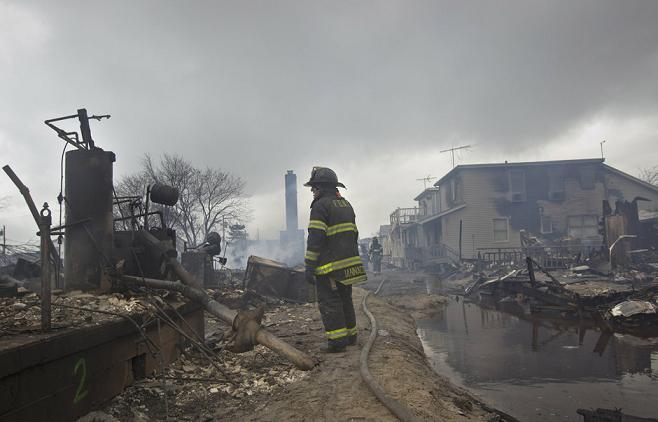
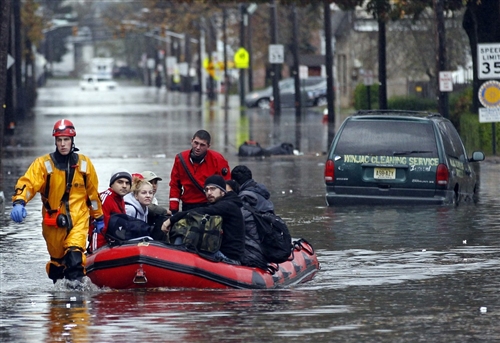
There are a plethora of websites, blogs, and news sites that have addressed the tragedy of the Sandy “superstorm” and the broken and struggling lives it has left behind in New York and New Jersey, so I didn’t intend on writing about it. I thought that I couldn’t say anything that hasn’t already been said and with far more eloquence and compassion by the many others who have already spoken.

But then I read “A Lesson From the Storm” on Shmarya Rosenberg’s blog FailedMessiah.com. I follow Rosenberg’s blog regularly but never comment and I am periodically dubious as to his bias against the Chabad community. Nevertheless, I couldn’t ignore the call for understanding and the challenge to extend myself beyond my usual limits.

One of the new facts of life in the aftermath of Hurricane Sandy is that tens of thousands of people are now reliant on some form of assistance, be that help from FEMA or the Red Cross or from smaller local organizations like churches and synagogues.

People who never before had to ask for or accept charity now are forced by circumstances to stand in lines at ad hoc soup kitchens and sleep at the homes of family, friends or even strangers or shelters while some form of temporary housing is found for them.

In some ways, they are now living the lives of America’s poorest citizens, never knowing if they will have a roof over their heads tomorrow or food to eat.

The very poor and homeless we are used to seeing are often mentally ill or drug addicted, and it is easy for us to blame their poverty on their own behavior or on being crazy.

But what we don’t see are the thousands of very poor Americans who have been priced out of the housing market and who sleep in shelters or on friends’ couches, go to work at low paying jobs with no benefits, and who rush back to those shelters before their early evening closing, often hungry, just so that they don’t get locked out.

We don’t see the very poor who became impoverished because of a severe illness, who had to choose between getting a very ill child to regular therapy appointments and their jobs.

We don’t see the families, ravaged by job loss, job erosion and by employers who cut or eliminate employee benefits, often by cutting employees’ hours to just below the full-time threshold, families whose regular dinners consist of ramen soup and whose breakfasts are often nonexistent.

As horrible as it is right now in some Jewish areas of New York City, just blocks away outside them it is often far worse, because these already poor communities lack the financial resources and fundraising expertise to supplement the assistance the government can give.

I’m politically and fiscally conservative and so I don’t believe that all social ills can be “solved” simply by creating a program and then throwing tax dollars at it. Also, having worked as a family counselor and social worker in both the San Francisco Bay Area and in Orange County (Calif.), I know about the struggles of the mentally ill and the limits of any social system in perfecting a “solution” for prejudice, homelessness, poverty, and the pull between the need for help and the illness that drives such a vulnerable population away from hope. In my time as a child abuse investigator for Child Protective Services in Southern Califonia, I met with many families on welfare (since they are disproportionately reported to “the system”), but in all that time, I found only one family who was using public funds as a temporary aid while they tried to remediate their circumstances. All of the others treated welfare like a multi-generational lifestyle and “worked” the system the way other people worked at jobs.

I say all of that to help you understand my perspective on the politics behind economic and social assistance programs and their relative effectiveness in changing “temporary” aid into a permanent institution. Often, those attitudes are in conflict with a greater imperative.

Then the King will say to those on his right, ‘Come, you who are blessed by my Father, inherit the kingdom prepared for you from the foundation of the world. For I was hungry and you gave me food, I was thirsty and you gave me drink, I was a stranger and you welcomed me, I was naked and you clothed me, I was sick and you visited me, I was in prison and you came to me.’ Then the righteous will answer him, saying, ‘Lord, when did we see you hungry and feed you, or thirsty and give you drink? And when did we see you a stranger and welcome you, or naked and clothe you? And when did we see you sick or in prison and visit you?’ And the King will answer them, ‘Truly, I say to you, as you did it to one of the least of these my brothers, you did it to me.’

Matthew 25:34-40 (ESV)

Decades ago, I read a statistic saying that most Americans are only one or two paychecks away from homelessness. Given the massive amount of debt most individuals carry, I don’t doubt the statement to be just as true today as it was back then. Probably more so.

I’m fortunate to have a job today. It has benefits including medical insurance. I live in a house with my family. I drive a car in good operating condition to and from work each day. I sleep in a comfortable bed and I don’t have to worry about not getting enough food, being too warm or too cold, or doing without all of the basic necessities and many of the comforts.

But I’ve also been unemployed. I’ve never been homeless, but I’ve been depressed, frustrated, angry, and desperate. I’ve worked low paying full-time jobs while going to school full-time just to support my family and try to rebuild my life. I’ve been hurt and sick with no medical benefits, so I just had to put up with being hurt and sick. There were months when I barely saw my family let alone talked to them. Sleep was all but an illusion. I was a middle-aged man burning the candle at both ends because I had to and there was no one to help me except me.

And God.

Which is why, in spite of the fact that I’m always dubious of a political solution to a human problem, I find that we must show compassion and render assistance to people who need assistance. If we are to err, let’s err on the side of generosity rather than stinginess. Consider the following, which is a comment made by a Katrina victim in response to Rosenberg’s blog post:

I can speak to this. One day I was comfortably (upper) middle class, living in a 2400 sq ft house filled with stuff, much of it of sentimental, as well as monetary, value: artwork, heirlooms, antiques, rare books, and so on. The next day I was homeless with only the clothes on my back and the contents of a small carry-on. Although I tried to, I got no help from the Federation or the Red Cross, and I did not get all that I was supposed to from FEMA. For months my job was wrangling on the phone with two insurance companies trying to get the reimbursements that my policies called for–with limited success. If I hadn’t worked in the insurance industry and didn’t know what my policies really provided, I would have gotten even less. Fortunately I had some assistance from my son (logistical, not financial) and some savings, or I do not know what would have become of me. With my own resources I was able to survive, have a roof over my head, food on the table and other necessities. In the general atmosphere of no help I do have to thank a group of Jewish volunteers from North Carolina who cleaned out the contents of my flooded house (a disgusting job) and another group of Southern Baptists who gutted my house–and the US tax code which allowed me to deduct portions of my $300,000 worth of uninsured losses. In addition I lost my whole circle of friends and acquaintances, health care providers, etc., etc. These social ties were extremely difficult, in some cases impossible, to reproduce in my new life.

In addition I have suffered psychological trauma that I don’t think will ever pass. A heavy rain (even here in the desert) makes me very nervous, and I am very distressed whenever there is a hurricane on the loose, although there are no hurricanes possible in Arizona. At an event marking the fifth anniversary of Katrina, I met a friend, neighbor, and colleague who also relocated to Arizona. She told me that she didn’t have enough clothes or furnishings because she was afraid that if she acquired anything, she would lose it. I told her that I have a ridiculously excessive wardrobe, because I am afraid of being left again with nothing but the clothes on my back. Eerily three weeks after this conversation, my friend’s new home was burned to the ground by an arsonist. One of my best friends was rescued by a Coast Guard helicopter just before a looter, carrying a gun, was about to enter her home. She continues to have post-traumatic emotional problems.

When we look at the news, we see unknown figures and hear nameless statistics. When we encounter the homeless and the mentally ill on our streets, we automatically think “bum,” or “panhandler,” “addict,” or “nutcase.” We don’t see the human faces. We don’t hear the human voices. But they’re there and they’re real. Like most of humanity, we tend not to care about a problem until it becomes our problem. It rarely has an emotional impact on us and even more rarely inspires us to offer assistance until it becomes personal; until it happens to us, or to a relative, or to a friend, or maybe because someone we care about also cares about the victims.

Five hundred years ago or so, a man named John Donne penned these words:

No man is an island,
Entire of itself.
Each is a piece of the continent,
A part of the main.
If a clod be washed away by the sea,
Europe is the less.
As well as if a promontory were.
As well as if a manor of thine own
Or of thine friend’s were.
Each man’s death diminishes me,
For I am involved in mankind.
Therefore, send not to know
For whom the bell tolls,
It tolls for thee.

No Man is an Island
MEDITATION XVII
Devotions upon Emergent Occasions
John Donne

If we are indeed “involved in mankind,” then whatever happens to another human being, happens to us. As Christ said, whenever we help the least of all human creatures, we have helped the author of our souls.

Most of all, and this is important, we don’t have to assume that once the initial crisis has passed that everyone is going to be fine and we can go about our usual lives. We don’t have to return to being unconcerned for those whose lives will take years to recover, if they ever will recover completely. Do you ever wonder about the victims of the earthquake in Haiti? Do you still recall those lives devastated by the earthquake and tsunami in Japan? Do you ever, ever wonder what all of those people are doing right now?

The victim of Katrina suffers years after the disaster. His heart, his feelings, his life is still being damaged by the storm. And yet, as painful as I can only imagine that might be, the greater injury is done by uncaring neighbors, by unfeeling humanity who asks “for whom the bell tolls,” and then not recognizing the name, shuts out the sound of a small shattered voice, softly crying in the background.

Only the hurricane has passed. The storm of anguish and need is still raging, its call, unanswered and unheeded.

EDIT: Unfortunately, the nor’easter that interrupted recovery efforts from Superstorm Sandy pulled away from New York and New Jersey Thursday morning, leaving a blanket of thick, wet snow, and triggering even more anxiety and despair among those people still in the first stages of trying to recover.

To help victims of Sandy, donations to the American Red Cross can be made by visiting Red Cross disaster relief, or you can text REDCROSS to 90999 to make a $10 donation.

68 Days: Encouragement

I really, really needed this post today. Sent it to my husband and daughters. The story about Rabbi Schneur Zalman was wonderful. Thank you for writing. You are indeed a benefit to the body.

Blessings!

-Linda in a comment on
one of my blog posts

For God has not destined us for wrath, but to obtain salvation through our Lord Jesus Christ, who died for us so that whether we are awake or asleep we might live with him. Therefore encourage one another and build one another up, just as you are doing.

1 Thessalonians 5:9-11 (ESV)

Sometimes when I’m physically tired and haven’t had enough sleep, I irrationally become discouraged and “bluesy.” I was feeling that way last night, especially after reading some of the more recent and “cranky” responses on Gene Shlomovich’s blog. (Gene’s blog is fine and most of the respondents are too, but not all of them, alas.) This goes along very well with my “Days” series and my countdown to renewal or (virtual) oblivion.

But I’ve been receiving some encouragement. A lot of it is “behind the scenes” but some of it comes in the form of blog comments, such as the one I quoted above. I suppose it’s sort of ironic that I should be encouraged by someone telling me that I’m encouraging them. But isn’t that the point? One of the things I find greatly discouraging is all this bickering on the web between (supposed) brothers in Christ Jesus over who is right and who is wrong, as if this is some sort of twisted form of the recent Presidential debates, and God is the moderator who will decide who wins and who loses.

Really, if God is going to judge us on our actions, I seriously don’t think it will have much to do with our “debates” on all our blogs:

“When the Son of Man comes in his glory, and all the angels with him, then he will sit on his glorious throne. Before him will be gathered all the nations, and he will separate people one from another as a shepherd separates the sheep from the goats. And he will place the sheep on his right, but the goats on the left. Then the King will say to those on his right, ‘Come, you who are blessed by my Father, inherit the kingdom prepared for you from the foundation of the world. For I was hungry and you gave me food, I was thirsty and you gave me drink, I was a stranger and you welcomed me, I was naked and you clothed me, I was sick and you visited me, I was in prison and you came to me.’ Then the righteous will answer him, saying, ‘Lord, when did we see you hungry and feed you, or thirsty and give you drink? And when did we see you a stranger and welcome you, or naked and clothe you? And when did we see you sick or in prison and visit you?’ And the King will answer them, ‘Truly, I say to you, as you did it to one of the least of these my brothers, you did it to me.’

“Then he will say to those on his left, ‘Depart from me, you cursed, into the eternal fire prepared for the devil and his angels. For I was hungry and you gave me no food, I was thirsty and you gave me no drink, I was a stranger and you did not welcome me, naked and you did not clothe me, sick and in prison and you did not visit me.’ Then they also will answer, saying, ‘Lord, when did we see you hungry or thirsty or a stranger or naked or sick or in prison, and did not minister to you?’ Then he will answer them, saying, ‘Truly, I say to you, as you did not do it to one of the least of these, you did not do it to me.’ And these will go away into eternal punishment, but the righteous into eternal life.”

Matthew 25:31-46 (ESV)

I know in the church, we believe that we are saved, not through what we do, but by our faith in Jesus Christ. However, we see that self-same Jesus Christ judging by what we do or fail to do for our fellow human being (and ultimately, for him). I suppose there’s no contradiction here, since if our faith and trust is true and we are actual and authentic disciples of our Master, then our actions following that faith and trust should be almost automatic. We should naturally be found feeding the hungry, visiting the sick, comforting the grieving, extending hospitality to the homeless and lost, and much, much more.

I don’t think we’ll win the race (2 Timothy 4:7) by “winning” a blogosphere argument (and let’s face it, nobody ever changed their minds on the web because of someone else’s devastating argument or piercing witticisms).

So, in writing about what I always write about, that is, whatever’s on my mind and heart at the time, I managed, through God’s grace, to encourage another believer traveling her own path of faith. Fingers pressing keys on a keyboard, and electrons zipping across the Internet managed to communicate the will and kindness of God from one human being to another. How could I not feel honored that my small “service” has been accepted as it was intended?

But I truly believe that those who really have “fought the good fight, finished the race, and kept the faith” probably don’t even know how to create a blog, let alone have the time to write on one. They’re too busy feeding the poor, clothing the naked, making sure the homeless have shelter, opening their homes to the needy, and doing a thousand other things that serve God and provide His generosity to the very least of His servants.

I’m glad, in the middle of my own meager efforts, that I was able to encourage one human being. Thank you Linda, and everyone else who has commented kindly to me, for continuing to encourage me as well. For that’s what our Master, and Paul, his Apostle to the nations, have commanded us to do.

A new commandment I give to you, that you love one another: just as I have loved you, you also are to love one another. By this all people will know that you are my disciples, if you have love for one another.”

John 13:34-35 (ESV)

Ki Tavo: Loving and Honoring God

BikkurimOur Sages teach: (Bava Basra 9b.) “A person who gives a coin to a poor person is granted six blessings; one who gratifies him is blessed elevenfold.” Now, gratifying does not necessarily mean giving more money. It means giving a positive feeling, showing the recipient that you care about him, and that he means something to you. When one so invests himself in another person, putting enough of himself into the stranger that the person feels appreciated, he has given something far greater than money. And so he receives a more ample blessing from G-d.

This leads to a deeper concept: Appreciation stems from involvement; the deeper the relationship between people, the more one appreciates the uniqueness of the other. When a person appreciates a colleague, he is motivated to do whatever he can for that other person.

These concepts apply, not only to our relationships with our fellow man, but also to our relationship with G-d.

-Rabbi Eli Touger
“Entering Deeper and Deeper”
Commentary on Torah Portion Ki Tavo
Chabad.org

“Teacher, which is the great commandment in the Law?” And he said to him, “You shall love the Lord your God with all your heart and with all your soul and with all your mind. This is the great and first commandment. And a second is like it: You shall love your neighbor as yourself. On these two commandments depend all the Law and the Prophets.”

Matthew 22:36-40 (ESV)

I’ve commented more than once that there is an inseparable relationship in the life of a believer between our relationship with other people and our relationship with God. We see here that not only does Jesus teach this lesson as the two most important commandments to learn and obey, but that both ancient and modern Judaism also cherishes this teaching. It resides at the heart of the Torah Portion for this week and should reside at the core who we are as people of God.

Rabbi Touger expands on his commentary and illuminates us further:

One of the major thrusts in Judaism is hakaras hatov, appreciation of the good which G-d constantly bestows upon us. And as with appreciation of our fellow man, the emphasis is on appreciating not only the material dimension of G-d’s kindness, but also the love and care which He showers on every person.

In this vein, we can understand the sequence of our Torah reading, Parshas Ki Savo. The reading begins by describing the mitzvah of bikkurim, (Deuteronomy 26:1-11.) the first fruits which the Jews would bring to the Beis HaMikdash, and shortly afterwards speaks of a covenant concerning the entire Torah. (Op. cit.: 16ff.)

What is the connection between these subjects?

The mitzvah of bikkurim was instituted to show that our gratitude for the good G-d has granted us, (Rashi, gloss to Deuteronomy 26:3.) and to display our appreciation to Him for “granting us all the blessings of this world.” (Sefer HaChinuch, mitzvah 606.) And this appreciation is not expressed merely by words of thanks, but through deed.

Rabbi Touger goes on to describe the deeds of ancient times, were to offer first fruits to God in deep appreciation for all that he bestowed upon the people of Israel, but that appreciation would be incomplete if we didn’t also offer gifts to our fellow human beings. I don’t mean just material goods, although these are important, but the gifts of compassion, mercy, kindness, and justice. From those gifts flow food for the hungry, comfort for the widow, provision for the bride, and spending time with the sick.

If we say we love God, how are we to express this today? Even a Jew cannot offer sacrifices without a Temple. As we approach the High Holidays, many Jews are giving abundantly to charity, offering impassioned prayers, and seeking to repair damaged relationships. In “offering” to God, we have no choice but to give to the people in need around us, for loving people is indeed loving God, just as He loves us.

If anyone truly intends to repent, either because of the approach of Rosh Hashanah and Yom Kippur or because of our imperative as Christians to continually repent before God through Jesus Christ, it would be foolish to imagine we didn’t have to repent and ask forgiveness of those we may have hurt with our careless words and actions.

But it goes beyond repentance and forgiveness and giving to charity. We have a perpetual responsibility to honor others as God honored Christ, for only in seeking the honor of our friend as if it were our own, can we truly become honorable before God and show the world that God deserves much great honor.

Let the honor of your friend be as dear to you as your own.

-Ethics of the Fathers 2:15

Pride, honor, and acclaim have an attraction all their own, but our Sages warn us that these may be destructive (Ethics of the Fathers 4:28). The frustration people may experience when they feel they did not receive due recognition may be extremely distressing.

People who crave honor may sometimes attempt to achieve it by deflating others, thinking that their own image is enhanced when others are disparaged. The truth, however, is just the reverse: when one deflates another, one’s own image is diminished.

Rabbi Nechunya’s students asked him, “By what merits did you achieve long life?” He answered, “I never accepted any honor that was at another person’s expense.” As an example the Talmud tells that when Rav Chana Bar Chanilai visited Rabbi Huna, he wanted to relieve the latter of carrying a shovel on his shoulder. Rabbi Huna objected, saying, “Since it is not your custom to be seen carrying a shovel, you should not do so now” (Megillah 28a). Rav Chana was willing to forgo his own honor for Rabbi Huna’s sake, but Rabbi Huna would not hear of it.

Why does such an attitude merit long life? A person who is not preoccupied with his image, and is not obsessed with receiving honor and public recognition, is free of the emotional stress and frustration that plague those whose cravings for acclaim are bottomless pits. These stresses can be psychologically and physically devastating, and dispensing with them can indeed prolong life.

Aptly did Rabbi Elazar HaKappar say that honor drives a man out of this world (Ethics of the Fathers 4:28). One who pursues honors in this world mortally harms his chance for happiness.

Today I shall…

concentrate on being respectful to others, and avoid pursuing recognition from others.

-Rabbi Abraham J. Twerski
“Growing Each Day, Elul 18”
Aish.com

Seek to show honor to God by honoring people in your midst, not just your friends or those who are like you, but the pauper, the outcast, the lonely, and misfit, for they are all Children of God, even as you are.

Good Shabbos.