Tag Archives: D Thomas Lancaster

Sermon Review of the Holy Epistle to the Hebrews: The Eternal Judgment

Therefore leaving the elementary teaching about the Christ, let us press on to maturity, not laying again a foundation of repentance from dead works and of faith toward God, of instruction about washings and laying on of hands, and the resurrection of the dead and eternal judgment.

Hebrews 6:1-2 (NASB)

As I mentioned in last week’s review of D. Thomas Lancaster’s sermon The Resurrection of the Dead from his Holy Epistle to the Hebrews lectures, the following message “The Eternal Judgment” wasn’t recorded, thus I cannot listen to it and write my review.

However, that material was included in Lancaster’s book Elementary Principles: Six Foundational Principles of Ancient Jewish Christianity, so I’ll review the chapter (Chapter 10) instead.

But some days later Felix arrived with Drusilla, his wife who was a Jewess, and sent for Paul and heard him speak about faith in Christ Jesus. But as he was discussing righteousness, self-control and the judgment to come, Felix became frightened and said, “Go away for the present, and when I find time I will summon you.”

Acts 24:24-25 (NASB)

Lancaster introduces his chapter by describing the marriage of Felix, the Roman governor over Judea, to the Jewish princess Drusilla, youngest daughter of King Herod Agrippa the first. Supposedly, Felix hired a sorcerer to use occult means to get Drusilla to abandon her husband and marry him. Felix wasn’t a very nice man.

In today’s world, intermarriage between a Jew and a Gentile, at least in Orthodox Judaism, is highly discouraged. How much more embarrassing was it for a Jewish princess to marry, not just any Roman, but the occupying governor over Judea?

But then, although it was (according to Lancaster) Drusilla’s idea to have a private discussion with Paul, it was Felix’s response that was the point of this story. And while resurrection of the dead might seem like a great deal, what about “the judgment to come?”

It is appointed for man to die once, and after that comes judgment.

Hebrews 9:27

Associating concepts like “righteousness” and “resurrection” with “self-control” and “judgment” would probably not be comfortable to hear, assuming Felix took Paul seriously, since Felix could hardly be considered a pious individual, even by Roman standards. In fact, if we really gave it some thought and realized that the resurrection and final judgment are in our future as well, how comfortable would we feel about who we are and what we’ve done (or are doing)?

Throw out the worthless slave into the outer darkness; in that place there will be weeping and gnashing of teeth. But when the Son of Man comes in His glory, and all the angels with Him, then He will sit on His glorious throne. All the nations will be gathered before Him; and He will separate them from one another, as the shepherd separates the sheep from the goats; and He will put the sheep on His right, and the goats on the left.

Matthew 25:30-33 (NASB)

Judge NotI won’t quote all of the scriptures Lancaster lists to illustrate Jesus and the final judgment, but he does make a convincing case that if God does not exact justice for human wrongdoing in this life, He most certainly will in the next.

In Messianic Judaism, we rehearse for the final judgment every year in the high holiday of Rosh HaShanah and Yom Kippur (Festival of Trumpets and Day of Atonement). Judaism treats high holidays as an annual dress rehearsal for the final eternal judgment. In anticipation of the holidays, we repent, confess sins, mend relationships, apologize, and try to make peace with both men and God.

-Lancaster, pg 127

This may sound somewhat familiar since I associated the topic of forgiveness with the high holidays in a recent blog post reviewing a chapter in Brad H. Young’s book The Parables: Jewish Tradition and Christian Interpretation. In my review Young’s book, I said that most Christians wouldn’t (but should) automatically associate making amends with another person with how we will be forgiven (or not) by God at the final judgment.

Now Lancaster seems to be saying that the period between Rosh Hashanah and Yom Kippur on the Jewish religious calendar has applications for Christians as well, since it is in the apostolic scriptures where we see a final judgment staring at us square in the face.

Except that since we’re “saved by the blood of Jesus,” we (that is, Christians) aren’t particularly worried about being judged. Jesus paid the price for our sins so we’ve got our “fire insurance” covered. No need to “rehearse” anything since we’ve already won, God is on our side, and everything is hunky dory.

Boy, that sounds arrogant.

While Rosh Hashanah, when the books are opened before the Heavenly court, and Yom Kippur, when the final verdicts are issued and the books are closed again, are not the actual final judgment, they prefigure this awesome and august event, and perhaps we shouldn’t play fast and loose with a living and infinite God. God can indeed issue decrees in the present age and in our lives in response to your actions and mine, but there will come that final day, even if we push it off into the back of our minds, when we will all be expected to stand in judgment.

As I looked, thrones were placed, and the Ancient of Days took his seat; his clothing was white as snow, and the hair on his head like pure wool; his throne was fiery flames; its wheels were burning fire. A stream of fire issued and came out from before him; a thousand thousands served him, and ten thousand times ten thousand stood before him; the court sat in judgment, and the books were opened.

Daniel 7:9-10

yom kippurLancaster goes on to describe “one like a son of man” stepping forward in this vision of the final judgment, to deliver the sentencing. He quoted from the apocryphal book Enoch (1 Enoch 69:27-29) and the following to illustrate the judgment seat of Messiah:

For we must all appear before the judgment seat of Christ, so that each one may receive what is due for what he has done in the body, whether good or evil. Therefore, knowing the fear of the Lord, we persuade others.

2 Corinthians 5:10-11

In these words, Paul expressed his motive for evangelism…Paul knew the fear of the LORD. To fear God is to believe that he exists, rewards, and punishes. Paul knew that eventually God will judge the wicked and reward the righteous. He taught that we must all stand before Messiah in the final judgment.

-Lancaster, pg 131

All of us? Won’t Christians just be there to pick up our rewards? We won’t have to give account for everything we’ve done wrong in our lives after becoming believers, will we?

What if we do?

We think that final judgment just means going to Heaven or Hell, but what if it also means we have to have our human lives stripped naked before us and relive everything we’ve done, both good and bad?

Yuck. Kind of makes you want to be more careful about all of those casual thoughts, words, and gestures you’re sure God is going to forgive because you’ve been saved and go to church every Sunday.

But it gets worse.

Generally speaking, the doctrine of the eternal judgment has fallen into disfavor. Perhaps this shift in emphasis from everlasting punishment to a blissful afterlife occurred as a natural swing of the theological pendulum. The medieval and Reformation-era church had an unhealthy fascination with the torments of hell. Evangelicals later demonstrated the same fixation, predicating their appeal for the gospel on the basis of avoiding damnation. The church framed Christianity primarily as an avenue of escape from everlasting fiery tortures and the pitchfork of Satan. We substituted the foundational doctrine of eternal judgment for the doctrine of eternal damnation.

-ibid, pg 132

justiceIt seems to be a mistake to trust in any extreme, either a fascination with damnation or an obsession with bliss. The former focuses on God’s judgment as if it were a terrible trap and the later on His mercy as if it is all-encompassing…no matter what we’ve actually done.

The eternal judgment is so basic and fundamental to our faith that the writer of the book of Hebrews considers it to be the milk. It is pretty simple. We believe that every human life has eternal significance — so much so that the deeds committed in this body will have ramifications that completely transcend time. That makes every moment of this life precious. It makes every opportunity to perform a good work (mitzvah) precious. It makes every sin utterly abhorrent. Every righteous deed merits eternal reward, and every sin earns eternal punishment. Ironically, the doctrine of the eternal judgment makes life in this temporary world all the more significant.

-ibid, pg 133

We can only imagine that what terrified (according to Lancaster) Felix so much was being resurrected into a world where an absolutely just God would judge him for all the acts of his life…and condemn him. Not a pleasant thought to be sure. We all want our pleasures and want to skip out (as much as we can get away with) on our responsibilities. Anyone who struggles with the “battle of the bulge” and against all reason and logic still can’t give up their Big Macs and Whoppers knows that self-disciple isn’t easy…even in the face of dire consequences.

What Did I Learn?

Are our names already written in the Book of Life or the Book of Death? Did God makes these decisions, who was to be commended and who was to be damned, before He ever manufactured our universe?

From God’s point of view, His timeless experience, things like “before,” “during,” and “after” most likely have no meaning. The creation of Adam from dust and opening the Book of Life at the final judgment exist in the same micro-second to Him. Who is and isn’t in the Book has been there for all time and won’t be written until the pages are opened at the very end of time. I hope you like paradox, because that’s all I have to offer as far as the mystic visions of final judgment are concerned.

DespairBut one thing seems clear. Paul taught that there is a final judgment. So did Jesus. And all humanity stands within it for life or for death.

It isn’t just that one “decision for Christ” that you made once upon a time by answering an altar call or raising your hand at a camp meeting. It’s everything you’ve done since then.

No, you can’t buy your way into Heaven but you can throw it all away. Even the best of the best of us is utterly corrupt when compared to a completely and absolutely Holy God. Who are we to compare?

Rabbi Eleazer taught his disciples to repent every day (See b. Shabb. 153a). The later rabbinic teachings regarding the ten days of awe and the day of Atonement mention three categories of people,the completely righteous, the completely wicked, and the “in-betweens” (See b. Rosh Hash. 16b). The rabbis obviously believed that most people fall into the “in-between” category and need to repent. The house of Shammai taught, “There will be three groups at the Day of Judgment — one thoroughly righteous, and one thoroughly wicked, and of the intermediate” (See b. ibid 16b-17a). Therefore Bailey may be correct when he notes, “Christ’s subtle humor shows through in this verse. The ‘righteous’ who ‘need no repentance’ do not exist” (Kenneth E. Bailey, The Cross and the Prodigal). Most people need to repent and maintain a living relationship with God in their cultivation of personal spirituality.

-Brad H. Young
“Chapter 10: The Search: The Parables of the Lost Sheep and Lost Coin,” pg 195
The Parables: Jewish Tradition and Christian Interpretation

If we believe Christ died for us then we should live like it. We should all live like people who’ve been given a second chance, living on borrowed time or rather time purchased for us when we didn’t deserve it.

If you think you are saved, don’t expect that you can sit on your laurels and gather your rewards before judgment. You, I, and everyone else will be judged on what we have done, what we are doing, and what we haven’t even thought of doing yet.

Since all these things are to be destroyed in this way, what sort of people ought you to be in holy conduct and godliness, looking for and hastening the coming of the day of God, because of which the heavens will be destroyed by burning, and the elements will melt with intense heat! But according to His promise we are looking for new heavens and a new earth, in which righteousness dwells. Therefore, beloved, since you look for these things, be diligent to be found by Him in peace, spotless and blameless, and regard the patience of our Lord as salvation…

2 Peter 3:11-15 (NASB)

Yom Kippur prayersMaybe observing the high holidays wouldn’t be such a bad idea for Christians. Many of us are so unused to facing the idea of judgment let alone responding to it with fasting, with prayer, with repentance, with fear and trembling, with begging for the forgiveness of those we have harmed, of begging God for mercy, though we are all like grass. At least if you’re an observant Jew, you know you are accountable and that God expects you to take that seriously with your intention and your behavior.

If you see something that is broken, fix it.

If you cannot fix all of it, fix some of it.

But do not say there is nothing you can do. Because, if that were true, why would this broken thing have come into your world?

-Rabbi Tzvi Freeman
“If It’s Broken”
Based on letters and talks of the Rebbe, Rabbi M. M. Schneerson
Chabad.org

Addendum: I found out (thanks, Alfredo) after I wrote this review that Lancaster re-recorded the content for this topic on audio available on the web: The Final Judgment.

Sermon Review of the Holy Epistle to the Hebrews: The Resurrection of the Dead

Therefore leaving the elementary teaching about the Christ, let us press on to maturity, not laying again a foundation of repentance from dead works and of faith toward God, of instruction about washings and laying on of hands, the resurrection of the dead, and eternal judgment. And this we will do if God permits.

Hebrews 6:1-3 (ESV)

According to Hebrews 6:1-2, the resurrection of the dead is one of the six basic doctrines of Messianic faith. In this teaching, D. Thomas Lancaster takes a look at the apostolic hope in the resurrection, distinguishing between the resurrection of the righteous and the general resurrection.

This is teaching number 25 in the Hebrews series and number 10 in special series on the elementary teachings of the Messiah. Unfortunately, due to technical problems, teaching 26 and the conclusion to the special series on the elementary teachings, titled “The Eternal Judgment,” was not recorded.

-D. Thomas Lancaster
Sermon Twenty-five: The Resurrection of the Dead
Originally presented on August 8, 2013
from the Holy Epistle to the Hebrews sermon series

This sermon is closely tied to the previous one which I reviewed last week and continues to discuss a literal, physical resurrection of the dead.

It all starts with that empty tomb of Yeshua’s (Jesus). Why was it empty? Had Jesus risen into Heaven? No. He was physically, bodily resurrected. The same body that died, rose. He even had the same wounds.

Lancaster talked about resuscitation vs. resurrection. We have modern examples of resuscitation when a person is declared dead but then, through modern technology, resuscitated and is again alive, but that person was dead temporarily and the resuscitation is temporary. Eventually, that person will die again.

We see examples of resuscitation in the Bible such as Jesus raising Lazarus (see John 11:38-46). Jesus resuscitated Lazarus but didn’t resurrect him, otherwise Lazarus would have been immortal. At some point, he died again and, like the rest who are dead in Messiah, awaits the resurrection.

…knowing that Christ, having been raised from the dead, is never to die again; death no longer is master over Him.

Romans 6:9

That’s what it means to be resurrected. That’s why Jesus is the first fruits of the dead (1 Corinthians 15:20). He was resurrected to prove a point. The point is that all of God’s promises to Israel are real and literal. When God speaks of the resurrection of Israel, He’s being literal and Jesus is the proof. If we believe God proved He will fulfill the resurrection, then we can believe in all of His promises.

In the day of Jesus, the Pharisees believed in a literal resurrection but the Sadducees did not. To settle the point in Judaism once and for all (ideally), Jesus died and was resurrected. For all those who were witnesses and all those who believe through faith in the literal resurrection, that is our hope that death isn’t the end and that a just God will punish evil and reward good.

Rambam (Moses Maimonides) established believing in the resurrection as one of the thirteen principles of faith. In order to be a religious Jew, you have to believe in the resurrection, according to Maimonides.

According to the writer of the Epistle to the Hebrews, belief in the resurrection is one of the six principles of the Messianic faith.

Lancaster said that a belief in a literal, earthly resurrection has largely been rejected by the mainstream Protestant church. That’s kind of a surprise to me, but I guess if it’s common for Christians to believe they go to Heaven (and stay in Heaven forever) when they die as some sort of spirits, then a physical resurrection and a life with Jesus on Earth kind of kills the deal (no pun intended).

Lancaster goes so far as to say a Christianity that doesn’t believe in a literal resurrection is no longer Christianity, it no longer follows the Biblical faith of the Apostles.

But if there is no resurrection of the dead, not even Christ has been raised; and if Christ has not been raised, then our preaching is vain, your faith also is vain.

1 Corinthians 15:13-14

If we don’t believe Jesus was literally raised from the dead in the same body he originally had, and we don’t believe that we too will be raised in the same manner as Jesus, then, according to the Apostle Paul, he, and all of the apostles and disciples who had been preaching Jesus, were preaching in vain. Not only that, but our Christian faith is also in vain if we don’t believe in the resurrection.

aliveThat’s pretty strong stuff. If you believe you’re going to Heaven as a “floaty ghost” (Lancaster’s words), then your body is dead and stays dead. You have some sort of spiritual existence in Heaven but you will never have a physical existence again. If this is what you believe, then you deny the resurrection, making Paul’s preaching and your Christian faith vain and worthless.

That’s pretty horrible. There goes your hope. Poof. Up in a (spiritual) puff of smoke.

Jesus is the definitive proof of a resurrection, if you’re willing to believe. If you believe, you have hope. If not…poof.

Not only will there be a resurrection, there will be two of them. The first is what is called the resurrection of the righteous which includes the exiles from Israel (i.e. the Jewish people) and all those in Messiah (that is, the Gentiles who are in the faith). We will be gathered to the Messiah and taken to the Kingdom. That happens at the beginning of the Messianic age.

The second resurrection, also called the general resurrection, happens at the end of the Messianic age and at that time everyone will be resurrected from the dead…to be judged.

Jesus even taught about it.

Truly, truly, I say to you, an hour is coming and now is, when the dead will hear the voice of the Son of God, and those who hear will live. For just as the Father has life in Himself, even so He gave to the Son also to have life in Himself; and He gave Him authority to execute judgment, because He is the Son of Man. Do not marvel at this; for an hour is coming, in which all who are in the tombs will hear His voice, and will come forth; those who did the good deeds to a resurrection of life, those who committed the evil deeds to a resurrection of judgment.

“I can do nothing on My own initiative. As I hear, I judge; and My judgment is just, because I do not seek My own will, but the will of Him who sent Me.

“If I alone testify about Myself, My testimony is not true. There is another who testifies of Me, and I know that the testimony which He gives about Me is true.

John 5:25-32

Those of us who hear the voice of the Master will be among the first resurrection because we are in him. However, not all of humanity is or will be in Messiah and those who are not in him won’t hear his voice. However, even those who are not in Messiah will hear him at the second resurrection and they will be judged by the will of God.

But we do not want you to be uninformed, brethren, about those who are asleep, so that you will not grieve as do the rest who have no hope. For if we believe that Jesus died and rose again, even so God will bring with Him those who have fallen asleep in Jesus. For this we say to you by the word of the Lord, that we who are alive and remain until the coming of the Lord, will not precede those who have fallen asleep. For the Lord Himself will descend from heaven with a shout, with the voice of the archangel and with the trumpet of God, and the dead in Christ will rise first. Then we who are alive and remain will be caught up together with them in the clouds to meet the Lord in the air, and so we shall always be with the Lord. Therefore comfort one another with these words.

1 Thessalonians 4:13-18

RestorationA word about going up into the air. We don’t stay there, according to Lancaster. This isn’t the ride to Heaven most Christians believe in. We won’t be raptured to Heaven but rather to where the presence of the King of Israel will be…to Jerusalem.

That may be disappointing or even startling to some of you reading my words. Actually, after spending so much time hearing about the rapture, it’s still a little jarring to me. What? No Heaven with Jesus? Christians I know believe that “the Church” will be raptured to Heaven for the remainder of the tribulation, and then return to Earth with Jesus to conquer the enemies of the Church and take over the world.

But that’s not what Jesus taught or Paul wrote about.

… knowing that He who raised the Lord Jesus will raise us also with Jesus and will present us with you.

2 Corinthians 4:14

The King will be in his Kingdom. His presence will be in Israel.

But how will we be raised. What will it be like?

But someone will say, “How are the dead raised? And with what kind of body do they come?” You fool! That which you sow does not come to life unless it dies; and that which you sow, you do not sow the body which is to be, but a bare grain, perhaps of wheat or of something else. But God gives it a body just as He wished, and to each of the seeds a body of its own. All flesh is not the same flesh, but there is one flesh of men, and another flesh of beasts, and another flesh of birds, and another of fish. There are also heavenly bodies and earthly bodies, but the glory of the heavenly is one, and the glory of the earthly is another. There is one glory of the sun, and another glory of the moon, and another glory of the stars; for star differs from star in glory.

1 Corinthians 15:35-41

Orthodox Jews don’t cremate their dead, they always bury them. In fact, how one prepares the dead for burial and the rituals around treating the body of the dead all are built on the belief in the resurrection. A dead body is treated with great respect because it is a body that will come alive again.

jewish burialBut what about people who were cremated or suffered some fatal accident which destroyed the body? According to Paul, the body doesn’t absolutely have to be whole and intact. By using the “seed” metaphor, he suggests that all that’s required is some small, perhaps very tiny fragment of the original body. God will not be stopped in accomplishing the promise of the resurrection.

So also is the resurrection of the dead. It is sown a perishable body, it is raised an imperishable body; it is sown in dishonor, it is raised in glory; it is sown in weakness, it is raised in power; it is sown a natural body, it is raised a spiritual body. If there is a natural body, there is also a spiritual body. So also it is written, “The first man, Adam, became a living soul.” The last Adam became a life-giving spirit. However, the spiritual is not first, but the natural; then the spiritual. The first man is from the earth, [n]earthy; the second man is from heaven. As is the earthy, so also are those who are earthy; and as is the heavenly, so also are those who are heavenly. Just as we have borne the image of the earthly, we will also bear the image of the heavenly.

1 Corinthians 15:42-49

According to Lancaster’s understanding of scripture, we will be resurrected in our original bodies, warts, wounds, disabilities and all, God will heal our infirmities, and through a process we don’t understand, a process Jesus went through after his resurrection, our bodies will be transformed into immortal and indestructible bodies. In fact, all of Creation will be transformed, resurrected, so to speak, and death will be no more.

So although we mourn our loved ones who have died, it is not as if they died without hope, for in Messiah, we shall all be raised again.

My God, the soul that you placed in me is pure. You created it, you formed it, you breathed it into me, and you guard it within me, and you will ultimately lift it away from me, only to return it to me in the future to come. For the entire time that my soul is within me, I give thanks to you, O LORD, my God and God of my fathers, Great One over all works, Master of all souls. Blessed are you, O LORD, who returns souls to dead bodies.

-Siddur

What Did I Learn?

As I said last week, the idea of a physical, bodily, earthly resurrection is not new to me, so no curve balls there. I did have a question of whether or not Lancaster believes that all Jewish people will be in the first resurrection or only those in Messiah, but from what I could tell on the recording, that was left somewhat ambiguous.

I’ve mentioned before in these reviews and in my reviews of Lancaster’s lecture series What About the New Covenant that it seems as if God intends to forgive the sins of all of Israel, so one way to interpret that is all Jewish people will be forgiven, redeemed, and be made righteous, and thus they will all be part of the first resurrection.

WaitingThat has problems when compared with much of Paul’s commentary about being resurrected in Messiah so I’ll reserve judgment on that issue. I don’t want to create the impression of a dual path to salvation.

Lancaster did say something interesting about how we should treat our bodies in the present age. He said we should treat them with respect and honor, doing only healthy things to our bodies. Of course, we will age or even possibly die in accidents that will be very damaging to our bodies, but the idea is that we don’t get new ones. We get the same old ones, even though they will be transformed, healed, and made immortal and indestructible.

God made our bodies as well as our spirits and even though at death, they are temporarily separated, one day they will be brought together again.

And He who sits on the throne said, “Behold, I am making all things new.”

Revelation 21:5

When you go to sleep in the dust, you will also rise, just as you are, only better. You will be gathered with your King in the air and travel with him in triumph and glory to Jerusalem, City of David, as he is enthroned bodily in Israel as her King, as our King.

That last part, as I mentioned above, may throw some of you. I’ve heard this before. I’ll probably get some angry comments about it. But think about it. Would it be so bad to stay here with Jesus on Earth? Do we really have to go to Heaven first?

Oh, don’t worry about the next lecture, “The Eternal Judgment” not having been recorded. It’s covered in Lancaster’s book Elementary Principles, so I’ll just review that chapter for next week.

Sermon Review of the Holy Epistle to the Hebrews: Our Hope is not in Heaven

Therefore leaving the elementary teaching about the Christ, let us press on to maturity, not laying again a foundation of repentance from dead works and of faith toward God, of instruction about washings and laying on of hands, the resurrection of the dead, and eternal judgment. And this we will do if God permits.

Hebrews 6:1-3 (ESV)

The Evangelical gospel asks, “Are you certain you are going to go to heaven when you die?” The Christian objective seems to be to secure a place in heaven, but the Bible says very little about heaven. Find out why most passages about heaven are actually not about heaven at all in this installment on the basic teachings of the Messiah from Hebrews 6.

-D. Thomas Lancaster
Sermon Twenty-four: Our Hope is not in Heaven
Originally presented on July 27, 2013
from the Holy Epistle to the Hebrews sermon series

Lancaster starts out his sermon by telling a joke about Heaven. I won’t retell it here. You can listen to it in the recording (link above) or read it at the beginning of Chapter 8: “Our Hope is not in Heaven,” pp 97-8 in his book Elementary Principles: Six Foundational Principles of Ancient Jewish Christianity. The thrust of today’s sermon is based on one phrase from Hebrews 6:2, “the resurrection from the dead.”

He’s talked before about what I call the truncated gospel message of Christianity which basically says, “Believe in Jesus so you can go to Heaven when you die.” That’s the whole point of being a Christian for many believers. The other part of it is to convince as many people as possible to believe in Jesus so they can go to Heaven when they die.

Except, you don’t go to Heaven when you die and you don’t stay in Heaven forever as a disembodied spirit after you die.

According to Lancaster, and I agree with him, there’s a lot of confusion about Heaven in Christianity, especially since the Bible doesn’t spend a lot of time talking about Heaven. If you are a traditional Evangelical Christian, that statement might seem confusing. After all, didn’t Jesus and the apostles talk about Heaven all the time?

Repent, for the kingdom of heaven is at hand.

Matthew 3:2

But seek first His kingdom and His righteousness…

Matthew 6:33

And as you go, preach, saying, `The kingdom of heaven is at hand.’

Matthew 10:7

Also see Philippians 3:20, Colossians 1:5, and 2 Timothy 4:18 and many other verses in the apostolic scriptures that mention Heaven.

keys to the kingdomExcept the Heaven mentioned in all or most of these verses isn’t the Heaven in the sky where God lives, it’s what’s called a circumlocution, a way of talking about God without saying “God.” In other words, when Jesus said “Kingdom of Heaven” as recorded in Matthew’s gospel, he was really saying “Kingdom of God,” and that Kingdom will finally be completely established here on earth when Jesus comes back as King and Lord.

The First Fruits of Zion (FFOZ) television series A Promise of What is to Come contains a number of episodes that discuss what the Kingdom of Heaven is, where it is, how it works, why Peter has the keys of the Kingdom, and how treasure can be stored there. See episodes such as The Kingdom is Now, Seek First the Kingdom, Thy Kingdom Come, Keys to the Kingdom, Foretaste of the Kingdom, Treasure in Heaven, and Restoring the Kingdom for details. Each episode is about thirty minutes long and the content opens up and expands in great detail about the concepts Lancaster covers in his sermon. In fact, Lancaster seems to be summarizing all of that material in his thirty-four minute lecture today.

Just a couple of things. Philippians 3:20 talks about Christians having citizenship in Heaven. Does that mean when we die, we go live in Heaven as citizens, like how we have American citizenship (or whatever national citizenship you may have)? No. We are resurrected physically on earth and live here in bodies in the Messianic Kingdom. Our citizenship may be in Heaven, but we’ll be living here. After all, Paul was born a Roman citizen but he wasn’t born in Rome. He never even lived there, at least not until near the end of his life.

According to Lancaster, there is a paradise, a Gan Eden (Garden of Eden) where the spirits of the righteous go when the person dies, but that’s temporary. The spirit is reunited with the body at the resurrection.

Remember the empty tomb and Jesus?

While they were telling these things, He Himself stood in their midst and said to them, “Peace be to you.” But they were startled and frightened and thought that they were seeing a spirit. And He said to them, “Why are you troubled, and why do doubts arise in your hearts? See My hands and My feet, that it is I Myself; touch Me and see, for a spirit does not have flesh and bones as you see that I have.” And when He had said this, He showed them His hands and His feet. While they still could not believe it because of their joy and amazement, He said to them, “Have you anything here to eat?” They gave Him a piece of a broiled fish; and He took it and ate it before them.

Luke 24:36-43

This is the resurrection we can expect, because Jesus was the first fruits of the dead (1 Corinthians 15:20). We will also be resurrected in our original bodies (remember, Jesus still had the wounds, he didn’t get a new body) but we will not die again. This is what we can expect after we die and are resurrected, not going to Heaven like Casper the Friendly Ghost to float around on clouds for eternity.

What Did I Learn?

Since I’ve watched all of the FFOZ television episodes I mentioned above, I already had a pretty good idea what Lancaster was going to teach about. Lancaster based a number of things he taught on the writings of Christian theologian N.T. Wright, as well as his own teaching What About Heaven and Hell.

wind-sky-spirit-ruachLancaster also said that the reason Christians are so confused about Heaven and Hell is because Christianity separated itself from Judaism, and thus from the first century CE Jewish view of the meaning of the resurrection. He even went so far as to compare typical Christian understanding about what happens when we die to how the gnostics saw the dichotomy between the earthly corruptness and heavenly purity. Generally, Judaism doesn’t have “issues” with a flesh and blood physical existence (unless you get into Jewish mysticism, but that’s another story).

I see these comments as a continuation of the points Lancaster has made in other sermons in this series. He seems to be advocating a return to Judaism (specifically Messianic Judaism) for believers in Jesus, with an eye on first century C.E. Judaism. While the idea has merit, it’s important to remember that as the various Judaisms evolved over the last two-thousand years, they likely also do not contain perfect interpretations of the scriptures and probably possess a few misunderstandings of their own. We can all do the best we can to understand what God is saying to us in the Bible, but when Messiah returns, I suspect he’ll have to correct us in a few of the details of our doctrine and theology.

Is our hope in Heaven? It depends. If we put our hope, according to Lancaster, in being a “floaty ghost” in Heaven when we die, then no. If, on the other hand, we put our hope in God who is in Heaven (yes, Heaven is real), then yes…our hope is in Heaven, our hope is in God.

This too is one of the elementary teachings of the faith, as stated by the writer of the epistle to the Hebrews, one of those “milk” things.

I’ve become quite accustomed to the belief in a physical resurrection and an existence on earth as part of the literal Kingdom of God with King Messiah reigning on the throne of David in Jerusalem, so I didn’t experience any surprises or curve balls in today’s sermon. If, on the other hand, you are an Evangelical Christian who has been taught you’re going to become a “floaty soul” on a cloud playing a harp for all eternity when you die (actually the harps seem unescapable in Heaven based on Revelation 5:8, 14:2, and 15:2), then you might want to listen to Lancaster’s sermon or, better yet, spend a few hours viewing the selection of TV episodes I mentioned above (just click the links and view them online).

It could be an eye opener.

Sermon Review of the Holy Epistle to the Hebrews: The Initiation

Therefore leaving the elementary teaching about the Christ, let us press on to maturity, not laying again a foundation of repentance from dead works and of faith toward God, of instruction about washings and laying on of hands, the resurrection of the dead, and eternal judgment. And this we will do if God permits.

Hebrews 6:1-3 (ESV)

On the subject of Baptism and Instructions regarding Immersions in Hebrews 6, we look at the evidence from early Christian documents. Find out how the second-century Christians welcomed new converts into the body of Messiah. This teaching contains quotations from Justin Martyr’s First Apology, from the Didache, and from the Apostolic Constitutions. The quotations are available in the PDF document below titled “Initiation Texts.”

-D. Thomas Lancaster
Sermon Twenty-three: Laying on of Hands
Originally presented on July 7, 2013
from the Holy Epistle to the Hebrews sermon series

This is one of the shorter sermons in the series (barely thirty minutes long) as well as a short chapter in Lancaster’s book Elementary Principles. In this sermon, Lancaster proposes to show how the basic foundational principles he has covered in previous sermons, particularly as mapped to the Didache, were carried forward in time to the second and even the third century CE, using classic Christian documents.

To review these first four principles covered so far:

  1. Repentance from dead works (sin)
  2. Faith toward God (through Messiah)
  3. Instruction about washings (elemental instructions of the faith prior to immersion in the name of Messiah)
  4. Laying on of hands (to confer discipleship and possibly the Holy Spirit)

Lancaster outlines the challenge in what he’s trying to do, since the writer of the Epistle to the Hebrews felt the six principles were so basic that he didn’t bother to write them down. Neither did any of the other New Testament writers. Lancaster states that he believes Paul taught these principles orally, and that by the time the Hebrews writer was composing his letter, it was just assumed everyone knew all about this “milk”.

But we know nothing about them today since they weren’t written down in much detail, if at all.

Lancaster turns to three Christian documents to prove his point that these elemental principles were indeed carried forward in time with Christianity:

  1. Justin Martyr’s “First Apology”
  2. The Didache
  3. The Apostolic Constitutions

first apologyI’ve posted the link above to the relevant document, but here it is again. Click the link to open the PDF and you’ll find the list of documents and specific quotes Lancaster uses.

He uses these quotes to map back to the specific phrases in Hebrews 6:1-3 that list the six elementary principles.

Justin Martyr was writing around 150 CE and Lancaster paints a brief portrait of Martyr’s environment. The Bar Kochba rebellion ended in failure. Jerusalem has been destroyed, Herod’s Temple razed, and a pagan temple built on its ruins. The Jewish people have been exiled and in the midst of all that, the new religion Gentile Christianity and the original Jewish Messianic movement of “the Way” have just gone through a nasty divorce.

Martyr wrote his document, which we call “The First Apology” to the Roman Emperor as an appeal that the Empire stop persecuting Christians.

It’s Lancaster’s contention that these later Christian documents, especially the Didache, were based on much earlier writings and oral traditions going back to the second and even the first century, and perhaps even reflecting the teachings of the apostles.

Lancaster’s handout is organized as follows:

  1. Instructions before Immersion (Apostolic Constitutions 7.39.2-4)
  2. Preparing for Immersion (Justin Martyr, First Apology 61)
  3. Fasting Before Immersion (Didache 7:1-4)
  4. The Immersion (Justin Martyr, First Apology 61, Didache 7:1-3)
  5. The Investiture (Laying on of Hands) (Justin Martyr, First Apology 65)
  6. Prayer for the New Disciple (Apostolic Constitutions 8.6.5-8)
  7. Breaking the Fast (Justin Martyr, First Apology 65)

I won’t go into all of the details. You can read the PDF and listen to Lancaster’s sermon (only half an hour) for the details, but there are some questions.

What Did I Learn?

Lancaster has a talent for pulling together information and documents from (sometimes) widely disparate sources and then attempts to make them work together. To the degree that he’s comparing ancient Christian documents, I can see where he’s going, but Lancaster admits that these are documents originating in different time periods, so care should be taken in making very close comparisons.

messianic judaism for the nationsAlso, he states that the “nasty divorce” between Jesus-believing Jews and Gentile Christians had already occurred, and except for arguably the Didache, the other two documents Lancaster is using are from the Gentile side of the equation. Why is that important? Because Lancaster’s purpose in this investigation is to uncover the practices of ancient Messianic Judaism so we can practice this way, too.

But a lot of what he introduces isn’t from, strictly speaking, Jewish sources. These are interpretations made by Christian Gentiles who, after the aforementioned “nasty divorce,” have no reason to spread any sort of love for their Jesus-believing Jewish counterparts.

In fact, quoting Paul Meier from his recent Messiah Journal article which I reviewed:

Marcion’s contemporary Justin Martyr was one of the first to articulate a position of replacement theology, also known as displacement, transfer, or supersessionist theology. Avner Boskey succinctly described this theological stream as “an expression of Gentile triumphalism in the early church.”

-Meier, pg 81

I’m not saying Lancaster is wrong, and he’s certainly more studied and better educated in these matters than I am, but I don’t want to get too excited about drawing firm conclusions from a little bit of documentation and a lot of supposition.

That said, I don’t know if it would hurt to add some or a lot of this structure to modern Christian practice. Think about it. As you follow the train of Lancaster’s logic and observe the linear fashion by which an ancient novice disciple of the Master is initiated, educated, and baptized into the faith, becoming a Christian in the first and second centuries was a much more formal affair than it is in Evangelical Christianity today.

The initiate had to give a great deal of serious consideration to their decision to become a disciple, study quite a bit, deeply repent of their sins, dedicate themselves to a life-long pattern of righteousness, and be willing to take a solemn vow before God prior to baptism.

Can you say that all or even most professing Christians today take their faith that seriously and were that prepared even before baptism? How many Christians today came to faith simply by raising their hand at a Christian camp meeting or answering an altar call at church? Even after years or even decades, many Christians still may just be “going with the flow” and have never come to the realization of what they’ve committed to.

This is where I see Lancaster making his point very strongly. Today, we don’t even know much about what the writer of the Book of Hebrews took for granted to be the “milk”, the “baby food”, the six elemental principles of the faith. They were so basic and so well-known, that they were never documented, at least not in any text we have with us today.

Orthodox JewsLancaster’s point, as I understand it, is that we should return to the formal seriousness and dedicated preparedness of inducting novices into true discipleship, taking time to make sure that the person is ready to enter this tremendously august relationship, and only after all that, actually proceed forward, pressing “on to maturity” (Hebrews 6:1).

Lancaster is quite serious about rediscovering the ancient teachings and practices of Messianic Judaism as it existed in the first century and into the second, and that desire has merit, but is it do-able? All of the other ancient streams of Judaism from that era either were extinguished or progressed forward, morphing and evolving across the long centuries. What was Pharisaic Judaism in the days of Jesus and Paul is now called “Rabbinic Judaism,” although there are indeed multiple Judaisms in our day and age.

I guess I could say that Orthodox Judaism (although there is no single expression of Orthodox Judaism in modern times) is the most direct inheritor of ancient Pharisaic Judaism, but you many not be able to directly compare the two. So much has happened, the definition of practicing Judaism in Orthodox thought is quite different from how the Pharisees saw themselves.

Should we contrast modern Messianic Judaism with the ancient Jewish practice of “the Way” in the same manner? If “the Way” was most closely compared to the Pharisees in the first century, what does that say about the relationship between modern Orthodox Judaism and Messianic Judaism or what should it say?

I don’t know that Lancaster has set a completely achievable goal for himself and particularly for his (mostly Gentile) congregation. If he’s been lobbying for a mikvah to be built for the past several years but support hasn’t been overwhelming among his constituency, is that indicative of how difficult it is for we modern Gentiles coming out of our church experiences to fully embrace a strongly observant Jewish lifestyle?

I’m not trying to be a wet blanket, but even most of the Messianic Gentiles in Messianic Judaism may not be ready to take on board the full yoke of Torah, either as it was expressed in the days of Paul, or as we understand it in Orthodox Judaism today, assuming that is the model to be followed.

Sermon Review of the Holy Epistle to the Hebrews: Laying on of Hands

Therefore leaving the elementary teaching about the Christ, let us press on to maturity, not laying again a foundation of repentance from dead works and of faith toward God, of instruction about washings and laying on of hands…

Hebrews 6:1-2 (ESV)

The writer of the book of Hebrews lists “the laying on of hands” as one of the elementary teachings of the Messiah. What is the laying on of hands and what did it signify to the early believers? Listen to a rapid Bible study on the subject of semichah in the apostolic era.

-D. Thomas Lancaster
Sermon Twenty-two: Laying on of Hands
Originally presented on June 29, 2013
from the Holy Epistle to the Hebrews sermon series

I’ll warn you right now that if you are a traditional Evangelical or Charismatic Christian, you aren’t going to like this.

Typically, in Christianity, when we think of the “laying on of hands” we think that it’s for healing. We have examples in the New Testament (Matthew 19:13, Mark 10:13, 16, Luke 4:40) of Jesus healing by the laying on of hands. But this isn’t typically a Jewish practice as we understand the concept. While we find the laying on of hands or semichah in the Hebrew Scriptures (Tanakh or “Old Testament”), it’s isn’t for healing.

According to Lancaster, we find three different types of laying on of hands in the Tanakh:

  1. Bestowing a blessing
  2. For sacrifices
  3. Commissioning a successor

From Lancaster’s perspective, the first type is what we see in the New Testament when we see a laying on of hands for healing. This, he believes, is a subset of laying on of hands for blessing, since isn’t healing a form of blessing?

After all, Jacob blessed Ephraim and Manasseh by putting his hands on them (Genesis 48:13-14) and Jesus also blessed children by putting his hands on them (Matthew 19:13-15).

Lancaster cited Leviticus 1:4 and the surrounding text as an example of the second type of laying on of hands, where one brings a sacrifice to the Tabernacle (later, the Temple) and lays hands on the animal to indicate substitutionary sacrifice, as if to say, “The animal is mine and it represents me.”

Numbers 27:15-23 is the example Lancaster provides for the third type of laying on of hands, when Moses transfers his authority to Joshua, also conferring a portion of the Spirit that was upon Moses upon Joshua.

Lancaster actually provided many more examples but I don’t want to simply transcribe his sermon onto my blog as I seem to do more often than not.

But then he pulled the rug out from under his audience by saying that none of these examples apply to what we see in Hebrews 6:1-2, at least not exactly. Each of the prior “elementary principles” were very general in their application, but the examples from the Tanakh are all specific to certain people, roles, and situations.

So what is the writer of the epistle to the Hebrews saying is so elemental about laying on of hands?

The statement found approval with the whole congregation; and they chose Stephen, a man full of faith and of the Holy Spirit, and Philip, Prochorus, Nicanor, Timon, Parmenas and Nicolas, a proselyte from Antioch. And these they brought before the apostles; and after praying, they laid their hands on them.

Acts 6:5-6 (NASB)

laying on of handsThis was the commissioning of specific individuals within the congregation to act as Elders to serve the congregation as a whole.

Now when the apostles in Jerusalem heard that Samaria had received the word of God, they sent them Peter and John, who came down and prayed for them that they might receive the Holy Spirit. For He had not yet fallen upon any of them; they had simply been baptized in the name of the Lord Jesus. Then they began laying their hands on them, and they were receiving the Holy Spirit. Now when Simon saw that the Spirit was bestowed through the laying on of the apostles’ hands, he offered them money, saying, “Give this authority to me as well, so that everyone on whom I lay my hands may receive the Holy Spirit.”

Acts 8:14-19 (NASB)

The act of laying on of hands also seems associated with the receiving of the Holy Spirit. Here we see that Philip baptized the Samaritans in water but they did not receive the Spirit. Only when Peter and John went down to investigate and laid hands on the Samaritan disciples was the Spirit conferred upon them.

So is there a hazy connection at best between the laying on of hands in the Old Testament and the New or is there something we’re missing?

Lancaster painted a picture of the interconnectedness of a Master and a disciple. When Moses wanted to pass on authority to the next generation, to Joshua, he laid hands upon him. It’s also believed midrashically that Moses laid hands on the seventy elders who received the Spirit (Numbers 11:16-25).

Moses received the Torah from [G-d at] Sinai and gave it over to Joshua. Joshua gave it over to the Elders, the Elders to the Prophets, and the Prophets gave it over to the Men of the Great Assembly.

-Pirkei Avot 1:1

It is believed that as Moses passed on authority to Joshua through the laying on of hands, Joshua subsequently passed on authority to the Elders through the same process, then the Elders to the Prophets, and the Prophets to the Men of the Great Assembly. Whether this literally happened or not, it was a standard belief by the time of Jesus and was the basis of the authority of the Pharisees.

Then Jesus spoke to the crowds and to His disciples, saying: “The scribes and the Pharisees have seated themselves in the chair of Moses…

Matthew 23:1-2 (NASB)

Jesus could accurately say that the Pharisees are seated on the chair of Moses because of this tradition. I know, the words “seated themselves” could be interpreted as Jesus stating the Pharisees seized authority they did not rightly possess, but on the other hand, but in verse 3 he continued, “therefore all that they tell you, do and observe…” indicating that their authority was legitimate.

Receiving the SpiritThe idea is that from generation to generation, Masters always laid on hands upon their disciples to pass on their authority and teachings to the next generation, to the next generation and to the next, and so on, and so on, and so on. Lancaster believes Jesus did the same in passing on his authority and Spirit.

Jesus summoned His twelve disciples and gave them authority over unclean spirits, to cast them out, and to heal every kind of disease and every kind of sickness.

Matthew 10:1 (NASB)

We don’t actually see Jesus laying his hands upon his disciples in order to confer authority, but given the history from the Torah and the traditions in Judaism at that time, it seems a likely assumption. Lancaster then went on to create a chain of other verses (you can listen to the sermon for the specifics) to support his claim of authorities laying on hands of “sent out ones” to apply authority and to transfer the Spirit as Moses did with Joshua. Joshua passed on his authority to his “disciples” in a similar manner and taught them to pass on authority in a like manner to future generations.

Based on all this, Lancaster believes it was a common practice, after a novice disciple in Yeshua (Jesus) repented of their sins, came to faith, received basic instructions, and was immersed in the name of the Master, that he or she next received a laying on of hands as an acknowledgement that they were a new disciple in a legal ritual that was common to Judaism.

This is what Lancaster says is being referenced in Hebrews 6:1-2.

Then he said the thing that Pentecostals aren’t going to like. He said that this was not the baptism of the Holy Spirit. It was a legal ritual of acknowledging a person had met the requirements for admission into the body of believers as a full-fledged disciple. It also signified the conferring of the Holy Spirit upon that person, not likely to have been accompanied by any dramatic events (Acts 2 and 10) but probably a reception of the Spirit that we see commonly in our own day. If something dramatic happened, it was written down, so most of the time, nothing was recorded.

What Did I Learn?

I thought it was a bit of a stretch applying the beginning of the Pirkei Avot not only backward in time but forward. It is highly unlikely that there really was an unbroken chain of discipleship and authority literally from Moses and Joshua down to the Pharisees in the late Second Temple period. However, I can see it being a traditional belief and that such a belief could have been incorporated into “boarding” new disciples into Jesus-faith.

Jesus blessed the apostles and conferred authority and his Spirit (Acts 2) onto them, and they subsequently laid hands on their disciples (Acts 8, 10), and the Elders of congregations, both Jewish and Gentile, passed authority and the Spirit onto their own disciples and so on.

But the chain ultimately was broken. What happened to this process?

Lancaster says he is NOT saying you can only receive the Spirit through the laying on of hands. That was the process in the days of the apostles, but those days are gone. Evangelical Christianity doesn’t really like an ongoing chain of authority. I’ve heard some “not nice” things said about Catholics in the church I attend based, in part, on the existence of a Pope, and Cardinals, and Priests who form an overarching body of authority within the Catholic Church.

I’ve heard it preached in the church I attend that God planned to de-centralize authority by scattering the apostles, destroying the Temple, banning the Jews from Jerusalem, so that the gospel message would be spread and authority would be diluted and reapportioned to the leaders and elders of individual, local churches (that is, removed from Jewish control and placed in the hands of Gentile Christians).

Lubavitcher Rebbe, Rabbi Menachem Mendel SchneersonEven in modern Judaism, there are really lots and lots of different “Judaisms.” Even Orthodox Judaism does not have a central leadership, and with the death of the Rebbe (Rabbi Menachem Mendel Schneerson) in 1994, no subsequent Rebbe was appointed, though the Chabad Chassidim still focus on him and their headquarters at “770” in Crown Heights (Brooklyn) as their link back through time from one Rebbe to another. But that only applies to the Chabad. Some Judaisms and Christianities maintain a central authority and interlinking discipleship system specific to their groups, but for the most part, in modern times, each individual negotiates their own relationship with God.

Every religious group has their own traditions and rituals, even Evangelical Christianity. The laying on of hands to acknowledge a new disciple in Yeshua may be one of those rituals we’ve lost over time and one that, in Lancaster’s opinion, would be good to bring back, not because it’s absolutely vital for receiving the Holy Spirit, but as a solemn ceremony welcoming a new disciple into the community.

Is Lancaster correct in all of his beliefs? I don’t know. He makes a nice case for it, and I don’t doubt that the laying on of hands was one of the ancient rituals among the body of believers in apostolic times. I just believe that the chain of passing on authority was very likely broken somewhere between Moses and the Pharisees, just as it was broken after the end of the apostolic era.

May Yeshua lay his scarred hands upon us and acknowledge us as his disciples, imbuing us with his Spirit, and providing us with the courage to endure until he returns.

Sermon Review of the Holy Epistle to the Hebrews: Instructions About Washings

Therefore let us leave the elementary doctrine of Christ and go on to maturity, not laying again a foundation of repentance from dead works and of faith toward God, and of instruction about washings…

Hebrews 6:1-2 (ESV)

Hebrews 6:1-3 identifies “instructions about washings” as one out of six fundamental, elementary teachings about the Messiah. Does this refer to Baptism? Learn about the Jewish practice of immersion in a mikvah and discover evidence of early, apostolic-era catechism prior to immersion.

Includes a short introduction to the Didache.

-D. Thomas Lancaster
Sermon Twenty-one: Instructions About Washings
Originally presented on June 22, 2013
from the Holy Epistle to the Hebrews sermon series

Instructions about washings (plural). After a brief summary of the first two elementary principles, “Repentance from dead works” and “Faith toward God,” Lancaster continues with the third, “Instructions about washings”. This is often considered in normative Christianity to refer to baptism and easily dismissed as such. The King James Version of the Bible even renders the phrase as “the doctrine of baptisms,” but…

The translators of the English Standard Version, like many Bible scholars, recognized that the Greek word “baptismon” does not sound as if it’s talking about Christian baptism, because it appears in the plural form, whereas Christians are baptized only once. Furthermore, in other places in the New Testament, the word “baptismos” refers to ceremonial purification rituals of immersion in a mikvah. Several scholars looked at this passage and said, “I don’t think he’s talking about Christian baptism. I think he’s talking about Jewish purity rituals.”

-D. Thomas Lancaster
“Chapter 5: Instruction About Washings,” pg 64
Elementary Principles: Six Foundational Principles of Ancient Jewish Christianity

This book leverages much of the material from Lancaster’s sermons on these elementary principles from his “Hebrews” series and is a good companion to use with these audio recordings.

Here we learn that it is highly likely that these “immersions” mentioned in Hebrews 6:2 do not reference the modern Christian concept of baptism, since a Christian is only baptized once and the Greek word used in the text is clearly plural. It is more likely that the writer of the Epistle to the Hebrews is talking about Jewish ritual purity rites using the mikvah, since the writer (according to Lancaster) is a Jew writing to other Jewish believers in Messiah Yeshua.

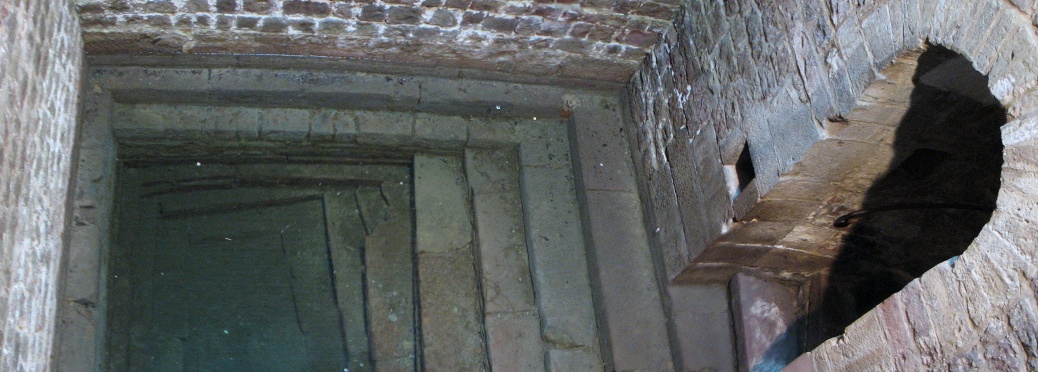
Lancaster presents some historical and archeological information regarding ancient immersion pools in the late Second Temple period to illustrate that it was extremely common for Jews to immerse on any number of occasions for the purpose of ritual purity, including participation in Temple sacrifices.

He also takes this opportunity to go on a small “rant” about how Christianity has fundamentally misunderstood the nature and character of baptism, and he ran through a litany of things that he believes the Church has gotten all wrong (he was talking too fast for me to take notes, so if you want to hear his reasons, you’ll have to listen to the recording). I don’t think Lancaster was trying to “diss” the Christian Church so much as he was being passionate about what he sees as the truth of the early history of Jesus-believing Judaism and how it’s been distorted by subsequent Gentile Christianity.

mikvahAs an aside, Lancaster has been lobbying to build a mikvah at Beth Immanuel for the last seven years (eight years as of this writing) but there hasn’t been much of a response. That reminded me of something I just read in Sue Fishkoff’s book The Rebbe’s Army: Inside the World of Chabad-Lubavitch. Often, when a Chabad family moves into an area without an Orthodox Jewish presence, their first and overriding priority is to build a mikvah, particularly for the use of the Rabbitzin in relation to the laws of ritual family purity. The reaction from the local Jewish community to the Chabad’s fundraising efforts to build a mikvah (and they’re not cheap) is just as lukewarm. What does Lancaster and the Chabad know about the mikvah that the rest of us don’t, or is that a sad question to ask as connected to “elementary principles” of our faith?

So, what were these “instructions about immersions?” How to build a mikvah? The mechanics of how to baptize? At one point, Lancaster might have said “yes”, but then he realized how “dumb” an answer that was…a typical “Goy” answer.

Jews would have been already well acquainted with the rituals surrounding the mikvah, the occasions when one had to engage in ritual purity rites and so forth. This wasn’t a mystery. While Gentiles may have needed those sort of instructions, they would have been less than useless to the Jewish believers.

Lancaster shared his own revelation. When reading a commentary on this part of the Book of Hebrews, he learned that these instructions about immersions could be referred to as “Catechetical Instructions for Conducting the Baptismal Rite.”

When I was a pre-teen and into mid-teens, my parents regularly took me to a Lutheran church. Lutheran churches, like Catholic churches, put their young people into a two-year Confirmation class where we studied Catechism, which according to Wikipedia is “a summary or exposition of doctrine and served as a learning introduction to the Sacraments traditionally used in catechesis, or Christian religious teaching of children and adult converts.”

That’s what Lancaster thinks these “instructions about immersions” are. Not directions on how to immerse or baptize, but the very basic instructions a new believer had to know before being immersed in the name of the Messiah as a full disciple.

Lancaster than referenced the best known ancient “catechism” we have access to: the Didache.

Last fall, I read and wrote about First Fruits of Zion’s (FFOZ) Toby Janicki’s article “The Didache: An Introduction” published in Messiah Journal. Since then, I purchased a copy of the Didache along with a commentary and wrote several blog posts on the topic which can be found here.

While Lancaster isn’t saying the Didache we have is the actual set of instructions being referred to in Hebrews 6:2, they may very well be related. It’s clear that the Didache was written for new Gentile “novices” in Yeshua-discipleship in order to prepare them to be immersed into Messiah by being initiated in the teachings of the Master. These instructions may have begun as oral instructions that accompanied the delivery of the Acts 15 “Jerusalem Letter” to the various Jesus-believing Gentile communities in the diaspora.

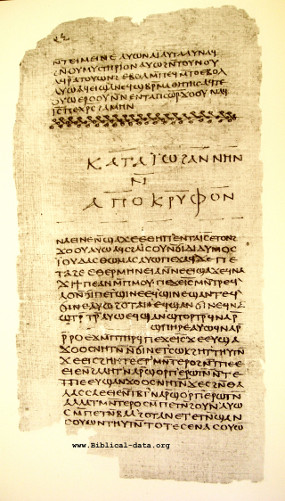
Didache CodexI should mention here that as Lancaster correctly states, the Didache’s initial discovery prompted accusations of forgery and fraud, since the document didn’t match the theology and doctrine of any Christian denomination and was seen as “too Jewish”. But today, most Christian scholars admit that the document most likely originated within one or two decades of the destruction of Herod’s Temple, written probably by Jewish disciples of Jesus for newly minted Gentile disciples. As I mentioned though, these written instructions could well have been preceded by an oral equivalent and could possibly have first come from the apostles themselves.

However, the Jewish disciples may have required a similar, parallel set of instructions to familiarize them with the teachings of Messiah and what it is to be a Jew preparing for a lifelong commitment to “take up their cross” and follow Moshiach, even unto death.

So look at it like this.

The newly initiated Jewish believers were first taught the very elementary principles of Yeshua-faith starting with repentance from dead works (sin) and then faith toward God as specific to Messianic devotion. Once they had mastered those first two principles, they were ready for the third, the basic instructions required for them to prepare to be immersed into the name of Messiah, which constitutes a vow of eternal fidelity.

Jewish people would immerse in the mikvah an untold number of times over the course of a lifetime, so immersing for ritualistic reasons was hardly novel. However, John specifically practiced an immersion of repentance (Matthew 4:17, Acts 19:4) and the Master commanded another specific immersion:

Go therefore and make disciples of all the nations, baptizing them in the name of the Father and the Son and the Holy Spirit, teaching them to observe all that I commanded you; and lo, I am with you always, even to the end of the age.” (emph. mine)

Matthew 28:19-20 (NASB)

The immersion in the name of Messiah fits in perfectly with what the Church calls “the Great Commission” but put back into a Jewish context, the ritual immersion in Messiah’s name makes a great deal more sense.

Jewish ConversionFor Lancaster, and I agree with him, a serious time of preparation must have been thought necessary before formally becoming a disciple of the Master. This was probably quite similar to the proselyte ritual process Gentiles experienced when converting under other Jewish sects. Even today, a Gentile converting to Judaism, particularly Orthodox Judaism, undergoes a time of intense preparation and study under the supervision of a Rabbi, and must past several tests before becoming circumcised (for males) and immersing in the mikvah as the final rite in becoming a Jew.

It seems very reasonable to believe that in ancient Yeshua-faith, the Gentile “converts” were required to undergo a similar procedure, although I’m sure there were exceptions (Acts 8:25-40, Acts 10:44-48).

Whoever does not carry his own cross and come after Me cannot be My disciple. For which one of you, when he wants to build a tower, does not first sit down and calculate the cost to see if he has enough to complete it?

Luke 14:17-28 (NASB)

What Did I Learn?

Actually, I felt there were things Lancaster only hinted at in his sermon. If he believes the Christian Church has gotten baptism all wrong, particularly as far as only being baptized once, what other applications might there be for immersion among the body of believers? I’m sure that Messianic Jewish disciples of the Master could and would immerse for the same reasons as other observant Jews, but what about the “Messianic Gentiles?” If we immerse in the name of Messiah once, on what other occasions should Gentiles enter the mikvah?

It had never occurred to me to apply Matthew 28:19-20 to Hebrews 6:2 but now it makes a great deal of sense to connect the two scriptures. I’m sure an entire study could be done applying what we think of as “baptism” in Christianity to ancient and modern concepts of immersion in the mikvah.

This also made me think of my own immersion. In August 1999, my entire family was immersed, under the auspices of a local Hebrew Roots congregational leader, in the Boise River. The following month, my life started to dramatically fall apart in such a spectacular manner that it would take years for me and my family to recover.

My interpretation is that God takes immersion into the name of Messiah quite seriously, even if the people being immersed don’t know what they’re doing (and I certainly didn’t). God delivered the consequences of my ill-conceived decision directly into my lap and it wasn’t pleasant at all. A lot of re-writing of my script had to be done and it’s not finished yet, not by a long shot. The finger of God is still writing on my heart and slowly converting it from a thing of stone to a heart of beating flesh and blood.

How many churches prepare their people with a dedicated set of instructions and tutelage before determining they are ready for this level of life-long commitment? I know in the church I attend there is some sort of formal preparation, but I fear for the sake of the children, some age nine and younger, who are deemed ready to understand what it is to count the cost, take up their crosses, and follow Jesus, even unto death. How could you be nine years old and possibly comprehend who you’re vowing to obey and what the consequences will be?

child baptismLancaster says he believes our churches are filled with “false converts,” people, like me, who consent to being baptized without any real idea of what that truly means. We have very few formal vows in Christianity left. The one you most likely think of is the wedding vow, but the staggering divorce rate in the Church indicates even that one is not well understood.

When we consent to being immersed in the name of the Father, the Son, and the Spirit of God, we had better know what we’re doing, and if we haven’t been prepared adequately for the commitment, then even though we are acting out of ignorance, God will hold us accountable.

Lancaster believes we should return to instructing new believers in the elemental principles of our faith which might include some familiarity with the Didache or something patterned after it. I think he’s right. People declare Christ as Lord and Savior and are baptized in his name far too casually in our day. I think thousands upon thousands of people in the Church are in a lot of trouble and don’t even realize it.