Tag Archives: faith

What’s Yours is Yours

While every Jew is commanded to place a mezuzah on his doorway, the commentaries raise the question of whether a building that is owned in partnership by a Jew and a non-Jew also requires a mezuzah. [Of course, the Jewish partner would have to be the one who fulfills this obligation. Since non-Jews are in no way bound to follow the dictates of the overwhelming majority of the mitzvos of the Torah, no-obligation — financial or otherwise — can be placed on the non-Jewish partner to fulfill this mitzvah.]

Rashba (to Chullin 136a) observes that the answer to this question may be understood from a Gemara in Chullin (135b). The Gemara lists several mitzvos that, when the Torah commands them, it specifies that they must be done with an object that is “yours.” Some of the examples mentioned in the Gemara are obligations of giving terumah (the first portion of the crop) and reishis hageiz (the first shearing) to the Kohen [where the Torah tell us (Devarim 18:4): “The first of your grain, wine, and oil, and the first of the shearing of your flock shall you give to him”]…

…that these mitzvos are commanded only when dealing with an item that is totally yours…A field or animal that is partially owned by someone not obligated in these areas — a non-Jew — is not included in these directives.

-from A Taste of Lomdus
The Shabbos Commentary on Parashas Eikev, p. 60
A Daily Dose of Torah

I’ve had little motivation to write any of these “mediations” lately, but then someone contacted me via email and asked if I knew anything about this person.

If you click the link and read the article “My Long Road Home” authored by Yehudah Ilan (probably not his original name), you’ll discover the story of a person who grew up in a Christian home and after much Bible study, transitioned first into Messianic Judaism, and then shot completely out the other side, finally converting to Orthodox Judaism.

Over the years, I’ve appreciated the educational context Messianic Judaism and various ministries have provided for my elucidation into a better understanding of the Bible than the one I previously possessed. Of late though, many changes have been taking place in my life, and they’ve cast my role within any form of Judaism (and particularly Messianic) into question.

brain hack
Image credit: bebrainfit.com

First and foremost, I have a lot of personal “reinventing” to do, although I’ve come to think of my near-future tasks and goals as “rebooting and hacking”. But a singularly important aspect of how I plan to “hack” my life to make necessary changes and (hopefully) improvements, is what to do about my relationship with God.

While Messianic Judaism as a Judaism has afforded me certain intellectual and spiritual advantages over what I’ve experienced within the Church, I’ve come to realize there’s a difference between learning from within a Jewish perspective (as much as I can apprehend such a perspective, my not being Jewish) and actually having any real involvement “within” Judaism.

As I’ve been told time and again, Messianic Judaism is a movement by and for Jewish people who wish to experience and explore their discipleship under Messiah Yeshua as Jews.

I agree with that statement and support it.

But, and I’ve written about this many times, where does that leave Gentiles?

I’ve written about the answer many times, too. There are any number of Messianic congregations that welcome non-Jews as members, either primary or ancillary, and those non-Jews can have fulfilling roles within such a community.

If you, as a non-Jew, are interested or even fascinated with the benefits offered by a Messianic Jewish worship and learning experience, then I encourage you to seek such communities out, either in the physical sense or online. Just be careful about the doctrine and theology, and what sort of practices some of these groups are calling “Jewish”.

But even becoming involved in an authentic Messianic Jewish community, there’s a catch and a danger. There’s the risk of becoming confused and losing your way.

Since Jesus put on tefillin every day, I started putting on tefillin. Jesus did not eat shellfish, so I stopped eating shellfish. Jesus knew Hebrew and Aramaic, so I learned Hebrew and Aramaic. The more that I studied the New Testament from a historical perspective, especially the elements of the life of Jesus, the more Judaism I began to practice and the more Christianity I began to doubt or reject.

We were living in mid-central Minnesota in the boondocks, with no Jews for miles, and I would walk around town wearing a kippah and tzitzit. We built a kosher sukkah in our back lot and lit a Chanukah menorah in the front window.

coffee and studyLearning from Judaism isn’t the same as being required to practice Judaism.

Being devoted to Yeshua as the first fruits of the resurrection and the arbiter of the New Covenant and coming Messianic Kingdom is not the same as being devoted to the practice of Judaism for the sake of the Messiah being Jewish.

Yes, if you’re Jewish, then your devotion to God is expressed through the practice of Judaism.

But if you’re not Jewish, your devotion to God is to be focused on the coming Kingdom of God and whatever place the nations will have in such a Kingdom.

The recent Republican Presidential candidate debates, the various news stories (scandals) about Hillary Clinton, and many other political and social events are rapidly convincing me that this nation and our planet are not doing well, and they’re not going to get better any time soon.

Politics and political correctness are doing nothing to unite American citizens. In fact, they’re doing the opposite. People in this country are becoming more divided and more polarized every day. Whoever is elected the next President in our nation isn’t going to save us. He or she, in all likelihood, will just continue to travel on a path that will further divide us and result in an increase in hostility of American against American. There’s also our recent participation in events that have increased tension and threats of nuclear war in the Middle East.

There is only one Savior, one Messiah, one King. Our hope is in him, not just the hope for the Jewish people, although that’s his primary mission, but also for the world. Through saving Israel, Messiah will save the whole planet. He will rescue the devoted remnant of Jews and Gentiles, returning the Jews to their land, to Israel, and establishing peace and security for the rest of us as well, and for our nations.

But for that to happen, we, the devoted disciples among the nations, must not confuse Judaism with the worship of God. Judaism belongs to the Jewish people, not to the rest of us.

Some few Gentiles are called, for whatever reasons, to convert to Judaism (and who knows, maybe Yehudah Ilan was one of them), but that is not the path the rest of us are supposed to take.

I said there was a danger in a Gentile operating within Messianic Judaism, the danger of losing your balance. It exists, but I don’t want to overstate my point.

synagogueMany non-Jews have found a safe and secure place within Messianic Judaism and are firm in their identity as a “Messianic Gentile” (for lack of a better term).

But it’s not for everyone. I’ve determined it’s not for me for a few simple reasons. If my wife were Jewish and Messianic, there would be no dissonance in my particular “orientation” and my family would be united with me in how I understand God, Messiah, the Bible, and everything.

But they’re not. My wife is absolutely not Messianic, and she is definitely Jewish. She sees me as a Christian and, for the most part, we don’t speak of religion. When she talks about Judaism and what Jews believe, I don’t comment for the sake of peace in the family.

I’ve learned from difficult experience that for me to actively practice any form of Christianity or Messianic Judaism publicly and in community is not sustainable in my marriage. That’s not my wife’s fault…it’s the result of nearly twenty centuries of Christian-Jewish enmity, with the Jewish people usually getting the short end of the stick.

From her point of view, me going to Church or any sort of “Messianic” group is “sleeping with the enemy” (so to speak). No, she’s never said that, but we’ve been married for over thirty years. I think I know a few things about her by now.

But the other reason I’m pulling back from Messianic Judaism is that it’s just another system. Christianity is a system containing a lot of little subsystems…denominations and such. Judaism is system also containing subsystems, ways of orienting individual members toward God and community. The former system welcomes everyone as long as you comply with the requirements of the system. The latter system welcomes Jews and occasionally non-Jews (depending on which subsystems are involved), but it’s more closed because it’s serving a people and a nation, not just “believers”.

Messianic Judaism requires the non-Jew, at least at the level of the local community, to comply with the requirements of the system, but by definition, the requirements are heavily biased toward who really belongs in that system: Jews.

In quoting from A Taste of Lomdus above, I was hoping to illustrate the sense of belonging that Jews have within Judaism and relative to the Torah, even if Gentiles are somehow involved. In a joint Jewish-Gentile venture, only the Jews are obligated to what belongs to them: the Torah and the mitzvot.

I didn’t quote the part that said if a Jew and non-Jew lived in the same home, the Jew would still be obligated to put up mezuzah, even when a Jew would not be obligated to put up mezuzah if he/she owned an office building or other business with a non-Jew. I guess that means it is appropriate for my wife and I to have mezuzah on the doorposts of our home, not for my sake certainly, but for hers because she’s Jewish and the mitzvah belongs to her.

Becoming confused about what belongs to Jewish people exclusively and what belongs to the rest of us at least occasionally results in non-Jewish people making mistakes such as this one or even this one. You either decide the only solution to understanding the Bible and responding to God is to convert to Judaism or you can choose to deliberately seize Judaism and apply it to a non-Jewish life.

skyI can do neither. However,  there are still parts of the Bible that show God also accepting people of the nations into the coming Kingdom of Heaven (which isn’t Heaven in the sky but the Messianic Kingdom on Earth). We have a place, not as Jews nor as Gentiles practicing Judaism, but as people of the nations, just the way we are.

That’s all I can look forward to as a flawed and erroneous disciple of the Master, but I have a lot of work to do before I can even claim a toehold in that territory.

I don’t know if I’ll ever get there.

There are some people who sometimes read my blog and who only choose to contact me if I have offended them or, more to the point, if I’ve written something wrong, or something they object to, about their group or organization. I don’t want to harm anyone, but only “pinging” me to object to something isn’t a very good way to maintain a relationship.

Then there are some of you who have been very supportive of me, in spite of my obvious failings as a writer, a disciple, and a human being. Thank you.

There’s a quote attributed to multiple sources including Plato, Philo of Alexandria, Ian MacLaren, and John Watson:

Be Kind. Everyone you meet is fighting a hard battle.

I’d like to think that the appeal of this blog wasn’t that I was perfect (and I know I’m far, far from perfect) or some sort of “Mr Know-It-All.” I think the appeal was because I was and am fighting a hard battle, a battle that others could (and can) relate to, because all of you are fighting a hard battle, too.

In some ways, my task is both amazingly simple and incredibly difficult. The simple part is that all I really need to pay attention to is my relationship with God. That’s as easy as praying. That’s also as easy as reading the Bible and maybe paying a little extra attention to those passages of the Apostolic Scriptures regarding what the Master and Paul (and any others who may have written about it) that discussed what was expected of the non-Jew, both before the return of Messiah and following.

Granted, there’s not a lot of material to work from, but where else do I have to turn?

The hard part is changing on a fundamental level, rebooting the system and hacking my life to become different and more than what it’s been up until now.

meI’ve got a couple of “mediations” that are “in the can,” so to speak. I don’t know if I’ll publish them. I don’t want my writing to distract me from what I need to do, but on the other hand, I wrote them weeks ago.

I’ll think about it. There are just two of them, so they may show up by the by.

I may return here someday and resume or maybe even improve upon what I’ve been trying to do in the past…chronicle one life on a path of faith and trust.

I just need to have a better “me” with which to do that.

What is the Romans 11 Olive Tree?

But if some of the branches were broken off, and you, being a wild olive, were grafted in among them and became partaker with them of the rich root of the olive tree, do not be arrogant toward the branches; but if you are arrogant, remember that it is not you who supports the root, but the root supports you. You will say then, “Branches were broken off so that I might be grafted in.” Quite right, they were broken off for their unbelief, but you stand by your faith. Do not be conceited, but fear; for if God did not spare the natural branches, He will not spare you, either. Behold then the kindness and severity of God; to those who fell, severity, but to you, God’s kindness, if you continue in His kindness; otherwise you also will be cut off. And they also, if they do not continue in their unbelief, will be grafted in, for God is able to graft them in again. For if you were cut off from what is by nature a wild olive tree, and were grafted contrary to nature into a cultivated olive tree, how much more will these who are the natural branches be grafted into their own olive tree?

Romans 11:17-24 (NASB)

I’m writing this “morning meditation” just to preserve something I know I’ll forget if I don’t document it (as I get older, I find that my memory is becoming somewhat “leaky”).

I want to talk about trees.

Actually, I want to talk about one specific tree, an olive tree, the one Paul mentioned in the above-quoted portion of his Holy epistle to the Romans.

What in the world does that tree represent? Some of the common responses are “Israel,” “Judaism” or the “Jewish people,” or maybe “Jesus,” although that last suggestion doesn’t exactly make sense from the Jewish point of view given that the tree has existed for as long as the Jews have existed if they are natural branches.

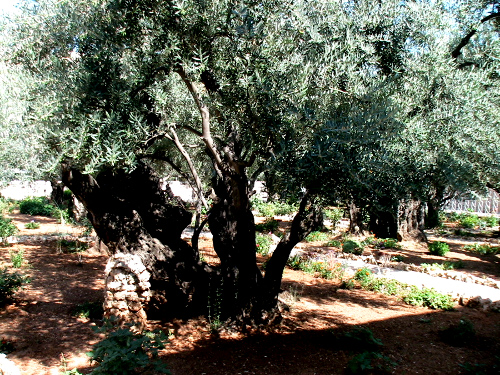
ancient_olive_treeI discovered (or maybe rediscovered, given the “leakiness” of my memory) a plausible answer, one that is in fact more plausible than any I’ve suggested above.

The first element to understand is that this tree represents all those who share faith in HaShem, who trust Him. Verse 20 is the key that shows the definition of this tree, because unbelief is the mechanism that breaks a branch off of the tree, and faith is the mechanism by which one remains on the tree. At one time, the only branches on that tree were the natural native ones, which is to say Jews. The cultivation of that tree represents the principles of the Torah covenant that inculcated faith into the entire culture of the Jewish people – thus Jews were a people who had been acculturated to the notion of faith or trust. Being broken off of the tree refers to a loss of faith or a rejection of it. Being grafted onto the tree represents acquiring faith (or regaining it if it had been lost or rejected). Wild branches represent non-Jews from cultures that were not acculturated to faith in HaShem. They were not naturally accustomed to it, but they could learn faith by means of the teachings of Rav Yeshua and thus be “grafted” onto the tree of faith to which they were not native, “contrary to nature” (meaning by means of deliberate intervention by a gardener). The sap of the tree must then represent the nourishment of Torah knowledge, perspective, and insight that Jews have cultivated for many centuries to elaborate the meaning of a life of faith. The root of the tree is thus the source of this nourishment, the Torah.

-a comment of Proclaim Liberty from
June 15, 2015 at 4:06 a.m on my blog post What am I, Chopped Liver?

That’s only part of PL’s rather lengthy missive, but it does serve to illustrate that, from his perspective, the Romans 11 tree isn’t Judaism, the Jewish people, or even Israel. The olive tree is a metaphor for faith and trust.

I provided a link above that points directly to PL’s comment so you can read the content in full (or re-read it given the current context). Frankly, I’ve puzzled over the nature of this tree for more hours than I care to think about without coming to a conclusion. I ended up setting the matter aside, figuring the answer would land in my lap eventually.

I think it finally has.

Of course, given the mention of the Torah being the nourishment the tree provides both to the natural (Jewish) and grafted in (Gentile) branches, what’s to prevent someone from concluding that both types of branches are equally obligated to the mitzvot?

PL responses to this in part:

Now, this analogy doesn’t quite answer the questions about Torah observance for non-Jews, though Acts 15 offers a starting point to differentiate between two discipleship types, and perhaps it also explains Rav Shaul’s reference to two different versions of gospel: one addressed to the circumcised, and the other to the uncircumcised (viz:Gal.2:7), neither of which is to be dismissed as merely so much “chopped liver”. [:)] It may be suggested, however, that an acculturation to faith certainly does occur as wild branches reside on the tree and absorb Torah nutrients, and receive treatment from the Gardener (e.g., pruning) comparable to that given the native branches. Moreover, by faith does it become possible to set aside insecurities, so as to enable facing the discomfort of working to distinguish between applications of Torah which apply to everyone (including wild branches) and those which apply only to someone else (i.e., only to the native ones). We can also consider what might be the implications for this analogy in the present era when so many wild branches come from cultures that have been already at least partially accustomed to the notion of faith in G-d, even if that faith has been contaminated with views that are contrary to Torah or Jews or Judaism or related notions.

James and the ApostlesActs 15:21 hints at the responsibility for non-Jews to learn Torah, even after it had just been clarified that their legal obligations to specific performance were very limited. Why then to learn? I would suggest that making the distinctions I described in the above paragraph requires a depth of Torah understanding, because even common principles of Torah might result in different praxis for Jews and for non-Jews to obey. For example, I recently was looking closely at the text of Is.56 (vs.2&6) to consider the characteristics of how the “foreigner”, who is being commended by HaShem for clinging to His covenant, actually approaches the Shabbat. He is described only as keeping from profaning it; whereas Jews are elsewhere commanded to actually sanctify it and guard it. This suggests some sort of difference in the specific behaviors associated with it. I’m still grappling with what that may mean, and how gentile obedience and compliance to this may thus differ from what I know as my Jewish responsibilities and praxis. But it does show that what constitutes obedience for one may be disobedience if another tries to do the same rather than what is appropriate to his or her categorical situation.

I know this is really long by Internet standards, but there is a lot of good information to absorb here. I think (my opinion) that PL is describing how complex and nuanced the Gentile’s “grafted-in-ness” is. There’s no easy black-and-white answer as to who we are and what we’re supposed to be doing as non-Jewish disciples, except that it’s not identical to what observant Jews are supposed to be doing.

We have clues, hints, and starting points, but I think it’s up to us to struggle with how we’re going to build our lives on the foundation of the Bible, and particularly how the Apostolic Scriptures present the lives of non-Jews in Messiah.

I just didn’t want to lose track of the very concept of the Romans 11 tree as a metaphor for Faith and Trust. Lack of faith may get a natural branch knocked off the tree temporarily, but it doesn’t turn a Jew into a non-Jew. Nothing can do that. Being grafted into the tree does not turn a Gentile into a Jew. We’ll always be Gentiles. It also doesn’t turn us into Israelites. Only Jews are Israel.

But being grafted in means we’ve come to faith in Hashem, the God of Israel, and we are nourished by the principles of Torah as applied to the Goyim.

faithI’m not writing this to present an answer or declare some amazing Biblical insight (particularly because the insight isn’t even mine). I’m just putting this here as another piece of the puzzle of our lives in God that may help to fill in the picture.

Oh, one more thing:

For I do not want you, brethren, to be uninformed of this mystery—so that you will not be wise in your own estimation—that a partial hardening has happened to Israel until the fullness of the Gentiles has come in; and so all Israel will be saved; just as it is written,

“The Deliverer will come from Zion,
He will remove ungodliness from Jacob.”
“This is My covenant with them,
When I take away their sins.”

From the standpoint of the gospel they are enemies for your sake, but from the standpoint of God’s choice they are beloved for the sake of the fathers; for the gifts and the calling of God are irrevocable.

Romans 11:25-29

Immediately after writing “if you were cut off from what is by nature a wild olive tree, and were grafted contrary to nature into a cultivated olive tree, how much more will these who are the natural branches be grafted into their own olive tree?”, Paul goes into how Israel’s “hardening” is only partial, that is, temporary, and will only last until “the fullness of the Gentiles has come in.” Then “The Deliverer will come from Zion” and “remove ungodliness from Jacob” so that “all of Israel will be saved.”

This is clearly New Covenant language and, as I’ve said many times before, I believe God will truly redeem all of Israel just as He promised. Paul was telling the Gentiles not to let being “grafted in” go to their (our) heads. The olive tree of faith has belonged to the Jews from the beginning. Any of the natural branches knocked off temporarily for the sake of the Gentiles, for our sake, will all be rejoined to the tree by Messiah. Even in being knocked off, temporarily losing the “faith connection,” it was done for the sake of the nations, so we owe a debt of gratitude, even to those Jews who currently reject the notion that Yeshua could possibly be the Messiah. That’s the majority of Jews across the past twenty centuries. Without their temporary absence from the root (and who is to say how absent they are since they cleave with great faith to Hashem), there would be no room for us.

Any Christian or non-Jew who calls themselves a “Messianic Gentile” or “Messianic whatever” who also disdains non-believing (let alone believing) Jews is guilty of ingratitude, not only to Israel but to God who arranged it all. Remember, the “promises are irrevocable.”

Let that sink in.

Why All Our Arguments Will Never Whisper To The Soul

faithIn the comments section of my previous meditation, a number of people debated over their various theological beliefs and offered a number of “proofs” to support their points of view. At about the same time, I read an article called “Why is there no evidence of G-d” at Chabad.org. This inspired a few thoughts about the nature of “truth” and why (probably) no one person or religious organization has the complete corner market on truth. But in the sidebar of the aforementioned article was a series of links to related articles. I clicked the one that said What Does it Mean to “Believe in G-d”?.

The statement, “I believe there is a G‑d” is meaningless. Faith is not the ability to imagine that which does not exist. Faith is finding relevance in that which is transcendent. To believe in G‑d, then, means not that you’re of the opinion that He exists, but that you have found relevance in Him. When a person says “I believe in G‑d” what s/he really means is “G‑d is significant in my life”.

In discussing our relationship with G‑d, the question we first need to ask, is, Who cares? In what way is He relevant?

For some people, G‑d is relevant because they are concerned with the origins of existence. For others, G‑d is relevant because they are concerned with the afterlife, and faith is a prerequisite for getting to heaven. Finally, for others, G‑d is relevant because they believe that life has purpose.

Certainly Christians convince others to come to faith because of the promise of the afterlife (“If you died tonight, do you know what would happen to your soul?”). The Church convinces “sinners” to convert to Christianity based, at least initially, on the fear of going to Hell and suffering for all eternity, and that by being “saved,” they are promised they’ll avoid Hell and ascend to Heaven when they die to be with Jesus.

That seems kind of cheesy. It’s like we have faith in God because it’s all about us and our salvation. Even coming to faith so we have some “grounding” in the origins of the universe, people, and the existence of everything still seems kind of self-centered.

But what about believing because we want life to actually mean something?

In Judaism, particularly in Chassidism, the interest in G‑d comes from the conviction that life has meaning. The recurring question in Chassidic thought is: Why is a soul sent into the world to suffer in a physical body, for 80, 90 years? We know there is a purpose, that G‑d is the author of that purpose, and we want to know and understand it.

One who lives by his heart exclusively, trusts only what he feels. One who lives by his mind exclusively, trusts only what fits. But neither of these tells you the truth. The mind demands that logic be trusted, the heart demands that the emotions be trusted. Yet both can be mistaken. They do not reveal inherent truth. For that, we turn to the soul, the neshamah. Because the soul is a part of the Divine — and that is truth. When we have faith, when we find relevance in G‑d, we are trusting that instinct in the soul that tells us that G‑d is the purpose of life.

In pragmatic terms, the mind, the heart and the soul must each fulfill their function: when we know all that can be known, when we come to the edge of knowledge and logic itself tells us that we have reached its outer limits and it cannot handle what lay beyond this point, faith enters. Where the mind is no longer adequate, the soul responds to truth. This is faith.

Let’s look at the central message:

The mind demands that logic be trusted, the heart demands that the emotions be trusted. Yet both can be mistaken. They do not reveal inherent truth. For that, we turn to the soul, the neshamah.

soulIn an ultimate sense, we can use evidence to support facts but not the truth. Being nice or being smart don’t really lead us to truth, but then we have a problem. How can you or I convince another person of “the truth” since that exists only in the purview of the soul?

This is why in Chabad-Lubavitch it is our approach to invite a Jew — even one who claims not to believe — to do a mitzvah, before we engage them in a discussion on faith. Because in consideration of the existence of the soul, we can assume that we don’t have to convince people of life’s Divine purpose. We just have to get them started, and with each mitzvah they do, their neshama asserts itself more, and questions become answered of themselves. By way of analogy, if a woman’s maternal instinct appears to be absent, you don’t argue the philosophy of motherhood with her. Just put the baby in her lap and her maternal response will emerge.

I can’t even imagine how a Christian would evangelize using this method. In Christianity, doing only matters after believing and is only a reflection of believing. Granted, the Church has a strong practice of charity and service to others, but it’s not the driving force that causes a person to convert to Christianity in the first place (could you imagine being a Christian and approaching a “sinner,” inducing them to join the Church with the promise of a lifetime of service to God and humanity?).

However, that’s more or less what Rabbi Manis Friedman is suggesting in his article. That’s why the Chabad will ask a Jew who is not at all religious to perform at least one mitzvah. Because the mitzvot are what connects a Jew to God.

To encounter God is a transcendent experience that goes beyond thought or emotion, but in order to “operationalize” that encounter, a Jewish person “does”. That is, he or she connects the soul to the author of the soul by performing mitzvot. This isn’t to say that prayer and worship don’t connect Jewish people to God, but at least from the Chabad’s perspective, it all starts with performing a single mitzvah, and then another, and then another, until they are living an increasingly Jewish life.

Christianity has the opposite approach in that reading the Bible, praying, and worshiping come first, and then eventually as the believer’s life is transformed by their faith, they come to the place where they are “doing” Christianity by helping other people.

argumentWhen we argue with each other for the supposed purpose of correcting what we believe others have gotten wrong about the Bible, about God, and about Messiah, and we say we are doing so because we care about those people, we are missing a vital element. We can’t reach their soul, at least not directly, with logical arguments or by appealing to their emotions.

Whether it’s by a Christian having a person they’re evangelizing praying to be saved, or by a Chabad representative having a Jew lay tefillin, the appeal is to the soul, and although we have different actions we put people through to make this happen, it’s really God who is speaking to the neshamah. That’s why, except in very rare instances, our blog conversations will never really be able to convince someone to admit that their theology is wrong, to change their minds, and to adopt a different religious discipline.

Speaking of changing religions, I found this article and it seemed relevant.

Bitachon and Hishtadlus for the Rest of Us

How does one balance these two seemingly contradictory ideas? It all depends on the person’s spiritual level. The closer a person is to perfection in his belief in Hashem, the more he is expected to rely on Hashem, and his level of hishtadlus (effort) must drop accordingly. Until a person reaches that level he may — and must — work, to achieve whatever he needs to function and sustain himself and his family. As his belief and trust in Hashem grow — and he must work on this mitzvah constantly, to reach ever higher levels of bitachon (trust) — he must adjust his level of hishtadlus and rely more on Hashem.

-from Torah Thought for the Day, p.56
Commentary for Parashas Mikeitz for Sunday
A Daily Dose of Torah

As I mentioned yesterday, for a person to trust God for his every need and be content in every circumstance as was the Apostle Paul (Philippians 4:10-13), that person would already have to be operating at a very high level spiritually. For the rest of us…well, we worry sometimes.

But I don’t entirely agree with the Rabbinic statement I quoted above. It seems that it could be abused by some people who state that they have achieved so high a spiritual level that they don’t (or shouldn’t) have to work to support themselves and their families at all, and instead, should be allowed to study Torah uninterrupted almost every waking moment. We can see such an example in the Ultra-Orthodox Jewish population of Israel who refuse mandatory military service and many who choose not to work and have the Israeli government providing them with support.

I suppose any principle can be taken too far. The Bible is replete with examples of very holy men who were close to God and who nevertheless also labored to support themselves.

workI do agree with the principle of hishtadus, which is that we are to work to support ourselves and not to rely on God’s miracles for our “daily bread,” so to speak. But I don’t think that necessarily changes as we learn to believe and trust in God to greater degrees over our lifetimes. Sure, God could cause us to win the lottery by a miracle, but don’t count on it.

As I’ve also previously mentioned, we know that at the end of last week’s Torah portion, we saw that Joseph is in prison. After giving the Chamberlain of the Cupbearers a favorable interpretation of his dream, Joseph asked that the Chamberlain put in a good word for him to Pharaoh, King of Egypt (Genesis 40:14-15). But according to midrash, this was a mistake (although what mistake Joseph actually made is debated by the Rabbis) and as a result, Joseph spent two more years in prison.

The plain text of the scripture doesn’t seem to indicate this and it seems more likely that once the Chamberlain of the Cupbearers had regained his freedom, he simply didn’t bother himself with the request of one insignificant Hebrew slave.

But we do see in this example the delicate balance between trust in God and the necessity of our own efforts. Technically, there was nothing wrong with Joseph asking for help and indeed, God may have arranged this very situation. After all, we find that two years later, the Chamberlain does remember Joseph, but only because Pharaoh has a dream that no one can interpret (Genesis 41:1-13). If the Chamberlain had spoken to Pharaoh two years previously, Pharaoh could either have denied the request or in granting it, possibly make Joseph unavailable when he was needed to interpret Pharaoh’s most important dream.

Sometimes bitachon or trust in God isn’t a matter of asking or not asking a person’s help in a tough situation. Sometimes and perhaps quite often, it’s a matter of asking and then waiting.

The true description of bitachon is the belief that there is no coincidence in this world, and that everything that transpires occurs with Hashem’s approval and instruction.

When a person finds himself in a situation which appears dangerous according to the natural way of the world, and he is powerless to help himself, he must overcome his fear by realizing that the One Who controls everything in this world can cause a positive outcome just as easily as a negative one. This is called bitachon.

-from A Mussar Thought for the Day, p.60
Commentary for Parashas Mikeitz for Sunday
A Daily Dose of Torah

Sometimes we know that saying something will make a situation worse. We can tell ourselves to, “Just keep silent.” If we feel tempted to speak negatively about someone, we can strengthen our resolve not to say it by telling ourselves, “Just keep silent.”

The more difficult it is to keep silent, the greater the resulting spiritual elevation. When you tell yourself, “Just keep silent,” your silence isn’t just a passive state of being. Rather, it is an act of remaining silent.

In Tehillim (Psalms 34), King David tells us: “Who is the person who wants life and loves days that he may see good? Guard your tongue from evil and your lips from speaking deceit.” Remaining silent instead of speaking against others enhances and lengthens life.

(from Rabbi Zelig Pliskin’s book: “Conversations With Yourself”, p.145) [Artscroll.com])

-from Just Keep Silent
Daily Lift #194
Aish.com

SilenceThat last quote is more directed at a person who wants to say something to another person, usually something insulting, but who choses for the sake of Heaven to refrain, but I think it fits in our current discussion as well. Sometimes we can only say and do so much, and when we reach the limit of our ability to positively affect our situation, then all we can do is rely on God’s mercy.

The issue though is that even a complete trust in God is no guarantee that the outcome will always be good. True bitachon enables a person to realize that good or bad, everything comes from the hand of God.

And that is a very difficult middah, yet there is hope, at least according to the Sages:

Chazon Ish states that just as there are levels in other middos, such as mercy, humility, etc., there are many levels of bitachon. As long as one possesses even a small trace of bitachon, he is not excluded from the group of believers, and will merit ultimate redemption.

-from A Mussar Thought for the Day, p.60

Sermon Review of the Holy Epistle to the Hebrews: A Great Cloud of Witnesses

The Bible says “we are surrounded by a great cloud of witnesses.” Are the biblical saints of old watching us live our lives like characters in a bad reality TV show?

Hebrews 11 presents the Bible’s hall of fame of faith: The book of faith and hope. The writer of the book of Hebrews refers to the biblical saints as “a great cloud of witnesses.” What does that term imply? Study Hebrews 12:1-4.

To hear more teachings from Hebrews 11, listen to “The Book of Faith and Hope.”

-D. Thomas Lancaster
Sermon Forty-one: A Great Cloud of Witnesses
Originally presented on February 1, 2014
from the Holy Epistle to the Hebrews sermon series

Therefore, since we have so great a cloud of witnesses surrounding us, let us also lay aside every encumbrance and the sin which so easily entangles us, and let us run with endurance the race that is set before us, fixing our eyes on Jesus, the author and perfecter of faith, who for the joy set before Him endured the cross, despising the shame, and has sat down at the right hand of the throne of God.

For consider Him who has endured such hostility by sinners against Himself, so that you will not grow weary and lose heart.

You have not yet resisted to the point of shedding blood in your striving against sin…

Hebrews 12:1-4 (NASB)

In last week’s sermon review, Lancaster blew through Hebrews 11 faster than I imagined, especially given how detail-oriented he’s been in addressing the other chapters so far. Of course, he’s devoted an entirely different sermon series to that one chapter, but I’ll have to listen to those fourteen sermons another time.

This week the focus is on how Chapter 11 affects the current material, namely Hebrews 12:1-4, but let’s stay with Chapter 11 for a little bit longer, particularly verse 2:

Now faith is the assurance of things hoped for, the conviction of things not seen. For by it the men of old gained approval.

The New American Standard Bible translates the Greek word martus as “approval” and other English translations include “commended,” “their commendation,” “good report,” and “testimony.” The best word we could use in English though is “witness.”

legal witnessLancaster goes through the original meaning of this word which is where we get the English word “martyr.” Today, we all think of a martyr as someone who dies for his or her religion, but back when the Epistle to the Hebrews was being written, it meant a witness in a legal proceeding. You might think of the early believers being taken before a Roman tribunal and directed to renounce their faith, blaspheme the name of Jesus, and to worship a pagan idol. The actual testimony of the believing witness, if they were true to their faith, was to affirm their trust in Messiah and belief in the coming resurrection and Kingdom of God. The consequence for that affirmation was to be executed, hence the eventual change in meaning of the word “martyr” (so, no, some suicide bomber blowing himself up to kill a bunch of innocent people is not a “martyr”).

The readers of the Hebrews letter were in a similar position, but not relative to the Romans. The Sadducees, who were in control of the Temple, were after these Jewish disciples of the Master to renounce their faith in the resurrection and the life in the world to come, since Sadducees believed in none of that (see Acts 23:6-8).

This has applications for us today as disciples. First of all, the “witness” of our faith in terms of Evangelical Christianity is not really a witness at all. A bunch of teens from a church youth group ambushing people at a shopping mall with religious tracts is not a witness. Being a witness is being directly challenged to renounce your faith and yet holding fast to it anyway.

There are many Christians in atheist nations like China or in various Muslim countries who are witnesses, who can only save themselves from being put in prison or killed if they renounce their faith and, like the ancient believers before Roman tribunals, they hold fast and faithfully suffer and even die rather than betray Yeshua.

Compared to that, no one in the western nations, including the U.S., has their witness challenged significantly.

Or is that true?

Lancaster says our challenges are much more subtle:

  • Embarrassment
  • Social pressure
  • Moral relativism
  • Materialism
  • Sensuality
  • Self-indulgence

The world around us attempts to get us to renounce our faith by encouraging us to conform to progressive and politically correct standards. In fact, this manipulation is so subtle that you don’t even have to stop calling yourself a “Christian,” you can continue to go to church (at least certain denominations), and yet still conform to every single standard valued by progressive secular society.

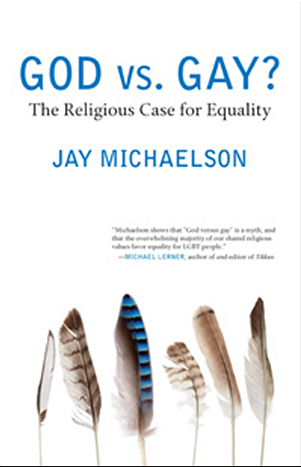
michaelsonI couldn’t help but think of Jay Michaelson’s book God vs. Gay? The Religious Case for Equality and the methods he employed to convince his readers that his understanding of the Bible, one that affirms and supports “loving same-sex couples” and “marriage equality” in the church and synagogue, is the correct and desired one.

If you remove the strong emotional components from the Michaelson book and look at it in terms of strategies and tactics, then it’s possible to view a parallel between the content of the book and what Lancaster says about how the Adversary seeks to remove, dilute, or delete our witness as Christians, to convince us to denounce Jesus so we can be just like everyone else.

Lancaster said in his sermon that one witness to our faith is lifelong, male-female, monogamous marriage, and he says the world laughs at this witness. Besides the issues involved in Michaelson’s book, how many couples, even Christian couples, have sexual relationships before marriage or outside of marriage, and have children outside of marriage? This is something of the norm in secular society and it seems the only people who actually want to get married are gays and lesbians, and that only because it’s still illegal in a dwindling number of states in our nation.

The world does work against us in many ways, challenging us, and demanding a witness to our faith. We need to look back to Hebrews 11, which is all about the many, many role models we have to look up to who were also challenged and yet never wavered:

…and others experienced mockings and scourgings, yes, also chains and imprisonment. They were stoned, they were sawn in two, they were tempted, they were put to death with the sword; they went about in sheepskins, in goatskins, being destitute, afflicted, ill-treated (men of whom the world was not worthy), wandering in deserts and mountains and caves and holes in the ground.

And all these, having gained approval through their faith, did not receive what was promised, because God had provided something better for us, so that apart from us they would not be made perfect.

Hebrews 11:36-40

If we think we have problems living Holy lives, look at the people, in this case, the prophets of old, who suffered, were tortured, murdered, lived desperate and difficult lives, and all of them who had gained a good witness of their faith, even though they did not receive anything they were promised by God, so that we too could be included in the promises of the future resurrection.

What Did I Learn?

The sufferings of the faithful we read about in Chapter 11 were their witness, their faith testified about them and still does every time we read the Bible. The “great cloud of witnesses” doesn’t mean the saints are sitting around in Heaven spying on our lives as if we’re part of a bad reality TV show. They aren’t witnessing us, their lives are a witness to us.

long-distance-runnerWe are like runners in a race. Those faithful witnesses have already run that race and won. We are still facing the challenges they overcame. They are our heroes and our guides. Their lives are our inspiration.

The central message of the sermon is “Don’t give up. You aren’t alone. Others have crossed the finish line — you can too.”

When my kids were young, we used to watch a variety of different cartoons including one about a group of martial artists who trained in weighted clothing in order to increase their strength.

Verse one of Hebrews chapter 12 says, “let us also lay aside every encumbrance (weight) and the sin which so easily entangles us…” If you’re going to run a race and your life, your eternal life, depends on successfully crossing the finish line, you need to be as light and strong as you can. “Weighted clothing” or the weight of sin will just slow you (and me) down. We need to endure because it’s a long race, not a sprint. And there are many “stumbling blocks” along the way, which is why we need to keep our eye on Jesus, “the author and perfecter of faith.”

No one’s perfect. No one’s faith is perfect, but then again, it doesn’t have to be. We are broken, just like the world around us, but the perfecter of the world is also the perfecter of our faith. If we keep our eyes on him, we don’t need to be perfect, we just need to keep paying attention and not to waver.

That bullet point list I posted above is a list of items designed to distract us and to change our focus. If we start paying attention to all that and let our attention wander, it’s easy to become very discouraged and even to give up. Even if we don’t think we’ve given up, it’s easy to slip into some model of “Christianity” that says we’re doing the right thing by ignoring the standards of God, difficult as they seem to be, and embracing the standards of people and of the culture in which we live. We may still believe we’re part of the “community of faith” and that we are doing good and showing compassion, but in fact, we have exited Yeshua-faith and joined the ranks of a faithless society more concerned about present appearances than future and eternal glory.

burdenA life of faith seems to be very weighty sometimes. I’ve felt it pressing down on me, and often the tonnage seems triggered by religious rather than secular people. But they can really do nothing if faith is strong. If you feel discouragement and are tempted to give up or even just lighten up, don’t blame the world, look to your own heart, your own faith, and your own stamina. Call on God to strengthen you and to see you through to the end of the race.

Sermon Review of the Holy Epistle to the Hebrews: Ani Ma’amin (I believe)

What do Maimonides and the book of Hebrews have in common? Find out how the Talmud and the book of Hebrews intersect when it comes to the question of faith in Messiah. The book of Hebrews continues with a call to hold fast to faith in the coming of the Messiah.

References Hebrews 10:32-39; Isaiah 30:18; Habakkuk 2:3-4.

-D. Thomas Lancaster
Sermon Forty: Ani Ma’amin (I believe)
Originally presented on January 25, 2014
from the Holy Epistle to the Hebrews sermon series

Therefore the Lord longs to be gracious to you,
And therefore He waits on high to have compassion on you.
For the Lord is a God of justice;
How blessed are all those who long for Him.

Isaiah 30:18 (NASB)

Lancaster’s sermon took a different route this week, the long way around to Hebrews 10:32-39 through the above-referenced prophets, the Talmudic writings, and Mosheh ben Maimon otherwise known as Moses Maimonides or the Rambam.

Lancaster states that the above verse from the prophet Isaiah is very important as a Messianic prophesy. The Talmud interprets “How blessed are all those who long for Him” or “wait for Him” as those among the righteous waiting for the redemption of the Messiah.

Verse 20 says “your Teacher will no longer hide Himself, but your eyes will behold your Teacher,” indicating that our Teacher, that is, Messiah, is currently hidden from us (or from Isaiah’s audience, the Jewish people) but that in the coming age, he will be revealed. Verse 21 continues “Your ears will hear a word behind you, ‘This is the way, walk in it,’ whenever you turn to the right or to the left,” speaking of walking in the Holy Spirit (the “word behind you”).

But when it says “therefore He waits on high to have compassion on you,” this isn’t speaking of Messiah, but of Hashem, of the God of Israel, for He waits for the Messiah, too…at least according to the Talmud.

Why would God have to wait? You’ll see in a bit.

Lancaster then shifted gears and started quoting from Tractate Sanhedrin about a 3rd century CE Rabbi who came across a Gentile who had discovered a scroll in the Roman treasury. Without going into all the details, the scroll seemed to likely have been looted from Jerusalem by the Romans, perhaps from the Temple itself.

The Rabbi, who believed the scroll to be an authentic Jewish Holy writing, purchased the scroll and discovered it predicted the end of the world and the coming of the Messiah in the year 4291 from Creation, with the final renewal of the world being accomplished in the year 7000.

ancient scrollsProblem is, the Jewish year 4291 corresponds to 531 C.E. which has long since come and gone.

The Talmud uses this story to issue a stern warning against attempting to calculate the dates related to Messiah coming and an admonition against those who insist on calculating such dates. Thus far, everyone who has attempted to predict the return (or coming) of Messiah has been wrong.

This is where Habakkuk comes in:

I will stand on my guard post
And station myself on the rampart;
And I will keep watch to see what He will speak to me,
And how I may reply when I am reproved.
Then the Lord answered me and said,
“Record the vision
And inscribe it on tablets,
That the one who reads it may run.
“For the vision is yet for the appointed time;
It hastens toward the goal and it will not fail.
Though it tarries, wait for it;
For it will certainly come, it will not delay.
“Behold, as for the proud one,
His soul is not right within him;
But the righteous will live by his faith.”

Habakkuk 2:1-4

Within the context of Habakkuk, this does not seem to have anything to do with Messiah. Habakkuk had just heard from God that the destruction of Judah and Jerusalem was at hand because of their many sins. Habakkuk was upset, not that God had ordered the destruction, but that He had chosen an instrument for that destruction much more evil than Judah and Jerusalem. So he sat in a guard post and waited (probably for a long time) for God to answer his objection.

That said, the Talmudic sages interpret, especially verses 3 and 4, as very much having a Messianic application, and Lancaster agrees, specifically since the Talmud interprets this portion of scripture as stating the date of Messiah’s coming is hidden. I won’t go into the nuts and bolts of Lancaster’s explanation. The link to the recording is at the top of this missive so you can listen to the forty minute sermon for yourself.

But then we get back to why is even God waiting for Messiah? Why should God wait? Why not send Messiah now?

The Lord is not slow about His promise, as some count slowness, but is patient toward you, not wishing for any to perish but for all to come to repentance.

2 Peter 3:9

God’s justice (and I believe mercy as well) demands that He wait because those of us who also wait receive a blessing by the merit of the act of waiting, for as it says “Though he tarries, wait for it” (the Hebrew pronoun can also be “him”), and again, “the righteous will live by faith”, and as it says in Isaiah, “Blessed are all those who wait for Him” (Isaiah 30:18 NKJV).

Rambam
Mosheh ben Maimon, the Rambam

Many have been born, lived, and died waiting for Messiah and he didn’t come, yet their waiting wasn’t in vain, for by the merit of their faith, they gained eternal life in the resurrection.

I mentioned the Rambam above. He codified what is known as The Thirteen Principles of Faith, the twelfth of which states:

I believe with a complete faith in the coming of Messiah, and even though he may delay, nevertheless every day I believe that he will come.

This is also known as Ani Ma’amin (I believe) and is traditionally sung at the conclusion of the Shacharit or Morning prayers. The Talmud states that such a lived faith in the coming of the Messiah equals performing all of the 613 commandments (and the version we have today was also organized by Rambam). Yes, it’s that important.

However, when Habakkuk says that “the righteous will live by faith,” he doesn’t just mean that they live a life of faith, but that they will merit life, eternal life in the resurrection, by clinging to their faith in the coming redemption of Messiah. This is an essential principle in Judaism, according to Lancaster, and not only do we see it in the prophets and the Talmud (and Hebrews), but the Apostle Paul referenced it in Romans 1 and Galatians 3. Instead of trying to figure out when Messiah will come (return) and only expecting him then, always expect him today and every day; always live a life of daily expectancy.

Then Lancaster (apparently) switches tracks and talks about how the passage from Habakkuk is very different in the Greek. Why is that important? Because Jewish teachers used the Greek translation of the Tanakh (Old Testament) or Septuagint, when teaching Greek-speaking Jews and Gentiles. The writer of Hebrews was addressing Greek-speaking Jews living in or near Jerusalem.

For yet in a very little while,
He who is coming will come, and will not delay.
But My righteous one shall live by faith;
And if he shrinks back, My soul has no pleasure in him.

Hebrews 10:37-38 quoting Habakkuk 2:3-4

Especially the last line seems quite odd: And if he shrinks back, My soul has no pleasure in him.” Lancaster says this speaks of one who shrinks back or loses his faith, specifically in the coming of Messiah, for if one loses his faith in Messiah, he loses God’s favor.

But “My righteous one shall live by faith” in that even if Messiah does not come when expected or even in your lifetime or mine, we must live by faith so that we will live in the resurrection and not lose our place in the world to come. We must seek first the Kingdom as our focus.

Now (finally) Lancaster turns to Hebrews 10:32-39.

He gives a very brief summary of the Hebrews epistle, an exhortation to Jewish believers who because of their faith in Messiah, have been denied access to the Temple and the Priesthood, and who, for that reason, are strongly tempted to renounce their Messianic faith. The Hebrews writer is encouraging them to remain faithful because they always have access to the Heavenly Temple and Priesthood through Messiah as High Priest, and warning them of the consequences of losing faith.

“But remember in former days” is a reference to the early persecutions (read the beginning chapters of Luke’s Book of Acts including the stoning of Stephen (Acts 8) and the “murderous threats” of Saul (the beginning of Acts 9). They were persecuted in many ways and yet “accepted joyfully” those hardships, enduring in the faith. “Therefore, do not throw away your confidence” for in doing so, they would also throw away their reward. They needed to endure as they did before.

Hebrews then quotes the Greek version of Habakkuk, and you should see at this point how well it fits the flow of this part of the letter, and concludes (well, not really…it just concludes the artificial division of chapters):

But we are not of those who shrink back to destruction, but of those who have faith to the preserving of the soul.

Hebrews 10:39

But there’s more. I didn’t expect Lancaster to cover Chapter 11 as well, but when he did, it clicked right into place:

Now faith is the assurance of things hoped for, the conviction of things not seen. For by it the men of old gained approval.

Hebrews 11:1-2

faithThis is the so-called “faith chapter” of the Apostolic Scriptures and Christians often cite it as a “stand alone” definition of what “faith” is, without considering how it fits into the overall message of the epistle.

The writer of the epistle has been encouraging his readers to maintain their faith in the Messiah’s coming, to not abandon that faith, even under the tremendous pressure of not being able to offer korban in obedience to the commandments, for in renouncing Messiah, they would also be renouncing their reward in the Kingdom.

The rest of chapter 11 is a list of examples of people of faith who maintained that faith even though they never saw the promised rewards in their lifetimes. Abraham was promised the Land but died never receiving the promise. So too did Isaac and Jacob. Read the chapter for yourself and see what it looks like now that you have the context Lancaster constructed around it.

Lancaster concludes his sermon by reading verses 32 through 40, but I’ll just quote a portion:

And what more shall I say? For time will fail me if I tell of Gideon, Barak, Samson, Jephthah, of David and Samuel and the prophets, who by faith conquered kingdoms, performed acts of righteousness, obtained promises, shut the mouths of lions, quenched the power of fire, escaped the edge of the sword, from weakness were made strong, became mighty in war, put foreign armies to flight.

Hebrews 11:32-34

“And what more shall I say? For time will fail me…” The list of the faithful is endless, or seemingly so. It’s not like the writer of Hebrews is asking for the impossible, as if no one who came before ever exhibited such a faith, maintaining it even to the death. While modern religious Judaism doesn’t emphasize the Messiah’s coming all that much, in ancient days, the days of the prophets, the days of the apostles, and the days of the writers of the Talmud, it was much clearer that faith in the coming (return) of Messiah was the lynchpin of Jewish faith in God and the coming New Covenant times.

What Did I Learn?

I’ll never be a Talmud scholar, so all of the tie-ins from Talmud back into scripture are a revelation to me. Lancaster said that the writer of Hebrews and the other apostles read Habakkuk exactly the same way as the sages of the Talmud. This is a very important point because it re-enforces my emphasis that you cannot know or understand having faith in the Messiah unless you study Judaism! This is why I study from within a Messianic Jewish framework.

I hate to slam Christian studies and teachings because I have high regard for those people I know in the Church, but traditional Christian doctrine compared to Messianic Jewish (and other Jewish) studies is like the difference between an eighty-year old frayed black and white still photo and the latest vibrantly colored 3D motion picture in surround sound.

I hope I’m not overstating the metaphor, but a lot of these teachings in Messianic Judaism hit me like someone opened up my skull and poured in a couple of quarts of “Ah Ha! That’s what that means!”

I was also pleasantly surprised when Lancaster mentioned having read the biography of Brother Yun, an evangelist in Communist China who suffered terribly for his faith. I also read the book at the urging of a friend, and as a reminder that I can get tremendously caught up in the “head knowledge” of the Bible at the expense of a living faith in Messiah.

The message of the epistle to the Hebrews is also a message to us nearly two-thousand years later. The Jewish believers reading this letter had a faith in the return of the Messiah who had died, was resurrected, and ascended to Heaven about thirty years prior, within the living memory of a generation, and yet they were tempted to abandon that faith. We have possession of the same faith almost twenty-centuries after the event, and no one alive on earth is a direct witness today. If they were tempted living so close in time to the flesh and blood Jesus, how much more so will we be tempted, especially in a culture of atheism, humanism, and progressiveness, to be lured into abandoning our faith in the return of Messiah?

Which is why we can’t. Which is why Hebrews 11 is so important to us as an example of living and dying and yet not receiving the promise of his return.

For if their being cast away is the reconciling of the world, what will their acceptance be but life from the dead?

Romans 11:15

lightIf some of the Jews in Paul’s generation not coming to faith in Messiah is compared to death, but their coming to faith is compared to the resurrection. So it is with us. For those who have never come to faith and possibly never will, we can have pity, but we must mourn tragically for those who once had faith and deliberately set it aside for whatever they thought was better, perhaps under some form of social pressure to do so.

I mourn for those every day and I know more than one. Pray that they haven’t shut up their ears permanently, and that they will go from being “cast away” by their own decision, to “acceptance” once again and “life from the dead.”