Tag Archives: FFOZ

Gifts of the Spirit: Dancing at the King’s Wedding

king-davidThen he returned to the man of God, he and all his company, and he came and stood before him. And he said, “Behold, I know that there is no God in all the earth but in Israel.”

2 Kings 5:15

From that time Jesus began to preach, saying, “Repent, for the kingdom of heaven is at hand.”

Matthew 4:17

And he said to them, “Go into all the world and proclaim the gospel to the whole creation. Whoever believes and is baptized will be saved, but whoever does not believe will be condemned. And these signs will accompany those who believe: in my name they will cast out demons; they will speak in new tongues; they will pick up serpents with their hands; and if they drink any deadly poison, it will not hurt them; they will lay their hands on the sick, and they will recover.”

Mark 16:15-18

Curious combination of scriptures. What could they possibly have to do with one another? Oh sure. The quotes from Jesus seem to mesh, linking the Gospel message with the Kingdom of Heaven. But do they link in the way we think they do? Perhaps not.

Last Friday morning, Aaron Eby spoke at the First Fruits of Zion (FFOZ) annual Shavuot conference on a topic called Turn of the Age. The message focused on what we see the Master saying in Matthew 4. It wasn’t the last time Yeshua would speak those words and those words also resonated throughout many different teachings at the conference.

The Kingdom of God is near. What does that mean?

Here’s a hint: it’s not Heaven.

On that day there shall be no light, cold, or frost. And there shall be a unique day, which is known to the Lord, neither day nor night, but at evening time there shall be light.

On that day living waters shall flow out from Jerusalem, half of them to the eastern sea and half of them to the western sea. It shall continue in summer as in winter.

And the Lord will be king over all the earth. On that day the Lord will be one and his name one.

Zechariah 14:6-9

That’s not Heaven either. We see the prophet telling us of the events that will herald the coming Messianic Age, when the Messiah King will rule over all the earth from his throne in Holy Jerusalem.

But if this is what Jesus meant by the Kingdom of Heaven is near, how could it be near? Almost 2,000 years have passed since he spoke those words, and the Messianic Age is no more upon us now than it was when the Master taught his disciples in the Temple courts. What is “near?”

And the scribe said to him, “You are right, Teacher. You have truly said that he is one, and there is no other besides him. And to love him with all the heart and with all the understanding and with all the strength, and to love one’s neighbor as oneself, is much more than all whole burnt offerings and sacrifices.” And when Jesus saw that he answered wisely, he said to him, “You are not far from the kingdom of God.”

Mark 12:32-34

How could Jesus say that the scribe was not far from the kingdom of God? How could the scribe be “near” the Messianic Age when we know that the Messianic Age; the return of the King, has not yet occurred? We’ve been waiting for twenty centuries and we are continuing to wait.

From that time Jesus began to preach, saying, “Repent, for the kingdom of heaven is at hand.”

Matthew 4:17

What does repentance have to do with bringing the Messianic Age? For that matter, what is the “good news” of the Messiah?

According to Eby, it has nothing to do with personal salvation. But let me back up a second.

Yes, of course, personal salvation is important and even vital to us as individual believers. We cannot even know God to the slightest degree unless we repent of our sins, confess Christ as Lord, and accept the gift of salvation. I know that.

But that’s not the entire message or even the primary message of the Gospel.

up_to_jerusalemIn America and many other western nations, Christianity is taught as a religion of individuals. Oh sure, we have the expression “body of Christ,” but we don’t act much like a body. Judaism, by contrast, is much more community focused. The idea and lived expression of “Israel” has never been about the individual Jewish person, but about all Jews everywhere, inextricably tied together with all other Jews, regardless of where they live, what language they speak, their local customs, or anything else. Yes, it is true that not all of the different groups of Jewish people get along all the time and there can be much friction, but at the end of the day, so to speak, a Jew is a Jew. Just take a look at Shoah and you’ll understand. When they come for one Jew, they come for all Jews.

The Good News is not just the message of personal redemption but of national redemption for all of Israel; it’s the good news that the Messiah King has come and that Israel has been restored and brought back to God as a Holy People and as the head of the nations.

So when they had come together, they asked him, “Lord, will you at this time restore the kingdom to Israel?”

Acts 1:6

Clearly the apostles understood the message of the Good News of the Kingdom, not of going up to Heaven but of Heaven coming to earth, so to speak; of the restoration of Israel and the return of the King to the Throne of David. The question wasn’t inappropriate, it just came too soon.

Lest you be wise in your own sight, I do not want you to be unaware of this mystery, brothers: a partial hardening has come upon Israel, until the fullness of the Gentiles has come in. And in this way all Israel will be saved, as it is written,

“The Deliverer will come from Zion, he will banish ungodliness from Jacob”; “and this will be my covenant with them when I take away their sins.”

As regards the gospel, they are enemies for your sake. But as regards election, they are beloved for the sake of their forefathers. For the gifts and the calling of God are irrevocable.

Romans 11:25-29

Christianity has been beating the Jews viciously with the “Gospel message” for many centuries, demanding that Jews stop being Jewish in order to be saved by the “Goyishe Jesus.” But we’ve terribly misunderstood what Moshiach has taught us. We’ve put the cart before the horse. We substituted the nations for Israel.

It is we in the church who must repent for the Kingdom of Messiah is at hand, and we don’t want him to discover us unprepared.

“Then the kingdom of heaven will be like ten virgins who took their lamps and went to meet the bridegroom. Five of them were foolish, and five were wise. For when the foolish took their lamps, they took no oil with them, but the wise took flasks of oil with their lamps. As the bridegroom was delayed, they all became drowsy and slept. But at midnight there was a cry, ‘Here is the bridegroom! Come out to meet him.’ Then all those virgins rose and trimmed their lamps. And the foolish said to the wise, ‘Give us some of your oil, for our lamps are going out.’ But the wise answered, saying, ‘Since there will not be enough for us and for you, go rather to the dealers and buy for yourselves.’ And while they were going to buy, the bridegroom came, and those who were ready went in with him to the marriage feast, and the door was shut. Afterward the other virgins came also, saying, ‘Lord, lord, open to us.’ But he answered, ‘Truly, I say to you, I do not know you.’ Watch therefore, for you know neither the day nor the hour.

Matthew 25:1-13

Aaron didn’t quote all these scriptures, but in reviewing my notes of his teaching, these words are fairly dripping off the tips of my fingers and onto the keyboard. Imagine then, that the foolish virgins were those who did not know the King for they did not know Israel, but the wise virgins knew the King and the King knew them, for they waited for the rising of the Jewish nation and the return of Israel’s firstborn son from Heaven.

The Kingdom of Heaven is near whenever we do something to prepare ourselves, whenever we read the Bible, whenever we pray. The Kingdom is at hand whenever we give food to the hungry, whenever we visit the sick, whenever we comfort a person who is grieving. We summon the Kingdom every time we do the will of the Lord and Master who loves our souls. We bring the Kingdom just a little bit closer whenever we love God, whenever we love another human being, and especially whenever we love Israel.

wind-sky-spirit-ruachThe Good News is that we should repent, particularly of our sins against Israel, in order to bring the Kingdom of God. When we repent, we bring the Messianic Age one step closer to fruition. In Judaism, it is believed that human beings have some sort of control of the “timing” of the Master’s return. I don’t know if that’s really true or not (and certainly it’s not a belief in the church) but it does summon the idea that we are partners in creation with God. When we are saved, we are to live a spirit-filled life, one of patience, kindness, and love, a life that rejoices in truth, that bears all things, believes all things, hopes all things, and endures all things.

The gifts of the Spirit are in an intricate dance with the Gospel of Christ and the Word of God, and we must be part of that dance as well, lest we be left out in the cold and the dark when the bridegroom comes. We can dance at the wedding of the King or march to a funeral dirge. Our choice.

This is only part of what Aaron had to say, but to say more would make this “meditation” far too long, at least for today. I haven’t even told you why Jesus did miracles. It’s not for the reason that you think, although Naaman the commander of the army of the king of Syria knew.

I’ll leave you with a question (which I’ll answer tomorrow).

Eight days later, his disciples were inside again, and Thomas was with them. Although the doors were locked, Jesus came and stood among them and said, “Peace be with you.” Then he said to Thomas, “Put your finger here, and see my hands; and put out your hand, and place it in my side. Do not disbelieve, but believe.” Thomas answered him, “My Lord and my God!” Jesus said to him, “Have you believed because you have seen me? Blessed are those who have not seen and yet have believed.”

John 20:26-29

Why was Jesus resurrected from the dead but his wounds were not healed?

127 days.

Gifts of the Spirit: Even the Living Stones Weep

girl-dancing-rain“Listen: Billy Pilgrim has become unstuck in time.” So begins Vonnegut’s absurdist 1969 classic. Centering on the infamous fire-bombing of Dresden, Billy Pilgrim’s odyssey through time reflects the mythic journey of our own fractured lives as we search for meaning in what we are afraid to know.

from the Amazon.com description
of Kurt Vonnegut’s classic novel
Slaughterhouse-Five (or The Children’s Crusade)

“Peculiar travel suggestions are dancing lessons from God.”

-Kurt Vonnegut

I received an email just a little while ago (as I write this) that reminded me of what was most important about the First Fruits of Zion Shavuot conference which I recently attended. I plan to post a lot of material about the various conference presentations over the course of the next few weeks and my personal observations about them, but the man on the other side of the email said something that touched me in a personal and painful way. What he said doesn’t make for a great quote, but it does transcend the world we live in and connect to the spirits of man and God.

I was reminded of Kurt Vonnegut’s book Slaughterhouse-Five when I talked with Lisa about her grandfather.

Let me back up a step.

I have what you might call “limited social needs.” I can only take so much of a room full of people over the course of a day before I am “done.” I like my space and I like quiet. I know this makes me sound terrifically anti-social and even a little misanthropic, but it’s just me having my “social needs cup” filled to the brim, and then to overflowing, and then to spilling all over the joint. It gets to be a mess.

So when everyone else was downstairs eating, drinking, and socializing late into the evening, I walked back up to the “sanctuary” (probably not the right word) to be alone.

But I wasn’t alone. Lisa was there. She was on the phone talking to her grandfather, who is in his nineties, for the billionth time that day.

Lisa’s grandfather suffers from dementia. He experiences a lot of different points in the past but almost never the present. He’s a man who has become unstuck in time. During a single phone call, he can be fighting in the Pacific during World War II. He can be walking down a road in the snowy woods when he’s five. He can be buying a pack of cigarettes at a local bar and remembering that he can’t let his wife know he smokes. He can look at a picture of his wife with fond love and remembrance and blissfully, gratefully not remember that she was taken from him many years ago. Because that sorrow would be too much to bear.

He’s lived a good life.

And he’s become unstuck in time as he wanders with each step along that life.

Lisa told me her children wouldn’t consider her a patient person, but she’s very patient with her grandfather. Most people wouldn’t be. Most people wouldn’t be patient listening to a man who is unstuck in time shifting up and down the corridors of his life, second by second, as he appears here and there, and he reorients himself to being a young adult one second and a small child the next.

And who is he talking to when he’s five years old and his granddaughter Lisa, who has children in their late teens herself, is on the other end of the phone?

tearsI felt the tears welling up in my eyes as I listened to her tell me about her grandfather. When Billy Pilgrim became unstuck in time, the reader of Vonnegut’s story discovers a grand adventure with measures of sorrow and tragedy, but one that ultimately ends in victory.

But Lisa’s grandfather isn’t on an adventure. He’s old and, in those moments when he comes to himself in the present, he is terrified that he no longer has control of his mind.

Let me tell you another story. It’s about miracles and it’s also about one miracle that hasn’t happened.

But let me back up a step…let me take one really giant step backward.

I have great sorrow and unceasing anguish in my heart. For I could wish that I myself were accursed and cut off from Christ for the sake of my own people, my kindred according to the flesh.

Romans 9:2-3 (NRSV)

Do you realize the depth of what Paul’s saying? He’s declaring to the readers of his letter to Rome and by inference to us, that he would deliberately surrender his salvation; his relationship to Messiah and to God and everything that means, for the sake of his people, the Jewish people; for the sake of an unbelieving Israel who absolutely needs to know their King.

One evening at the conference, Boaz Michael made a suggestion. He wanted us to talk about miracles. He asked people in the room to share their experiences with the Spirit of God.

Many people had such experiences. I was shocked at how many people raised their hands and wanted to share. I was astonished by the passion, the holiness, the sorrow, the glory, the love of God for all of those people.

A woman named Karen came home because her mother was dying. Her mother was in the last stages of life. She was bedridden. She was ready to die at home.

Karen was sleeping in the room with her mother. She woke up surprised to see her mother standing beside her bed. At first she tried to get her mother back into bed but then she realized her mother was wearing a party dress. But…why? Her mother came up to her and touched Karen’s shoulder…and it was the exact feeling she remembered as a child on all those occasions when her mother took Karen in her arms and embraced her. It had been such a very long time since she had felt her mother’s loving arms around her.

The vision passed. Maybe it was a dream. But the next day after receiving a few phone calls from siblings, she realized it was real. Each of them had seen the same vision of mother in her party dress at the exact same moment.

And then Karen’s mother went to her party to dance with the bridegroom.

Let me tell you my story. I have no miracles. But “I have great sorrow and unceasing anguish in my heart.” Like Paul, there is someone I would give up everything, even my relationship with my Master, even the grace and salvation of God, so that she could love Him and know Him.

one-of-ten-virgins-oilIf only my wife could know Moshiach and love Him. I would turn my back and walk into the distance and the darkness, like the foolish virgins who did not keep their lamps filled with oil while waiting for the bridegroom.

If I could have one miracle from God, that would be it.

Why am I telling you all these things? What possible difference does it make to touch the lives of a few people who have been happy and sad and whose fingers have grasped the hem of the garment of God?

Because each of these people are precious in the sight of God and in my sight as well. There are some people out there who have spoken unkind things about these wonderful people and the time we spent together last week. I’ve been spending time exchanging emails with some of the people I met at the Shavuot conference. I’ve also been reading the comments of some of the critics of these people and their displeasure about why we came together. I even know someone who is a critic who was invited to come and to share but who declined the invitation.

More’s the pity. I wish he’d have come. I wish I could have met him.

I’m heartbroken that anyone could be angry at people like Lisa and Karen (though I frequently experience my critics’ anger towards me). No, these angry people don’t even know Lisa or Karen (though they may think they know me) and so it’s not personal.

Except it is.

Because God loves Lisa…and Karen…and amazingly, even me. And God loves each and every person who criticizes us and who is angry, maybe not at us, but at the people who attended the Shavuot event because of their issues with First Fruits of Zion or Boaz Michael, or whoever, or whatever.

I’m heartbroken because of a man who has become unstuck in time. I’m heartbroken because of a woman who held her daughter one last time before she wore her party dress to attend the banquet of the King. I’m heartbroken that my own miracle has yet to come (if it ever comes). I’m barely holding back my tears as I write this, because the things that some of the people of God need to understand, they don’t understand. And out of that ignorance, they criticize, berate, disdain, and sometimes even hate.

Jeffty is Five is a short story written by Harlan Ellison which I first read in 1978. I also heard Ellison read the story aloud at a Science Fiction conference a year or so later. It’s the story about a little five-year old boy named Jeffty and his five-year old friend. Jeffty’s friend grows up. Jeffty never does. He stays five. He’s stuck in time. Time moves all around him, going forward and taking everyone and everything else with it…except Jeffty.

Jeffty never notices and his friend stays his friend. The fact that Jeffty never grows up slowly erodes the minds and feelings of his parents but Jeffty has a friend who protects him. Jeffty stays in a world where there is no such thing as television, and where the Lone Ranger, the Green Hornet, and the Shadow still save the day in weekly radio programs, not just in his imagination…when Jeffty turns on a radio, those programs are brand new and real.

Eventually, Jeffty is neglected by his friend, now a very busy adult, for a few minutes and the present intersects with Jeffty and his world. And the present wears him down. His soul becomes sick. He “unsticks” in time but there is too much of him that needs the world that isn’t the past but the world that should have been…and Jeffty dies.

new-heartThat story broke my heart too, but it’s fiction. Jeffty couldn’t live when his world encountered what you and I call “the real world.” But the world of God and the human world intersect all the time, and in experiencing the world of harshness intersecting with one of holiness, I’m heartbroken.

If only you’d come into the world I lived in last week. If only you’d pray with us, sing with us, listen to Torah with us. If only you’d eat with us, drink wine with us, sing songs with us…

…then maybe you’d understand. Then maybe you could let your heart be broken too by a man who has become unstuck in time and a woman in a party dress. Maybe you could stop being critical and start being human. Maybe you’d realize that we’re human too. Because if we don’t each become heartbroken, then it’s God’s heart we are breaking. What sacrifice would be too great for us to make for the sake of God and for each other?

For you have no delight in sacrifice;
if I were to give a burnt offering, you would not be pleased.
The sacrifice acceptable to God is a broken spirit;
a broken and contrite heart, O God, you will not despise.

Psalm 51:16-17 (NRSV)

There are a lot of other stories I experienced at the conference that are woven from the sincere fabric of the lives and spirits of many other people I met last week. I’ll write about this in more detail in a few days, but a wise and kind man named Carl Kinbar told a story about building the House of God. One of the most essential materials required to build God’s House is a broken and contrite heart, not just broken for God, but for each other.

It is only when we bleed and when we cry for the sake of not only our families and our friends, but for strangers and even “enemies,” that the sacrifices we offer up to God are accepted. Only then will we be able to build His house using living, crying, bleeding stones.

The Lord is near to the brokenhearted, and saves the crushed in spirit.

Psalm 34:18 (NRSV)

128 days.

Gifts of the Spirit: Don’t Change a Thing

baal-shem-tov2“Therefore do not worry, saying, ‘What will we eat?’ or ‘What will we drink?’ or ‘What will we wear?’ For it is the Gentiles who strive for all these things; and indeed your heavenly Father knows that you need all these things. But strive first for the kingdom of God and his righteousness, and all these things will be given to you as well.

“So do not worry about tomorrow, for tomorrow will bring worries of its own. Today’s trouble is enough for today.”

Matthew 6:31-34 (NRSV)

Where do I begin? As I write this it’s Sunday afternoon. I’ve been back home for a few hours having returned from the First Fruits of Zion (FFOZ) annual Shavuot conference. This year’s theme was Gifts of the Spirit and the event, which was held in Hudson, Wisconsin from last Tuesday through last Saturday, was emotionally, spiritually, and educationally dense with content and meaning.

I’ve got enough material in my notes to blog for the next week or two, but not having gotten a lot of sleep last night, where do I begin so there’s a “morning mediation” for Monday? How about beginning at the end?

The very last presentation on Saturday, which was given by Boaz Michael, included a summary of the entire conference including an extensive question and answer series. We were all rather tired by that point, and I think it helped to generate some recall of the main points that were presented by all of the esteemed speakers. Here are just a few of the things that I recall at the moment. My notes are kind of “scribbly” and my thoughts are rather “fuzzy” right now, so I can’t promise that my quotes are exactly word for word.

One who focuses on and romanticizes Judaism is focusing on the hammer and not the house it is intended to build.

-Troy Mitchell as related by Boaz Michael

I’ll revisit Troy’s “midrash” in subsequent blog posts because there are so many applications for this piece of wisdom that could be useful. This connects to something Boaz presented about our faith in general, whether we call it Christianity, Messianic Judaism, Hebrew Roots or anything else. Most believing communities tend to focus primarily on one of three things, usually at the cost of the other two:

  1. The Gospel Message/Gospel of the Kingdom
  2. The Torah/Bible
  3. The Holy Spirit/Spiritual Gifts

I know that many churches emphasize the Gospel of Jesus Christ, which isn’t such a bad thing, but they usually miss what the Gospel really means (I’ll get to that in a later blog post). I know that my own church tends to be Bible-based, which again, isn’t such a bad thing, but then we tend to not rely so much on the movement of the Spirit of God. Also, both Messianic Judaism and Hebrew Roots have focused heavily on the Torah, sometimes all but ignoring the Messiah and certainly the Gospel message of the Kingdom and the Holy Spirit. Charismatic/Pentecostal churches (which were discussed at length, and often in a complimentary fashion…I’ll get to that too in another blog post) have a main emphasis on “gifts of the Spirit,” often at the expense of the Bible and much of what Jesus actually taught.

Now imagine these three elements are each a leg on a three-legged stool and they are all that is holding up your faith and your congregation. If you have only one or at best two legs, you’re not going to be “on the level,” so to speak. If you try to rest your faith (or your tuchas) on it, you’ll fall to the floor.

My good friend Tom once told me, “Don’t seek Christianity and don’t seek Judaism, but seek an encounter with God.” He probably got the point of the conference long before the conference was ever held. We can all have our pet emphasis within the faith and be so involved in what we think is so important that we miss what God thinks is so important.

I want to tell a really long story. I’m doing this from memory and I don’t know the original source. This wasn’t even part of the “official” conference. It’s a story told by a guy named Yoshi one evening after one of the meals.

As it turns out, Shavuot is the yahrzeit of the Baal Shem Tov. There have been many “interesting” and inspiring Hasidic Tales about the Baal Shem Tov.

There was once a very simple but honorable and devout Jew who lived in a small town in central Europe. He desired to pray sincerely and fervently to God but did not know how to use his siddur. During prayers at his synagogue, he only knew how to pray starting at the front of the siddur and working his way, page by page, all the way to the back.

As you might imagine, this took a great deal of time.

He appealed to other Jews in his community but either they knew little more about the matter than he did or they didn’t seem to have the time to help him.

This left this devout Jewish man very frustrated.

Then one day, the Baal Shem Tov visited his community. The man thought to himself:

Surely the Baal Shem Tov can teach me to pray.

The man appealed to the Baal Shem Tov to help him understand how to pray using his siddur. Having pity on the man and seeing how sincere his desire to honor God was, the Baal Shem Tov placed many notes and bookmarks in the siddur, designed to guide the man on how to perform the different daily prayers as well as festival prayers and prayers for other occasions.

The man thanked the Baal Shem Tov profusely and began to daven to God with all his heart, using the sequence of prayer marked out in his siddur by the Baal Shem Tov.

A few months passed by and the simple and devout Jew was so happy that he was honoring God by properly praying from his siddur in a manner correct for each of the daily prayers and prayers for special occasions.

During one prayer service, the man accidentally dropped his siddur and all of the loose bookmarks and notes fell out.

The poor man was devastated. He had no idea how to arrange the notes and bookmarks back into their proper order. Sad but determined, the man did the only thing he knew how to do…start praying from the beginning of his siddur, and work his way, page by page, to the end of the siddur.

baal-shem-tov3As he was davening, he noticed that the Baal Shem Tov was visiting his shul again. Everyone else had finished praying, but he was still in the middle of his prayers and in the middle of his siddur. The man thought that as soon as he finished his prayers…and the siddur…he could ask the Baal Shem Tov to put all of the notes and bookmarks back into his siddur again.

But before he was finished praying, the Baal Shem Tov left the synagogue. The man was frantic, but he couldn’t go after the Baal Shem Tov until he finished praying.

He prayed and prayed and prayed as fast as he could and finally finished.

He rushed out of the synagogue, but the Baal Shem Tov was nowhere to be seen. He asked different people he encountered if they’d seen which way the Baal Shem Tov went. One man had seen him take the south road out of the town on foot. The man thought if he ran fast enough, he could catch up and ask the Baal Shem Tov to replace the notes and bookmarks into his siddur.

He ran and ran and finally saw the Baal Shem Tov in the distance at the edge of a river. There was no bridge at that place, so the man thought he could surely catch up to the Baal Shem Tov. But before this could happen, he saw the Baal Shem Tov take a handkerchief out of his pocket and spread it out on the river. The handkerchief grew and grew and grew until it became big enough to make a bridge across the river. The Baal Shem Tov walked across, then picked up his handkerchief, which shrank back to normal size, and then proceeded on his way.

The man got to the river and was frantic. He just had to find the Baal Shem Tov. Then he remembered that he too had a handkerchief. Taking it from his pocket he thought:

If it worked for the Baal Shem Tov, it should work for me.

The man opened the handkerchief, which immediately expanded across the river, just as the Baal Shem Tov’s handkerchief had done. The man walked across, picked up his handkerchief, and then continued to run after the Baal Shem Tov.

As the man was catching up to him, in the distance, he saw that the Baal Shem Tov had come to the edge of a large canyon. There was no bridge across the canyon at that spot, so the man thought he could surely catch up to the Baal Shem Tov this time.

But this was not to be. Once again, the Baal Shem Tov took his handkerchief, spread it out across the canyon, and walked across.

By the time the man got to the edge of the canyon, the Baal Shem Tov was gone again. Remembering his own handkerchief and his experience at the river, the man thought:

If it worked for the Baal Shem Tov, it should work for me.

He spread out his handkerchief, just as the Baal Shem Tov had done, and it expanded to form a bridge across the canyon. The man ran across, retrieved his handkerchief, and ran after the Baal Shem Tov once again.

He finally saw that the Baal Shem Tov was climbing a steep mountain trail. The Baal Shem Tov was no longer a young man and was proceeding rather slowly. This gave the heroic young Jewish man the time he needed to catch up to him.

Out of breath and barely able to speak, the man gasped out his story to the Baal Shem Tov about how he had dropped his siddur causing all of the notes and bookmarks placed there by the Baal Shem Tov to fall out. The man went to his knees and begged the Baal Shem Tov to replace them.

But the Baal Shem Tov was puzzled:

When you were following me, did you not see me at the river?

The man replied:

Yes, Baal Shem Tov.

The Sage asked:

Then how did you cross the river to follow me?

The man answered:

I did what you did, placing my handkerchief over the river so I could walk across.

The Baal Shem Tov pondered for a moment and then asked:

Did you not see me at the edge of the canyon?

The man replied in the affirmative, and the Baal Shem Tov asked how he managed to cross the canyon.

The man said:

I did what you did, placing my handkerchief over the canyon so I could walk across.

The man again pleaded with the Baal Shem Tov to teach him how to pray by replacing all of the notes and bookmarks he had originally created.

The Baal Shem Tov placed his hand on the young man’s shoulder and replied:

You do not need me to teach you how to pray. Just keep doing what you’re doing. You’ll be fine.

The Ba'al Shem TovI know that was a very lengthy tale, but it speaks to what you read earlier, both from Matthew 6 and from Troy’s “midrash.”

It matters less how you pray or what sort of rituals you use than the state of your heart when you are seeking God. Even the simplest of men can do great miracles and draw close to God if he seeks first to build the Kingdom of God by the Spirit rather than just focusing on and romanticizing the hammer.

I’ll present a more organized series of reports about the FFOZ Shavuot conference after a good night’s sleep and further reflection.

128 days.

Pilgrimage to Wisconsin

thekingdomisnowThis Shavu’ot, in honor of the anniversary of the giving of the Torah and the gift of the Holy Spirit, the teachers from First Fruits of Zion are gathering to provide historical answers about the “Gifts of the Holy Spirit” from a Messianic Jewish perspective. We’ll be taking a serious look at the role of the Holy Spirit and supernatural gifts. What does Judaism say about prophets and prophecy? What did the gift of tongues mean to the early believers? What is a Spirit-filled life, and what are the gifts of the Spirit from an apostolic-Jewish perspective? How did they function? Is the Holy Spirit active today? How so? This is prophetic teaching about the power of the Messianic Era (the Kingdom) bursting into this current age in the form of supernatural manifestations.

The Gifts of the Spirit are tokens of the Messianic Era—a down payment on the promises of the Kingdom of Heaven, bringing the power of the Messianic Age into our world today.

-from the Shavuot Conference 2013 webpage
First Fruits of Zion (FFOZ)

I went to last year’s conference and had a blast, but just like last year right before I left home, I am experiencing a little trepidation. Things have changed in the last year. I’ve returned to a Sunday church setting for regular worship and have been exploring areas, concepts, and ideas that I have never touched on before.

Last year, I expected to be completely anonymous and was astonished when so many people recognized me. This year, I’m afraid I’ll expect people to recognize me (and I hope I’m not such an egomaniac) and instead I’ll be completely anonymous, even to the people I know well.

Truth be told, I don’t travel as well as I used to. I like going to new places once I arrive and I discover I really do have confirmed room reservations, transportation, and meals, but there’s always a concern that I’ll get on the wrong plane and end up in a different city, arrive at the correct destination but have no luggage (I actually dreamed about that recently), or arrive at the correct destination and no one will have heard of me. I have no desire to sleep in the airport.

I know this is the wrong attitude to approach this year’s Shavuot conference. The theme of the conference is Gifts of the Holy Spirit which presupposes faith and an expectation of gifts that are beyond human creation and experience. If God wants me to go to this conference, He’ll make it possible. If he wants me to participate in a meaningful way, He’ll make that happen too, somehow.

As you read this, it’s Tuesday morning (or later) and I’m on a plane between Boise and Salt Lake or between Salt Lake and Minneapolis–Saint Paul. I suppose if I traveled more, this wouldn’t seem so daunting, but I haven’t been on a plane since last year at this time, so it’s hardly a common occurence in my life.

OK, stop. There I go again. Trust. Faith. I’ve got to remember that.

Last year, I was just beginning to explore this whole Christian vs. Messianic thing. This year I’m deeply involved.

There’s another issue here though. This whole classification of Christian vs. Messianic among non-Jews is just a little crazy. I know that it’s meant to differentiate between traditional Sunday Christians and those who have become more aware of the Hebraic origins of our faith, but it’s gotten to the point where we’re almost acting like we have two different religions.

I know a number of non-Jews who self-identify as “Messianic” visit and read my blog posts. If that’s you, I want you to practice something in the privacy of your own homes when you’re all alone. I want you to say out loud, “I’m a Christian.” Repeat it a few times. C’mon, don’t whisper. Really belt it out. “I’m a Christian.”

“I’m a Christian.”

-Me from last year

conference2I’m a Christian. In many ways, I’m more of a Christian now than when I took this journey last year. Am I too much of a Christian?

Life is exploration. Life is change. Life is a journey and as I write this (last Wednesday morning from your point of view), I’m anticipating a big one (for me, anyway). I find that I’m suddenly scrambling in my brain and in my schedule to put last-minute touches on projects, make sure all my arrangements are arranged, and I’m still trying to frantically put all my ducks in a row (the darn things have a tendency to wander).

Last year I said, ” In some ways, I’ll be just as nervous attending the conference as I would be if I decided to visit a church next Sunday morning.” Right now, I’m more used to going to church on Sunday than I am attending a Messianic conference. I’m sure once I get there, everything will be fine, but there’s this nagging suspicion that I’ve mutated into a lifeform that will look, act, and sound alien to the people in that environment (kind of like a duck in a pond full of swans).

As you might expect, I’ll have little or no time to actually compose new “meditations” when I’m at the conference, so I won’t be posting “morning meditations” every day while away from home (I’ve composed a couple previously that will be automatically published tomorrow and the next day thanks to the WordPress scheduling feature). I may or may not get access to a computer, so I might not even be responding to comments (or clearing comments held for moderation) until the following Sunday, but we’ll see about that.

I’m hoping this will be a time of renewal and rejuvenation (an odd thought for someone approaching his sixth decade on earth) as well as a revived illumination. While I am a creature of habit and I take great comfort in a regular routine, the law of diminishing returns has kicked in and the more I walk my yearly circle in the same way and on the same path, the less I learn and thus, the less I can return to others.

I suppose I should consider Toby Janicki’s point of view on attending the conference:

Today, many Gentile believers are returning once again to the celebration of Shavuot under the auspices of Messianic Judaism. While Christian tradition focuses primarily on the Acts 2 outpouring of the spirit in its celebration of Pentecost, a Messianic Jewish celebration of Shavuot focuses on both this outpouring and the giving of the Torah to the Jewish people. In some ways Shavuot represents the totality of the believers walk, spirit and truth. God not only gave Israel his precious instruction and desired they share it with the nations, but he also gave his people the Holy Spirit which enables us to walk out those instructions and spread the kingdom of heaven. Chag Sameach!

One day, God be willing, I’ll see Jerusalem and the Kotel with my own eyes within this lifetime. But if a trip to another part of my own country to see people who are relatively the same as me causes such concern, how will I face traveling to another country where the people don’t even speak my language and they conceptualize the world in fundamentally different ways?

May God travel with me on my journey (and journeys) and grant me companionship wherever I may find myself. May I also find Him there as well.

…when you were young, you used to dress yourself and walk wherever you wanted, but when you are old, you will stretch out your hands, and another will dress you and carry you where you do not want to go.” – And after saying this he said to him, “Follow me.”

John 21:18-19 (ESV)

Blessings.

134 days.

The road

The Sabbath Breaker: A Book Review

Teaching of the TzadikimOnce it happened that the Master and his disciples walked in the holy city of Jerusalem on the Sabbath day when they encountered a man blind from birth. Our Master spat on the ground, made clay of the spittle, and applied the clay to the man’s eyes. Then he told the man, “Go, wash in the pool of Siloam.” The man went and immersed, and miraculously, he could see.

To heal the man, Jesus spat on the ground and made clay of the spittle. Mixing two substances to form a third is a form of work that Jewish law prohibits on the Sabbath day. Jesus smeared the mud on the man’s eyes. Applying a salve or medicine by means of smearing is also considered a form of work prohibited on the Sabbath day. It is a violation of the Sabbath. He sent the man to immerse himself. At least by conventional definition in traditional, Jewish interpretation, immersions are not done on the Sabbath. This single healing incident from the Gospels potentially involves three Sabbath violations.

The Pharisees claimed, “This man is not from God, for he does not keep the Sabbath” (John 9:16). Vocal critics of the Master insisted, “He is a Sabbath breaker.”

Do we appreciate the gravity of this allegation?

-D. Thomas Lancaster
from “Introduction: This Man Breaks the Sabbath” (pg 7)
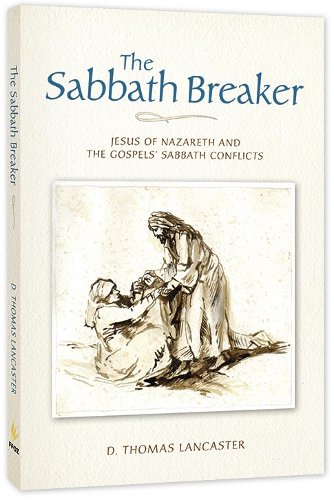
The Sabbath Breaker: Jesus of Nazareth and The Gospels’ Sabbath Conflicts

This is Lancaster’s latest book published by First Fruits of Zion (FFOZ) and, like a number of Lancaster’s books, leverages material previously published in volumes of the Torah Club and issues of Messiah Journal. A great deal of valuable information on topics of intense interest to Christians both in the church and within the Messianic community, is “buried” within much larger documents. In order to make this information more readily accessible, FFOZ is taking material on specific subjects from these “tomes” and refactoring it into several smaller, self-contained books. Lancaster’s The Sabbath Breaker is one such book.

The focus of Lancaster’s book is rather narrow, so don’t imagine it will answer questions such as “Was Sabbath changed from Saturday to Sunday,” “Should Gentile Christians keep the ‘Jewish’ Sabbath and if so, how,” or “Should Messianic Jews keep the Sabbath in the same way as non-Messianic Jews.” The book’s entire focus is to address whether or not Jesus broke the Sabbath and if he didn’t, then how can we explain why he was criticized by the Jewish religious authorities for healing on Shabbat, gleaning with his disciples on Shabbat, and telling other people who were not his disciples to carry and to immerse on Shabbat?

Christianity tends to believe that Jesus did break the Shabbat in order to show us that he had cancelled all of the Shabbat restrictions and Shabbat itself, as part of his “nailing the Law to the cross,” setting us free from the Law and putting us under the Law of Grace.

As you might imagine, Lancaster dismisses the traditional Christian interpretation out of hand and frankly, so do I. But then how can this be explained? Was Jesus “cancelling” the halachah of the Pharisees? Was it indeed permissible Biblically to glean on Shabbat, to heal on Shabbat, to carry on Shabbat, and to immerse on Shabbat? Were the Pharisees adding unreasonable man-made burdens and was Jesus correcting them and rebuking the Pharisees? Or was it more a matter that the Pharisees thought they were upholding the Biblical way to keep Shabbat (and after all, they wanted to kill Jesus for healing on Shabbat, so they were obviously sincere), and Jesus was just interpreting the Bible better?

How about none of the above:

For many Bible readers, this distinction may be too obscure, but if missed, the reader also misses the message of all the Sabbath stories in the Gospels. The essential message is not that Jesus has cancelled the Sabbath or that the rabbinic interpretation of Sabbath is illegitimate. The Sabbath-conflict stories instead communicate that acts of compassion and mercy performed to alleviate human suffering take precedence over the ritual taboo. The miraculous power by which Jesus performs the healings only serves to add God’s endorsement to Jesus’ halachic, legal rationale.

Did Jesus’ disciples break the Sabbath in the grain fields? Yes. But they were justified in doing so because their need took precedence over the Temple service, and the Temple service took precedence over the Sabbath. Therefore Jesus declared them guiltless and told the Pharisees, “If you had known what this means, ‘I desire mercy, and not sacrifice,’ you would not have condemned the guiltless” (Matthew 12:7).

Did the Master break the Sabbath when he healed on the Sabbath day? Yes. Would fixing a car break the Sabbath? Of course it would, and by the same standard so does fixing a human body. Nevertheless, the Master justified doing so because compassion for his fellow man took precedence over the Sabbath.

-Lancaster, pg 61
“Chapter Seven: At Dinner with the Sages”

blind2That’s a more or less “in a nutshell” explanation of how Jesus did break the Sabbath, but at the same time, each event of Sabbath breaking was justified because of a higher halachic standard.

That’s not the full description of course, and you’ll have to read Lancaster’s book to get all the answers. Not including the footnotes, the book is about 135 pages long, so you should be able to get through it pretty quickly.

The book is divided into three sections:

  1. Sabbath Conflicts in the Synoptic Gospels
  2. Sabbath Conflicts in the Gospel of John
  3. The Thirty-Nine Prohibited Forms of Work

The first two sections focus on different explanations (or the lack thereof in the case of John’s Gospel) for Jesus’s apparent “Sabbath breaking” activities. The quote from Lancaster above is a nice summary of the first section. The second one presents some problems, which Lancaster readily admits, such as Jesus telling the man he healed in John 5 to “take up your bed and walk.” (John 5:8). While the content of the book up to this point (pg 65) confirms that Jesus did break the Sabbath by healing but that chesed (lovingkindness or compassion) takes precedence over Shabbat (it’s more involved than that, but you’ll have to read the book to get all the details), carrying is considered a form of Melachah, or a type of work that involves creation and mastery over our environment (a concept that has to be understood to grasp Lancaster’s major points in his book), and this is forbidden on Shabbat, at least in modern times in Orthodox Judaism.

That brings up the issue of whether or not the Thirty-Nine Prohibited Forms of Work can reasonably be applied to First-Century normative forms of Judaism, and that’s a big if. Lancaster addresses this question in his book and seems convinced that an earlier, less formalized version of this halachah was in existence in the day of Jesus’s ministry on earth. The reader will have to decide if this is credible from their own understanding, but capable arguments can be made either way.

Part two which reviews the healings of Jesus in the Gospel of John departs from the legal and even mechanical explanation of his Sabbath breaking activities and the fact that he told a man to do something that also breaks the Sabbath remains a mystery. It is interesting though that after initially criticizing the man for carrying on Shabbat, once they find out that a healing was done on Shabbat also, the Pharisees lose all interest in the man carrying and seek out the healer instead.

Part three is Lancaster’s description, in some detail, of the thirty-nine melachot or types of work that are forbidden on Shabbat. This may be the part of the book most readers will blow past as irrelevant, even if they are Messianic Jews or non-Jews who observe some form of Shabbat, but I think that would be a mistake.

Protestant Christianity does not consider Sabbath a concept worth consideration or if they do, they simply believe that going to church on Sunday fulfills the fourth commandment out of the ten. Grace makes all things permitted on the “Sabbath” so no one has to struggle to confine their behavior, separating the mundane from the sacred on one day of the week.

Christians who are Sabbatarians including those who are involved in the Hebrew Roots or Messianic Jewish movements, for the most part, tend to create their own “halachah” or methods of Shabbat observance, either as individuals or as individual congregations. I would be willing to wager that there are few if any standards for Sabbath observance that encompass large collections of congregations, unless those groups adhere to a set of halachot established by an umbrella group that has adopted Shabbat observance behaviors from another, normative form of Judaism.

sabbath-breaker-lancasterWe all want to believe that Jesus can be our guide to correct Shabbat observance (assuming we value Shabbat observance) and that God has an objective set of standards for how Shabbat is to be kept (and like Lancaster, I’m not going to get into who should keep Shabbat). However the Melachot were derived from Torah (Lancaster’s book provides those specifics as well) so they weren’t just dreamed up out of someone’s imagination. If you believe in an objectively established Sabbath and (again, assuming you believe you are either required to keep the Sabbath or voluntarily choose to do so out of personal conviction or for other reasons) that there are objective standards for keeping Sabbath, then the third part of Lancaster’s book, if you can believe it is reasonably connected back to the first two parts, may actually be your roadmap for how a Jesus-following Sabbath keeper should keep Sabbath.

In The Sabbath Breaker, Lancaster takes a decidedly different approach to looking at Jesus and his “sabbath breaking” behaviors, acknowledging that he did break the Sabbath, not to cancel it, but to uphold it and to illustrate that there are circumstances wherein it is permissible to break the Sabbath for a higher purpose. Jesus himself, according to Lancaster, is not the higher purpose: human beings are. After all, “Sabbath was made for man, not man for the Sabbath” (Mark 2:27).

146 days.

Remembrance and Repentance: A Book Review

shoahBone wet
I watch
as Council members
under rifle
dig obediently
and the earth opens up
to swallow my rabbi
and his sons.

Mach schnell! I hear in my nightmare…

and as I turn to leave,
I notice that the earth still moves
where they buried my heart.

-Lois E. Olena from her poem “Behind the Monastery”
quoted from The New Anti-Semitism

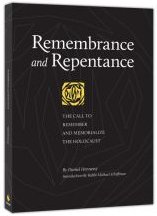
Daniel Hennessy’s new book Remembrance and Repentance: The Call to Remember and Memorialize the Holocaust is generously sprinkled with such “Holocaust poetry.” This one particularly spoke to me as I imagined the love of the Rabbi and his sons buried and still moving within Olena’s heart as their dead bodies were roughly interned in a shallow grave.

Hennessy’s book is written to speak to all of our hearts, especially the Christian heart. His book begins by juxtaposing the betrayal and murder of Jesus with Christian indifference to and even tacit approval of the death of millions of Jews at Nazi hands.

In the Gospel account, we hear the good news of redemption that Jesus rose according to the Scriptures. In the book of Acts, we see Peter — who at the moment of his betrayal was no doubt one of the most miserable human beings on earth — eventually lifted up out of the grip of despair, rising to become an apostle and dynamic leader, a fisher of men used powerfully by God at the very onset of the Messianic movement.

As for the indifferent Christian European world that stood outside the circle of doom, eyes to the ground, during the Holocaust era, it is as if Jesus alive and seated at the right hand of the Father, is looking straight into our eyes today, grieved by the ongoing Silence and indifference associated with the twentieth-century betrayal of his people. Unlike Peter, we as Christians have not yet been restored to fullest spiritual character.

-Hennessy, pp 16-17

That’s a most scathing indictment of today’s Christian church and Hennessy doesn’t let up on the comparison between the ancient betrayal of Jesus and the modern betrayal of his people Israel by Gentile Christianity. According to Hennessy, Peter stood outside the “circle of light” (pg 17) of the fire he warmed himself by as he wept bitterly, and so do we in the church who are beginning to forget the Holocaust and our part in it. As the last aging Jewish victims of the Nazi Holocaust fade and die, so does our own remembrance and even our own conscience.

Perhaps the circle is light, the light in our hearts, is what is diminishing in our world and when it finally grows dark and cold, what horrors will spring forth from the blackest night?

There’s hope, but only if we choose to remember and act righteously in the cause of justice.

This year, Yom HaShoah or Holocaust Memorial Day was on Sunday, April 7th, so you may be wondering why I’m reviewing this book now. On a practical level, it was because I didn’t receive this book until last week. On a more important level, perhaps the most important level, it is because we do not dare to reserve our remembrance to a single day. When we limit our memory and our caring to just one twenty-four hour period, once it’s over, we can safely tuck away our guilt and our desire to see justice done back in its dusty, cardboard box, and shove it back on the top shelf of some forgotten closet or on a rack in our garage until next year, just like our Christmas ornaments.

But if we choose to read, to experience, to remember Shoah each and every day, then each and every day, we can allow the fire of righteous indignation to burn within us, we can ignite the flames of justice, and burn on the pyre of our own responsibility, lest we ever let ourselves and especially our children, forget.

R-and-RDan does an excellent job in this short book (less than 100 pages) of reminding Christianity that it was not just the Nazis who were guilty of atrocities. They were only the outgrowth of anti-Jewish history. It was our own nearly two-thousand years of church supersessionism that formed the massive foundation upon which rested Hitler, his camps, his ovens, and his bloody legacy.

And if there are Christians who do not feel responsible for the past and perhaps the future persecution, torture, and execution of Jewish people and of Israel, lest we forget, we have a High Priest in the Heavenly Court, a King sitting at the right hand of the Father, who watches and waits and who will judge and the Earth. He will also judge us for what have done and what we failed to do.

And the Lord turned and looked at Peter. And Peter remembered the saying of the Lord, how he had said to him, “Before the rooster crows today, you will deny me three times.” And he went out and wept bitterly.

Luke 22:61-62

Jesus watches still. He looks into our eyes. And at his gaze, we also should remember the Lord, and remember his people, and remember Israel, and we should weep for the dead and their children and grandchildren. We in the church can either say “Never again” and cradle the children, the descendents of those who were once herded into cattle cars and driven into ovens, or we can use our own hands to do the herding and the pushing of these Jewish children into some future Shoah.

That is, until Messiah returns to judge us for who we are and what good or horrible things we have done.

I believe with complete faith in the coming of the Messiah, and even though he may delay, every day I eagerly anticipate that he will come.

-The twelfth of Rambam’s Thirteen Principles of Faith

Moshiach is coming. Let him move in your heart.

148 days.