Tag Archives: FFOZ

Return to Jerusalem, Part 4

teshuvahTherefore my judgment is that we should not trouble those of the Gentiles who turn to God…For it has seemed good to the Holy Spirit and to us to lay on you no greater burden than these requirements: that you abstain from what has been sacrificed to idols, and from blood, and from what has been strangled, and from sexual immorality. If you keep yourselves from these, you will do well.

Acts 15:19, 28-29 (ESV)

After presenting the proof text, James placed Simon Peter’s decision before the council. He declared, “It is my judgment that we do not trouble those who are turning to God from among the Gentiles.” That is to say, “We should not require circumcision and conversion as the criteria for salvation.” James referred to the God-fearing believers as those “turning to God from among the Gentiles.” The word “turning” corresponds to “repentance.” The Gentile believers responded to the gospel message, “Repent, the kingdom is near.”

The decision exempted the Gentiles from circumcision and the particular commandments that pertain specifically to Jewish identity. It prohibited the Jewish believers from forcing those issues on Gentiles. Nevertheless, the apostles did not forbid the Gentiles from voluntarily participating in the Sabbath, the dietary laws, or any aspect of Torah-life.

-D. Thomas Lancaster
Torah Club, Volume 6: Chronicles of the Apostles
from First Fruits of Zion (FFOZ)
Torah Portion Yitro (“Jethro”) (pg 442-3)
Commentary on Acts 15:1-20

This is a continuation of the “Return to Jerusalem” series and I recommend that, unless you’ve done so already, you read part 1 through part 3 before continuing here.

We’ve seen the problem of whether or not Gentile disciples of Jesus should be compelled to convert to Judaism and conform to the full yoke of Torah brought before James and the Jerusalem Council. Each side of the debate has made its case and it appears that the testimony of Peter and his experiences with the Roman Cornelius and his household (see Acts 10) have weighed the debate heavily in one direction. James has presented Amos 9:11-12 as his proof text for allowing Gentiles to receive salvation and access to the Messianic promises without converting to Judaism and in accordance with Peter’s position on the matter.

And now we see what James is going to do about it.

For the Jewish disciples and apostles, the crux of their argument was if or how the Gentiles were to be admitted into discipleship. Should they convert and take on the full yoke of Torah or be allowed to remain Gentiles (not convert) and perhaps follow some other or abridged set of behavioral standards? It was the mechanism for admission that was the point for them, not whether or not Gentiles could/should follow the Torah.

However, I’ve received some comments lately on the earlier parts of this series about whether or not we non-Jewish disciples are obligated to the full list of Torah mitzvot (and arguably, all or much of the subsequent Rabbinic commentary on just how one performs the mitzvot) based on Acts 15 among other New Testament scriptures. Further, the question of whether or not the Jerusalem Council “cancelled the Torah” for Gentile and Jewish disciples of Jesus came up. To me, and especially after reading Lancaster, this is a no-brainer, but I keep forgetting that for most Christians, this raises a tremendous conflict in terms of what they’ve (we’ve) been taught (and as you can tell from my writing, I don’t always think like most Christians).

But I want to continue with my review/analysis of Lancaster’s Acts 15 commentary because I think it has a lot to say to both believing Gentiles and Jews. I won’t say that I believe every word Lancaster writes is undying Gospel (you should pardon the expression), but I do think we should take a serious look at what he says and see if there’s merit in what he’s teaching. I think we can learn much.

For instance, while Lancaster has said that Gentile believers are not obligated to the full yoke of Torah, and especially those mitzvot that have to do with Jewish identity (since they aren’t going to be converting to Judaism), he also says that “the apostles did not forbid the Gentiles from voluntarily participating in the Sabbath, the dietary laws, or any aspect of Torah-life.” But then how are we to separate Gentiles being limited to voluntarily participating in only certain elements of “a Torah-life” and “any aspect of Torah-life?”

I’ll address the specifics of what Lancaster defines as “Torah-life” for the Gentile later parts of this series. That said, Lancaster does give us a bit of a picture of what the “early Christians” were up to relative to the Torah, and maybe even a beginning of the answer to the question I just asked.

The God-fearing Gentile believers of the apostolic era were more Torah observant than most Messianic believers (Blogger’s note: or traditional Christians) today. They worshipped in synagogues in the midst of the Jewish community. They had no other days of worship or holidays other than those of the synagogue. They did not drive vehicles to get to their place of fellowship. To share table-fellowship with Jewish believers in the community, they maintained the biblical dietary laws. For all practical purposes, they looked Jewish already.

PaulTo support this claim, Lancaster quotes from Le Cornu’s and Shulam’s “A commentary on the Jewish Roots of Galatians” (Jerusalem, Israel: Akademon, 2005), 835:

This principle has obvious bearing on the language of “troubling” and “burdening” the Gentile believers. James’ ruling for the “majority” of the Gentiles who are now turning to God through Jesus: The Jewish community in Jerusalem will not impose anything on them which they will not be able to bear as a whole. This does not preclude their taking upon themselves additional observances according to their respective abilities and desires.

This lends a great deal of support to Lancaster’s and FFOZ’s position on Gentile Christians and the Torah. While obligation to all of the mitzvot is not imposed on the Gentile disciples as a whole, individuals among the Gentiles may choose to follow the path of Torah more fully and to varying degrees.

I’m going to skip over the “Four Essential Prohibitions” until next time and focus on how the Torah in general is applied to Jewish and Gentile believers. We see that, according to Lancaster and the Jews present at this debate, it was abundantly clear that Gentiles, if they do not convert to Judaism, are not obligated to the full yoke of Torah as a group. But what about the Jews? Did James really abolish Jewish observance of Torah in one fell stroke?

The apostles agreed that Gentile believers did not need to undergo circumcision and full obligation to the Torah as Jews. The obvious corollary requires that Jewish believers are obligated to observe the Torah. The thought that a Jewish believer might also be exempt from the whole yoke of Torah did not enter the minds of the apostles.

Traditional Christian interpretation, however, often assumes that Acts 15 releases both Jews and Gentiles from keeping the Torah’s ceremonial laws of circumcision, Sabbath, calendar, dietary laws, etc. On the contrary, the entire argument of the chapter presupposes that those obligations remain incumbent on the Jewish believer.

-Lancaster, pg 443

Lancaster then finishes off this point by citing some (to Christians, anyway) rather unusual authorities: both a believing Jewish commentator from the 19th century and two unbelieving Rabbis from the 15th and 18th centuries who also wrote scholarly opinions (amazingly enough) on Acts 15. For the full content of their writings as presented in the Torah Club, I encourage you to purchase Vol. 6, but I will briefly quote one source.

And it is forbidden for us to say: “If we have the righteousness of the Messiah unto eternal life, why do we need to observe the Torah, if this is not required for eternal life, for we are only saved by faith?” We are forbidden to speak this way, for who are we to annul it? The Messiah was not made the servant of sin. This is similar to what the Christians said: “Why do I need any longer to give alms to the poor or to do any other good deed, according to the New Testament? Is not my faith enough for me?” It is forbidden to speak like this, for he is a sinner who closes his fist, and the Messiah was not made the servant of sin. Therefore faith does not benefit him, as it says in the epistle of James 2:13, 1 John 3:3, and Paul himself in Romans 6:15. And James says (4:17): “One who knows to do good and does not do it, it is a sin for him,” for the omission is a sin. For when he repents and regrets the wickedness of his heart, then the faith by its power saves him, as Paul also says in Acts 26:20: “Return to God and perform deeds in keeping with repentance.” Then the faith is beneficial.

-Yechiel Tzvi Lichtenstein
“Commentary on the New Testament: The Acts of the Apostles”
(Unpublished, Marshfield, Mo: Vine of David, 2010),
on Acts 15; originally published in Hebrew: Beiur LeSiphrei Brit HaChadashah
(Leipzig: Professor G. Dahlman, 1897).
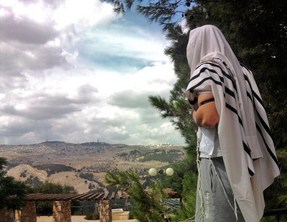
jewish-prayer-israelI am positive that this is the single most difficult message from Acts 15 for the vast majority of Christians to absorb. We have been taught that when it says Jesus is the goal of the Torah, it means the finale as opposed to the “gold standard” of obedience to God that the (Jewish) believers were to unservingly strive for. It is extremely acceptable to most Christians that we in the church are not subject to the “slavery” of the Law, but to believe that any Jewish person who is also a believer continues to be obligated to the Torah teachings is almost too much for us to bear.

I admit that given the scope of Lancaster’s commentary and the limitations of my already lengthy summary of his work, that I cannot indisputably prove that Gentiles have no obligation to Torah while Jews still do (although I think the point regarding Gentiles and Torah is reasonably well made). But in my meager attempts at study and to try to put myself in the place of the people witnessing the council debate this hotly contested (both then and now) issue, I think that Lancaster has made a good case for his conclusions. Again, space and time limitations prevent me from offering a more complete analysis and I don’t want to simply transcribe two weeks of Torah Club lessons into my blog (I’m already guilty of replicating a large portion of the two Acts 15 teachings from TC Vol. 6). Again, if you want to read the entire content of the work supporting these conclusions, you’ll have to consult the Torah Club Volume 6 lessons.

The remainder of this series will address the “Four Essential Prohibitions” and what they mean for Gentile believers, both in ancient and modern days. That’s where we’ll start in Part 5 of “Return to Jerusalem.”

Return to Jerusalem, Part 3

ancient_beit_dinAfter they finished speaking, James replied, “Brothers, listen to me. Simeon has related how God first visited the Gentiles, to take from them a people for his name.

Acts 15:13-14 (ESV)

After Paul and Barnabas concluded their testimony, James the brother of the Master took the floor and addressed the assembly. He prepared to offer a formal declaration based upon the consensus that emerged around Simon Peter’s testimony

James summarized the arguments, both for and against, and then recapitulated Simon Peter’s testimony regarding Cornelius the Gentile. That story carried extra weight because it implied a halachic case precedent – something that had already been accepted and established by the assembly. Compelling Gentile believers to accept circumcision required overturning the endorsement they had granted the household of Cornelius.

-D. Thomas Lancaster
Torah Club, Volume 6: Chronicles of the Apostles
from First Fruits of Zion (FFOZ)
Torah Portion Yitro (“Jethro”) (pg 440)
Commentary on Acts 15:1-20

If you have read Part 1 and Part 2 of this series (and if you haven’t, I recommend you do so before continuing here), you know the direction this is taking. Paul and Barnabas brought with them some “opponents” from the synagogue in Syrian Antioch to the Council of Apostles in Jerusalem to settle a matter of great importance. In granting the Gentiles discipleship under the Messiah in the Jewish sect “the Way,” should the Gentiles be required to convert to Judaism and consequently, take on the full yoke of Torah, as do the people born as Jews?

Many arguments, for and against have been presented before James and the Council of Apostles and elders. Peter recounted his own experiences with the Roman Cornelius and his household of God-fearers and how they too received the Holy Spirit, just as the Jews had, but without first being circumcised and converting to Judaism. They were subsequently baptized in water. God had granted the Gentiles the Spirit as He did the Jews, but He did not require that the Gentiles convert to being Jews. And it absolutely never occurred to any of the Jewish witnesses present or the Apostles that any Gentile disciple must fulfill the full body of Torah mitzvot if they remained Gentiles and did not convert.

Now James, as head of the Council, is about to establish the official halachah on this matter, and it will become binding on the Messianic community from this time forth. It this decision a “slam dunk,” so to speak?

Simon Peter based his argument on the miraculous manifestation of the Spirit that accompanied the conversion of Cornelius and his household (Blogger’s Note: “conversion” is a poor word to use in my opinion, since Cornelius maintained his status as Gentile, but was accepted by the Holy Spirit as “a Gentile called by God’s Name,” see below). Paul and Barnabas added supporting anecdotes. Despite the weight of such stories, the sages do not determine halachah on the basis of miraculous signs. Before he could issue a ruling, James needed to provide a definitive proof text to support the decision. (b.Baba Metzia 59b.) In rabbinic disputation, a legal ruling is almost always paired with supporting proof text.

-ibid

At this point, some of your reading this may be crying “foul!” How can Lancaster use a Talmudic reference in defining the process by which James would make his determination, when the Talmud wouldn’t be documented for centuries? It is said that a significant portion of the process of rabbinic examination and judgment of issues predated even Jesus. For instance, we know that the teachings of Hillel and Shammai existed a generation or more before Jesus and those teachings are with us today in the Pirkei Avot. Lancaster may be taking a few liberties with his application, but it’s not entirely unreasonable to believe James was employing (even for that day) time-honored processes and traditions in the matter of judging halachah; traditions that were later recorded by the Rabbis and preserved for Jewish communities throughout the ages and until this day.

temple-of-messiahAssuming for the moment that Lancaster is correct in his description of what James is preparing to do (and a detailed discussion on Lancaster’s opinions regarding ancient halachah is beyond the scope of my blog post), what was the “proof text” to be used to establish the aforementioned halachah for allowing Gentile’s entry into the Way as disciples of the Master?

“After this I will return, and I will rebuild the tent of David that has fallen; I will rebuild its ruins, and I will restore it, that the remnant [rest] of mankind may seek the Lord, and all the Gentiles who are called by my name, says the Lord, who makes these things known from of old.”

Acts 15:16-18 (ESV)

In this case, James has chosen Amos 9:11-12 as his proof text, a passage of scripture that describes the re-establishment of the Davidic dynasty, placing Messiah, Son of David upon the throne of Israel, and the presence of the Gentiles from the nations in the Messianic age seeking the Lord.

But how does that prove anything?

The phrase “all the nations/Gentiles who are called by my Name” employs a common biblical Hebrew idiom for ownership. Ordinarily, Israel is the people “called by God’s name” (see Deut. 28:10, 2 Chron. 7:14, and Jer.14:9 for example). Ordinarily, the Gentiles are “those who are not called by your name” (Isaiah 63:19). Therefore, the Amos prophesy implies that in the Messianic Era, there will be Gentiles who belong to God in the same sense that the Jewish people belong to God.

-ibid, pg 441

Lancaster offers a very detailed analysis of Amos 9:11-12 in this Torah Club study, and I encourage you to get a copy and read it for the full details. More than that, Boaz Michael’s recent book, Tent of David: Healing the Vision of the Messianic Gentile, goes into exquisite detail about how James, his proof text, and the subsequent halalaic decision regarding the admission of Gentiles into the discipleship of the Messiah, applies to all Christians today, particularly those of us who are “hebraically-aware” and who find ourselves drawn to a Jewish perspective on the Bible, Messiah, and God.

From Lancaster’s perspective, James delivers a midrash on Amos 9, rather than simply quoting the text, that predicts Messiah rebuilding the fallen Temple in Jerusalem from where he will continue the Davidic dynasty, and where God will once again place His Presence. Once the fallen “sukkah” of David has been re-established, the Gentiles among the nations will seek out God in Jerusalem.

(References are numerous: Isaiah 2:2-3, 25:6, 56:6-7, 60:6-7, 66:23; Jeremiah 3:17; Micah 4:1-2; Zechariah 14:16, and also in many of the Psalms where the nations are called to worship God, according to Lancaster’s notes).

Lancaster further states that James’s words,  “After this,” or “After these things,” (Acts 15:16) utilize a prophetic formula that alludes to various prophesies of the Messianic Age (see Hosea 3:5 and Jeremiah 12:15-16; also Isaiah 45:20-22).

Based on what you’ve read so far, you may be convinced that God indeed allows Gentiles to enter into covenant relationship with Him through Messiah without converting to Judaism (and most Christians believe this), but some may be asking themselves, “What is it here that says the ‘Gentiles who are called by His name’ are not obligated to the same Torah mitzvot as the Jewish awareness-of-goddisciples?” Good question, though keep in mind that Part 1 and Part 2 of this series already established that only born Jews or converts to Judaism have an obligation to the “full yoke of Torah.” Lancaster asks something very similar.

Before proceeding with Lancaster, I should say at this point that we non-Jewish disciples of the Jewish Messiah are not completely “unyoked” from Torah, but rather not “yoked” fully in the manner of the Jews, or as Derek Leman recently said (scroll down to the comments section), The “Father’s instructions” might be different for Jews and non-Jews. Something to consider. Much of what Jesus taught and what is practiced in many churches today comes directly from the Torah, so we are not “lawless.” The law is simply applied differently to us, and I hope to describe that a little better later on in this series. Now, back to Lancaster’s commentary.

How does this passage legitimize the decision of James and the Jerusalem Council? In what way does this passage justify a Gentile exemption from circumcision, conversion to Judaism, and full liability to the laws of the Torah?

To James and the believers in Jerusalem, David’s restored booth represented Yeshua (Jesus), the Davidic king who comes to rebuild the monarchy of Israel. He is the repairer of the broken places, the restorer of the ruins, who will rebuild the house of David and establish the Temple in the Messianic Era. According to the Amos passage, the restored Davidic kingdom will include Gentiles who bear God’s name, i.e., they belong to God.

The God-fearing Gentile believers fit the description: Gentiles from the nations who identified themselves with God’s name and sought after God because of the revelation of the Davidic Messiah. If the apostles required those same Gentiles to become legally Jewish, however, they would cease to be “Gentiles who are called by God’s Name.” They would be Jews. They would fail to fulfill the prophesy because a literal fulfillment of the Amos prophesy requires that both Jews and Gentiles must exist in the Messianic Era.

-ibid, pg 442

If the Council required the Gentiles to all convert to Judaism as a condition of being called by God’s Name, they would all be Jews who are called by God’s Name, not Gentiles. Not only would the Council be frustrating the Amos prophesy, but they would be robbing the Gentiles of their (our) reward and their (our) destiny in the Messianic Age.

Notice there’s still a piece or two missing. The actual decision of the Council and how it was to be expressed (in this case, by writing a letter). But for the sake of space and not requiring you to read a “meditation” that is prohibitively lengthy, I’ll save that for Part 4 of “Return to Jerusalem.”

Return to Jerusalem, Part 2

Torah at SinaiFor this commandment that I command you today is not too hard for you, neither is it far off. It is not in heaven, that you should say, ‘Who will ascend to heaven for us and bring it to us, that we may hear it and do it?’ Neither is it beyond the sea, that you should say, ‘Who will go over the sea for us and bring it to us, that we may hear it and do it?’ But the word is very near you. It is in your mouth and in your heart, so that you can do it.

Deuteronomy 30:11-14 (ESV)

Now, therefore, why are you putting God to the test by placing a yoke on the neck of the disciples that neither our fathers nor we have been able to bear?

Acts 15:10 (ESV)

Peter’s statement, which seems to disparage the Torah, presents no difficulty for traditional Christian interpretation. Gentile Christianity has always taken a dim view of Torah and is glad to dismiss “Old Testament law” as an unbearable yoke. Disdain for the Torah is not a Jewish perspective. Instead, the apostles teach that “the Torah is spiritual,” “the Torah is holy, and the commandment is holy and righteous and good,” and most pertinent to Peter’s so-called deprecation, God’s commandments are not unbearable: “His commandments are not burdensome.”

Given this positive view of the Torah and the fact that 1 John 5:3 explicitly says that God’s commandments are not burdensome, could Simon Peter have referred to the Torah as a yoke “that neither our fathers nor we have been able to bear?”

-D. Thomas Lancaster
Torah Club, Volume 6: Chronicles of the Apostles
from First Fruits of Zion (FFOZ)
Torah Portion Yitro (“Jethro”) (pg 437)
Commentary on Acts 15:1-20

This is Part 2 of this multi-part series on Acts 15 and its implications for Christians and Jews today. If you haven’t done so already, please read Part 1 before continuing here.

So how could Peter believe that the Torah was too difficult for his Jewish fathers (ancestors) and his Jewish people to bear and still presumably believe that the Torah was good, spiritual, holy, and righteous?

In some of my previous talks with my Pastor about Jewish obligation to Torah, one of the areas we discussed was whether or not it was possible to obey the Law perfectly. Pastor Randy says “no” and I tend to agree with him because as Paul has said, ” for all have sinned and fall short of the glory of God.” (Romans 3:23) I may upset some of my Jewish readers, but personally, I don’t think that any Jewish person (let alone any non-Jew who has ever tried) has ever perfectly performed all of the mitzvot, from the day it was given by God to the Children of Israel through Moses, forward to the present.

For whoever keeps the whole law but fails in one point has become accountable for all of it.

James 2:10 (ESV)

Funny that James should write such a thing, when he was also present with the council of Apostles listening to Peter speak about how much of a burden Torah is. James seems to be saying that it is impossible to keep the Torah because there are so many difficult commandments, and this verse, along with Peter’s statement, are part of the scriptures many Christians use to justify how the Law is now dead (and sometimes Judaism along with it) and has been replaced by grace (and sometimes replaced by Christians).

Is there an alternate way of understanding all of this and also preserving Jewish devotion to Torah for the Messianic Apostles and disciples? Lancaster in his commentary on Acts 15 seemed to think so.

To insist that Simon Peter could not have referred to the Torah’s obligations as a difficult burden simply because other texts contradict that sentiment denies a literal reading of Scripture. Peter was able to articulate the idea that, though the Torah is a source of blessing and holiness, it is also difficult. A naive, rigid, theological reading, which cannot tolerate tension between one passage and another, will find this difficult, but the Jewish voice, following the contour of Hebraic thought, would find no difficulty in admitting it.

-ibid, pp 437-8

Talmud Study by LamplightNevertheless, some commentators have attempted to reduce the “tension” Lancaster mentions by insisting that the “Torah” Peter was speaking of was the “Oral Law of the Pharisees,” even though Acts 15:5 specifically references the “law of Moses.”

But Peter, as a Jew who had lived in the Jewish homeland all his life, and had observed the mitzvot and halachah all of his life, knew what he was talking about, and so did his Jewish audience. If Peter had required that the Gentile disciples all convert to Judaism, he would be requiring them to be obligated to the full weight of the Torah. While it is an honor to serve God and to walk in His ways as a Jew, it is not easy.

A yoke which neither our fathers nor we have been able to bear…

Acts 15:10

For freedom Christ has set us free; stand firm therefore, and do not submit again to a yoke of slavery. Look: I, Paul, say to you that if you accept circumcision, Christ will be of no advantage to you.

Galatians 5:1-2

Paul echos Peter’s statement and describes a state in which, should a Gentile disciple convert and be bound to Torah, he or she will be obligated unrelentingly to the full weight of the yoke of the Law. According to Lancaster this includes the following:

Previous generations of Jewish history had already proven the Torah to be an unbearable duty for sinful human beings. The Torah is a source of blessing, but outside the Messiah’s righteousness, it is also a source of curse. All men sin and fall short of the glory of God and incur his wrath. “The law brings wrath.” (Romans 4:15). Peter only means to point out that obligation to the Torah (Jewish status) is not an avenue to salvation.

In addition to the theological ramifications of forcing Gentile believers to become Jewish and keep the whole yoke of Torah, the apostles also had in mind the very practical implications of such a decision. If the Gentile believers took on halalaic Jewish status, they placed themselves under the authority of the Torah courts (including the Sanhedrin, which was at the time, hostile to believers)…

-ibid, pg 438

Lancaster may be reading between the lines about what the Apostles were and weren’t thinking about, but it’s a reasonable assumption. If the Gentiles could only be saved by converting to Judaism and converting to Judaism meant full halalaic obligation to Torah and the traditions, then any theological and legal consequences for failure to perform the mitzvot correctly landed right on their shoulders. This also means that any particular blessings Gentiles are intended to receive because they are Gentiles attaching themselves to God, would be lost when they converted.

Before we continue, I want to point out something special Lancaster said:

The Torah is a source of blessing, but outside the Messiah’s righteousness, it is also a source of curse.

If the Torah has always been too difficult to obey, and outside of Messiah, it is a source of both blessings and curses, why did God give the Torah at one point in history and bring the Messiah much later?

What then shall we say was gained by Abraham, our forefather according to the flesh? For if Abraham was justified by works, he has something to boast about, but not before God. For what does the Scripture say? “Abraham believed God, and it was counted to him as righteousness.”

Romans 4:1-3

Faith in God and God’s graciousness to humanity was always the foundation. Paul made a point to tell that to the Jewish and Gentile believers in Rome. The Torah does not justify you. It never did. Torah was never the mechanism by which an individual or the nation of Israel was justified before God. It was by faith. The mitzvot were, in many ways, given originally to be sort of the “national constitution” of ancient Israel, and a description of the way of life the Israelites were to live because they were God’s chosen ones. Yes, part of the Torah was to enable Israel to be a light to the nations and to attract them (us) to God, but Torah didn’t exist for its own sake, at least not according to Paul.

What did Peter have to say about this?

But we believe that we will be saved through the grace of the Lord Jesus, just as they will.”

Acts 15:11

key-of-kingdomHis response to those Jews who believed the Gentiles must convert to Judaism to be saved was to say that by placing the Torah upon the Gentiles, it would be an unbearable yoke for them…and for the Gentiles, who after all were not standing there with the Israelites at Sinai, conversion and full Torah obligation wasn’t necessary. Like the Jews, they were also saved through the grace of Christ. Both Jewish and Gentile believers were and are saved only through the grace of Messiah, but the Jews retain additional obligations under the yoke of Torah, which they can bear because of Moshiach’s righteousness.

But where does Peter get off making such a decision (or at least arguing for making such a decision) for the Gentiles?

And I tell you, you are Peter, and on this rock I will build my church, and the gates of hell shall not prevail against it. I will give you the keys of the kingdom of heaven, and whatever you bind on earth shall be bound in heaven, and whatever you loose on earth shall be loosed in heaven.”

Matthew 16:18-19

You may have your own opinion on what you think Christ giving Peter the “keys to the kingdom” means. Here’s Lancaster’s interpretation:

“Since the elders agreed with what had been said by Peter, the whole assembly kept quiet.” (see Acts 15:12) The Master had given Simon Peter the “keys to the kingdom of heaven,” the halachic authority to bind and to loose in matters concerning His assembly. Simon’s testimony made it clear that he loosed the Gentiles from the obligation of circumcision and coming under the yoke of Torah as Jews.

-ibid, pg 439

In other words, Jesus personally gave Peter halalaic authority to make binding decisions for the disciples, Jews and Gentiles, who were members of the sect “the Way.”

I’ll stop here and pick up with James and his summation of the arguments that had been presented in the next part of this series, but I do want to make clear what’s been said so far. Although many Jews did not comprehend how the Gentile disciples could become disciples without conversion to Judaism, Peter (see Part 1) reminded the assembly that Cornelius and his household received the Holy Spirit and were baptized but were not circumcised, thus illustrating that salvation was also available to the Gentiles without converting to Judaism.

We have to go to Galatians to support Peter’s argument that only being born Jewish or converting to Judaism required a person to be obligated to perform the full body of Torah mitzvot. This was apparently a common understanding among all of the Jews present and no one disputed it.

Peter had the halalaic authority to make such decisions or at least to seriously suggest them before the council (and James was the head of the council, so his response is still required before any conclusions can be made), so that, plus his experience with Cornelius, made him more than qualified to say that the Gentile disciples should not be made to convert to Judaism and it would be “testing God” (see Luke 4:12) to do otherwise.

But the final decision hasn’t been made. We still need to review James’s response to all of the testimony presented and then his (and the Holy Spirit’s) final decision on the matter. We’ll begin with the response of James in Part 3.

Return to Jerusalem, Part 1

up_to_jerusalemPaul and Barnabas appeals to the ruling given by the pillars, James, Simon Peter, and John. The newcomers questioned the ruling and the circumstances around it. Did the apostles really mean that the Gentile believers should remain as Gentile believers indefinitely? Surely not! Surely they only intended a grace-period during which the Gentiles could learn Torah. The newcomers raised practical questions:

“Do the Gentile disciples need to keep the commandments of the Torah at all then? Are they free to do as they please? Did not our Master teach us that whoever breaks the least of these commandments and teaches others to do so will be called least? Is it not sufficient for a disciple to be like his teacher? If our Master kept the Torah, should not His disciples keep the same commandments?”

Paul argued, “The whole Torah is fulfilled in one word, in the statement, ‘You shall love your neighbor as yourself'” (Galatians 5:14). He said, “The deeds of the flesh are evident!” (Galatians 5:19). On the other hand, he argued resolutely that those commandments which he styled “works of the Law,” i.e., circumcision and Jewish identity-markers, should not be required from Gentile believers.

-D. Thomas Lancaster
Torah Club, Volume 6: Chronicles of the Apostles
from First Fruits of Zion (FFOZ)
Torah Portion Yitro (“Jethro”) (pg 432)
Commentary on Acts 15:1-20

Paul and Barnabas seem to have a real problem here and so do we. It has been argued by some that the Jewish “newcomers” who Paul and Barnabas were debating in the Jewish community in Syrian Antioch were correct, at least in part, that the Gentile believers, both in ancient days and in the present, should do everything that Jesus did in living a lifestyle consistent with our Jewish Master as his Jewish disciples. After all, the short definition of a disciple is one who learns from his or her Master through imitation. If we’re not imitating the practices of our Master down to the last detail, how can we be said to be his disciples?

On the other hand, the Jewish people arguing with Paul and Barnabas on this point saw no other way for the Gentiles to be disciples and imitators of Jesus than to become circumcised (the males) and to become full converts to Judaism. In their way of thinking, having Gentiles who were disciples and fully under the “yoke of Torah” was an impossible thought. One was either a Jew or not. There was no middle ground.

Paul was arguing strenuously for Gentile inclusion as disciples without conversion to Judaism, but how was such a thing to be done? The questions brought forth by the “newcomers” are indeed valid. We don’t consider such questions today in most of the church and in some ways, that represents the tremendous “disconnect” between most 21st century Christians and the origins of our faith. We have become unconscious of the “Jewishness” of our very first teachers, the Apostles and the Jewish disciples of our Jewish Messiah. Most of us, when we read Acts 15, interpret the scripture the way we’ve been taught rather than reading what the Apostles were actually saying.

Also, Paul’s argument, as Lancaster presents it, offers another problem. How can you truly reduce the Torah down to a single commandment and how were the Gentiles to enact “loving their neighbors as themselves” without obeying all, or at least very significant portions of the mitzvot and halachah as they were understood in that day? Lancaster separates out the “works of the Law” or “Jewish identity markers” from the larger body of mitzvot, but is that understanding taken directly from scripture or a theological interpretation of the writer and FFOZ? If the Torah could be “reduced” to a single, basic commandment for the sake of the Gentiles, why wasn’t it reduced for the Jewish disciples as well?

ancient-rabbi-teachingTo answer all those questions, we must do what Paul and Barnabas did: take it to the council of Apostles in Jerusalem.

So they decreed that Polos and Bar-Nabba along with some others would go up to Yerushalayim to the shilichim and the elders concerning this question.

Ma’asei HaShlichim (Acts) 14:2
from an unpublished translation based on Delitzsch

Lancaster’s commentary provides a variety of details about Paul’s and Barnabas’ journey to Jerusalem and the preliminaries about how they were received that I’m not going to discuss, both because of the length and because I have no intention of recreating the full body of Torah Club commentary on Acts 15 here (You can read Vol. 6 of the Torah Club to get the full analysis).

However, Lancaster does present a very handy outline of the Acts 15 problem that I think we should review before getting into the details of the matter.

  • The Original Question: Must the Gentiles be circumcised (become Jewish) in order to be saved? (15:1)
  • The Charge: The Gentiles must be circumcised and required to obey the Torah of Moses (in order to be saved). (15:5)
  • The Rebuttal: Why do you put God to the test by placing upon the neck of the disciples a yoke which neither our fathers nor we have been able to bear? But we believe that we are saved through grace of the Lord Jesus, in the same way as they also are. (15:10-11)
  • The Proof Text: Amos 9:11-12 (David’s Fallen Tabernacle). (15:16-18)
  • The Decision: It is my judgment that we do not trouble those who are turning to God from among the Gentiles… (15:19)
  • The Four Essential Prohibitions: But what we write to them that they abstain
    1. from things contaminated by idols
    2. from fornication
    3. from what is strangled
    4. from blood. (15:19-20)
  • The Explanation of the Decision: For Moses from ancient generations has in every city those who preach him, since he is read in the synagogues every Sabbath. (15:21)

-ibid, pg 433

Luke compresses the arguments presented before James and the Jerusalem Apostles so that they appear very brief, but according to Lancaster, the discussion may have lasted for days, as argument and counter-argument was presented by one side and then the other. The arguments against Gentile inclusion without conversion, using the words of the Master himself, must have been compelling:

“Do not give what is holy to dogs, and do not throw your pearls before swine. Do not go in the way of the Gentiles…but rather go to the lost sheep of the house of Israel. It is not good to take the children’s bread and throw it to the dogs. I was sent only to the lost sheep of Israel.”

-ibid
see Matthew 7:6, 10:5, 15:24, 15:26

The argument, as we read it from a modern Christian perspective, is not without its irony. In today’s church, Jewish people (or anyone else) cannot be saved unless they totally surrender their “Jewishness” and convert to (Gentile) Christianity. The Jewish identity and everything else about what it is to be a Jew, including the Torah of Moses, must be totally excised from the Jewish convert to Christianity. Yet in this hearing before the Jerusalem council, it is being strongly argued that a Gentile (anyone who is not Jewish) cannot be a valid disciple and follower of our (Jewish) Lord Jesus Christ unless he or she totally gives up their pagan ways and their Gentile identity and converts to Judaism.

But then Peter spoke:

And after there had been much debate, Peter stood up and said to them, “Brothers, you know that in the early days God made a choice among you, that by my mouth the Gentiles should hear the word of the gospel and believe. And God, who knows the heart, bore witness to them, by giving them the Holy Spirit just as he did to us, and he made no distinction between us and them, having cleansed their hearts by faith.

Acts 15:7-9 (ESV)

Peter is, of course, referring to his encounter with the Roman Centurion Cornelius and his household:

While Peter was still saying these things, the Holy Spirit fell on all who heard the word. And the believers from among the circumcised who had come with Peter were amazed, because the gift of the Holy Spirit was poured out even on the Gentiles. For they were hearing them speaking in tongues and extolling God.

Acts 10:44-16 (ESV)

Burning-Star-of-DavidTaken one way, Peter could be saying to the Council that the Holy Spirit destroyed any and all distinctions between the Jewish and Gentile disciples of Messiah, creating “one new man,” and indeed this is exactly what the vast majority of Christians believe today. However Lancaster, reverses this and says that Simon Peter’s argument hinges on the necessity of maintaining a clear distinction between Jews and Gentile believers. According to Lancaster, Peter was not speaking in overly general terms and was specifically describing eligibility for salvation rather than defining legal identity, nationality, or covenantal obligations. Paul seems to echo this in his most famous statement in his epistle to the Galatians.

There is neither Jew nor Greek, there is neither slave nor free man, there is neither male nor female; for you are all one in Christ Jesus.

Galatians 3:28

Applying Lancaster’s understanding of Peter’s statement to what Paul wrote, we then see that Jews and Greeks, slaves and free men, men and women, though different in status, class, nationality, ethnicity, and gender, all have identical access to salvation through Jesus Christ. Discipleship under Messiah doesn’t blur or destroy distinctiveness, including the specifics of Jewish covenant distinctiveness, but it does destroy any barriers between all humans and the salvation of God.

Naturally, this is going to be a lengthy discussion and analysis and Lancaster’s commentary covers a lot of ground, so yes, this the first part of another multi-part series. We’ll pick up with Simon Peter and “the unbearable yoke of the Law” in Part 2 of “Return to Jerusalem” tomorrow.

The New Mitzvah of Christ, part 1

lovingkindness“What you dislike, do not do to your friend. That is the basis of the Torah. The rest is commentary; go and learn!”

-Shabbos 31a

“Love HaShem your God with all of your heart, with all of your soul, and with all your knowledge.” This is the greatest and first mitzvah. But the second is similar to it: “Love your fellow as yourself.” The entire Torah and the Prophets hang on these two mitzvot.

Matthew 22:37-40 (DHE Gospels)

The Shema (Deuteronomy 6:4-9) is above all else a commandment, a mitzvah that we are to obey. When Messiah Yeshua comments on the Shema, he joins it with another commandment to reveal deeper implications hidden within both…

As the greatest of the commandments, the Shema is tied to this second commandment, which “is similar to it: ‘Love your fellow as yourself'” (Leviticus 19:18). This linkage is integral to the Shema, because one cannot love God in the way that the Shema defines love without loving one’s neighbor.

As we have seen, we cannot reduce the love of God to a mystical or pietistic encounter; it must be acted out in a walk of obedience.

Rabbi Russ Resnik
“‘Shema:’ Living the Great Commandment,” pg 71
Messiah Journal, Issue 112
Published by First Fruits of Zion (FFOZ)

Yesterday (and actually before that in a more general sense), I was talking about love within the context of both the very famous words of the ancient sage Hillel and Yeshua’s (Jesus’) two greatest commandments. Of course, the Master was referencing the Shema, which every Jewish person will immediately recognize (I don’t know if the Shema was formalized in the late second Temple period, but certainly, the Messiah’s Jewish audience would have immediately recognized the source of his lesson). Rabbi Resnik is also addressing primarily a Jewish audience and more specifically Jews who are Messianic, but his article in Messiah Journal brings up questions involving Gentile Christians and the application of Torah. After all, we are disciples of Christ as well, and thus under his authority and teaching. But how far do the Master’s lessons to his Jewish followers extend to the disciples of the nations?

Yeshua’s second point is, “On these two commandments hang all the Torah and the Prophets.” This doesn’t mean that they render the rest of the Torah and the Prophets irrelevant, God forbid, but that they provide the framework for understanding, interpreting, and applying all of Torah and the words of the prophets. As Hillel says, “All the rest [of Torah] is commentary: now go learn it.” (b.Shabbat 31a). The two-fold commandment doesn’t supersede Torah. Rather, it provides the framework for the proper interpretation of the whole.

-Resnik, pg 73

Thus Rabbi Resnik dispenses with supersessionism, but he made me think of something else.

Therefore my judgment is that we should not trouble those of the Gentiles who turn to God, but should write to them to abstain from the things polluted by idols, and from sexual immorality, and from what has been strangled, and from blood. For from ancient generations Moses has had in every city those who proclaim him, for he is read every Sabbath in the synagogues.”

Acts 15:19-21 (ESV)

These are some of the most misunderstood words we find in the New Testament, at least by some variant Christian faith groups. The majority of Christian churches believe that the “Jerusalem letter” was a ruling of James and the Council of Apostles stating that the practice of the Torah mitzvot as applied to the Jewish people, should not also be imposed on the body of Gentile disciples, but rather only certain specific standards. However, verse 21 seems to indicate some sort of connection between the Council’s pronouncement to the Gentiles and Moses being proclaimed and the Torah being read every Sabbath in the synagogues.

Some suggest that James’ intent was that the Gentiles should learn Torah and learn to obey it in the identical manner of the Jews as an obligation. If we marry this idea back to Rabbi Resnik’s commentary on Christ’s two greatest commandments, it seems to fit, but then, I can hardly believe that the esteemed Rabbi meant to communicate that idea. But if he didn’t, what are he, and Jesus and James, saying?

One of the topics I’ve been discussing with Pastor Randy at my church is what “Torah” means within a Messianic context, and how (or if) Torah is applied to the non-Jewish disciples of the Master (i.e. Christians). It’s a difficult question to answer, especially if part of what you mean by “Torah” involves Talmud and how the rulings and opinions of the ancient Jewish sages are applied to the various normative Judaisms in our day.

Frankly, I believe that Christians should learn Torah. In fact, I believe that Christians do learn Torah. We just don’t call it that. We call it “Bible Study” or “Sunday School.”

What would the early Gentile Christians have learned by going to the synagogues and listening to the Torah portions being read every Shabbat?

They would have learned Torah.

Why?

And you, go to all the nations. Make disciples; immerse them for the name of the Father, and the Son, and the Holy Spirit, and teach them to keep all that I have commanded you.

Matthew 28:19-20 (DHE Gospels)

Again, especially using the Delitzsch translation, it certainly seems as if Jesus meant for the disciples of the nations to “keep” what he taught, if we can assume what he taught was “Torah,” and given his two greatest commandments, that is indeed what he was teaching.

Jewish_men_praying2But he wasn’t teaching his Jewish disciples to be Jews; they already knew about that…being Jewish as a lifestyle, was fully integrated into the Israeli Jewish existence. Religion in ancient times wasn’t separated from any other part of life, so to observe the mitzvot for a Jew was just part of normal living.

But then, what was Jesus teaching them that he also wanted to be taught to we Christians if not how to live as a Jew? What was being read in the synagogues every Shabbat that James wanted the Gentile disciples to hear? The Torah and the Prophets.

But if all Christians are supposed to learn and obey the Torah in the manner of the Jews, why did Paul say this?

Look: I, Paul, say to you that if you accept circumcision, Christ will be of no advantage to you. I testify again to every man who accepts circumcision that he is obligated to keep the whole law. You are severed from Christ, you who would be justified by the law; you have fallen away from grace.

Galatians 5:2-4 (ESV)

Paul is communicating to his Gentile Christian audience with a very simple “if/then” statement: If you accept circumcision (convert to Judaism), then you are obligated to keep the whole law (Torah). The implication is made obvious by turning the positive statement into a negative. If you do not convert to Judaism (remain a Gentile Christian), then you are not obligated to keep the whole law (Torah).

So far, as nearly as I can tell, Jesus and James wanted the Gentile disciples to learn the Torah but not be obligated to it in the manner of the Jewish people. But then why does Jesus in stating “the great commission” tell the Jewish disciples to “keep all that I have commanded you?” Something is missing. What were the Gentiles supposed to learn from the Torah by hearing it (and no doubt observing their Jewish mentors performing the mitzvot), and then what were they supposed to keep that Jesus taught?

I first want to mention that in Galatians, Paul is indeed saying that keeping the Law does not justify anyone before God, neither Jew nor Gentile. It is Christ who is our sole justification before the Father. A Jew observing the mitzvot isn’t justified simply by observing the mitzvot, and I’ve never heard a Messianic Jew say anything different. Nevertheless, Paul certainly expected Jews to be obligated to the Law, otherwise, he wouldn’t have said that righteous Gentile converts were also obligated. No, the application of the Sinai covenant was not done away with by Jesus or by Paul. However, we see that it wasn’t applied to the Gentiles, at least not in the way we see it applied to the Jews.

So how is there a difference between Torah being applied to Jewish and Gentile disciples of Jesus Christ? That’s where we’ll begin in part 2 of this two-part article.

Peace.

Collision and Recoil, Part 1

ancient-torahFor some days he was with the disciples at Damascus. And immediately he proclaimed Jesus in the synagogues, saying, “He is the Son of God.” And all who heard him were amazed and said, “Is not this the man who made havoc in Jerusalem of those who called upon this name? And has he not come here for this purpose, to bring them bound before the chief priests?” But Saul increased all the more in strength, and confounded the Jews who lived in Damascus by proving that Jesus was the Christ.

When many days had passed, the Jews plotted to kill him, but their plot became known to Saul. They were watching the gates day and night in order to kill him, but his disciples took him by night and let him down through an opening in the wall, lowering him in a basket.

Acts 9:19-25 (ESV)

And when the Gentiles heard this, they began rejoicing and glorifying the word of the Lord, and as many as were appointed to eternal life believed. And the word of the Lord was spreading throughout the whole region. But the Jews incited the devout women of high standing and the leading men of the city, stirred up persecution against Paul and Barnabas, and drove them out of their district.

Acts 13:48-50 (ESV)

This becomes a familiar refrain in Paul’s life. Always someone is condemning him for his message or what it implies in their lives. As you may recall from yesterday’s “morning meditation,” when, in Acts 9:23, it says that “the Jews plotted to kill him,” the word we read in English as “Jews” in Greek is “Ioudaioi,” which specifically refers to the Jewish religious leaders and those who support them, not the Jewish people in general (according to the commentary in my ESV Bible, anyway). We see the same word used in Acts 13:50 when it also says, “But the Jews incited the devout women of high standing and the leading men of the city, stirred up persecution against Paul and Barnabas…”

I’ve been reading D. Thomas Lancaster’s Torah Club 6: Chronicles of the Apostles, specifically his commentary on Acts 13 (pp 379-405) which is intended to be read during the week that Torah Portion Bo (“Come”) is studied. I really wish that all of you reading this blog (and everyone else) could read this particular lesson on chapter 13 of Acts, because it is illuminating in many ways, presenting the message of salvation to Jews, Jewish converts, and everyone else in such a clear manner. Space on this blog prevents me from replicating Lancaster’s arguments in full and besides, if I simply “copied and pasted” the lesson here, I would be depriving you of the pleasure of studying from the Torah Club.

Nevertheless, there is some important territory to cover. For instance, why does Chapter 13 end with the Jewish religious leaders of Antioch (and according to Lancaster,“thanks to the Seleucid dynasty, more than fifteen cities in the Roman world bore the name Antioch”), conspiring with “a few prominent, God-fearing, Gentile women who were friendly with the Jewish community” to drive Paul and Barnabas out of their area? I mean, the whole thing started out so well. After Paul’s brilliant teaching as we read in Acts 13:16-41.

When they went out [from the synagogue] they requested of them to speak these things to them the following Shabbat. When the assembly was dismissed, many individuals from the Yehudim and righteous converts followed Polos and Bar Nabba, who spoke to their heartfelt need and warned them to stand in the kindness of God

Ma’asei HaShlichim 13:42-43 (As quoted from Torah Club, vol 6, pg 393)

The above version of Acts 13:42-43 is taken from an unpublished translation based upon the work of the nineteenth-century Christian scholar Franz Delitzsch (a translation of the Gospels based on Delitzsch’s work is currently available). Let me present the same verses in a form that might be more familiar to you.

As they went out, the people begged that these things might be told them the next Sabbath. And after the meeting of the synagogue broke up, many Jews and devout converts to Judaism followed Paul and Barnabas, who, as they spoke with them, urged them to continue in the grace of God.

Acts 13:42-43 (ESV)

Now, according to Lancaster, here’s the Jewish reaction to what Paul had taught the Jews, converts, and Gentile God-fearers about the risen Messiah:

The synagogue of Pisidian Antioch received Paul’s message enthusiastically. The synagogue heads asked Paul and Barnabas to return the following Sabbath and present more teaching about the man from Nazareth, His messianic claims, His resurrection from the dead, and the evidence from the prophets. After the Sabbath services concluded, an excited group of Jewish people (both Jews and proselytes) gathered around Paul and Barnabas. They followed them back to where they were staying and asked for more teaching and stories about the Master. The apostles spent the remainder of the Sabbath instructing them further in the message of the gospel and the teaching of Yeshua. They “were urging them to continue the grace of God.”

-Lancaster, pp 393-4

I’m not sure where Lancaster found that level of detail about what happened between the Jewish and proselytes from the synagogue and Paul for the rest of the Shabbat, but I can see how it could be true. Certainly it is evident that Paul’s message sparked a tremendous amount of excitement from his audience, it was received enthusiastically, and they couldn’t wait to hear more. This hardly seems like the sort of atmosphere that would abruptly turn to the local Jews experiencing “the offense of the cross” as some modern Christians might put it.

What happened?

Well, let’s back up a little bit.

Brothers, sons of the family of Abraham, and those among you who fear God, to us has been sent the message of this salvation.

Acts 13:26 (ESV)

Before proceeding, let me present the same verse from the Delitzsch translation to give it a more Judaic context:

Men, brothers, sons of Avraham’s family and God-fearers who are among you: to [us] this word of salvation was sent.

Ma’asei HaShlichim 13:26

synagogueAnd now Lancaster’s explanation:

Paul finished his historical review with the prophecies of John the Immerser. Before going on to present the story of Yeshua, his suffering, and resurrection, he stopped to appeal directly to the people present in the synagogue. He declared, “To us the message of this salvation has been sent.”

Paul’s first person, plural pronoun “us” included all three types of people he addressed that day in the synagogue: “Brethren, sons of Abraham’s family, and those among you who fear God” (Acts 13:26). “Brethren” referred to his fellow Jews. “Sons of Abraham” referred to proselytes. (Proselytes take the patronymic “son of Abraham” at the time of their conversion.) “You who fear God” referred to the God-fearing Gentiles present that day in the synagogue. The God-fearing Gentiles were not accustomed to being acknowledged in such addresses, and they had never been included in the promises of Messianic redemption or covenant privilege.

-Lancaster, pg 390

That’s absolutely true. God-fearers, such as the Roman Centurion Cornelius and his household who we met in Acts 10, acknowledged the sole sovereignty of the God of Israel and denied all other Gods, but they had no covenant status to connect them to God as did the Jews. There was only the covenant God made with Abraham, but it was unrealized as far as the Jews and God-fearers who were listening to Paul knew.

I will bless those who bless you, and him who dishonors you I will curse, and in you all the families of the earth shall be blessed.” So Abram went, as the Lord had told him, and Lot went with him. Abram was seventy-five years old when he departed from Haran. And Abram took Sarai his wife, and Lot his brother’s son, and all their possessions that they had gathered, and the people that they had acquired in Haran, and they set out to go to the land of Canaan. When they came to the land of Canaan, Abram passed through the land to the place at Shechem, to the oak of Moreh. At that time the Canaanites were in the land. Then the Lord appeared to Abram and said, “To your offspring I will give this land.” So he built there an altar to the Lord, who had appeared to him.

Genesis 12:3-7 (ESV)

Now the promises were made to Abraham and to his offspring. It does not say, “And to offsprings,” referring to many, but referring to one, “And to your offspring,” who is Christ.

Galatians 3:16 (ESV)

For the first time, as Paul addressed all those present at that synagogue in Antioch, he “hot wired” the connection between the Abrahamic covenant and the Jewish Messiah who he revealed was Yeshua of Nazareth, Son of David, who was born, died, and resurrected, and who carried the promise of salvation to the Jew, the Jewish convert, and yes, even to the Gentiles of the nations who feared God.

We’ve already seen how the Jews and proselytes reacted with great joy, but what was the response of the Gentiles who heard this message?

We’ll pick up with the answer to that question and more in Part 2 presented in tomorrow’s “morning meditation.”