
Tag Archives: frustration

What Christians See When Looking At Messianic Jews

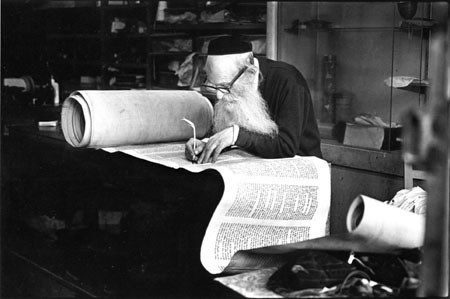
sefer-torahFor every complex question, as H.L. Mencken once put, there is usually an answer that is “clear, simple and wrong.” His observation rings true when it comes to a question I get at least once a week. What do Jews believe about Jesus?

Jews as a group rarely agree on matters of Jewish belief. How could we agree on the essence of another? Yet, we ignore the question at our own peril.

-Rabbi Evan Moffic
“5 Rabbis Explain Jesus”
Huffington Post

An MJ friend wrote me describing the resistance he has been encountering from other Messianic Jews about Torah. He gets it. Mount Sinai is an eternal covenant between God and Jewish people.

-Derek Leman
“Do Messianic Jews Really Need to Keep Torah?”
Messianic Jewish Musings

And meanwhile, the Bible from cover to cover is about God’s-plan-through-Israel-to-the-world and yet the “through Israel” part is forgotten by most. Deuteronomy 4:6 is in the Bible. Verify this for yourself.

-Derek Leman
“Why Don’t Christians Believe Deuteronomy 4:6?”
Messianic Jewish Musings

“What is the Torah?”

I’ve been blogging and blogging and reading and reading trying to come up with an answer that will work between my Pastor and me during our usual Wednesday night discussions. Pastor Randy is away for several weeks in association with his doctorate studies, but I sent him a link to Derek Leman’s blog post Do Messianic Jews Really Need to Keep Torah, since it addresses the heart of our conversations. Pastor has no spare time for a long blog post, but he did send me a brief email saying that he believes the Abrahamic covenant is eternal, but the Mosaic covenant is not.

I suppose I should have expected that response, and it surprisingly hit me in a tender spot. So when Derek wrote Why Don’t Christians Believe Deuteronomy 4:6, it did absolutely nothing to improve my disposition.

Really, is there any hope for communication across the aisle, so to speak, or are we doomed to endless discussion and endless disagreements with no middle ground between any of us?

Do I really want to live a life of faith like this, at least communal faith?

But Rabbi Moffic said that “Jews as a group rarely agree on matters of Jewish belief.” Ever since Sinai, the Jewish people have been chosen and called out to be different from all of the other peoples and nations of the Earth, but how do they stand all of the internal dissonance? My guess is that, at some core level, no matter what other disputes and disagreements one Jew has with another, at the end of the day, a Jew is always a Jew.

iron-sharpens-iron-hotOK, I know there are problems with that statement and there are all kinds of disputes between different sectors of Judaism, but when “they” come for you because you’re a Jew, those disputes vanish like a snow cone in a blast furnace. Beyond a certain point, we can even grasp hope based on a Jewish Cantor welcoming even Messianic Jews on Tisha B’Av.

But that doesn’t translate very well if at all to differing groups of Christians.

John the Baptist described himself as “the voice of one crying in the wilderness” (John 1:23), and that worked pretty well for him up until his beheading, but I’m not sure how well it’s working for me.

Iron sharpens iron, so one man sharpens another.

Proverbs 27:17 (NASB)

OK, I get that. The constant “head-banging” is supposed to sharpen us, but it also can be painful, and frankly, I’m getting a headache.

I know, “if you can’t stand the heat…” Maybe I should get out of the kitchen.

But that’s where the food is.

For everyone who partakes only of milk is not accustomed to the word of righteousness, for he is an infant. But solid food is for the mature, who because of practice have their senses trained to discern good and evil.

Hebrews 5:13-14 (NASB)

At the end of the day, a Jew is a Jew and like it or not, all Jewish people have been bonded together since Sinai and probably before that. Does that work for Christians, though? Are we bound together so that, when adversity strikes, we’ll join with each other based on our common identity as disciples of Christ?

I’d like to think so, but I don’t know. Jews are bound not just based on belief and theology, but by 3500 years of common experience and even down to the level of DNA. Although Jews don’t think of themselves in terms of being “tribal” anymore, it’s still there beneath the surface. Tribes and clans and families are bonded beyond any unbonding, and God drew all Jewish people to Him under the chuppah of cloud and fire at Sinai and sealed the covenant with Torah.

The Birthright program exists to encourage young Jewish people who have little or no attachment to the Land and to the Torah to experience Israel. I hear there’s something about standing on the ground and breathing the air in Israel that has an effect on Jewish people (and perhaps a few Christians as well). I can’t say from experience, but for the sake of my Jewish children, I hope so.

I can only say that for Christians, a common faith in Jesus is the lynchpin that holds us together, at least in theory. But while it is presupposed that Jews will argue with Jews as an expected behavior, how am I as a Christian supposed to explain to another Christian that being Jewish and the existence of the Torah are inexorably linked and cannot be unlinked. Even an atheist Jew will one day confront the meaning of being Jewish beyond the mere ethnic and genetic identity.

jewish-davening-by-waterI recently wrote about Jews encountering themselves through the mitzvot and some Rabbis hope that encouraging a Jewish person to experience even a single mitzvah will make a difference. At the time, I applied that hope to Christians as well, but we must face the facts that Christians don’t think of themselves in the same way as Jewish think of themselves.

No wonder that we can’t get Christians to see Jews as they want to be seen.

There are days when I just want to scream to the Church, “Just let Jews be Jews! We don’t have to agree with them! They don’t need our permission!” But I suppose that wouldn’t go over very well.

Jews rarely agree with each other on matters of belief. Christians are expected to agree with each other on matters of belief. If they don’t, then it usually means some group will split off from their church to form a different church. That’s how Christians manage the dissonance of disagreement.

I have what I think of as a unique relationship with my Pastor in that we can regularly meet every week, disagree on fundamental issues, and still be friends. Pastor lived in Israel for fifteen years and is intimately acquainted with Jewish life in Israel, so on that basis, he knows what it is like to live among lots of Jewish people. And yet, every week when we meet, I still feel like I’m facing some sort of battle for the rights of Jewish people to define their own identity as Jewish based on the Torah, especially Jews who are disciples of Messiah.

I keep thinking of the venerable 19th century Rabbi Isaac Lichtenstein who became a devotee of Yeshua past the age of sixty and yet remained wholly Jewish in his practice, observance, identity, and discipleship. His life as a devout Jew and a Messianic disciple seems so open and clear. Reading The Everlasting Jew showed me how his life made so much sense the way he lived it.

I don’t see a dissonance between what R. Lichtenstein believed and how he lived and the Biblical life of Jesus, Peter, and Paul. I just wish everyone could see what I see, not because I’m so smart, but because I believe I’m seeing what God wants all Christians to see when we look at Messianic Jews.

Why is communicating that vision so hard?

Vayeilech and Yom Kippur: Seeking the Hidden God

I shall hide my face from them…

Deuteronomy 31:17

Rabbi Avraham ‘the Angel’ was the only son of Rabbi DovBer, the Maggid of Mezeritch. When Rabbi Avraham was a young child, he once came weeping to his father: He had been playing hide and seek with a friend, sobbed the child, but the friend had lost interest and had run off to some new amusement, leaving little Avraham all alone in his hiding place, waiting in vain to be searched out.

Rabbi DovBer lifted his eyes to heaven and cried: “You, too, have hidden Your face from us only because You want us to seek You. But Your children have tired of the game and have run off…”

-Rabbi Yanki Tauber
“The Cop-Out”
from the “Once Upon a Chasid” series
Commentary on Torah Portion Vayeilech
Chabad.org

This may seem a little obscure compared to my usual Torah Portion “meditation,” but bear with me. As we are deeply immersed in the days of repentance between Rosh Hashanah and Yom Kippur, the struggle between man and God is especially acute. While it is normal for observant Jews to seek particular closeness with Hashem at this time, I can only imagine that there’s some frustration going on, too.

I used to hate Yom Kippur. Every year, as we blew the shofar and rushed home to eat, I would secretly breathe a huge sigh of relief. It was finally over – all the misery, the moroseness, the fear – until next year. And as Passover would pass, I would start counting down to the dreaded day which was hovering just beyond the horizon.

I hated Yom Kippur because it made me feel like a fraud. I would bang away at my chest all day, enumerating all my sins, promising I was repentant. But in my heart I knew that I would return to my mean self the moment the fast was over. I didn’t believe I could ever change, that I was really worthy of life and that I would ever be able to redeem myself. So I would go through the day anxious for it to be over, hating myself for being such a big, fat fraud.

-Elaina Cline
“Why I Hated Yom Kippur”
Aish.com

I know exactly how she feels. This isn’t something most people admit to, but there’s this horrible fear that when I repent of something, it will come back to haunt me in the not-so-near or even the near future. When repentance is linked to a specific date on the calendar and for a month or more, you’ve been building up to an august, awesome, humbling, and overwhelming encounter with God, there’s this little voice in the back of your head (OK, in the back of my head) that says, “The balloon is going to pop as soon as the Yom Kippur fast is over, and you’re going to go back to business as usual.”

Yuk. What a horrible thought. What a depressing feeling.

Although this wasn’t the same matter that Moses was facing at the end of his life as recorded in this week’s Torah reading, I can see how he’d be just as depressed and even frustrated with God.

When Moses had put down in writing the words of this Teaching to the very end, Moses charged the Levites who carried the Ark of the Covenant of the Lord, saying: Take this book of Teaching and place it beside the Ark of the Covenant of the Lord your God, and let it remain there as a witness against you. Well I know how defiant and stiffnecked you are: even now, while I am still alive in your midst, you have been defiant toward the Lord; how much more, then, when I am dead! Gather to me all the elders of your tribes and your officials, that I may speak all these words to them and that I may call heaven and earth to witness against them. For I know that, when I am dead, you will act wickedly and turn away from the path that I enjoined upon you, and that in time to come misfortune will befall you for having done evil in the sight of the Lord and vexed Him by your deeds. –Deuteronomy 31:24-29 (JPS Tanakh)

It wasn’t a matter of if the Children of Israel would sin and rebel against God, only when. After forty years of struggling with two generations of Israelites, of struggling with God, of struggling with his own humanity, Moses’ life ends on a down note.

Kind of like how we might end Yom Kippur on a down note. The balloon pops. The piousness wears off. We dig into the first yummy meal after the long fast, and do whatever we were doing before the High Holidays for this year entered our spiritual awareness.

Christians out there might say that they’re immune to this sort of spiritual let down because they can repent anytime they (we) want to, but frankly, so can any Jewish person. Imagine though, how you might experience yourself one way as you are preparing to “cleanse your soul” before Easter, and then what you might think, feel, and do the Monday after it’s all over. I think that’s the closest we non-Jewish Christians can come to the sort of Yom Kippur letdown Cline was talking about.

Rabbi Tauber talked about this same sort of frustration in his commentary. God withdraws from us so that we might look for Him, but when we look and look and do not find, like the child in the story, we abandon out “playmate” and seek other games. I’ve been tempted to do that on more than one occasion, particularly at the frustration of seeking but not finding my way to the New Covenant connection between Christians and God.

Cline continues her analysis of Yom Kippur and her self-analysis:

And I have seen my smallness, too. I have seen my propensity to be critical, cold and judgmental. I have seen my ability to be harsh and cruel. And I have seen the pain I have inflicted on others and myself in these states – the sadness, the depression, the hostility. I have seen my lethargy, my disconnection and my self-pity.

But this year, my darkness is juxtaposed with my light. I realize that change is actually possible. I am not doomed to isolation, meanness and small mindedness.

This Yom Kippur, I can feel the pain of not being in a state of connection and own the consequences of my choices. I can say to God, “This is not me,” and mean it. I feel repentant, not from fear – but from a genuine desire for connection, love and transcendence. Getting in touch with my higher self that yearns to be good has enabled me to sense the sadness of my past choices.

What is frustration and a sense of separation from God juxtaposed with? Not necessarily satisfaction and closeness, but the realization is that a life of faith is not as hopeless as it sometimes seems. Neither is a human life, which is fraught with mistakes, carelessness, thoughtlessness, stumbling, and disappointment. Where is the path of devotion I’m supposed to be walking on?

Remember us for life, O King Who desires life, and inscribe us in the book of life, for Your sake, O living God.

-Amidah, Ten Days of Penitence

What is the meaning of “for Your sake?” How can the extension of life to a person be for the sake of God?

We might read the verse a bit differently. “Inscribe us into the book of a life that is lived for Your sake.” In other words, we pray not only for life, but for a quality of life that is meaningful and purposeful, one that will be lived for the greater glory of God.

Some people find life boring, and it is little wonder that such people seek escape from its boredom. Some turn to intoxicating chemicals, and others to a quest for thrills and entertaining pastimes which, while not destructive, have no purpose except an escape.

But why should there be a need to escape? Why should life ever be boring? A person whose goal is to amass great wealth never tires of adding more to his already sizable fortune. If we have the kind of goal in life that allows us to add to it continually, we will never be bored.

Of course, we wish to be inscribed in the book of life, but it should be a life that we wish to be in rather than one that we seek to escape from.

Today I shall…

try to enrich my life by living it according to the Divine will, bringing greater glory to His Name – and therefore greater meaning to my life.

-Rabbi Abraham J. Twerski
“Growing Each DAy, Tishrei 4”
Aish.com

Getting sick and tired and frustrated with God and toddling off to play with other toys is the same as trying to escape from our own lives. Our lives are lived, whether we choose to be aware of it or not, for the sake of God. He created us. He fashioned us in the “hidden places” of our mothers’ wombs. He molded us to fit the purpose of our lives. We will truly never discover who we are and what we’re doing here until we live our lives for the sake of our Creator.

Standing before GodYom Kippur isn’t just about repenting of sin and being inscribed in the Book of Life for another year. It’s about living a life that is realized in the existence of God. The day when we permanently stop seeking God’s hidden face, we stop seeking ourselves and we completely lose our way. Our true purpose becomes an unattainable goal, and frustration and futility become our constant companions.

When Moses died, the bitterness of knowing that the Children of Israel would reject the God of Sinai was balanced by the very Presence of God in his life and after his life. If the Jewish people failed, they also succeeded and even today, are with us in the world, continuing to point us to the path of devotion, particularly though Israel’s “first-born son,” Jesus Christ.

In frustration and even despair, we still can choose to fly with broken wings. Even bearing the weight of the chains of a thousand sins, by continuing to seek God and His purpose for our lives, we can soar with eagles.

Giving glory to the Name of God gives us the power to overcome and to stay the course. He is the path and He is our companion. Walk with Him. Take flight with Him. Even laugh with God on Yom Kippur.

One of my favorite stories is of the house painter who deeply regretted stealing from his clients by diluting the paint, but charging full price. He poured out his heart on Yom Kippur hoping for Divine direction. A booming voice comes from Heaven and decrees, “Repaint, repaint … and thin no more!” Yom Kippur begins Tuesday evening, September 25th.

Rabbi Kalman Packouz

Good Shabbos.