
 Why Native American religions, when scholars acknowledge that Native American tribes do not traditionally distinguish between religion and the rest of life?
-William T. Cavanaugh
Chapter 1: The Anatomy of the Myth”
The Myth of Religious Violence: Secular Ideology and the Roots of Modern Conflict
But what does it say? “The word is near you, in your mouth and in your heart” (that is, the word of faith that we proclaim); because, if you confess with your mouth that Jesus is Lord and believe in your heart that God raised him from the dead, you will be saved.
–Romans 10:8-9 (ESV)
Disclaimer: This is a long “meditation.” I’m sorry. I couldn’t make my point and keep it under 2600 words. Just letting you know.
I’ve been reading Cavanaugh’s The Myth of Religious Violence, albeit somewhat slowly, but I came to a complete stop when I read the quote from his book I placed at the top of this blog post. Cavanaugh is trying to refute those people who believe that religion is inherently more violent and prone to causing wars than secular systems of finance or government. One of his main criticisms against this viewpoint is the lack of definition for what is a “religion” which, on the surface may seem easily defined, but in the world of scholarly analysis, is pretty difficult to pin down.
But look at what he says about Native American religions. “Native American tribes do not traditionally distinguish between religion and the rest of life.” But shouldn’t it be that way for all other religions as well?
If you’re a Christian, you may be nodding your head and agreeing that your faith is your life, but I think for a great many of us, we tend to compartmentalize what we do into “religious” and “secular” activities. When you go to church, it’s “religious.” When you pay your taxes or take out the garbage, it’s “secular.” A lot of Christians say that their faith “isn’t a religion, it’s a relationship.” If that’s so, then are there times in your day-to-day life when your relationship with Jesus doesn’t exist or doesn’t matter? If you are married, are there times when your marriage or your spouse doesn’t matter or doesn’t factor into your decision-making, particularly when those decisions don’t have a direct connection to your being married?
Who we are in Christ should permeate every single part of our lives, everything we do, every thought we have. It was Paul who wrote (see 2 Corinthians 10:5) that we must “take every thought captive to obey Christ.” If our Christianity is supposed to function down to the level of our very thoughts, shouldn’t it be ingrained into everything else we are as well?
I’ve been participating in a number of online discussions, including one at Gene Shlomovich’s blog Daily Minyan, regarding the relevance of the Mosaic covenant between God and the Israelites as applied to non-Jewish Christians today. The principle question is, do Christians become obligated to the Law of Moses when we first confess faith in Christ?
I know the vast majority of Christians (and probably Jews) will immediately answer, “No.” But then, most Christians believe that the Law or Torah of Moses was wholly replaced by the grace of Jesus Christ when our Master died on the cross. I disagree with this “replacement theology” (and those of you who’ve been reading my blog for long know this quite well) and believe that the Jewish people continue to be bound to the covenant they made with God at Sinai.
But Christian brothers and sisters, you and I weren’t at Sinai. Our covenant connection to God isn’t dependant on that event, even though there were non-Israelites, the so-called “mixed multitude” of people groups, who also stood at the mountain and agreed to obey God in all things.
 However, there are some folks out there who believe that the non-Israelites at Sinai sets a precedent that not only allows, but actually requires all Christians to be fully compliant (or as much as we can be living outside Israel, and without a Temple, Priesthood, and Sanhedrin) to the 613 commandments that the Jews must perform as a condition of their covenant with God through Moses.
But that raises one big, giant red flag for me. If all any Gentile ever had to do to have a covenant relationship with God was to perform the mitzvot as a Jew would, then why do we need Jesus in order to enter into relationship with God and be saved?
This issue is actually more complicated than I’m making it here, but the details would result in an impossibly long blog post. Also, I’m not historian, linguist, or Bible scholar, so I lack the educational “chops” to fully explore all of the niggling little details this topic brings up. On the other hand, any “ordinary person” should be able to discuss their faith in a reasonably intelligent manner without having to possess multiple advanced degrees. If we can’t, then we must relegate ourselves to the status of “sheep” and be at the mercy of anyone who comes up with a theology based on some understanding of what certain Hebrew and Greek words might mean in English.
(I have to say here that I am not denigrating scholarship and education. Far from it. I possess one graduate and two undergraduate university degrees, so I value education and learning very highly. However, it is important to search out and study the findings of legitimate scholars in religious studies. You won’t always find them involved in online religious debates in the blogosphere.)
Let’s get down to it. If Torah obedience is the primary key to entering into covenant relationship with God, then why don’t we all just convert to Judaism? More to the point, why did God bother to send Jesus Christ to be born, live, teach, suffer, die, be resurrected, and ascend to Heaven? That’s a lot of trouble and certainly it wasn’t any fun for Jesus. All God had to do was send a prophet to go to the Gentiles (someone like Paul perhaps) and say, “Convert to Judaism and you will be saved.”
But that’s not what Paul said. And that’s not what Jesus said. I don’t believe Jesus, Paul, Peter, or anyone else said that the Jews must give up Judaism and become Christians, since even Jesus, Paul, and Peter remained Jews, sacrificed at the Temple, and kept kosher throughout their entire lives. I do believe though, that something had to be done for the rest of the people in the world who were worshiping mute idols of stone, wood, and metal.
But if the Gentile pagans didn’t convert to Judaism, what did they become when they abandoned polytheism and began to exclusively worship the God of Israel through faith in the Jewish Messiah?
For a whole year they met with the church and taught a great many people. And in Antioch the disciples were first called Christians. –Acts 11:26 (ESV)
The term “Christians” could more or less be thought of as “Messianics” as well, or people who are disciples of the Jewish Messiah. But it doesn’t translate into “Jews” and it doesn’t translate into “Israelites” or any other such thing. What the believers in Jesus as the Jewish Messiah were called was directly connected to his Messianic identity and what we can think of as the “Messianic” covenant; the covenant that makes it specifically possible for non-Jews/non-Israelites to come into relationship with God “without surrendering their ethnic, racial, or national identity as Gentiles.”
If we were expected to surrender our “Gentileness” and covert to Judaism or in some manner or fashion, become obligated to the full mitzvot of Torah, even while retaining our Gentile identity, why would Paul say this?
Look: I, Paul, say to you that if you accept circumcision, Christ will be of no advantage to you. I testify again to every man who accepts circumcision that he is obligated to keep the whole law. –Galatians 5:2-3 (ESV)
He said something even more dramatic on the same subject:
I do not nullify the grace of God, for if righteousness were through the law, then Christ died for no purpose. –Galatians 2:21 (ESV)
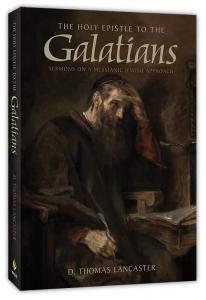 Granted, Paul’s letter to the Galatians is amazingly difficult to understand (see D. Thomas Lancaster’s book The Holy Epistle to the Galatians for an excellent analysis of this letter) but it’s hard to get around the idea that Paul was severely “discouraging” the non-Jewish members of the churches in Galatia from converting to Judaism (being circumcised) because doing so would place them under the full weight of the Torah mitzvot. Also, if the Gentiles thought they had to convert to Judaism and take on board the entire Torah as an obligation in order to be justified, it would make Christ’s bloody, humiliating, agonizing death on the cross completely meaningless.
So I just don’t see how Jesus is requiring every non-Jewish person who comes to him as a disciple to be obligated to the Torah of Moses.
Having said all that, is the Torah such a bad thing? No, absolutely not. Paul knew that even Jews were justified by faith and not by works of the law. (Galatians 2:15-16)
Is the law then contrary to the promises of God? Certainly not! For if a law had been given that could give life, then righteousness would indeed be by the law. –Galatians 3:21
Paul didn’t abolish the law and neither did Jesus (Matthew 5:17). In fact, Jesus said that “until heaven and earth pass away, not an iota, not a dot, will pass from the Law until all is accomplished.” (v. 18) As far as I can tell, Heaven and Earth are still with us and not everything the Messiah was supposed to accomplish has happened yet. So the law continues to exist.
I can confidently say Jewish people remain obligated to the mitzvot, both in Second Temple times and today. This, in my opinion, includes the Jews who have come to faith in Jesus as the Jewish Messiah. Jesus never got rid of the Mosaic covenant or replaced it with a newer covenant. I do believe the newer “Messianic” or “Davidic” covenant ratifies the older ones for the Jews so the Messianic promises are realized for them in Christ.
What about the Torah for the rest of us? Modern (non-Messianic) Jews believe that the rest of the people of the earth are obligated to what is called the Seven Laws of Noah and that the covenant of God made with Noah (see Genesis 9) puts all of us in relation with God as long as we obey our Noahide obligations.
But that doesn’t take anything we know from the Gospels or Epistles into account. The Messiah’s mission was not just to restore Israel nationally and spiritually, but to bring the rest of the world into relationship with God. That isn’t dependant on Noah or on Moses but only on Christ.
I’ve heard it said that the Messianic covenant with the Gentiles “travels back in time” as it were, so that the non-Jews at Sinai were brought into relationship with God through Christ and then obligated to the Torah mitzvot as a consequence, but to employ Occam’s razor, when two hypotheses are in competition, the one that makes the fewest assumptions is more likely to be true. The “time traveling” covenant hypothesis creates a lot of hoops to jump through just to support a theory.
Moses didn’t tell the Israelites that they had to obey God in all things and believe in the coming Messiah in order for God to be their God. This is what happened right before God gave the Torah at Sinai:
So Moses came and called the elders of the people and set before them all these words that the Lord had commanded him. All the people answered together and said, “All that the Lord has spoken we will do.” And Moses reported the words of the people to the Lord. –Exodus 19:7-8 (ESV)
Because of faith in God, the Israelites unreservedly agreed to obey everything God told them to do, including everything He hadn’t told them yet. Their agreement is the Mosaic covenant and the Torah mitzvot are the conditions applied to each party subject to that agreement (the Israelites and God). Belief in the future Messiah isn’t specifically mentioned so at that point in time (I know, mysticism could probably “explain” this but I’m trying to stick to the mechanics of the text), Israelites and the Gentile “mixed multitude,” because of their faith, agreed to obey God and in order to fulfill their agreement, they obeyed all the conditions of the Torah.
But the mixed multitude who became “alien sojourners” among native-born Israelites have disappeared from history. We can argue back and forth that their lives in relation with God did somehow involve the Messiah and absolutely required mitzvot obedience that was identical to the Israelites, but what of the Gentiles who wanted to attach themselves to Israel during and after the earthly ministry of Jesus. Were there “sojourners” in those days or were they “God-fearers” like Cornelius the Roman Centurion? (see Acts 10) What was their status and was Torah obedience required?
While I think we can make a pretty good argument that even Jewish believers in Christ retain their obligation to God relative to Sinai, that seems to be unique to the descendents of Jacob. I do believe that the very first Gentile Christians probably worshipped God in a way that looked much more “Jewish” than we do today, but that’s just a guess. We only have “hints” of Gentile observance that looks Jewish in scripture, (see the aforementioned Cornelius in Acts 10 for example) but no “smoking gun” pointing to Paul teaching Gentiles to say the Shema, wear tzitzit, or lay tefillin. We never actually see an illustration of the Gentile Christians behaving exactly like the Jewish believers in all of the mitzvot.
 I don’t see any harm in Christians performing many or even most of the mitzvot. After all. The commandments have a great deal to do with feeding the hungry, treating even the neighbor you don’t like with respect and dignity, and loving God. In fact, if you actually read all 613 commandments, for those that we can actually perform outside of Israel, and without a Temple in Jerusalem, a Priesthood, a “Biblical” court system, I can’t find much that would violate a Christian’s faith.
I think it is mandatory to feed the hungry, to find shelter for the homeless, to comfort the widow, to make sure the orphan is taken care of. If you’re a Christian and you aren’t seeking social justice and performing acts of mercy and kindness, then there’s something wrong with your faith and your lifestyle. Recently, I’ve encouraged Christians to seek God and repent of sins during the month of Elul. I think it’s perfectly fine for Christians to participate in the High Holidays, light candles on Chanukah, eat the Passover meal with their Jewish brothers, count the Omer, celebrate Shavuot/Pentecost, and build a Sukkah.
Certainly Jesus did all these things in accordance to the halachah that was normative for the Jews of the late Second Temple period. Perhaps (though there’s no way to know for sure) even Cornelius the Roman built a sukkah. It don’t think it’s an outrageous idea.
I do think, believe, and endorse with all my heart, mind, and spirit, that Jesus, or Yeshua as he’s called in Hebrew, absolutely, positively must be the center of our faith and covenant connection with God. Without Christ and the specifics of the Davidic covenant that allows us to be in relation to God and to call Jesus Lord and King, we among the nations are lost. We have nothing. Neither Jew nor Gentile has ever been justified by obedience to Torah commandments. As Paul said, we’re justified by faith.
Jesus does matter. He matters to anyone who wants a relationship with God.
Make Christ your everything. He is not irrelevant. He is indispensible. He is the key. He is the vine and we are his branches.






 Morning Meditations