Tag Archives: God

Conquering Wrong with Right

broken-crossSo Christians, tell me. What is the church really like?

Because I go to a church event for the first time in weeks and within twenty minutes, I hear people make off-the-cuff racist, sexist and homophobic comments and nobody bats an eye.

I lay on the couch, curled up in a ball with the phone to my ear and listen to a dear friend tell me how he feels like an outsider to the people he’s attended church with for years because he has chosen to plant his flag with the disenfranchised and the vulnerable in his community, as messy as that gets. And it got messy.

Another friend I grew up with sends me a middle of the night link to an article about the guy in Arizona who stood on his college campus holding a sign reading “You Deserve Rape.” We’ve been having conversations lately about some of his qualms with Christianity, and he sums it nicely by saying, “I don’t want to have to spend the rest of my life explaining this to people. I have better things to do.” And I sympathize. Because I don’t want to have to spend the rest of my life explaining that to people, either.

And that’s just in the last couple of weeks.

-Emily Joy Allison
“Church Prove Me Wrong”
emilyjoyallison.com

The church is its own worse enemy.

I came across Ms. Allison’s blog (I get the impression she wouldn’t consider us on a first name basis so I’ll maintain some formality) as a link someone put on Facebook. That was well over a week ago, but this was the first chance I had to write about it. She says a lot of good things and a few things I disagree with, but she presents me with a struggle. Actually, she presents me with my own struggle, though I don’t conceptualize it in the same manner that Ms. Allison does. The struggle is with being a Christian and going to church vs. some of the really dippy and even hurtful things some Christians and some Christian churches do in the world.

For instance, she posted a screen capture of John Piper tweeting a message on twitter quoting Job 1:19 “in the wake of the terrible tragedies in Oklahoma,”

“Your sons and daughters were eating and a great wind struck the house, and it fell upon them, and they are dead.”

Even if Piper hadn’t intended this message to be taken the way it sounds, his timing (and probably his tastefulness) was ghastly. The tweet was subsequently deleted, but it’s another example of Christians (and people I refer to as “famous Christians” … more on that in a minute) standing on the platform of faith in Jesus Christ and throwing rocks at the injured and dying people of the world.

I sometimes have a problem with some “famous Christians.” These are usually televangelists or other Pastors or leaders who are in the public eye, people whose names are familiar even with atheists. Christians who typically are the worst examples of Christianity and who give the rest of the world the impression that we’re all like they are.

I recently heard an unsubstantiated story (that is, I can’t find it by Googling it) of scandal-plagued Jimmy Swaggart actually selling individual pages from his family Bible while leading a tour group in Israel. This would have been fairly recently, but I can’t find an online reference to the event. We’ve also heard names such as Benny Hinn and Joel Osteen, and I cringe to think that this is what the world sees when they think they’re looking at men who are disciples of and witnesses for Christ.

praying-aloneMany years ago, I knew some Americans who, when they toured Europe, would tell people they were from Canada (this obviously didn’t work at airports when they had to present their passports) because they were too embarrassed by America’s reputation overseas. There are days when I feel that way about being a Christian. I believe as a Christian, that I should be held accountable for my own behavior, my flaws, my mistakes, my errors, but it’s adding insult to injury if I have to be ashamed for every lousy thing someone else does in the name of Christ.

In terms of social consciousness and popular causes, it looks like Ms. Allison and I are different enough to where she would probably be embarrassed to be counted a Christian along with me, so from her perspective, I’m likely one of those folks she’s appealing to when she says:

YOU are supposed to be the living, breathing, embodiment of the gospel, and sometimes I can’t see anything good about it.

Church, prove me wrong. I’m begging you.

Church, prove me wrong. I’ve tried to be patient—and I will continue to try. I will be eating with you, talking with you, praying with you; from time to time I’ll probably be sitting in a church service with you. I will not abandon you, as long as Jesus has anything to do with it. But I need you to show me that he still does.

I recently read a blog post that quoted Jones, E. Stanley, (1925). The Christ of the Indian Road. Abingdon Press, 72-73. You’ve probably read this before:

“Mr. Gandhi, though you quote the words of Christ often, why is that you appear to so adamantly reject becoming his follower?”

Gandhi replied, “Oh, I don’t reject your Christ. I love your Christ. It’s just that so many of you Christians are so unlike your Christ.”

Ghandi’s rejection of Christianity grew out of an incident that happened when he was a young man. During his years studying law in Britain, he had become attracted to the Christian faith, had studied the Bible and the teachings of Jesus, and was seriously exploring becoming a Christian. One Sunday, in South Africa where he had gone to practice law after getting his degree, he decided to attend a church service.

As he came up the steps of the large church where he intended to go, a white South African elder of the church barred his way at the door. “Where do you think you’re going, kaffir?” the man asked Gandhi in a belligerent tone of voice.

Gandhi replied, “I’d like to attend worship here.”

The church elder snarled at Him, “There’s no room for Kaffirs in this church. Get out of here or I’ll have my assistants throw you down the steps.”

Gandhi is certainly an outstanding example, but how many Christians have thrown people out of the church or driven folks away who otherwise are men and women who act and think and breathe with the heart of Christ?

On the other hand, and there’s always an other hand, I can’t use all of this as an excuse to go “church bashing” or “Christian bashing.” From her writing, I get the impression that Ms. Allison is representative of a specifically narrow corridor of the believing world that exists in fusion with many of the popular values western society espouses today.

If the problem Ms. Allison or anyone else has with “the church” is that “the church” has a specific values system that conflicts with the non-religious social priorities we see continually in the popular news media, then maybe it’s a case of the church following its own priorities rather than believing it must “go along to get along” in American culture.

broken_godAlso, if your issue is that your particular religious group or you, as an individual, have difference of opinion with how other religious people or other religious groups conceptualize and operationalize a life of faith, that may not be a matter of the church needing to prove anything to you. That might just be a difference in how you see a life of faith vs. their perspective.

Some churches aren’t going to support what has come to be known as “marriage equality,” not as a matter of bigotry (note, I think the Westboro Baptist Church is reprehensible and does not represent Christ on any level), but a matter of conscience.

If your problem with “church” is that “church” doesn’t mesh with the values we see paraded in public by CNN, MSNBC, the New York Times, and such so that “church” refuses to blend in like a chameleon into the progressive social background, then that’s not the church failing to follow Christ, it’s the church failing to worship society and culture.

I can’t prove to Ms. Allison that she’s wrong. If the church has failed to live up to her expectations, then I’m sorry. The church isn’t perfect because it’s full of imperfect human beings. Sometimes we do stupid things. Sometimes we do mean things. Sometimes some people in the church need to be told that Jesus would never act the way they’re acting.

Ms. Allison will never find a church that is perfect. No matter where she goes to worship and fellowship, she’ll always find “bad apples.” There are whole churches that are “bad apples.”  I don’t doubt though that there are a number of Christian churches that demonstrate values sufficiently similar to her’s that she’d be comfortable worshiping within their walls. I’m not sure what to make of such churches, but if Ms. Allison wants a place to belong, I’m sure it’s out there.

But we’ll never be perfect. Frankly, if a church is following in the footsteps of the Messiah, they probably shouldn’t look and act exactly like the world around us. Jesus said that we are in the world but not of the world.

I’ve been afraid of church for my own personal reasons, but they’re my personal reasons. My problems with going to church belong to me, not church. And yet, I came to a point in my life where I felt I had no other option but to go to church. If you call yourself a believer and a disciple, you can’t go off half-cocked following your own priorities when you know you need to be in fellowship with other believers and you need to follow the Master.

If you want to think that “the church” is irredeemably bad, you’ll find plenty examples of bad churches and bad Christians. If you don’t want to accept church-bashing lying down, and you believe that Christ still exists within the body of believers, you can do something about it. Instead of pointing a finger at what’s wrong, you can be what’s right in the church.

Gandhi is famous for saying, Be the change you wish to see in the world. If you don’t like what you see happening in the church, then be the sort of Christian you believe Jesus wants to see in the church. Walking away doesn’t make you more noble, it just makes you alone. Jesus didn’t walk away from an imperfect world. He died for it.

Mahatma-GandhiAnd then he lived. Someday he’ll come back to redeem our imperfect world. In the meantime, if we call ourselves disciples, if we call ourselves Christians, then we have a responsibility to do here and now what he is going to do when he comes back. We need to introduce a little kindness, compassion, and self-sacrifice into an otherwise broken and bleeding world. Jesus didn’t complain about what was wrong. He was moved by compassion. He caused the blind to see, caused the deaf to hear, caused the lame to walk. Like Christ, don’t complain about what’s wrong. Just do what’s right.

To the contrary, “if your enemy is hungry, feed him; if he is thirsty, give him something to drink; for by so doing you will heap burning coals on his head.” Do not be overcome by evil, but overcome evil with good.

Romans 12:20-21

If I should ever leave the community of faith, it won’t be because church is broken. It will be because I am.

118 days.

Praying for Oklahoma

oklahomaA mammoth tornado carved a trail of destruction through the Oklahoma City metropolitan area, killing at least 51 people, including some children, and ripping apart two elementary schools today, local authorities said.

“It is absolutely devastating, this is horrific,” Oklahoma Lt. Gov Todd Lamb said. “We’re going to have fatalities. … We’re going to have significant injuries. … We just don’t know what those numbers are. Schools have been hit, a hospital has been hit, businesses have been flattened, neighborhoods have been wiped away — we don’t have the numbers in yet but it is going to be significant and it is going to be horrific.”

-Lauren Effron and Dean Schabner
“Oklahoma Tornado: At Least 51 Dead, ‘Horrific’ Damage”
ABC News

One word meditations:

Pray. Donate. Give. Care. Love.

Gifts of the Spirit: Even the Living Stones Weep

girl-dancing-rain“Listen: Billy Pilgrim has become unstuck in time.” So begins Vonnegut’s absurdist 1969 classic. Centering on the infamous fire-bombing of Dresden, Billy Pilgrim’s odyssey through time reflects the mythic journey of our own fractured lives as we search for meaning in what we are afraid to know.

from the Amazon.com description
of Kurt Vonnegut’s classic novel
Slaughterhouse-Five (or The Children’s Crusade)

“Peculiar travel suggestions are dancing lessons from God.”

-Kurt Vonnegut

I received an email just a little while ago (as I write this) that reminded me of what was most important about the First Fruits of Zion Shavuot conference which I recently attended. I plan to post a lot of material about the various conference presentations over the course of the next few weeks and my personal observations about them, but the man on the other side of the email said something that touched me in a personal and painful way. What he said doesn’t make for a great quote, but it does transcend the world we live in and connect to the spirits of man and God.

I was reminded of Kurt Vonnegut’s book Slaughterhouse-Five when I talked with Lisa about her grandfather.

Let me back up a step.

I have what you might call “limited social needs.” I can only take so much of a room full of people over the course of a day before I am “done.” I like my space and I like quiet. I know this makes me sound terrifically anti-social and even a little misanthropic, but it’s just me having my “social needs cup” filled to the brim, and then to overflowing, and then to spilling all over the joint. It gets to be a mess.

So when everyone else was downstairs eating, drinking, and socializing late into the evening, I walked back up to the “sanctuary” (probably not the right word) to be alone.

But I wasn’t alone. Lisa was there. She was on the phone talking to her grandfather, who is in his nineties, for the billionth time that day.

Lisa’s grandfather suffers from dementia. He experiences a lot of different points in the past but almost never the present. He’s a man who has become unstuck in time. During a single phone call, he can be fighting in the Pacific during World War II. He can be walking down a road in the snowy woods when he’s five. He can be buying a pack of cigarettes at a local bar and remembering that he can’t let his wife know he smokes. He can look at a picture of his wife with fond love and remembrance and blissfully, gratefully not remember that she was taken from him many years ago. Because that sorrow would be too much to bear.

He’s lived a good life.

And he’s become unstuck in time as he wanders with each step along that life.

Lisa told me her children wouldn’t consider her a patient person, but she’s very patient with her grandfather. Most people wouldn’t be. Most people wouldn’t be patient listening to a man who is unstuck in time shifting up and down the corridors of his life, second by second, as he appears here and there, and he reorients himself to being a young adult one second and a small child the next.

And who is he talking to when he’s five years old and his granddaughter Lisa, who has children in their late teens herself, is on the other end of the phone?

tearsI felt the tears welling up in my eyes as I listened to her tell me about her grandfather. When Billy Pilgrim became unstuck in time, the reader of Vonnegut’s story discovers a grand adventure with measures of sorrow and tragedy, but one that ultimately ends in victory.

But Lisa’s grandfather isn’t on an adventure. He’s old and, in those moments when he comes to himself in the present, he is terrified that he no longer has control of his mind.

Let me tell you another story. It’s about miracles and it’s also about one miracle that hasn’t happened.

But let me back up a step…let me take one really giant step backward.

I have great sorrow and unceasing anguish in my heart. For I could wish that I myself were accursed and cut off from Christ for the sake of my own people, my kindred according to the flesh.

Romans 9:2-3 (NRSV)

Do you realize the depth of what Paul’s saying? He’s declaring to the readers of his letter to Rome and by inference to us, that he would deliberately surrender his salvation; his relationship to Messiah and to God and everything that means, for the sake of his people, the Jewish people; for the sake of an unbelieving Israel who absolutely needs to know their King.

One evening at the conference, Boaz Michael made a suggestion. He wanted us to talk about miracles. He asked people in the room to share their experiences with the Spirit of God.

Many people had such experiences. I was shocked at how many people raised their hands and wanted to share. I was astonished by the passion, the holiness, the sorrow, the glory, the love of God for all of those people.

A woman named Karen came home because her mother was dying. Her mother was in the last stages of life. She was bedridden. She was ready to die at home.

Karen was sleeping in the room with her mother. She woke up surprised to see her mother standing beside her bed. At first she tried to get her mother back into bed but then she realized her mother was wearing a party dress. But…why? Her mother came up to her and touched Karen’s shoulder…and it was the exact feeling she remembered as a child on all those occasions when her mother took Karen in her arms and embraced her. It had been such a very long time since she had felt her mother’s loving arms around her.

The vision passed. Maybe it was a dream. But the next day after receiving a few phone calls from siblings, she realized it was real. Each of them had seen the same vision of mother in her party dress at the exact same moment.

And then Karen’s mother went to her party to dance with the bridegroom.

Let me tell you my story. I have no miracles. But “I have great sorrow and unceasing anguish in my heart.” Like Paul, there is someone I would give up everything, even my relationship with my Master, even the grace and salvation of God, so that she could love Him and know Him.

one-of-ten-virgins-oilIf only my wife could know Moshiach and love Him. I would turn my back and walk into the distance and the darkness, like the foolish virgins who did not keep their lamps filled with oil while waiting for the bridegroom.

If I could have one miracle from God, that would be it.

Why am I telling you all these things? What possible difference does it make to touch the lives of a few people who have been happy and sad and whose fingers have grasped the hem of the garment of God?

Because each of these people are precious in the sight of God and in my sight as well. There are some people out there who have spoken unkind things about these wonderful people and the time we spent together last week. I’ve been spending time exchanging emails with some of the people I met at the Shavuot conference. I’ve also been reading the comments of some of the critics of these people and their displeasure about why we came together. I even know someone who is a critic who was invited to come and to share but who declined the invitation.

More’s the pity. I wish he’d have come. I wish I could have met him.

I’m heartbroken that anyone could be angry at people like Lisa and Karen (though I frequently experience my critics’ anger towards me). No, these angry people don’t even know Lisa or Karen (though they may think they know me) and so it’s not personal.

Except it is.

Because God loves Lisa…and Karen…and amazingly, even me. And God loves each and every person who criticizes us and who is angry, maybe not at us, but at the people who attended the Shavuot event because of their issues with First Fruits of Zion or Boaz Michael, or whoever, or whatever.

I’m heartbroken because of a man who has become unstuck in time. I’m heartbroken because of a woman who held her daughter one last time before she wore her party dress to attend the banquet of the King. I’m heartbroken that my own miracle has yet to come (if it ever comes). I’m barely holding back my tears as I write this, because the things that some of the people of God need to understand, they don’t understand. And out of that ignorance, they criticize, berate, disdain, and sometimes even hate.

Jeffty is Five is a short story written by Harlan Ellison which I first read in 1978. I also heard Ellison read the story aloud at a Science Fiction conference a year or so later. It’s the story about a little five-year old boy named Jeffty and his five-year old friend. Jeffty’s friend grows up. Jeffty never does. He stays five. He’s stuck in time. Time moves all around him, going forward and taking everyone and everything else with it…except Jeffty.

Jeffty never notices and his friend stays his friend. The fact that Jeffty never grows up slowly erodes the minds and feelings of his parents but Jeffty has a friend who protects him. Jeffty stays in a world where there is no such thing as television, and where the Lone Ranger, the Green Hornet, and the Shadow still save the day in weekly radio programs, not just in his imagination…when Jeffty turns on a radio, those programs are brand new and real.

Eventually, Jeffty is neglected by his friend, now a very busy adult, for a few minutes and the present intersects with Jeffty and his world. And the present wears him down. His soul becomes sick. He “unsticks” in time but there is too much of him that needs the world that isn’t the past but the world that should have been…and Jeffty dies.

new-heartThat story broke my heart too, but it’s fiction. Jeffty couldn’t live when his world encountered what you and I call “the real world.” But the world of God and the human world intersect all the time, and in experiencing the world of harshness intersecting with one of holiness, I’m heartbroken.

If only you’d come into the world I lived in last week. If only you’d pray with us, sing with us, listen to Torah with us. If only you’d eat with us, drink wine with us, sing songs with us…

…then maybe you’d understand. Then maybe you could let your heart be broken too by a man who has become unstuck in time and a woman in a party dress. Maybe you could stop being critical and start being human. Maybe you’d realize that we’re human too. Because if we don’t each become heartbroken, then it’s God’s heart we are breaking. What sacrifice would be too great for us to make for the sake of God and for each other?

For you have no delight in sacrifice;
if I were to give a burnt offering, you would not be pleased.
The sacrifice acceptable to God is a broken spirit;
a broken and contrite heart, O God, you will not despise.

Psalm 51:16-17 (NRSV)

There are a lot of other stories I experienced at the conference that are woven from the sincere fabric of the lives and spirits of many other people I met last week. I’ll write about this in more detail in a few days, but a wise and kind man named Carl Kinbar told a story about building the House of God. One of the most essential materials required to build God’s House is a broken and contrite heart, not just broken for God, but for each other.

It is only when we bleed and when we cry for the sake of not only our families and our friends, but for strangers and even “enemies,” that the sacrifices we offer up to God are accepted. Only then will we be able to build His house using living, crying, bleeding stones.

The Lord is near to the brokenhearted, and saves the crushed in spirit.

Psalm 34:18 (NRSV)

128 days.

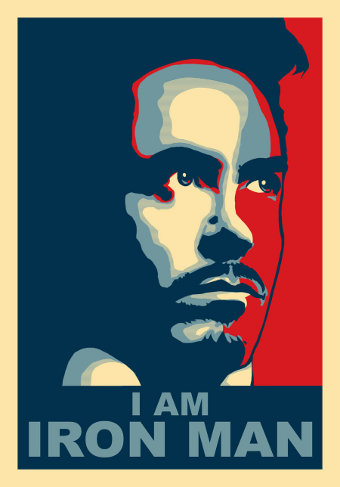
I am Iron Man

iron-man-3-posterFinally, be strong in the Lord and in the strength of his might. Put on the whole armor of God, that you may be able to stand against the schemes of the devil. For we do not wrestle against flesh and blood, but against the rulers, against the authorities, against the cosmic powers over this present darkness, against the spiritual forces of evil in the heavenly places. Therefore take up the whole armor of God, that you may be able to withstand in the evil day, and having done all, to stand firm. Stand therefore, having fastened on the belt of truth, and having put on the breastplate of righteousness, and, as shoes for your feet, having put on the readiness given by the gospel of peace. In all circumstances take up the shield of faith, with which you can extinguish all the flaming darts of the evil one; and take the helmet of salvation, and the sword of the Spirit, which is the word of God, praying at all times in the Spirit, with all prayer and supplication. To that end keep alert with all perseverance, making supplication for all the saints, and also for me, that words may be given to me in opening my mouth boldly to proclaim the mystery of the gospel, for which I am an ambassador in chains, that I may declare it boldly, as I ought to speak.

Ephesians 6:10-20

But on the other hand, Jews put their faith in clothing all the time. Back when the Temple had four walls, the kohanim (priests) wore special clothes. When Jacob wanted to express love for his son, Joseph, he made a special shirt, and all of Joseph’s brothers were so angry they decided to sell him. And when Jacob’s father, Isaac, was getting old and wanted to give Esau a blessing, Jacob’s mother, Rebecca, gave Jacob special clothes to fool his father into blessing him instead, while Esau was off trying to figure out how to hunt wild game with a kosher butcher’s knife. And we specifically wear certain clothes for certain rituals – the tallit (prayer shawl), tefillin, a yarmulke, a white kittel on Passover so we have something on which to spill our wine, and sneakers with our suits on Yom Kippur in case we want to go jogging later. So it’s not like we don’t place any value on clothes.

So how are we to reconcile this?

The case of Jacob seems pretty peculiar, though. Jacob was wearing Esau’s clothes to fool his father, but his father was blind. So who was he trying to fool?

-Mark Papers
“Iron Man 3 and Shavuot”
Aish.com

It has been said that the clothes make the man, but that seems like a pretty shallow way to assess a person’s capacities. On the other hand, people do tend to think, behave, and even feel differently depending on what they’re wearing. If you’re in a tuxedo going to a $500 a plate fund-raiser, you may behave differently than if you are dressed in a ragged t-shirt and swimming trunks going to your neighbor’s pool party.

I would have passed on any sort of commentary on Mr. Papers’ (not his real name) Iron Man 3 review if Pastor Randy hadn’t mentioned Ephesians 6 during his sermon last Sunday. It’s seemed like an odd coincidence, especially since Pastor’s message didn’t breathe one word about Tony Stark’s latest adventure on the big screen.

i-am-iron-manPapers drills down into the “clothes make the man” saying during his review, reminding us (spoilers ahead) that Stark (played by Robert Downey Jr) spends as much or more of his time in the film out of his Iron Man armor than in it. There are also sequences in his film where the armor is operated without anyone inside. What do we do with the “clothes” metaphor then?

At the end of the first Iron Man film (2008), instead of protecting his secret by manufacturing a lie as to who Iron Man is to him, Stark abruptly reveals to the world, “I am Iron Man.”

Stark isn’t just Iron Man when he’s in the suit, he’s Iron Man because that’s part of who he is…not as an inventor and not as a person who gets powers from technology, but because it is part of his lived identity. It didn’t start out that way. Stark, at the beginning of the original film, was a brilliant but wholly self-indulgent person who did whatever pleased him and was totally unconcerned about the consequences of his actions…until he realized that those consequences included the deaths of millions on a global scale, thanks to the black market sales of his weapons.

It was Iron Man who molded the soul of Tony Stark, gradually forming him into a hero from the heart outward as opposed to from the armor inward. Four films later, if you include The Avengers (2012), Tony is Iron Man, whether he’s wearing the armor or not.

But what does that have to do with you and me?

In his Ephesians letter, Paul uses the “armor of God” metaphor to say something similar. As human beings we are weak, mortal, frail, self-indulgent, vulnerable to a thousand temptations. We are anything but heroic. Oh, maybe the occasional person has extraordinary courage and strength, but most of us, including me, will never do the stuff we see heroes do, either in the movies or in real life.

Maybe.

That is, we won’t do it just of ourselves. Like Tony Stark before he was critically wounded, made a prisoner of the very people his weapons were designed to kill, before he saw his weapons used against the very soldiers he was supposed to protect, before the man who saved his life sacrificed himself so that Tony in his first, improvised suit, could escape his captors and return home to a renewed life and a new mission, we are weak and subject to our own passions. We are like spoiled children.

When we encounter God, he gives us something that is designed to change us. He gives us the ability to be heroes of a sort. He gives us the opportunity to be more than who we are…to realize the potential to be everything God designed us to be. The Word of God has been euphemistically called a “sword.” We can defend ourselves from all kinds of harm just by reading and studying the Bible. We can learn to protect others with its power.

Like Tony Stark’s fictional armor, we can let God’s armor change us…first from the outside in…and then from the inside out.

In this movie, like the Jews in the desert, Iron Man is taken out of his element and stripped down to just his goatee in the middle of nowhere. But in our case, the desert was our cocoon. God gave us the Torah, kept us away from distractions for a 40-year incubation period, and helped us grow before releasing us back into our homeland. The Torah is our armor. And after wearing that for 40 years, the hope is that we’ve internalized it.

Tony spent time upgrading his suits, but what he didn’t realize was that he needed to upgrade himself. He has to get a few things, um, ironed out. It’s not his metal that matters. It’s his mettle.

We all have within us what it takes to be heroes. We also have an outer shell, but the real question is what we do when it cracks open. Do we just kind of leak out, or are we Iron Man – unflinching in our values, even in the face of danger?

I am Iron Man.

bare-ironThere are different people going to Christian churches today and, for the sake of this blog post, I’m going to say that there are two different types of people. There are those who use the Bible and their faith like armor, like something they wear but also something that can be taken off once they leave church on Sunday…and there are those who wear their armor on the inside, who have integrated the Word, the will, the Spirit of God into their lives. They are Christians regardless of their circumstances. Even stripped down to their bare essentials, even if their churches and their Bibles are taken from them, who they are in God and who God is in them is the same. You can take everything from them but they will always be with God.

The armor doesn’t make the man…the armor and the man become the same.

This should be my absolute last “meditation” until sometime early next week. And no, I haven’t had a chance to see the IM3 movie yet.

132 days.

Unpopular Righteousness

unpopularThe ascent of the soul occurs three times daily, during the three times of davening. This is particularly true of the souls of tzadikim who “go from strength to strength.” It is certain that at all times and in every sacred place they may be, they offer invocation and prayer on behalf of those who are bound to them and to their instructions, and who observe their instructions. They offer prayer in particular for their disciples and disciples’ disciples, that G-d be their aid, materially and spiritually.

-Today’s Day
Hayom Yom: Iyar29, 44th day of the omer
Compiled and arranged by the Lubavitcher Rebbe,
Rabbi Menachem Mendel Schneerson, of righteous memory, in 5703 (1943)
from the talks and letters of the sixth Chabad Rebbe, Rabbi Yosef Yitzchak Schneersohn, of righteous memory.
Chabad.org

There is no free individual, except for he who occupies himself with the Torah.

-Ethics of the Fathers, 6:2

I had a great idea for a blog post last night before I went to bed. It communicated what I thought we all should be talking about with each other, not only on our blogs, but face-to-face, in our emails, in our phone calls, in every way possible…the communication and communion of holiness.

But then I went to sleep, and when I woke up, it was gone. I’m disappointed because the drive to write it is still within me. But now, I can’t give it expression.

This morning (as I write this), I read Derek Leman’s blog post What is Popular on a Messianic Blog?. I try to steer away from being identified as a “messianic blog” because it limits the audience I attract and fails to communicate that the message of Messiah is for all people, not just “messianics,” and for that matter, not just for “Christians.” The message of the love of God for humanity is for…humanity.

But Derek has a point.

Hands down, and no surprise, the winner of the numbers game is controversy. My leading blog post of the past year was an expose I did on Jim Staley, a Two House and Hebrew roots teaching pastor in Missouri, called “The Messianic Wall of Weird, #2.” And when Ralph Messer wrapped a pastor in a Torah scroll, told the pastor he was royalty in God’s eyes, and promised this bizarre misuse of a sacred object in Jewish life would restore this pastor from his problems, that blog post got a ton of readers (“Ralph Messer is Not a Messianic Jewish Rabbi”). A few critiques of Tim Hegg I have written have drawn many readers, but also lost me many readers, as some fans of Tim Hegg did not appreciate the criticism I threw his way. Of course, we should not be surprised that controversy is popular.

Controversy (especially if negative and more so if tied to a popular figure or current event).

My response to Derek’s missive was to compare this sort of “popularity” to a car accident with horrible human injuries, or NASCAR, where the attraction is the “hope” that there’ll be a massive pile up of cars traveling at high rates of speed, visions of body parts flying about the landscape fairly dancing in the minds of the fans.

OK, that’s probably a little harsh and I don’t doubt I owe an apology to many NASCAR fans out there.

But I also think I’m correct in that what draws a large, vocal audience tends not to be topics of substance but topics of controversy, especially if it’s ugly and there’s an opportunity to “spill blood,” in a virtual sense.

rock_starBut now I’m the one straying into the realm of controversy. See how tempting it is?

Tim at Onesimus Files posted a link to a highly “popular” blog post called When Rock-Star Preachers Spew a False Gospel published at Charisma News. The topic of “rock star preachers” is of interest to me because of my recent comments on “Biblical sufficiency” related to Part 1 and Part 2 of my commentary on John F. MacArthur (no, MacArthur’s not a “rock star preacher,” quite the opposite).

Drama is like blood in the water and we are all sharks looking for the next feeding frenzy.

But is that the way God wants us to be?

The Chofetz Chaim writes that because we are so involved in worldly matters, we lose our sensitivity to the great amount of joy we can potentially experience when performing a mitzvah (good deed). He offers the analogy of a man who was granted an audience with a powerful ruler. Imagine that the ruler is greatly impressed with the man, and has the conversation recorded in his personal diary. What a thrill! Upon returning home, the man’s face would glow with elation as he retells his experience to all his friends and neighbors. Even if he’d previously been worried over personal problems, he’d quickly forget them! Over the next years, whenever he’d meet others at some gathering, his successful meeting with the ruler would invariably be the topic of conversation.

Says the Chofetz Chaim: If this is the joy of someone who found favor with a mortal (who will eventually die and whose glory is short-lived), all the more so should we feel joy when we doing something which finds favor with the eternal Creator of the universe. Even afterward, when recalling the good deed, we will feel a glow of pleasure. In fact, the Torah (Deut. 28:47) stresses that we should feel more joy in serving the Almighty than from all other pleasures that exist.

-Rabbi Zelig Pliskin
“Daily Lift #813: Being in the Almighty’s Favor”
Aish.com

A new commandment I give to you, that you love one another: just as I have loved you, you also are to love one another.

John 13:34

We ask you, brothers, to respect those who labor among you and are over you in the Lord and admonish you, and to esteem them very highly in love because of their work. Be at peace among yourselves. And we urge you, brothers, admonish the idle, encourage the fainthearted, help the weak, be patient with them all. See that no one repays anyone evil for evil, but always seek to do good to one another and to everyone. Rejoice always, pray without ceasing, give thanks in all circumstances; for this is the will of God in Christ Jesus for you. Do not quench the Spirit. Do not despise prophecies, but test everything; hold fast what is good. Abstain from every form of evil.

Now may the God of peace himself sanctify you completely, and may your whole spirit and soul and body be kept blameless at the coming of our Lord Jesus Christ. He who calls you is faithful; he will surely do it.

1 Thessalonians 5:12-24

I suppose I could be criticized for choosing specifically optimistic and encouraging examples of scripture to place here, but then again, if you value the Word of God at all, you shouldn’t ignore them, either.

kindnessWhy do we do good? For the benefit of those around us. This is what God desires. However there is another motive. Each mitzvah we perform, each morsel of food or drink we give to a homeless person, each child’s skinned knee we put a band-aid on and kiss, each smile we give to a person we’re visiting in the hospital, not only helps the lonely and injured and not only helps the loneliness and injury within us, but it brings us closer to God.

We do good because only God is good (Mark 10:18; Luke 18:19). Only God is One (Deut. 6:4). Only by loving God can we love anyone else in the way God designed us to love (Matthew 22:34-40).

I could quote at length from the comments section of some “religious blogs” the transactions of believers who do not seem to be loving each other at all. Occasionally, I try to introduce the voice of reason and yes, of love, but I don’t know if it does any good. On the other hand, it’s difficult to ignore some of these venues. There are people out there who feel they have been badly hurt (and some of them really have) by a “church experience,” and in reaction, they say harsh things about all Christians in churches (and sometimes about Jewish people in synagogues). Reading some of their material is like watching someone terribly injured and bleeding while trapped in the wreckage of a disastrous car accident (and I’ve written about this before). It’s horrible to look at but I can’t turn away. I want desperately to help, but I don’t know how to get them out of the ghastly mess.

(I should say that I wrote this particular blog post several days before my controversial missive but this one was scheduled to be published while I was away from home.)

What do you do when someone is hurt, has been hurt for a long, long time, and yet doesn’t want to be helped? What do you do with people who totally identify with being hurt, who are defined by being hurt, by being victims, and yet don’t want to let go of the pain, even when they know that if they did finally, finally let go, they would be much better human beings…the people God intended them to be?

Is there “power” in playing the victim role? Absolutely. Look back to what I said before about “popular” blogs. Controversy, pain, “blood in the water,” arguments about who is a “true believer” and who is an “apostate” rule the religious web. Everything else, righteousness, holiness, goodness, devotion…all that stuff is boring. Who wants to read it? No one.

Well, that may be an exaggeration, probably a gross exaggeration. I suspect a “silent majority” of people do read about righteousness, holiness, goodness, and devotion, and absorb it into their beings like a starving child voraciously consumes a glass of milk. It’s just that most of them don’t talk about it, don’t comment on blogs, don’t demand to hear more, don’t speak out dynamically, don’t become impassioned, at least in any way we can see in the blogosphere.

As you’re reading this, I’m at First Fruits of Zion’s Shavuot Conference at Beth Immanuel Sabbath Fellowship in Hudson, Wisconsin. Through the miracle of scheduling blog posts, I can write this “last week” and have it become visible on the web Wednesday morning. I hadn’t intended to have new “mediations” be published while away from home, but as I said above, something is driving me to write about what we never talk about, or at least what is never “popular” to talk about.

doing_goodIt could be argued that something is only popular if it produces positive results within its audience and controversy rarely does that. Certainly the common definitions for the word “popular” include “regarded with favor, approval, or affection.” Can controversy be regarded with “affection?” On the other hand, look at what’s “popular” in our world today. Consider the TV shows with the highest ratings. What about movies, music, celebrities? Are these popular things and people always examples of righteousness, holiness, goodness, and devotion, or are they mere reflections of the moral state of our society? I suggest we try to do what is “unpopular.” As people of faith, we must go against the general grain if it violates what we are taught by our Master and Teacher.

The commentary for Pirkei Avot 6:2 states:

Why the roundabout, “negative” wording of the mishnah? Why not simply say “True freedom is attained through Torah”?

Man is a finite being, and everything he possesses and is capable of achieving is likewise finite in scope and extent. It would, therefore, follow that there is no such thing as a free human being. Not only do the proud, the envious, the ignorant and the greedy live in their own prison, but even the most emotionally stable and content individual, blessed with the most plentiful resources and leading the most uninhibited of lives, is still subservient to his own inherent limitations.

Thus, our mishnah opens with the statement, “There is no free individual.” But one who occupies himself with Torah, subordinating his mind and self to the wisdom and will of the Almighty, transcends this most basic nature of every created thing.

Torah defies the unbridgeable gap between the finite and the infinite. It is the wisdom and will of G-d, articulated in terms that the human being can comprehend, relate to and implement in his life. One who submits to the servitude of a life devoted to Torah experiences the freedom that eludes the most “independent” of men.

We also learn something important from Paul:

Put on then, as God’s chosen ones, holy and beloved, compassionate hearts, kindness, humility, meekness, and patience, bearing with one another and, if one has a complaint against another, forgiving each other; as the Lord has forgiven you, so you also must forgive. And above all these put on love, which binds everything together in perfect harmony. And let the peace of Christ rule in your hearts, to which indeed you were called in one body. And be thankful. Let the word of Christ dwell in you richly, teaching and admonishing one another in all wisdom, singing psalms and hymns and spiritual songs, with thankfulness in your hearts to God. And whatever you do, in word or deed, do everything in the name of the Lord Jesus, giving thanks to God the Father through him.

Colossians 3:12-17

white-pigeon-kotelToday, I’m attending a conference dedicated to the gifts of the Holy Spirit. One of those gifts as I see it, is fellowship and community within the body of Jewish and Gentile believers. One might even say that I am participating in “echad” or a sense of “oneness” within the body of Messiah, though it contains many dissimilar parts.

We are commanded to love one another. I think that means we should love each other even if we don’t always like each other. I know I’m not always likeable, but I pray that God finds me always loveable, through His abundant grace and mercy. And if He can love me, He can love anyone. That means I should love anyone, too.

And showing love, more than any act of superficiality or ceremony is what it is to be righteous and holy to God. May the injured find healing in Him.

A person with humility is able to accept misfortunes and suffering. The arrogant person, however, is not able to tolerate these events.

Rabbi Zelig Pliskin

“To become truly great, one has to stand with people, not above them.”

-Charles-Louis de Montesquieu

133 days.

The Bible is Water

underwater“I’m not a MacArthurite.”

-Pastor Randy

That’s a relief. I was afraid I was going to offend him with my opinions or my opinionated attitude as I entered our conversation last night. Pastor Randy and I normally meet on Wednesday evenings at the church, and the place is usually packed with people involved in various functions. Circumstances worked out so we met on Monday night this week and the place was deserted (it’s the following Sunday as you read this). Thunderstorms were rolling over the valley, so thick, black clouds were looming across the sky accompanied by high winds and startling flashes of lightning. The perfect backdrop to discuss a controversial subject.

(Oh, you might want to read Part 1 and Part 2 of my previous blog post John MacArthur and Struggling with Biblical Sufficiency to get a context for what I’m saying today.)

Actually, it worked out much better than that. Also, having recently written Judging Outside the Box put me in a more even frame of mind, and I didn’t feel quite so quick to pronounce judgment on a man who has been a Pastor for forty years and who I know almost nothing about.

Pastor Randy did study at Master’s College but through a distance program since he lived in Israel at the time. He didn’t have a lot of contact with MacArthur, so it seems he could evaluate his teachings from a different perspective. Pastor has run into some “MacArthurites” who go, “MacArthur said this” and “MacArthur said that,” but after all, MacArthur is MacArthur, not God.

But that’s true of any man. MacArthur has a passion for studying the Bible and encouraging others to do likewise, and I admire that a great deal. I agree with MacArthur and Pastor Randy that many Christian churches have set the Bible aside and embraced multimedia entertainment programs to keep the “faithful” in the pews. Fluff and style have replaced substance. More’s the pity.

But one thing Pastor did say about MacArthur is that he is pretty much “black and white.” There are no colors in his universe and especially in his understanding of the Bible. His language is binary and there are only two characters, zero and one, off and on.

But then there’s this:

For the word of God is living and active and sharper than any two-edged sword, and piercing as far as the division of soul and spirit, of both joints and marrow, and able to judge the thoughts and intentions of the heart.

Hebrews 4:12 (NASB)

The writer is essentially saying Scripture is unique and there is no spiritual weapon for the believer that is superior to it. The Word of God penetrates the inner being and nature of a person. How? Because it is living and powerful, sharper than any other spiritual tool and able to go deeper and cut cleaner and truer than any other resource to which someone might turn. When utilized effectively and properly, Scripture reveals the deepest thoughts and intentions of the human heart.

-John MacArthur
“Chapter 1: Embracing the Authority and Sufficiency of Scripture”
Think Biblically!: Recovering a Christian Worldview (ed. John MacArthur)

MacArthur has a tendency to construct ideas and phrases in almost martial terms, but I prefer to think of God as a teacher, “a bringer of light, wisdom, and understanding,” to quote actor Ian McKellen in his first go around playing Erik Lehnsheer over a decade ago.

Being invited into God’s “classroom,” so to speak, is like entering a pool of water that has infinite depth. And yet, the deeper you swim, the more you can see, the colors are more varied and more vibrant, and what prevents us from immersing even further isn’t the pressure but the intensity. A frail human being can only encounter so much of the mind of an infinitely complex God.

skyIn spite of MacArthur’s vast experience and the great volumes of materials he’s created, in spite of his many sermons (he’s just completed his goal of preaching through the entire New Testament verse by verse, from the beginning of Matthew to the end of Revelation), and indeed, in spite of his love of the Bible, which rivals the love of the most devout and observant Jewish person for Torah, there still are no colors in his pool, no shimmering schools of rainbow fish darting across its depths.

And yet, how can this be, when MacArthur in his chapter repeatedly references Psalm 19 and David’s own love of the Torah of God?

The law of the Lord is perfect, reviving the soul;
the testimony of the Lord is sure, making wise the simple;
the precepts of the Lord are right, rejoicing the heart;
the commandment of the Lord is pure, enlightening the eyes;
the fear of the Lord is clean, enduring forever;
the rules of the Lord are true, and righteous altogether.
More to be desired are they than gold, even much fine gold;
sweeter also than honey and drippings of the honeycomb.
Moreover, by them is your servant warned; in keeping them there is great reward.

Psalm 19:7-11 (ESV)

I agree with MacArthur that the Bible is the written foundation, the Word of God upon which we stand. I agree with David that the Torah of God is perfect, reviving the soul, making the simple one wise, rejoicing the heart, enlightening the eyes, and much sweeter than any other taste or experience. Not to say that Christians must imitate Jewish religious and identity behaviors because that would be missing the point (although most people who believe Christians and Jews must observe the Torah in an identical manner do miss the point that, in all the important ways, we already do). Performing the mitzvot isn’t something we do because it is written on a list, and we don’t honor the Torah above Messiah or worship a scroll before God.

But when Christians say they want to be “Christ-like,” what does that mean? What does MacArthur expect when he drives Christians back to reading and studying their Bible? Like Paul it’s unlikely that he expects to turn Gentiles into Jews, and like James and the Elders, it’s unlikely he will “command” the church to wear tzitzit and lay tefillin, for even if we did, these would be only superficial signs of the deeper matters of Torah, and what we are still failing to do.

He has told you, O man, what is good; and what does the LORD require of you but to do justice, and to love kindness, and to walk humbly with your God?

Micah 6:8

Then the King will say to those on his right, ‘Come, you who are blessed by my Father, inherit the kingdom prepared for you from the foundation of the world. For I was hungry and you gave me food, I was thirsty and you gave me drink, I was a stranger and you welcomed me, I was naked and you clothed me, I was sick and you visited me, I was in prison and you came to me.’

Matthew 25:34-36

Is the Bible sufficient for teaching us how to live a basic life of righteousness, holiness, and compassion? Oh yes. The lessons aren’t that tough and in fact, it’s one of the easier teachings the Bible has to offer. Yes, there are complexities we encounter as we insert the expectations of God into our twenty-first century world and I’m not saying all of our moral and ethical decisions are “no brainers,” but how difficult is it to understand that we are to feed the hungry, visit the sick, and comfort the grieving as a response to loving the Bible and loving God?

How difficult is it to understand that by feeding the hungry, visiting the sick, and comforting the grieving, we are learning how to love the Bible and to love God? Love and compassion are warm colors painted across the canvas of our lives by God. Sometimes we are the painter when we perform tzedakah, and sometimes we are the canvas when we allow God to tinge and hue our souls so that we will be emblazoned and illuminated.

The Bible is alive, almost as if it has an independent personality. Pastor Randy believes the Torah is alive and he is hardly a self-described mystic. But how else can we explain it?

Torah is not about getting to the truth.

When you are immersed in Torah, even while pondering the question, even while struggling to make sense of it all, you are at truth already.

Torah is about being truth.

-Rabbi Tzvi Freeman
“Being, Not Getting”
Based on letters and talks of the Rebbe, Rabbi M. M. Schneerson
Chabad.org

alizarin-crimsonLord kiss me once more
Fill me with song
Allah kiss me once more
That I may, that I may
Wear my love like heaven
Color sky havana lake
Color sky rose carmethene
Alizarian crimson

-lyrics from Wear Your Love Like Heaven (1967)
written by Donovan

To what shall we compare loving the Bible? Loving the Bible is like immersing in a pool of havana lake, like being encompassed overhead by an overarching rose carmethene sky…like being embraced in the richness of a shroud of alizain crimson.

Wear God’s love like heaven. Immerse in truth. Live truth. Be truth.

139 days.