Tag Archives: God

The Death of the Tzaddik

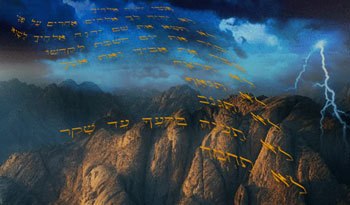
Torah at SinaiRav Zalman Sorotzkin, zt”l, taught the extent of the oneness of the actions of all Jews from the prohibition of slaughtering a mother animal and her calf on the same day. “The verse states, ‘It and its progeny you shall not slaughter on the same day.’ The word for ‘slaughter’ is plural to teach that if one Jew slaughters the mother and a second Jew slaughters the child, this violates the prohibition. He explained, “We can learn a very important lesson from this.

We see that there is a very special connection between the actions of one Jew and the actions of his fellow. Our mission as a nation is to be a light unto the nations and we can only do this if we are united. Whether we know it or not, every Jew is part of one collective Jewish soul. This explains the unreasonable tendency of the non-Jewish nations to blame all Jews for heinous acts done by unworthy individuals. It is surely strange that they do not judge other nations this way. But when we consider that every Jew is part of a single whole, this begins to make a strange kind of sense, at least on a cosmic level…”

When Rav Chaim Vital, zt”l, noticed the Arizal saying a tearful heartfelt vidui during davening he wondered about this. “Why are you saying vidui? Surely you have never violated any of the heinous sins mentioned.”

The Arizal admitted that he had not violated the sins listed. He said, “Nevertheless, I must at least repent for all of them. Although I have never transgressed, what about my fellow Jews who have?

Daf Yomi Digest
Stories Off the Daf
“Parts of a Whole”
Chullin 81

I sometimes despair over the lack of unity in the body of Christ or in the larger collection of people of faith. We seem so fragmented and disorganized for a group of human beings who supposedly all worship the same God and who all long for the coming of the Messiah (for Christians that’s “second coming”). Despite the lesson we see off the Daf, it seems as if even the Jewish people are not unified in their approach to and understanding of God, the Torah, and even whether or not a Jew must believe in God to be a Jew.

Yet if we look at the Sinai event, the Torah wasn’t given to each Israelite individually but to Israel as a single body.

Moses went and repeated to the people all the commands of the Lord and all the rules; and all the people answered as one man with one heart, saying, “All the things that the Lord has commanded we will do!” –Exodus 24:3

Rashi comments that the Egyptians were pursuing the Jews “With one heart, like one person.” This comment is interesting because Rashi makes almost the same exact comment in next week’s parsha, when the Torah describes the Jewish people camping at the foot of Mt Sinai. There too, the Torah used the singular tense to describe the Jewish people, “and Israel encamped there opposite the mountain” (Exodus 19:2). On that verse, Rashi describes the powerful unity the Jews felt as they were about to receive the Torah, that they were “Like one person with one heart.”

-Rabbi Leiby Burnham
Parasha Perspectives
Torah Portion Beshalach – 5769
Partners in Torah

While modern Judaism may not function “like one person with one heart”, at least on the surface, we see that when the nation of Israel was formed and the Torah was given at Sinai, Israel accepted the Law of God “with one heart”. That was God’s intent and I believe that the Jewish people will return to complete unity under God in the days of the Messiah.

But what about Christians? We are sometimes called “the body of Christ”, implying that we are a unified group or collective, but is that really true and was it true from the beginning? Particularly in Western culture, the value of the individual is considered paramount and we tend not to respond well to being treated as a group under the authority of a Pastor, Rabbi, or other governing body. We each demand the right to determine what the Bible says for ourselves, which often results in the Bible saying many different things to many different people.

I won’t quote the various New Testament examples because there are far too many, but Paul’s mission to the Gentiles to preach the Good News of Christ was carried, by necessity, to individual Gentiles, families, or small groups. It would have been impossible to deliver the Gospel message to “the nations” as a unified whole, if only because the world is so big and Gentiles, even in the Second Temple era, were so numerous. There could be no “Sinai event” for us the way there was for the Children of Israel, and maybe that represents a fundamental difference between Jews and Christians.

Even though the various branches of religious Judaism (as well as secular Jews) don’t see eye to eye, when you take away the differences and distill the Jewish people down to their very essence, there is a very basic “Jewishness” that cannot be removed, erased, or diminished beyond a certain point. A Jew will always be a Jew. When push comes to shove, the Jews are a people as established by the will of God.

Not so a Christian.

We are not born, we are made. More accurately, we make a decision; becoming a Christian is a choice. Becoming not a Christian is also a choice. There really is no such thing as an “ex-Jew”. Even for Jews who convert to Christianity, the Jewishness is still there. That isn’t true for Gentile believers. There is a point where you can reduce the Jews down to a common denominator where they are all one (as God is One), but Christians are not “one”, we are many.

I wonder if that’s our problem?

Mount SinaiI can only imagine that, in the end, God will gather the faithful together and we will all be “one new man” (Ephesians 2:15) as, in theory, we are supposed to be right now, but we’re not there yet. In my own little corner of the world, exploring a path rarely traveled by any other Christian, I feel very much alone most of the time. That’s probably by choice as well, although I feel like there’s a bit of wiring and programming inside of me that will not let me seek a different road and will not let me blend in with the masses of the Messiah’s sheep in their Christian sheepfold.

I wonder if that’s my problem?

(Actually, I don’t feel that odd anymore. I just read an article about how Koreans, both in their native country and in the U.S., are fascinated with Talmud and its wisdom. Korean translations of Talmud and books about Talmud are common in Korean bookstores.)

Can we be one? Is Christian unity an illusion? How are we to gather together under the One God and be a unique body, set apart in holiness?

…so Christ also, having been offered once to bear the sins of many, will appear a second time for salvation without reference to sin, to those who eagerly await Him. –Hebrews 9:28

The murder of Rabbi Elazar Abuhatzeira, the “Baba Elazar,” on Thursday night saved the people of Israel from other tragedies, leading rabbis said Friday.

“Harsh punishments were decreed on the people of Israel, and he wanted to nullify them,” said the slain rabbi’s brother, Rabbi Baruch Abuhatzeira, also known as the Baba Baruch, speaking at Rabbi Abuhatzeira’s funeral.

by Maayana Miskin
“Rabbi Abuhatzeira Bore the Burden of Evil Decrees”
IsraelNationalNews.com

God is One and His Name is One. As Christians, we believe that the Son of Man came to die for the sins of many. Although Judaism traditionally does not believe that one person can die for the sins of another, the Kabbalistic perspective states otherwise:

The Bible is clear, and it is consistent. One person cannot die for the sins of another. This means that the guilt from the sins committed by one person cannot be wiped out by the punishment given to another person. First, in Exodus 32:30-35, Moses asks God to punish him for the sin of the Golden Calf, committed by the people. God tells Moses that the person who committed the sin is the person who must receive the punishment. Then, in Deuteronomy 24:16, God simply states this as a basic principle, “Every man shall be put to death for his own sins.” This concept is repeated in the Prophets, in Ezekiel 18 “The soul that sinneth, it shall die… the righteousness of the righteous shall be upon him, and the wickedness of the wicked shall be upon him.”

-Rabbi Stuart Federow
“Jews believe that one person cannot die for the sins of another person”
What Jews Believe

“… suffering and pain may be imposed on a tzaddik as an atonement for his entire generation. This tzaddik must then accept this suffering with love for the benefit of his generation, just as he accepts the suffering imposed upon him for his own sake. In doing so, he benefits his generation by atoning for it, and at the same time is himself elevated to a very great degree … In addition, there is a special, higher type of suffering that comes to a tzaddik who is even greater and more highly perfected than the ones discussed above. This suffering comes to provide the help necessary to bring about the chain of events leading to the ultimate perfection of mankind as a whole.”

Derech Hashem (The Way of God)
Rabbi Moshe Chaim Luzzatto
As translated and annotated by Aryeh Kaplan
Feldheim Publishers
Jerusalem, 1997, p. 122.
Quoted from Yashanet.com

It’s with a certain amount of irony that I find the only “reasonable” explanation for how a person, a tzaddik, can give his life to avert the “evil decrees” of an entire people (without admitting that God accepts human sacrifice), is within the confines of Jewish mysticism (you’ll find Judah Himango struggling with the issue of Leviticus 27 and human sacrifice at Kineti L’Tziyon).

If Christianity can be said to have a “Sinai event” it is the crucifixion (or can we also include the resurrection?). Not that we were all there. In fact, the vast majority of people who were in the general vicinity were Jews, who came from every corner of Israel and the diaspora for the festival of Passover.

On the other hand, every Jew, even today, is to consider himself or herself as having stood personally at the foot of Sinai to receive the Torah. Why not (and this is just my imagination speaking) consider every Christian and every disciple of the “great Rebbe of Nazaret”, the most righteous tzaddik of all generations; why not consider us all as having stood at the foot of his execution stake personally, each of us as a witness to his bloody, sacrificial death on our behalf?
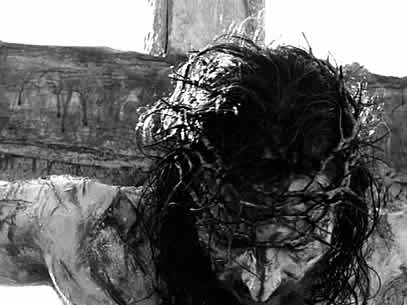
The Death of the MasterWe sometimes call Jesus our “living Torah” since he embodied the lifestyle of one who was fully human yet fully obedient to God and without sin. If the giving of the Torah at Sinai to the Jewish people unites them as one, does not the giving of the blood of the living Torah at Golgotha, the place of the skull, unite the disciples of Christ?

There’s a problem of two separate people groups under God and two separate events. Do the Jews have Moses and the Gentiles have Jesus? Are there two “Messiahs”? Not ultimately, for we all spring from a single root (Romans 11) and we are all branches on the same tree. More than that, Jesus came for the lost sheep of Israel and Paul went first to the Jew and then to the Gentile. The Jewish Moshiach came for the Jews and also came to unite all of humanity under God.

But every year, when they sound the shofar at Rosh HaShana it is revealed, a new revelation of infinite life is drawn to the world, beginning with the Land of Israel (see Tanya, pg. 239).

That is why the Torah says G-d’s eyes are on the Land of Israel from the beginning of the year to the end; it is referring to this new flow of life begun each Rosh HaShana.

And why will the Patriarchs be revived in Israel? Because as the ultimate Jews they will link and reveal the holiness of the people of Israel to the Land of Israel.

But this will only happen through our efforts to transform the entire world into holiness NOW — that is, to make Israel everywhere and prepare the world for Moshiach.

Because ONLY Moshiach will bring the Jews to Israel when the Great Shofar will be sounded by HaShem Himself.

We just have to do all we can in thought, speech, and action to bring . . .

Moshiach NOW!

-Rabbi Tuvia Bolton
Commentary on Parashat Eikev (5766)
Ohr Tmimim

Then the angel showed me the river of the water of life, as clear as crystal, flowing from the throne of God and of the Lamb down the middle of the great street of the city. On each side of the river stood the tree of life, bearing twelve crops of fruit, yielding its fruit every month. And the leaves of the tree are for the healing of the nations. No longer will there be any curse. The throne of God and of the Lamb will be in the city, and his servants will serve him. They will see his face, and his name will be on their foreheads. There will be no more night. They will not need the light of a lamp or the light of the sun, for the Lord God will give them light. And they will reign for ever and ever. –Revelation 22:1-5

Ki Tavo: Blessings of the Soul

BikkurimOne of the major thrusts in Judaism is hakaras hatov, appreciation of the good which G-d constantly bestows upon us. And as with appreciation of our fellow man, the emphasis is on appreciating not only the material dimension of G-d’s kindness, but also the love and care which He showers on every person.

In this vein, we can understand the sequence of our Torah reading, Parshas Ki Savo. The reading begins by describing the mitzvah of bikkurim (Deuteronomy 26:1-11), the first fruits which the Jews would bring to the Beis HaMikdash, and shortly afterwards speaks of a covenant concerning the entire Torah (Deuteronomy 26:16)

What is the connection between these subjects?

The mitzvah of bikkurim was instituted to show that our gratitude for the good G-d has granted us (Rashi, gloss to Deuteronomy 26:3), and to display our appreciation to Him for “granting us all the blessings of this world.” (Sefer HaChinuch, mitzvah 606) And this appreciation is not expressed merely by words of thanks, but through deed.

-Rabbi Eli Touger
Ki Savo commentary: “Entering Deeper and Deeper”
In the Garden of Torah
Chabad.org

There’s a tendency among people of faith to separate their lives into the holy and the mundane. It is holy to pray in the morning before work, and it is mundane to commute to work. It is holy to worship in church or synagogue, but it is mundane and ordinary to have a meeting at work, have dinner with your family, volunteer at the food bank, and to give to charity. Yet we see in the example set in this week’s Torah Portion Ki Tavo that in the process of the bikkurim, there is an intimate connection between appreciating the gifts of the physical world and the loving providence of God.

The bikkurim is an illustration of the Jewish expression of appreciation to God for the gift of the Land of Israel and its bounty, but how else can such appreciation be expressed and experienced?

Our Sages teach (Bava Basra 9b): “A person who gives a coin to a poor person is granted six blessings; one who gratifies him is blessed elevenfold.” Now, gratifying does not necessarily mean giving more money. It means giving a positive feeling, showing the recipient that you care about him, and that he means something to you. When one so invests himself in another person, putting enough of himself into the stranger that the person feels appreciated, he has given something far greater than money. And so he receives a more ample blessing from G-d.

Our own sage, the “Maggid of Nazaret” teaches a similar lesson:

Jesus sat down opposite the place where the offerings were put and watched the crowd putting their money into the temple treasury. Many rich people threw in large amounts. But a poor widow came and put in two very small copper coins, worth only a few cents.

Calling his disciples to him, Jesus said, “Truly I tell you, this poor widow has put more into the treasury than all the others. They all gave out of their wealth; but she, out of her poverty, put in everything—all she had to live on.” –Mark 12:41-44

What is “value” in the eyes of God and “worth” in the economy of Heaven? It isn’t our ability to pay or to provide for others or even to God, but our intent, willingness, and expression in helping the unfortunate. A poor widow can donate a a very small amount (although it is great to her since it is all she has to live on) and have it be worth more than all of the gifts of the wealthy, even though what they give can feed multitudes of the impoverished.

To continue quoting from Rabbi Touger:

This leads to a deeper concept: Appreciation stems from involvement; the deeper the relationship between people, the more one appreciates the uniqueness of the other. When a person appreciates a colleague, he is motivated to do whatever he can for that other person.

These concepts apply, not only to our relationships with our fellow man, but also to our relationship with G-d.

What we do for others relates directly back to how we express our appreciation for all God has done for us. In fact, there is probably a closer connection between acts of charity to others and our appreciation of God than we might imagine:

“Then the righteous will answer him, ‘Lord, when did we see you hungry and feed you, or thirsty and give you something to drink? When did we see you a stranger and invite you in, or needing clothes and clothe you? When did we see you sick or in prison and go to visit you?’

“The King will reply, ‘Truly I tell you, whatever you did for one of the least of these brothers and sisters of mine, you did for me.’ –Matthew 25:37-40

HomelessIn Judaism, the first blessing offered to God, the Modeh Ani, is given before the person even gets out of bed, but it is performed while the person is not quite awake. Later in the day, observant Jews recite the Modim blessing of the Shemoneh Esreh, and offer a more complete expression of thanks, yet this is only part of offering our hearts to God. The physical acts of kindness to others and the illustration of the bikkurim are both tangible and concrete, yet representative of traveling into the greater depths of spiritual dimensions where prayers and blessings alone cannot take us. So even in giving to others as an expression of appreciating the life God gives to us, we also get something back; the opportunity to serve the table of the King.

Once the Chasam Sofer, zt”l, was riding in the same carriage as his rebbe, Rav Nosson Adler, zt”l. It was a very cold day and the Eastern European roads were filled with snow and slush. One wrong turn could land a person into a sticky quagmire from which he would not easily get out. During the first leg of the trip, the wagon driver managed to extricate them each time
the horses got stuck. Eventually, however, the horses enter a muddy pit from which they could not budge. Although they tried, they lacked the physical strength to get that wagon out of the mud.

After coaxing the team for an extended time, the wagon driver understood that his efforts were futile and that he needed help. He unhitched one of the horses and rode to a nearby town. After some time the wagon driver returned with reinforcements to remove the wagon. When Rav Nosson Adler saw them coming he left the wagon. He rushed out so quickly that he didn’t even put on his boots. In his silk socks he jumped down from the wagon and then—to the surprise of the Chasam Sofer—he began to dance. His face shone with a holy fire and he was obviously overjoyed.

The Chasam Sofer wondered what it was that had made his rebbe so happy that he spontaneously began to dance. “You know I spend most of my day in the beis midrash. I do as many mitzvos as I can, but there are many mitzvos which are virtually impossible for me to fulfill. One of these unusual mitzvos is to avoid kil’ayim.

“But now don’t you see? The wagon driver brought a team of oxen to help pull his wagon out of the mud. As a non-Jew, this is his right, but we are forbidden from sitting in the wagon while it is being towed out by a mixed team. If we would have sat in the wagon we would have violated the prohibition of kil’ayim. Now that I have finally merited to fulfill this rare mitzvah I feel filled with joy and cannot stop myself from dancing!”

Daf Yomi Digest
Stories Off the Daf
“A Mixed Team”
Chullin 79

While this example of gratitude and appreciation may seem obscure and even nonsensical to someone without the benefit of a traditional Jewish religious education, if you take a moment to think about it, this is a story of a rare opportunity. Bringing the illustration back to the present, those opportunities that God gives us to serve others, even when they significantly interrupt our otherwise orderly and scheduled lives, are really opportunities for our benefit. Helping someone else not only benefits the other person, and it not only lets us bless God for all He has done for us, it is also the act of God blessing us by letting us be of further service to Him. In committing even the smallest act of repairing the world, God is giving us His loving compassion by repairing us, for there is no difference between helping another person, honoring God, and receiving God’s blessings on our soul.

In every person, there lie all souls that ever were and will be.

After all, humanShabbat candles consciousness began in a single being, with a single breath of G‑d within that being.

And so, just as every cell of the human being contains the blueprint of every other cell and of the entire person from the synapses of his brain to the swirls of his fingerprints, so every single person contains the entire humankind.

In this way, our Creator has rendered each of us the master of human destiny. In the liberation of any one of us lies the liberation of us all.

-Rabbi Tzvi Freeman
“Any Soul”
Based on letters and talks of the Rebbe
Rabbi M. M. Schneerson
Chabad.org

Good Shabbos.

The Face in the Mirror

Mirror“Rabbi Mendel of Kotsk was told of a great saint who lived in his time who claimed that during the seven days of the Feast of Booths his eyes would see Abraham, Isaac, Jacob, Joseph, Moses, Aaron, and David come to the booth. Said Rabbi Mendel: “I do not see the heavenly guests; I only have faith that they are present in the booth, and to have faith is greater than to see.” (page 118)

-Abraham Joshua Heschel
God in Search of Man: A Philosophy of Judaism

Then Jesus told him, “Because you have seen me, you have believed; blessed are those who have not seen and yet have believed.”John 20:29

When Jesus heard this, he was amazed and said to those following him, “Truly I tell you, I have not found anyone in Israel with such great faith. I say to you that many will come from the east and the west, and will take their places at the feast with Abraham, Isaac and Jacob in the kingdom of heaven.”Matthew 8:10-11

In the early morning when I drive to the gym for my workout, the sun is not yet risen. There is no cold bite in the air, but I can still tell that the days of summer are all but exhausted and that autumn is finally approaching. We are in the month of Elul which precedes the High Holy Days and after Rosh Hashanah and Yom Kippur, comes Sukkot or the Festival of Booths.

Although I cherish all of God’s appointed times, I must confess that Sukkot is one of my favorites. I enjoy the process of building a temporary structure that can potentially shelter the guests of Heaven, but more tangibly, that will allow my family to pray, take meals, together, and celebrate God’s provision among us. It is a custom in Judaism to invite the poor to share a meal in your sukkah and in my imagination, I picture all of us, rich and poor, great and small, sitting and eating as the Master prophesied, with “Abraham, Isaac and Jacob in the kingdom of heaven” during Sukkot.

During Passover, it is customary to set a place at the meal for Elijah the Prophet and, at one point in the haggadah, a child is sent to the door to see if Elijah is there, for if he is, then the Messiah is coming. During Sukkot, we can set a place for anyone, “Abraham, Isaac, Jacob, Joseph, Moses, Aaron, and David”, both in the hope that they may come and share a meal with us, and in anticipation of the time when (again, as the Master teaches) we will all be together as a community of God, sharing and talking and eating and teaching, and everyone “will sit under their own vine and under their own fig tree, and no one will make them afraid…” (Micah 4:4).

However, before our eyes are allowed to witness such a wonderful and miraculous “Sukkot” feast, we must learn to see with the eyes of Rabbi Mendel and the eyes of the Baal Shem Tov.

Do not judge your fellow until you have stood in his place –Pirkei Avot 2:4

Rabbi Israel Baal Shem Tov (the “Besht,” founder of the chassidic movement) taught: “Your fellow is your mirror. If your own face is clean, the image you perceive will also be flawless. But should you look upon your fellow man and see a blemish, it is your own imperfection that you are encountering—you are being shown what it is that you must correct within yourself.”

Quoted from Ethics of Our Fathers commentary:
“The Mirror”
Elul 9, 5771 * September 8, 2011
Chabad.org

The eyes of faith see Abraham, Isaac, and Jacob sitting in our Sukkah sharing a meal with our family. How do the eyes of faith see your neighbors and friends? How do you see those people around you, particularly if you view them with annoyance or scorn?

A few days ago, I wrote a morning meditation about how our thoughts and words affect our relationship with other people and with God. I hadn’t really intended to write a “sequel”, but that’s how it worked out. But if we claim to see the wonders of God through the lens of faith, yet fail to use that same lens when looking at our fellow human being, what “faith” are we really professing?

With the tongue we praise our Lord and Father, and with it we curse human beings, who have been made in God’s likeness. Out of the same mouth come praise and cursing. My brothers and sisters, this should not be. Can both fresh water and salt water flow from the same spring? My brothers and sisters, can a fig tree bear olives, or a grapevine bear figs? Neither can a salt spring produce fresh water. –James 3:9-12

SuccothI could hardly write these words with any sort of sincerity if I continued to use my own eyes to view my brothers and sisters in a less than complementary light. We are completely perfect but made in God’s image. We are only mortal, but we are capable of touching the infinite. As Rabbi Heschel writes (page 118):

This, indeed, is the greatness of man; to be able to have faith. For faith is an act of freedom, of independence of our own limited faculties, whether of reason or sense-perception. It is an act of spiritual ecstasy, of rising above our own wisdom.

To have faith is not to capitulate but to rise to a higher plane of thinking. To have faith is not to defy human reason but rather to share divine wisdom…Lift up your eyes on high and see: Who created these.

And from the Psalms:

I lift up my eyes to the mountains—
where does my help come from?
My help comes from the LORD,
the Maker of heaven and earth. –Psalm 121:1-2

Heschel states that, “…our faith in Him conveys to us more understanding of Him than either reason or perception is able to grasp”, but what good does that do us if we refuse to even try to see people around us as God sees them; as God sees us all? We may believe we are adoring and serving God but we have failed Him completely if we cannot adore and serve people as well.

One of the teachers of the law came and heard them debating. Noticing that Jesus had given them a good answer, he asked him, “Of all the commandments, which is the most important?”

“The most important one,” answered Jesus, “is this: ‘Hear, O Israel: The Lord our God, the Lord is one. Love the Lord your God with all your heart and with all your soul and with all your mind and with all your strength.’ The second is this: ‘Love your neighbor as yourself.’ There is no commandment greater than these.”

“Well said, teacher,” the man replied. “You are right in saying that God is one and there is no other but him. To love him with all your heart, with all your understanding and with all your strength, and to love your neighbor as yourself is more important than all burnt offerings and sacrifices.”

When Jesus saw that he had answered wisely, he said to him, “You are not far from the kingdom of God.” –Mark 12:28-34

As the commentary on Pirkei Avot states:

Rabbi Israel Baal Shem Tov, taught: “Your fellow is your mirror. If your own face is clean, the image you encounter in your fellow will also be flawless. Should you gaze into this `mirror’ and see a blemish, it is your own imperfections that you are seeing.”

“Why do you look at the speck of sawdust in your brother’s eye and pay no attention to the plank in your own eye? How can you say to your brother, ‘Let me take the speck out of your eye,’ when all the time there is a plank in your own eye? You hypocrite, first take the plank out of your own eye, and then you will see clearly to remove the speck from your brother’s eye. –Matthew 7:3-5

If looking in the mirror which is your brother’s face, you see only imperfection and error, how will you ever see the face of Abraham or the face of Jesus in your Sukkah?

Who is the light in your reflection?

Searching by Ineffable Light

Light at nightGod is not a scientific problem, and scientific methods are not capable of solving it. The reason why scientific methods are often thought to be capable of solving it is the success of their application in positive sciences. The fallacy involved in this analogy is that of treating God as if He were a phenomenon within the order of nature. The truth, however, is that the problem of God is not only related to phenomena within nature but to nature itself; not only to concepts within thinking but to thinking itself. It is a problem that refers to what surpasses nature, so what lies beyond all things and all concepts. (page 102)

The object of science is to explain the processes of nature. (page 104)

-Abraham Joshua Heschel
God in Search of Man: A Philosophy of Judaism

He made His world of contradictions, opposites that combine as one.

Being and not being,
infinity and finitude,
light and darkness,
form and matter,
quantity and quality,
giving and withholding.

At their nexus, a world is formed: Neither can exist without the other, all function together as a single whole.

They are mere modalities—He Himself is none of them. He mixes them and matches them at whim.

Paradox is our window to the Unknowable.

-Rabbi Tzvi Freeman
“Being and Not Being”
Based on letters and talks of the Rebbe
Rabbi M. M. Schneerson
Chabad.org

The “mystery” of God is both that He is unknowable and that the attempt to “know” Him is irresistibly compelling. This is probably why I write on the topic so much (my most recent entry being Mystery Story). Yet the mere act of prayer is an attempt to interface the ordinary with the fantastic; the finite with the infinite; the temporal and the immortal. As Rabbi Freeman says, God “made His world of contradictions, opposites that combine as one.” But while God can exist without us, we can’t exist without Him.

In the beginning you laid the foundations of the earth,
and the heavens are the work of your hands.
They will perish, but you remain;
they will all wear out like a garment.
Like clothing you will change them
and they will be discarded.
But you remain the same,
and your years will never end. –Psalm 102:25-27

The life of mortals is like grass,
they flourish like a flower of the field;
the wind blows over it and it is gone,
and its place remembers it no more. –Psalm 103:15-16

In touching the hem of God’s garment, we cannot truly know Him; in approaching the throne, we cannot truly comprehend Him. We are like ancient men trying to understand how an airplane flies or how a submarine descends to tremendous depths. In truth, we are much more ignorant than they. But we still have the need to draw nearer to God, and even the secular person searches for Him without realizing it. To again quote from Heschel’s book:

No one is without a sense of awe, a need to adore, an urge to worship. The question is only what to adore, or more specifically, what object is worthy of supreme worship. (page 88)

We are all in search of the One God but people, in our confusion and incomprehension, turn to other objects, stars, trees, and even people, and devote all our adoration to them, rather than to our Creator and in doing so, declare ourselves “free” of the confines of “religion” and accountability to a standard of holiness we do not understand nor desire to emulate.

More’s the pity.

Indeed, secular man considers Biblical man to be the one who is ignorant and even superstitious, and who can blame him?

The prophet is a fool. The man of spirit is mad. –Hosea 9:7

There is a certain madness to this idea of talking to G-d, of saying “You” to the Ground of Reality–as though this is a person. Like the madness of love or of unbounded joy. Not the madness of a derelict mind, but the madness that rides upon the shoulders of reason, with all its qualities, but beyond.

-Rabbi Tzvi Freeman
“Divine Madness”
Chabad.org

OceanYet what we seek and the faith we grasp so tightly is not without logic but beyond logic. It is not irrational, but super-rational.

I recently attempted to delve into a comparison between Jesus, the Oral Law, and the Talmud, which is a subject far too complex for a single blog post. While there is a tradition in Judaism that says Moses was given both a written and an oral Torah, Kabbalistic adherents believe there is a third, “hidden” Torah as revealed in the Zohar or other mystic writings.

This is certainly controversial and is not accepted among all Jewish authorities. And although Christianity enjoys its own rich, mystic tradition, the vast majority of believers in the church disdain not only the Zohar and any of the Chassidic writings, but even the more rational and grounded Talmud.

And yet, the mystic, in both Judaism and Christianity, exists because of the ineffable nature of the unknowable God, as Rabbi Heschel writes:

By ineffable we do not mean the unknown as such; things unknown today may be known a thousand years from now. By the ineffable we mean that aspect of reality which by its very nature lies beyond our comprehension, and is acknowledged by the mind to be beyond the scope of the mind. Nor does the ineffable refer to the realm detached from the perceptible and the known. It refers to the correlation of the known and the unknown, of the knowable and the unknowable, upon which the mind comes in all its acts of thinking and feeling.

The sense of the ineffable is a sense for transcendence, a sense for the allusiveness of reality to the super-rational meaning. The ineffable, then, is a synonym for hidden meaning rather than for absence of meaning. It stands for a dimension which in the Bible is called glory, a dimension so real and sublime that it stuns our ability to adore it, and fills us with awe rather than curiosity.

No wonder David wrote this:

..what is a human being that you are mindful of him, a son of man that you care for him? –Psalm 8:4

What are we indeed, but the handiwork of the Creator and the clay vessels which contain transformative infinite light. And what Shakespeare said with irony, we can say with conviction:

What a piece of work is a man, how noble in reason, how
infinite in faculties, in form and moving how express and
admirable, in action how like an angel, in apprehension how like
a god!

-Hamlet Act 2, scene 2, 303–312

Light under the doorWhile not “angel” nor “god”, we do tread on the edge or madness and the abyss at each encounter with the Creator, attempting to touch what is beyond our reach and to know what knowledge cannot imagine. Yet it was for this purpose that God created each of us, and that we even have such a word as “ineffable” in our vocabulary speaks to the need to cross the boundary between the tangible and the mystic and to walk the corridors of a Temple not made by the hand of man.

Reason stands on the threshold, trembling to open the door to her own womb, although a blinding light bursts from between the cracks. For in that place, she knows, there is no reason. She has shown the way, but now she must step aside for madness to break in.

-Rabbi Tzvi Freeman
Divine Madness

No Prayers for Heaven

SpeakWhen a metzora leaves the camp, he declares, “Impure! Impure!” Vayikra 13:45 He informs everyone about his condition of suffering as he exits the camp, in order for the community to respond and daven for him and ask that he be cured.

Why is a metzora different from any other person who is ill, in that he must inform the community about his condition and ask that they daven on his behalf? In fact, the rule is that the prayers of the person who is ill are more cherished to God than the prayers of anyone else who may be davening on his behalf. (see Rashi, Bereshis 21:17) Therefore, we should have expected an emphasis to be placed upon the prayers of his own self, rather than the fact that he appeals to others to daven for him.

Yalkut HaUrim answer this question based upon the Zohar. “…It is because his prayers are closed off from ascending to the heavens.” The metzora caused damage with his mouth by engaging in evil slander. Therefore, measure for measure, his verbal requests to God are banished. The metzora must appeal to the community at large to daven for him because his ability to daven for himself has become impaired.

Daf Yomi Digest
Distinctive Insight
“Calling out for help”
Chullin 78

Thinking has a profound effect. So does not thinking.

A mind obsessed with yesterday’s travesties, today’s aches and pains, and tomorrow’s dark clouds, creates problems where none exist. It transforms daydreams into realities, molehills into monstrosities, innocent creatures into venomous snakes. All the more so when such words pass the lips into the tangible world we all share.

That is why simply turning your back to those thoughts is such a powerful form of healing—for every sort of illness. Distract your mind to good thoughts, productive thoughts, thoughts of confidence in the One who made you, and especially thoughts of Torah.

Heal your mind and heal your soul. You will heal your body as well.

-Rabbi Tzvi Freeman
“The Power of Not Thinking”
Based on letters and talks of the Rebbe
Rabbi M. M. Schneerson
Chabad.org

“We are shaped by our thoughts; we become what we think. When the mind is pure, joy follows like a shadow that never leaves.” -Buddha

We see here that we are both what we think and what we do. Often, we excuse our “bad thoughts” such as unkind (internal) comments about family and friends, our true feelings about the person who just cut us off in traffic, and our opinions about various public figures in the realms of politics and entertainment. We excuse these thoughts because we did not actually give them voice or, if we did, the object of our thoughts, feelings, and words could not hear us.

James, the brother of the Master, laments that “no human being can tame the tongue. It is a restless evil, full of deadly poison” (James 3:8) and Paul states that we are to “take captive every thought to make it obedient to Christ” (2 Corinthians 10:5). Do we? We see the consequences of failing to do so, at least among the ancient Israelites, in Leviticus 13:45 and the commentary for Chullin 78 that the prayers of one who slandered are “cut off from heaven”. What a horrible fate for someone in dire need of God’s help. That person becomes dependent on the kindness and forbearance of others, perhaps the very same people who he or she has injured, for the prayers that will ascend to God and provide for their healing.

What do you think about? What occupies your thoughts? Even when contemplating the things of God, is it within the context of doing His will and uplifting others, or are you condemning and cursing others vainly in His Name? Are you even paying attention to where you are and what you are doing right now, or are your thoughts consumed with visions of the future, “end time prophesies” (which are all the rage these days in certain circles), and matters over which you have absolutely no control?

If you see someone hungry, do you feed them? If you see someone shivering in cold, do you provide them with adequate clothing? If someone is sick, do you visit them? If someone is downhearted, do you give them good news?

That’s what’s happening here and now. That is the focus of our lives as people of faith. These are matters that are worthy of our thoughts. Words of encouragement and compassion are the messages that need to be leaving our tongue.

Every day; every hour we make a decision about who we are and how we are to express ourselves. While a tree is known by the fruit it produces, the “seed” of our fruit as human beings begins with a single thought. Then that thought springs into action.

With the tongue we praise our Lord and Father, and with it we curse human beings, who have been made in God’s likeness. Out of the same mouth come praise and cursing. My brothers and sisters, this should not be. Can both fresh water and salt water flow from the same spring? My brothers and sisters, can a fig tree bear olives, or a grapevine bear figs? Neither can a salt spring produce fresh water. –James 3:9-12

This morning, with what thoughts and words will you choose to occupy your day? What choices will you make tomorrow morning and beyond? Because of your choices, will your prayers ascend to heaven?

Addendum: Please keep in mind that the relationship between metzora and slander is midrash and cannot be specifically derived from the scriptural text. I’m using it here for its value as a metaphor rather than as a statement of fact.

Transforming Darkness with Light

Inner lightHusbands, love your wives, just as Christ loved the church and gave himself up for her to make her holy, cleansing her by the washing with water through the word, and to present her to himself as a radiant church, without stain or wrinkle or any other blemish, but holy and blameless. In this same way, husbands ought to love their wives as their own bodies. He who loves his wife loves himself. After all, no one ever hated their own body, but they feed and care for their body, just as Christ does the church – for we are members of his body. “For this reason a man will leave his father and mother and be united to his wife, and the two will become one flesh.” This is a profound mystery – but I am talking about Christ and the church. However, each one of you also must love his wife as he loves himself, and the wife must respect her husband.Ephesians 5:25-33 (NIV)

The relation of husband and wife is the way our world reflects the relationship of the Creator with His Creation. There is nothing more pivotal to the world’s ultimate fulfillment than this.

Therefore, as the world nears closer and closer to its fulfillment, the resistance grows stronger and stronger. By now, absolutely everything appears to be undermining the most crucial key of peace between man and woman.

-Rabbi Tzvi Freeman
“Peace at Home”
Based on letters and talks of the Rebbe
Rabbi M. M. Schneerson
Chabad.org

Anyone who’s ever been married knows that, even in the best of relationships, there can be strife and disagreement at times. It isn’t always easy to maintain peace in the home at every moment. The world around you may never know that you and your spouse aren’t getting along, but you know, your spouse knows…and God knows.

How much more does God know about the state of our relationship with Him, if we are on good terms or are feeling estranged. As Rabbi Freeman states, our relationship with our spouse is a reflection of our relationship with God. As the world progresses to a condition of ever greater darkness, it becomes increasingly difficult to maintain peace in the home and peace as we attempt to enter the Temple of Hashem.

In the presence of God and of Christ Jesus, who will judge the living and the dead, and in view of his appearing and his kingdom, I give you this charge: Preach the word; be prepared in season and out of season; correct, rebuke and encourage – with great patience and careful instruction. For the time will come when people will not put up with sound doctrine. Instead, to suit their own desires, they will gather around them a great number of teachers to say what their itching ears want to hear. They will turn their ears away from the truth and turn aside to myths. But you, keep your head in all situations, endure hardship, do the work of an evangelist, discharge all the duties of your ministry. –2 Timothy 4:1-5 (NIV)

Even in the community of faith, “peace is the home” is getting harder to secure. As Paul predicted, we are living in an age when “people will not put up with sound doctrine”, although it is ironic that some very shallow viewpoints on the Word of God are considered to have “deep meaning”. We also see values that once were great in the hearts of believers, visiting the sick, feeding the hungry, giving to the poor, are now considered passe’ and have been replaced by the latest fads in church “feel-good-about-yourself” programs. And yet, in any relationship, no matter the circumstances, we can still overcome the barriers as long as we keep our focus on the object of our love and faith:

Just as He clothes the naked, as it is written [in Genesis 3:21], “The LORD God made garments of skin for Adam and his wife, and clothed them,” so too should you also clothe the naked. The Holy One, blessed be He, visited the sick, as it is written [in Genesis 18:1], ‘Now the LORD appeared to him by the oaks of Mamre,’ [while he was still recovering from circumcision,] so too should you also visit the sick. The Holy One, blessed be He, comforted mourners, as it is written [in Genesis 25:11], “After the death of Abraham, that God blessed his son Isaac,” so too should you also comfort mourners. The Holy one, blessed be He, buried the dead, as it is written [in Deuteronomy 34:6], “And He buried [Moses] in the valley in the land of Moab,” so too should you also bury the dead. –b.Sotah 14a

Here we see God’s love for us and His example in how we should show love to others. We also see this in the life of the Master:

Yochanan heard in prison about the deeds of the Mashiach and sent two of his disciples. They said to him, “Are you the one who comes, or should we wait for another?” Yeshua answered and said to them,

“Go tell Yochanan what you have heard and what you have seen. The blind are seeing, the lame are walking, metzora’im are becoming pure, the deaf are hearing, the dead are rising, and the poor are receiving good news. And O, the gladness of th eman who does not stumble because of me!” –Matthew 11:2-6 (DHE Gospels)

Holding onto lightAs the time of darkness approaches, we can push it back and indeed, by our acts of trust and faithfulness to Jesus, we can actually transform the darkness into light, at least in part, and when he returns to us, he will  make everything complete and restore the world to light.

When light pushes away the darkness, eventually another darkness shall come. When the darkness itself is transformed into light, it is a light that no darkness can oppose.

-Rabbi Tzvi Freeman
“Transformation”
Based on letters and talks of the Rebbe
Rabbi M. M. Schneerson
Chabad.org

Is it any wonder we have this comparison?

Yeshua spoke to them once more saying, “I am the light of the world. Anyone who follows me will not walk in darkness, for he will have the light of life.” –John 8:12 (DHE Gospels)

You are the light of the world. A city that sits on the mountain will not be hidden, nor do people kindle a lamp just to put it under the bushel measure, but on the menorah, to illuminate all who are in the house. So also, shine your light before sons of men, so that they may see your good deeds and praise your father who is in heaven. –Matthew 5:14-16 (DHE Gospels)

Just as we see the light of our Master and strive to imitate him by also becoming light, our Master did nothing on his own:

Then Yeshua said to them, “At the time you lift up the son of man you will know that I am he and that I do not do anything of myself. But as my Father has taught me, so I speak. The one who sent me is with me; the Father has not abandoned me to be alone. For I always do what is good in his eyes.” –John 8:28-29 (DHE Gospels)

Just as he was sent in the Name of the Father, now we are sent in the name of the Son. So we should do all that is good in His eyes, that we might become one with our Father in Heaven, that there might be peace in our homes and in “the Home”, and that the darkness may be dispelled by our light, and His light.

Note: Quotes from the Gospels were taken from the Delitzsch Hebrew Gospels, Hebrew/English translation adapted and published by Vine of David from the original 1890 text, produced by Franz Delitzch and supervised of Gustav Dalman.

Quotes from Sotah 14a and John 8:28-29 were adapted from the First Fruits of Zion (FFOZ) commentary on Torah Portion Ki Tavo, Imitating God.

Dawn