Tag Archives: Hebrew Roots

Do Messianic Jews Hate Christians?

fire-breathingThat’s a rather inflammatory title and it doesn’t really communicate everything I’m about to say, but I had to start somewhere.

Please, brothers and sisters, do not listen to the false teachings of “First Fruit of Zion” and Boaz Michael or anyone from the Union of Messianic Jewish Congregations. You are NOT meant to stay in church on a permanent basis. You know this: doesn’t your spirit grieve there? I know that it does! Because my spirit grieves there too!

The Prophetic Expectation is that Non-Jews will grab hold of a Jew (in a nice way of course) and start down a path to learning the Torah of Moses (Acts 15:21).

I want to help the Christians in churches but my spirit cannot take it there much longer. And I’ll not have my daughter identifying with those who hate our Judaic heritage. May Heaven protect her from the spirit of lawlessness! And may G-d protect her bashert!

-Peter
“The Prophets vs. Boaz Michael: A Brief Look at the Prophetic Expectation for Non-Jews in the “Day” of the New Covenant Age”
orthodoxmessianic.blogspot.com/

I’m doing this against my better judgment. I know I could be letting myself be baited by someone you could think of as a troll. On the other hand, it disturbs me that so much disinformation is being spread, not only regarding the Messianic Jewish movement, Jewish people, and Judaism, but about a specific individual, namely Boaz Michael, and the organization which he founded and leads, First Fruits of Zion (FFOZ).

I know, this is a heck of a thing for me to post right before Shabbos and just days before I travel to Hudson, WI to attend the FFOZ Shavuot conference. The thing is though, I have a problem when I encounter what I believe to be injustice. I really don’t like bullies (though on occasion I feel sorry for some of them). But they need to be confronted. This has to stop.

What’s interesting about the blog owner I quote above and a number of the people who support his ideas, is that they not only appear to oppose the Messianic Jewish movement but the Christian church as well. That doesn’t leave many places left to look for believers.

As you can see from Peter’s words above, it’s as if Christians and the Protestant church are at least inferior to him/them if not down right opposed to the Word and will of God. On top of that, the very idea that the Jewish people within the Messianic Jewish movement might want to actually retain their own Jewish identity and uniqueness seems an undesirable outcome to them.

Do Messianic Jews Reject Christians?

There is a concern that, in order to be viewed as a legitimate branch of modern Judaism within the larger normative Jewish community, Messianic Jewish synagogues must expel all non-Jewish members and attendees. That seems odd, since most of the authentic Messianic groups of which I’m aware have a majority membership of non-Jewish worshipers. Furthermore if David Rudolph’s and Joel Willitts’ landmark book Introduction to Messianic Judaism (IMJ) can be taken at face value, then not only are Christians welcome within the ranks of Messianic Judaism, Christians and non-Jewish members of Messianic synagogues are absolutely required for the health of the body of Messiah!

Don’t believe me? I wrote eleven extensive reviews of different articles (the book has twenty-six different Jewish and Christian contributors) presented in the book which are collected on my blogspot. That single link leads to a page where you can review any or all of them.

On top of that, Pastor Jacob Fronczak, who periodically blogs for FFOZ, wrote an excellent review of the book, which takes much less time to read than my eleven missives. The upshot of all of those reviews and my experience in reading the book, not to mention my experience interacting with Messianic Jews, is that I am, as a church going Christian, not being set to one side as if I’m the left-handed, red-headed, foster child in the family. The fact that I’ve been invited for a second time to FFOZ’s Shavuot conference seems to indicate that I am welcome within their ranks.

If Messianic Jews were uncomfortable about the message having Christians attending their services and conferences is going to send to the other Judaisms in the world, you’d never know it by how many Christians actually attend their services and conferences.

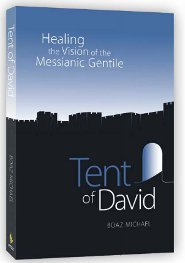
No, I don’t feel rejected by Messianic Judaism, nor do I feel like a second-class citizen in Messianic Jewish groups or when I attend my local church. I don’t feel like Boaz Michael is treating me poorly by suggesting, both in his book Tent of David and personally as my friend, that I explore a church worship experience. After all, he and his wife Amber regularly attend a Baptist church in their own community when Boaz isn’t traveling. IMJ author and editor Joel Willitts regularly attends a Christian church in Chicago. And yet he is also close friends with IMJ co-editor David Rudolph and if they experience any dissonance in their personal and professional relationship, I couldn’t tell by reading their book.
churchesI doubt Messianic Judaism as an overarching concept and organization is perfect. I doubt each individual synagogue or all of the individual people who attend said-synagogues are perfect.

There probably are some Messianic Jews who have “issues” with large numbers of Gentile attendees in their synagogues. There are probably some who prefer a largely Jewish community rather than a largely Gentile community. I don’t blame them. Traditionally, any Jew who has publicly professed Jesus as Savior, Lord, and Messiah has been labeled a “Christian” by Jewish community and family and typically ostracized.

Also historically, the Christian church has typically required any Jew who “professes Christ” to surrender all Jewish worship and lifestyle practices and essentially to become a “goy.” If I were Jewish, I wouldn’t like that either (and having been married to a Jewish wife for 31 years, I have a little insight into that world).

So I, a Christian who goes to a small Baptist church in a suburban community in Southwestern Idaho, don’t feel rejected or pushed away by Messianic Judaism, nor have I ever gotten the impression that Messianic Judaism disdains the other Judaisms or Christianity.

Do Hebrew Roots Groups Hate Messianic Jews and Christians?

But what about Hebrew Roots or the subgroup in which Peter (and I really dislike calling out individuals for a “spitting contest” but sometimes enough is enough) purports to represent? How do they feel about Jews and how do they feel about “Christians?”

To be fair, every Hebrew Roots person I’ve ever met says they love Jews and they love Israel. I don’t doubt it. However, whenever Jews in the Messianic movement register distress at Hebrew Roots Christians mimicking Jewish religious and identity behaviors, typically Hebrew Roots people accuse the Jewish people of racism and exclusionism and other unpleasant things, seizing the “right,” based on various scriptures, to move into the Jewish space and claim everything in that space for Gentile use as “sharers” of all the “stuff.” It’s kind of like having your neighbors burst through your front door, raid your fridge for a beer, say that they’re moving in, and you have to “share” your stuff (food, bed, clothes, toothbrush) with them forever…and you don’t have a say in the matter.

Doesn’t sound very loving.

Actually, I’m more concerned about Hebrew Roots attitudes towards Christians and Christian churches. Granted, “the church” in all its iterations across history, has a rather poor track record in terms of supersessionism, pogroms, inquisitions and the like relative to the Jewish people, but that is slowly changing. However, regardless of how you feel about Christianity, no other group has kept the teachings of Jesus and his apostles and disciples intact for the past twenty centuries, just as the Jews have kept the Shabbat, the Torah, the Prophets, and the teachings of the sages for the sake of Israel and Hashem for as long and longer (much longer).

Most “Messianic Gentiles” I know in the Hebrew Roots movement go to church, at least occasionally. Most Hebrew Roots people who are Jewish (with either a Jewish mother, Jewish father, or both), are intermarried and some of their spouses self-identify as Christian and at least occasionally go to church. Many of the Hebrew Roots Jews and Gentiles have Christian family members and Christian in-laws, so it’s not like they are isolated entirely from Christian influences.

But when Hebrew Roots people characterize the Church as “Babylon” (which I’ve personally heard some of them say) or claim Christians are “lawless” or say they hate the “Judaic heritage” of Christianity, I take offense. Of all the non-Jews who claim to “keep the Torah,” the fact remains that probably over ninety percent of Gentiles who keep the weightier matters of the Law are church going Christians. Church going Christians donate food to the hungry, donate time in homeless shelters, donate time in food banks, visit the sick in hospitals, participate in prison ministries, mow the lawns of disabled people, shovel snow off the drives and sidewalks of the infirm and elderly in the winter, comfort the grief-stricken person whose spouse has just died of cancer.

I know Christian people who perform each of the mitzvot I’ve just listed and I’ve performed at least some myself as a “church going Christian.” If that’s not Torah, what is?

I have complained about my church experience in the past and I probably will in the future. It’s tough to get used to a new “culture” and the different ways people think about and do things within that culture. I also have been significantly challenged as far as my beliefs and my knowledge, particularly by the head Pastor of my church, who is highly intelligent, extremely well-read, who is fluent in Biblical Greek and Biblical and modern Hebrew (and other languages), who has lived in Israel for fifteen years, who maintains close friendships with Israeli Jews (believers and non-believers), and who vehemently opposes supersessionism and anti-Semitism in all their forms.

No, we don’t agree on everything, but I have to say that even when going “toe-to-toe” on some issue, I always encounter great integrity and respect in our transactions and never, ever have I been insulted, slighted, or treated poorly even to the smallest degree.

I can’t always say the same for many of my internet dialogues with “fellow brothers in Messiah.”

changing-courseI’m not writing this to change anyone’s mind. I know that’s probably useless. I’m saying this to show those people who think like me that you’re not alone. I’m saying that it’s possible to be a Christian, go to church, and still have close associations and friendships with Jews, both those who are Messianic and those who aren’t. I’m trying to see the best in people. That’s a Jewish and a Christian value. If that’s not your value, then maybe you need to re-evaluate what you believe and why? If you don’t love someone because they belong to a particular religious group, then maybe you need to reconsider whose teachings you’re actually following.

Dear Peter

You won’t like this, but I feel deeply sorry for you, Peter. I think sometimes you see yourself as the victim of both Messianic Jewish people and Christian people. I know you want to be accepted for the person you are and you really need to be right and to have others agree that you’re right.

You were right about one thing. You challenged me (on Gene’s blog I think) to get off the fence and go back to church. After all, you were attending a church and it was (I guess it’s not anymore) working for you and your family. You were right. I went back to church and it was the right thing to do. After a number of “settling in” struggles, I’m beginning to find my legs, so to speak. The transition period isn’t over yet, but I feel myself integrating into the community somewhat. I’m learning a lot of new things. My Pastor, as I said above, is a great person to talk to and he asks questions that aren’t always easy to answer. Those are really great questions.

And he’s willing listen and consider my point of view about the Messianic Jewish movement and how the modern movement connects back to the New Testament Jewish believers. If I had stayed in Hebrew Roots, as comfortable as it was and as much as I still love the people I fellowshiped with, I wouldn’t have learned any more than what I knew back then. Change is growth and I’ve changed and grown a lot. I’m not done yet.

So thank you for that.

One thing that is absolutely required in order to understand someone, in order to talk with someone, in order to learn from every person you meet, no matter who they are, is that you can’t continually feel like you are someone’s victim. When you always expect to be victimized, whether by Jewish people who are Messianics or non-Jewish people who go to church, the only response you can have is to become defensive and then to attack in order to protect yourself. No one learns a thing from someone if they are afraid of being attacked and are responding in kind.

The only reason I’m engaging you is that I see potential in you. I know, based on what you’ve blogged, that you have had some rough experiences in your life and you feel as if you’ve been treated unfairly. Most of what you blog about is a response from that position. If I thought you were just a jerk, you’d never hear from me again. I don’t think you’re a jerk but most of the time, it’s hard to tell the difference between a hurt and angry person and a bully. Because of that, I urge you to reconsider what you’re doing. It can’t turn out well. It never turns out well. It doesn’t communicate love for Jewish people and for Israel. It doesn’t communicate love for your brothers and sisters in the church, particularly those who are in the church you currently attend.

I don’t know what else to say to you, Peter. I don’t know what else to say to the thousands upon thousands of people out there like you who feel like you do…who feel like the church is their enemy…who feel like the church lied to them…betrayed them…kept the truth from them…people who feel like their Pastor or their friends in the church hurt them.

held-in-gods-handsMisunderstandings are only corrected through relationship and dialogue, but those conversations absolutely cannot be based on hostility, competition, or the desire to defeat or destroy the person you are speaking with. Until you reach the point where you can talk to people who you disagree with and not see it as a battle, you will never go any further in your path of faith or your walk with Messiah than the spot where you’re standing right now.

I know this won’t change you. As I write it, I hope it changes me so that I can be as compassionate as I want to be toward you and toward those who criticize me and disagree with me. I know God doesn’t love one of us and hate the other. Otherwise, why send Messiah to die for the whole world?

I don’t hate Jews. I don’t hate Christians. I don’t hate Hebrew Roots people (One Law, Two House, or anyone else). How could I when I know that even when I was Messiah’s enemy, he died for me? He displayed a love for an unbelieving and hostile humanity that he was willing to die for. Shouldn’t we try to live up to that, at least a little bit? We don’t have to die for each other (although we may be called to one day), but we can try to put down the boxing gloves, knives, and machine guns (all metaphors for our online arguments) and just talk.

Tuesday afternoon, I’m going to be showing up at Beth Immanuel Sabbath Fellowship in Hudson. There’s going to be a lot of people there. Some will be Christians. Some will be Jews. A lot will call themselves by different labels and titles. We probably won’t agree about everything we talk about. But we all have Messiah in common. That’s a start.

“Optimism is essential to achievement and it is also the foundation of courage and true progress.”

-Nicholas Murray Butler, American diplomat and educator

138 days.

Introduction to Messianic Judaism: Struggling with the Nemesis

Traffic ConesThe fact that experienced readers of the New Testament come away with diametrically opposed interpretations of the same text is today perhaps one of the few universally recognized results of modern historical critical scholarship.

-Joel Willitts
“Chapter 23: The Bride of Messiah and the Israel-ness of the New Heavens and New Earth” (pg 245)
Introduction to Messianic Judaism: Its Ecclesial Context and Biblical Foundations

Brother, you said a mouthful.

I was pretty frustrated when I went to bed last night (as I write this on Tuesday morning). I had a rather busy day on several of my blog posts with various comments, usually related to something I said about the Rudolph/Willitts book. But as I was reading the above referenced chapter in bed, a number of thoughts came to me that weren’t particularly connected to the material I was perusing. I kept going back to what I said a month ago about the problem with religious people. They always think they’re right, they always think their interpretation of the Bible is the only interpretation of the Bible, and they always think that everyone they talk to and disagree with should immediately see the devastating logic of their arguments and then completely roll over to their point of view.

And when you don’t, they get a little cranky.

So when I read the opening sentence in Willitts’ chapter, it was wonderfully confirming.

But there’s still a problem.

Furthermore, softening the logical link between 5:18a and 5:18b lessens the rhetorical force of the statement. What was likely intended to be a ringing affirmation of the Spirit’s ability to release one from being under law (cf. 5:16) comes out sounding, at least practically speaking, more like a piece of encouraging advice to dispense with the need for law observance. Yet this construal is necessary for the viability of the reading proposed by the majority of Galatians commentators, who must assume the mutual compatibility of the leading of the Spirit and existence “under law”; otherwise the point of Paul’s statement would be altogether lost. For this reading to succeed, then, one must downplay both the implicit logic and the rhetorical force of 5:18.

-Todd A. Wilson
“Chapter 22: The Supersession and Superfluity of the Law? Another Look at Galatians” (pg 239)
Introduction to Messianic Judaism

Ah Galatians, my old nemesis. How I have missed thee…not.

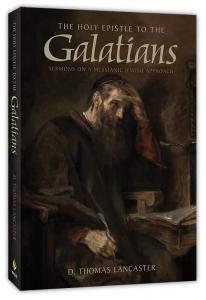
Pastor Randy has been away in Brazil for most of the month of April so naturally, we’ve had to suspend our Wednesday evening meetings until his return. He returned on Tuesday (today, as I write this) but didn’t want to “push it” by trying to return to our regular meetings the day after he got back. He’s got a lot of catch up work to do, so I’ll see him next week, and we’ll pick up where we left off with our discussions on D. Thomas Lancaster’s Galatians book.

I enjoy my conversations with Pastor Randy, but I sometimes anticipate them with some degree of “dread.” As I was trying to puzzle my way through Wilson’s brief analysis of that same epistle with an eye on the Messianic Jewish perspective, I became totally lost. I also became kind of skeptical as a result of being lost. If I can’t understand this and it doesn’t make sense to me, does it make sense at all? Is Wilson trying to push the text too far into a particular viewpoint or interpretive model? Is he pushing Paul into an area where Paul never intended to go? And how can I tell?

One thing Pastor Randy has said to me on numerous occasions is that when studying the Bible, the best place to start is with the literal meaning of the text in its original language and context. In reading Wilson and phrases such as “softening the logical link between 5:18a and 5:18b,” I started wondering what Paul would make of all this and how he would see Wilson’s treatment of his letter.

Galatians by D.T. LancasterOf course, you can’t take Galatians in isolation. You have to look at it within the larger context of Paul’s other writings and the events of the New Testament times in general (not to mention the rest of the Bible). You also have to look at the chronology of these writings, with Galatians being one of Paul’s earlier letters, written even before the events we’ve read in Acts 15.

Justin Hardin’s Chapter 21: Equality in the Church,” was easier to digest, but he took a much smaller portion of Galatians to examine (specifically Galatians 3:28) and was more successful at relating how Paul was not attempting to “support a collapse of ethnicity any more than [he] supports the collapse of the male and female genders.” (pp 224-5). On page 226, Hardin tries to explain that the tutor (pedagogue) function of the Law we find in Galatians 3:23-24 is indeed only one of a number of functions of the Torah for the Jewish people. Only that function went away when Messiah came to show us the perfect model of “Torah living,” but that didn’t eliminate the Jewish requirement to observe Torah for other reasons (national identity, covenant obedience, eschatological linkage to the Messianic age, and so forth).

But how am I supposed to gain an understanding of Galatians that comes anywhere near to Hardin’s or Wilson’s, or even Lancaster’s when I meet Pastor Randy again? I can’t keep these fellows in my pocket and bring them out to present their wares at a critical moment in our dialog, but since Galatians is obviously far more complex than meets the eye, how can I defend a position on this puzzling epistle that I don’t fully understand? (And by the way, like Lancaster, Hardin believes Paul wrote the Galatians letter only to the Gentile population of the churches in that region, not to their Jewish counterparts.)

Like most of the chapters in this book, Willitts’ essay and analysis of “the Bride” imagery (in the aforementioned Chapter 23) in Revelation 19 and 21 is dense with footnotes and scholarly references. In order to present a respectable argument regarding Galatians (or anything else from the Bible), I’d have to be far better read than I am and then somehow have the ability to recall all of that information at a moment’s notice at it is required for a certain topic brought up in my Pastor Randy Galatians discussions.

I need a bigger brain.

With the Scripture as a background, we can now clarify John’s use of the bride imagery in Revelation 19-22. First, since for John the Lamb is divine, it presents little problem for him to correlate Israel’s God with the Lamb — what was attributed to the God of Israel in Isaiah is now associated with the Lamb. Thus, what was once God’s bride is now the bride of Messiah.

The Lamb’s bride is the New Jerusalem, both the people of Israel and the place where God will dwell. Israel, who was unfaithful, now is not. At the end of the age, the Lamb will remarry his bride; he will fulfill his promise. The divine Messiah will redeem his people from captivity and clothe them with righteous deeds because they will be “taught by the Lord” (Isa. 54:13).

-Willitts, pp 252-3

That quote will no doubt shock most Christians and probably more than a few Jewish believers. In the church, I was always taught that “the church” was the bride of Christ, which usually means Gentile Christians. Here, Willitts completely reverses identities, saying that both Israel as a place and as a people/nation are the Divine Messiah’s bride. What I didn’t quote was how Willitts states that the nations (believing Gentile Christians) are the wedding guests! We’re not the bride at all but we are on hand to celebrate at the “wedding reception,” so to speak.

That’s going to ruffle a few feathers.

But…

filtered…but Willitts isn’t presenting the conclusions in his brief article as if they were absolute fact or as if they were the only possible interpretation of the text. He deliberately is framing his interpretation within a Messianic Jewish context in order to show an alternate point of view, a different perspective for his readers, probably to make us think and to help us question our assumptions. I can relate to that, since I often write from that perspective myself.

Now look at this comment made on one of my blog posts in response to my question about whether the commentor thinks Christians sin by not observing the Torah in the same manner as the Jews:

Some Jews may be accepting of Christian Torah observances that make them look Jewish, but in my experience, it can’t be that many. And have you told other Christians you associate with about them being obligated (rather than them having a choice) to Torah observance to a level that will make them look Jewish too?

Yes, I have, I argue for covenant obligation, are you in covenant with God, then you have an obligation

“Zion” is well-meaning and a decent human being, but we often come to loggerheads because he believes that Gentiles in Messiah are directly linked into the covenants rather than receiving them through Israel, and as such, we covenant members are “grafted in” to the full 613 Torah mitzvot and are required to observe them, not in the manner of modern “Rabbinic Jews,” but from a Biblical model (nevermind that we have no idea how to observe the Torah without Rabbinic interpretation).

I disagree and believe we Gentile disciples of the Messiah receive certain blessings from the covenants God made with Israel thanks to the linkage between Abraham’s faith and our faith in Messiah, but that doesn’t include turning us into “Israelites,” nor does it mean we have an identical Torah obligation with the Jewish people.

So we have a difference of opinion. That brings us back to the Willitts quote I inserted at the top of this blog post.

I don’t mind disagreements. I really don’t. I do mind being backed into a corner by folks who believe that it’s their way or the highway. My point of view is one point of view. There are aspects of the Bible I don’t understand. Galatians is a frustrating mystery to me. Even when someone tries to explain it, such as Wilson, the explanation is a frustrating mystery to me. There are days when I want to pack it in and give up on religion. I don’t fit. I don’t understand. I am really annoyed with the dissonance between different Bible interpretations, and I am really, really annoyed with people who think that they and only they (or their group) are the sole possessors of God’s truth about the Bible.

To me, being a believer and studying the Bible is like being an explorer. As a person of faith, I’m on a journey of discovery. Such journeys are rarely straightforward and often involve going in the wrong direction, backtracking, retracing steps, and sometimes using a machete to hack through thick underbrush, like an adventurer-archaeologist on his way to the next big find. But as Dr. Henry Jones Jr. once said, “seventy percent of all archaeology is done in the library.” It requires painstaking, laborious study, not dramatic arguments by people who are all too sure of themselves. Archaeology is also a science of patience. At a dig, you must be slow and deliberate in attempting anything. It might be today, tomorrow, ten years from now, or never, before you uncover anything of even the remotest significance at all.

walking-side-by-sideJesus is like a companion on a long journey who helps to guide us but who will not override our decisions, even if we should take the wrong path. He’ll advise us, prod us, give us hints, and occasionally berate us as we find we’ve stepped into a pool of quicksand, but he won’t just lead us by the hand so we can passively follow where he has gone before us.

I’m nearly done reading the articles in Rudolph’s and Willitts’ book. I’m hoping to get through all of them and finish taking my notes before I have to return the book to the library. But once I have, I’ll move on to another book. While I’ve found Introduction to Messianic Judaism to be an excellent survey of the perspectives on different aspects of theology and doctrine from a Messianic Jewish perspective, it’s still only one book. To the degree that the twenty-six contributors reference countless other sources, then countless other sources are required to help understand the Bible and thus a life of faith.

I can’t stop now, though one day, I may completely withdraw from the public realm and conduct my search privately, but a life of encountering God requires a lifetime. I can’t simply accept one religious person’s statement that they’re “right” and blindly consume their declarations.

I’ve got to keep going. Will I ever arrive at a destination? Probably not this side of paradise.

153 days.

Introduction to Messianic Judaism: The Troubled Ekklesia

jewish-repentanceJewish repentance is not the same as repentance for Gentiles. R. Kendall Soulen highlights a pivotal distinction intrinsic to the Bible but almost entirely ignored by the church:

Christians should recover the biblical habit of seeing the world as peopled, not by Christians and Jews, but by Jews and gentiles, by Israel and the nations…. The Bible, including the Apostolic Witness, presents the distinction as an enduring mark of the one human family, still visible in the church and even in the consummated reign of God.

Human sin is never merely the sin of the creature against the Creator-Consummator. Human sin is also always the sin of Jew and Gentile, of Israel and the nations.

This insight has profound implications for our understanding of Jewish repentance. If departure from Torah living is the measure of Jewish sin, should not a return to the paths of Torah be a sign of Jewish repentance?

-Stuart Dauermann
“Chapter 7: Messianic Jewish Outreach” (pg 95)
quoting R. Kendall Soulen, “The Grammar of the Christian Story” and “The God of Israel and Christian Theology”
Introduction to Messianic Judaism: Its Ecclesial Context and Biblical Foundations

I chose the paragraph’s quoted above from Dr. Dauermann’s chapter in Rudolph’s and Willitts’ book largely to highlight the struggle of understanding between the Messianic Jewish and Gentile Christian perspectives. Certainly Dauermann’s and Soulen’s descriptions of sin and repentance, and especially differentiating them between Jews and Gentiles, flies in the face of how Protestant Christianity defines those concepts. In normative Protestantism, sin is sin, regardless of the individual involved being Jew or Gentile. It’s personal, never national. But therein lies the rub.

I might as well tackle this rather difficult topic since lately, I’ve been pursuing unpopular causes. No, that’s too cynical, even for me. It’s just been a rough week, and I know how much people struggle with the interactions I’m trying to explore.

Whenever I try to describe (let alone understand) the relationship between Messianic Judaism and Christianity, I typically am criticized for my “lack of understanding” of Messianic Judaism. I’m generally told that my error is in defining Messianic Judaism as a “Judaism.” Although my critics aren’t Jewish, they do accurately describe the problem between Messianic Jews and the other Judaisms, both historically and in the modern sense.

Messianic Judaism and its antecedent movement, Hebrew Christianity, first emerged as attempts to reconfigure the relationship between the Christian Church and the Jewish people. The Hebrew Christians of the nineteenth and twentieth centuries were for the most part evangelical Protestants who saw the Church as an invisible and universal body of “true believers” that was expressed concretely but imperfectly in the local Christian congregation – a community constituted by the regenerated individuals who voluntarily joined it.

-Mark Kinzer
“Chapter 11: Messianic Jews and the Jewish World” (pg 126)
Introduction to Messianic Judaism

Although I doubt Dr. Kinzer intended this paragraph to be received in such a manner, when I read it, I could only be reminded of a long-standing argument between Messianic Jewish and Hebrew Roots perspectives. In the situation described by Dr. Kinzer, Jewish people accepted Jesus as Lord and Savior, set aside all “Jewish” types of religious observance, self identified as Christians, and joined the larger body of the church, being absorbed into their ranks. The Hebrew Christians, except for a string of DNA and the self-awareness of being “Jewish,” were indistinguishable from their Gentile Christian counterparts. People “knew” they were “Jewish” but that knowledge was beside the point. They were first and foremost Christians and anything that distinguished their national and covenant identity as Jews was swept away.

By contrast, to accept (in general since there are a number of variations on this theme) the Hebrew Roots perspective of Gentile “obligation” to Torah observance and full covenant identity as “Israel” as wholly shared with Jewish believers effectively does the same thing to Messianic Jews. Jews and Gentiles in the Hebrew Roots movement look, act, and identify identically. Except for a string of DNA and the cognitive awareness that certain members are Jewish, both Gentile and Jewish participants are indistinguishable from one another. While Jewish covenant observances and behaviors are not “swept away” as such since the Jewish members remain Torah observant, the distinction becomes irrelevant, since everyone looks and acts “Jewish.”

kinzer-postmissionaryHebrew Christians within evangelical Protestantism become invisible and absorbed by the church as a whole. In Hebrew Roots, it is the same for Messianic Jews.

But this is so hard for most Christian Hebrew Roots practitioners to understand.

And why is it so important for Messianic Jews to maintain their distinctiveness from Gentile Christian populations?

The term “postmissionary” was chosen to make an ecclesiological rather than a missionological point – namely, that Messianic Jews are not called to be representatives of the Christian community operating within another religious community (i.e., the Jewish people) but to be fully part of the Jewish world in both religious and national terms. In fact, they are to represent the Jewish community in relation to the Church, rather than the reverse.

-Kinzer, pg 132

Dr. Kinzer is describing material from his book Postmissionary Messianic Judaism: Redefining Christian Engagement with the Jewish People, a work that is at once revolutionary, controversial, wildly applauded by many but not all Messianic Jews, and frequently criticized by various branches of Christianity.

But it, and Dr. Kinzer, describe the need for Messianic Jews to be disciples of the Messiah first and foremost as Jews. The Hebrew Christianity and Hebrew Roots solutions to Jewish Messianic discipleship both require the surrender of that unique covenant identity and role from the Jewish people, in both cases, isolating Messianic Jews from larger Judaism and larger Jewish practices (while Hebrew Roots Gentiles generally support Torah observance in one sense or another, they usually disdain and reject much or all of the historic Jewish traditions which have identified Jewish communities for the past twenty centuries). The Hebrew Roots solution, like Hebrew Christianity, “absorbs” the Jewish population of believers into the wider “ekklesia,” diluting their identity and eventually, causing them to “disappear” within the masses.

But as has been pointed out to me time and again, even the largest and most robust of Messianic Jewish synagogues still have a majority of Gentiles as its members. However, as I have learned time and again, those are Gentiles who have chosen to come alongside Messianic Judaism in order to dialog with and to support the Jewish disciples of the Jewish Messiah King in Torah observance, identification with national Israel, and forming the ekklesia made up of (Jewish) Israel and (the believers of) the nations that will once day herald the Messiah’s return.

Together the Messianic Jewish community and the Christian Church constitute the ekklesia, the one Body of Messiah, a community of Jews and Gentiles who in their ongoing distinction and mutual blessing anticipate the shalom of the world to come.

“Defining Messianic Judaism”
UMJC.org

In quoting the Hashivenu core values, Dr. Kinzer states:

The expanded core value continues by expressing appreciation for the religious life of the wider Jewish world: “When we say that Messianic Judaism is ‘a Judaism,’ we are also acknowledging the existence of other ‘Judaisms.’ We do not deny their existence, their legitimacy, or their value.”

Never before had a group of Messianic Jewish leaders sought to differentiate their movement so definitively from evangelicalism and to identify it so radically as a branch of Judaism.

-Kinzer, pg 131

women_praying_at_the_wallI suppose you have to be Jewish to really understand the perspective Dr. Kinzer is describing, but being married to a (non-believing) Jewish spouse, I think I have some idea why it’s intensely important for her to be, not just genetically or generically Jewish, but culturally, ethnically, religiously, traditionally, and right-down-to-the-bone Jewish.

Obviously, her requirement has not been the “swan song” for our marriage because I’m a Gentile Christian since we’re still together after over thirty years, but it comes with a few additional challenges. In terms of the wider Messianic Jewish-Christian interface, those challenges are magnified.

Messianic Jews regard Gentile Christians as their brothers and sisters in the Lord and at the same time experience significant tension with the Gentile Christian world.

-Daniel Juster
“Chapter 12: Messianic Jews and the Gentile World” (pg 136)

That’s pretty much it in a nutshell. “You’re my brother and I love you, but you also drive me crazy.” That’s what family members do to each other, sometimes.

Oh, it gets even more “interesting:”

According to this statement, the Messianic Jewish community is united with the “Christian Church” in forming the ekklesia, the Body of Messiah. The term “Christian Church” is used here in a more delimited way to describe the “Gentile wing of the Church.” This is in keeping with the connotation of the word “Christian” in the wider Jewish world. For Jews, Christian = not Jewish, i.e., Gentile. This is why Messianic Jews do not self-identify as “Christians.” It would imply to fellow Jews that they are no longer Jews.

-Juster, pp 136-7

I can imagine that many Christians will take Juster’s words as an insult, but again, I think you have to be Jewish to understand the dissonance being experienced. For the vast majority of the last two-thousand years, Christianity has demanded that Jews surrender every last bit of their Jewish identity and practice in order to become disciples of the Jewish Messiah King. Go figure. For the vast majority of the last two-thousand years, the larger, normative Judaisms have considered any Jew who believes that Jesus is the Messiah is no longer Jewish but instead, a “Christian.”

But what if, like James, and Peter, and Paul, and all of the other first-century CE Jewish apostles and disciples (thousands upon thousands of them) you, as a Jew, wanted to be a disciple of the Moshiach and continue a fully lived and observant Jewish experience? Where’s the problem in that?

Old habits die hard. The church will need to learn to accept Jews who identify as “Messianic” as Jews, not just in terms of DNA and a cognitive awareness that the Jew in question had Jewish parents and other family members, but that the Messianic Jew is really, really Jewish in every observable, identifiable, and covenantal sense.

But what about those Gentiles who self-identify as “Messianic?” Not all of them are, as I previously described, Hebrew Roots Christians who aspire to the same identity as the Jews in the Messianic movement, thus claiming what is not their’s. I mentioned in my review of the First Fruits of Zion television series, that narrator and teacher Toby Janicki introduces himself as a Gentile who practices Messianic Judaism. Do Gentiles who come alongside Jews in Messianic Jewish synagogues practice Messianic Judaism (as distinctly different from Christianity)?

jewish-t-shirtI’ve laid out a case, based on chapters in the Rudolph-Willitts book, that describes why Messianic Jews need to identify separately from Christianity, even as Messianic Jews and Christians must be unified within the body of Messiah to form the Ekklesia, but where to “Messianic Gentiles” fit in, if at all?

I could make a case for Christian/Jewish intermarried couples to identify as “Messianic” and whose religious practice is within that context for what I hope are obvious reasons. What about the large number of non-Jews attracted to the Messianic movement who aren’t intermarried or otherwise connected to the Jewish community? I can’t really describe the attraction except I know it’s there. I have the same attraction, which is evidenced by what I write on this blog. Even if I weren’t intermarried at this point, the drive to see God, the Messiah, and the Bible through that particular lens would not go away. For some reason, it’s hardwired to my soul.

But that drive can’t be used to justify the diluting or elimination of Jewish identity and covenant distinctiveness from within the larger Ekklesia of Messiah. Juster, in describing the initiative Toward Jerusalem Council II, speaks of coming together to “heal historic wounds and repudiate ancient decisions by the Church against Messianic Jews.” I believe this should be applied to the overarching relationship of Messianic Jews and believing Gentiles, both within the Messianic Jewish worship framework and between Messianic Jews and all believing Gentile worship groups including the Church and other variant branches of Christianity (even if they choose not to self-identify as “Christianity”).

Juster’s conclusion of Chapter 12 is the hopeful note within the continual struggle between believing Jewish and Gentile communities.

This notwithstanding, the Messianic Jewish community views itself as united with the Gentile wing of the Church in a partnership that is intended by God to reflect interdependence and mutual blessing (emph. mine). Such interdependence and mutual blessing can come about only through close relationship. Therefore, Messianic Jews invest in Christian groups and organizations that welcome a Messianic Jewish presence, even as Paul wrote, “Welcome one another, therefore, just as Messiah has welcomed you, for the glory of God” (Rom 15:7 JNT).

Christian theology emphasizes that God is unfolding his great plan for the redemption and transformation of the cosmos through the work of the Church. As Messianic Jews, we have added a significant corollary to the traditional Christian narrative: the work of the Gentile Christian world cannot be accomplished without being in right relationship with Israel and the Messianic Jewish community in particular.

-ibid, pp 142-3

Most Gentile believers aren’t going to accept this message, at least at first. Some never will at all, for a variety of reasons, some of which I’ve already mentioned. But Christianity in all its forms has traditionally rejected the Jewish people from the worshipers of Messiah except on the condition that they give up being uniquely Jewish in any demonstrable and experiential sense. That is no longer a sustainable position for the church or any believing Gentile organization or individual.

When King Messiah returns in power and glory, the Church will be in no position to demand that he surrender his Jewish identity as a condition of ascending the Throne of Israel. That being the case, how can we dare to make such a demand of his Jewish subjects?

157 days.

Introduction to Messianic Judaism: Reading the Bible in Flux

Talmud Study by LamplightMessianic Jews accord Scripture a unique status as the inspired and authoritative Word of God. They study it, use it liturgically, and base their life and practice on it. However, Messianic Jews grapple with certain issues involved in biblical interpretation that are particularly relevant to Jewish followers of Yeshua. In the first two parts of this essay I will focus on how Messianic Jewish interpretation of Scripture is affected by interpretive traditions and how this leads to the task of shaping a post-supersessionist canonical narrative. In the third part I will focus on unique uses of Scripture in Messianic Judaism.

-Carl Kinbar
“Chapter 4: Messianic Jews and Scripture” (pg 61)
Introduction to Messianic Judaism: Its Ecclesial Context and Biblical Foundations

In my conversations with Pastor Randy at the church I attend, the core of our conversations are on interpretation of the Bible. Pastor says that the first step in any proper interpretation is understanding the literal meaning of the text in its original language and within its context. I can hardly argue against that, but there are two additional steps: “what the text means” and “what the text means to me.” The former is an application of the text in its original context and the latter is an application of the text today.

Hyper-literalists would say that the application of all Biblical text is uniform across time, being the same both the day it was written and right now in 21st century America. I don’t think I can go that far, since, for instance, many portions of scripture in Tanakh (Old Testament) and New Testament addressing slavery are not particularly applicable in today’s world, whether in Israel or the rest of the nations.

But Dr. Kinbar suggests a finer degree of application depending, in this case, on whether one is or is not a Messianic Jew. We do know that, depending on whether one is an observant Jew or a Gentile Christian, certain passages of the Tanakh, specifically those often understood as “Messianic,” are interpreted differently, with the latter population seeing Jesus in the text and the former group seeing the future Messiah or sometimes national Israel instead.

Even when both populations interpret the same text in terms of its literal meaning within its original context, the application, especially in the present age, differs radically because it is being interpreted by two different populations, each with a different “agenda.”

It’s what I keep trying to explain to Pastor Randy. Even multiple parties who are honest and who seek truth can arrive at different interpretations of the Bible depending on who the parties are and how they’ve been “programmed” to interpret the Bible, sometimes just based on who they are (the ultimate arbiter of scripture may be the Holy Spirit, but that doesn’t prevent many people of good faith and character from interpreting scripture quite differently from one another, sometimes even within the same church).

But Christians will always see Jesus in Messianic texts. Religious Jews, not so much.

Now Kinbar is factoring Messianic Jews into the equation in his article. What can we expect?

Perhaps no one specific application.

Mark Kinzer, another Messianic Jewish thinker, approaches the interpretation of Scripture from a different direction. He argues that the Bible must be interpreted in the context of interpretive traditions, which consist of “the accumulated insights of a community transmitted from one generation to the next. In a Messianic Jewish context, tradition represents the understanding of Scripture preserved through the generations among the communities – Jewish and Christian – within which Scripture itself has been preserved. If we are connected to these communities, then we are also heirs of their traditions.”

-Kinbar, pg 62

jewish-handsThat’s something of an adaptation to how Orthodox Jews see Biblical interpretation. My wife occasionally quotes our local Chabad Rabbi as saying that the Bible cannot be interpreted correctly except through tradition, which in this case, means the traditions of Orthodox Judaism. According to Kinbar, Kinzer includes Jewish and Christian traditions as part of the requirement for correct Biblical interpretation, but Jewish and Christian interpretive traditions (and make no mistake, Protestant Christianity does have traditions for interpreting the Bible) are often at odds with each other, including the rather critical element of identifying the Messiah. Establishing the particulars of which traditions to use from each religious perspective must be an enormous challenge.

But there’s more than one way Messianic Jews look at this matter.

(Daniel) Juster argues for a more cautious approach toward Jewish tradition, asserting that “only biblical teaching is fully binding, whereas other authorities might be followed because we perceive wise application or respect community practices.” In other words, Scripture is the measure of tradition, never the reverse. Juster does not address the claim of traditionalists that the cumulative weight of centuries of interpretation is necessarily of greater weight than the judgment of the individual.

The positions of Juster and Kinzer on the place of tradition in the interpretation of Scripture represent the views of two branches of Messianic Judaism and are emblematic of broader disagreements in the movement over the place of traditional practices in Messianic Jewish life.

-Kinbar, pp 62-3

How I define Messianic Judaism is fairly conservative, and possibly closer to how the contributors of the Rudolph/Willitts book see the definition as opposed to how Hebrew Roots identifies the movement. I see Messianic Judaism as a “Judaism” (most or all of the other “Judaisms” in the world will disagree), that is, a religious, cultural, and ethnic group made up primarily or exclusively of Jewish people who are desiring to establish and nurture a Jewish cultural and religious community for the purpose of worshiping the God of Israel and having “fellowship” with other Jews. The distinction of “Messianic Judaism” is the centrality of Yeshua (Jesus) as the Jewish Messiah King in accordance with his revelation in the Apostolic Scriptures.

I’ve periodically encountered Hebrew Roots congregations (including the one I once attended and taught at) that have defined themselves as “Messianic Judaism,” in spite of the fact that few halachically Jewish people made up their membership and even fewer Jews within that group were born and raised in an ethnically, culturally, and religiously Jewish family. Few of the Jewish people within a Hebrew Roots “Messianic Jewish” group have any more familiarity with Jewish halachah and worship practices than the non-Jews in attendance. I base that statement on personal experience, and since I have little to no equivalent experience in more “authentic” Messianic Jewish congregations, I cannot comment on the membership demographics of their groups. I can only say that the ideal of Messianic Judaism is to provide Jewish communities for Jewish worshipers of God and disciples of Yeshua the Messiah, with some Gentile believers attending to “come alongside” their Jewish brothers and sisters.

prayer-synagogue-riga-latviaBut as we’ve seen, relative to Biblical interpretation, even Messianic Judaism as I define the movement, isn’t a single entity. If Kinzer and Juster represent two different perspectives in this arena, then there are two different expressions of Messianic Judaism based on how scripture is interpreted and subsequently applied. I’m not saying this to throw a monkey wrench into anyone’s machine, but to point out that these issues of religious identification and affiliation aren’t as simple as they may appear on the surface. Many Christians in the church see “Messianic Judaism” as a single container, and when visiting Hebrew Roots congregations, assume that all groups are identical in composition and practice and erroneously believe that all Hebrew Roots groups are “Messianic Judaism.”

Obviously this isn’t the case.

But returning to Messianic Judaism and interpretation of scripture, there are a few important matters to address.

Kinzer remarks that Christian theology generally ignores the eschatological character of Israel’s holiness and accentuates the “discontinuity between Israel’s covenant existence before Yeshua’s coming and the eschatological newness that Yeshua brings. Messiah is thus exalted by the lowering of Moses and Israel.” To the contrary, God’s presence with Israel is an ongoing reality that always anticipates the time of consummation. Kinzer agrees with (R. Kendall) Soulen’s argument that the death and resurrection of Yeshua anticipates what will be achieved for Israel and the nations at the time of the consummation of all things…Israel’s vocation is thus not occluded but brought to a new height in Yeshua, the one-man Israel. The person and work of Yeshua may thereby be seen in the context of Israel’s ongoing life and vocation and not its replacement.

-Kinbar, pg 65

In other words, the coming of Jesus didn’t do away with Israel and the Jewish people but insured their continuation into the future Messianic age. A rather radical thought for many Christians to absorb. But it’s not just Israel’s continuation as a wholly Jewish nation and people, but their ascendency to the head of the nations and the core of Christ’s Kingship on Earth that is being presented. Israel isn’t replaced by Christianity but rather, placed at the head of the table, so to speak. The Jews not only have a future, but an exalted and glorious future.

This is a unique interpretation of the Bible, not so much for religious Jews in general, but for Jews who believe that Jesus is the Messiah and who see him in both the prophesies of the Tanakh and the words of the New Testament.

There’s just one more unique Biblical interpretation attributed to Messianic Judaism I want to point out.

Among the Scriptures, the Torah (the five books of Moses) holds a primary place in the history and affections of the Jewish people as the record of the progenitors of Israel and the formation of Israel as a community bound to God by the commandments (also called collectively “the Torah”). Mainstream Messianic Jews, especially those who adhere to Jewish tradition, depart from the classic Christian teaching that the Torah was made obsolete in Messiah. Rather, they see that Yeshua has affirmed the Torah as the basis for life of covenant faithfulness in keeping with their calling as Jews (Matt 5:17-19).

-Kinbar, pg 69

a-long-way-to-go-pathPastor Randy and I go back and forth on this particular issue, and I continue to maintain, in agreement with Kinbar, that Torah observance for Messianic Jews remains in force if, for no other reason, than such observance defines Messianic Jews as Jews. There may be a variety of other reasons for the continuation of Torah observance within the Messianic Jewish community, but if we believe that Yeshua and subsequently the Apostles, including Paul, supported such observance (and I’ve been writing a good deal lately about Paul’s life of Torah observance) as a life long pattern for Jews in the Messiah, then these are compelling reasons not only for Messianic Jews to interpret scripture in this manner, but to continue to live their lives in accordance with the commandments, as do other Jews in other branches of religious Judaism.

But this is just the beginning, and Messianic Judaism, relative to scripture and a good many others elements, has a long way to go.

The Messianic Jewish construal of the relationship between Scripture and tradition is in flux. Messianic Judaism is still in need of a canonical narrative that is clear and comprehensive, accounting for Israel’s ongoing vocation as a holy people.

-Kinbar, pg 70

The dynamic between scripture and tradition is at the heart of many arguments regarding how a Jew is supposed to relate to the Messiah. For some observers and even some practitioners of Messianic Judaism, observance of Torah is not the issue but observance of “the traditions” very much is. As Dr. Kinbar said, the debate is “in flux” and Messianic Judaism is in many ways, still a “diamond in the rough.”

Of all of the contributors to the Rudolph/Willitts book, only Carl Kinbar (as far as I know) regularly (or periodically) reads this blog and occasionally comments on it, so if I’ve gotten anything wrong in my analysis of his article, I can expect he’ll come by to correct me. While this is slightly intimidating on one hand, on the other, it is rather comforting since it is part of the expected and required dialogue between Messianic Judaism and Gentile Christianity that David Rudolph expressed earlier in the book.

If, as I believe, Gentile Christians have a major role in supporting Israel and encouraging Messianic Jews in taking up and observing the Torah mitzvot as part of the process of a returning Messiah, then conversation and cooperation between our two populations within the body of Yeshua brings us one step closer to repairing our broken world and anticipating the return of the King.

161 days.

Introduction to Messianic Judaism: The Silo Invasion

silosA synagogue is above all a sacred community of Jewish people who gather for worship, prayer, study, benevolence, social justice, lifestyle events, outreach, and other Jewish community activities. What distinguishes Messianic synagogues from mainstream synagogues is the centrality of Yeshua, the prominent place of the New Testament, and the presence of Gentile followers of Yeshua who come alongside Messianic Jews to build a congregation for Yeshua within the house of Israel.

-David Rudolph and Elliot Klayman
“Chapter 2: Messianic Jewish Synagogues” (pg 37)
Introduction to Messianic Judaism: Its Ecclesial Context and Biblical Foundations

Let’s look at part of the above-quoted paragraph again.

…and the presence of Gentile followers of Yeshua who come alongside Messianic Jews to build a congregation for Yeshua within the house of Israel.

For a long time, I’ve been hearing some Messianic Jews describe the relationship between themselves and we Gentile Christians (whether we call ourselves “Christians,” “Hebrew Roots,” or “Messianic Gentiles,” in this context, it’s all the same) as two groups who come alongside each other, or more commonly expressed as “Christians coming alongside” Messianic Jews.

What does that mean?

I know the Messianic Jews who make this statement have an internal conceptualization about what it means, but I’ve never had access to that conceptualization. As someone on the outside looking in, this whole “alongside” thing has reminded me to two silos standing next to each other on a farm somewhere. Sure, silo B is standing “alongside” silo A, but otherwise, what do they have in common? They’re both silos, but let’s assume they hold different contents. Let’s also assume that there is no conduit (tunnel or other direct link) that attaches one silo to another and allows the contents of each silo to freely flow from one to another.

That’s how I’ve imagined the whole “alongside” thing.

Then I read the introduction to the Rudolph/Willitts book (pg 15) written by David Rudolph and received a revelation.

One of the main purposes of this book is to give Gentile Christians vision for the dialogical relationship they share with Messianic Jews so that they will come alongside the Messianic Jewish community and assist it. Coming alongside can take many forms, including (a) praying for the Messianic Jewish community, (b) sharing the good news of Yeshua in a way that affirms the calling of Jews who follow Yeshua to remain Jews and to become better Jews, (c) encouraging Jews in churches to be involved in the Messianic Jewish community, (d) supporting Messianic Jewish education, (e) contributing to the welfare of Messianic Jews in Israel, (f) helping local Messianic synagogues, (g) collaborating with Messianic Jewish ecclesial leaders and scholars, (h) preaching and teaching the Scriptures in a way that affirms God’s covenant faithfulness to the Jewish people and the bilateral (Jew-Gentile) nature of the church, and (i) including Messianic Jews in Jewish-Christian dialogue.

In reading Rudolph’s definitions for “coming alongside,” I seem to fit several of those points, at least as I perceive myself. Thus being alongside doesn’t mean just standing there next to, but actually being directly involved on numerous levels with the Messianic Jewish community including, as we saw in the quote at the top of the page, worshiping with Messianic Jews in a synagogue setting (and I’ll be coming alongside a number of Messianic Jews next month at the First Fruits of Zion (FFOZ) Shavuot conference).

Now, some people are going to take exception to this next part:

The demographic reality of Messianic Gentiles, including a second and third generation, raises a number of questions that the Messianic Jewish community is currently engaging. Many of these questions relate to time-honored traditions in the Jewish world concerning the participation of non-Jews in Jewish life. In mainstream synagogues, for example, Gentiles are not generally permitted to have a bar/bat mitzvah, wear a tallit, or read from the Torah because these are all activities in which a Jew affirms his/her covenant responsibilities as a member of the people of Israel, something a non-Jew cannot do. Some Messianic synagogues believe that these normative standards should be maintained for reasons of conscience and to avoid blurring the distinction between Jew and Gentile in the body of Messiah, a differentiation that the New Testament upholds (1 Cor 7:17-24; Acts 15; 21:24-25). Other Messianic synagogues contend that these customs should be modified so that Messianic Gentiles may participate more fully in Jewish community life.

-Rudolph/Klayman, pp 48-9

mens-service-jewish-synagogueI remember taking my three Jewish children to the local Reform – Conservative synagogue a number of years ago. As a Gentile I felt somewhat uncomfortable in reading from those portions of the siddur where I was supposed to refer to myself as “Israel” or to the patriarchs as my “Fathers.” Since it’s a pretty liberal place, the Rabbi once offered me an aliyah (to go up and read from the Torah) but I was incredibly intimidated and turned it down. In retrospect, and given my current values, I am glad I refused the honor because in a synagogue setting the honor is not mine. My children, once past bar/bat mitzvah age, were the ones accepting the aliyot because they (and their mother) are Jewish.

But as we’ve just seen within the Messianic Jewish community, the struggle continues regarding how to include and incorporate those Gentiles who have come alongside their Messianic Jewish brothers and sisters. Messianic Judaism is still in the process of creating itself and a “silo” containing both Jewish and Gentile components.

And that’s good. There should be a struggle. There was a struggle in Apostolic times, which was the whole point of Acts 15, but the Jerusalem letter didn’t define the specific halachah for Gentile participation in Jewish worship and ritual within the synagogue setting, at least not with any detail. In other words, we don’t have a Biblical model for how to include Gentiles in Messianic Jewish communities today.

At least not a good one.

And when the Gentiles heard this, they began rejoicing and glorifying the word of the Lord, and as many as were appointed to eternal life believed. And the word of the Lord was spreading throughout the whole region. But the Jews incited the devout women of high standing and the leading men of the city, stirred up persecution against Paul and Barnabas, and drove them out of their district.

Acts 13:48-50

And he said to me, ‘Go, for I will send you far away to the Gentiles.’

Up to this word they listened to him. Then they raised their voices and said, “Away with such a fellow from the earth! For he should not be allowed to live.” And as they were shouting and throwing off their cloaks and flinging dust into the air…

Acts 22:21-23

paul-editedAs you can see, many Jews didn’t have a problem with Paul’s message about the Messiah, but they had a really big problem with including non-Jews into a Jewish worship and ritual community. At that point in history, James and the Council of Apostles were the highest authority in our world for the Messianic community. Today, we have reversed the order, with Gentiles being the largest single body of people who worship the Jewish Messiah and Messianic Jews being only a tiny minority.

So should Gentile believers have control over the Messianic Jewish community? Common sense says “no” but that won’t stop some Gentile Christians from trying. Now keep in mind that for nearly twenty centuries, Gentile Christians have been treating Jewish people and Judaism with less than kindness and courtesy. It’s understandable that Jewish people should feel a little “standoffish” when approached by Christians since historically, Christians have been responsible for inquisitions, pogroms, and burning synagogues, Torah scrolls, volumes of Talmud, and occasionally bunches and bunches of Jewish human beings.

Remember those two silos I mentioned before? Now imagine that “coming alongside” wasn’t sufficient for a subset of Gentile believers. They want inside the Jewish silo and to take possession and control of the covenant identity and responsibilities assigned by God to Jews. Frankly, it doesn’t matter to this population of Gentiles if the Jews want them to do this or not.

Which is crazy, because based on my quotes of Rudolph, both in this blog post and in yesterday’s, Gentile Christians are not just welcome in Messianic Jewish communities, but we are an integral part of the body of Messiah. Messianic Jews and Gentile Christians must be united elements in a single body in order for the body to live and thrive, just as the human body must contain a heart, lungs, and liver in order to be alive. Yeah, they’re radically different organs with different functions, roles, and purposes, but they all work together.

For the body does not consist of one member but of many. If the foot should say, “Because I am not a hand, I do not belong to the body,” that would not make it any less a part of the body. And if the ear should say, “Because I am not an eye, I do not belong to the body,” that would not make it any less a part of the body. If the whole body were an eye, where would be the sense of hearing? If the whole body were an ear, where would be the sense of smell? But as it is, God arranged the members in the body, each one of them, as he chose. If all were a single member, where would the body be? As it is, there are many parts, yet one body.

1 Corinthians 12:14-20

I know Paul wasn’t necessarily talking about differences in Jewish vs. Gentile roles, and he was likely talking about the differences between prophets, preachers, teachers, and the guy who has to take out the garbage at church, but the principle and analogy holds up, at least to a degree. There are aspects to Jewish worship and community life that confirm the covenant identity and responsibility of a Jew as a Jew. Should Gentiles in the community also claim that identity, especially by force or demand? In First Century CE Jerusalem, the Jewish Council of Apostles had the authority to issue halachah that impacted both the Jewish and Gentile believers in Messiah. Shouldn’t Messianic Jewish communities in the Twenty-First Century CE have the right to issue halachah just for themselves and whoever attends their synagogues?

I know this gets into arguments that involve “flesh” and there are accusations of bigotry and even racism that fly about the blogosphere, but Gentiles aren’t being excluded from the Messianic community. The Messianic community is just in the process of defining itself and how it is supposed to work, something that was never made clear in the letters of Paul (and who better than Paul to have known such a thing?).

Both Judaism and Christianity are communities with unique cultures and characteristics. Some Gentile believers, for whatever reason, desire or fit better within the Messianic Jewish community than the Christian church community and that’s fine. Some Gentile Christians such as myself, take pieces of that Messianic culture, identity, and conceptualization and live it out within a church setting to support and encourage an understanding of Messianic Judaism in the church. I think that’s part of coming alongside, too.

going-to-church-sketchesBut I don’t tell my Pastor or the congregation what to do, what rights I have, how they aren’t being Biblical, or otherwise “storm the gates” of their community with my ideas and my personality just because I think the Bible tells me that I should (and I don’t think it tells me that I should). I respect the community and only speak my mind freely when invited (and Pastor Randy has been abundantly gracious with me in this area). I would never dream of going into the local Conservative – Reform shul or the local Chabad and telling the respective Rabbis that they’re doing it wrong and I’m there to straighten them out (although some local Hebrew Roots people have done exactly that in the past). Why would I do such a thing either in a church or in a Messianic synagogue? What would give me the right, even if I thought they had erred in relation to the commands of God?

In some ways, I’ve “come alongside” the church by going back to church since culturally, I’m not a “typical” Christian. Being part of a community isn’t about individual rights or making demands. It’s about being an active part of the community, making a contribution, benefiting the whole. Sure, the community gives back, but the community is about the community. We all benefit each other. I’m not there just to have my needs fulfilled, especially if that results in causing others in the community pain or discomfort.

One of the traditional songs sung at the Passover seder is Dayenu or “It would have been sufficient…” One portion of the traditional song goes:

If He had brought us before Mount Sinai, and had not given us the Torah – Dayenu, it would have been sufficient!

Part of my personal version goes:

If He had given us His only begotten Son so that the world might be saved, and had not given us the Torah – Dayenu, it would have been sufficient!

God has given us so much. What more do we want besides grace and mercy…and for believing Jews and Gentiles to come alongside each other and together bring honor and glory to King Messiah? It is sufficient.

I don’t share my thoughts because I think it will change the minds of people who think differently I share my thoughts to show the people who already think like me that they’re not alone.

-Anonymous

163 days.

Easterphobia or Why Do You Have to Throw Christians Under a Bus?

i-hate-easterYour newfoumd (sic) respect for a holiday named after a goddess is coupled with a newfound (sic) contempt for Hebrew Roots.

While you say your new book is about respecting others, I notice in your blog posts, comments, and writings, the Hebrew Roots whom your organization once seved (sic) is referred to almost exclusively in the negative light. Your above comment is no exception.

Judah Gabriel Himango
from a comment on the blog post
God Fearers: Easter Ham or Passover Lamb?

If you’ve been reading my blog over the past few days, you’ve seen how my own recent Easter experience went as well as my own inability to make a connection to the observance. Nevertheless, I don’t think Easter is evil, wrong, bad, or pagan, whatever the origin of the name of the observance. I suppose my Pastor used terms such as “Resurrection Day” and “The Lord’s Day” last Sunday to get around that little problem, but since there were absolutely no bunnies or eggs present (well, eggs were probably served for brunch, but most likely they were scrambled), I didn’t see any obvious idolatry involved.

I didn’t want to write on the conflicts between some minority expressions of Hebrew Roots Christianity and the more traditional Christian churches, but when I read some of the comments on Toby’s blog post, including the one I quoted above, I couldn’t let it lie (and I didn’t want to start something again with Judah because I actually like the guy). My personal struggles are what they are, but I get a little tired of Hebrew Roots people playing the “superiority” card and saying that Christians in churches are terrible people because they won’t embrace some of the Hebrew Roots priorities. Frankly, such bigotry against Christians by these groups is ill-befitting of anyone who claims to be a disciple of Christ (or Messiah if that’s your preference).

I was just talking about this issue a couple of weeks ago when discussing the problem with religious people. If a religious person, particularly in a minority variant of Christianity which sees itself as above or superior to the majority of Christians, encounters other believers who hold different views, sooner or later, there’s going to be a “spitting match” in the blogosphere. I have tried avoiding blog posts such as this one because I didn’t want to participate in such a match, but where do I draw the line when I see unjust comments being made against believers by other believers?

I suppose I could have ignored this poorly considered jab against Christians who celebrate Easter and that would have ended it, at least from my point of view, but it was included in a collection of remarks that were direct responses to something I’d said on Toby’s blog. Yes, I still should have ignored it.

But I chose not to.

Boaz Michael, author of the book Tent of David, which I mentioned on Toby’s blog, corrected something I said:

TOD addresses Easter, “Another area of difficulty involves the observance of Christian holidays. Some churches heartily embrace some of the pagan-derived aspects of Easter and Christmas. Understandably, this makes many Messianic Gentiles uncomfortable. The simple solution is not to go during that time of year. It should not have too significant an impact on your relationships there to miss church for one or two weeks; in fact, it’s quite common for people to be out of town during holidays.”

tent-of-davidLate last year, I deliberately didn’t go to church for Christmas services for more or less the reasons Boaz stated, but to my way of thinking, Easter is the “higher” tradition as far as the church is concerned. The crucifixion and resurrection of the Master is at the center of all things and without these events, there would be no salvation for all of mankind. That the church should ignore something so vitally important seems ridiculous and while I believe the Passover Seder could have much meaning for Christians, it doesn’t always cover the full, expansive intent and glory of the risen King.

So I chose to attend Easter Sunday services at my church and did not consider such services optional. As I mentioned above, it wasn’t a spiritual “power surge” and I ended up feeling more disconnected from the community because of my lack of emotional attachment, but that has more to do with me than the importance of fellowship and the beauty of watching a new day dawning and knowing that the tomb is empty.

One of the other comments Boaz made addresses this point very well:

Actually, the consequence of Tent of David is not necessarily the celebration of Easter but rather a respect for those that do honor the resurrection of the Messiah. It is about learning to see the good in others, appreciating and valuing people’s attempts to connect with God. It is about learning to manage things Easter with love and care of the individual that is sincere in their intentions and efforts. It is about building relationships that will create bridges of dialog.

At the end of the day TOD is about respecting others, not assuming evil intentions, and a mission of transformation.

He said, It is about learning to see the good in others.” Isn’t that what we’re supposed to be doing?

Nevertheless, I’ll probably get “slam dunked” by my critics and my friends alike for how I’m wording all this, but what I’m writing at least has the benefit of sincerity and transparency. If you disagree with how different churches do things, then don’t go to those churches. If you have a problem with church in general, you don’t have to go to church. I don’t complain about where you go to worship. Why do you (whoever you are, since I’m addressing more than one disgruntled person at this point) have to complain about where I choose to worship?

I know Judah was complaining more to Boaz about TOD than he was to me, and I don’t think Judah intentionally disdains all people who go to church and call themselves “Christian” instead of “Messianic,” but the Boaz has a point. Even if we struggle with some of the practices in the church, we cannot dismiss her or her service to Christ. We must, since we also call ourselves disciples of Messiah, learn to see the best in others. After all, Christ died, even for those believers we may not like or don’t agree with. If Jesus thought his sacrifice, even for “those people,” was worth it, who are we to say he was wrong?