Tag Archives: Hebrew Roots

What Are The Jewish Covenant Signs?

Question:

I have a few Jewish friends who wear kippahs and sometimes when I’m hanging out with them I feel out of place. Even though I am not Jewish, would there be any problem with me wearing a kippah, too?

The Aish Rabbi Replies:

Well, on one hand, the Pope wears a kippah.

But on the other hand, a non-Jew should not wear a kippah, since that might deceive others into thinking that he is Jewish.

In practice, non-Jews will sometimes wear a kippah while attending a Jewish religious function (many world leaders have been photographed at the Western Wall wearing a kippah), but in general a non-Jew should not wear one, due to the confusion it may cause.

However, since the idea of a kippah is to have the head covered as a reminder of God, you could certainly use some other head covering, like a cap, to serve that purpose.

from Ask the Rabbi
“Kippah for a Non-Jew”
Aish.com

At last spring’s First Fruits of Zion Shavuot Conference during a question and answer session, a gentlemen in the audience said that he sometimes will visit churches wearing a kippah and tallit gadol as a “witness” to the Christians of the permanency of the Torah mitzvot. The person in question isn’t Jewish and when asked at church, will admit he is not Jewish but that, in his opinion, the mitzvot pertaining to wearing tzitzit and many others, apply equally to the Christian as to the Jew based on our discipleship under the Jewish Messiah King.

The reaction from the speaker at the event (I can’t recall who was speaking at that particular moment) was that this behavior introduces a great deal of identity confusion if Christians start dressing like Jews just to make a point. Reading the “Ask the Rabbi” topic I quoted above reminded me of that interaction and confirmed that Messianic Judaism and more traditional Judaism share the same perspective on Gentiles wearing Jewish “sign” markers.

I’ve often heard various Jews in the Messianic movement object to Gentiles wearing tzitzit, keeping Shabbat, and (apparently) observing the kashrut laws, as violating the “sign markers” that specifically identify Jewish people and their covenant relationship with God. The “pushback” I’ve read from One Law proponents and some others in the Hebrew Roots movement is that there’s a great deal of confusion about what Torah mitzvot is and isn’t permitted Gentile Christians, so how can anyone be held accountable to what may or may not be permitted?

From a more traditional Jewish perspective, I suppose the matter is more clear-cut, but in terms of the Messianic Jewish view on the matter, things seem a tad more indistinct. Some more “hard-line” folks in Messianic Judaism seem to believe that Gentile Christians should stay in their (our) churches and behave in no way whatsoever that resembles a Jew. Others, such as the fine folks at First Fruits of Zion (FFOZ), state that many and even perhaps most of the mitzvot are permitted a Gentile, but the vast majority of them are not actual covenant obligations for us.

Opinions seem to vary widely and that’s where the confusion comes in. If you are a Gentile Christian but are attracted to the beauty and wonder of the Torah mitzvot, and you want to express a high level of respect toward Jews and Judaism, what is allowed and what is not permitted?

My personal response, and out of respect for my Jewish wife, was to put away just about everything, my kippah, my tallit, my tefillin, and to abstain from reciting virtually all of the Hebrew prayers (I still keep a siddur on my nightstand, however).

But if I wanted to explore what a Gentile might be allowed that normally is considered “Jewish,” then where are the boundaries and limits, or are they clearly defined at all?

In my search, (which has been rather brief so far) I actually didn’t find much.

In general, a brit refers to a covenant–a pledge of obligation between two parties which is sometimes accompanied by a token signifying the brit. Historically, there have been three signs that point out the three major covenants between God and people.

The first is Shabbat, which was given to serve as a sign of creation: “The Israelite people shall keep the Sabbath, observing the Sabbath throughout the ages as a covenant for all time: it shall be a sign for all time between Me and the people of Israel” (Exodus 31:16-17).

The second is the rainbow, which was given to symbolize the renewal of mankind after the Noah flood: “God further said, `This is the sign that I set for the covenant between Me and you, and every living creature with you, for all ages to come. I have set My bow in the clouds, and it shall serve as a sign of the covenant between Me and the earth. When I bring clouds over the earth, and the bow appears in the clouds, I will remember My covenant between Me and you and every living creature among all flesh, so that the waters shall never again become a flood to destroy all flesh’ ” (Genesis 9:12-15).

And the last is [circumcision], which was established as the sign signifying the beginning of the Hebrew nation: “Such shall be the cove­nant between Me and you and your offspring to follow which you shall keep: every male among you shall be circumcised. You shall circumcise the flesh of your foreskin, and that shall be the sign of the covenant between Me and you” (Genesis 17:10-11).

Circumcision came to be regarded as the unique sign of our covenant and gradually emerged as a physical symbol of a child’s joining the com­munity of Israel.

-by Rabbi Michael Strassfeld & Sharon M. Strassfeld
“Three Biblical Signs of Covenant”
Aish.com

Really? Just three? Surely that can’t be it.

The Rainbow, circumcision, and Shabbat.

First off, the sign of the Rainbow that God presented to Noah applies to all of humanity, not just the Jewish people so that leaves only two that are specifically Jewish: circumcision, or the brit milah, and Shabbat.

This is my covenant, which you shall keep, between me and you and your offspring after you: Every male among you shall be circumcised. You shall be circumcised in the flesh of your foreskins, and it shall be a sign of the covenant between me and you. –Genesis 17:10-11 (ESV)

Therefore the people of Israel shall keep the Sabbath, observing the Sabbath throughout their generations, as a covenant forever. It is a sign forever between me and the people of Israel that in six days the Lord made heaven and earth, and on the seventh day he rested and was refreshed.’”-Exodus 31:16-17 (ESV)

That would seem to leave the field wide open for Gentiles to observe Torah mitzvot that are not signs of the covenant between God and the Jewish people.

But is it really that simple? Of course, not.

As the Aish Rabbi pointed out, even wearing something as simple as a kippah, which is not overtly commanded in the Torah, can create “identity confusion” as far as Jews, Christians, and everyone else are concerned.

Jewish in JerusalemA few “Messianic Gentiles” dress frum but that really isn’t such a problem. It’s more likely to see certain non-Jews wearing tzitzit, either attached to a tallit katan or far more inappropriately, on their belt loops.

I don’t know if it’s a crime, a sin, or just embarrassing to be a Gentile and to deliberately create the impression that you’re Jewish, (even if that’s not your exact intension) but it sure does mess with people’s heads as far as who a Jew is and isn’t.

However, I have to be fair and say that the Messianic Jewish movement doesn’t appear to have a very firm set of standards as far as behaviors that represent “covenant signs” telling non-Jews in the Messianic/Hebrew Roots movement what to avoid (that is, if the non-Jews choose to show respect to Jewish people).

If such standards exist and I’ve just missed them, I’d appreciate it if someone could point me in the right direction. If they don’t exist, maybe it’s time someone got around to addressing this issue. If at least some folks are going to make an issue of Gentiles and Jewish covenant signs, then we should all be able to point our fingers to a set of standards that defines what we’re all talking about.

Comments?

Journey to Reconciliation, Part 1

Had the Hebrew roots movement started off on a different trajectory, there would never have been a need for me to say this. To most Christians, saying that “the Church is good” will sound ridiculous in its self-evidence. Yet the Hebrew roots movement’s rhetoric against Christianity and the church as been escalating for years and shows no signs of abating. For someone who is just learning about the movement, this rhetoric is often an immediate turn off – and rightly so. There is nothing anti-Christian or anti-church about the authentic core message of the Jewishness of Jesus.

-Boaz Michael,
President and Founder of First Fruits of Zion (FFOZ)
from an early manuscript his forthcoming book “Tent of David”

I had only been a Christian for a few years when I was introduced to the Hebrew Roots movement. I probably wouldn’t have entered the movement at all if not for my wife’s involvement (which she has long since exited). I was just finally getting comfortable in my church. I was just beginning to feel like I was fitting in. I was more at ease about participating in discussions in Sunday school. I had been asked to be one of the ushers during services. I was making friends. I felt like I belonged.

But through a long string of circumstances (not unlike the long string of circumstances that resulted in me becoming a Christian after the age of forty), I started attending a “Messianic Jewish” congregation. This was in the late 1990s and frankly, I didn’t know Messianic Judaism or Hebrew Roots (related concepts, but not the same thing) from anything else. But it was new and exciting and they said and taught such amazing things about Jesus, or rather “Yeshua” as he’s referred to in Hebrew. Everyone was nice (just like at church) and it was a small enough venue to where I could meet and get to know everyone fairly quickly.

But among the things I learned about was that our hands are stained with blood. More to the point (and I’m borrowing that phrase from Michael Brown’s somewhat famous book on the topic), the church is stained with blood; Jewish blood.

I won’t take this opportunity to recount to you the long and troubling history of the Christian church, especially in how it treated the Jewish people, the pogroms, the inquisitions, the spreading of the vast net of supersessionism across the world, the frightening twists of such a theology that in part, made the Holocaust possible. Others have chronicled all of this information exacting detail. I have no need to do so here.

But back then, I had no idea.

I began to realize that although I maintained my faith in Jesus, the method of my introduction to the Jewish Messiah occurred in a place that was actively opposed to his being Jewish. It was actively opposed to the Jewish people. It taught that the Jews were no longer the chosen ones of God and that they had been replaced by the Gentile Christians. How could I possibly stand for that? My wife and three children are Jewish.

It was a horrible realization.

So I went to a “congregation” and not a church. I was a “Messianic Gentile,” not a Christian. I only called the Jewish Messiah “Yeshua,” never Jesus. I wore a kippah when I went to worship and donned a tallit gadol when I entered into prayer. I haltingly prayed in very bad Hebrew using photocopied pages of a transliteration of the prayers. I only read the Apostolic scriptures (never calling it the “New Testament”) using David H. Stern’s The Complete Jewish Bible. I read the Tanakh, not the “Old Testament.”

My departure from my old church wasn’t clean. We still attended both congregations. My kids were very well-integrated into the church’s youth group and it would have been difficult to just abruptly detach them from the relationships they had there. I started to talk to my Christian friends about Yeshua, and the Torah, and Moshe, and how Paul was really “Rabbi Shaul” who taught the Gentile disciples to obey Torah.

I was treated politely but the distance began to grow between me and the people who I had just started to feel comfortable around. It didn’t help that the church was going through an upheaval at the time. The board had dismissed the Pastor for not “growing” the church to their ambitions (I still remember Pastor Jerry very fondly) and they hired a dynamic (but not nearly as personable) Pastor who had a degree in “church growth” or something like that. I disagreed with their methods and their reasoning and the rift between me and the church I had come to faith in expanded, finally to the breaking point.

This did nothing but add to the rather negative impression of Christianity I was learning from the Hebrew Roots congregation I was also attending.

I want to make it clear at this point that no one in the Hebrew Roots congregation was hostile or aggressive in terms of Christians, Christianity, or “the church.” They were (and are) all people of good will and faith who sincerely believed everything they were saying. But part of what they were saying is that traditional Christianity had gone astray and was leading many innocent people down the wrong path. The only hope was to leave the church and to form Hebrew Roots congregations that were more in keeping with Torah and the teachings of Yeshua, our Master.

I learned a great deal about Yeshua, Torah, Moshe, and my responsibilities to the mitzvot of God from FFOZ’s Torah Club as it existed back in those days (a lot has changed since then).

I won’t try to describe everything that’s happened in the last twelve years or so. Suffice it to say, I’ve changed quite a bit. I’ve spent a long decade plus investigating, examining, and growing in my faith. At this point in my life, just a few years shy of sixty, I realize how very little I really understand.

Christianity is slowly changing. I know several Pastors of Christian churches who have realized that the replacement theology that has typically been represented and taught in churches is not a sustainable doctrine. They are, much like Anglican priest Andrew White, realizing that we cannot be Christians without knowing that the root of our faith resides in the Jewish people and in Judaism. But that doesn’t mean we have to abandon our churches and our Sunday schools and “reinvent” our faith by creating new congregations which borrow from Jewish religious practices, customs, and identity markers.

I don’t disdain the people in my former Hebrew Roots congregation. I still am friends with them, though we don’t often see each other. I continue to believe that they are pursuing their faith, the Messiah, and the God of Israel in an honest, sincere, and holy manner. The congregation as I left it and as it was every day I attended, never spoke against the church or against Christians. For virtually its entire existence, the congregation met in rooms rented from local churches. One church, which occasionally loaned us the use of their youth building for no cost, felt that helping us was their outreach to the Jewish people (though we had virtually no one attending who was halachically Jewish). All of our High Holiday and other festival celebrations took place in churches. Many Christians, including several Pastors, attended our Passover seders each year.

The church was good to us.

The church is good.

As I’m sure you’re aware, I not only write frequently on topics involving Hebrew Roots and Messianic Judaism, but I visit and occasionally comment on related blogs. I don’t comment on all of them because sadly, some are rather uncomfortable with my opinions and beliefs and some actively speak against the church, Christianity, and Christians. While not all Hebrew Roots congregations (as I’ve mentioned) are characterized by a specific rejection of Christianity, the movement as a whole (and the movement is diverse in the extreme, ranging from highly organized congregations, to fragmented Bible studies and small family living room worship groups) has an identity based on a sense of being victimized by the church.

In my time in the Hebrew Roots movement, I’ve met many people who felt betrayed by their churches and their Pastors. They were (and probably still are) angry and hurt, and their outlook on Christianity is fueled primarily by their emotions and in some cases, by what their Hebrew Roots congregational leaders are teaching to reenforce those feelings.

Again, I want to be extremely careful and say that many, many Hebrew Roots groups are not like this at all, but many, many more are, and the wedge separating Hebrew Roots believers and the traditional church of Jesus Christ is getting wider every day.

Ironically, this doesn’t mean that the relationship between Hebrew Roots as a whole and the traditional Jewish synagogue is getting any closer. Having ties in both the local Reform and Chabad groups, I can tell you that it’s much more likely for a traditional Christian to visit and be accepted in a Shabbat service or Hebrew class than it is someone from the Hebrew Roots movement, especially if the Hebrew Roots person begins “explaining” to the Rabbis what they’re doing wrong, criticizing the Talmud, or otherwise appearing to denigrate (even without meaning to) how Jews practice and understand Judaism.

So where is Hebrew Roots today and what exactly went wrong?

I haven’t sent out questionnaires or performed a scientific survey of the entire Hebrew Roots movement as it currently exists, but based on everything I’ve said so far (and over a decade of experience within the movement, including contact with dozens of congregations), I’d have to say that Hebrew Roots is wholly isolating itself both from Christianity and from Judaism.

Startling, I know. I’m sure I’ll get some “pushback” for saying that.

Again, this isn’t absolutely true of each and every Hebrew Roots congregation, but the movement as a whole, including all of the highly diverse and mixed groups, families, and individuals involved, is drifting further away from unity with both its “Hebrew” root and its “Apostolic” root.

How can this be fixed?

There are two basic populations in Hebrew Roots. The first population, and in fact, the vast, vast majority population, is Gentile Christian. That is, people who are not Jewish who came into Hebrew Roots from the church. Only a tiny minority could be considered authentically Jewish, according to accepted halachah, by having a Jewish mother. Most of the “Jewish” members may have a Jewish grandparent or more distant relative and by virtue of that relationship, consider themselves Jewish, but they were never raised in a Jewish home, never had a traditional Jewish education, and otherwise, never experienced anything “Jewish” until entering the movement.

(I should say at this point that the Hebrew Roots movement has been around long enough to where there are young adults who have been raised in Hebrew Roots, so their background, family experience, and education comes from that source…but that’s not the same as being raised by two Jewish parents who are observant in any form of religious Judism).

How this can be fixed depends on who you are, where you come from, and what you are willing to tolerate. To prevent this blog post from growing beyond all reasonable bounds, I’ll continue this presentation in tomorrow’s “morning meditation.”

There’s hope. There’s a way out of this mess, I promise you. The path leads to our being able to serve God, both Jew and Christian alike. There is a resolution between the church and the synagogue and between Christianity and true Messianic Judaism.

That’s the journey we will continue tomorrow with Part 2.


Man On A String

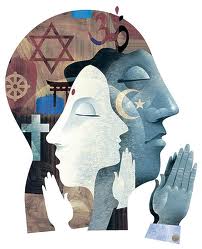
interfaithFortunately, sociologist Steven M. Cohen has awakened me from my bloggy slumber with a post on Rosner’s Domain, a blog on L.A.’s Jewish Journal. Journalist/blogger Shmuel Rosner (who updates his blog just a wee bit more than I do) asks sociologist Steven M. Cohen, “Are you biased against intermarried Jews?” In essence, Cohen’s reply is that he has no problem with intermarried Jews, just with intermarriage.

-Julie Wiener
“Some Of My Best Friends Are Inmarried”
from the In the Mix series
The Jewish Week

I’ve missed Julie’s blogs. As an intermarried Christian husband to a Jewish wife, I have a sort of affinity with her favorite topic. On the other hand, even for an intermarried couple, my wife and I are very strange. We don’t fit anyone’s idea of intermarried, mainly because my wife’s parents were intermarried (her mother was Jewish) and she wasn’t raised in a Jewish household.

In a blog post called Being Married to the Girl with the Jewish Soul, I’ve mentioned how I feel about my wife, about her being Jewish, and about my absolute need for her to embrace her Judaism. If you haven’t read it yet, please do so before continuing here. It’ll provide a lot of context and dimension for what I’m going to say next.

Being intermarried is not bed of roses but it’s not exactly a bed of thorns, either. It does define a demarcation point between my wife and I on certain topics, but for the most part, our marriage is just like a lot of other marriages in the U.S. We’ve been married thirty years as of last April. We have three adult children. One of my sons is married and has a three-year old son of his own (my grandson, playmate, and fellow Spider-Man fan).

Another thing that makes our particular intermarriage unusual is my background in the Messianic Jewish/Hebrew Roots movement. As a blogger, I’m remain actively involved in that realm, but only because I tend to write on Jewish and Christian themes. My wife intermittently attends shul and I don’t attend a church or congregation of any kind (long story). We both have our faiths but except for brief moments of passionate interaction on some point, they have lives of their own and rarely show up in the same room. I started this blog fifteen months ago, in part to chronicle what I imagined would be my introduction into her religious world.

When that didn’t happen, I kept on writing because that’s just what I do. I write.

Back to why I’m writing this though. As I was reading Julie’s latest blog, I started thinking about my marriage and how it seems to mirror the larger dynamic between Christians and Jews in the world. More specifically, there is a significant parallel between how I live every day of my married life and the sort of relationship, call it a vision, I would wish upon the Christians and Jews to attempt to connect and interact within the Messianic space.

There’s a sort of debate going on in certain corners of the blogosphere about the exact interaction between Jews who believe that Jesus is the Messiah and those Christians who are drawn to a more Jewish (or Hebraic) lifestyle and worship template. For years, there’s been a kind of “jockeying for position” among the various groups that reside beneath the Messianic Jewish/Hebrew Roots umbrella regarding whether or not it was Christ’s original intent for non-Jewish disciples to perfectly emulate their Jewish mentors in all things, including a form of “Jewish” identity.

I used to believe that such an emulation should take place and now I don’t. Some people didn’t (and still don’t) appreciate that I changed my mind, let alone my lifestyle.

But here’s the interesting part.

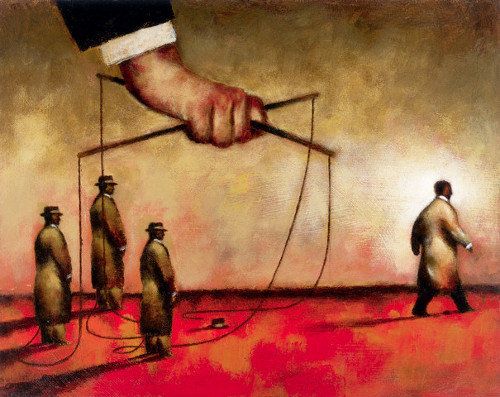
Sometimes, the motives for my change in perspective have been attributed by others to the influence of various individuals and groups in the Messianic Jewish world who advocate for a Jewish/Gentile distinction within Messianism. It was as if I was accused of being a type of Pinocchio to a Messianic Jewish Geppetto; a marionette dancing at the end of someone else’s strings.

I certainly won’t deny that I have been influenced by various folks in the online and real world Messianic community, but that alone probably wouldn’t have been enough to start me investigating the scholarly and Biblical evidence for Jewish and Christian covenant distinction and relationship. After all, organizational position statements and blogosphere commentaries have never changed anyone’s mind about anything.

But I’m married to the girl with the Jewish soul and that made all the difference in the world.

I know I’ve probably explained this before, but I don’t think people understand how important this is to me. I doubt that even my wife understands any of this. Remember in my previous blog post I stressed how vital it is for me to support my wife being Jewish. Obviously, I can’t direct her observance or her lifestyle, but I know how to avoid standing in her way.

In addition to traveling on my own journey of faith, I’ve been watching my wife’s journey. As the months and years passed, I saw just how critical it was and is for her to be part of the Jewish community, to be thought of and treated as a Jew. Every time I picked up a siddur or she “caught” me praying with a tallit and tefillin, I started to feel as if I were stealing from her. It was as if she walked into the room while my hand was in her purse. It was embarrassing and I felt it was pushing us apart rather than bringing us together.

intermarriageNot that she said anything, of course. She always supported me in whatever expression of my faith I chose to observe (though there were times when she was vocal about not understanding it) but I could sense a growing wedge between us. She tried to discourage me from leaving my One Law congregation and I know she didn’t want to influence any of my decisions about what I believed and how I acted upon those beliefs.

Fat chance. How can a husband not let himself be influenced by his wife if he cares about her?

Setting all of those people, those congregations, those organizations aside who have some sort of stake in Messianic worship between Jews and Christians, I’m still a Christian husband married to a Jewish wife. I’m not the perfect husband of course (and my wife reminds me of that periodically), but that doesn’t mean I don’t love my wife and that what’s important to her doesn’t matter to me.

Being Jewish is important to her. Forging a Jewish identity and Jewish relationships for the first time as she’s well into middle-age wasn’t easy for her. She worked very hard to establish her place in the community of Jews. Being married to a non-Jew isn’t a disaster for a Jew, but my being a Christian does throw a monkey wrench into her machine (she’d deny this). My being “Messianic” and performing traditional Jewish acts of worship absolutely threw a pipe bomb into her machine (she’d deny this, too).

My wife is more important to me than whether or not someone on a blog somewhere thinks I should wear a tallit when praying, devote myself to a day of complete rest on Saturday, and try talking to God in a bad approximation of Hebrew (I know some of you are thinking about Matthew 10:34-39, but I don’t think that applies here). That’s why I do what I do and don’t do a bunch other things that other people do.

This next part is important, so pay close attention here! While I agree that Jews continue to have a special covenant relationship with God and unique covenant responsibilities that are not shared by the rest of the world, (including the world of Christians) what really sent me “over the edge” was filtering all that information through the lens of watching my Jewish wife be Jewish. If you’re not a Christian husband married to a Jewish wife, you don’t have my perspective and you are absolutely not going to get the lived experience of my point of view.

But there’s hope. I think I know how to show you what I’m feeling. I’m getting to that part.

Being married to a Jewish wife has allowed me to see Judaism from a singular perspective. I can see how important it is for a Jewish person to be uniquely Jewish and how some Jews struggle when they see others trying to co-opt that uniqueness for their own use. Part of that uniqueness is the way Jews talk, and pray, and worship, and interact, and what they wear sometimes, and lots and lots of other “identity” stuff.

And I don’t want to put my hand in my wife’s “purse” because I love her and I don’t want to take stuff from her.

Please understand that I’m not dancing at the end of some puppeteer’s strings. I’m just a husband who is looking out for his wife. I suppose my methods of doing so seem strange or unusual, but even for an intermarried couple, we can be strange and unusual. She’s not a stereotypical Jew (if there is such a thing) and I certainly am a very odd Christian.

But that’s who I am and who I choose to be and why I’ve made the choices I’ve made. I don’t think these are bad choices and in fact, I think there is a lot to be gained by we Christians coming alongside the Jewish people, even as I am “alongside” my wife, and being co-heirs with Israel, just as my wife and I share our lives together.

I was discussing some of this with my friend Gene on his blog Daily Minyan, and at one point, I made this observation in response to one of his comments:

When I was at the FFOZ Shavuot conference last spring, I met a young Jewish woman named Jordan. She is a gifted scholar and during one of her presentations at the conference, she referred to the Gentiles who supported the spiritual and national redemption of Israel as the crown jewels of the nations. Your comment reminded me of that and the fact that we Gentile disciples of the Master do have a wonderful gift from God, and He has planned out a terrific future for us.

Jordan’s teaching meant a lot to me, not just because it presented such a wonderfully unified vision of a Christian/Jewish “partnership” in the Kingdom of God, but because it so amazingly resonated with how I see my marriage. If I could give everyone reading this blog a gift, it would be to see the relationship between Christianity (that is, all non-Jews who are disciples of Jesus, regardless of denominational or congregational affilation) and Israel the way I see myself and my wife together. If we Jewish and Christian disciples of Jesus could achieve that level of affection and intimacy toward each other, we would be fulfilling the words of the Master.

A new commandment I give to you, that you love one another: just as I have loved you, you also are to love one another. By this all people will know that you are my disciples, if you have love for one another.” –John 13:34-35 (ESV)

Love and peace.

Korach: Who is Speaking to Your Heart?

In the Torah portion Korach we read how Korach led a band of 250 men in a rebellion against Moshe and Aharon. Underlying their revolt against Aharon’s High Priesthood was the charge: “All the people in the community are holy and G-d is in their midst; why are you setting yourselves above G-d’s congregation?” (Bamidbar 16:3.)

From Moshe’s response, (Ibid. verse 10.) “…and you seek priesthood as well,” we readily perceive that Korach and his band desired to become priests. This being so, their argument that “All the people…are holy,” and nobody can set himself above anybody else seems to contradict their desire to be above others by obtaining priesthood.

“A Lesson in Priesthood”
Based on Likkutei Sichos Vol. VIII, pp. 116-118
Commentary on Torah Portion Korach
The Chassidic Dimension series
Chabad.org

Rav Yisrael of Ruzhin, zt”l, gives a fascinating explanation of a famous statement on today’s daf. “Our sages say that today the yetzer hara says to do one sin, tomorrow another, until one finally falls to idolatry. This statement does not mean that the yetzer hara increases the sins that one indulges in from day to day. It means that the yetzer hara pushes a person who falls to keep falling in the same manner day after day, time after time. Even this is enough to cause one to worship idolatry eventually, God forbid!

“This can be compared to a sick person whose weakened constitution does not improve. If his system does not overcome what ails it, he gets sicker and sicker and eventually he reaches the point where he is dangerously ill.” Rav Shalom Schwadron, zt”l, offers his own insight here. “It is interesting that the yetzer doesn’t demand that one stop fulfilling mitzvos; it merely pushes one to follow his instructions. He wants to bring a person to a place where he will fulfill only that which interests him. A student in yeshiva will learn Torah until very late at night, missing out on a meaningful shachris. Another person will express his zealousness at the expense of fulfilling his obligations to his fellow human beings.

“The yetzer wants to be in the driver’s seat; that one should only do what interests him in the manner that he prefers. He knows that a person who only acts when he is inclined to do so will eventually stop fulfilling the mitzvos. We need to recall that the main thing is to fulfill the mitzvos of the Torah because this is the will of the Creator. We must not be swayed by the compelling-seeming logic of the yetzer hara which causes one to forget God.”

Daf Yomi Digest
Stories Off the Daf
“In the Driver’s Seat”
Niddah 13

Here’s the key portion of the above-quoted lesson:

He wants to bring a person to a place where he will fulfill only that which interests him.

By the time I finished reading this “story off the Daf,” I found that the conclusion didn’t match up with what I thought it would be at the beginning of the story. I thought fulfilling certain of the mitzvot would be contrasted against overt sin, such as a person who fulfills the mitzvah of feeding the hungry and then turns around and cheats his business partner. I didn’t think it would be focusing on fulfilling one mitzvah, the one that fits your personal desires, at the expense of other equally worthy mitzvot.

We’ve seen this sort of thing before:

Then Pharisees and scribes came to Jesus from Jerusalem and said, “Why do your disciples break the tradition of the elders? For they do not wash their hands when they eat.” He answered them, “And why do you break the commandment of God for the sake of your tradition? For God commanded, ‘Honor your father and your mother,’ and, ‘Whoever reviles father or mother must surely die.’ But you say, ‘If anyone tells his father or his mother, “What you would have gained from me is given to God,” he need not honor his father.’ So for the sake of your tradition you have made void the word of God. –Matthew 15:1-6 (ESV)

“Woe to you, scribes and Pharisees, hypocrites! For you tithe mint and dill and cumin, and have neglected the weightier matters of the law: justice and mercy and faithfulness. These you ought to have done, without neglecting the others.” –Matthew 23:23 (ESV)

We see a couple of important points taught by the Master relative to the story off the Daf, and both are related to hypocracy and setting human priorities on what we choose to do for good.

In the example from Matthew 15 (yes, I know this passage is typically used to say Jesus did away with man-made traditions and only endorses obeying pure Torah law, but he was perfectly fine with many other aspects of the normative halachah of the Judaism of his day, so I consider his main “rant” against hypocrisy, not tradition) , Jesus turns on his critics and accuses them of neglecting the commandment to honor parents by committing the money that could have been used to support their parents to the Temple. Outwardly, the Pharisees involved may have appeared holy, but in their neglect of their parents, they were reprehensible.

The short quote from Matthew 23:23 shows us something similar. Certain Pharisees were again, outwardly appearing as holy by their tithes but in the process, they completely ignored what Jesus called, “weightier matters of the law” such as the principles of “justice and mercy and faithfulness.” I should note that Jesus did not say one was really better than the other and told his audience that they should have performed their tithes without neglecting the other mitzvot.

But what does that have to do with us? On the one hand, these arguments could support the classic One Law position in the Hebrew Roots movement which states that non-Jewish people, when we become Christians and are “grafted in” (Romans 11) to the Jewish root, are obligated to the identical set of commandments as the Jews are, and we should not pick and choose which ones to obey. It would appear as if Jesus is telling us to not pick and choose as well, but to obey all of the 613 commandments, or at least as many as can be obeyed without the existence of a Temple, a Levitical priesthood, a Sanhedrin court system, and (for most of us), while living outside the Land of Israel.

On the other hand, we could use the same texts to consider just what our (I’m speaking to Gentile Christians now) true obligations are to God and whether, in our performance of the mitzvot, we are doing what God actually wants us to do, or only obeying what we want, what makes us feel righteous, and what makes us look “cool” in the eyes of our peer group. Are we falling into the same trap as Korach, Heaven forbid?

I know that sounds a little harsh, but I’ve encountered more than one non-Jewish person in the Hebrew Roots movement who seems really pleased with his tzitzit, his Hebrew prayers, and how he laid tefillin. OK, I want to be fair and say that there are many who subscribe to the One Law position who sincerely believe this is the one and only way a Gentile can please the God of Heaven, and these folks feel really picked on when people like me say that obeying many of the Torah commandments is a choice and not an obligation (your behavior doesn’t have to change in any way just because it’s voluntary rather than obligatory). But consider this.

When you say that non-Jewish believers in the Jewish Messiah are obligated to obey the full yoke of Torah, your saying that it is a sin for any Christian to fail to observe the full range of the mitzvot. You are condemning the vast, vast majority of Christians who have lived, loved the Master, observed the “weighter matters of the Torah,” and died, based on your personal interpretation of the Bible. By saying you are obligated to the Torah and that you are fulfilling the Torah, you aren’t equalizing conditions between Christians and Messianic Jews but (whether you mean to or not) elevating yourself above your brothers and sisters in the church.

Let’s continue the Chabad commentary on Korach. I think you’ll see that he and his followers were doing something very similar.

The Kohanim , the priestly class, differed from the rest of the Jewish people in that the Kohanim were wholly dedicated to spiritual matters. This was especially true with regard to the Kohen Gadol , the High Priest, who was commanded “not to leave the Sanctuary.” (Vayikra 21:12.)

Their apartness from the general populace notwithstanding, the Kohanim in general, and the Kohen Gadol in particular, imparted their level of sanctity to all the Jews. Thus we find that Aharon’s service of lighting the Menorah in the Sanctuary imparted sanctity to all Jews, and enabled them to reach Aharon’s level of service and love of G-d. (See Likkutei Torah , beginning of portion Beha’alosecha.)

You may consider this a bit of a stretch, but I think the unique standing and “choseness” of the Jewish people and their obligation Sinai covenant also imparts a “level of sanctity” to we who are grafted in from among the nations. I think there’s a relationship to Israel being a light and to those of us who have seen and been attracted to that light.

I’ve tried talking about this before, especially in blog posts such as Redeeming the Heart of Israel, Part 1 and Part 2, where we see a partnership between the Jewish and Gentile disciples of the Master that is complementary and interwoven, and I’ve tried to show that this partnership does not require a fused or homogenous identity between Christians and Jews in the Messianic realm.

Granted, I believe this manner of thinking is still in its formative stages and requires a great deal more research, especially in Scripture, but we see a classic example in the Korach rebellion of how a group desiring to separate themselves from their fellows and assume an identity not their own results in disaster. In the end, Korach and the rebels didn’t really believe that all of Israel had the right to become priests.

Korach and his band’s complaint that “All the people…are holy,” however, did not contradict their own desire for priesthood, for they desired a manner of priesthood totally removed from the rest of the congregation.

This manner of priesthood would not cause them to feel superior to the rest of the Jewish people, a superiority that resulted from their imparting holiness to them, for in their scheme of things they would not impart holiness to other Jews — they would remain totally separate and apart.

But Korach and his band were badly mistaken: It is true that there are different categories of service — Jews who are solely occupied with spiritual matters, and other Jews whose task it is to purify and elevate the physical world through the service of “All your actions should be for the sake of heaven,” (Avos 2:12.) and “In all your ways you shall know Him.” (Mishlei 3:6.)

Putting all this together, we can paint a picture of those Gentiles who want to assume a full “Jewish” identity without having to convert to Judaism as not demonstrating equality between Jews and Gentiles in the covenant, but perhaps setting themselves above their fellow Christians by taking on Jewish identity markers. I’m sure that many One Law proponents aren’t motivated in this direction, but ask yourself if this could be describing you.

If you, as a Christian (non-Jewish disciple of the Jewish Messiah) in the Hebrew Roots movement, choose to take on additional mitzvot that could be considered specific to Jews, please study up on them first, including the relevant halachah for performing the mitzvot. Shooting from the hip probably isn’t as effective way to perform any of the Torah commandments as using the accepted standards established in normative Judaism.

From my personal perspective, a Gentile publicly appearing as a Jew, even with completely pure motives, is like walking into a room full of trapdoors and tripwires. You might be successful in your efforts, but more than likely, once you step outside your local congregations and into the larger world, you could encounter unanticipated conflicts. Be sure whatever you do is actually what God wants and not just something that makes you feel special.

I’m sure no one wants to make Korach’s mistake. Ask yourself who or what is speaking to your heart?

Addendum: This all gets more complicated when you factor in people who claim a Jewish identity without Jewish parents and exist outside of Messianic Judaism, as we see in this Huffington Post article. One person has blogged about her experiences as a “Jewish” non-Jew, and Derek Leman has offered his own commentary. True, it doesn’t have a direct relationship with this week’s Torah portion or the matter of any Christian’s perceived obligation of Torah, but it is very much relevant to the “identity wars” between Jews and non-Jews, so I include these references here.

Good Shabbos.

The Light from Within

It used to be a burning issue for religious Jews, and for many it still is a quandary: may one daven in a non- Orthodox shul? The main underlying question is regarding whether a mechitzah is an absolute halachic requirement.

When the Chazon Ish, zt”l, was asked regarding whether a mechitzah is a halachic requirement, he affirmed that it is. “Mechitzah is a halachic obligation. Gazing into the women’s section of a shul is absolutely forbidden. Those who heed this halachah an put up a halachically acceptable mechitzah will be blessed with everything good.”

When the Machaneh Chaim, zt”l, was asked about davening in a shul without a mechitzah, he replied that this is forbidden. “It is a very serious sin to look at women in a shul; even more serious than in other places. For this reason it is preferable to daven at home than to daven in a shul without a mechitzah, even on Rosh Hashanah or Yom Kippur.”

A certain rabbi was offered a position in a prominent liberal shul. He wondered whether he was permitted to accept it, since he believed that he could influence the community towards greater commitment to Torah..

When this question reached Rav Yosef Shalom Eliyashiv, shlit”a, he explained that this question had already been put to the Chazon Ish long ago, and been well answered. “Rav Yitzchak Hutner, zt”l, asked the Chazon Ish this question. The Chazon Ish replied that it depends. If the rabbi felt certain that he could influence the community to accept a mechitzah within a year, he could be their rabbi for this time. If not, he may not.”

Rav Eliyashiv added, “But since this rabbi is a talmid chacham, he must avoid making a chilul Hashem. He does this by informing the public that he is accepting this position because he hopes that the situation will change within a fairly short time.”

Daf Yomi Digest
Stories Off the Daf
“Proper Separation”
Middos 35-1

This “story off the daf” brings up a lot of issues for me in terms of comparisons of different faith communities. I scarcely know where to begin but I have to start somewhere (I also have to stop somewhere, so I’m not going to cover everything I’m thinking of..yet).

I know most Christians will take one look at this commentary and wonder what the big deal is about looking at women in a congregation. After all, I can’t think of a single Christian church I’ve been in that required separation between men and women during worship. What’s the problem? Of course, Christianity, even among the more conservative churches, doesn’t have the same sense of modesty that Orthodox Judaism employs. But let’s take a look at this for a moment (and no, I’m not suggesting separating men and women in the church).

My wife made an interesting observation, more than once actually, when we were regularly attending a Christian church over a decade ago. During services in the sanctuary, she remarked on how husbands and wives seemed to be “all over each other” during worship. What she’s describing is the hugging, cuddling, and leaning on each other of married couples in church, primarily during the Pastor’s message.

This is just a thought, but what are you going to be focusing when holding your beloved spouse closely in church, worship or your beloved spouse? I suppose it’s just a matter of different “cultural values” between the church I attended (I can’t say this sort of “cuddling” goes on in all churches everywhere) and Orthodox Judaism. I’m kind of a conservative guy, so I’d probably not engage in a lot of affectionate touching with my wife in worship (assuming we ever worship together in one place again).

That’s not really the main point I want to make, though.

For one brief moment, when reading the story, I started injecting the various Judaisms into the situation, including Messianic Judaism. Look at this particular phrase again:

If the rabbi felt certain that he could influence the community to accept a mechitzah within a year, he could be their rabbi for this time.

Earlier, I mentioned the cultural differences between the church and the Orthodox synagogue but of course, there are a number of cultural and halakhic differences between different branches of Judaism. We see here that it would be permitted for an Orthodox Rabbi to accept an appointment to a more liberal synagogue, but only if the Rabbi felt “he could influence the community to accept a mechitzah within a year.”

This is addressing a very specific situation; the separation of men and women in the synagogue for purposes of promoting modesty and proper respect to God during worship. Now I’m going to turn the issue on its head, so to speak, and put it back on Hebrew Roots and the Messianic movement.

I have been considering a suggestion I’ve heard recently, that “Messianic Gentiles” might best serve the Messianic Jewish movement, not by attending a Messianic or Hebrew Roots worship community, but by worshiping in the church instead. This is probably a radical idea to some Messianics who may be reading my blog. After all, a lot of Christians in the Hebrew Roots movement deliberately left the church because they felt the church wasn’t meeting their needs or worse, because they felt the church was pagan and apostate.

Gentile Christians in the Hebrew Roots movement, at least some of them, have given the church a lot of “bad press” and much of it is undeserved. Sure, there are things in the church that could and should improve, but we have to remember that for the past nearly 2,000 years, the church has been the sole custodian and transmitter of the Good News of Jesus Christ to the rest of the world. During the past century or so, many of the Jews who have discovered Jesus is the Jewish Messiah have done so through the church. What we think of as “Messianic Jewish synagogues” are a very recent expression of Jewish faith in the Messiah. For the most part, historically, Messianic Jews have come about as “Jewish Christians” worshiping in the Christian church.

The church isn’t going to go away and be replaced by Messianic synagogues, at least not anytime in the foreseeable future. Do people in the Hebrew Roots movement then just intend to ignore Christianity as irrelevant and pray for the day when it no longer exists?

That’s insane. That’s like saying you want 90% or more of the body of Christ on earth to simply vanish.

But as a staunch opponent of supersessionism, I’m the first to admit that the church could do a lot better in terms of how it perceives Jews and Judaism (Messianic or otherwise) and the state of the Torah in relation to the New Testament. The response of many in Hebrew Roots/Messianism, is to blame the church for betraying them, to dismiss the church, and to even revile the church. These behaviors aren’t likely to promote an atmosphere of cooperation and a mutual exchange of ideas and perspectives.

What will?

Perhaps more people attending church who have a “Hebrew Roots” perspective.

Gasp!

There are a lot of barriers separating the idea from the actuality, but as we see from our example off the daf, it is not unheard of to compromise your personal comfort and convenience for the sake of “promoting change from within.”

I’m going to cover this idea in much more depth in the near future, but for now, I’m asking you folks within your various areas of Hebrew Roots to consider what the best option might be for combating antisemitism and supersessionism in the church (and just to throw a monkey wrench in the machine, both of these elements exist even within some Hebrew Roots congregations). You aren’t going to change anyone’s mind by arguing with them and by insulting them. You are more likely to make a positive impact, not by pretending to be their friend, but by really being their friend and showing them how things can be otherwise. God never intended to throw his people Israel under a bus. We can be examples of how to understand the Bible outside the (church doctrine) box.

Our Master taught among his Jewish people who spanned the spectrum from sincere but confused to almost hopelessly corrupt. He showed his Jewish disciples (and not a few of the Gentiles) how to be a light by being a light himself. He called all of his disciples, including us today, to be a light among the nations. If our understanding of the “Jewish Jesus” and the current and future relationship between God and the Jews is of value, then we should shine that light in the church rather than hiding it under a bowl.

The ascent of the soul occurs three times daily, during the three times of davening. This is particularly true of the souls of tzadikim who “go from strength to strength.” It is certain that at all times and in every sacred place they may be, they offer invocation and prayer on behalf of those who are bound to them and to their instructions, and who observe their instructions. They offer prayer in particular for their disciples and disciples’ disciples, that G-d be their aid, materially and spiritually.

Hayom Yom
Iyar 29, 44th day of the omer
Compiled and arranged by the Lubavitcher Rebbe
Rabbi Menachem Mendel Schneerson, of righteous memory, in 5703 (1943)
from the talks and letters of the sixth Chabad Rebbe
Rabbi Yosef Yitzchak Schneersohn, of righteous memory
Chabad.org

Why Loving Each Other Isn’t Easy

A greater and more intense love than this (i.e., than the love which results from realizing that G-d is one’s true soul and life), a love which is likewise concealed in every soul of Israel as an inheritance from our ancestors, is that which is defined in Ra‘aya Mehemna, (in description of Moses’ divine service:) “Like a son who strives for the sake of his father and mother, whom he loves even more than his own body, soul and spirit, (… sacrificing his life for his father and mother in order to redeem them from captivity.”

This manner of service is not limited to Moses alone: it is within the province of every Jew,)

for “have we not all one Father?”

(Just as Moses possessed this love because G-d is his Father, so, too, every Jew can possess this love, for G-d is equally our Father.)

And although (one may ask), who is the man and where is he, who would dare presume in his heart to approach and attain even a thousandth part of the degree of love felt by Moses, “The Faithful Shepherd.”

Today’s Tanya Lesson (Listen online)
Likutei Amarim, middle of Chapter 44
By Rabbi Schneur Zalman of Liadi (1745-1812)
founder of Chabad Chassidism
Elucidated by Rabbi Yosef Wineberg
Translated from Yiddish by Rabbi Levy Wineberg and Rabbi Sholom B. Wineberg
Edited by Uri Kaploun

I am the good shepherd. The good shepherd lays down his life for the sheep. He who is a hired hand and not a shepherd, who does not own the sheep, sees the wolf coming and leaves the sheep and flees, and the wolf snatches them and scatters them. He flees because he is a hired hand and cares nothing for the sheep. I am the good shepherd. I know my own and my own know me, just as the Father knows me and I know the Father; and I lay down my life for the sheep. And I have other sheep that are not of this fold. I must bring them also, and they will listen to my voice. So there will be one flock, one shepherd. For this reason the Father loves me, because I lay down my life that I may take it up again. No one takes it from me, but I lay it down of my own accord. I have authority to lay it down, and I have authority to take it up again. This charge I have received from my Father.”

John 10:11-18 (ESV)

A few days ago, I wrote on the profound mystery of Christ’s love for the church. Not much later, I also described who we are in Christ as a tangible expression of that love. We are to love all humanity as God loves them (us), and have compassion for them in their troubles, but we are specifically to love each other as brothers and sisters in the Messiah:

A new commandment I give to you, that you love one another: just as I have loved you, you also are to love one another. By this all people will know that you are my disciples, if you have love for one another.” –John 13:34-35 (ESV)

Oddly enough, for some Christians, it’s easier to love strangers than others to also claim the name of Jesus Christ.

In part 3 of my “Who Are We in Christ” series, I set aside all of the theological and behavioral differences between different denominations, groups, and sects among the disciples of the Master, and focused with great intensity on what makes us all alike. It’s in our united vision of our love and obedience to the Master that we are truly his disciples, regardless of our surface differences.

When Jesus gave us the new commandment to love one another as he loves us, he may well have been considering the love the Good Shepherd has for his sheep. Only moments after he gave his new commandment, he also said “I and the Father are one” (John 10:30). We, among the body of believers, are also to be one; one in purpose and goal, if not always practice. That is why I previously described us all this way:

We are people who love those who are like us and those who are unlike us. We treat everyone the way we want to be treated as human beings. If someone has needs like food, water, or companionship, we do our best to provide for those needs, not just because the other person needs them, but for the sake of our love for God and His love for us. When we show this kind of love, we’re telling people this is how God loves all human beings. Our actions are our witness and speak much, much louder than all the sermons ever spoken and all the religious tracts and pamphlets ever shoved into undesiring hands.

If only these thoughts were at the forefront of all our desires and actions in the name of Christ. Sadly, they aren’t, at least not all the time. We very often focus on the differences between the different groups of believers within “mainstream Christianity” and also outside of what Christians might consider the norm, such as the Hebrew Roots movement. We erect fences between our various groups and then take theological pot shots at each other over those fences, which can’t help but accentuate our differences at the expense of our “oneness” in Christ.

There’s got to be a better way…and there is. The better way is suggested in the following words from an unpublished manuscript that is not yet ready to be openly discussed and reviewed:

I am going to propose a radical solution. This solution may not work for everyone—I do not believe that every Messianic Gentile would fit this call. It may not bear fruit in every single instance. But I am convinced that the great task and mission of the Gentile Hebrew Roots movement is not to form a new religion or a new denomination (though again, I believe that solid, grounded Messianic congregations—Jewish and Gentile—are necessary).

The great mission of the Messianic Gentile is to be that voice within the church that speaks gently but firmly against supersessionism and the doctrinal errors associated with it; that speaks toward the church’s connection with the land, the people, and the scriptures of Israel; that inspires people to connect with Jesus in a new and fresh way and to follow his teachings with unprecedented zeal.

This mission requires that many Messianic Gentiles get involved with churches. They must build and maintain a positive relationship with congregational Christianity, and affirm what is good and right in their mother faith. They must build real relationships with Christians and show them personally what it means to follow Jesus the Jewish Messiah.

The single outstanding advantage the (Gentile) Hebrew Roots movement has over traditional Christianity is in its grasp of the Jewishness of Jesus as Israel’s King and Messiah. The single outstanding disadvantage the Hebrew Roots movement labors under is in allowing that information to focus their attention on “minutiae” such as how to tie tzitzit, what foods are considered kosher, and whether or not it is permitted to drive to services on Shabbat. I’m not saying such questions are entirely unimportant, but in those topics being paramount, unity and love between different groups of disciples gets put on the back burner, usually forever.

We can change that, both those in the Hebrew Roots movement and those attached to the mainstream Christian church. We can decide to actually communicate with each other. We can decide to set differences aside and focus on similarities. Are not the Christian in the church and the Hebrew Roots person in the Shabbat congregation both commanded to do good to others, to feed the hungry, to visit the sick, to comfort the mourning? Are we all not commanded by the Master to love one another as he has loved us?

Considering the strife between different denominations within traditional Christianity, let alone the friction between Hebrew Roots and the church, we don’t seem to be doing a very good job at obeying the Messiah’s commandment. Particularly for Hebrew Roots or Messianic people, who take great pride in being “obedient to the commandments,” if you are not obeying the commandment to love, the rest of the Torah is meaningless to you.

If I speak in the tongues of men and of angels, but have not love, I am a noisy gong or a clanging cymbal. And if I have prophetic powers, and understand all mysteries and all knowledge, and if I have all faith, so as to remove mountains, but have not love, I am nothing. If I give away all I have, and if I deliver up my body to be burned, but have not love, I gain nothing.

Love is patient and kind; love does not envy or boast; it is not arrogant or rude. It does not insist on its own way; it is not irritable or resentful; it does not rejoice at wrongdoing, but rejoices with the truth. Love bears all things, believes all things, hopes all things, endures all things.

Love never ends. As for prophecies, they will pass away; as for tongues, they will cease; as for knowledge, it will pass away. For we know in part and we prophesy in part, but when the perfect comes, the partial will pass away. When I was a child, I spoke like a child, I thought like a child, I reasoned like a child. When I became a man, I gave up childish ways. For now we see in a mirror dimly, but then face to face. Now I know in part; then I shall know fully, even as I have been fully known.

So now faith, hope, and love abide, these three; but the greatest of these is love. –1 Corinthians 13:1-13 (ESV)

Can we love our good shepherd but hate the other sheep? Being human, loving one another isn’t always easy. But being sheep of the good shepherd, who loved us with a love that cost him his life, if we aren’t willing to make sacrifices to love each other, then when we say we love him, we are lying.