Some people object to this. When they see Messianic Jews declaring the Gospel to other Jewish People and to Gentiles, they say, “Why are you doing that? That’s not Jewish. We Jews are not a proselytizing faith.” Well, that may be a popular notion to many people, but it isn’t true. In Matthew 23:15, Yeshua says, “Woe to you, teachers of the Law and Pharisees. You hypocrites! You travel over land and sea to win a single convert and, when he becomes one, you make him twice as much a son of hell as you are.” Clearly, the Jewish leaders of Jesus’ day were proselytizing. They were telling people about God. They were winning converts, Yeshua says. So, sharing our faith is definitely Jewish. Not only was it true in the First Century, and before Messiah came, but it is also true today.
Last Sunday afternoon, I had my regular “coffee meeting” with a friend of mine. We meet every other week to talk about all sorts of things, but mainly to maintain relationship, friendship and community in Messiah. My friend is one of the few people in my life (face-to-face or online) who can really challenge me and present me with questions that make me stop and think. It’s not always comfortable but is it always inspiring.
Over lattes, he asked me how I’m personally sharing the good news of Messiah to the people around me as a Messianic Gentile. He didn’t word it exactly like that, but I have a reason for expressing the query this way.
Just about anyone I can think of who is involved in either Messianic Judaism or some aspect of the Hebrew Roots movement entered these movements by way of a Church experience. Before I entered Hebrew Roots and then became more Messianic in my practice and study, I came to faith in a Nazarene church here in Southwestern Idaho. Even the Jewish people I know, with rare exception, entered Messianic Judaism after coming to faith in Jesus (Yeshua) as Messiah within normative Christianity.
In other words, it wasn’t a Messianic Jewish or Messianic Gentile evangelist who shared the good news of Moshiach and the coming Kingdom of God with any of these folks. For me, a more traditional Christian evangelist (in my case, a youth Pastor and friend of my brother-in-law) asked me that standard question, “If you were to die tonight, do you know where your soul would go?”
That’s a horrible introductory line in my opinion, and the actual process of me coming to faith took a large number of specific steps and encounters over a six month to one year period of time. But in the end, I made the initial baby steps of coming to faith and then my life fell apart.
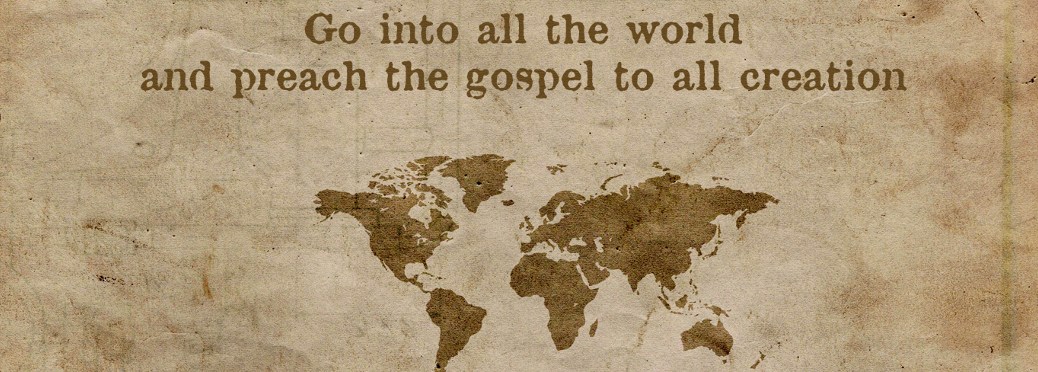
But how would a person with a Messianic Gentile perspective on the Bible come to evangelize, not Christians in the normative Church, which is what we’re used to doing, but atheists or even people from completely unrelated religious traditions, telling them of the plan of personal salvation through Christ?
It’s not an easy question to answer, because I believe the “good news” of Messiah is so much more than just a plan for personal salvation. Scot McKnight expanded on this idea in his book The King Jesus Gospel: The Original Good News Revisited and I agree that we (the Church) have reduced the actual gospel message down to a bullet list of talking points centered around individual salvation so that a person may be forgiven of their sins and go to Heaven when they die.
The gospel message of Jesus is often simplified down to believe in Christ and your sins will be forgiven and you will go to heaven when you die. In episode eight this common misconception will be challenged. Viewers will discover that the main message of the gospel is one of repentance and entering into the kingdom of heaven. The kingdom of heaven is not the place we go to when we die but rather God’s kingdom coming down here on earth. The gospel message is about preparation for the Messianic Age.
The episode is only about thirty minutes long and free to view by clicking the link I provided. It offers a more expanded understanding of what the good news or gospel message of Messiah is really all about.
But that story is aimed at people who already have faith in Christ and who are looking for a deeper understanding of what that faith actually means based on a Hebraic examination of the scriptures.
How do you introduce this sort of stuff to people who have no background in it at all? If I go up to someone, tell them I’m a Christian, and ask if they would like to talk about Jesus, they may say “yes” or they may say “no,” but they’ll at least have some idea of what I’m talking about. If I go up to that same person and tell them I’m a Messianic and ask if they would like to talk about the coming Kingdom of God and the blessings of the Messianic Age, they’d have no idea what I was saying and would probably think I’m some sort of religious cult nut.
The Sunday before Easter, one of the Pastors at church announced from the pulpit the opportunity for anyone who desired, to join with others on Good Friday to go door to door in the neighborhood offering to share the gospel message and to pray with people. For a brief instant, I imagined myself doing such a thing, but then all the questions about the true nature of the gospel I mentioned above came flooding in.
I want to share my faith, but it doesn’t always have a lot in common with the doctrinal position of Evangelicals, so how could I employ Evangelical religious tracts and Evangelical language and concepts in any program of sharing faith as I understand it?
Arguably, there are only two populations that Messianics attempt to engage: normative Judaism and the Church. Messianic Jews attempt to communicate to wider Judaism about the Moshiach, Yeshua HaNazir, and the New Covenant promise of a restored Israel and a reunited Jewish people as the head of all peoples and nations of the Earth. Messianic Gentiles and Hebrew Roots Gentiles tend to try to convince people in the Church or people who are disaffected and who have left the Church, that the Messianic and/or Hebrew Roots perspective on scripture tells a more authentic and accurate story about the relationship between God and humanity.
But how do we (or do we ever) communicate our message to people outside of those frameworks, people who don’t have the theological background we usually require of our audiences, and help them understand what it is to be a disciple of the Master?
I know of only one, single missionary effort currently operating, in this case in Uganda, that works to evangelize unbelieving populations directly from a Messianic perspective: Acts for Messiah. As the introductory text regarding their mission states:
ACTS for Messiah serves to follow in the footsteps of Yeshua and the apostles, providing for the needy, feeding the hungry, and providing a home for the children left in the streets. Our current area of operation is in Tororo, Uganda, where Emily Dywer brings ministry to small villages and runs an orphanage rescuing children from desperate and dangerous situations, giving them hope and a future…
That might be the answer or at least part of it. It’s not just what we say, but what we do and how we live. The answer may not be in the differences in perspective between Christians and Messianics (and of course, Messianics are Christians who simply view scripture from a different and more Hebraic perspective), but the similarities. At the end of the day, it’s all about humble obedience to the teachings of the Master, following the path, feeding the hungry, providing clothing, offering comfort, showing kindness, even to the unkind, for they are the ones who need kindness the most.
I’m not a big fan of knocking on doors and offering to share the good news with strangers. I’ve been at the receiving end of door-to-door evangelists of one type or another and an unanticipated visit is usually an interruption. On the other hand, I am discounting the Holy Spirit and encounters previously arranged outside human awareness.
We have to start somewhere. We can’t just talk to ourselves about what we already know and we can’t just target limited populations if we really believe we have a good message that people need.
But where to begin? If you call yourself a Messianic anything, do you share your message with strangers or at least with atheists with whom you’re acquainted? How do you talk to someone about faith in a Jewish Messiah within the context of Messianic worship and faith?
From Miletus he sent a message to Ephesus, asking the elders of the church to meet him. When they came to him, he said to them:
“You yourselves know how I lived among you the entire time from the first day that I set foot in Asia, serving the Lord with all humility and with tears, enduring the trials that came to me through the plots of the Jews. I did not shrink from doing anything helpful, proclaiming the message to you and teaching you publicly and from house to house, as I testified to both Jews and Greeks about repentance toward God and faith toward our Lord Jesus. And now, as a captive to the Spirit, I am on my way to Jerusalem, not knowing what will happen to me there, except that the Holy Spirit testifies to me in every city that imprisonment and persecutions are waiting for me. But I do not count my life of any value to myself, if only I may finish my course and the ministry that I received from the Lord Jesus, to testify to the good news of God’s grace.
–Acts 20:17-24 (NRSV)
Pastor Randy’s sermon today (it’s Sunday afternoon as I write this) had some very nice things to say about Paul. This isn’t surprising, since we’ve been studying Paul’s life and activities as an Apostle to the Gentiles and as a role model for Christians, and especially for missionaries, in the Church today.
But Paul has been on my mind lately. This is sort of a “part 2” to my previous blog post Questioning Paul. While Paul’s teachings as we have them in Luke’s Book of Acts and in many of the Epistles are well accepted by the Church, since after all, these sources are part of our Biblical canon, not everyone sees Paul as a beneficial influence. In fact, he’s a big problem to almost everyone else outside of the normative Church who cares about his impact on Christianity, Judaism, and the world beyond.
As you recall from prior blog posts, I’d been having an email conversation with a Jewish friend of mine about Paul and how my friend believes the Epistles show Paul to be an arrogant, anti-Law Apostle, possibly a convert to Judaism, and certainly a traitor to the Jewish people, to the Torah, and to the Temple.
I posted this link to my review of the second lecture in D. T. Lancaster’s five-part series What About The New Covenant into a closed group on Google+. I got another perspective on Paul from a person who replied with the following comments (edited for context):
OK, please post supporting OT scripture or where Yeshua said this was so, not Paul’s rabbinical commentary of OT scripture. Let’s stick to the source.
I look at the writings of Paul as for (sic) what they are, they ARE commentary on what is already written. If they add to or remove from what is written in the Tanach, then they are false. They HAVE to agree, plain and simple.
In other words, Paul’s letters (and probably the Book of Acts as well as epistles written by other apostles) are mere commentary and not on the same level as the Torah, Prophets, Writings (Tanakh or Old Testament), and Gospels. We are free to disregard Paul whenever we perceive that Paul is in contradiction with the Tanakh or the teachings of Jesus in the four Gospel accounts.
So let’s review the three positions we have on Paul so far:
Christians accept Luke’s Book of Acts and the Epistles of Paul as Biblical canon and writings inspired by the Holy Spirit, just like the other books in the Bible.
Generally, Jewish people do not accept any of the writings in the part of the Christian Bible from Matthew through Revelation, and my friend suggests that I consider the Epistles more “authentic” because they are Paul’s own words and reveal him to be anti-Judaism, anti-Jewish people, and anti-Torah, thus in conflict with the Tanakh.
At least one representative of the Hebrew Roots “One Law” movement, accepts Paul’s letters as an authentic part of the Bible, but only at the level of Torah commentary, much like how Christians consider portions of Talmud, thus whenever Paul seems to contradict the Torah, Prophets, and Writings, the Tanakh must be right and Paul must be wrong.
I haven’t spoken of this on my blog, though I have in more private conversations, but I remember, I think it was back in 2005, when a fellow named Monte Judah, who is the head of an organization called Lion and Lamb Ministries, publicly came out and said that the Book of Hebrews should not be part of Biblical canon. His article is rather lengthy, so I won’t attempt to analyze it or quote from it here, but the problem he produced then in the Hebrew Roots and Messianic Jewish worlds is the problem I seem to be experiencing: can we “adjust” Biblical canon to eliminate or minimize portions of scripture we find are a “problem?”
Of course, from my Jewish friend’s perspective (as a non-believer), there’s no issue since nothing in the New Testament is considered the Bible, thus Paul should be a “non-event.” Paul, or at least how he’s been traditionally interpreted, is only an issue to the degree that his writings have been used by the Church for nearly two-thousand years, to at best marginalize the Jewish people, and at worst to exterminate them.
This isn’t the Paul that I know, who would take any risk and suffer anything for the sake of his Jewish brothers and sisters:
I am speaking the truth in Christ—I am not lying; my conscience confirms it by the Holy Spirit—I have great sorrow and unceasing anguish in my heart. For I could wish that I myself were accursed and cut off from Christ for the sake of my own people, my kindred according to the flesh. They are Israelites, and to them belong the adoption, the glory, the covenants, the giving of the law, the worship, and the promises; to them belong the patriarchs, and from them, according to the flesh, comes the Messiah, who is over all, God blessed forever. Amen.
–Romans 9:1-5 (NRSV)
But even here, the letter picking up at verse 6 seems to see Paul damning those he just praised. Paul appears to be a maddening contradiction, at once praising the Jewish people and denigrating them; at once saying how lovely the Torah is and also how it is the way of death. They can’t both be right. Either Paul was hopelessly double-minded or we’re missing something.
John Mauck
Men like John Mauck, Mark Nanos, and Scot McKnight have been trying to interpret Paul in a way that actually makes sense and doesn’t violate God’s intent toward the Jewish people or break God’s prior covenants with them as we see in the Tanakh, but it’s an uphill battle. Both Christianity and Judaism see Paul in fundamentally the same way, a man who walked away from Judaism and, based on the teachings of Jesus, created a brand-new faith for non-Jewish people that Jews could only join by abandoning their Jewish birthright.
For at least a few in the Hebrew Roots movement, the answer to Paul is to downgrade him from scripture writer to Bible commentator whereby he “merely” is interpreting older scripture without adding to canon as such. Again, I can only assume that the other epistles and Luke’s Acts are also relegated to the status of commentary (which doesn’t make them scripture at all) and only the Gospels (and John’s Revelation?) are the real, authentic Word of God we find post-Tanakh.
Paul is a lightning rod of controversy because of the apparent contradictions in his writings and the “weirdness” of having letters included as part of our Bible. On the other hand, Revelation 2 and 3 record Messiah’s personal correspondence to seven diaspora churches, so Jesus himself creates a wrinkle in the fabric of what we consider scriptural writings.
How are we to evaluate canon? Who is qualified, competent, and has the authority (which presumably would have to come from God) to change the Bible we have today? Who has the right to subtract entire books from the Bible or even a paragraph, a sentence, a word, or a letter?
Certainly not me.
You must neither add anything to what I command you nor take away anything from it, but keep the commandments of the Lord your God with which I am charging you.
–Deuteronomy 4:2 (NRSV)
But even if we or an angel from heaven should proclaim to you a gospel contrary to what we proclaimed to you, let that one be accursed! As we have said before, so now I repeat, if anyone proclaims to you a gospel contrary to what you received, let that one be accursed!
–Galatians 1:8-9 (NRSV)
I warn everyone who hears the words of the prophecy of this book: if anyone adds to them, God will add to that person the plagues described in this book; if anyone takes away from the words of the book of this prophecy, God will take away that person’s share in the tree of life and in the holy city, which are described in this book.
–Revelation 22:18-19 (NRSV)
Admittedly, I’m taking these verses out of context and I can’t say that they present a blanket statement that covers the entire Bible from Genesis through Revelation (though they do seem to cover the Torah, the Gospel as presented in the context of Paul’s Galatians letter, and Revelation), but they do indicate that it is a dangerous thing to play fast and loose with the contents of the Bible. I mean, we already play around a lot with the context of the Bible, with how we choose to interpret it, with how we decide what it means, but once we think we’re all big and bad enough to decide as individuals or groups, that we can put this part in the Bible and take another part out, we might as well resolve to meet our demise in the manner of Nadab and Abihu.
One does not treat a consuming fire lightly.
My answer is that we have no sound basis for changing the contents of the Bible, which for better or worse, has been part of our religious canon for almost twenty centuries as far as the Apostolic Writings go, and the rest of the Bible, a good deal longer.
The Bible is what it is. We either learn to live with it and try to learn from it, or we admit defeat by either blindly trusting what leaders and experts tell us it means, or give up our faith altogether, or as much of it as is based on the Bible. If we love the Tanakh but don’t trust the Apostolic Writings, we Gentiles, by definition, must abandon Jesus and convert to Judaism (or alternately become Noahides). This could include even those who feel comfortable readjusting the level of Paul’s importance and authority as a Bible author, for once you start questioning Paul, how much “Christianity” do you have left?
As a disciple of my Master, the only reasonable choice I have is to believe that all of the Bible, from Genesis to Revelation, tells a single story about God and Israel and what that story means about the people of the nations. I have to believe, even though there seems to be different messages from and about Paul in Acts and in the Epistles, that there is an internally consistent Paul who believed one thing, was on a single mission, and who was always faithful to God, the Master, the Torah, the Temple, and the Jewish people.
Three days later he called together the local leaders of the Jews. When they had assembled, he said to them, “Brothers, though I had done nothing against our people or the customs of our ancestors, yet I was arrested in Jerusalem and handed over to the Romans. When they had examined me, the Romans wanted to release me, because there was no reason for the death penalty in my case. But when the Jews objected, I was compelled to appeal to the emperor—even though I had no charge to bring against my nation. For this reason therefore I have asked to see you and speak with you, since it is for the sake of the hope of Israel that I am bound with this chain.”
–Acts 28:17-20 (NRSV)
This is only one time when Paul defends himself against the false charges of teaching Jews against following the Torah of Moses (see Acts 21:21-24, 24:10-21, 25:10, and 26:22-23 for other portions of Paul’s testimony). If Paul is telling the truth, and I believe he must be (for why would he suffer such terrible persecution including beatings, stonings, and other hardships just to lie in order to get out of punishment now) then we must be reading wrong those portions of his letters that seem to indicate that Paul had a low (or no) view of the Torah.
I know I’m probably pinning a lot of my hopes for understanding the Apostle to the Gentiles on the scholars of the New Perspective on Paul, but I really don’t think there’s another reasonable option. Given everything I’ve said up to this point, the only answer to this conundrum is that our interpretation of Paul, the Church’s traditional, historical interpretation of Paul, is faulty, due either to an early second and third century misunderstanding, or to a deliberate “massaging” of the text in an attempt to make Paul fit an anti-Jewish paradigm.
Tinkering with Biblical canon in any way isn’t an option and frankly, I think you’d have to be pretty “nervy” to even suggest it. The Bible is what it is. Now, the challenge is to discover the identity of the real, consistent, sane, Pharisee and observant Jew who we call the Apostle Paul.
Orthodox Judaism is the approach to religious Judaism which adheres to the interpretation and application of the laws and ethics of the Torah as legislated in the Talmudic texts by the Tanaim and Amoraim and subsequently developed and applied by the later authorities known as the Gaonim, Rishonim, and Acharonim.
Orthodox Judaism is not a unified movement with a single governing body, but many different movements adhering to common principles. All of the Orthodox movements are very similar in their observance and beliefs, differing only in the details that are emphasized. They also differ in their attitudes toward modern culture and the state of Israel. They all share one key feature: a dedication to Torah, both Written and Oral.
Note that the image above and all other images of Jewish people in this blog post are not specifically Messianic Jews. I say this so there will be no mistaken attributions assumed.
There have been some conversations going in the discussion sections of a number of my blog posts. They’re too numerous to reference here, but the general themes have to do with Messianic Jewish community, the role of Gentiles within a Messianic Jewish community space, Bilateral Ecclesiology, and just how “Jewish” Messianic Judaism should be.
Opinions span a broad spectrum as the Messianic Judaism and Hebrew Roots movements do themselves, but this morning, I read a rather interesting article that got my attention:
The Orthodox Jewish community has a certain mystique.
Whether it’s because we look, act or believe differently, people are intrigued by stories about the Orthodox Jewish community. Media outlets often oblige but whenever I read these stories, they don’t quite resonate with me. They don’t look like the Orthodox community I know. So I’d like to share a few things that happened to me over the last year that give a more accurate insight into the real Orthodox Jewish community.
My wife and I have experienced fertility problems. We thankfully had been blessed with two children but as they grew older we had been trying for some time to have another child to no avail. One day I was speaking with my rabbi about our situation and I conveyed to him that my wife and I wanted to pursue fertility treatments but because of the steep cost, we were having second thoughts. A few days later my rabbi said that he spoke with an anonymous individual with means in the Jewish community who had agreed to sponsor fertility treatment for young Jewish couples if they could not afford it. He would not know who we were and we would not know who he was. He was motivated purely out of a sense of loyalty to the continuity of the Jewish People.
That’s the Orthodox community I know.
-Shimon Rosenberg
“The Orthodox Community I Know” Aish.com
As I read through Mr. Rosenberg’s story about “the Orthodox Community I know,” I was struck by how different this would probably seem to most people who aren’t part of this community, and especially to Christians. Even those Christians who are supportive of the Jewish people and of Israel, don’t always understand (how could they?) Orthodox Judaism in general and the devotion of individual people in Orthodox Judaism to their community, lifestyle, and commitments in specific. And even most Jewish people who are not Orthodox don’t always understand the Orthodox.
Seven years ago, had I encountered the woman I am today, I would have pitied her: long sleeves and an ankle-length skirt in the middle of summer; no driving, writing, talking on the phone or cooking from sundown Friday until sundown Saturday; recently married to a man she’d never touched — not so much as a peck on the cheek — until after the wedding. I’d have cringed and dismissed this woman as a Repressed Religious Nut. Now my pity — or at least a patient smile — is for that self-certain Southern California girl I was at 25.
-Andrea Kahn
“What’s a Nice Cosmo Girl Like You Doing With An Orthodox Husband?” Aish.com
See what I mean?
Christians especially see Orthodox Jews as rule-bound, rigid, odd (to say the least), and on a path that will certainly lead them to Hell. After all, no one can be made righteous through their own acts as we see here:
For all of us have become like one who is unclean, And all our righteous deeds are like a filthy garment; And all of us wither like a leaf, And our iniquities, like the wind, take us away.
–Isaiah 64:6 (NASB)
Derek Leman
On that point, Derek Leman recently wrote a blog post called Our Deeds Are Not Filthy Rags which illuminates this matter and adds quite a wrinkle to the traditional Christian interpretation of the Isaiah verse. Also, Jacob Fronczak’s article “Sola Fide” in the latest issue of Messiah Journal deepens the exploration into this important topic.
I’m not trying to create a commentary on the nature of “salvation” and the differences between Christianity and Judaism, I’m just saying that we can’t automatically dismiss how Orthodox Jewish people (or any Jewish community) see their own relationship with God.
My friend Gene Shlomovich made a similar observation today on his blog:
So, the reason G-d chose Israel is because He already loved them and has promised their forefathers that He will take care of them. Does it make Jews somehow better than any other people? Not at all and it’s not the reason behind G-d’s love for Israel. After all, one parent’s child is not inherently better than a child of another parent. Your child is no more deserving of love than someone else’ – she is just yours. G-d loves Israel not because He has some grand plan and purpose for Israel (even though He does) or because Israel will proclaim her G-d and His Torah to all nations (which she certainly will). Neither did G-d set His affections on Israel because, as Christianity claims, “Israel was chosen to give birth to Jesus” and “to give nations the Gospel”, a useful tool that can be discarded once the chief purpose has been accomplished. No, these are all conditional reasons. G-d didn’t set His love on Israel because Israel was somehow capable of earning G-d’s love by her performance. Instead, G-d loves Israel because He loves Israel – that’s all there’s to it.
Depending on which denomination of Christianity you belong to or to which Christian doctrine concerning the Jewish people and Israel you adhere, you may actually believe that God still loves Israel and has future plans for her, but it’s really all about “the Church.” God may still use Israel, but their relationship isn’t what it once was, and God really loves the Church best.
I’m oversimplifying that viewpoint of course. I don’t have time to go into all of the details and you don’t want to read a ten-thousand word blog post.
But look at this:
Nine months later we gave birth to a beautiful baby girl.
The excitement began early Friday morning and as the day progressed I started thinking about Shabbat. What would we eat? How would I recite Kiddush? Light candles? I remembered hearing about an organization called Bikkur Cholim which means “visiting the sick.” It’s a volunteer-driven charity that looks after the needs of people in hospital. I called them and within a couple of hours someone came to our hospital room with literally bags of food, grape juice for Kiddush, electric candles to serve as Shabbat candles, even spices for havdallah. The food is free and the person delivering it is a volunteer. In the few moments I had to speak with him I learned that he was just a regular guy — an accountant — who takes off Fridays from work to volunteer for Bikkur Cholim. I asked him why he does it and he replied simply that it’s what God wants of us.
That’s the Orthodox community I know.
-Rosenberg
I’m talking about not just God’s love for Israel, but within the Orthodox Jewish community, one Jew’s love for another as well as the community’s love for one Jewish family.
I asked him why he does it and he replied simply that it’s what God wants of us.
That’s the Orthodox Jewish community most of us, particularly in the Church, don’t see.
No, I’m not saying Orthodox Judaism as a practice or a community is perfect. The fact that it contains human beings means it will, by definition, be imperfect, just as any other form of Judaism will be imperfect, just as any of the estimated 41,000 Christian denominations and their members will be imperfect, just as any human community anywhere across time and space was, is, and will be imperfect.
Jews don’t need to be perfect for G-d to be on their side – G-d already loves them as His own people and nothing can ever change it. No doubt, He has disciplined us when we sinned, and He did that many times. However, at the same time, He’s very merciful. He promised that He will not be angry with us forever (Isaiah 57:16). As that Deuteronomy prophecy promised us G-d Himself will “circumcise” the hearts of all Israel after He brings them to the Land. When He does, all Jews will be Torah-observant, to the last one.
-Shlomovich
The statement that Jews don’t need to be perfect for God to love them, particularly in Orthodox Judaism, might take some Christians by surprise. It is generally thought by some of the Christians I know that Jews believe they have to perform the mitzvot perfectly in order to please God.
Again, I’m steering clear of the whole “salvation” issue, and I’m instead talking about love. Please don’t try to “bust my chops” about Christians being saved and Jewish people not being saved. It’s not what I’m writing about and I won’t approve any comments on the topic.
But what does all this have to do with Messianic Judaism?
It has been argued by many non-Jews affiliated in one way or another with Messianic Judaism or Hebrew Roots, that the “Jewishness” of Messianic Judaism should be toned down a bit. Those Jewish people in the Messianic movement who advocate for wholly Jewish communities for disciples of Yeshua as Messiah are putting Judaism first and Messiah second. I myself have quoted Troy Mitchell of Beth Immanuel Sabbath Fellowship as saying:
“One who romanticizes over Judaism and loses focus of the kingdom of Heaven can be compared to a carpenter who is infatuated with the hammer, rather than the house it was meant to build.”
Of course, I usually aim that quote at non-Jews who are so enamored with Jewish practices that they leave faith in Jesus entirely and convert to Judaism, usually Orthodox Judaism. You’d think, given that, I wouldn’t be trying to paint such a rosy picture of Orthodox Judaism here.
But, on the outside looking in, we often criticize things we don’t understand. It’s easy for Christians or just about anyone else to be critical of Orthodox Judaism because we are outsiders. We aren’t like them. We’ve been taught that we should never be like them, and if we tried (by converting or otherwise affiliating with the Jewish community), we would lose our salvation and God’s love.
From an Orthodox Jewish point of view (not that I have that point of view, I just quote articles), God loves Orthodox Jews and, referencing Shimon Rosenberg, Orthodox Jews love each other.
Applied to the Jewish people within the various circles of Messianic Judaism, they are also loved by God and they are also Jews who love each other, both within their specific Jewish communities, and identifying with larger and even worldwide Jewry. That doesn’t mean Yeshua plays second-fiddle to Messianic Judaism anymore than Hashem plays second-fiddle to Orthodox Judaism. From an outsider’s point of view, it seems like an Orthodox Jew’s devotion is to the “rules” first and the will of God second, but as I quoted above:
I asked him why he does it and he replied simply that it’s what God wants of us.
The mitzvot, especially those that are performed for the well-being of other people, are done because ”it’s what God wants of us.”
Most non-Jews in Messianic Judaism and Hebrew Roots, and probably not a few Jewish people in those groups believe that it’s unBiblical, racist, and just plain wrong for Jews in Messianic Judaism to desire a community that is primarily or exclusively Jewish. The fact that Gentiles are “grafted-in” to the Jewish community, once called “the Way” and are considered equal co-participants in God’s love make it almost unthinkable that God would still reserve a “specialness” for the Jewish people and that God would not only tolerate but expect that Jews feel a “specialness” for each other.
Gentiles feel excluded by this sentiment among believing Jews. They (we) feel like we are rejected, inferior, second-class citizens, and “back of the bus” riders traveling on the road to the Kingdom.
To counter this, I can see at some point, a Messianic Jewish writer composing and publishing a small article called ”The Messianic Jewish Community I Know,” describing why it is important to have such a Jewish community for Messianic Jews. Granted, the uniqueness of Messianic Judaism when compared to the other Judaisms in our day (or historically), makes it more difficult to operationalize Jewish community within the larger community of disciples of Messiah, and I think we’re still working that out.
But the consequences of failing to support Jewish community within Messianic Judaism can be (and have been) disastrous.
Now I am speaking to you Gentiles. Inasmuch then as I am an apostle to the Gentiles, I glorify my ministry in order to make my own people jealous, and thus save some of them. For if their rejection is the reconciliation of the world, what will their acceptance be but life from the dead! If the part of the dough offered as first fruits is holy, then the whole batch is holy; and if the root is holy, then the branches also are holy.
–Romans 11:13-16 (NRSV)
According to Mark Nanos in his classic text The Mystery of Romans, the problem Paul was addressing in his letter were Gentiles who were flaunting their “freedom” (not being obligated to Torah observance to the level of the Jews) to the Messianic and non-Messianic Jewish populations of local synagogues in Rome, acting as a “stumbling block,” especially for the non-believing Jews who, because of Gentile arrogance, were inhibited from considering, let alone accepting, faith in Yeshua.
While the Nanos view would be considered controversial by many Christians, it does explain Paul’s rather harsh rebuke or even threat (Romans 11:21) to the “grafted in” branches. Paul was passionate for his people, the Jewish people, even his opponents, and Paul said he would surrender his own salvation if it would save some of them (Romans 9:3).
Paul never abandoned his people and God never abandoned Israel. We, as non-Jews, may not understand Jewish “choseness” but it exists. We, as non-Jews may not understand the need for Jewish people to have community specifically within a wholly Jewish context, but it exists. I live it out. I live with a Jewish wife. She needs to be a part of our local Jewish community and even though it is sometimes uncomfortable for me, she needs for me to not be a part of that community.
Admittedly, other intermarried couples share synagogue life, even within Orthodox Judaism (look at Chabad), but given my background in Hebrew Roots and my current relationships within different aspects of Messianic Judaism and normative Christianity (and the fact that our little corner of Idaho makes it difficult to be anonymous), it’s best for her that we have a clean line separating me from that part of her life.
I think it’s because I can see that line on a highly personal level and that I’ve gone through the struggle of making it OK for that line to exist and even to be necessary for my Jewish wife, that I can see the necessity for an exclusively Jewish community within the body of Messiah, too.
Humanity, when completely unbound by G-d’s Laws, when unrestrained by fear of Him, when viewing their fellow human beings not as created in G-d’s image but as an unprofitable animals to be destroyed is at its absolute worst. Unshackled from the divine, humanity is driven to satisfy the desires of its lower, animalistic nature. In such a state, human beings have the capacity to do much evil in their rebellion against the Almighty. Since there’s nothing they can do to G-d Himself, evil people can only resort to rejecting, despising and destroying everything that G-d loves and holds dear. This is why, I believe, Jews have suffered so much during the Holocaust and have been an object of hatred everywhere they went and to this very day. Their identification as the people loved and chosen by G-d has made them the perennial target for the worst humanity has to offer.
-Shlomovich
Gene wrote that in response to the question, ”If G-d is with Jews, why did the Holocaust happen?” Maybe I’m being extreme applying it to the current context, but I believe just because we don’t always understand the relationship God has with the Jewish people and that the Jewish people have with each other, we shouldn’t discount it, either. And as Christians, we absolutely should do nothing to destroy Jewish people and Jewish community. We have been warned.
In Jeremiah 31:3, God said to Israel ”I have loved you with an everlasting love,” and in John 13:34, Jesus gave his Jewish disciples a new commandment to love one another as he loved them. Christians generally apply that “new” commandment to themselves (ourselves), the commandment of self-sacrificial love, but I don’t want to set aside the immediate context in which Jesus uttered these words. He was talking to Jewish disciples within his Jewish community. He knew each and every one of them would suffer and all but John would die in excruciating ways for the sake of Heaven. That’s the kind of love the Jewish Messiah and Rabbi from Nazareth wanted each member of his Jewish community to have for all the other Jewish members.
Again, that doesn’t mean this commandment doesn’t have wider implications, but even Paul, the emissary to the Gentiles went ”first to the Jew” (Romans 1:16 for instance), because the Gospel message, the “good news” of the Kingdom of God, belongs first to the Jew and then also to the rest of the world.
In a comment on one of Derek Leman’s blog posts, I said:
That gets back to the one statement you made among your list of questions: “Maybe what they were impassioned about was the hereafter, the blessed age to come, not so much the Messiah.” In my opinion, the focus really wasn’t so much about the afterlife or eternity, but the restoration of Israel under the Messianic King, who would return the exiles, rebuild the Temple, teach Torah, and bring peace to all the nations of the world, with Israel as the head.
That’s something to be impassioned about in my humble opinion.
It’s not comfortable to belong to a group where certain members are more special than you are, especially if their being special has to do with an inborn trait such as, in this case, being Jewish. There’s no way to acquire being Jewish except through conversion, so we can never attain that particular position of being special. We can never fully belong to that group in a way that is identical to what the members of that group have between each other.
We Christians balk at that, in part, because anyone can become a Christian and Jewish Christians in the church (as opposed to Jews in Messianic Judaism) are just like everyone else, identical in role, function, and identity. That’s actually not a good thing, and I have had more than one Jewish person tell me that Jewish conversion to Christianity is just finishing the Holocaust that Hitler started.
Which is a really good reason why Messianic Jewish communities for Messianic Jews is so important and so necessary.
I have no desire to participate in any attempt to remove Jewish people as a distinctive people and community from the face of the Earth. That would be like wanting to remove the Jewish identities and specialness of my wife and three children, and frankly, I wish they were more observant and more mindful of their distinctiveness as Jews. This isn’t to say that I don’t want them to also embrace Messiah, but that’s out of my hands for lots and lots of reasons. I must trust in God that He loves my wife and children, not just because He loves human beings, but because He loves Jews.
Paul said “all Israel will be saved” (Romans 11:26). He also said ”If the part of the dough offered as first fruits is holy, then the whole batch is holy; and if the root is holy, then the branches also are holy” (Romans 11:16), meaning (I believe) if the first fruits, that is, the first Jews to come to faith in Yeshua are holy, all Jewish people, all the branches, are holy. While the Church struggles with the plain meaning of that text, I find it gives me some strength and assurance that God won’t throw the Jewish people in general and my Jewish family in specific under some cosmic bus just for giggles. I trust the Apostle Paul that he was using those words to caution arrogant Gentile believers in the Jewish synagogues in Rome that the calluses on the Jewish heart for Messiah will one day be made smooth and they will be healed.
In the end, all I have is my faith in God that, for the sake of the Jewish people, my Jewish people, my family, they will also be healed and saved.
In the meantime, I accept that there are some places my wife must go that I cannot and should not follow. And as objectionable and offensive as some members of my readership (and beyond) find the term “bilateral ecclesiology” and the concepts behind it, I ask that you try to see Jewish people and Jewish community requirements from my point of view, even if you can’t see it from theirs.
It’s funny. We still live in a celebrity culture. Even Christians have chewed hard on it.
Whenever a celebrity Christian author or blogger talks about “leaving church,” all of a sudden masses of Christians think a new conversation has suddenly began, and people left and right start firing off opinions.
(Cough.)
A few words about “leaving church.”
Virtually every time I catch wind of the phrase—leaving church—almost always the person using the phrase never explains what he/she means by church.
I first found the article several days ago in Facebook and read it, but Viola’s issues don’t really resonate with me. In re-reading his missive though, I started clicking links to find out more about him getting to his personal blog and figuring out that he writes these articles, in part, to market his books and ideas. That’s not a bad thing. If you produce something you want someone to buy, you have to market it. I’m an author in my spare time and I work for the marketing department of my “day job,” so I know how it goes.
But when Viola talks about “leaving church,” he isn’t saying what you might imagine. He separates out what he calls the “institutional church” from something more “organic” and what he calls “the Deeper Christian Life” (which he’s written a number of books about, and all of them seem to do well on Amazon).
In reading his ten reasons for leaving the institutional church and his ten (eleven, really) reasons for becoming part “of the organic expression of the church (the ekklesia)…”, I started thinking of my own current church experience and of the aforementioned Hebrew Roots movement, (I used to belong to a Hebrew Roots congregation) and the common statement one often finds in Hebrew Roots about leaving “church” AKA “Babylon.”
On a fundamental level, unless you leave the faith altogether and become an atheist or a member of a religion other than Christianity (and I include Hebrew Roots and even, to a degree, Messianic faith as part of “Christianity” … faith in and worship of Christ/Messiah), you never really leave “the Church,” the community of believers in Jesus. As Viola points out, you really have to define what you mean by “church,” especially if you think you’re leaving it. Even if wherever you worship isn’t called a “church,” you probably still worship with other people in a somewhat organized fashion and have a theology and doctrine that is more or less recognized as “Christian.”
So what are people leaving and what are they looking for? Having done no research at all and having no data to back up my personal opinion, people are leaving congregations and organizations where they do not feel connected and are joining or at least searching for congregations where they feel they belong.
Seems pretty obvious, huh?
That probably is one of the reasons why there are so many denominations and so many different types of worship venues, styles, and whatnot. Identify a disenfranchised Christian population and cater to them. Churches split periodically for a wide variety of reasons and create new churches that satisfy the desires of those who were previously not satisfied.
But to split, you have to possess a sufficient population of dissatisfied people to gather around and create a new church. They all have to also be dissatisfied in the same or very similar way so that you don’t gather together a group of individuals with each of them wanting something completely different out of the new church.
I have no statistics about how many people leave traditional, institutional churches each year specifically to enter into an entity called “Hebrew Roots”. It gets more complicated in that within the umbrella term Hebrew Roots is a plethora of different sorts of congregations, with overlapping but differing beliefs, practices, theologies, and so on. Often, these different subgroups don’t get along with each other for a number of reasons. Some believe in praying only in Hebrew, others prefer English, some pronounce the Sacred Name of God one way, some do so a different way, some believe it should never be pronounced at all, and on it goes.
Another confusing factor is that many Hebrew Roots groups call themselves “Messianic Judaism” when in fact, their definition of the term flies in the face of what I consider Messianic Judaism to actually be.
Be that as it may, a non-trivial number of Gentile Christians are leaving various institutional churches each year (again, I have no specific numbers) and joining some variation of a Hebrew Roots or sometimes authentic Messianic Jewish congregation, small group, home group, or study group.
What are they looking for?
Like I said above, they’re looking for other people who think, act, and believe just like they do, or enough like they do that any differences don’t really matter.
So what’s the attraction?
Both Hebrew Roots in all of its variations and Messianic Judaism in all of its variations have one thing in common. They believe institutional Christianity in all of its variations has the Bible all wrong. They believe that “the Church” (big C) made a big mistake in “establishing” that the Law was nailed to the cross with Jesus, that grace replaced the Law, that Jewish people need to convert to Christianity and functionally (though not genetically or in name) stop being Jewish, and that Judaism as a faith and worship form is a dead-end made up of “dead works” and no spiritual life.
I believe “the Church” made its big mistake early on and through nearly two-thousand years of reformations, revivals, and any other course change you could possibly imagine, the Church never, ever corrected that mistake. In fact, the mistake has become so ingrained in the Church, that it never even occurs to any of the institutional and local expressions of Christianity to even question the initial interpretive error that is now driving some individuals and groups away from “church” and into something that is attempting to behave as a corrective effort.
How many Christian denominations exist today? Somewhere in the thousands? Tens of thousands? Heck, how many translations are there of the Bible just in English? Almost as many it seems. So many expressions of “the Christian faith” and “the Word of God,” apparently created to satisfy the perspectives, opinions, wants, and needs of various human beings who don’t want to leave God but who want God and Christ on their/our own terms. There’s even a brand new Bible translation called The Gay Bible.
Do I sound cynical?
No wonder Jesus asked poignantly, “…when the Son of Man comes, will He find faith on the earth?” (Luke 18:8)
Human beings are a pain in the…
Frank Viola
I wonder how God puts up with us?
Frank Viola’s answer to all this is in a book he wrote called Reimagining Church. No, I’m not going to rush out and buy it or any of his other books. My current wish list of books is already long and getting longer all the time. It’s also crafted to suit my current perspective on God, Messiah, and everything and I suspect based on what I’ve read of Viola’s writing so far, that we probably don’t share a lot of opinions.
Viola (Pagan Christianity), a leader in the house church movement, believes the church as we know it today is nothing like what God intended it to be. According to Viola, the first-century church, which should be our pattern, met in homes without any official pastor. All members of the church were involved in worship, spontaneously breaking out with teaching or song as they were moved. Decisions were not made until everyone reached consensus. There were no official leaders or elders, but there were men who served and taught and helped others, thus leading by example. Viola believes that to bring the church back on track, both clergy and denominations must be completely abolished. Churches should not have buildings nor should they worry about doctrinal statements. Such radical ideas will best be received by Emergent and postmodern readers. Skeptics will cringe at Viola’s strident tone and all-or-nothing approach. More concrete examples of what Viola has seen work well in his 20 years of house church work would have greatly strengthened the book.
If I had to pick a “reimagining of church,” it would probably look more like Beth Immanuel and less like the so-called first-century home churches that Viola seems to hold up as an ideal. But then Viola is doing what I said we all do, finding a congregation (or making one) that reflects his own desires and ideals. We all want to have it our way, as the old Burger King commercial goes.
So what’s the real answer? Underneath our vain attempts to assuage our own discomfort in the world of religion and to make ourselves feel better in a body of faith, I’m going to trust that at least some people are actually searching for something authentic, something real, something that will allow them to actually encounter God on God’s terms.
Is there more than one way to do that? Can you encounter God in a Baptist church, a Lutheran church, and dare I say it, in a Jewish synagogue? My personal opinion is yes, since I’ve encountered God in all three communities (and I don’t mean just a Messianic Jewish synagogue, I mean a synagogue where they don’t believe in Jesus).
One of the things Viola writes that I can agree with is that we all need to worship in community rather than as “lone wolves” (my words, not his) or just as an individual family or a few families who come together.
I wanted to know Christ deeply, and I discovered that we can only comprehend “the breadth, depth, height, and know the love of Christ which passes knowledge” when we are “together with all saints.” It’s not an individualistic pursuit, but an intensely corporate (collective) one.
All that said, I’ll be the first to admit that it can be incredibly difficult sometimes to find a group that meets your needs. For some, they have to build it, if at all possible and within the will of God (and make no mistake, like Babel, it’s possible to build something outside the will of God, it just won’t last past the return of Messiah).
I don’t have an answer for you. I know that may be disappointing, but I’m caught in the same trap as everyone else. If you’re human, you can only see everything from ground level, so to speak. No one has the perspective of God. We’re all down here wallowing in the mud, struggling to climb to even slightly higher ground so we can get a better look at what we think is better.
Problem is, we all think we’ve got the inside track on “better,” that by “coincidence,” just happens to map perfectly to our personal wants, needs, and desires. Imagine that.
I can only imagine that God looks down at all of us, covered in mud, dead leaves, and our own grandiose arrogance and just shakes His head, the way we would at some teenage kid who thought he or she had the whole world figured out. “Yeah,” He says. “Just you wait. You’ll find out what’s really going on one day and aren’t you going to be shocked out of your socks.”
So people leave “church,” however they define it, because it’s “Babylon,” because it’s “pagan,” because it’s “apostasized” from the true faith of Messiah and has thrown away the Torah like a used diaper and the Jewish people along with it.
But are any of those folks doing any better? I guess it depends. At the center of all this isn’t the institution, and it isn’t the rituals, and to some degree, it isn’t even some of the interpretations and doctrines, it’s the authentic, true, real, and valid desire to serve the living God of the Bible. We may get a lot of things wrong, all of us (yes, you too and yes, me too). But somewhere in there, we probably manage to do a few things right as well.
I’ve heard it said that God doesn’t grade on a curve, but I prefer (here I go with what I prefer) to think of God as a forgiving Father. No, not forgiving of an endless list of willful sins, but forgiving as the Father is of a toddler who throws tantrums, falls down all the time, says incredibly silly stuff, but who is continually struggling and working hard in a two or three-year old’s best effort, to growing older, growing better, and growing up.
But we all grow up in different families, and in different neighborhoods, and in different towns or cities, counties, states, provinces, and countries. The people aren’t the same, the cultures aren’t the same, the languages aren’t the same, but God is the same. I guess that’s how we can look at our churches, our “ekklesias,” our communities in Christ/Messiah, however large or small they may be.
There’s a difference between thumbing your nose at God and just making goofy mistakes because as human beings, we don’t know any better. The waters are cloudy and we don’t see what’s in the pond too clearly. We complain at each other for being in the “wrong church” or even being in “church” at all instead of where we think all the “cool kids” in Christ are supposed to hang out. We keep forgetting God has an “opinion” too and that it’s not an opinion at all but the final truth.
We just don’t have unfiltered access to that truth, we only think we do. Hence thousands or tens of thousands of different Christian religious organizations which we say, depending on which one we belong to, that ours is the one, and it’s the best, and God loves us because we aren’t part of that other one down the street.
Oh brother (rolls eyes).
Leave the church? You can leave anything you want to, but as long as you are a believer, you don’t leave the body of Messiah, which is a good thing. Even if you leave religion, you don’t leave the universe and so you don’t escape God by becoming an atheist (you only think you do).
The only thing we can do is our best and believe me, it’ll never be as good as we think it is, but that’s OK. Fortunately, God is forgiving and He does understand that we all are as dumb as a box of rocks (as compared to God) and He doesn’t really expect that we will ever get to a point where we get most things right.
Our biggest “silliness” is thinking that we can and that we do get most things right and that we somehow are better than other churches, synagogues, congregations, whatever.
Think about all of the arguments we all have about our religions. Now think about how all that sounds to God. No, really. If that’s difficult to picture, recall any argument you’ve seen between two pre-schoolers fighting over a toy and how they each had a really, really good reason why they should have the thing instead of the other kid.
“Being your slave, what should I do but tend
Upon the hours and times of your desire?
I have no precious time at all to spend,
Nor services to do, till you require.
Nor dare I chide the world without end hour
Whilst I, my sovereign, watch the clock for you,
Nor think the bitterness of absence sour
When you have bid your servant once adieu.
Nor dare I question with my jealous thought
Where you may be, or your affairs suppose,
But, like a sad slave, stay and think of nought
Save, where you are, how happy you make those.
So true a fool is love that in your will,
Though you do anything, he thinks no ill.”
-William Shakespeare
“Sonnet 57”
This is more of a question than a statement. Well, maybe it’s a statement and a question. I occasionally read commentaries on various blogs including several Hebrew Roots related blogs. One of the concepts that comes up repeatedly is the idea of “rights.” Specifically, whenever the topic of differentiation of identity between believing Jews and Gentiles within the Messianic Jewish or Hebrew Roots arenas comes up, and someone (like me) suggests that the Torah mitzvot are applied differently to Jewish people than to Gentile people, one of the classic responses from Hebrew Roots is “We have a right to observe the Torah in the same way as a Jewish person observes the mitzvot!”
It’s an odd thing to say that one has a “right” to be obligated. It’s like saying we have a “right” to be obligated to obey the speed limit while driving, or a “right” to be obligated to pay our taxes. Obligations and rights tend not to go hand in hand, even when we consider that obligation just and correct and even desirable. After all, when my children were young (they are all adults now), I had a legal obligation to provide a certain level of care for them, even though as a father who loves his children, I did so and more out of love, not legal obligation.
But the big question here is “does God grant us rights?”
We hold these truths to be self-evident, that all men are created equal, that they are endowed by their Creator with certain unalienable Rights, that among these are Life, Liberty and the pursuit of Happiness.
But that’s the Declaration of Independence, which defines our rights as citizens of the United States of America, not the Bible which (among other things) defines our roles as human beings in relation to each other and in relation to God.
The Torah (in this case, I mean the Five Books of Moses) contains a large amount of law code that was to be applied to the ancient State of Israel, a state that existed as Earth’s only functioning Theocracy; the only nation ever to exist to be directly ruled by God as their King. Even after human Kings were anointed (first Saul, then David, and so on), the law code in the Torah was still valid.
The legal force and application of the various law codes and such have changed over the long centuries, in part because of the loss of the Temple, the Levitical priesthood, the Sanhedrin court system, the functional King, and the nation itself as Israel went into progressively longer exiles.
The modern State of Israel currently exists, but the vast majority of the Torah legal code is not applied to their laws, at least as originally intended in ancient days. They probably won’t be applied in that manner until the return of Messiah King, Son of David.
But be all that as it may, are any of the obligations to the citizenry of Israel considered “rights?” That is, does a Jewish person have a “right” to don tzitzit? Does a Jewish person have a “right” to daven with a minyan? Is it a “right” to recite the Modeh Ani upon awakening and the Bedtime Shema before retiring? Is it a “right” for a Jewish baby to have a bris on the eighth day of life?
I don’t see God so much as a “rights giver” but as a definer of identity and responsibility. According to the Master’s teaching:
“Teacher, which is the great commandment in the Law?” And He said to him, “‘You shall love the Lord your God with all your heart, and with all your soul, and with all your mind.’ This is the great and foremost commandment. The second is like it, ‘You shall love your neighbor as yourself.’ On these two commandments depend the whole Law and the Prophets.”
–Matthew 22:36-40 (NASB)
These don’t sound like rights to “life, liberty, and the pursuit of happiness,” but obligations to love God with the entire scope of our resources and our being and to love our neighbor just as we love ourselves. Where are the “rights” in all that, since it is a summation of all of the Torah and the Prophets?
It seems like the focus of God and what He’s trying to tell us in the Bible is that it’s not all about us, believe it or not. It’s all about God and it’s all about what we do for other people. It’s not about what we can get out of the deal.
I know the Christian interpretation of the Gospel of Christ can be summed up as “a plan of personal salvation.” That is, we just have to believe and we, I, me, are, am personally saved from hell and damnation and promised a life of pleasure and peace when I die and go to Heaven.
While that’s terrifically good news, it also seems kind of self-centered and even narcissistic. It says absolutely nothing about how Jesus presented the two greatest commandments. It says nothing about loving God, being in awe of God, deeply respecting God, being thankful to God, and out of all of that, responding to human beings around us with love, respect, generosity, compassion, and, employing a rather Jewish way of looking at it, being thankful to the poor, the needy, the orphaned, for giving us the opportunity to serve God by serving them.
None of that sounds like “rights” and all of that sounds like “obligation,” but even though we know that obligation is right and true and valid and what we really need to be doing all of the time, it’s always directed outward, from who we are to other people and to God. We are, in response to God, directing everything that we are, all of our resources, even our very lives, to the service of God and the human beings He loves (and He loves all human beings, even the ones we don’t love).
I’m really not convinced that observant Jews have a “right” to wear tzitzit or even a “right” to feed the hungry. Those are obligations assigned to them by God because they are Jews and they were set apart at Sinai based on a set of laws and responsibilities they agreed to uphold in perpetuity. Whether the Jewish person wants those obligations or not, they’ve got ’em. Only converts ask to be Jewish. People who are born Jewish didn’t ask to be born into a covenant relationship. It just happened by God’s will.
So whatever obligations you may feel you have to the service of God and people around you, I don’t think you, or I have a lot of room to be talking about “rights.” That doesn’t strike a very respectful tone in relating to God. After all, do you really think God owes you something?
Particularly as non-Jewish people who are grafted in and who aren’t even original parts of the tree, so to speak, do we have a right to define our obligations to God and a right to respond to those obligations as we see fit as individuals or as religious groups? What do you think?
Even after I publish a particular blog post, I tend to obsess over it a little bit, searching for typos, finding a sentence that could be improved, that sort of thing. I try to do all this editing beforehand, but sometimes things slip by.
That includes the above-quoted statement. Today, religious Judaism is adamant that of the three monotheistic faiths in existence, they do not require others to convert to their religion in order to merit a place in the world to come. You can be a righteous Gentile and in obedience to the Noahide laws, you can have a place in the coming Kingdom. No need to actually convert to Judaism at all.
I realized that even in the days of the Apostle Paul, this was also true in some sense. It’s been suggested that some version or variation of what we call the “Noahide laws” today existed back then and was the operational guide for God-fearing Gentiles who populated the diaspora synagogues alongside the Jews and proselytes.
But I can only imagine that being a first-century God-fearer and seeing the awesome beauty of the Torah, watching Jewish men davening in a minyan, experiencing the joy of just hearing the prayers in Hebrew, contemplating the amazing link that each Jewish person had to thousands of years of the history of God’s interaction with Israel all the way back to Moses must have been an incredible lure. How many God-fearing Gentiles in response to their time in the synagogue started down the road of the proselyte ritual that culminated in converting to Judaism, so that they could say “My Fathers” rather than “their Fathers?”
I’ve been looking at Mark Nanos’ book The Irony of Galatians as it impacts my view of the actual epistle written by Paul and its intent toward the believing populations in the area of Galatia in that day. But what impact does it have on Gentile believers who worship among Jews today?
I’m specifically thinking of Messianic Jewish congregations, those few of which I’m aware that are “owned and operated” so to speak, by halakhic and observant Jewish people who are disciples of Yeshua as Messiah. What is it like to be a Gentile, a fully equal co-participant in Jewish worship and community life, and yet not to be Jewish?
For that matter, what is it like to be a Gentile believer in one of the variations of Hebrew Roots community life, be attracted to Jewish practice and the Torah, but find that the vast majority of people around you only have a so-so understanding of what that means and especially how to properly practice a Judaism (this isn’t absolutely true of all Hebrew Roots groups, but it is true of the majority of those I’ve personally experienced)?
A non-trivial percentage of those Gentiles have left either Messianic Judaism or Hebrew Roots and like some of the first century God-fearing Gentiles, proceeded with the proselyte ritual, usually within Orthodox Judaism, and converted to that identity and that faith.
They too have missed the warning that Paul was issuing to his Gentile addressees in his letter to the Galatians and allowed themselves to “desert Him who called them by the grace of Christ for a different gospel, which is really not another gospel at all.”
In a Jewish or Jewish-like worship venue, especially with the involvement of traditional Jewish worship, study, and community practices, it can be easy for some folks to confuse Judaism for faith.
That was the point of Paul saying in Galatians 2:3 that Titus, a Greek who came to faith in Yeshua, specifically wasn’t compelled to be circumcised (convert to Judaism). It’s why Paul cited Genesis 15:6 as recorded in Galatians 3:6 that it was by Abraham’s faith God reckoned to him as righteousness before Abraham was circumcised.
According to most New Testament scholars, Paul likely wrote his letter to the Galatians before the events recorded in Acts 15 so it could appear that Paul was very much “shooting from the hip,” because the formal halakhic ruling regarding the legal status of Gentile Yeshua-believers within the Jewish worship and community context of “the Way” had not yet been issued. But Paul’s authority and assignment as the emissary to the Gentiles came directly from Messiah in a vision as we have preserved for us in Acts 9. If we can depend upon anyone to understand who the Gentiles were to be as worshipers of Messiah among the Jews, it is Paul.
His letter was a response to the confusion and dissonance that was occurring between believing Gentiles and non-believing Jews (this is according to Nanos in his “Irony” book) in the Jewish communities in the region of Galatia. The synagogue was the only proper setting for the new Gentile believers to learn Torah and thus begin to understand the teachings of the Master, and this decision was eventually confirmed in the words of Acts 15:21. But while being a Gentile God-fearer was most likely a reasonably well-defined role, being a Gentile believer of the Jewish Messiah was not, especially to those Jews who did not share in that faith and quite possibly for some who did (see Acts 15:1).
Several of D. Thomas Lancaster’s sermons in the Holy Epistle to the Hebrews series address a very simple message of the writer of Hebrews to his Jewish audience in Jerusalem. The message says to pay attention to what we have learned and not to drift away from our faith in Messiah, lest we grow cold in faith and distant from the lover of our souls. That distance can make us mistake who really loves us and like the addressees of Paul’s letter to the Galatians, we may think Judaism is our goal rather than Messiah, the living Word of God.
The traditional Christian interpretation of Galatians (I know I’m over-simplifying it) is that Paul was attempting to convince both believing Gentiles and believing Jews that the “Law was dead” and replaced for everybody by only faith in Christ Jesus, inventing a new identity in the Jewish Messiah for one and all, and eliminating Jewish identity for Jews entirely. That’s very much like throwing out the baby with the bath water.
Looking at the letter as Nanos sees it, it’s a cautionary tale specifically to the Gentiles not to confuse Jewish Torah observance and community life for the practices that accompany a Gentile faith in Messiah. Yes, many of the blessings and observances are identical for Jewish and Gentile disciples of the Master, but the identities are not. This is a warning we can heed today, especially those of us who though not Jews are still attracted to Jewish studies, the Torah, the Talmud, and the wisdom of the sages.
The main reason Nanos wrote his book was to publicize an apprehension of Paul’s “voice” that did not give rise to anti-Jewish, anti-Judaism, and anti-Torah sentiments, that enhanced the relationship between Christians and Jews rather than divide them, and in honor of all the Jewish people across the long centuries who have suffered and died because (directly and indirectly) of the historical and traditional interpretation of Paul’s letters by the Church.
Even as Nanos attempts to penetrate Christian history and tradition through scholarly means in order to contribute to righting many terrible wrongs, Boaz Michael, President and Founder of the educational ministry First Fruits of Zion (FFOZ) approaches the same goal through a more “grassroots” method as he writes in his book Tent of David. This sends people back into the church with the same message, that we have been misreading Paul for a very long time and the result has been disastrous on an epic scale.
We can correct the course of history by the grace of God, but we need to be willing to change. We need to be willing to see Paul in a radically different way as compared to Church history and tradition. We need to grant ourselves the ability to set aside our long-held preconceptions about what the Bible is saying and we need to resist two things: the desire to stay “safe” by digging in our heels and not even considering that Christian interpretive traditions could be wrong and, for those Gentiles attracted to Judaism in some manner or fashion, to resist the desire to abandon the Church, Christianity, and even Christ and embrace a fully Jewish identity through conversion.
Neither option is correct. We cannot summon the Messianic future by holding on to an interpretive tradition that was born out of supersessionism and anti-Semitism, nor can we do so by exiting Christianity and the nations entirely and converting to Judaism as our only way of serving God.
In my opinion, no other avenue is going to work or is in accordance with the plan of God as we see, or as I see, in the Bible.
If you are a Gentile Christian in a church and you have an awareness of the Messianic plan as I often describe on this blog, you have an opportunity to help raise awareness among other Christians. It’s not easy as I can personally attest, and most of the time, people in the local church will not want to hear your/my message. Still, the effort must be made, for who can say that by starting the process, even if you don’t see its completion, that what you began was not effective?
If you are a Gentile believer in a Messianic Jewish or Hebrew Roots community, you do not have to apprehend Jewish identity in order to be an active and vital part of God’s plan. In fact, your Gentile identity is essential to bringing that plan to fruition. If the world was populated only with Jewish people (and that may seem attractive to many Jewish people), then the prophesies we have in our Bible about our role in bringing about the Messianic Age would be impossible to accomplish. Gentiles are absolutely needed, even as Jews are needed to be part of all that God said He would do.
Paul didn’t go anywhere near what I’m saying in the Galatians letter, but as I continue to ponder this epistle and the book that Mark Nanos wrote about it, the implications are there. Paul was addressing Gentile believers existing and worshiping in a Jewish religious and community space. After a long absence, we are beginning to see that process and those relationships begin anew. The Apostolic Scriptures don’t paint a very plain portrait of how those relationships should work in an ideal manner. We only have examples of the struggle to find balance and harmony, which was probably never accomplished in Paul’s lifetime and which completely disintegrated in the decades and centuries after the Fall of Jerusalem.
Whether you are Jewish or Gentile, Messiah does not require that you give up who you are and become something you are not. Jewish believers make a mistake by “converting” to Christianity and assimilating into the Gentile mainstream because God never intended “the Church” to finish the job of eliminating the presence of Jews on our planet that Hitler’s Holocaust started (I know that sounds harsh, but that’s how some Jewish people see assimilation, especially into a normative Gentile Christian identity). Jewish believers serve God by retaining a lived Jewish identity, by observing the mitzvot, by davening with other Jews, by being who God made them to be.
Gentile believers make a mistake by thinking that being a member of the nations who are called by His Name means they/we aren’t good enough for God or somehow that status makes them/us insignificant in God’s plan. If you abandon your fellow Gentile believers and especially if you abandon Messiah and convert to Judaism, you defy one of the primary reasons for your existence. God has made all of the Jews He intends to make. For some few, conversion to Judaism may be valid, but for the majority of us, the only thing we’re trying to satisfy through conversion is our own desires or to smother feelings of inadequacy.
Only, as the Lord has assigned to each one, as God has called each, in this manner let him walk. And so I direct in all the churches. Was any man called when he was already circumcised? He is not to become uncircumcised. Has anyone been called in uncircumcision? He is not to be circumcised. Circumcision is nothing, and uncircumcision is nothing, but what matters is the keeping of the commandments of God. Each man must remain in that condition in which he was called.
Were you called while a slave? Do not worry about it; but if you are able also to become free, rather do that. For he who was called in the Lord while a slave, is the Lord’s freedman; likewise he who was called while free, is Christ’s slave. You were bought with a price; do not become slaves of men. Brethren, each one is to remain with God in that condition in which he was called.
–1 Corinthians 7:17-24 (NASB)
Whoever you are, don’t give up who you are, because God created you and the roles you fill for a reason, even if you can’t see what that reason is right now. Paul may have written his letter to a group of people who lived halfway around the world two-thousand years ago, but in this case, I can perceive very clearly how his “ironic rebuke” is addressed to us today. Perhaps you can hear this message, too.
"When you awake in the morning, learn something to inspire you and mediate upon it, then plunge forward full of light with which to illuminate the darkness." -Rabbi Tzvi Freeman

 That’s a horrible introductory line in my opinion, and the actual process of me coming to faith took a large number of specific steps and encounters over a six month to one year period of time. But in the end, I made the initial baby steps of coming to faith and then my life fell apart.
 But that story is aimed at people who already have faith in Christ and who are looking for a deeper understanding of what that faith actually means based on a Hebraic examination of the scriptures.
 I’m not a big fan of knocking on doors and offering to share the good news with strangers. I’ve been at the receiving end of door-to-door evangelists of one type or another and an unanticipated visit is usually an interruption. On the other hand, I am discounting the Holy Spirit and encounters previously arranged outside human awareness.



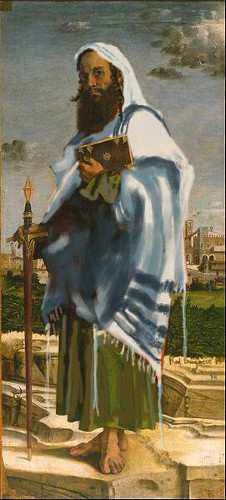







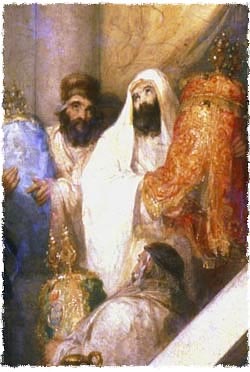





 Morning Meditations