Tag Archives: holiness

Unpopular Righteousness

unpopularThe ascent of the soul occurs three times daily, during the three times of davening. This is particularly true of the souls of tzadikim who “go from strength to strength.” It is certain that at all times and in every sacred place they may be, they offer invocation and prayer on behalf of those who are bound to them and to their instructions, and who observe their instructions. They offer prayer in particular for their disciples and disciples’ disciples, that G-d be their aid, materially and spiritually.

-Today’s Day
Hayom Yom: Iyar29, 44th day of the omer
Compiled and arranged by the Lubavitcher Rebbe,
Rabbi Menachem Mendel Schneerson, of righteous memory, in 5703 (1943)
from the talks and letters of the sixth Chabad Rebbe, Rabbi Yosef Yitzchak Schneersohn, of righteous memory.
Chabad.org

There is no free individual, except for he who occupies himself with the Torah.

-Ethics of the Fathers, 6:2

I had a great idea for a blog post last night before I went to bed. It communicated what I thought we all should be talking about with each other, not only on our blogs, but face-to-face, in our emails, in our phone calls, in every way possible…the communication and communion of holiness.

But then I went to sleep, and when I woke up, it was gone. I’m disappointed because the drive to write it is still within me. But now, I can’t give it expression.

This morning (as I write this), I read Derek Leman’s blog post What is Popular on a Messianic Blog?. I try to steer away from being identified as a “messianic blog” because it limits the audience I attract and fails to communicate that the message of Messiah is for all people, not just “messianics,” and for that matter, not just for “Christians.” The message of the love of God for humanity is for…humanity.

But Derek has a point.

Hands down, and no surprise, the winner of the numbers game is controversy. My leading blog post of the past year was an expose I did on Jim Staley, a Two House and Hebrew roots teaching pastor in Missouri, called “The Messianic Wall of Weird, #2.” And when Ralph Messer wrapped a pastor in a Torah scroll, told the pastor he was royalty in God’s eyes, and promised this bizarre misuse of a sacred object in Jewish life would restore this pastor from his problems, that blog post got a ton of readers (“Ralph Messer is Not a Messianic Jewish Rabbi”). A few critiques of Tim Hegg I have written have drawn many readers, but also lost me many readers, as some fans of Tim Hegg did not appreciate the criticism I threw his way. Of course, we should not be surprised that controversy is popular.

Controversy (especially if negative and more so if tied to a popular figure or current event).

My response to Derek’s missive was to compare this sort of “popularity” to a car accident with horrible human injuries, or NASCAR, where the attraction is the “hope” that there’ll be a massive pile up of cars traveling at high rates of speed, visions of body parts flying about the landscape fairly dancing in the minds of the fans.

OK, that’s probably a little harsh and I don’t doubt I owe an apology to many NASCAR fans out there.

But I also think I’m correct in that what draws a large, vocal audience tends not to be topics of substance but topics of controversy, especially if it’s ugly and there’s an opportunity to “spill blood,” in a virtual sense.

rock_starBut now I’m the one straying into the realm of controversy. See how tempting it is?

Tim at Onesimus Files posted a link to a highly “popular” blog post called When Rock-Star Preachers Spew a False Gospel published at Charisma News. The topic of “rock star preachers” is of interest to me because of my recent comments on “Biblical sufficiency” related to Part 1 and Part 2 of my commentary on John F. MacArthur (no, MacArthur’s not a “rock star preacher,” quite the opposite).

Drama is like blood in the water and we are all sharks looking for the next feeding frenzy.

But is that the way God wants us to be?

The Chofetz Chaim writes that because we are so involved in worldly matters, we lose our sensitivity to the great amount of joy we can potentially experience when performing a mitzvah (good deed). He offers the analogy of a man who was granted an audience with a powerful ruler. Imagine that the ruler is greatly impressed with the man, and has the conversation recorded in his personal diary. What a thrill! Upon returning home, the man’s face would glow with elation as he retells his experience to all his friends and neighbors. Even if he’d previously been worried over personal problems, he’d quickly forget them! Over the next years, whenever he’d meet others at some gathering, his successful meeting with the ruler would invariably be the topic of conversation.

Says the Chofetz Chaim: If this is the joy of someone who found favor with a mortal (who will eventually die and whose glory is short-lived), all the more so should we feel joy when we doing something which finds favor with the eternal Creator of the universe. Even afterward, when recalling the good deed, we will feel a glow of pleasure. In fact, the Torah (Deut. 28:47) stresses that we should feel more joy in serving the Almighty than from all other pleasures that exist.

-Rabbi Zelig Pliskin
“Daily Lift #813: Being in the Almighty’s Favor”
Aish.com

A new commandment I give to you, that you love one another: just as I have loved you, you also are to love one another.

John 13:34

We ask you, brothers, to respect those who labor among you and are over you in the Lord and admonish you, and to esteem them very highly in love because of their work. Be at peace among yourselves. And we urge you, brothers, admonish the idle, encourage the fainthearted, help the weak, be patient with them all. See that no one repays anyone evil for evil, but always seek to do good to one another and to everyone. Rejoice always, pray without ceasing, give thanks in all circumstances; for this is the will of God in Christ Jesus for you. Do not quench the Spirit. Do not despise prophecies, but test everything; hold fast what is good. Abstain from every form of evil.

Now may the God of peace himself sanctify you completely, and may your whole spirit and soul and body be kept blameless at the coming of our Lord Jesus Christ. He who calls you is faithful; he will surely do it.

1 Thessalonians 5:12-24

I suppose I could be criticized for choosing specifically optimistic and encouraging examples of scripture to place here, but then again, if you value the Word of God at all, you shouldn’t ignore them, either.

kindnessWhy do we do good? For the benefit of those around us. This is what God desires. However there is another motive. Each mitzvah we perform, each morsel of food or drink we give to a homeless person, each child’s skinned knee we put a band-aid on and kiss, each smile we give to a person we’re visiting in the hospital, not only helps the lonely and injured and not only helps the loneliness and injury within us, but it brings us closer to God.

We do good because only God is good (Mark 10:18; Luke 18:19). Only God is One (Deut. 6:4). Only by loving God can we love anyone else in the way God designed us to love (Matthew 22:34-40).

I could quote at length from the comments section of some “religious blogs” the transactions of believers who do not seem to be loving each other at all. Occasionally, I try to introduce the voice of reason and yes, of love, but I don’t know if it does any good. On the other hand, it’s difficult to ignore some of these venues. There are people out there who feel they have been badly hurt (and some of them really have) by a “church experience,” and in reaction, they say harsh things about all Christians in churches (and sometimes about Jewish people in synagogues). Reading some of their material is like watching someone terribly injured and bleeding while trapped in the wreckage of a disastrous car accident (and I’ve written about this before). It’s horrible to look at but I can’t turn away. I want desperately to help, but I don’t know how to get them out of the ghastly mess.

(I should say that I wrote this particular blog post several days before my controversial missive but this one was scheduled to be published while I was away from home.)

What do you do when someone is hurt, has been hurt for a long, long time, and yet doesn’t want to be helped? What do you do with people who totally identify with being hurt, who are defined by being hurt, by being victims, and yet don’t want to let go of the pain, even when they know that if they did finally, finally let go, they would be much better human beings…the people God intended them to be?

Is there “power” in playing the victim role? Absolutely. Look back to what I said before about “popular” blogs. Controversy, pain, “blood in the water,” arguments about who is a “true believer” and who is an “apostate” rule the religious web. Everything else, righteousness, holiness, goodness, devotion…all that stuff is boring. Who wants to read it? No one.

Well, that may be an exaggeration, probably a gross exaggeration. I suspect a “silent majority” of people do read about righteousness, holiness, goodness, and devotion, and absorb it into their beings like a starving child voraciously consumes a glass of milk. It’s just that most of them don’t talk about it, don’t comment on blogs, don’t demand to hear more, don’t speak out dynamically, don’t become impassioned, at least in any way we can see in the blogosphere.

As you’re reading this, I’m at First Fruits of Zion’s Shavuot Conference at Beth Immanuel Sabbath Fellowship in Hudson, Wisconsin. Through the miracle of scheduling blog posts, I can write this “last week” and have it become visible on the web Wednesday morning. I hadn’t intended to have new “mediations” be published while away from home, but as I said above, something is driving me to write about what we never talk about, or at least what is never “popular” to talk about.

doing_goodIt could be argued that something is only popular if it produces positive results within its audience and controversy rarely does that. Certainly the common definitions for the word “popular” include “regarded with favor, approval, or affection.” Can controversy be regarded with “affection?” On the other hand, look at what’s “popular” in our world today. Consider the TV shows with the highest ratings. What about movies, music, celebrities? Are these popular things and people always examples of righteousness, holiness, goodness, and devotion, or are they mere reflections of the moral state of our society? I suggest we try to do what is “unpopular.” As people of faith, we must go against the general grain if it violates what we are taught by our Master and Teacher.

The commentary for Pirkei Avot 6:2 states:

Why the roundabout, “negative” wording of the mishnah? Why not simply say “True freedom is attained through Torah”?

Man is a finite being, and everything he possesses and is capable of achieving is likewise finite in scope and extent. It would, therefore, follow that there is no such thing as a free human being. Not only do the proud, the envious, the ignorant and the greedy live in their own prison, but even the most emotionally stable and content individual, blessed with the most plentiful resources and leading the most uninhibited of lives, is still subservient to his own inherent limitations.

Thus, our mishnah opens with the statement, “There is no free individual.” But one who occupies himself with Torah, subordinating his mind and self to the wisdom and will of the Almighty, transcends this most basic nature of every created thing.

Torah defies the unbridgeable gap between the finite and the infinite. It is the wisdom and will of G-d, articulated in terms that the human being can comprehend, relate to and implement in his life. One who submits to the servitude of a life devoted to Torah experiences the freedom that eludes the most “independent” of men.

We also learn something important from Paul:

Put on then, as God’s chosen ones, holy and beloved, compassionate hearts, kindness, humility, meekness, and patience, bearing with one another and, if one has a complaint against another, forgiving each other; as the Lord has forgiven you, so you also must forgive. And above all these put on love, which binds everything together in perfect harmony. And let the peace of Christ rule in your hearts, to which indeed you were called in one body. And be thankful. Let the word of Christ dwell in you richly, teaching and admonishing one another in all wisdom, singing psalms and hymns and spiritual songs, with thankfulness in your hearts to God. And whatever you do, in word or deed, do everything in the name of the Lord Jesus, giving thanks to God the Father through him.

Colossians 3:12-17

white-pigeon-kotelToday, I’m attending a conference dedicated to the gifts of the Holy Spirit. One of those gifts as I see it, is fellowship and community within the body of Jewish and Gentile believers. One might even say that I am participating in “echad” or a sense of “oneness” within the body of Messiah, though it contains many dissimilar parts.

We are commanded to love one another. I think that means we should love each other even if we don’t always like each other. I know I’m not always likeable, but I pray that God finds me always loveable, through His abundant grace and mercy. And if He can love me, He can love anyone. That means I should love anyone, too.

And showing love, more than any act of superficiality or ceremony is what it is to be righteous and holy to God. May the injured find healing in Him.

A person with humility is able to accept misfortunes and suffering. The arrogant person, however, is not able to tolerate these events.

Rabbi Zelig Pliskin

“To become truly great, one has to stand with people, not above them.”

-Charles-Louis de Montesquieu

133 days.

Being Light in the Darkness

light_from_withinHe explains there that tzaddikim are classified in two general categories. The first is that of the “complete tzaddik,” also known as the “ tzaddik who possesses (only) good.” Such a tzaddik has succeeded in completely transforming the evil of his animal soul to good and holiness. A tzaddik of the second category, that of the “incomplete tzaddik,” or the “ tzaddik who possesses evil,” is one who has not yet completely converted his animal soul to good; he still retains a vestige of its native evil. This remaining fragment of evil, however, is completely nullified within the far greater proportion of good.

from “Today’s Tanya Lesson”
Likutei Amarim, Chapter 11
Lessons in Tanya
Chabad.org

A certain individual was condemned to Rabbi Schneur Zalman of Liadi as a hypocrite. “He has such a high opinion of himself,” the rebbe was told, “and has assumed all sorts of pious customs and practices. He acts like a real holy fellow. But it’s all superficial: on the inside, his character is as coarse and unrefined as ever.”

“Well,” said the rebbe, “in that case, may he meet the end that the Talmud predicts for such people.”

The informers were taken aback. They had merely desired to “warn” the rebbe about this individual. But now, what sort of calamity had the chassidic master called down upon him?

Rabbi Schneur Zalman explained: At the end of Tractate Pe’ah, the Talmud discusses the criteria for a pauper to be eligible to receive charity. The section concludes with the warning: “One who is not in need, but takes . . . one who is not lame or blind but makes himself as such, will not die of old age until he is indeed as such.”

“In the same vein,” concluded the rebbe, “one who makes of himself more than he is in matters of righteousness and piety ‘will not die of old age until he is indeed as such.’ Acting like a better person will eventually make him a better person.”

“Make Believe”
Translated/adapted by Rabbi Yanki Tauber
in “Once Upon a Chassid” (Kehot, 1994)
Chabad.org

“The mind is everything. What you think you become.”

-Gautama Siddharta

Setting the mystic aspects of the quotes above to one side, I have to say that I know all this. I’m supposed to know all this. But knowledge and insight aren’t the same as integrated wisdom. What’s the difference between knowledge and wisdom?

“Never mistake knowledge for wisdom. One helps you make a living; the other helps you make a life.”

-Sandra Carey

This is hardly the first time I’ve pursued such a question, but it means something more or at least something different then what it did before. I’m not sure I want to tell you the whole story yet, but part of it has to do with a recent encounter both with a friend and with God. But before getting on to that, I suppose I should review my own previously stated understanding of knowledge and wisdom.

There is knowledge and then there is wisdom. Studying will provide knowledge and knowledge, in and of itself, isn’t always “good” or “bad”, but sometimes it is “relevant” and “irrelevant”. Wisdom tells us how or if that knowledge can be applied to us. The “path of wonder the Torah takes to come into our world” is not a path that Christians can readily follow and even if somehow we can, it’s not a path we are always called to walk. As Rabbi Freeman points out, “Every wise person prefaces his pursuit of wisdom by acknowledging, ‘This I will not be able to explain. This will remain in wonder.’”

what-you-thinkI suppose putting all that together and using Rabbi Tauber’s commentary as a guide, to gain wisdom, we must behave out of our knowledge of what is good, desirable, and pious, even if it’s not who we really are or what we can readily pursue, until it becomes integrated into the very fabric of our being. Then we may become wise and not just a “bucket” containing information.

Then we will become who we really are.

I’ve been standing on a threshold for a long time. Not that I’m a total facade, but I know I’m not the person I’m supposed to be, and probably not the person most people reading this blog believe me to be.

The quote from Siddharta can be condensed down into the simple phrase, “you are what you think.” But despite the Bible’s proscription to gain control of our very thoughts (2 Corinthians 10:5) it’s not all that easy to manage what we think about habitually. There’s a reason that anxiety and anxiety control meditations are a tremendous part of the medical and psychopharmaceutical fields today.

But our thoughts and worries are also addressed in abundance in other realms as well.

The reason you have a business is to reconnect all these fragments back to their Creator. And the gauge of your success is your attitude.

If you see yourself as a victim of circumstance, of competitors, markets and trends, that your bread is in the hands of flesh and blood . . .

. . . then your world is still something separate from your G‑d.

But if you have the confidence that He is always with you in whatever you do, and the only one who has the power to change your destiny is you yourself through your own acts of goodness . . .

. . . then your earth is tied to the heavens, and since in the heavens nothing is lacking, so too it shall be in your world.

-Rabbi Tzvi Freeman
“Attitude”
Based on letters and talks of the Rebbe
Rabbi M. M. Schneerson
Chabad.org

Rabbi Freeman’s commentary on the Rebbe’s advice deals specifically with earning a livelihood, which is very important of course, but what about things that are even more basic?

We all have a constant flow of thoughts and mental pictures in our minds.

These mental creations have a tremendous impact on how we feel, what we say and how we say it, and what we do and don’t do.

People who are self-confident have very different mental pictures and thoughts than people who lack self-confidence. People who feel very insecure feel that way because of what they say to themselves and what they picture about the past and the future. When they upgrade their self-talk and their mental images, they experience life very differently.

-Rabbi Zelig Pliskin
“Daily Lift #680, Your Mind Impacts Every Experience”
Aish.com

blind2Supposedly, it’s not really what happens to you that matters, but the story that you tell yourself about what happens to you. Three people can undergo the same experience, the first can tell himself that things are a disaster and he’ll never recover, the second can say that it’s an interesting experience, but he won’t let it change him, and the third can say that it was an enlightening experience and that it will impact him for the better…

…regardless of what the experience happens to be.

That’s kind of simplistic since there are events that would overwhelm just about anyone, either with uplifting joy or abject sorrow. But over time, once the person adjusts to the emotional impact, they can tell themselves a story, sometimes telling it in different ways, until whatever the event is can be seen in a useful and positive light.

Obviously, things that happen to us that are good aren’t that hard to adapt to a positive story, but in the news lately, we’ve seen things happen that can only lead to tremendous pain.

You and I can face immense hardships and sorrow in our lives, and yet we see others who have suffered much worse and continued to go on, sometimes achieving true greatness.

In 1944, Simon Wiesenthal barely escaped death at the Janwska concentration camp. Wiesenthal had been imprisoned in a total of 12 concentration camps, and at the time of his liberation from Mauthausen in May 1945, his six-foot frame weighed just 99 pounds. Nearly all of Wiesenthal’s close relatives were murdered by the Nazis, and after the war he worked for the U.S. Army gathering documentation for Nazi war crimes trials. Wiesenthal continued this work privately, and became known as the “Nazi hunter” whose research led to capture of Adolf Eichmann in Argentina, and dozens of other war criminals including Karl Silberbauer, the Gestapo officer responsible for the arrest of Anne Frank. Wiesenthal said: “When history looks back I want people to know the Nazis weren’t able to kill millions of people and get away with it.” The Simon Wiesenthal Center, which operates the Museums of Tolerance, is named in his honor. In 1981, the Center’s film, “Genocide,” won the Academy Award for Best Feature Documentary. Wiesenthal died at age 96 in Vienna and was buried in Herzliya, Israel.

Tevet 13
This Day in Jewish History
Aish.com

This isn’t to minimize difficult experiences for the rest of us who didn’t have to endure the Holocaust, but it shows us that it’s possible to survive and even to achieve great things after suffering terribly. Others besides Simon Wiesenthal survived the camps and continued to have a life for decades afterward, but perhaps not all of the survivors told themselves the same “story” about what it all meant to them. It would be understandable to give up, to surrender to depression or rage after such an experience, and no one would fail to have compassion, but the story Simon Wiesenthal told himself lead to a different path.

light-has-dawnedCertainly, this can be the path to holiness and a closer relationship with God, but there must also be a story that leads to a better relationship with yourself. Ultimately, I believe that both paths and both goals yield the same result, but what happens when you are injured and even devastated. You find yourself sitting in a very dark place, feeling yourself sink lower, hovering at the edge of the endlessly deepening abyss. How do you find your path when everything you are, particularly your thoughts and feelings, lead downward into the waiting embrace of oblivion?

Where a lantern is placed, those who seek light gather around – for light attracts.

Likutei Sichot, Vol. 10, p. 294.
from “Today’s Day”
Monday, Tevet 13, 5703
Compiled by the Lubavitcher Rebbe
Translated by Yitschak Meir Kagan
Chabad.org

Knowledge is like consuming the writings of the great sages, and it illuminates like a lantern or a small candle shining in the darkness. Wisdom is letting your thoughts and feelings not just experience the light, but absorb and become the light.

Do not seek to follow in the footsteps of the wise. Seek what they sought.

-Basho, Matsuo

“You are the light of the world. A city set on a hill cannot be hidden. Nor do people light a lamp and put it under a basket, but on a stand, and it gives light to all in the house. In the same way, let your light shine before others, so that they may see your good works and give glory to your Father who is in heaven.

Matthew 5:14-16 (ESV)

Instead of sinking down and becoming the darkness, you can rise up with the sparks and become light, even if you continue to be surrounded by darkness.

Past and Future Holy

There is a graphic example of this at the beginning of the book of Job. In a series of blows, Job loses everything: his flocks, his herds, his children. Yet his faith remains intact. Satan then proposes subjecting Job to an even greater trial, covering his body with sores (Job 1-2). The logic of this seems absurd. How can a skin disease be a greater trial of faith than losing your children? It isn’t. But what the book is saying is that when your body is afflicted, it can be hard, even impossible, to focus on spirituality. This has nothing to do with ultimate truth and everything to do with the human mind. As Maimonides said, you cannot give your mind to meditating on truth when you are hungry or thirsty, homeless or sick (Guide for the Perplexed 3:27).

-Chief Rabbi Lord Sacks
“Eternity and Mortality”
Commentary on Torah Portion Emor (Leviticus 21-24)
Aish.com

Once I would have believed that but now I’m not so sure. I think that when you are sick, you can and in fact, you must consider, ponder, and meditate upon the Spirit and the ultimate truth, because in the process of dying, you are preparing to meet that truth.

Let me explain.

Last night, as you read this, I renewed my relationship with an old friend. I don’t have his permission to discuss the details here, so I must be deliberately vague. But he’s sick. He’s quite ill. We haven’t spoken in several years, even though he lives very close to me. When I heard that he was ill, I asked a mutual friend if he would like to visit this person with me. Our mutual friend lives in another state but was in town visiting relatives.

So for several hours on Sunday afternoon and going into Sunday night, our mutual friend, me, my friend who is ill and his wife sat in their living room and visited. We talked about many things including what we have been doing with our lives, where we’re living and working, and what else we’ve been doing, and movies we’ve seen, and trivia and science and families.

And we talked about doctors and illness and exams and families and trying to make plans when you know the future won’t be traveling as far ahead of you as you once thought it might.

Have you ever wondered about how God works? I don’t know either, but occasionally, God lets you see how He plays “connect the dots.”

My daughter “coincidentally” ran into the ill gentleman’s wife and one of his daughters in the same store in two separate events on the same day. That’s when my daughter found out that my friend was ill. Then my daughter told my wife. Then my wife and daughter told me. Then my wife said that maybe some other old friends and I should visit this friend. So I contacted a couple of old friends. Only one replied and he lives in another state. But the other state friend was coming into town to spend Thanksgiving with is family who lives locally, so I asked him to let me know when we could get together.

And so he called me on Sunday in the early afternoon and we made plans.

And we got together and drove over to our friend’s place.

And that’s when we got to talking about all kinds of things, especially the stuff no one likes to talk about but that will happen to each and every one of us.

I wonder if that’s why we don’t talk about getting sick and about dying?

Because it will happen to every one of us.

Whether we want it to or not.

Whether we’re rich or poor or black or white or any other color or where we live or anything else about us.

And whether or not we believe in God, we’re all still going to die.

And then we’ll know.

I can’t say this from personal experience (yet), but when you know you’re going to die, not in some distant, hypothetical future, but in a more or less predictable time frame, and you have a relationship with God, assuming the relationship with God survives the terminal news, you start thinking about Him a lot.

I wonder if He starts thinking about you more, too?

That’s probably a stupid question since God is infinite and so are His thoughts, but as I was sitting there talking and listening, I was thinking about God and I was wondering if He was thinking a lot more about my friend, too.

I hope so.

PrayerI know that I want and probably need a lot of attention from God. Just read my blog for a few days and you’ll figure out why. But I’m not so self-absorbed that I don’t realize there are a lot of other people who need God’s attention much more than I do. I know God’s resources are limitless, but if they weren’t and if each of us only got so much from God, then I’d ask God to take some of mine and give it to my friend. He needs more attention right now. So does his wife. So does the rest of his family.

I don’t have a lot to give that’s really valuable in a practical sense. I’m not a good handyman. I’m a lousy plumber and a worse carpenter. I barely know a car’s battery from its distributor cap, and electrical wiring is a complete mystery.

But I do have time. And I do have attention. And I can listen. I can talk, too. I can even read out loud.

And I can pray. I can visit. I can have a discussion with another person. So I have a few things to give.

I’ve been pondering about church and church attendance and community and having conversations with like-minded Christians.

Have you ever wondered about how God works? I don’t know either, but maybe He works just like He worked on Sunday afternoon, re-creating an old friendship and building a new one.

Good morning God. I gratefully thank you, living and existing King, for returning my soul to me with compassion. Abundant is your faithfulness. Thank you for making all things holy, including this past Sunday afternoon and past and future friendships.

The holy is the point at which heaven and earth meet, where, by intense focus and a complete absence of earthly concerns, we open up space and time to the sensed presence of God who is beyond space and time. It is an intimation of eternity in the midst of life, allowing us at our holiest moments to feel part of something that does not die. The holy is the space within which we redeem our existence from mere contingency and know that we are held within the “everlasting arms” (Deut. 33: 27) of God.

Past, Future, or Present?

The world of Moshiach is a world free of hate, jealousy and suffering, a world suffused with wisdom, a world in harmony with itself and its Creator. And what model of leadership does the Torah envision for this perfect world? Moshiach, the world leader who will herald and preside over this climatic era, is described as both teacher and king, a paragon of spiritual and material leadership in one.

So the example of Moses represents the Torah’s concept of the perfect leader. For Moses embodied the ultimate criterion for leadership: an utter self-effacement and a complete absence of self-interest. As the Torah attests: “And the man, Moses, was the most humble man on the face of the earth.” In such a man, absolute authority only ensures the optimum integration and harmony between all areas of communal life. For it is not power that corrupts, but the ego of the powerful. Only in lesser generations, whose leaders’ selflessness is not on the level exemplified by Moses, is it necessary for authority to be fragmented and shared.

But the halving of life into “spiritual” and “material” spheres, its compartmentalization into “moral” and “political” domains, is an artificial one. Life, in its entirety, is a single endeavor: the development of the perfect world that G-d envisioned at creation and outlined in the Torah. The many “areas” of life are but the many facets to its singular essence.

Ethics of Our Fathers
Commentary on Chapter 6
“Torah and State”
Elul 4, 5772 * August 22, 2012
Chabad.org

I’m going to talk a lot more about the “compartmentalization” of the secular and spiritual in our lives in tomorrow’s “morning meditation,” but in reviewing this commentary, I thought we could take a moment to look at a Jewish perspective about life now vs. life in the Messianic Age. I don’t think it’s all that different from how Christians see life now as opposed to how things are going to be when Jesus returns.

Religious Jews tend to draw a much closer comparison between Moses and the Messiah than we Christians do, probably because much of the church has been taught that the Law is done away with, thus Moses becomes superseded by Jesus. In some sense, it’s almost like modern religious Jews see Moses the way we Christians see Jesus. He is the model and the “king” they look up to. He set the standard for Jewish leadership and the Messiah will be a “perfected” version of Moses.

OK, I’m oversimplifying all this, but I think it’s important for us to consider Jesus as the Jewish Messiah King. When Jesus returns (and I’ve said this before), he will look, talk, walk, eat, pray, worship, and be a Jewish man, the Messiah, the King of Israel. He will definitely be “too Jewish” for many Christians and I think it would help if we got used to the idea that he won’t be the “Jesus” we see in the movies before he actually arrives.

One of the reasons I like Jewish commentaries on the Messiah is because it compels me to conceptualize Jesus as Jewish and not as the sort of “gentilized” person that we’ve turned him into as the centuries have passed. This is also why I sometimes encourage Christians to at least try on some Jewish practices for size. Turning our thoughts and hearts toward God during the month of Elul for example, isn’t such a bad idea. It encourages us to conform our lives more toward holiness and God at a time of year when we probably aren’t thinking that hard about our lives of faith (Christians don’t have religious events in or around August typically).

Why not consider and practice self-purification and making who we are just a little bit better than we were yesterday? Maybe we can even do something to make the world a little bit of a better place. Maybe God put us here to actually accomplish something special; something that is uniquely our purpose.

Whoever has faith in individual Divine Providence knows that “Man’s steps are established by G-d,” (Psalm 37:23) that this particular soul must purify and improve something specific in a particular place. For centuries, or even since the world’s creation, that which needs purification or improvement waits for this soul to come and purify or improve it. The soul too, has been waiting – ever since it came into being – for its time to descend, so that it can discharge the tasks of purification and improvement assigned to it.

“Today’s Day”
Shabbat, Elul 4, 5703
Compiled by the Lubavitcher Rebbe
Translated by Yitschak Meir Kagan
Chabad.org

Tomorrow, I’m going to ask some important questions on my “morning meditation.” I’m going to ask if Jesus still matters in our lives. I’m going to ask why he’s so important to us and to the world. I think at least some of us are beginning to lose track of the vital nature of the Messiah. It’s not just what he’ll do when he returns and ascends his throne on Earth. It’s what he’s already done for each and every person who calls themselves “Christian” or “Messianic.” It’s what he’s done for us that could never have been done without him.

If you are separating the secular and the spiritual in your life, you may be shutting Jesus out of times and areas of your existence where he needs to be and where you need him to be. Does Jesus matter? Is he important in every part of your life?

I’ll try to answer those questions tomorrow. Stay tuned.

Will a Soul Cry Out Against You?

On today’s amud we see that one should have pleasure on Shabbos. A close student once invited Rav Yisrael Salanter, zt”l, join him leil Shabbos.

“I never go to anyone for Shabbos until I find out their custom during the meal I shall be attending,” answered Rav Yisrael Salanter.

This student very proudly recounted that his table was filled with both physical and spiritual oneg shabbos of the very best kind. “We only procure our meats b’tachlis ha’hidur. The cook in our house is a G-dfearing woman, the widow of a renowned talmid chacham. Our table is resplendent with the best foods, yet we are very careful to sing and say an abundance of Torah between each course. We even have a regular seder in Shulchan Aruch. Understandably, our table ends only very late into the night.”

Rav Yisrael accepted his student’s invitation, but with a surprising condition. “I will come, but only if you cut two hours off the meal.”

The student complied with his mentor’s strange request and the meal from start to finish took slightly under an hour. At the very end, right when they were preparing to wash mayim achronim, the student could not contain his curiosity, “Please teach me what is wrong with my regular meal that the Rav would not come until I cut it to such an extent.”

Instead of replying, Rav Yisrael merely asked that the cook be brought the table. When the modest woman arrived, Rav Yisrael apologized to her. “Please forgive me for rushing you this evening since on my account you were forced to serve course after course with no break between them.”

“Hashem should bless the Rav with all the brochos!” replied the gratified widow. “I only wish that he came to us every Friday night. My boss usually has a very lengthy meal, and after a hard day working on my feet in the kitchen, I am so weak that I can hardly stand. But, thanks to the Rav, I can get some much needed rest.”

Rav Yisrael turned his student and said, “In this poor widow’s reply you have an answer to your question. It is true that the way you set up your table is very meritorious…but only if your tzidkus isn’t attained at the expense of another!”

from Mishna Berura Yomi Digest
Stories to Share
“Oneg Shabbos”
Shabbos, June 2, 12 Sivan
Siman 167 Seif 16-20

This lesson needs virtually no commentary and its meaning should be plain, so I have very little to add. In many religious traditions including Christianity and Judaism, there is a tendency to want to impress others with our level of sanctity and holiness. Nevermind that the Bible speaks against such personal arrogance, it is human nature to want to look good in front of others, especially others who hold a higher social rank or who we otherwise feel are our superiors. That’s what we see here in our “story to share.” We also see an example of people who should know better, trying to convince “the masses” of their holiness.

Then Jesus said to the crowds and to his disciples, “The scribes and the Pharisees sit on Moses’ seat, so do and observe whatever they tell you, but not the works they do. For they preach, but do not practice. They tie up heavy burdens, hard to bear, and lay them on people’s shoulders, but they themselves are not willing to move them with their finger. They do all their deeds to be seen by others. For they make their phylacteries broad and their fringes long, and they love the place of honor at feasts and the best seats in the synagogues and greetings in the marketplaces and being called rabbi by others. –Matthew 23:1-7 (ESV)

This verse is usually cited by Christians to pound on Jewish tradition including the modern halachah of Jews wearing tallitot and tefillin, but I don’t believe that was the Master’s intent. He had no problem with that the Pharisses taught (see verse 3 above), only the bad motivations for their behavior. In our story from the beginning of this blog post, the student didn’t necessarily have bad motivations for demonstrating such a high level of observance, but he was careless. He put form before substance. He attained his tzidkus at the expense of another.

Ultimately, everything we do, we do for the sake of Heaven, but as human beings, it is extremely easy to mess up our priorities. This isn’t something you only find in Judaism, it’s also equally likely to happen in Christianity. That’s because I’m describing a trait of the all too frail human heart. On some level, we all desire to do what is right, but our personalities get in the way. It’s even worse when, like the student in our example above, we don’t even realize it. Heaven forbid it should be pointed out to us in such a public way and in front of the person we have been inadvertantly victimizing.

All I’m asking of anyone reading this is that you stop and look in a mirror. Who are you and what are you doing? Could you be serving God better? Could you be serving other people better? Have you, even without realizing it, been exploiting, injuring, or insulting someone else while believing you’re doing good for God? If the answer to any of the last three questions is “yes,” then what do you need to change?

Final question: is it worse to be a hypocrite and know you’re screwing up, or to be clueless about how you’re hurting others?

You shall not mistreat any widow or fatherless child. If you do mistreat them, and they cry out to me, I will surely hear their cry, and my wrath will burn… –Exodus 22:22-24 (ESV)

The Sacred Robe

From a sicha of my father: Chassidus demands that one “…wash his flesh (Hebrew, et b’ssaro) with water, and clothe himself in them (the priestly robes).” The intellectual element of Chassidus must thoroughly cleanse the flesh and rinse away the habits of the flesh. The habits are alluded to by the word et (“and”) in the quoted verse, signifying “that which is incidental to the flesh,” the habits developed by the body. Only then can one clothe himself in the “sacred garments.”

Pondering Chassidus, discussing Chassidus, and the practice of Chassidim to meditate before davening – these are “sacred garments,” garments that were given from the heights of sanctity. But it is the person himself who must “wash his flesh with water…” The garments of the soul are given to the individual from On High. But washing away unwholesome “incidentals” that arise from bodily nature and making the body itself “flesh of sanctity,” this is achieved solely by man’s own efforts. This is what Chassidus demands; it is for this ideal that our great teacher (the Alter Rebbe) devoted himself totally and selflessly. He opened the channel of total devotion, sacrifice, for serving G-d through prayer, to be bound up with the Essence of the En Sof, infinite G-d. Chassidus places a chassid face to face with the Essence of the En Sof.

“Today’s Day” daily lesson
Chumash: Acharei mot, Shevi’i with Rashi.
Tehillim: 119, 97 to end.
Tanya: Ch. 43. Concerning (p. 227)…enlarged upon later. (p. 231).
Compiled and arranged by the Lubavitcher Rebbe
Rabbi Menachem Mendel Schneerson, of righteous memory, in 5703 (1943)
from the talks and letters of the sixth Chabad Rebbe
Rabbi Yosef Yitzchak Schneersohn, of righteous memory.

However, G-d provides creation with life in a different manner than the manner in which the soul provides life to the body. The soul must garb itself in the body in order to provide it with life. By doing so it is affected by the body (for “enclothing” implies that the clothed object undergoes a change). G-d, however, is of course not subject to change when He provides life to creation.

“Today’s Tanya Lesson” (Listen online)
Likutei Amarim, middle of Chapter 42
by Rabbi Schneur Zalman of Liadi (1745-1812), founder of Chabad Chassidism
Elucidated by Rabbi Yosef Wineberg
Translated from Yiddish by Rabbi Levy Wineberg and Rabbi Sholom B. Wineberg
Edited by Uri Kaploun

I’m sure you’ve heard it said that “the clothes make the man.” You’ve also heard it said that “you can’t judge a book by its cover.” Interesting and contradictory sayings and each in their own way is true.

We often judge human beings by their outward appearance, usually unfairly. We assume that someone who is well dressed and groomed is a upstanding and productive citizen, while someone who dresses poorly and who seems to take no pride in their appearance, we think of as “lesser.” Neither of these opinions takes into consideration what God sees or how He judges people by the heart and by actions.

On the other hand, the “clothes” I am talking about are more than “skin deep,” to mix a metaphor. How we appear physically is less important (though I won’t say that it’s not important at all) than how we choose to be “clothed” by God.

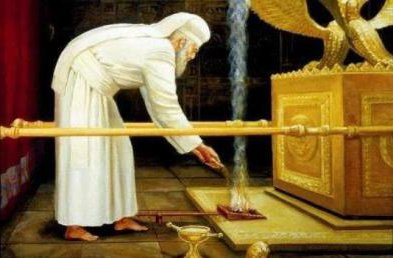
Whether you choose to consider the information I have quoted from mystical or metaphorical, in a sense, God does “clothe” us and most times, in accordance to our true wishes. If we desire to follow after Him and we pray and meditate and study and perform good deeds for His sake, then righteousness is our garment and our “robes” are as white as snow. It’s as if we have donned the robes and vestments of the High Priest in the Tabernacle (remember, I’m speaking metaphorically, not literally).

But this sort of clothing isn’t “one size fits all.” There is no “generic” righteousness, because while we have all been created in God’s image, we all were created as individuals, each with specific and unique gifts and purposes. One person He creates as a poet, another a brick layer, but both serve God. We may think the Pastor serves God more fully than the house painter, but you can’t tell just by looking.

I mentioned before that we must choose the sort of garment we will accept from God, but if that were completely true, we would all be wearing the Emperor’s New Clothes instead, believing we were dressed in lavish opulence when we’re actually completely naked.

God calls to us and we can choose to answer or not, but sometimes, God “loads the dice” in His favor and in ours.

The Alter of Kelm, zt”l, explains this in depth. “If one observes, he will find that emunah definitely never leaves a Jewish heart. Those who claim not to believe—or for some reason act like one who lacks belief—simply cannot focus on faith in an honest way due to the ulterior motives of their physical drives. The moment they are confronted with hardship, they naturally turn to God because the trial brings the emunah to the fore. Our job is to work to reveal the emunah from deep within, to recognize it and value it.”

Daf Yomi Digest
Stories Off the Daf
from “No Atheists in Foxholes”
Me’ila 3-1

To use another “gambling” metaphor, God “stacks the deck”, so that we have a “better than average chance” of calling out to Him, often from the depths of despair. We can still choose to ignore Him, but it’s more difficult than if our lives were completely comfortable and all our needs were met.

We are like a resistant and reluctant young women being pursued by a wealthy and handsome suitor. Our suitor has nothing but our best interests at heart and possesses many fine gifts, if only we’ll accept them. Yet for many reasons, we put Him off, thinking that He’s boring, oppressive, or even dangerous. When kindness and graciousness doesn’t work, He sometimes seeks to “conquer” us, which sounds harsh and hostile, but it’s more like an adult abruptly grabbing a three-year old’s arm to keep him from running out into traffic.

Show a mighty emperor the world and ask him where he most desires to conquer. He will spin the globe to the furthest peninsula of the most far-flung land, stab his finger upon it and declare, “This! When I have this, then I shall have greatness!”

So too, the Infinite Light. In those places most finite, where the light of day barely trickles in, there is found His greatest glory.

-Rabbi Tzvi Freeman
“Conquest”
Based on letters and talks of the Rebbe
Rabbi M. M. Schneerson
Chabad.org

Our “Conquering King” holds out a sacred robe of light to us. All we have to do is stand still, accept the gift, and put it on. Then we have to wear it well.