Tag Archives: Israel

Writing Letters from Outside of Israel

GOOD MORNING! Rosh Chodesh Elul, the beginning of the Hebrew month of Elul will be August 26th and 27th. This means that there is one month and counting to Rosh Hashanah (Wednesday evening, September 24th). Many people might ask, “So, what?” or might think, “Thanks for the reminder to buy a brisket!” However, the answer to “So, what?” is that we have one month to prepare for Rosh Hashanah … and Yom Kippur.

Why would one want to prepare for Rosh Hashanah? Rosh Hashanah is the Day of Judgment when the Almighty decides “Life or death, sickness or health, poverty or wealth.” Does it make sense to prepare for a day of judgment? You bet! However, for many it has the same emotional impact as their cardiologist telling them that they need to lose weight to avoid heart attacks and strokes… a wonderful idea between meals!

-Rabbi Kalman Packouz
“Shabbat Shalom Weekly,” Commentary on Re’eh 5774
Aish.com

I’m depressed. Well, maybe not depressed but discouraged, or something like that. I’m not really sure what I’m feeling. A bunch of people are trying to convince me that I’m a citizen of Israel and so is every other Christian on Earth.

I have two problems with this. The first is that everything in my intellect, beliefs, and passions tells me it’s wrong. The second is that some of the folks (particularly one of them) are people I respect for their intellectual prowess and spiritual integrity.

I mean, it’s not like it’s a secret that I’m attracted to Jewish learning and study, at least after a fashion (I’m hardly a Talmudic or any other kind of scholar). So why are people hammering away at me (it feels like that) trying to get me to, what in effect for me feels like, commit a home invasion or rip off someone’s birthday present or family heirloom?

I don’t get it.

To me, my interest in Jewish studies and Torah are more like how Rabbi Packouz describes preparing for the High Holy Days:

Why is living in a hurricane zone a benefit? It teaches you a very important lesson: Be real with life! Usually, the weather bureau (N.O.A.A. — National Oceanic and Atmospheric Administration) gives a week’s heads up. You know that in 7 days a Force 3 or 4 or 5 hurricane will hit. You generally know for sure whether it will hit land, you just don’t know whether for sure it will hit YOU until perhaps a day or a few hours before landfall.

What happens during that week? The hardware store sells out all of its plywood (used for covering windows) and batteries. They have to make special shipments from neighboring states! The grocery stores shelves are cleared out or seriously diminished of canned goods and water. People are scrambling to buy generators to provide electricity needed to keep the lights on, fans going and the refrigerator and freezer working. There is a mad dash for last minute preparations because the STORM IS COMING!

What’s the difference between a hurricane and Rosh Hashanah? The hurricane MAY hit your area; Rosh Hashanah DEFINITELY will touch you!

So, if one believes in a God who has set a standard for behavior and observance in the Torah and who will judge us, does it make sense to make some preparations? It would be reasonable to think so.

How can one prepare for the Day of Judgment?

shofar-rosh-hashanahPreparing for Rosh Hashanah and Yom Kippur is like living in Florida and stocking up on needed supplies for the coming hurricane season. Doesn’t seem very “spiritual,” does it? On the other hand, it sounds incredibly practical. It also doesn’t worry about boundaries, barriers, and why I can’t wear the tzitzit behind door number one (game show reference). It “worries” about preparing for an encounter with God.

Why can’t we focus on that too in our little corner of the blogosphere?

How do you prepare for Rosh Hashanah? Rabbi Packouz has ten suggestions:

  1. Take a spiritual accounting. Each day take at least 5 minutes to review your last year — a) your behavior with family, friends, associates and people you’ve interacted with, and b) your level of mitzvah observance.
  2. Attend a class or classes at a synagogue, Aish center, a yeshiva on how to prepare. Read articles on aish.com and listen to world-class speakers on aishaudio.com .
  3. Study the Machzor (Rosh Hashanah prayer book) to know the order of the service and the meaning of the words and prayers. You can buy a copy of the The Rosh Hashanah/Yom Kippur Survival Kit, by Rabbi Shimon Apisdorf (possibly available at your local Jewish bookstore or at Amazon.com — about 50 left).
  4. Make sure that you have given enough tzedakah (charity) and have paid your pledges (One is supposed to give 10% of his net income). It says in the Machzor that three things break an evil decree — Teshuva (repentance), Tefilla (prayer) and Tzedakah (charity). Why not maximize your chance for a good decree?
  5. Think of (at least) one person you have wronged or feel badly towards — and correct the situation.
  6. Make a list of your goals for yourself and your family — what you want to work towards and pray for.
  7. Limit your pleasures — the amount of television, movies, music, food — do something different so that you take this preparation time seriously.
  8. Do an extra act of kindness — who needs your help? To whom can you make a difference?
  9. Read a book on character development — anything written by Rabbi Zelig Pliskin would be great!
  10. Ask a friend to tell you what you need to improve. A real friend will tell you … but in a nice way!

Not all of these would apply to me, but then R. Packouz is writing to a Jewish audience, not a Christian with a Messianic twist.

Certainly taking a spiritual accounting makes sense and any person of faith should engage in such an activity. Attending a class relative to Judaism isn’t an option for me unless it’s online such as at Aish Audio. Even then, because the classes are geared to a Jewish audience, there’s a limit to their ability to apply to me.

Study the Machzor? I could. But I won’t be attending Rosh Hashanah services, so if the intent is to familiarize me with said-services, this also doesn’t apply.

I believe in tzedakah but I don’t think how much or how little I give will affect how God judges me, at least all by itself, particularly at a certain time of year. People are hungry every day of the week, so we should try to contribute as often as we can, not just around Rosh Hashanah.

blind-loveIt’s good to right the wrongs we’ve done to others, so I can certainly agree with this one. It’s also good to make goals, to dedicate yourself to becoming a better person and help the family draw closer to God (although in my family, we are so spread out about spiritual perspectives, that we virtually live in our own separate bubbles).

I don’t know that limiting pleasures makes much difference, but every opportunity to act with kindness should be observed.

Read a book? I’m reading all the time, trying to learn more, hoping it’ll make a difference…and Rabbi Pliskin is a wonderful author.

Ask a friend what I need to do to improve? Here we are back at people trying to make me believe that I’m a citizen of Israel again. That’s what I’ve been hearing lately about how I need to improve.

Part of the Rabbi’s commentary on Re’eh states:

One of the indications of the existence and necessity of the Oral Torah — an explanation and clarification (later redacted as the Talmud) of the written Torah (The Five Books of Moses) — comes from verse 12:21 “You will slaughter animals … according to the manner I (God) have prescribed.” Nowhere in the Torah are we instructed in the manner of shechita, ritual slaughter. One might conclude that there was a very sloppy editor. Or — one might conclude that there are additional teachings (the Oral Law/Talmud) clarifying and amplifying the written Word.

There are some people who believe that there is only “Biblical Judaism” and not “Rabbinic Judaism” and that the Bible tells you everything you need to know about observing the mitzvoth.

Except that R. Packouz just demonstrated that it doesn’t. That’s one of the assumptions of some of the people who want me to have citizenship in Israel along with the natural citizens, the descendants of Abraham, Isaac, and Jacob…the Jewish people.

My friend Tom sent me a link to a website he said would explain what he’s been trying to tell me. I went there and read through it. I felt like telling the site owner, “1998 called. They want their website back” (I have this “thing” about archaic web design).

Anyway, this is part of what struck me besides having to scan completely from one side of my monitor to another just to read a single sentence:

I am very encouraging to people who want to embrace Jewish tradition, making the lifestyle of Judaism, their own. I offer this personal caution however: as you adopt traditional halacha and make it your own, do not make the traditional halacha a matter of conscience. That is truly your choice. Distinguish between the literal commandment, and the traditional “how to” in walking out that commandment.

Don’t let your fences become walls. Walls that keep out the blessing of a healthy relationship with HaShem, or walls that make your circle of brothers and sisters ever more small.

Like I said, “Biblical” Judaism” vs. “Rabbinic” Judaism. It’s like listening to someone say they love Israel but not Jewish Rabbis, Sages, and Tzadikim. How would the website owner observe the commandment of shechita given that he embraces the “literal commandment” (which is not described at all in the Torah) but not the “traditional ‘how to'”?

How can I reconcile sentences such as:

Jew and Gentile, One in Messiah. We have One King, we are One People, and we have been given One Torah…

…with statements like:

Standing in Prayer with all Israel

How? It doesn’t make sense.

The bottom line is that I’m not going to tell me wife that I have as much right as she does (she’s Jewish) to the Land of Israel and that I intend on davening with a Jewish minyan (because if I’m under the same obligation as observant Jews, I should have the right to become part of a minyan), keeping Glatt Kosher (actually, if my wife made that choice, I’d do so as well because we live together), wearing a kippah and talit katan during my waking hours, and keeping “Biblical” Torah whilst ignoring thousands of years of Jewish interpretation on just how to do that.

Not only would it be bad for family life, I don’t see that being said in the Bible.

I also have no intention of using this as another platform for getting into another “he said/she said” debate over One Law vs. distinctive application of Law. If it comes up again as part of my reading and studying, so be it. I’m certainly going to continue reading and studying. But these debates are not the focus of my life, They can’t be.

They are a spiritual dead-end.

praying-aloneLook at what Rabbi Packouz was paying attention to. He was advising anyone reading his words (well, any Jewish person) to prepare themselves physically and spiritually for the upcoming High Holidays. While not all of us observe those events, it might not be a bad idea to take the portions of his advice that apply more universally to us…to me.

What do all these arguments have to do with a relationship with God? If God, for some strange reason, chooses to give me an inheritance in Israel, I will be totally shocked and probably overjoyed. On the other hand, if He doesn’t (and I hardly expect such a thing), it won’t come as a surprise and frankly, we are all fortunate to get what God gifts us with. I’ll take what He gives me out of His abundant graciousness which includes every day He allows me to live.

You open your hand and satisfy the desires of every living thing.

Psalm 145:16

What’s wrong with just accepting what God gives us, whatever that may be? Sure, as Rabbi Packouz says, there are plenty of things we all can do, Jew and Gentile alike, to help improve our situation, to learn more, to help others more. These are the things of God. Therefore, these are the things I choose to make important to me.

If I’m putting up fences, then the only thing they keep in or out is me. If I choose to put a fence around Israel to protect her from me, then that’s a choice I make and it affects no one but me. If God chooses to discipline me for that choice, as the Righteous Judge, that’s His right.

But I can’t imagine that He would punish loving and protecting Israel or His Chosen People. If I’m going to err, I’ll err on that side of the debate and let God treat me as He will.

But we have this treasure in earthen vessels, so that the surpassing greatness of the power will be of God and not from ourselves; we are afflicted in every way, but not crushed; perplexed, but not despairing; persecuted, but not forsaken; struck down, but not destroyed…

1 Corinthians 4:7-9 (NASB)

Addendum: Revisiting a blog post written by Derek Leman over two years ago called We’re Not All the Same. The reader comments along with Derek’s article makes for good reading and reminds me that this argument has been around for awhile and will probably be around when Messiah comes to teach us how to be better disciples.

Another Addendum: Consider this Part 2.

Israel and the Nations According to Isaiah: A Brief Survey

I enjoy reading large “chunks” of the Bible rather than taking in little “sound bytes” each day, because it better helps me understand the whole flow of a book in the Bible. Yesterday, I read through Isaiah. It doesn’t take as long as you might think…maybe an hour or less, and that was even with jotting down a few notes.

I know people like Derek Leman have written copious amounts about Isaiah and I will never match that level of scholarship. I’m just a guy who reads the Bible sitting on the patio in my backyard on a gorgeous southern Idaho summer morning. On the other hand, God didn’t write the Bible just for theologians and didn’t reveal His Word just to the highly educated:

At that time Jesus said, “I praise You, Father, Lord of heaven and earth, that You have hidden these things from the wise and intelligent and have revealed them to infants.”

Matthew 11:25 (NASB)

I’m not knocking education. I believe in learning as much as you can. I’m just saying that the rest of us aren’t locked out of the Bible because we don’t have advanced degrees in theology or divinity.

I’ll try to keep this short (yeah, right) and I won’t share everything I wrote down about reading Isaiah, but I want to illustrate something about Israel and the nations from what I believe is Isaiah’s (and thus God’s) point of view. I want to illustrate that in Messianic Days both Israel and those nations who choose to cleave to Israel’s God will be serving God. What this means for us is that we Gentile believers, we non-Jewish disciples of Jesus (Yeshua) are not and do not ever become Israel. We have our own part to play in the redemptive plan of God.

A short tour of what it says about Israel and the nations in Isaiah. Unless otherwise indicated, all scriptural quotes come from the Stone Edition Tanakh:

If [Israel] would grasp My stronghold, then he would make peace with Me; peace would he make with Me. [Days] are coming when Jacob will take root; Israel will bud and blossom and fill the face of the earth like fruit.

Isaiah 27:5-6

Admittedly this is midrash, but the sages understand “My stronghold” to be the Torah, indicating that in Messianic Days, the Jewish people are still expected to grasp the Torah tightly and to observe the mitzvot.

Chapter 40 in its entirety speaks of the end of the Jewish exile and the return of the Jewish people to their Land, to Israel.

But you, O Israel, My servant, Jacob, you whom I have chosen, offspring of Abraham who loved Me — you whom I grasp from the ends of the earth shall I summon from among all its noblemen, and to whom I shall say, ‘You are my servant’ — I have chosen you and not rejected you.

Isaiah 41:8-9

Notice the language mentioning Israel and Jacob and the offspring of Abraham. This would seem to eliminate the possibility that God is talking about Jews and Gentiles. I suppose “offspring of Abraham” could be leveraged toward the Gentiles since Abraham is supposed to be the Father to many nations (Genesis 17:5) but Jacob and Israel used together can only mean the Jewish people. No non-Jewish person in their right mind would call themselves a Son of Jacob. Even modern converts to Judaism refer to themselves as “ben Avraham” (sons of Abraham).

Fear not, My servant Jacob and Jeshurun, whom I have chosen. Just as I pour out water upon a thirsty [land] and flowing water upon the dry ground, so shall I pour out My spirit upon your offspring…

Isaiah 44:2-3

This connects to the New Covenant made with Israel and Judah and the giving of the Spirit as we see in Ezekiel 36 and Acts 2. Verse 6 in the same chapter says God is:

King of Israel and its Redeemer.

Verse 21 states:

Jacob and Israel, you are My servant.

Isaiah 45:14-17 is the “confession” of the nations and God says:

They [the nations] will prostrate themselves before you; they will pray before you, ‘Only with you [Jerusalem] is God, and there is none other, except for God’

Isaiah 45:16

JerusalemThe nations will pray to God and prostrate themselves before “you” where the “you” is Jerusalem. That hardly sounds like “mutual submissiveness” as J.K. McKee puts it in his book One Law For All.

Verse 20 states:

Gather yourselves, come and approach together, O survivors of the nations…

Then verses 22 and 23 say:

Turn to Me and be saved, all ends of the earth, for I am God and there is no other. I swear by Myself, righteousness has gone forth from My mouth, a word that will not be rescinded: that to Me shall every knee bow and every tongue swear.

And then in verse 25:

All the seed of Israel will be vindicated and will glory in Hashem.

Over and over there is a clear indication that God expects both Israel and the nations to serve Him and in the Messianic Age, He continues to distinguish between Israel and the faithful Gentile nations.

So how can we Christians become Israel?

But there’s more.

If you had hearkened to My commandments, your peace would [flow] like a river and your righteousness like waves of the sea.

Isaiah 48:18

Further indication that God continues Jewish Torah observance both in the past and I believe present into the Messianic Era. This dovetails into my belief that one of the vital roles of Gentiles in Messiah is to encourage and support Jewish repentance and return to the Torah.

He said: It is insufficient that you be a servant for Me [only] to raise up the tribes of Jacob and to restore the ruins of Israel; I will make you a light for the nations, so that My salvation may extend to the ends of the earth.

Isaiah 49:6

This idea of “light” turns up more than once, and as far as Israel being the source of the salvation of the world:

Salvation is from the Jews.

John 4:22 (NASB)

From verse 9 to the end of chapter 49 speaks of the return from exile for the Jews, God’s remembering Israel, that Jerusalem is rebuilt and resettled, and, going into the beginning of chapter 50, how Israel is encouraged to repent.

Here’s another tie-in to the New Covenant:

Listen to Me, you who know righteousness, the nation with My Torah in its heart…

Isaiah 51:7

This is God referring to Israel, the Jewish people as “the nation with the Torah in its heart…” Yet another indication that Torah observance is connected to the righteousness of Israel, even into the days of Messiah.

At the start of chapter 52, the prophet speaks of Jerusalem and how the “uncircumcised and defiled people will no longer enter you.” Of course he could have meant uncircumcised of heart, but it doesn’t actually say that. Reminds me of the following:

Blessed are those who wash their robes, so that they may have the right to the tree of life, and may enter by the gates into the city. Outside are the dogs and the sorcerers and the immoral persons and the murderers and the idolaters, and everyone who loves and practices lying.

Revelation 22:14-15 (NASB)

MessiahDepending on your point of view, Isaiah 53 either describes the Messiah or Israel. If it’s a Jewish point of view, then it describes the wonderment of the nations at the miracle of Israel’s redemption, once again establishing that the nations exist outside of Israel and this redemption is that of the Jewish people as a nation.

The sages midrashically interpret the beginning of Isaiah 55 as “Come! Study Torah!” but it also speaks of the Davidic covenant as “an eternal covenant” which obviously references the eternal Messiah. Verse 5 says:

…a nation that had not known you will run to you…

and at least in English, “you” could either be Messiah or Israel.

Isaiah 56 is the first time in the entire sixty-six chapter book that says anything specifically about how the nations will serve God. I was wondering if the word “foreigner” in verse 3 might indicate “resident alien” and somehow distinguish between Gentile disciples of the Messiah and the rest of the nations, which could bolster the claim of some that these “foreigners” merge with national Israel, but these foreigners, also mentioned as such in verse 6, are contrasted with “the dispersed of Israel” referenced in verse 8. Actually, verse 8 says:

The word of my Lord Hashem/Elohim, Who gathers in the dispersed of Israel: I shall gather to him even more than those already gathered to him.

So we have the dispersed of Israel gathered and then we also have others who are to be gathered, most likely the aforementioned foreigners from the nations. This is not unlike the words of the Master:

I have other sheep, which are not of this fold; I must bring them also, and they will hear My voice; and they will become one flock with one shepherd.

John 10:16 (NASB)

Although we have one shepherd and are in one flock (ekklesia), we of the nations are not of the same fold as the Jewish sheep of Israel.

And the foreigners who join themselves to Hashem to serve Him and to love the Name of Hashem to become servants unto Him, all who guard the Sabbath against desecration, and grasp my covenant tightly…

Isaiah 56:6

This is the main indication that foreigners among Israel will also observe or at least “guard” the Sabbath (some Jewish sages draw a distinction between how Israel “keeps” and the nations “guard”), and the question then becomes, grasp what covenant tightly? Is this a reference to some of the “one law” sections of the Torah that laid out a limited requirement of observance of some of the mitzvot for resident aliens which includes Shabbat?

I won’t attempt to answer that now since I want to continue with a panoramic view of Isaiah in terms of the relationship between Israel and the nations (and since it requires a great deal more study and attention).

Nations will walk by your light and kings by the brilliance of your shine.

Isaiah 60:3

This could be seen as the nations walking either by God’s light or Israel’s, but in either case, the nations are still being differentiated from Israel. Verse 5 says:

…and the wealth of the nations will come to you [Israel].

In verse 9, God is referred to as “the Holy One of Israel,” and verse 12 states:

For the nation and kingdom that does not serve you will perish.

This indicates that there are nations that serve God and nations that don’t. Any nation not playing ball, so to speak, is utterly destroyed, which means the only nations left on Earth besides Israel, are serving God. If all Gentiles serving God became Israel, then there would be no nations to serve God, only Israel, and Isaiah’s prophecies would be false.

Referring to Israel, verse 21 says:

Your people will all be righteous; they will inherit the land forever.

This refers to Jeremiah 31 and Romans 11 where we read that God will forgive all the sins of Israel and all Israel will be saved. It also says that the Jewish people will inherit the Land of Israel forever. No other people need apply for citizenship of national Israel in the Messianic Kingdom.

Foreigners will stand and tend your flocks and the sons of the stranger will be your plowmen and your vineyard workers. And you [Jewish Israel] will be called “priests of Hashem.”

Isaiah 61:5-6

sukkot jerusalemYes, we’re all going to “make it” if we keep the faith, both the survivors among the nations and the remnant of Israel, but our relative roles seem to be very distinct, though according to Rabbinic commentary, this may more reflect the “Spiritual preeminence” of Israel.

Moving on to the end of the book, Isaiah 65:1 says that God can be found by those who are not looking for him, which means that God is ultimately accessible to all, every one of His creations. Isaiah 66:10 says we are to be “glad with Jerusalem and rejoice in her” which may also address the people of the nations rejoicing at the redemption of Jerusalem and the Jewish nation. Verse 12 again speaks of the “wealth of the nations” seemingly bankrolling this entire rebuilding effort.

In verse 19, God says he will put a sign upon some of the people of the different nations and tongues and send them to the survivors of the nations to declare His Glory.

The last words of the prophet speak of how we will worship in those days:

It shall be that at every New Moon and on every Sabbath all mankind will come to prostrate themselves before Me, says Hashem. And they will go out and see the corpses of the men who rebelled against Me, for their decay will not cease and their fire will not be extinguished, and they will lie in disgrace before all mankind.

Isaiah 66:23-24

That sounds more like a memorial and a cautionary tale than a worship service.

Over all, and this is just the short list, what I see in Isaiah is that not only do we faithful Gentiles never become Israel, but even under the best of circumstances in the Messianic kingdom, we are not at the top of the heap or anywhere near it. We serve, not only God, but Israel and the Jewish people. Yes, we guard the Sabbath, we pray and offer sacrifices in the rebuilt Temple, we come before God on each New Moon and Sabbath festival, but we are the tail and not the head.

Addendum: I had a conversation with my friend Tom about the core of this blog post yesterday afternoon over coffee and realized he had a more “one law” perspective. He believes there is a population of redeemed nations who are grafted into Israel vs. nations in general who do not cleave to God. He pointed me to Zechariah which I’ll have to follow up on at a later date. Needless to say, my learning is still in progress as I suspect it always will be.

The Mitzvah of Loving a Jew

The Alter Rebbe repeated what the Mezritcher Maggid said quoting the Baal Shem Tov: “Love your fellow like yourself” is an interpretation of and commentary on “Love Hashem your G-d.” He who loves his fellow-Jew loves G-d, because the Jew has with in himself a “part of G-d Above.” Therefore, when one loves the Jew – i.e. his inner essence – one loves G-d.

from “Today’s Day”
Friday, Menachem Av 12, 5703
Compiled by the Lubavitcher Rebbe; Translated by Yitschak Meir Kagan
Chabad.org

Of course, the scripture to love God and to love your fellow (Deut. 6:5 and Lev. 19:18 respectively) is rendered very “Jewish-oriented” by Chabad, but it made me ask myself that if one Jew loving another Jew is considered a mitzvah, what about a Gentile loving a Jew? No, not a Gentile Christian loving another Gentile Christian or generic human being, but specifically a Jew…is it a mitzvah?

I can’t find any Biblical corroboration except perhaps for the following:

“Then the King will say to those on His right, ‘Come, you who are blessed of My Father, inherit the kingdom prepared for you from the foundation of the world. For I was hungry, and you gave Me something to eat; I was thirsty, and you gave Me something to drink; I was a stranger, and you invited Me in; naked, and you clothed Me; I was sick, and you visited Me; I was in prison, and you came to Me.’ Then the righteous will answer Him, ‘Lord, when did we see You hungry, and feed You, or thirsty, and give You something to drink? And when did we see You a stranger, and invite You in, or naked, and clothe You? When did we see You sick, or in prison, and come to You?’ The King will answer and say to them, ‘Truly I say to you, to the extent that you did it to one of these brothers of Mine, even the least of them, you did it to Me.’

Matthew 25:34-40 (NASB)

At first blush, that seems to be a directive for us to love people in need, feeding the hungry, giving water to the thirsty, and so on, but early in my return to church, Charlie, who is on the Board of Elders at the church I attend was teaching Sunday school one day, and he interpreted that scripture specifically as what Christians are supposed to do for the needy of Israel.

Up until that day, it had never occurred to me to read that passage in such a manner, but now it makes perfect sense. I read the Master’s words as a commandment to assist the hungry and thirsty and needy among the Jewish people.

Of course, Jesus (Yeshua) was talking to a completely Jewish audience, so from that perspective, he was issuing the commandment of one Jew to love another Jew, even as we see it from the Chabad’s point of view. But we also have this:

“A new commandment I give to you, that you love one another, even as I have loved you, that you also love one another.”

John 13:34 (NASB)

Here again we have Jesus speaking to his Jewish disciples, so we can interpret this command as we have the one we have in Matthew 25, but I also believe we can extend the intent to include how we Gentile disciples are supposed to love other disciples, both Jewish and Gentile, with a love like the Master’s, with a love that includes the willingness to give our lives for our fellows in Messiah.

jewish charity
Photo: Reuters

But that doesn’t absolve us from our duty to love the Jewish people as well, particularly those who are in need, those who are suffering.

In my case, having a Jewish wife and children, I automatically fulfill the mitzvah on a daily basis, but that’s not an excuse to remove myself from loving the larger Jewish population, the people and nation of Israel.

Related to the recent observance of Tisha B’Av, Aish.com dedicated an article to the challenge of one Jew loving another. Jewish people come in all shapes and sizes and dispositions, and as you might imagine, it isn’t always easy for one Jewish individual to indiscriminately love all other Jewish people everywhere.

How much more difficult it is for us, who are not Israel and not Jewish, and especially we who in the Church have a history of disagreement and even enmity with the Jewish people, to express that indiscriminate love?

In trying to research the “mitzvah” of Gentiles loving Jews, I came across this:

I love the Jewish people and have enjoyed reading the many spiritual thoughts on your website. I want to draw closer to God, but from what I’ve read it is a very big commitment to convert. I don’t think I am up for this at this stage in my life. Is there some way to tap into the Torah wisdom without being part of the Jewish people?

-from Ask the Rabbi
“Seven Laws of Noah”
Aish.com

One of the ways that some non-Jews express their love for the Jewish people and Israel is to become Noahides, or people of the nations who observe the Seven Noahide Laws. This is about the best way to express such a love and attraction from a Jewish point of view, since it has the full support of Orthodox Judaism and allows Gentiles to enter into Jewish worship and community space, albeit with a radically different status than the Jewish leaders, mentors, and participants.

Of course, you have large groups of Evangelicals who love Jews and love Israel, but that love isn’t always returned. To be fair, sometimes Christian love for Israel is pretty shallow and very conditional, so Jews have a right to be hesitant about returning all the “love and support”.

in gratitude and hope
Photo: Aish media

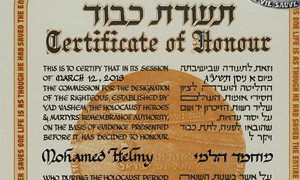
There are, of course, those non-Jews who show love to Jewish people, even at great risk to themselves such as an Arab family protecting Jews during the Holocaust. Given the current world-wide criticism of Israel (and by inference all Jewish people) relative to Hamas and its terrorist attacks (and Israel’s response), it may come to a point, even very soon, when any non-Jew who supports the Jewish people will risk at least a verbal or print backlash if not actual violence. If not now, then eventually I believe it will come to that.

But what is it to love the Jewish people? Is it just a warm and fuzzy feeling? Is it giving money to Jewish causes and charities? Is it wearing t-shirts supporting the IDF? I suppose it could be all those things. But what about supporting Judaism?

What’s the difference between supporting Jewish people and causes and supporting Judaism? A big, fat, whopping one for some folks.

There are a lot of people in a great many religious venues who say they love the Jewish people. I’ve already mentioned Noahides and Evangelical Christians, but what about Gentiles in Messianic Judaism (Messianic Gentiles) and Gentiles in one of the expressions of the Hebrew Roots movement (One Law/One Torah, Two House, Sacred Name, and so on)?

That can get a little more dicey. Relative to Hebrew Roots, there, I believe, is an authentic love of the Jewish people and national Israel, but sort of a love-hate relationship with Rabbinic Judaism (no, there isn’t any other kind, even Messianic Judaism is Rabbinic Judaism). There’s a love of Torah as it is understood, and a love of the “roots of our faith” which is usually expressed in some sort of modern Jewish religious practice (wearing a tallit and kippah, praying from a siddur in Hebrew, reading from the Torah, practicing a form of Shabbat rest, and so on), but there is also often a disdain for Talmud, for the authority of the Sages in ordering how to perform the mitzvot, and how Torah is continually interpreted and reinterpreted across time to apply to later generations.

I was re-reading Dr. Rabbi Stuart Dauermann’s article The Problem With Hebrew Roots, or, It’s Good to be a Goy. It actually kind of reminded me of something Aaron Eby said on this Vine of David video about the unique calling of the Messianic Gentile:

We at Vine of David have composed an alternate form of the second paragraph of Kiddush for Messianic Gentiles that reflects their unique identity and relationship to the Sabbath. The blessing was culled from the most ancient strata of the prayers of early believers. This form of Kiddush is affirming, beautiful, and ancient, and represents a radical rebound from centuries of replacement theology. Messianic Gentiles would do well to use such prayers in order to instill in their children a sense that their identity and mission as Messianic Gentiles are important and meaningful.

jewishThe identity structures of Messianic Jews and Messianic Gentiles is, by definition, complementary and even vaguely reminiscent of the relationship between Orthodox Jews and Noahides in the synagogue.

However, the latter relationship can’t really be compared to the former, because in the former, at the end of the day, we are all disciples of the Master and we all share equal co-participation in the blessings of the resurrection and the life in the Messianic Age in accordance with the same covenant, the New Covenant. Of course there’s also differentiation because Jews additionally come under the Sinai Covenant, but relative to Noahides and Judaism, they have no common Covenant relationship with God at all.

That complementary relationship between Jew and Gentile in Messiah requires mutual respect, which includes respecting each other’s space. A comment and R. Dauermann’s response on his aforementioned blog post drew my attention:

Glenn – July 31, 2014
Splendidly written, Stuart! It is so in concert with Paul’s exhortation in 1 Cor. 7, and the larger message of Isaiah 56.

But I am a bit perplexed. On the very principle you articulate, shouldn’t we absolutely discourage the practice of converting Gentiles to Messianic “Jews”? It was my understanding that you support such conversions.

As always, thanks for your time!
Glenn

Stuart Dauermann – August 2, 2014
Well, Glenn, I so much appreciated your question that I devoted another blog to it. See it here: http://www.interfaithfulness.org/?p=2040

So I visited the link R. Dauermann posted, which led me to an article called Conversion, Yes; Confusion, No.

While Dauermann actually supports Gentile conversion specifically within Messianic Judaism on very rare occasions, he also made a number of statements relevant to the point I’m trying to make:

The problem nowadays is that Gentiles are being made to feel like second class citizens, or feel themselves to be second class citizens in the Kingdom of God because they are not Jewish. This is WRONG! Gentiles are NOT second class citizens and in no manner whatsoever do they or can they improve their citizenship in the Kingdom of God through “discovering their Jewish roots,” through deciding they are part of the lost tribes of Ephraim and Manasseh, or any such thing. In other words, not only are Gentiles not second class citizens, they also do not become in some manner super-citizens through discovering or creating some sort of Jewish identity.

This is pretty common of Christians who, for whatever reasons, have left formal church attendance and entered some form of Messianic Judaism or Hebrew Roots. I’ve attended some Hebrew Roots groups that were downright disrespectful of Christianity and used quite abusive language when referring to Churches. There was a real drive to do anything possible to separate themselves from anything having to do with “the Church” (i.e. “Babylon” or a thousand other insulting labels).

Beth Immanuel ShavuotAlong with that need to separate was the requirement to create a new identity, but since Judaism is the general template for Hebrew Roots, any statement that pointed to Jewish exclusiveness in the covenants tended to elicit two related reactions: a feeling of inferiority and a response of hostility (I should point out here that not all Hebrew Roots people exhibit this dynamic, particularly the Hebrew Roots congregation in which I once worshiped, but it’s been sadly common in my previous experience with other people and groups I’ve encountered). As R. Dauermann pointed out, Gentiles are not inferior to Jews. I’ve read many (non-Messianic) Jewish commentaries stating that Jews do not (ideally) see themselves as better or superior to Gentiles, just different.

The same is true in Messianic Judaism. The distinctions particular to Jews are not really rights so much as responsibilities and duties. Think how much more difficult it is to attend to the mitzvot as a Jew than those duties assigned to the Gentile in Messiah (Christian in Jesus). Is faith in Jesus supposed to be about our “rights?” Does God owe us rights? Does He owe us anything?

Even Paul called himself a slave (see Romans 1:1 for example). He didn’t complain about his rights.

Many people act like the Torah is a book they may apply any way they choose, and that by doing so, they are being more faithful to God than those who do not bother to do so. Some even imagine that by doing so, they become in some manner Jewish. Such people are naïve and in error.

The Torah is not a book we happened to find and which we may interpret as we choose, but rather it is the national constitution of a people. It must be understood as the community property of the Jewish people, and must be understood and interpreted in keeping with millennia of Jewish discussion and practice. It is not like the Koran, which allegedly came down entire from heaven, or like the Book of Mormon, allegedly found on golden plates hidden in the Hill Cumorah in Palmyra, New York. No, Torah is the way of life of the Jewish people, it enshrines the decorum appropriate to the Jewish people as a Kingdom of Priests and a Holy Nation, the way of life appropriate to this people serving in the courts of the King of Kings.

-R. Dauermann

This is where love of Jews and love of Judaism, particularly the Judaism(s) observed within the context of Messiah, begins to separate for some.

In my opinion, being a disciple of the Master and attaching ourselves to the God of Israel is not a matter of rights but a matter of service. We have duties and obligations and we have unique roles and identities that define those obligations. God made us who we are, and although He gave us free will, He didn’t give the leopard the ability to change his spots.

Nevertheless, each person should live as a believer in whatever situation the Lord has assigned to them, just as God has called them. This is the rule I lay down in all the churches. Was a man already circumcised when he was called? He should not become uncircumcised. Was a man uncircumcised when he was called? He should not be circumcised. Circumcision is nothing and uncircumcision is nothing. Keeping God’s commands is what counts. Each person should remain in the situation they were in when God called them.

1 Corinthians 7:17-20 (NASB)

And by “Keeping God’s commands is what counts,” my interpretation is keeping the commands as they apply to the person, which isn’t the same for a Jewish believer as it is for a non-Jewish believer.

As both R. Dauermann said on this blog and Dr. Mark Nanos said in a recent paper, while Paul generally opposed Gentiles in Messiah converting to Judaism, he didn’t absolutely forbid it. He just felt (and rightly so) that converting to Judaism would not have any sort of impact on the person’s justification before God. You don’t become a better person by converting to Judaism, you just become Jewish.

If you feel a strong need and desire to live as a Jew and to observe the mitzvot as a Jew, then conversion is probably the right thing for you (there are a lot of other factors to consider that are beyond the scope of this blog post, but it’s not as simple as all that).

Restoration
Photo: First Fruits of Zion

However, as I mentioned, conversion isn’t necessary to serve God, because God expects the whole world to serve Him, both Israel and the nations. How we serve God is dependent on who we are, Israel or the nations. Rejecting this definition is where you may feel you love Jewish people and Israel, but it actually means you’re rejecting how they define themselves and frankly, you’re rejecting how God defines the Jews and Israel.

Judaism isn’t perfect, but it can be argued that Judaism, that is Rabbinic Judaism including Mishnah, Talmud, halachah, and the whole meal deal is what God gave the Jewish people to enable them to survive the last two-thousand years of exile, and to make it possible to re-establish the modern state of Israel.

You can’t love the Jewish people and the nation of Israel and also throw the Rabbis and their volumes of Talmud under a bus. You can’t say “I love you but I deny you the right to define yourself.”

That isn’t love. I don’t even know what to call that sort of behavior.

If it’s a mitzvah for a Christian and/or Messianic Gentile to love the Jewish people and Israel, you can’t hate Judaism at the same time. You can’t hate someone’s identity as it was assigned to them by God but say that somehow, you love that person anyway.

I know the people who need to hear this the most will reject it out of hand, but this message is the natural and logical extension of exploring the mitzvah of loving Jews. In order to love the Jewish people, we cannot hate ourselves. The mitzvah of loving our neighbor as we love ourselves (Lev. 19:18; Matthew 22:39) means we must love both our neighbor and ourselves. If we hate being a Gentile because we think (or have been taught) that it is inferior or pagan or some other ridiculous thing, then we have no basis or platform for loving someone else, anyone else, really.

Love starts with loving God (Deut. 6:5; Matthew 22:37), then (in my opinion), loving ourselves as God made us since we are created in His image (Gen. 1:27). Only then, realizing that God loves us with a powerful love and realizing we are lovable just as we are (which in my case is a Gentile), can we love another person. Only then can we love a Jew because God made the Jew just the way he or she is including the Jewish person’s covenant identity, which includes unique roles and responsibilities.

Once you are confident in God’s love for you, no matter who you are, then you have no reason to feel inferior to someone else and you should have no desire to covet their status and assume that it is your “right” to do so.

It’s only at that point where you are capable of fulfilling the mitzvah as a Gentile disciple of the Master of loving the Jewish people, Judaism, and Israel. God loves them. So should we.

What I Learned in Church Today: God Suffers Our Pain With Us

Today in church (as I write this), Pastor preached on Acts 27:1-12 and Paul’s rather “stormy” trip toward his final destination (in more ways than one) Rome. What I found most useful in today’s sermon were the notes at the conclusion. Normally, this part of the sermon doesn’t “float my boat” since these notes are usually an attempt to take ancient events, spiritualize them, and anachronistically apply them to everyday life in 21st century America.

But this time, I decided to see if these notes could be applied to my life. There are three of them.

Do you believe that God is sovereign over all the storms in your life?

As opposed to what? No, really. As an abstract concept believing what I believe about God, my immediate answer has to be “yes,” but it’s more complicated than that. It’s one thing to say that “God is in control” and that “we win in the end,” and another thing entirely to receive a diagnosis of cancer (no, I don’t have cancer) or that your child was in a serious car accident and is in ICU (don’t worry, my kids are all fine).

Then, no matter how much you “think” God is sovereign over every single detail of your existence, suddenly the pit of your stomach drops out and at least momentarily, panic sets in with the vengeance of a really angry Grizzly Bear. Sure, given enough time, you can regain your emotional equilibrium and refocus on God, but for those first few seconds or minutes (or longer), unless you are a terrifically spiritual person and always totally in tune with God, you’re going to lose it.

Here’s the first thing I wrote down in my notes when Pastor asked the question:

Yes, but that doesn’t mean I still won’t drown.

Here’s the second thing I wrote down.

We don’t have an absolute view into God’s plans for us as individuals.

God can be absolutely sovereign over the storms in our lives and we can still lose a leg in a car crash. We can still end up with a child in intensive care. We can still die a long, lingering, painful death.

God’s sovereignty contains no guarantee at all that our lives won’t be painful and end tragically. When we think of God being “in control,” we really mean that God would never let anything bad happen to us. But just look at Paul’s life. God let everything bad happen to Paul.

But the key is, no matter what happened, Paul still served God faithfully, with an almost supernatural focus (I’m being slightly tongue-in-cheek here) on Yeshua (Jesus) as the author of his faith and the “perfecter” of his existence, both in this world and the one beyond.

Which brings us to Pastor’s second question:

What are you doing to learn to trust God in the storms of life?

I remember a scene from the film Finding Nemo (2003). Dory (voiced by Ellen DeGeneres) and Marlin (voiced by Albert Brooks) are inside of a whale, basically hitching a ride to Sydney, Australia. The water inside the whale starts to drain. As usual, Marlin senses disaster while Dory is willing to trust. Marlin is hanging onto some part of the whale’s insides to keep from falling back into the throat. Dory translates the message from the whale.

It’s time to let go.

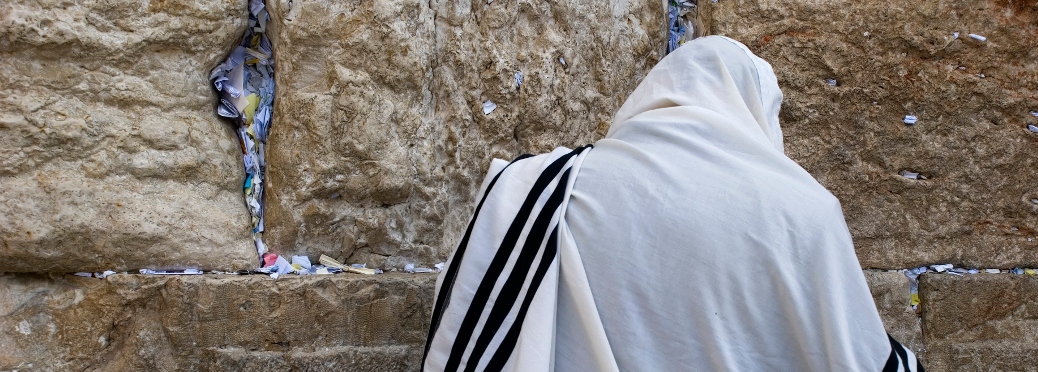
praying at the kotelI think that’s what trusting God is about, but it’s best to learn to trust him before your life turns to dog poop. While you still have the time, pray with an especially focused Kavanah for an encounter with God. Strive to draw nearer to Him and plead that He reveals Himself to you before you need Him. I promise that if you don’t do this now, you will be doing it once you need God’s help more than anything you’ve ever needed in your life.

Last question:

Do you realize that God is able to use the storms in your life to give guidance to others?

As first, I didn’t read the to give guidance to others part and just saw the question as asking if I realized God could use the storms in my life. Then I realized what was really going on.

Had they trusted in God and followed Moshe, the entire nation would have gone into Eretz Israel led by him. The Holy Temple would have been built, never to be destroyed; the people would have sat, every man under his grape vine and under his fig tree, never to be exiled; and the still longed for, final redemption under God’s chosen anointed would have come. But they didn’t trust and they didn’t obey. So the exodus from Egypt remained eternal, but the entry into the Land was to be transitory.

-Rabbi Meir Zlotowitz
Megillas Eichach (Lamentations), pg 34

If all of the twelve spies Moses sent into Canaan (Numbers 13, 14) had given a positive report instead of just two, obeyed Moses, and obeyed God, the history of Israel would have been written quite differently.

But they didn’t and history unfolded as it did.

The same is true of Israel in the days of Jesus:

“Jerusalem, Jerusalem, who kills the prophets and stones those who are sent to her! How often I wanted to gather your children together, the way a hen gathers her chicks under her wings, and you were unwilling. Behold, your house is being left to you desolate! For I say to you, from now on you will not see Me until you say, ‘Blessed is He who comes in the name of the Lord!’”

Matthew 23:17-39 (NASB)

If Israel had repented in the days of Herod’s Temple, Yeshua would have initiated the Messianic Kingdom immediately, the Romans would have been defeated, the Temple would have been preserved, there would have been no exile, and King Messiah’s reign of peace, mercy, and justice over all of the world would have started and be with us to this very day.

But they didn’t, and untold suffering has resulted.

In the 1982 film Star Trek II: The Wrath of Kahn, Admiral James T. Kirk (William Shatner) gave this sage piece of advice to Lt. Saavik (Kirstie Alley):

How you face death is at least as important as how you face life.

Regardless of how God provides and what God allows and how God disciplines, your circumstances are less important than how you respond to them. Consider how Israel is responding, not to just all of the rockets Hamas keeps throwing at her, but how the rest of the world is mistreating Israel, believing she is disproportionately responding to these terrorist acts simply by defending herself.

The whole world is watching Israel and waiting for her to blink. So it is true when anyone who professes faith in Christ, especially when we are under duress.

Fortunately, Pastor said that he’s hardly perfect in this area and that there have been plenty of occasions when he’s been stressed and yet taken it out on his family rather than having greater trust in God. There’s a sort of myth, both inside the Church and outside of it, that says when a Christian is having a particularly tough time of it, he or she should be completely calm if their faith in Jesus is solid. Only a failure of faith results in a Christian who cries or yells or begs.

Like I said, it’s a myth.

Father, if you’re willing, take this cup from me…

Luke 22:42 (NASB)

This is Jesus at Gethsemane pleading with God the Father to take away the cup of his crucifixion, his agony, his desperate suffering from him.

This is Jesus saying this. This is Jesus not wanting to suffer. This is Jesus acting just like the rest of us. But the second half of the sentence tells the tale.

…yet not my will but Yours be done.

But he still begged. Flesh and blood, human right down to his DNA Jesus still begged that the cup be taken from him.

There’s no shame in anguish as long as there’s also trust.

Because of the surpassing greatness of the revelations, for this reason, to keep me from exalting myself, there was given me a thorn in the flesh, a messenger of Satan to torment me—to keep me from exalting myself! Concerning this I implored the Lord three times that it might leave me. And He has said to me, “My grace is sufficient for you, for power is perfected in weakness.”

2 Corinthians 12:7-9 (NASB)

If Jesus wasn’t immune, certainly Paul wasn’t either. How many of his Psalms did David dedicate to his own pain and suffering, withering before a Holy God with his flesh melting and his bones turning to dust?

Save me, O God,
For the waters have threatened my life.
I have sunk in deep mire, and there is no foothold;
I have come into deep waters, and a flood overflows me.
I am weary with my crying; my throat is parched;
My eyes fail while I wait for my God.
Those who hate me without a cause are more than the hairs of my head;
Those who would destroy me are powerful, being wrongfully my enemies;
What I did not steal, I then have to restore.

Psalm 69:1-4 (NASB)

We struggle all our lives between our faith and our humanity, between Divine glory and human weakness. The spirit is willing but flesh…oh the flesh is very weak. Even the best of us, when put to the test, are like a snow cone in a blast furnace.

anguishTo know that God is sovereign and to trust in Him in adversity doesn’t mean you have to be superhuman and it doesn’t mean you don’t get scared. It means when 99% of you is in full panic mode, some tiny voice in the back of your consciousness is still crying out to God, not in terror but in faith, that even if you should drown or be incinerated in the next half-second, if you are not supposed to live (in this life) with God, then you will certainly die in His Presence and live with Him in the resurrection.

Living with God in suffering is like being a terminally ill child. You know you are going to die and you know your Mom and Dad love you very much. But you also know they can’t save your life. You’re still scared and you still don’t want to be away from them, but you know as long as they love you, you’re not alone.

God’s sovereignty in our lives when we suffer doesn’t (necessarily) mean God will stop the suffering. It means He will never abandon us as we are suffering and in some sense, He suffers, too.

The night when hope was enveloped in darkness was about to begin, so God came to Jacob ‘in the visions of the night’ to show him that Jews might be exiled from their land, but they could never be exiled from their God.

-R. Zlotowitz, pp 46-7

When they were exiled to Babylon, the Divine Presence was with them.

-Megillah 29a

And so He is with us.

Christians and Tisha B’Av

…Should I weep in the fifth month [Av], separating myself, as I have done these so many years?

Zechariah 7:3

In the fifth month, on the seventh day of the month …came Nebuzaradan … and he burnt the house of the L-RD…

II Kings 25:8-9

In the fifth month, on the tenth day of the month… came Nebuzaradan … and he burnt the house of the L-RD…

Jeremiah 52:12-13

Tisha B’Av, the Fast of the Ninth of Av, is a day of mourning to commemorate the many tragedies that have befallen the Jewish people, many of which have occurred on the ninth of Av. Tisha B’Av means “the ninth (day) of Av.” It occurs in July or August.

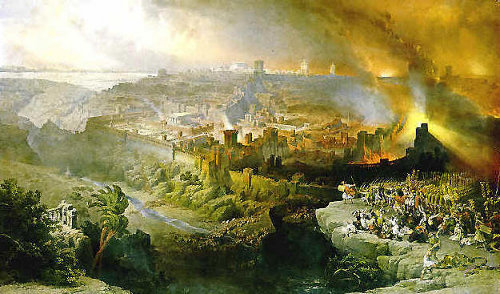
Tisha B’Av primarily commemorates the destruction of the first and second Temples, both of which were destroyed on the ninth of Av (the first by the Babylonians in 586 B.C.E.; the second by the Romans in 70 C.E.).

Although this holiday is primarily meant to commemorate the destruction of the Temple, it is appropriate to consider on this day the many other tragedies of the Jewish people, many of which occurred on this day, most notably the expulsion of the Jews from Spain in 1492 and from England in 1290.

-from Judaism 101

Sometime before May of 2011, as chronicled on my former blog, I significantly reduced many activities that I had erroneously believed were my obligation to Torah observance. Not that my observance was performed with any sort of accuracy as an observant Jew might consider it, but at one time in my life I made the mistake of thinking that Jews and Jesus-believing Gentiles were assigned identical obligations to God and for all intents and purposes, a homogenous identity.

All that changed over the period of about a year and one of the primary motivators of that change was me watching my Jewish wife integrate into the local Jewish community across two synagogues and into her exploration of who she is as a Jew.

I realized that by attempting to “mimic” Jewish observance and behavior, I was diminishing my wife in her Jewish identity and diminishing the special chosen status the Jews have received from God.

Which left me with the question of just how much Jews and Christians can and should share, at least relative to Messianic Judaism but ultimately as an act of interactive fellowship between all Christians and all Jews.

And that brings me to Tisha B’Av or the ninth day of the month of Av on the Jewish religious calendar. You can click the link posted in the last sentence as well as the Judaism 101 link to learn more about this event and the weeks leading up to it.

The question is, can I or should I fast on Tisha B’Av? What is the purpose of a non-Jew fasting on a day of Jewish mourning? I’m sure the question has been asked so I went searching for questions and answers.

QUESTION: Is it OK for a Noahide to fast on Tisha B’Av? [The 9th/Tisha of the Hebrew month of Menachem Av, when Jews observe total fasting for about 24 hours and 40 minutes, as part of their traditional mourning on this anniversary of the destruction of both the first and the second Holy Temples in Jerusalem. When the 9th falls on the Seventh Day as in this year, the fast is pushed off 24 hours, and starts on Saturday night.]

ANSWER: It would seem that if a Noahide would make a full observance of all the Jewish precepts of Tisha B’Av, he would be making a religiously-observed memorial day for himself, which is like innovating a religious observance, which is forbidden.

Rabbi Moshe Weiner, author of Sefer Sheva Mitzvot HaShem, says that the only point upon which an individual Noahide could justify fasting is that he is mourning the temporary (but far too long) destruction of the Holy Temple and the exile of the Divine Presence. Since this is a permitted activity, it depends on his intention.

-from “Remembering the destruction of the Temples”
AskNoah.org

rainbow-forestYou may think it strange that I started looking for answers by exploring the propriety of a Noahide (a Gentile who observes the Seven Noahide Commandments [see Genesis 9] and is considered a “righteous Gentile” from a religious Jewish perspective) observing the fast. After all, I previously explored the idea of a Christian also being seen as a “righteous Gentile” and found, with rare exception, that the two states are incompatible.

But since this question (and many others like it) has probably been considered by the various branches of Judaism for hundreds of years or more, why not seek out their viewpoint? After all, it is a Jewish commemoration.

I only quoted from part of the article, but as you can see, it’s not considered obligatory for a Noahide to observe the fast or any of the other customary events leaving up to the actual fast day.

While a complete fast is discouraged, there are other recommended behaviors that are thought appropriate according to the Ask Noah Rabbi:

You can certainly increase in deeds of goodness and kindness for others, especially in giving donations to proper charities (which are not in conflict with Torah laws or morals)

Certainly a Noahide is encouraged to pray that the Third Holy Temple shall be established by Moshiach ben David very speedily in our days. And it very appropriate for a Noahide to read the Book of Lamentations on the night and/or day of Tisha B’Av.

The Rabbi also recommended the traditional reading of the Book of Job.

Rabbi Qury Cherki at the Noahide World Center has a similar opinion:

There are no commandments binding on a Noahide on the Ninth of Av. Any actions that he or she takes are completely voluntary. Anybody who decides to fast, or to read the Book of Lamentations or the Wars of the Jews and the Romans by Josephus, will be blessed for compassion.

The same is true of other restrictions, such as not listening to music, not greeting other people, and not using makeup. All such practices are copied from the obligations of Israel and are voluntary for Noahides. Children should not be told to fast.

Noahides can also decide on their own conditions. For example, they might allow themselves a partial fast by drinking but not eating any food. They can freely choose their own conditions.

This commentary seems a bit more relaxed than the “Ask Noah” opinion but it ultimately centers on any action the Noahide takes in response to Tisha B’Av being completely voluntary and a blessing for compassion.

churchBut what about Christians? Since the Church has been the source of much Jewish misery over the long centuries, would it be considered forbidden for a Christian to participate, or would it be (perhaps) considered an obligation as a matter of Teshuvah? If we have caused Jewish suffering, should we now, as an act of repentance, share in Jewish mourning?

It’s not easy to find anything online about Christianity and Tisha B’Av. I did manage to locate a letter written by Rabbi Yechiel Eckstein posted at the International Fellowship of Christians and Jews. It’s addressed “Dear Pastor and Friend of the Fellowship,” so the audience is generically Christian. The letter seems educational in nature and is more advice to a Pastor on how to explain the Jewish significance of Tisha B’Av to Christian congregations.

R. Eckstein ends his letter:

It is my hope that these materials will help you gain greater insights into the Jewish roots of the Christian faith and understand the significance of Tisha b’Av.

I thank you for your continued interest and partnership in building bridges of understanding between our two faith communities.

May God bless you richly as you and your congregation continue to study His word.

The Christian Broadcasting Network posted an article by John Parsons of Hebrew for Christians Ministries entitled Tishah B’Av: Remembering the Destruction of Zion, but that too was an informational piece with no specific recommendations for Christian observance of the fast.

Which brings me to First Fruits of Zion’s (FFOZ) article The Affliction of Av.

This day holds intense significance for the Jewish people, but what about Christians, the followers of Messiah? Should believers mourn as well? Yes, we more than anyone else.

This is the first and only affirmation I could find (granted, my search was hardly exhaustive) that Christians not only could but should observe the fast. The article continues to conclusion:

The afflictions of Tisha b’Av were not just limited to the days of the Bible. Tisha b’Av has continued to be an ominous day for the Jewish people throughout their history. Sadly, many of these tragedies have been at the hands of “Christian” rulers, popes, and angry mobs. Whether by crusades, inquisitions, pogroms, or blood libels, so-called followers of Yeshua have tortured, burned, and murdered Jews. In so doing, these “Christians” have maligned the name of the Master and blasphemed His character.

But though some of these tragedies may seem like ancient history, “Christian” persecution is still fresh in the collective mind of the Jewish people. Given that fact, perhaps Tisha b’Av should become a Christian tradition as well. We must continue to rid our congregations of the sin of anti-Semitism in whatever form it takes, whether in thought, speech, or theology.

Once again, tzom kal – May you have an easy fast.

If the Church can be said to be obligated at all to the observance of Tisha B’Av, repentance for our historic (and maybe more modern) crimes against Israel, Judaism, and the Jewish people is the reason. Beyond Teshuvah is fasting as an act of compassion and solidarity. From a Christian and Messianic point of view, we are all looking to a future time when Messiah comes (returns) and rebuilds the Temple in Jerusalem, defeating Israel’s enemies, and bringing a lasting peace to the entire world for all nations…for Jews and Gentiles alike.

Each of them will sit under his vine
And under his fig tree,
With no one to make them afraid,
For the mouth of the Lord of hosts has spoken.

Micah 4:4 (NASB)

fall-of-jerusalemYesterday, I posted both a blessing and a cautionary tale about praying for the peace of Jerusalem or, conversely and even fatally, failing to do so. I believe Christians are commanded to pray for Israel’s shalom as a matter of aligning ourselves with the will of God for the Jewish nation and all of her people. In that light, I can see Christian observance of Tisha B’Av on some level to be obligatory as well. That most church Pastors and their congregations know nothing at all of Tisha B’Av may be a tragedy and a crime. Could it also be a sin?

As I write this, it is the first day of the month of Av, which begins the Jewish observance of the Nine Days leading up to the fast day. You can also learn a lot more about the three weeks leaving up to Tisha B’Av at Chabad.org.

This year, Tisha B’Av begins just before sundown on Monday, August 4th and ends about forty minutes after sundown the following day, Tuesday the 5th.

If you are Jewish and reading this and you don’t have a practice of fasting on Tisha B’Av (unless for a medical reason) I encourage you to strongly consider participating in the fast as a matter of community with all of Jewry, your brothers. If you are a Christian, from a traditional Jewish point of view, any observance of Tisha B’Av is completely voluntary and you are free to not observe the fast at all. However, the reality from a Messianic point of view (and who is to say this isn’t God’s point of view as well) is that observing Tisha B’Av can be seen as an obligation for Gentile Jesus-believers as both a matter of repentance and compassion.

This could be akin to that portion of Psalm 122 which pronounces prosperity for anyone who prays for the peace of Jerusalem and who loves the Holy City, as well as to Genesis 12 which announces blessings for those who bless Israel and curses for those who curse her.

Thus not only should we pray for Israel’s peace but we should also mourn with her in her loss.

“Be joyful with Jerusalem and rejoice for her, all you who love her; Be exceedingly glad with her, all you who mourn over her…”

Isaiah 66:10

“He who does not mourn over the Destruction of Zion will not live to see her joy.”

-T. Bab Bathra, fol. 60. 2. & Caphtor, fol. 118. 2.

RestorationOur hope as Christians is in the return of the Messiah and the resurrection in the New Covenant age when Jerusalem will be rebuilt and Israel will raised as the head of all the nations. Jerusalem will be in her uttermost joy, but according to Jewish tradition, those who do not mourn for Zion now will not be alive in the Messianic future to receive her joy. This is commentary on both Isaiah 66:10 and Genesis 12. This is a warning to all believers who still embrace hatred of Israel in their (our) hearts.

May God grant wisdom and compassion to His worshipers among the nations, and may He teach us to weep bitter tears over the fallen Temple, so that we may sing with joy when Messiah raises the Mikdash, the Holy Temple, again.

What I Learned in Church Today: Pray for Jerusalem

I was glad when they said to me,
“Let us go to the house of the Lord.”
Our feet are standing
Within your gates, O Jerusalem,
Jerusalem, that is built
As a city that is compact together;
To which the tribes go up, even the tribes of the Lord—
An ordinance for Israel—
To give thanks to the name of the Lord.
For there thrones were set for judgment,
The thrones of the house of David.
Pray for the peace of Jerusalem:
“May they prosper who love you.
“May peace be within your walls,
And prosperity within your palaces.”
For the sake of my brothers and my friends,
I will now say, “May peace be within you.”
For the sake of the house of the Lord our God,
I will seek your good.

Psalm 122 (NASB)

Not that the sermon wasn’t good or the Sunday school class wasn’t stimulating, but this is the best thing I learned in church today (yesterday as you read this). Pastor Randy returned from being away for several weeks in California and led the congregation in an impassioned prayer for Israel in these trying times. Randy lived in Israel for fifteen years and still has many Jewish friends there. One of his friends calls Randy every three days or so and gives him an update on what is really happening there, events you’ll never see reported on CNN or MSNBC.

The Iron Dome missile defense is working but when a missile was intercepted directly over the home of Randy’s friend, they heard the loud explosion followed by the rain of shrapnel hitting the roof. The missile alarms go off daily prompting everyone to go to the shelters.

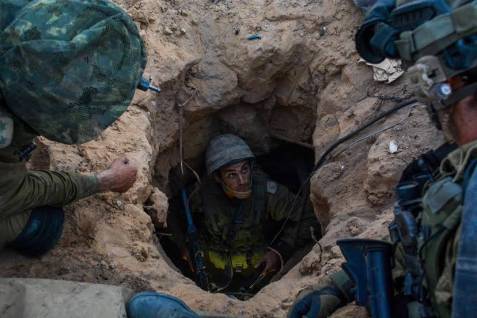
The friend’s adult age daughter’s boyfriend is an officer of an elite ground unit in the IDF. This officer was leading his men (in the IDF officers don’t tell soldiers to go and do something while sitting back, they always say “follow me” and then lead their troops) through one of the thirty-eight known Hamas terrorist tunnels in Gaza when a booby trap bomb blew up literally in his face.

The three men behind him died but amazingly, this man survived. A number of bones on his face were broken, bomb fragments are in both eyes, and he’s lost the hearing in one ear.

He will regain his sight eventually but will always be partially deaf.

Randy was insistent that we must pray for the peace of Jerusalem. He also said this:

And I will bless those who bless you,
And the one who curses you I will curse.

Genesis 12:3 (NASB)

Not only did Randy speak of blessings but of curses, and he even invoked these curses against all of Israel’s enemies.

He also recited Psalm 122:6 in Hebrew and wished we could read and speak it in Hebrew as well:

שַׁאֲלוּ, שְׁלוֹם יְרוּשָׁלִָם

Remember the second half of that verse:

May they prosper who love you…

Which strongly implies the opposite to those who hate Jerusalem.

terror tunnel discoveredFrom my point of view, loving Israel and cherishing Jerusalem is a “no brainer,” but after all, my wife of over thirty years is a Jew and I have learned a deep-seated compassion for the nation and the people whom God has called His “priests” and the “apple of His eye”.

I also consider it spiritual suicide to not love Israel for in the end, God Himself will defend her against all of her enemies in war, which sadly I fear, includes the nation in which I live.

This topic wasn’t supposed to spill over into Sunday school class but when Charlie was asking for prayer requests, I mentioned that Randy fulfilled my typical request in a much better way than I ever could. That started a discussion and one fellow, who tends to have a “sparky” temper at times, inserted the “there are two sides to every story” argument.

I didn’t mind, and in fact I agreed with him, when he said that the Arab non-combatants in Gaza are as much victims of Hamas as the Jewish Israelis, but he then downgraded Israel and her current Jewish population saying they are guilty of doing many wrongs as well.

I can’t speak for the actions of every individual in Israel, but I can see that God didn’t promise to fight off the enemies of the “Palestine,” He will defeat the enemies of Israel. To stand against Israel now, even in the slightest degree, isn’t only standing on the wrong side of history, it’s standing on the wrong side of God.

I wasn’t the only one to come to Israel’s defense in class, and shortly afterward, this fellow seeing “both sides” got up and left, followed a minute or so later by his wife.

I actually feel bad about that because on many other levels, this person does love Jesus and sincerely serves him (he just returned with a group from our church who went on a short-term missions trip to the Philippines and Thailand). It’s just that so many Christians are blind as to the true focus of Christ’s love and what Jerusalem means to him.

I mentioned before that I thought John MacArthur’s current battle against the Presbyterian Church (U.S.A.) over PCUSA’s support of “marriage equality” was something of a Red Herring, not because MacArthur isn’t sincere (he’s always sincere), but because the center of God’s attention is always Israel.

This isn’t to say that missions trips or the many other fine endeavors of the Church are “Red Herrings,” but we can’t let all of these other activities make us take our eye off the ball, so to speak, lest we lose the prosperity that comes of loving Jerusalem and praying for her Shalom.

The rest of the world, and particularly Europe, are attacking the Jews over perceived Israeli injustices in Gaza. Sometimes those attacks include physical assaults against Jewish people. How long before European nations start marshalling their armies and physically attack the nation of the Jews: Israel?

Here in America, we have lost our way as well and can no longer see the moral chasm between Israel and Hamas (that last link leads to an article written by General James T. Conway, who retired in 2010, and was the 34th commandant of the U.S. Marine Corps). Most of us, including many in the Church, swallow the anti-Israel, anti-Jewish propaganda being pumped at us by the mainstream news media as well as social media venues. We pay attention to secular “wisdom” and abandon the Word of God. More’s the pity.

IsraelRandy said that in the days of the Temple, many of the songs of ascents would be sung by those who were going up to Jerusalem, to the House of the God of Jacob, He asked us to imagine going up the steps with Psalm 122 on our lips. Imagine the Levitical priests singing the songs as you entered the Temple court. Imagine the anticipation, the grandeur, the beauty, the thrill of approaching a tangible encounter with God in the only place in the world He has placed His Name.

I reminded my Sunday school class that in modern Judaism, you can pray the Psalms for different occasions. This is a good occasion to pray Psalm 122 for the peace of Israel.

Pray for the peace of Jerusalem; those who love you will be serene. May there be peace within your wall, serenity within your palaces. For the sake of my brethren and my comrades, I shall speak of peace in your midst. For the sake of the House of Hashem, our God, I will request good for you.

Psalm 122:6-9 (Stone Edition Tanakh)

“Come, I will show you the Bride, the wife of the Lamb.” And he carried me away in the Spirit to a great, high mountain, and showed me the holy city of Jerusalem coming down out of heaven from God…

Revelation 21:9-10 (ESV)

One last cautionary note. Verse five of Psalm 122 says, “For there sat thrones of judgment.” There will be a judgment against those who do not seek Israel’s peace. Choose a blessing and not a curse. Choose life.