Tag Archives: Jerusalem

Remembering Jerusalem

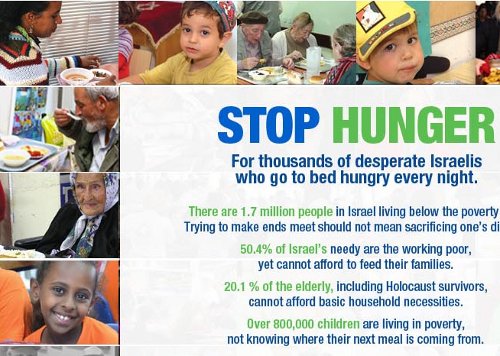
poor-israel…and when James and Cephas and John, who seemed to be pillars, perceived the grace that was given to me, they gave the right hand of fellowship to Barnabas and me, that we should go to the Gentiles and they to the circumcised. Only, they asked us to remember the poor, the very thing I was eager to do.

Galatians 2:9-10 (ESV)

James, Peter, and John gave Saul and Barnabas “the right hand of fellowship.” They commissioned them to go to the Gentiles while they themselves continued to witness Messiah to the Jewish people. Saul says, “They only asked us to remember the poor – the very thing I also was eager to do” (Galatians 2:10). How should this single caveat be understood?

It does not mean the apostles laid upon the Gentile believers no greater obligation to Torah than the commandment of giving charity generously to the poor. Saul did not say, “Only they asked the Gentiles to give charity to the poor.” He said, “Only they asked us to remember the poor.” In this context, “us” must be Saul and Barnabas.

In his commentary on Galatians, Richard Longenecker identifies “the Poor” in Galatians 2:10 as a shorthand abbreviation for the longer title that Paul gives them in Romans 15:26, where he refers to them as “the poor among the saints at Jerusalem…” Saul and Barnabas were to remember the Poor Ones of the apostolic assembly of believers in Jerusalem: the pillars, the elders, the assembly of James and the apostles.

D. Thomas Lancaster
Torah Club, Volume 6: Chronicles of the Apostles
from First Fruits of Zion (FFOZ)
Torah Portion Va’era (“and I appeared”) (pp 362-3)
Commentary on Galatians 2:1-18, Acts 12:25

I’ve talked about charity very recently. It was less than two months ago that I discovered that some folks at the church I attend believe that Christians have a special duty to support the poor of Israel based on the following:

Then the righteous will answer him, saying, ‘Lord, when did we see you hungry and feed you, or thirsty and give you drink? And when did we see you a stranger and welcome you, or naked and clothe you? And when did we see you sick or in prison and visit you?’ And the King will answer them, ‘Truly, I say to you, as you did it to one of the least of these my brothers, you did it to me.’

Matthew 25:37-40 (ESV)

I was trying to describe this to my (Jewish) wife just the other day, but I’m not sure she believed me. It’s not typical behavior from many churches. On the other hand, as we see from Lancaster’s teaching on Galatians 2, there is a rather clear Biblical precedent for the Gentile believers to “remember” the poor of Israel.

OK, I know that according to Lancaster, James and the Apostolic council was telling Saul (Paul) and Barnabas to remember the poor of Israel, but look at the context. On the very heels of the council validating Paul’s mission to the Gentiles to bring them to covenant relationship with God through Messiah without requiring that the Gentiles convert to Judaism, and sending Paul and Barnabas back to the Goyim with their good graces, James, Peter (Cephas), and John added the caveat to remember the poor. How could that message then not be transmitted by Paul from the Apostolic council to the Gentiles in the diaspora?

Still don’t believe me?

Now concerning the collection for the saints: as I directed the churches of Galatia, so you also are to do. On the first day of every week, each of you is to put something aside and store it up, as he may prosper, so that there will be no collecting when I come. And when I arrive, I will send those whom you accredit by letter to carry your gift to Jerusalem.

1 Corinthians 16:1-3 (ESV)

We want you to know, brothers, about the grace of God that has been given among the churches of Macedonia, for in a severe test of affliction, their abundance of joy and their extreme poverty have overflowed in a wealth of generosity on their part. For they gave according to their means, as I can testify, and beyond their means, of their own accord, begging us earnestly for the favor of taking part in the relief of the saints…

2 Corinthians 8:1-4 (ESV)

Which “saints” do you think Paul was taking about?

It sure looks like Paul was imploring, directing, even commanding the Gentile churches in the diaspora to take up a collection to be used as a donation to the poor among the Apostolic community in Jerusalem, even from the poor among the Gentile churches.

poor-israel2I’m not trying to beat a dead horse, I’m trying to inspire some life in the one we have, but the one we often ignore, most likely through ignorance. I said just yesterday that we translate and interpret the Bible based on our traditions and theologies. The obligation of the Christian church to support the poor among Israel has fallen through the cracks of our creaky theology for nearly twenty centuries. It’s time to fix the floorboards, firm up the foundation, and take back the responsibility that we were given by the first Apostles and the men who walked with Christ.

This does not absolve us of our responsibility to the poor of the nations, the poor of our country, our city, within our neighborhoods and our own churches. But it opens the door in our lives and in our spirits to remember Jerusalem, to remember Israel, and God’s special covenant people, our mentors, and the root of our salvation.

If I forget you, O Jerusalem, let my right hand forget its skill! Let my tongue stick to the roof of my mouth, if I do not remember you, if I do not set Jerusalem above my highest joy!

Psalm 137:5-6 (ESV)

If you’re hard pressed to know where to begin, then consider visiting meirpanim.net, colelchabad.org, or chevrahumanitarian.org. That’s just for starters.

Vayeitzei: Entering the Sacred Space

Jacob left Beer-sheba, and set out for Haran. He came upon a certain place and stopped there for the night, for the sun had set. Taking one of the stones of that place, he put it under his head and lay down in that place. He had a dream; a stairway was set on the ground and its top reached to the sky, and angels of God were going up and down on it. And the Lord was standing beside him and He said, “I am the Lord, the God of your father Abraham and the God of Isaac: the ground on which you are lying I will assign to you and to your offspring. Your descendants shall be as the dust of the earth; you shall spread out to the west and to the east, to the north and to the south. All the families of the earth shall bless themselves by you and your descendants. Remember, I am with you: I will protect you wherever you go and will bring you back to this land. I will not leave you until I have done what I have promised you.” Jacob awoke from his sleep and said, “Surely the Lord is present in this place, and I did not know it!” Shaken, he said, “How awesome is this place! This is none other than the abode of God, and that is the gateway to heaven.” Early in the morning, Jacob took the stone that he had put under his head and set it up as a pillar and poured oil on the top of it. He named that site Bethel; but previously the name of the city had been Luz.

Genesis 28:10-19 (JPS Tanakh)

Jacob leaves his hometown of Beersheba and journeys to Charan. On the way, he encounters “the place” and sleeps there, dreaming of a ladder connecting heaven and earth, with angels climbing and descending on it; G‑d appears and promises that the land upon which he lies will be given to his descendants. In the morning, Jacob raises the stone on which he laid his head as an altar and monument, pledging that it will be made the house of G‑d.

“Vayeitzei in a Nutshell”
Commentary on Torah Portion Vayeitzei
Genesis 28:10-32:3
Chabad.org

According to Rashi’s commentary on Genesis 28:11:

“The place” is Mount Moriah (the “Temple Mount” in Jerusalem, where Abraham had bound Isaac upon the altar and where King Solomon would erect the Holy Temple).

Whether that is literally true that Jacob chose to spend that night on the Temple Mount or not, there’s no way to know, but it is correct according to Jewish tradition. It’s also fitting that my commentary for this week’s Torah portion should be on the site of the Temple, given the sermon I heard at church last week. I’m not so certain that Christians can grasp what the Temple (and its current lack of existence) means to the Jewish people, since the center of our religious lives is the Messiah and not Jerusalem.

Why do we call G-d Hamakom, “The Place”? Said Rabbi Jose ben Chalafta: We do not know whether G-d is the place of His world or whether His world is His place. But when the verse (Exodus 33:21) states, “Behold, there is a place with Me,” it follows that G-d is the place of His world, but His world is not His place.

-Midrash Rabbah

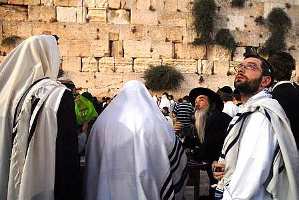
Tisha b'Av at the Kotel 2007While Christianity too has its own rich mystic tradition, Protestantism tends to shy away from any such thing, so how Jews, and particularly the Chassidic tradition tends to view God, Moses, the Torah, and the Temple, seem not just mysterious, but almost completely silly. It’s probably why one fellow in the last Sunday’s Bible study class referred to Orthodox Jews adopting a certain manner of dress and Jewish dedication to praying at the Kotel as “putting God in a box.” Tradition, ritual, and looking outside the literal (English) language of the Bible (ironically) seem to Christians as if Jews are restricting God rather than letting “God be God.”

Rabbi Tzvi Freeman wrote a commentary on Vayeitzei and the Temple called The Temple Mount as Sacred Space. Sacred space? Not a “sacred place?”

Torah generally talks in terms of dual systems: Heaven and Earth; G-d and Man; Creator and created; Nothingness and something. So if we want to get into fascinating territory, we can ask: Where do they meet and what happens there?

The first description of such a place was given by Jacob, the third of the three fathers of the Jewish people. On his way leaving the land of Canaan he slept at a place and dreamt of a ladder with messengers of G-d ascending and descending. When he awoke, he exclaimed, “Y-H-V-H (–we pronounce that ‘Havayeh,’ as the Torah instructs us not to pronounce the four letter name of G-d the way it is written; more about this name later–) is in this place, and I didn’t realize!” Once this realization had hit him, he trembled and said, “This place is awesome!” (The classic Aramaic translation reads, “This is not a normal place.”) And then, “This could only be the house of Elokim, and this is the gateway of heaven!”

According to the sermon I heard last Sunday, “Israel’s history has been characterized by limiting worship to a sacred place, rather than a sacred person.” This is worded as if Israel had made a mistake and venerated the Temple as an act of faithlessness somehow, but that ignores how some religious Jews view the Temple Mount as “sacred space.” Even a plain-text reading of  Genesis 28:10-19 seems to suggest that God wasn’t there with Jacob just because God is everywhere, but because the place where Jacob slept was somehow special, as if the geographic location held some sort of supernatural and mystic significance. Small wonder that Jerusalem has been the object of strife and envy for thousands of years.

There’s a portion of Nehemiah that directs the Israelites to march around the boundaries of Jerusalem, and during his sermon, Pastor Randy said that when he takes his tour group to Israel next spring and they visit Jerusalem, the group will obey this “commandment” and literally walk around the Holy City. But in Nehemiah 12:27-47, it records that Nehemiah divided his choirs of Levites to march around the city to dedicate the wall of Jerusalem.

Maybe I’m thinking of a different part of the Tanakh.

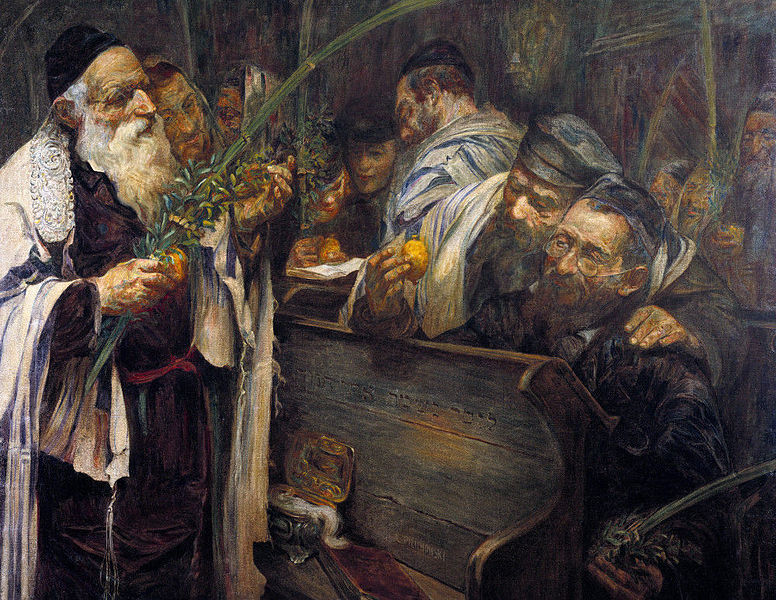
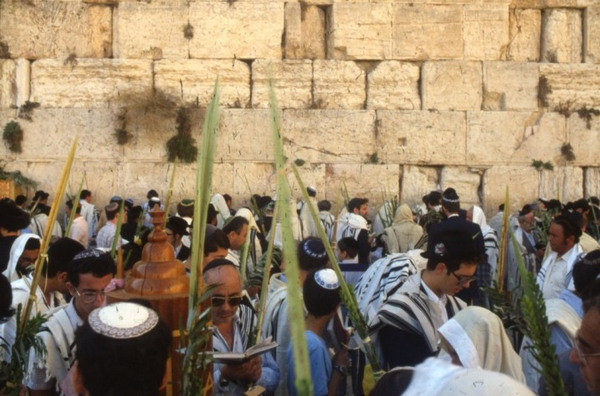
It’s traditional during Sukkot for Jews and Christians to march around Jerusalem’s walls. Jews also march around Jerusalem to commemorate many Jewish tragedies on the 9th day of Av (Tisha B’Av).

While there are some Christians who have the drive and passion to position themselves to better understand Jews and Judaism, for most of us, it’s a bit of a stretch. That’s not because we can’t understand, but because we choose not to, or worse, because we choose to employ a totally maladaptive way of “understanding” Judaism that completely misses the point.

“Messianic Judaism”, or, “Evangelical Jewish Cosplay” is simply another attempt at awkward, text-based reconstructionism, except this awkward, text-based reconstructionism also poorly co-opts living Rabbinic Jewish traditions, creating a Frankenstein LARP that mocks both Jews and Christians.

If we, as Christians, cannot or will not enter “the sacred space” (and perhaps this is a space that only a Jew may enter) or even try to comprehend that it may well exist in our world, we shouldn’t deny the right of the Jews to enter there, nor should we denigrate them for wanting to enter with all of their hearts.

Although the world is generally a binary place, there is a third factor, that which binds and unites all opposites together–even space and non-space. And that, too, is the revelation exemplified by the Third Temple, may it be built very soon, sooner than we can imagine.

Good Shabbos.

God is in Jerusalem

It shall be on that day that God comes against the soil of Israel – the word of the Lord Hashem/Elohim – My raging anger will flare up; for in My vengefulness, in the fire of My fury, I have spoken: [I swear] that on that day a great earthquake will take place upon the soil of Israel. They will quake before Me – the fish of the sea, the bird of the heavens, the beast of the field, every creeping thing that creeps on the ground and every human being that is on the face of the earth; the mountains will be broken apart and the cliffs will topple, and every wall will topple to the ground. I will summon the sword against him to all My mountains – the Word of Lord Hashem/Elohim – each man’s sword will be against his brother. I will punish him with pestilence and with blood; torrential rain and hailstones, fire and sulfur will I rain down upon him and upon his cohorts and upon the many peoples who are with him. I will be exalted and I will be sanctified, and I will make Myself known before the eyes of many nations; then they will know that I am Hashem.

I will make My holy Name known among My people Israel, and I will not desecrate My holy Name any longer; then the nations will know that I am Hashem, the Holy One in Israel.

Ezekiel 38:18-23, 39:7 (The Kestenbaun Edition Tikkun)

This is part of the Haftarah reading for Sukkot Shabbat Chol Hamoed which was read yesterday in synagogues all over the world. Although I attend no synagogue or other congregation where the Torah is read on Shabbat, I privately read and study each week’s Torah portion, including the Prophets, Psalms, and if applicable, the writings of the Apostles.

Although I rarely (if ever) write or teach from the Haftarah portion, I was rather struck by the words of the prophet Ezekiel and by the choice of this passage for the Shabbat that occurs during Sukkot. The words of the prophet seem rather harsh for this season of joy, relating the events of the war of Gog and Magog at the end of time, according to the commentary I found in the Tikkun. And yet there is an important reminder to attend to in this lesson.

God speaks of making His holy Name known, both among the nations and in Israel, and that His holy Name will not be desecrated any longer. In fact, He says, through the prophet, two rather interesting things:

I will not desecrate My holy Name any longer.

Then the nations will know that I am Hashem, the Holy One in Israel.

I quoted from the passage above generally to illustrate that both in most of modern Israel and in most of the rest of the world, the holy Name of God is not recognized, acknowledged, esteemed, or given any honor at all. Most of humanity does not know that “God is Hashem” (Heb. literally, “the Name”). I even mentioned recently that among many religious people, the Name of God is desecrated and not sanctified due to their (our) rude and hostile attitudes when we’re communicating with each other online. Relative to the population of our planet, only a tiny fraction of humanity currently cares about God and His Name at all.

But what peculiar things did God say in the passage from Ezekiel? He said that He will no longer desecrate His own Name. Really? I thought that we human beings were doing the desecrating, not God. The commentary for Ezekiel 39:7 in the Stone Edition Tanakh says that God will no longer desecrate His own Name by “allowing” His “people to be subjugated and humiliated.” That is very interesting because it points to the thought that by subjugating and humiliating the Jewish people (and within the context of this verse, there can be no other people group being addressed), we among the nations (including Christians) are desecrating the holy Name of God.

That’s a rather interesting thought. It goes along with this:

I will bless those who bless you, and him who curses you I will curse; and all the families of the earth shall bless themselves by you.

Genesis 12:3 (Stone Edition Chumash)

To bless Israel is to be blessed and to curse Israel is to be cursed. Furthermore, all of the families, the nations of the earth will bless themselves by you, by Israel.

This tells us something I’ve said on numerous occasions in other blog posts, that we Christians are only connected to God and we only receive the blessings of God through Israel, and specifically through Israel’s “firstborn son,” the Messiah, the King, Jesus Christ.

Every time we throw a Jew under a bus, so to speak, or insult, denigrate, or attack Israel in any way, we are causing God to curse us and canceling our ability to bless ourselves by Israel.

How could we be so blind?

It has been said that during the festival of Sukkot, during the days of the Holy Temple in Jerusalem, that the priests would sacrifice seventy bulls, representing the nations of the earth, in order to atone for our sins. It is also said that if the Romans, representing the nations of the earth, had realized the importance of the Temple in atoning for them, for us, they (we) would never have leveled the Temple (which to this day, has not been rebuilt) and sent the vast majority of the Jews out from their land for nearly 2,000 years.

That leads us to the second rather compelling thing God said through Ezekiel: “Then the nations will know that I am Hashem, the Holy One in Israel.”

Read that last part again. “…the Holy One in Israel,” not the Holy One of Israel. This paints a picture not of possession but of belonging and of unity. God is not just the God of the Jewish people, but He resides in Israel. He has belonging in Israel. He is united with Israel.

Particularly during this time of year, the statement of God in Israel is punctuated by the following:

It shall be that all who are left over from all the nations who had invaded Jerusalem will come up every year to worship the King Hashem, Master of Legions, and to celebrate the festival of Succos. And it shall be that whichever of the families of the land does not go up to Jerusalem to bow down before the King, Hashem, Master of Legions, there will be no rain upon them. But if it is the family of Egypt that does not go up and does not come [to Jerusalem], there will be no [water] for them; the same plague will come to pass with which Hashem will strike the nations that do not go up to celebrate the festival of Succos. This will be the punishment of the Egyptians and the punishment of all the nations that will not go up to celebrate the festival of Succos.

Zechariah 14:16-19 (Stone Edition Tanakh)

In other words, after the end of all things, when God once more establishes His rule over all the world from Israel and in Holy Jerusalem, if the rest of us, all of us, want to go and properly worship the God of Israel, we will need to go and worship our God in Israel.

Really everyone, I’m not making this stuff up. It’s not some arcane and esoteric commentary from the medieval Jewish sages. It’s right there in your Bibles. Look it up if you don’t believe me. As Christians, we may not be commanded to celebrate Sukkot or any of the other festivals, either in our own lands or in Jerusalem, but the day is coming when we will be compelled to send representatives from every nation, people, and tongue, to go up to Jerusalem and pay homage to the King, and to celebrate the festival of booths with our brothers and our mentors, the Jewish people.

But after all, that’s rather appropriate I think, given what was said by James, the brother of the Master:

After they finished speaking, James replied, “Brothers, listen to me. Simeon has related how God first visited the Gentiles, to take from them a people for his name. And with this the words of the prophets agree, just as it is written,

“‘After this I will return,
and I will rebuild the tent of David that has fallen;
I will rebuild its ruins,
and I will restore it,
that the remnant of mankind may seek the Lord,
and all the Gentiles who are called by my name,
says the Lord, who makes these things known from of old.’”

Acts 15:13-18 (ESV)

James is quoting the prophet Amos (Amos 9:11-12) in regards to “David’s fallen booth,” which we might render as “sukkah,” when describing how the Gentiles will also come to worship the God of Israel. Boaz Michael, President and Founder of the educational ministry First Fruits of Zion (FFOZ) referred specifically to this teaching in the Introduction of an early manuscript of his forthcoming book (of which I’ve read an advanced copy), Tent of David: Healing the Vision of the Messianic Gentile:

The Tent of David is a reference to the Davidic kingdom, which Amos envisions will encompass even the Gentiles, non-Jews who attach themselves to Israel and to Israel’s Messiah. James reckoned that the believing Gentiles of his day were the first fruits of the fulfillment of Amos’ prophecy.

The concept of the Tent of David, central as it is to the identity of the church and the Messianic Gentile, is seriously underappreciated. The prophets envisioned a kingdom that brought myriads of Gentiles to the knowledge of the Messiah and submission to his rule. Isaiah (2:2) prophesied that people from all nations—Gentiles—would flow to Jerusalem and worship there. Later in Isaiah (11:10–12), Messiah is said to inspire Gentiles to come to him as well as regather the scattered Jewish people. Isaiah 49:6; Micah 4:2; and Zechariah 8:22–23 contain similar prophecies.

The Lord’s brother saw the potential and the prophetic necessity for Yeshua-believing Gentiles and Jews to partner in making the prophets’ vision a reality. The Messiah had come and Gentiles were coming to him in droves. Paul’s ministry was devoted to making the “obedience of faith” a reality in the Gentile community, connecting his Gentile believers to Israel and teaching them how to properly submit to the rule of King Messiah. (Mark Nanos, The Mystery of Romans (Minneapolis: Fortress, 1996), 166–238.)

Not only must we cease to desecrate God’s holy Name by desecrating His holy people, the Jewish people, we must bless them in order to receive the blessings that God has reserved for us. Part of those blessings is a commandment to worship God in Jerusalem once the Messianic reign of Jesus is fully established. Part of our role as recipients of those blessings is to support Israel so that David’s “fallen booth” can once more be built up. Boaz Michael says it this way:

Gentile believers had a unique and vital role, using their numbers and resources to empower and bless the Jewish community and spread the message of the kingdom in their own culture.

I believe that remains our role in the world and in relation to the Jewish community. We must bless them and build them up, support them in returning to Torah and in re-claiming the Messiah as their own. This is what it is to rebuild the fallen sukkah of David, so that one day, Jews, Christians, and all of the world will gather together in Jerusalem and worship under the shelter of God.

Hope and Love

Canon White is not only concerned about the physical safety of the scrolls; he is also dedicated to what’s written on them.

“The thing that I really respect about how Jews live is that God is in everything. If you’re really Orthodox, God is not removed from anything. From the bathroom to the bracha [blessing] you make afterwards, you bless Him and you thank Him. Every time you say ‘Baruch ata Hashem,’ you are showing that you believe that He is the King of the Universe!”

He pauses. “Do I sound frum?”

Yes, he does. Canon White learned the lingo as the first non-Jewish student at the Karlin yeshiva in Jerusalem. A rabbi there permitted him to get a taste of Jewish learning.

He has grown from a student of Judaism into a teacher of it. He offers a weekly course about Judaism to Christians in Baghdad.

“The Iraqi Christians who come to my class are shocked,” says Canon White.

“They say that nobody has ever told them about Judaism before. It’s hard for them to accept that they’ve been told lies.

None of the young Iraqis have heard about the Holocaust. They don’t know how Christians have persecuted Jews.”

-by Ari Werth
“Struggle for the Scrolls”
Aish.com

Every once in a while, I’ll hear about an extraordinary person, an extraordinary Christian who really does love the Jewish people and Israel. In my circle of friends and acquaintances, I hear a lot about Christians loving Jews, but I don’t think the lot of us can hold a candle to the Vicar of Baghdad.

Andrew White is an Anglican priest risking his life helping Christians in Iraq. Even more dangerous, however, is what he volunteers to do – protecting the last few Iraqi Jews.

“I help Jews because the very heart of my own education, of my faith, is a love for Judaism,” says Canon White. “I don’t see how I can be a Christian without knowing my Jewish roots, and without loving them.”

Given the opportunity, I wonder how many of us would take the risks that White is taking to protect Iraqi Christians and Jews and to try to rescue the single largest collection of Torah scrolls in existence; 365 deteriorating Torah scrolls hidden away in a secret sub-basement in the Iraq Museum in Baghdad.

I said just the other day that no Christian would ever be admitted into a Yeshiva, but obviously I was wrong. As you read in the quote above, White is the first non-Jewish student ever admitted into the Karlin yeshiva in Jerusalem. His “reward” perhaps for truly dedicating his heart and his spirit to understanding the Jewish people and their closeness to God.

Ignorance, as Canon White calls it, prompted him to write a book about the Jewish roots of Christianity. He shared the newly finished manuscript . It describes several fundamental concepts and practices of Torah observance.

“There is nothing more inspiring than ‘Shema Yisrael,’” he writes in the upcoming book. “I say it every morning and every night. I taught my little boys to say ‘Shema’ before they go to sleep.” He’s planning on translating the book into Arabic. “The Muslims need to know that our faiths come out of Judaism and that therefore the Jews are our brothers, not our enemies. We need to learn from and love our older brother.”

Most believers live in a world where we’ve been taught that the Jews have been marginalized and that Christianity has ascended over them. I know the church is changing, but change is slow. Sometimes change can get sidetracked and Jewish practice and tradition isn’t dismissed, but rather taken over by non-Jewish “Christians” and reinvented as a new type of Christian faith. But there’s a difference between practicing Christianity with a thin Jewish veneer and what White is doing. When he teaches his children to say the Shema, (Deut. 11:19) he isn’t doing so in a way that diminishes the Jewish people but rather, in a manner that honors them. Canon White is one of the few Christians who really “gets it” as far as comprehending what it actually means to honor his faith and recognize Judaism as its root.

Christianity isn’t evil, in spite of what you may have heard in certain corners of the blogosphere. God is opening our eyes and turning our hearts. Men like Canon White are living proof of this (my final article in my supersessionism series for Messiah Journal, which will be published this coming winter, will show how White is hardly alone).

There’s another way to look at Christianity within the current context as well.

On the one hand, it is very difficult for Jews to accept that something is built on the spot of the Holy Temple.

On the other hand, we can thank God for the kindness He has shown – since I imagine He could have allowed a much less flattering structure built on it – like a parking lot, or a sanctuary to an idol. In this case, the Muslims believe in one God and treat the Temple Mount with sanctity.

In fact, Maimonides explains that other monotheistic religions have flourished in order to help spread essential Jewish ideals, to better prepare the world for the coming of the Messiah.

from “Ask the Rabbi”
“Temple Mount”
Aish.com

A strange attitude for a Rabbi to take regarding Islam (or Christianity) but then, it’s just as strange for an Anglican priest to teach Arab Muslims and Christians that Jews aren’t the enemy. Jesus himself said that “salvation is from the Jews” (John 4:22) and from a Jewish point of view, salvation is about both national Israel and the individual human being. And it’s about hope.

Each day we hope for Your salvation. -Shemoneh Esrei

The Talmud states that one of the questions that will be posed to each person on his or her day of judgment is, “Did you look forward to salvation?” While the question refers to anticipating the ultimate Redemption, it can also refer to the salvation of the individual.

Positive attitudes beget positive results, and negative attitudes beget negative results. Books have been written about people who have recovered from hopeless illnesses because, contrary to medical opinion, they did not give up hope. On the contrary, they maintained a positive attitude. While this phenomenon may be controversial (for many people are skeptical that cheerful outlooks can cure), people certainly can and have killed themselves by depression. With a negative attitude, a person suffering from an illness may even abandon those practices that can give strength and prolong life, such as the treatment itself.

I have seen a poster that displays birds in flight. Its caption comments, “They fly because they think they can.” We could do much if we did not despair of our capacity to do it.

Looking forward to Divine salvation is one such positive attitude. The Talmud states that even when the blade of an enemy’s sword is at our throat, we have no right to abandon hope of help.

No one can ever take hope from us, but we can surrender it voluntarily. How foolish to do so.

Today I shall…

try to always maintain a positive attitude and to hope for Divine salvation.

-Rabbi Abraham J Twerski
“Growing Each Day, Elul 11”
Aish.com

Never abandon hope, even when “the blade of an enemy’s sword is at our throat.” Men like Canon White give me hope in Christianity and the church. He shows me that Christians and Jews can co-exist, work, live, and worship God side-by-side in unity. We don’t have to do away with the Jews so that Christians can thrive. We don’t have to “reinvent the wheel” by creating new “Christian” religions or denominations or sects that discard the church and the Jewish people while taking over Jewish worship practices.

In the modern world, it’s difficult for me to have heroes. So many of them are revealed to be flawed and damaged human beings. I don’t know who Andrew White is behind the article I just read, but today, he became one of my heroes; one of the few. If I needed a model for how to be a Christian in relation to the Jewish people, I wouldn’t have to look any further than men like Canon White.

I hope you read all of the Ari Werth’s article Struggle for the Scrolls. If you haven’t, please do so now. Read it all. Scroll all the way to the bottom. There, you’ll find a section in yellow with information and links that instruct us on how to “save the scrolls” that are being held in Iraq. Read the article. Spread the word. So much of Jewish history has been lost to oppressors. If even some of the scrolls are still undamaged, we can return them to their rightful owners, the Jewish people.

To achieve wonders takes a heart both humble and fearless.

Yes, two opposites. But also from two opposite directions:

The mind awakens the heart to its nothingness, and by this, the soul G‑d gave you is bared in all its brazen power.

-Rabbi Tzvi Freeman
“Fierce and Humble”
Based on letters and talks of the Rebbe
Rabbi M. M. Schneerson
Chabad.org

If you love Israel, and I know many of you reading my words do, then you can do something with that love. You can give hope.

Tisha B’Av: Teaching Yourself to Care

Rav Chaim Kreiswirth, zt”l, said a similar thing based on a statement on today’s daf. “In Niddah 66 we find that when a woman went to Rav Yochanan requesting help about a problem that was particular to women he suggested that she ask other women to daven for her. On the surface, this seems strange. We know that our sages say that when one has a sick person in his home he should go to a chacham and request that he daven for the sufferer. Yet here we find an exception to the rule. Instead of the chacham alone davening, he sends her to other women to petition that they daven for her. Although the gemara cites that she is like a metzorah who should tell the many to daven for her, it seems odd that he said specifically to tell other women to daven for her.

“We learn an important principle from this story. That the only one who can really pray properly for a person suffering is the one who can truly empathize with the problem. We see that it is better for one who is ill with a certain sickness to request those who have suffered from it to daven for his recovery. Only those who have suffered from the disease truly empathize and their prayers will be more effective than those who have not.”

Daf Yomi Digest
Stories Off the Daf
“True Empathy”
Niddah 66

Is anyone among you suffering? Let him pray. Is anyone cheerful? Let him sing praise. Is anyone among you sick? Let him call for the elders of the church, and let them pray over him, anointing him with oil in the name of the Lord. And the prayer of faith will save the one who is sick, and the Lord will raise him up. And if he has committed sins, he will be forgiven. Therefore, confess your sins to one another and pray for one another, that you may be healed. The prayer of a righteous person has great power as it is working.

James 5:13-16 (ESV)

It seems in this case, that James, the brother of the Master, and the later Rabbinic sages agree with each other. We indeed should pray for each other and if ill or suffering, we are directed to request prayer from the righteous. For a religious Jew, that means seeking out a chacham or tzaddik, since the prayer of a holy person “has great power as it is working.”

But is it true that our prayers or more effective when “intoned wholeheartedly,” to quote another part of the “story off the daf?” I believe this is true. Haven’t there been times when you attempted to pray for another only out of duty and not because you really cared? Maybe a person asked you to pray for a situation that you didn’t believe was terribly serious. Maybe you even said you’d pray for them and then completely neglected the matter. How would such lackluster prayers or no prayers at all help anyone?

Yesterday was Tisha B’Av, a day of tremendous grief among the Jewish people; a day that marks many terrible tragedies for the Jews, including the failure of the generation of Israelites who left slavery in Egypt to enter into Eretz Yisrael and take possession of the Land. It is also the date on which the Holy Temple in Jerusalem was destroyed and the Jewish people were sent into exile for nearly 2,000 years.

Our Sages explain that the people, who lived at the time of the Temple’s destruction by the Romans learned Torah, did misvot and performed acts of kindness. Why was the Temple destroyed? Because of sin’ at hinam–baseless hatred. Jealousy and selfishness created differences in people. ”Why does he drive such a nice car and I pray that mine will start every time that I put the key in the ignition?”–”I work so hard and do everything with impeccable honesty, so how come his business is flying and mine can’t show a profit?” Questions like these are at the root of baseless hatred. They doubt the correctness of G-d’s “distribution system”. You might even go so far as to say that they reveal a lack of Faith!

-Rabbi Raymond Beyda
“You Gotta Believe”
Commentary on Torah Portion Devarim
Torah.org

It may surprise many Christians to realize that the destruction of the Temple and the exile of the Jews wasn’t due to a lack of piety or religious observance. The religious practice of the Jews in Israel in those days was above reproach.

But…

But, according to midrash, the sin of baseless hatred of one Jew for another was very great and indicated a lack of faith among the people. How can even impeccable acts of piety and holiness be truly effective if faith is diminished by hatred? How can prayers be effective and invoke a response from God if our trust in Him is small?

And when they came to the crowd, a man came up to him and, kneeling before him, said, “Lord, have mercy on my son, for he is an epileptic and he suffers terribly. For often he falls into the fire, and often into the water. And I brought him to your disciples, and they could not heal him.” And Jesus answered, “O faithless and twisted generation, how long am I to be with you? How long am I to bear with you? –Matthew 17:14-17 (ESV)

I don’t say all this to “bash” the ancient or modern Jewish people but to illustrate that we Christians can suffer from the same lack of faith, devotion, and intension as Jesus is describing. We can all suffer from a lack of empathy for our fellow human being.

But what about empathy and true intension in prayer? According to Rav Chaim Kreiswirth, the person who will offer up the most sincere prayers to God for our suffering is the one who has suffered similarly. A woman who labors under difficulties that are unique to women, according to this principle, should seek out other women to pray for her.

Let’s apply this to the Jews and Tisha B’Av. Although the many horrors that the Jews have suffered was technically observed yesterday, because yesterday was also the Shabbat, the fast was not observed. Today is when religious Jews all over the world will allow themselves to fast, to pray, to grieve over their long history of trials and anguish.

And so it has been for thousands of years –the mazal–luck– of the Jewish people has been bad on that night– the night of Tisha B’Ab. The first and the second Temple were destroyed by gentile armies –on Tisha B’Ab. The city of Bitar was raped and pillaged and hundreds of thousands of our gentle brethren were slaughtered on Tisha B’Ab. The Jews were expelled from Spain and England–on the night of Tisha B’Ab. The terrible history of the destruction of Judaism in Europe at the hands of the Nazis y”s, began with the political upheaval of World War I, which, not coincidentally, began on the night of Tisha B’Ab in 1914.

-Rabbi Beyda

Why do we mourn on Tisha B’av? Why not come to terms with the fact that the Holy Temple is gone, accept G-d’s judgment, and make the best of Jewish life without a Temple? Isn’t it an essential Jewish value that we should accept G-d’s decrees? Well, yes, that is true for all of G-d’s decrees — except the destruction of the Temple. For nearly 2000 years, Jews have sat on the floor, weeping through the stirring descriptions of Jerusalem’s destruction and the tragedies faced throughout their history in exile. Every day they have prayed for a rebuilt Jerusalem. These demonstrate an intense national longing to reunite with G-d’s Presence, in a way that could only be felt in the Temple in Jerusalem. When lovers are separated, their bond is shown in their yearning to return to each other. That thirst to reconnect with G-d is the true essence of Tisha B’av.

-Rabbi Modechai Dixler
“Shabbos Mourning”
ProjectGenesis.org

In my previous commentary on Tisha B’Av, I suggested that Christians should also mourn the loss of the Temple because in a way, it’s our loss, too. The Jews will see the Temple rebuilt only when the Messiah rebuilds it. For a Christian, that means the Temple will be rebuilt upon the return of Jesus Christ (I know many Christians believe what Jesus will build is a “spiritual” Temple and not the physical structure, but I have no problem believing that the Throne of the Messiah will one day exist upon the Temple Mount in Jerusalem).

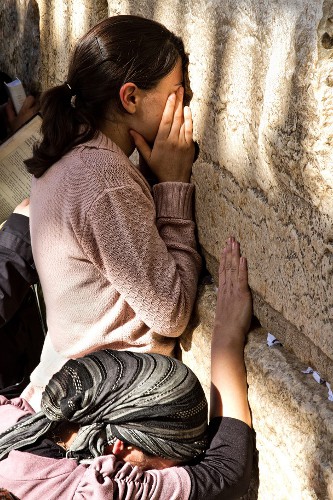
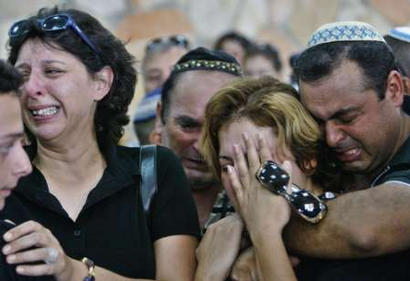
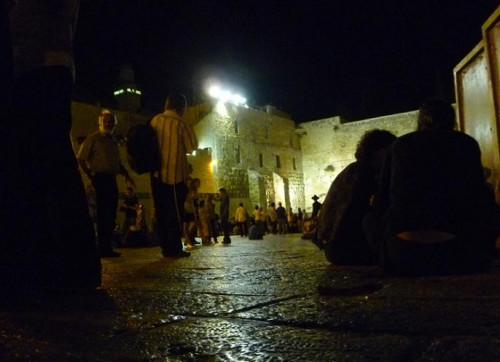
But upon reflection, I wonder how can we mourn with empathy what we don’t understand? How can Christians or anyone but a Jew, actually “feel” the loss of the Temple, the loss of connection to God that the missing Temple represents? On Tisha B’Av, many, many Jews travel to the Kotel, what some call the “Wailing Wall” in Jerusalem, the last remnant of Herod’s Temple that Jews are allowed to access (since they are forbidden to ascend to the top of the Temple Mount and pray), and pour our their tears, their prayers, and their hearts to God, begging for the coming of the Moshiach and for God’s grace and mercy to rain upon His people Israel.

How can we Christians even begin to understand what Tisha B’Av means? How can we pray for the Jews? How can we mourn along side of them?

I don’t know.

I do know that some Christians do (though not as many as I’d wish). I know some believers have turned their hearts to God and to the Jewish people, they have turned to the east to face Jerusalem…and they have cried bitter tears as they see the grief of the Jews and they have allowed their hearts to melt and bleed.

Today is Sunday, and most Christians will be headed off to church this morning. They will pray in their sanctuaries and in their Bible classes. They will pray in their homes and with their families. I only ask that some of you reading this morning’s meditation allow a double meaning to your prayers and petitions to God as His Holy Spirit calls to you.

I would not have you weep any less for that charming, good and handsome Christian. I only ask this: that as the great cold surrounds my bones, you allow a double meaning for your mourning veil. And when you let fall your tears for him, some few will be… for me.

from the play Cyrano de Bergerac
by Edmond Rostand

The love of Cyrano’s life, the beautiful Roxane, was in love with another, the handsome cadet Christian de Neuvillette. Cyrano, although incredibly accomplished, felt no woman could ever love him because of his ugliness. Toward the end of the play, de Neuvillette has died and Roxane is in mourning. Cyrano asks not that she cease her tears for the “charming, good and handsome Christian,” but only that he might consider that, at his own death, some portion of her sorrow could also be for him.

The irony is at the play’s end, Roxane confesses her love for Cyrano as he is dying in her arms. How many of us, like Cyrano, deny ourselves our heart’s desires believing they are unattainable when in fact, they are at our very fingertips.

Perhaps our sincerity and devotion in prayer is like that. We have only but to look in the right direction, to open ourselves to God and to see the Jewish people with new eyes. Maybe we only need to exchange our heart of stone for one of flesh. And then, as Jews weep and fast and immerse themselves in pools of sorrow, some few of us can shed our tears with them.

Any human being can climb higher than this world. But it’s not a flash from above that will take you there.

Every day, from the time you open your eyes until the time you close them, teach your eyes to see the world as it is seen from above.

-Rabbi Tzvi Freeman
“Practice Makes Perfect”
Based on letters and talks of the Rebbe
Rabbi M. M. Schneerson
Chabad.org

Tisha B’Av: Longing for Goodness and Righteousness

Jewish in Jerusalemlast night i decided to take a walk around 1am. on my way back a sweet old lady approached me asking if i knew where a certain hotel was. i must note that since leaving my house i was filled with this expansive sense of love and suddenly the situation struck me as very odd that an elderly woman was roaming the streets looking for a place to stay for the night. i told her i did not know where the hotel was but i knew of a hostel nearby. we walked there but there was no room. then we tried another hotel, long story, it turned out the rooms there were $200/night, more than the woman had. at this point the woman began looking at stairwells and considering just sitting somewhere for the remaining night hours. the situation was heartbraking. i even offered to let her stay in my room on a mattress, but she did not want to impose. at this point we were in the ultra-orthodox jewish neighborhood of jerusalem, and i thought, perhaps someone knows of somewhere she could rest for the night, perhaps in a syngagogue or house of study. without really thinking i told her to wait and ran after one of the ultra-orthodox men walking the streets. i explained the situation and asked if he knew of a place she could rest, he said no..no..i began to give up..then he said…

“Tzedakah miracle in Ir HaKodesh, week of Shabbos Chazon 5772”
Rucho Shel Mashiach blog

I actually posted a link to this blog article on Facebook a few days ago, but I really wanted to write about what it means to me (you can click the link above to read the whole story, but I’m going to finish the quote in just a little bit).

I was thinking about Christian perceptions of Jews and Judaism. At its worst, Christianity thinks of Judaism as a dead, works-based religion that has no spirit or soul, no connection to the living God, and that religious Jews only do good deeds because they’re “under the Law” and out of fear of breaking their commandments.

But then I realized that atheists think about Christianity in pretty much the same way.

I’ve been criticized several times over the past week or so by atheists who say that I need to have the “excuse” of God to do anything good for another person. They ask why I can’t just do good deeds because it’s the right thing to do? After all, that’s what (supposedly) all atheists and progressive humanists do.

My, my, my but how we judge each other. Hopefully the “Tzedakah miracle” story will help change some Christian minds about how Jews see helping other people. I’m not sure what to do about helping atheists see that we Christians can actually do good as well, and how we experience Jesus as a powerful motivator and example of what it is to be charitable.

I was also thinking about Tisha B’Av which begins on Saturday at sundown. It’s the solemn commemoration of the destruction of both Solomon’s and Herod’s Temples, as well as many other tragic events that have occurred in Jewish history. Jews typically fast on this occasion, which is the culmination of a three-week period of mourning, and refrain from various pleasurable activities.

Of course, for Christians and everyone else, it’s just another day.

I sometimes wonder why Christians don’t mourn the destruction of the Temple. I know, that probably sounds silly. Most Christians believe that the Temple was destroyed as a natural result of the coming of Jesus and that now, each individual Christian is a “temple” for the Holy Spirit. The physical becomes “spiritualized” a great deal in Christianity.

But among other things, the rebuilding of the Temple in Holy Jerusalem is part of what the Messiah is supposed to do (see Jeremiah 33:18). Here’s a little bit more about what the Messiah will do when he comes.

The mashiach will bring about the political and spiritual redemption of the Jewish people by bringing us back to Israel and restoring Jerusalem (Isaiah 11:11-12; Jeremiah 23:8; 30:3; Hosea 3:4-5). He will establish a government in Israel that will be the center of all world government, both for Jews and gentiles (Isaiah 2:2-4; 11:10; 42:1). He will rebuild the Temple and re-establish its worship (Jeremiah 33:18). He will restore the religious court system of Israel and establish Jewish law as the law of the land (Jeremiah 33:15).

“Mashiach: The Messiah”
Judaism 101

Although plainly depicted in prophecy, almost all of the information in the quote above isn’t generally known and accepted in the church.

But assuming it is true, then perhaps we Christians should mourn the Temple. Perhaps we should long to see it rebuilt because that would mean the Messiah, the Christ has returned.

But what does this have to do with charity? More than you might think.

Jews long for the coming of the Messiah so that their exile will end and that Israel will be restored to great glory and God will be revered by all of the earth (and just because the modern state of Israel exists today, doesn’t mean the exile has ended yet). Christians want Jesus to come back because he will rule and reign over the earth and everyone will honor Christ and Christianity and know God through him.

Similar goals but radically different applications.

Except for a few things like charity.

Both the Jewish and Christian requirements to do charity are rooted in the same source: the Law of Moses. The Torah of Moses and the Gospels of Jesus both go to great efforts to encourage and support a lifestyle of giving and generosity among their devotees. Although in Christianity, there is no direct connection between doing good and bringing back Jesus, in Judaism, every act of tikkun olam or “repairing the world” is thought, at least by some, to hasten the return of Messiah (the mechanics behind this concept are complex, so I won’t delve into them here).

I don’t know if it’s true or not that doing charity brings the Messiah closer to returning, but it couldn’t hurt.

And it couldn’t hurt to help someone out when they’re in need. Does there have to be a reason or does your reason or mine really matter? After all, regardless of motivation (interesting article, by the way), if you give a hungry person some food, they’ll still be fed.

Interestingly enough though, charity doesn’t always have a straightforward result, as we see in the conclusion of the “Tzedakah miracle” story (and as far as I can tell, this isn’t “just a story,” it’s real life):

without really thinking i told her to wait and ran after one of the ultra-orthodox men walking the streets. i explained the situation and asked if he knew of a place she could rest, he said no..no..i began to give up..then he said, that he has money, if that could help. as if to reject it i said no, the only room is $200, but thank you. he preceded as if i had said $5, pulled $150 out of his wallet and handed it to the woman while quoting from the talmud that the temple was destroyed because of a lack of love between people. together we giddily walked to the luxury hotel, only to find out that there were no rooms available! the man then said to the woman that it is not right to ask for charity back after it has been given, so the money is now hers. we considered several other hotels and the man walked off. as soon as he walked off the woman took my hand and we walked into an alleyway. she was beaming with excitement, she said, i will go to the local hospital and sit there for the night, now i have money for the whole week, i can stay somewhere nice while i find an apartment, maybe even save it for shabbos. in other words, hashem orchestrated a miracle..nothing could have turned out better. when i told a friend about this he said i had met the souls of abraham and sarah roaming the streets of jerusalem. now i know why i felt compelled to take a walk, sometimes we are but vehicles for the miracles that are scheduled to take place..

The old woman never found a very comfortable place to spend the night, but instead of spending all of her new-found “wealth” in a single evening, she now had enough money to live on for a week. True, her situation was not permanently solved, but just think of how many people all across our planet live extremely uncertain lives. Even if we give them charity, we can’t solve all of their problems forever. But then, giving them enough to eat even for one more day makes life better for them.

But what about the Temple? Is there a hidden blessing in its destruction and the long, long wait for the coming of the Jewish Messiah King? I don’t know except perhaps that it gives us time and something to shoot for. It reminds us that the Temple is no longer with us because of lack of love between people (at least according to the Talmud). The world needs a lot of fixing. No doubt about that. It’s probably the one thing we can all agree on, regardless of our politics, our religion (or lack thereof), our social standing, or anything else. The world’s a mess.

Tisha b'Av at the Kotel 2011There are a lot of missing bits and pieces to the world that need to be replaced and repaired. It’s like our existence is a half-built jigsaw puzzle and we’re the puzzle makers. We have to cooperate to make the picture whole. For those of us who believe, Jesus will come and his job will be to do the final “fixing.” For religious Jews, the Messiah will come and do pretty much the same thing. But you and I are here now. People are still hungry and homeless. We can’t solve their problems, but we can make their lives just a little bit better for an hour, or a day, maybe even for a week if God so wills it.

We can grieve and feel sorrow over our losses. We can complain about what’s wrong with the world and complain about the politics and religions of those people who are different from us. Or we can let events like Tisha B’Av remind us that we have lost but we also have something to look forward to. Tisha B’Av also reminds us that we can get over ourselves, get over being cranky, and try to be part of the solution instead of part of the problem.

I said this ago a few days ago, but it bears repeating. “Do good. Seek peace. Keep swimming.” Give life. I don’t care why you do it. Just do it.

May the inherent righteousness and goodness of all our souls be revealed in full and hasten our full redemption, and may we merit to see the third temple speedily in our days, as one people with one heart.

Rucho Shel Mashiach

Edit: I should note that Tisha B’Av actually starts tonight at sundown, but because it’s also Erev Shabbat, the fast doesn’t begin until after Shabbat has ended. I apologize for the error I made above.