Tag Archives: Jesus

Review of “What About the New Covenant,” Part 4

Session Four: Better Promises

But Jesus has now obtained a more excellent ministry, and to that degree he is the mediator of a better covenant, which has been enacted through better promises.

Hebrews 8:6 (NRSV)

I have a feeling I’m going to encounter this material again when I listen to and review the relevant presentations in D. Thomas Lancaster’s Holy Epistle to the Hebrews sermon series. However, the Hebrews material has been folded into a different context, one contrasting and comparing the Old and New Covenants in First Fruits of Zion’s (FFOZ) latest teaching lectures What’s New About the New Covenant.

On disc four, Lancaster starts with a brief summary of the previous lectures. We learned that Old Covenant doesn’t mean Old Testament, and it doesn’t even mean the Torah. It is an agreement God made with Israel (and only Israel) at Sinai stating that He would be Israel’s God and they would be His people as long as they obeyed His commandments (the conditions recorded in the Torah), and should Israel disobey, God would punish them and exile them (but not forever reject them).

We also learned that the New Covenant doesn’t mean the New Testament and it doesn’t mean the Church. It also doesn’t mean “renewed” Covenant because it indeed is something new. The New Covenant is also an agreement made between God and the Houses of Judah and Israel (and only the Houses of Judah and Israel) and that, according to the writer of the Epistle to the Hebrews, the New Covenant is made of “better promises” and Jesus is the mediator of that New Covenant.

But what are the better promises and how can they be better if between the Old and New Covenants, God does not change even a single condition or requirement for Israel (the Torah mitzvot) but does change the hearts of all Jewish people, making it possible for them to correctly perform all of the mitzvot?

To answer that question, Lancaster takes us through a study of a few of the chapters in the book of Jeremiah. This is why I like reading large portions of the Bible in one setting. I can get the full message of God to Israel in its complete context rather than parsing bits and pieces and verses together artificially to form a picture that might not be correct.

Better Promises in the Messianic Future

The days are surely coming, says the Lord, when I will make a new covenant with the house of Israel and the house of Judah.

Jeremiah 31:31

“The days are surely coming” indicates the end of days, the final redemption, the future Messianic Era. For those Christians who believe that the New Covenant has already replaced the Old Covenant, this statement makes that particular doctrine impossible because the New Covenant hasn’t been enacted or completed yet. The death and resurrection of Jesus only got the ball rolling, so to speak. We’re still in the Old Covenant age. The Torah is still in effect as it always has been since Sinai.

Good News for Israel and Judah
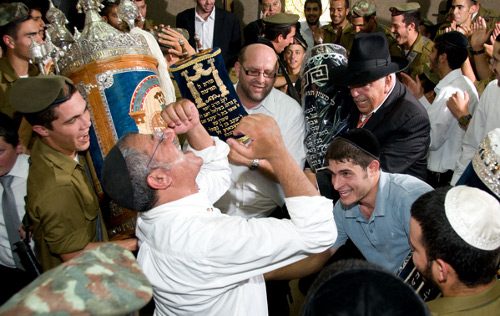
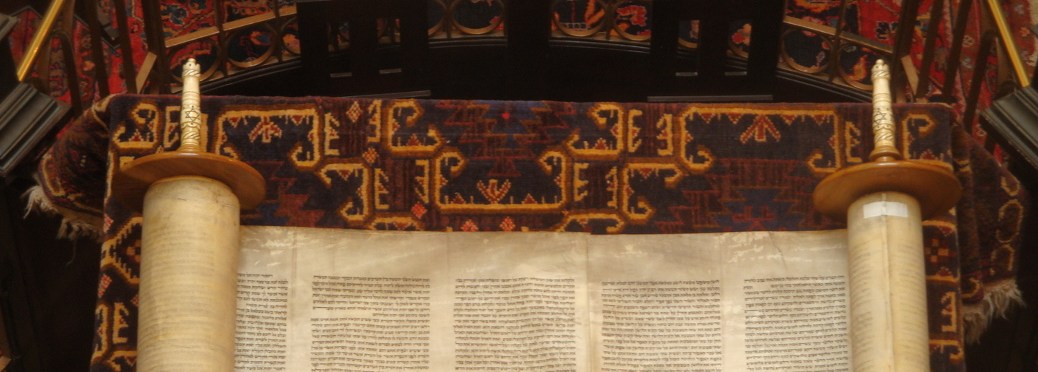
Simchat TorahNotice (and I’ve mentioned this before) that the addressees of the New Covenant are “the house of Israel and the house of Judah.” This is only with the house of Israel and the house of Judah. Period. It’s an exclusive relationship between God and the Jewish people, just as the Old Covenant defined an exclusive relationship between God and the Jewish people. The New Covenant (pay attention please, this is important) has nothing to do with the nations, with Gentiles, or with anything called “Christianity” or “the Church.” The New Covenant does not create a stand-alone covenant relationship between the Church and God. The only covenant that all the people of the earth can claim for their (our) very own is the Noahide Covenant (Genesis 9:1-17).

The Transformation of the Jewish Heart

It will not be like the covenant that I made with their ancestors when I took them by the hand to bring them out of the land of Egypt—a covenant that they broke, though I was their husband, says the Lord. But this is the covenant that I will make with the house of Israel after those days, says the Lord: I will put my law within them, and I will write it on their hearts; and I will be their God, and they shall be my people.

Jeremiah 32-33

The next “better promise” is that God will make it possible for the Jewish people to obey His righteous standards and not sin by writing those standards on the Jewish heart.

Husband and Wife

Lancaster says an oath the groom would recite at the wedding ceremony in the ancient near east was to declare, “I will be your husband and you will be my wife.” God declared “I will be a God to you and you will be a people to me,” but that was contingent upon Israel not disobeying God and worshiping idols. Idol worship was considered as adultery by God, a wife going astray with other lovers (gods). Under the Old Covenant, Israel went astray, but under the better promises of the New Covenant, since the Torah will be written on their hearts and not just on tablets and scrolls, Israel will never again “cheat” on God, so to speak, and will always remain faithful.

Intimate Knowledge of God

No longer shall they teach one another, or say to each other, “Know the Lord,” for they shall all know me, from the least of them to the greatest, says the Lord; for I will forgive their iniquity, and remember their sin no more.

Jeremiah 31:34

Master and disciplesUnder the Old Covenant, many times the people of Israel, including the Priests and Prophets knew about God, but they didn’t know Him in the sense of an intimate knowledge that led to obedience. This is often true of Jews and Christians today. It’s easy to study the Bible and learn about God but not so easy to live a life that is consistently, day-by-day, hour-by-hour pleasing to God. Under the New Covenant, there will be a universal revelation of God to the whole world. It will be natural for everyone to obey God.

I know I said the New Covenant is an agreement just between God and the Jewish people, and I, or rather Lancaster, will get to the issue of Gentiles by the by.

Forgiving All of Israel’s Sins Forever

So that you may not claim to be wiser than you are, brothers and sisters, I want you to understand this mystery: a hardening has come upon part of Israel, until the full number of the Gentiles has come in. And so all Israel will be saved; as it is written,

“Out of Zion will come the Deliverer; he will banish ungodliness from Jacob. And this is my covenant with them, when I take away their sins.”

Romans 11:25-27

Lancaster didn’t cite Paul or Romans 11 but I felt it an appropriate addition. Lately, I’ve been hearing some bad opinions about Paul and his so-called anti-Torah, anti-Judaism, and anti-Jewish people letters, and I thought this would be a good time to clear some of that up, since Paul is preaching to the Romans New Covenant doctrine that is highly favorable to the Jewish people and to Israel.

Jeremiah, according to Lancaster, is saying one of the “better promises” of the New Covenant mediated by Messiah, is that God will forget all of Israel’s sins which is what makes it possible for Paul to literally mean that “all Israel will be saved” rather than some tiny remnant who, according to the Church, must leave Judaism and convert and assimilate into (Gentile) Christianity. God doesn’t change the Torah. The Torah is unchangeable at its core. God does change the Jewish people so that they naturally will be faithful to God and God, for His part, will forgive all of Israel’s sins, from the Golden Calf forward throughout all of history and into the Messianic Age.

That’s very good news, a wonderful gospel for the Jews.

Israel Will Always Be a Nation Before God

Thus says the Lord,
who gives the sun for light by day
and the fixed order of the moon and the stars for light by night,
who stirs up the sea so that its waves roar—
the Lord of hosts is his name:
If this fixed order were ever to cease
from my presence, says the Lord,
then also the offspring of Israel would cease
to be a nation before me forever.
Thus says the Lord:
If the heavens above can be measured,
and the foundations of the earth below can be explored,
then I will reject all the offspring of Israel
because of all they have done,
says the Lord.

Jeremiah 31:35-37

Moon and StarsI suppose this could be two “better promises.” Israel will be a distinct nation and the Jewish people will be a distinct and identifiable people as long as there is a sun, a moon, stars, and a sea, which is to say, as long as the earth, our solar system, and the universe exists. It is also a promise that God will never reject Israel and the Jewish people and they will remain a people and a nation until the heavens can be measured and the foundations of the earth can be explored. These conditions, by the way, are rhetorical language meaning “always.” Israel will always be a nation before God and God will never reject the Jewish people. Ever.

This flies in the face of the various churches who still adhere to some form of Replacement Theology because for them, the New Covenant replaces the Old Covenant, and they interpret that to mean that God rejected Israel permanently because Israel rejected Jesus as Messiah. God then replaced Israel with the (Gentile) Church which accepted Jesus. Now, the only way God will accept a Jew is for the Jew to reject Judaism and convert to (Gentile) Christianity. However, examining the New Covenant language reveals that Replacement Theology is hopelessly unBiblical.

Jerusalem the Eternal City

The days are surely coming, says the Lord, when the city shall be rebuilt for the Lord from the tower of Hananel to the Corner Gate. And the measuring line shall go out farther, straight to the hill Gareb, and shall then turn to Goah. The whole valley of the dead bodies and the ashes, and all the fields as far as the Wadi Kidron, to the corner of the Horse Gate toward the east, shall be sacred to the Lord. It shall never again be uprooted or overthrown.

Jeremiah 31:38-39

Who can count the number of times Jerusalem has been conquered and destroyed? OK, probably someone has, but the point is that historically, whenever Israel sins, the Temple is destroyed and Jerusalem is left in ruins. This “better promise” for the Jewish people states that Jerusalem will be rebuilt and expanded and it will never again be destroyed because the Jewish people will never again sin against God or other people.

Some of the really exciting “better promises.”

Jeremiah 32:1-15 tells of God commanding Jeremiah to buy a field in Judah during Nebuchadrezzar’s siege against Jerusalem, a command Jeremiah couldn’t understand. It would have been crazy to do so, but God had something in mind: more “better promises.”

MessiahI don’t really want to reveal all of the better promises since if I do, you might not be as inclined to listen to the full lecture. In brief, the other promises include the regathering of the Jewish people to their Land, giving the Jewish people all one heart, and one way (in my opinion, “the Way”) so that there will be no division among Jews, that the New Covenant will be everlasting, that God will rejoice over doing good for Israel, that a “righteous branch” meaning the Messiah, will rise from the line of David. In addition to a return of the Davidic dynasty on the throne of Israel, the line of Aaron and the Levitical priests will return, which means there must be a Temple for them to offer sacrifices in.

God even says that He will only break His covenant with David and with Aaron if someone can break God’s covenant with day and night. More rhetorical language meaning “never.”

But there is something more about Lancaster’s sermon I do want to reveal since it contains a dire warning.

Those Who Say God Rejected Israel

The word of the Lord came to Jeremiah: Have you not observed how these people say, “The two families that the Lord chose have been rejected by him,” and how they hold my people in such contempt that they no longer regard them as a nation? Thus says the Lord: Only if I had not established my covenant with day and night and the ordinances of heaven and earth, would I reject the offspring of Jacob and of my servant David and not choose any of his descendants as rulers over the offspring of Abraham, Isaac, and Jacob. For I will restore their fortunes, and will have mercy upon them.

Jeremiah 33:23-26

ChurchHistorically, who has held Israel in contempt and said that God no longer regards the Jewish people as a nation? OK, just about everybody, but that “everybody” includes the Christian church. Even today, many churches continue to adhere to some form of Replacement or Fulfillment Theology, and any Christian who does espouse such a theology is who God, through Jeremiah, said “hold my people in such contempt” (emph. mine). Really, do you want to be on God’s “wrong side” by holding Israel in contempt, or even in the slightest degree, believe that God has rejected Israel and replaced her with the Church?

In addition to their being more “better promises” and “good news” for the Jewish people in these chapters of Jeremiah, Lancaster mentioned that there are still more better promises littered about the various books of the Prophets including Isaiah, Ezekiel, Amos, and Joel. That’s really a lot of better promises and good news for Jewish people.

But What About the Gentiles?

Then certain individuals came down from Judea and were teaching the brothers, “Unless you are circumcised according to the custom of Moses, you cannot be saved.”

But some believers who belonged to the sect of the Pharisees stood up and said, “It is necessary for them to be circumcised and ordered to keep the law of Moses.”

Acts 15:1, 5

Remember what I (citing Lancaster) said above about the New Covenant being made only with the House of Israel and the House of Judah? No mention of Gentiles at all. So do we even figure in? There’s a lot of language in the Apostolic Scriptures that says “yes” but we have to dig for it.

However, from the point of view of the various Jewish sects in the late second temple period, including believing Jews in “the Way,” recalling the New Covenant language, the only way they could see how Gentiles could be included in these “better promises” was to convert to Judaism.

In Acts 15:1-2 and 15:24, Now with what Satanically-inspired and dogmatic false teaching did these “certain men from Judaea” try to infect the church at Antioch, and why according to Galatians 2:4-5? (emph. mine)

That quote is from the study notes for the Sunday school class I attend when they were teaching on Acts 15 last September (here’s the link to the relevant blog post). What they couldn’t see was that the Jewish people asking these questions were not “Satanically-inspired” but rather, asking a legitimate question based on the Jeremiah 31 text.

Paul knew that the Gentiles didn’t have to convert to Judaism in order to be included in better promises (hence his letter to the Galatians), and Peter witnessed this first hand as recorded in Acts 10:44-48, but no formal decision had been rendered by the Council of Apostles and Elders defining Gentile legal identity within the Jewish community. Acts 15:6-29 records a summary of the legal hearing, including the testimony of various witnesses, and the conclusion and ruling of the Council that Gentiles could be granted honorary status within the commonwealth of Israel, grafted into the nation (see Romans 11:11-24), but only because of their association with Israel through faith in King Messiah.
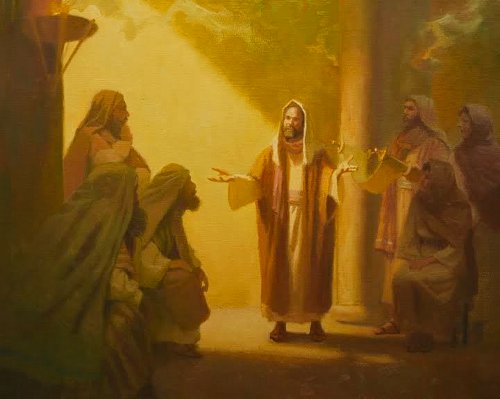
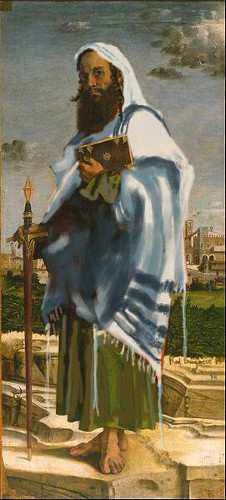
Apostle Paul preachingThat’s an incredibly vital point to get, because without the New Covenant “better promises” being applied exclusively to the House of Israel and the House of Judah, if God really did reject Israel and the Jewish people in perpetuity, then we Gentiles would have absolutely, positively no hope of salvation at all! Israel is central in God’s plan to redeem the people of all the nations of the earth.

When King Messiah returns, he will be King of Israel, King of the Jews, and he will conquer all of the other nations and be their King. He will annex all of the other countries and Israel will be at the head of the nations, and all of the other nations will be vassal servants to Israel. As citizens of these vassal nations, we too will be annexed subjects of Israel and her King. The good news for the Gentiles is if we swear allegiance to King Messiah now, even before his return, we become his subjects and the New Covenant blessings become ours.

No, we don’t become Jews because we are citizens of a nation annexed by Israel and not citizens of Israel itself. We are granted an honorary status in the commonwealth of Israel. We’re grafted in.

As I’ve mentioned about a million times elsewhere, we don’t come under “One Law” in terms of being commanded to wear tzitzit, lay tefillin, and such, but we do become people who are called by His Name, and partisans or freedom fighters, so to speak, who are defending our King and his people until he returns and ascends his throne in Jerusalem, much as Robin Hood and his Merry Men of legend fought against the tyranny of Prince John and protected the innocent until King Richard’s return.

And many peoples will come and say, “Come, let us go up to the mountain of the LORD, To the house of the God of Jacob; That He may teach us concerning His ways And that we may walk in His paths.” For the law will go forth from Zion And the word of the LORD from Jerusalem.

Isaiah 2:3

New CovenantIf you are not a Jew and if you call yourself a Christian or any other name that indicates an allegiance to the King of the Jews, to Jesus Christ, then this is your hope in the New Covenant through national Israel, the Messianic Kingdom, and through the Messianic King. The Master said, Salvation comes from the Jews,” (John 4:22) and according to Lancaster, he was talking about the New Covenant and everything that was presented in this lecture ”Better Promises.”

If you want to be part of those “better promises” then please carefully consider everything you’ve read here today. It really wouldn’t hurt and might do a great deal of good if you got a hold of the five-disc set of What’s New About the New Covenant and listened to all of the content, since it really applies to who we are as Christians and what God expects of us and of how we treat His people Israel. Our salvation comes from Israel and her firstborn son Yeshua of Nazareth, the Messiah, the King…not the other way around.

Review of “What About the New Covenant,” Part 2

Session Two: The Breit Chadashah

D. Thomas Lancaster started this second lecture in the series by taking me more than a few years back into my own history in the Hebrew Roots movement. He said that when he first became involved in Messianic Judaism, even though most people in his group didn’t know Hebrew, there were a few “Hebrewisms” that everyone was expected to observe.

Never say “Jesus”. Always say “Yeshua”. Say “Messiah” instead of “Christ”. Say “Torah” instead of “Law”. Really remember to say “Rav Shaul” rather than “Paul.” Also, say “Breit Chadashah” instead of “New Testament.”

Although some of my readers are scrupulous to use these “Hebrewisms” when emailing me or commenting, even though they may not be well-versed in Hebrew (though a few are quite proficient), some of them probably feel they have to follow this sort of “Messianic Political Correctness speak” in order to be acceptable or perhaps they feel they’re correcting past wrongs and, after all, Messianic Gentiles and Hebrew Roots Christians don’t want to sound too “church-y”.

But there’s a fundamental misunderstanding that most people in the Church and many in the Hebrew Roots and Messianic movements have, that the “New Testament,” that is the books in our Bibles that start with Matthew and end with Revelation, is the same thing as the “New Covenant.”

It’s not.

But to understand that point, we have to understand what the Old Covenant is and that the Old Covenant is not the same as the Torah or what Christians call “the Law.”

I covered some of this territory in last week’s review but Lancaster adds more detail in today’s sermon.

Now therefore, if you obey my voice and keep my covenant, you shall be my treasured possession out of all the peoples. Indeed, the whole earth is mine, but you shall be for me a priestly kingdom and a holy nation. These are the words that you shall speak to the Israelites.”

So Moses came, summoned the elders of the people, and set before them all these words that the Lord had commanded him. The people all answered as one: “Everything that the Lord has spoken we will do.” Moses reported the words of the people to the Lord.

Exodus 19:5-8 (NRSV)

This is the Old Covenant in a nutshell. It’s an agreement and a rather simple one at that. God says, if you, Israel, obey me, then I, God, will make you a ”priestly kingdom and a holy nation.” More simply put, God agrees that if Israel obeys Him ”Then I will take you for My people, and I will be your God.” (Exodus 6:7)

Once the people agreed to the Covenant, then Moses initiated it.

Moses came and told the people all the words of the Lord and all the ordinances; and all the people answered with one voice, and said, “All the words that the Lord has spoken we will do.” And Moses wrote down all the words of the Lord. He rose early in the morning, and built an altar at the foot of the mountain, and set up twelve pillars, corresponding to the twelve tribes of Israel. He sent young men of the people of Israel, who offered burnt offerings and sacrificed oxen as offerings of well-being to the Lord. Moses took half of the blood and put it in basins, and half of the blood he dashed against the altar. Then he took the book of the covenant, and read it in the hearing of the people; and they said, “All that the Lord has spoken we will do, and we will be obedient.” Moses took the blood and dashed it on the people, and said, “See the blood of the covenant that the Lord has made with you in accordance with all these words.”

Exodus 24:3-8 (NRSV)

Moses at NeboThis formally sealed the Covenant relationship between Israel and God. If you look at verses 9 through 11, you’ll see representatives of Israel having a meal in the presence of God since, in last week’s lecture, Lancaster said it was traditional behavior among two human parties, such as a great King and a vassal nation, to share a meal after a treaty had been settled.

The actual Covenant was the agreement between God and Israel, and Israel, for their part, were responsible to obey God in order to hold up their end of the bargain. But how? That’s where the Torah comes in. It defines the specific conditions and stipulations that Israel must obey.

However, there’s a problem. Israel’s obedience was rather poor. In fact, the first time they disobeyed was very soon after their initial agreement by building the Golden Calf (see Exodus 32). After that, the Covenant had to be renewed and it was renewed many times. But Israel, sadly, fell into a pattern of disobedience and sin. As part of the Covenant conditions, if the people obeyed, then God would be their God and they would be His people, but when they disobeyed, He ceased to be their God and they ceased to be His people. Then God sent an army and great destruction usually happened, sometimes with the people going into exile. Once they cried out to God and repented, God would send a rescuer, defeat Israel’s enemies, and restore the people to their Land.

And this happened over and over again. The Book of Judges is a good chronicle of this but the pattern is recorded in much of the Tanakh (Old Testament).

I mentioned that a lot of New Covenant language is found in Jeremiah 31 and Lancaster said that we need to understand the context of Jeremiah to get this.

In Jeremiah 3:1-5 we see Israel depicted as an unfaithful wife, and in spite of many calls to repentance, such as in verses 6 though 25, Israel remains uncaring and God sends the armies of Babylon to destroy Jerusalem.

But amid this tragic tale, Jeremiah introduces hope in the form of a future redemption, but one like Israel had never seen before.

The days are surely coming, says the Lord, when I will make a new covenant with the house of Israel and the house of Judah. It will not be like the covenant that I made with their ancestors when I took them by the hand to bring them out of the land of Egypt—a covenant that they broke, though I was their husband, says the Lord. But this is the covenant that I will make with the house of Israel after those days, says the Lord: I will put my law within them, and I will write it on their hearts; and I will be their God, and they shall be my people. No longer shall they teach one another, or say to each other, “Know the Lord,” for they shall all know me, from the least of them to the greatest, says the Lord; for I will forgive their iniquity, and remember their sin no more.

Jeremiah 31:31-34 (NRSV)

Now remember, the conditions of the Covenant are not the Covenant itself. The conditions of the Old Covenant are the Torah, but Jeremiah isn’t saying that the conditions are what’s new, it’s the Covenant that’s new.

Sofer-Sefer-TorahWhat’s so new in the New Covenant?

In the Old Covenant, God spoke the words of the Covenant to Moses who spoke them to Israel. Israel agreed and everything was written down on scrolls or tablets and the people were to refer to those conditions to, first understand what they had agreed to, and then to actually do what they’d agreed to do by performing the mitzvot.

In the New Covenant, instead of doing all that, God writes the conditions of the Covenant on the hearts and puts them in the minds of the people of Israel and then it becomes second nature for them to obey. The Torah conditions are internalized rather than being externally referenced.

The Old Covenant was written on scrolls and the New Covenant will be, or is in the process of being, written on human hearts and human natures.

But the conditions are the same.

I know what you’re thinking. You’re thinking if Gentiles are also benefiting to the New Covenant through faith in Jesus (Yeshua), then are those same conditions being written on our hearts as well?

Yes and no.

In the Torah is there a condition for Gentiles to circumcise their males on the eighth day of life? No, that requirement is only for the physical descendants of Abraham, Isaac, and Jacob. Gentiles are exempt. I’ve said before that the Acts 15 decision formally spelled out the conditions that Gentiles are responsible for carrying out, and it’s only through the blessings of one part of the Abrahamic covenant that the nations are attached to the New Covenant at all. Jews already knew the conditions that applied to them because they were the same ones established by the Sinai (Old) Covenant and they never changed.

But what about this?

But Jesus has now obtained a more excellent ministry, and to that degree he is the mediator of a better covenant, which has been enacted through better promises. For if that first covenant had been faultless, there would have been no need to look for a second one.

God finds fault with them when he says: “The days are surely coming, says the Lord, when I will establish a new covenant with the house of Israel and with the house of Judah…

Hebrews 8:6-8 (NRSV)

Torah at SinaiIt’s scriptures such as this that Christians use to prove that the Old Covenant was replaced by the New, but look at what the writer of Hebrews is actually saying. As he is about to quote from Jeremiah 31, he says, ”God finds fault with them (emph. mine)…” He doesn’t say God found fault with it, that is, the Old Covenant, but with them, with Israel, with the people, because they didn’t obey the conditions of the Covenant because of sin.

The solution wasn’t to change the Covenant but instead, to change the people, so it would be possible to fulfill the conditions of the Old Covenant originally spelled out at Sinai. The New Covenant (and not renewed) is a new method of delivery and institution so Israel will be obedient by design.

So how did we get into the mess we’re in as Christians today? How did this get screwed up?

According to Lancaster, the Church Fathers in the second and third centuries CE knew that they didn’t have to keep the conditions of the Old Covenant as did the Jews but they didn’t know why. The Apostles taught that Gentiles had a different (and somewhat overlapping) set of conditions but once the last of the Apostles died, the Gentiles made a few assumptions (or perhaps a few deliberate errors to serve a specific purpose, but that’s my opinion). Lancaster said these Gentile Christians assumed that everyone, Jew and Gentile in Jesus, kept the Gentile standards of obedience, and the Gentile Christians actually criticized (and later persecuted) Jews for not abandoning the “Old Covenant” conditions.

The other shocker for some Christians is that we aren’t really living in New Covenant times right now. Sure, the death and resurrection of Jesus started a process by which the New Covenant era began to arrive but it’s not fully with us yet. Otherwise, we wouldn’t sin. Otherwise the conditions of the New Covenant would be written on our hearts rather than in the Bible and we would all just naturally obey God.

Sadly, I must confess that I do not naturally obey God. I have to struggle with obedience. Chances are, you do, too. It will only be when the New Covenant Era fully arrives that we really will be “new creatures” and “new creations”. We aren’t there yet. We’re a work in progress.

That doesn’t stop you and me from repenting now. Why wait? Messiah is coming.

If my reviews are piquing your interest, you can find the complete, five-disc set of Lancaster’s New Covenant lectures at First Fruits of Zion. I’ll review the third lecture next week.

For more on this topic and how historical and modern Christianity has misunderstood the New Covenant, see my blog post The Two-Thousand Year Old Christian Mistake.

Questioning Paul

Read today’s article, where you, in part, again defend Paul. Obviously, I have to come to read him very differently and would like to run something by you. Can you give me your thoughts on the following words of Paul, namely in Galatians 4:21-26 (and a bit beyond, in Galatians 5-1)?

“21 Tell me, you who want to be under law, do you not listen to the law? 22 For it is written that Abraham had two sons, one by the bondwoman and one by the free woman. 23 But the son by the bondwoman was born according to the flesh, and the son by the free woman through the promise. 24 This is allegorically speaking, for these women are two covenantsone proceeding from Mount Sinai bearing children WHO ARE TO BE SLAVES; she is Hagar. 25 Now this Hagar is Mount Sinai in Arabia and corresponds to the present Jerusalem, for she is in slavery with her children26 But the Jerusalem above is free; she is our mother. “

“It was for freedom that Christ set us free; therefore keep standing firm and do not be subject again to a yoke of slavery.” (Galatians 5-1)

Here Paul, although supposedly speaking figuratively, plainly says that the covenant on Mount Sinai produced slaves (even though the opposite actually happened there – Jews were freed from slavery there, becoming servants of G-d). According to Paul, Jews who are still bound by Torah and the Mosaic covenant are not the spiritual children, but the children of the flesh and are born not of Sarah, but of Hagar. Christians (primarily his Gentile audience), however, are Sarah’s true children, who are free. Following Torah as given on Mount Sinai, according to Paul, is a yoke of slavery from which Christ came to set humanity free (Galatians 5-1).

Would love to hear what you thought of the above. May be the billions of Christians over the many centuries didn’t misread Paul after all but received much of their view of Judaism from him?

-from a private email discussion

There’s a lot more to this conversation. For a little background, the person asking the above-quoted questions is a Jewish friend of mine who believes that Paul was anti-Torah and anti-Judaism.  He very gently but firmly is questioning my faith and our exchange, from my point of view, has reached something of an impasse. Not being a theologian or a historian, especially within the context of Messianic Judaism, I don’t always have all the convenient answers at my fingertips.

A “normative” (i.e. not Messianic) Jewish person has a wide variety of resources to draw from, such as Jews for Judaism, in questioning the validity of the “Christian texts,” while in response, all I’ve got is me.

For obvious reasons (obvious to my regular readership), I can’t really rely on traditional, Evangelical Christian apologetics, since I’m often a critic of Evangelical Christian theology.

To add a bit of dimension, where I “stalled” in the conversation, my friend questioned whether one could look at Paul’s letters in the same fashion as the writings of Moses. Moses received direct revelation from God while Paul was writing letters. Can his letters be elevated to the point of scripture inspired by the Holy Spirit? Moses knew he was recording the thoughts of God. Could Paul have imagined that his letters would also be included in canon?

In the body of believers, we tend to see deep theological meaning in Paul’s letters. Further, we (or at least I) believe that there are messages “encoded” within said-letters that are difficult to understand without a “Rabbinic” comprehension of the text. Scholars such as Mark Nanos and Roy Blizzard have written erudite works unpackaging the “hidden” meanings within Paul’s writing. But the Sages in more normative Judaism across the long centuries and into the modern era, reading the letters of Paul from a Rabbinic perspective, see nothing but a condemnation of Jewish people and Judaism in Paul’s writings. If Paul’s letters are so “Jewish” that most Christians don’t “get” Paul, why don’t most Jewish sages “get” Paul the way we do when peering through a Messianic Jewish lens?

The Jewish PaulIn line with the above, I’ve attempted to answer the “Hagar and Sarah” question with my own commentary based on Ariel Berkowitz’s paper A Torah-Positive Summary of Sha’ul’s Letter to the Galatians. However my explanation of more hidden meanings doesn’t seem to pass the “pshat test,” whereby the plain meaning of the text is still the primary meaning, even if there are other more hidden and even mystic meanings contained within.

Finally, many if not most of Paul’s letters were written to a primarily Gentile audience, with many or most of them having limited literacy (according to my source) and for those fresh out of paganism, virtually no apprehension of Judaism, Jewish thought, Hebrew idiom and word play, and Jewish symbolism. If Paul were writing to a bunch of Rabbis or other learned Jews, we could understand Paul crafting letters with great amounts of complicated theological detail, but wasn’t he trying to get his ideas across to mostly common Greek-speaking people?

It’s possible that no one can answer these questions or at least that no one will be willing to answer these questions on my blog, so I may continue to be stuck until subsequent investigation (which experience tells me could be months or years) helps me to understand where the answers lie (or, Heaven forbid, that there are no answers to give to my Jewish friend). I should say that my primary goal isn’t to “convert” him or otherwise convince him to become “Messianic.” My goal is to show why any intelligent and reasonable person could accept the writings in what the Church calls “the New Testament” as scripture at all and why we would go jumping through all of the hoops we have been in order to refactor Paul as pro-Torah and pro-Judaism after nearly two-thousand years of Church doctrine has been teaching the exact opposite?

I plan to put links to this blog post in the relevant groups in both Facebook and Google+. I’d like to encourage the readers there to post your responses here so my friend (and any other interested parties) can read them. If they’re “trapped” in closed groups on either of those social networking platforms, then they will not be available for my audience here.

Thank you.

Review of “What About the New Covenant,” Part 1

“I will make a new covenant with the house of Israel and with the house of Judah.”

Jeremiah 31:31

Does the New Covenant really replace the Old Covenant? Christian replacement theology is solidly based on a misunderstanding of the meaning of the new covenant. The church teaches that the new covenant cancels the Torah and God’s covenant with the Jewish people.

Messianic Judaism teaches that Yeshua did not abolish the Torah, but if that’s true, what about the new covenant? Doesn’t the new covenant of grace and faith replace the old covenant of works and law? In five engaging lectures, Torah Club author D. Thomas Lancaster digs into the Bible’s prophecies to dispel many of the common myths and misunderstandings about the new covenant.

-from the First Fruits of Zion (FFOZ) webpage for the
What About the New Covenant sermon series

Introduction to the Series

About eighteen months ago, I began my personal investigation of the covenants in an attempt to understand how Gentiles (including me) were able to have a covenantal relationship with God without converting to Judaism. This investigation resulted in an eleven (twelve, really) part blog series I euphemistically called “The Jesus Covenant” which I started here. It took over six months of study and anguish, but I finally arrived at a place where I could be at peace about where I fit in the New Covenant as a Gentile.

When I received the five-part audio CD lecture series called “What About the New Covenant” from FFOZ in the mail several days ago, I was interested in how my discoveries and conclusions map to those of theologian and teacher D. Thomas Lancaster. Was I completely off base or would Lancaster confirm that I am standing on solid, Biblical ground as far as my understanding of the covenants, and especially the New Covenant?

The material on this set of audio discs is repurposed from several sources, including parts of Lancaster’s Holy Epistle to the Hebrews sermon series, FFOZ’s Torah Club Volume 5: Depths of the Torah, and Lesson 3 from FFOZ’s HaYesod Program.

That said, organization and presentation of this information is completely new, and these teachings, once “trapped” within much larger tomes and recordings, have been “freed” so we can access specifically what Messianic Judaism teaches about the New Covenant. One caveat: this is Messianic Judaism as First Fruits of Zion sees, understands, and practices it. I should emphasize like any other Judaism or any other Christianity for that matter, Messianic Judaism isn’t a single, monolithic entity and opinions among the various groups may differ somewhat.

Session One: The Covenant Maker

The first session is nearly fifty minutes long and as you might imagine, is pregnant with both amount and depth of information. Here, Lancaster takes his listeners on a grand tour of all of the covenants God made with humanity and Israel (all of the covenants except the Noahide covenant were made with Israel) and attempts to answer the all important question, “What is a Covenant?”

A good question has a long afterlife.

-Ismar Schorsch
“What Do I Look at When I Pray?” (pg 382)
Commentary on Torah Portion Shemini
from his book Canon Without Closure: Torah Commentaries

It’s true, we don’t really understand what “covenant” means in our world today. The only covenant we have left in modern times is the marriage covenant, and even that one has been nearly destroyed by our lack of understanding of the binding nature of covenants. If we did understand, divorce wouldn’t be such an epidemic, at least among the faithful.

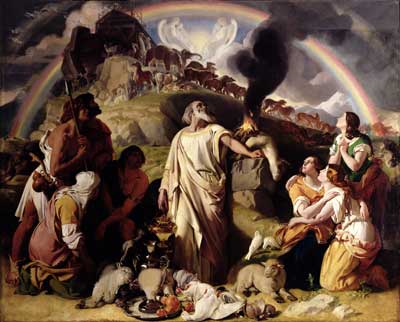
noah-rainbowI mentioned the Noahide covenant that God made with all life, including all of humanity. God created a set of obligations for humanity and in exchange for obedience, God promised not to destroy the world again by flood. The sign of this covenant is the rainbow we periodically see in the sky (see Genesis 9 for details).

But it’s not until Lancaster begins talking about the covenant God made with Abraham and all of Abraham’s descendants through Isaac and Jacob, the Jewish people, that we begin to understand the nature of this covenant and all the covenants to follow.

The first big point to get is that all subsequent covenants build on prior covenants rather than replacing them. In fact, this is really important for ancient and modern Israel because whenever Israel violated the covenant made with God at Sinai (such as the incident of the Golden Calf recorded in Exodus 32), it was God’s promises made in the Abrahamic covenant that allowed Him to repeatedly redeem Israel. You might want to review God’s promises to Abraham and his descendants by looking at Gen. 12:1-3, 7, and 22:18. You’ll also see this covenant being inherited by Abraham’s son Isaac in Gen. 22:18.

Interestingly enough, although it is commonly believed that Abraham had no obligations he had to fulfill apart from participating in the sign of this covenant, which was circumcision for himself and all the male members of his household, this is not actually true. Abraham was required to have a lived-out faith that God periodically tested. And the results of those tests really, really mattered.

The angel of the Lord called to Abraham a second time from heaven, and said, “By myself I have sworn, says the Lord: Because you have done this, and have not withheld your son, your only son, I will indeed bless you, and I will make your offspring as numerous as the stars of heaven and as the sand that is on the seashore. And your offspring shall possess the gate of their enemies, and by your offspring shall all the nations of the earth gain blessing for themselves, because you have obeyed my voice.”

Genesis 22:15-18 (NRSV)

Abraham and the starsGod said “Because you have done this…I will indeed bless you, and I will make your offspring as numerous as the stars of heaven.” These are conditions. You did this and in response, I will do that. Abraham had to demonstrate perpetual fidelity to God by faith, trust, and obedience, and doing so, God responded by fulfilling the covenant promises He made to Abraham and his descendants.

It is the same for us as James, the brother of the Master famously wrote in James 2:14-26. Lancaster says we are justified by faith and works, which is a rather radical thought in traditional Christianity, but as you’ll discover, his presentation of covenants including the New Covenant, is also not the “norm” from an Evangelical perspective.

As a side note relevant to justification and deeds, see Derek Leman’s blog post Our Deeds are Not Filthy Rags.

As far as the “duration” of the Abrahamic covenant, according to the Apostle Paul:

Brothers and sisters, I give an example from daily life: once a person’s will has been ratified, no one adds to it or annuls it. Now the promises were made to Abraham and to his offspring; it does not say, “And to offsprings,” as of many; but it says, “And to your offspring,” that is, to one person, who is Christ. My point is this: the law, which came four hundred thirty years later, does not annul a covenant previously ratified by God, so as to nullify the promise.

Galatians 3:15-17 (NRSV)

In other words, later covenants do not get rid of, annul, cancel, or make obsolete earlier covenants. In addressing the covenant God made with Abraham, Paul says it’s forever. A later covenant can only ratify an earlier one, not abolish it.

Lancaster spends some time on the Mosaic covenant, the covenant God made with the Children of Israel, that is, Abraham’s, Isaac’s, and Jacob’s descendants, at Sinai. One important point he makes is that this later covenant builds on the earlier one and in fact, the making of this covenant actually fulfills sections of the earlier, Abrahamic covenant. One example is the continuation of the promises that Abraham’s descendents would possess the Land of Israel, cementing this promise by establishing the laws specific to the Jewish people living in that Land.

Another important issue Lancaster brought up is the difference between the covenant and the Law. The Torah is not the Sinai covenant, it represents the conditions of the covenant, defining the responsibilities of each party: God and the Children of Israel. It also defines the sign of the covenant which is the Shabbat.

This sign is unique in that it is not a manifestation in nature, such as the rainbow, or a physical condition or procedure, such as circumcision. Shabbat is an “island in time” or, as Lancaster quotes Abraham Joshua Heschel, “a sanctuary in time.”

Therefore the Israelites shall keep the sabbath, observing the sabbath throughout their generations, as a perpetual covenant. It is a sign forever… (emph. mine)

Exodus 31:16-17 (NRSV)

Notice that the Sinai covenant and its sign are forever and perpetual. No exchanges or replacements allowed.

As I mention above, whenever Israel disobeyed the conditions of the Sinai covenant, according to those conditions, God punished Israel. There is no provision in the covenant for its annulment. All covenants God made with Israel are forever. Is that clear?

King DavidLancaster moved on to describe the Aaronic covenant, which is the promise that Aaron’s descendants will always be High Priests, and the Davidic covenant that states David’s descendants will be Kings over Israel. The conditions state that should a King disobey, he would be disciplined, but God would not remove his love from the Davidic dynasty (see 2 Samuel 7). The Davidic covenant is also the hope of the Messiah, for a sinless King must rule one day over Israel, that is, King Messiah.

So far, all of these covenants are built one on top of the other. Each later covenant expands upon the previous covenant in some way. But what about the New Covenant?

First, let me, thanks to Lancaster (though I knew this already), relieve you of a burden. The New Testament, that is the collection of scriptures from Matthew through Revelation, does not equal the New Covenant. I heard a highly intelligent, well-educated, and abundantly accomplished Pastor tell me once that the New Testament is the same thing as the New Covenant and I almost fell out of my chair.

According to Lancaster (and I agree with him), the New Testament is a collection of scriptures that record how Yeshua (Jesus) initiated some of the conditions of the New Covenant, but it is not the covenant itself. Lancaster (and again, I agree) says that the New Testament would be better named “The Apostolic Writings” or “The Apostolic Scriptures”. Just as the Torah is not the Sinai (or “Old”) Covenant, neither is the “New Testament” the New Covenant.

So where do we find the New Covenant? It’s all over the Torah, the Prophets, and the Writings, but as you hopefully already know, the key scriptures are these:

The days are surely coming, says the Lord, when I will make a new covenant with the house of Israel and the house of Judah. It will not be like the covenant that I made with their ancestors when I took them by the hand to bring them out of the land of Egypt—a covenant that they broke, though I was their husband, says the Lord. But this is the covenant that I will make with the house of Israel after those days, says the Lord: I will put my law within them, and I will write it on their hearts; and I will be their God, and they shall be my people. No longer shall they teach one another, or say to each other, “Know the Lord,” for they shall all know me, from the least of them to the greatest, says the Lord; for I will forgive their iniquity, and remember their sin no more.

Jeremiah 31:31-34 (NRSV)

I will take you from the nations, and gather you from all the countries, and bring you into your own land. I will sprinkle clean water upon you, and you shall be clean from all your uncleannesses, and from all your idols I will cleanse you. A new heart I will give you, and a new spirit I will put within you; and I will remove from your body the heart of stone and give you a heart of flesh. I will put my spirit within you, and make you follow my statutes and be careful to observe my ordinances. Then you shall live in the land that I gave to your ancestors; and you shall be my people, and I will be your God.

Ezekiel 36:24-28 (NRSV)

Taking all this together, first notice that the New Covenant is made only with Judah and Israel. No mention is made of the Gentiles and particularly “the Church” at all. It seems that outside of the Jewish people, God has no covenant relationship with humanity and never will. Also notice that nothing in this language whatsoever changes, annuls, cancels, or abolishes anything in any of the previous covenants God made with Israel. That means, among other things, that the Torah is perpetual and that Jesus didn’t lie:

“Do not think that I have come to abolish the law or the prophets; I have come not to abolish but to fulfill. For truly I tell you, until heaven and earth pass away, not one letter, not one stroke of a letter, will pass from the law until all is accomplished.”

Matthew 5:17-18 (NRSV)

CreationJesus never intended to come and abolish what God established in relationship with Israel, and the Torah will not change at all until Heaven and Earth pass away and until all is accomplished.

Well, Heaven and Earth are still here as far as I can tell. But what needs to be accomplished? I mean, didn’t Jesus say “It is finished” on the cross right before he died? (John 19:30) (Hint: If he said “It is finished” and then died, it’s very likely that what was finished was his suffering).

I said before, echoing Lancaster, that Jesus initiated the New Covenant by his death and resurrection. Jesus himself said that the bread and wine the Apostles ate at the last meal with the Master (and Lancaster taught that after a covenant was made in the ancient Near East, a meal was always eaten together by the participants of the covenant) were the New covenant in his body and blood (Luke 22:19-20), so the New Covenant started at that point. Jesus got the ball rolling. But what happened to the covenant after that?

Look at the passages from Jeremiah 31 and Ezekiel 36 again. Do you see all that happening? How can the Word of God be written on our hearts if we as believers still sin? How can the New Covenant be initiated but not completed?

For in him every one of God’s promises is a “Yes.” For this reason it is through him that we say the “Amen,” to the glory of God.

2 Corinthians 1:20 (NRSV)

He who has prepared us for this very thing is God, who has given us the Spirit as a guarantee.

2 Corinthians 5:5 (NRSV)

What is this promise and guarantee? It’s the sign of the New Covenant. Lancaster says that the New Covenant encompasses all of the previous signs (Shabbat, for instance) but also has its own sign. It’s also unique in that the sign functions as sort of a down-payment or promissory note that Messiah will return to complete what he started, that is to deliver on the rest of God’s promises outlined in the New Covenant language.

That’s why we as believers have the Holy Spirit but still don’t see evidence of the full arrival of the Messianic Kingdom, the Kingdom promised by the New Covenant. It is a promise of what is yet to come.

I said before that the New Covenant doesn’t annul or change any of the previous covenants but then why is it “New?” Look again at Jeremiah and Ezekiel. Judah and Israel are still obligated to obey God’s Torah but the big difference, the only real difference, is that this time, God will make it possible for man to obey.

Many Christians say that God gave Israel the Law to prove that they were incapable of obedience to God’s standards and, once He made that point, He replaced the Law (Torah) with the Grace of Jesus Christ, which doesn’t rely on man having to do anything, including, if you’re a Calvinist, exercising enough free will to accept that free gift of salvation. Lancaster says that God didn’t change His expectations of obedience, there has always been grace, and that knowing man cannot obey God consistently out of his own will, God places His Spirit in man and God writes His Torah on man’s heart, circumcising that heart, so that man will “naturally” obey God’s desires. That’s the “New” in “New Covenant.”

This is a beautiful way to dispense with the requirement in the Church that we retrofit modern Christian theology into the Old Testament and invent new interpretations to explain Christian doctrinal dissonance in trying to make the older and newer scriptures fit together. Lancaster creates a seemless progression across all scripture that doesn’t make it necessary for us to “jump the tracks” at Acts 2 and invent a never prophesied entity known as “the Church”.

But I mentioned before that the New Covenant, like all of the prior covenants except the one made with Noah, were made with Israel, that is the descendants of Abraham, Isaac, and Jacob. This is really good news, the gospel message to the Jewish people, but what about the Gentiles? Have we been left out in the cold after all? Where is the gospel for us?

In him you also, when you had heard the word of truth, the gospel of your salvation, and had believed in him, were marked with the seal of the promised Holy Spirit; this is the pledge of our inheritance toward redemption as God’s own people, to the praise of his glory.

Ephesians 1:13-14 (NRSV)

New CovenantThe Apostle Paul (Romans 11:11-24) said that the God-fearing Gentiles are grafted into the Commonwealth of Israel through fidelity to the Jewish Messiah King, that is, to Jesus, and that by swearing such allegiance and in obedience to our King (which I speak of in this blog post), we are added in to that commonwealth alongside the born citizens of Israel, the Jewish people.

Lancaster was quick to point out that such “grafting in” does not make Gentile believers (i.e. Christians) Jewish nor does it obligate us to the Torah in the same manner as the Jews. Yes, we Gentile believers are obligated to some of the conditions in the Torah, but that obligation is unique to us as Gentiles, and many other conditions are only applied to Jewish people, whether believers or not.

Again, this does not mean there is one, identical application of the Torah mitzvot for both Jews and Christians, and it absolutely doesn’t mean that the Church, under the New Covenant, has replaced Israel and the Jewish people or anything in the Old(er) Covenant made at Sinai…or any of the other of God’s covenants.

…remember that you were at that time without Christ, being aliens from the commonwealth of Israel, and strangers to the covenants of promise, having no hope and without God in the world. But now in Christ Jesus you who once were far off have been brought near by the blood of Christ.

Ephesians 2:12-13 (NRSV)

This particular doctrine on the New Covenant is certainly a lot easier to make sense of and follows the flow of the entire Bible much better than the traditional Christian understanding outlined, for instance, by gentlemen such as Dr. Thomas Schreiner in his book 40 Questions About Christians and Biblical Law which I reviewed a time or two.

I’m grateful to Lancaster and the other fine folks at First Fruits of Zion for producing this teaching and making it available to people like me. It certainly is a breath of fresh air and illuminates the Bible in a manner that we’ve gotten far away from in Christianity over the long centuries. It’s time to take back the lessons taught by the Apostles and to lead a new “reformation” of our own in the Church.

I strongly suggest that you acquire this audio series for yourself. I didn’t include everything Lancaster taught on disc one (though you must imagine I did given the length of this blog post) and he presents further information that solidifies his argument regarding the New Covenant.

I look forward to writing reviews on the rest of the series and having Lancaster show me just “how deep the rabbit hole goes” (with apologies to Morpheus, played by Laurence Fishburne).

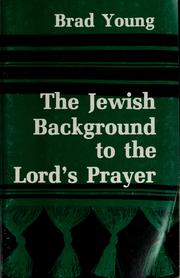
Book Review: The Jewish Background to the Lord’s Prayer

brad-young-bookThe main problem is one of approach. Too often, the importance of the Jewish background of the prayer and of the language that Jesus used has been overlooked or minimized. Jesus was a Jew, speaking Hebrew to his Jewish followers during the difficult days of the Roman occupation of Israel in the Second Temple Period. A modern Christian has a quite different understanding of prayer, Scripture, and faith than a Jewish teacher like Jesus, not to mention the great differences in language, culture, and history. One can easily miss the great depth of Jesus’ message, even while believing in him. Here we will try to rediscover something of the original Jewish atmosphere in which Jesus taught his followers how to approach God in prayer.

-Brad Young
from “Introduction: The Disciples’ Prayer,” pg 1
The Jewish Background to the Lord’s Prayer

I’ll start by profusely thanking Toby Janicki for graciously lending me his personal copy of Young’s book. Apparently it is out of print, and even used copies on Amazon are kind of pricey, especially for a forty-six page text.

As Young states, we Christians in the Church tend to almost take the Lord’s Prayer, or rather “the Disciples’ Prayer” for granted. It’s one of those things we read in the New Testament that we think we all understand correctly and completely. After all, the prayer itself is quite short. What’s there to misunderstand, right?

The answer to that question is “plenty,” and for the reasons I quoted above.

To start off, I won’t quote the Disciples Prayer here. It should be pretty familiar to most Christians, even those who don’t spend a lot of time in the Bible. For reference, there are two, parallel versions of this prayer in the Bible and they aren’t identical. You can find them in Matthew 6:9-13 and Luke 11:2-4. The differences, I suspect, have to do with the different audiences of each Gospel, with Matthew written to the Jews and Luke written to the Greeks.

Our Father Who Art In Heaven

Young suspects (pg 3) that Luke removed the “Jewish elements” of the prayer, since his version does not contain the words we read in English, “who art in heaven”. This was a familiar prayer formula in first century Judaism but would have seemed foreign to Greek readers. Picturing a “Father in Heaven” might have summoned images in Greek minds of some “god” such as Zeus sitting on an Olympian throne (pg 4). Luke may have felt it prudent to avoid such false associations by editing Jesus’ words (a Gospel writer editing the words of the Master to fit a specific audience is somewhat startling, don’t you think?).

But for a Jewish audience, the “Father in Heaven” reminded them of the love and care Hashem had and has for the Jewish people, and they would have recalled many references from scripture of the kindness of God toward Israel:

Whoever is wise let him note these things, and they will comprehend the kindnesses of Hashem.

Psalm 107:43 (Stone Edition Tanakh)

Jesus taught his disciples that God is not just a generic Father in Heaven, but He is “your” Father and “our” Father. The relationship between God and Israel isn’t just corporate, it’s personal. As Gentile disciples of the Master, we are grafted into that relationship with God, and thus we can call God “our” Father and “my” Father in Heaven.

Hallowed Be Thy Name

PrayingYoung says (pg 7) that the word we read as “Hallowed,” at least in the King James Translation, is more accurately rendered “sanctified”. He “retrotranslated” the Greek into the Hebrew word “yitkadesh” which means “be sanctified” so the phrase should read like “may Your Name be sanctified”. He also compares this to the Hebrew word “v’hitkadishti” found in Ezekiel 38:23

I will be exalted and I will be sanctified… (emph. mine)

Ezekiel 38:23 (Stone Edition Tanakh)

But as Young asks (pg 8), two-thousand years ago, what did “sanctify” mean to the Master’s Jewish disciples? Young makes comparisons to Leviticus 22:32 and Ezekiel 36:23 but he also said this:

The name of the Lord can be either sanctified or profaned by the conduct of people. In fact, because a martyr would frequently cause others to glorify God as a result of his sacrifice, the Hebrew idiom, “to sanctify the Name,” was often understood as referring to someone who would give his life for his faith.

-Young, pg 8

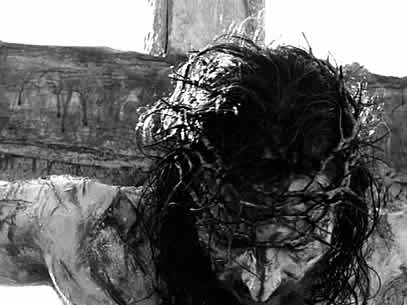
Adds some dimension to the crucifixion of Christ, doesn’t it? Perhaps as his disciples watched Jesus slowly dying on the cross, they remembered these words and what they truly meant to the Master. Perhaps they finally understood one day, that to pray this prayer was to ask that they be considered worthy to also die for the sake of Heaven.

But it’s not just how you die, but how you live, for “one sanctifies God by living a holy life.” Recall Matthew 5:16 (DHE Gospels):

So also, shine your light before sons of men, so that they may see your good deeds and praise your Father who is in heaven.

Thy Kingdom Come

Young spends a significant portion of this small book discussing the meaning of the Kingdom, and it’s somewhat reminiscent of an episode of the First Fruits of Zion television series called Thy Kingdom Come.

According to Young (pg 10), we mistakenly believe this phrase refers to Heaven or some future, Messianic Kingdom that Jesus will establish after he returns. But what did Jesus mean when he said, as he often did, “the Kingdom of Heaven?”

The Greek word “eltheto” doesn’t have an exact equivalent in English but it suggests “may it be” or “let it be”. But again, in Hebrew and to a Second Temple Era Jewish audience, what did this mean? Young (pg 11) says the phrase is quite similar to words we find in the Kaddish: “May He cause His Kingdom to reign.” Young also makes a comparison to the Hebrew words “tamlich malchutcha” or “May you continue establishing Your Kingship,” indicating a continual process rather than a point fixed in time. It is associated with the idea of a Kingdom that has already arrived, and yet is still in the process of coming.

I wrote a review last week about a portion of D. Thomas Lancaster’s Holy Epistle to the Hebrews sermon series called The Partisans that speaks to this difficult to comprehend matter.

Lancaster
D. T. Lancaster

The overarching concept of God having reigned, His currently reigning, and His reigning forever, is all over the Bible. Exodus 15:18, Psalm 93:1, and Psalm 146:10 only scratch the surface, and all of these references may well have come to the minds of the disciples as they listened to Jesus teach them how to pray.

Young states (pg 13) that, referencing Matthew 10:7, “The Kingdom of Heaven is at hand,” the phrase “at hand” or “engiken” in Greek (Heb. “karav”), is “the perfect indicative” and is better understood as an already completed action. It’s could be better said as “The Kingdom of Heaven is here.”

On the Day of Atonement, the High Priest would say the holiest name for God. When he pronounced the Tetragrammaton, the people would fall on their faces and affirm, “His honorable name is blessed and his Kingdom is forever and ever.” The Kingdom is present. God is reigning. He rules as the people recognize his Kingship. He rules when he redeems people. (emph. mine)

-Young, pg 14

This not only speaks directly to Lancaster’s point in the aforementioned sermon, but it expands the meaning of how God’s Kingdom can already be here in a completed form and still having not quite arrived. As each individual comes to faith and acknowledges the Kingship of God in the world and in their lives, the Kingdom is continuing to be established, one human being at a time, across all time, and across human history. As the Gospel message is progressively spread throughout the Earth, the Kingdom is also being spread, expanded, established, affirmed. When the time of the Gentiles (Romans 11:25) is fulfilled, Israel will be redeemed by Messiah and the Kingdom that has already arrived and yet still arriving, will become perfected in our world, and the Messiah King who is already enthroned in the Heavenly Court, will ascend to his place of honor in Jerusalem.

Blessed are the poor in spirit, for theirs is the kingdom of heaven.

Matthew 5:3 (NASB)

Young says this is a poor translation of the Greek “hoti auton estin” and does not actually imply that the poor can “own” the Kingdom of Heaven.” The “poor in spirit” (followers of Jesus) do not own the Kingdom as a possession. Young renders the same verse in Hebrew and then translates that back into English to say, “Blessed are the poor in spirit, for they make up the Kingdom of Heaven.” In other words, the followers of Jesus comprise, or are the building blocks, or are the substance of the Kingdom.

These are people who have already accepted the rule of the King and thus not only become part of the Kingdom as subjects, but are the very essence of the Kingdom of Heaven, the Messiah’s Kingdom. “May you continue establishing your Kingdom, and may your will be done” are parallel phrases in this prayer and declare that we desire more hearts turn to the Father by way of the Son, further establishing God’s rule and the Kingdom of Heaven on Earth.

Thy Will Be Done, On Earth As In Heaven

We already touched on this phrase in the section above, stating that this is an affirmation of what God is already doing. Young (pg 18) references the Greek “genathato” as “may it be,” translating it back into the Hebrew “hayah” which is “to be” or “asah” which indicates “to do”. A more literal translation, taking the Hebrew into account, would be “Let it be your will in heaven and earth” or “Let your will prevail in heaven and earth”.

The Death of the MasterYoung says (pg 19) that “to do His will” is idiomatic Hebrew indicating that it is people who do God’s will, thus is a call for obedience or a declaration of obedience to God, for one continually establishes His Kingdom by continual obedience, thus sanctifying His Name.

No finer act of sacrificial obedience to God can be found than in Jesus at Gethsemane (Matthew 26:36-46, Luke 22:39:46):

Of course, the greatest example of the battle to do the will of God is Jesus himself in Gethsemane. Jesus had already predicted his betrayal and sufferings. The brutality of Roman executions was well known, and more than a few had actually witnessed crucifixion. Jesus was keenly aware of the deeper significance of his sufferings. Still, conscious of his own crucifixion looming before him in the next hours, he prayed, “Father, if thou art willing, remove this cup from me; nevertheless, not my will, but thine, be done” (Luke 22:42). Jesus did not succumb but performed the will of God. A person overrules his own volition in order to do God’s will.

-Young, pp 20-21

Jesus has been called an Apostle (Hebrews 3:1), a “sent out one,” and he taught that no servant is greater than the one who sent him (John 13:16), thus Jesus depicted the perfect servant of God, who would obey, even to the death, as an act of love toward his disciples ( John 13:34, John 15:13) and ultimately toward humanity (John 3:16).

Young quotes from Rabbi Alexandri’s prayer (pg 21), saying, “Sovereign of the universe, it is revealed and known to You that our will is to do Your will.” We must all repent continually for it is sin that causes us to rebel against God, preventing us from making His will our will and establishing His Kingdom.

Give Us This Day Our Daily Bread

You wouldn’t think this would need interpreting. Why isn’t it plain that we are to ask God to fulfill our daily needs? Is this asking for our food today, or that our food be prepared for the following day? Young makes a connection to Proverbs 30:8 stating that Jesus may have been deliberately alluding to the scripture, “Remove me far from falsehood and lying; give me neither poverty nor riches; feed me with food that is needful for me.”

So “daily bread” may mean something more like “all of my needs”. This simple phrase in the prayer can be unpacked into a complex set of Jewish conceptualizations interconnected throughout the Bible.

Consider Exodus 16:4-10 and particularly verse 4:

Hashem said to Moses, “Behold! — I shall rain down for you food from heaven; let the people go out and pick each day’s portion on its day, so that I can test them, whether they will follow My teaching or not.”

This speaks not only to obedience but utter dependence and emphasizes not only the study of Torah, according to Rabbi Simeon ben Yochai (pg 25), but being “totally dependent upon God for…every need.”

God is the great provider and we should not even doubt that His providence will always be available (see Matthew 6:25-26, Luke 12:22-24).

And Forgive Us Our Debts, As We Also Have Forgiven Our Debtors

ForgivenessYoung cites (pg 29) Matthew 18:23-35 as a lesson in forgiveness and links how we as disciples forgive others to how we will be forgiven by God. He shows a parallel between this part of the Disciples’ Prayer and what Ben Sira (Sirach) taught (170 BCE): “Forgive your neighbor the wrong he has done, and then your sins will be pardoned when you pray.”

But is it that we impact how or if God will forgive our sins by the quality of forgiveness in our own hearts, or is an unforgiving heart inhibited in prayer, thus never reaching God…or is it a little of both?

“Rabbi, which is the greatest mitzvah in the Torah?” Yeshua said to him, “Love HaShem your God with all of your heart, with all of your soul, and with all your knowledge. This is the greatest and first mitzvah. But the second is similar to it: Love your fellow as yourself. The entire Torah and the Prophets hang on these two mitzvot.”

Matthew 22:36-40 (DHE Gospels)

There’s a slight difference in Luke’s version of the prayer. Matthew asks for forgiveness of “debts” where Luke says “sins.” Young (pg 30) says this is probably associated with the use of the Hebrew word “chayav” which can mean both guilt to which we are accountable and a debt to be paid.

If we again consider Jesus as an Apostle of God, then to the degree he forgave represented God’s forgiveness, and Jesus forgave generously, even to his enemies:

Yeshua said, “My Father, forgive them; for they do not know what they are doing.”

Luke 23:34 (DHE Gospels)

Lead Us Not Into Temptation, But Deliver Us From Evil

Young (pg 31) considers “lead us not into temptation” and “deliver us from evil” to be parallel statements. The word for “temptation” in Hebrew suggests “test” or “trial,” just as HaSatan tested the Master (Matthew 4:1-11, Mark 1:1-12, Luke 4:1-13) hoping to cause him to stumble. Please keep in mind that it wouldn’t have been much of a test if Jesus was totally incapable of sinning, of disobedience to God. He would only have been exalted by resisting the temptation to do what was evil in God’s eyes, that is, if it was possible for him to fail.

When Jesus taught his disciples this portion of the prayer, he of course knew that it was not only possible for the disciples to fall prey to testing and to sin, but that indeed, they would fail. Consider Peter’s denial of the Master after declaring that he would follow Jesus even unto death (Mark 14:66-72, Luke 22:54-62, John 18:15-27).

Young notes parallels (pg 32) not only in scripture (Psalm 119:133) but in one of the Psalm scrolls from the Dead Sea Scrolls discovered in Cave 11, “Let not Satan nor an unclean spirit rule over me” (Heb. “al tashlet bi satqan v’ruach tumah”). Also, the Testament of Levi states, “And do not let Satan rule over me to lead me astray.” Young further quotes abundantly from the Talmud where very similar wording is to be found.

Conclusion

We see here, as I’ve written in other “meditations,” that there is a great deal more information packaged into even the briefest portions of our Bible than we might imagine, even if we are seasoned students of the Bible. If we apprehend scripture from a solely Christian perspective but fail to take into account the Hebrew thought behind the Greek text, we fail not only to get the full message of Jesus, but in many cases, the correct message of Jesus. Thus even with the best intentions and a wholehearted desire to serve God, we end up traveling down many unintended and undesirable paths in relation to God, to the Jewish people, to Judaism, and to Israel.

That said:

Even though Jesus taught his disciples this prayer in Hebrew, in an entirely different setting nearly two millenniums ago, the petitions contained in this short prayer transcend time and are appropriate to the modern-day disciple. Today, perhaps more than ever before, Jesus’ followers need to be challenged again to respond to this timeless message.

-Young, pg 36

DHE Gospels
Delitzsch Hebrew Gospels

The challenge is to encounter the teachings of Jesus and his Jewish disciples on their own terms, meeting them on their own “home ground,” so to speak, rather than in the places that make us feel comfortable. Most Christians get a little nervous when a lesson about Jesus seems “too Jewish.” Oh sure, they can accept a few Hebrew words and a few Jewish thoughts, but once you start re-translating the entire concept of the Gospel message of Moshiach into a wholly Jewish context, most Gentile Christians, especially those raised in the Church and quite accustomed to the traditions associated with Biblical interpretation, will quickly lose their bearings and feeling in danger of becoming lost, will retreat to more familiar territory, even if that territory has a poorer view of the revered Savior.

Young’s small book was published thirty years ago and sadly is very expensive to acquire, but it also is part of a larger body of scholarship that is continually being added to, which holds the promise of truly illuminating the mind and heart of each and every believer, showing us the Jewish face of Yeshua behind the Gentile mask of Jesus.

Imagine if a forty-six page booklet can say so much about just a few verses in the Gospel that teach such a brief prayer, what could be learned if we approached the entire Bible from the same perspective?

May He Calm Our Storms

Those who go down to the sea in ships, who do their work in great waters. They have seen the deeds of Hashem, and His wonders in the watery deep. He spoke and raised the stormy wind and lifted its waves. They rise heavenward, they descend to the depths, their soul melts with trouble. They reel, they stagger like a drunkard, and all their wisdom is swallowed up. Then they cried out to Hashem in their distress, and He would take them out from their straits. He would halt the storm to restore calmness, and their waves were stilled. And they rejoiced because they were quiet, and He guided them to their desired boundary. Let them give thanks to Hashem for His kindness, and His wonders to the children of man. Let them exalt Him in the assembly of people, and praise Him in the session of the elders.

Psalm 107:23-32 (Stone Edition Tanakh)

He went down to the boat, and his disciples went down with him. There was a great storm on the sea, to the point where the waves would cover the boat, but he was sleeping. His disciples approached him and woke him, saying, “Save us, our master. We are perishing!” He said to them, “Small ones in faith, why are you afraid?” He got up, reprimanded the winds and the sea, and there was a great silence. The men were amazed and said, “Who is he, then, that even the winds and the sea listen to him?”

Matthew 8:23-27 (DHE Gospels)

I wonder if, at any point after Yeshua (Jesus) ended the storm, did the disciples think of the portion of Psalm 107 that I quoted above? When I read that psalm as part of my devotionals last Shabbat, I immediately thought of the passage from Matthew 8. But as I made the connection from earlier to later in the Bible, I wondered if the first century Jewish readers of the Gospel of Matthew, when coming upon the sequence where the Master caused the storm to cease…if they saw the relationship between these events in scripture and connected the acts of Jesus with the acts of Hashem, the God of Israel? Could this linkage have been intentional on Matthew’s part? Did he leave a rather obvious (if you’re a first century Jew) clue as to the Master’s identity and nature here to which we Christians, nearly twenty centuries later, would be oblivious?

If so, then it wouldn’t be the first time.

Last summer, I wrote a review of a sermon given by First Fruits of Zion (FFOZ) Founder and President Boaz Michael that he presented some years earlier which he titled “Moses in Matthew”. You can read my review The Jewish Gospel, Part 1 and Part 2 for the details. But it seems to me, perhaps thanks to the Spirit of God (and hopefully not because of my own wishful thinking), that I have made one of those little links in scripture that are so “Jewish” and that further establish the Bible as a single, unified document. I believe this is another example that the Bible is the complete Word of God, a revelation that we can accept as a total and seamless gift, not something to be sliced and diced as Christianity sometimes does, so that the Bible artificially points to an earlier God and a later Jesus, as if the two have almost nothing to do with one another, as if the Old Testament and the New Testament form two separate plans of God in how He will be among His people, and as if God changed His mind on who He decided His people were to be.

God speaks to us from the Bible. The Spirit of God whispers to us as we read. Most of the time, we aren’t even conscious of His presence, but every so often, something “clicks” as it did for me last Shabbos.

May God continue to graciously open our eyes and ears and minds to His Word and reveal the face of Messiah to those of us who call ourselves disciples, and to all to cry out to God for mercy and compassion. May He calm our storms that we too may give thanks and rejoice, and that we might declare the Name of God as great among our assemblies.

Amen.