Tag Archives: Jesus

Learning Smallness

smallThe words of the wise are heard with pleasantness.

Ecclesiastes 9:17

The Talmud states that on Friday afternoon, a person must alert his household to prepare the necessities for Shabbos. However, he must do so in a soft voice, so that his words will be obeyed.

Many late Friday afternoons, people feel themselves under pressure while rushing to prepare for Shabbos. If one sees that some things have not yet been done, it is easy to lose composure and scream at other members of the household. The Talmud cautions against doing so and implies that shouted instructions are less likely to be carried out.

A politician who had concluded an address inadvertently left a copy of his speech on the lectern. In the margins were comments indicating manners of delivery, e.g. “gesture,” “clap hands,” “slow and emphatically,” etc. At one point he had written, “Argument awfully weak here. Scream loudly.”

If we have something of substance to say, the message will be adequately conveyed in a soft tone, because the content alone will carry it. Only when our words have little substance do we seek to make an impression by delivering them with many decibels.

Even in situations of great urgency, we have no need to lose our composure. I can attest that when life-threatening emergencies presented themselves in the hospital, greater efficiency and more rapid response ensued when everyone kept a cool head.

The words of Solomon are correct. The wise speak pleasantly, and those who shout may not be wise.

Today I shall…

…keep my voice soft and pleasant at all times, especially when I have something urgent to communicate.

-Rabbi Abraham J. Twerski
“Growing Each Day, Tammuz 4”
Aish.com

That isn’t easy to do. A sudden surge of adrenalin as you see a small child run into traffic after a ball will make just about anyone yell, “Stop!” Of course, under that circumstance, a raised voice is perfectly understandable and justified, but most of the time when we raise our voices or otherwise try to push our weight around, it’s not.

Although we don’t generally have audible “voices” in the blogosphere, nevertheless, we tend to “yell” at each other. As Rabbi Twerski taught in the above-quoted paragraphs, human beings tend to yell the loudest when our positions are the weakest. We tend to attack others when we feel insecure about ourselves.

What should we do instead?

The Alter Rebbe writes in his Siddur: It is proper to say before prayer, I hereby take upon myself to fulfill the mitzva – “Love your fellowman as yourself.” This means that the precept of ahavat yisrael is the entry-gate through which man can pass to stand before G-d to daven. By merit of that love the worshipper’s prayer is accepted.

“Today’s Day”
Monday, Tammuz 2, 5703
Compiled by the Lubavitcher Rebbe; Translated by Yitschak Meir Kagan
Chabad.org

Sounds sort of like this:

He said to him, “‘You shall love the Lord your God with all your heart, and with all your soul, and with all your mind.’ This is the greatest and first commandment. And a second is like it: ‘You shall love your neighbor as yourself.’ On these two commandments hang all the law and the prophets.”

Matthew 22:37-40 (NRSV)

forgive-nudnikI’ve wasted a certain amount of time being unkind lately. I’d like to say that I’ll never make that mistake again but I probably will. It’s a mistake because what I say won’t change people unless they want to change. It’s a mistake because what I’ve said does nothing to make me a better person. It’s a mistake because what I’ve said has distanced me from people I truly love.

I struggle between leaving the others who are sometimes abrasive to walk their path and the desire to inject a word of justice into unkind conversations.

But it never works out well for me or for anyone and it is not a path to God.

What is?

Nothingness is the medium through which all energy moves, from above to below and from below to above.

Below, in the human heart, a sense of nothingness that transcends ego. Above, a Nothingness that transcends all boundaries and planes.

The nothingness below fuses with the Nothingness above, locking heaven and earth in an intimate embrace.

That is why G‑d is found amongst the truly humble.

-Rabbi Tzvi Freeman
“Nothingness”
Based on letters and talks of the Rebbe, Rabbi M. M. Schneerson
Chabad.org

Moses was considered the most humble man on earth (Numbers 12:3) and yet Israel considers him their greatest prophet. Most of the “loud voices” on the Internet today (including mine) aren’t particularly concerned with humility and in fact, humility frightens them because they (we, I) consider it equivalent to being “nothing.” However as we’ve seen, nothingness is a desirable trait. So is being small, as Rabbi Freeman also teaches:

“Rebbe!” the man cried. “Nobody gives me respect! Everybody steps all over me and my opinions!”

—“And who told you to fill the entire space with yourself, so that wherever anyone steps, they step on you?”

hero-largeI think part of my desire to inject justice into other online realms is related to the sense of smallness. I experience being stepped on or seeing others step on those who I care about and I become indignant, like the person who cried out, “Rebbe! Nobody gives me respect!” I need to relearn humility as a desirable trait and as a result, learn to stop being concerned with the opinions and petty slights of others.

I mean, it’s not like I’m unaware of the humility of our Fathers or of my own experiences learning humility. If I focus on those areas where I need to improve and strive to encounter God with more dedication, I won’t have time to be concerned about the thoughts and opinions of others who seem to continually feel offended. I also may avoid offending those people I consider friends who may be hurt by what I say and do.

I suppose that at some point, maybe even fairly soon, I’ll encounter someone saying something that I object to and the temptation to respond will overwhelm my good sense. I pray that God will guard me from such a time and such individuals and most of all, guard me from my own foolishness in thinking that I must engage such people or express my own small opinion. The only thing I must do is to diminish in the Presence of God, and allow Him to overflow into the spaces I create in me.

Make yourself small and you will be great.

Know you are nothing and you will be infinite.

At the very least, don’t make such a big deal of yourself
and you will be all that much closer to the truth.

-Rabbi Tzvi Freeman
“Small and Infinite”
Based on letters and talks of the Rebbe, Rabbi M. M. Schneerson
Chabad.org

May God turn my heart and mind to Him alone and accustom me to seek the company of righteous people who are uplifting and inspiring. By being the lowest, sitting at the bottom of the abyss, I can only pray that He will one day raise me up to see light again.


Are People Evil or Just Different?

shabbat-queen-elena-kotliarkerLet your home be open to all.

-Ethics of the Fathers 1:5

I have traveled to many communities to lecture on various subjects. I have also attended other guest speakers’ lectures. Invariably, after the lecture, the speaker is invited to a home where a small group of people gather for an informal chat, while hors d’oeuvres are served.

It has been very distressing to me that even when my audience appears to receive my talk well, no one may invite me to a post-lecture gathering. Why? I keep kosher, many of these people do not, and they find it awkward that the guest would not partake of their refreshments.

This baffles me. If my lecture was not well received, I could understand people’s reluctance to invite me. But when the response is virtually ecstatic, and I receive immediate requests for repeat performances, why, then, am I shunned? If I were a person of any other faith or nationality, I would be welcomed in everyone’s home. Why are the doors of my own people closed to me? The abundance of kosher foods available no longer makes keeping kosher an inconvenience.

Observant Jews adhere to kosher laws as a matter of conviction. Even if someone is not of that mindset, he or she can at least maintain a home where every Jew can be welcomed (or at least have a cup of coffee!).

So many doors are closed to Jews. We should not be closing our doors to our own.

Today I shall…

…try and make my home a place where every Jew can feel welcome and comfortable.

-Rabbi Abraham J. Twerski
“Growing Each Day, Tammuz 5”
Aish.com

I know a lot of you Christians reading this may be asking what’s so special about the Jewish people that we should go to extra lengths to accommodate them. Why would Rabbi Twerski specify that he should make his home feel welcome and comfortable for just Jews and that all Jews should do the same for other Jews? Is it only a “kosher food” thing? Why shouldn’t we Gentile Christians be given extra consideration? After all, what are we, chopped liver?

No, it’s not that at all. But if we expand on the thought begun by Rabbi Twerski and acknowledge that the Jewish people were specifically chosen by God (and the birth, death, and resurrection of Jesus Christ didn’t “unchoose” them), and we know that they have been especially targeted for persecution and even destruction, even to this present day and even among the body of believers, then we must realize that as disciples of the Jewish Messiah and worshipers of the God of Israel, we have a special duty to show love to those whom God loves.

Thus says the Lord, who gives the sun for light by day and the fixed order of the moon and the stars for light by night, who stirs up the sea so that its waves roar—the Lord of hosts is his name: If this fixed order were ever to cease from my presence, says the Lord, then also the offspring of Israel would cease to be a nation before me forever.

Jeremiah 31:35-36 (NRSV)

As part of his blog post for today, Derek Leman discusses the interdependency between the Jewish people and the nations, and the nations as particularly represented by Gentile believers: Christians. At least one of my reviews of the Rudolph and Willitts book Introduction to Messianic Judaism (I gave my Pastor a copy but with his brutal reading and studying schedule along with his Pastoral duties, he won’t be able to crack it open until the latter part of July), also addressed this mutual dependence and interlinking relationship between believing Jews and Gentiles.

We really can’t do without each other and yet, the divisiveness between some believing Jews and Gentiles, at least on the web, exists in sharp contrast to this principle, more’s the pity.

how-it-feels-to-disagreeI was encouraged by one non-Jewish Hebrew Roots supporter when he said (amid a sea of negative comments), “That being said, I agree with your sentiments re: not vilifying each other…We should be in the business of building one another up, not tearing one another down.

I agree, too.

It stands to reason that as human beings, we are going to disagree with each other on a good many things. As religious human beings, we are going to disagree about religion. Persecutions, pogroms, and inquisitions have all been justified in the name of God. Wars have been fought and many people have died over religious differences. Today, the weapons of choice, at least in the western nations, are not bombs and bullets, but words and blogging. We don’t just disagree, we attack, we “demonize,” we declare our opponents not only wrong but actually “evil” and that their teachings are “sending people to hell.”

Is that really what we’re supposed to be up to as disciples of the Master? What ever happened to the “unified” (as opposed to “homogenized”) body of Christ? If the so-called body of Christ were actually a human body, it would be dismembered into hundreds of individual pieces and lying dead in a large pool of blood; a scene that could only appeal to the Jeffrey Dahmer’s of the world (no, I’m not accusing anyone of being like Dahmer, I just said that for effect).

The comment I quoted above about “not vilifying each other” is an exceptionally rare one on the web. It has been said that the Internet was made for (adult material), but it seems more realistic to say that it was made to encourage rudeness and divisiveness. Most people “hide” either behind some pseudonym or, if the blog or discussion board allows it, behind the mask of “Anonymous.” From that perch, any one can say anything that occurs to them in the emotional “heat of battle” with no apparent consequences. Almost no one would say the same things or at least not in the same way if they were having a face-to-face conversation.

Accept truth from whomever speaks it.

-Maimonides, Kiddush HaChodesh 17:24

Some extremely choosy people will accept guidance or teaching only from an acknowledged authority, because they consider accepting anything from anyone of lesser stature a demeaning affront to their ego.

Among my physician colleagues, I have observed this phenomenon when a patient requests consultation. Those doctors who have self-esteem and know that they are competent have no problem accepting consultation, but those who are less self-confident may interpret the request for consultation as an insinuation that they are inadequate. They may be insulted by this request, and if they do comply with it, they will accept as a consultant only the chief of the department at a university medical school or some other renowned personage. Any other consultant constitutes a threat to their ego, an admission that “he may know more than I do.”

Physicians are not the only guilty party; professionals and artisans of all types can also show a lack of self-confidence by displaying this intellectual snobbery.

The Talmud states that truly wise people can learn from everyone, even from people who may be far beneath them. Limiting ourselves to learning only from outstanding experts is not only vain, but it also severely restricts our education. Humility is essential for learning, and we should accept the truth because it is the truth, regardless of who speaks it.

Today I shall…

…try to learn from everyone, even from someone whom I may consider inferior to me in knowledge.

-Rabbi Abraham J. Twerski
“Growing Each Day, Tammuz 7”
Aish.com

Let’s change “consider inferior to me in knowledge” to “different from me,” or “someone who disagrees with me,” or “someone I don’t like.”

Agreeing with a statement made by someone you don’t like is probably one of the most difficult things for a person to do. Imagine you are against another person because of their religious, political, or moral beliefs. You disagree with each other on almost everything. Then the person says something that you can’t disagree with because it is also one of the principles you choose to live by. Imagine they said something like, “I agree with your sentiments re: not vilifying each other…We should be in the business of building one another up, not tearing one another down.

agree-or-disagreeWhat would you do? What would you say? Would you…could you say anything?

If you agree with them, you have to admit the two of you have something in common. If you agree, then you are saying there is at least one point on which the two of you can stand together, a platform that could potentially be used to construct a dialog and to find other points of agreement. You might even have to admit you could learn to cooperate on certain projects to accomplish goals you both believe are worthy.

What a shock. Could you do it?

Imagine you have either publicly or in your thoughts, vilified someone. You can’t stand them. You think they’ve done you wrong. You think their religious teachings are false, dangerous, heretical. You believe what they say “sends people to hell.”

You’ve worked up quite a justified dislike if not hate for that person. And then they go and ruin it all by saying something you completely agree with…a truth that’s impossible for you to deny (at least unless you are willing to go back on stuff you’ve said in the past).

It is possible to disagree with someone, even strenuously, and not personalize the conflict (I know…that’s probably a radical idea to some folks). I won’t name names but I recently publicly disagreed with someone, a leader within his own organization. Although I acknowledged that this person has many fine qualities, I expressed concern over an area of behavior I thought could be improved, relative to everything I’ve said so far in this blog post.

Sadly, that was interpreted as a personal attack by several people including an employee of the person I was mentioning, resulting in a list being posted of this person’s many fine recent activities “proving” that he was without fault and that I was wrong to criticize that individual about anything whatsoever.

This is the sort of discussion that is “crazy making.” A person can be a good person and still be vulnerable to human faults, frailties, and temptations. I’d like to think I’m a good person but I know for a fact that I make mistakes (hopefully writing this blog post isn’t one of them) and have faults that I continue to address (being married is an enormous help in this area since spouses are just made to point out how we should improve ourselves).

We really need to be able to acknowledge others we disagree with when they do good, and even if we find it necessary to disagree from time to time, said-disagreement doesn’t mean the other person if evil, rotten, criminal, or any other bad thing. They may even say the truth about stuff sometimes and we may even agree with them sometimes.

There are days when I think there are very few voices of reason and sanity on the web. I know that most of us are trying to be good people and to serve God to the best of our abilities. If we could acknowledge that quality about each other, maybe we’d be heading in the right direction and finally, finally starting to obey our Master:

I give you a new commandment, that you love one another. Just as I have loved you, you also should love one another. By this everyone will know that you are my disciples, if you have love for one another.”

John 34-35 (NRSV)

I promise that by Monday, I’ll feel better and that will be reflected in my blogging but in the meantime, I just want to take this opportunity to encourage you, me, and everyone else who puts their thoughts and feelings out into the public realm to shape up, start reading our Bibles more, and start realizing what God is actually trying to tell us. Hint: The Bible doesn’t say, “be more snarky.”

Taking the Fork in the Road: Discussing Arminianism and Calvinism, Part 4

pass-failThe Arminian, whether strict, or moderate like Thiessen, will say that man is elect because he believes. The Calvinist asserts that man believes because he is elect. As long as Acts 13:48 and John 10:26 are part of the Bible, the Arminian definition of election which bases that election upon God’s foreknowledge of faith can never be maintained.

-Manfred E. Kober, Th.D.
“Chapter 4: The Demarcation of Modified Calvinism and Historic Baptist Beliefs,” pg 44
Divine Election or Human Effort?

Since they are both short, I blew through the last two chapters of Dr. Kober’s paper just to see how it was going to all get wrapped up. Not only does it come out as “Calvinists are right, Arminians are wrong,” but what’s more, Baptists are at the top of the heap.

OK, I may be exaggerating just a little, but it seems like what we’re really looking at is the continual disagreement between the two Protestant theories on the nature of election and salvation, created four-hundred years ago (sixteen-hundred years or more from the New Testament writers), and tinkered with ever since. Really, are these two perspectives the only way to read and interpret the Bible on this topic? Have we given up actually trying to understand how Paul might have really understood his own letters?

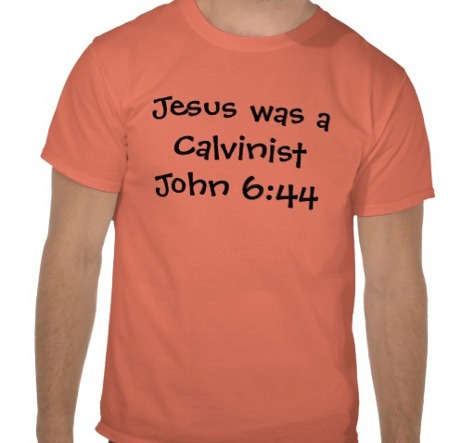
According to Kober and his supporting documentation, both Jesus and Paul were “Calvinists,” but like the doctrine of the rapture, we have to ask ourselves if the original apostolic authors understood the scriptures in an identical manner as latter-day Christian scholars? Remember, many latter-day Christian scholars also support supersessionism and predict that Jewish people have no place in the world to come unless they give up all Jewish practices and convert into Gentile Christians. Somewhere along the line, some Christians have missed a step or two.

I don’t have the theological chops to totally refute Calvinism (really, the whole Calvinism/Arminianism constructed framework), but hopefully, I’ve managed to punch a few holes in it and generated even a little bit of reasonable doubt.

On pages 46 and 47, Kober marries the Calvinist perspective with the “Creeds of the Baptists.” This is one reason why I’ll most likely never join a Christian denomination. I’ll spend the rest of my life trying to study and understand the Bible in all its colors and moods. How could I possibly accept the partitioned cardboard box into which any denomination forces the Bible and God?

So much for Chapter 4.

This paper opened with the duty of the theologian and it closes with an exhortation to the expositor of God’s Word. What is the expositor’s task in light of this awesome doctrine?

-Kober, “Chapter 5: The Demand Upon the Expositor”, pg 49

“Awesome doctrine?” Sure, if you’re a die-hard Calvinist and “winner of the game,” you can say it’s “awesome,” but some of us might call it something else. Take the following quote from Henry Thiessen, Lectures in Systematic Theology (Grand Rapids: Wm. B. Eerdmans Publishing Co., 1949), p. 345:

In the minds of some people, election is a choice that God makes for which we can see no reason and which we can hardly harmonize with His justice…We are asked to accept the theory…which does (not) commend itself to our sense of justice.

Kober goes on to say that Thiessen self-admittedly creates his doctrine as much out of his emotions as any form of Bible study and scholarship, but he ignores the words of Thiessen he quoted. The argument, as presented in the quote, isn’t Election vs. man’s compassion, but Election vs. Justice.

I said in a prior blog post that man very much does have a stake in holding God to His own standard of justice:

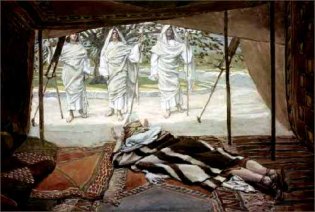
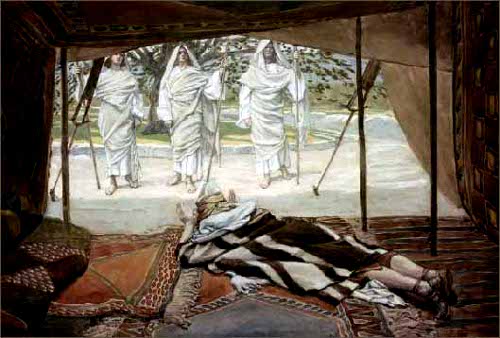
So the men turned from there, and went toward Sodom, while Abraham remained standing before the Lord. Then Abraham came near and said, “Will you indeed sweep away the righteous with the wicked? Suppose there are fifty righteous within the city; will you then sweep away the place and not forgive it for the fifty righteous who are in it? Far be it from you to do such a thing, to slay the righteous with the wicked, so that the righteous fare as the wicked! Far be that from you! Shall not the Judge of all the earth do what is just?” And the Lord said, “If I find at Sodom fifty righteous in the city, I will forgive the whole place for their sake.” Abraham answered, “Let me take it upon myself to speak to the Lord, I who am but dust and ashes. Suppose five of the fifty righteous are lacking? Will you destroy the whole city for lack of five?” And he said, “I will not destroy it if I find forty-five there.” Again he spoke to him, “Suppose forty are found there.” He answered, “For the sake of forty I will not do it.” Then he said, “Oh do not let the Lord be angry if I speak. Suppose thirty are found there.” He answered, “I will not do it, if I find thirty there.” He said, “Let me take it upon myself to speak to the Lord. Suppose twenty are found there.” He answered, “For the sake of twenty I will not destroy it.” Then he said, “Oh do not let the Lord be angry if I speak just once more. Suppose ten are found there.” He answered, “For the sake of ten I will not destroy it.” And the Lord went his way, when he had finished speaking to Abraham; and Abraham returned to his place.

Genesis 18:22-33 (NRSV)

plead1Abraham may have been “buttering his own bread” by pleading for Sodom since he knew that his nephew Lot and Lot’s family lived there, but on the other hand, he may really have been begging God to exercise His own standard of justice in not executing the good with the bad. God relented (or appeared to) when He said that He would spare Sodom if ten righteous men were to be found in the city. God was willing to be just for the sake of ten human beings.

Continuing to support his position, Kober quotes Romans 11:33:

O the depth of the riches and wisdom and knowledge of God! How unsearchable are his judgments and how inscrutable his ways!

However, taken out of context, this verse could be applied both ways. Can either Arminianist or Calvinist search the inscrutable judgments of God? What, besides a series of short quotes from different bits and pieces of the Bible and then strung together as if on a piece of fishing line, makes the Calvinist so sure that God must agree with their analysis of how election and salvation works in the Bible? Are you really sure?

Did Kober forget that in the same chapter of Romans, Paul also said, “all of Israel will be saved?” This is based on the idea that all Israel is elected by God, but even Paul laments that Jews who are lost for not knowing Christ, so how does that work?

On page 50, Kober says something curious.

It is never right to misrepresent an opposing view in order that a person’s position may be enhanced. The God of the Calvinist is not an arbitrary God but one who in His infinite wisdom plans every detail of the universe. Neither is the God of the Calvinist a hard God. The Calvinist is quite convinced that a merciful God will redeem as many sinners as is possible without violating His justice and righteousness.

Now who is limiting God’s power, sovereignty, mercy, and justice? As many sinners as possible? I thought all things were possible with God (Matthew 19:26). Kober seems to be saying that there are some things that are not possible with God and that, in order to make them possible, He has to violate His own principles. It is that, or is the concern that if God did make it possible (has made it possible), it would violate Calvinist theory?

I don’t say that God is hard (although He is hard to understand sometimes), but I don’t accept that the Calvinist has one God and the Arminianist has another. God is God. If something has gone haywire, we can’t blame God but we can blame human reasoning and understanding (or the lack thereof).

On page 51, Kober quotes from the preface of Perry Fitzwater’s book, Christian Theology (Grand Rapids: Wm. B. Eerdmans Publishing Co., 1948), p. 7.

There is no mediating position between Calvinism and Arminianism. We shall not vacillate but oscillate between them. Sometimes the viewpoint will be that of a high Calvinist and sometimes that of a low Arminian.

I’ve said before, “Is it too much to ask for both?”

Actually, in my recent blog posts where I look at the Bible from rather different and difficult perspectives, I’m trying to introduce the idea that we can look at the Calvinism-Arminianism debate from a meta point of view, rising above and outside the context of the argument itself so we can observe, not one side or the other as opposing perspectives, but as a unified dynamic that exists as a single entity.

(Speaking of meta, if I attempt to take on Calvinism or Arminianism on their own home grounds, I’d probably “lose” so I choose to meet them outside their usual context. I know that sounds like cheating, but it’s also the only way David beat Goliath. If David and put on armor and carried a sword and shield into battle against the giant, he’d have lost and Israel’s greatest King – this side of Messiah – would never have ascended the throne. David stepped outside the entire context and framework of military battle and, treating Goliath like an invading lion trying to devour his sheep, the young shepherd won the day.)

Within the traditional context which Kober presents, one doesn’t talk of Calvinism without speaking or Arminianism and vice versa. As I’ve also said before, I don’t accept the “either-or-ness” of the argument because both sides are trying to contain God within their own construct rather than letting God be God as sovereign.

I know the Calvinists think they’re letting God be sovereign but only on their own terms. Different Christian denominations do more or less the same thing, defining God in relation to their own theology and doctrine, not imagining that God exists in a way that cannot be “boxed up”.

This last part on page 52 was a real capper for me.

Unfortunately, many pastors shy away from the doctrine of election, so that most Christians have never been clearly instructed in this precious truth.

Precious truth? It may be precious to Kober who no doubt believes he’s among the elect and doesn’t appear to generate a great deal of concern for those who are not. I’ve read all the defenses of Calvinism but here’s what it comes down to if preached from the pulpit (this is just my imagination):

Some of you are saved and others will burn in hell and there’s nothing you can do about it one way or the other.

unworthyKober ends his paper saying there’s no harmful effects to Calvinism but I can tell you that it hasn’t done me a world of good.

There are too many times when Abraham, Moses, or some other prophet or holy person has begged God to uphold justice and mercy and not exterminate people, even when they deserve it. In the majority of cases, God has agreed even though it’s within His rights to wipe everyone out whenever He pleases and start all over again (He did that once by flooding as you may recall). God seems to be OK with humans begging Him to show compassion to other humans and I think it’s something He’s encouraging in us.

Calvinists can come up with many Biblical justifications for their theory and why their opponents are bad Biblical scholars, but I will not let Calvinists and Arminians force me into a choice that flies in the face of thousands of years of God’s interactions with humanity where He has been merciful as well as just, forgiving and relenting as well as sovereign over all.

I’ve talked before about Talmud and Quantum Physics which is a very strange way to approach the Bible, but its one in which people can engage God, talk to God, even struggle with God on difficult moral and ethical issues. God is sovereign. I fully believe that. To believe otherwise is to deny that God is God and that He has the power to be Creator and compassionate savior. But somewhere in the space between the Heavenly Court and the dust of a lowly humanity, God allows us to encounter Him in a place we can’t quite understand and that may not always follow the simple “A, B, C, D” sequencing of a Calvinist. It’s a space where God is absolute and sovereign and where human beings have the opportunity to bring our case before the King and the Judge…and where we know He will listen because He is also a loving Father and supportive Teacher.

In the same way the Spirit also helps our weakness; for we do not know how to pray as we should, but the Spirit Himself intercedes for us with groanings too deep for words…

Romans 8:26

Since, then, we have a great high priest who has passed through the heavens, Jesus, the Son of God, let us hold fast to our confession. For we do not have a high priest who is unable to sympathize with our weaknesses, but we have one who in every respect has been tested as we are, yet without sin. Let us therefore approach the throne of grace with boldness, so that we may receive mercy and find grace to help in time of need.

Hebrews 4:14-16

At the end of my days, God will judge me and He will mete out whatever consequences, for good or for ill, that it is His pleasure to deliver. I pray for a favorable outcome, but as I look at myself, there’s no guarantee. What man knows if His name is written in the Lamb’s Book of Life until it is read aloud by the Lamb himself?

If the Calvinists are right about God, then I may have been conceived and born in hopelessness and everything I’ve said or done is in vain. But if God allows His mercy to even slightly outweigh His justice, then it may still be possible for man to relent, to turn from sin, beg forgiveness, and step into the light.

I pray that can be true for me. I pray that can be true for all of us.

Fish Out Of Water

FishOutofWaterA true master of life never leaves this world—he transcends it, but he is still within it.

He is still there to assist those who are bonded with him with blessing and advice, just as before, and even more so.

Even those who did not know him in his corporeal lifetime can still create with him an essential bond.

The only difference is in us: Now we must work harder to connect.

-Rabbi Tzvi Freeman
“Connecting”
Based on letters and talks of the Rebbe, Rabbi M. M. Schneerson
Chabad.org

“The Son of David will not come till a fish is sought for an invalid and cannot be found.”

-Talmud, Sanhedrin 98a

The Son of David is a diminutive reference to the Messiah, who will be a descendent of the royal house of David, King of Israel. The diminutive reference is strange in itself, but even more strange is the contention that the coming of the Messiah is dependent on an invalid in search of an unfound fish. What did Rabbi Menachem Mendel see in this passage that could reflect on his present situation?

-Rabbi Eli Rubin
“Lisbon 1941: The Messiah, the Invalid, and the Fish:
The private journal of the Lubavitcher Rebbe reveals a dual vision for the future of humanity”
Chabad.org

My wife sent me the email version of Rabbi Rubin’s article about the Rebbe, the Messiah, the Invalid, and the Fish and I still can’t figure out why. Maybe she just thought I’d find it intellectually stimulating or maybe she was sending me a message about my faith in Jesus as Messiah.

I do find it stimulating, which is why I’m writing about it, but more than that, I think the Rebbe’s message about Messiah tells us something about ourselves.

But I’ll get to that in a moment. One of the things I found in the article and learned at some previous point in time is that at least within some streams of Judaism, there is no single scenario that is thought to bring the Messiah. As far as what the Rebbe was teaching he said that there were two different generations that could possibly see the Messiah come: one that was entirely worthy or one that was entirely unworthy.

Seems contradictory and unnecessarily complicated from a Christian point of view. We tend to think that the Messiah will come when he comes. It’s up to God, not us. We can’t do anything about it and we certainly can’t be “worthy” of his coming.

…as it is written:

“There is no one who is righteous, not even one; there is no one who has understanding, there is no one who seeks God.”

Romans 3:10-11 (NRSV)

But then, as my wife has told me before, Christians and Jews think in fundamentally different ways. As I previously said, in certain areas of Judaism, it is thought that people have the ability to change the timing of Messiah’s arrival based on our collective behavior. That then lends itself to multiple circumstances by which Messiah could appear (or “return” from the Christian perspective):

Rabbi Menachem Mendel offers two explanations of the earlier passage, corresponding to these alternative scenarios. In the first, the redemption is well deserved due to the lofty station at which society has arrived; in the second, redemption is bestowed because the alternative is utter deterioration.

This brings us back to our invalid: The diminutive designation “Son of David” indicates that the redeemer is worthy of his messianic status only due to his lineage. Likewise, the generation to be redeemed is also deficient, suffering from the spiritual maladies of sin and moral degeneration.

At a time when the world was ailing, and the Holocaust was already underway, Rabbi Menachem Mendel confronted the paradoxical possibility of evil in the presence of G‑d. The cause of such spiritual illness, he wrote, is human forgetfulness. We can do evil only if we forget that we are in the presence of G‑d.

lisbon-to-new-yorkThe Rebbe’s commentary didn’t come out of a vacuum. The backdrop for all this was the Holocaust, World War Two, when the Rebbe and his wife were trying to leave Lisbon for the United States to escape Nazis in 1941. The time when the world went mad or as mad as anyone thought we could get up to that point.

“We can do evil only if we forget that we are in the presence of G‑d.”

Well, yes and no.

“Yes,” in the sense that when we believe we are doing “evil” or anything wrong, we cannot simultaneously be acutely conscious of the fact that God is watching over our shoulder, so to speak. It would be like a man cheating on his wife while his wife was in the same room. If we choose to sin, we must temporarily pretend that God isn’t watching in order not to be immediately seized with horrible guilt (of course if we are wired correctly in a moral and spiritual sense, we should experience guilt anyway, even without a direct awareness of the presence of God).

But it is also “no” in the sense that we do “evil” and do not recognize what we are doing is evil. People who operate within the bounds of what you might call “self-righteousness” are quite guilty of this and also quite unaware of their guilt. In fact, they might feel completely justified and even believe that God approves of their evil acts, calling their evil “good.”

Woe to those who call evil good, and good evil; Who substitute darkness for light and light for darkness; Who substitute bitter for sweet and sweet for bitter!

Isaiah 5:20

For the time is coming when people will not put up with sound doctrine, but having itching ears, they will accumulate for themselves teachers to suit their own desires, and will turn away from listening to the truth and wander away to myths.

2 Timothy 4:3-4

The Westboro Baptist Church is the most extreme example I can think of within “Christianity,” though I don’t count them as disciples of Christ. They perform heinous acts against grieving families of American military personnel who have died in the service of our country and believe it is somehow all for the glory of Jesus.

Of course, most believers commit such “evil” in far less spectacular ways but they are no more conscious of their wrongdoing than the aforementioned Westboro folks. Confront them if you will, but they’ll turn every argument you make against you (and that’s happened to me more than once) as if you, in attempting to uphold the Biblical principles of forgiveness, kindness, and compassion are making terrible Biblical errors and their own fire-breathing doctrine is the only way to please God.

That makes the following statement all the more ironic.

This is where the Talmudic fish comes in. Fish are a metaphor for the knowledge that we are ever submerged in the presence of G‑d. Just as a fish cannot live out of water, so the spiritual health of humanity can be preserved only if we are consciously aware of G‑d’s all-encompassing presence. It is at a moment that G‑d’s presence is utterly hidden—when no fish can be found for the invalid—that the redemption must arrive.

Ironic and true.

We live in a world where no fish can be found, when it seems as if the presence of God has completely left our world. Good literally is being called evil and evil is literally being called good in terms of the various social priorities and journalistic pronouncements we find daily in the popular media.

I keep expecting Jesus to come around the corner at any second, given what the Rebbe has said.

“Just as a fish cannot live out of water, so the spiritual health of humanity can be preserved only if we are consciously aware of G‑d’s all-encompassing presence.”

We are one sick and dying fish.

Rabbi Menachem Mendel’s second interpretation lays out the flip side of this vision. So long as the hand of G‑d has not yet been forced, and the redemption has not yet arrived, the burden of responsibility still lies on the shoulders of humanity. We can repair the world, so we must repair the world, ultimately bringing it to an era that is “entirely worthy” and ripe for redemption. In an era of human perfection, man will strive to lose all sense of ego, desiring to become utterly submerged within the divine self.

But maybe not completely dead (though I wouldn’t say we can possibly be “worthy”).

feeding_the_hungryAt least from a Jewish point of view, we can do something to help. Maybe we can’t actually summon the Messiah, which is what a Christian believes, but we can still be more “Messiah-like.” Some Christians used to wear those “WWJD” or “What Would Jesus Do” bracelets, but we can go one better and just do what Jesus would do in the world. What did he teach? Is the answer going to come as a big surprise?

Feed the hungry, visit the sick, comfort the grieving, help anyone hurting in whatever way they need help. Change someone’s flat tire. Volunteer to take “meals on wheels” to the elderly and the infirm. Pick a need and fulfill it. I don’t care which one. Just quit being a “sick fish” by going out of your way to hurt other people because that is your special or only way of “serving” God.

According to the Rebbe’s metaphor, the fish is “sick” for the love of God but as immersed as the fish is, the fish and the water aren’t ever going to be the same thing:

Similarly, the worthy invalid is “sick” with love for G‑d, desiring utter submergence but unable to cross the infinite divide separating man from G‑d.

The best we can do, and that’s only by the grace of God, is to imitate our Master in how we do good to others. Maybe that will bring the Messiah back sooner and maybe it won’t but it sure couldn’t hurt. In fact, it probably will do some good, if not in a cosmic sense, then at least in a down-to-earth human sense.

Four decades later, Rabbi Menachem Mendel delivered a public talk in which he explained that at every moment we face two very different visions of the future. On the one hand, we anticipate the imminent revelation of a new era of eternal good; on the other hand, we invest long-term commitment and energy into a more gradual transformational process, changing the world from the bottom up.

I don’t believe the world and the people in it are anywhere near “the imminent revelation of a new era of eternal good.” Looking at the news headlines for five minutes will tell you that humanity is no better now than at any time in the past, and some might argue that we’re getting worse all the time. That leaves the Rebbe’s “Plan B:” investing in a long-term commitment to gradually transform the world from the bottom up, one act of kindness at a time.

Multiple sources have been attributed to the famous quote, “If you’re not part of the solution, then you’re part of the problem.” Whoever first said it knew what they were talking about. Sitting on your bottom and doing nothing isn’t actively “evil” but it does nothing to produce “good.”

“All that is necessary for the triumph of evil is that good men do nothing.”

-Edmund Burke

That’s pretty much it. How many “good men” did nothing while six-million Jews died? How many good men have done nothing while countless men, women, and children starved, or died in wars, or died in riots, or died due to political indifference to human rights?

Doing nothing won’t keep you safe and doing evil in the name of good is just as bad or worse.

If we are truly connected to God and truly love Him, then we have no choice but to also love human beings. God loves human beings…all of us, regardless of race, creed, color, nationality, language, and (gasp) religion. Like it or not, God loves the Muslim, the Taoist, the Buddhist, as well as God loves the Christian and the Jew. God loves us even though we screw up pretty much all the time, even the best of us.

If we restrict our love, then we are hardly being “Christ-like” and thus we’ve already tainted our response to God and our ability to do good in the world.

“For if you love those who love you, what reward do you have? Do not even the tax collectors do the same?”

Matthew 5:46

rocket-scienceThis isn’t rocket science. This isn’t esoteric and arcane knowledge hidden within the murky depths of some obscure part of the Bible. This is the “easy stuff.” Well, it’s easy in that it’s pretty easy to comprehend. Obviously given the state of certain areas of the religious blogosphere and various believing congregations, home groups, and families scattered across the landscape, it’s not really that easy to do, otherwise there’d be a power surge of constantly doing good in the world.

Take a look at the last time you talked to another person. Was it in kindness, indifference, or anger? If you’re a blogger (or you comment on blogs), what was the last topic you wrote or commented on? Were you encouraging and supportive? Were you insulting and accusatory? Given everything I’ve written so far, you should be able to quickly figure out if you’re doing the will of the Master in the world or the opposite.

Do not bring us into the power of error, nor the power of transgression and sin, nor into the power of challenge, nor into the power of scorn. Let not the Evil Inclination dominate us. Distance us from an evil person and an evil companion. Attach us to the Good Inclination and to good deeds and compel our Evil Inclination to be subservient to You. Grant us today and every day grace, kindness, and mercy in Your eyes and in the eyes of all who see us.

-from the Siddur

You’re either a fish in the water immersed into the reality of God or you’re a fish out of water (Marco Polo). If you’re out, then you’re dying and you don’t even know it. You think you’re in a vast ocean when in fact, your tiny little puddle is evaporating like a raindrop in the Arizona desert sun in August. You don’t have much time.

I don’t believe people will ever be “worthy” enough for the age of Messiah to come. I think our world and the people in it will continue to degrade until he either comes or we destroy ourselves, eating each other alive. But those of us who are disciples of the Master can continue to strive to be a little more like him every day. In that way, maybe he will find at least a few people who have faith when he finally returns, may it be soon and in our day.


Taking the Fork in the Road: Discussing Arminianism and Calvinism, Part 3

jewish-repentanceI’m continuing to read Dr. Manfred E. Kober’s article “Divine Election or Human Effort?”. I’ve just finished “Chapter 3: The Doctrine of Election.” I’m no more convinced of Calvinism now than I was when I read the previous two chapters (see Taking the Fork in the Road: Discussion Arminianism and Calvinism, Part 1 and Part 2 for context before proceeding here).

The simplest way for me to write this is in a linear fashion, which is how I took my notes as I was reading through the chapter. It’s the longest chapter in Kober’s paper, and it inspires a rather lengthy response from me in my blog.

Chapter 3, on pages 18 and 19, presented a list of “elections” and where they can be found in the Bible. One very important election is the election of Israel, point two on the list:

For the sake of my servant Jacob, and Israel my chosen, I call you by your name, I surname you, though you do not know me.

Isaiah 45:4 (NRSV)

Notice the wording in this verse. God chose Israel and has named Israel before Israel ever knew God. That leaves the selection of Israel totally up to God. Israel has nothing to do with it. That’s a key point in Calvinism and one in this blog post as you’ll see in a bit.

Foreknowledge: An active word to indicate a loving relationship, based on the deliberate judgment of God in the eternal plan, which God sustains with certain individuals which results in His choice of them for salvation. Foreknowledge is only used of persons, not events.

-Kober, pg 20

Well, not exactly individual persons.

The Hebrew verb “know” (yadah), has likewise a much deeper meaning than the English word. In Amos 3:2, God speaks to Israel, saying: “You only have I known of all the families of the earth; therefore I will punish you for all your iniquities.” The Lord certainly knew about all the families of the earth, but He knew Israel in a special way. His knowledge is one of a special loving relationship. This is disclosed explicitly to Israel through the prophet Jeremiah. Yahweh speaks: “Yea, I have loved thee with an everlasting love: therefore with loving-kindness have I drawn thee” (Jer. 31:3).

ibid, pg 21

This “foreknowledge” is applied to all of Israel as far as I can tell from this reading, not just from one individual Israelite person to the next. From a Calvinist point of view, it certainly lends legs to the following:

And so all Israel will be saved; as it is written:

“Out of Zion will come the Deliverer; he will banish ungodliness from Jacob. And this is my covenant with them, when I take away their sins.”

Romans 11:26-27

All of Israel will be saved because all of Israel was chosen by God from before the establishment of the foundations of the earth. That seems pretty much a given relative to “foreknowledge” in Calvinism.

The Death of the MasterAccording to Kober, “foreknowledge” isn’t just God knowing ahead of time, it’s causative. God Knows Israel and out of that knowledge comes their salvation. According to Kober’s quote of Kenneth S. Wuest, The Practical Use of the Greek New Testament, (Chicago: Moody Press, 1946) pp. 22-24, Acts 2:23 refers to God’s knowledge of the specific purpose for which Jesus would be handed over to be executed. Basically, Jesus was “chosen” before Creation for the purpose of saving at least some of the human race through this execution and resurrection.

He also states that Romans 8:29 refers to God’s foreknowing who would be conformed to the image of His Son. God’s foreknowledge isn’t seeing events happening in the future, but His “will” in loving relationship with certain individuals and (apparently) all of Israel for salvation.

On page 36 of his paper, Kober says:

Even the Apostle Paul expected opposition to such a doctrine from men who were deceived by the impulses of their depraved minds.

No kidding. If I heard Paul say that all Israel was to be saved but only some of the Gentiles from the nations, I might have a few objections as well.

Oh wait!

As it is written, “I have loved Jacob, but I have hated Esau.”

Romans 9:13

I can imagine how many of Paul’s Gentile disciples, if they interpreted his words the way a Calvinist does, would object quite a bit to all Jews being saved, but only some of the Gentiles who were part of Paul’s listening and letter-reading audience. It’s good news for Israel, but only so-so news for the nations. I’m feeling pretty “Esau” right now.

Kober quotes Kittel’s Theological Dictionary of the New Testament, saying:

Thus knowledge [in the Old Testament] has an element of acknowledgment…Finally, the element of will [yadah] emerges with particular emphasis when it is used of God, whose knowing established the significance of what is known. In this connection, [yadah] can only mean “to elect,” i.e., to make an object of concern and acknowledgement. Gen:18:19; Ex. 33:12; Amos 3:2; Hosea 13:5; Jer. 1:5.

Quoting Charles H. Spurgeon, Election (Philadelphia: Great Commission Publications, 1964), pg 13, Kober writes:

In like manner, to say that God elected men because He foresaw they would have faith, which is salvation in the germ, would be too absurd for us to listen to for a moment. Faith is a gift of God. Every virtue comes from Him. Therefore it cannot have caused Him to elect men, because it is His gift.
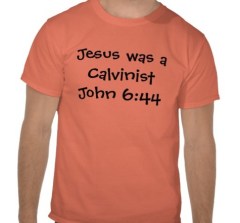
jesus_was_a_calvinistIt occurred to me as I got to this point in the chapter that Calvinists must feel pretty secure because, to hold such a belief, you would certainly have to believe you’re among the elect of God. No one who had doubts about their election could possibly be a Calvinist because you’d never feel comfortable in your own skin. You’d have to worry about whether or not you’re saved. If God elected you, that’s great. If not, well…too bad.

Also, if you had even the slightest compassion for the rest of humanity, what would it be like to be a Calvinist? Sure, you could comfort yourself saying it’s God’s decision and not yours, but if you have even a minimal moral conscience, you’d still have to stop and wonder about so many people condemned to eternal suffering just because they (we) were born.

In the section of the chapter called “The Defense of Modified Calvinism,” (pg 27) Kober quoted John Calvin, Concerning the Eternal Predestination of God (London: Camelot Press Ltd., 1961), pg 11:

The point at issue between Calvin and his opponents is thus simple, but it is of course fundamental. Substantially what they do is to wrest the ground of salvation out of God’s own hand where alone, Calvin holds, it rightly belongs, and to deposit it within the contingent realm of human volition and freewill.

Actually, based on my thoughts in the previous two parts of this commentary, both Calvinists and Arminians attempt to wrest the secret of God’s salvation from Him, bringing it down into the realm of men so each theoretical camp can put their stamp of ownership on it.

But if Calvinism is right, then I probably only think I’m saved and I have no real assurance that I am short of dying and finding out what happens next. Yeah, God has the right to put me (and the rest of humanity) in such a precarious position, but is He really that capricious?

And what’s the point of Abraham debating God about the fate of Sodom if its fate was already sealed?

So the men turned from there, and went toward Sodom, while Abraham remained standing before the Lord. Then Abraham came near and said, “Will you indeed sweep away the righteous with the wicked? Suppose there are fifty righteous within the city; will you then sweep away the place and not forgive it for the fifty righteous who are in it? Far be it from you to do such a thing, to slay the righteous with the wicked, so that the righteous fare as the wicked! Far be that from you! Shall not the Judge of all the earth do what is just?” And the Lord said, “If I find at Sodom fifty righteous in the city, I will forgive the whole place for their sake.” Abraham answered, “Let me take it upon myself to speak to the Lord, I who am but dust and ashes. Suppose five of the fifty righteous are lacking? Will you destroy the whole city for lack of five?” And he said, “I will not destroy it if I find forty-five there.” Again he spoke to him, “Suppose forty are found there.” He answered, “For the sake of forty I will not do it.” Then he said, “Oh do not let the Lord be angry if I speak. Suppose thirty are found there.” He answered, “I will not do it, if I find thirty there.” He said, “Let me take it upon myself to speak to the Lord. Suppose twenty are found there.” He answered, “For the sake of twenty I will not destroy it.” Then he said, “Oh do not let the Lord be angry if I speak just once more. Suppose ten are found there.” He answered, “For the sake of ten I will not destroy it.” And the Lord went his way, when he had finished speaking to Abraham; and Abraham returned to his place.

Genesis 18:22-33

And what was the point of this conversation?

Then someone came to him and said, “Teacher, what good deed must I do to have eternal life?” And he said to him, “Why do you ask me about what is good? There is only one who is good. If you wish to enter into life, keep the commandments.” He said to him, “Which ones?” And Jesus said, “You shall not murder; You shall not commit adultery; You shall not steal; You shall not bear false witness; Honor your father and mother; also, You shall love your neighbor as yourself.” The young man said to him, “I have kept all these; what do I still lack?” Jesus said to him, “If you wish to be perfect, go, sell your possessions, and give the money to the poor, and you will have treasure in heaven; then come, follow me.” When the young man heard this word, he went away grieving, for he had many possessions.

Matthew 19:16-22

abrahams visitorsIn either case, the transactions were pointless if Calvinism is right. The fate of Sodom and of the rich young man were both sealed before any living creature drew its first breath on earth. Why didn’t Jesus just answer the fellow that either he had eternal life or he didn’t? Certainly Jesus knew if he was among the elect. God already made the decision. The rich young guy had nothing to do with it. However, since he was most likely Jewish, it doesn’t seem to matter if we can take Calvinism’s word for the election of Israel. By definition, all Israel is elected.

But individual Gentiles only have faith and thus are saved because it is God’s gift to those people that they have faith. They don’t really have faith in anything that resembles their own volition. God gave them the gift of faith so they have it. God didn’t give others faith and so they don’t have it thus they aren’t saved.

Kober quotes Spurgeon at length on page 32 to try to explain election and choice in a way we can understand.

But let me give you a better illustration. You see a mother with a babe in arms. You put a knife into her hand, and tell her to stab that babe in the heart. She replies, and very truthfully, “I can not.” Now, as far as her bodily power is concerned, she can, if she pleases; there is the knife, and there is the child. The child can not resist, and she has quite sufficient strength in her hand immediately to stab it into its heart. But she is quite correct when she says she can not do it. As a mere act of the mind, it is quite possible she might think of such a thing as killing the child, and yet she says she can not think of such a thing; and she does not say falsely, for her nature as a mother forbids her doing a thing from which her soul revolts. Simply because she is that child’s parent she feels she can not kill it.

It is even so with a sinner. Coming to Christ is so obnoxious to human nature that, although, so far as physical and mental forces are concerned (and there have but a very narrow sphere in salvation) men could come if the would: it is strictly correct to say that they can not and will not unless the Father who hath sent Christ doth draw them.

-Spurgeon, Spurgeon’s Sermons on Sovereignty (Ashland, Ky.: Baptist Examiner Book Shop, 1959), pp 123, 124

So what Spurgeon is saying is that if we believe we are saved then we are because no one would even consider accepting the “free gift” of salvation unless they were among the elect. Otherwise, it would seem a totally obnoxious idea to the person.

Nah. Not buying it.

“Not everyone who says to me, ‘Lord, Lord,’ will enter the kingdom of heaven, but only the one who does the will of my Father in heaven. On that day many will say to me, ‘Lord, Lord, did we not prophesy in your name, and cast out demons in your name, and do many deeds of power in your name?’ Then I will declare to them, ‘I never knew you; go away from me, you evildoers.’

Matthew 7:21-23

If Spurgeon is correct, then the people described by the Master couldn’t exist. If they were “evil doers,” they’d never have accepted the gift of faith and salvation because as sinners, it would be too odious a thought to even consider.

Mahatma-GandhiOn page 33, Kober tries to distinguish free will vs. free agency to explain why even though people have zero control over whether or not they are elected, those who aren’t are still totally responsible for their lack of salvation. It’s their sins that condemn them, not lack of being elected.

So let me get this straight. If we’re saved, it’s totally up to God. We have nothing to do with. But if we’re not saved, it’s totally our fault and God has nothing to do with it.

Uh huh.

I can see why Gandhi rejected Christianity:

“Mr. Gandhi, though you quote the words of Christ often, why is that you appear to so adamantly reject becoming his follower?”

Gandhi replied, “Oh, I don’t reject your Christ. I love your Christ. It’s just that so many of you Christians are so unlike your Christ.”

-Jones, E. Stanley, (1925). The Christ of the Indian Road. Abingdon Press, 72-73.

From a Calvinist’s point of view, we are only saved by the will of God. God doesn’t use any particular characteristic of the humans he elects as a method of making His selections. He chooses who He chooses for His own purposes and glory. If that’s all true, what about this?

The Lord is not slow about his promise, as some think of slowness, but is patient with you, not wanting any to perish, but all to come to repentance.

2 Peter 3:9

If God doesn’t want any to perish but all to be saved and if it’s entirely up to God who gets saved and who doesn’t, then why doesn’t God save everybody?

We don’t know.

However, near the end of the chapter, Kober does tip his hand about the timing of the Messiah’s return. Haven’t you ever wondered why he hasn’t come yet? According to Kober’s paper on Calvinism, there are a specific number of names written in the Lamb’s Book of Life. When all of the people who have their names in that book are born and “saved,” then Jesus will return. The simple fact is that there are names in that book who haven’t been born yet.

I’m glad Calvinists don’t run the universe and that John Calvin isn’t God. It may not be “Biblical,” but I have to believe that God can’t be put in a box and neither can the mystery of “election” and salvation. One thing I am glad about is that, if Calvin is right, then God really is taking care of His people Israel and since they are elected, they are saved.

But if I am somehow forced to accept Calvin as “the truth” about God, then what hope do I have? Even if by some miracle, God did elect me (I can’t see why, I’m hardly a perfect person…I’m no saint or tzaddik), then what about my wife? What about my children? How am I supposed to feel if I’m saved but they’re not (but since they’re Jewish, who knows)?

But it’s not just Calvin I object to but the whole Calvinism/Arminianism debate. Each side thinks that they can distill the Bible down into some formula of verses that equate an “answer” to salvation. Both groups and the people they contain, think they can reduce God into a system that they can then control.

I am compelled to maintain a steadfast faith in God and not the Calvin/Arminius dynamic surrounding salvation, because if I had to see the Bible only through Calvin/Arminius-colored glasses, like Gandhi, I’d love Jesus and hate Christianity, and I’d drop the church like a hot rock.


Korach: Learning How to Dance

korach-buried-aliveThere are two rebellions this week. First, Korach, a Levite, was passed over for the leadership of his tribe and then challenges Moshe over the position of High Priest. No good rebellion can be “sold” as a means for personal gain, so Korach convinces 250 men of renown that they must stand up for a matter of principle — that each and every one of them has the right to the office of High Priest (which Moshe had announced that God had already designated his brother, Aharon, to serve).

Fascinatingly, all 250 followers of Korach accept Moshe’s challenge to bring an offering of incense to see who God will choose to fill the one position. This meant that every man figured he would be the one out of 250 to not only be chosen, but to survive the ordeal. Moshe announces that if the earth splits and swallows up the rebels it is a sign that he (Moshe) is acting on God’s authority. And thus it happened!

The next day the entire Israelite community rises in a second rebellion and complains to Moshe, “You have killed God’s people!” The Almighty brings a plague which kills 14,700 people and only stops when Aharon offers an incense offering.

-Rabbi Kalman Packouz
“Shabbat Shalom Weekly”
Commentary on Torah Portion Korach
Aish.com

A fanatic is someone who redoubles his efforts while losing sight of his goal.

-George Santayana

You’d think after seeing the deaths of Korach and the 250 rebels that the rest of the Children of Israel would have been frightened enough to back away from speaking against Moses, Aaron, and ultimately God. Unfortunately, they seemed to have panicked and panic has no reason. Neither does fanaticism which is defined as “a belief or behavior involving uncritical zeal, particularly for a religious or political cause or with an obsessive enthusiasm…the fanatic displays very strict standards and little tolerance for contrary ideas or opinions.”

Since I blog in the world of religion, I suppose that someone could come along and accuse me of being a fanatic when I defend a particular point of view and don’t acquiesce to another’s contrary viewpoint. But then I hope there is a difference between steadfast determination and being a fanatic.

Korach and the 250 didn’t back down and neither did the Israelite community until after over 14,000 people died. What does it take for the rest of us to look at a situation, know when to press ahead with our point, and know when to back away?

In describing in his commentary how not to argue, Rabbi Packouz lists nine points. One of them is:

Turn the argument into a discussion. Don’t defend a position; set forth an idea or problem to be clarified. People of good will who reason together can come to a common conclusion. Listen with an open mind. Be a judge, not a lawyer!

calvinism-vs-arminianismIn the blogosphere, it’s difficult to keep a discussion into spilling over the threshold of civility into an argument. A lot of religious people take a “my way or the highway” stance with the theologies and doctrines to which they adhere. My exploration into Calvinism vs. Arminianism is a good example of such a dialog. So far, no one has come along on my blog to take me to task for my viewpoint in that debate, but if I found the right venue for the discussion, I’m sure a “passionate” exchange would occur. There have indeed been such debates in the comments section of my blog in the past.

So how do we know when we are defending a position for our faith and for the sake of God as opposed to our own ego and bullheadedness?

This week’s Torah portion tells the story of Korach’s dispute with Moshe. The mishna (a teaching) in Pirke Avot 5:20, states that “Any dispute that is for the sake of Heaven will be of lasting worth and one not for the sake of Heaven will not be of lasting worth. Which dispute was for the sake of Heaven? That of Hillel and Shamai. Which was not for the sake of Heaven? That of Korach and his company.”

That’s part of the Dvar Torah presented in Rabbi Packouz’s commentary. Here’s something similar.

When they heard this, they were enraged and wanted to kill them. But a Pharisee in the council named Gamaliel, a teacher of the law, respected by all the people, stood up and ordered the men to be put outside for a short time. Then he said to them, “Fellow Israelites, consider carefully what you propose to do to these men. For some time ago Theudas rose up, claiming to be somebody, and a number of men, about four hundred, joined him; but he was killed, and all who followed him were dispersed and disappeared. After him Judas the Galilean rose up at the time of the census and got people to follow him; he also perished, and all who followed him were scattered. So in the present case, I tell you, keep away from these men and let them alone; because if this plan or this undertaking is of human origin, it will fail; but if it is of God, you will not be able to overthrow them—in that case you may even be found fighting against God!”

Acts 5:33-39 (NRSV)

I suppose this isn’t the first time this passage from Luke’s Acts of the Apostles has been compared to the Korach rebellion. The trick is to know our own motivation, which is harder than you may think. A good many people have been utterly convinced that they were arguing and even fighting for what is good and right, only to ultimately discover that their motives were totally selfish. Human beings are very good at self-delusion, sometimes with disastrous results.

“Not everyone who says to me, ‘Lord, Lord,’ will enter the kingdom of heaven, but only the one who does the will of my Father in heaven. On that day many will say to me, ‘Lord, Lord, did we not prophesy in your name, and cast out demons in your name, and do many deeds of power in your name?’ Then I will declare to them, ‘I never knew you; go away from me, you evildoers.’”

Matthew 7:21-23 (NRSV)

Woman in the darkThat’s a terrifying thought. I don’t doubt that those of whom the Master speaks sincerely believed (some of them, anyway) that they were “fighting the good fight,” speaking prophesies in his name, casting out demons in his name, and doing many other powerful things in the name of Christ. What bitter disappointment will they suffer when they find they are completely rejected and in fact have been following the wrong path all along.

And how do I know for sure that the path I am following is the right one? How do I know if I will be among those accepted in the Kingdom or tossed out in the dark?

Remember, self-delusion is incredibly common with people.

The mishna should have said that the dispute not for the sake of Heaven was that of Korach and Moshe, not between Korach and his fellow conspirators! Why didn’t the mishna mention Moshe as the antagonist? Korach started the dispute for his own personal gain (not for the sake of Heaven) while Moshe was upholding the Almighty’s word and the Almighty’s honor (you can’t get more “for the sake of Heaven” than this!)

Why then does the mishna mention that a dispute not for the sake of Heaven is the one between “Korach and his company”? We might think that Korach and his company were united in their argument with Moshe. The mishna is telling us that each of the 250 was challenging Moshe for his own gain (remember, each one brought incense to see if he himself would be chosen as the Cohen Gadol, High Priest.) In truth, Korach and his congregation were in dispute amongst themselves as to who should be the High Priest.

The mishna points us in a direction, but the effort to maintain an understanding of our motives belongs to us. Every time we take a strong position, we must ask ourselves, “am I doing this for the Master’s glory or for my own?” When my opinion is challenged and I strongly defend my point of view, I must ask if it is for the sake of Heaven that I do this or only because I want to be “right?”

If confronted with the knowledge that I’m acting for my own interests, would I be willing to admit I am wrong? In such a discussion is it very wise to make such an admission. Rabbi Packouz comments.

No one is ever totally right. Find something to apologize for, to take responsibility for. The other person will feel better and may even own up to some mistakes of his/her own.

I spent nearly a year writing about my journey of discovery and ultimately had to admit I was wrong about my original “one law” assumptions that I had made years before and never questioned.

I don’t think that I made my assumptions solely out of self-interest or ego, but once my assumptions were confronted by others, my ego and the need to be “right” was definitely engaged. I can tell you that it is a difficult and painful thing to realize many of the attitudes and beliefs I held were incorrect, and letting them go was one of the hardest things I’ve ever done.

But if I didn’t let them go, especially in the face of overwhelming evidence and with the realization of the damage I was doing, especially in my home, the price to be paid would have been much, much more dear.

“When you are invited by someone to a wedding banquet, do not sit down at the place of honor, in case someone more distinguished than you has been invited by your host; and the host who invited both of you may come and say to you, ‘Give this person your place,’ and then in disgrace you would start to take the lowest place. But when you are invited, go and sit down at the lowest place, so that when your host comes, he may say to you, ‘Friend, move up higher’; then you will be honored in the presence of all who sit at the table with you. For all who exalt themselves will be humbled, and those who humble themselves will be exalted.”

Luke 14:8-11 (NRSV)

Waiting to danceThis is a good test for fanaticism, because a fanatic cannot be humble. It feels too “dangerous” to back down, too vulnerable to be silent about something that’s important. Rabbi Packouz suggests that being silent and, when talking, speaking with a soft voice are two ways to avoid arguing. If you can maintain your composure, agree with the points being made by the other person you feel are correct, and admit it when you know you are wrong (letting yourself even consider that you could be wrong is a step in the right direction), then it is very likely that you are not being fanatical about what you’re trying to communicate.

Then your mind and heart are most likely clear enough to determine when you are tempted to argue for the sake of your own ego or sense of vulnerability, and when you are standing up and being a voice for the sake of Heaven.

But you have to be sure to constantly be your own critic, questioning what you’re doing and why.

Leslie (Diana Muldaur – voice): “You seem quieter than usual tonight.”
Batman (Kevin Conroy – voice): “Every time I come here, I wonder if it should be the last time. . . Put the past behind me. . . Try to lead a normal life.”
Leslie: “Santayana says that ‘those who forget the past are condemned to repeat it’.”
Batman: “He also said ‘a fanatic is someone who redoubles his efforts while losing sight of his goal.'”

-from the episode “I Am the Night”
Batman: The Animated Series (1992)

“One who romanticizes over Judaism and loses focus of the kingdom of Heaven can be compared to a carpenter who is infatuated with the hammer, rather than the house it was meant to build.”

-Troy Mitchell

I often question why I write this blog at all. What good does it do? Am I doing it to help build the Kingdom of Heaven or just because I like to see my words posted on the web? Blind certitude is something I can’t afford. I don’t think it’s something any of us can afford. This isn’t a matter of fighting to see who wins and who loses, but the pursuit of interaction and cooperation so that we can mutually seek out an encounter with God.

Our work involves trying to dance when others only know how to wrestle.

-Rabbi Carl Kinbar

The lesson of Korach is that we need to learn not how to wrestle, but how to dance.

Good Shabbos.

110 days.